


Processing
Likes
Comments
Share


@Vegetoo420
Follow
Removed two fan leaves and I’ll start LST soon
Here we are ! I start LST and I can’t wait to see her looking the light tomorrow

Likes
25
Share


@Grower_Of_Persia
Follow
my dry and cure style is this:
4 days of hanging upside down to get water activity lower to around 0.6 in 50% humidity and 26 C temp (i know its a little high but we are in a hot summer right now and i cant get it lower even with air conditioner) and then after 4 days of drying i remove leaves and stalks, trim buds and move them to jar for the rest of their life :D . and in the first 4 days of curing i open the jar door and let hem get some fresh air in the jar for about 5 minutes and close the jar door again, after 4 days of curing like that buds are smokable but they will get better as they getting cured about 1 month.
buds are one of the hardest as fucking rocks type of buds! very dense , compact , sticky , smelly , amazing at every aspect
growing stage was 60 days and flowering stage was 70 days total (harvested tops at day 63th)
the total weight of dry buds was : top buds 174 G + lower buds 55 G = 229 G
my overview of strain with details:
the seeds:
unfortunately i only got 1 seed cracked out of 5 so i will not know how much this genetic can get different but at least i got the chance to grow once of this wonderful strain
the plant :
in every stage you can ensure that you are dealing with a high level plant ,
she will get big so you have to control her height LST and SCROG highly recommended , will grow very well with tick stalks and big fan leaves , has good resistance for stress and will respond very well to stress trainings , she really has gorilla power in herself ,
fresh buds on plant :
buds are very compact and dense even from start , fresh blossoms smells like pineapple and mango , 2 different shades of sweet smells like you hold 2 junks of pineapple and mango in your hand and you smell them together, she is a trichome and resin factory , very very sticky , very oily , strong smell
dried buds:
very compact and dense , hard as rocks , has dark colors with purple hues inside it , it smells sweet
smoke :
very smooth and sweet like lollipop , pineapple , mango like , after 2 minutes it'll kick in and you'll get higher and higher with every breath , has a strange and especial high mind high mostly



Likes
111
Share


@Salokin
Follow
Hello Growmies,
I'm back with some more updates from the heart of my garden as we journey through the second week of flowering!
Our star plant is right on track, stretching beautifully as she enters deeper into the flowering stage. It's a delight to see her grow and evolve so perfectly. I've noticed some signs of tip burn, so I'm planning to reduce the nutrient levels even further in the upcoming week. It's all about finding that sweet spot where she's happiest and healthiest.This week saw her go through defoliation twice. Depending on her stretch in the coming days, I might go in for one more round of defoliation. Keeping a close eye on her growth to make sure every leaf and bud gets the light and air it needs. The first little bud-sites are beginning to show, a promising sign of the beautiful blooms to come. It's these small milestones that make the whole process so rewarding.
And here's something for my fellow plant enthusiasts: use the code ZAMMIGD2023 at Zamnesia's online store for a 20% discount. It's a great way to spread some joy and appreciation in our growing community!
Thanks for joining me on this growing adventure. Your support and interest mean a lot, and I can't wait to share more updates with you next week. Here's to more growth and flourishing buds!

Likes
6
Share


@LAShugars
Follow
Been giving her plain water for the last two weeks. Started chopping on her Sunday. I’ve taken the the biggest colas first hoping some of the lower smaller buds may fatten a bit. I’ve been trimming for 3 days. She’s super resinous!
Wet trimmed the first half of her and will be dry trimming the rest. I’ve left a few buds on the plant. Experimenting a bit going to see if I can get the remaining buds to hermie and get some seeds. I know the seeds could carry the hermie gene if it works. I was thinking of using them for some gorilla grows the summer.

Likes
18
Share


@Jays_Not_Here_Man
Follow
More to come once I think this over, and finish up the dry and cure 🌱💨
Likes
2
Share

@Ekoms
Follow
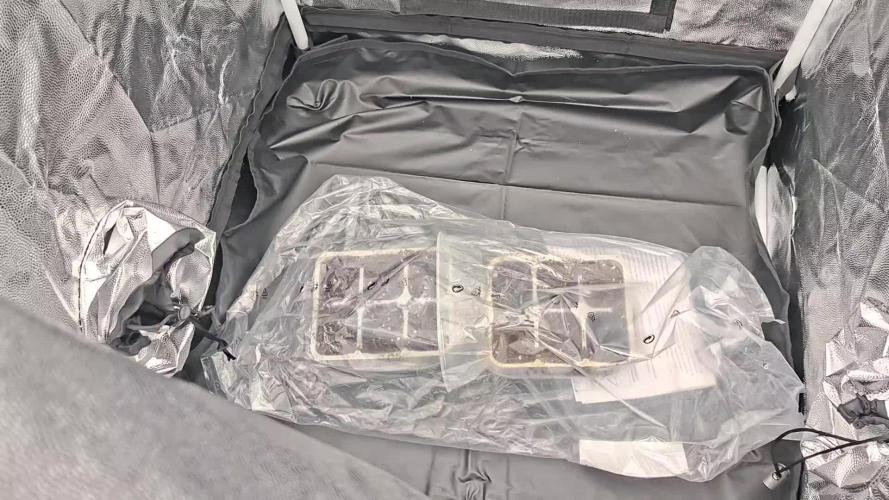
Today add plagron guano ..cca 150 g /20L .one girl have a smal flowers . Others looks good .. and video with new 60x60 box for veg phase with sunpro sunboard 240w ..( super boof and mimosa orange punch)


Likes
21
Share


@WildeWeed
Follow
This was the boss lady’s first grow. This was under a spiderfarmer sf1000 which did a amazing job. I’m really surprised with the light in a 2x2. It did wonderfully.
Now to the bubblegum. Once again fastbuds delivers for us with a plant that does exactly as they said it would. She didn’t top the plant or do any HST just from a time standpoint for the originals contest. This one could have actually went a little longer, however we have cloudy and amber trichomes already, and we flushed the last week. So with the contest ending today, might as well let her come down.
This was a great plant for a beginner like they said it was. Even without me standing on her shoulder, she could have grown this one. The density of these buds is down right surprising. Super dense and super sticky. She smells exactly like big league bubblegum chew. We can’t wait until this dries and cures. I’m sure it will be amazing. I’ll update this diaries as soon as it’s dry with the final weight. Thanks for looking!
Likes
32
Share


@Platinouuu
Follow
No han habido muchos cambios en cuanto a la nutricion. Añadimos un poco de Recharge, agua y estare añadiendo un producto para engordar las flores. Los mantengo al tanto, buenos humos!

Likes
4
Share


@Theia
Follow
ve repotted into her final 15l auto pot.
The procedure I used is as follows.
Items needed..
Clay pebbles
Hydro coco 60/40 clay pebbles/Coco.
Silicium Flash
Startrex
Mycrotrex
Bactrex
And of course Bio tablets X2.
15l of hydro coco was mixed with 25g of Silicium Flash and 25g of Startrex. Mixed up well to form the main substrate.
I filled the autopots to a depth of 5cm with clay pebbles and then layered up the amended substrate making a nice hole for my 300ml nursery pots.
Into this hole I sprinkled in 5g of Mycrotrex and then dropped the seedling in.
This then gets 2 biotabs pushed 5-8cm into the substrate and 1l of water mixed with 5ml of Bactrex
I need to top feed the autopots for a couple of weeks so the root system can establish before I transfer to my flower room and the gravity feeding trays..🤘🏼👍🏼
I'm keeping temps at a constant 25c and lights are on 24hrs a day. Rh is sitting around 65%.it too low hence the domes but then it goes too high. I'm going to run a couple of days with the 65% but vpd over 1 is a bit high for so early.. we shall see.
The sweet seeds all seem very strong and I'm really liking how fast these are growing in this substrate. I just need to work out the watering correctly..
🤞🏼🤞🏼🤞🏼
.

Likes
15
Share


@Ronin716
Follow
(I’m starting to try timelapsed videos of growth so lmk what you think)
So I’ve added a little lst to #1(the one I topped) just to capitalize on it I guess. But they’re all doing really well at the end of week 4. I’m trying to get better with photos and documenting so bare with me but as for #3, I’m really impressed with how fast she’s gotten bushy and with how she’s taken to lst. I’m doing different things to different plants to see what I like and what works for me. #4 is my control and I’ve done nothing but water and feed and honestly, she’s still doing just fine 💪🏻
Likes
6
Share


@DaddyPrime2
Follow
i was surprised that she was done on 2/15/25
spidermites had completely taken over one bud so i decided to check trichomes and she seemed ready.
Likes
19
Share


@Happygrowing
Follow
Piante grandi ed in forma mia aspetto molto da loro
NL è indietro di una settimana e mezza in confronto a slh#2
Grandi soddisfazioni 🔥🔥💪💪

Likes
27
Share


@OldDabKing
Follow
Performed the "back building" technique this week to help bulk up the top cola. Watering the soil when dry, and defoliating the dry-dying fan leaves.
Likes
Comments
Share


@Takeaims
Follow
Sweet manderain taking g it's sweet time to finish haha on week 9 witb this girl week 7 for the others and week 3 for the smallest ones doing some defoliation

Processing
Likes
11
Share


@DesDeGrower
Follow
Week 5 Day 1
No issues after topping and transplant. Looks happy and growing.
Need to start dehumidifier as temperatures start to creep up In here and humidity hitting higher and higher 🤘
Week 5 Day 6
Every day getting more and more bushy. One more week and she’s going into second tent and starting flower 🌹 😍


Likes
11
Share

@PapaTerps
Follow
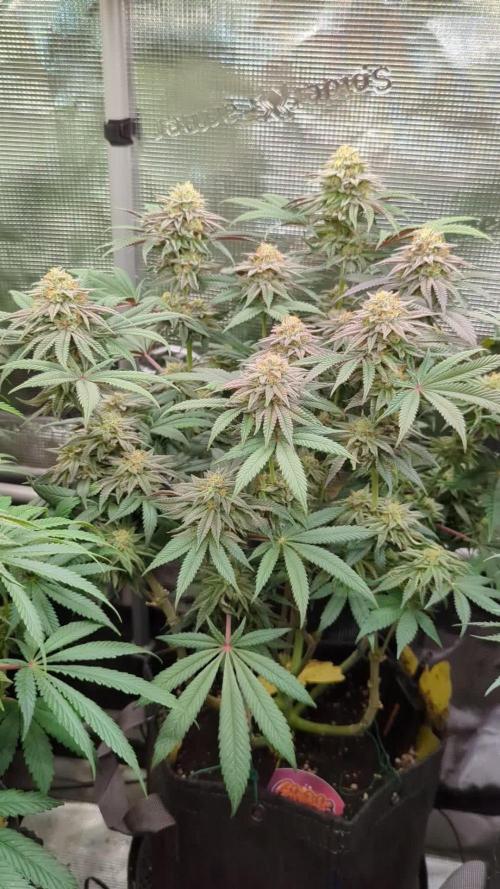
Grand Prixx - Wizard Trees
Day 106
🚿 Watered her every second day with 2L of RO tap water, with defined nutrients, mixed individually in order and then pH'd to 6.5
✂️ I removed a couple of sugar leaves from around the flower at the top canopy to improve light penetration, but other than that it's been smooth sailing 🤞🏻
🌸 She's at week 7 of bloom and she is looking absolutely spectacular with her big colourful flower with an aroma that is something out of this world!! Candy meets gas with a creamy finish 🙌🏻 We're maybe two or three weeks away from harvest and I cannot wait to get her down, dried and cured, because I can already tell that she's going to be very special!! 😍 For now she is still bulking, so she will get another week of regular feeding before I start to bring down her nutrients👍🏻

Likes
19
Share


@Ganjafarmer420flowers
Follow
Not had a good time in this tent either I will be going back to photoperiods for a while get more experience before doing autos again 😴
Likes
3
Share


@Ogbangbang2981
Follow
it's only the beginning on week 6 and are in flower stage, tree looks good loving her feed, loving her space just loving life. Today I decided to put her outside in the sun such a beautiful Sunday it was, I'll keep this updated with more pics by Saturday on the closing of week 6 .

Processing
Likes
57
Share


@MadeInGermany
Follow
Hey everyone 😀.
These weeks they have continued to develop very well 👍.
They have made a huge leap forward since they were repotted 😃.
They will be topped again this week, and will then move to the flower tent next week 😍.
I am very curious to see how it will develop until next week.
I wish you a lot of fun with the new update, stay healthy 🙏🏻 and let it grow 🌱🍀
You can buy this Strain at :
https://sweetseeds.es/de/red-mandarine-f1-fast-version/
Type:
Red Mandarine F1 Fast Version
☝️🏼
Genetics:
Red Poison Auto®️ (SWS39)
X
Tangie (California Orange x Hybrid Skunk)
👍
Vega lamp:
2 x Todogrow Led
Quantum Board 100 W
💡
Bloom Lamp :
2 x Todogrow Led
Cxb 3590 COB 3500 K 205W
💡💡☝️🏼
Soil :
Canna Coco Professional +
☝️🏼
Fertilizer:
Green House Powder Feeding
☝️🏼🌱
Water:
Osmosis water mixed with normal water (24 hours stale that the chlorine evaporates) to 0.2 EC. Add Cal / Mag to 0.4 Ec Ph with Organic Ph - to 5.5 - 5.8 .