


Likes
Comments
Share


@Albargina
Follow
Otra semana mas, y sigo enamorandome cada día, las Blue Elite no paran de sacar resina blanca, y las Rica CBD estan hermosisimas, con grandes y gruesos cogollos, empiezo a notar las macetas de 3L y que la lámpara está ya para el retiro😬, aun así estan saliendo unas piedras con forma de cogollos muy interesantes😂

Likes
5
Share

@JoLatto
Follow
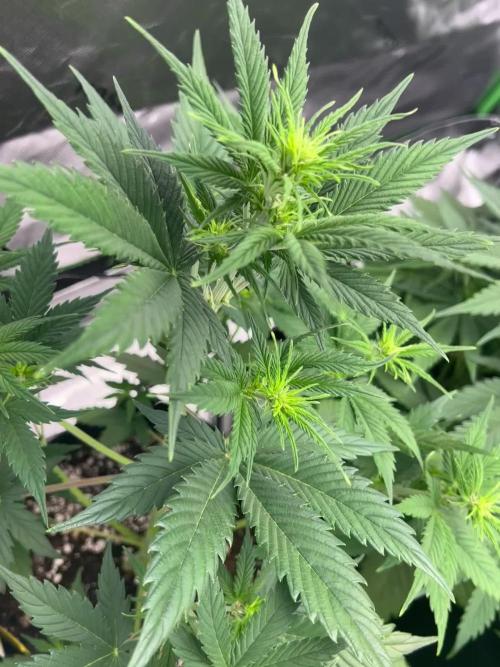
Week 5 - Apple Strudel auto this strain has been growing super consistent ! I’ve had zero issues they have just started to flower. We’ll see how big they stretch really liking this strain so far. I’ll update next week to see how they’re doing ! Good luck everyone 420 is close !!!!!


Likes
12
Share


@Just_Weed
Follow
Trasplanted second Strawberry Cough in bigger 10 gal pot which I regret later on cause watering is hard to dial in but she is recovering slowly. I will keep her in veg longer.

Likes
Comments
Share

@Adriano420
Follow
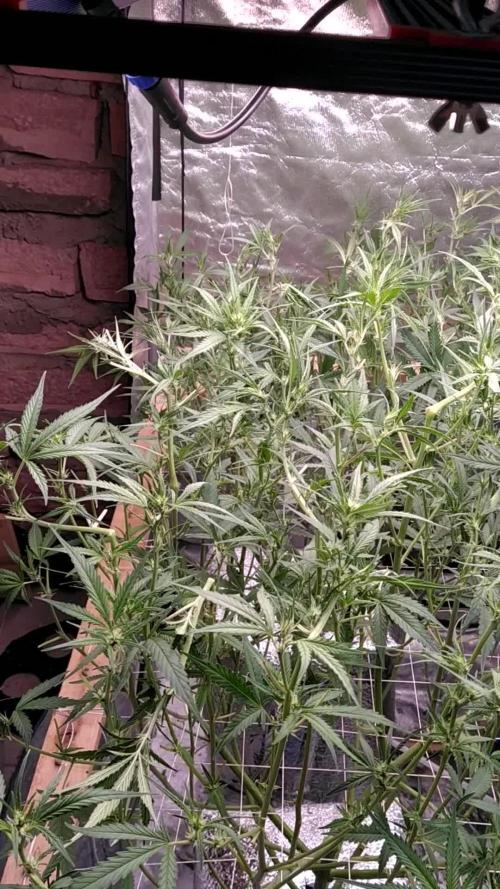
As plantas estão crescendo muito, a temperatura da tenda está um pouco alta em torno de 29C e vou precisar começar usar o ar condicionado


Likes
72
Share


@BodyByVio
Follow
This week I finally completed the RDWC system. Everything is working how it suppose to. The chiller is set to 66 degrees Fahrenheit. Also I start adding 1000ppm CO2. Lighting intensity ( Fluence Spydr 2i) is set to 75%.

Likes
1
Share

@hinterhofgrower
Follow
.
🌱 :
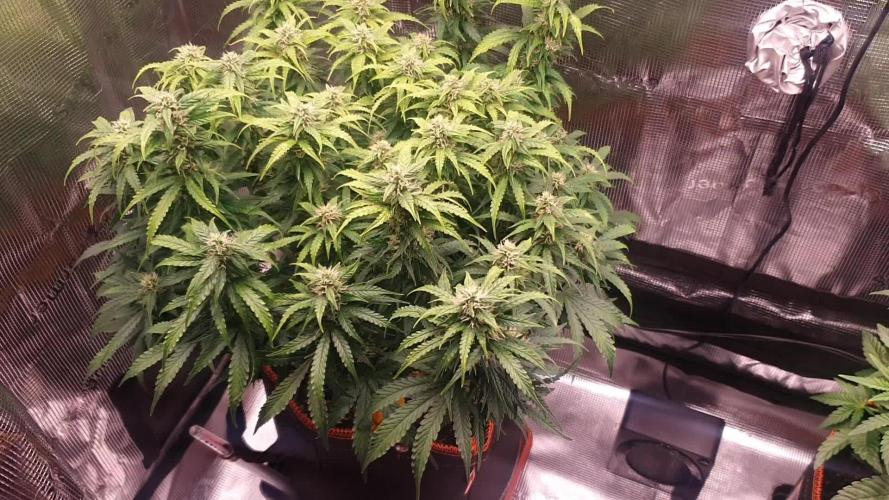
💧 : 4l day 64. 4l day 66, 7l day 68
💡 : Dli: 40 mol/m²/d
🤔 :
Processing
Likes
55
Share


@Max1973
Follow
Day 29 - Things going along nicely .... i trimmed down some of the bigger bottom leaves, i didn't have enough soil to fill the pots, and the plants are short, bushy, weird little things, that filled out the inside of the pots..... they are only 15cm tall, but the leaves are 10+ cm .... really weird little plants.... haha....
i decided to trim the fk out of one of the ones in the double pot, and practiced topping on her.... i'll cut her down maybe trimmer her of the pot, and focus on just the 2........ they seem to be still growing upwards, so i'm not in a hurry to put em into flower mode......... on the main one i noticed some neut deficiencies ... so i upped the neuts.... should be ok, i put a good heavy neut and it stopped the spots etc..... i think some bug or something got in the double pot and is livin in there, but he doesn't eat much, haha....... the main stalks are as big as my thumb and under each canopy is all the branches..... it's really strange, to go in under all the growth and see it all .... they look kinda small, but the entire under canopy of leaves is all full .... i'm moving the huge sized leaves out and pulling each branch up over them as they grow..... this is 21 THC and 19 CBD, so it's all the good stuff for medicine ... the smell is getting abit noticable and i'm hoping the exhaust fan arrives from china soon.... just got positive ventilation into a carbon fil. ... and daily air out........ i think i had the led lights too low..... so i'll raise em abit more and see if i can get em to stretch ....
Day 30 -- added some video's...... daylight vids... worth watchin for a laugh ...... first grow, so idk what i'm doin, ... any help/comments appreciated
Day 32 -- added some pics of the late night trim and LST,... idk looks ok....
Day 34 -- added a video...
Likes
3
Share


@SmileyMorgen
Follow
4/27/22
Today makes the beginning of preflower. Notice the light xoxo of her tops. Also today her first white hair popped
4/28/22
Late last night i to the early hours of today I added some.LST clups qnd took 4 large fan leaves from the lower region of the plant to allow some light in to the emerging branches.
4/29/22
Today I did her first major defoliation. I only.took leaves on the inside margin of the plant that blocked light from emerging branches. This part of ganja growing always scared me because they look so yucky after for a day or two
5/1/22
My lady looks beautiful today. Looking better after her defoliation a few days ago. She I needing about 1 gal of plain dechlorinated water every other day to keep her topped off. She is drinking some water! I'm assuming this will mean I will have to feed her more that once weekly as well.
5/2/22
I realized today that the white hair I was seeing were just the plant reaching maturity and showing her gender... she is not behaving like a plant in flower. I have decided to change my light cycle to 12:12 in order to flip her I to flower. This is because she is getting too large for her to fit in my tent if she were to continue to veg any longer. The stretch during the first two weeks of flower will likely have my 4x4 filled up.
Likes
7
Share


@LittleBigTrees
Follow
Only giving them water so far.
The mimosa cuttings are taking being cloned really well.

Likes
81
Share


@organically
Follow
25.05 - Pre-Flowering start.
27.05 - Force Flowering.
01.06 - Pre-Flowering done.
10.06 - Flowering Week 1 / Day 1.
14.06 - Lollipopping.


Likes
29
Share


@TonyTrichomes
Follow
Not an overly impressive strain and I would say she was not that hard to grow. If I even grew this one again I would let it go naturally with some LST. Wanted more grape flavours but they don't really come through in the smoke. There's a bit of a sharp fruity smell that's sort of piney with a hint of fuel at the end. The smoke is not too flavourful in my opinion but that just means I didn't grow it well. Super tight nugs so be careful with humidity as stated above. Also she's a bit of a light feeder so be careful with your nutes. As you can see I burnt her tips and over fed her a lot. Not a bad yield though! I've only really smoked the lowers on this one so far so that gave me a bit of a racey high, just slightly racey. I would accredit that to the lowers not being mature enough at chop. The plant is super dense and since I mainlined it the lowers didn't receive enough light. I tried to let the lowers mature more but the plant stopped maturing when I chopped the tops, this caused stress and the plant just shut down basically. Not sure if I would grow Blimburn's GDP again until I grow the real GDP.


Likes
4
Share


@KhaVigga
Follow
now im start to using many kind of sugar till harvest, beer-fpj-molasses-coconut water...


Processing
Likes
33
Share


@ganjaman24
Follow
Just started at 1/4 strength nutes everything appears to be fine; hand watered every two days until about 20% run off
Likes
71
Share


@CrazyHorse
Follow
Good afternoon gromies 😄 😇 😊
Week 9 was absolutely crazy. All my girls start to achieve an about high.
Gelato had to be renamed to "Uber-lato".
Answer is on the photos and movies 😅
I never ever have/had to deal with so huge plant, she surprised me and coals bending had a place to expose them for light.
They grow over a LED canopy 😅 😅 😅
At least high of 170cm is not a joke, can be even a little bit more but after bending procedures is hard to give a precise measure 😶
She is a monster 😇 😇
Have a good night, You Lovely Girls Growers 😇 😄 😉
Likes
4
Share


@DeepRootsGrowTrees
Follow
CHERRY 🍒 COLA BY FASTBUDS
Week #7 Overall
Week #2 Flower
This week has continued a trend of hot weather with no relief for the plants as it's having some effect on the leaves with burning. Stay Growing!!
Fast Buds CHERRY 🍒 COLA
Likes
18
Share


@MaxMo8
Follow
I transferred it to a half-gallon pot and I mixed the organic fertilizer with the soil.