


Likes
Comments
Share


@Master_weeda
Follow
Bonjour à tous les padawans et maîtres jedis
Tout d'abord merci à @pyramidseeds de me permettre de faire cette culture en m'offrant les graines
Merci aussi à @lientec_led de m'offrir l'opportunité de tester sa toute nouvelle lampe Roccit 240w ainsi que organic nutrients pour l'engrais
MATÉRIEL CONFIGURATION
Box 80×80×160
Lampe led Lientec Roccit 240w
Ventilateur à pince 15 watts
Xiaomi Deerma humidificateurs 5L
Hygrometre thermomètre
Extracteur PROFAN 107 m3/h - 100
Prise programmable électronique ×2
1 pot carré noir 11 litres
Engrais organic nutrients
Substrat biobizz ligthmix
Fil de fer et pince coupante
Microscope
Petite balance de précision
CULTURE ÉTAPE PAR ÉTAPE
J'ai tout dabord fais germé ma graine avec le easy start de Royal queen seed et je suis agréablement surpris car franchement le taux de réussite est très élevé (18 graines sur 20) simple d'utilisation et très efficace.
Une fois la plantule sortie et d'une hauteur de 2 ou 3 centimètres je la prend délicatement et la place directement dans son pot définitif. Je préconise des pots allant entre 10 litres et 15 litres pour des autofloraisons cultivées en intérieur.
Le pot aura été préalablement préparé avec 80 grammes de big plant de organic nutrients que je mélange avec les 11 litres de substrat
Je dépose la plantule dans son pot définitif je recouvre un peu de avec de la terre je tasse légèrement et j'arrose pour garder le substrat humide pas plus
Je place ma lampe led 300watts à environ 90 centimètres de la plantule avec un cycle de lumière de 20/4 grace a un programmateur car c'est pour moi le cycle de lumière qui offre le meilleur rendement pour une autofloraison.
Jour 1 préparation du substrat
Avant transplantation définitive je mélange 80 grammes de bio stimulant bib plant de organic nutrients et j'arrose avec 2 litres d'eau ph6.3 à laquelle j'ajoute 0.7 gramme de enhancer feeding greenhouse par litre d'eau

Likes
5
Share

@psychonaut420
Follow
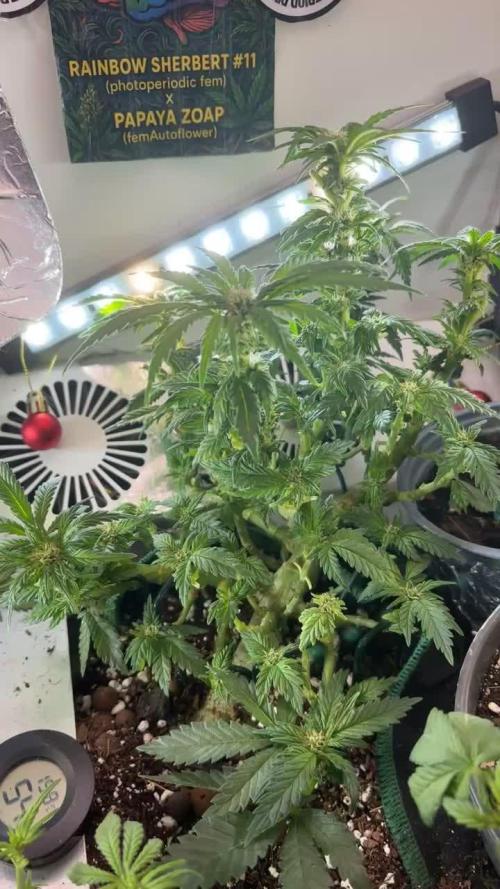
She’s developing her bud formation nicely hopefully see more and more fattening and more stretching of the side branches so far so good

Likes
25
Share


@TheCannaProphet
Follow
____________________________
~Seedsman Fuel D.O.G.~
____________________________
'Fuel D.OG Feminized was bred by crossing two highly celebrated and popular strains from the USA - Chemdawg (Sour Diesel x OG Kush) and Fuel OG (Diesel x Headband). Fuel D.OG is a 70% sativa, 30% Indica plant with very good potential yields both indoors and outdoors. Resin and THC production is also at a very high level.
Fuel D.OG improves on Chemdawg, being a much more robust plant with a much more intense flavor while also developing a larger calyxes than Chemdawg. Its robust appearance is typified by a thicker central stem that is so strong that it does not need to be supported during the later flowering stage in spite of the high degree of sativa stretch it undergoes once flowering has been initiated. Large spear-shaped buds surround the main stem like a crown. Outdoor cultivation produces plants that can grow up to 350 cm. tall in optimum conditions.
When cultivated indoors Fuel D.OG produces yields of 450 - 600 gr/m2 in a 65 - 70 day flowering period with generous quantities of resin already noticeable in the nascent buds during the third week. Its height can be controlled indoors by switching to the flowering light-schedule once plants are established and also by the use of the SCRoG technique whereby plants are trained horizontally. Outdoors, each plant can yield 700 - 800 gr. of large, sticky buds with harvests in the northern hemisphere ready at the beginning of October. Its large trichomes, concentration of terpenes and the sheer quality of resin make this a very serious proposition for extract/concentrate makers.
Fuel D.OG has more intense OG Kush flavors than the Chemdawg parent, with increased diesel emphasis and with citric, lemon and grapefruit scents. THC content is very high with low proportions of CBD. The effect experienced by consumers is one of intense relaxation evolving into a long-lasting narcotic stone that makes Fuel D.OG more suitable for evenings unless there are no important tasks to be completed.'
*description credit to Seedsman Seeds
__________________________________________________________________________________________________________________________________________________________________________________________________________________________________________________________________________________________________________________________________________________________________________________________________________________________________________________
-Characteristics-
BREEDER/BRAND: Seedsman
GENETICS: Chemdawg (Sour Diesel x OG Kush) and Fuel OG (|Diesel x Headband)
VARIETY: Mostly Sativa
FLOWERING TYPE: Photoperiod
SEX: Feminised
THC CONTENT: 20% Plus
CBD CONTENT: <1%
YIELD: Indoors: 450 - 600 gr/m2; Outdoors: 700 - 800 gr/plant
PLANT HEIGHT: Up to 350 cm. outdoors
GROWS: Greenhouse, Indoors, Outdoors
FLOWERING TIME: 65 - 70 days
HARVEST MONTH: Beginning October
TASTE / FLAVOR: Citrus, Diesel, Grapefruit, Kush, Lemon
EFFECT: Powerful, Relaxing, Sedative, Stoned
__________________________________________________________________________________________________________________________________________________________________________________________________________________________________________________________________________________________________________________________________________________________________________________________________________________________________________________
THE SETUP:
~Planted into Jiffy Peat Pellets that were hydrated with de-chlorinated water with SuperThrive added then ph'd to 6.0 @ 80℉
~Grown 100% organic in 10g fabric pots with Mother Earth 70/30 Coco/Perlite medium amended with 2tbs/g of Down To Earth 4-4-4 / 2 cups/g of Earthworm Castings / 1tbs/g of Dr. Earth Flower Girl 3-9-4, 1tbs/g of Dr. Earth Bat Guano, 3/4 cup of Down To Earth Azomite and 1 tsp/g Down To Earth Fish Bone Meal.
~24hr light cycle during Germination / 19/5 light cycle for Vegetation and 12/12 for Flower
~Straight water ph'd @ 6.2-6.8 when needed and weekly Compost Tea's.
__________________________________________________________________________________________________________________________________________________________________________________________________________________________________________________________________________________________________________________________________________________________________________________________________________________________________________________
Weekly Updates:
9/27- Week Seven of flower here we go! She's looking good to go with her flowers stacking and her trichome production continuing to coat her flowers!
Today she was given 1.5g of de-chlorinated water which was ph'd to 6.2 @ 72℉ which I gave her half through her drip pan (bottom chuggin), the remainder trough the medium. I also gave her pot a 1/4 turn.
9/29- Yesterday I didn't water her, only turned her pot and checked her over... Wow! She's really ramping up the trichomes making her flowers look like their sugar coated! 🤩
I watered her today with 1.5g of de-chlorinated water with 1 tsp/g of unsulfured molasses added which was then ph'd to 6.4 @ 72℉.
The molasses will give the microbial colony some additional food as well as supplying micro-nutrients to the plant. I finished out the daily maintenance giving her a check over and turning her pot 1/4 turn to ensure she gets light to every inch of her.
10/1- Yesterday was a 'no water' day as her pot was still fairly heavy to lift. Today she was watered with her usual of 1.5g of de-chlorinated water which was ph'd to 6.2 @ 72℉.
Her flowering continues to impress me with her trichome production covering her flowers with 'frost' she's a sight for sore eye's! 😍
The end of next week will be the beginning of her wrapping up with the 'Finish Line' approaching by Week 9 or 10!
10/3- With Week Seven coming to a close we're going into the last 2-3 weeks for this lady and she's right on track, looking like a Rock Star! 🤩
I watered heavy yesterday and added 1 tsp/g of Unsulfured Molasses to the 1.5g of de-chlorinated water which was then ph'd to 6.6 @ 72℉.
Her pot had some weight to it when I checked today so I'll skip watering her until tomorrow. I finished up today by checking her over and giving her pot a turn.
~Thanks for stopping in! This epic run will be wrapping up in the coming weeks...Stay lifted and be Blessed! 😎🙏~


Likes
25
Share

@Grasshopper96
Follow
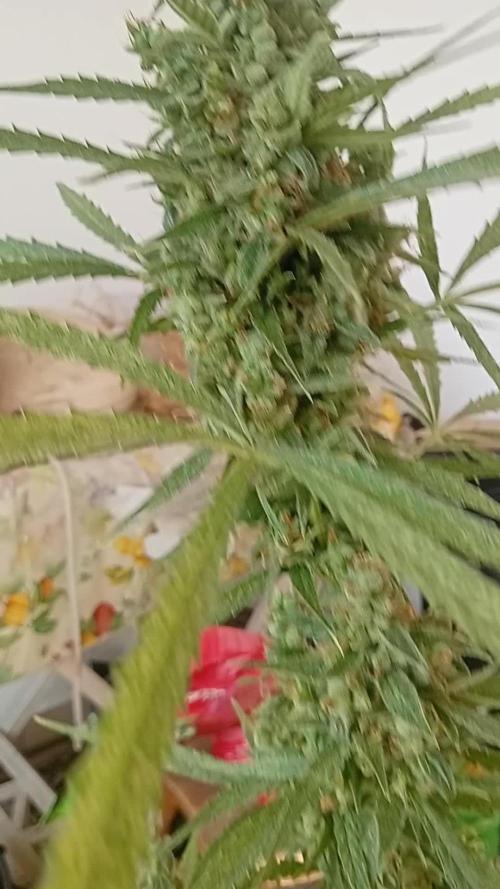
Resoconto sulla fioritura: la fioritura procede bene , sto iniziando anche ad apprezzare la pianta che sta facendo tanto foxtail, sembra quasi una doc grinspoon 😉
La pianta cimata e la pianta a cui involontariamente ho fatto fim stanno indietro rispetto alle altre, per tutte le piante tranne queste due credo che il ciclo si chiuderà a 14 settimane
Nutrienti: ho dato Bloom booster di t.a. e top auto di top crop
Parassiti: ho trovato segni un po' ovunque sulle piante di questo ciclo, sto togliendo tutto ciò che posso togliere mi manca solo aspirare sulle foglie delle piante con l' aspirapolvere ma poi sarebbe follia? voglio chiudere questo ciclo e mi dispiace tanto che le piante sono iniziate a fiorire quando non me lo aspettavo quindi non ho più avuto tempo per fare la profilassi antiparassiti
Considerazioni personali: faccio queste afghane da 4 anni ormai sempre come primo ciclo della stagione e ogni anno vengono più belle dell' anno prima, per quanto.sono venute bene quest' anno credo che le pianteró ancora e ancora finché i giovani del tempo di un me ormai vecchio non vorranno più la cara vecchia afghana💛

Likes
165
Share


@Tropicannibis_Todd
Follow
💩Holy Crap Growmies We Are Back💩
So what do you say we have some fun 👈 We got some EXOTIC SEEDS 👉 👻👻👻MONSTERMASH👻👻👻 😛
Well my friends we are just at the 28 day mark and as you can see shes doing great 👈
👉 So now i felt i need to start training her over to maximize her growth by doing some LST 👈 Just noticed she's starting to preflower 😛
Lights being readjusted and chart updated .........👍
👉I used NutriNPK for nutrients for my grows and welcome anyone to give them a try .👈
👉 www.nutrinpk.com 👈
NutriNPK Cal MAG 14-0-14
NutriNPK Grow 28-14-14
NutriNPK Bloom 8-20-30
NutriNPK Bloom Booster 0-52-34
I GOT MULTIPLE DIARIES ON THE GO 😱 please check them out 😎
👉THANKS FOR TAKING THE TIME TO GO OVER MY DIARIES 👈

Likes
8
Share


@SpaceGorilla_01
Follow
Them issues with the haze xl really upset me wate of tome effort and money so im not impressed with 1st impressions of sweetseeds im sorry but we have to be honest im this community would you not agree but on the plus all my fastbuds 100% success


Likes
8
Share

@Thedibber
Follow
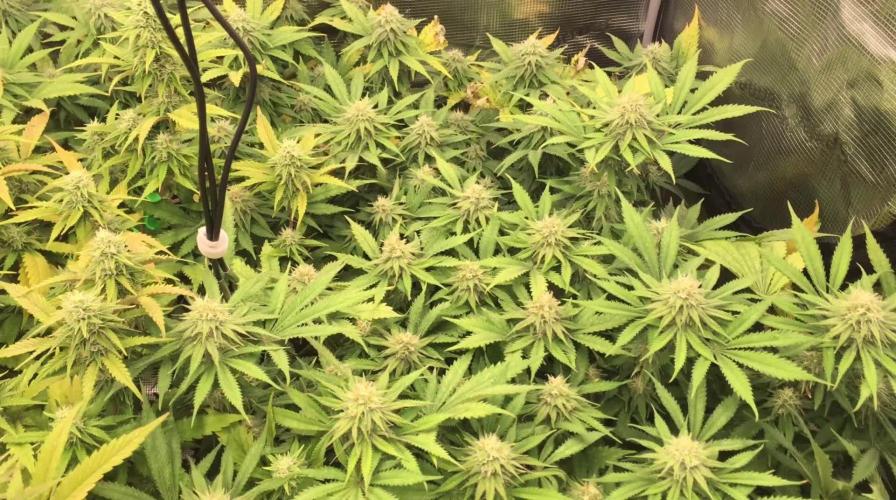
15/10/25 - All watered 2L each 5ml per L Dr organics microben. Im happy these girls can take some abuse because right now im struggling with medical problems. Never needed medicine more than ever and knowing I dont need to eat cheap processed food for the month so I can afford my medication feels amazing. My medical cannabis bill is in the thousands each month and I'd have to skip times I could do with medication just incase next time I neeed it more and as anything medical you only have the supply you have. 🙏
1710/25 - Watered 2L each. They are really some pretty flowers. Love livingsoil its the way forward for me 100% 🙏
Likes
Comments
Share


@SumoStrains
Follow
Sorry for the lack of updates.
Flowerings going well, day 10 now. The kush main colas are pretty much in the light which is a bit problematic but I have the hps dimmed to about 180 watts so its doing ok with being so close.
I'm going to try feeding them a bit more than i have been. I definitely let them get a bit too big before I flowered them!

Likes
37
Share


@RFarm21
Follow
Hello growmies. We are reaching the end of the journey! I enjoyed the experience so much that I will repeat it. I'll take a look at the trichomes to decide when to cut it.
4 Setembro - flush a todas as plantas com água muito fria (3L a cada).


Likes
11
Share


@HappyWeedy
Follow
Already started flushing 2 small Banana Kushes💕 3rd BK is being flushed <3 SENDING LOVE

Likes
Comments
Share


Likes
8
Share


@eldruida_lamota
Follow
Que pasa familia, vamos con la cosecha de estas FBA-2506 de FastBuds.
Por dónde empezar, es una autofloreciente que es normalita de cultivar, tiene un periodo corto de crecimiento y de floración igual no es largo.
En cuanto a la alimentación , pues la aplique una vez por semana y a sido suficiente, se a comportado bien en interior, la flor pues no es muy prieta porque no deja de ser una autofloreciente, pero es una flor que va repleta de tricomas, y tienes unos colores morado intensos.
El periodo de luz pues de principio a fin a 18 horas, fue suficiente para completar el ciclo de vida como esperaba.
Hasta aquí todo, Buenos humos 💨💨💨
Likes
26
Share


@ButterfliesLittleFarm
Follow
Hello Diary.
The second week of vegetation and Hulkberries is progressing wonderfully. 👌 You have grown 20 cm and the plants look happy and healthy. The temperature is slightly higher in the middle of the day when the outside temperature is also high. Sometimes it reaches 28 degrees 😎, but luckily summer is not in full swing so temperatures are acceptable. In my case, the outside temperature also affects the temperature in the box since I don’t use air conditioning for cooling. The box is located in a smaller room without windows, the temperature is not too high. I regulate the humidity with a humidifier, and it varies between 55-65%. 💪
Unlike their Green Gelato roommate, Hulkberries stretch more in height than in width. The distance between the branches is much longer than with Green Gelato.
Starting this week, I started adding Fish-Mix from BioBizz. So this week they will get Fish-Mix, Acti-Vera and Bio-Heaven, 2ml / lit each.
Let's take a look at the activities this week:
28/06/2020. Day 10.
Watering. As I wrote earlier, the food for this week is Fish-Mix, Acti-Vera and Bio-Heaven, 2ml / lit each. P. H. I regulate with Plagron’s Lemon Kick.
02/07/2020. Day 14.
Photographing, watering and measuring height. As for watering, the procedure is the same as 4 days earlier.
Hulkberry #1 - 19 cm
Hulkberry #2 - 20 cm
All in all, everything is going well for now, Hulkberries and Green gelato have almost ideal conditions and I hope that I will continue to do so. See you next week.😀
Likes
23
Share


@Kakui
Follow
F36, desde los últimos 3 riegos, empecé a regar día por medio, con la idea que que engorden más en esta etapa, esperando no sobre fertilizar, también agregue melaza en el último riego, el cuál fue de EC 2.2 y pH 6.4.
En cuanto a tricomas/resina las plantas están espectaculares, el olor también es impresionante.

Likes
241
Share

@Tropicannibis_Todd
Follow
Well growmies ive been looking forward to the Banana Purple Punch 👊 for sometime now , and there both keeper that's for sure 👈 couldn't of asked for better Genetics 😉
The smell coming from both plants during the entire grow was just dreamy 👈.... It's very sweet with that Banana Peel smell 😍
Amazing Plants
👉 Big thanks to all my Growmies out there in GD land 👈 Much appreciated 🙏
Thanks To MarsHydro for the TS1000
👉I used NutriNPK for nutrients for my grows and welcome anyone to give them a try .👈
👉 www.nutrinpk.com 👈
NutriNPK Cal MAG 14-0-14👉 All Weeks
NutriNPK Grow 28-14-14👉 Weeks 2 & 3
NutriNPK Bloom 8-20-30👉 Weeks 4 to 8
NutriNPK Bloom Booster 0-52-34👉 Weeks 4 & 9 & 10