The Grow Awards 2026 🏆
Likes
11
Share
@BudBeezy
Follow
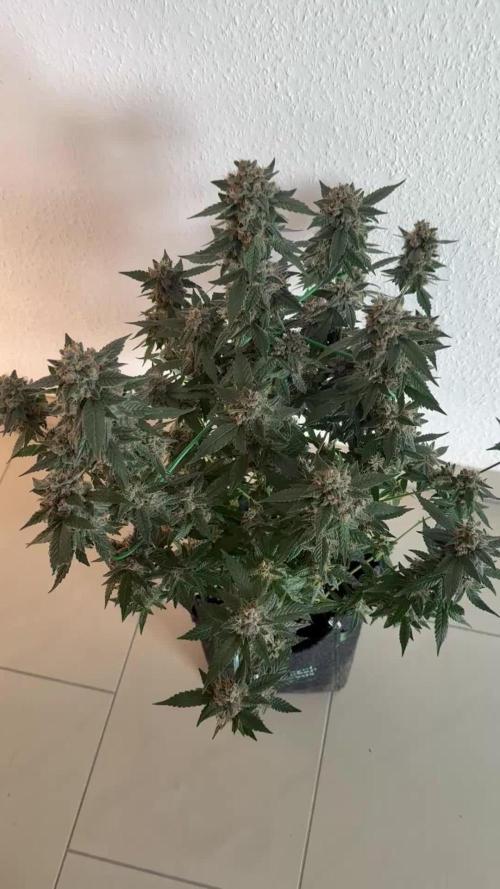
Welcome to week 13 of my grow diary. It has finally happened. The plant is starting to flower. Now the most beautiful phase of the plant begins. Keep your fingers crossed that the weather stays good until the harvest and that no mould will form. Fast Buds estimates a flowering time of 7 weeks. Let's see if this is correct or if she needs a little longer. See you next week ✌️
Processing
Likes
1
Share
Looking ok stretched alot so had to add some caines to support the buds. Done quite alot of defolatin as ther were just many leaves covering bud sites and only using 1 600w so have spaced closer together for more light. Still feeding them doff tomatoe feed and had no signs stress. Goin to add some pk next feed.Had some fkin heat so plants have alittle heat burn so had to higher light alittle also alittle wind burn Owell updates to follow
Likes
26
Share
@GroloCup
Follow
She's moving along into flower and I've started using a little bloom nutes now that the stretch is tapering off. Took off a few fan leaves that were blocking some bud sites and removed some lower growth that wouldn't make much more than underdeveloped larf. She's definitely crowded in the tent, but she's continuing to go through her paces and should stay on track. She's starting to effervesce and it's a sweet earthy note with a more skunky stem rub. Lets see where this week takes us!
Likes
2
Share
@Ninjabuds
Follow
My Skunk Apple Run plant is still a bit young, but I can see those buds starting to form. It's a bit of a slow starter, with buds popping up all over the place instead of a nice even line. We'll see if adjusting the light cycle or its food might help it along. I'll keep you posted on any changes. The past few weeks have been so beautiful, watching the plants grow and change. It's amazing how something so small and fragile can turn into something so strong and vibrant. Now that they're getting ready to bloom, it feels a little bittersweet. I'm so excited to see the finished product, but I'll definitely miss having them around while they're growing.
Likes
7
Share
Que pasa familia, vamos con la cosecha de estas Black Muffin F1 de Sweetseeds. Esta variedad me resultó bastante sencilla de cultivary es bastante resistente, si no la maltratáis crece mucho y bien sana, la flor se ve increíble, tiene una cantidad de resina considerable y unos tonos rojos oscuros muy peculiares, se ven genial. El olor que desprende es bastante frutal con toques cítricos, no pinta nada mal, las flores están prietas. No da mayores problemas, el ciclo no es largo, cuiden con la altura ya que se desmadran un poco. IMPORTANTE destacar: En las fotos comprobaréis que ya no hay botes de cristal con sobres de bóveda, ahora hay Grovebags. Que son una especie de sobres o bolsas que retienen el peso, previene la aparición de moho y mantiene intacto el terpeno, para que el curado sea más óptimo. Hasta aquí todo, Buenos humos 💨💨💨
Processing
Likes
13
Share
las cepas de royalqueenseeds van creciendo muy bien !! impecable hasta ahora todo funciona excelente se notan sanas y muy pequeñas para tantos nudos , esto se ve esperanzador seguimos aprendiendo y si definitivamente el living soil es lomejor ! solo vean esas nenas como están de felices , natural, organico, barato y reciclable
Likes
20
Share
6.4. Die 3 Babys wurden jeweils in 15l Stofftöpfe von Zamnesia 1,5cm unterhalb Erdfläche eingelegt und mit Erde bedeckt. Als Erde wird die 420Grow Erde von Gardenboss verwendet und es wurden jeweils 10gramm von Rhizobacter (RQS) der Erde beigefügt. Im untersten Teil der Stofftöpfe wurden Blähtonkugeln ausgelegt. Die ersten 2-3 Wochen sollen die Pflanzen auf der Fensterbank zur Südseite wachsen und dann in einem Foliengewächshaus (Kesser) auf dem Balkon (ebenfalls südliche Ausrichtung) bis zur Ernte bleiben.
Likes
15
Share
Week 5 for gelato 41, Shes been topped a few times. Still only getting fed plain water, its going to be time to introduce some FPJ soon to her feeding. Also have a few colder days coming up this week so will start to transition slowly to outdoors but not yet to its final outdoor home isnt ready yet, still getting a few things setup where she will have her new home. Mind the colouring in the picture/video as i try to make them less yellow from the HPS light😂
Likes
2
Share
@Dabking
Follow
Flushed and waiting to harvest
Likes
1
Share
Likes
8
Share
Been quite busy so missed a week on here... everything is looking great both responded really well to being topped not much else to say,.. defoliated abit of the bottoms after this video but yeah other than that roll on next week 👌
Processing
Likes
15
Share
SUNDAY 5/5: Rearranged the gardens..have 17 plants in the 4 x 5 now...yowsa! MONDAY: Plucked some dead leaves and did a trichrome check on them both...about half cloudy now..👌 TUESDAY: I observed some white spots(maybe powdery mildew) on a few leaves here and there, so I sprayed them today with Trifecta Crop Cure, a concoction of a bunch of natural plant oils. I already decreased the humidity in the room to 45% with my new 70L dehumidifier, so I think they'll be fine. I'll spray them again tomorrow and the next day, then I'll have to hope that did the trick, because they are entering the harvest window. WEDNESDAY: I watered them today and included a bunch of terpinator, bud candy, bembe, and cha ching. It was their last dose of any nutes...flushing with spring water from here on out. THURSDAY: Took a couple of photos and tried installing my new Solacure FlowerPower UVB light, but it was dead on arrival.😢..back to the 15.0 reptile UVB lights for now I guess... FRIDAY: The guy at Solacure is awesome! He immediately Fedex'd a replacement!👍 SATURDAY: I took a few photos and inspected trichromes...I guess that's it for them both! I'll start flushing tomorrow.
Likes
55
Share
2nd net is up. Early bud formations are promising. holding up to the extremes pretty well, some leaves taking minor damage, but overall, she is holding up, gave her 1 night at 50F see how she would react, stressful. Not advised as it messes with her metabolism, but I want to see if it triggers any anthocyanin response. Love to see her purp up but no signs yet. Remember, For every molecule of glucose produced during photosynthesis, a plant needs to split six molecules of water. This process provides the hydrogen needed for synthesizing glucose and other organic compounds, while oxygen is released as a byproduct. Homework. If Rubisco activity is impaired and it cannot properly function or regenerate its substrate, the plant's leaves are likely to turn a pale green or lime green, a condition known as chlorosis. Essentially, Rubisco activity is highly regulated and susceptible to various environmental and metabolic factors that can cause it to become inhibited, leading to an apparent failure in RuBP regeneration due to a lack of consumption. Rubisco regeneration is intrinsically linked to nitrogen supply because Rubisco is a major sink for nitrogen in plants, typically accounting for 15% to over 25% of total leaf nitrogen. The regeneration phase itself consumes nitrogen through the synthesis of the Rubisco enzyme and associated proteins (like Rubisco activase), and overall nitrogen status heavily influences the efficiency of RuBP regeneration. RuBisCO is a very large enzyme that constitutes a significant proportion (up to 50%) of leaf soluble protein and requires large investments in nitrogen. Insufficient nitrogen supply limits the plant's ability to produce adequate amounts of RuBisCO, thereby limiting the overall capacity for photosynthesis and carbon fixation. Maintaining the optimal, slightly alkaline pH is crucial for the proper function and regeneration of Rubisco. Deviations in either direction (too high or too low) disrupt the enzyme's structure, activation state, and interaction with its substrates, leading to decreased activity and impaired RuBP regeneration. (Lime/yellowing) Structural Component: Nitrogen is an essential building block for all proteins, and the sheer abundance of the Rubisco protein makes it the single largest storage of nitrogen in the leaf. Synthesis and Activity: Adequate nitrogen supply is crucial for the synthesis and maintenance of sufficient Rubisco enzyme and Rubisco activase (Rca), the regulatory protein responsible for maintaining Rubisco's active state. Nitrogen deficiency leads to a decrease in the content and activity of both Rubisco and Rca, which in turn limits the maximum carboxylation rate, Vmax, and the rate of RuBP regeneration Jmax, thus reducing overall photosynthetic capacity. Nitrogen Storage and Remobilization: Rubisco can act as a temporary nitrogen storage protein, which is degraded to remobilize nitrogen to other growing parts of the plant, especially under conditions of nitrogen deficiency or senescence. Nitrogen Use Efficiency (NUE): The allocation of nitrogen to Rubisco is a key determinant of a plant's photosynthetic nitrogen use efficiency (PNUE). In high-nitrogen conditions, plants may accumulate a surplus of Rubisco, which may not be fully activated, leading to a lower PNUE. Optimizing the amount and activity of Rubisco relative to nitrogen availability is a target for improving crop NUE. Photorespiration and Nitrogen Metabolism: Nitrogen metabolism is also linked to the photorespiration pathway (which competes with carboxylation at the Rubisco active site), particularly in the reassimilation of ammonia released during the process. To increase RuBisCO regeneration, which refers to the process of forming the CO2 acceptor molecule Ribulose-1,5-bisphosphate (RuBP) during photosynthesis, the primary methods involve optimizing the levels and activity of Rubisco activase (Rca) and enhancing the performance of other Calvin-Benson-Bassham (CBB) cycle enzymes. Biochemical and Environmental Approaches: Optimize Rubisco Activase (Rca) activity: Rca is a crucial chaperone protein that removes inhibitory sugar phosphates, such as CA1P (2-carboxy-D-arabinitol 1-phosphate), from the Rubisco active site, thus maintaining its catalytic competence. •Ensure optimal light conditions: Rca is light-activated via the chloroplast's redox status. Adequate light intensity ensures Rca can effectively maintain Rubisco in its active, carbamylated state. •Maintain optimal temperature: Rca is highly temperature-sensitive and can become unstable at moderately high temperatures (e.g., above 35°C/95F° in many C3 plants), which decreases its ability to activate Rubisco. Maintaining temperatures within the optimal range for a specific plant species is important. •Optimize Mg2+ concentration: Mg2+ is a key cofactor for both Rubisco carbamylation and Rca activity. In the light, Mg2+ concentration in the chloroplast stroma increases, promoting activation. •Manage ATP/ADP ratio: Rca activity depends on ATP hydrolysis and is inhibited by ADP. Conditions that maintain a high ATP/ADP ratio in the chloroplast stroma favor Rca activity. Enhance Calvin-Benson-Bassham (CBB) cycle enzyme activity: The overall rate of RuBP regeneration can be limited by other enzymes in the cycle. •Increase SBPase activity: Sedoheptulose-1,7-bisphosphatase (SBPase) is a key regulatory enzyme in the regeneration pathway, and increasing its activity can enhance RuBP regeneration and overall photosynthesis. •Optimize other enzymes: Overexpression of other CBB cycle enzymes such as fructose-1,6-bisphosphate aldolase (FBA) and triose phosphate isomerase (TPI) can also help to balance the metabolic flux and improve RuBP regeneration capacity. Magnesium ions, Mg2+, are specifically required for Rubisco activation because the cation plays a critical structural and chemical role in forming the active site: A specific lysine residue in the active site must be carbamylated by a CO2 molecule to activate the enzyme. The resulting negatively charged carbamyl group then facilitates the binding of the positively charged Mg2+ion. While other divalent metal ions like Mn2+ can bind to Rubisco, they alter the enzyme's substrate specificity and lead to dramatically lower activity or a higher rate of the non-productive oxygenation reaction compared to Mg2+, making them biologically unfavorable in the context of efficient carbon fixation. The concentration of Mg2+ in the chloroplast stroma naturally increases in the light due to ion potential balancing during ATP synthesis, providing a physiological mechanism to ensure the enzyme is activated when photosynthesis is possible. At the center of the porphyrin ring, nestled within its nitrogen atoms, is a Magnesium ion (Mg2+). This magnesium ion is crucial for the function of chlorophyll, and without it, the pigment cannot effectively capture and transfer light energy. Mg acts as a cofactor: Mg2+ binds to Rubisco after an activator CO2 molecule, forming a catalytically competent complex (Enzyme-CO2-Mg2+). High light + CO2) increases demand: Under high light (60 DLI is a very high intensity, potentially saturating) and high CO2, the plant's capacity for photosynthesis is high, and thus the demand for activated Rubisco and the necessary Mg2+ cofactor increases. Mg deficiency becomes limiting: If Mg2+ is deficient under these conditions, the higher levels of Rubisco and Rubisco activase produced cannot be fully activated, leading to lower photosynthetic rates and potential photo-oxidative damage. Optimal range: Studies show that adequate Mg2+ application can enhance Rubisco activation and stabilize net photosynthetic rates under stress conditions, but the required concentration is specific to the experimental setup. Monitoring is key: The most effective approach in a controlled environment is to monitor the plant's physiological responses e.g., leaf Mg2+ concentration, photosynthetic rate, Rubisco activation state, and adjust the nutrient solution/fertilizer to maintain adequate levels, rather than supplementing a fixed "extra" amount. In practice, this means ensuring that Mg2+ is not a limiting factor in the plant's standard nutrient solution when pushing the limits with high light and CO2. Applying Mg2+ through foliar spray is beneficial to Rubisco regeneration, particularly in alleviating the negative effects of magnesium (Mg) deficiency and high-temperature stress (HTS). While Mg can be leached from soil, within the plant it is considered a mobile nutrient, particularly in the phloem. Foliar-applied Mg is quickly absorbed by the leaves and can be translocate to other plant parts, including new growth and sink organs. Foliar application of: NATURES VERY OWN MgSO4 @ 15.0g L-1 in a spray bottle. For those high-intensity workouts when 1 meal a day is just not enough! Foliar sprays are often recommended as a rapid rescue measure for existing deficiencies or as a supplement during critical growth stages, when demand for Mg is high. Application in the early morning or late evening can improve absorption and prevent leaf burn. The plant was getting a little limey yellow in the centre. Shortly thereafter, she was back in business, green mostly regenerated. The starting point [of creativity] is curiosity: pondering why the default exists in the first place. We’re driven to question defaults when we experience vuja de, the opposite of déjà vu. Déjà vu occurs when we encounter something new, but it feels as if we’ve seen it before. Vuja de is the reverse—we face something familiar, but we see it with a fresh perspective that enables us to gain new insights into old problems. Confidence is evidence... nothing more. You are confident because you have driven 10,000 times, you are confident because you have spoken 10,000 times. People think confidence is a feeling, but it's not. If you want more confidence, then you need to create evidence, take more shots, collect more data, build more experiences, take more risks; fail, confidence doesn't come first; it is the reward you get for doing the work. no one else wants to do.
Likes
41
Share
Plant is growing fast now. The hot days are back, but we are still going strong.
Likes
15
Share
~english below~ Beide Pflanzen entwickeln sich - trotz des nicht so guten Wetters - prächtig. Topf #2 ist nun 49 cm hoch und Topf #3 67 cm, der Größenunterschied bleibt stabil. Es entwickeln sich mehr und mehr Blüten, wie auf den Videos zu erkennen ist. Da es immer noch einigermaßen windig ist und ich nicht so recht weiß, was ich den beiden Pflanzen zumuten kann, hab ich beide mittlerweile mit Bambus Stäben abgestützt. Und durstiger sind sie geworden, mit einem Liter alle 3 Tage kommen die beiden aber aus. Der Duft wird auch etwas intensiver auf dem Balkon. Aber dank meiner Blumenkästen welche mit gut duftenden Blumen bepflanzt wurden, ist in der Umgebung nichts von meinen zwei Hübschen zu riechen. english Both plants are developing splendidly - despite the not so good weather. Pot #2 is now 49 cm high and pot #3 67 cm, the size difference remains stable. More and more flowers are developing, as can be seen in the videos. As it is still quite windy and I don't really know what I can expect from the two plants, I have now supported both with bamboo sticks. And they have become thirstier, but they can both get by with a liter every 3 days. The scent is also getting a little more intense on the balcony. But thanks to my flower boxes, which are planted with fragrant flowers, you can't smell anything of my two beauties in the area.
Likes
69
Share
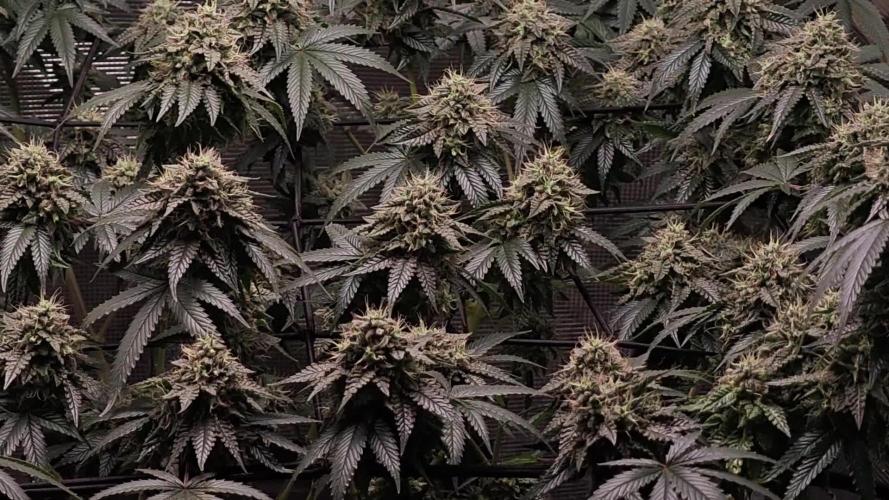
Week 14 from Seed – Week 3 of Flower – Full Bloom Ahead The garden is shifting, and so are the vibes — we’re now stepping into the serious stages of the Eternity Grow Cup. Week 3 of flower, and what a beautiful time it is. The girls are officially locked into bloom mode and starting to show their power, stretching with grace and stacking flowers that promise magic. They’ve filled up the SCROG like it was meant for them — one look, and you can feel the energy radiating off the canopy. We started this week a little on the chilly side, with temps dropping down to 16°C, but we found the rhythm. By the end of the week, we had it all dialed in: 24°C with 60% humidity, giving us a clean and steady VPD of 1.22 kPa. CO₂ is rolling at 1107 ppm, and let me tell you, the girls are loving every part of it. They’re responding like pros — strong, healthy, compact, with early signs of dense flower sites setting in all over the canopy. The ICL 300s are fully in play now, and they’re doing a spectacular job. Light penetration is even, and the plants are soaking it up. We’re still holding off on UV, just letting the full spectrum and reds do their thing for now. We’ve updated our feeding too — we’re now into Week 4 of the Aptus Holland Clean Program, and we are about to introduce Plagron Green Sensation into the mix. A little booster to spice up the bloom and get those flower stacks rising to the challenge. The water temps were a struggle — stuck at 14°C — so we dropped in a classic aquarium water heater, and now we’re sitting at a comfy 20°C. Small changes, big impacts. You can see it in the leaves, in the way they pray up toward the light. This week’s visuals? Shot with both the Nikon and Sony setups, featuring different lenses and filters to capture the layers of depth, light, and mood in the garden. The difference between them is clear — two different worlds coming together to tell one story. You’ll feel the vibe through the lens, I promise. Also, it’s veggie season outside — and in the middle of the flower hustle, I’ve been grounding myself with the babies in the outdoor garden. You’ll find some shots of the onions, peppers, and early green life joining the party. Nature always balances herself. Looking forward, Day 21 defoliation is just around the corner — we’ll be opening up the canopy, making way for the light to reach deeper, and helping these compact queens shine even brighter in the weeks to come. We’re just getting started. Massive love and gratitude to Zamnesia, Plagron, and Grow Diaries for building this amazing platform for us to grow, share, and celebrate this journey together. And to my beloved sponsors — Aptus Holland, Grove Bags, TrolMaster, ThinkGrow LEDs, Promix, Cannakan, and Ziggy Papers — thank you for the love, the gear, and the belief. And to all of you — lovers, haters, OGs, first-timers, and curious wanderers — thank you for being here. For showing up. For feeling the garden. This journey is for all of us. Let’s keep blooming. More magic coming in the next chapter. 🌸💨 Genetics - Runtz https://www.zamnesia.com/6000-zamnesia-seeds-runtz-feminized.html Nutrients - Plagron https://plagron.com/en/hobby - Aptus Holland https://aptus-holland.com/ Controls - Trol Master https://www.trolmaster.eu/ LED - https://www.futureofgrow.com/en LED - https://www.thinkgrowled.com Soil - https://www.promixgardening.com/en Germination - Cannakan https://cannakan.com/?srsltid=AfmBOopXr-inLXajXu3QFgKXCXXos4F1oEvScjMKIB5MR5dk8-GJ-F49 DOGDOCTOR 15% off Smoking Papers - https://ziggioriginal.com/ Terpene saver - https://grovebags.com/ As always thank you all for stopping by, for the love and for it all , this journey of mine wold just not be the same without you guys, the love and support is very much appreciloved and i fell honored with you all in my life With true love comes happiness Always believe in your self and always do things expecting nothing and with an open heart , be a giver and the universe will give back to you in ways you could not even imagine so As always, this is shared for educational purposes, aiming to spread understanding and appreciation for this plant. The journey with nature is one of discovery, creativity, and respect. Let’s celebrate it responsibly and continue to learn and grow together! Growers Love To you All 💚 #EternityGrowCup #RuntzHunt #GrowersLove #CannabisCommunity #AptusHolland #ProMixSoil #TrolMaster #Zamnesia #Plagron #ZiggiPapers #Grovebags
Processing
Likes
8
Share
@STLGROWER
Follow
This week has been amazing! Starting to see fast growth on one of the plants . Finally into the vegetation stage, but the other plant has fallen behind an is not in the video. Giving the plant more attention and hope it pulls through. ***Updates*** Hey, My name is marcus . I am the Head Grower here. Just giving you a update. Ive improved/upgraded my watts