The Grow Awards 2026 🏆
Likes
12
Share
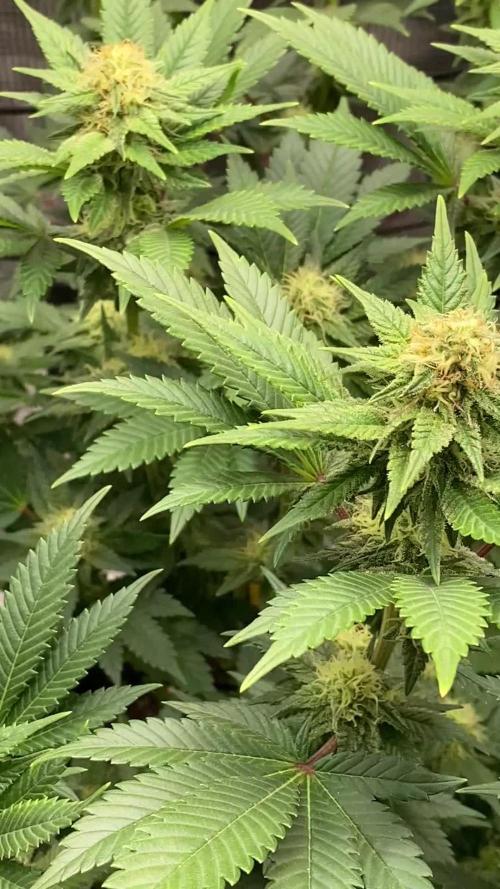
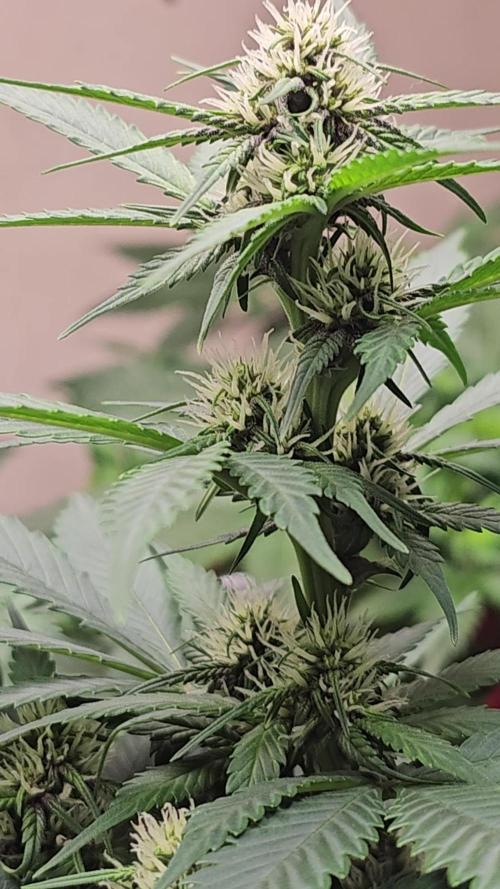
Hey, sie wächst wirklich gut und schnell, doch der Winter rückt immer näher und ich habe Angst das sie es nicht rechtzeitig schafft... Was denkt ihr wie viele Wochen sie noch braucht? Am 23. Juli habe ich den gemeinten Samen eingepflanzt.
Likes
13
Share
@Lazuli
Follow
They grew and flowered very fast the one plant got very dense buds the other many small frosty ones
Likes
5
Share
@Fefa128
Follow
Alright Week 4 and end of treatment , start of flower... Maybe it's not just there for calling it flowering week one... But still... Videos still in Spanish. See you next week!
Likes
18
Share
Heute ist sie genau 31 Tage alt, ich meine erste Anzeichen von Blüte zu sehen. Nächstes Giessen dann mit Hesi Boost und Blühkomplex 👍 Drückt mir die Daumen, und ja, ich weiß, das darf man alles mit Autoflowern nicht machen. Freut euch auf das Lollipopping in der Blüte 😂 Happy growing 🥦😎
Likes
27
Share
Hallo liebe Growfreunde 💞 Ich bin zurück mit dem neuen Wochenbericht 🤗 Danke an die neuen Follower, ich hoffe es macht euch Spaß meinem Grow zu Folgen An alle anderen, für immer aktuelle Updates auch Folgen😁😁😁🤗🤗🤗 So jetzt zum Wochenbericht. Alles läuft sehr entspannt, kaum was zu tun, aber es ist einiges passiert🤩🤩. Die Buds werden fetter, der Geruch ist einfach himmlisch und die Farben sehen toll aus. Leider kann man die Farben nicht so gut erkennen auf den Bildern, aber es purplet ganz schön🤗😁 Die Sweet ZZ erholt sich von ihrer Calmag Blockade und die neuen Blätter zeigen keine Anzeichen mehr auf Mängel. Die Gorilla Zkittlez holt an Größe auf und ist jetzt etwa so groß wie die Sweet ZZ, aber mit deutlich weniger Nodien. Ich denke die Peyote Critical wird als erstes reif sein, sie wirkt am weitesten entwickelt und auch die Blütezeit ist die kürzeste von meinem Setup. Danach wahrscheinlich die Sweet ZZ und evtl. Die Green Gelato. Die Runtz und die Lemon Shining Silver Haze werden am längsten brauchen. Ne quatsch, die Gorilla Zkittlez wird am längsten brauchen da sie erst seid etwa 2 Wochen blüht. So das wars für diese Woche meine lieben💞 Ich hoffe euchvgefällt was ihr seht und lasst likes und Kommentare da🤗🤗🤗 Tut gutes💞 Cioaiii👋👋👋
Processing
Likes
1
Share
@Tri_Op
Follow
Have had a lot of issues with rising ec levels so have been feeding at 3/4 strength of what Cyco reccomends for week 5 of flower. No issues have been apparent with the plant visually, however I will reduce nutrients to half strength for the following week. Buds are developing nicely, a large amount of trichome production over the past week. A few gaps in the node spacing on the colas but I’ll put that down to a far too excessive defoliation at the start of flower. Smell is extremely strong, my carbon filter can’t filter all of it out so half of my house smells of musty candied fruits.
Likes
23
Share
She is going strong into flowering, lots of leaves fading fast, defoliated the far gone leaves but trying to keep stress to a minimum. Loving the purple colors she is putting out.
Likes
47
Share
Gave her a cocktail to help with stress. Added 1st net for lateral support, not so much now, but for later. Blue light is absorbed by photoreceptor proteins called phototropins, which trigger a hormonal response that causes cells on the shaded side to elongate, making the plant bend toward the light. Try and fill this side a little. She is quite big already, just needs to find her stride again after the undue torture. The mind is constantly working and producing, just like a factory. It's not just a passive recipient of information but an active producer of ideas, attitudes, and beliefs. The "ingredients" in this factory are the information you consume, such as books, conversations, and the media you engage with. The "products" are your thoughts, beliefs, and actions. The quality of the ingredients directly influences the quality of the output. 5 apex stems with 20-30 mini cola, let them develop a little, with the apical dominance shattered, all those 20-30 will all compete with each other as soon as that stretch is initiated. Key to a good stretch is making sure the plant is cycling efficiently, with large ATP conversions occurring lights out. For now, keeping light intensity high. A plant will slow its vertical growth in very high light intensities, leading to a more compact form with thicker stems and leaves. This response is a protective mechanism against light stress, which can damage the photosynthetic apparatus and lead to symptoms like leaf scorching, yellowing, and brittleness. Instead of growing taller, the plant invests its energy into creating a more robust, stress-tolerant structure. Providing plants with necessary antioxidants helps protect the photosynthetic apparatus by scavenging reactive oxygen species (ROS) that cause damage from excess light. UV light exposure can impact the xanthophyll cycle by either enhancing its photoprotective role or causing damage, depending on the intensity and type of UV radiation. UV exposure can trigger the synthesis of more xanthophyll cycle pigments to increase the plant's capacity to dissipate excess energy, but it can also cause direct damage, particularly to Photosystem II, and may lead to a decrease in the de-epoxidation state (DEPS ratio) which indicates a reduced capacity to dissipate excess energy. Plants can respond to UV stress by increasing the synthesis of xanthophyll cycle pigments, such as violaxanthin and zeaxanthin, to improve their photoprotective capacity. UV-induced changes in xanthophyll cycle pigments can be linked to a plant's overall tolerance to high radiation stress. The xanthophyll cycle helps protect against photoinhibition, which is especially important when the plant is exposed to high levels of both UV and visible light. High doses of UV radiation can directly damage photosynthetic components, including the proteins, lipids, and pigments in the thylakoid membranes. Exposure to UV radiation can have a mixed effect on the de-epoxidation state (DEPS ratio) of the xanthophyll cycle pigments. In some cases, UV can inhibit the conversion of violaxanthin to zeaxanthin, resulting in a lower DEPS ratio and a reduced capacity for energy dissipation. However, the total pool of xanthophyll cycle pigments may increase, and this enhanced pool size could provide a greater potential for photoprotection despite a lower DEPS ratio. The xanthophyll cycle works alongside other mechanisms, such as the accumulation of flavonoids (UV screens), to protect the plant from UV-induced damage. Blue light repairs 100% UV-induced damage in plants through a process called photoreactivation, which uses a light-dependent enzyme called photolyase. This enzyme uses energy from blue and UV-A light to directly reverse the damaging pyrimidine dimers in the DNA caused by UV-B radiation, a key mechanism for maintaining the plant's genetic integrity. After carbon, light, water, temperature, and nutrients, the limiting factor of a plant's growth is often its own internal factors or the amount of a key ingredient. Chlorophyll concentration is one such factor, as the amount of this pigment limits how much light can be captured for photosynthesis. Other factors include chloroplast number, respiration rate, and the concentration of carbon dioxide in the atmosphere, as plants are often in a CO2-deficient condition. 60x60x18=64800seconds x 700 = 45,360,000moles. 45DLI Exposure to 165 µW/cm² of ultraviolet-B (UV-B) light for 3600 seconds = 1 hour, a extremely high, acute dose triggering stress responses and protective mechanisms. . The plant's photoreceptor protein, UVR8, senses the UV-B radiation. This triggers a signaling cascade that activates specific genes to protect the plant from damage. In response to the UV-B signal, the plant ramps up the biosynthesis of protective compounds like flavonoids, phenolic acids, and anthocyanins. These compounds absorb UV radiation and accumulate in the epidermal layers of leaves to shield inner photosynthetic tissues. The plant may increase leaf thickness or deposit more cuticular wax, creating a physical barrier to the radiation. The plant will produce more enzymatic and non-enzymatic antioxidants to neutralize the reactive oxygen species (ROS) produced by the UV-B radiation. The plant activates enzymes, including photolyases, to repair DNA damage caused by the UV-B. These repair mechanisms are critical for preventing permanent genetic mutations. While protective measures are activated, a high dose delivered over a short period can cause stress that overwhelms the plant's defenses. Photosynthesis is highly sensitive to UV-B. A high dose can inactivate Photosystem II (PSII), damage thylakoid membranes within the chloroplasts, and reduce chlorophyll content, which lowers the plant's overall photosynthetic capacity. Despite repair mechanisms, high UV-B doses can inflict persistent damage on the plant's DNA. The overproduction of reactive oxygen species can cause oxidative stress, leading to the oxidation of lipids and proteins and disrupting cellular function. I am playing in the enchanted forest. A shift in perspective is what changes perception over time. By deliberately considering a situation from another point of view (perspective), you can challenge your initial, knee-jerk interpretation (perception). This is a valuable skill in both personal and professional life for fostering empathy, improving problem-solving, and making more informed decisions. Move the mind off perception into perspective. Thank you.
Likes
3
Share
Week 2 under the TS1000, another week to go and the girls will start flowering 😁 excited about all these yummy fastbud strains! The next week i will add another TS1000 to this girls as my other grow will finish!
Likes
11
Share
@UrbanBoer
Follow
Finally almost a year later and she finally retires 😭😭😭😭😭to emotional she did not want to miss out on the summertime heat and the beginning of autumn, 70 grams, the plastic bag is 3 grams. Loving her… she is my 2nd best strain this harvest, the smell
Likes
47
Share
@Reyden
Follow
The Sin insieme a White Runtz sono cresciute in maniera spropositata verso l alto, ora diminuirò l azoto perché così non so dove potrebbe arrivare 😅 Stranamente quando entrò nella stanza inizio già a sentire i terpeni, di solito non mi capita fino alla 4 settimana settimana di fioritura visto che poi ho anche sempre il naso chiuso 🤔👃quindi o è il mio naso che funziona meglio o sono le piante 🌱 che vogliono già sprigionare la loro vera natura ehehe e penso che sia proprio così..sono anche loro impazienti di vedersi crescere e maturare la loro resina che servirà per tante buone cose ❄️ Nel frattempo cerchiamo di tenerle sane fumo a quel momento!!! Grazie di essere passato e ci vediamo nei prossimi aggiornamenti 😃📸🌱
Likes
42
Share
WEEK 7 - The ladies start looking like gorillas 😃 9L Pot trichomes start forming on sugar leaves 12L Pot the buds are strat forming and this lady will be big gorilla
Likes
168
Share
@deFharo
Follow
Bienvenidos cultivadores de marihuana clandestinos, y también, a los que tienen la fortuna de no serlo!🖐️👨‍🌾 esta temporada cultivando leyendas sativas... todo por la causa! Cinco semanas desde el paso a floración, la gran hembra colombiana, sin complejos, destaca con estilo propio frente a mis otras cepas más avanzadas, ¡un bosque floreado me espera para perderme en él! Que hablen las fotos.... Feliz verano cultivadores! Hasta la próxima... SALUDOS A TODOS!! =========================================================================== Esta cepa es un retro cruce entre RedSnake (79 oaxacan x punto rojo) x Punto Rojo, me regaló la semilla un buen cultivador @1Right_Angle Más información de ambas cepas: https://es.seedfinder.eu/strain-info/Oaxacan_Tribute_F1/Sativa_Hoarders_Seed_Co/ https://en.seedfinder.eu/strain-info/Colombia_Punto_Rojo/Cannabiogen/ La Colombia Punto Rojo, o simplemente Punto Rojo, es una variedad de cannabis de dominancia sativa, caracterizada por su alto contenido de THC. El cannabis fue importado a Colombia desde África en el siglo XVIII. La cepa Punto Rojo es originaria de las zonas altas del centro y norte del país, y se popularizó en toda Sudamérica y en los Estados Unidos durante la década de los 70 y 80. Al igual que otras variedades autóctonas de las áreas tropicales, la Punto Rojo tiende al hermafroditismo.
Likes
13
Share
It was harvested on day 55th of flowering. Easy to grow, nice looking strain. I will update once the THC% is measured.
Likes
46
Share
February, 6th The Plants are entering the second Week of Flower. All Plants looking very Good. Nice and green. Its o much fun to grow in that small vessels.... I measured and its only 10g of Soil in the Sheeps Only the candleholders got more Volume Iam watering the Sheeps 2-3 Times daily , in letting them "dive" into the Feedingsolution Iam very happy to be challengend by this, Ima feeling prepped to Grow Soilless or Hydro Have Fun with my " EGGHUNT"-Grows
Likes
11
Share
These Photos/Videos Document 9 weeks 1 day, busy times for me so didn't get to upload as much, what led me here : i feed nutrients every watering (still)😊, defoliation on day 39-41 , removed most lower branches that weren't exposed to direct light (could have done more)😔 on day 53, lower bud sites were also removed (should have done more)😆