The Grow Awards 2026 🏆 













Processing
Likes
Comments
Share
@MUSRIME_supreme
Follow
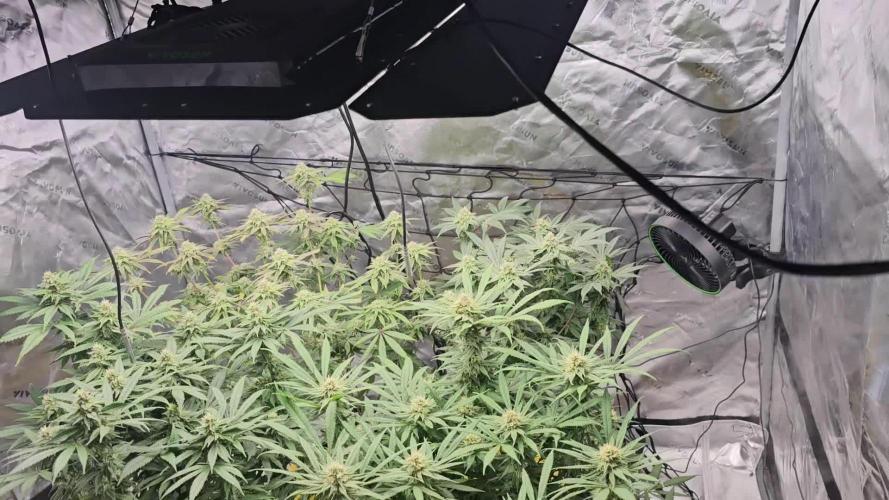
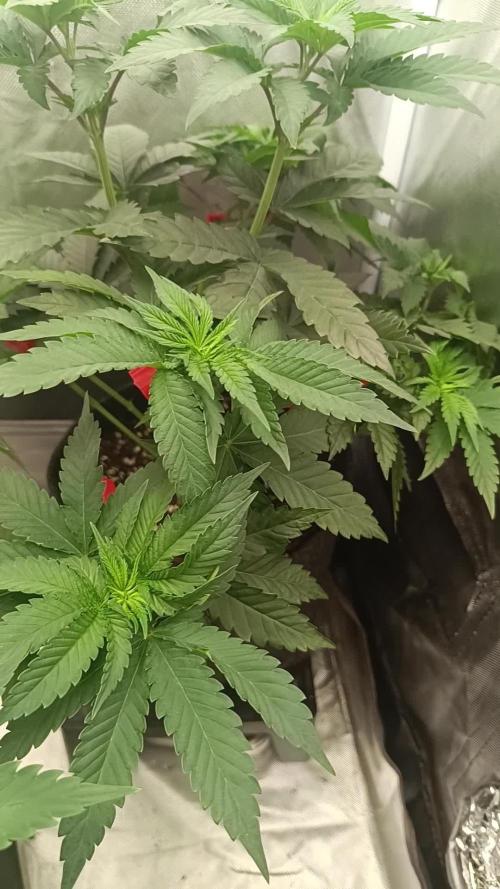
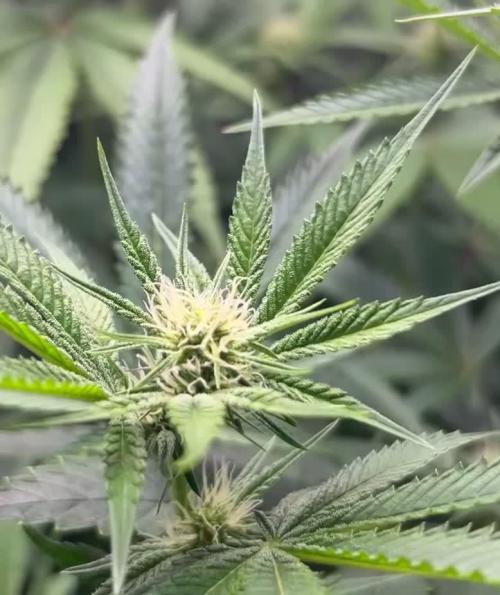
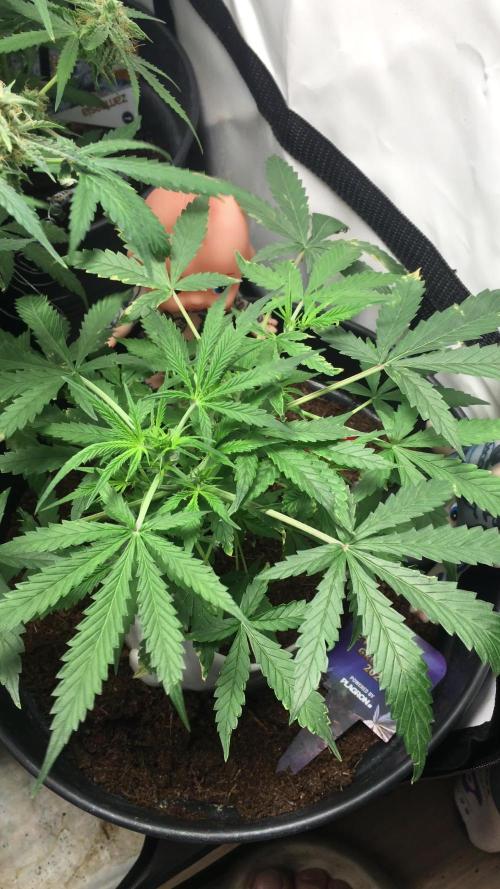
В нашем регионе, аутдор бесполезен :)
Проще было все эти семечки вырастить в индоре.
Всем спасибо за просмотр =)
Processing
Likes
6
Share
@Silverback_Guerilla
Follow
SUNDAY 5/5:
Rearranged the gardens..have 17 plants in the 4 x 5 now...yowsa!
MONDAY:
Plucked some dead leaves and did a trichrome check on her. She's getting close now! Prolly about 70% cloudy and 5% amber!
TUESDAY:
I observed some white spots on a few leaves here and there, so I sprayed her today with Trifecta Crop Cure, a concoction of a bunch of natural plant oils. I already decreased the humidity in the room to 45% with my new 70L dehumidifier, so I think she'll be fine. I'll spray her again tomorrow and the next day, then I'll have to hope that did the trick, because she is already in the harvest window.
WEDNESDAY:
I watered her today and included a bunch of terpinator, bud candy, bembe, and cha ching. It was her last dose of any nutes...flushing with spring water from here on out.
THURSDAY:
Took a couple of photos and tried installing my new Solacure FlowerPower UVB light, but it was dead on arrival.😢..back to the 15.0 reptile UVB lights for now I guess...

Likes
3
Share
@GoldenWeedGrower
Follow
WEEK 12-18 of May: Only few buds remaining for the blooming phase and only one for the left one, I'm curious to see the outcome. The final count of buds should be around 12 buds.


Likes
6
Share
@FijiS
Follow
Week6 D1
Some issues persist but we are now in too deep to fix it- I will continue to flush and get ready for harvest with rainbow belts. Pictures of her trichromes uploaded. The others are still clear and look to be swelling slowly but Apple crumble started throwing tons of popcorn nugs after the flush which I think is from the salts washing off but again we will stay the course. Plan to check and water tomorrow with cal mag.
Week6 D3
Problems persist with Rainbow but trichromes are starting to amber. Will just stay with clean water and flush til harvest. I think the deficiencies with preharvest is causing a compounding issue but the buds still look good albeit smaller.
Week6 D4
Same issues persist but we will let them dry out. Since I zapped the nutrients from pot with flush we will feed liquid for the other three girls (not rainbow) til a week before harvest.
Wish me luck!


Likes
127
Share
@DreamIT
Follow
🎃👹👽MONSTERCROPPING RED MANDARINE 👽👹🎃
____________________________________________________________________________________
💀 12.3 ...
💀 13.3 ...
💀 14.3 ...
💀 15.3 ...
💀 16.3 ...
💀 17.3 I have not forgotten about this beauty, but it was too downtown to constantly move it to take pictures. But I am attaching the last photos, before cutting (and certainly some other macro) on like this! yeah!
💀 18.3
____________________________________________________________________________________________
📜👀 A look at the details of what I'm growing 👀📜
🍊💚 Red Mandarine F1 🍊💚 by 🌱🍭 Sweet Seeds 🍭🌱
📋 Details
⚧ Gender
▪️ Feminised
➰ Genes
▪️ 55% Indica / 45% Sativa
🎄 Genetics
▪️ Red Poison Auto (SWS39) хCalifornia Orange x Skunk hybrid)
🚜Harvest
▪️ 400 - 500 g / m²
🌷Flowering
▪️ 49 - 63 days
✨THC
▪️ 16%
✅CBD
▪️ 0,2%
🏡Room Type
▪️ Indoor
🌄Room Type
▪️ Outdoor
🕋Room Type
▪️ N/D
🎂Release Year
▪️ 2019
__________________________________________________________________________
👀📷🥇 Follow the best photos on Instagram 🥇📷👀
https://www.instagram.com/dreamit420/
🔻🔻🔻Leave a comment with your opinions if you pass by here🔻🔻🔻
🤟🤗💚Thanks and Enjoy growth 💚🤗🤟

Likes
6
Share
@Popsgrow
Follow
Well I finally got these girls in the dry tent did not get a wet weight will update on the trim and dry weight I will suggest if you are using 5 gallon pots definitely jump to at least a 7 gallon pot huge difference the buds look and smell awesome ready to set up 5x5 and 30 gallon pots


Likes
8
Share
@Castiel1989
Follow
Spider mites are getting worse. Also have to harvest soon cause I start travelling next week and I can’t finish and dry them in time. But the trichomes are almost ready

Likes
11
Share
@Beedog
Follow
Good weed will come back with full harvest weight when it’s all fully dry total weight 1650g and a plant that went to complete shit that had about 6oz on it added to the trim to be made into something what ever she decides so over all a good harvest if I had another two weeks and not a massive heat wave in middle of flower i reckon I would of touched two keys
Processing
Likes
3
Share
@Iop420
Follow
Hi guys 👋. Also this week I let the pictures and grow log to speak. Thanks for watching. Peace and patience ✌️
Likes
69
Share
@JohnnyBlaz3
Follow
soooo purrrrrddddyyyy! I'm thinking i'm about a week out but well see. Today is 54 of flowering. Noticed the first dying leaves a couple days ago but its coming on slow. The trichs are just craaazzzzzy!!! lol i hope shes a potent as she looks!!! hahhaa so many !!!!!!! but i'm excited!!! hahahha well, i hope the finish is smooth and we have a nice harvest here 😁

Likes
8
Share
@PureMedicin
Follow
Fat nugs forming. Flushed into half strenght nutrients. Getting more light green leafs. Smells fruity and have a strong scent. Small yielding strain.

Likes
1
Share
@CheeRz
Follow
It's vegi week 4, and the two lemon ladies are doing splendidly. If they continue to grow like this, they should be ready to switch to the flowering stage by the end of week five.

Likes
45
Share
@BodyByVio
Follow
Beautiful flower full of trichomes. Smell and test fantastic. Very fast flowering. She was done on day 49 but I cut her down few days later.
I love the strain, the only thing that I will like this strain to have is a better yield. Beast quality buds I ever grew.
Likes
5
Share
@DannyGNYC
Follow
Week 8 my babies are coming along. Looking healthy and getting big fast.
Likes
39
Share
@wolfvb
Follow
🌿 Week 6: Explosive Side Growth & The Recovery Phase
Strain: Sticky Broccoli Auto 🥦
Stage: Late Vegetation / Pre-Flowering
Light Cycle: 18/6
📝 The General Vibe The "Sticky Broccoli" is really starting to live up to its name not because of the resin yet, but because she’s bushing out like crazy! After pinning the main terminal down last week, the side branches have officially taken over. Despite my shoulder injury, the garden is thriving, proving that a little bit of LST goes a long way.
🍽️ The Menu (Nutrients) Still staying consistent with the Plagron and BioBizz regimen.
Root-Juice: 3ml (Finalizing the root base)
Bio-Grow: 2ml (Supporting the leafy explosion)
Bio-Down: 1ml (Keeping that pH stable around 5.9 for the coco mix)
Observations: The redistribution of auxins worked perfectly. I now have 4-6 secondary tops that are all competing to be the new main lead. The stem is thickening up nicely, and I’m starting to see the first signs of "pre-flower" pistils.
👽 Final Thoughts Gardening with one hand was a workout, but seeing these results makes it worth it.
The "Kewpie" Garden Managers are still on duty and seem happy with the progress. Next week, I expect a significant vertical stretch as she prepares to flower!

Processing
Likes
10
Share
@LedboxCulture
Follow
BEST genetics
I want to see the different clours of the flowers right now🎌📸
Expectatives Is all. I have the BEST phenos here🎌🌱💣
Likes
190
Share
@Burmese
Follow
Hi everyone,This time I can update right on time and this could be the last week update before harvest.I am planning to harvest Soil girl or may be both of them next week.Hope you guys enjoy the journey.Actually Soil girl is more mature than Coco girl.More in amber trichomes.Coco girl, She got mostly cloudy trichomes and only some amber.Still not sure it will be better or not if I chop both of them together.I start giving them water only and will flush Coco girl before harvest.
Let’s see if I change my mind to harvest together or not ... 😂 ✌️ 🇲🇲
Soil-Organic-LST
Day 120~126
Soil
RO water
pH- 7.0
ppm- 10
Run off
pH-6.6
ppm-550
Soil Potting Mixed Recipe
10gallon Pot
-Coco peat: 30%
-Soil Compost: 20%
(Soil,Sand,Cow manure,Ash)
-Bone meal: 10%
-Earthworm fertilizer: 10%
-Perlite: 15%
-Marble stone: 5%
-Crash egg shell: 3%
-Chicken manure: 3%
-Banana peels: 2%
-Gypsum: 2%
———————————————
Coco-Inorganic-ScrOG
Day 120~126
Coco
RO water
pH-7.0
ppm-10
Run off
pH-6.0
ppm-1000
Coco potting mixed recipe
10gallon Pot
Coco peat : 70%
Perlite : 30%
Transplanted from 1gallon coco/soil mixed pot at Day-42.
Scrog size
Area : 1ft x 1ft (30cm x 30cm)
Hole size : 2” (5 cm)
Material : iron welded by four steel pillars.
Height from base: 6” (15cm)
Happy Growing to you all... ✌️
Likes
37
Share
@Cremo
Follow
So here we are, at the end, a few months later. I was so happy that I'll finally grow a plant without any training at all, just to see the full and uninterrupted genetic expression. It was a blast to grow her, I can't wait for the plant to dry and give it a few weeks of curing but she smells great already.
I also wanted to thank Divine Seeds for the contest strain and Bio Tabs for great Bio fertilizer. You can judge for yourself because I'll let the photographs speak for themselves.
Speaking of photography, I went with a moody style this time, because she has a great structure. I've trimmed her a little bit here and there and I've left a few big fan leaves on both sides for better looks.
The big fan leaves reflect the light so well, it make the whole plant shine. Okay now head to the gallery and let all that sink in ;)
XOXO
Cremo

Likes
13
Share
@deFharo
Follow
🖐️👨🌾 Bienvenidos entusiastas de la marihuana casera, clandestina y orgánica!
Séptima semana de floración, esta variedad casera la he cultivado en otras dos ocasiones, y en ambas, la floración duró 11 semanas, así que queda mucho juego por delante, de momento en estos días voy a tener que poner tutores en las ramas más altas, pues el peso de los cogollos las comienza a doblar... a jugar! 😈
El consumo de agua y nutrientes es alto y estable, nada le afecta... es la Reina del jardín! 👑
Alimento mis plantas exclusivamente con Bio Fertilizantes solubles que hago en mi casa, no uso ningún tipo de fertilizante comercial, sólo materias primas y minerales en polvo, tengo más de 40 formulaciones de Bio Fermentos solubles con microorganismos de montaña y varios tipos de hidrolizados, todos compatibles entre si, que me permiten hacer mezclas de riego gourmet para que nada les falte a mis cultivos... Hay esperanza!, pues no hay nada más subversivo que un jardín de marihuana orgánica auto suficiente! 💃👨🌾🌲💡
HASTA LA PRÓXIMA...
SALUDOS Y SALUD A TODOS!
Esta temporada jugando en mi carpa principal, con 8 cepas/plantas, en macetas old-school de 7 y 11L.
=========================
Semilla femenina S1 nacida en casa por un retro cruce espontaneo hace cuatro temporadas:
La mamá fue Queen Mother de Original Delicatessen Seeds (https://growdiaries.com/diaries/146971-grow-journal-by-defharo)
=========================