


Likes
Comments
Share


@CanadianFillmore
Follow
Flushing has begun! GG4 is looking good, trichomes are about 5-10% amber. Her buds are heavy, I've got to try the beaches up to support them or they twist downward. Good smell, good size to the buds, count down to harvest!!
Thanks for looking at my grow! 👽🌳

Likes
22
Share


@ShowsWorld
Follow
Starting flush tomorrow. Everything looks very frosty but the buds haven’t begun to swell just yet I’m hoping they pack on some weight in the last two weeks.

Likes
11
Share


@PanGrower
Follow
I think about the fact that it is no longer necessary to cut leaves. I cut it a lot, but I notice that many people cut a bunch of leaves at one time, although somewhere I read no more than 10% at a time.
When I gave fertilizers, I always diluted them with water even more to reduce ppm
Day 68: I added cal-mag to the diet because the leaves are really turning yellow from the bottom. 0.5 ml
Day 70: I added 1 ml cal-mag
Likes
233
Share


@Tropicannibis_Todd
Follow
🐶🐶🐶🐶🐶 👉Alrighty Then👈🐶🐶🐶🐶🐶🐶
We're 28 days in and we be moving along great 👍 I really wanted more time in veg butt these girls had other plans 👈
👉The SweetDream Rose is the tallest and biggest mover growing 12 inches in just one week 😲 gotta love that purple hues coming in 👈
We've also got some double tops on some branches as well as some triple internode branching so unexpected but not concerned 👈
All plants are blooming like crazy 🤪 🙀
We got some great growth right across the board on all plants 👈 All plants receiving at least a min of 750 PPFD
🐶 🐕 🐶 🐕 🐶 🐕 🐶
So we are back for another round 😛 But this grow is special because my big boy needs some love too , he's been getting on the old side of things and his hips have been giving him trouble so I've been buying CBD treats for him and it works great so 😉 👍
I've decided to grow this for my little buddy 🐶 so I can make him some Doggy 🐕 Treats and plus I've never tryed it myself and I really wanna give it a go👈 😊 so let's see what it's all about 👈
I will post the recipes at the end of harvest 👏
So Let's Do This👈
👉Soil Provided by ProMix.ca
👉Nutrients Provided by Agrogardens
👉Lighting Provided by MarsHydro.ca
👉Seeds Provided by Kannabia Seeds

Likes
8
Share


@Mo_Powers
Follow
we are entering the 6th week. slowly the little one is growing towards the sun. i did a first topping and started with LST. maybe it was too early with the topping? we will see. the sun is shining more again and the temperatures are slowly rising.

Likes
36
Share


@TheNewGuy94
Follow
Week 12
Day 81, looking great, getting her final flush and Ill be harvesting this weekend!


Likes
18
Share


@ganjameister
Follow
Hella Jelly F49
The strain is finally coming to an end and will be harvested next week.
The buds are super heavy and have started bending the branches.
Smell is very much grapes and strawberries at this point!

Processing
Likes
32
Share


@Dunk_Junk
Follow
14cm vertical growth this week. Flowering stretch reducing.
Trichome production has started! She's starting to get frosty.
Likes
25
Share


@BudHaks
Follow
As you can see, she is getting thicker as days go by! Looking to harvest her in 2 weeks! Minor light burn on the top cola, but other then that no deficiencies at all.
Likes
48
Share


@AsNoriu
Follow
Day 24. Girl is recovering nice, think to start training her next week.
Great light no doubts! Mars TS1000 and daily rotation around axe, plus changing positions every 2 days - helps a lot with even development.
Girl is on pure 6.3 ph water, think next time ill go with 1 liter, till then 600 ml every 3 days ...
Happy growing !!!

Likes
39
Share

@wolfvb
Follow
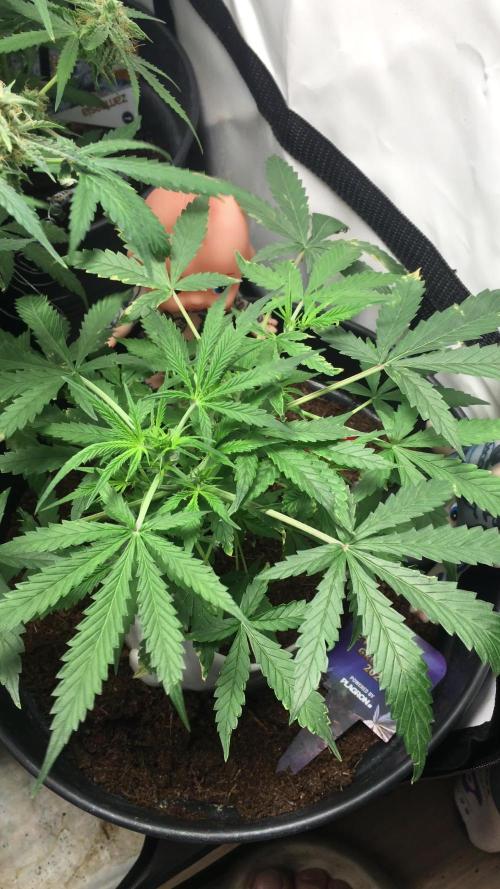
🌿 Week 6: Explosive Side Growth & The Recovery Phase
Strain: Sticky Broccoli Auto 🥦
Stage: Late Vegetation / Pre-Flowering
Light Cycle: 18/6
📝 The General Vibe The "Sticky Broccoli" is really starting to live up to its name not because of the resin yet, but because she’s bushing out like crazy! After pinning the main terminal down last week, the side branches have officially taken over. Despite my shoulder injury, the garden is thriving, proving that a little bit of LST goes a long way.
🍽️ The Menu (Nutrients) Still staying consistent with the Plagron and BioBizz regimen.
Root-Juice: 3ml (Finalizing the root base)
Bio-Grow: 2ml (Supporting the leafy explosion)
Bio-Down: 1ml (Keeping that pH stable around 5.9 for the coco mix)
Observations: The redistribution of auxins worked perfectly. I now have 4-6 secondary tops that are all competing to be the new main lead. The stem is thickening up nicely, and I’m starting to see the first signs of "pre-flower" pistils.
👽 Final Thoughts Gardening with one hand was a workout, but seeing these results makes it worth it.
The "Kewpie" Garden Managers are still on duty and seem happy with the progress. Next week, I expect a significant vertical stretch as she prepares to flower!

Likes
8
Share


@urbanmitchell
Follow
this one drink 12 liter for 8 days go crazy put my ac all week whit the hot outside stay at 23 at 57 humidity

Likes
4
Share

@loomerlope
Follow
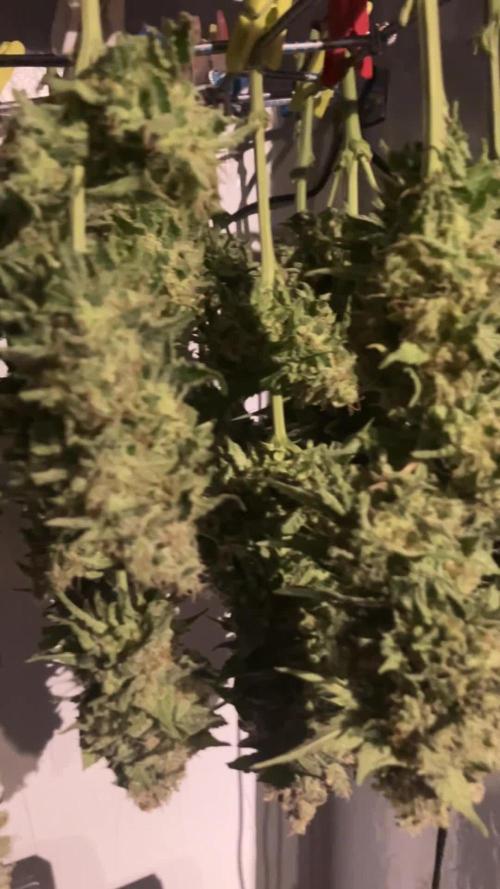
Did not measure wet weight. Harvest is done plants will dry the next 1-2 weeks. It took 67 bloom days until finish. Will update after drying is done.

Likes
18
Share


@AlexJekomust
Follow
Finally we are in bloom, the plants are fine and continue to grow with few problems, in this phase the Mimosa Evo in the abs pot, has some leaves locked inwards, while the others are fine, I wonder if I should worry about An excess of fertilizers or environment? The Tutankhamun has these tips pointing downwards and I don't understand why, I only gave water for almost 1 week but nothing has changed, the Gorilla Zkittlez is exploding with flowers and the other Mimosa continues to grow, although I believe that I will harvest a few grams from that plant! I also started giving him Bud Candy to increase the flavor and a little yield!
Likes
44
Share


@Aedaone
Follow
The temperatures, humidity, and watering volume(if measured) in grow conditions are all averaged for the week. The pH is soil pH. Any watering done by me is well water which is 7.6 pH and 50° F. Any listed nutrients are ml/gallon of soil.
Day 1 we had sunshine and clear skies until the afternoon. We had clouds roll in and about 4:00 P.M. a severe thunderstorm hit. There was high wind, heavy rain, and grape sized hail. Fortunately the hail lasted only a few minutes.
Day 2 we have clear skies and sunshine. The temperature is mid 70's.
Day 3 we had rain and thunderstorms through the previous night and into the morning. We had sunshine, clear skies, and temperatures in the upper 70's. That was followed by severe thunderstorms, rain, and a touch of hail from 4p.m. to 6p.m. These were topped and had thr bottom nodes removed.
Day 4 we had relief from the rain. Temperatures were in the mid to upper 70's and lots of sunshine. We have a few days of sunshine in the forecast 🙏
Day 5 we had lots of sunshine and clear skies. Highs in the upper 70's and 49% humidity. We needed the dryness. 🙏.
Day 6 we had clear skies and sunshine. Temperatures were in the mid to upper 70's.
Day 7 we had partly cloudy skies and temps in the middle 70's.
This week was a success. The plants doubled in height and thankfully didn't have any serious damage from the hail.
Likes
49
Share

@DrGruen
Follow
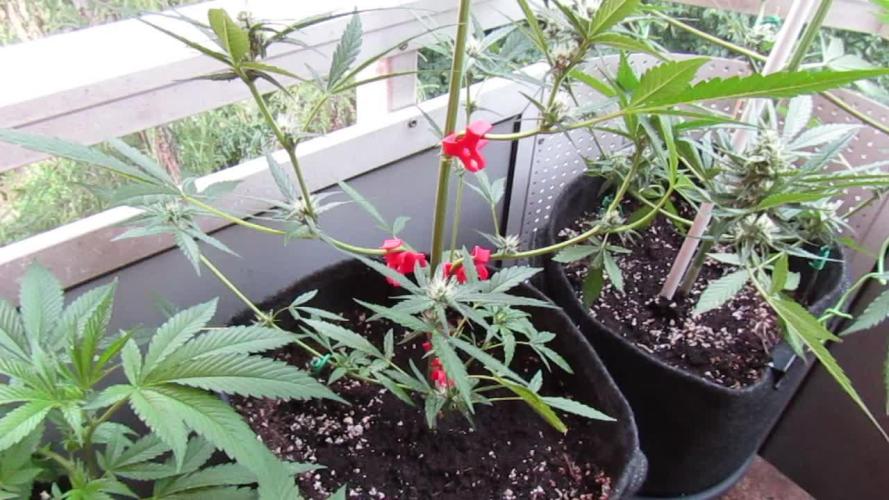
Diese Woche war uns der Wettergott nochmal hold und hat uns super Sommerwetter beschert....😎
Den beiden hat das natürlich sehr gut gefallen und sie haben sich super gemacht.😁
Der Nachzügler der beiden, ist bis auf ca.20cm an die erste Lady rangekommen und hat auch schon eine stattliche Grösse erreicht......
Die grössere der beiden wächst nicht mehr ganz so schnell, dafür sind ihre Buds auch schon viel grösser und mächtiger.😎
Freue mich schon auf den Rest der Blüte und kann die Ernte kaum noch erwarten.😜
Ich hoffe, es läuft so problemlos weiter und das Wetter bleibt stabil.😎
Likes
11
Share


@Master_weeda
Follow
Bonjour à tous les padawans et maîtres jedis
Jour 25 pratique du main-lining (tutorial video) et arrosage avec 2 litres d'eau ph6.3 à laquelle j'ajoute 4ml de rootboster cellmax et 3ml de cellmax bio 8-2-2 par litre d'eau
Likes
43
Share


@Johnny2Fire4U
Follow
Flipped to flower let's go now... halfway there and I'm so pumped!!! Gave them 72 hours of darkness. Now it time to watch them do what they do!!

Likes
4
Share


@ApartmentGrower
Follow
Another very happy week around here with my girls getting fat, showing their potential. I kept the amount of fertilizer at 6ml per liter and the temperature inside the greenhouse continues without interfering the evolution. Very happy, satisfied with the results so far
Likes
13
Share


@BrigadeDesTerps
Follow
Recette du tco pour 20 litres. (Grammes : gr)
50gr biochar
250gr zéolite
3gr granulé Micro-Organisme IT45
10gr pollen d’abeilles
10gr levure de bière
3gr endomychorize
10gr consoude
20gr vers de farine
10gr cendre coque de ricin
12gr ortie microniser
15gr Kelp
10gr spiruline
10gr de cbd living soil
20ml de miel liquide
30ml de mélasse
20ml d’acide humiques et fluvic
Mettre tous les ingrédients (sauf la mélasse ,l’acide h/f et le miel) dans un filtre 400micron, le placer dans un seau avec de l’eau (10litres). Rajoutez le miel et 10ml de mélasse
Y mettre un micro bulleur alimenter sur une pompe à air et faire oxygéné le mélange pendant 24h. Rajout de 10ml de mélasse après 12h le début de la mise en route de la pompe.
A la fin des 24h rajoutez le restant de mélasse et d’acide h/f, mettez y en plus 10litres d’eau au mélange.
Reste plus qu’à arroser!
j’y ai incorporé 7litre de mélange
La veille j’ai préparé le pot à l’arrosage avec 500ml d’eau et 2gr de Bacillus IT35 Amyloliquefaciens X5
Bacillus Amyloliquefaciens : rhyzosphère, probiotiques. Aspersion et arrosage. Utilisable pour toutes cultures.
La bactérie Bacillus Amyloliquefaciens se fixe dans la rhizosphère en se nourrissant des exsudats racinaires. En contrepartie, elle stimule la croissance racinaire en sécrétant des métabolites de croissance et solubilise le phosphore en sécrétant des phytases (enzymes).
Effet probiotique consistant en l’utilisation de micro-organismes bénéfiques pour la nutrition et la santé des plantes.
La spiruline, le plus riche et le plus complet des amendements organiques
La Spiruline est une algue aquatique connue comme complément alimentaire, la Spiruline est aussi un amendement organique et écologique très complet.
D'une grande qualité nutritive, elle apporte à vos plantes une quantité de nutriments, dont l'azote, phosphore, potassium, minéraux, acides aminés, vitamines, chlorophylle et protéine.
Le charbon végétal actif est capable d’absorber jusqu’à cinq fois son poids propre en eau ainsi que les éléments nutritifs qui s’y trouvent. Il joue ainsi le rôle de catalyseur et d'amplificateur pour les fertilisants traditionnels, qu'ils soient d'origine organique ou minérale. Ce pourquoi il est idéal pour activer un sol et pour les thés de compost oxygénés.
Le charbon végétal améliore la diffusion et la disponibilité des éléments nutritifs dans le sol et offre des conditions propices au développement des micro-organismes.
Le Biochar peut être introduit dans une grande variété de sols. Il est particulièrement efficace dans les sols pauvres, difficiles et acides.
Pour faire agir rapidement et efficacement sa capacité d’amendement, le charbon végétal est enrichi et biologiquement activé avec des micro-organismes. Le Biochar se comporte ainsi comme un structurateur et un activateur dans le but de valoriser les sols.
Composition :
• Charbon végétal actif 31%
• Matière organique 33%
• Matière sèche 75%
• C/N : 17
• PH : 7,2
• Azote (N) : 2,1 % dont 1,2 % azote organique
• Phosphore (P205) : 0,74%
• Potassium (K20) : 1,18%
• Calcium (Ca) : 6,8%
• Magnésium (MgO) : 0,65%
Le pollen est l'ingrédient de base de la fabrication du miel par les abeilles. Riche en vitamines et minéraux, il est qualifié « d'aliment parfait », y compris pour les plantes !
Les zéolithes sont des roches cristallines, présentant des capacités d'adsorption particulièrement importantes vis à vis des polluants que l'on rencontre dans l'eau et dans certains liquides, ainsi que dans l'air et les gaz. Elles sont extrêmement poreuses comme les charbons activés et elles peuvent être chargées électriquement pour opérer comme des échangeurs d'ions.
La zéolithe est un produit naturel qui respecte notre environnement. Utilisé dans le milieu industriel depuis de longues années déjà, ce minerai aux propriétés filtrantes particulières commence à se vulgariser dans le domaine de la piscine privée, de l'aquariophilie, des bassins d'agrément, de la récupération des eaux de pluie, ou encore de la culture des bonsaïs et autres plantations diverses par exemple...
4 points techniques majeurs :
- Grâce à leur propriété hydrophile, les zéolithes peuvent adsorber l'eau jusqu'à 30% de leur poids total et sans aucune variation de volume : pas de gonflement en présence d'eau ni de craquement en cas de déshydratation comme certaines argiles. Les zéolithes sont d'ailleurs de puissants agents anti-mottant (anti-agglomérant). Cette propriété est très appréciée dans le cas des terrains de golf et autres aires de jeux.
- Les zéolithes ne captent pas l'eau de façon irréversible, elles se comportent comme une réserve au voisinage des racines. Celles-ci peuvent capter l'eau en fonction de leur besoin. Les zéolithes permettent ainsi de réduire les besoins d'arrosage jusqu'à 35 %.
- Une zéolithe se comporte comme une "Zone de Stockage" qui retient l'azote et les éléments minéraux nutritifs au voisinage des racines et les relâche lentement en fonction des besoins de la plante. Cela se traduit par une croissance harmonieuse mais rapide du végétal.
- La capacité d'adsorption et l'énorme rapport surface/volume des zéolithes, vont permettre à la fois la rétention de la solution du sol et une bonne oxygénation au voisinage du système racinaire. Les zéolithes favorisent donc l'organisation biologique des sols en contribuant au développement de la micropopulation. L'apport en nutriments (N, P, K) est réduit de 20 à 25 %. Ces derniers, adsorbés par la zéolithe, sont beaucoup moins sensibles au lessivage et à l'évaporation.
Composition minéralogique :
* Chabasite 70 %
* Phillipsite 2 %
* Feldspath 5 %
* Augite 3 %
* Illite - Mica 2%
Analyse atomique:
* Sio2 52 %
* AL2o3 17 %
* CaO 5,7 %
* K2O 6,1 %
* MgO 2 %,
* Na2O 0,6 %
* Fe2O3 3,6 %
Amendement calcaire, dolomie et gypse avec préparation microbienne à base de Bacillus Amyloliquefaciens IT45 et Saccharomyces cerevisiae LYCC6420
Formulation : micro granulés (1 – 1,6 mm) à base de rhizobactéries favorisant la croissance des plantes qui se multiplient et colonisent rapidement la zone des racines, et de levures Saccharomyces cerevisiae souche LYCC ayant un effet probiotique.
Les PGPR produisent des enzymes qui solubilisent le phosphore à partir de complexes inorganiques et organiques dans le sol et stimulent la croissance des racines efficaces augmentant ainsi la zone d'interception des éléments nutritifs. Les levures LYCC permettent une occupation de la rhizosphère par une flore bénéfique.
Composition :
• Matière sèche : 96,8%
• Matière organique : 91,5%
• N total : 6,6% dont N soluble dans l'eau 0,17%
• P total : 2%
• K total : 1,7%
Micro-granulés :
• Oxyde de calcium (CaO) total : 30%
• Oxyde de magnesium (MgO) total : 7%
• Anhydride sulfurique (SO3) : 13%
La levure de bière est une matière vivante qui permet un meilleur fermentation pour les thés de compost oxygénés notamment conseillé pour accompagner les croissances ou apporter un gros coup de pousse pendant la floraisons.
La levure stimule la vie des sols également à l'arrosage direct en apportant tout aussi bien que dans le TCO sa population l'espèce micro-bactérienne positive pour votre sols ainsi que des oligo-éléments et diverse vitamines.
Composition :
• 2,8% (N) total dont 1% (Norg),
• 2,3% (P205)
• 1,6% (K20)
• 35% de MO
• C/N : 8. PH : 8,4.
Sous forme de poudre mouillable. Il contient des spores du champignon mycorhizien Rhizophagus Irregularis MUCL57891 avec des levures inactivées spécifiques. 2000 spores/gramme d’endomycorhize Rhizophagus Irregularis MUCL57891 et Saccharomyces Cerevisiae LYC6420 inactivée. Se connecte efficacement au système racinaire et forme un vaste réseau souterrain de filaments, qui agissent comme des extensions pour atteindre les nutriments et l’eau au-delà de la rhizosphère
Composition :
• Poudre contenant 2000 spores/g. d’endomycorhizes Rhizophagus irregularis
La Consoude (Symphytum Officinale) est une plante présentant de nombreuses propriétés.
Particulièrement riche en Potassium (K) organique, la consoude est une alliée idéale pour les périodes de floraison. La consoude a tout pour plaire : riche en vitamine B12, elle agira également comme stimulateur racinaire, mais aussi comme biostimulant cellulaire, grâce aux alcaloïdes, aux allantoïnes et jusqu'à 30% de protéine !
100% déjection de vers de ténébrions.
Très riche en microorganismes, le guano de vers de farine est une matière directement composté par les vers. En effet, c'est bien la digestion de matières végétales par des larves, insectes ou autres arthropodes qui valident le processus de compostage, que ce soit en zone de production de cultures d'insectes, pour le compost maison ou la dégradation de litière forestière.
Les bactéries et autres champignons obtenus grâce au système digestif de nos vers, permettent la dégradation accélérée des éléments nutritifs dans vos supersoils, et les symbioses permettant l'assimilation des éléments nutritifs.
Cette bio-activation intense mettra dans vos sols, à la disposition de vos plantes, un panel tellement varié de nutriments frais qu'il nous est aujourd'hui technologiquement impossible de pouvoir tous les nommer et de les compter.
Le guano de vers de farine fournit une grande polyvalence. Très équilibré, il s'utilise en entretien ou en apport ciblé seul ou en complément de d'autres amendements ou fertilisants organiques.
Il agit comme un puissant activateur de sol et/ou de substrat.
Cendre coque de ricin NPK 0,1-18,6-16,5. 0,1% (N-Azote), 18,6% (P205-Phosphore), 16,5% (K2O-Potasse), 11,7%(Ca0), 9,1 (Mg0) - Origine : Inde
ACTION SOL • rend rapidement accessible au sol Phosphore, Potasse, Magnésium et Calcium.
ACTION PLANTE • Apport aux stades agronomiques propices. • Produit riche en éléments fertilisants : combinaison NPK 35%. • Régularité de l’apport, milieu et fin de floraison. . Favorise la sénescence.
Analyse chimique :
• NPK 0,1-18,6-16,5
• N-Azote 0.1%
• P205-Phosphore 18,6%
• K2O-Potasse 16,5%
• CaO-Calcium 11,7%
• MgO-Magnésium 9,1%
Ortie bio micronisée Stimule la vie du sol et la végétation.
Composition :
• 2,8% (N) total dont 1% (Norg),
• 2,3% (P205)
• 1,6% (K20)
• 35% de MO
• C/N : 8. PH : 8,4
KELP poudre
ascophyllum nodosum
- amendement sol
Croissance et floraison - Meilleure germination - Meilleur développement racinaire Meilleure assimilation - Résistance aux stress osmotiques - Augmente la production de chlorophylle = plantes plus vertes = lumière mieux captée - Lutte contre le stress osmotique - Développement des Micro-Organismes dans le sol – Riche en vitamines, fer, iode, oligo-éléments, hormones de croissance auxines et cytokinines - Idéal en épandage et pour les thés de compost oxygénés.
Important : notre Kelp est un goémon noir mais il n'est pas le varech bien moins fertile de la même famille qui est l'algue qui pullule et pollue la Bretagne, notre algue pousse uniquement à plus de 50 mètres de fond dans les grands courants froids au large de la Norvège.
