The Grow Awards 2026 🏆 










Likes
Comments
Share
@eecc_photo
Follow
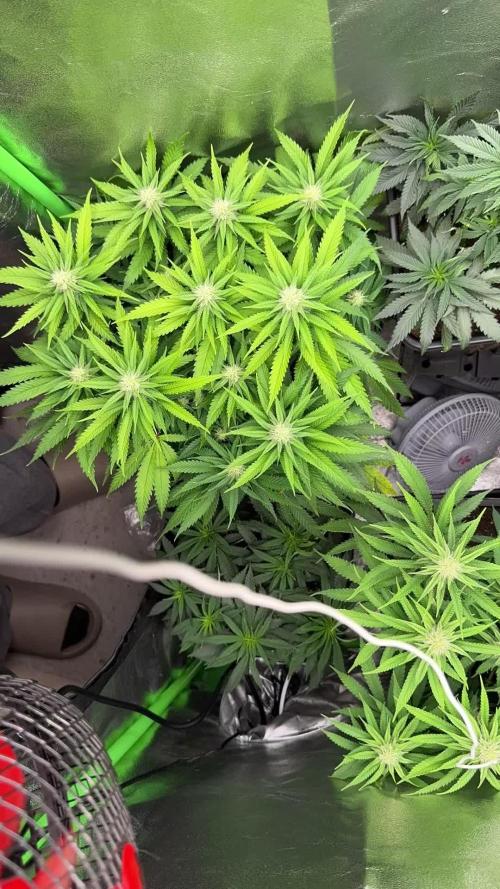
These future nugs started show some sugar ending week 5
20 cm between each plant
And very curious on how much of a yield difference there will be between apical cut plant and whitout.
Pls feel free to coment.

Likes
15
Share
@Medup75
Follow
Learnt some hard lessons this round! Next time I'm adding dolomitic lime to buffer soil aswell as always pHing from now on! Other than the lockout mid flower and slightly smaller buds as a result I'm happy with my first attempt at a actual tent grow. The buds look dense and frosty and under a scope a few are starting to turn cloudy. Next round is gonna be only three as I'm not comfortable with it being so cramped! I reckon I'll let her go another week with feed the I'll do a two week water only flush!
Happy growing to all ✌️


Likes
7
Share
@Mokorelsare1
Follow
Day 43: stretch phase is over, she grew fast in last week from 28 cm to 45 cm in just a 7 days. Now she's focused on fattening up her buds!
I decided to feed her every other watering instead of every watering, but Cal-mag is must for every waterings!
HST - Supercroping at day 47: these nodes went too high, so i did the thing! Please don't repeat this at home xD
Day 48 plant seems okay, 2 of supercroped nodes are coming back! 3rd will be back soon as well! This plant can take any stress!
This is the last day of the week, next few weeks we will see some flower bulking action😁

Likes
7
Share
@CreatureCreator
Follow
Well, the drought stress in week 11 really fucked my plants up, but Twiggy recovered, while Zoey was hurt pretty bad. If I did nothing, I'm betting harvest would've been 25% more, and Zoey's buds wouldn't look so crappy, but overall, I was so happy with this grow! I was under a time crunch, so only did minimal veg for 4 weeks, topping once. Daily watering with 1.8EC mix that was pretty consistent. Kept pH between 5.5 and 5.8. Kept tight control on humidity and temperature up to mid flower, then kept air circulation on to keep room humidity around 55%
Things I'd do differently:
1. Veg longer - I'd love to try a mainline
2. Canopy control - wish I had spent the time on a SCROG screen, or at least a couple of rings.
3. More light sooner into flower. Waited about 4 weeks into flower before maxing out the light. Probably could've bulked them up significantly if I started earlier
4. Drought stressing - For Fucks Sake, keep a close eye on your plants, and the minute they start to wilt, get the water back on 'em!!!
5. Measure your run-off more frequently for salt build-up. Didn't have any problems, but it's a good best practice.
6. Set up proper closed-loop environment to allow for CO2 enrichment.
7. Set up a clone environment before you get to flower. Oops.
Things I was happy with:
1. VPD control system (heat, humidity) during veg and early flower worked flawlessly. Never any nute burn, and super healthy plants.
2. Sterilized soil and grow-room before starting - never had a single bug or any mold/mildew issues. Used a MERV 13 filter on the air intake, exhaust through carbon to crawlspace.
3. Coco/perlite mix - super drainage, low build-up, very healthy roots.
4. Power meter - neat way to measure what's really going into the grow, so when your wife complains about power usage, you can show her the real numbers.
5. Photone app on Android S20 - Knew where my PPFD was for optimal growth control.
6. REX-C100 PID controller for toaster oven - super tight temperature control comes in handy for decarbing as well as toasting oak for moonshine.

Likes
9
Share
@crystal_garden_0
Follow
Great week 100% germination rate and all the girls are out of the soil ready to start life. Haven't found a Bubble gum strain like the real one, let's hope this is it. So far FastBuds description of their Autoflowers has been spot on . Thanks everyone. You can see these on YT also if intrested, thanks everyone
Likes
12
Share
@Growing_Spartan
Follow
I’ve added recharge to the plants to boost growth and they responded well, there’s one LSD-25 that isn’t getting as much growth out of her and seems to be very small.
The Purple Lemonade has started to show signs of pre-flower development but the LSD-25’s continue to veg out.
I’ve added pasture raised egg shells to my medium for more calcium to be available for the plants
Likes
21
Share
@CanadianFillmore
Follow
Welcome growfessors to the harvest of Mandarin dreams pheno 2. She's typical light, airy fluffy buds.
Wet trim and then vacuum sealed and into the freezer. Experimenting with this strain, freezing before turning into bubble hash.
Will update with some sort of weight in the future.


Likes
4
Share
@Mr_nugs_lover_David
Follow
This lady looks absolutely gorgeous, she's got big beautiful leaves, I cannot wait to transplant this lady and make her become a beautiful fat bush! Let's do this! I'm very glad to be working with this strain this 2021 outdoor season, this lady has been Transplanted after 34 days since planted to her definitive 30L texpot, let's see how this lady performs!!


Likes
40
Share
@BudXs
Follow
A little bit of defoliation and LST to day to give the wrangly clones some shape and some mains. These girls will bush out this week, hoping for about 10 to 14 days before I switch to 12/12.
Feeding at 1000ec, some calmag, twice daily top feed drain to waste. The roots are sitting in aerated water all day thanks to the hempy's.
Follow my son Budxless on his first GrowDiaries journey
I go live in the Scroggernaut Sundays at 9:00pm EST- budxsmedical on insta

Likes
20
Share
@reirrac1
Follow
Chopped her at exactly 12 weeks old. She was covered completely in good sized and trichome laden flowers, absolutely no larf whatsoever. Fan leaves stuck out clearly and were quite easy to remove, minimal processing needed for this strain. Gives off the scent of kushy must and sweet fruit. Extremely easy grow, heavy feeder, and very easy to train out perfectly. I will grow this strain again soon.

Likes
4
Share
@Brotan1ker
Follow
I started to notice that my leaves started to turn yellow. Maybe my led was to bright.
So I turned it down a bit.
Likes
34
Share
@Bluntblazer66
Follow
Feb 15th
All three plants are doing well
They have all been bent over to grow sideways
Feb 17th
More LST, all is well.
Feb 18th
Changed out nutrients
This week I added 18l of nutes with slightly stronger mix at 75% strength. I will change on next weeks update
Feb 21st
Plants have used approximately 6 litres since the 18th
They are all looking healthy but for some reason they aren’t growing in length that much. They are producing many new branches but the branches are becoming to compacted close together.
Likes
21
Share
@Jays_Not_Here_Man
Follow
A-Day 60, B&C Day 56
A is fattening up! She never did stretch, but then again I had her tied and splayed pretty far out. She has been thirsty, I have been feeding a dose close to 1000 ppm every other feed which has been every other day for her. During the lower feeds, ppm has been around 400. Her tricomes are mostly clear, with some cloudy starting to show. She still has a couple of weeks to go.
B- is going to be a producer! She has so many tips and they are all fattening and developing at about the same rate, she is going to be a beast! Did a defoliation on her, she is appreciating the extra light penetration 😎💨
C- Has stretched up and out! If she stacks as tight as the other two, she will probably be the one with the most weight. Her branches are the tallest and reaching up at least 4-6 inches past both her sisters. I tied her down lightly to allow light to get through, we’ll see how she goes.

Processing
Likes
21
Share


Likes
57
Share
@Silverback_Guerilla
Follow
11/24:
Both Black Jacks finally turned the corner and are looking like they'll produce for me.👍
The big Zkittlez just keeps on stretching and outpacing most of the other plants....looks like a supercropping is in her immediate future. Kinda sux, because she's got picture-perfect, textbook, conifer structure😑
11/25:
Had to raise the lights today about 5 inches to accommodate the big Zkittlez and a Sucrose Overdose..couldn't bring myself to ugly her up yet..maybe everybody else will catch up (ya right)
For now, I'm using platforms of various heights for the shorter plants, to keep the canopy level.

Likes
35
Share
@Fatnastyz
Follow
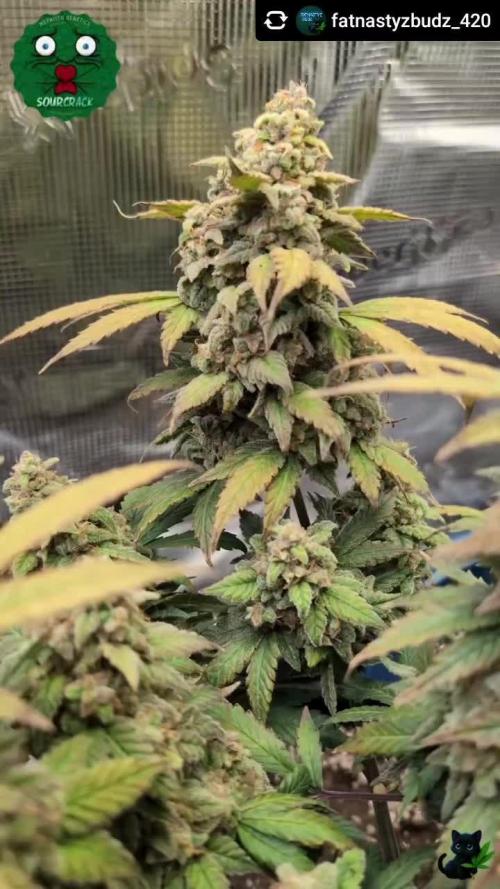
Super glad I got to finally run her again! Wanted to for a while, but then ol' Personalsmok3s had to call me out! 😂😂Which just ensured it was next! 🙏
Love this thing and I could grow a tent full at once!
😻😁🤘


Likes
4
Share
@Huckleberry39
Follow
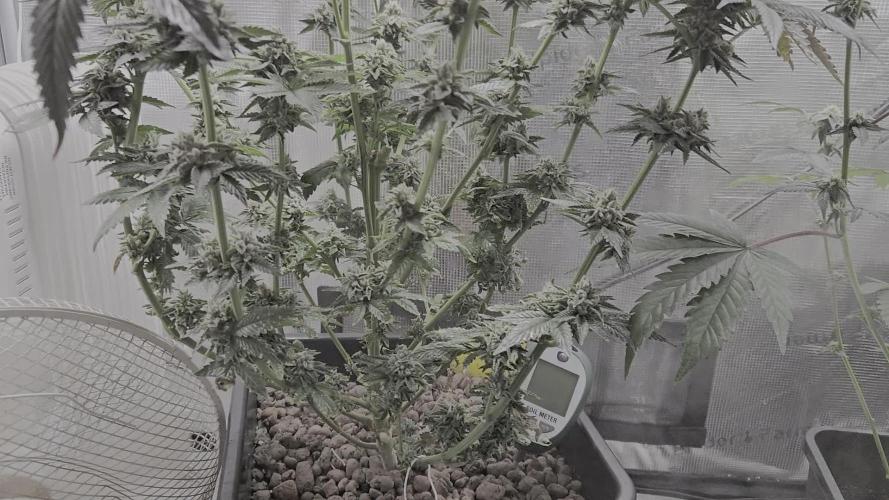
She is starting to come together finally. Ive never seen a plant like this one. But, I love an underdog. She is getting some nice trichome production already, which is always good. Taking a full dose of nutes and loving it. So far so good. I am loving 420 Fast buds!!!

Likes
7
Share
@HegauHillsFarmers_D23
Follow
Die RP 43 hat in dieser Woche begonnen die ersten richtigen Stempel zu bilden 👀
Auch der Stretch war in dieser Woche sehr stark ausgebildet, sie hat sich fast verdoppelt 🌱🍀 Ich hoffe sie geht nicht mehr arg zu lange in die Höhe 😏
Ich habe zusätzlich in dieser Woche die untersten Triebe entfernt und sie zwar lichter geschnitten ✂️
Aufgrund der Blütenbildung habe ich begonnen den Blütedünger anzupassen und Big-Bud sowie B52 ergänzt.💦
Sie wird langsam hungrig und benötigt die Nährstoffe.