


Likes
Comments
Share


@Herbalist7
Follow
Running 4 autos in the same aeroponic system isnt ideal as 2 of my plants need to flush this week.. while the other 2 still have about 2 weeks again... its all good tho.. id take it out an flush them individually before harvesting.


Processing
Likes
17
Share


@Easygrower
Follow
Hello growers I’m back with sweet seeds genetics I must say a massive shout out to @sweetseeds for sending me these seeds it’s very much appreciated iv never tried sweet seeds before and the fact they send me seeds to try for free with free p&p is banging 2 big thumbs up from me👍🏻👍🏻 Now it’s day 7 and the girls are looking good just keeping them moist with tap water I will continue to do so for the next week after that I’ll hit em with some juice until next week be safe and happy growing ✌️

Likes
4
Share


@Edelkraut
Follow
Komme jetzt in die 4te Woche blüte bis jetzt lief alles gut! Sie wachsen sehr schön und riechen richtig lecker

Likes
12
Share


@Jays_Not_Here_Man
Follow
This was an easy grow, and had some amazing results. This is some of my best homegrown to date ❤️ the ladies were easy to manage, no PM, pests or disease. The root balls were enormous, wasn’t much soil to recover. They got heavy in the end from the weight but managed to stay upright for the most part. They were big stretchers , prepare for that, scrog was a good way to go but some of the eager beavers got away from me, which ended in some massive colas. Overall easy to grow, no surprises and you won’t regret the results! 10/10 ❤️👊🤤


Likes
2
Share


@BioGrowBayer
Follow
Diese Woche verlief größtenteils planmäßig und ohne größere Zwischenfälle. Leider habe ich ein paar Thripse entdeckt, was mich dazu veranlasst hat, sofort zu handeln. Ich habe die betroffenen Pflanzen mit Neemöl behandelt, um einem größeren Befall vorzubeugen.
Die Pflanzen zeigen weiterhin ein gesundes Wachstum, reagieren gut auf die Pflege und entwickeln sich wie erwartet.
Maßnahmen der Woche:
Sichtkontrolle auf Schädlinge (Thripse entdeckt)
Behandlung mit Neemöl
Reguläre Pflege und Gießen wie gehabt
Ausblick:
Ich werde die Pflanzen in den kommenden Tagen weiter genau beobachten, insbesondere im Hinblick auf die Wirkung der Neemölbehandlung. Falls nötig, folgt eine Nachbehandlung. Ansonsten läuft alles weiterhin nach Plan.


Likes
17
Share


@Mr_nugs_lover_David
Follow
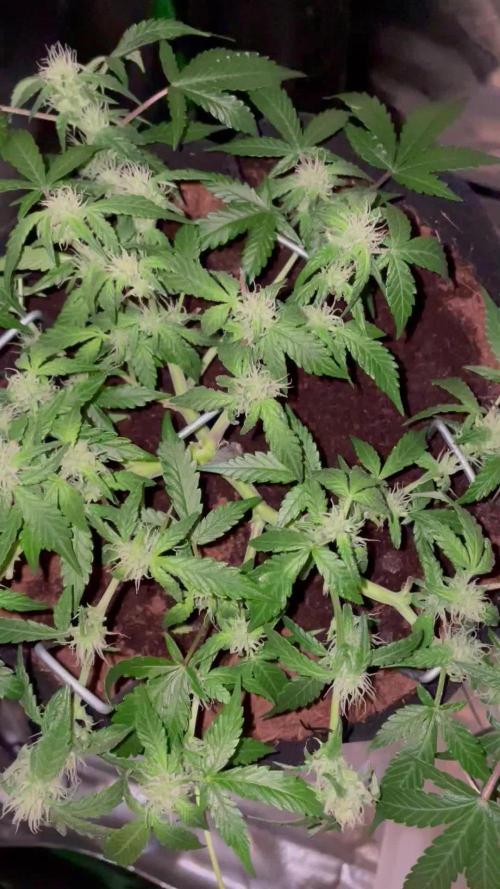
This wonderful ak 420 is developing very good, now she's been Transplanted ill start working on her lst to get a very beautiful ak420 bush. She's looking super healthy on her living soil by florganics and she's developing very fast. Let's see what happens.

Likes
98
Share


@Tropicannibis_Todd
Follow
💩Holy Crap We Are Back At It And Loving It💩
Growmies we are at DAY 56 and she's just killing💀it👌 The Smell has kicked in and is wonderful 😀
👉We are in full out flowering 💐 and its looking great 👈
So Shit , I gave them just a tad to much nutes on the first few feedings 👈 But I have since fixed it
So I'm helping out with some low stress training 🙃 and some defolation 😳
Lights being readjusted and chart updated .........👍rain water to be used entire growth👈
👉I used NutriNPK for nutrients for my grows and welcome anyone to give them a try .👈
👉 www.nutrinpk.com 👈
NutriNPK Cal MAG 14-0-14
NutriNPK Grow 28-14-14
NutriNPK Bloom 8-20-30
NutriNPK Bloom Booster 0-52-34
I GOT MULTIPLE DIARIES ON THE GO 😱 please check them out 😎
👉THANKS FOR TAKING THE TIME TO GO OVER MY DIARIES 👈
Likes
23
Share

@Prilyfe13
Follow
07/09/2026
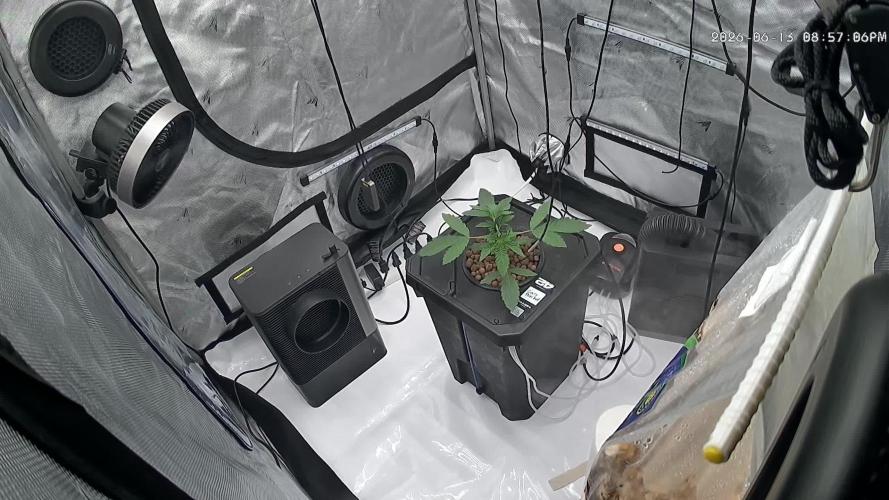
New week folks! This week is kinda busy. I have to either lift the light or drop the intensity. I personally would turn the light up to level 6. For the time being that is. I think I get to use a much higher intensity with the thingy I have. We'll see. It's a 500 watt light, so I have plenty light to work with.
She is growing quite rapidly at least the leVes are all getting bigger.
Readings:
pH: 6.31
EC: 2.21
TDS: 1.57
Evening Readings:
Temp: 68°
I think I'm gonna change the water out instead of mixing a new gallon. I really don't want to though. It's wasting my poor nutrients.
DLI: 42 mol
PPFD: 631 PPFD
09/10/2026
The goal this week is clearing out the big leaves and cover leaves.
Readings:
pH: 6.3 (very steady) but it needs to be closer to 5.8 just don't know how.
EC: 2.18 cU? The thing changed on me.
TDS: 1.55 ppm?
Temp: 70.1° ice bottle added. I'd like to keep it below 70°, like 65° would be good.
Update: I have decided to defoliate my plant today. I've already removed a few branches that just won't reach through the canopy. I'm also taking all the big leaves off. The ones with purple stems seem to be a sign of readiness to me. That was quick. Lol there's a whole bunch. So I've got my work cut out for me.
07/11/2026
Readings:
pH: 6.26
EC: 2.27 ?
TDS: 2.28 ?
Temp: 68.2°
07/12/2026
Readings:
pH: 6.3
EC: 2.19 mS
TDS: 1.6 ppt?
Temp: 69.1° will drop a bit more. With the ice bottle, it'll cool down much faster. Granted it was 70° when I first opened the bucket.
I took some more foliage and a few lower sites and branches that weren't going to make it.
07/13/2026
Readings:
pH: 6.33
EC: 2.44
TDS: 1.74
Temp: 67.5°
Honestly I'm not sure how it changes, but I have people trying to explain. Lol. My meter reads in both ppm and cm. I'm still not seeing how the TDS is higher than the EC. I'm confused.
I've been topping her off with a half mix of nutes for now. Also I also increased the Hydroguard to 5 ml per gallon. I will get this brown stuff somehow.
Hopefully it will clear up before I flip to flower.
But there is so much root mass. I don't think it's getting all the bubbles. I have 3 air stones in there. It can't be oxygen related. Environmental is also out of the question. My system is pretty on point now. The water temp is fine as well. Just around 67°.
I feel like I'm missing something. I'll update if I remember.
07/14/2026
Readings:
pH:
EC:
TDS:
Temp:
She's about a half inch away from the net. She'll definitely be touching the net at some point today or grown over the net. That would be cool. I have a few promising tops. They are a little low, but I'm hoping for the next week and a half to really get some growth. And the trellis is gonna be used hardcore. I'm gonna weave this fucker like a bad sweater maybe. LMAO.
She also looks great! The leaves are still kinda canoeing. Is the light actually that bright?! I need a person here to look at it and say yep or nope. Lol anyway, it looks more like they are opening up them old wrinkles. That has to be it. There's no way a photoperiod takes less than a DLI of 31.2 mol at this age. Nope.
A+ environment. AI is coming through! 76° and 60% humidity.
Readings: After a 1 gallon top off.
pH: 6.26
EC: 2.69
TDS: 1.92
Temp: 67.8°
I think I'm gonna do a plain water bucket with hydroguard for a couple days for the flowering period.
07/15/2026
Readings:
pH: 5.88
EC: 2.41 mS
TDS: 1.84
Temp: 67.5°
Light changes:
I added the light from the net distance.
DLI: 41.2 mol.
PAR: 621 ppfd
Distance:: 24"
07/16/2026
We have touchdown! More like kissed.. Not completely, but there's a few leaves that grew over the net along with a top or two. Still touchdown.
Ice bottle was replaced this morning. I also topped her off about 3/4 gallon. It brought the roots down a bit so they're fully under water. Just below the net pot. I know it should be 1" to 2" inches between the water and the net cup, but the roots are also important. Not to mention how fast she's taking the water down. She'll need another half gallon tomorrow morning. Maybe more.
When I changed the ice bottles out, the roots blocked the bottom of the bucket, so I had to put my ice bottle in the one spot. With roots under it. I might be able to move them. With a paint stick.
Lucky I have 3 air stones in the bucket. The only place it's not bubbling is by the access panel. The rest is a bubbly haven for dirty roots. The only thing is, the roots are officially too big for the bucket. Again. Sweeet. Now I just need a bigger bucket. Lol.
A quick look at the leaves. They look fantastic. Beautiful rich green. Spreading out the wrinkles to make her big and strong.
I had to pull some off as I went looking around at the plant. So far, I don't have any dead or dying leaves. So that's good.
Oh and she SMELLS.iem wow. She smells. Good aroma. Powerful too. And we haven't even hit flower yet. Oh no. Not sure how I'm gonna keep the smell locked in while I'm working on the plant. Lol. No bueno indeed.
Readings:
pH: 6.3
EC: 2.93
TDS: 2.08
Temp: 65.1°
Update:
So I took a decent amount of lowers off today. All the bud sites that will be larf. Still needs to be cleared out. I also took a few leaves off. Everything that was pointing inward. I still have more to go, but I'm gonna wait for next week to pull the rest off.
08/19/2926
I added a time lapse video today. It's a month long instead of the weekly I was considering. You know, for more "meat" as it were.
Likes
44
Share


@Cogollo_eu
Follow
**Encontrarás la traducción a español al final de la descripción**
From/Desde: 10/05/19 || To/Hasta: 16/05/19
From day/Desde día: 78 || To day/Hasta día: 84
You can find the Money Maker Diary here:
** Podéis encontrar el diario de las Money Maker aquí:**
https://growdiaries.com/diaries/25667-gorillamakingmoney-gorilla-vs-money-m
-----IMAGES & VIDEOS-----
5 - HomeMade Organic & Cheap CO2 generator (more info in week summary)
9, 10, 11 & 12: The bud on the right is a Gorilla one, the buds in the left or/and in the middle are Money Maker ones.
15 - Same Gorilla plant buds, one affected by CO2 in the roots and the other not.
-----WEEK SUMMARY-----
The smell is more sweet and intense every day, friends that came home turned them eyes into crystals when they see this little babys. The size isn't awesome, but the high ammount of buds full of crystals plus the strong sweet aroma makes them awesome. Buds are growing and fattenning very very well.
This week i added a boost of HomeMade CO2, i never measured the results of this invention so i can't give CO2 measurements. This method is widely used in home aquariums and there is where it comes from. For those interested i'm going to write here more detailed instructions. The 4 liters i've made will last for about 2 weeks.
---NEEDINGS---
- 250 ml Bottle
- 6~10 l Bottle
- 400 g Sugar / l water
- 1 Envelope of organic baker's yeast / l water (CHEMICAL WILL NOT WORK)
- 3 mid plastic tubes 40~50 cm
- 1 short plastic tube 5~6 cm
- 4 tube adapters
- Hot glue to seal adapters
The process of creating CO2 is simple, mix water, organic yeast and sugar in a bottle, and the sugar will free CO2 in the process of fermenting to alcohol due to the yeast.
1. Make a hole in the center of the big bottle cap, insert an adapter and secure it with hot glue
2. Make 3 holes in the small bottle cap and glue the other 3 adapters
3. Link both caps with one of the mid tubes and insert the other tubes on free adapters
4. Insert a short tube in the bottom of the small cap in the adapter that came from the big cap
5. Watch the Video!!
-----WATERING CALENDAR-----
Plants are beginning to drain the pots a bit faster so from now on i will raise the water ammount on each watering day 0.25 l.
11/05/19 - 1,5 l with All week nutrients -(Nirvana & Blombastic) also Big Bud half dosed @ PH6.4 & 2 E.C.
14/05/19 - 1,5 l with Bud Candy, Big Bud, Nirvana, B52, Bud Factor-X, Sensizym & Blombastic @ PH6.4 & 1.5 E.C.
*****ESPAÑOL*****
-----IMÁGENES Y VÍDEOS-----
5: Generador de CO2 casero, barato y orgánico (más info en el sumario semanal)
9, 10, 11 & 12: El cogollo que sale a la derecha es de una Gorila, el de la izquierda y/o el de en medio son de una Money Maker
15: Dos cogollos de la misma planta, uno afectado por CO2 en las raíces y el otro no
-----SUMARIO SEMANAL-----
El olor es más dulce e intenso día a día, los amigos que vienen a casa a verlas se quedan ojipláticos al verlas. El tamaño no es una maravilla, pero la gran cantidad de cogollos llenos de cristales añadido al aroma que entra por las fosas nasales las hacen increíbles. Los cogollos crecen y engordan de maravilla.
Esta semana he añadido un boost de CO2 casero, nunca he hecho mediciones de los resultados por lo que no puedo darlas. Este método es ampliamente usado en peceras caseras y de ahí saqué la idea. Para aquellos interesados dejo aquí instrucciones más detalladas. Con los 4 litros de agua que he preparado yo da para unas 2 semanas.
---NECESITAMOS---
- Botella de 250 ml
- Botella de 5 a 10 litros
- 400 g de azúcar por litro de agua
- 1 sobre de levadura de postre orgánica (LA QUÍMICA NO FUNCIONARÁ)
- 3 tubos de plástico de tamaño medio 40~50 cm
- 1 tubo de plástico de tamaño pequeño 5~6 cm
- 4 adaptadores para los tubos
- Cola caliente para pegar y sellar los adaptadores
El proceso de generar CO2 es simple, mezcla agua, levadura orgánica y azúcar en una botella, y el azúcar liberará CO2 en el proceso de fermentación a alcohol.
1. Haz un agujero en la tapa de la botella grande, inserta un adaptador y séllalo con cola caliente
2. Haz 3 agujeros en el tapón pequeño y haz lo mismo con los otros 3 adaptadores
3. Conecta los 2 tapones con uno de los tubos y conecta los otros 2 tubos a los adaptadores restantes
4. Conecta el tubo pequeño en la parte libre del adaptador del tapón pequeño que viene del tapón grande
5. Mira el vídeo
-----CALENDARIO DE RIEGO-----
Las platas comienzan a secar los tiestos un poco más rápido, asi que de ahora en adelante incrementaré 250 ml de agua adicionales en cada riego.
11/05/19 - 1,5 l con todos los nutrientes semanales -(Nirvana & Blombastic) BigBud mitad de dosis @ PH6,4 & 2 E.C.
14/05/19 - 1,5 l con Bud Candy, Big Bud, Nirvana, B52, Bud Factor-X, Sensizym y Blombastic @ PH6,4 & 1,5 E.C.



Likes
16
Share


@ChewiesGrow420
Follow
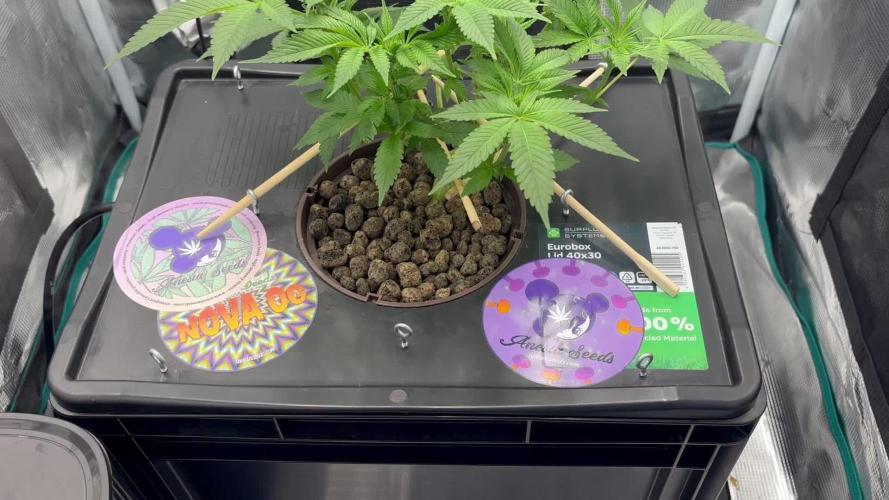
They all basically look the same at this point. Plant 4 popped a day later so it’s a little smaller. At day 12 I sprinkled some great white shark around each plant. And added just 1 tsp of green harvest bone meal.
Likes
33
Share


@Wicked_Stix
Follow
Switched them to flower about a week ago and this platinum gorilla seems to be the slowest to show signs of transitioning. She isn't putting on any stretch like all the other plants. I'm hoping to see her start stretching those legs so she has some room to put on some fat buds. Her leaves are already starting to put on some little sugary frost. Looks like @wildeweed might have boxed up a fat diamond when he sent this little gem to me. Looking forward to seeing how she develops over the next couple weeks. I did a complete water change today and started them on a light dose of maxibloom. That will be slowly increased as the maxigro is lowered over the next couple weeks.

Likes
29
Share


@GrownwithLED
Follow
The MAC from TROPICAL TREES Seeds was the smallest plant in the tent, but harvested a surprisingly good 60,5 gram of dried bud. She was healthy all thru the cycle and had a BEAUTIFUL PURPLE FADE during flowering. The head-bud was insanely frosty and glistening with trichomes....VERY BEAUTIFUL! Her nugs are very compact and dense....simply DANK!


Likes
49
Share


@masterofsmeagol
Follow
8/29 Knowing I was going to have to yo to the hospital er again this morning with my wife I got up early and watered. We are supposed to get an inch of rain tomorrow but the bags were totally light. If I was going to be around I might've held off watering. Instead I watered everything one gallon and figured the rain will make up for the other 10 percent hopfully that will do it.
8/30 Rained overnight. Plants were soaked. Flowers are swelling. I defoliated a shit ton of yellow leaves the other day. I still don't think I have anything fungal but I'm keeping an eye u e out and am considering doing an application of plant doctor. We are suppised to get an inch of rain tonight and tomorrow I guess. My biddy said i shouod cover my plants because next week is going to be "great growing weather" but with the rain and then the sun it could be a recipe for disaster since I have some large flowers. I got my father's leaf blower running but it was leaking gas. Brought it to the repair shop and a buddy let me borrow his for thus storm. I and hit the plants with it this morning. It is super strong though. I need to be careful not to blow it right out of the bag!!! Or break branches. Of course after u left it started raining lightly. A nice rain that plants like but it's stopped. I'm wondering if I should go over and blast them again to keep them dry but I know it's going to rain off and on and it'd going to rain tonight. I'll check the weather and decide from there. So far things are going good. Still have some yellowing leaves and a few normal pests but that is to be expected.
UPDATE: Stopped raining so I went over
and shook off the plants then put the leaf blower to them. I made sure to get the interiors before I went and had shook things again by hand. Storage us low bur i took a video. Cant upload toll tomorrow. Buds are growing at an insane rate but im losing some fan leaves that just yellow and die. Im sure its senescence but its still wortisome. We are supposed to have a real good week of growing weather coming so I hope that doesn't change. I'll update tomorrow. That leafblower works awesome though.
8/31 Went over to an extremely sunny windy morning. I didn't even need to shake plants or use the leaf blower since I did it after it Rained last night. I'm worried the wind night dry my bags out today so I'll be sure to keep an eye on them. I defoliated a shit ton of leaves but apparently it's just senescence. I need to check the last time I fed. Trich development is going good. The smell was incredible this morning! Each strain has its own unique smell to it. We are supposed to have a real good week for growing so I'm looking forward to it. May do a preventative plant doctor app but I think it will be alright. I'll keep this updated.
UPDATE: Went over around one and plants were bone dry. The wind was RIDICULOUS! I added a few individual stakes and tied a couple loose branches. I got my tarp out and considered covering the cagecto protect from the wind. However I didn't have time to sanitize if and they had already been through it all night and day alwuth no breakages. Plants are strong and supported well. At least I hope. Plus the tarp would block the rest of the direct sun the plants are getting right now. The wind looked like it dud its worst and the trellis and supports held. I did add extra supports higher up the plant to prevent breakages. Found a moth larvae (yellow) and squished him. Also found some aphids but a few lady bugs and three lady bugs larvae so I think I'll be OK. I am really excited for this year. Flowers are really exploding! FORGOT TO PUT THE MOST IMPORTANT THING. WATERED EVERYTHING TWO GALLONS EXCEPT THE 10. WHICH GOT ONE.
9/1 Forgot my phone on the daY I really needed it. It rained last night. The wind was the strongest i've seen in years. I would've tarped the cage but i couldn't find any of the bungee cords or zip ties. Probably good I didn't. No breaks. One plant had dark brown splotches ALL over the leaves! I picked them all off and took pictures and will consult my commercial buddy. I researched and asked a question on here. If it's septoria or something that could ruin my gorgeous garden I'd rather just junk the plant. It's big but it's the furthest behind flowering and I would not be heart broken if I had to get rid of that for the others. This week is supposed to be the best week we've had all summer so I'm expecting major growth. I'll update after conferring with other growers and making a decision. Looking online it seems like it could just be lack of nutes with the co dictionary we've been having. It IS time to feed and I haven't been feeding much. We'll see what he says.
UPDATE: AFTER RESEARCH AND CONSULTING WITH OTHER CONMERCIAL GROWERS I BELIEVE THAT THIS IS A NUTRIENT DEFICIENCY. I READ THAT RAPID TEMP FLUCTUATIONS AND HIGH WINDS CAN EFFECT THINGS LIKE THIS. IT DOES NOT APPEAR TO BE SEPTORIA (WHICH I'M EXPERIENCED WITH). I WAS THINKING ABOUT DOING AN APPLICATION OF PLANT DOCTOR BUT SINCE IT WAS SO FEW DAYS DURING THESE CONDITIONS IM GOING TO WAIT AND MONITOR THE PLANT. I DEFOLIATED ANY LEAF THAT WAS SUSPECT. FOUND AND KILLED A BUD WORM. I THINK THEY ARE STILL DIEING FROM THE BT. IT WAS LIKE STRETCHING UP FROM THE TOG OF A BIG NUG LIKE, "HERE I AM COME OUT ME OUT OF MY AGONY." ALSO FOUND LADY BUGS AND BEETLES AND THEIR LARVAE. IVE SEEN TGE VERY LOWER SECONDARY BRANCHES GET STRIPPED ON A COUPLE PLANTS BUT THATS WHY I LEFT THEM THERE. IF THEIR ARE EARWIGS THEY CAN HAVECTHE SHIT THAT I WAS GOING TO LOLLIPOP ANYWAY BECAUSE THATS WHAT THEY USUALLY GO FOR. THEY ARE DEFINATELY STRAIB DEPENDANT TOO. THEY LOVE ANYTHING BLUEBERRY BUT DONT TOUCH THE REST. MAYBE THERE IS JUST A COUPLE IN "THAT BAG". ILL HAVE TO GO AT NIGHT AND CHECK. IM EXCITED. MY FLOWERS ARE EXPLODING IN SIZE AND TRICHOME PRODUCTION. SEEIMG THAT I THINK THIS IS A NUTRIENT ISSUE AND MY FEEDING DAY WAS TODAY I FED EVERYTHING 1.75 PINTS OF NUTRIENT MIX TO EVERYTHING BUT THE 10 GALLON WHICH GOT LIKE 3/4 OF THE POWERADE BOTTLE. PLANTS SEEM HAPPY AFTER I FEED SO MAYBE I SHOULD UP THE FEEDING SCHEDULE. SINCE THE SOIL WAS ALREADY MOIST AND IT RAINED YESTERDAY I FED WITHOUT WATERING. HOPFULLY THAT WILL BE OKAY. I'VE DONE IT BEFORE.
Went back over at six and WOW! After this nice sunny day buds have swollen. Plants seemed to love the nutes. I think the nutes in my soil are fairly depleted so I just needed to adjust my feeding schedule. I didn't notice anymore calcium deficiency looking spots and I had defoliated a lot of leaves. Super excited moving forward. Pistols are changing color on one 10th p phenome and retracting into buds. This is is the fun time. As long as I can avoid the rot.
9/2 Says it didn't rain last night but my plants are dripping wet. If course the leafblower kept dying so I had to shake everything by hand. Hope that's good enough. Gonna be real sunny. Bags still had some heft to them. I'll check them later. Found a few leaves with what looks like the calcium deficiency on the sane plant and I just removed them. I really don't think it's anything to worry about. I'll update later.
UPDATE: Went back around 10 and everything looked good and was dry. Brought the leaf blower to be fixed. Should have it by the end of the day. Found and killed another pillar and some ants. Took a picture of a lady bug/beetle. This sunshine is making my buds explode!! I was thinking about checking again tonight but I think I can wait and water tomorrow. Bags are still fairly heavy. I did take another couple leaves off the plant that lopks like it might have a deficiency or something. The stalks are bigger than the bottom of a baseball bat. A couple almost like the fat end. Some 9f the best plants I've grown. I also took three short videos of a plant of each strain. Maybe if it's short it will upload quicker. Happy growing! UPDATE: I was back and forth today. I did some pruning and defoliation and then I noticed that my canary was light as hell. I waited until night and went back and had a couple starting to droop so i watered everything 2 gallons except the 10 and tub got 1. Everytime I see them it seems like they are bigger
9/3 Used the leaf blower this morning to get the dew off the buds. I shook them by hand before that. I'm noticing like a little army of lady bug larvae so any aphids I have are not going to be a problem. I have adults as well but is the babies that eat 10x what the adults do. I'm hoping they'll wipe put any bud worms. The weather is great this week all sunny. Making the buds explode in size and increasing terp production. This is the strongest smelling cannabis I've grown. Each strain. Has its own unique "funk" to it. Purple punch is really sweet and floral smelling. 10th planet is more gassy. I need to get some yellow sticky traps. I saw a couple fungus gnats on my canary. A late blooming blueberrycheese. It's the one that dries out the fastest but is more sativa leaning and drinks TONS of water. I have two that are that phenome. Losing yellow leaves but exploding with flowers. Noticed a couple more leaves with that calcium deficiency looking leaf. I just defoliated it. I'm really happy where I'm at right now.
9/4 Plants were covered in water this morning and the leaf blower wouldn't start. I shook everything off by hand. Each strain hasits own STRONG unique scent. One tenth planet phenome smells like bubble gum. I think I've got like two weeks and some of the flowers on ONE plant should be done. I'm planning to take the top half and then letting the bottom mature longer of its not whete I want it to be. The weather has been gorgeous. Sunny today. I'll need to water tonight I'm sure. UPDATE: WENT OVER AT 3PM AND PLANTS WERE DRY. WATERED EVERYTHING 2 GALLONS BIT THE 10 AND THE TUB. THEY GOT ONE. FLOWER DEVELOPMENT IS VISIBLE FROM MORNING TO NIGHT. I HAVE A TENTH PLANET THAT I BELIEVE WILL BE READY FOR HARVEST (AT LEAST THE TOPS) WITHIN A COUPLE WEEKS. PISTOLS ARE RETRACTING AND TURNING ORANGE ON THIS PHENOME AND RED ON THE OTHERS. I AM LOVING HOW THIS STRAIN LOOKS GROWING. I HAVE REAL HIGH HOPES FOR IT. I FAILED TOO MANY TIMES UPLOADING THE VIDEO AND PICTURES I TOOK SO ILL DO THAT TOMORROW. I CANT BELIEVE THE SWELKING GOING ON AND THE AROMA! THIS IS SUCH A WONDETFUL YLTIME OF YEAR. STILL FIND8NY SMALL SPOTS OF WHAT LOOKS LIKE CAL DEFICIENCY IN THAT ONE PLANT. IM STILL UNCERYAIN WHWT TO DO WITH THAT ONE.

Likes
6
Share


@FlowerBloom09
Follow
Plant is doing amazing! This is my first grow & I am so excited , I’m in the process of practicing LST , I am not the best but you learn as you go! Let me know what you all think! Do you think my light should be highered?
Likes
9
Share


@Colo420
Follow
Venimos muy bien con todas las plantas a pesar de esta ola de calor que no se quiere ir.
Por un lado las fancy están en su etapa de lavado para ser cortadas próximamente.
Las colombian Jack vienen flotando muy vigorosamente, y la kritikak k se está bancando el calor del exterior como puede

Likes
49
Share


@Hashy
Follow
Week 3
Light settings
18/6 on at 6.00am off 0.00am
Light power= 46% 109w
Radiator settings
LIghts on
Turn on if temp drops below 21.4c
Turn off if temp goes above 21.5c
Lights off
Turn on if temp drops below 19c
Turn off if temp goes above 19.1c
Humidifier settings
LIghts on
Turn on if humidity drops below 59.9%
Turn off if humidity goes above 60%
LIghts off
Turn on if humidity drops below 49.9%
Turn off if humidity goes above 50%
Extractor settings
temperature 24c with 1c steps
Humidity 62% with 2% steps
Max speed 8
Min speed 1
VPD aim 0.5-0.9
Wednesday 8/2/23 Day 15
5.00pm
Turn pots 90 deg
Thursday 9/2/23 Day 16
8.30pm
#2 Feed 1.5L Ec=1.06 Ph=6.4
Run 80ml Ec=3.35 Ph=5.7
Moved
#2 to left
#2 Height= 13CM Dist= 58CM DLI=18.8
Friday 10/2/23 Day 17
Did nothing
#2 contemplated fiming
Saturday 11/2/23 Day 18
8.00pm
#2 moved to right and fim, should have 5 sets of nodes and then the fim part.
#2 Height= 15CM Dist= 55CM DLI= 20.0
Extractor settings
temperature 25c with 1c steps
Humidity 62% with 2% steps
Max speed 8
Min speed 1
Sunday 12/2/23 Day 19
4.30pm
Leaf tuck all 3
#2 managed to expose a few nodes.
8.30pm
removed humidifier and moved pots nearer centre of the tent.
A bit more leaf tucking.
Monday 13/2/23 Day 20
7.30pm
#2 Feed 2L Ec=1.04 Ph=6.5
Run 50ml Ec=1.67 Ph=6.0
Tuesday 14/2/23 Day 21
#2 Height= 17CM Dist= 53CM DLI= 21.2
Round up for the week.
Again it's been a fairly productive week with the grow. Didn't quite hit my VPD target but I wasn't far from it. There is enough foliage that I managed to remove the humidifier from the tent.
#2 Tropicana Cookies FF is so far the best looking plant out the grow, she has grown extremely quickly and got some real big leaves. I attempted to Fim during the week to slow down the height a bit. Hopefully that has paid off. I'm thinking 1 more week before going 12/12.
Power used for week
Light
(1.96+1.96+1.96+1.96+1.96+1.95+1.95)=13.7Kw
Extractor
(0.05+0.05+0.05+0.06+0.06+0.06+0.07)=0.4Kw
Fans
(0.31+0.30+0.30+0.30+0.3+0.31+0.39)=2.21Kw
Humid
(0.05+0.02+0.0+0.0+++)=0.07Kw
Radiator
(1.44+0.9+1.04+0.68+0.6+0.92+2.61)=8.19Kw
Total for the week=24.57Kw
Back in a week.
Thanks for stopping by.
Likes
44
Share


@XperencdGmanXG
Follow
beating out as they sit there waiting for the weather to be good enough to plant outside, they will be going in this weekend finally. Just cant wait to see them at the end of the season
Likes
18
Share


@DaddyPrime
Follow
6/1 day 10. Shes looking good and super healthy so far
6/2 growing fast. Onto 3rd/4th node