The Grow Awards 2026 🏆
Likes
Comments
Share
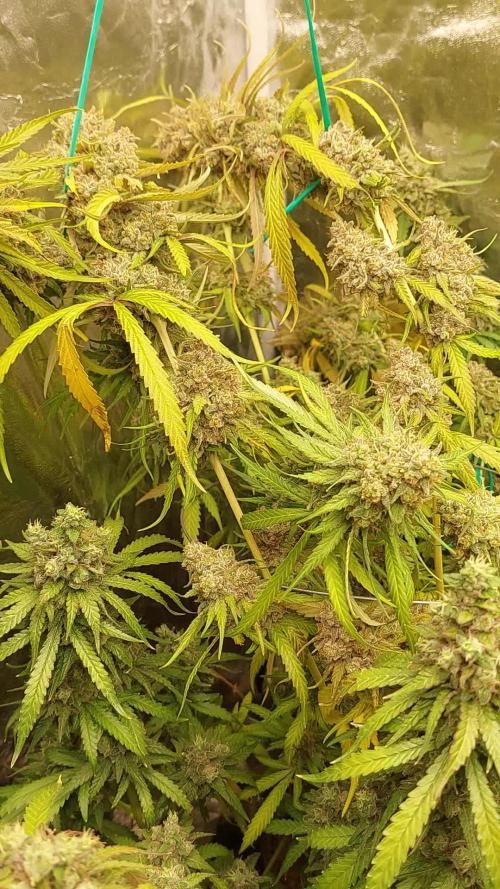
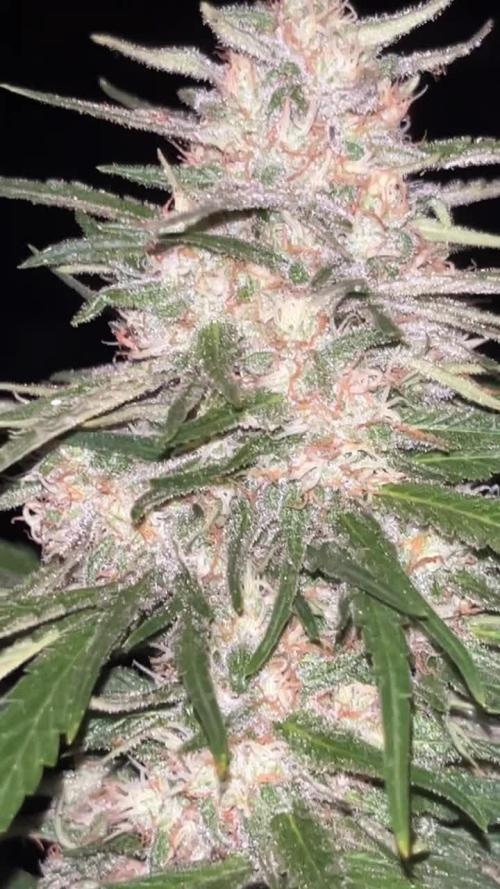
Twelfth week and now this is the end. I decided to harvest these days because two weeks have passed since I have increased the amount of water and because the peaks now seem to be in a very good development point. The plant is really spectacular. The flowers are very compact and voluminous, they give off a really intense, citrusy and orange scent. The two main buds are completely equal and measure entirely 50cm. All the rest of the buds have not developed badly either. The amount of pollen is moderately high and you can notice very well a compact layer on all the flowers. As I said I watered the plant with just water all week, increasing the dose more and more to wash the roots completely and be able to harvest the plant. I cut everything and hung it all up in a cabinet where I control the humidity and temperature values and try to keep them stable through an air recirculation system. I hope to have everything almost dry and ready within 10 days to be able to participate in the competition. I really thank Zamnesia very much for the opportunity it has given me and for this wonderful genetics that has made me known. I am very excited about what I have achieved from this growth and what I have learned in all this time. All I need now is to try this wonder!
Likes
19
Share
Let’s go day 72 from seed!!! Another great week it’s been , 2 Ogreberrys an brucy b been flushing for a week, an the 3 others will continue to get there normal feed of nutrients, they are just not quite ready so they will start getting flushed around next week!! Sweet sweet smell of Grapes And gooey frosty nugs is all I can really say, photos do no justice, some of the craziest fruitiest smelling buds I’ve ever had, Real High quality meds !! Hope you all enjoy an have an amazing productive day as well as a great week!! Peace love an positive vibes to all y’all Cheers 😶‍🌫️💨💨💨💨💨🤙🏻If there’s any questions, please ask!! 💚🙏🏻💯
Likes
60
Share
@Roberts
Follow
Well for how I messed up the early weeks of this plants life I was rather surprised by final weight. Buds are hard and dense with hidden colors all about in light. Just started curing. Gonna be making another attempt at this strain soon. Thanks again fast buds. Your team is the best. 5 stars. ⭐⭐⭐⭐⭐ If looking to purchase seeds follow the link please here. https://myfastbuds.com/?a_aid=60910eaff2419
Likes
1
Share
Likes
21
Share
@Budhunter
Follow
Have been away from my babies for a few days. Couldn’t wait to be back. Purple punch and gorilla punch completed 1 week flush. The smell of them are really strong. Mimosa cake is a bit behind but still promising. It is drinking 5l water each watering.
Likes
11
Share
Ladies and gentlemen, today is day 27, and this girl is doing great.. i just gave her a feeding around the rim of the pot .. she's leaning a little bit because my eternity grow plant is taking up all the tent, and this poor little girl is struggling to get light.. She's looking good though she will prevail and I believe end up being a great plant.. Kannabia seeds much appreciated. You guys are great genetics, so far doing great as well.. God bless everybody and happy growing ✌️. P.s i'm unable to upload the maxibloom nutrients in the general hydroponic silica that she's getting as well..
Likes
16
Share
@MarcGrows
Follow
Great week. Girls finishing up and taking longer to drink. Checked trichomes and this plant is ready with mostly cloudy and a spattering of amber. Will harvest tomorrow morning and will provide weights and measures after harvest. Will dry in tent without light and offset circulation. Will keep tent naturally at 67 degrees. I will need to assist with humidifier to get humidity to around 60 RH. Perhaps a wicking cloth in a bucket? Just thinking out options. Update: Cut down the girls and hang them up to dry. Great thick hard buds. Can't wait to see what they smoke like, but it is going to take time to dry. Thanks to everyone that helped to make this a successful harvest. I will weigh the harvest before starting cure after a closer trim.
Likes
9
Share
Molto aromatica con sentori di frutta pungente e spezie confuse con il caffè molto gradevole
Likes
97
Share
The first 2 Blackberry’s are stretching and developing bud sites. These 2 are a bit small, but the purple in number 1 is coming in nicely. I think the 3rd will be the champion of the bunch and outgrow her big sisters. My fault for trying to get a head start by a few weeks on the first 2 in less than ideal conditions. Live and learn. I’m going to keep all plants growing so everyone can see the good, the bad and the ugly. (I bet the ugly still gets me high as fuck!) 😜 New tents coming soon too. Another 2x4 and a 4x8. 👍
Likes
Comments
Share
Likes
37
Share
@eezeegrow
Follow
The two plants are growing very well! I'm happy with DWC. It's easy to manage and and small enough to fit perfectly also in small growboxes. 😉
Likes
52
Share
Once again she passes my expectations, late to the show with trichome production. I'm surprised there is purple on the bud, maybe Purpinator does work. I thought I could see hints under the grow lights and thought my eyes were deceiving me, I was just being hopeful. But nah 2 of the 3(under the UV) have developed a beautiful tone of purple. I was never going to bother with a deep freeze but maybe the whole bud will change given conditions, that would be something, fingers crossed. 🤔 was a little skeptical that reducing temps humidity would change density, but it does, buds are solid something I've not been able to achieve before. Rule of thumb is never to surpass 60% RH in the flowering phase and try to progressively reduce it down to 40% in the last 2–3 weeks before harvest. The plant will react as it seeks to protect its flowers, responding by producing denser buds and a higher concentration of resin. Cannabis plants are sensitive to sudden temperature changes, especially in the flowering stage. Extreme heat or cold can impact bud density and overall yields. In nature as a defense mechanism from cold, the plant sensing sudden dips in temperature will attempt to remove the pockets of air within the bud, it achieves this by compacting itself in doing so to better protect itself from cold snaps which are normally indicators in nature that worse weather is on the way. Terpene levels are the highest just before the sun comes out. Ideally, you want as many terpenes present in your plants as possible when you harvest. Cannabis plants soak up the sun during the day and produce resin and other goodies at night. The plant is at its emptiest from "harvest undesirables" so to speak right before the lights on. Boiling cannabis roots during harvesting slows down the drying process. When you boil cannabis roots, it shocks the plant, closing the stomata on the leaves. This prevents massive moisture loss through the leaves, leaving only the floral clusters actively losing moisture at a reduced pace. I've always run a strict 60/60 and it took almost twice as long to dry to a snap than previous grows where I didn't boil for what it's worth. Chlorophyll is good for the plant but not for you. When you harvest the buds, even after you flush them, if you flush them, they’re still filled with chlorophyll. Freshly cut buds are greener than dried buds because they still contain loads of chlorophyll. However, when rushed through the drying process, the buds dry but retain some chlorophyll, and when you smoke it, you will taste it. Chlorophyll-filled buds are smokable, but they aren’t clean. Slow drying gives the buds enough time and favorable conditions to lose the chlorophyll and sugars, giving you a smoother smoke. How the plant disposes of the chlorophyll and sugars by a process of chemically breaking them down and attaching the decomposed matter once small enough to water molecules which then evaporate back into the ether. Time must be given to the process to break down the chlorophyll and sugars. Think of it like optimizing the environment for decay. All the nutrients it could ever need are in abundance, it eats nutrients based on its demand for growth, which is dictated primarily by available light. Plant growth and geographic distribution (where the plant can grow) are greatly affected by the environment. If any environmental factor is less than ideal, it limits a plant's growth and/or distribution. For example, only plants adapted to limited amounts of water can live in deserts. Either directly or indirectly, most plant problems are caused by environmental stress. In some cases, poor environmental conditions (e.g., too little water) damage a plant directly. In other cases, environmental stress weakens a plant and makes it more susceptible to disease or insect attack. Environmental factors that affect plant growth include light, temperature, water, humidity, and nutrition. It's important to understand how these factors affect plant growth and development. With a basic understanding of these factors, you may be able to manipulate plants to meet your needs, whether for increased leaf, flower, or fruit production. By recognizing the roles of these factors, you'll also be better able to diagnose plant problems caused by environmental stress. Water and humidity *Most growing plants contain about 90 percent water. Water plays many roles in plants. It is:* A primary component in photosynthesis and respiration Responsible for turgor pressure in cells (Like the air in an inflated balloon, water is responsible for the fullness and firmness of plant tissue. Turgor is needed to maintain cell shape and ensure cell growth.) A solvent for minerals and carbohydrates moving through the plant Responsible for cooling leaves as it evaporates from leaf tissue during transpiration A regulator of stomatal opening and closing, thus controlling transpiration and, to some degree, photosynthesis The source of pressure to move roots through the soil The medium in which most biochemical reactions take place Relative humidity is the ratio of water vapor in the air to the amount of water the air could hold at the current temperature and pressure. Warm air can hold more water vapor than cold air. Relative humidity (RH) is expressed by the following equation: RH = water in air ÷ water air could hold (at constant temperature and pressure) The relative humidity is given as a percent. For example, if a pound of air at 75°F could hold 4 grams of water vapor, and there are only 3 grams of water in the air, then the relative humidity (RH) is: 3 ÷ 4 = 0.75 = 75% Water vapor moves from an area of high relative humidity to one of low relative humidity. The greater the difference in humidity, the faster water moves. This factor is important because the rate of water movement directly affects a plant's transpiration rate. The relative humidity in the air spaces between leaf cells approaches 100 percent. When a stoma opens, water vapor inside the leaf rushes out into the surrounding air (Figure 2), and a bubble of high humidity forms around the stoma. By saturating this small area of air, the bubble reduces the difference in relative humidity between the air spaces within the leaf and the air adjacent to the leaf. As a result, transpiration slows down. If the wind blows the humidity bubble away, however, transpiration increases. Thus, transpiration usually is at its peak on hot, dry, windy days. On the other hand, transpiration generally is quite slow when temperatures are cool, humidity is high, and there is no wind. Hot, dry conditions generally occur during the summer, which partially explains why plants wilt quickly in the summer. If a constant supply of water is not available to be absorbed by the roots and moved to the leaves, turgor pressure is lost and leaves go limp. Plant Nutrition Plant nutrition often is confused with fertilization. Plant nutrition refers to a plant's need for and use of basic chemical elements. Fertilization is the term used when these materials are added to the environment around a plant. A lot must happen before a chemical element in a fertilizer can be used by a plant. Plants need 17 elements for normal growth. Three of them--carbon, hydrogen, and oxygen--are found in air and water. The rest are found in the soil. Six soil elements are called macronutrients because they are used in relatively large amounts by plants. They are nitrogen, potassium, magnesium, calcium, phosphorus, and sulfur. Eight other soil elements are used in much smaller amounts and are called micronutrients or trace elements. They are iron, zinc, molybdenum, manganese, boron, copper, cobalt, and chlorine. They make up less than 1% of total but are none the less vital. Most of the nutrients a plant needs are dissolved in water and then absorbed by its roots. In fact, 98 percent are absorbed from the soil-water solution, and only about 2 percent are actually extracted from soil particles. Fertilizers Fertilizers are materials containing plant nutrients that are added to the environment around a plant. Generally, they are added to the water or soil, but some can be sprayed on leaves. This method is called foliar fertilization. It should be done carefully with a dilute solution because a high fertilizer concentration can injure leaf cells. The nutrient, however, does need to pass through the thin layer of wax (cutin) on the leaf surface. It is to be noted applying a immobile nutrient via foliar application it will remain immobile within the leaf it was absorbed through. Fertilizers are not plant food! Plants produce their own food from water, carbon dioxide, and solar energy through photosynthesis. This food (sugars and carbohydrates) is combined with plant nutrients to produce proteins, enzymes, vitamins, and other elements essential to growth. Nutrient absorption Anything that reduces or stops sugar production in leaves can lower nutrient absorption. Thus, if a plant is under stress because of low light or extreme temperatures, nutrient deficiency may develop. A plant's developmental stage or rate of growth also may affect the amount of nutrients absorbed. Many plants have a rest (dormant) period during part of the year. During this time, few nutrients are absorbed. Plants also may absorb different nutrients as flower buds begin to develop than they do during periods of rapid vegetative growth. 432 Hz is said to be mathematically consistent with the patterns of the universe. Studies reveal that 432 Hz tuning vibrates with the universe’s golden mean PHI and unifies the properties of light, time, space, matter, gravity and magnetism with biology, the DNA code and consciousness. When our atoms and DNA start to resonate in harmony with the spiraling pattern of nature, our sense of connection to nature is said to be magnified. Another interesting factor to consider is that the A=432 Hz tuning correlates with the color spectrum while the A=440 Hz is off. Audiophiles have also stated that A = 432 Hz music seems to be non-local and can fill an entire room, whereas A=440 Hz can be perceived as directional or linear in sound propagation. Once you adopt the idea that sound (or vibration in general) can have an equalizing and harmonizing effect (as well as a disturbing effect), the science of harmony can be applied to bring greater harmony into ones life or a tune to specific energies. There is a form of absolute and of relative harmony. Absolute harmony can for example be determined by the tuning of an instrument. The ancients tuned their instruments at an A of 432 Hz instead of 440 Hz - and for a good reason. There are plenty of music examples on the internet that you can listen to in order to establish the difference for yourself. Attuning the instrument to 432 Hz results in a more relaxing sound, while 440 Hz slightly tenses up to body. This is because 440 Hz is out of tune with both macro and micro cosmos. On the contrary, 432 Hz is in tune. To give an example of how this is manifested micro cosmically: our breath (0,3 Hz) and our pulse (1,2 Hz) relate to the frequency of the lower octave of an A of 432 Hz (108 Hz) as 1:360 and 1:90. It is interesting to note that 432 Hz was the standard pitch of many old instruments, and that it was only recently (19th and 20th century) the standard pitch was increased. This was done in order to be able to play for bigger audiences. Bigger audiences (more bodies) absorb more of the lower frequencies, so the higher pitch was more likely to “cut through”. One of the oldest instruments of the world is the bell ensemble of Yi Zeng (dated 423 BC), tuned to a standard F4 of 345 Hz which gives an A= 432 Hz. The frequency of 345 Hz is that of the platonic year! Similarly many old organs are tuned in an A=432 as well; for example: St. Peter’s Capella Gregoriana, St. Peter’s Capella Giulia, S. Maria Maggiore in Rome. Maria Renold’s book “Intervals Scales Tones and the Concert Pitch C=128 Hz” claims conclusive evidence that 440 Hz and raising concert pitch above scientific “C” Prime=128 Hz (Concert A=432 Hz) disassociates the connection of consciousness to the body and creates anti-social conditions in humanity. The difference between concert pitch A=440 Hz and Concert A=432 Hz is only 8 cycles per second, but it is a perceptible difference of awareness in the human consciousness experience of the dream we share called existence.
Likes
8
Share
Привет друзья мои! Моё растение всё таки выросло и начало цвести! Этот малыш явно хочет жить и не сдаётся!) Вот я понимаю стремление. Я вот тоже не выкидываю, даже те которые обречены растения. Все выростил и скурил) Всем мира и добра и хорошей генетики!
Likes
14
Share
@Paultemp
Follow
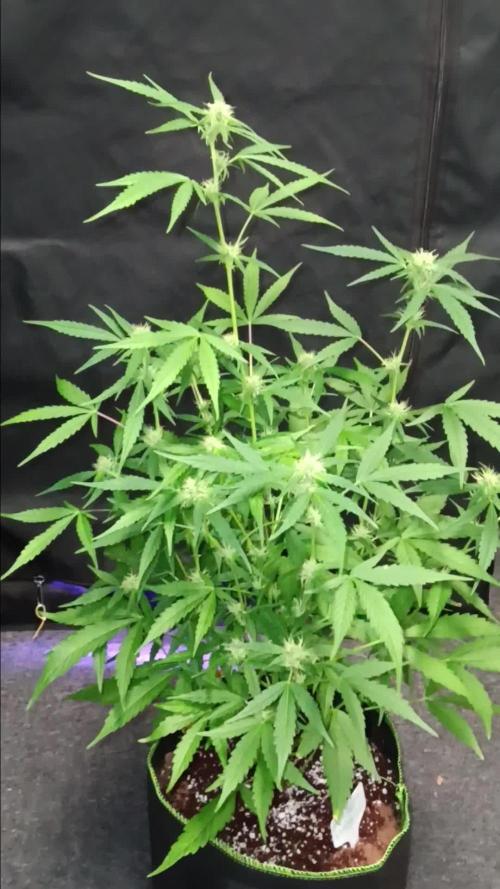
Hi all! 😊👊 Week 1 flower Og kush 7 gallons pot Hp promix soil Remo nutrient Aelius led 300gh 1 gallons water every 2 days Start nutrient for flower 2 days after flipper 12/12
Likes
19
Share
@Changman
Follow
These ladies are starting to show their true colors and smells...exciting times ahead
Likes
81
Share
Hey! Welcome to week 8! Karen is mid way through her flowering stretch. Please check back to last week as I update daily so the week is now complete. I count about 20 colas now. Day 51: Have reconfigured the tent, see video. Karen is now 36cm and still stretching. Karen has more light now. Smell is still there hits you when you open the tent. Fertigated 2l. Day 52: Height: 39cm. Karen's scent is heavenly. I have reconfigured again and installed some upgrades. Better reflector. Much bigger carbon filter. Increased airflow. Better config. More efficient pot layout. Karen is lovely. I am grateful to her and for her, so I wrote her a little poem, I hope she liked it. "Karen! Oh Karen! The phoenix of flowers, Three lowly weeks she struggled in vain, Shadowed and starved for five hundred hours, He slowly wept to witness her pain. Karen! Oh Karen! I P-H'd your showers, and in the fourth week you started to gain, Hallowed and hard you survived as you cowered, I thought you meek, I was wrong once again. Karen! Oh Karen! Forgave me my howlers. She set a pace, a pace she maintained, Now shes a girl at the peak of her powers, And so I'm a geek, with buds on the brain." Day 53: Approx 48h into a simulated dry spell. Alright I think it is time for Karen to get her first MAJOR defoliation. I will update shortly with photos and info. I will also be doing some gentle LST to separate the colas a bit. Day 53.5: Defoliation and LST. Finally got chance to photograph that bunda. Enjoy! Day 53.75: Bit of a fail. Messed up the timer and the lights ended up being off for about 3 or 4 hours. Because I was cooling the room (open window) to keep temperature in the tent down, without any light the temperatures absolutely plummeted as it is sub-zero outside. By the time I realised and turned the lights on, the temp in the main tent had dropped to 14 degrees celsius. Whoops! How is that for mistreating your girl? Defoliated about 80% of her leaves, 4 nodes, significant LST, then stuck her in the cold and dark for 1/6 of a day. Not to mention she is now almost 3 days into a "dry spell". There do not seem to be ill effects, and Karen has already begun to respond to the LST; all the colas that had been changed in angle are now upright again. The dry spell I keep mentioning, there is a method behind my madness, I have spotted one or two small flies and I think they may be fungus gnats. I am starting to suspect that the 2nd seedling in the Purple OG Punch Auto grow was actually beheaded by fungus gnat larvae. So I am drying out the mediums as much as I dare. I am closely monitoring the plants, so far the only one I have had to break the drought for is Enigma; all the girls in big pots haven't even noticed it's dry yet. How far am I going to push it? Well I will judge it on a plant by plant basis, but quite honestly I am hoping to see physical signs of thirst before I breakdrought. Of all the plants the two I think will respond most strongly to this will be Karen and Bertha, because of where they are. Karen here is actually probably 4 weeks into flowering rather than two, so about now is a good time to give her a little hydration stress. I do not think I will push it past 5 days, as RH is 34%. By now all the plants will be compensating for the lack of moisture and the high temperatures and low humidity. They will be taking more and more moisture out of the coco, and as the coco dries further and further down, those plants that have space will start desperately growing roots to find moisture. Mark my words, 24 hours after I end this drought, every plant in the tent will throw out crazy growth. Day 54: Ended drought and fertigated 6l, no run off, I will re-fertigate tomorrow. Karen is still stretching her height post LST is now 37cm. The two tallest colas seem to have stopped but the other colas are still stretching. Day 55: Alright so it has been 5 hours since lights on, and Karen is looking in good shape, all her drooping leaves have perked back up and she has added quite a bit of foliar growth. The colas are all still rising, except perhaps the two tallest. This girl is absolutely loaded with pistils, I'm starting to see trichomes on the sugar leaves, but trich production hasn't started in earnest yet. She has a least 20 colas, and 6 of them are thicker/taller than the primary cola at her tip. Every one of her nodes has reinforced itself with a bulbous growth and these cola branches are swelling rapidly. I am increasingly of the opinion that, all being well, this girl is going to surprise us all with her yield. My first grow, which was just mucking about really, I got 60-70g of the two main plants, and they were just bare sticks with 2 colas. Although her height is less than theirs was, 2/3 of their height was bare stick... whereas every mm of her is befoliaged and living. So in terms of the height of the actual cola I think they were about comparable in usable space on a per cola basis. The main difference being that Karen has 20+ colas whereas they had 2 primary and 2 lower. I know that it is probably unrealistic to expect more than 70g from a single auto grown indoors. Nevertheless my gut tells me this baby could achieve at least 100g, perhaps as much as 150g. The next few weeks will determine that, but given where we were in week 3 I will be grateful for any yield of quality bud. I have dropped the lights down to 18/6 from 'tonight' onwards. I really have no idea how long we have left for Karen. According the the "brochure" she flowers for 7-8 weeks, with a total crop time of 9 weeks. The problem is I don't know what a total crop time is? Does that mean from seed to finish? If so Karen is clearly not going to be anywhere near that timescale.I am going to go ahead an assume that, for my plant anyway, the first 4 weeks were veg weeks. I think it is fair to count week 5 and 6 as flowering because pistils were popping out very early in week 5 if not before. So that makes this week four of flowering. I am going to assume 8 weeks rather than 7, so I think we have another 4 full weeks give or take a week. On that basis I am expect harvest week to be around week 12 or so. I am not fixed on this though, I am determined not to harvest this girl early. Day 55: Photos taken 00:00 9/3/23 Strong 24h of veg growth as predicted. Day 56: Existing leaves continue to swell. Stretch appears to be slowing. I've taken so many media this week that I cannot scroll down far enough to select a recent thumbnail. Probably Karen's biggest week in terms of changes. She is looking like she is going to impress. Height 39cm.
Likes
66
Share
@Neo09
Follow
This week we solved a problem with high temperature and we had instaled a clima. IT Works perfect! Ladys are Just happy as you can see on videos😎happy growing to all of us😎🙋‍♂️🙌
Likes
29
Share
After week 16 of this grow my 'Fruity Terps'-plants are ready to harvest. I check the trichome-heads with a handheld-microscope (magnification of 150, available in every growshop) and see that all have turned milky and some start to turn amber already. That means PEAK-THC (=all trichome-heads have turned milky) has been reached inside the trichome and it is time to harvest. If I would let them go longer now and continue to flower them, more of the trichome heads will turn amber as the THC breaks down again to other cannabinoids, and the effect of the cannabis will get more sedative when smoked. For some chronic pain patients this is what they want from their medicine, therefore it is advisable for them to let the weed flower than recommended. The aroma coming out of the tent is STRONG and DELICIOUSLY FRUITY! 😍 The fade from the flush has turned the bigger fan-leaves yellow or purple now, this shows the plant is using her own sugars now and has used up all nutrients saved inside her. That is exactly what I want, since a well flushed plant ensures a clean, smooth smoke when the buds are dried. This is my MEDICINE and I use it against my chranic back-pain from hernia, therefore I have to make sure I can consume my medicine as pure and clean as possible. All my plants have grown big buds, which are glistening with TRICHOMES, the SANlight EVO4-120 LEDs did an OUTSTANDING JOB! In combination with the BIO NOVA nutrients, all plants THRIVED throughout the cycle and were able to grow healthy to their full potential.
Likes
14
Share
@Chi_K24
Follow
Update Sunday... hey guys uploaded a security cam footage of the blizt storm in the GTA.... ladies survived somehow... also did top dressing at 30tbs per 15 gal of 444 and 284 gaia green organic amendments. 70/30 ratio. Watered them in with dechlorniated, pH 6.2 and 60mL of molassas to 5 gals of water. Defoilated and did some maint pruning on growth under the main canopy. God bless. Hey folks, Well I got good new and some bad news. Last weekend, these ladies got thrashed by a thunderstorm.. break some branches along the way. Had enough time to splint the bent stems and they bounced back. Note that due to the storm, the pots got watered down pretty heavy... but to my surprise I let the ride out from Monday to Friday... and regretted that. I should of watered the ladies on Wednesday or Thursday, but found out the pots where extremely dry (also probable that the fabric pots are drying the medium out allot faster). The plants started to droop Friday afternoon. Also did a little lst but didn't want to over stress the plant that still recovering from the major storm. Iv watered each pot about 8L of molasas water @ 5mL/L and see how the soil and plant respond. Im going to check on them more frequently and prevent under-watering. Hope you guys enjoy the grow so far. Let's see how far i can push these ladies! Cheers.
Likes
25
Share
Day 15 18/07/24 Thursday De-chlorinated tap water pH 6 with calmag 5ml -5L. I have scratched back surface soil, and topped up with canna terra pro and DyNoMyCo ✌️💚 Day 16 19/07/24 Friday Lite Feed today, 250ml each pot small run off. Seeing excellent start to these babies. Let's get it 👌💚 Day 18 21/07/24 Sunday De-chlorinated tap water pH 6 with calmag 5ml to 5L. Watering in 1L each day from now. Updated video Day 19 22/07/24 Monday Nothing new to report. Starting to see them beautiful fans appear that's all 😁✌️ Day 20 23/07/24 Tuesday Feed today, giving them straight all nutes Inc flowering nutes. I will update the dose as they grow and develop a bigger hunger. Video updates 👌💚 Day 21 25/07/24 Wednesday END OF WEEK Still no water or feed since Tuesday, it has been overcast last two days though so not a lot of energy been used. Still happy and healthy 💪💚