The Grow Awards 2026 🏆 









Likes
Comments
Share
@SeseGrows
Follow
Home Interior 90x90//
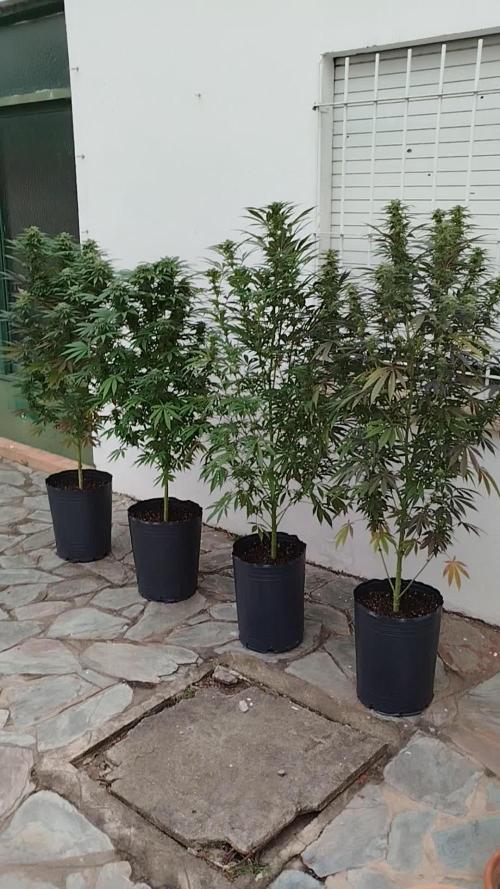
Do Si Dos 33 - Granja Barneys + Sour Diesel + Roadawg
//Semana 4//FLORACIÓN
- Grotek Nutrients.
- Lumatek LEC 315w+ 💎 .
LEC 315w —> 100%

Likes
1
Share
@Danger_Mouse
Follow
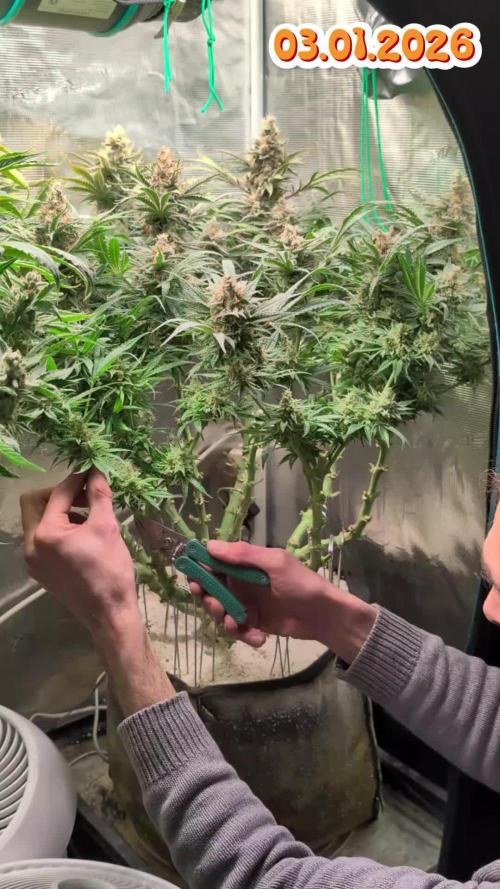
Seventh week of flowering. All beautiful, healthy plants, but very different phenotypes. Two plants are ready to be harvested in 7-10 weeks, but the slowest one is at least three weeks away.

Likes
4
Share
@KirbyFarm
Follow
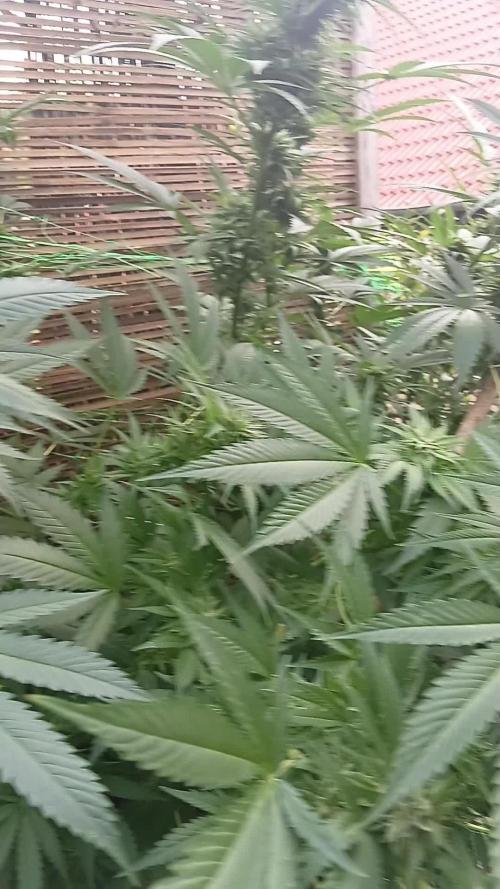
Now into flowering the girls are growing many white hairs and slowly chunking up. Some look urhter along than others into the actual forming oi buds. Looking good.


Likes
208
Share
@yan420
Follow
Harvested today. Noticed a small amount of bud rot on a couple of top buds due to elevated humidity over the last few days. Affected tops were removed immediately.
Only the very top buds were impacted, the majority of the plant was healthy and harvested without issues. Trimming done, moving on to drying. Final trimmed weight will be updated later plus a more thorough evaluation of the grow and strain.
* Rest of grow info week 20



Likes
9
Share
@Piorkeed
Follow
Week 11 (03/04 - 09/04)
During this week I'll continue to flush the plants. I guess that this will be the last week for all of them. I'm waiting to chop in order to obtain a balance of 60/40 or 70/30 of milky/amber trichomes. Moreover, due to the fact that I have to use the same growbox to dry them, I must cut all the plants the same day. Doing this I think I'll have a more mature Fat Banana #2 and, I hope, a good variety of Blue cheese and Fat Banana #1.
03/04 D71: one liter of tap water each @ pH 6.3. Trichomes check: all three plants show milky trichomes for the most; few amber on the main branches of two fat bananas
04/04 D72: one liter of tap water each @ pH 6.3
05/04 D73: one liter of tap water each @ pH 6.5
06/04 D74: -
07/04 D75: end of the journey.
Chopped all today.
Light wet trimming to avoid rot and I've put them drying in the grow room. I will wait a couple of week


Likes
30
Share
@Em_grows
Follow
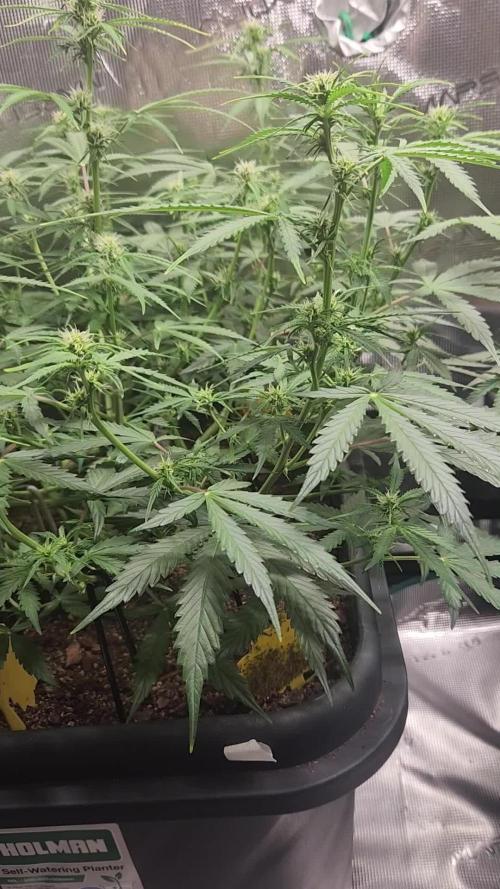
They seem to have packed on some decent size this week which I’m glad to see but the trichome production leaves a little to be desired. Some of the lower buds look more frosty than the top buds which seems weird to me but I don’t really know that much lol. My ph runoff has been a little low which I think has to do with the molasses I gave them which wasn’t blackstrap which I think raises ph. Anyways, next watering will be with about 7.0 until my runoff corrects, it could explain the yellowing leaves as well. But the runoff is 6.1-6.3 which shouldn’t be that big an issue so it could be something else but I’m so close to the end messing around too much is probably not the best thing to do. Hopefully my pictures and videos are a little better this week at least! Enjoy and hit me up in the comments if you have any tips!




Likes
5
Share
@Bengrowerbr
Follow
this plant surprised me, its flowers became dense and heavy, much more than its mother's. The yield was much better than I imagined. I am really satisfied. I had never cloned an autoflowering plant and that sounds cool.
Likes
168
Share
@Still_Smoq
Follow
📆 Week 11, 15-21 July 2024
15-21 July - Observed and let the plant grow.
📑 Pablo continues to stack and swell in bud growth. She still has a few more weeks to go. I see no problems up to this point.
🍶 19 July nutrient solution changed
🍽️ 19 July feeding schedule updated
💧 Using reverse osmosis water with EC/TDS at 0
🐉 Nutrient Solution EC 2.5 at 74 degree F
🔆 Light power at 80%, DLI 40 canopy coverage at 12hrs
😤 Using PYPABL, Air Pump, 400GPH
That is it for this week. Thanks for the look, read and stopping by.

Likes
7
Share
@Ctrellis90
Follow
Everything is going well for the ladies so far.
Really can't complain. Plenty of stretching for the durban kinda put me in a situation like this strain usually does to me lol. Looks like I'll be tieing her down around the tent supports again to keep her from kissing the lights.
No,I think we're all done stretching and we should be able to kick back and watch the buds stack!
Likes
3
Share
@Canaryweed_tf
Follow
Ya tenemos la cuarta semana de la HellfireOG del banco de Kannabiaseeds. En está semana las he trasplantado ha macetas de 7L. Tienen buen color, siguen creciendo muy bien y espero que sigan así. Pronto nuevas noticias 😘


Likes
10
Share
@wheedtobeus420
Follow
Day 77. Just wow she’s a beauty. Frosting up nicely. Not super dense like last time but more stretch and sativa looking buds. I’m excited how she has matured. She will
Begin flushing soon and getting the chop 💫💫 can’t wait to smoke her stinky butt

Likes
27
Share
@Mrs_Larimar
Follow
2025-10-15
2025-10-15
The Shaman was cut today. It's always bittersweet for me when it's time for harvest. Like every time I've grown her,
I had so much fun and joy—just looking at her brought me happiness.
SHAMAN is a keeper in my outdoor genetics. She is easy to grow from start to harvest,
always a pleasure. Despite the fact that this year she took longer to mature,
I can't blame the genetics—all my outdoor plants were 3-4 weeks later this year. It was simply the conditions.
Let's talk about conditions:
The soil bed is prepared in autumn the year before and refreshed in springtime,
so the plant always has at least 60 cm of deep, nice, and fluffy enriched soil base filled with
microorganisms, microbacteria, and mycorrhizae.
The roof is the most important part. This year I added 2 SCROGS—that was great!
She stayed stable during heavy wind and rain and kept on shining after the storms.
I'm very pleased with the outdoor season overall, despite a very cold and wet spring
and summer with only short periods of hot and sunny weather.
The girls in my garden didn't care and kept growing and blooming until the last day.
Thank you @DutchPassion_Official for the seeds—I still have 2 left for next year.
My first Attempt with SHAMAN
https://growdiaries.com/diaries/27066-shaman-dutch-passion
And the second Run
https://growdiaries.com/diaries/106092-grow-journal-by-mrs-larimar
Breeders Infomation:
Shaman is a solid, highly powerful F1 hybrid. This mostly sativa strain has the THC level of 13.7%. It consists of 75 % sativa and 25 % indica.
It is perfect for the outdoor and greenhouse cultivations. The plant is resistant to the mould and the bud's rot due the open structure. It has a big intermodal distance between the buds. The flowering time is 8-9 weeks in greenhouses. The plant reaches 1-1.5 m in height.
The sweet woody smoke brings a sensual high-quality sativa effect.
I hope you all enjoy reading my diary.
stay hydrated
legalize worldwide

Likes
5
Share
@Chubbs
Follow
Weekly update for these gorgeous girls. They've definitely started taking off and doubled in size over the past week. I started feeding nutes at 5ml/gal of Athena Calmag,Grow A & Grow B. Ppfd still at 350-400 at the canopy level and watered 250-500ml daily. All in all Happy Growing


Likes
327
Share
@FoTwenny
Follow
Fo' Twenny here back with another update!
I will be updating and uploading more photos through out the week. I hope you'll ride along and give me a follow!
The deets:
Feeding with .2 ml/gal of RapidStart and .2 ml/gal of SuperThrive, Adjusted pH to 6.5 and then add .25 tsp of recharge.
8/16 - 8 days post sow. All but 2 seeds have sprouted.
I was especially concerned for the Melon Gum because I only had a 2 pack and both beans were quite pale. I gently dug around in the peat pellets and found the bean with a fresh, healthy tap root! I expect she should be popping up by tomorrow evening. The other bean yet to pop is the Jenny Kush. I was gifted 5 Jenny Kush seeds, and I will wait until tomorrow to see if she sprouts a tap root before popping another one. Hopefully, I will have more luck with the next one.
Successful germination in 16 of 17 photoperiod seeds. With a total of 19 of 20 if you include the 3 autoflowering cultivars running along side. They're being documented in separate diaries and will stay in the veg tent when the photoperiods are moved into the bloom room. Go check 'em out!
8/20 Update: Melon Gum has sprouted. If you're not following my Zkittlez Auto diary, you missed that I almost killed this girl on accident. Graceful me, knocked over her solo cup and she got stuck to a sticky trap. Her stem split in half and I put a piece fabric medical tape to mend her and she is actually growing and doing well regardless of her injuries. All the girls, except Jenny have sprouted and are developing. I planted a new Jenny seed 8/18 and left the original in too, just in case.
Please feel free to ask questions or provide constructive criticism. Check back throughout the week for new photos and updates. I look forward to hearing from ya'll. Happy growing!
Peace, ✌️
Love, 💚
And Frosty Nugs!!! ❄️🌲


Likes
10
Share
@TheCannaProphet
Follow
~ DUTCH PASSION / SUPER SATIVA SEED CLUB FAST FLOWER 'TESTER' A and 'TESTER' B ~
Well cannafam, here we go again on another growing adventure together! This diary will be special to me for two reasons, one because I have the opportunity to cultivate some new and exciting strains from two of the TOP breeders in the industry! The second reason this will be special to me is that I will be growing these two strains in a brand new greenhouse that I put up! I'm super stoked to see how these two ladies turn out in this new setup.
On to the strains:
'Tester' Strain A info: Hybrid (I/S) | 6-7 weeks flowering | Fruity, Sweet, Candy
'Tester' Strain B info: Indica-Dominant (90%) | 7 weeks flowering | Fruity, Peppery, Sweet
I hope that you enjoy this run as much as I will... It's going to be fun and interesting for sure!
~GROW WHAT YOU LOVE, LOVE WHAT YOU GROW!~
____________________________________________________________________________________________________________________________________________________________________________________________________________________________________________________________________________________________________________________________
The Setup:
These beauties will be growing in a brand spanking new 10x14' greenhouse that I have equipped with automatic window openers, a complement of Hurricane fans and a de-humidifier/heater to help keep the environment as dialed in as possible.
I started both tester in glasses of tap water, where they soaked for 24hrs. After soaking, they were placed directly into whole eggshells with just their tops removed to make a natural seed starting pot that I filled with a 70/30 blend of Coco/Perlite which was pre-moistened with well water ph'd to 6.2, then placed under a 50w full spectrum LED on a 24hr light schedule.
Once, they both have their second set of leaves emerged, I plan on starting to put them in the greenhouse for 2-3 hour a day for a few days to help them acclimate and 'harden off' in the greenhouse. I'll be starting both off in 1qt pots, then transplanting them into to gradually larger pots until they're around 6 weeks old, then they will go into their final pots which are 25g fabric pots.
I mix my initial medium using 3 tbsp/g of Gaia Green Organics 4-4-4 along with 1 tbsp/g of Gaia Green Organics Glacial Rock Dust for the trace minerals it provides, 1 tbsp/g of Down To Earth Kelp Meal, 1 tbsp/g of Trichoderma/Mycorrhizae, and 1 cup/g of Wiggle Worm Castings. I hand mix my amendments to ensure an even distribution throughout the medium. I'll be watering with well water ph'd to 6.2-6.8 and providing bi-weekly compost tea's throughout the run.
____________________________________________________________________________________________________________________________________________________________________________________________________________________________________________________________________________________________________________________________
Weekly Updates:
5/1- Week Three of veg is here for the pair of 'Testers' from SSSC/Dutch Passion Seeds. Both 'Testers' continue to do exceptionally well despite temp's in the greenhouse reaching just over 90℉ at the peak of the day. Both continue to show great vigor, color and are both constantly 'praying'!
5/3- Watering both continues every 2-3 days depending on what the plants want. Both girls are looking like champs!
5/5- Today I watered both with 8oz. of well water, to which I added 1 tsp. of Uncle Willies Worm Tea Concentrate.
5/6- Well fam, the Third week of veg is in the rear view mirror for these two beautiful 'Testers' from SSSC and Dutch Passion. Unfortunately, I have to go out of state for 7-10 days because of a family emergency, so I won't have pic's for next week. I will have a family member looking after the plants in the greenhouse to make sure all survive until I return! Give your loved one's a hug and tell them that you love them... you never know when you'll never have the chance to do it again! Blessings to all!😎🙏
Thank you for visiting my diary, I hope you will follow along and hope you enjoy what I do! Stay Blessed!😎💚