


Likes
Comments
Share


@TopNotchBud
Follow
Very easy strain to grow. I grew the White Critical Express previous to this grow, I really liked it and wanted to try growing an Autoflower so I went for the Critical 2.0 and it was worth the grow.


Processing
Likes
15
Share


@LittleBigTrees
Follow
Topped them end of last week, still not given them feed as the farmyard manure they were planted straight into seems to be giving them what they need so far, I've given them rain water when they needed it.
Hopefully the sun will return this coming week 🌞

Likes
1
Share

@Beargrower
Follow
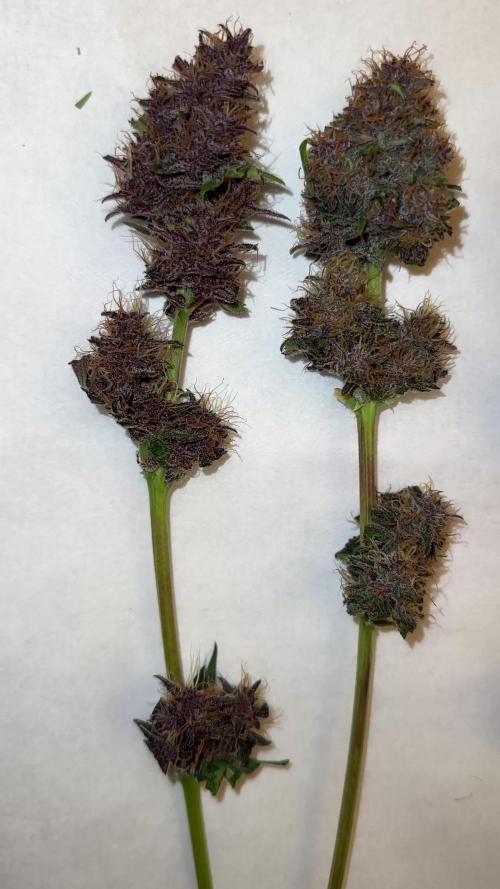
Questo è stato il mio primo ciclo indoor della mia vita ho ottenuto 40 grammi o più a pianta tutta trimmata essiccata e tutto.


Likes
36
Share


@TaterheadJohnson
Follow
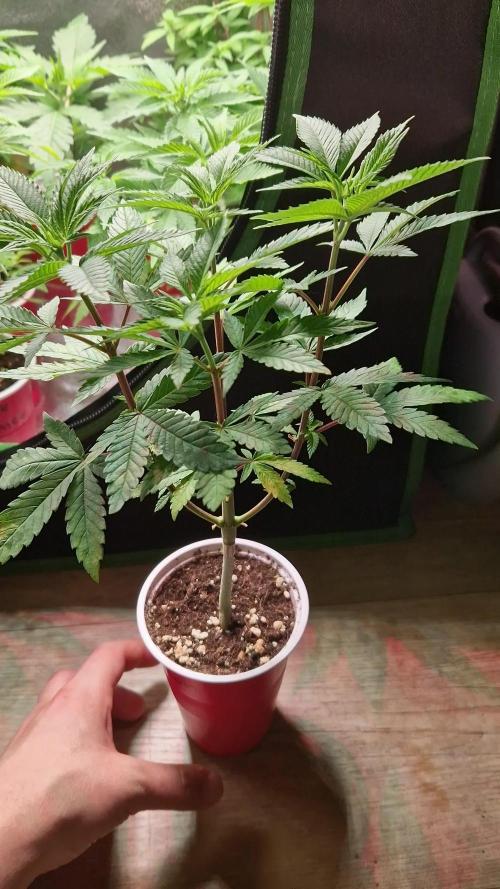
8/2: Started new batch of nutes. a repeat of last weeks nutes but with more CaliMag this time. Wednesday we will be bumping Rez to 6 gallons this week. Depending on how she is looking throughout the week we may start transitioning to Bloom nutes. Mixed as usual nutes in gallon jug of water. Transferred half to half gallon jug. Topped of Rez with half gallon jug of treated water.
8/3: Fed her today. Gave her the rest of the mixed nutes from yesterday’s feeding and also a full gallon of plain water. Filled rez to 3rd line today due to roots coming from bottom of bag into rez. Now that’s 6 gallons in the rez now.
8/4: Topped off Rez before bed with the half gallon of plain water.
Started transition nutes this evening. Mixed nutes in gallon jug as usual. Poured half into half gallon jug. Filled rez to 3rd line using half gallon jug of nutes. Still some left over in jug.
8/5: Topped off the Rez with the rest of the nutes from half gallon jug. Split gallon jug of plain water into half gallon of water. Poured some of the half gallon of plain water into Rez until it was a little over the 3rd line.
Bumped light intensity to 70%
This evening topped of Rez again with the rest of the plain water from half gallon jug from earlier today. Then poured in SOME of the rest of the transition nutes left from mixing.
8/7: Mixed another round of transition nutes and fed from half gallon jug split.
8/8: Topped off rez with remaining half gallon full of mixed nutes for the week. Will need to water another half gallon of plain water before starting new nute batch tomorrow.
Topped of rez to 3rd line with some of the plain water in half gallon jug.
Topped of Rez again late tonight with the rest of water from half gallon.
I can now start new batch of nutes tomorrow.

Likes
2
Share


@GreenLupinCWB
Follow
Começando a quarta semana de flora,bem saudável, bastantes tricomas,já ficando muito gorda.
Likes
3
Share


@Unculti_responsable
Follow
Esta semana creció bastante la Jack orange ya tiene bien marcados los nodos y las nuevas ramas, vamos a empezar con podas de bajos y un poco de defolición, cuando las ramas ya esten un poco más grandes vamos a empezar a entrenarla con amarres y cropping!! Vamos a ir viendo las siguientes semanas como vienen!!

Processing
Likes
12
Share


@2Stones1Bird
Follow
Checkout my Instagram @smallbudz to see the Small budget grow setup for indoor use, low watt, low heat, low noise, step by step.
07/12/2019 - Fed her 2l of 6.5PH water with 0,5ml of each Grow, Bloom, Max and Alga-mic, and 1ml of each Heaven and Vera,noticed about 10% run off, also added a green filter to the camera lens. Adjusted the light distance to 55cm again it was toooo close about 32cm.
10/12/2019 - Decided to go back and check the basics, removed led strip to give a proper 'night' time, changing light cycle to 20/4h no more 'exotic' 22/2h, re-checked the light distance every 2 to 3 days to ensure 60-45cm and I can tell all ready she is loving it.
Also added home made Co2 made with 1 tsp of yeast, 3/4 tsp of sugar 700ml of warm water in a 1l bottle with a tiny pin hole on the cap.
11/12/2019 - Fed her 1.5l of 6.5PH water with 0,5ml of each Grow, Bloom, Max and Alga-mic, and 1ml of each Heaven and Vera,noticed about 10% run off.
12/12/2019 - 8 weeks have passed and no flowers I guess I'm flipping to 1212h to see if she reacts.

Likes
4
Share


@bizar78
Follow
Huele delicioso. Crecimiento rápido. Y fácil de cultivar.. Seguro que repito!!

Likes
184
Share


@OrganicNature420
Follow
Germination date 🌱 12/07/2021
Day 64 16/09/2021
Strain 🍁 SinCity seeds YUZU SORBET
(Purple yuzu x whitenightmare)
THC% • Unknown
💡 Mars Hydro FC4800
• Power draw 480W + 5%
• Max coverage 5 x 5
• LED 2070pcsSamsungLM30B1&Osram660nm
• Max Yield 2.5g / watt
• Noise level 0 DB
• Removable Driver +2m cable
• Daisy chain (multiple lights)
https://marshydroled.co.uk/products/mars-hydro-fc-4800-led-grow-light-samsunglm301b-commercial-greenhouse-medical-indoor-kit 🇬🇧
https://www.mars-hydro.com/buy-fc-4800-480w-4x4-energy-saving-full-spectrum-commercial-led-grow-light-mars-hydro-for-sale 🇺🇸
PROMO CODE • (ORG420) DISCOUNT 👍🏻 marshydroled.com
⛺ Mars Hydro 120 x 120 x 200cm
📤📥 AC infinity 6inch
💧 10lt dehumidifier
❄️ 3.1kw air con system
💉 Nutrients GreenBuzzLiquids
Organic Grow Liquid • 1-4ml until 2wk flower
Organic Bloom Liquid • 2-4ml flower stage
Organic More PK • 2-4ml +wk3 of flower
Organic Calmag • 1-2ml/lt whole grow
Fast Plants Spray • first 3days at night lights off
More Roots • 2-5ml veg +2wks flower
Fast Buds • 5ml +wk2 of veg until 1wk flower
Humic Acid Plus • 2-5ml whole grow
Growzyme • 2-5ml whole grow
Big Fruits • 2-5ml flower stage
Clean Fruits • 5ml flush 1wk
Ph powder
Root Gel
Living Organics
PROMO CODE • organicnature420 15% off ✌️🏼
https://greenbuzzliquids.com/
🥥 Growing Media • Coco Coir
Notes 📝
Week 2 done. Girls look good, slight nitrogen toxicity but they will live through it 🌱
Happy growing fam ❤️🌱🍁👍🏻
Processing
Likes
57
Share


@LockDownGrow
Follow
this lady from the off set was the fastest growing and largest plant from the off set growing bushy with lots of leaves needing the biggest defoliation's too get that important light down too the many branches below,
she is drinking about 8 pints of feed a week and loving life , and her bud production is also coming along nicely too ,
i cant wait too try this one ,
Likes
68
Share


@715creeks
Follow
Starting to worry about too much foliage around the bud areas and the lower half of the plant.


Likes
7
Share


@Guerillafarm
Follow
Ich giesse jeden tag aber
abwechselnd mit und ohne Dünger dass spart zeit
Day 1=1L Wasser PH= 6.2 150ppm (0)
Day 2=1L mit Dünger PH=6,4 1400ppm
Likes
23
Share


@555ABKY555
Follow
the past few weeks the girl scouts have been irrigated and fertilized but the little land used has made them dwarf, I performed lollipopping due to a redness that appeared on the leaves of one in particular now it is the most luxuriant. the skunk has really grown up in the background and the little shade has earned it its luxuriance


Likes
5
Share


@MarkyMalarky
Follow
Very happy with progress so far. Very straightforward with the top dressing and watering in with tap water left out for chlorine evaporation and pH 6.5-6.8.
Making nutrient additions weekly. Watering as needed.
Thinking about when I want to begin LST.

Likes
5
Share


@GrowLegend
Follow
Bien aquí esta el día esperado la cosecha, es mi primer cultivo y considero que lo logre. En muchos medios de lectura y en especial en vídeos mencionan que no puedes esperar mucho es tu primer cultivo. En mi caso es falso y lo demuestro ya que si aprendes, investigas por cuenta y lees lo suficiente, obtendrás un alto porcentaje de que los resultados se den. Muy contento con mi plantas y sus tonos morados. Puntos a mejorar tener una carpa de cultivo y por su puesto un extractor de humedad para que baje la humedad preferiblemente a 45 grados
Vendrán mejores contenidos y cosechas mas abundantes. Gracias a todos por su vistas y comentarios. Saludos y bendiciones!
Likes
3
Share

@RatmanJR
Follow
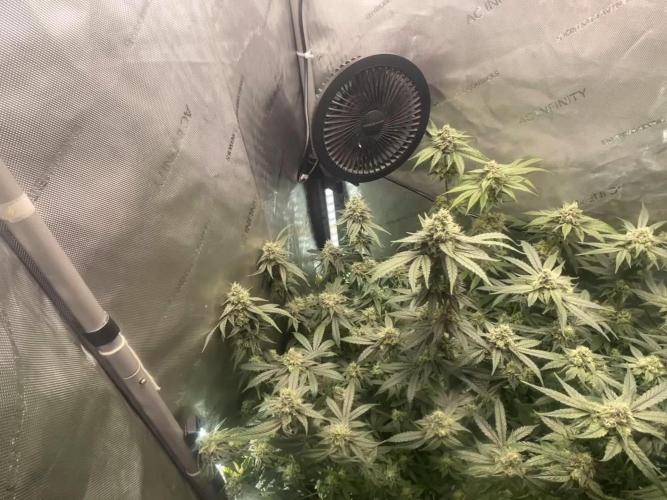
November 16th, 47 days post flip.
Plants continue to fatten and have put on some really noticeable weight in the last week. By the looks of things I’m expecting around 10 more days of fattening and than a week or two of ripening before harvest. I will do my final defoliation around mid week this week. Shooting for day 49 or 50.
At this point will not be providing anything but water. I still am not seeing any fade so I think she has plenty of what she needs.
I did get a chance to add those two smaller fans I wanted to add. This has dropped my temperatures from 82 to 77. This drop should hopefully help preserve terpenes and help prevent mold. The airflow will also help prevent mold.
Plant 1(Cherry Chunks):
The frost on this one is insane. I also get why they call it cherry chunks, it’s terpenes profile is starting to come through and it is tart in nature; its structure is also very chunk like. Much lighter green compared to the two purple marmalades
Plant 2(Purple Marmalade):
The resin on this thing has been insane since the very start of flowering. Smells of tropical fruits and guava really looking forward to this one
Plant 3(Purple Marmalade):
Smells on this one are finally starting to take off, it slept for awhile as far as the smell department went. It is starting to take on a sweet gassy funk kind of smell. Possibly lavender and gas? I’ll have a better idea come next week. The density on these nugs are also insane, look like they are going to explode any second.
Purple Marmalade Clones:
Growing very well, needs a good defoliation here soon and maybe some craft blend.
As always guys thank you so much for following along and God bless!

Processing
Likes
15
Share


@Dico29
Follow
They are starting to shoot some pistils. I added some random store fertilizer that is 1-4-7 and put it in the 3 gallon. I poured it in a water bottle and just eye balled it pretty slow and not for long. It seems to help

Likes
9
Share


@420DeepGrow
Follow
Gracias a James, Royal Queen Seeds, Marshydro y XpertNutrients sin ellos esto no seria posible.
💐🍁 Wedding Crasher:
Para crear las semillas Wedding Crahser, los criadores de Royal Queen Seeds cruzaron la deliciosa Wedding Cake con la Purple Punch.
Los cogollos resinosos de la Wedding Crasher desprenden un característico aroma a uvas, con un ligero toque de vainilla. Si la fumas en porro o vaporizador, podrás disfrutar de una hierba suave y dulce con un fondo de frutos del bosque. Los efectos de la Wedding Crasher son alegres y energizantes, pero también relajantes
En lo que respecta a sus cosechas, esta variedad produce hasta 500g/m² en interior en condiciones óptimas, tras una floración de 9-10 semanas
🚀 Consigue aqui tus semillas:
https://www.royalqueenseeds.es/semillas-feminizadas-de-marihuana/538-wedding-crasher.html
💡FC6500: Eficiencia líder en el mercado: la lámpara de cultivo LED FC-E6500, que ostenta un estatus líder en el mercado, es una solución rentable con un PPE de 2,8 µmol/J y un rendimiento máximo de 2,5 g/vatio. Ofrece un PPF alto de 2026 umol/S y es adecuada para una cobertura de vegetación de 1,50 m x 1,50 m y una cobertura de flores de 1,20 m x 1,20 m.
Iluminación versátil y uniforme.
https://marshydro.eu/products/mars-hydro-fc-e-6500-730w-commercial-led-grow-light/?gad_source=1&gclid=Cj0KCQjw1qO0BhDwARIsANfnkv9IIrYSbmJqz8PqpJOIyWwJfp5bc3SGJgUV68USLQ4tjmXDYwoBuAsaAue3EALw_wcB
🚥 MarsHydro ADLITE UV/IR/RED:
Para lograr un crecimiento óptimo de las plantas y maximizar los rendimientos es un arte simple que depende en gran medida de las condiciones ambientales adecuadas. Reconociendo las limitaciones de la iluminación natural y las soluciones de iluminación tradicionales para satisfacer estas necesidades únicas, lanzamos ADLITE. Estas luces especiales UV, IR y roja están diseñadas para llenar áreas del espectro, proporcionando las altas longitudes de onda que las plantas necesitan para un crecimiento y desarrollo óptimos.
🚀 Consigue aqui tu Adlite:
https://marshydro.eu/collections/adlite-supplemental-lights/
🏠 : Marshydro 1.50 x 1.50 x 1.80, carpa 100% estanca con ventanas laterales para llegar a todos los lugares durante el grow
https://marshydro.eu/products/diy-150x150x200cm-grow-tent-kit
🌬️💨 Marshydro 6inch + filtro carbon para evitar olores indeseables.
https://marshydro.eu/products/ifresh-smart-6inch-filter-kits/
🍣🍦🌴 Xpert Nutrients es una empresa especializada en la producción y comercialización de fertilizantes líquidos y tierras, que garantizan excelentes cosechas y un crecimiento activo para sus plantas durante todas las fases de cultivo.
Consigue aqui tus Nutrientes:
https://xpertnutrients.com/es/shop
📆 Semana 14:
Última semana de lavado de raices antes del corte final, ha quedado una planta con cogollos muy compactos y llenos de resina.

