


Processing
Likes
Comments
Share


@SunshineBud
Follow
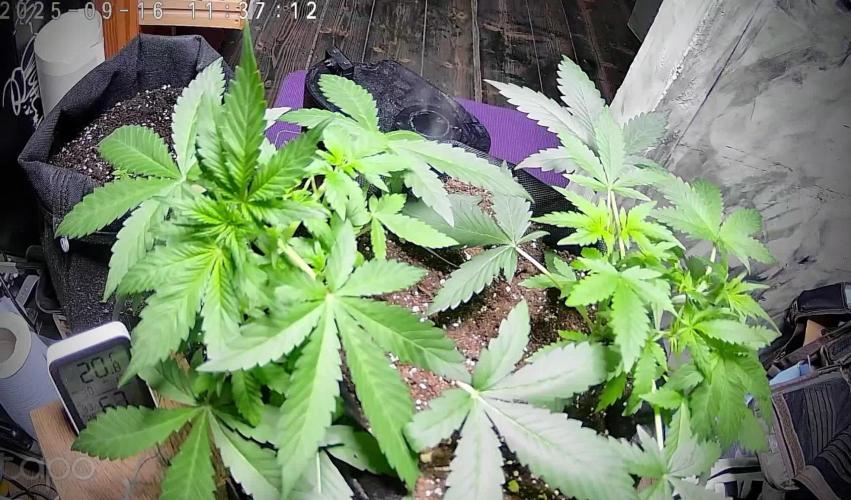
Man p4 is coming on strong after knocking of the longstanding p1 Queen of the crop. Crazy, I thought plant 3 was goin to be lucky to survive and she kicks booty! Another video up there 12 days in December cuts off about an hour ago.
I have to say this week went pretty uneventful other than getting everything potted into their final 3ga pots. I'm trying to get the plants up to around 12" before flipping but getting anxious about it.
If plant 3 wasn't so dang little I'd probably had flipped the ladies already... But they're still a bit short. I'm finding overcoming impatience is the biggest lesson I'm learning.
Below is the transcribed daily notes you can find in the images above:
12/24 Measurements good, 3 still looking slow.
12/25 (Fed w/) 2 tsp/ga Big Bloom / 2 tsp/ga Grow Big 1/4 tsp/ga Clean kelp. Trimmed suckers off p2 repotted #3 1225 ppm tds, 4.43 ph out.
12/26 Humidifier wonky, got soil warming up to transplant but think maybe wait as soil still a little moist. Trimmed suckers off 4, rinsed all w/ph balanced H2O.
12/27 Humidifier ran out
12/ 28 Repotted 1/2/4 fed w 2tsp ga grow big/big bloom, 1/4 tsp clean kelp. trimmed 2x suckers off 1 b4 I thought about stress f/ potting. 1295 TDS ppm
12/29 trimmed 2 browning suckers f/ P3
12/30 cut low brances/suckers messed up leaves/babvies on P2

Likes
Comments
Share

@GrowVater
Follow
Ein bisschen Training für einen gleichmäßigen wuchs. Störende Blätter wurden entfernt.

Likes
27
Share


@RDWCGrowing
Follow
5/23/2023
Week 7- Day 1 of Flower (Day 110 overall) (Day 49 of Flower)
There was a couple of small super small sucker buds on the lower stocks that needed to be cleaned off but that was it. Just watching them Flower!!
5/24/2023
Week 7- Day 2 of Flower (Day 111 overall)
Tucked a few fan leaves below lower buds but didn't see any blatant offenders that needed to be removed. I typically do start my checks in Week 8 but since this is a new strain I decided to go ahead and do a Trichome check just to see what was what.. Just as I thought nothing but clear glassy Trichomes. I will check again in one week....
5/25/2023
Week 7- Day 3 of Flower (Day 112 overall)
Just letting them grow today!! Smell is getting stronger I would say it is a hint of Pine and a heavier fruity smell.
5/26/2023
Week 7- Day 4 of Flower (Day 113 overall)
I did Nothing but took some pics and I enjoyed it!!!! It is nice to be able to just sit back and watch them on auto pilot.. :-) Tomorrow Water Change Day!!
5/27/2023
Week 7- Day 5 of Flower (Day 114 overall)
I admit it.. I had to defoliate a little bit.. I looked in while changing the water today and there were just a couple blatant offenders blocking the light from lower bud sites and those leaves they just had to go. Other than that I changed the water and this week is where I drop everything and start preparing them for this last phase of the grow. Loving a few of these buds they are starting to beef out very nicely.
I added 36 gallons
Mammoth Silica = .5Mil/Gal= 18Mil
Root DRIP = 1Mil/Gal= 36Mil
CalMag= .5Mil/Gal= 18Mil
FloraMicro = 3.8Mil/Gal= 137Mil
FloraGro= 2.8Mil/Gal= 100Mil
FLoraBloom= 4.6Mil/Gal= 166Mil
LiquidKoolBloom= 2.5Mil/Gal= 90Mil
TPS SIGNAL= 4.0Mil/Gal= 144Mil
ORCA = .5Mil/Gal= 18Mil
Water Temp= 70.1
Tent Temp= 76
Humidity =64 ** I have two dehumidifiers running on Ink bird controllers to try and keep the humidity down, In late in flower I like to keep the humidity above 45 but below 60.
5/28/2023
Week 7- Day 6 of Flower (Day 115 overall)
Opened the back of the tent today and boy did she need some defoliation love in the back. Other than that I took off a few little sucker buds trying to form. I did start to setup my Dry space as well as did a Trichome Check today and the brown tips are coming in nicely.
5/29/2023
Week 7- Day 7 of Flower (Day 116 overall)
Found a few baby sucker buds trying to form so I removed them. Other than that I am enjoying watching her mature.
I also started my Reverse of the Clone I took 6 weeks ago in Apr from #3. I am uploading footage of the reversing process for your viewing pleasure.

Likes
3
Share


@GreeneScene
Follow
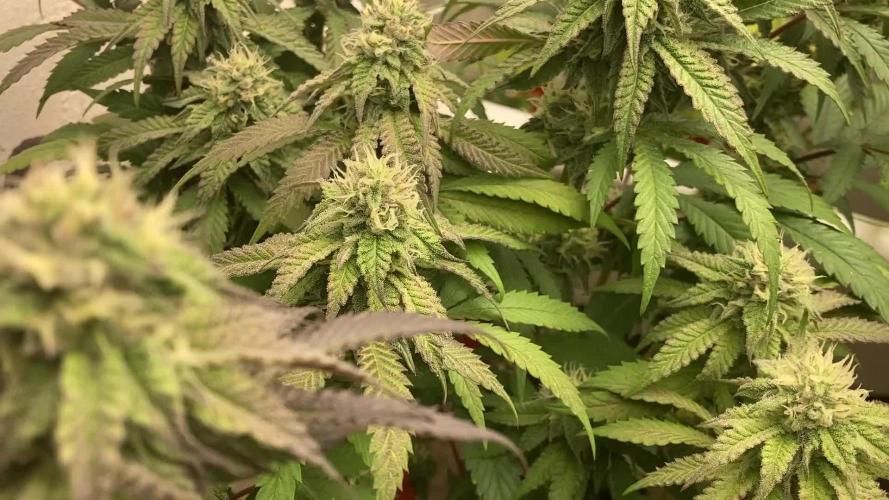
She’s growing like a champ . I couldn’t ask for more. I’ve began light defoliation of lower leaf sets. I also am experimenting with what I call “grooming” . I had a theory after about 5 weeks of growing my last run & decided to see if it pushed any limits .
I haven’t begun training any lateral branches yet I think I’m gonna hold out until flowering is initiated or try to anyway .
Only watering when dry still . No additional feedings or compost teas yet although I am considering .
I think that’s all , another week on the GreeneScene in the books 📚


Likes
10
Share


@Reaper
Follow
day 15: flowers start to appear
day 16-17: temps go 24 celcius, i throw ice bottles in the res
day 25: insane stretch stops flowers fatten up, even crystals around the young budz.

Likes
107
Share


@DogDoctorOfficial
Follow
Greetings, dear plant companions! Can you believe it? Week 17 has unfolded, and our journey with Purple Lemonade Fast Flower reaches its climax—a splendid harvest at day 69. As I stand here, reflecting on the wait and the wonder, let's delve into this momentous update.
The Ultimate Waiting Game <3
Oh, the extra waiting time felt like a lifetime, didn't it? But you know what they say—the best things in life are worth waiting for. And let me tell you, this journey has been an ode to patience and a symphony of anticipation.
A Marvel to Behold <3
Behold our Purple Lemonade in all her glory! If beauty could be bottled, she'd fill an entire garden. Her buds are a testament to love, care, and the dedication poured into this journey. It's like witnessing a masterpiece in horticultural art.
The Trichome Revelation <3
As the days stretched, the trichomes prepared for their moment of glory. And what a sight it was! I took a sneak peek under the microscope, and oh my, the colors and trichome numbers are beyond imagination. It's like peeking into a secret universe of brilliance.
A Full Cycle: The Journey Revisited <3
From seed to this awe-inspiring harvest, our journey has been a symphony of growth, learning, and beauty. Every week, we embraced new lessons, nurtured each phase, and reveled in the miracles of cultivation. The cycle is a testament to our connection with the plant world and the wonders it bestows.
Time to Rest and Reflect <3
Now, our Purple Lemonade enters a period of rest on the drying rack. For about two weeks, she'll transform further, preparing for her final debut. It's a time of patience once again, as flavors deepen, aromas evolve, and magic intensifies.
The Upcoming Full Report <3
In the near future, get ready for a comprehensive report on the fruits of this labor. We'll explore the buds, savor the tastes, bask in the effects, and celebrate the cycle as a whole. It's a chapter that encapsulates the essence of this cultivation journey.
A Thank You to the Community <3
A heartfelt thank you to the @Fast_Buds team for crafting this botanical marvel. @aptus_holland, your support has been integral. And to @grow.diaries and the entire community, your camaraderie has fueled this journey.
Cultivation, Celebration, Connection 💚🌿
As this chapter concludes, let's celebrate the culmination of growth, the dance of patience, and the connection we share with the natural world. From seed to harvest, we've written a story of love and green magic.
Thank you for being part of this journey. Until we reconvene for the final chapter, let's continue to nurture, learn, and celebrate the beauty of plants.
Genetics - Fast Buds Purple Lemonade FF
Ligth - Lumatek ZEUS 465 COMPACT PRO
Food - Aptus Holland
#aptus #aptusplanttech #aptusgang #aptusfamily #aptustrueplantscience #inbalancewithnature #trueplantscience #fastbuds #dogdoctorofficial #growerslove
With true love comes happiness <3 <3 <3 Always believe in your self and always do things expecting nothing and with an open heart , be a giver and the universe will give back to you in ways you could not even imagine so <3 <3 <3
All info and full product details can be find in can find @
https://2fast4buds.com/
https://aptus-holland.com/
https://autopot.co.uk/
https://lumatek-lighting.com/
<3 <3 <3 Growers love to you all <3 <3 <3
" Arising from a cross between purple and citrus Cali genetics, Purple Lemonade FF (Fastflowering) offers a complex high made up of perfectly balanced cerebral and body effects that are ideal for daytime use. Expect an extremely enjoyable high that boosts your mood while deeply relaxing your whole body and getting rid of muscle pain. This meticulous cross produces up to 550 g/m2 of some of the most beautiful purple buds, with pinkish and reddish hues that will catch everyone’s attention. The beautiful purple buds are ready for harvest in 7-8 weeks and come hand-in-hand with unbelievably sugary citrus terps that are just as refreshing as a cold lemonade on a hot Summer day. It’s the ideal variety for the sweet-tooth stoner seeking strains that deliver both in quality and quantity of resin.
Bud Description
Purple Lemonade FF grows chunky, spade-shaped buds that boast a whole range of pinkish-purple hues with rich, dark orange pistils shooting out of every direction. This variety stands out for the, oftentimes, lilac trichomes that give them a gorgeous pink tint and make for outstanding purple concentrates. The buds give off a delicious tart lemon aroma that reveals a sweeter, more fruity scent as you break the buds open. Definitely a must for flavor chasers and those looking for pungent terpene profiles. Smoke Reports
Purple Lemonade FF offers an effect that’s just as unique as the flavor. Expect a potent uplifting high that gives you that energy boost you need to get things done while 100% happy and stress-free. The effect gradually transforms into a wave that works its way along the limbs and through the muscles, deeply relaxing your body and putting you in the right mindset to go through a busy day with a huge smile on your face. This is an excellent all-day smoke as it not only increases energy but can also help combat chronic pain, migraine and stress. Plant Appearance
This feminized photoperiod variety develops a thick and strong structure, growing a medium-sized main cola with multiple shorter side branches, typical of hybrid strains. Purple Lemonade FF develops fairly short internodal spacing with gorgeous purple buds growing stacked on top of each other, making it the perfect choice for growers of all levels looking to get lots and lots of top-shelf purple weed, as this variety can produce up to 550 g/m2 in a 7-8 week flower cycle.
Grow Tips
This is a super fast feminized photoperiod version that takes approximately 7-8 weeks to flower with a 5-week vegetation cycle,, this means you can have faster harvests by shortening the veg cycle or have a longer veg cycle for bigger yields. Purple Lemonade FF (Fastflowering) makes for a great candidate for growers of all levels as it’s a vigorous strain that will thrive with basic maintenance both indoors and outdoors. This is a resin powerhouse so make sure to have your trim bin close by as all the resinous sugar leaves will make for the most mouth-watering hash and extracts. Flavor
Expect a long-lasting citrus zest that taste just like it smells. Purple Lemonade FF reeks of a delicious blend of sweet fruits and tart citrus that’ll make your mouth water. On the inhale, expect sour flavors that taste just like lemon candy with hints of orange and a really subtle earthy background. And on the exhale, the citrus flavors open up, giving place to a more sugary berry fruitiness that leaves your whole mouth tasting like an extremely sweet weed-infused lemonade.
Likes
12
Share


@NorthernChemist
Follow
June 17: The garden area had just under 3 inches (75mm) of rain in the past week which was really needed. Temps have been mid teens to low 20s deg C. The wind has been relentless and the plants continue to take a beating. Overall pleased with the growth but some concern, because preflowers are showing, they may be stunted and flowering early (due to environmental stress).
Likes
92
Share


@SwissKush
Follow
Day 36
LST complete yesterday, side branches are tied down
For this plant, I am letting it grow straight up like I grew Fastbuds Bruce Banner
This looks very much like Bruce Banner which is very exciting because Bruce Banner still remains tied with Pineapple Express for the most face melting autos ive ever grown
PPM are very low, I will be only tripart, there is enough Silicate sediment, and Cal Mag in the pool, leafs are very green
The plant is showing its female sex organs, and is approaching the flowering stage
Day 37
Expansive growth everywhere
The pool will be changed tomorro for pre-flowering nutrients
Day 38
Pre-flowering nutrients are installed, all is looking well
posted a video for the week
her leaves are very thick and mature. The leaves on the stem, the large fan leafs, have the hardest stems ive felt on an autoflower.
This is certainly a new generation of Autos from 2 years ago, the smell is becoming very nice
Day 39
I removed some more bottom brush from the plant, all those runt limbs that will only be larf are gone. I also removed one of the first limbs that was a runt.
This strain loves to be pruned, this is its 2nd bottom clear out and she always comes back with so much growth, now the top colas can all form nicely without the bottom waste
DWC very healthy, she is drinking about 3 litres a day right now
I am using a 1/2 strength pre-flower blend. It's the TA bottle measurements just cut in half. Ive purposely not let this one go above 800ppm due to Fastbuds advice that this one is particularly sensitive to nutrients.
Day 40
Growth explosion, everywhere has expanded
The leafs are very mature, slender Sativa traits
Uploaded some macro shots of the preflowers, they are very healthy
Day 41
Everything is going well, she is growing fast
Day 42
Huge increase in growth overnight, and she is drinking about 3 litres a day right now
This is thepreflower stretch phase
Likes
1
Share


@MOTB666
Follow
they're finally starting to take off! Will probably do one more week of veg get them to at least 18 inches tall before flowering. They've been doing great considering all the mistakes and stress I put them through never showed signs of deficiencies or stress just the weird yellow patter that's has stuck around on #2 hoping its just another mutation

Likes
17
Share


@Ieiogrow94
Follow
Eccoci alla fine!!!
Pianta dall’odore spaziale nel pulirla mi ha sballato! Super compatta e molto molto resinosa 💚
Sicuramente verrà riprovata in vaso più grande in quanto ha davvero un potenziale immenso, gradita veramente molto!
Grazie a tutti per il supporto ❤️🔥🌲
E grazie a @Exotic_Seed per la collaborazione ❤️

Likes
7
Share


@CanarianGrow92
Follow
1st of august, still quite hot, we gave the plant some water but kept her on the balcony, this plant grows fast AF, we didn't even start to feed the girl but it seems that the mycorrhizae and bio enhancer did a great job
2nd August, nothing
3rd August water
4th August moved plant to the roof (original location)
5th august water
6th and 7th August maybe we give a very small shot of iguana grow and ancient Earth


Likes
6
Share

@GoodTimesOrganics
Follow
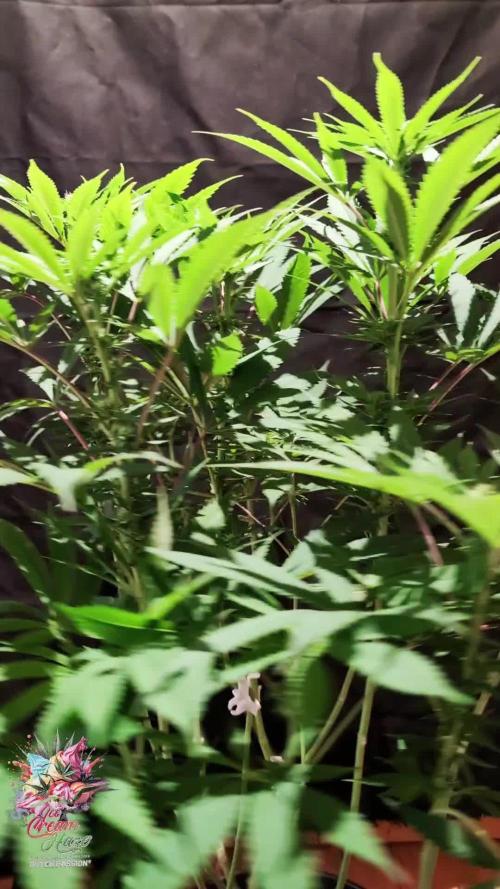
Hi liebe Community! 💚 Nach der zweiten Blütewoche zeigen sich nun Flächendeckend Stigmen und die Trichombildung setzt bereits ein.
Sie hat einen weiteren Stretch von knappen 8 CM hingelegt.
Der Wuchs und die Blütenbildung ist sehr kräftig
Außerdem habe ich nun nochmal die Sonnensegel zurückgeschnitten und die unteren Triebe auf etwas 1/3 der oberen Höhe zurück geschnitten, damit die Pflanze ihre kompaktere Wuchsform beibehält, das werde ich jetzt bis zur dritten Blütewoche so weiter betreiben.
Insgesamt ist die Pflanze sehr Vital und hat eine sehr schöne Wuchsform und eine schöne Blütenstruktur😉
Die Wachstumsbedingungen im Growzelt sind weiterhin am Optimum und Stabil:
———————
🌞 Temp: 24,3°C
🌚 Temp: 20 °C
💨 RH: 56%
VPD: 0,97 kPa
😎PPFD: 760 mqm
———————
Stay Tuned! 💚

Likes
9
Share

@Sensemillia
Follow
day 28 from seed
No flower...
day 29 from seed
No flower...
Day 30 from seed
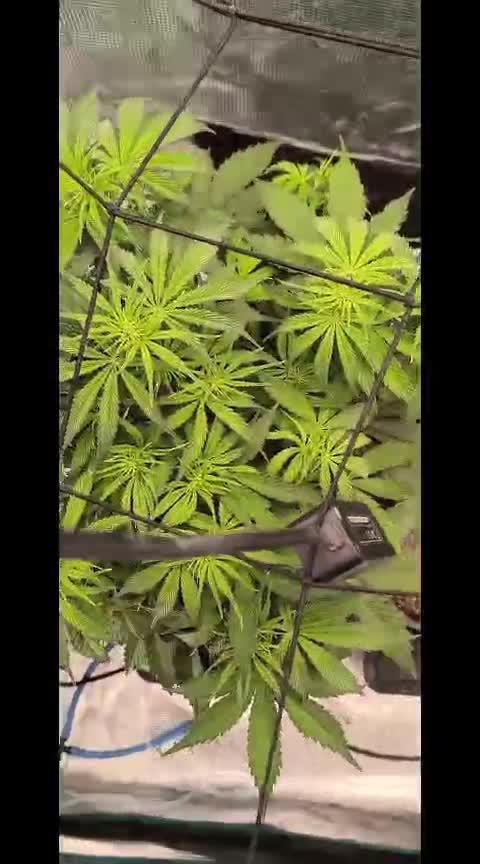
Finally signs of flower.
First pistils came trough.
Around 550-600 ppfd
Likes
26
Share


@CannaTrope
Follow
I trimmed off a bunch of fan leaves, but still not as many as some of the more experienced growers. I started dropping down the Flora Grow and Micro. I hope they finish strong. Pictures are all from the end of week 5 of flower.

Likes
27
Share


@BoytzzBudzz
Follow
Yooooo what is up guys!
Welcome back - in to week ten and the zkittlez has been harvested. Cloudy trichs all over and about 10/15% amber so went with a chop today.
Wet weight of 628g for the plant roughly. Including a bit of stalk weight, which I’m chuffed with. 🙌🏼
She’s on to dry now, so stay posted for post dry weights. I’ve taken off the majority of fan leaves but left all the sugar leaves for a dry trim and to help slow the drying process.
The Runtz still has a few days or weeks left in her. Just waiting for those pistils to stop sprouting and some further clouding up of the trichs and then chop chopppp!
Thanks for stopping by 🤟🏻
Likes
12
Share


@GREENPHOENIX6262
Follow
*Week 4 Flower 09/24*
Both Mimosa girls appear to be running fine with Mimosa (1) running a little behind but is catching up accordingly. Small oversight in early growth resulted in a minor stunt but she is improving dramatically.
Water Feed has increased by half a gallon ( 1gallon clean - .5 gallon nute feed)
*Week 4 Flower 09/28 - Mid week update*
Both plants are flowering accordingly - Mimosa (1) is a bit taller then Mimosa (2)
Buds are becoming dense and covered in trichomes.
No deficiencies - No areas of concern - Potassium and Phosphate feeds continue
*Week 5 Flower end of week recap - 09/30*
Both Mimosa's are flowering nicely - Budsites covered in frosty trichomes.
Mimosa (2) looks shorter but that is because her COLA was tied down to expose bottom budsites.
Likes
31
Share


@Sider79
Follow
First dose of Big Bud stacked with 3 part ph perfect waiting on that change.

Likes
5
Share


@Roberts
Follow
I am starting a Tangerine Band. I scuffed the seed ends, then dropped it in water. In about 24 hours or as soon as I see a tail start I will drop it in the rockwool. Thank you Exotic Seeds, Spider Farmer, and Athena. 🤜🏻🤛🏻🌱🌱🌱
Thank you grow diaries community for the 👇likes👇, follows, comments, and subscriptions on my YouTube channel👇.
❄️🌱🍻 Happy Growing 🌱🌱🌱
https://youtube.com/channel/UCAhN7yRzWLpcaRHhMIQ7X4g.
Likes
7
Share

@RFarm21
Follow
9/11 - Harvest day for Kiss 1.
Her sister will take a little bit more time.
