


Likes
Comments
Share


Likes
24
Share

@TrickzGrowz
Follow
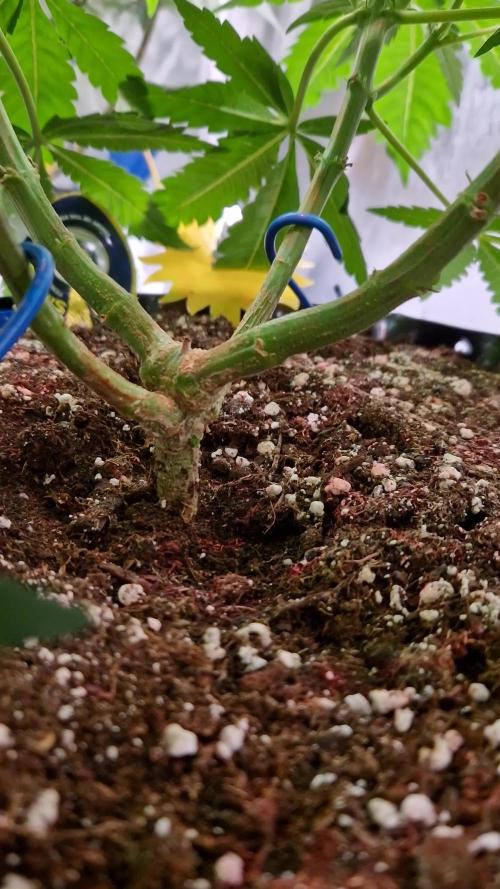
Mein Problemkind zeigt langsam erste anzeichen von Stretch. Riesige Fächerblätter... teilweise auch Interessante Muster vom Stickstoff überschuss zu sehen.
Um den unteren Trieben für den Stretch nochmal die Chance zu geben, habe ich die großen Fächerblätter entfernt.
Präventiv Neemöl gesprüht, weil ich ein paar Freunde gesehen habe.
Spraymix alle 2 Tage.
Heute wird auch die Lampe auf 12/12 umgestellt.

Likes
40
Share


@BudBoutique
Follow
! this is my current status, gonna upload my last veg weeks within the next week - got a bit busy around Spannabis - thank you for your understanding! 💚
Welcome to Bud Boutique Grow Diary - really appreciate all your love and support :)
Don't forget to check out my other current grows!
🗓️ This Week:
after 48 hours of complete darkness (important for seedlings to make sure all plants switch into flower same time), I finally switched my lights to the 12/12 schedule and sent my ladies into the flower.
- super strong and praying up
- still lack of nutrients, especially calmag which I increased slowly for this plant.
- Day 3: Foliar spray with APTUS Regulator and APTUS Nutrispray to give them extra micronutrients and give them a little shell for protection.
! always use APTUS Regulator first and mix well with your water before adding any other nutrients for Feeding or Foliar!
Thank you for still staying with me 💚
___________________________________________
--- 🌱 Strain (Sponsor) ---
🏷️ Wedding CheeseCake by Fast Buds
https://2fast4buds.com/seeds/wedding-cheesecake-fast-flowering
--- 🥗 Nutrients and Feeding (sponsored by APTUS: APTUS Ambassador) ---
🍸 APTUS: full nutrient schedule extreme
-- Regulator, N-Boost, P-Boost, CaMg-Boost, K-Boost, Allin1 Liquid, Startbooster, Topbooster, Enzym+ every feeding
-- Fulvic-Blast, NutriSpray as Foliar each once a week
🔗 https://aptus-holland.com/
--- ♻️ Grow Control (Sponsor) ---
TROLMASTER: TENT-X + LM14 Light Adapter to dim/sunrise/sunset lights + Temp & rH Sensor all remote on App
🔗 https://www.trolmaster.eu/
--- 🏭 Grow Setup ---
💡LUMATEK Zeus Pro 600
* 🏠🌿 Indoor: Homebox 120x120x200cm (4x4)
* 📐🌀 PrimaKlima exhausting Fan 1180m3/h (running on 60-80%)
* 🌀 Can Light Filter 800m3/h & 1x Fanbox 1x Dyson fan for Air circulation
🔗 https://lumatek-lighting.com/zeus-600w-pro-29/
🔗 https://primaklima.com/de/shop/ventilatoren-de/ec-ventilatoren/pk160ec-tc/
🔗 https://canfilters.com/products/filters/
All Likes and comments are highly appreciated!!!
👨🌾 don't forget to check out my Instagram for daily educational content: budboutiquee
- Bud Boutique


Likes
30
Share

@farah4weed
Follow
Hi everyone😍👽
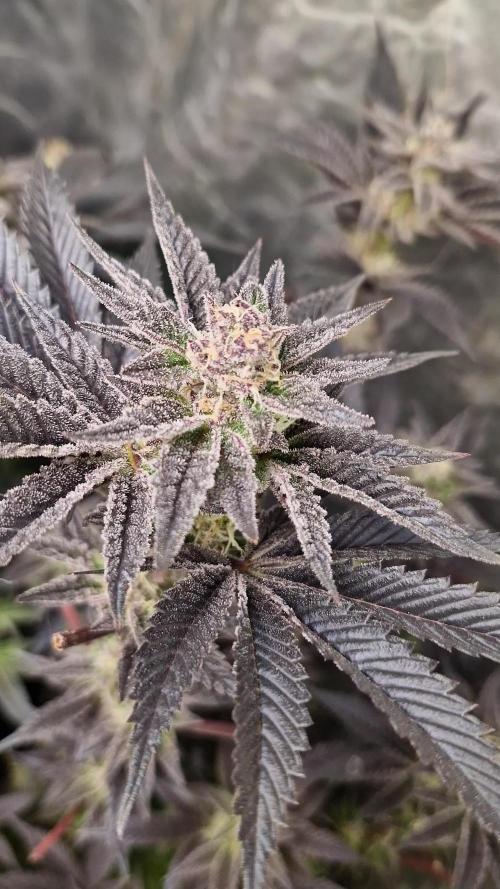
We’ve reached week seven of flowering.
This project is a genetic test made from OG Kush × Cakes n Cream,
using the STS technique.
I decided to name it OG Cream.
This is my first time trying something like this,
and honestly, I’m pretty happy with the results so far for a first run.
Now I’m just waiting to finish it up and polish things a bit more.
Thanks a lot for your feedback and for taking the time to leave comments — really appreciate it!🔥👽😍
"farah4weed"
Likes
41
Share


@TerpTurtle
Follow
HAPPY NEW YEAR! 🎉
starting off with a 2x4 Gorilla Grow Tent build, For lighting I went with the Horticulture Lighting Group 350R DIABLO paired up with Mars hydro UR45 bars for the UV spectrum🔥
--------------------------------------------------------------------------------
-Started some low stress training / continue LST maintenance
-Planing to start some defoliation possibly take a clone later this week, further leaf tucking as I continue LST.
-Foliar fed

Likes
8
Share


@Hiroots420
Follow
14-05-2021 (DAY 59)
Se realizó el cambio de solución.
Las plantas vienen espléndidas y con el Safe roots de Hydrotek ya no tuve mas problemas de raíces.
Está entrando la flora mas potente y formándose los Buds.

Likes
49
Share


@masterofsmeagol
Follow
I'm lucky to have uploaded anything. I'll finish later. Hurricane is coming
The date is 9/14 and i was FINALLY able to start a new week. I had to use the option to "take a photo" with my camera as opposed to uploading the pictures I have. I guess in the future I'll have to prepare pictures ahead of time. Or like stage them lol. Took the top half of the biggest 10th planet. It was done. The others I took the tops on have the bottoms already coming through the trellis nets with huge swollen buds. They were tiny before. I made the right choice. If need be I'll move plants into my garage. Heavy equipment fit in there. Can't move the 8ft "big cheese" in the 50 thats even wider than it is tall but I can move the ones I care about. I spent all day wet trimming those tops and taking down the dry stuff bucking and jarring buds and hanging up fresh stuff. One purple punch plant I just keep cutting bud rot off. I took a tester and it's not where i want it yet. It's bigger than the others but seems further behind in flower with less trichs? Hurricane has been downgraded to tropical storm and 90mph winds down to 50 which is manageable. I didn't want to put all my eggs in one basket so this worked out amazing. Blue cheese just isn't ready yet. I mean it's huge but it's not done. It doesn't rot either. Knock on wood. The buds aren't as compact as these heavy indicas but "look" larger. Tomorrow I'll go back over (before the storm) and if that purple punch keeps just rotting I'm gonna chop it and maybe put it in with shit I'm gonna blast. As long as this Hurricane doesn't totally fuck me I'm gonna have my best year ever. I hope it misses. To everyone dealing with Hurricane Lee you are all in my thoughts and prayers.
9/15 Woke up sick as fuck. Hurricane is tonight. I've got some decisions to make. I need to chop one purple punch as it just keeps rotting more. Blueberry cheese is only a 7-8 week flower and says it's done end of September. I've been flowering WAAAAY longer and the buds are HUUUUGE. I need to look at it with the trich scope. I'm not worried about rot with those girls just heavy wet buds and branch3s snapping. The little purple punch and MAYBE one of the blue cheeses will go in the garage just to be safe. I think it's going to miss us. Or at least be downgraded and be a normal atorm like the ines ive already been through. Pretty sure the little purple punch is done anyway. The buds are rock hard. I could probably throw one through the window. It's been cold the last few days. More sun today before the hurricane. Now the question is do i want to get 3lbs of wet flower ready and transported the extractor or do I away until after the hurricane? I guess I'll make that determination after I go back and look things over. I'll remember to take pictures this time. It's the only way they will upload. Oh and I need better storage. I can't use 10 million jars. I'm getting some of the 5 gallon buckets that turn the bucket into a storage container.
UPDATE: Storm has been downgraded. Apparently the rain will only be like an inch. I worked my nuts off today. That purple punch plant had way more rot. I harvested the tops off the purple punch that was rotting. Had to throw away a bunch but it wouldn't have made it through this storm. The purple punch in the ten has rock hard nugs. This morning I was checking it out and pulling buds away from the stalk on the huge colas and put of nowhere here comes a GIANT bumblebee stumbling out. I have no idea how he got that deep. I tried to help him. I got him on a different leaf (buds are super sticky) bur his leg was cockeyed and he eventually fell. I harvested most of the other 10th planet's too. I took ONE blue cheese bud. This strain doesn't seem to rot and the plants only need a couple weeks to be ideal. The MAY be ideal now and I'm just stupid. They are very large and only have a 7-8 week flower time that says outdoor they will finish be end of September. These are half my crop. I still nay bring in the 10 (purple punch) and o e of the blueberry cheese but I'm tired as fuck. If we just get an inch of rain I think tje plants will be fine. I staked everything that isn't vertically trellises. I still don't like the rain. An inchbof rain on buds bigger than a baseball bat isn't good.
9/16 Spent yesterday harvesting the tips of a purple punch and adding supports for the hurricane. Found a shit ton of budrot. Three separate times I separated it and found the bud worm. All tiny. A green one came out kind of aggressively at me. Anything that was close to any rot got discarded. These were some HUGE compact flowers. Had to add to supports this morning and it's still raining as of 1pm. The plants were going right sideways (or trying). It's 30mph sustained with 50mph gusts. We are pretty much over it though and as of a few hours ago I had no breakages (knock on wood) so I think in doing pretty good. Trichs on blue cheese looks great and tge buds are huge but the calyxs haven't changed from white. I took one blue cheese cola before the storm just in case something happened. It's an 7-8 week flowering strain and says it will be ready end of September. I couldve taken it but it looks like it needs a little more time and im gonna do my best to give it to her. The buds are big and frosty though. That strain is going to be a good producer. If it's made it through the weather last night then it can withstand the remnants.
UPDATE: HOLY OL FUCK. RAIN STARTED COMING DOWN TODAY ALONG WITH THE 50MPH SUSTAINED WINDS. THINGS ARE SUPPOSED TO DIE DOWN AFTER TONIGHT AND WE'LL HAVE GOOD WEATHER. WENT OVER TO FIND MY 30 GAL TUB TIPPED OVER. LUCKILY A STRING SUPPORT CAUGHT IT AND IT FELL INTO THE 2X4 SO IT WAS HELD UP ALTHOUGH THE CONTAINER WAS BALANCING ON ITS EDGE. MY BLUE CHEESE IN THE BACK WAS RIGHT SIDEWAYS. THE RAIN LOOSENED THE MEDIUM WHICH MADE THE BAMBIO SUPPORTS ALL BUT USELESS. LUCKILY THESE ARE STRONG PLANTS. I RAN STRING FROM THE BAMBOO TO THE STRUCTURE ITSELF TO "SUPPORT THE SUPPORTS. I ALSO HAD T9 TIE UP WHAT WASNT TIED. I ADDED THREE HORIZONTAL STRINGS IN THE BACK TO HOLD SOME IF THE WEIGHT AND HELP WITH THE WIND. THE BLUE CHEESE IN FRONT OF THE TARP HAD SUPPERED THE SAME FATE. LUCKILY I WAS ABLE TO "SUPPORT THE SUPPORTS" AND "TIE UPANY LOOSE ENDS. THE BIG CHEESE JUST CANT GO ANYWHERE. ONLY PROBLEM IS THE TOP TWP FEET AND IM NOT GETTING ON A WET LADDER IN A HURRICANE WITH WIND AND RAIN LIKE THIS. GLAD I TOOK A NICE COLA from the blue cheese just on case anything happens. Honestly though they've been through the worst. Tomorrow is supposed to be nice. I hope I made the right decision.
9/17 Hurricane has passed and its sunny with blue skies. Plants were dry when I went over this morning. Couldn't upload pictures as the internet is out and I still can't upload pictures the normal way. It's too bad I've got some good ones. I lost one branch high up on the big bluecheese and found a little bit more rot on that purple punch I took the tops off. It looks like we are going to have great finishing weather! This is by far the best cannabis I've grown. I tied up EVERY branch yesterday and added a ton more supports. Last evening when we were getting the 2-4in of rain i got that "feeling". My intuition has been on point. I got there and everything without a vertical trellis was hanging almost sideways. The garden stakes I was using for supports just bent over with the rain and the 50mph wind gusts and the 30mph sustained wind. I had to "support the supports"by anchoring them to the structure of the cage itself. If I hadn't done this and propped them back up the would've been uprooted. Things couldn't loon better than they do right now. I'm wicked lucky. I'll try to take some pictures and upload them later today.
UPDATE: SUPER HOT DAY. NOTICED THAT ONE OF MY BLUE CHEESE WAS STARTING TO ROT AND IT WAS DAMN CLOSE TO DONE. PLUS ITS GOING TO RAIN TOMORROW. I WAS PLANNING ON THE DAY AFTER TOMORROW BUT I GOT MOST OF HER DOWN AND HUNG. I COULD'VE TAKEN A PURPLE PUNCH BUT I NEED TO MAKE SOME ROOM. PLUS THEY COULD GO A "LITTLE BIT LONGER" BUT THEY ARE ROCK HARD NUGS THAT LOOK DONE. HONESTLY IF I HAD THE MAN POWER ONE OF THE PURPLE PUNCHES WOULD'VE COME DOWN TODAY. THOSE TWO ARE EASY TO MOVE THOUGH SO EARLY TOMORROW MORNING ILL PUT THEM INSIDE. THE OTHERS CAN MANAGE WITH NO SIGNS OF ROT. IM WORKING AS FAST AS I CAN BUT I NEED TO TAKE THINGS DOWN IN STAGES. TOO MUCH WORK NOT ENOUGH TIME. AT LEAST I GOT SOME STRAINS THAT HAD DIFFERENT FINISHING TIMES. LUCKILY THOSE 10TH PLANETS REVEGGED AND WENT TO FLOWER EARLY. I CANT BELIEVE THE QUALITY OF FLOWER IM SEEING THIS EARLY. SAME WITH THE PURPLE PUNCH. ONE PLANT IS FURTHER BEHIND THAN THE OTHERS AND IT HAS MUCH LARGER BUDS. THE PURPLE PUNCH BUDS ARE HARD AS A ROCK. I GUARANTEE I COULD PITCH ONE OF THOSE THROUGH A WINDOW AND I THROW LIKE A GIRL.
9/18 I should be starting a new week but I might just keep going on this one since i cant add pictures or video. All I can do is take pictures "through the site" if I have internet and remember. It's a pain to have to stop working and have to immediately upload things. Purple punch could be taken now. Im going to let it ride until I run into problems. The blueberry cheese is huge. I'm planning to make concentrated with a lot of it.
9/19 I'm going to have to switch to another site next grow. I can't upload pictures in any way shape or form anymore. Say nothing about videos. I'm gonna finish on here and do a detailed harvest report and smoke report. If I can't get the video uploaded I'll do it somewhere else. Anyway I have a bunch of tenth planet I've been trimming and jarring. After the hurricane we got another storm with 2-4 in of rain. I'm one of the only people i know that's "minimally effected". I lost a branch but it was still hanging so i grabbed it so i really lost nothing. I tried to visually inspect every bud this morning. Found some rot but most places I found it a worm came out. That's good. At least it's not the weather that's causing some rot. Not much. Maybe a handful and it was just starting but I cut everything away from the starting rot. I specifically picked early flowering strains and am certainly glad I did. A few more days of sun and when what's drying is done I'll do a finally check if the trichs andvthen it's fucking timber. This has been one if the WORST seasons for growing in Maine yet somehow I've pulled in one of the best harvests I ever had. Both quality and quantity.
9/20 I definitely need to start a new week but I need to be IN the garden to do it as that's the only way I can take a picture. I've sampled early versions of all my strains and I am incredible pleased. I still am in trim jail with a full room but still have well over half still outside. Plant wise more if i went by weight. It's weird that the plant with the shortest flowering time is seeming to take the longest to totally mature. I COULD take it as bud rot has been prevalent and many people have lost there whole crop. I did have to take one of the cheeses. We are supposed to be getting a few nice days of sun after all that rain. I'm at least giving them that. I have two phenomes of purple punch that could be taken as well. All milky with some amber. One other phenome had much larger buds and I was losing buds to budrot so I took the tops and allowed the bottom to mature. That method had worked well for me so far. Then I get buds that are more well rounded and mature. I went up and checked whats drying. The rest of the 10th planet is ready to be jarred. I've been making progress getting it processed and put away. I need the room so I can bring more in. Found ONE bud that started to rot whete I'm drying so I chucked it. I carefully checked everything hanging and the plants outside for any indications of botrytis. I found a few spots outside 2 or 3 and removed them. I have two plants that I think I'm just going to send to the lab for extracts. I'll add some smaller flower to it. I'll update more at some point. I'll try to get pictures up but it's such a pain in the ass to upload it immediately when I've got all this work to do myself. Come on grow diaries! OH AND I HEAR THAT SOME LOCALS HAVE FOUND MY DIARY. IF SO THEN YOU KNOW WHO I AM. IF YOU DONT ASK AROUND. IM STAYIMG IN THAT CAMPER OUT BACK OF MY GROW EVERY NIGHT AND THOSE PLANTS ARE NEVER LEFT UNSUPERVISED. THERE ARE MANY CAMERAS BUT THATS JUST SO WE'LL HAVE EVIDENCE OR IF IM TAKING A SHIT AND SOMEONE SHOWS UP ILL KNOW. YOU KNOW THERE'S THREE WAYS OUT. THE GROWERS UNION HERE HAS IT SET UP THAT IF ANY OF US HIT OUR "ALARM" BUTTON WE ALL GET IT AND ALL THOSE WAYS OUT GET SHUT DOWN. ITS GREAT TO HAVE GOOD NEIGHBORS. THERE'S NO PROBLEM IF YOU WANT TO TAKE A LOOK AT MY DIARY AND SEE HOW IVE DONE BUT IF SOMEONE IS EXPECTING ON "SUCCESSFULLY" ROBBING ME THEY SHOULD PROBABLY PICK AN EASIER TARGET. ALSO ITS A FELONY TO STEAL MEDICAL MARIJUANA.
9/21 Continueing with the great weather. In that vein I'm letting the girls ride. Blue cheese I'd an end of September strain anyway. It's huge. I'll take some pictures before it comes down if it will upload and I'll have to do it the hard way. My drying spot is large and full. I'm in trim jail and the majority is still in the ground. I'm giving them a few more weeks of good weather. I'm inspecting multiple times a day for rot. Things are going good. Don't know how I'll do harvest reports without pictures lol.
UPDATE: HARVESTED A BLUE CHEESE TONIGHT AND IM TIRED AS HELL. CAMPER MIGHT NOT BE BACK TONIGHT BUT IF NOT I'LL BE IN THE GAME ROOM ON WATCH. IN TRIM JAIL. TOOK DOWN EVERYTHING BUT IT GOT IMMEDIATELY REPLACED. I REALLY NEEF SOME HELP. I CANT BELIEVE I CANT UPLOAD PICTURES. IM HOPING I CAN AT LEAST DO MY GROW AND SMOKE REPORTS. IF NOT ILL DO IT SOMEWHERE ELSE
9/22 I got the two purple punches in the back down AND the BIG cheese hanging. That thing took up most of the room. I'm still tired. I've got two full Plants that are totally ready and I'm planning on taking them today and bringing right to the lab for extracts. 3 to 5 lbs will get blasted. I've got a lot of work ahead of me but I can get it done. I'm plugging away and making significant progress. I'm hoping pictures and videos will be a thing again. Everyone has said this was the WORST growing season (which it did suck) but I've had my best harvest in over a decade both quality and quantity. This has been my best year. I'll update what I got done.
9/25 I've been in trim jail and working my nuts off. I harvested my 10th planet's in stages three different times. Still have two bottom plants of blueberry cheese and two FULL plants that I was planning to go straight to extracts. Thing is is that one of them looks super greasy. It's always the ones you least expect that turn out the best. I've taken pictures/videos and am very proud of myself this year. However I can't finish my harvest report on here without leaving pictures!! If it doesn't rectify soon I may just do a YouTube video on the harvest and strain review. Or find a different site. This was a horrible year for most but it was one of my best ever. Thanks everyone for stopping by. I'll update what I do with the final two full plants and I'll try to complete harvest reports and smoke reports. It really sucks that I can't upload pictures.
10/1 Everything's in. Bags are ready for extracts and both quantity and quality are tge best I've done. BUT @GROWDIARIES I CAN'T UPLOAD MY PICTURES SO I CANT DO A SMOKE REVIEW! ILL TRY ONE MORE TIME TO USE THE "CAMERA" FUNCTION TO TAKE A PICTURE BUT THAT WASNT WORKING EITHER. WHAT A DISSAPPOINTING END TO THE SEASON


Likes
2
Share


@ao_grows1978
Follow
Week 3 for the solo is officially complete. She's been growing with no trouble. Root development has been excellent. As you can see, I decided to mainline. Seeing as she's in a solo cup, I'm not too worried about stunting. I'm horrible at measuring the water intake, but the cup needs to be watered daily. It's as lite as a feather everyday.
Likes
5
Share


@Growfornow
Follow
Week 11 harvest
Chop chop down she goes
What an easy and rewarding plant, she done great for my mistakes also and every person NEEDS a sweet forgiving women Amen
Nice sweet spunky smell
I would grow again for sure

Likes
43
Share


@Master_weeda
Follow
Bonjour a tous les padawans et les maîtres jedis
Pour cette semaine 4 je surveille comme à mon habitude hygrométrie et arrosage. Je peaufine mon LST en stressant ma plante le moins possible. Je combine mon LST avec un pincage d'Apex cela me permettra d'avoir une canopé plus homogène donc une meilleure pénétration lumineuse et par conséquent un meilleur rendement.
Petit rappel sur le pincage d'Apex:
Le pinçage des plantes de cannabis
Proche de la taille d’apex sur le principe, cette technique possède cependant plusieurs avantages, le principal étant de conserver le gros bud central de la plante, d’une production et qualité maximale.
Pinçage des plantes de cannabis
Le pinçage d’apex (tête de la plante) consiste simplement à pincer délicatement la tige du dernier étage de la plante, entre le pouce et l’index, jusqu’à sentir la fibre s’écraser sous les doigts avec un petit bruit critch caractéristique. Si l’espace disponible sur la tige du dernier étage ne permet pas d’y placer confortablement ses doigts, il faudra plutôt pincer l’étage du dessous.
Le pinçage ralentira fortement la croissance verticale de la plante, tout en stimulant le développement des branches secondaires, donnant ainsi à la plante une forme de buisson.
La plante mettra quelques jours à réparer ce pinçage, formant un nœud à cet endroit, et poursuivra ensuite sa croissance de façon normale. Le pinçage peut alors être répété si nécessaire, sur l’étage suivant nouvellement formé, ainsi que sur les éventuelles branches secondaires qui pourraient dépasser l’apex.
Le pinçage est donc une excellente technique pour avoir une belle canopée uniforme de type marée verte. En pinçant régulièrement l’apex des plus grandes plantes de votre espace, durant la croissance et en début de floraison (stretch), vous obtiendrez ainsi facilement des plantes de hauteur homogène en pleine floraison, ce qui facilitera la culture et augmentera la production finale, surtout si vous cultivez simultanément de multiples variétés de marijuana.
Avec un peu d’habitude le pinçage pourra être réalisé aussi rapidement qu’efficacement. En cas de pinçage trop violent qui se traduirait par un apex arraché, cela produira simplement les mêmes résultats qu’une taille classique de l’apex, ce qui ne sera donc pas dramatique.
Que la force soit avec vous💪

Likes
105
Share


@Natrona
Follow
Frostbanger Plants 1-6
Week 8 May 18– 24
FLOWER 4
Nutrients :
GH Micro 25 ml
GH Gro 10 ml
GH Bloom 30ml
CalMag 30 ml
Recharge 10ml
Green sensation 16.5ml
Power buds 7.5 ml
5/17 PH 6.3, PPM 1130, temp 71
1ltr each
5/18 PH 6.67, PPM 935, temp 68.5 1 ltr each
5/20 PH 6.67, PPM 1330, temp 68.5 2 ltr each
5/21 PH 6.66, PPM 984, temp 69 1 ltr each videos & pics
5/17 Defoliation of yellowing leaves, feed, pics
As I mentioned last week, I must monitor and control the tent environment manually. For the past month, the humidifier has been an issue putting out way too much humidity; often leaving water in the bottom of the tent. In addition, the temperatures are also out of control. I added an AC last week to keep the temperature below 80. I finally determined the exhaust vent is also broken and has been for some time. AC Infinity does not extend the warranty to the replacement parts. I guess that makes sense since they would be in a state of perpetual free replacements. I bought a new one from Amazon that came with a new controller which is different from the controller 69 currently using. I decided that while it is very inconvenient and inefficient to monitor the tent through the day, I would rather finish this Frostbanger run without introducing a new unknown variable. I will continue using 3 circulating fans, the 4” exhaust vent from my 3x3.
I have the AC pushing air in and the exhaust pulling air out. This creates a neutral pressure tent environment-neither positive nor negative.
It looks like growth has stopped and plant height has been reached. Now is the time for buds to fatten and frost up. All 6 of them are short remaining less than 3 ft. They range from 15 to 31 inches. #4, 5 &6 are showing some fade, particularly #4.
Upon opening the tent, a melon smell comes off the buds if I get close, and more stickiness was observed during the process of defoliation. They are living up to the new strain’s name. #5 is the frostiest followed by #2. Wow week 3 of flower and that much frost already. Before FastBuds announced the strain name and characteristics, I was disappointed that FBA2502 could be an indica sleepy strain but the universe provides what you need at the time. The new strain profile indicates a whopping 29%THC with mainly sativa uplifting, euphoric, social effects with sweet fruity flavors which I love and enjoy. In addition, I recently bought a dap press and this strain is frosty and resinous. She will be great to press for live rosin.
FBA2502 is FROSTBANGER. Meet Frostbanger Auto, an autoflowering and Indica-leaning hybrid packing a staggeringly high THC content averaging 29%, making this one of the most potent strains on the market. It was created by Fast Buds through crossbreeding Gorilla Glue and Chemdawg, two equally iconic strains. Growers must know that these difficult-to-grow plants will pose specific challenges in terms of environmental control and nutrition, making them best suited for cultivators with some experience under their belt. The flowering cycle is short, averaging only 50 days, and yields are usually around 300g/m². The Frostbanger Auto flavor and aroma are both mouthwatering with a delightful combination of sweet, fruity, and flowery notes. The high is mainly Sativa-driven with uplifting and happiness-inducing effects that lead to euphoria and a general sense of well-being. You might feel sociable and talkative, but too spacey to say something. Following this surge of energy comes a deepening sense of relaxation, leaving you sedated and completely at ease with the world. Due to its potency and these long-lasting effects, medical patients hail Frostbanger Auto for treating chronic pain, stress, and even depression.
Measurements:
#1 15”
#2 20”
#3 17”
#4 30”
#5 31”
#6 24”
Your likes and comments are appreciated. Thanks for stopping by.
Growers love 💚🌿
💫Natrona💫
Likes
13
Share


@DieselKush
Follow
Nov.8 - Watered girls 250mL each, 0.25mL of each nutrient for each plant
Nov.9 - Moved these girls into Vivosun tent under Phlizon 1200w light from a Marz Hydro tent 5x5 with Marz Hydro ts 1000 light. We needed to move these girls to this tent and have our DWC in the bigger tent so the DWC plants don’t get too hot at the bottom
*once girls were transported to new tent the leaves turned to curl and lift upwards, the light is on veg and is 24” high
Nov.10 - Watered girls 250mL each, 0.25mL of each nutrient for each plant
Nov.10 - Decided we don’t like the blurple light and took one of our Mars Hydro lights from our big tent and switched it
Nov.11 - Watered each plant, 500mL, 1mL of each nutrient. Our girls drank soo fast so we are bumping it up a bit
Nov.12 - Our girl #1’s leaves are a little droopy and are looking a bit weird in some spots (darker green and almost wrinkled). Our girl #2 though is going great and we started some LST training on her today. Let her growww
Nov.14 - Started our girl #1 on LST her leaves are much happier now! Ohhh boy #2 is sprouting so nice she’s starting to fill out so well and she just blossomed once we started LST, she was facing upwards in less than 24h!!
Nov.15 - Our girls are thriving so I wanted to FIM #2 and my boyfriend wanted to Top girl #1
Let’s see how these girls groooww
Nov.15 - Watered each girl 250mL and 0.25 mL of each nutrient we are going to water them just enough to soak into the ground every day for them to soak up as much nutrients and drink as possible without over watering.
Likes
7
Share


@DaddyPrime2
Follow
2/12/25
top dressed with 2 tsp grow 1 tsp microbe and 2 tsp bloom.
this genetic is always sooo freaking frosty. shes already starting to frost up on the fan leaves.
finally looking like shes in flower. it took her awhile to get started i feel like compared to past grows/ other Cultivars.
2/18/25
she has a very nice and even structure to her. a bunch of tops that are 3-5 node top colas with a nice disconnected set of buds after an inch two space between the nodes.
frosty gassy and fairly large considering pot size.

Likes
3
Share


@Bones
Follow
I will be running Blue Dream in my flower room but they havent even rooted yet. In the mean time, since shes getting huge lol I decided to flower Queen Blue my Nirvana Shop 'Blue Dream" mother. Lets see how she does! Ill add her daughters to the diary over time.
EDIT: I mentioned I didnt cut the plant at all but thats actually not true I always top my plants at the 5-7th nod. Thats it though.

Likes
35
Share


@DudeGrowsWeed
Follow
Happy New Year!!!
Over the past week I did some HST bending. The branches are starting to recover and straighten out after the HST now. I still have some issues with pale leaves and a few spots here and there. I’m going to try adding some Dolomite Lime with the next watering and think that should help with the paleness. I’m also going to up the amount of CalMag and Mammoth P to see if that helps with the spotting. I’m not sure if I should see the spotted leaves recover or if the spots will remain. I suspect the spots will remain on the existing leaves regardless of what I do at this point, but hopefully no new spotting will develop.
The lights went off before I was done taking pics, so some pics will look a little different. The pics with the lights on I had to color correct, they still look a little more on the yellow side than in reality, but much closer to reality than the pre-color corrected versions. Once the lights went off I turned the flash on for my camera, those pics did not need any color correction. You can see the differences in the pics of all plants, the first 2 are color corrected with the lights on, the last 2 are taken with a flash and no color correction.
I read several books on cannabis over the past few days, some good, some not so much. One that I liked was “Marijuana Cultivation Reconsidered: The Science and Techniques For Huge Indoor Yields” by Read Spear. This book is available on Amzon’s Kindle Unlimited service, which costs $9.99/month, but they offer a free 30 day trial (which is what I’m using at the moment). Reed’s book is broken down into 3 sections, the first and third go fairly deep into the science behind growing, he does a pretty good job at breaking it down in easy to understand terms, but I had to read several sections 2 or 3 times to really get it (or just move on with as much understanding as I could digest). The second section is the nuts and bolts of growing. Most was a review but there were several topics he touched on I hadn’t thought of in a while. And again its well written. He also offers the section only in a separate book called “Small Spaces, Big Yields”. If you are not interested in going deeper into the science behind growing, “Small Spaces, Big Yields” is what I would recommend (if interested in reading books on cannabis).
I took some notes while reading and I’m going to add some of these notes in my dairy updates over the next few weeks. This week I’m going to include a note on electrical, this should be a fairly basic concept, but it is super important IMO…
“Electrical Items In a sealed grow room or in a tent, you will have water pooling on the floor from time to time. There is no avoiding this. Mop it up when you see it, and never put your electrical gear directly on the floor. Never. Not even for a moment. In fact, let me stress this point in bold capital letters. ALL ELECTRICAL GEAR MUST BE MOUNTED SECURELY ON A WALL OR TENT POLE.”
-Read Spear
I’ll add more did bits like this in my diaries over the upcoming weeks.
If anyone has any good book recommendations please let me know in the comments. I’m looking for books that might not be as popular as the ones by Jorge Cervantes or Ed Rosenthal (I’ve read those). I did just order “True Living Organics” by The Rev which I’m looking forward to reading. But I’m looking for more. I really want to step it up and learn as much as possible. Your comments, feedback and recommendations are very much appreciated!
Until next time, Happy Growing! Stay Positive! And have an amazing 2019!!!

Likes
5
Share


@coolesrat
Follow
Missed a watering one week , sorry for the small amount of yellow leaves but it all smells amazing :) . Hoping by adding magnesium sulphate in the feed I’ll be able to bring back some of the colour in the foliage, but other then that everything looks and smells great ;) enjoy!


