


Likes
Comments
Share


@BeanCrop420
Follow
This is my first ever grow! I have decided to try Cash Crop from Cream Of The Crop Seeds and I have made my self a little DIY Aero/Hydroponic system looking forward to seeing how she turns out.
Happy growing 🌱

Likes
2
Share


@DurbanPoison420
Follow
So I am halfway through my first harvest and I'm starting to feel like I may have been impatient! Would appreciate any advice or constructive criticism from any experienced growers out there! Do you think I harvest the rest of my plant now or leave it a while? Any tips/hints on the best way to maximize bud density? Thanks in advance

Likes
12
Share


@RookieGrowerTH
Follow
Week 3 from seed, 1st week of Veg. Transplant to a 5-gallon fabric pot, they will grow in living soil and set up auto drip irrigation by using Netafim Netbow.

Likes
Comments
Share


@SmokeAndChill
Follow
Gush Mints X Grape Cream Cake
Harvest on Flowerday 70
Currently Drying in the Wine Fridge at 55% RH and 12°


Likes
10
Share


@Pozzy67
Follow
3/21/22
Switched from Bonnie to Clyde, added bud booster as well. Turned on air domes and added a trellis net too! This run is going very well.
Likes
42
Share


@MrJoint
Follow
🍁Dicas e sugestões? As meninas agradecem!
📸Update de fotos, vídeos e informações diariamente.
DAY 22
Estudado muito para ver se aprendo algo sobre NUTRIÇÃO DAS PLANTAS e consigo fazer um bom schedule. Daqui 3 dias começo alimentá-las com nutrientes minerais. Infelizmente preciso esperar os medidores de pH e TDS/EC chegarem. O pior é que acho que elas estão pedindo comida. Ainda bem que são só 3 dias até os medidores chegarem.
DAY 23
Amanhã os medidores de EC e pH chegam! Minhas meninas finalmente vão ser alimentadas, estão famintas com certeza. Cresceram muito e comeram o “quase nada” que tinha no substrato. A deficiência de Nitrogenio (N) já pode ser vista nas folhas enroladas 90°.
DAY 24
😃 Os medidores de pH e EC finalmente chegaram!! Já podemos começar a alimentação das meninas. Todos muito felizes.
DAY 25
Todas meninas devidamente alimentadas. Muita expectativa para saber se elas gostaram dos nutrientes. Elas estão crescendo bem, mesmo com fome (até 1cm/dia).
DAY 26
😍Minhas meninas estão crescendo maravilhosamente! Hoje reguei só com água, mas amanhã vou dar mais comida de novo. Escolhi dar alimentação 2 vezes na semana.
COP está cada dia mais bonita.
C4 foi removida do growbox e agora está na varanda aproveitando a luz natural.
Agora são 4 plantas, as 2 mais fortes irão para a floração na barraca.
DAY 27
As meninas receberam a segunda alimentação da semana e ficaram muito felizes. Aumentei a rega para 500ml/planta.
DAY 28
✂️ Para aprender e entender um pouco melhor como funciona e como elas se comportam fiz hoje poda de cobertura e defoliation nas plantas C1 e C3.
Na C1 eu deixei 4 fan leafs, na C3 eu deixei 2 fan leafs. Espero que elas gostem do novo penteado.
🎃Obrigado por verificar meu cultivo.

Likes
Comments
Share

@GrahamTheGrower
Follow
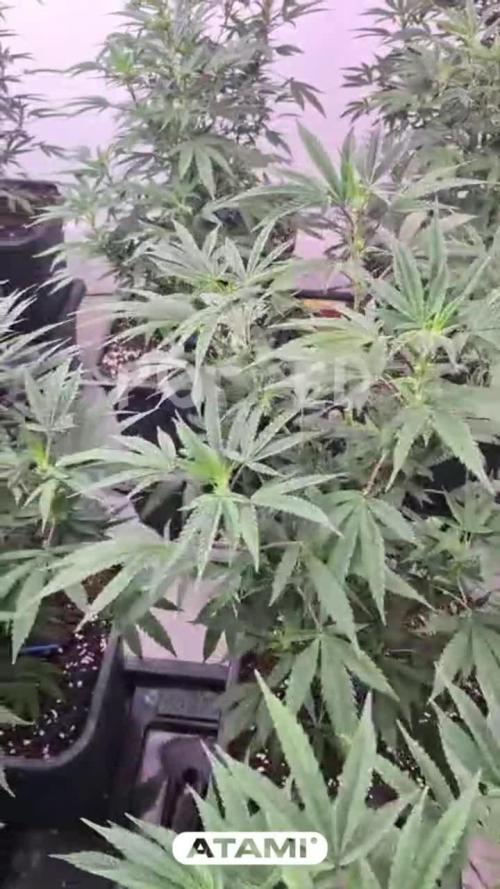
It's all happening right now. Instead of putting energy into roots, vegetation, and foliage, the plant is driving everything straight into the flowers. The acceleration in growth is absolutely astounding.I dialed up the Bloombastic to 1.5 ml/L, turned the lights down, opened the doors and windows, and let the fresh air flow through. Now I'm just letting nature do her thing.


Likes
7
Share


@oTiodoPlantProd
Follow
First week of life watering with pH 6.0 water. waiting for the cotyledons to begin to indicate that they are running out of nutritional reserves to start fertigation . Which will be with the plantProd MJ line. 100% mineral high frequency fertigation.
Likes
12
Share


@Microsemilla
Follow
Las plantas gigantes. tuve que colgarlas de los techos, correr muebles. preparar un lugar. Todavia y a un mes y medio del corte enfrasqué el 10 porciento de todo. el año esta asegurado!

Likes
9
Share


@Donjuanweedo
Follow
No nutes this week I’m doing a water water feed and when I feed I’m still giving light nutes. Was having issues with the humidity but I found out about dehumidifier bags so I bought those... super beneficial!! Keeping my girls at a steady 48%
Pretty proud of myself so far 😊 also applied the trellis until my new tent and light comes!! Gotta love Mars hydro

Likes
72
Share


@BodyByVio
Follow
Day 65 : officially 1st day of flush . Changed the reservoir with fresh water and 1.2g/5 gallons of Yucca extract and 5ml/gallon of Cleanex from Botanicare .
Day 68- I did some defoliate. Few more days until harvest.

Likes
28
Share


@Unkraut
Follow
i accidently bought some unbuffered coco and mixed it with my ussual earth, had major calmag problems in mid-flower but i´m still pleased with the results...also had a little trouble with mold at the end due to bad weather and high humidity in the final weeks of the grow, had to remove a few buds and harvest early @ day 55 of flower....but there's still alot of great looking buds left for me to enjoy and all look mostly done...
Just harvested and hung them upside down, currently drying them at constant 19.5-20.5°C and 50-60% RH..will update as soon as they are dry

Likes
21
Share


@Felloffthegrid420
Follow
Good week looking good very proun
proud to be running in house the mannn
Likes
15
Share


@DRO420
Follow
Just repotted these clones ... They have amazing roots... Looking very healthy
Likes
91
Share


@Salokin
Follow
Hi Growmies,
She has been taking very well to the plant success Orca that I have been feeding her for the last 7 days. Root development just exploded. Since these results are quite impressive I will definitely include such a product in my feeding plans. She doesn’t really want to stretch properly, even with an elevated and dimmed light. So I decided to flip her yesterday and am expecting at least 15-20 cm stretch. The Rezin I started feeding has already shown it’s effect as well, with small trichomes starting to appear on the fan leaves already, long before pre-flower has even started.
Thanks for stepping by and until next week.
Thanks for stepping
Likes
11
Share


@FoxyLoxy
Follow
this went basically as bad as i couldve expected for a first harvest. i didnt flush, it obviously is very harsh, but actually not as bad as i expected. to yield a gram though, i mean i had some serious issues and inexperience. but i hope to try again with expert seeds down the line


Likes
15
Share


@northern_rookie
Follow
Less is more. Lesson learned. Without training these plants, having the fifth plant has really cramped the tent. Because I have limited space for the tent, access into the sides isn't possible. I have only the front entrance. Next time I think I will stick yo maybe three strains that have been positive and try and find the time to train more.
The WOS-Northern/Skunk has grown out so nicely into a Xmas tree type of posture. She is making her really good friends with her neighbours, perhaps to their detriment.
Seedsman Blueberry continues to be solid and unphased by anything. This is the first time I have smelled a plant that has such a fruity aroma. It really took me aback in surprise. Very cool.
HiFi 4G needs support. Did a McGyver solution for the time being. Doesn't appear to have bulked up much this week.
Jack is about the same. A bit of bulk up but not expecting this one to be a big yielder. Appears healthy overall so I'm happy.
CBD+ bulked up for sure on the main cola's. I'm skeptical she will be done at 60 days at this point....but have to trust what Dinafem are telling me.
Be safe folks.


Likes
8
Share


@MistaOC
Follow
18.02. F30
Day 30 of flower — and this run just keeps getting better.
Today I finally applied Bio-PK. Each plant received 1 liter with 10 ml Bio-PK. Slightly later than the official feeding schedule — maybe 2–3 days behind — but honestly, no big deal. The plants are in peak condition, deep green from top to bottom, no yellowing anywhere — not even in the shaded lower areas. That alone says a lot.
I’m expecting the Bio-PK to give the bloom phase another serious push from here on out. If things continue like this, the coming weeks should be explosive.
I did a very light defoliation today and removed a few leaves that showed minimal signs of powdery mildew. It was extremely minor and fully under control. The environmental conditions simply don’t allow it to spread. Still, I’ll be upgrading airflow soon — two additional AC fans will definitely go in. Prevention is key.
Thrips are completely gone at this point.
And here’s the crazy part: this whole run started as a simple test. I popped a random seed, selected it as a potential mother without knowing what to expect, took clones — and what we’re seeing now are those exact cuttings. A total mystery box… but one that performs on an exceptional level.
Current height: 1.37 meters. Only about 10 cm away from the light. I could raise it a little more, but they’re handling it perfectly. No stress, no bleaching — just pure pressure.
They’re pushing hard. Real hard.
This is, without question, the strongest run I’ve had so far 🌱.

Likes
4
Share

@Jcoutdoor
Follow
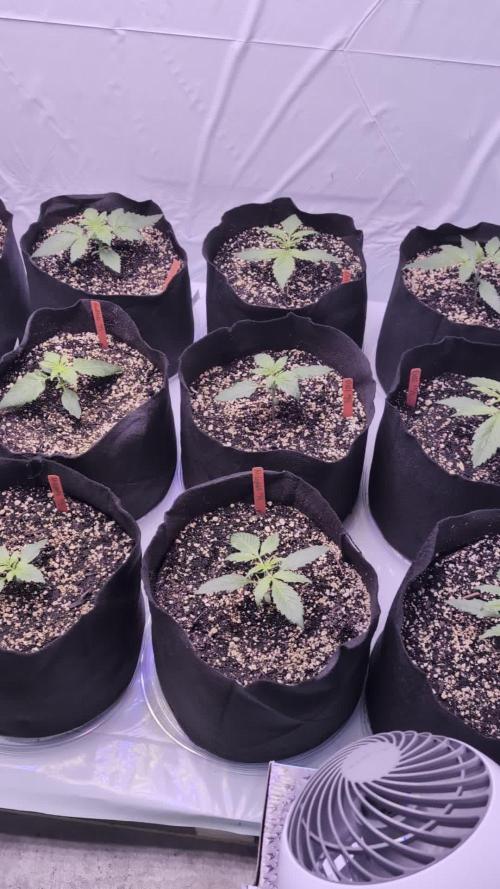
Plants are starting to take off finally, they have some of the thickest stems I have seen on seeds. I'm not sure if this is just what autos do or if they really like my soil blend.
I started light LST on a few of them just bending the main top down and tucking some leaf's. I don't think I'm going to top these autos and rather am going to try a natural grow with them to get a feel of there life cycles. the next batch I have started I might try more things on.
coming from growing photos for the last 10 years to autos is a bit different and I'm trying to take the extreme less is more approach until I fully understand what exactly is happening with these type of plants.
Every couple days these plants seem to really increase in girth and overall size curious to see what happens with the strech phase
Dates Range 11/1 - 11/8
