


Likes
Comments
Share


@Wakesk8
Follow
Today is 1 month for those babies!! Happy Birthday 🎂 ☄️🎊🎈
Other 1 week and half I will switch in flowering!!
Happy Easter to everybody!!



Likes
Comments
Share

@Topshelf_only
Follow
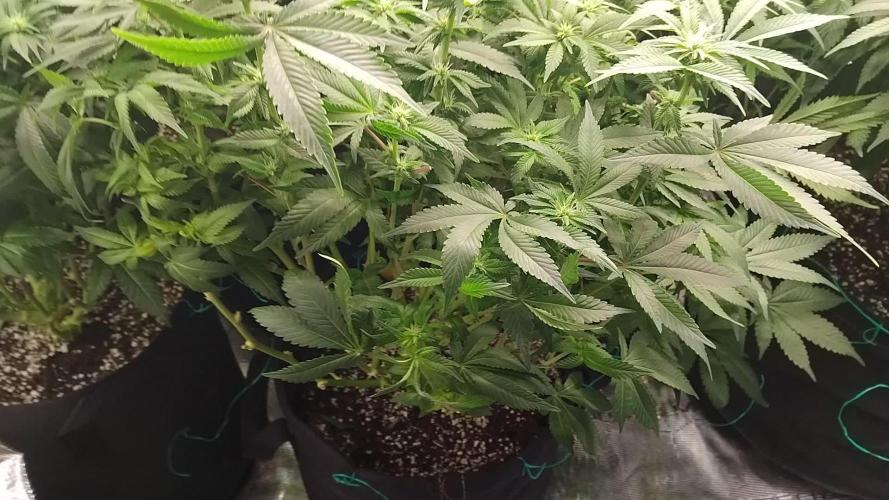
Remove a lot of the lower branches this week . Everything looking pretty good at the moment


Likes
9
Share


@TheStaffedition
Follow
Привет друзья.
Наше знакомства продолжается с новым сортом автоцветущих растений от Smail_Seeds сорт ORIGINAL AUTO CHEMZKITTLEZ F1 reg.
Сегодня растению 97 дня.
Шишки налились очень хорошо😀
Вы всё сами видите.
Скоро будут феминизированные
Сорт выводим сами.
Смотри мой профиль, у нас всегда есть что то интересное.
Не забудь поставить лайк❤️, если понравилась как прошла неделя
И читайте наш TELEGRAM: https://t.me/smail_seeds
#Smail_Seeds 😀
Likes
2
Share


@Jofflepov
Follow
Finally some strong summer days. Plants are swelling. All good. Still a big difference. Biggest plant seems weeks ahead.


Likes
23
Share


@Ezzjaybruh
Follow
We are at that critical point where timing comes into play.
BB reversal is like 5 weeks in. Fem donors to be pollinated went in feb 16 and 20.. did two rounds to make sure something worked.
Reversed BB is just full of male pollen sacs, they are beginning to open up and show bananas. There’s a point between when they open up naturally and when that pollen is easily used, and it’s a couple days at least.
So if I pull a opened sac off now, try to open the bananas it’s somewhat difficult and often not much pollen in there... it’s just not quite ready. In a few days I’ll grab one and it’ll just like turn to dust damn near when I apply any force to it. That’s the time to start really trying to pollinate.
You can see tho, I got several pulled off and opened up and placed right on top of fem flowers.
We’re almost there! Now let’s just hope the couple fems I got going in another room don’t get much of this from it.. I got a couple in week 2-4 right now that would definitely be ripe for pollination.
Thanks for stopping by! Full details on process in first couple weeks write up!
Likes
29
Share


@GrownwithLED
Follow
In week 10 I have some plants, which have grown taller than the rest (canopy is appr. 80 cm high now). In order to not have to raise my lamp, I rather correct their height by 'supercropping' them. Supercropping is a technique developed by SOMA from SOMA_seeds and works VERY WELL. Instead of topping your plants (=cutting off the main stem) it is better to take the main stem between your fingers (appr. 15-20 cm form the top) and brake the fibers inside and then bend it downwords. This way the stem will stay intact and heal itself and you dont loose the main buds growing on it later. In the video above I show and explain how I supercrop a plant.
The plants are now getting more and more into flowering and therefore I switch the dimmer on my SANlight EVO4-120 plants to 100% now (see in video above).
The BIO NOVA nutrients are increased as well a little bit, so the plants can build big buds.


Likes
48
Share


@DogDoctorOfficial
Follow
Oh my darling Tropicana Cookies Auto from Fast Buds, you have stolen my heart completely in just five short weeks of growth! Your pre-flower emergence at day 30 was right on schedule, and since then you have been growing with such vigor and beauty that it takes my breath away. You truly are an amazing Girl, and I am so grateful to have you in my life <3 <3 <3
I affectionately call my plants my Girls, and you, my dear Tropicana Cookies, are quickly becoming one of my favorites. Watching you grow and develop over the past few weeks has been a true labor of love, and I am committed to giving you everything you need to thrive.
As we entered into your flowering phase, I knew it was time to start supplementing your diet with the right nutrients. I trust only the best for you, which is why I am using Atus Holland Regulator, Camg, P, and top boosters to give you the perfect blend of organic and mineral nutrients that you need to grow strong and healthy <3 <3 <3
These nutrients are so important to me because I know they are providing you with everything you need to reach your full potential. Aptus Holland Regulator helps me keeping you on point with everything , while Camg provides you with vital calcium and magnesium, P gives you the phosphorus you need for strong bud development, and the top boosters give you the extra boost you need to grow big and beautiful Fruits.
Most importantly, I am committed to using only organic and mineral nutrients for my girls. I want to ensure that you are getting the most natural and pure nutrients possible, so that you can grow into the healthiest and happiest plant possible. I love you so much, my dear Tropicana Cookies Auto, and I am so excited to see what the future holds for us <3<3<3
As always thank you all for stopping by and for supporting me on this journey, i am super passion about growing and fell blessed to have you all with me on this new journey <3 <3 <3
Genetics - Fast Buds Tropicana Cookies Auto
Ligth - LUMATEK ZEUS 465 COMPACT PRO
Food - APTUS HOLLAND
Tent - MARS HYDRO
All info and full product details can be find in can find @
https://2fast4buds.com/
https://aptus-holland.com/
https://autopot.co.uk/
https://lumatek-lighting.com/
<3 <3 <3 Growers love to you all <3 <3 <3
Tropicana Cookies Auto is the perfect variety for growers of all levels, especially beginners as this strain performs very well outdoors and indoors, and can produce up to 500gr/m2 in 56-63 days without needing extra maintenance. Reaching up to 110cm, this strain grows fairly tall with medium-sized branching, showing its mixed heritage. Definitely the right choice for those with a high tolerance looking to get their hands on the strongest autoflowers out there. Thanks to the 27% THC, you can expect an extremely powerful and long-lasting high that’ll boost your mood and give you that extra push you need to start your days on the right foot. This variety offers the whole range of citrusy and woody flavors with a strong candy-sweet background that will keep you coming back for more and more.
Bud description
Tropicana Cookies Auto produces gorgeous dark purple flowers, so expect really dark buds with gorgeous hues of pink, purple and blue, and thick dark-orange hairs that get completely covered in resin by harvest time, giving them an almost shiny-white appearance.
This variety develops a typical Indica-like structure and very few sugar leaves that will make your trimming sessions a breeze. But make sure to store your trimmings as the gorgeous flowers reek of a mouth-watering blend of lemon peels, orange juice, and sandalwood that gives it almost a citrus candy-like flavor that makes for the most aromatic hash and extractions.Smoke report
Thanks to the 27% THC, Tropicana Cookies Auto’s effect starts with an energizing head rush that gets your mind up and running while leaving you in a nice calm state. As the Indica-dominant side kicks in, the powerful cerebral effect gradually moves downwards and hits your whole body with a deep relaxation that leaves you with a joyful stoney sensation that alleviates chronic pain while leaving you in an overall happy and positive state of mind.
It’s the perfect daytime and nighttime strain as it can boost your mood and enhance a night out with friends but can also quiet your mind as you get ready for a good night of sleep. No matter the scenario, expect a powerful high that lasts for hours on end.Plant appearance
Tropicana Cookies Auto reaches up to 110cm and develops a tall main cola with shorter side branches, typical of hybrid strains. You can expect a stocky yet tall main cola with medium-sized side branches and thin fan leaves that fade into a yellowish hue with a beautiful dark purple tint. Thanks to the excellent selection, this variety develops a short internodal spacing that makes the medium-sized flowers look like they’re growing stacked on top of each other. It’s the ideal choice for growers who want to get big yields without having to deal with huge plants, as this monster yielder can produce up to 150g per plant while growing relatively short.
Grow tips
This variety grows super dense buds so make sure to space out the branches by tying them down, this way you improve airflow which helps prevent mold and other pests. Tropicana Cookies auto reek of a delicious sweet and sour smell so make sure to flush thoroughly to enhance the aromas even more. This terpene heavyweight finishes with lots of resinous sugar leaves that make for fantastic hash and extractions so remember to have your trim bucket ready!Flavor
Tropicana Cookies Auto boasts remarkably sweet flavors that resemble a blend of lemon peels and fresh orange juice, with subtle floral undertones that make it the perfect choice for extractors looking for unique terpene profiles.
Expect an overall citrusy zest that’ll coat your whole mouth and leave a delicious tropical candy-like flavor aftertaste. The sweet and sour flavors get balanced out with a herbal background that gets stronger as you exhale and gradually opens up, bringing out the whole range of woody, floral, and spicy flavors, making it the perfect choice for the most flavorful extracts.
Likes
10
Share


@HideAndFly420
Follow
Flowering period started, i added adv nutrients to biobizz line and i just have to understand the reaction of blue dream, i just think there is something too much.
I m not sure cause i'm experiencing problems with temperature and humidity too, so i can't exactly recgnize wich is the problem now.
i'll update next week hoping the problem will be solved.
Let's go!
Likes
39
Share


@J_diaz420
Follow
Día 14 primer riego fertilizante vegetativo.
Día 15 riego foliar con estimulador de floración delta 9.
Día 18 riego con vegetación, floración y se cambia fotoperiodo a floración
Total días vegetativos: 18
Comienza la floración 💪👌🍀
Likes
15
Share


@Springbokke
Follow
Всем добрый день. Сегодня 61 день жизни моей девочки и 48 день веги, на 44 день веги я обрезал все старые листья, за 4 дня она опять стала густой, подросли новые листья, боковые стебли заметно окрепли и вытянулись верх. Правда не все ветви растут одинокого, есть и те что заметно отстают. Сегодня буду ставить сетку, и завтрашнего дня перевожу на цвет, свет будет 12 день и 12 ночь.
Пролил 15 минут под душем 41-й день веги
Полил 3л Cal-mag Xtra - 2мл/л; Sensizym -2мл/л; Carboload - 2мл/л 43-й день веги
Полил ( 761 ppm) -3л Carboload - 2мл/л 45-й день веги
Полил ( 744 ppm) -3л Carboload - 2мл/л 47-й день веги

Likes
4
Share

@SugarandTerps
Follow
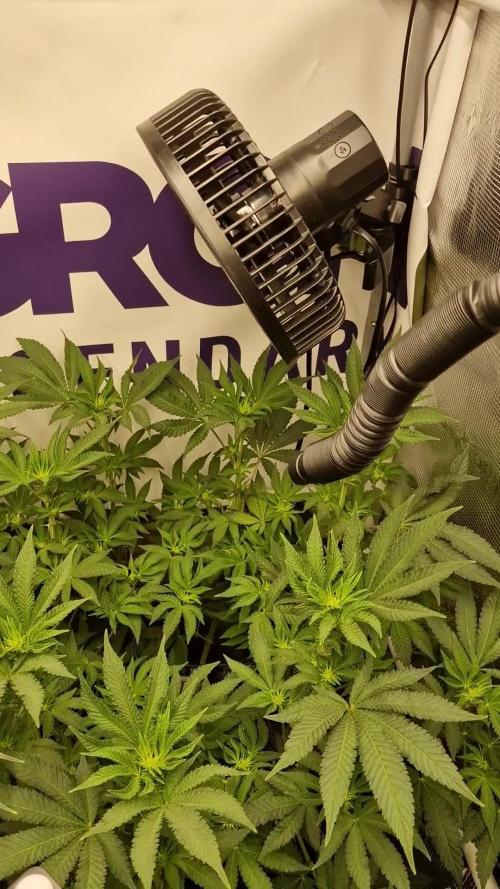
Bloom W2
Blütenstände fangen an sich zu bilden, stretch bisher 15cm
14.32026 Gieswasser 1,0L , Ph-Wert 5,8, EC 3,0
Likes
16
Share

@Kirsten
Follow
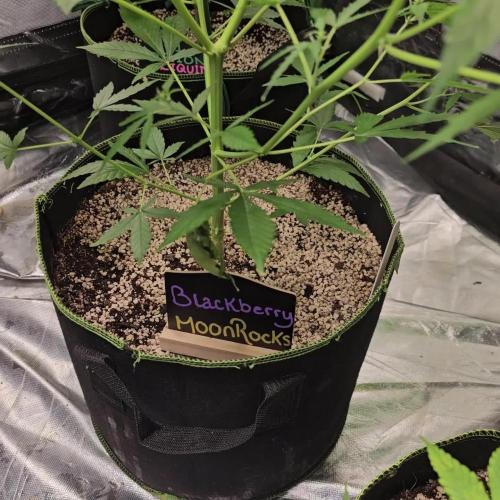
The plant has just switched into the flowering stage, I meant to train her this week b tying some branches down as she is getting tall, however I didn't get round to it.
18.7.25:
I watered with 3ltrs of dechlorinated water PH'd to 6.4, containing the following nutrients;
💜 2ml Ecothrive Trace
PH: 6.4
PPM: 365
20.7.25:
I watered with 2ltrs of dechlorinated water PH'd to 6.3 containing the following nutrients;
💜 2ml Ecothrive Trace
💜 1/4 TSP Ecothrive Biosys
25.7.25:
I watered with 3ltrs of dechlorinated water PH'd to 6.5, containing the following nutrients;
💜 2ml Ecothrive Trace
💜 1/4 TSP Ecothrive Biosys
PH: 6.5
PPM: 361
28.7.25:
I watered with 6.5ltrs of dechlorinated water PH'd to 6.0 with;
💜 7ml Trace
💜 1.5 TSP Ecothrive Biosys
PH: 6.0
PPM: 351
Thank you for checking in this week and hanging out in the comments 😁💚✌️🌱🙌

Likes
4
Share


@HighOhioAn
Follow
Rainbow melon what can I say? This plant is absolutely one of my favorite so far out of the fast buds genetics. I’ve grown a couple other genetics before and I have to say fast buds definitely checks all the boxes almost makes it too easy. The plant literally grows itself like it has a mind of its own handling low stress training absolutely amazing. Seems like it wants to have a perfect canopy. Very little TLC and the plant absolutely is thriving. 🌿🔥
Likes
Comments
Share

@Elguacho420
Follow
Buenos días y buenos humos para tod@s…
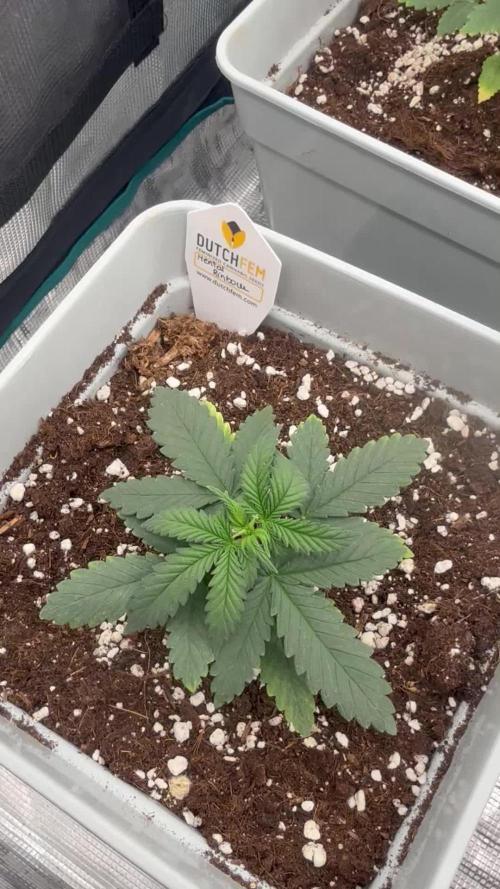
Estamos en la semana 3 de crecimiento y, por el momento, las plantas van como esperábamos. Están creciendo de manera continua y se mantienen en buenas condiciones.
Hemos añadido algo más de humedad, ya que estaba bastante baja, y de momento parece que está funcionando bien.
El riego lo hacemos cada 5 días: a las plantas grandes les damos 150 ml y a las pequeñas 100 ml. Tanto el pH de la humedad como el del riego está en 6.0 y, por ahora, va perfecto.
También hemos empezado a utilizar Plagron Grow, añadiendo tan solo 1 ml por cada 2 litros de agua. La idea es ir introduciendo la alimentación de forma paulatina, para que las plantas se adapten poco a poco y no generarles ningún tipo de estrés.
Mucha suerte en sus cultivos y seguiremos informando… 🌱💀💨
Likes
107
Share

@DogDoctorOfficial
Follow
Greetings, my fellow gardening enthusiasts! Welcome back to the enthralling tale of my magnificent Purple Lemonade FF, now stepping into Week 3 of flowering. Oh, what a week it has been! Our botanical beauty has graced us with a visual spectacle like no other, displaying breathtaking colors on her budding flowers. Prepare yourselves for a vivid portrayal of purples and a promise of abundant trichomes that will surely leave you in awe.
As we entered this week, the grow space became a canvas for Mother Nature's artistic flair. The buds on our Purple Lemonade FF have adorned themselves with a mesmerizing array of purple hues. It's as if a painter's brush lovingly caressed each calyx, leaving behind strokes of violet, lavender, and magenta. The sight is truly a feast for the eyes, and I find myself captivated by the sheer beauty that unfolds before me.
And speaking of trichomes, oh, how they have begun to emerge in what promises to be an extravagant display of resinous abundance. Like tiny glistening diamonds, the trichomes pepper the surfaces of our budding flowers, and I can already envision the sticky goodness they will provide. Our plant is gearing up to gift us with a treasure trove of resin, delivering not only remarkable aromas but also potent delights.
Now, let us delve into the technical dance of VPD — Vapor Pressure Deficit—and other environmental parameters that contribute to our Purple Lemonade FF's thriving state. Picture this, once again: the VPD is now at a delightful 1.12kPa, ensuring that the dance floor of humidity and temperature remains in perfect harmony. This ideal atmospheric balance is like music to our plant's ears, allowing her to perform her floral symphony with grace and flair.
As for the nutrient dance, our TDS (Total Dissolved Solids) level stands at 630 ppm, and the pH level is at a lovely 6.3. With these parameters, we have provided the perfect nutrition mix for our purple queen to feast upon, enhancing her growth and floral production.
Oh, but what about sleeping conditions, you may wonder? Fear not, for our beloved plant enjoys a restful slumber in a cozy environment where the temperature dips to a comfortable 24 degrees Celsius. Like a peaceful lullaby, this nighttime coolness helps her recharge, ready to burst forth with vigor and vitality when the lights come back on.
In the grand tapestry of our garden, Week 3 of flowering is a symphony of colors, trichomes, and favorable environmental conditions. Each day is a chapter of wonder, as our Purple Lemonade FF continues to enchant us with her growth and beauty. As we watch her petals unfurl and her trichomes flourish, we find ourselves eagerly awaiting the day we can savor the fruits of her labor.
Dear companions, let us bask in the radiant beauty of our Purple Lemonade FF and celebrate the magic of nature's artistry. As the days pass, I promise to keep you updated on this extraordinary journey, where colors and trichomes dance in harmony, and our purple queen reigns supreme.
Once more, I express my deepest gratitude for your unwavering support and enthusiasm. Together, we traverse the wondrous world of cultivation, reveling in the joys of nurturing life and witnessing the miracles of Mother Nature. Until our next rendezvous, may your gardens flourish and your passion for growing remain evergreen.
As always, I extend my heartfelt gratitude to each and every one of you for joining me on this enthralling journey. Your support means the world to me <3 <3 <3 Until next time, stay green and keep growing!
Genetics - Fast Buds Purple Lemonade FF
Ligth - Lumatek ZEUS 465 COMPACT PRO
Food - Aptus Holland
#aptus #aptusplanttech #aptusgang #aptusfamily #aptustrueplantscience #inbalancewithnature #trueplantscience #fastbuds #dogdoctorofficial #growerslove
With true love comes happiness <3 <3 <3 Always believe in your self and always do things expecting nothing and with an open heart , be a giver and the universe will give back to you in ways you could not even imagine so <3 <3 <3
All info and full product details can be find in can find @
https://2fast4buds.com/
https://aptus-holland.com/
https://autopot.co.uk/
https://lumatek-lighting.com/
<3 <3 <3 Growers love to you all <3 <3 <3
" Arising from a cross between purple and citrus Cali genetics, Purple Lemonade FF (Fastflowering) offers a complex high made up of perfectly balanced cerebral and body effects that are ideal for daytime use. Expect an extremely enjoyable high that boosts your mood while deeply relaxing your whole body and getting rid of muscle pain. This meticulous cross produces up to 550 g/m2 of some of the most beautiful purple buds, with pinkish and reddish hues that will catch everyone’s attention. The beautiful purple buds are ready for harvest in 7-8 weeks and come hand-in-hand with unbelievably sugary citrus terps that are just as refreshing as a cold lemonade on a hot Summer day. It’s the ideal variety for the sweet-tooth stoner seeking strains that deliver both in quality and quantity of resin.
Bud Description
Purple Lemonade FF grows chunky, spade-shaped buds that boast a whole range of pinkish-purple hues with rich, dark orange pistils shooting out of every direction. This variety stands out for the, oftentimes, lilac trichomes that give them a gorgeous pink tint and make for outstanding purple concentrates. The buds give off a delicious tart lemon aroma that reveals a sweeter, more fruity scent as you break the buds open. Definitely a must for flavor chasers and those looking for pungent terpene profiles. Smoke Reports
Purple Lemonade FF offers an effect that’s just as unique as the flavor. Expect a potent uplifting high that gives you that energy boost you need to get things done while 100% happy and stress-free. The effect gradually transforms into a wave that works its way along the limbs and through the muscles, deeply relaxing your body and putting you in the right mindset to go through a busy day with a huge smile on your face. This is an excellent all-day smoke as it not only increases energy but can also help combat chronic pain, migraine and stress. Plant Appearance
This feminized photoperiod variety develops a thick and strong structure, growing a medium-sized main cola with multiple shorter side branches, typical of hybrid strains. Purple Lemonade FF develops fairly short internodal spacing with gorgeous purple buds growing stacked on top of each other, making it the perfect choice for growers of all levels looking to get lots and lots of top-shelf purple weed, as this variety can produce up to 550 g/m2 in a 7-8 week flower cycle.
Grow Tips
This is a super fast feminized photoperiod version that takes approximately 7-8 weeks to flower with a 5-week vegetation cycle,, this means you can have faster harvests by shortening the veg cycle or have a longer veg cycle for bigger yields. Purple Lemonade FF (Fastflowering) makes for a great candidate for growers of all levels as it’s a vigorous strain that will thrive with basic maintenance both indoors and outdoors. This is a resin powerhouse so make sure to have your trim bin close by as all the resinous sugar leaves will make for the most mouth-watering hash and extracts. Flavor
Expect a long-lasting citrus zest that taste just like it smells. Purple Lemonade FF reeks of a delicious blend of sweet fruits and tart citrus that’ll make your mouth water. On the inhale, expect sour flavors that taste just like lemon candy with hints of orange and a really subtle earthy background. And on the exhale, the citrus flavors open up, giving place to a more sugary berry fruitiness that leaves your whole mouth tasting like an extremely sweet weed-infused lemonade.