


Likes
Comments
Share


@Blakoby
Follow
Forgot to do a week of posting 👎🏼. Buds are still pretty small I’m not sure if because of defiencies or what. Hoping she fattens up some more

Likes
15
Share


@Chupus
Follow
I put it in a glass of water , later I will transfer it to paper towels . as practice shows , the method is working . It's not the first time I've used it. the main thing is to squeeze a towel well, so that the seeds do not rot. temperature 24-26 humidity around 60%

Likes
18
Share


@KurbinTurbin
Follow
This strain was easy to grow, short and very bushy. The smell when drying has an incredibly strong earthy/chocolate aroma which is very pleasant🤤.

Likes
6
Share


Likes
56
Share


@Prilyfe13
Follow
May 3, 2024 Day 78
This week is what seems to be the last week before flushing and a light intensity drop. Both ladies look really nice and coming along swimmingly. More orange pistils, more amber trichomes. Not enough of either, but they are getting there. Probably the next week of nutrients and a week of flush.
Speaking of nutrients, I decided to cut the whole regimen in half. There's clearly nutrient burn and I can't seem to get rid of it. I also believe the plants aren't taking in as much water as they were before. The containers are holding more water and that tells me it has nowhere to go besides in the soil and the ants aren't keeping up. Nutrient lockout? Age of plants? They are an 8 week strain while we are starting week 11 today. I'm sure I'll find out. So I'm guessing about a week and a half left before harvest. I'm not sure if it will be 2 weeks or not, but I've been saying 2 weeks for over a week now. We are definitely close to comfortably call 2 weeks or earlier. Hopefully earlier.
Banana Purple Punch A is getting heavy. Branches are starting to lean and buds are covering buds from the weight. Apparently these branches aren't as strong as Banana Purple Punch B whose branches are stiff as boards. Very healthy though. Although, she did take a hit from the nutrient burn. Not much and definitely not as bad as the Tropicana Cookies did.
Banana Purple Punch B is a thing of beauty. She is small and compact, but her buds are fat and she smells amazing. Tons of trichomes and lots of bud throughout the plant. She'll definitely need a trimming before I harvest. I think I've decided to do a mostly wet trim and leaves just the sugar leaves on the plant. Anything with a stem I can reach will be cut off. Same with Banana Purple Punch A, but her buds to leaf ration is fantastic. I won't have to do much trimming on her. Banana Purple Punch B, on the other hand, will need a whole lot of trimming.
I've got this week's first set of trichome pics. One for each plant. Looks pretty good. A bunch of cloudy, a bunch of clear and some amber. Definitely not ready.
No watering today as I topped off the reservoirs with a half gallon of plain water. PHed at 6.2 which took a bit of PH down. Apparently my water is really low in acid.
The lighting will be staying the same for most of the week. As these ladies have only a couple of weeks left, I'll try to time the light intensity drop accordingly.
The environment is still messed up. SMH. The temp is still fine, but the humidity is still high. Now only 55%, but still too high. I'd prefer 40% now, but I'll take 50% somehow. It stopped raining and the weather is really nice, so I don't see why the humidity is still high. Last night the temp was averaging out at 67.9° with a low of 65° with the humidity still being high at 55.8%. At least it's staying the same.
Grow System Environment:
Temp: 73.2°
RH: 55.0%
VPD: 1.23 kPa
May 4, 2024
May the 4th be with you! Star Wars all the way!
Not a lot going on today. Both ladies got a full gallon of half dose nutrients. I think it's time. They have about a week and a half left to go. Maybe less. Hopefully less.
Banana Purple Punch A was rotated today. Her branches are so top heavy now that the whole plant jiggled when I moved it. Honestly, kinda funny to see. Her reservoir was almost empty. She's definitely still thirsty. With the half dose of nutes, I expect to start to see a fade.
At the end of the week I'll start the real flush with Flawless Finish. Only for the first watering though. Also, I don't top flush. All of the nutrient buildup on the top soil will just poison the plants. So I continue to run the reservoir. Afterall, that is the place where the nutrients get absorbed.
So Flawless Finish blocks some sort of beta things that prevent the plant from taking in nutrients. I've used it for the last 3 runs and I have no idea if it works or not. I very rarely get a good fade. Too many nutrients at the end? Maybe.
Banana Purple Punch B hasn't changed position at all. She fits perfectly in the tent where she is. She had a little bit more water than her sister, but still low enough to fill the reservoir with a whole gallon and not overdo it.
She also has about a week and a half left. Her buds are huge now. The very tops are the huge ones, but the lower buds are all dense. Should be decent popcorn for pressing.
Her leaves are a deep color of green. Not so deep to be a concern for toxicity. However, FastBuds says the leaves should turn light green at the end. We shall see. Also, I'm not seeing purple at all. Hence the half dose and flush next week.
The lighting of course is going to be dropped to 70% power in a few days. Then down to 60% at the start of next week and will be brought down to 50% for the final few days.
The environment is bad today. The humidity is back to 60%. I can still control the temp though. I think I need to drop it to 74° for the day and try to keep it at 65° at night. A tall order, but I think I can pull it off. I just wish I could get rid of this damned humidity. Not that I think anything will get ruined. I have 3 clip fans running at half power each, so airflow is fantastic. These also quite a bit of open space for Banana Purple Punch A. Not so much with Banana Purple Punch B. But she still has a decent amount of open space. Definitely enough to not get any issues. At least that's the theory.
Grow System Environment:
Temp: 74.0°
RH: 57.9%
VPD: 1.19 kPa
May 5, 2024
Trichome day!
I got a couple of decent trichome pics from each plant. They aren't perfect, but they are pretty good for what I can do.
No watering today obviously. That won't be for another day or 2.
Banana Purple Punch A looks great! Her colas are getting heavier and slightly fatter. I'd say I'm on point with when she will be done. I say another 10 days. Flush will start at the end of this week. That should leave me a good 5 to 6 days of flushing before harvest. She's also getting more and more orange pistils and some amber trichomes. I still see mostly clear and a good amount of cloudy. Definitely not ready yet.
Banana Purple Punch B also looks great! Her buds are just as fat as her sister plant. They aren't nearly as far along though. I'd give this one 2 weeks. But maybe the same 10 more days. They are different phenomes afterall.
Her branches are like SUPER stiff. No leaning, no anything except the jiggle when moved. Such a strong little one.
Neither plant is showing signs of fade yet. I expect it will start to show up in the next week. The buds are also still quite green. I'll also be expecting purple in the next week. We shall see.
Light power will be dropped at the end of the week I think. I was going to drop it tomorrow, but I think these two need a bit more time.
The environment is still messed up. It's mid spring now and it's just getting humid. I can expect to have a lot of humidity for the next 3 weeks. I will just have to do my best to fight it.
Currently, the temp is at 76° and the humidity is still at 60%. It just refuses to drop down. I had the humidity in my room all the way back down to 50% and it did absolutely nothing. I'll have to periodically open the tent until this humidity levels back out. No big deal, I'm always home.
I also keep trying to get the temp down at night. I can't seem to get it below 67°. I'd really like it at 65° and the day temp at 74°, but it doesn't seem to be working. The problem is I can't get the humidity down without cranking the heat. But if I crank the heat, the temp goes above 77° and gets dangerously close to messing up the trichomes.
Grow System Environment:
Temp: 73.1°
RH: 59.7%
VPD: 1.10 kPa
May 6, 2024
Not much going on today. No trichome pics, no watering, no light changes. The only thing I have to mess with is the humidity still. It should go down today. I have my room at 47%.
Banana Purple Punch A looks great! Super heavy colas and dense... Very dense buds. Solid. She has a few more orange pistils, but that's a good thing. She should be finishing up in about a week now.
Banana Purple Punch B is stunning. For a small plant, her structure is wonderful, bud are huge and solid. She is pretty bushy, so I will be very happy when I can trim all the foliage off before harvest. She should need about another 10 to 12 days.
The aroma coming off of these has changed since that last time I said something about it.
It's more pungent now and smells of sweet fruit and something heavy. I'm not getting much or any banana smell, but I'm a smoker, so my sniffer is a bit off. It's still strong enough for me to smell the essence of this strain. Unfortunately, I don't know anyone who doesn't smoke and will be willing to smell my weed. Lol
And the one person I know who would smell it smokes more than I do.
As before, the lights will stay the same for the rest of this week. Then I'll drop them down to a DLI of 36 mol/m²/d.
The environment is still kind of wonky with the temp being around 75° and the humidity being still high at 58%. But as I said earlier, I have my room back down to 48% humidity, so I should be able to get the tent down to 50% sometime this afternoon, and hopefully it will stay that way for at least another week.
Grow System Environment:
Temp: 73.8°
RH: 62.3%
VPD: 1.06 kPa
May 7, 2024
Watering day. Both ladies got a full gallon today. Other than that I took some pictures. I'm not bothering with trichomes for the next few days with these 2. They clearly aren't ready, so no point in checking clear trichomes. When I see more orange pistils, I'll start checking them.
Both ladies have super heavy buds. They are making the tops sway a bit when moved. So big, so dense, so heavy. I look forward to harvest.
The lighting is the same as always. It'll be dropped by the end of this week I think. I'm planning on dropping it down to 36 mol/m²/d for the last week of flower. It should work to bring out purple and to help tighten the buds up.
I'm also considering cutting the nutrients off at the end of this week and go for plain water. It's just about time for flushing as it is, so in 2 days, I'll do one last nutrient dose and that's it.
The environment is starting to readjust to a normal level, it's just taking a long time. Currently the temp is at 76° and the humidity is at 54%. Still high humidity, but better than 60%. My room has 42% humidity, so the humidity should eventually drop below 50%. I'll try to drop the temp as well. I'd like to see 74° for the rest of the grow.
I'm still having issues with night temp. I cannot get it to go down enough. It sat at 68° and 55% humidity.
Grow System Environment:
Temp: 73.6°
RH: 54.6%
VPD: 1.25 kPa
May 8, 2024
So I have been doing a bit of image research and have found that these two should start showing purple anyway now. At least that's what it looks like. These ones have super green buds. Nowhere near ready for harvest. Still another week and a half or so.
No water needed today. I will note that the reservoirs are still nearly full. Interesting.
Banana Purple Punch A looks great. Her buds are super fat and smell great. They are dense and when they are ready will be hard as rocks.
Her leaf to bud ratio is perfect. Not too many but no bare. I was more worried about her getting super bushy. Nothing of the sort. Very nice. I'll be trimming her down before harvest, but I'm not bothering with the sugar leaves until after drying. They will help give more of an even dry.
Banana Purple Punch B has caught up in bud size with her sister plant. Although, she has more leaves. Trimming will be a nightmare with this one. I plan to do it in 2 sessions. Once before harvest to clean out all of the stemmed leaves. Anything I can reach at the base of a leaf is gone. After drying, I'll complete the trimming session with basically a manicure and that's it.
The lights are staying as they are for a bit longer. I can't really tell if these two are actually done yet or not. I'll do a trichome check tomorrow and post pics.
The environment is a nightmare. It's still 60% humidity with the temp being a bit high at 77°. I'd rather it be at 74°, but the humidity gets higher that way. I'll just have to keep opening the tent as I have been for what seems to be the last week. Either way, I will not get mold. Not if I can help it. Now drying in such high humidity is a concern. Very little airflow. Hopefully I can keep the temp in the low 60's in there. I highly doubt it.
Grow System Environment:
Temp: 74.0°
RH: 57.6%
VPD: 1.19 kPa
May 9, 2024
Some noticable things today. First off, neither plant is taking in as much water as they were. A sign of either nutrient lockout or they don't need as much water because they are finishing up. Finishing up makes the most sense.
Banana Purple Punch A was rotated again today to keep the plant from growing mold and keep the lights hitting all the buds from every angle. She's definitely closer to being done than her sister plant is. I'd say about 5 days difference? Maybe slightly less. This is kind of a blessing and kind of a curse. I have 4 other plants in 3 gallon containers that need to go in the tent asap. If I can clear at least 2 of the 4 plants currently in the tent, including this one, I could fit all 4 plants in the tent with the last 2 plants. Then I can harvest those two separately kind of.
Banana Purple Punch B has huge buds now. Some are a little bigger than her sister. They seem to have the same amount of bud, just structured differently. This plant has the super compact structure with buds all up and down, but it's only like 19" where the other one is closer to 23" and has more space between buds.
But it's a larger plant, so there is the roughly the same amount of bud. At least that's what it looks like. I'm seeing no signs of fading yet. I'm guessing this is one of those strains that waits for the last week or so before showing color.
Although, other diaries I've seen show different. The weird thing is that the majority of the other plants I've seen all have purple buds. Mine are still bright green. But they are definitely not ready. So I'm guessing another week and a half.
Frankly, I have a lot of trouble timing harvests. I don't know what the plants do or are doing, for example, I've never had a plant finish up based on breeder specs. I've even had an autoflower go well over 15 weeks. Granted it was HUGE (understatement), but it still took over 15 weeks. But then I have strains that finish up in 12 weeks. But I couldn't tell if they were done or not. Disadvantages of not having the proper equipment. This time around I have a microscope, so I can get a really good idea of when to harvest.
As for trichome check, I was supposed to do it yesterday. Then I thought maybe today. But then I realized tomorrow is a new week, so I'll take my trichome pics tomorrow. Plus, they clearly aren't ready, so no point in checking yet.
The lighting as I said will stay the same for now. These 2 are showing no signs of needing it and are definitely not ready for it to drop. Not for another few days to a week anyway.
The environment is kind of calming down. I can keep the day temp down to 74°, but the humidity is still high at 55%. I'll be spending the day opening it up periodically... again. I did manage to get the average night temp down to 66°, so that's something. It messed up my Sour Diesel seedlings in my 2x2 though. The temp in there went all the way down to 62°. I really need to get them in this tent.
Grow System Environment:
Temp: 72.6°
RH: 58.7%
VPD: 1.11 kPa



Likes
31
Share

@Hempface86
Follow
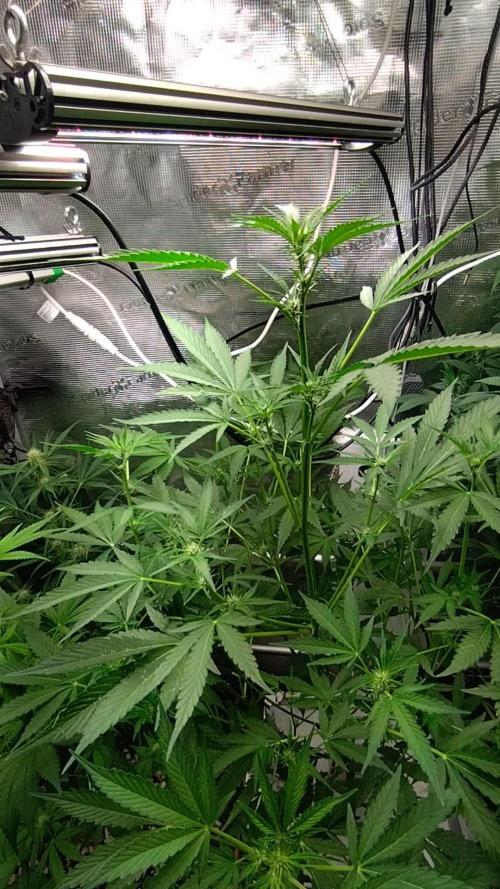
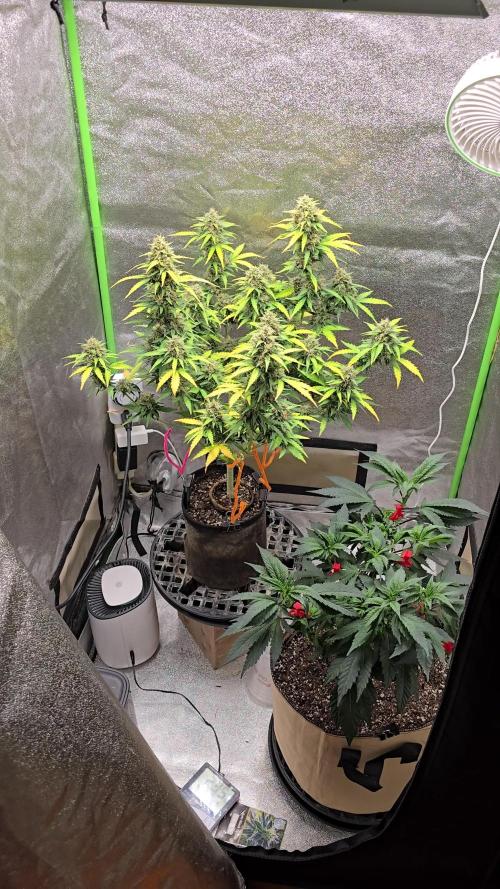
So for the last week or two, i've implemented Plagrons green sensation to help bulk up the buds and it appears to have helped... With that being said, divine seeds both times i've grown than the buds have been fat and healthy... Big shouts out to them for having such amazing contests... I truly wish I had the room so I could have a whole bunch of their genetics running for this contest, because they're auto flowers are really good... As everybody knows, autos are hit-and-miss.
But for me, divine seeds hasn't missed yet =) .. Good luck to everybody in the contest. I hope all is doing well.God bless and happy growing RIPCK

Likes
14
Share

@GERGrowDesigns
Follow
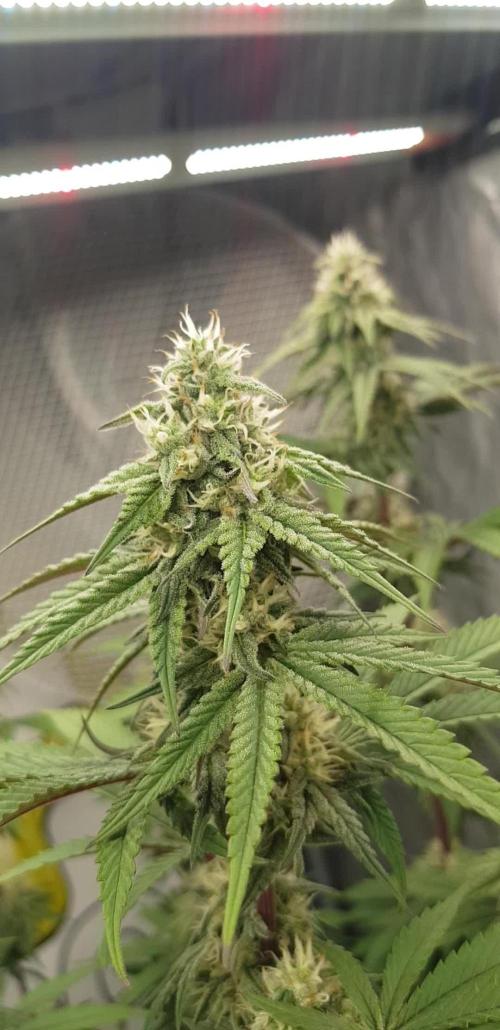
Welcome to Flower Week 5 of Sensi Seeds Purple Berry Muffinz
I'm excited to share my grow journey with you from my
Sensi Seeds Project . It's going to be an incredible ride, full of learning, growing, and connecting with fellow growers from all around the world!
For this Project , I’ve chosen the Feminized Photo Strain Purple Berry Muffinz:
Here’s what I’m working with:
• 🌱 Tent: 120x60x80
• 🧑🌾 Breeder Company: Sensi Seeds
• 💧Strain Info : 26%
• ⏳ Flowering Time: 6-7weeks
Processing
Likes
5
Share


@green_garnet
Follow
Hi! This is my first attempt at growing. I've had house plants for years and have cruised the reddit forums. Fingers crossed my green thumb stays consistent. I ended up germinating two ways with these Auto Shark seeds bred by Pyramid Seeds bought from Seedsman. One using the paper towel method and the other using a jiffy pod in a to-go container. To my surprise the impromptu jiffy pod sprouted in two days, whereas the PT method was a dud.
The attached photos were taken today (day 6) since sprouting and transferring directly into a 3 gal fabric pot. I fed her two days ago and the soil is still running moist. I'm using a combo of Happy frog with extra perlite with organic earthworm castings.
The flowering time for this seed claims six weeks so I'm curious to seed how this goes. I won an Emerald Harvest nutrient kit so I was planning to give her a third of the recommended dosage from their manual on the third watering. (Only watered once so far.)
Humidity has jumped between 50 -80% over the course of the first week. I'm still getting used to my the spacebucket I've been constructing over the past few weeks. Which materials are as follows:
-Growstar UFO LED 150W
-LEDMO 5630 LED Strip, Daylight
-120mm USB Fan (Outtake)
-120mm High Speed Muffin Fan (Intake)(Had to buy fan controller for it cuz it was so loud/strong)
-NAVADEAL Silver Reflective Mylar Film
-(5) 5 gallon home depot buckets
I bought a soil ph reader but I think its busted. I've bought a few gallons of grocery store water until I can get a ph reader and am just crossing my fingers the plant will be okay.

Likes
4
Share

@420abbybox
Follow
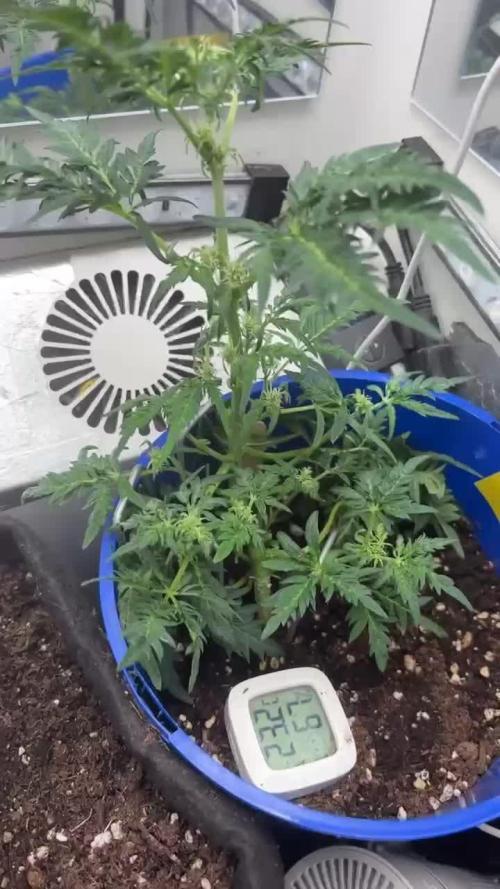
Frosty’s auto freak has had a week of preflower and has stretched and produced more white pistols at multiple nodes on the plant with many side branches with many of them producing white pistols

Likes
3
Share

@ChubbyBudBros
Follow
-
Day 76
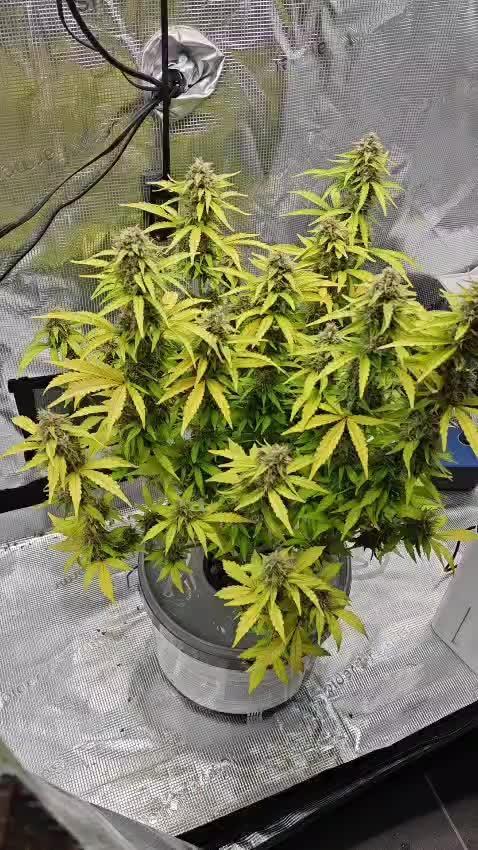
Another week gone by, she is definitely working towards the end now, water intake has gone down a lot, haven't had to top up the water for 2 days now.
I did do a reservoir change as I do every week change. I'm guessing she will have 2-3 more weeks to go now. Definitely hoping the buds still bulk up for a while.
Day 77
pH got back up to 6.7 today, just pH'd it down to 6.2 as I expect it to start dropping now the next days as it usually does. water level barely moved. Interesting how these plants can just stop drinking from one day to the next towards the end.
Day 78
pH stayed pretty stable today only went to 6.3, so not gonna adjust it or top up water today, no need it. Some of the fan leaves started to really degrade really fast since yesterday, had to defoliate a bit more to clean her up. Checked the trichomes already because I was curious and i'm seeing quite a bit cloudyness already, but also a lot of clear and no amber yet.
Day 79
Topped up the water, seemed like she drank a bit more again today for some reason, pH'd the water back to 6.1.
Lots of fan leaves starting to die off fast now as she is nearing the end of her lifespan. Will probably start to check trichomes consistently somewhere next week.
Day 80
Water was 6.2 pH today. Was enough water left in the reservoir for another day as well, so for the first time in quite a while I do not need to do anything to the water today 😅, finally an easy day haha. Figured I would also get the first trichome pics going as we are on day 80 now. Lot's of clear, seeing more cloudy ones and a tiiiny amount of amber starting to come trough!
Day 81
Water got down to 5.9, so I topped up with 6.5 pH water, brought the pH back to 6.1. The buds are definitely in their final ripening phase. The pistils are all starting to become brown and curled in slowly. Fingers crossed we only got a week or so till harvest.
Day 82
Just removing the dead fan leaves, topped the water backup in the res and brought pH back up from 5.9 to 6.2. Still seeing new white pistils clusters show up on the buds. Gonna wait a bit more before I check trichomes daily.
Day 83
Barely seeing the water level move now, pH stayed stable at 6.2 as well. Checking trichomes, but still mostly clear/cloudy.
Likes
26
Share


@olli0420
Follow
soo one was way more photogenic than the other,AGAIN. 😅 I'm proud of me😁😁
oh and how DOPE is the timelapse? 🤯🔥🔥🔥

Likes
17
Share


@MoneyGrowup
Follow
Things are looking good, started with some lst with my hands at first now I've secured them with ties. The gelato looks like it finally want to start its growth due to whatever stress it was going through. Happy with how things are picking up

Likes
30
Share


@XperencdGmanXG
Follow
This girl is stacking so nicely for someone who got very little grow time outdoors before the onset of flower. 2nd generation of shogun I have grown but never smoked, so I still don't know if its any good. LoL Something tells me this one is going to be something special. Lets see.
Likes
12
Share


@Seymour_buds
Follow
girls are growing well. changed water change out cycle to replacing 1/3 of entire resevoir every 3 days. The theory is that i will be able to transition changes to nutrients slowly to identify any changes to the girls.
one girl showing sign of what i believe to be calcium deficiency.(picture attached)


Likes
37
Share

@XperencdGmanXG
Follow
now that the plant has fully recovered it is growing nicely, i will leave it for min. 2 more weeks before I flip to flower. I have decreased light intensity to encourage some stretch.


Likes
21
Share


@Mosquito_Haarlem
Follow
Wat een mooie week heeft ze weer achter de rug.
De toppen zijn aardig dik geworden en sinds ik haar alleen water geef zijn haar bladeren steeds meer geel geworden.
Ben echt super tevreden met hoe ze zich ontwikkeld heeft tot deze prachtige dame.
Dankjewel weedseedsexpress, echt een mooie strain. Ze ruikt heerlijk.
Aankomend weekend gaat de schaar erin.
Ik zal de aankomende dagen nog meer foto's uploaden.
To be continued...

Likes
4
Share

@IndigoMist8
Follow
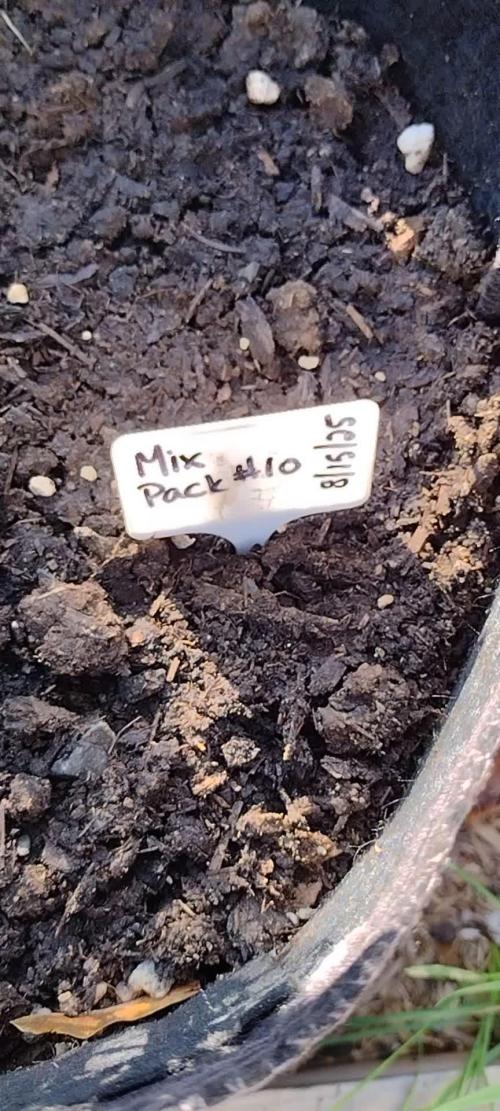
Still hanging on, from neglect mentioned in other diary. Temps are dropping fast and she will be harvested soon.
Processing
Likes
17
Share


@Gordy
Follow
Beginning of week 8 of flower.
This week I tossed a different light into the tent to be able to see what it really looks like. I think she’s looking really good. Today I gave her the last feeding before harvest. Regular water from here on out.
The plant doesn’t seem to be doing anything at all. I don’t notice much difference, but I am looking at it each day, so it will be harder for me to notice.
I'm receiving a dehumidifier today. This will help me really control the humidity in here.
