Likes
Comments
Share
Likes
12
Share
@Roberts
Follow
So the second seed of Ze Chem Bang is struggling. It has been growing slowly. It's my last seed so hopefully it roots the solution soon. It will have a much better chance of survival once it does. It can go either way at this point. The rock wool has gotten already growth from being wet for too long. So 🤞🏻 it goes well. Thank you Medic Grow, and Terpyz mutant Genetics. 🤜🏻🤛🏻🌱🌱🌱 Thank you grow diaries community for the 👇likes👇, follows, comments, and subscriptions on my YouTube channel👇. ❄️🌱🍻 Happy Growing 🌱🌱🌱 https://youtube.com/channel/UCAhN7yRzWLpcaRHhMIQ7X4g.
Likes
28
Share
@Goatimus
Follow
Week 10 - flush has been going for a few days now. Buds are looking snowy, the smell is gorgeous. Some of the leaves are showing a deep purple colour which is common in this strain. She's gonna look great when she's finished. Most of the leaves are showing nutes burn from me being over exuberant in the last Week with the nutes (should've stuck to the plan). After a bit of a chat with a fellow grower who has convinced me that my plant is not ready yet I've decided to keep feeding her for another week or so just hope I haven't ruined her by not feeding for a week. Day 69 and pulled her out of the tent for a bit of a tidy up and she looks amazing. She looks far better in her full glory than his in a tent. I'm very pleased with my first grow, made a few mistakes along the way, but she's looking better than I would of imagined.
Likes
10
Share
Likes
17
Share
this is the last week of growing I just want to say that to this point I didn't know what I was doing . at that time I bought a book and read it so I could understand more about what I should do.
Likes
5
Share
sexta semana de floracion se aplica engorde paras las flores y llegar a tener una flor bien rellena por dentro , se sube parametro de co2 / sixth week of flowering fattening is applied to the flowers and get to have a well-filled flower inside, it goes up to CO2 parameter
Likes
16
Share
Critical Kush is a strain that is potent, and with it come a few side effects, although none of them are very serious. This indica-dominant strain can sometimes make you feel parched as it can leave you with a dry mouth, which is usually coupled with a case of dry and itchy eyes.
Likes
6
Share
@Aleks555
Follow
Zamnesia - Pineapple Express (F1 Auto) - 76 Days The time has come—harvest day! It's bittersweet to say goodbye to this incredible journey, but all great things must come to an end. The Pineapple Express (F1 Auto) has been a true wonder, delivering both in strength and flavor, with an aroma that's unforgettable. This strain produced the hardest buds we've ever grown—rock-solid and packed with resin, the likes of which we’ve never seen before. A massive thank you to Zamnesia for providing these remarkable seeds! And an extra special shoutout to Xpert Nutrients for the outstanding fertilizers. The results speak for themselves—your nutrients truly work miracles, creating those dense, powerful buds that we're so proud of. Stay tuned for the final photo and video showcase of this incredible harvest. We're thrilled to share it with you all! Xpert Nutrients – The Key to Powerful Harvests When it comes to achieving the best results, we trust only proven solutions. And with Xpert Nutrients, our plants are getting nothing but the best! These nutrients are not just a product, they’re a true catalyst for growth and powerful yields. Thanks to a balanced formula, each dose nourishes our plants with essential elements, promoting their health, strength, and abundant harvests. Every cycle with Xpert Nutrients shows progress. We see incredible results: dense, resinous buds, rich aromas, and, of course, yields we can be proud of. With these nutrients, there are no compromises – only maximum performance! Thank you, Xpert Nutrients, for your continuous support and for helping us unlock the full potential of our plants. The results speak for themselves!
Likes
8
Share
@DoMoNe
Follow
Following RQS auto guide : https://www.royalqueenseeds.com/blog-how-to-grow-autoflowering-cannabis-n83 WEEK 2: LATE SEEDLING STAGE #8 22.3. - #14 28.3. #8 22.3. - Canna PH- grow (and bloom) arrived today, mixed 6ml to 3liters and poured around the pots (hoping to get hum. up also) will see what it does and if the PH starts going down from the 7+ i can start adding smaller amounts. -Moved around the LEDlights (those have 'bout 2000LUX at plant level) so they are more along the tent walls. -Moved temp meter from lamp to plant levet (have now confirmed the lamps wont heat up too much under current air flow so its safe to stop monitoring heat source temps. -Removed the "glass" from 3in1 meter and the tape from the front, tested the luxes, still at few hundred, so i would guess the LUX meter in that cheap meter is BS!. Now the PH is way more visible in the camera when there is no screen reflection etc. Added pics of the luxes from android app, will receive the "real"meter possbl this week. -When i had tent door open and did the stuff mentioned above the temp dropped to about 13degrees, but now we are already back up at 23'c at plant level, so seems stat the current exh-fan rotation is good. -Plants emself have taken some sort of an growth spur 'cause just few days ago they seemed like they are not growing at all, and ow i can really see the difference and they are making next set of leafes, might be that the temps risen so they enjoy em self now way more - forgot to take new pics from the plants emself so will juts update pics from cam for now , at least there's been some change again. -Will try to remember take proper pics of the plants next time i visit the tent physically -Should remember to buy the "LST-wire" for training, would be good time to buy some eastern decorations fluffy wires. #9 23.3. -Noticed that the timelapse camera is getting thrown around as well as one LEDpanel, so went and tied em up to tent posts. -Added 1,5liters of water that had 6ml of PH- canna in it, and poured in to "middle corner" of every pot. -Tent was way more warm and moist inside then ever before, which is a good thing, im sure after the latest added water im getting there. -Ordered a RAM humidifier. And some nutes pack from bio-grow. -Updated "week2 timelapse" (Check 1st week for its timelapse) -Note to self: Take those damn "camera quality" plant pictures, you are supposed to...- #10 24.3. -Started small form of LST -Guess who forgot to take the closeup pictures... again... Well better luck next time :D -Added 5liter RAM humidifier, at lowest possible setting, so that the water would last longest -Added 1,5liters of water with BioBizz nutes that came today in mail, Alg-A-Mic, Root-Juice and Top-Max. -Added ScrOG, but obviously its now just tested that it fits and its hanging at the tent side. -Had to move the Fast Eddy a bit and make a "stand" for the humidifier. -Moved the other LED (2300lux) a bit further up, will have more effect when plants grow, and those can be had as a xtra lights. -Moved some wires around their sockets to get better fit for all connectors. -Adjusted the camera directions -Turned both fans to level 1 of 2 -exhaust fan still at about 50% timer on/off, that must been what caused the "wobbly"pictures in timelapse as the tent gained more vacuum inside which must have drawn in the walls a bit. #11 25.3. -Not sure if i did anything #12 26.3. -Water run out from humidifier -Added a pic of the day -Luxmeter arrived, didn't had time to install it yet, but tested and found working. #13 27.3. -Added Hydrometer -Filled humidifier -Poured 1liter of water with nutes -Added/moved LST's -Finally remembered to take the close up pics of the plants! wohoo. -After following the hums i think i might add exhaust flow as its also warmer outside so the tent can now take it #14 28.3. -Last day of #2 week -Did nothing, just watched em grow. -Water run out of hum. hum went from 65% to 45%
Likes
47
Share
All content on this diary is for inspirational and educational purposes only. The ideas shared are not a substitute for professional advice. This diary/account is not officially affiliated with Alan Watts or his estate. All materials are used under the principles of fair use. I honor the legacy of Alan Watts by sharing his wisdom respectfully and with the intention of inspiring awareness and self-understanding. 2nd net is up. Early bud formations are promising. holding up to the extremes pretty well, some leaves taking minor damage, but overall, she is holding up, gave her 1 night at 50F see how she would react, stressful. Not advised as it messes with her metabolism, but I want to see if it triggers any anthocyanin response. Love to see her purp up but no signs yet. Remember, For every molecule of glucose produced during photosynthesis, a plant needs to split six molecules of water. This process provides the hydrogen needed for synthesizing glucose and other organic compounds, while oxygen is released as a byproduct. Homework. If Rubisco activity is impaired and it cannot properly function or regenerate its substrate, the plant's leaves are likely to turn a pale green or lime green, a condition known as chlorosis. Essentially, Rubisco activity is highly regulated and susceptible to various environmental and metabolic factors that can cause it to become inhibited, leading to an apparent failure in RuBP regeneration due to a lack of consumption. Rubisco regeneration is intrinsically linked to nitrogen supply because Rubisco is a major sink for nitrogen in plants, typically accounting for 15% to over 25% of total leaf nitrogen. The regeneration phase itself consumes nitrogen through the synthesis of the Rubisco enzyme and associated proteins (like Rubisco activase), and overall nitrogen status heavily influences the efficiency of RuBP regeneration. RuBisCO is a very large enzyme that constitutes a significant proportion (up to 50%) of leaf soluble protein and requires large investments in nitrogen. Insufficient nitrogen supply limits the plant's ability to produce adequate amounts of RuBisCO, thereby limiting the overall capacity for photosynthesis and carbon fixation. Maintaining the optimal, slightly alkaline pH is crucial for the proper function and regeneration of Rubisco. Deviations in either direction (too high or too low) disrupt the enzyme's structure, activation state, and interaction with its substrates, leading to decreased activity and impaired RuBP regeneration. (Lime/yellowing) Structural Component: Nitrogen is an essential building block for all proteins, and the sheer abundance of the Rubisco protein makes it the single largest storage of nitrogen in the leaf. Synthesis and Activity: Adequate nitrogen supply is crucial for the synthesis and maintenance of sufficient Rubisco enzyme and Rubisco activase (Rca), the regulatory protein responsible for maintaining Rubisco's active state. Nitrogen deficiency leads to a decrease in the content and activity of both Rubisco and Rca, which in turn limits the maximum carboxylation rate, Vmax, and the rate of RuBP regeneration Jmax, thus reducing overall photosynthetic capacity. Nitrogen Storage and Remobilization: Rubisco can act as a temporary nitrogen storage protein, which is degraded to remobilize nitrogen to other growing parts of the plant, especially under conditions of nitrogen deficiency or senescence. Nitrogen Use Efficiency (NUE): The allocation of nitrogen to Rubisco is a key determinant of a plant's photosynthetic nitrogen use efficiency (PNUE). In high-nitrogen conditions, plants may accumulate a surplus of Rubisco, which may not be fully activated, leading to a lower PNUE. Optimizing the amount and activity of Rubisco relative to nitrogen availability is a target for improving crop NUE. Photorespiration and Nitrogen Metabolism: Nitrogen metabolism is also linked to the photorespiration pathway (which competes with carboxylation at the Rubisco active site), particularly in the reassimilation of ammonia released during the process. To increase RuBisCO regeneration, which refers to the process of forming the CO2 acceptor molecule Ribulose-1,5-bisphosphate (RuBP) during photosynthesis, the primary methods involve optimizing the levels and activity of Rubisco activase (Rca) and enhancing the performance of other Calvin-Benson-Bassham (CBB) cycle enzymes. Biochemical and Environmental Approaches: Optimize Rubisco Activase (Rca) activity: Rca is a crucial chaperone protein that removes inhibitory sugar phosphates, such as CA1P (2-carboxy-D-arabinitol 1-phosphate), from the Rubisco active site, thus maintaining its catalytic competence. •Ensure optimal light conditions: Rca is light-activated via the chloroplast's redox status. Adequate light intensity ensures Rca can effectively maintain Rubisco in its active, carbamylated state. •Maintain optimal temperature: Rca is highly temperature-sensitive and can become unstable at moderately high temperatures (e.g., above 35°C/95F° in many C3 plants), which decreases its ability to activate Rubisco. Maintaining temperatures within the optimal range for a specific plant species is important. •Optimize Mg2+ concentration: Mg2+ is a key cofactor for both Rubisco carbamylation and Rca activity. In the light, Mg2+ concentration in the chloroplast stroma increases, promoting activation. •Manage ATP/ADP ratio: Rca activity depends on ATP hydrolysis and is inhibited by ADP. Conditions that maintain a high ATP/ADP ratio in the chloroplast stroma favor Rca activity. Enhance Calvin-Benson-Bassham (CBB) cycle enzyme activity: The overall rate of RuBP regeneration can be limited by other enzymes in the cycle. •Increase SBPase activity: Sedoheptulose-1,7-bisphosphatase (SBPase) is a key regulatory enzyme in the regeneration pathway, and increasing its activity can enhance RuBP regeneration and overall photosynthesis. •Optimize other enzymes: Overexpression of other CBB cycle enzymes such as fructose-1,6-bisphosphate aldolase (FBA) and triose phosphate isomerase (TPI) can also help to balance the metabolic flux and improve RuBP regeneration capacity. Magnesium ions, Mg2+, are specifically required for Rubisco activation because the cation plays a critical structural and chemical role in forming the active site: A specific lysine residue in the active site must be carbamylated by a CO2 molecule to activate the enzyme. The resulting negatively charged carbamyl group then facilitates the binding of the positively charged Mg2+ion. While other divalent metal ions like Mn2+ can bind to Rubisco, they alter the enzyme's substrate specificity and lead to dramatically lower activity or a higher rate of the non-productive oxygenation reaction compared to Mg2+, making them biologically unfavorable in the context of efficient carbon fixation. The concentration of Mg2+ in the chloroplast stroma naturally increases in the light due to ion potential balancing during ATP synthesis, providing a physiological mechanism to ensure the enzyme is activated when photosynthesis is possible. At the center of the porphyrin ring, nestled within its nitrogen atoms, is a Magnesium ion (Mg2+). This magnesium ion is crucial for the function of chlorophyll, and without it, the pigment cannot effectively capture and transfer light energy. Mg acts as a cofactor: Mg2+ binds to Rubisco after an activator CO2 molecule, forming a catalytically competent complex (Enzyme-CO2-Mg2+). High light + CO2) increases demand: Under high light (60 DLI is a very high intensity, potentially saturating) and high CO2, the plant's capacity for photosynthesis is high, and thus the demand for activated Rubisco and the necessary Mg2+ cofactor increases. Mg deficiency becomes limiting: If Mg2+ is deficient under these conditions, the higher levels of Rubisco and Rubisco activase produced cannot be fully activated, leading to lower photosynthetic rates and potential photo-oxidative damage. Optimal range: Studies show that adequate Mg2+ application can enhance Rubisco activation and stabilize net photosynthetic rates under stress conditions, but the required concentration is specific to the experimental setup. Monitoring is key: The most effective approach in a controlled environment is to monitor the plant's physiological responses e.g., leaf Mg2+ concentration, photosynthetic rate, Rubisco activation state, and adjust the nutrient solution/fertilizer to maintain adequate levels, rather than supplementing a fixed "extra" amount. In practice, this means ensuring that Mg2+ is not a limiting factor in the plant's standard nutrient solution when pushing the limits with high light and CO2. Applying Mg2+ through foliar spray is beneficial to Rubisco regeneration, particularly in alleviating the negative effects of magnesium (Mg) deficiency and high-temperature stress (HTS). While Mg can be leached from soil, within the plant it is considered a mobile nutrient, particularly in the phloem. Foliar-applied Mg is quickly absorbed by the leaves and can be translocate to other plant parts, including new growth and sink organs. Foliar application of: NATURES VERY OWN MgSO4 @ 15.0g L-1 in a spray bottle. For those high-intensity workouts when 1 meal a day is just not enough! Foliar sprays are often recommended as a rapid rescue measure for existing deficiencies or as a supplement during critical growth stages, when demand for Mg is high. Application in the early morning or late evening can improve absorption and prevent leaf burn. The plant was getting a little limey yellow in the centre. Shortly thereafter, she was back in business, green mostly regenerated. The starting point [of creativity] is curiosity: pondering why the default exists in the first place. We’re driven to question defaults when we experience vuja de, the opposite of déjà vu. Déjà vu occurs when we encounter something new, but it feels as if we’ve seen it before. Vuja de is the reverse—we face something familiar, but we see it with a fresh perspective that enables us to gain new insights into old problems. Confidence is evidence... nothing more. You are confident because you have driven 10,000 times, you are confident because you have spoken 10,000 times. People think confidence is a feeling, but it's not. If you want more confidence, then you need to create evidence, take more shots, collect more data, build more experiences, take more risks; fail, confidence doesn't come first; it is the reward you get for doing the work. no one else wants to do.
Likes
85
Share
Seven weeks of flower done and another three or four left. The plants are drinking lots and the buds are starting to fatten up. I see amber hairs and new white hairs continuing to grow out of the sides and top. Bud building is not over, more happy days. Did a bit of leaf trimming, just to get a bit more light in. Added molasses to the mix and everything seems to be going well. Thanks for looking. Cheers
Likes
55
Share
So these girls are now 11 weeks old, and they are well through their flowering now. Buds are starting to swell and mature (for Red Devil and Pineapple Express more than Misty Mack), and their smells are pretty powerful. The end is approaching, and as a guideline my plan is to harvest Pineapple Express @ 13 weeks Red Devil @ 14 weeks Misty Mack @ 15.5 weeks So that means Pineapple Express' two week flush begins today.
Likes
14
Share
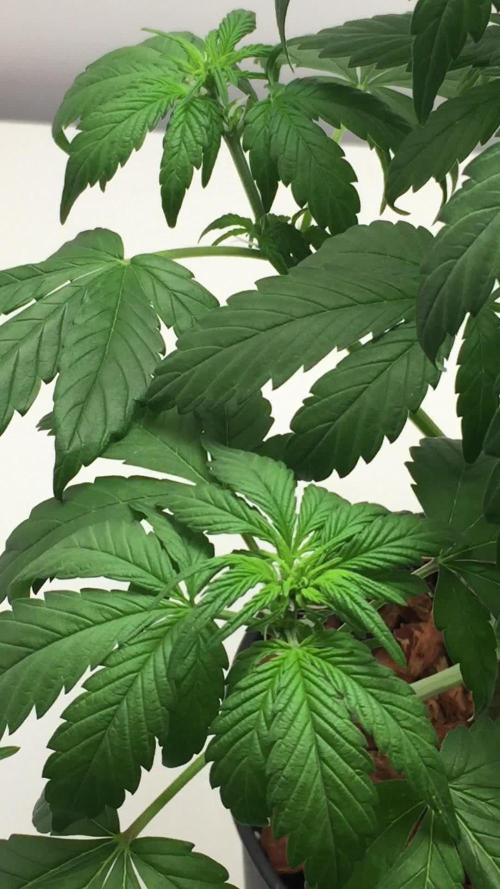
Our #15 grows really well, the leaves are perfect and tapered a little curved perhaps but I think that's the effect of the beginning, the stem is straight and does not bend and is very well proportioned. I am giving Plagron Pwer Roots rooting soon starting with Alga Grow. The plant grows well, the leaves are regular and very turned towards the light, it is very proportionate even I don't see stretching, bending and things that don't convince me. The girls have already been poured into 11 liter jars because the biodegradable jars have started to decompose prematurely, no problem let's go to the ground. Music of the week provided by Radio Nula from Slovenia. https://radionula.com/ Thanks to friends of Seeds Mafia try this and their other creations seeds > https://seedsmafia.com/en/ Light and tent > https://marshydro.eu/products/marshydro-sp3000-led/?lang=it
Likes
35
Share
@ReinDeer
Follow
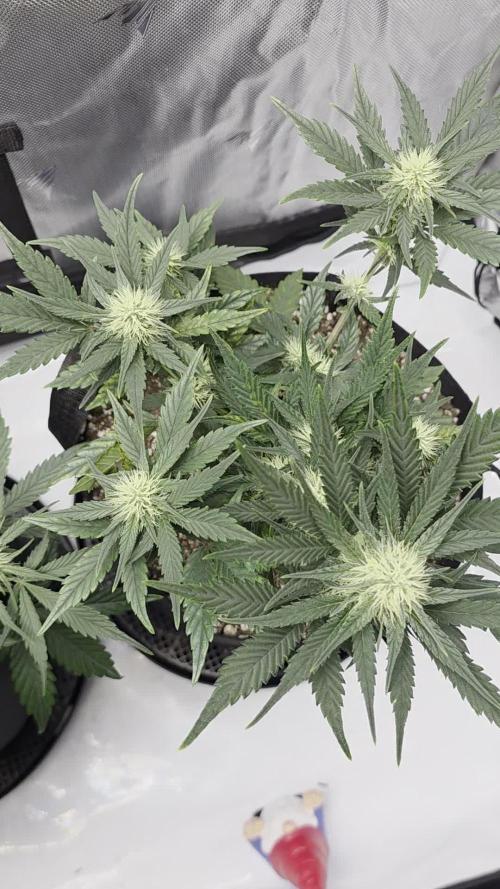
It is a day one of the 6th week. I watered the plants and started adding B’cuzz Silic Boost. Also made some beautiful photos under a white light and I am really happy with the plats progress. 👍 Two days after watering and spraying with the fresh water added with vita race the plants are super gorgeous and they are growing in size acchieving 60 cm in height. Buda are getting bushier as well. 😻 I am a little worried by the fact that some of the plants tend to curl their leaves down just before the light turns off. After six hours of night plants look healthy again. Could that be connected to the distance between te lamp and the plant which is diminishing as the plants grow? Thanks for suggestions😊
Likes
4
Share
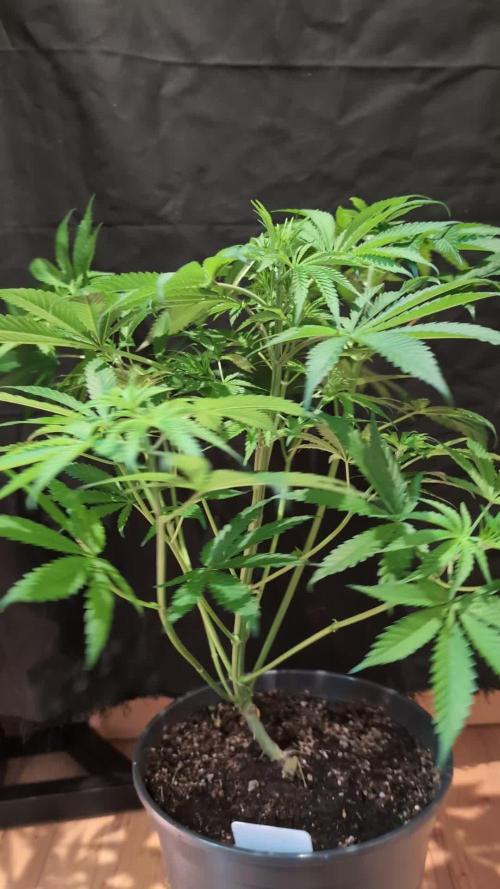
En la tercera semana hicimos un nuevo trasplante, esta vez a una maceta de 4 litros.
Likes
Comments
Share
@WeGrow
Follow
2 weeks of flowering (currently 12.5h light) are done and the plants are doing well! I have upgraded the grow box a bit, I now have a TAPO sensor for humidity and temperature that automatically turns off/on the ventilation system Tomorrow the automatic watering system will be installed, more pictures will follow. Update: Watering system added, took me quite some time to install but figured out how I can make each plant get the same amount of water. It is a cheap wifi system from Aliexpress, 25€.