


Processing
Likes
17
Share


Likes
109
Share


@Prototype0181
Follow
2 of the cookie's had a little P deficiency
Problem has been solved
Rock on Growmies

Likes
67
Share


@Ultraviolet
Follow
Inhale for 13s, Exhale for 13s,
Inhale for 8s, Exhale for 8s,
Inhale for 5s, Exhale for 5s,
Inhale for 3s, Exhale for 3s,
Inhale for 1s, Exhale for 1s,
Alignment. 1.618
A plant with both standard cellular respiration (occurring throughout the plant, including leaves and stems) and adequate root respiration will have a significantly higher ATP throughput than one restricted to only general cellular respiration in a limited way.
Cellular respiration is the fundamental metabolic process that occurs in all living plant cells (roots, stems, leaves, flowers, seeds) to convert glucose into usable energy (ATP). It requires oxygen and produces carbon dioxide and water as byproducts.
Root respiration is not a separate type of respiration, but rather a specific instance of cellular respiration occurring in the roots. Roots absorb oxygen from the air spaces in the soil to fuel their energy needs.
Roots require a substantial amount of ATP for essential functions like nutrient and water absorption, as well as growth and maintenance of their tissues.
The primary form of respiration in healthy plant roots is aerobic respiration, which is highly efficient, yielding up to 30-38 ATP molecules per glucose molecule.
Anaerobic Respiration (Inefficient): If roots are deprived of oxygen (e.g., in waterlogged soil), they switch to anaerobic respiration, which is far less efficient, producing only 2 ATP molecules per glucose molecule and also generating alcohol, which can be toxic and kill the plant.
Therefore, a plant with healthy, oxygenated roots performing efficient aerobic respiration in addition to the rest of the plant's cellular respiration has a much greater overall ATP production and energy capacity.
A soil without organic matter will generally have a low Cation Exchange Capacity (CEC).
Biochar is often prized for its potential to increase soil cation exchange capacity (CEC), but this effect is highly dependent on the specific properties of the biochar (feedstock and pyrolysis temperature) and the soil type to which it is applied.
High-ash biochars, especially those produced at lower temperatures and applied to acidic or sandy soils, can significantly boost CEC by providing abundant binding sites for cations like calcium (Ca²⁺), magnesium (Mg²⁺), and potassium (K⁺).
Biochar is more sustainable than typical organic matter for long-term soil improvement primarily due to its high stability and resistance to microbial decomposition, allowing it to persist in the soil for hundreds to thousands of years. This longevity provides a lasting positive effect on soil properties, particularly by increasing the cation exchange capacity (CEC) over time, while regular organic matter breaks down much faster.
Biochar generally offers a much higher CEC than coco coir, though specific values vary greatly; while coco coir might sit around 40-60 cmol/kg, biochar can range from tens to over 200 cmol/kg, with sources like Acacia wood biochar or even coconut shell biochar often surpassing coco's capacity due to its porous structure, creating significantly more cation-binding sites for nutrients, making it superior for nutrient retention.
Needs to be charged similar to coco but at a much higger rate. But shhhh.. it's a secret.
Recommend a balanced ratio of key cations, particularly calcium (Ca), magnesium (Mg), and potassium (K). A widely accepted general "ideal soil" cation saturation ratio is approximately 65-85% Ca, 6-12% Mg, and 2-5% K. That's roughly what mine gets.
Likes
17
Share

@Borberad
Follow
Woche 10
🍒 Kannabia-Ladys Update: Tag 70 / Blütetag 35
Es wird mal wieder einmal Zeit für ein Update unserer beiden Kannabia-Ladys: Cheery Dream und Karibbean Mango. Wir befinden uns heute an Tag 70 insgesamt, was Blütetag 35 entspricht.
Das Höhenmanagement hat uns anfangs etwas Sorgen bereitet, aber wir denken, wir haben die Situation jetzt sehr gut im Griff. Wir haben ich Scrog-Leinen eingezogen, um das Wachstum zu kontrollieren und eine gleichmäßige Lichtverteilung zu gewährleisten.
Beide Pflanzen entwickeln sich prächtig und zeigen erste Anzeichen für eine vielversprechende Blütenbildung. Ich bin gespannt, wie sich die beiden in den kommenden Wochen weiterentwickeln.
Schaut gerne wieder vorbei für das nächste Update!

Likes
4
Share


@GingaNinjaGenetics
Follow
She's doing great. The stretch has slowed down and the buds are really starting to pop. Feeding her med man brand nutrients, kind bud base 600 ppm, and bloom at a half gram per l of water approx a 1/4 teaspoon per 2l water
Likes
5
Share


@Gancha420
Follow
they are in small space for veg my grow tent is full in 12/12 light schedule condition is not perfect but not that hard so i expecting not really good results and so far they grow well after second dose fo fertilizer they grow like crazy

Likes
21
Share


@rhodes68
Follow
Just missed 300 grams
Easy harvest trimming was not that bad as leaves were large and stemmed mostly.
Dry trim very easy
Dry took a while as rain moved in and had to drag out the dehumidifiers
She makes up for what little difficulties during grow with excellent results
Highly recommend

Processing
Likes
3
Share


@Ogbangbang2981
Follow
Every week I watch my girls grow into beautiful budding trees only difference is now she in flowering I take her outside to absorb some of the beautiful sunshine and she's loving every bit of it. I let her stay outside for 8 hours in nature then back inside for another 8 hours of led full spectrum and turn out my lights for another 8 hr she's an Auto so she loving every minute of this ...... this is the results ⬆️
Likes
6
Share


@GrowTF
Follow
Sehr sehr schöne Verfärbung.
Die etwas später angepflanzte Epsilon(Links) wächst buschiger und Kompakter als die erste (rechts).

Likes
12
Share

@DogDoctorOfficial
Follow
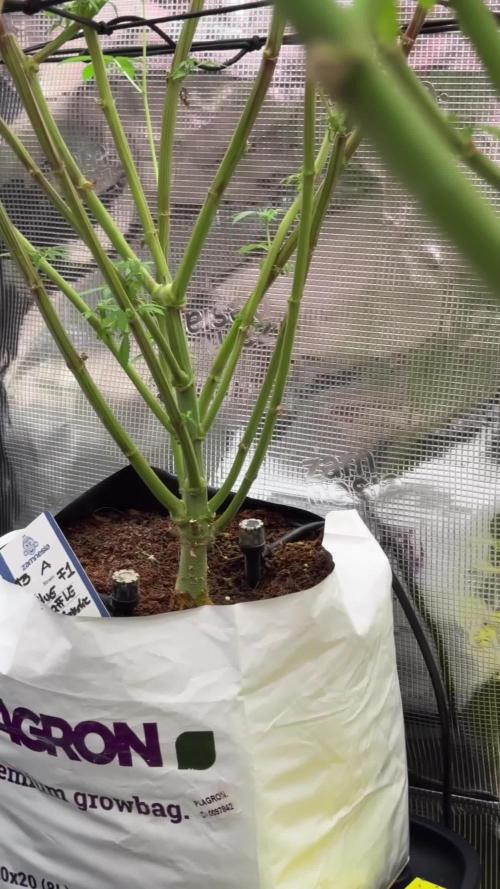
💙 Project Blue Tent – Week 11
💙 Blue Waffle F1 – Pheno A
🌸 The Frost Is Coming... And She's Looking Incredible
Hello everyone, and welcome back to another chapter inside Project Blue Tent! 💙🌱
And honestly...
I'm not even sure where to start this week.
Because...
LOOK AT HER. 😂💙🌸
After everything we've done over the previous weeks, we're finally reaching that beautiful stage where the plants don't need us to constantly interfere.
They just need us to watch.
And what we're watching right now?
Absolutely amazing.
The bud formation is developing beautifully.
The frost levels across the tent are going absolutely crazy.
The structure we built is doing exactly what we wanted.
The second SCROG is supporting the flowering branches.
The airflow is working beautifully.
The irrigation and drainage systems are running flawlessly.
And now we've introduced a second LumiFlora under-canopy light to help illuminate the lower portions of this enormous flowering structure.
So yes...
there was a little bit of tinkering this week.
😂
But mostly?
We stood there staring at the plants.
Because sometimes...
that's the best job in the grow room.
🌿 PHENO A – THE WORK IS NOW SPEAKING FOR ITSELF
Blue Waffle F1 Pheno A is still sitting at approximately 145 cm.
And at this point, her height almost isn't the interesting part anymore.
Because now we're watching what all that structure is turning into.
Weeks of vegetation.
Training.
SCROG.
Stretch management.
Defoliation.
Canopy organization.
A second SCROG.
Additional airflow.
Raised lighting.
And now...
flowers.
Lots of them.
And the development we're seeing is making me extremely happy.
The plant has moved from:
"How are we going to control all of this?"
to:
"Okay...
now let's see what all of this becomes."
😂💙
That's a very good transition.
🌸 BUD FORMATION – OUT OF THIS WORLD
This week, the thing that really catches my eye is the bud formation.
The flowering sites are developing beautifully throughout the plant.
And the amount of frost we're seeing now?
Oh my God.
😂
The whole tent is starting to look like somebody has been throwing powdered sugar around in there.
The flowers are getting increasingly covered in trichomes, and the close-up photographs are really starting to show what these girls are capable of.
This is the stage where all those weeks of structural work become incredibly rewarding.
We spent so much time talking about branches.
Canopy.
Spacing.
Stretch.
Support.
Light penetration.
Airflow.
And now?
The flowers are taking over the conversation.
Exactly as we hoped.
🌿 THE DEFOILATION – NOW WE SEE WHY WE DID IT
One of the things I really appreciate about this stage is being able to look back at the previous weeks.
When we performed the major defoliation, the plants looked dramatically different.
We removed a significant amount of foliage.
And at the time, the goal wasn't to make the plants look pretty.
It was to make the flowering structure more functional.
We wanted better visibility.
Better airflow.
Less unnecessary congestion.
More access to the flowering sites.
And a canopy that would be easier to manage as the flowers developed.
Now?
We're seeing the result.
The plant has recovered beautifully.
The remaining foliage is working.
The flowering sites are clearly visible.
The branches are supported.
And the flowers are developing exactly where we wanted them.
This is one of my favorite parts of cultivation.
You make a decision weeks earlier...
then you wait.
And eventually the plant gives you the answer.
And right now?
I'm very happy with the answer.
💡 TWO LUMIFLORA LIGHTS – LET'S LIGHT UP THE LOWER CANOPY
And this week we decided to take the under-canopy experiment one step further.
We brought a second LumiFlora into the game.
The first 150W full-spectrum LumiFlora was already helping us provide supplemental light underneath the canopy.
But looking at the size and density of these plants...
it simply felt like we could do more.
The lower portions of the plants are naturally receiving less direct light from the main fixtures above.
And with this much vertical structure, that becomes even more noticeable.
So instead of trying to solve everything by removing more foliage, we're exploring another option:
Give the lower canopy more light.
And now we have two LumiFlora fixtures working underneath the plants.
Both are 150W full-spectrum fixtures, with additional emphasis toward the red portion of the spectrum.
The idea is simple:
The main LEDs handle the upper canopy.
The LumiFlora fixtures supplement the lower canopy.
And the plant gets a more complete lighting environment from top to bottom.
We're not trying to replace the main lights.
We're complementing them.
And now...
we watch.
🌸
Because that's the whole point of the experiment.
We introduce something.
We observe.
We document.
And then we let the plants tell us what they think.
💡 THE UNDER-CANOPY LIGHTING DESIGN
And because we're apparently incapable of doing anything in a boring way...
😂
we decided not to simply place the two LED bars side by side.
The LumiFlora bars are quite long, approximately 1.20 metres each, with a central section of around one metre.
So instead of following the traditional side-by-side arrangement, we played around with the positioning.
We've arranged them diagonally across the lower portion of the tent, running from corner to corner.
And honestly?
I really like the way it looks.
It gives the lower canopy a much more interesting distribution of supplemental light rather than concentrating everything into one central area.
And visually...
it looks pretty damn cool too.
😂💡🌸
Sometimes the functional solution can also look beautiful.
🌿 LIGHT FROM ABOVE. LIGHT FROM BELOW.
This is becoming one of the most interesting parts of the Blue Tent experiment.
We're now looking at the plant as a three-dimensional structure.
The main fixtures are providing the primary lighting from above.
But the plant isn't flat.
It has height.
Branches.
Layers.
Lower flowering sites.
Interior flowering sites.
And all those areas don't necessarily receive the same amount of light from above.
So we're experimenting with supplemental lighting underneath.
The goal isn't to make some huge claim about what the lights will accomplish.
The goal is to see.
Will the lower flowering sites respond?
Will the additional light help us maintain development deeper into the canopy?
Will we see differences as flowering progresses?
That's what makes this fun.
We don't need to know the answer before we run the experiment.
We're here to find out.
🌸 FROST EVERYWHERE
And I have to say this again...
THE FROST.
😂💙
Oh my God.
The whole tent is getting ridiculously frosty.
The close-up photographs are becoming almost ridiculous.
The sugar is showing up everywhere.
The flowers.
The sugar leaves.
The surrounding structures.
Everything is starting to sparkle.
And this is one of those moments where you can finally see the genetics expressing themselves visually.
We're not talking about potential anymore.
We're looking at actual flowers developing in front of us.
And Blue Waffle F1 Pheno A is putting on quite a show.
🌿 THE SECOND SCROG IS DOING ITS JOB
The second SCROG continues to be one of those decisions I'm extremely happy we made.
When we installed it, the plants were already getting too tall.
The original SCROG had done its job beautifully during the vegetative phase.
But with all the stretch that followed, we needed another layer of support.
Now we're seeing why.
The flowering branches are developing more weight.
The structure is substantial.
And the second net is helping keep everything organized and supported.
We're not constantly moving branches anymore.
We're not trying to reshape the plant.
We're simply allowing the support structure to do its job.
And that's exactly how I want it.
The plant built the branches.
We built the support.
Now the flowers build the weight.
Everyone has a job.
😂💙
🌬️ AIRFLOW – STILL SPOTLESS
The airflow situation is also working beautifully.
The upper airflow continues circulating through the canopy.
The additional lower fan keeps air moving underneath.
The canopy was opened through the previous defoliation.
And now the lower portion of the tent also has the supplemental lighting system.
So we've got light and air working together throughout the structure.
That's important.
Adding more equipment underneath the canopy only makes sense if we're still maintaining good environmental movement down there.
And right now?
I'm extremely happy with how everything is working.
No stagnant feeling.
No obvious problem areas.
Just good continuous circulation through the room.
🌬️ THE EXTRACTION SYSTEM – STILL GIVING US SPACE
Moving the carbon filter and extractor outside the tent a few weeks ago was another one of those decisions that keeps paying dividends.
It gave us valuable vertical space.
That allowed us to raise the main LEDs.
That reduced the pressure we had on the tallest tops.
And now we're able to maintain this enormous flowering structure without constantly fighting the ceiling.
Sometimes the biggest improvements aren't made to the plant.
They're made to the room around the plant.
And this was definitely one of those changes.
💧 IRRIGATION – ABSOLUTELY SPOTLESS
And I have to give a little love to the irrigation system this week.
Because honestly...
I have absolutely nothing to complain about.
😂💙
It's working flawlessly.
The plants are receiving their water consistently.
The system is keeping up with their demand.
And the drainage system is performing just as well.
No drama.
No problems.
No complaints.
Just doing its job.
And when you have a flowering room this large and this thirsty, that consistency is incredibly important.
The plants can concentrate on growing.
We can concentrate on observing.
And the irrigation system can quietly do its job in the background.
That's exactly how I like it.
💧🌿
⚗️ THE EC MYSTERY
Now...
there is one little thing that caught my attention this week.
And I honestly don't have a definitive explanation for it.
😂
We didn't intentionally change the reservoir recipe.
The nutrient mix remained the same.
We're still using:
PLAGRON Hydro A — 2.2 ml/L
PLAGRON Hydro B — 2.2 ml/L
PLAGRON Hydro Roots — 1 ml/L
PLAGRON Power Buds — 1 ml/L
And yet...
the EC came out slightly lower this time.
Current recorded EC:
2.24 mS/cm.
Last week we were around 2.49 mS/cm.
Why?
Honestly...
I don't know.
😂
My first thought is that the rainwater may simply have been a little softer this time.
But that's only a possibility.
I don't want to invent an explanation when I don't actually know.
The important thing is that the plants are looking fantastic.
They're healthy.
They're developing beautifully.
The foliage looks good.
The flowers are progressing.
So for now?
We're simply recording the observation.
No panic.
No unnecessary correction.
Just:
"Interesting."
😂
And we continue watching.
🌱 SOMETIMES THE PLANTS MATTER MORE THAN THE NUMBER
This is another reason I like documenting all the environmental data.
Numbers are incredibly useful.
But they're only one part of the story.
You can have a number that looks slightly different from last week and still have plants that are absolutely thriving.
And that's exactly what we're seeing here.
The EC is a little lower.
The plants?
Beautiful.
The flowers?
Amazing.
The frost?
Absolutely insane.
The irrigation?
Perfect.
The drainage?
Perfect.
So we're not going to chase the number simply because it changed.
We're going to observe the entire system.
And right now...
the system looks fantastic.
🌸 CURRENT GROW CONDITIONS
🌸 Flowering: Week 11
📏 Height: approximately 145 cm
💡 Light schedule: 12/12
☀️ Day temperature: 28°C
🌙 Night temperature: 27°C
💧 Relative humidity: 63%
⚗️ pH: 6.01
⚡ EC: approximately 2.24 mS/cm
🌡️ Solution temperature: 24.9°C
🌱 Substrate temperature: 24°C
🌬️ CO₂: approximately 666 ppm
💦 Watering: approximately 1.6 L per plant / 24h
? Pot size: 8 L
CURRENT NUTRIENT RECIPE
PLAGRON Hydro A — 2.2 ml/L
PLAGRON Hydro B — 2.2 ml/L
PLAGRON Hydro Roots — 1 ml/L
PLAGRON Power Buds — 1 ml/L
PLAGRON pH Plus — 0.03 ml/L
PLAGRON pH Minus — 0.03 ml/L
💡 LumiFlora Under-Canopy Lighting:
2 × 150W Full Spectrum
🌸 THE FLOWERS ARE NOW THE MAIN STORY
This is probably the biggest change from where we were a few weeks ago.
Earlier, the main story was:
Stretch.
Height.
Canopy management.
Defoliation.
LED clearance.
Support.
Airflow.
Now?
The flowers are the story.
And they're telling a beautiful one.
The branches are loaded with developing flowers.
The structure is holding beautifully.
The frost is increasing.
And the whole room has that feeling of:
"Something special is happening here."
😂💙🌸
That's the feeling I love most.
Not knowing exactly how the final result will look.
But seeing enough clues to know that we're heading somewhere very interesting.
🔬 THE F1 UNIFORMITY CONTINUES TO AMAZE ME
And once again, I have to mention something that keeps catching my attention.
These F1 genetics are looking incredibly uniform.
The four girls are sharing the same room.
Same environmental conditions.
Same irrigation.
Same nutrition.
Same lighting philosophy.
Same structural work.
And they're responding with an almost uncanny similarity.
There are individual differences, of course.
That's exactly why we're keeping separate diaries.
But when I look across the room now...
it's almost like looking at different expressions of the same idea.
And honestly?
That's fascinating.
Maybe the biggest differences will reveal themselves later.
Maybe they'll become more obvious as the flowers mature.
Maybe the similarities will continue all the way to harvest.
That's what we're here to discover.
🌸 THE QUIET PART OF THE GROW IS GETTING LOUD
This is funny because technically...
we're doing less.
But visually?
The plants are becoming more impressive every week.
😂
We're not training.
We're not performing major defoliation.
We're not rearranging the room.
We're not fighting stretch.
We're not solving emergencies.
We're simply maintaining the environment.
And yet...
the flowers are getting bigger.
The frost is increasing.
The structure is becoming more impressive.
And every photograph seems to show more development than the previous one.
This is the reward for all the work that came before.
🌿 FROM BUILDING THE PLANT TO WATCHING THE PLANT FINISH
We spent weeks building this plant.
Now we're watching it finish.
The vegetative period created the framework.
The SCROG organized it.
The stretch tested it.
The defoliation opened it.
The second SCROG supported it.
The raised LEDs gave it room.
The additional airflow keeps it breathing.
The irrigation keeps it supplied.
The nutrition keeps it moving.
And now the LumiFlora lights are helping us explore the lower canopy.
At this point...
there's very little I want to change.
I want to let the plant show us what all of that work was worth.
🌸 WHAT I'M WATCHING NOW
The questions are becoming much more exciting.
How much larger will these flowers become?
How much more frost will develop?
How will the lower canopy respond to the two LumiFlora fixtures?
Will the additional supplemental light make a visible difference as flowering progresses?
How much weight will the second SCROG eventually need to support?
And perhaps the biggest question of all...
what are these beautiful F1 girls going to look like when they finally reach maturity?
I have absolutely no idea.
And I love that.
😂💙
🙏 FINAL THOUGHTS – THIS IS WHY WE GROW
If I had to describe this week in one sentence, it would probably be:
"We didn't do much... and everything looks amazing."
😂💙
And honestly?
I'll take that.
The plants are healthy.
The bud formation is incredible.
The frost levels are getting ridiculous.
The second SCROG is working beautifully.
The airflow is performing exactly as planned.
The irrigation is spotless.
The drainage is spotless.
The main lighting is doing its job.
And now we've added a second LumiFlora to complement the first and give the lower canopy even more supplemental light.
We even changed the positioning of those long LED bars into a more interesting corner-to-corner arrangement.
And I have to say...
I really like it.
It looks good.
It distributes the light in a way that makes sense for this huge lower canopy.
And it gives us another part of the experiment to watch.
As for the slightly lower EC?
We don't know exactly why.
Maybe the rainwater was softer.
Maybe there was another small variable.
Maybe it's simply one of those little differences that happen in a real system.
The important thing is that the plants are showing us no reason to panic.
So we're not going to chase numbers.
We're going to observe.
And right now...
what we're observing is absolutely beautiful.
Blue Waffle F1 Pheno A is standing there at approximately 145 cm, covered in flowers and increasingly covered in frost.
The structure is strong.
The canopy is organized.
The support is ready.
The lower lighting is installed.
The irrigation is flawless.
The drainage is flawless.
And the whole room is beginning to look like something very special.
💙🌸🌿
We've done the hard work.
Now we get to enjoy the show.
Let's see what the next few weeks bring.
Because if the frost continues at this rate...
Oh boy.
😂💙
We're going to have some very interesting photographs coming.
Until next week...
Keep watching.
Keep observing.
Keep the environment stable.
And let these beautiful girls do what they do best.
Grow.
Flower.
Frost up.
And shine.
💙🌸🌿
🙏 A HUGE THANK YOU
A huge thank you once again to Zamnesia for making Project Blue Tent possible and for giving us the opportunity to explore these beautiful Blue Waffle F1 genetics phenotype by phenotype.
Thank you to PLAGRON for the Hydro nutrient line supporting these girls through this incredible flowering journey.
A massive thank you to Mars Hydro for the automatic irrigation and drainage system that continues working absolutely flawlessly and keeping these thirsty girls supplied.
Thank you to Zamnesia for the Phytonaut LED lighting, the curved scissors and the clip fans that have all become such important parts of this project.
And a huge thank you to LumiFlora for providing the 150W full-spectrum under-canopy lighting that we're now using in pairs to explore supplemental lighting throughout the lower canopy.
I'm really excited to see what this experiment brings.
And of course...
thank you to GrowDiaries for giving us the platform to document all of this.
The successes.
The mistakes.
The unexpected moments.
The experiments.
The lessons.
And now...
the frost.
😂💙🌸
Most importantly, thank you to everyone following Project Blue Tent.
We're getting deeper into flowering now.
The plants are looking incredible.
The frost is everywhere.
The flowers are stacking beautifully.
The systems are working.
And we're finally at the stage where we can sit back a little and enjoy the work we've spent so many weeks building.
Four girls.
One room.
Same environment.
Incredible F1 uniformity.
Two LumiFlora under-canopy lights.
One very frosty future.
Let's see what comes next.
💙🌸🌿
Until next week...
More frost.
More flowers.
More observation.
And hopefully...
even more reasons to stand in front of the tent and say:
"Oh my God..." 😂💙
Growers Love, happy growing, and take care everyone! 🌱💙


Likes
10
Share


@Herbz_Unkraut
Follow
everything looking good so far, plants are quite healthy
check www.sr-organics.com and get a 10% discount on this great 5in1 fertilizer with "UNKRAUT10"

Likes
11
Share


@The_Hoods_Club
Follow
The production of trichomes is improving every time and the terpene profile is great, without a doubt a good BHO will come out of those flowers

Likes
34
Share


@MrJoint
Follow
✌️🎃 Thank you for checking my cultivation.
🤤 They're very sticky and smells a lot.
💧 Watering with Ripen for start roots wash.
Likes
2
Share


@Weedwithwes
Follow
She’s looking rather beautiful. Love the structure of this lady wishing I cloned her.
If she starts stacking up weight that would be a cherry on top.
Smells fruity pebbles with a funky gas backend. Lovely orange hairs covering the buds already she’s going to be colorful !


Likes
92
Share


@DogDoctorOfficial
Follow
Week 7 Veg Report 🌿✨
Hey Grow Fam! 🌱 Week 7 of veg is here, and let me tell you, the grow room is buzzing with life! Each of the girls is showing off her unique personality, and I’m especially stoked about the Papaya Zoap—she’s really coming into her own! The scrog net is nearly filled out just how I wanted it, and I can feel we’re so close to flipping to flower. The anticipation is real! 😁
But before we get to flowering, let’s take a dive into something that makes this grow so smooth—ThinkGrow LED drivers and cables.
ThinkGrow LED Drivers – Plugging Into Success 💡🔗
This week, I had a chance to work deeper with the ThinkGrow LED system, and honestly, it’s like a dream come true for efficiency. I’ve been using the TLD-4 Four Spectrum Control Channels Model One LED Driver, and let me break down how it works. The drivers attach directly to the bars—super sleek and no extra bulk. And, the connections? It’s a matter of matching the male and female connectors on the TDC-2 Daisy Chain Cord. It’s like a simple puzzle that snaps together perfectly. The TDC-4 cord takes it to the next level, connecting the top bars to the ICL-300 Inner-Canopy LED Bar, giving complete control and balance across every layer of my canopy.
Why is this important?
The driver-to-bar connection ensures that each LED bar is operating optimally, and the daisy-chain system makes it effortless to manage multiple bars without a ton of wires everywhere. It’s neat, efficient, and delivers even light distribution, which my plants are loving! 🌞
Are My Girls Ready for Flower? 🌸
When I look at the plants up close, it’s like they’re whispering, “Flip me to flower already!” 😆 Their growth has been so vigorous, each filling out the space with character, and that scrog net is almost fully covered. So, I’m thinking we’re super close to the big switch. Each plant has its own pace, but as a whole, the grow is looking fantastic!
Room Stats – Tuning Into the Environment 🌡️
The TrolMaster system is still killing it with data and control, making it easier for me to keep everything balanced. Here’s a quick breakdown of the week’s environmental numbers, and a few jokes along the way! 😜
• Room Temps: Max 25.5°C | Min 24.4°C (Keeping it cool but not too chill!)
• RH: Max 76.4% | Min 67.1% (Humidity stays right where it needs to be.)
• CO2: Max 832 ppm | Min 420 ppm (Shout out to that magical 420! 🌬️😂)
• VPD: Max 1.06 kPa | Min 0.64 kPa (All dialed in for peak veg mode.)
Light Levels – All in the Details 💡
• Max PPFD: 506 | Min 0 (because, you know, when the lights are off, it’s dark! 🌚😆)
Keeping the light intensity balanced, and using the ThinkGrow LED system to spread that goodness across the entire canopy, I’m seeing explosive growth. Those PPFD levels are perfect for this stage!
Water & Nutrients – The Lifeline 💧
• Solution pH: Max 6.32 | Min 5.78 (Keeping it in the perfect range.)
• TDS: 355 ppm steady (Every drop counts, right?)
• Solution Temp: Max 23.5°C | Min 22.3°C (Keeping things cool, just like the grow!)
And medium moisture? It’s a solid 100% thanks to my AutoPots and the genius of the AquaValve system. No electricity needed—just gravity doing its magic. It makes my life so much easier, and the girls are loving the consistent hydration! No more worrying about under- or over-watering.
Why I’m Obsessed with TrolMaster 📱
I can’t talk about this grow without shouting out the TrolMaster system. Every bit of data—whether it’s temperature, RH, VPD, CO2, light intensity, or pH—gets tracked and displayed in real-time on my app. It’s like having a grow assistant in my pocket, making sure I can monitor and adjust at any moment. The level of control I get with TrolMaster is out of this world, and it’s helping me keep everything dialed in perfectly.
Ready to Flip Soon 🌸
With the Papaya Zoap filling out so nicely and the rest of the plants following suit, I feel like we’re right on the edge of flipping to flower. It’s going to be a smooth transition, and I can’t wait to see these beauties bloom!
Stay tuned for next week, where we might just make that flip! 😉
Environment Stats Recap 📊
• Room Temp: Max 25.5°C | Min 24.4°C
• RH: Max 76.4% | Min 67.1%
• CO2: Max 832 ppm | Min 420 ppm (Seriously, shoutout to 420 again! 😂)
• VPD: Max 1.06 kPa | Min 0.64 kPa
• Light PPFD: Max 506 | Min 0 (obviously, when the lights are off! 😜)
• Solution pH: Max 6.32 | Min 5.78
• Solution Temp: Max 23.5°C | Min 22.3°C
• Medium TDS: Max 430 | Min 420 (I can’t get enough of these 420 jokes! 😆)
Final Thoughts 💚
This week has been a blast! Between the ThinkGrow LED system and the TrolMaster gear, I feel like I’m pushing the limits of what’s possible in indoor horticulture. Everything is dialed in, the plants are healthy, and the data just keeps showing that we’re right on track.
Shout Outs!
As always, huge thanks to TrolMaster and ThinkGrow LED for the amazing gear, to Aptus Holland for their top-notch nutrients and Pro-Mix for the best soil i have used so far. Big love to the seed banks, the amazing Grow Diaries community, and all my followers—you guys make this journey so much more exciting. Don’t forget to catch up on my social media, Instagram, and YouTube for real-time updates and exclusive content!
Stay tuned for more—next week is going to be epic!
DogDoctorOfficial Discount Codes so you can save big on your next check out 💚💚💚
Kannabia - DOGDOCTOR 30% off
SeedsmanSeeds - DOGDOCTOR 10% off
CannaKan- DOGDOCTOR 15% off
terpyz.eu - DOCTOR 15% off
The Neutralizer - PORKIT5-DOG 15% off
As always thank you all for stopping by, for the love and for it all , this journey of mine wold just not be the same without you guys, the love and support is very much appreciated and i fell honored and so joyful with you all in my life 🙏
With true love comes happiness 💚🙏 Always believe in your self and always do things expecting nothing and with an open heart , be a giver and the universe will give back to you in ways you could not even imagine so 💚
Friendly reminder all you see here is pure research and for educational purposes only
Growers Love to you all 💚💚💚


Processing
Likes
15
Share


@eldruida_lamota
Follow
Buenas tardes familia , de vuelta actualizamos una semana más estás crazy cookies, es una variedad bastante sativa con cogollos bastante grandes, no creo que les quede muchas semanas pero una de ellas partió por el peso y tuve que poner más tutores.
Seguimos controlando el ph, la humedad y la temperatura están bien.
Tallo medio, pero es una genética bastante frondosa y con muchos brazos laterales.
Tienen un aroma muy peculiar, estoy deseando que estén listas para ver los resultados finales pero, son de floración bastante lenta, un saludo nos vemos la semana que viene fumetillas.

Likes
34
Share


@PrairieFrostGrow
Follow
***** Week 10 growth - February 13 to 19, 2021 - Week 2 Flower *****
Mandarin Mimosa is certainly growing beautifully!!! MM1 has been strong and a taller grower from the start. MM2 however has taken off in stretch.......she is also being grown in a 3gal pot so she will be slightly smaller than MM1. These are 1:1 girls but I am really looking forward to smoking this strain😍👍 The terps should start coming out more over the next couple of weeks, Terpinator being added now as well to assist with aromas. Tips up on these girls almost all day long, they are the happiest in the tent this week😂😂
2nd SCROG layer in now....finally😞 Lots of work to do in cleaning up the lower leaves next week. Will do larger leaf strip and lolipoping when they start focusing more on bud development.
Light is at 24” only pulling 310 watt, and the meter at the tops of the girls is roughly 28,500LUX. It is feeling like it’s a little strong for them but it’s close......the curling leaves is slowly increasing on the tops. By the end of the week we are at 400watts and reading 38,500LUX, this should be roughly 980 umol/s/m2.......over 900 and less than 1,000.......should be good for going into week 3.
Nutrients switched over to flower schedule and following week 2.....but so-called back a couple of items. Adding some other items beyond IPP line so backing off some of the ppm to compensate. Still only one “feeding” per week. Early flower so hitting the microbes a little harder this week and next and then slowly start backing off. I like Remo’s Natures Candy for sweetener because it has humic, sweetener and old school molasses, amongst other things to feed the microbes as they are in coco. Bud Fusion being used now for pk boost.........no more “red kool-aid”😂 Still adding Rezin from Green Planet becuase it seems to boost my trichome quantity.....Terpinator likely this week as well......increase some of the sulfer to increase aromas.
Little more detail.......
Feb 13/21 - Day 8
- 3.5L watering with CalMag @ 1ml, Nature’s Candy @ 1ml, Resin @ 1.5ml
Feb 14/21 - Day 9
- 2nd SCROG added today.....finally. Plucked a bunch more leaves in the process
- watering with microbes only today. Recharge has some molasses in it so just adding that.
- 4L water for these girls with Recharge @ 1/2 tsp/gal
- 320ppm and 6.0pH
Feb 15/21 - Day 10
- today is big feed day....its been 7 days.
- 3L each girl with all the IPP line as listed plus silica @ 1ml, Nature’s Candy @ 1ml. (Bud Fusion was 0.2gr/L)
- 1325ppm and 6.0pH
- Girls gave run off at 3L today so didn’t push past that.
Feb 16/21 - Day 11
- some feed left from yesterday so added 6L of plain water to dilute it and watered into the girls tonight.
- 3L full feed of nutrients for each girl
- 800ppm and 6.1pH
Feb 17/21 - Day 12
- 3L each girl with Terpinator and CalMag @ 2ml, Nature’s Candy @ 1ml, Recharge @ 1/2 tsp/gal
- 775ppm and 6.1pH
- increased light power to 350 watts. Now at 32,500LUX.......take it slow over the next week and keep creeping up. Leaves have a bit of a taco shape coming out and looking fairly serrated at the edges.....pushing the light intensity on the tops👍
- leaf colour on the girls is very good......tips are not burnt either.
Feb 18/21 - Day 13
-3L each girl of plain water today
- added beneficial bacteria and enzymes @ 1.5ml
- 330ppm and 5.9pH
- was looking for a little lower pH as I have not been checking runoff.
- have to do a leaf strip this weekend......start of week 3.
- light power increased again, 400 watts now.
Feb 19/21 - Day 14
- day out day.......they have not had one in a bit.
- humidity was higher today as door to grow room closed today to assist clones with more humidity.
So that takes us through two weeks of flower now. Not knowing these girls enough yet, I suspect feeding will stop at the end of week 6. That leaves four more weeks. I will treat the next two weeks like mid flower for nutes, and the following two weeks as late flower. Feed supplements accordingly. These two girls are very happy and looking like we should get some nice colas from MM1!! They are rocking ETS.......looking forward to seeing the bud swelling next couple of weeks💪👍👊
