


Likes
Comments
Share


@Mrg7667
Follow
Just about up to normal feeding, some leaves are starting to get green back some not so much!
tricombs are start to turn milky in allot of the chocolate marhsmellow and actually a couple of the DD i might me able to harvest both at the same time
Smell is absolutely insane i can smell it around the corner from my apartment 😅

Processing
Likes
20
Share


@victor_lion
Follow
This is a strain that is very easy to grow and resistant, after the fourth week it sticks a lug, and does not need a lot of vitamins, it grew with only 13 and 12 hours of light and went through cloudy days and a lot of humidity

Likes
8
Share


@Medmandan420
Follow
Good growth
leaves nice an perky getting their first veg feed
this week spider farmer runs pretty warm at 100 percent bt
with the carbon filter dragging heat away from above the tent stays a toasty 80
I'll need to cool a tad for flowering bt for now it's perfect

Likes
Comments
Share


@Elguacho420
Follow
Buenas a tod@s... Otra semanita de floración para estas hermosas.... Han crecido bastante, las veo muy bien, riengo generalmente cada 2 días, el pH perfecto, absorben muy bien los nutrientes, el sustrato muy bien desde q lo eh cambiado este cultivo... Esty muy contento y el resultado va tomando forma, trabajando duro se obtienen buenos resultados a la larga, hay algunos fallos para mejorar pero de momento las niñas están bien y van creciendo y engordando favorablemente... Me gustaría tener más espacio y más material tecnológico para el cultivo, pero de momento es lo q hay y nos apañamos bien... Buenos humos para todos 🏻💨💨
😎💀
🇦🇷🤝🏻🇪🇦

Likes
28
Share


@Pogosvk
Follow
dia 58 5 semana de floracion ,viendo otros cultivos de la gente de la cepa quick one a 16 horas me dan ganas de llorar al ver mis plantas q si saco15 g de cada una flipo.... una pena pero bueno y otro problema q tengo es que la feminizada la kritical gb esta estirando q flipas y mi armario solo tiene 1 . 40 de alto y creo q la voy a tener q sacar a la calle y se va a poner enorme y mis vecino van a flipar no se estoy to rayao gente ...
dia 59 los cogollos van engordando de momento aceptan bien la comida
DIA 60 siguen engordando de momento tienen un verde bonito sin deficit espero q todo siga asi
DIA 62 todo sigue bien la kritical gb sigue estirando mazo por dia y creando flores satelite y las quick one juntando cogollos en la cola principal debido al poko espacio del indoor los satelites intentan engordar pero van lentos sigo esperanzado y dandolas comidaaaaa jajajaj
dia 64 y siguen engordando tiene una pinta q flipas q ganas de fumar no se cuanto les quedara yo las miro y mucho pelo naranja pero los terpenos no consigo una foto clara ( no tengo pasta pa una lupa ahora mismo jhajjaja) asi que ando un poko perdido pero a las auto yo las echo un par de semanas mas creo
dia 70 por mas q las doy de comer no noto diferencia de crecimiento creo q ya todo llego a su fin en las quick one las dare de comer una semana mas y las pasare ya solo agua para q deskanses se limpien y al secadero ejjejeejje la kritical le quedan 3 semanas minimo

Likes
18
Share


@MadeInGermany
Follow
Hey everyone ☺️.
It gets more beautiful from week to week 😍👍.
I have them all this week Sprayed again properly with neem oil in the veggie phase ☺️.
There have been no trips for 2 weeks, but prevention is better 😀.
Because of the neem oil, the plants look very dark and shiny, which I really like when they shimmer like that 😝.
I didn't do any training these days, that will be done again the next few days 👌.
it was watered twice this week with around 0.6 l per plant.
The Ph / Ec measuring device was also recalibrated.
Otherwise there is nothing to report for this week and we'll see you again with the next update ☺️👍.
I wish you and your families a Merry Christmas 😊.
Stay healthy and let it grow 🍀
You can buy this Strain at :
https://sweetseeds.es/de/red-mandarine-f1-fast-version/
Type:
Red Mandarine F1 Fast Version
☝️🏼
Genetics:
Red Poison Auto®️ (SWS39)
X
Tangie (California Orange x Hybrid Skunk)
👍
Vega lamp:
2 x Todogrow Led
Quantum Board 100 W
💡
Bloom Lamp :
2 x Todogrow Led
Cxb 3590 COB 3500 K 205W
💡💡☝️🏼
Soil :
Canna Coco Professional +
☝️🏼
Fertilizer:
Green House Powder Feeding
☝️🏼🌱
Water:
Osmosis water mixed with normal water (24 hours stale that the chlorine evaporates) to 0.2 EC. Add Cal / Mag to 0.4 Ec Ph with Organic Ph - to 5.5 - 5.8 .


Likes
34
Share
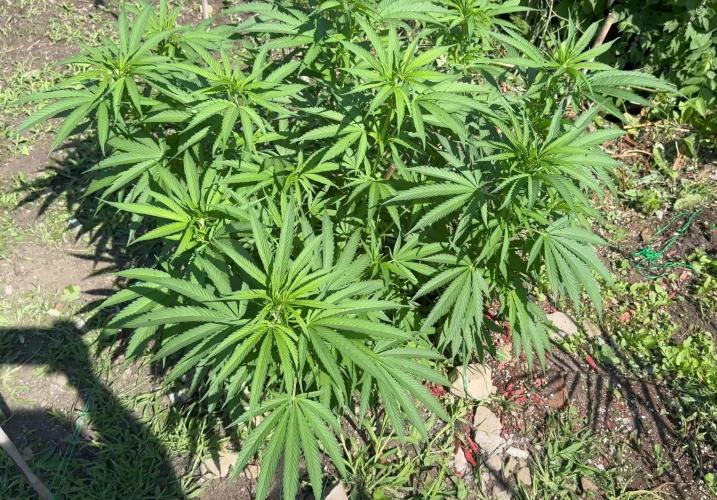

@THcHunteR23
Follow
Elle pousse bien toujours une belle vigueur avec les variétés Go Fast de Kannabia!! 🧡🧡

Likes
48
Share
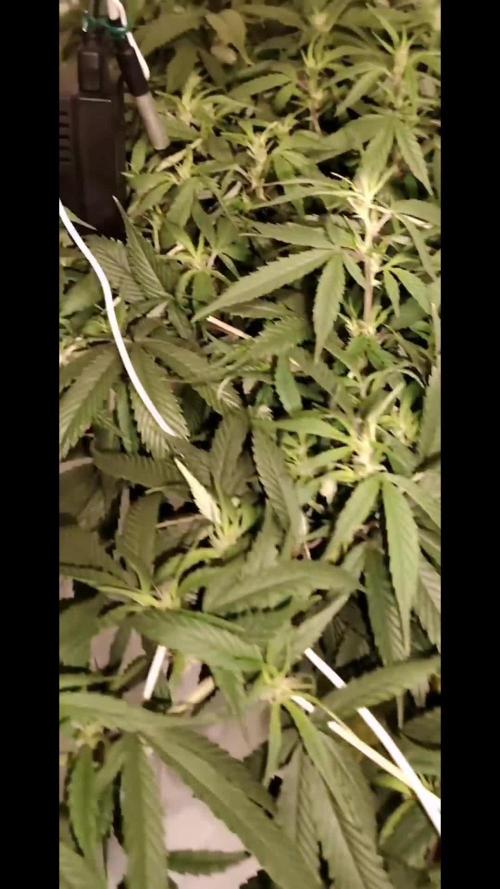

@CampaCavallo
Follow
5ª Settimana di Fioritura 💐💐💐💐💐
👁️ : buongiorno amici della CampaCavallo 💚, oggi vediamo la bella sticky broccoli 💧🥦 intenta ad occupare tutti gli spazi della rete. E devo dire che ci sta riuscendo proprio bene. Cosa ne dite?
⛽ : leviamo il solito succo preparato con una base ph Perfect di Advanced Nutrients, Big Bud e Bud Candy... Più aggiungiamo Il Tocco Magico di Green Sensation gentilmente 💚💜 offerto da plagron

Likes
17
Share


@Wizard555
Follow
Bruce Banner by Ganja Farmer Seeds Update 🌿
As we step into the 9th week of flowering, our grow is hitting its stride, and the progress is simply fantastic! Our plants are flourishing, but their vigorous growth has presented us with a delightful challenge. The weight of the burgeoning buds has caused some gentle bending in the branches, prompting us to provide additional support to maintain their upright posture.
The buds are unfurling with astonishing speed, almost racing ahead of the branches themselves. It's a thrilling race against time! However, it's a delightful conundrum to face when the end result promises to be such exquisite, sugar-coated buds.
A significant portion of our success can be attributed to the remarkable contributions of Xpert Nutrients. Their fertilizer has played a pivotal role in nurturing our plants to such magnificent heights. The reason we hold this fertilizer in such high regard is its exceptional quality and effectiveness. Not only does it provide the essential nutrients for robust growth, but it also enhances bud development, resulting in larger, denser, and more resinous flowers.
The leaves boast a rich, dark green hue, radiating with health and vitality. Bruce Banner is indeed living up to its lofty reputation, and we eagerly anticipate witnessing its continued evolution in the weeks ahead. Stay tuned for further updates on our journey!

Likes
25
Share


@Dingle_Dangle
Follow
19/05/2022 - Day 0 - First day of the 1st week.
The journey begins. Baby alive! 😍
Wish me good luck and let's hope in sunny hot days 🤞☀️
- DD

Likes
50
Share


@Blabina
Follow
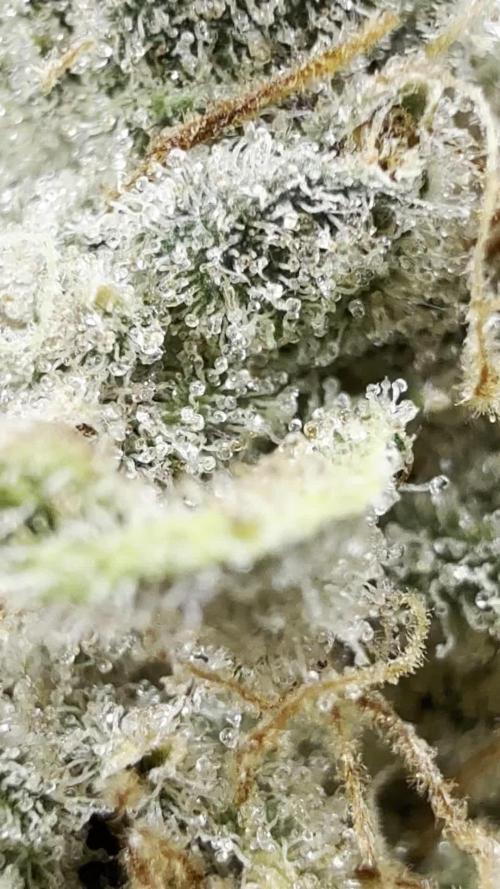
5th of november 2021 / DAY 30 👉 The new p.h. seems effectiv, uploaded x18 time laps
👉 👽Calmag 1 ml/2L + 👽 Bio-Heaven 1 ml/2L 👽Bio-Grow 1 ml/2L /// 😇2 L. p.h. 5.8 EC : 0.7 degree 24.8° 👉 Run-off for QuickGreen is : EC 0.7, ph 7.6 20.4° QuickPink is : EC 0.6 ph 7.8 20.2° QuickBlue is : EC 0.5 ph 7.6 20.2°
😥I give up, p.h is increasing. I don't know what to do, but to me they are dead. I will keep doing what I do, but I don't know how to fix this p.h issue. If I have to give them 6 litters per plant with a ph 3 to try to reach a 5.8 p.h. again.😥
6th of november 2021 / DAY 31 👉 1L per plant : Water + ph down : 3.ph. run-off : 6.0-6.1 +1L per plant : 👽Calmag 1 ml/3L + 👽 Bio-Heaven 2 ml/3L 👽Bio-Grow 3 ml/3L
/// 😇3 L. p.h. 5.8 EC : 1.0 degree 24.8° 👉 Run-off about 6.0 per plant.
7th of november 2021 / DAY 32 👉 Upload photos, checking them. I see some greens, I don't want to give up really, I will see if I will have dwarves again... They are small and sick
8th of november 2021 / DAY 33 👉 I took them down to don't see them suffer more. A bit the hart broken.
End of diary... It was an experience.

Likes
49
Share


@masterofsmeagol
Follow
IVE MADE MORE VIDEOS BUT THEY JUST DON'T SEEM TO UPLOAD AND IT'S FAR TO SLOW TO DO IT FROM HOME
6/27 Made last week a five day week to get back on track. It's still overcast and rainy. It's not raining a lot bit it's consistent. Despite the weather the plants are doing phenomenal. I'll update later. It's 1pm. It's been raining consistently since 11. Just a sprinkle but it's steady. I'm going to begun uploading the weeks weather on my diary. I may start a new diary for the plants I light depped as they are flowering pretty good. Rain stopped and it's just overcast for now. I looked at some videos and did a comparison of videos one week ago and videos today and HOLY SHIT! WHAT A DIFFERENCE. Especially the light depped 10th planet. Well everything but that was the most significant difference. I'm astonished at the health and growth despite the crummy weather. Continued to rain. Just got harder. Plants are taking it but it's flooding underneath the pallets a little but it will be fine. The light dep however has me concerned. The 10th planet is looking spectacular. The bigger purple punch I'd looking good too. The smaller one though looks to have a pollen sack coming off one of the branches. Considering its not on the otherside I assume it's not just a swollen calyx. I don't mind chucking it especially if that means I don't hurt my other girls so I want to make sure. I sent videos to a few other growers and I'll add a question on here. Those three plants have been isolated from the rest for a few days due to rain. I have the suspect isolated alone until I can confirm. It sucks cause the light Depp was going good and the6ve all got little flowers.
6/28 Well that fucking sucks. ALL THREE plants I tried to light depp hermed on me. I could see male flowers. Luckily I had been keeping a really good eye on them and it was preflowers mostly. At least I caught it. One or two stamines on each plant. Would've been really easy to miss. Only one had STARTED to elongate into a stem so I think I caught it early enough. Plus since all this rain they've been kept in a different location then my big girls. Glad I did that now. Boy the roots looked good on those plants. I just grabbed the stalk and lifted and it came right out of the pot. I held it there admiring it for a minute. This sucks. At least the real plants are doing good. As far as I know. No male preflowers that's for sure. I've got some feedback from other growers and the videos are a little blurry but I had found a light leak and I'm certain these plants hermed. I know I could've tried to save them but I didn't want to risk it. I compared what I was seeing with Google photos and other websites. Aside from the larger ball with its stem, there were also several little bumps besides developed calyxes that were weaving into little buds. Trust me that I wouldn't cut down my plants if I wasn't 110% sure. I might've been able to "save them" but to me it's just not worth the risk.
6/29 I was second guessing myself pretty hard last night due to some responses I got on my light dep and messages I got from other growets. Made my anxiety horrible but I looked on several video's I'd taken again and I know what I saw. I felt better after that. This was after I researched and waited THREE days until I saw the ball on the stem and the groupings of small nubs under a fresh yellow flower. These plants were flowering good and it sucks to lose them. One MAY have been ok but one was a runt and had all the characteristics of a true hermaphrodite. They were only in 3's and I couldn't risk my harvest for an experiment. Still sucks. Oh well. Sun is starting to come out. Plants seem to be doing fantastic. I have one spot on a leaf that looks like a pillar munched on a leaf so I'll probably get the bt out soon as I have a dry day that I can apply it. I'll have to check the weather. I need to start a nute regiment but the plants aren't telling me they need anything yet.
6/30 I fucked up dates or dodnt do it yesterday or it didnt save right so I'm leaving this blank today is the 1st.
7/1 I have still only watered s couple times and I haven't had to feed. This week I'm going to start nutes. I had some external ersonal situations that have kept me from my plants. I'm hoping to get back on track. I noticed some pillar damage so I'll need to dig out the BT. This morning I saw this giant ground hog by my cage. Hated too but had to get rid of him. Of course some of the blowback landed on the leaves of one of my plants. I tried to clean it as best I could. Better than that fat bastard eating everything in one night. I broke a branch either falling around it or bulling through when I was pissed or I LST it the wrong way and the wind broke it against the tomato cage. Nice big branch too on top. I tried to fix it with duct tape but we'll see. The plants need me to spend sometime with them. I need to clean them up. Apply bt and give them their first feeding. I'll update as I go. They don't seem nutrient deficient by any means but I don't think it would hurt to start the nutes.
7/2 Bags were lighter today and if it wasn't going to rain tonight and tomorrow I'd he watering. Plants look great so soil isn't depleted yet I guess. They're growing rather rapidly. The branch I broke didnt make it. Had an idea it wouldn't but I had to try. I waited on the BT on account of the rain. I may go back over and change my mind and water with silica or a mild nute solution or maybe apply the BT. Depends what time I get back. I have some work I need to do over there. There's a few that I need to clean up the bottoms on. Pest damage is minor and limited to one or two plants and a leaf or two only.
7/3 More rain. It was supposed to rain this morning too but it didn't. We got .33in yesterday and through last night so I thought that was ok. Looking back on my previous diaries I'm doing things significantly different than before. I had used a lot more nutes earlier on. This morning I mixed two gallons of 2tsp of big bloom and fed it to the 9 plants in smart pots leaving the container plants as they have much more water in them. Looking back at other diaries I previously had, WPM and septoria by this time not to mention a shit ton of other pests I was fighting by this time. Since I poisoned where the cagexwas multiple times and sprayed the cage before it was moved I luckily don't have that problem yet knock on wood. I'm planning to apply BT tonight to deal with the moth larvae if there are any. I'm looking at plants around this area and im seeimg SOME septoria and pm on raspberry bushes and burdock so it is around. I made sure my cage is not by any other vegetation this year and is sitting on asphalt with the bags on raised pallets. Good thing I did or I guarantee they'd be flooded by now. I've been seeing multiple complaints from maine growers online (AND THEY HAVE HEALTHY PLANTS!) saying this is the worst year ever. Maybe they need a dose of fusarium oxysporum to keep them humble. This is maine. If you don't like the weather just wait five minutes. Meanwhile I'll be doing my sun dance hoping for sun. "Hard to grow cannabis with no sunlight" said another grower on my forum.


Likes
7
Share


@Ninjabuds
Follow
The OG kush is coming along great the leaves got a little burnt but the buds are super dense and have a black hue coming in to them they look so awesome



Likes
23
Share


@Piorkeed
Follow
Week 7 (27/04 - 03/05)
D43: -
D44: -
D45: added 0.5 ml of Calmag, 1 ml of Bio-grow and 2 ml of Bio-bloom to 1 liter of tap water @ pH 6.3
D46: -
D47: -
D48: -
D49: added 0.5 ml of Calmag, 1 ml of Bio-grow and 2 ml of Bio-bloom to 1 liter of tap water @ pH 6.1

