


Likes
Comments
Share


@frenchincaliweed
Follow
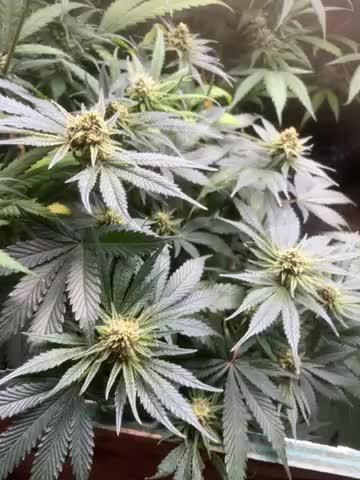
Oh so this is my first entry on GrowDiaries.
This Red Dragon started from seed I believe sometime early April.
It's been in a 2 gallon pot for a good month and now is ready to be transplanted in a 15 gallon cloth pot. I'm probably gonna do that today, with some fiming.
I have a mix ready, made of 1/5 dirt,1/5 chicken manure, 2/5 peat moss, 2/5 perlite, and roughly a tablespoon of lime and sulfur, as well as bone meal and stove ashes.
I'm a newbie experimenting so feel free to tell me if I'm doing it all wrong :D



Likes
15
Share


@Venabr96
Follow
Quaze chegando ao seu fim. Tem sido uma experiencia unica estar me dedicando a essas meninas.
Plantas revigorantes e com otimo crescimento. Cabeças bem duras e com bastante polem.

Likes
4
Share

@MistaOC
Follow
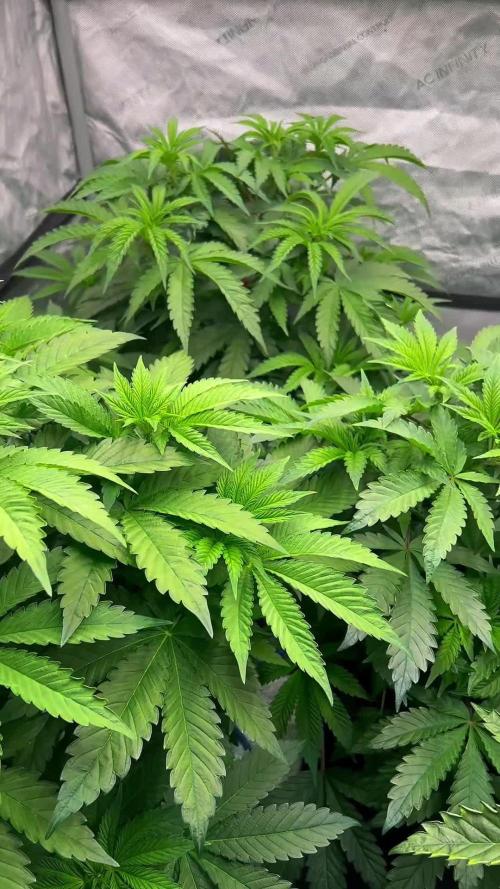
10.04. D40
End of Vegetative Phase
The plants have clearly entered a strong growth phase over the past few days, with a noticeable increase in leaf mass and overall vigor.
The Autopot system is now running consistently and supporting steady development. Root establishment seems complete, and the plants are responding well.
Performed a light defoliation to improve airflow and maintain a clean structure within the canopy.
Overall, the plants are healthy, stable, and well-shaped going into the next phase.
Flip to 12/12 is scheduled for tomorrow.

Likes
30
Share


@Drgreenthumb627
Follow
white runtz seems to be holding its own in the center of the tent, really impressed with how well it has responded in flower after such a difficult veg phase

Likes
10
Share


@BudBeat
Follow
Die Deadryder hat früh die Blütephase eingeleitet! Ob so gewollt? Es kommt mir so vor, dass sie aufgrund der kurzen vegetativen Phase nicht wirklich Blattmasse aufbauen konnte. Schaut eher aus, wie ein kahler Tannenbaum 😜. Blüten entwickeln sich auch schon rasch und werden sogar schon ein wenig lila. Na da bin ich aber echt gespannt!

Likes
9
Share


@OGbros
Follow
ITA: come mi avevo pensato le piante stanno crescendo a vista d'occhio, addirittura di diversi cm al giorno (basti guardare come erano solamente due giorni fa). Fortunatamente non dovrei incappare in problemi legati all'eccessiva altezza in quanto manca più di mezzo metro (forse quasi uno) per raggiungere il soffitto della box. Tutte le piante non mostrano segni di stress o carenze, anche se la temperatura della soluzione nelle ultime settimane è cresciuta: sono partito con la soluzione a 20C e ora siamo a circa 25C. Purtroppo la watermelon zkittles è rimasta più piccolina rispetto alle altre 3. Questo può essere stato causato principalmente per due motivi (dal mio punto di vista che non è quello di Kyle Kushman) 1. taglio delle radici 2. eccessivo stress dovuto a un numero di topping troppo elevato con conseguente eccessiva ramificazione di rami troppo sottili per sostenere il peso di una cima densa e compatta. In ogni caso cercherò di salvare il salvabile.
Ho eseguito una defogliazione a tutte e 4 le piante in quanto nella settimana e mezza passata la weed ha rimesso tutte le foglie. Ho potato anche le ramificazioni più basse che non prendevano abbastanza luce, almeno fino a dove sono riuscito ad arrivare dato che il mio growbox si apre solamente da un lato e arrivare dal lato opposto è praticamente impossibile almeno che tu non abbia le braccia lunghe 6 metri. Piano piano si stanno iniziando a formare le cime, vedremo come proseguirà la crescita. Si continua a spingere!!😋
ENG: as I thought the plants are growing visibly, even several cm a day (just look at how they were just two days ago). Fortunately, I should not run into problems related to excessive height as there is more than half a meter (perhaps almost one) to reach the ceiling of the box. All the plants show no signs of stress or deficiency, even if the solution temperature has risen in the last few weeks: I started with the solution at 20C and now we are at around 25C. Unfortunately the watermelon zkittles remained smaller than the others 3. This may have been caused mainly for two reasons (from my point of view which is not Kyle Kushman's) 1. root cutting 2. excessive stress due to a number of topping too high resulting in excessive branching of too thin branches to support the weight of a dense and compact bud. In any case I will try to save what can be saved.
I performed a defoliation on all 4 plants because in the past week and a half the weed has put back all the leaves. I also pruned the lower branches that didn't get enough light, at least as far as I managed to get as my growbox only opens on one side and getting to the other side is practically impossible unless you have 6 meters long arms. . Little by little the tops are starting to form, we will see how the growth continues. Keep pushing !! 😋

Likes
9
Share


@HUMO_Cultiva
Follow
Update of Goofiez 2 !! It’s incredible this strain is so strong and fast grow !! Stay tu ed

Likes
20
Share

@MrWeeedWorld
Follow
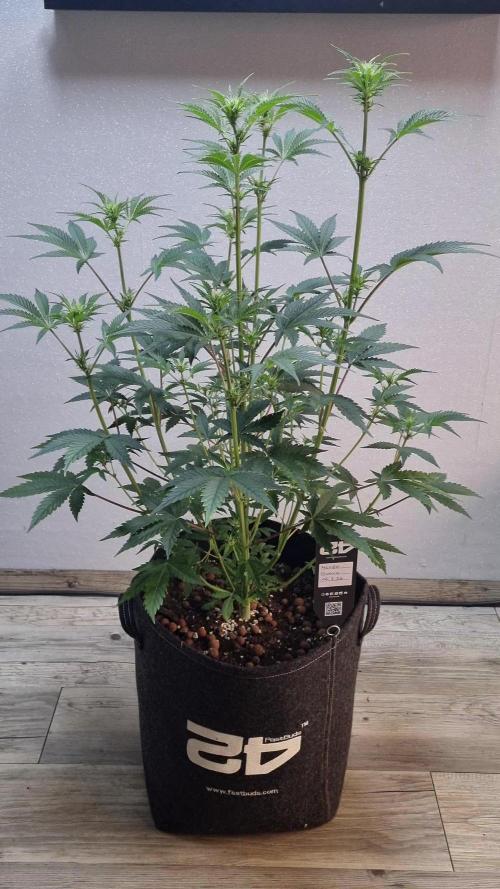
Mendo Guava Automatic – Woche 6 (Blüte Woche 1)
Meine Mendo Guava Automatic befindet sich aktuell in Woche 6 und ist nun offiziell in die erste Blütewoche gestartet. Man merkt deutlich, wie sie ihren Fokus vom Wachstum auf die Blütenbildung verlagert.
Die ersten Buds beginnen sich zu bilden, und die Struktur der Pflanze entwickelt sich genau in die richtige Richtung. Sie wirkt sehr stabil, gesund und gut ausbalanciert, was eine perfekte Grundlage für die kommende Blütephase darstellt.
Ihr Gesamtbild ist kräftig und vital, und sie zeigt eine sehr gute Reaktion auf die aktuellen Bedingungen. Alles deutet darauf hin, dass sie sich optimal auf die Blüte vorbereitet und in den nächsten Wochen richtig durchstarten wird.
Ich bin gespannt, wie sie sich weiterentwickelt – der Start in die Blüte sieht auf jeden Fall vielversprechend aus.
---------------------------------------------------------------------------------------------------------------------------------------------------------------------
Mendo Guava Automatic – Week 6 (Flower Week 1)
My Mendo Guava Automatic is now in week 6 and has officially entered the first week of flowering. You can clearly see the shift as she starts focusing more on bud production rather than vegetative growth.
The first buds are forming, and her overall structure is developing in exactly the right direction. She appears very stable, healthy, and well-balanced, providing a perfect foundation for the flowering phase.
Her overall appearance is strong and vigorous, and she is responding very well to the current conditions. Everything indicates that she is fully preparing for flowering and will really take off in the coming weeks.
I’m excited to see how she progresses — the start of flowering looks very promising so far.

Likes
6
Share

@mc_plantz
Follow
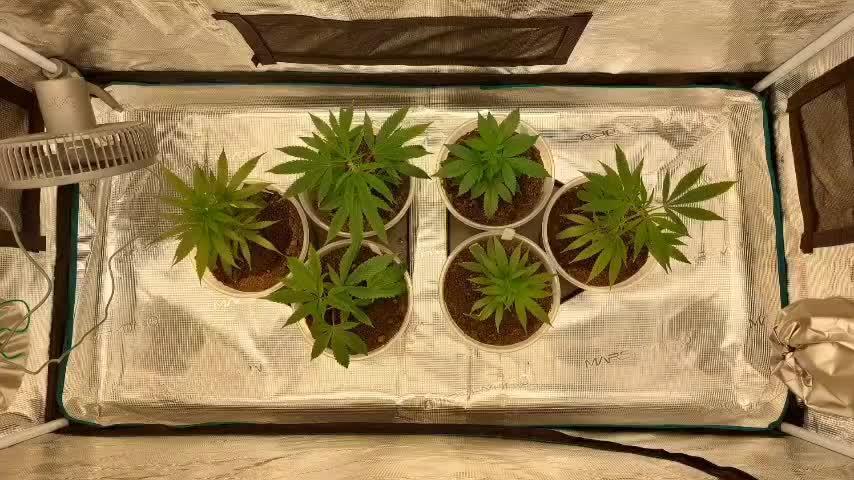
Zum Start der 2. Woche wurde getoppt.
Mal schauen, wie die Damen es verkraften.
Läuft es wie geplant, wird nächstes Wochenende umgetopft.
Likes
19
Share


@Comfrey
Follow
Tropicana flowers 🌞☀️🌤️🌦️🌧️
Plant is 15 cm high because of low stress training. The length is 31 cm.
Day 36:
Sun is shining, 15-23 degrees, high humidity. Tropicana gets two liters of pure rainwater. Spend the day in my veggie garden working. In the evening I brought some 🐞for Tropicana because I spottet a few lice. My mood changes drastically as I find spider mites eggs, first and second stadium. Don‘t overthink that and decide to defoliate the plant immediately.
I prepare a tee out of the leaves which brings fast relaxation. My mood is much better now.
Day 37
In the morning with better light I find more spider mites and decide to wash the plant with rainwater. Can‘t find after any more of these little killer dwarfs. I decide to bring more beetles and check the leafs more often. Temperature is felling under 20 degrees, it‘s raining and the humidity is 87%.
Day 38
In the early morning I couldn‘t find any mites on Tropicana. Got to continue controlling this in the next weeks regular. I‘m sure they are still there somewhere hidden in a dark spot.
🌦️ 13 - 21 degrees and humidity is around 60-70%.
Day 39
🌦️🌧️ Very rainy day. Just let Tropicana enjoy life and tie down the top one more time. 🐞 stay since some days. One on every plant. I think the mites are a result of their start inside and no hygiene at all. Have the same with my peppers some years.
14 - 21 degrees, humidity around 84%
Day 40
🌧️☁️🌤️☀️15 degrees, humidity 83% We listen to Roots Reggae, Tropicana is happy and quite busy with producing new roots, I guess.
Don‘t understand when to stop low stress training. I think it’s enough now. She needs a rest.
Day 41
🌧️⛈️🌧️🌧️ 15 - 19 degrees, humidity up to 89%
We had rainfall today around 65 liters of water. I collected enough of it for the next weeks.
Day 42
☀️ 6 - 23 degrees. Humidity is falling.
Tropicana enjoys the morning sun while she drinks and drinks and drinks…. Coffee. 😅


Likes
10
Share


@Shefman93
Follow
After transplanting clone during week 1, growth has been amazing through the end of week 2. First round of LST applied mid week of week 2.
Likes
8
Share


@Maggie_de_Block
Follow
Just started flower, put the light a bit higher cause she was quite bushy and wanted her to stretch a little more
Fed her with the veg nutes one last time
She's looking absolutely ready
Defoliated and LST'ed again, should have done this in veg but she hadnt stretched enough yet

Likes
2
Share


@KeemBboomin
Follow
This was the week I decided to take a look at my trichomes with about 2-3 weeks left why not see what’s in store for me. And what I saw was some pretty milky stuff with surprisingly some amber to me that just means I’m going to get some good thc levels I’m shooting for at least 22-25% thc wish me luck we are almost there final stretch
Likes
10
Share


@Autoflowergirls06
Follow
Think I put a tad bit too much mega crop was feeding every watering.


Likes
2
Share


@Franco123
Follow
the plant and at the end of this week only water and ice 4 days and then 3 without water and then I cut it and leave it to dr

Likes
27
Share

@ThatsmyGrow
Follow
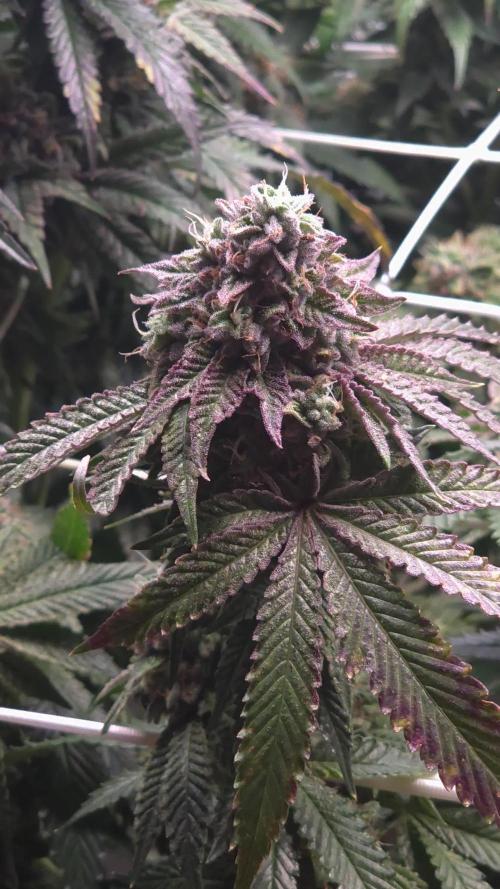
The final week is here, and the plants are now ready for harvest.
I flushed the plants and started preparing everything for the harvest. Looking back at the whole grow, I’m really happy with how everything developed.
The SCROG turned out beautifully, and the flowers have become absolutely stunning. They are dense, covered in frost and have developed an incredible aroma.
It’s always a great feeling to reach this point after watching the plants grow week after week. I’m really proud of how this run turned out and I can’t wait to see the final result after harvest and drying.
Now it’s time for the last step. Harvest time is coming!