


Likes
Comments
Share


@Eldorado_ed
Follow
Really struggled with temps this week it’s has been way to hot managed to get down a little but tbh it was a hard week never thought I would get this in Scotland with the majority of time being wet windy and cold. Tried everything to get temps down but the heat was everywhere😩 sooooooo what do ye all think ready or not

Likes
34
Share


@Basementganja
Follow
Stretched vigorously once she started to transition to flower. Developed potency early in flower!
She was LST'd weekly, starting week 2. She was also gently lolipopped a few times, to maintain growth towards 5-6 nodes only.


Processing
Likes
18
Share


@Barcelona_Farmers710
Follow
Esta la pasaremos junto las 2 Runtz x Strawnana y la tiger bomb al armário grande, cuando acabemos el seguimientos de Royal Queen Seeds! Entrenaremos el Scrog por primera vez.🤙🏻

Likes
5
Share


@ChiloteAnonimo
Follow
La pandemia kush es la más avanzada y se le empezará a regar solo con agua al igual q la Trimosa x mimosa_1
La Trimosa x mimosa tiene un problema con absorción de agua, pero ya está siendo solucionado

Likes
14
Share


@fivegrow
Follow
This was my first cycle in tent.
The Autopot System is amazing ang brings autonomy.
I used fert Plantprod, calcium nitrate, magnesium sulfate and MKP.
PH around 6.0 and solution fert in tank 1200 PPM .
This strain is fantastic.
It withstood the intense heat of the southern hemisphere's tropical climate.
It was easy to prune and defoliate to control the size.
The smell is of tangerine and flowers produces a lot of resin.
I am very satisfied with this harvest!
Thank you Sweet-seeds!!

Likes
46
Share


@GanjaReaper
Follow
Day 10:
They have been growing nicely. Beautifull green leafs, no deficiencies or stress.
I did some Defoliation and I'm planning to top some plants but not all of them since they make nice main colas as well.
Also nice roots so far, will let those grow for another 1-3 days before repotting them into 7L pots.
While doing that I will add some new clay for beneeth the pots to have a good run-off. I will add some mycorizza as well to improve the roots and
I will water them again with lots of Regulator(anti-stress) and Rhyzotonic( root stimilator).
Some days after that, they are ready to get pushed into flowering. Sativas like to grow twice and sometimes even more in size.
So the size which they are at the end of this week will be enough.
So at the end of this week you will see them being in 7L pots and in a bigger grow space under lots of lamps.
There are like 3-5 plants not growing nicely. Might have to kill them. I'm not going to waste time,energy,nutrients on those if they don't grow in size in a couple of days.
So might end up with just 235 plants.
Il update again at the end of this week.
Day 14:
I almost finished the rest of the grow room. I still need to adjust and replace the lamps some more and other things.
Did many defoliation below the plants. Thoose branches are never going to preduce nice and thick buds anyways. Such a waste of energy and nutrients.
Because of the removing of branches and leafs, They get a better airflow and better exposure of light as well.
So for now they look a little bit ugly haha and not so bushy anymore, but they will grow into fine looking ladies.
I kept 5 or 7 branches each plant and some bigger plants I even topped because I don't want them to stretch alot.
Another reason is that I want bigger stems. If other plants that didnt get topped, not improving stems I can still top them until the end of week 1 of flowering.
I'm putting them into flowering, by putting the lightschedule to 12hours of light and darkness. It will take a few days before they start preflowering.
The first buds will be seen in like 10-14 days.
Untill next week!

Likes
17
Share


@CanadianFillmore
Follow
Welcome back growfessors to another episode of growfessor theatre! 👽🌳💚
Week 8F begins for the ladies of the 4x8, last round of feeding before the flush.
LSD has gone crazy over the last week, insane bulk-up in her buds, from top to bottom, in by the stock and out to the tips, she's just bulky, dense, sticky, frosty and incredible! By far, the best looking results from any of my LSD grows.
Green Crack also looks incredible and the rest of the ladies, while doing awesome, will be their final grow in my garden.
Thanks for stopping by growfessors, tune in next week for another episode! 👽🌳💚


Likes
7
Share


@Ieiogrow94
Follow
Eccoci qui…
In questa settimana attendiamo la maturazione degli altri cloni che dovrebbe essere molto vicina!!!
Grazie a tutti per il supporto 💚🔥🌲
Likes
2
Share


@mojo1985
Follow
wahnsinnig schnell in der blüte.... und auch wachstum richtig schnell... wollen wir mal sehen was da passiert... bis jetzt unfassbar gut... 🙏💪👍👍


Likes
6
Share

@YourBro
Follow
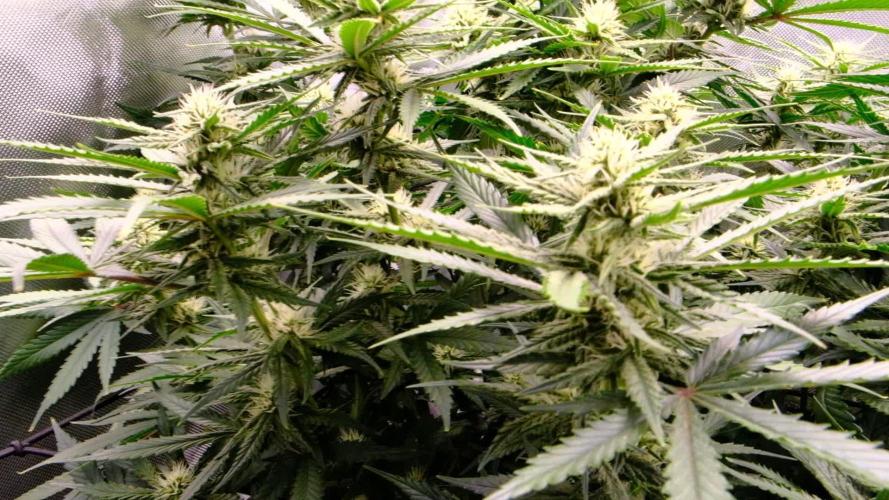
The Zkittzz has been blooming actively this week 😎💪💪 The buds have grown a lot this week and continue to grow very actively 💐
A sour-fermenting smell has appeared 🤢😌😬😀, characteristic of this sort ☘️ - Trichomes have begun to actively appear on sugar leaves and buds 👀 I increased ventilation capacity to 💯%
I had to increase the volume of the watering cup from 2 to 3 - 3.5 - 4 liters on this week 💦🙈🙈 because the baby began to eat x2 more.. 😛🍔
Likes
3
Share
@Smev1337
Follow
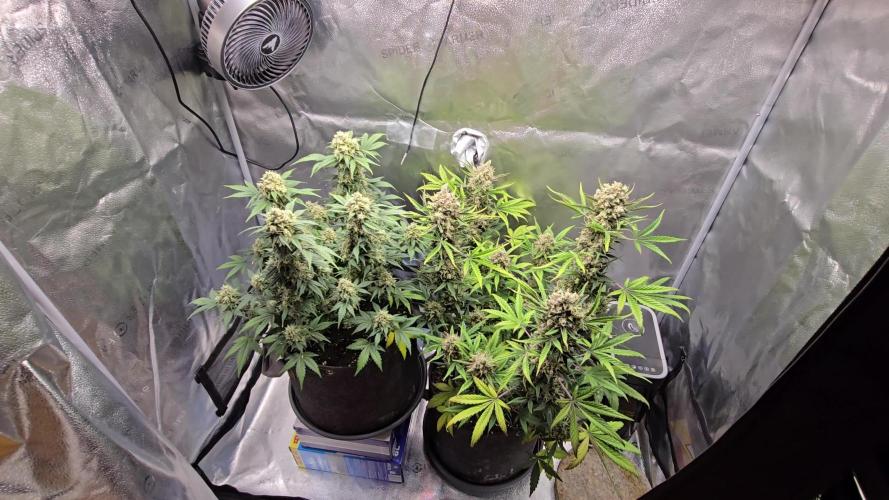
hey all! so this week starts off kinda hot haha because the temperatures outside are 35°C and my boxes are trying the best not to go above 26°C and its still hot tho and the whole room is getting also hot which is a nightmare haha but anyways we are in late stage flowering and it should not bother us at all! 😎 both ladys are going good in bud size, there is a little bit of foxtailing because of the heat but that is also fine. happy growing all! 😎💚✌️
Likes
73
Share


@guerilla
Follow
Stretching has stopped.. now i think they will start to get fat.
Smell is so sweet now!
💚

Likes
2
Share


@slightlystonedstoopid42
Follow
this week im starting the pre harvest nutes for the white widow she's about to be cut in about 2 weeks the northern lights is doing good i jad to put them under 12 hrs of light cause I have photos flowering but still coming along good I get my veg tent thos week so it will be better


Likes
55
Share


@Ultraviolet
Follow
2nd net is up. Early bud formations are promising. holding up to the extremes pretty well, some leaves taking minor damage, but overall, she is holding up, gave her 1 night at 50F see how she would react, stressful. Not advised as it messes with her metabolism, but I want to see if it triggers any anthocyanin response. Love to see her purp up but no signs yet. Remember, For every molecule of glucose produced during photosynthesis, a plant needs to split six molecules of water. This process provides the hydrogen needed for synthesizing glucose and other organic compounds, while oxygen is released as a byproduct.
Homework.
If Rubisco activity is impaired and it cannot properly function or regenerate its substrate, the plant's leaves are likely to turn a pale green or lime green, a condition known as chlorosis. Essentially, Rubisco activity is highly regulated and susceptible to various environmental and metabolic factors that can cause it to become inhibited, leading to an apparent failure in RuBP regeneration due to a lack of consumption.
Rubisco regeneration is intrinsically linked to nitrogen supply because Rubisco is a major sink for nitrogen in plants, typically accounting for 15% to over 25% of total leaf nitrogen. The regeneration phase itself consumes nitrogen through the synthesis of the Rubisco enzyme and associated proteins (like Rubisco activase), and overall nitrogen status heavily influences the efficiency of RuBP regeneration. RuBisCO is a very large enzyme that constitutes a significant proportion (up to 50%) of leaf soluble protein and requires large investments in nitrogen. Insufficient nitrogen supply limits the plant's ability to produce adequate amounts of RuBisCO, thereby limiting the overall capacity for photosynthesis and carbon fixation. Maintaining the optimal, slightly alkaline pH is crucial for the proper function and regeneration of Rubisco. Deviations in either direction (too high or too low) disrupt the enzyme's structure, activation state, and interaction with its substrates, leading to decreased activity and impaired RuBP regeneration. (Lime/yellowing)
Structural Component: Nitrogen is an essential building block for all proteins, and the sheer abundance of the Rubisco protein makes it the single largest storage of nitrogen in the leaf.
Synthesis and Activity: Adequate nitrogen supply is crucial for the synthesis and maintenance of sufficient Rubisco enzyme and Rubisco activase (Rca), the regulatory protein responsible for maintaining Rubisco's active state. Nitrogen deficiency leads to a decrease in the content and activity of both Rubisco and Rca, which in turn limits the maximum carboxylation rate, Vmax, and the rate of RuBP regeneration Jmax, thus reducing overall photosynthetic capacity.
Nitrogen Storage and Remobilization: Rubisco can act as a temporary nitrogen storage protein, which is degraded to remobilize nitrogen to other growing parts of the plant, especially under conditions of nitrogen deficiency or senescence.
Nitrogen Use Efficiency (NUE): The allocation of nitrogen to Rubisco is a key determinant of a plant's photosynthetic nitrogen use efficiency (PNUE). In high-nitrogen conditions, plants may accumulate a surplus of Rubisco, which may not be fully activated, leading to a lower PNUE. Optimizing the amount and activity of Rubisco relative to nitrogen availability is a target for improving crop NUE.
Photorespiration and Nitrogen Metabolism: Nitrogen metabolism is also linked to the photorespiration pathway (which competes with carboxylation at the Rubisco active site), particularly in the reassimilation of ammonia released during the process.
To increase RuBisCO regeneration, which refers to the process of forming the CO2 acceptor molecule Ribulose-1,5-bisphosphate (RuBP) during photosynthesis, the primary methods involve optimizing the levels and activity of Rubisco activase (Rca) and enhancing the performance of other Calvin-Benson-Bassham (CBB) cycle enzymes.
Biochemical and Environmental Approaches:
Optimize Rubisco Activase (Rca) activity: Rca is a crucial chaperone protein that removes inhibitory sugar phosphates, such as CA1P (2-carboxy-D-arabinitol 1-phosphate), from the Rubisco active site, thus maintaining its catalytic competence.
•Ensure optimal light conditions: Rca is light-activated via the chloroplast's redox status. Adequate light intensity ensures Rca can effectively maintain Rubisco in its active, carbamylated state.
•Maintain optimal temperature: Rca is highly temperature-sensitive and can become unstable at moderately high temperatures (e.g., above 35°C/95F° in many C3 plants), which decreases its ability to activate Rubisco. Maintaining temperatures within the optimal range for a specific plant species is important.
•Optimize Mg2+ concentration: Mg2+ is a key cofactor for both Rubisco carbamylation and Rca activity. In the light, Mg2+ concentration in the chloroplast stroma increases, promoting activation.
•Manage ATP/ADP ratio: Rca activity depends on ATP hydrolysis and is inhibited by ADP. Conditions that maintain a high ATP/ADP ratio in the chloroplast stroma favor Rca activity.
Enhance Calvin-Benson-Bassham (CBB) cycle enzyme activity: The overall rate of RuBP regeneration can be limited by other enzymes in the cycle.
•Increase SBPase activity: Sedoheptulose-1,7-bisphosphatase (SBPase) is a key regulatory enzyme in the regeneration pathway, and increasing its activity can enhance RuBP regeneration and overall photosynthesis.
•Optimize other enzymes: Overexpression of other CBB cycle enzymes such as fructose-1,6-bisphosphate aldolase (FBA) and triose phosphate isomerase (TPI) can also help to balance the metabolic flux and improve RuBP regeneration capacity.
Magnesium ions, Mg2+, are specifically required for Rubisco activation because the cation plays a critical structural and chemical role in forming the active site: A specific lysine residue in the active site must be carbamylated by a CO2 molecule to activate the enzyme. The resulting negatively charged carbamyl group then facilitates the binding of the positively charged Mg2+ion. While other divalent metal ions like Mn2+ can bind to Rubisco, they alter the enzyme's substrate specificity and lead to dramatically lower activity or a higher rate of the non-productive oxygenation reaction compared to Mg2+, making them biologically unfavorable in the context of efficient carbon fixation. The concentration of Mg2+ in the chloroplast stroma naturally increases in the light due to ion potential balancing during ATP synthesis, providing a physiological mechanism to ensure the enzyme is activated when photosynthesis is possible. At the center of the porphyrin ring, nestled within its nitrogen atoms, is a Magnesium ion (Mg2+). This magnesium ion is crucial for the function of chlorophyll, and without it, the pigment cannot effectively capture and transfer light energy.
Mg acts as a cofactor: Mg2+ binds to Rubisco after an activator CO2 molecule, forming a catalytically competent complex (Enzyme-CO2-Mg2+). High light + CO2) increases demand: Under high light (60 DLI is a very high intensity, potentially saturating) and high CO2, the plant's capacity for photosynthesis is high, and thus the demand for activated Rubisco and the necessary Mg2+ cofactor increases. Mg deficiency becomes limiting: If Mg2+ is deficient under these conditions, the higher levels of Rubisco and Rubisco activase produced cannot be fully activated, leading to lower photosynthetic rates and potential photo-oxidative damage.
Optimal range: Studies show that adequate Mg2+ application can enhance Rubisco activation and stabilize net photosynthetic rates under stress conditions, but the required concentration is specific to the experimental setup.
Monitoring is key: The most effective approach in a controlled environment is to monitor the plant's physiological responses e.g., leaf Mg2+ concentration, photosynthetic rate, Rubisco activation state, and adjust the nutrient solution/fertilizer to maintain adequate levels, rather than supplementing a fixed "extra" amount.
In practice, this means ensuring that Mg2+ is not a limiting factor in the plant's standard nutrient solution when pushing the limits with high light and CO2.
Applying Mg2+ through foliar spray is beneficial to Rubisco regeneration, particularly in alleviating the negative effects of magnesium (Mg) deficiency and high-temperature stress (HTS). While Mg can be leached from soil, within the plant it is considered a mobile nutrient, particularly in the phloem. Foliar-applied Mg is quickly absorbed by the leaves and can be translocate to other plant parts, including new growth and sink organs.
Foliar application of: NATURES VERY OWN MgSO4 @ 15.0g L-1 in a spray bottle. For those high-intensity workouts when 1 meal a day is just not enough!
Foliar sprays are often recommended as a rapid rescue measure for existing deficiencies or as a supplement during critical growth stages, when demand for Mg is high. Application in the early morning or late evening can improve absorption and prevent leaf burn. The plant was getting a little limey yellow in the centre. Shortly thereafter, she was back in business, green mostly regenerated. The starting point [of creativity] is curiosity: pondering why the default exists in the first place. We’re driven to question defaults when we experience vuja de, the opposite of déjà vu. Déjà vu occurs when we encounter something new, but it feels as if we’ve seen it before. Vuja de is the reverse—we face something familiar, but we see it with a fresh perspective that enables us to gain new insights into old problems.
Confidence is evidence... nothing more. You are confident because you have driven 10,000 times, you are confident because you have spoken 10,000 times. People think confidence is a feeling, but it's not. If you want more confidence, then you need to create evidence, take more shots, collect more data, build more experiences, take more risks; fail, confidence doesn't come first; it is the reward you get for doing the work. no one else wants to do.
Likes
4
Share


@GERGrowDesigns
Follow
Welcome to Veg Week 4 of Zamnesia Kalini Asia
I'm excited to share my grow journey with you from my
Zamnesia Project . It's going to be an incredible ride, full of learning, growing, and connecting with fellow growers from all around the world!
For this Project , I’ve chosen the Feminized Photo Strain Kalini Asia :
Here’s what I’m working with:
• 🌱 Tent: 120x60x80
• 🧑🌾 Breeder Company: Zamnesia
• 💧 Humidity Range: 60
• ⏳ Flowering Time: 7-8weeks
• Strain Info: 22%THC
• 🌡️ Temperature: 26
• 🍵 Pot Size: 0.5l
• Nutrient Brand: Narcos
• ⚡ Lights : 600W x 2
I would truly appreciate every bit of feedback, help, questions, or discussions – and of course, your likes and interactions mean the world to me as I try to stand out in this exciting competition!
Let’s grow together – and don’t forget to stop by again to see the latest updates!
Happy growing!
Stay lifted and stay curious!
Peace & Buds!
Likes
7
Share


@Ninjabuds
Follow
Rainbow Saltz from lit farms is another winner. It has larger solid nugs too to bottom very round golf balls size nugs probably slightly larger than golf balls. Very uniform strong growth with soild stems that can easily hold its own without an any steaks or tying. The plant doesn’t have the strongest smell yet although it is a lot plant. So I do expect it to have good smell b4 all is said and done. It doesn’t have super dense tricombs quite yet. It seems to have smaller tricomb heads usually when they have small tricomb heads they end up just having a bunch of tricombs. I like how soild the plant is it has potential to breed with a super dank plant.

Likes
21
Share


@WildeWeed
Follow
This was the boss lady’s first grow. This was under a spiderfarmer sf1000 which did a amazing job. I’m really surprised with the light in a 2x2. It did wonderfully.
Now to the bubblegum. Once again fastbuds delivers for us with a plant that does exactly as they said it would. She didn’t top the plant or do any HST just from a time standpoint for the originals contest. This one could have actually went a little longer, however we have cloudy and amber trichomes already, and we flushed the last week. So with the contest ending today, might as well let her come down.
This was a great plant for a beginner like they said it was. Even without me standing on her shoulder, she could have grown this one. The density of these buds is down right surprising. Super dense and super sticky. She smells exactly like big league bubblegum chew. We can’t wait until this dries and cures. I’m sure it will be amazing. I’ll update this diaries as soon as it’s dry with the final weight. Thanks for looking!
Likes
24
Share


@MadeInGermany
Follow
Hey everyone 😃
The time has come , On flowering day 69 the harvest was carried out 😍.
After spending two days in the darkroom at 62% humidity, they were now harvested cleanly by hand 😃.
After harvesting, they were laid out on the net as usual, where they can now slowly dry again for about 7-10 days at 62%.
Then they come with 62% in jars for 2-4 weeks, and then the 58% boveda packs are put in 👍.
Of course, I will come to the phenotypes themselves in detail in the last update.
Until then, I wish you all the best, stay healthy 🙏🏻 and let it grow 🍀👋
You can buy this Strain at
https://www.amsterdamgenetics.com/product/kosher-tangie-kush/
You can buy this Nutrients at
https://greenbuzzliquids.com/
Type:
Kosher Tangie Kush
☝️🏼
Genetics:
Kosher Kush
X
Tangie
👍
Vega lamp:
2 x Todogrow Led
Quantum Board 100 W
💡
Bloom Lamp :
2 x Todogrow Led
Cxb 3590 COB 3500 K 205W
💡💡☝️🏼
Soil :
Canna Coco Professional +
☝️🏼
Fertilizer:
Green Buzz Liquids :
Organic Grow Liquid
Organic Bloom Liquid
Organic more PK
More Roots
Fast Buds
Humic Acid Plus
Growzyme Big Fruits
Clean Fruits
Cal / Mag
Organic Ph - Pulver
☝️🏼🌱
Water:
Osmosis water mixed with normal water (24 hours stale that the chlorine evaporates) to 0.2 - 0.4 EC. Add Cal / Mag 2 ml per l water every 2 waterings . Ph with Organic Ph - Pulver to 5.8 .
