


Likes
Comments
Share


Likes
10
Share


@Canadian
Follow
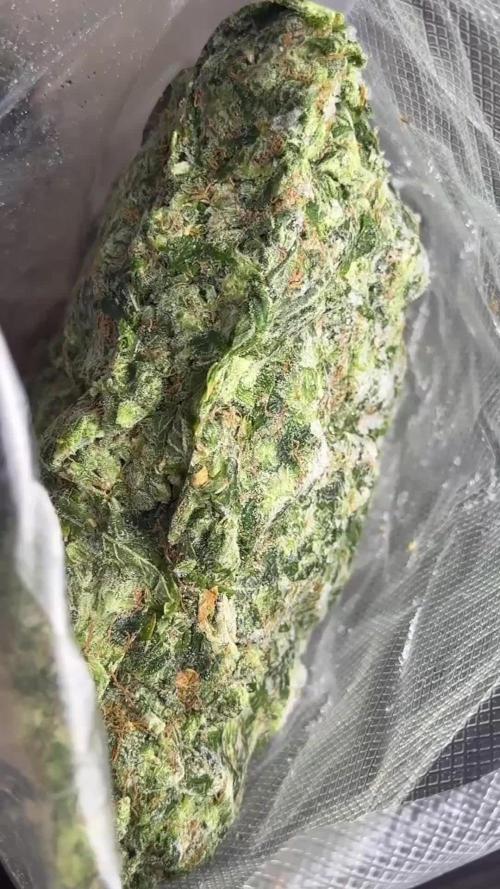
Today They have pop in my new room is completely ready for a New girls season I am going to use a rosin press for a large quantity off all the flowers That we produce And I will be reviewing that brand ones it arrive

Likes
10
Share

@DogDoctorOfficial
Follow
LSD Zamnesia Tripping 🙂 | Fresh Frozen, Ice Water & Temple Balls — Week 16 From Seed
First of all…
Yes 😄
We are once again dividing the harvest reports into multiple chapters, and once again we apologize for that. But honestly, there was simply no way to fit:
* harvest,
* drying,
* trimming,
* curing,
* smoke review,
* macro photography,
* fresh frozen work,
* washing,
* extraction,
* and hash making…
…into a single GrowDiaries update without rushing through important parts of the process.
And this part?
This part deserved its own spotlight completely.
Because this week was not about flower anymore.
This week was about resin.
Living resin.
Fresh frozen material.
Ice water extraction.
Patience.
Cold temperatures.
Sticky hands.
And slowly transforming trichomes into beautiful hash.
For everyone joining only now, quick recap:
These LSD girls were grown under 12/12 from seed from the very beginning. Minimal training, mostly natural structure, gentle leaf manipulation, and environmental balance instead of aggressive intervention.
Part of the harvest was dried traditionally and already covered in the previous report.
But another part…
…never got dried at all.
Straight during harvest, selected flowers were removed fresh from the plants and immediately vacuum sealed before going directly into the freezer.
No drying.
No curing.
No waiting.
Fresh frozen.
And that changes everything.
The goal here is preservation.
When flowers are frozen immediately after harvest, a large portion of the volatile compounds:
* terpenes,
* flavonoids,
* aromatic compounds,
* and delicate resin characteristics…
…can remain much closer to their living state compared to traditionally dried material.
This is why fresh frozen extraction became so respected in modern hash making.
It captures a version of the plant that only exists for a very short moment in time.
Alive.
Wet.
Fresh.
Fully expressed.
And honestly?
Opening those frozen bags weeks later felt like reopening harvest day itself 😄
The flowers still looked incredibly resinous even after sitting frozen for weeks waiting for wash day.
Now let’s talk process.
For the wash itself, we used the Bubbleator machine courtesy of Zamnesia , and honestly huge thanks to them for providing it. They knew I wanted to start exploring ice water extraction properly, and they were kind enough to support the journey.
The setup itself is actually beautifully simple.
First:
ice.
Lots of ice 😄
The machine was filled partially with ice first before adding the fresh frozen material inside the working bag.
The flowers themselves were placed inside a closed 220-micron washing bag. This is important because the bag keeps the plant material contained while still allowing the trichome heads to separate during agitation.
After placing the material inside:
* more ice on top,
* cold water added,
* everything submerged,
* and then…
…we waited.
Around 30 minutes or so.
And this step is actually extremely important.
A lot of people think washing starts when the machine turns on.
But honestly?
The wash starts before that.
This resting phase allows the frozen material to:
* slowly rehydrate,
* absorb water again,
* become fully saturated,
* and most importantly…
* become extremely cold throughout the entire plant material.
Why does this matter?
Because trichomes become brittle at very cold temperatures.
The colder everything gets:
* the easier the resin heads separate,
* the cleaner the release becomes,
* and the less physical force is required.
That is also why ice exists under and above the material:
* lower temperatures evenly,
* protect the resin,
* and maintain the cold environment throughout the wash.
Once the water temperature approached near freezing…
…the machine came alive 😄
And honestly?
Watching the water slowly transform during the wash is always magical.
At first:
just ice,
water,
and flowers.
Then slowly:
foam,
cloudiness,
resin separation,
and finally that beautiful milky golden water hash makers love seeing appear.
Meanwhile on the side, we prepared the filter bags.
We did not use every single micron separation individually because honestly sometimes over-separating becomes unnecessary depending on goals and material quality.
Instead, we focused on collecting the grades we actually wanted to work with and enjoy.
And then came one of the most satisfying parts of the entire process:
Collection 😄
Slowly lifting the bags.
Watching the resin gather.
Carefully scraping.
Separating grades.
Observing texture and color differences.
Beautiful creamy resin everywhere.
Some lighter.
Some slightly darker.
Some sandy.
Some greasy.
Every layer carrying slightly different characteristics.
After collection, the resin was carefully freeze-dried.
And this part also requires patience.
First freeze drying.
Then breaking it apart.
Then more drying.
Then more waiting 😄
Depending on environment and conditions, full drying can take several days because trapped moisture inside hash is dangerous long term. Rushing this step can ruin months of work later.
In this case, the process stretched closer to about a week before everything felt properly stable and ready to work.
And honestly…
This is where the magic really started.
Once dry enough, we allowed the hash to rest briefly before beginning the hand-working process.
No extreme heat.
No giant pressure.
No fancy machinery.
Just:
room temperature,
body warmth,
gentle pressure,
folding,
rolling,
stretching,
and patience.
The room itself stayed around 15°C, which turned out to be perfect for working the resin slowly without overheating it.
And this step matters far more than many people realize.
When hand-working hash properly:
* oils redistribute,
* compounds begin merging,
* terpenes spread through the material,
* oxidation starts slowly,
* texture evolves,
* and curing begins transforming the resin itself over time.
You are not simply “rolling hash.”
You are starting a living curing process.
And slowly…
The texture changed completely.
From sandy loose resin…
to creamy material…
to sticky dough…
to smooth beautiful temple balls.
Honestly, seeing that transformation happen in your hands never gets old 😄
Final result?
Three temple balls total:
* two smaller ones from smaller micron collections,
* and one large main temple ball that became the true star of the session.
Final weight:
46.5 grams.( big one )
And honestly?
I was extremely happy with that result.
Especially considering the quality, texture, color, and how beautifully this LSD washed overall.
Once formed, the temple balls were wrapped carefully in parchment paper before being vacuum sealed for long-term curing.
And now?
They rest.
Months.
Maybe longer.
Waiting.
Because the goal here is not “fresh hash.”
The goal is evolution.
Traditional temple ball style curing allows:
* oils to redistribute,
* compounds to merge,
* texture to transform,
* aroma to deepen,
* and the entire resin profile to mature over time.
Almost like aging wine.
Or curing cheese.
Or fermenting traditional products slowly and intentionally.
This is medicine with patience built into the process.
And honestly…
That part alone deserves respect.
We also included:
* detailed process photos,
* collection stages,
* macro photography,
* texture closeups,
* curing progression,
* and multiple stacked macro images showing the resin in insane detail.
Some of these stacks reached:
* 62 frames,
* 87 frames,
* 114 frames,
* and even 152-frame focus stacks.
Because honestly, hash under macro magnification becomes another universe completely.
The textures stop looking real.
Tiny resin mountains.
Oil rivers.
Micro-crystals.
Glossy surfaces.
Soft creamy structures.
It almost starts looking geological instead of botanical 😄
Mr. Baggy of course supervised the entire operation like the professional resin inspector he clearly believes he is.
And next week…
The final chapter arrives.
Smoke review.
Curing review.
Flower review.
Hash review.
Terpene evolution.
Effects.
Textures.
Lessons learned.
Mistakes made.
And final thoughts after this entire LSD journey from seed to cured medicine.
And finally…
Thank you.
To Zamnesia for the genetics and the Bubbleator.
To Plagron.
To F.O.G.
To all the LEDs, gear, and equipment involved.
To GrowDiaries.
To the community.
To the OG followers.
To the new curious visitors.
To the silent supporters.
To the skeptics.
To the lovers and even the haters 😄
To everyone spending time sharing this strange beautiful plant journey with us.
Wishing everyone:
cold water,
sticky fingers,
healthy plants,
beautiful resin,
and enough patience to let good hash become great hash 🌱

Likes
12
Share


@TMGrow
Follow
Multiple clones taken at multiple times.
1 - Directly into soil, has been several weeks and no new growth showing
3 - In cup of water for ~ 1 week then into FloraFlex plugs w/ Clonex
1 - Into FloraFlex plugs w/ Clonex
11.04 - New growth but looks droopy - Top dressed w/ 1Tbsp of Dr. Earth Starter Fertilizer
11.12 - Corrected droopy leaves by keeping soil very very moist. Watered w/ left over CloneX and Recharge at some point. More new growth very everything is very bright green.
Clones in FloraFlex plugs that were soaked in warer first are dying.
Clones in FloraFlex plugs that went straight to plug has a root!!

Likes
6
Share

@Mraady
Follow
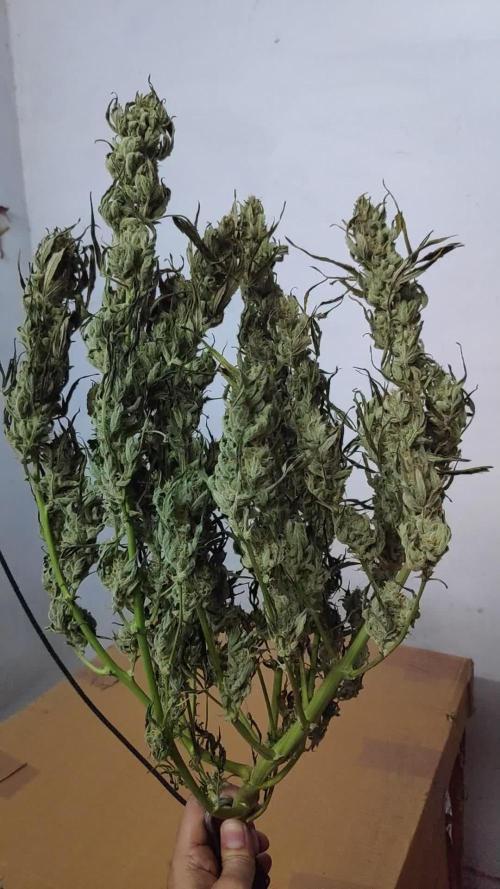
It was my first grow but thanku to everyone who helped me it was outstanding thanks again


Likes
2
Share


@Autower
Follow
Week 10 not long now these smell amazing like sweet blueberry and there's definitely something I've had before when I've bought some personal but can't quite get my head round the smell. started introducing overdrive now as they start to finish fattening and ripening up can definitely see swelling going on over the last 3 days thanks for viewing and happy

Likes
14
Share


@nonick123
Follow
Día 36 (17/02) Riego con 500 ml H2O EC 0,45
Un stretch espectacular!
Día 37 (18/02) Riego ligero con 250 ml H2O EC 0,45
Ha disminuido un poco el consumo de agua
Día 38 (19/02) Riego con 250 ml H2O EC 0,45
El stretch es increíble y precioso 😍💥
Día 39 (20/02) Riego con 500 ml H2O EC 0,45
Hoy se muestra más sedienta después de unos días con menos demanda de riego
Día 40 (21/02) Riego con 350 ml H2O EC 0,45
Día 41 (22/02) Aplicación foliar con Sales de Epsom a 4 g / L (La planta presenta carencia de Magnesio con manchas necroticas en las hojas de abanico inferiores)
Riego con 350 ml H2O EC 0,45
Día 42 (23/02) Lollipopping y defoliación ligera!
Debido a que tiene un stretch espectacular (alrededor de 57 cm de altura) elimino todas los nudos / ramas que no superan el 50% de la altura de la planta
Elimino un par de hojas de abanico grandes
Riego con 400 ml H2O EC 0,45
🚀 Khalifa Genetics - https://khalifagenetics.com/product/lemon-blanco-v3/ @khalifa.genetics
💦 BioTabs 15% DISCOUNT code "GDBT420" biotabs.nl/en/shop/ @biotabs_official
🌱Substrate PRO-MIX HP BACILLUS + MYCORRHIZAE @promixmitch @promixgrowers_unfiltered
💡2 x Mars Hydro FC1500 EVO Led Grow Light (2024 NEW FC 1500-EVO Samsung LM301H 150W LED) - https://marshydro.eu/products/fc1500-evo-led-grow-lights/ - https://www.amazon.de/dp/B0CSSGN5D8?ref=myi_title_dp




Likes
4
Share


@Momentum
Follow
Apples & Bananas x Eye Candy
Die Blue Lobster Reihe mit den unzähligen Mixes gilt als Kenner Genetik. Doch ist die pure Blue Lobster als Seed nicht zu bekommen, dafür jetzt als Maine Trees Cut, der enge Partner vom Entwickler Cipher Genetics. Maine Trees war für die Vermehrung und Vermarktung zuständig und ist der große Name in den USA für die Lobster Genetik.


Likes
9
Share


@Mr_nugs_lover_David
Follow
They have super citrus and lemony mixed with floral notes it's just absolutely awesome,I'd love to get a few bags of these nugs,I'm growing using nothing but organic dry amendments,I prepare a super soil recipe using guanokalong nutrients and also florians living organics,love the organic aromas,I definitely want to grow this strain just because of that characteristic like lemon with floral notes it's awesome,but I feel like they are not going to be very productive.
Likes
11
Share


@Kmikaz420
Follow
Plante exceptionnelle !! Elle m'a donner 210g dry cured et l herbe est juste magnifique niveau goût comme effet !! Et en plus de tous sa en seulement 12 semaine .merci mr fast bud^^ et c est une plante qui pousse sans difficulté faudra juste faire en sorte d avoir du cal mag et une bonne dose de nutriments^^
Likes
4
Share


@DaisyNabis
Follow
preventivo de la semana al dia, desintale humificador para preparar a mis bellas para su trasplante a maceta definitiva, esta oportunidad no hare podas bajas solo algunas defoliacion

Likes
16
Share


@DESER90
Follow
The plants are not fully in the same stage, but most started getting milky trichomes so I decided to flush. Roughly 3-4 times the usual amount of water. Ph to 6.2 and a lot of run off water. Never experienced with flushing so here goes nothing. I will try and cut all the plants at the same time. The trichome development will be at different stages but this might be a good way to see what trichome stage I like most, and I will be able to decide better in future grows. To be honest I'm not looking for highest possible THC content ;) Taste/smell are priority.


Processing
Likes
13
Share


@smokeycropping
Follow
las cepas de royalqueenseeds van creciendo muy bien !!
impecable hasta ahora todo funciona excelente se notan sanas y muy pequeñas para tantos nudos ,
esto se ve esperanzador seguimos aprendiendo y si definitivamente el living soil es lomejor ! solo vean esas nenas como están de felices ,
natural, organico, barato y reciclable
Likes
35
Share


@Ganjagrandaddy
Follow
Hi growmies. Hope we are all well and still sane?.
This week has been another roller coaster for the ladies.
Amnesia Haze has gone crazy with growth this week. She has taken over 25 L of water this week to cope with the heatwave we are having. It has been up around 24°c just before lights off at 12pm. I am glad i decided to use the nights for the lights on period now.
I did lose the 5th node on the Amnesia sadly but the remaining 4 nodes are little powerhouses of growth tips.
She has also reached the pots edges after i supercropped them earlier in the week. They had bounced back by the next day .!!!. I love this strain so far..
The remaining ladies havevhad to cope with some issues this week. Heat and light intensity from the new Mars at 100% power took a toll on their chlorophyll production abilities. I have since dropped the power by 25% and raised the light a little too. The yellowing has not worsened and new growth below is looking good so far.
The worse affected was the Red Hot Cookies but now they both look settled root wise , they have improved the last few days too.
I did a pH check and got 7.2ph so I did use some ph down to drop it to 6.0.
There is a huge difference in the 3 girls and it is shocking to see what just 2 weeks germination gap can cause.
I do know the NFT can catch up once it gets its roots into the matting more. Fingers crossed we see some improvements this coming week.. Be well.

Processing
Likes
7
Share


@Kushizlez
Follow
(Days 28-35)
(Day 29) Everything seems to have recovered fine from topping so I transplanted into their 1.7 gallon pots. They were pretty rootbound so this should make them nice and happy. Going to start LST after recovery. Got a ton of holes poked around the rim of the bucket which should make tying down easier.
I’ve been asking around on some forums and reading some articles and I’ve decided to switch out my MH bulb for the included HPS bulb. Apparently HPS bulbs will stretch the nodes out quite a bit more and provide higher PAR value for the same amount of electricity. My plants are looking pretty small for day 29. Although, that could just be from stuffing 15 plants under one 250-400w light.
I’ve been powering the lights up to 400w at night and back down to 250 during the day. 400 just gets it too hot during the day (86-88) without ventilation. That temperature should be fine in veg once my co2 has really built up some mycelium.
(Day 32) Just got 14/15 topped. The BCTG runt is just going to be lst’d and not topped or fimmed. I decided to just fim the plants I started later so they’d have a bit more time to recover and catch up to the others. I also LST’d all 9 quite well. Almost had a stem break but she’s doing just fine now. The deformed bbb was accidentally fimmed and as a result it’s got a very trippy looking main stem that has branched off into 6 mains.
I definitely have fungus gnats. Fuckers must have got in with that coco I bought from hydro store. This has never happened to me with just promix but the benefits of coco are too much to pass up. I might order an OG BioWar/capsbennies/grubgrenade to help naturally get rid of them.
I’m getting some confirmed yellowing on bottoms of the zkittlez and WW’s. They must be heavy feeders because no other plant in the tent is getting yellow like that. I’m going to feed a compost tea, top dress everything at full strength and mulch in some worm castings to help break it down faster. Will also do a foliar spray with some insect frass, microbes and m1pps.
(Day 33) Got some more of that marine phytoplankton stuff to help stabilize my RO water. It’s got a good amount of soluble magnesium and trade minerals in it so that should help stop the yellowing on the zkittlez and WW.
(Day 34) Things are looking great so far and they’re all recovered from topping/transplant/lst and thriving. Some slight yellowing and a few of the plants are cupping from heat and high humidity. I just put in a dehumidifier to help bring the rh down. The m39/zkittlez bagseed plant is just outpacing everything in the tent by 4-6 days. No wonder organized crime used to grow it. I hear it can completely flower in 45 days with a solid yield and very little trimming or leaf matter. It’s very weak on the high and smell though. Nonetheless it should be nostalgic to try those old terps. There is still a small chance that it’s a super vigorous zkittlez plant too.
Plants should be showing sex this coming week. Hoping for 8+ fems but I can make do with just 4. 1-3 is unlikely but that would piss me off beyond belief. I’ve heard of it happening though.


Likes
18
Share


@Bread_n_Buds
Follow
And here we are in full swing. We have only reached day 19 and our Watermelon Candy F1 Hybrid is truly very very competitive.
It grows well, regularly, the internodal distance seems average but we're waiting for another couple of floors to rise, as you can see for a day 19 we're in great shape... You'll say similar reviews, and guys the F1s are very similar, the differences will come soon with the beautiful buds.
We're keeping our fingers crossed because there's no word soon but our f1 Hybrids seem to keep what our trusted breeder says.
As feeding we are giving the Plagron Alga Grow 2 ml/l and Power Roots 1 ml/l in the plants with Aptus Pellet.
Come on gentlemen, I can't wait to see the flowers.
Zamnesia is the best online shop in the situation, you can find everything from seeds, to mushroom kits, through vaporizers and a thousand other things https://www.zamnesia.io
Watermelon Candy F1 seeds specifically
https://www.zamnesia.com/10666-zamnesia-seeds-watermelon-candy-f1-automatic.html
Site Description
ZAMNESIA SEEDS - WATERMELON CANDY F1 HYBRID AUTOMATIC: BUDS BURSTING WITH FLAVOR
If you've been looking for a flavorful strain with superb genetics that's effortless to cultivate, the hunt is over. Thanks to reliable F1 hybrid genetics, Watermelon Candy F1 Automatic showcases the highest degree of productivity and efficiency. This strain takes everything you know and love about the original, and packages it in a plant with even greater potential.
GROWING WATERMELON CANDY F1 HYBRID AUTOMATIC
Derived from Watermelon, Candy Kush, and ruderalis, Watermelon Candy F1 Automatic is a finely tuned medley of genetics. This cultivar is fast to flourish and reliable to grow, no matter where you choose to grow. Taking just 9–10 weeks from germination to harvest, she provides a uniform growing experience culminating in a huge haul of buds for her size.
Reaching heights of 65–80cm, Watermelon Candy F1 Automatic stays pretty grounded, making her perfect for smaller growing areas where space is a commodity. It also means you can fit more plants in if you have the room! Once ready to yield, growers will see a return of 400–450g/m² indoors and up to 100g/plant outdoors. Moreover, Watermelon Candy F1 Automatic is highly resistant to pests and disease, making it an ideal strain for newcomers and fans of low-maintenance cultivation.
AROMAS, FLAVORS, AND EFFECTS OF WATERMELON CANDY F1 HYBRID AUTOMATIC
If we haven't already sold you on the power of F1 hybrid genetics, the proof is in the pudding. Watermelon Candy F1 Automatic is teaming with terpenes and cannabinoids, making for a lively high coupled with huge flavors. Just one hit is all it takes to sample rich fruitiness mixed with sweet candies and a slight earthiness to back it up. And with an average THC content of 23%, the effects are euphoric at the start but settle into deep relaxation soon after. Whether you're chilling alone or with friends, Watermelon Candy F1 Automatic will see you right.
As for fertilizers, I'm doing a small comparison experiment to finish off the fertilizers I had at home, it's not 100% indicative, it's only on two specimens but given the stable genetics I decided to try to compare the results of Plagron Vs Aptus , both excellent brands which they will certainly produce beautiful plants which are already of excellent stable genetics. In the next few weeks the comparison will be more evident now the seedlings are still very small and just potted.
So seeds of all brands, in addition to these great F1 Hybrids and the entire Zamnesia line, fertilizers and everything related to the world of cannabis, you should buy them from the best online store in the sector www.zamnesia.io
Likes
12
Share


@Cheeba_Inu
Follow
After a week of growth, the Blackberry is out of the dome. It was overgrowing it, so I just transplanted it into its final autowatering pot for simplicity. I normally go seedling pot to 1.5g pot to 3-5 gallon pot, but this very tall 2.5 gallon airpot will be a first for me. I think the benefits it will receive outweigh the cons.
I am now running a humidifier at 60 percent RH, and will be watching the plants carefully throughout the week as I dial up the nutrients and ensure a good VPD for the plants. The Blackberry is a bit more vigorous and healthy than the Blackberry Kush by Dutch Passion growing with it. I hope the Kush catches up, but I am very pleased with the Fastbuds at this early state.
Thanks for reading, and stay safe everyone! 👍🌱
Day 10: started adding silicon and rapid start (and a little pH down) and upped the trio slightly. In case anyone is wondering if there is any perlite, there is! It's just chilling under layer of pure coco. Right now there is 3l of perlite per pot, with the highest concentration lowest in the pot. The Blackberry is growing very well at this point, and definitely does not mind the earlier transplant!
Day 12: I lowered the light height by 8in, down to my more usual vegitative height, to ensure maximum light exposure for this vigorous plant. The Blackberry is doing well, and will definitely get topped after it gets another node or so of growth.
Day 13: I am running low on calimagic as a cal mag source, so I switched out to Greenleaf nutrients cal-mag pro that I have a bag of (that will last forever!) It has a bit more nitrogen, which is good for the current plant stage, so I can save the calimagic for flowering if the plants don't mind the switch. I mix about .5-.6 EC worth of Cal mag, which is about .625tsp per 5 gallons of the Cal mag pro. I will have this reflected on tomorrow's diary entry.