




Likes
3
Share

@PapaTerps
Follow
AlienZ Automatic - Greenhouse Seed Co.
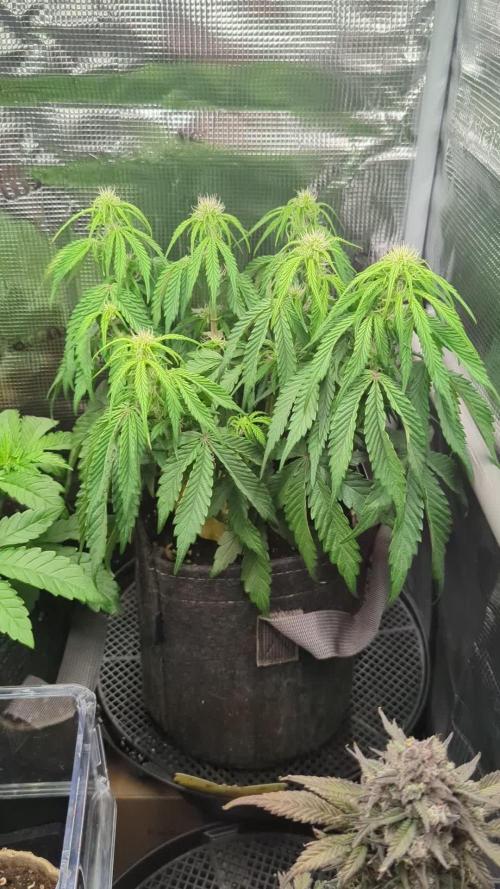
Day 53 - watered with 2L of RO tap water, mixed with the defined nutrients and pH'd to 6.3. I wasn't sure how she was going to perform in such a small pot after the topping, but she has done so well!! She has six clear budsites that are well spaced out and even at canopy level 💪🏻 she is also starting to develop her bud sites so her aroma has started to fill the tent 🙌🏻 so far I'm really impressed with this one! She is showing signs of over watering, even though I have let her dry back to almost 5% moisture content of the soil, so I'm going to let her dry back to 2% and then only water her with 1L for her next watering in about 4 days time 🤞🏻


Processing
Likes
19
Share


@CannabisAprendiz
Follow
Esta es una genética de un olor muy fuerte y pesado se siente intenso desde la vegetación , es una variedad muy resinosa con unos colores morados hermosos , probando las flores cuando terminó el secado y ahora curando las flores se siente un sabor terroso , al principio no me gusto ya que nunca había probado este , pero después al seguir fumando se siente un sabor final muy agradable.
Esta genética se conservará para futuros cruces y experimentar algo nuevo.
muy conforme con la producción de cada clon

Likes
3
Share


@kerby
Follow
Starting to flush today I’m starting to see tichs starting to turn amber colored on the top of the main cola and 90% cloudy and about 40% of the pistles have changed color also


Likes
36
Share


@OGTrauma
Follow
Im coming closer to the ✂️ time seriosly on this one homos and homies , now i tried some pics as close as my phone allows to show a more realistic approach of how plants are evolving besides al the self inflicted plagues by being a cheap bastard, slight light and nutrients burn , i can wait to the plants mature while im searching for the 🕵️♂️to check if thricome ratio should be mostly amber , so i tried some close ups to show you. The pics shows a bit of light bleach on the already damaged leaved yet the buds are full of hate and resin , that can be checked on previous week, the smell on santa bilbo evolved to sweet lemon juice, while g13 smells like earth , cream and synthetic berries ( like sour candy), Santa Bilbo is louder in terms of pressence and projection, while most g13 became purple bitches cosplays of purple bitch, my favorite russian cosplayer.🇷🇺😇💗
Im killing it with hesi boost, top candy and citric acid(ph regulation, clean roots ) as all they can be used on the final stage, and these lil potions don't damage their asses as they are basically different forms of sugars with a modest amount of pk , i think there is no more time for these hoes rather than this or maybe another week. They will be sacrificed in a global warming postpandemic chilean spring solstice.
What about the light's shit show , they show that a mainly 4000k & 6500k* spectrum mix (intentional as stated on the week i changed to 12/12 ) can give big fat stinky buds, so i expect that people that reach this journal and doesn't have the mediums or opportunity to proper growing supplies still can start with less and get some green , as weed is still controversial in a hell lot of countries, or places where high end technology is not on the local market yet.
* for further reference my dudes : https://www.migrolight.com/best-grow-light-spectrum/
BIG GAZ LEAKS MOTHERFUCKERS !!!! 🇨🇱

Likes
2
Share


@Anhyran
Follow
A week on everything is going ok. The mutant is still hanging in there doing its own thing with growth. The other two are coming along nicely, the smaller one is very uniform and has good structure to it. The bigger one is just a beast! Growth is rapid and the shape is nice. She drinks a lot more than the other two. Getting the second light was a good idea based on the umol m2 (572 with both switches on).

Likes
14
Share


@MG2009
Follow
03/20/2022
Biscotti Skunk looking lovely first four pictures.next up is lemon OG,followed by the three Grape Skunk girls middle one is my favorite so far (Middle in height)
I did a light feeding of fish and seaweed, a little extra something just incase they get hungry in final weeks.

Likes
52
Share


@Ultraviolet
Follow
You don't become confident by shouting affirmations in the mirror, but by having a stack of undeniable proof that you are who you say you are, outwork your self-doubt.
Nitrogen fixation is a chemical process by which molecular nitrogen (N2), which has a strong triple covalent bond, is converted into ammonia (NH3) or related nitrogenous compounds, typically in soil or aquatic systems but also in industry. The nitrogen in air is molecular dinitrogen, a relatively nonreactive molecule that is metabolically useless to all but a few microorganisms. Biological nitrogen fixation or diazotrophy is an important microbe-mediated process that converts dinitrogen (N2) gas to ammonia (NH3) using the nitrogenase protein complex (Nif).[2][3]
Nitrogen fixation is essential to life because fixed inorganic nitrogen compounds are required for the biosynthesis of all nitrogen-containing organic compounds, such as amino acids and proteins, nucleoside triphosphates and nucleic acids. As part of the nitrogen cycle, it is essential for agriculture and the manufacture of fertilizer. It is also, indirectly, relevant to the manufacture of all nitrogen chemical compounds, which include some explosives, pharmaceuticals, and dyes.
Nitrogen fixation is carried out naturally in soil by microorganisms termed diazotrophs that include bacteria, such as Azotobacter, and archaea. Some nitrogen-fixing bacteria have symbiotic relationships with plant groups, especially legumes.[4] Looser non-symbiotic relationships between diazotrophs and plants are often referred to as associative, as seen in nitrogen fixation on rice roots. Nitrogen fixation occurs between some termites and fungi.[5] It occurs naturally in the air by means of NOx production by lightning.[6][7]
All biological reactions involving the process of nitrogen fixation are catalyzed by enzymes called nitrogenases.[8] These enzymes contain iron, often with a second metal, usually molybdenum but sometimes vanadium.
Green clover (Fixation)
White clover (Fixation)
Red Clover. (Fixation)
Yellow Clover. (Fixation, deeper roots)
Sweet Thai Basil. (Terpenes)
Italian Basil. (Terpenes)
Chamomile.(Oil production)
Borage.(Pest attraction taste)
Lavender.(Pest attraction smell)
Marigold(Pest attraction visual)
Mycorrhizae are beneficial associations between mycorrhizal fungi and a plant’s root system. Mycorrhizal fungi spores germinate in the soil, creating filaments (hyphae) that penetrate the root cells, thus establishing a symbiotic relationship. This collaboration leads to the development of both intra-radical and extra-radical networks of filaments, enabling efficient exploration of the soil for enhanced access to nutrients and water. Consequently, these vital resources are transferred to the plant, resulting in numerous benefits for crop cultivation.
Various mycorrhizal products are available in diverse formulations (powder, granular, and liquid), concentrations, and qualities. Ongoing advancements in products, technologies, and research are reshaping our understanding of mycorrhizae. Despite these positive developments, certain misconceptions persist. In the following discussion, we aim to clarify the truths and dispel the myths surrounding mycorrhizae products.
MYTH #1
A HIGHER NUMBER OF MYCORRHIZAE SPECIES MEANS BETTER RESULTS.
Contrary to common belief, having a higher number of mycorrhizae species in a product does not translate to better results; in fact, it often yields the opposite outcome. A plant can sustain only one association with a particular mycorrhizal fungi species. Introducing multiple species creates competition among them, which is not advantageous for the plant. The initial colonizer does not ensure the highest success; instead, it gains precedence. It is recommended to select a product with a concentrated presence of a single mycorrhizae species known for its effective performance, rather than opting for a product with multiple species at lower concentrations.
MYTH #2
ECTOMYCORRHIZAE ARE EFFECTIVE FOR CANNABIS PLANTS.
Although ectomycorrhizae can colonize five to ten percent of plant species, cannabis is not among them. Ectomycorrhizae do not penetrate the root cells; instead, they develop around the roots and on the exterior. For cannabis plants, it is essential to seek out endomycorrhizae. Endomycorrhizae are capable of colonizing 70% to 90% of plant species, including cannabis. Unlike ectomycorrhizae, endomycorrhizae penetrate the root cells, forming structures like arbuscules for the exchange of nutrients and water with the plant.
MYTH #3
WHOLE INOCULANT (PROPAGULES) PERFORM BETTER THAN ONLY VIABLE SPORES.
The propagule count specified on most mycorrhizae products indicates the presence of spores (viable and unviable), hyphae, and root fragments. However, it is crucial to note that only viable spores, those with the capacity to germinate, can successfully colonize a plant’s root system. Spores are to mycorrhizal fungi what seeds are to cannabis plants—a fundamental component enabling fungi reproduction. Consequently, even if a mycorrhizal product boasts millions of propagules, its effectiveness hinges on the presence of viable spores. Without viable spores, the product will not contribute to plant development. Therefore, the genuine value of a mycorrhizal inoculant lies in the quantity of viable spores it contains, as only viable spores can efficiently initiate symbiosis.
MYTH #4
ALL METHODS OF APPLICATION YIELD IDENTICAL RESULTS.
To establish the symbiosis, mycorrhizal fungi spores must be close to the plant roots. The optimal recommendation is to directly apply mycorrhizal inoculant to the roots, either in powder, granular or slurry form. This method ensures maximum proximity between the spores and the roots, facilitating a rapid establishment of symbiosis. Particularly with crops like cannabis, which have a short growing cycle, employing this technique is the most effective way to obtain optimal benefits. Alternatively, techniques such as blending the inoculant with the soil are effective, but there may be a delay in the establishment of symbiosis. This is because the roots need to grow and come into contact with the dispersed spores throughout the growing media.
MYTH #5
MYCORRHIZAE CAN ONLY BE GROWN ON LIVING PLANTS.
While the predominant method for commercially producing mycorrhizae involves growing them on the root systems of living plants (in vivo production), it is not the exclusive nor the optimal technique. In fact, this production approach has notable drawbacks that the “root organ culture” method just does not have (in vitro production). In vitro production occurs in meticulously controlled, aseptic laboratory conditions, allowing for the consistent generation of products that are viable, highly concentrated, species-specific, and free from pathogens. Achieving such precision and quality is impossible when relying on the cultivation of mycorrhizal fungi on plants exposed to external conditions.
In conclusion, it is crucial to take all these factors into consideration when choosing the appropriate product for your crop to fully harness the wide array of benefits provided by a high-quality mycorrhizal product.
STRONGER PLANT – Stress resistance.
FASTER GROWTH – Improve plant structure and shorter veg time.
INCREASE YIELD – Overall more biomass.
IMPROVED QUALITY – Increase cannabinoids and terpenes content.


Likes
10
Share


Likes
12
Share


@Archieballs
Follow
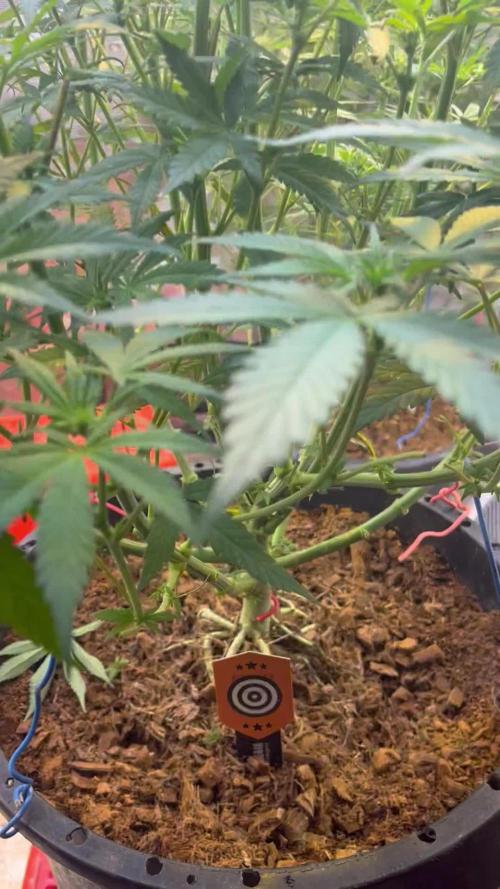
The nutrient measurements are for week 7 this week they just got PH water at 2 liters. She’s a beautiful plant!!! Her colors are amazing!!! The inner part of the flower is like a deep blackberry color and the inner parts of the sugar leaves are as well. Amazing plant!!! I have 2 more beans of her and want to do one in a 5 gallon and see how she does just don’t have the space at the minute. She will get one more feeding in 3 days time and then on to her flush.
Likes
4
Share


@HowtoBubatz
Follow
My Strawberry Gorilla Automatic from Fast Buds is now in its third week of flowering, and I couldn’t be happier with how she’s progressing.
She looks incredibly healthy, with vibrant green leaves and strong branches. The stretch phase is nearly over, and she has developed a solid structure with a well-defined main cola.🌱
One of the most exciting changes this week is the first appearance of trichomes on the main bud. Under the light, they’re starting to sparkle, hinting at the resin production that’s about to take off.
The buds are forming nicely, and I can already smell a faint but promising aroma developing.
So far, she’s responding well to the nutrients and environment, with no signs of deficiencies or stress. If she keeps going at this pace, she’s going to be a real beast by harvest time.😊
Likes
4
Share

@sunshinegroww
Follow
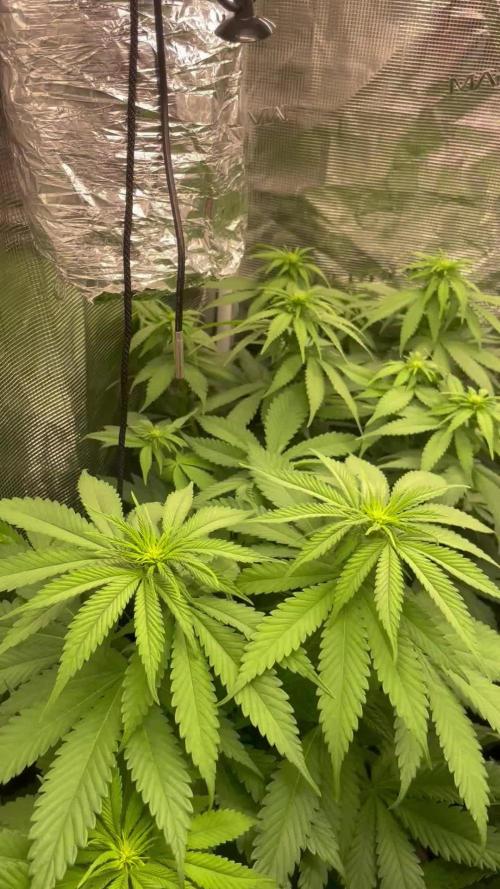
Very good and healthy looking i think stretch is kinda over and i can clean her up in few days ao she is ready to start pump those flowers lets gooooo
Likes
5
Share


@jamaljackson
Follow
In the past week, one of my Forum Stompers has gotten massive compared to the others. I'm not sure if it's different phenos or me just stressing them out. I'm guessing it's stress. Hopefully the other 3 start to hit their stretch this week.
I did some defoliating this week, and spent a lot of time on the big tall one. She's really opened up and catching a lot of light. I'm hoping the branches really start to get heavy and frosty over the next couple of weeks.


Likes
4
Share


@Growstopher
Follow
Fastbuds seeds
Gorilla zkittles auto
Only using spring water for first week and spraying with foop mist. Going to use foop nutrients with Humboldts secret cal/mag and nectar for the gods ph up and down!
Planted right into substrate. I’m using Mother Earth coco coir/perlite mix with hydroton at bottom of pot


