The Grow Awards 2026 🏆
Likes
Comments
Share
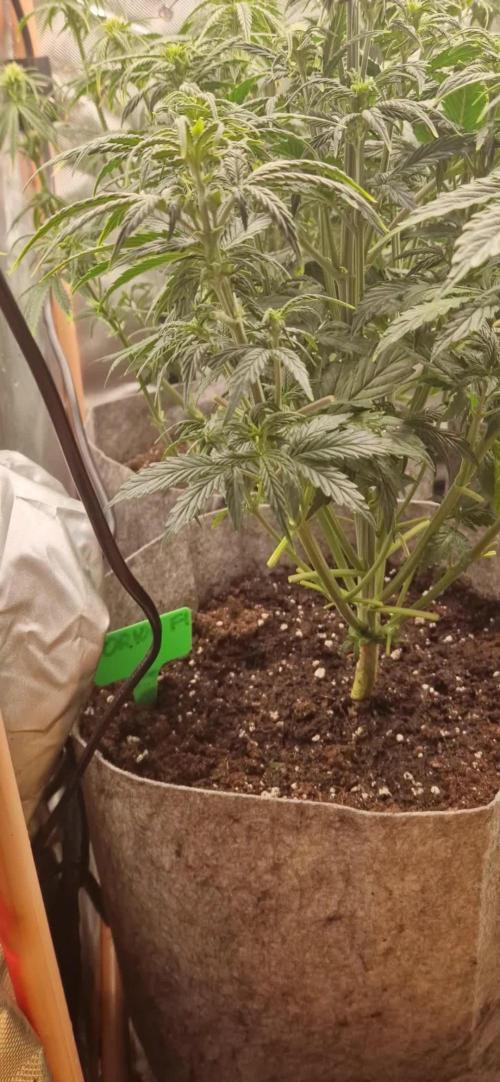
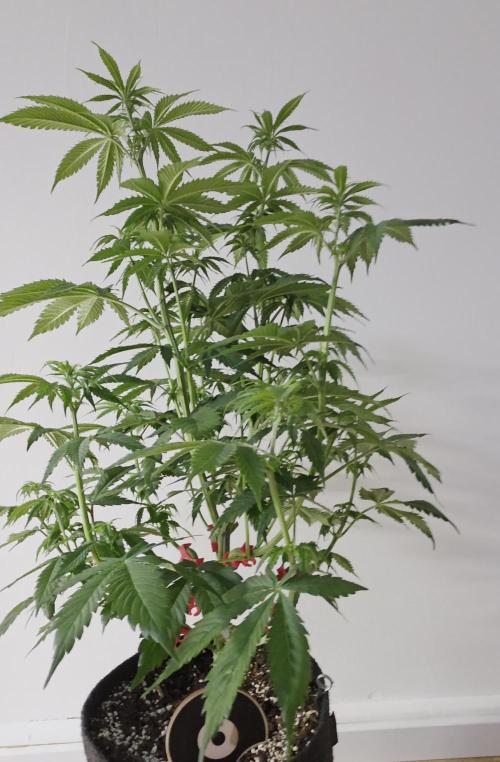
So far so good they are handling quite good , keeping ,y Ppfds around 1400 on average with some points closer to 1600 Umols/m2s 😜🤦‍♂️💪💪💪 always believing hahahaha Day 32 Flower and all seems to be running on track , leafs are tip burned just as i like , this means im pushing them to they’re limits , more they wold go in lock mode and that as we all know is not a good thing 😆 Day 32 Flower and I’m starting to think in defoliation again, i know im not supposed, but as always i will read my garden and leaf strip as many times needed during flower or no flower time 😆😜😅💚 let’s see how they grow but i fell they need space asap already 😆💚💚💚 Trying big numbers on the Ppfd department and see how far they can take without supplement extra CO2, i mean i have the bags they help but lol Ppfd- 1400 Umol/m2s VPD- 1.51 kPa Girls : Tropicana Poison @sweetseeds - 7X Chocolate Skunk @00seeds - 2X Badazz Cookies OG @seedsman- 3X Lights 2X Lumatek Zeus 465W Compact Pro @ 100% All i Grow is medicine for myself, i do it with love for the love 💚💚💚 Growers love to you all
Likes
6
Share
We put 40ml of pure water and we add 5 drops of oxygen water and then put the seeds
Likes
13
Share
Gracias al equipo de AnesiaSeeds, Marshydro, XpertNutrients y Trolmaster sin ellos esto no sería posible. 💐🍁 Oracle Octane: Oracle Octane es una cepa altamente potente y con un alto contenido de THC elaborada a partir de una Blackberry Octane seleccionada, excepcionalmente rica en THC y aromática, y de la pesada Blackberry Oracle, inédita, de nuestro propio acervo genético. El desarrollo de esta carismática e impresionante variedad abarcó 8 generaciones y un enorme esfuerzo de cría. La variedad tiene un sabor intenso e inolvidable que recuerda a bayas dulces y limones frescos. Las plantas a partir de semillas crecen increíblemente hermosas y sus hojas y cogollos a menudo desarrollan tonos de rojo, morado intenso e incluso casi negro. Esta cepa vigorosa y ligeramente índica dominante tiene un tiempo de floración de unas 9 semanas, produce hojas grandes y alcanza una altura de unos 120-130 cm en el interior. 🌻🚀 Consigue aqui tus semillas: https://anesiaseeds.com/product/oracle-octane/ 💡TS-3000 + TS-1000: se usaran dos de las lámparas de la serie TS de Marshydro, para cubrir todas las necesidades de las plantas durante el ciclo de cultivo, uso las dos lámparas en floracion para llegar a toda la carpa de 1.50 x 1.50 x 1.80. https://marshydro.eu/products/mars-hydro-ts-3000-led-grow-light/ 🏠 : Marshydro 1.50 x 1.50 x 1.80, carpa 100% estanca con ventanas laterales para llegar a todos los lugares durante el grow https://marshydro.eu/products/diy-150x150x200cm-grow-tent-kit 🌬️💨 Marshydro 6inch + filtro carbon para evitar olores indeseables. https://marshydro.eu/products/ifresh-smart-6inch-filter-kits/ 🍣🍦🌴 Xpert Nutrients es una empresa especializada en la producción y comercialización de fertilizantes líquidos y tierras, que garantizan excelentes cosechas y un crecimiento activo para sus plantas durante todas las fases de cultivo. Consigue aqui tus Nutrientes: https://xpertnutrients.com/es/shop/ 💻 Trolmaster Tent-X TCS-1 como controlador de luz, optimiza tu cultivo con la última tecnología del mercado, desde donde puedes controlar todos los parametros. https://www.trolmaster.com/Products/Details/TCS-1 📆 Semana 2: Fantástica semana, estan creciendo de una forma espectacular gracias a la ayuda de @marshydro, @xpertnutrients y @trolmaster. Se puede apreciar un tercer nudo aunque la aplicación de cola de caballo y el estar en una maceta pequeña ha influido en el tamaño de ella, se recupera muy rápido 😁. Esta semana espero trasplantar a la maceta definitiva. Potencia de la lámpara: 50%
Processing
Likes
7
Share
@Kushizlez
Follow
Day 56-63 (Day 57) I might have to fix the light to the roof of the tent so I can get another 3 inches up. The ppfd is just too intense at this height. The node stacking is super tight, I’m seeing some droop on almost every plant and the plants just look stunted. I might have to take out the big shelf I just paid 90$ for and raise the light to get the ppfd level down. This happened my last grow as well. It’s a great light for flowering but sucks ass for veg unless it’s hung 5’ above the canopy. I’ve seen videos of others with the same light and they have to fix it to the roof. The dimming function only works with a master controller I don’t have the money for right now. Pulling bbb #2. I’m seeing very small but clear pollen sacks. It’s also drooping like crazy. The roots don’t look as healthy as some of the other males I pulled earlier. They have a slight brown tinge but still mostly white. I wonder if I accidentally gave top dressed it too many times when I mixed them all up a while ago. I’m going to transplant bbb’s #1, #3, #6 & #7 into my 10 gallon destiny/coco pots lightly water. This is kind of a gamble because 2 of them are not showing definitively. Although I’m about 75% sure they’re fems. If not, I got my two backups. (Day 58) I was reading about symptoms of high PH and I definitely have it indicated by the twisted and stunted growth on top. I’m going to try to water in a full gallon at 5.8 and see if I get a good response. I sprayed the pump nozzle directly into the soil after it was empty to put some oxygen into that big 10g pot. The blackberry I gave the lowered PH water too noticeably responded within a few hours. The clawing has pretty much stopped and it now looks like the healthiest plant in the tent. I’m going to see how it responds over the next few days then try it with my other plants if everything looks good. I’m going to try it with bbb #5 in the 1.7g pot and see if it responds in the same way. I ran a gallon of 5.8 water through 1.7g and got less than a 100ml of runoff which is a little surprising. The runoff measured 1750ppms which seems a little on the high side but isn’t insane for peat based soil. (Day 59) Wow. The plants responded to that little PH adjustment insanely well. #5 isn’t dropping at all and the leaf wrinkles are actually flattening out. It’s starting to look like one of the healthiest plants in the tent. I’m still hoping for #5 to show female. 5 plants would cut my veg time down and give me another opportunity for a keeper pheno. All 4 plants are looking like they’ve already recovered from their transplant. #1 in particular was drooping like crazy yesterday and today it’s bounced back and looking happier than ever. I’m seeing a bit of tip droop on a few plants but they still seem fine I wonder if because my soil is 50% coco I should try watering on the acidic side, around 6.0-6.2 from now on. I’m almost certain that solved all the issues I was having. (Day 62) Plants are all looking really healthy. They all seem to have outgrown the initial light stress actually but node stacking is still really tight and I hope to raise the light up next week sometime. I’m going to drop the humidity to 60% for the rest of veg. These pots are massive and I’m still a little worried about dry downs but they aren’t showing any signs of overwatering or lack of oxygen. BBB#3 is starting to show some weird discoloring like an mag or nitrogen deficiency. Which is weird because it’s freshly transplanted into nitrogen rich soil. Guess I will give it a kelp foliar spray. I’ve been looking for a good organic source of K without an absurd amount of magnesium and sulfur like langbeinite has. I found some 0-0-15 kelp/seaweed extract in soluble crystal form. So from time to time I will water that in at half strength or with compost teas to keep my soil K dominant. (Day 63) I’m still waiting on #6 to show sex. I am shocked it hasn’t shown sex yet. Although it was started a week and a half after the others but still. I’m going to be so pissed if it ends up being a male. I’m taking a gamble but I’m confident it will show female when the time comes. bbb#3 got a little more color back from that foliar spray. Hope that doesn’t get worse because it’s my favorite pheno so far. I will give a N boost in the form of compost tea tomorrow afternoon to both of my tents. I’m starting to utilize the scrog net and boy does it make training way easier. This seems to be a much smarter style of growing for yield and quality. I’m getting tired of these pH fluctuations every time I water. I’ve been eyeballing for the most part and I need a consistent formula. I found the perfect mix to stabilize my RO water and stabilize the pH at 6.2. I moistened the top soil of each plant and will watch for any reactions. Water recipe: 60ml bottled water 2000ml RO water 3ml calmag 2ml microbes
Likes
152
Share
@BioBuds
Follow
Beginning of week 7, 6 full weeks of flower done, they should be ready this or next week. Trichomes are still mostly milky with few to no ambers. Some clear also still there. Found some larf hiding but able to reach the light so they are also fattening. Really hard to estimate how much it is going to be. So as a growquestion and a bit of a pool amongst us and to have an idea what the more experienced growers think, I'm giving away three Zambeza White Cheese Fast regular seeds to the GD meber who comes closest to real result, which I will display here once dried. Rules: This is, if you are over 18, from a country where sending and owning seeds is legal, have a GD account with at least one active grow. Otherwise you get a prize in same value but legal. This all if this is not against GD rules (couldn't find anything). Just to spice things up a bit. To participate just answer the growquestion from this post. Answers are valid until final tally has been made. Total of buds and small buds. Larf and sugarleaf not included. I'm not sponsored by Zambeza nor do they know anything about this quiz (these seeds are fresh though), I do not have any affiliation with any cannabis realated organisation and I only grow for my own medical purposes. Just for fun, I know rare these days.... If I had some Advanced seeds I would offer them to be in style with the grow, but allas, I don't. See you next week, can't wait to hear your estimates! Details about the grow and setup: - 300 watt lights in 3 100 watt boards, 252 LM301b with 12 Cree. Thats one board per plant basically, giving 850 ppfd on average on canopy level. - 140 cm (4.5 ft) by 70 cm (2ft) by 200 cm (6.5 ft) growtent. - Temps have been stable, so has humidity but 10 % more than I would want in this stage of flower, at 50 to 55 %. Nugs feel dense though, compact and weight to it. - middle plant has more buds, but are more larfy and little less dense. - all buds have sprouted little mini buds on them adding weight - Underlayer of buds are all less dense and more larfy. So I wonder what you all think!! See you soon with some results. As a reminder: I plan to dry-cure for at least 10 days at 15% celcius (60F) and 62% RH. When the buds itself reach 62% RH, the weigh commences. Although flavors might ot be ready. Final weight will have been established. Happy guessing all. One entry per GD account!! XXX Your buddy, Biobuds...
Likes
6
Share
Shes growing well so there isnt much to say really , I've adjusted the lights to be 12-12 from seed so we can see the results we get , I've also adjusted the height of the lamp to its proper height I was scared to burn my little baby but shes taking it well and growing nicely ! Thanks to everyone that stops in to the diary's ! A special thank you goes out to all my followers that come in weekly and daily for them updates keep on keepin on guys and stayed tuned for more action ! -Happy Growing!
Likes
7
Share
I have grown RQS a few times but this is my first RQS diary. The seed took 36hrs to pop and sprout in the wet paper towel. It only took another 36hrs to come fully out of the ground and loose it’s shell. I started with the lights 70cm’s from the soil which was giving a LUX💡reading of 25,000lux💡.Once the seedling 🌱 got to 5cm’s I raised the light by 5cm again to keep the distance at 70cm’s maintaining a reading of 25,000Lux💡 at the top of the seedling 🌱. On previous grows I started with the light at 80cm’s but I was getting stretching. I find if I start at 70cm’s and don’t raise the light after a day or two that the seedling 🌱 can get light burn. HUMIDITY: As you can see in photos I have milk bottle tops full of water next to the seedling. I’ve been this for a while now. I have my seedling next to a plant only a few weeks away from harvest so I need to keep the overall humidity low. I might be crazy and wasting my time but it makes sense to me. I leave these bottle tops near the seedling and over the space of a day the water evaporates off and then I refill them again with water (PH’d water). I reckon if the water is evaporating off so close to the seedling that it must be creating some extra humidity around the seedling 🌱. For the record I don’t think the earth 🌍 is flat. *I’m using RQS nutrients for this grow. I am recording the nutrients as 0.5ml as there is not a tablet option so what I mean by 0.5 is half of one tablet per 2ltrs of water. 🦍Day 3: Watered around the edges of the seedling 🌱 just to dampen the soil a bit 🦍Day 5: Dampened soil again. Looking good so far. 🦍Day 7: Gave very light watering. Happy with the height of the seedling 🌱. The light distance seems to have worked well.
Likes
120
Share
These ladies are really starting to stretch. Especially the Red Hot Cookies, holy cow they are getting big quick. Starting to see preflowers on all of the ladies. I will update throughout the week. 😀
Likes
44
Share
Here we go, guys week 3 of flower is starting and she is starting to stack.. She smells wonderful.She's crowning absolutely everywhere, and i'm here for it.. Big thank you to Zamnesia Seeds for sponsoring this grow and others.. So far guys, their genetics have been top notch, not gonna lie.. Shout out to Patricia over there at Zamnesia the link that ties Zamnesia seeds and grow diaries together.. i'm very excited for this one.Thank you all for stopping by showing some love.It is greatly appreciated.. Hope everybody's ladies are doing exceptionally well and so are they.. good luck to everybody with their ladies and happy growing ✌️
Likes
27
Share
Otra vez familia e vuelto actualizar las do sweet dos , que menudos ejemplares que ganas hay de verlas madurando 😂. Hubo problemas menores medioambientales, a raíz de ello sufrí hermafroditismo en muchos ejemplares, los cuales se eliminaron todos los posibles plátanos. Por lo demás todo genial solo ese fallo el cual en un futuro no pasará mas. . La humedad esta al 45% la temperatura está entre 21/25 grados , y como siempre el ph , ya que es de lo más importante,está en 5,8/6,0. . AgroBeta: 1 ml x L Flowering black line , vía radicular. 0,2 ml x L Beta shark, vía radicular. 0,3 ml x L Tucán , vía radicular. 0,1 ml x L Betazyme, vía radicular. 0,05 ml x L Gold Joker, vía radicular. 0,2 ml x L Silver, vía radicular. . Hasta aquí todo familia 🕸️ , un saludo y buenos humos fumetillas💨💨💨.
Likes
2
Share
Week 9 started with having to bring down tent once again it was only for one day it did happen to rain lightly that night honestly plants are resilient af they have been thrown a lil bit of everything an they bounce back no problem all deficiencies it had in Earlier weeks seem to go away right away buds are just stacking up nice.. I do notice the plant in 7 gal fabric pot is bigger than 5 gal pot.. also all my training to keep it spread out kinda goes out the window everytime I have to remove scrog net..we are about halfway there..gonna flower for about 8-10 weeks
Likes
29
Share
Iphone 7 is a piece of garbage nevertheless these buds still make it shine hard. Smell of cheetah piss hoping it will be very unique smoke and effect. Enjoy hope all are having killer success with their grows, ✌️ GHL
Likes
73
Share
@Roberts
Follow
Cookies and Cream auto is looking good. She had a slight leaf deformity when she got solution on her roots too soon. It was a pinch strong for her. She has already grown into it, and roots are looking good. I was experimenting with putting the rock wool on one side to get the roots to the solution sooner. Everything is looking good at the moment under the medic Grow Mini Sun-2. Thank you Medic Grow, and MSNL seeds. Thank you grow diaries community for the 👇likes👇, follows, comments, and subscriptions on my YouTube channel👇. ❄️🌱🍻 Happy Growing 🌱🌱🌱 https://youtube.com/channel/UCAhN7yRzWLpcaRHhMIQ7X4g
Likes
30
Share
Last week of flowering (72days from the light switch) Gonna cut soon when the dirt is dry. A quite late harvest. Many buds denser more, and stem can’t longer resist. This season so satisfy. Thank for all mentor and comment. You all are my inspiration for grows. Feeding 23/1 Water 13.5L+Flawless 20ml ppm80 ph6.2 MDR 3L 2Lx5 Runoff MDR 1400 /1155 Zkittle 1600/1300/1150 Pineapp 900/600 Purp 1300 /1200 Sapp 2000/1100 Dozdos 1100/1000 25/1 10.42 6L ppm9 ph6 1L per pot 3L+Flawless6ml ppm116 ph5.9 1.5/1.5 Purp, Zkittle 4.5L+ Flawless7ml ppm119 ph6 1.5/3 Sapp,MDR Runoff Purp 1300 Zkittle 1500/1200 Dozdos 1400 Sapp1300 Pineapp850 MDR950 27/1 runoff Pineapp 500 Purp 900 MDR 600 Zkittle 400 Sapp 300 Dozdos 400
Processing
Likes
4
Share
Went to bend a branch it snapped. I taped it but the top was to heavy and snapped again. I figured cut it off now because it didnt look like it was coming back and I thought I'd just hurt her even if I saved the one.
Likes
23
Share
I Did 5 in paper towel and 3 directly in dirt so far 4 out of 5 in paper towel 2 out of 3 in soil both in cool dark place. I will check remaining two in a few days ILGM GSCE AUTO
Likes
36
Share
Que dire mise à part que se strain est tous simplement magnifique ? Il porte bien son nom, il commence à être bien Frosty! Et la couleur violet commence à apparaître de plus en plus! Les bud sont beau et dégagent une belle odeur fruité, le plant a une sacré couverture résineuse, je pense qu’elle pourrais être parfaite pour faire des extraction! Cette semaine je lui ai donné un thé de compost oxygéné, on va voir comment elle va réagir. Recette du tco pour 20 litres. (Grammes : gr) 50gr biochar 250gr zéolite 3gr granulé Micro-Organisme IT45 10gr pollen d’abeilles 10gr levure de bière 3gr endomychorize 10gr consoude 20gr vers de farine 10gr cendre coque de ricin 12gr ortie microniser 15gr Kelp 10gr spiruline 10gr de cbd living soil 20ml de miel liquide 30ml de mélasse 20ml d’acide humiques et fluvic Mettre tous les ingrédients (sauf la mélasse ,l’acide h/f et le miel) dans un filtre 400micron, le placer dans un seau avec de l’eau (10litres). Rajoutez le miel et 10ml de mélasse Y mettre un micro bulleur alimenter sur une pompe à air et faire oxygéné le mélange pendant 24h. Rajout de 10ml de mélasse après 12h le début de la mise en route de la pompe. A la fin des 24h rajoutez le restant de mélasse et d’acide h/f, mettez y en plus 10litres d’eau au mélange. Reste plus qu’à arroser! Pour la Frosty j’y ai incorporé 7litre de mélange La veille j’ai préparé le pot à l’arrosage avec 500ml d’eau et 2gr de Bacillus IT35 Amyloliquefaciens X5 Bacillus Amyloliquefaciens : rhyzosphère, probiotiques. Aspersion et arrosage. Utilisable pour toutes cultures. La bactérie Bacillus Amyloliquefaciens se fixe dans la rhizosphère en se nourrissant des exsudats racinaires. En contrepartie, elle stimule la croissance racinaire en sécrétant des métabolites de croissance et solubilise le phosphore en sécrétant des phytases (enzymes). Effet probiotique consistant en l’utilisation de micro-organismes bénéfiques pour la nutrition et la santé des plantes. La spiruline, le plus riche et le plus complet des amendements organiques La Spiruline est une algue aquatique connue comme complément alimentaire, la Spiruline est aussi un amendement organique et écologique très complet. D'une grande qualité nutritive, elle apporte à vos plantes une quantité de nutriments, dont l'azote, phosphore, potassium, minéraux, acides aminés, vitamines, chlorophylle et protéine. Le charbon végétal actif est capable d’absorber jusqu’à cinq fois son poids propre en eau ainsi que les éléments nutritifs qui s’y trouvent. Il joue ainsi le rôle de catalyseur et d'amplificateur pour les fertilisants traditionnels, qu'ils soient d'origine organique ou minérale. Ce pourquoi il est idéal pour activer un sol et pour les thés de compost oxygénés. Le charbon végétal améliore la diffusion et la disponibilité des éléments nutritifs dans le sol et offre des conditions propices au développement des micro-organismes. Le Biochar peut être introduit dans une grande variété de sols. Il est particulièrement efficace dans les sols pauvres, difficiles et acides. Pour faire agir rapidement et efficacement sa capacité d’amendement, le charbon végétal est enrichi et biologiquement activé avec des micro-organismes. Le Biochar se comporte ainsi comme un structurateur et un activateur dans le but de valoriser les sols. Composition : • Charbon végétal actif 31%
• Matière organique 33%
• Matière sèche 75%
• C/N : 17
• PH : 7,2
• Azote (N) : 2,1 % dont 1,2 % azote organique
• Phosphore (P205) : 0,74%
• Potassium (K20) : 1,18%
• Calcium (Ca) : 6,8%
• Magnésium (MgO) : 0,65% Le pollen est l'ingrédient de base de la fabrication du miel par les abeilles. Riche en vitamines et minéraux, il est qualifié « d'aliment parfait », y compris pour les plantes ! Les zéolithes sont des roches cristallines, présentant des capacités d'adsorption particulièrement importantes vis à vis des polluants que l'on rencontre dans l'eau et dans certains liquides, ainsi que dans l'air et les gaz. Elles sont extrêmement poreuses comme les charbons activés et elles peuvent être chargées électriquement pour opérer comme des échangeurs d'ions. La zéolithe est un produit naturel qui respecte notre environnement. Utilisé dans le milieu industriel depuis de longues années déjà, ce minerai aux propriétés filtrantes particulières commence à se vulgariser dans le domaine de la piscine privée, de l'aquariophilie, des bassins d'agrément, de la récupération des eaux de pluie, ou encore de la culture des bonsaïs et autres plantations diverses par exemple... 4 points techniques majeurs : - Grâce à leur propriété hydrophile, les zéolithes peuvent adsorber l'eau jusqu'à 30% de leur poids total et sans aucune variation de volume : pas de gonflement en présence d'eau ni de craquement en cas de déshydratation comme certaines argiles. Les zéolithes sont d'ailleurs de puissants agents anti-mottant (anti-agglomérant). Cette propriété est très appréciée dans le cas des terrains de golf et autres aires de jeux. - Les zéolithes ne captent pas l'eau de façon irréversible, elles se comportent comme une réserve au voisinage des racines. Celles-ci peuvent capter l'eau en fonction de leur besoin. Les zéolithes permettent ainsi de réduire les besoins d'arrosage jusqu'à 35 %. - Une zéolithe se comporte comme une "Zone de Stockage" qui retient l'azote et les éléments minéraux nutritifs au voisinage des racines et les relâche lentement en fonction des besoins de la plante. Cela se traduit par une croissance harmonieuse mais rapide du végétal. - La capacité d'adsorption et l'énorme rapport surface/volume des zéolithes, vont permettre à la fois la rétention de la solution du sol et une bonne oxygénation au voisinage du système racinaire. Les zéolithes favorisent donc l'organisation biologique des sols en contribuant au développement de la micropopulation. L'apport en nutriments (N, P, K) est réduit de 20 à 25 %. Ces derniers, adsorbés par la zéolithe, sont beaucoup moins sensibles au lessivage et à l'évaporation. Composition minéralogique : * Chabasite 70 % * Phillipsite 2 % * Feldspath 5 % * Augite 3 % * Illite - Mica 2% Analyse atomique: * Sio2 52 % * AL2o3 17 % * CaO 5,7 % * K2O 6,1 % * MgO 2 %, * Na2O 0,6 % * Fe2O3 3,6 % Amendement calcaire, dolomie et gypse avec préparation microbienne à base de Bacillus Amyloliquefaciens IT45 et Saccharomyces cerevisiae LYCC6420 Formulation : micro granulés (1 – 1,6 mm) à base de rhizobactéries favorisant la croissance des plantes qui se multiplient et colonisent rapidement la zone des racines, et de levures Saccharomyces cerevisiae souche LYCC ayant un effet probiotique. Les PGPR produisent des enzymes qui solubilisent le phosphore à partir de complexes inorganiques et organiques dans le sol et stimulent la croissance des racines efficaces augmentant ainsi la zone d'interception des éléments nutritifs. Les levures LYCC permettent une occupation de la rhizosphère par une flore bénéfique. Composition :
• Matière sèche : 96,8%
• Matière organique : 91,5%
• N total : 6,6% dont N soluble dans l'eau 0,17%
• P total : 2%
• K total : 1,7% Micro-granulés : 
• Oxyde de calcium (CaO) total : 30%
• Oxyde de magnesium (MgO) total : 7%
• Anhydride sulfurique (SO3) : 13% La levure de bière est une matière vivante qui permet un meilleur fermentation pour les thés de compost oxygénés notamment conseillé pour accompagner les croissances ou apporter un gros coup de pousse pendant la floraisons.  La levure stimule la vie des sols également à l'arrosage direct en apportant tout aussi bien que dans le TCO sa population l'espèce micro-bactérienne positive pour votre sols ainsi que des oligo-éléments et diverse vitamines.   Composition : • 2,8% (N) total dont 1% (Norg), • 2,3% (P205) • 1,6% (K20) • 35% de MO • C/N : 8. PH : 8,4. Sous forme de poudre mouillable. Il contient des spores du champignon mycorhizien Rhizophagus Irregularis MUCL57891 avec des levures inactivées spécifiques. 2000 spores/gramme d’endomycorhize Rhizophagus Irregularis MUCL57891 et Saccharomyces Cerevisiae LYC6420 inactivée. Se connecte efficacement au système racinaire et forme un vaste réseau souterrain de filaments, qui agissent comme des extensions pour atteindre les nutriments et l’eau au-delà de la rhizosphère Composition : • Poudre contenant 2000 spores/g. d’endomycorhizes Rhizophagus irregularis  La Consoude (Symphytum Officinale) est une plante présentant de nombreuses propriétés. Particulièrement riche en Potassium (K) organique, la consoude est une alliée idéale pour les périodes de floraison. La consoude a tout pour plaire : riche en vitamine B12, elle agira également comme stimulateur racinaire, mais aussi comme biostimulant cellulaire, grâce aux alcaloïdes, aux allantoïnes et jusqu'à 30% de protéine ! 100% déjection de vers de ténébrions.
Très riche en microorganismes, le guano de vers de farine est une matière directement composté par les vers. En effet, c'est bien la digestion de matières végétales par des larves, insectes ou autres arthropodes qui valident le processus de compostage, que ce soit en zone de production de cultures d'insectes, pour le compost maison ou la dégradation de litière forestière. Les bactéries et autres champignons obtenus grâce au système digestif de nos vers, permettent la dégradation accélérée des éléments nutritifs dans vos supersoils, et les symbioses permettant l'assimilation des éléments nutritifs. Cette bio-activation intense mettra dans vos sols, à la disposition de vos plantes, un panel tellement varié de nutriments frais qu'il nous est aujourd'hui technologiquement impossible de pouvoir tous les nommer et de les compter.  Le guano de vers de farine fournit une grande polyvalence. Très équilibré, il s'utilise en entretien ou en apport ciblé seul ou en complément de d'autres amendements ou fertilisants organiques. Il agit comme un puissant activateur de sol et/ou de substrat. Cendre coque de ricin NPK 0,1-18,6-16,5. 0,1% (N-Azote), 18,6% (P205-Phosphore), 16,5% (K2O-Potasse), 11,7%(Ca0), 9,1 (Mg0) - Origine : Inde ACTION SOL • rend rapidement accessible au sol Phosphore, Potasse, Magnésium et Calcium. ACTION PLANTE • Apport aux stades agronomiques propices. • Produit riche en éléments fertilisants : combinaison NPK 35%. • Régularité de l’apport, milieu et fin de floraison. . Favorise la sénescence. Analyse chimique : • NPK 0,1-18,6-16,5 • N-Azote 0.1% • P205-Phosphore 18,6% • K2O-Potasse 16,5% • CaO-Calcium 11,7% • MgO-Magnésium 9,1% Ortie bio micronisée Stimule la vie du sol et la végétation. Composition : • 2,8% (N) total dont 1% (Norg), • 2,3% (P205) • 1,6% (K20) • 35% de MO • C/N : 8. PH : 8,4 KELP poudre
ascophyllum nodosum
- amendement sol Croissance et floraison - Meilleure germination - Meilleur développement racinaire Meilleure assimilation - Résistance aux stress osmotiques - Augmente la production de chlorophylle = plantes plus vertes = lumière mieux captée - Lutte contre le stress osmotique - Développement des Micro-Organismes dans le sol – Riche en vitamines, fer, iode, oligo-éléments, hormones de croissance auxines et cytokinines - Idéal en épandage et pour les thés de compost oxygénés. Important : notre Kelp est un goémon noir mais il n'est pas le varech bien moins fertile de la même famille qui est l'algue qui pullule et pollue la Bretagne, notre algue pousse uniquement à plus de 50 mètres de fond dans les grands courants froids au large de la Norvège.
Likes
20
Share
Scary mutations - yes, but I was once again allowed to learn and suffer so much... ;-)) But patience and love pay off. I can tell you that much. 😁 At the end of the third week, I decided to prune the two bulkier phenotypes. Finally, I wanted to make sure that the plant canopy of all 4 would end up as homogeneous as possible in the flowering.