


Likes
Comments
Share


@Tubington9
Follow
Overall I’m happy with how the Blue Dream from Crop Kings came out, despite losing one plant to some odd characteristics likely brought on by being a new grower, but upon receiving input from others, the genetics of that particular plant may have been a little off. I picked a small bud 1 week prior to harvest, and let it dry for 5 days, the wife and I smoked it while camping and thoroughly enjoyed the high it produced.
Obviously the on the scale weight is way off at 1338 G, lots of moisture and tons of stem weight. Will update with a total next week when drying is complete.
After drying for a week I have now jarred and weighed the final result, and the final tally is 140.77 g or 4.969oz.
A very energetic and long lasting high.

Likes
4
Share


@Troxx
Follow
Clones are coming around they was shocked being up in Maine we had a light out for 3 days got too 40° in the cloner etcetc sooo trying to get them to root just gave them some clonex ✌️

Processing
Likes
26
Share


@MG2009
Follow
02/11/2021
Calling it day #1 of veg, she will stay under 1000w MH at least through veg cycle. Going to transplant when roots coming out of bottom of her pot until then watering very little each day(50ml.) and checking pot weight. Going to get some myco for transplanting to reduce stress during transplant.
Ps.
Going to have to raise my substrate temp I think it is fine, but prefer it to be warmer around 68°-70°f
See ya next time. New pic is day #5 of veg getting bigger

Likes
33
Share


@BudXs
Follow
This week has been low temps, low humidity, slow growth. Upped the temps, lets see what happens
GHL sent me some badass cactus breath cuttings in the mail, theyve been under a dome for 6 days and lookin for some roots by next weekend
Peace, internet
Likes
10
Share

@DogDoctorOfficial
Follow
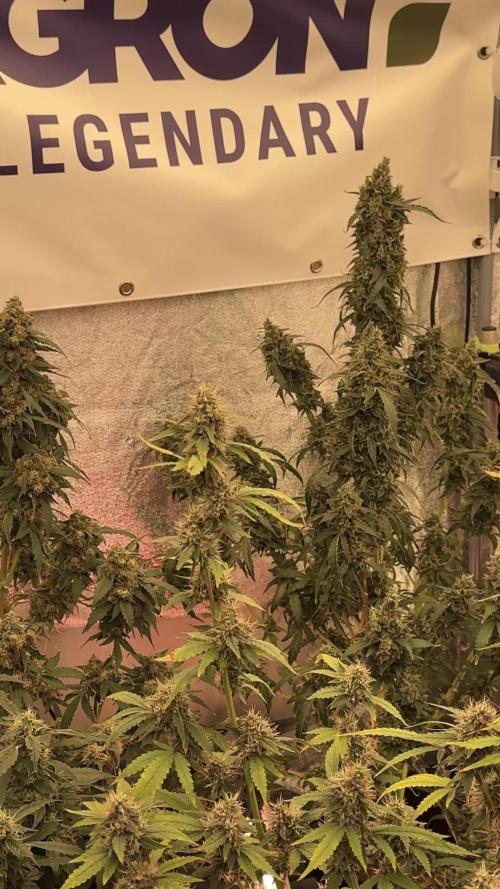
🍬 Candy Rain Auto by Zamnesia | Week 12
✨ The Glamorous Survivor Is Getting Louder and Louder 🍬🔥🌸
Welcome back to another chapter of the 8×8 Adventure! 🌱💚
Well...
Our solo survivor has apparently decided that being quiet and elegant was not enough anymore.
😂
She's getting louder.
And louder.
And louder.
🍬🔥🌸
The stacking is becoming impossible to ignore.
The flowers are becoming more substantial.
She's continuing to build all over the plant.
And every time I look at her, I find another little detail that wasn't quite as obvious the week before.
She's beautiful.
She's becoming more impressive.
And she's definitely making herself heard now.
😂🍬
This is Candy Rain Auto.
Our survivor.
Our glamorous survivor.
Our solo girl.
And at this point...
she's basically saying:
"Okay, enough talking. Look at what I'm building."
😂🌸🔥
So...
let's look.
────────────────────────
🍬 WEEK 12 – SHE'S GETTING LOUD
────────────────────────
There are plants that quietly develop.
There are plants that suddenly explode.
And then there is Candy Rain...
who appears to have chosen the middle ground and simply keeps getting louder every single week.
😂
She's stacking.
She's bulking.
She's developing flowers throughout her structure.
And the whole plant is becoming increasingly difficult to ignore.
What I really like is that there isn't just one area doing all the work.
The flowering structures are developing throughout the plant.
You look at one branch...
then another...
then another...
and there's always something happening.
Another flower.
Another developing cola.
Another little section gaining volume.
Another area catching the light.
It's becoming a beautiful, continuous story.
🌸🍬🌿
────────────────────────
🔥 STACKING, STACKING & MORE STACKING
────────────────────────
This is probably the biggest thing I notice this week.
She's stacking.
And she's stacking beautifully.
🌸🔥🌸🔥🌸
The flowers are becoming increasingly defined.
The structures are getting more substantial.
And the plant is starting to look less like a girl who is simply flowering...
and more like a girl who has decided:
"Right. We're building now."
😂
And I absolutely love watching that transition.
Because we've been following this plant from much earlier in the run.
We've watched her establish herself.
We've watched her flower.
We've watched her develop.
We've watched the first flowers become larger structures.
And now...
we're watching those structures continue to stack and gain presence.
That's the beauty of doing these weekly diaries.
You don't just see a plant.
You see the progression.
────────────────────────
📢 SHE'S GETTING LOUDER
────────────────────────
I keep coming back to that word.
Louder.
😂🍬🔥
Because visually...
that's exactly how it feels.
She's making herself known.
The flowers are becoming more obvious.
The stacking is becoming more obvious.
The overall plant is becoming more substantial.
And the closer we get...
the more she seems to say:
"Hello? Are you looking at me yet?"
😂
Yes, Candy Rain.
We are.
We definitely are.
🍬👀🌸
────────────────────────
🌼 THOSE PISTILS ARE CHANGING
────────────────────────
And now we're starting to see another little part of the story develop.
The pistils.
🌼➡️🌸
She's beginning to change their colour.
We're starting to see some of that earlier bright, warm appearance evolve.
They're no longer all sitting there looking exactly the same.
There's a transition happening.
And I really enjoy watching this because it's one of those small visual details that becomes much more obvious when you follow the same plant week after week.
She's still carrying plenty of green.
She's still very much a green girl.
But we're beginning to see those little changes developing within the flowers.
And that's another reminder that she's moving.
She's progressing.
She's following her own rhythm.
Nothing feels rushed.
Nothing feels forced.
She's simply moving along exactly as she seems to want to.
🍬🌼💚
────────────────────────
💚 STILL PLENTY OF GREEN
────────────────────────
And yes...
there's still a lot of green.
😂🌿
Candy Rain is not suddenly turning into an autumn postcard.
She's still carrying plenty of beautiful green foliage.
And that's perfectly fine.
She's still developing.
She's still stacking.
She's still bulking.
She's still doing her thing.
I don't want to force the story into some expectation of what she "should" look like at a particular moment.
That's one of the things this whole project has taught me.
Every plant has its own rhythm.
Every phenotype expresses itself differently.
And Candy Rain is telling us her story in her own language.
So...
we watch.
We document.
We appreciate.
And we let her continue.
────────────────────────
🌿 SHE'S FOLLOWING HER OWN RHYTHM
────────────────────────
This girl has never really been interested in following anybody else's schedule.
😂
And I love that.
She's moving according to her own rhythm.
Not necessarily screaming ahead.
Not necessarily taking forever.
Just...
moving.
Perfectly.
At her own pace.
And I think that's one of the most important things to recognize in a room like this.
When you've got twelve different plants sharing one environment, you're going to see different speeds.
Different structures.
Different expressions.
Different reactions.
And that's exactly what makes the 8×8 Adventure so interesting.
Candy Rain isn't late.
She isn't early.
She's Candy Rain.
🍬💚
And she's doing Candy Rain things.
────────────────────────
👑 THE SOLO SURVIVOR HAS BECOME A CHARACTER
────────────────────────
I still think back to how this girl started her story.
She was our solo survivor.
The one that remained.
And somehow...
she has evolved into one of the characters I most enjoy following.
😂🍬
At first, the story was simply:
"She's still here."
Then:
"She's growing."
Then:
"She's flowering."
Then:
"She's stacking."
Then:
"She's bulking."
And now:
"She's getting louder."
😂🔥
That's quite an evolution.
She may have started as the survivor...
but she's definitely not behaving like a background character anymore.
────────────────────────
🌸 FLOWERS EVERYWHERE
────────────────────────
Look around the plant...
flowers.
Look again...
more flowers.
Move closer...
even more flowers.
😂🌸
That's what I love about this stage.
The plant has developed enough structure that the flowers now tell most of the story.
You can see the framework.
You can see the branches.
You can see the foliage.
But your eyes keep getting pulled toward those developing flowering structures.
And Candy Rain has plenty of them.
She's filling her space beautifully.
Not necessarily in some dramatic, explosive way...
but consistently.
And consistency is beautiful.
Week after week.
Flower after flower.
Stack after stack.
────────────────────────
📸 THE PHOTOGRAPHS ARE TELLING THE STORY
────────────────────────
Looking at this week's photographs, I really like how clearly the plant's progression comes through.
The wider photographs show the overall structure.
The closer photographs reveal the individual flowers.
And then you get those little details...
the pistils.
The developing resin.
The flower texture.
The different stages of development across the plant.
It's almost like looking at a little map of where she's been and where she's going.
And honestly...
I could probably keep photographing her all day.
😂📸
Because every time you change your angle, another flower catches your eye.
────────────────────────
💡 SAME ROOM. SAME PHOTONS. SAME CANDY RAIN.
────────────────────────
And of course...
we have to come back to one of the biggest themes of the 8×8 Adventure.
Same room.
Same general environment.
Same lighting philosophy.
Same irrigation system.
Same nutritional foundation.
Same 12/12 schedule.
Same grower.
And yet...
different plants.
Different genetics.
Different expressions.
Candy Rain is receiving the same general lighting environment as everyone else.
The two additional Future of Grow Black Series 600W fixtures are still part of the room.
We're keeping them around:
💡 ~59% power from the plug
with approximately:
☀️ ~1,500 PPFD across the upper canopy
and naturally varying depending on canopy height and position.
The photons are the same opportunity.
But Candy Rain decides what to do with them.
And apparently...
she wants to make flowers.
Lots of flowers.
😂🍬🌸
────────────────────────
☀️ THE ARTIFICIAL SUN KEEPS DOING ITS JOB
────────────────────────
I really like what the expanded lighting setup has brought to this project.
Not because we're trying to force the plants to do anything.
But because we have more capability.
We can create a broader lighting envelope.
We can control the output.
We can give the room the photons it needs without simply running everything flat out.
And then...
we observe.
That's the interesting part.
The light provides the energy.
The plants interpret it.
And Candy Rain?
She's interpreting it beautifully.
She's stacking.
She's bulking.
She's developing.
She's getting louder.
🍬☀️🌸
────────────────────────
💚 THERE'S NOT MUCH FOR ME TO DO NOW
────────────────────────
And honestly...
this is probably the biggest thing I can say about this week.
There's not much for me to do.
😂
I'm looking.
I'm observing.
I'm checking.
I'm supporting whatever needs support.
I'm adjusting when something actually asks for an adjustment.
And otherwise...
I'm letting her be.
Because she's doing beautifully.
Why would I interfere with something that is already working?
The plant has established her structure.
The flowering sites are there.
The flowers are developing.
The stacking is happening.
She's progressing.
So my role becomes simpler.
Observe.
Respond.
Support.
And get out of the way.
🌱💚
────────────────────────
😂 THE GROWER'S JOB: EXIST
────────────────────────
There comes a point in every grow where the plant basically tells you:
"Okay...
I've got this."
😂
And Candy Rain is definitely approaching that conversation.
She's doing her thing.
She's asking for what she needs.
And when she does...
we respond.
But otherwise?
I'm just here.
Existing.
😂
Watching her.
Admiring her.
Taking photographs.
Writing about her.
And occasionally saying:
"Well...
look at you."
🍬👀🌸
Sometimes growing is incredibly complicated.
And sometimes...
the best thing you can do is let the plant grow.
────────────────────────
🌼 THE COLOURS ARE STARTING TO TELL US MORE
────────────────────────
The changing pistils are one of the details I'm particularly interested in watching now.
Earlier, those warmer yellowish tones were already giving Candy Rain a unique character.
Now we're beginning to see more change.
It's subtle.
It's gradual.
And it's exactly the kind of thing I enjoy documenting.
Because this isn't about one photograph.
It's about the sequence.
Week 10.
Week 11.
Week 12.
And suddenly you can see that little shift.
That's the magic of a diary.
You capture something that seems tiny today...
and a few weeks later, you realize it was part of a much larger transition.
🍬🌼💚
────────────────────────
❄️ AND YES... SHE'S STILL FROSTY
────────────────────────
The resin development continues as well.
❄️🍬
She's not finished showing us what she can do.
The flowers continue carrying that beautiful frosty character.
And combined with the changing pistils and all that green...
she's developing a really lovely visual identity.
Again...
not necessarily the most dramatic plant in the room.
Not necessarily the strangest.
Not necessarily the biggest.
She's simply...
Candy Rain.
And honestly?
That's more than enough.
────────────────────────
🍬 BEAUTIFUL WITHOUT TRYING TOO HARD
────────────────────────
Maybe that's what I like most about her.
She doesn't look like she's trying.
😂
She just grows.
She stacks.
She develops.
She changes.
And somehow...
she ends up beautiful.
There are plants that look like they were designed for a magazine cover.
And then there are plants where you keep watching them week after week and slowly realize:
"Wow...
I really like this girl."
Candy Rain is that kind of plant for me.
She's grown on me.
Literally.
😂🍬🌿
────────────────────────
🔬 SAME ENVIRONMENT – DIFFERENT EXPRESSION
────────────────────────
Again, for anyone discovering this diary for the first time...
the 8×8 Adventure is about exactly this.
We're not creating twelve completely different worlds.
We're not changing everything every week for every phenotype.
We're giving these plants a shared environment...
and watching what genetics do with that opportunity.
And Candy Rain gives us another beautiful example.
Same room.
Same photons.
Same general nutrition.
Same environmental strategy.
Different expression.
That's the experiment.
And that's why I never get tired of seeing another week unfold.
Because even when nothing dramatic changes...
the plants are still changing.
Quietly.
Gradually.
Beautifully.
────────────────────────
⚗️ NUTRITION – SAME ROOM, SAME FOUNDATION
────────────────────────
As with the rest of the room, the flowering nutrition remains at:
🌱 Plagron Terra Bloom – 2.3 ml/L
🌱 Power Buds – 1 ml/L
🌱 Green Sensation – 1 ml/L
🌱 Sugar Royal – 1 ml/L
⚗️ pH adjusted as required
Current solution values remain around:
⚗️ pH – ~6.02
⚡ EC – ~2.14 mS/cm
Again...
nothing special just for Candy Rain.
Same general room-wide strategy.
Same nutritional foundation.
And then...
we observe what she does with it.
She's doing beautifully.
────────────────────────
🌡️ WEEK 12 – ROOM CONDITIONS
────────────────────────
The room continues broadly around:
🌡️ Day temperature: ~26.5°C
🌙 Night temperature: ~26°C
💧 RH: ~61%
🌱 Substrate temperature: ~25°C
💦 Nutrient solution: ~25°C
⚗️ pH: ~6.02
⚡ EC: ~2.14 mS/cm
💨 CO₂: ~693 ppm
💡 Light schedule: 12/12
? Pot size: 15 L
💧 Irrigation: ~1.45 L/plant/24h
Same room.
Same environment.
Same lighting upgrades.
Same nutrition.
Different week.
And another beautiful chapter from Candy Rain.
🍬💚🌸
────────────────────────
🔥 SHE'S ENTERING THAT BEAUTIFUL "JUST WATCH" PHASE
────────────────────────
I think that's the best way to describe where we are now.
Just watch.
😂
Watch the flowers.
Watch the stacking.
Watch the colour.
Watch the pistils.
Watch the resin.
Watch the plant.
And when she asks for something...
we respond.
Otherwise...
let her do what she does.
This is where patience becomes part of the grow.
The plant doesn't need us to make something happen every day.
Sometimes...
she just needs time.
And Candy Rain is using that time beautifully.
────────────────────────
🔍 WHAT I'M WATCHING NOW
────────────────────────
So what am I looking for?
Honestly...
more of the same.
🌸 Continued stacking.
🍬 Continued bulking.
🌼 Further changes in the pistils.
❄️ Continued resin development.
🌿 Watching all that green evolve naturally.
👀 And simply seeing where her own rhythm takes her.
I'm not trying to predict exactly what she's going to look like at the end.
I'm not trying to force a timeline.
I'm just enjoying the progression.
Because right now...
she looks happy.
She looks beautiful.
And she looks like she's enjoying herself.
────────────────────────
✨ FINAL THOUGHTS – LET CANDY RAIN SHINE
────────────────────────
Week 12.
Candy Rain Auto.
Our solo survivor.
Our glamorous survivor.
Our increasingly loud survivor.
😂🍬🔥
She's stacking.
She's bulking.
She's getting louder.
She's changing.
Her pistils are beginning to shift colour.
She's still carrying plenty of beautiful green.
She's moving at her own rhythm.
And she's becoming more impressive by the week.
There's not much for me to do now.
And honestly?
I'm perfectly happy with that.
I'll exist.
😂
I'll observe.
I'll support whatever she needs.
I'll make adjustments when they're actually necessary.
And otherwise...
I'll let her be.
Because she's doing her thing.
And she's doing it beautifully.
🍬🌸💚
This girl doesn't need me to write her story for her.
She's writing it herself.
One flower.
One stack.
One week at a time.
So let's give her the spotlight.
Let's let her shine.
Let's enjoy the colours as they begin to change.
Let's watch those flowers continue to build.
And let's see how loud this beautiful girl can get.
😂🔥🍬
Candy Rain...
keep doing your thing.
Keep stacking.
Keep bulking.
Keep changing.
Keep surprising me.
And most importantly...
keep being you.
Because whatever you're doing...
it's working beautifully.
🍬💚🌸✨
────────────────────────
🙏 THANK YOU
────────────────────────
As always, thank you so much to everyone following the 8×8 Adventure. 💚🌱
Thank you to GrowDiaries for giving us the space to document these individual journeys and share the experience with growers around the world.
Thank you to Zamnesia for the Candy Rain genetics and for giving us this beautiful solo survivor to follow.
Thank you to Plagron for the growing media and nutrition supporting the room.
A huge thank you to Future of Grow for supplying the additional Black Series 600W fixtures and giving us the opportunity to explore this expanded lighting setup. 💡☀️🌿
Thank you to LumiFlora for helping bring additional light into the deeper areas of the canopy.
Thank you to TrolMaster for helping keep the environment stable behind the scenes.
And, of course...
thank you to everyone following along.
Every comment.
Every question.
Every message.
Every person who stops by to see what the girls are doing.
It genuinely means a lot. 💚
And Candy Rain?
You're getting louder.
You're getting bigger.
You're stacking.
You're changing.
You're becoming more beautiful every week.
🍬🔥🌸
You started this adventure as our solo survivor.
Now?
You're one of the girls that I genuinely look forward to seeing every time I walk into the room.
And that's something special.
So this week...
the spotlight belongs to you.
🍬✨👑
Let's keep watching.
Let's keep documenting.
Let's keep enjoying the journey.
And let's let this beautiful girl continue moving at her own rhythm.
No rushing.
No forcing.
No unnecessary interference.
Just observation...
support...
and appreciation.
Because sometimes...
the best thing a grower can do is simply stand back and say:
"She's got this."
😂🍬🌿
And Candy Rain?
I think she's got this.
Growers Love, my friends. 💚🌱
See you next week in the 8×8 jungle...
where the flowers keep stacking,
the colours keep changing,
the photons keep flying,
and our solo survivor keeps getting louder and louder and louder.
🍬🌸🔥💚
Let her shine.


Likes
2
Share


@MRAutoguyuk
Follow
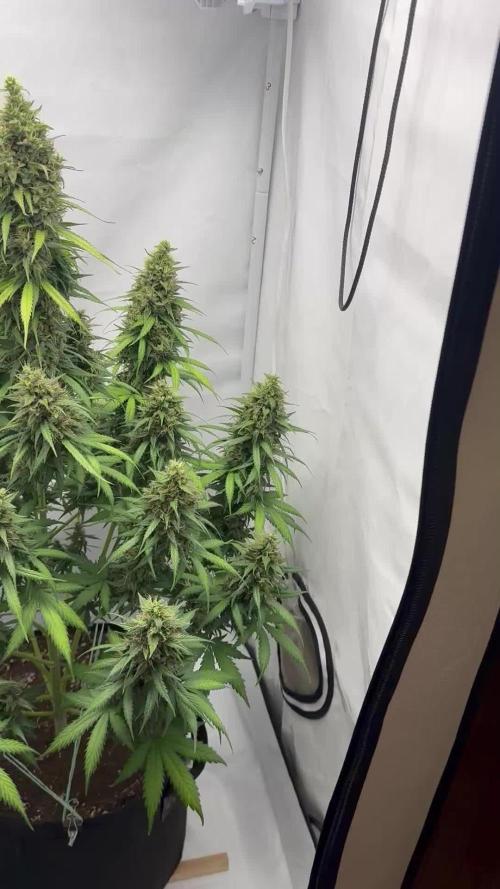
Out of the 5 plants the gelato spirited and flowered quicker than the other 4 gorilla glue plants even though it was planted a week later. From start to finish I didn’t have one problem with this strain and was shocked by the colas developing on the plants even from early flower. I’m not surprised this is one of fastbuds most powerful strains and it’s a pleasure to grow! The yield I admit isn’t the greatest bud the bud that it produced was some what close to phenotypes. Would definitely recommend this strain, not the biggest yielded but a pleasure to experience growing. Would grow again without a doubt but for now going to have a fat joint of gelato & gorilla glue. If you have any questions on these strains feel free to comment or message!
Till next time
HAPPY GROWING!!!




Likes
18
Share


@Hashy
Follow
This was a good harvest for 9L pots, good root structure. The plant pulled out some real nice colours at the end of its life, if I could have lowered temps a bit I bet she would have looked stunning with the fade.
Smoke report coming up in a few mins.

Likes
80
Share


@Silky_smooth
Follow
Last week of this incredible journey started her flush yesterday and she’s finishing up very nicely leaves are yellowing out Buds are ripening very deliciously and looking and feeling very very Dence this is gonna be a good harvest
Day 100 still no more mold detected i think we are in the clear but it was quite the scare for sure now hoping it stays that way untill harvest so fingers crossed 🤞🤞😉😉
Likes
1
Share


@CannabisKhan
Follow
Plants were watered on day 4 of week 9, as follows:
Lucy: 1 gallon water, pH: 6.27, Height: 22 in.
Herbert: 1.25 gallons water, pH: 5.77, Height: 24.5 in.
***Both fed nutrients - 5 ml/.5 gal BioVega (3% N, 1% Phosphate, 5% Soluble Potash), 7 ml/.5 gal BioBoost (1% Phosphate), and 1 ml/.5 gal BioRhizotonic (0.6% Soluble Potash)
Plants were watered on day 5 of week 9, as follows:
Thin Mint Sr: 1 gallon water, pH: 6.76, Height: 20 in.
Thin Mint Jr: 1 gallon water, pH: 6.50, Height: 19.5 in
Notes: Thin Mint Jr has nutrient burn and so was NOT fed nutrients today. Thin Mint Sr was fed nutrients at 50% strength 2.5 ml/.5 gal BioVega (3% N, 1% Phosphate, 5% Soluble Potash), 4 ml/.5 gal BioBoost (1% Phosphate), and 0.5 ml/.5 gal BioRhizotonic (0.6% Soluble Potash) (both plants still in nutrient distress - in process of recovery but have some new growth that is greener so improvement is being observed; slowly but surely!)
***Plants ideally would have been transitioned to the flowering phase this week, but due to nutrient deficiencies and nutrient burn on Thin Mint Jr., we are holding off on this transition for 1 week to give the plants a chance to recover from stress.

Likes
2
Share

@Phileed
Follow
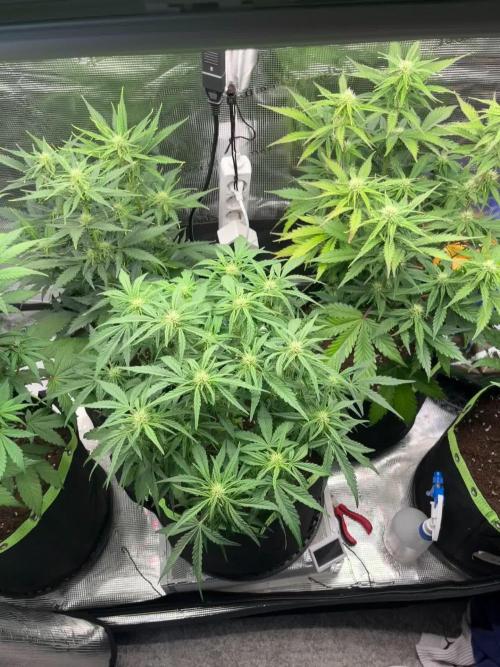
Week 6 mix pack 4 plants and 3 different strains looks like to me. I completely changed my predictions that are in the pictures since I saw the colors starting to come out
Week 5 papaya cookies looking a bit sad today but generally looking good with a lot of buds
Let’s see what comes next !!!!!
Likes
23
Share


@MistaOC
Follow
*******************************************
11.02. Day 16
*******************************************
13.02. Day 18
*******************************************
16.02. Day 21
*******************************************
Likes
9
Share


@Ronin716
Follow
Just another photo dump lol This girl is proving to be a slow finish for me. Going on to week 16 now and I’ve decided to give her the flush as her trichs are all starting to go amber. I felt I’ve traded enough potency for yield now and I don’t think she’s really racking on much more weight. This might be the last update until after harvest. Up until it’s time to trim and jar. Wish me luck folks. I’m thinking I’ll be close to a half pound of this fatty 😍😂
Likes
60
Share


@Drgreenthumb627
Follow
1 week left until i flip, the blue dream and white runtz are lagging behind but the pineapple express, and ghost train are begging for flower!
day 54, and what a beautiful first grow it has been so far, these girls have responded well to all the punishment i could dish out in training and have responded with a beautiful even canopy. cannot wait to see them flower
day 55, midday, lights are off for the next 36 hours to expedite the flowering process.

Likes
10
Share


@Canadian_Steelheader
Follow
Week 6 went well the girls are doing nicely, getting harder to take pics now. pH is decreasing in the root zone below 5.5 I’ve been feeding at 6.0 to raise it, but doesn’t seem to be helping. pH pen is calibrated so I’m going to flush Tomorrow to bring it to 5.7 crowding is becoming an issue, I’m using yo-yos to help support and pull away from each other. I’ve been removing the odd leaf to uncover flowers. All in all I am looking forward to harvest in a few weeks.

Likes
2
Share


@jahredi
Follow
Starting a second seed of this Wedding Cake strain from Lifted, a rec grower. The first seed has some interesting mutations going on that I did not see in any of the four plants last year. Hopefully this one comes out strong and uniform. If it does, I’ll likely clone it and hit the clone with some colloidal silver to reload. I have 9 seeds left, but it would be nice to have some extras. I really scored with these seeds.
I put a few photos of a plant from the same seed stock. As you can see, the plant is very robust. I also found it very durable, pest and weather resistant. It also provides high yields.
The research I’ve done says that Lifted’s Wedding Cake strain comes from a clone of the Seed Junky strain, which I believe to be the original strain. Whether the seeds I found in my rec store purchase are from cross pollination, genetics or stress, I’m not sure. However, given that I popped 4 seeds last year and had four females, I feel pretty confident that the seeds are from stress or genetics. So they would be feminized. No topping, just some serious LST.
This year, I plan to top the stronger of the two and FIM the other.

Likes
6
Share


@SAC87
Follow
Hey Growers.
It’s going great around here. These girls are happy, healthy and growing like mad. They’ve chunked up so much that they’re starting to lay down. It’s just a couple at the moment so I’ll keep an eye on them and see if intervention is needed. The trichomes are so gritty it feels like table salt between your fingers and the Cali has a orange/lemon citrus and woody scent. The Jack is sour skunk and the cookies Kush is a sweet sugary scent.
I’m not 100% sure if they’re fox tailing from light stress or just natural Kush characteristics. I’ll be keeping an eye out for hermie’s and stress. I’ve added some Green Planet Rezin, as I think it’s awesome and helps with aroma and makes oily terps. I’m thinking this will be my last top dress and I’ll probably just do half dose and top up with monster bloom for the next couple waters then drop everything except cal and Rezin.
Happy Growing 🌱

Likes
4
Share


@Stork
Follow
Last week or maybe less then a week 🤔
Day 127 Mon
PH 6.0
EC 0.2
PPM 70
DLI
PPFD
Water 18c
Day 128 Tue
PH 5.8
EC 0.2
PPM 70
DLI
PPFD
Water 17c
Day 129 Wed
Add Ph Up
PH 5.6 - 5.9
EC 0.2
PPM 80 - 90
DLI
PPFD
Water 18c
Day 130 Thu
Add water
PH 5.6 - 5.7
EC 0.2 - 0.2
PPM 100 - 90
DLI
PPFD
Water 20

Processing
Likes
8
Share


@Stick
Follow
Humidity was freaking high for a while in my area and I'm struggling with RH in the tent, I didn't want the big dehumidifier to work 24/7 but this led to appearance of mold on a tiny side cola. Lesson learned. I did cut everything above the cola and made sure the rest was OK. Continuous surveillance until harvest, that should happen in a few days. Trichomes are almost all milky and her smell is telling me she's ready 😎
