




Likes
8
Share


@FirstTime97
Follow
Week 7 seems to be going fine from my house and then I go to the grow 🤣 well fukc me I’ve ran into few problems let um get abit too dey for their liking the week leading up to Christmas / gave um a good feeding with week 7s nutes and peeled back abit of the fan leaves to get more light around , humidifier broke on us didn’t notice for 2 days so tent was 70 percent humid when gone to check , new humidifier replaced and back on track as I said earlier peeled back a few fan leaves think maybe a few too many plants started showing signs of stress soon after again these are autos and I think it could of stunted if not heavily affected the end product also we noticed about 3 weeks into this grow we had way too many plants in the tent starting to see the effects off that now a lot of nonsense on the lower branches and only really the top Lola’s getting the light and the mass , all the same seed bar 4 plants and very differnt plants all in all , definitely not a strain that’s been mastered about half are tall and spaced out and the others are short and very stacked from my own eye I’d say the shorter and more stacked buds will be the ones bearing more fruit the taller ones look very skinny and airy still

Likes
4
Share


@Jaschkoo0
Follow
I will grow this plant again in a few days but this time without overfeeding.

Likes
15
Share


@Shizzlemanizzle
Follow
Day 36
Done nothing just let them grow and trimmed a few leaves
Day 37 - watered them with feeding. Decreased the amount by 25% except the base nutes. Added 12ml CalMag on 4L water by request of the community.
If leaves curl down more, I will consider a flush.
Day 38
No feed. Color changed from the middleone overnight, I think that’s a good sign. Maybe someone can comment on that 💪🏽. For me it looks very good, I know a few leaves show signs of nutrient burn but I decreased already and no new signs appeared
Day 39
No feed until tomorrow.
Day 40
Fed them with very low amount of fertilizer. I aimed for a ppm of 1000 but I went a bit higher until I have osmosis water . Runoff ppm was 2000, but I have to say I am measuring ppm since this week and will fix this problem
Day 42
No feed
Likes
11
Share

@Greenthumb85
Follow
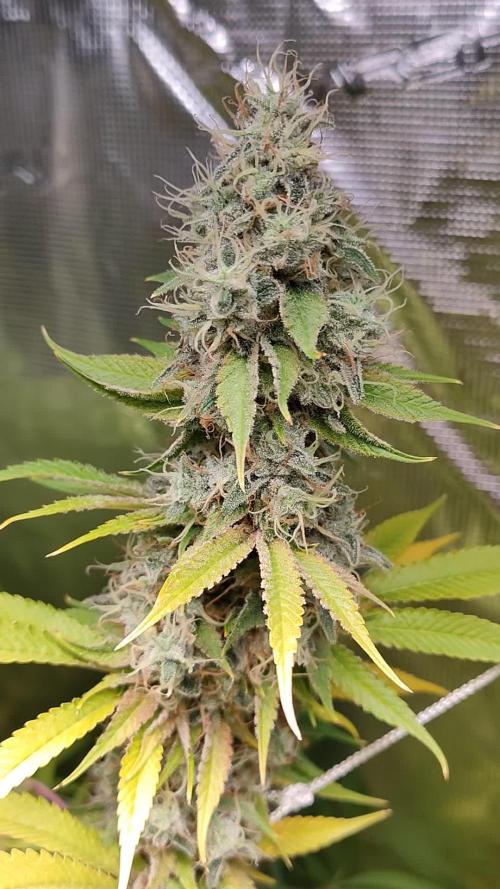
So the ladies are still standing. I decided to let them go another few days to fully mature. They are looking very nice and the extra days were really worth it. They have been getting plain water the last 7 days. Harvest is around the corner. Best of luck to everyone in the competition. Thanks to Zamnesia and Plagron for making this happen. Happy growing.

Processing
Likes
43
Share


@Wicked_Stix
Follow
Day 35 Gave her a flush and fresh nutrients. Added a little maxibloom. Switched lights to 12/12. Did some defoliation.
Nutrients per gallon
.5 tsp maxigro
.25 tsp maxibloom
.25 tsp armor si
.5 tsp calimagic
.1 tsp 90/10 humic/fulvic acid

Likes
3
Share


@Concretejungle
Follow
Great starter plant for a first timer was easy all round she stayed short but stocky rock hard dence nugs


Likes
100
Share


@AsNoriu
Follow
Day 85. Few days ago I trimmed most leafy Northern Lights and she loved it ! So tomorrow two most mature Alaskan Diesels go to chop room. All other plants will get defoliation too, will have space to reach all plants.
Third Alaskan Diesel is catching, but he is a week behind.
Green Cracks will fall in 2-3 weeks, Northern needs at least 4 ....
Will move my Bruce Banner's to main tent.
I still feed Northern , but all other plants are on pure water.
Day 86. Rearranged all girls, trimmed them heavy, gave new positions.
One Northern lights is still in dark part of tent, I think I need 7-10 days til last Alaskan Diesel will mature and it will be only 8 girls left.
Brought other diaries girls to main tent and added Mars Hydro SP150 as supplemental side lightning ... They miss height a lot compaired to older plants, so I hope it will help a bit . Never used lights that way before ...
Happy Growing !!!

Likes
50
Share


@DogDoctorOfficial
Follow
Week 6 Veg Report – Runtz We Meet Again!
Another week, another step forward in our Eternity Grow Cup 2025 journey, and oh boy, do we have a lot to unpack! These Runtz girls are showing their potential, and we’re dialing in every little detail to ensure they thrive. Let’s dive deep into everything that happened this week!
Cal-Mag Deficiency Adjustment – Pheno #5’s Special Needs
This week started with a close inspection of our phenos, and we noticed that Pheno #5 was showing early signs of a calcium/magnesium deficiency. Whether it was slightly off VPD levels or this particular plant being more demanding, we decided to correct it by increasing the dose of RO Water Conditioner. Now, while this isn’t a direct substitute for Cal-Mag, it does contain trace amounts that can help stabilize the situation.
🔬 Understanding Cal-Mag Deficiency:
Calcium and magnesium are essential secondary nutrients. Calcium strengthens cell walls, preventing issues like tip burn and weak stems, while magnesium plays a critical role in chlorophyll production, allowing plants to efficiently absorb light energy.
💡 Signs of Deficiency:
• Yellowing between veins (Magnesium)
• Rust spots on leaves (Calcium)
• Slow growth and weak stems
⚡ How We Address It:
• Slightly increasing RO Water Conditioner to see if trace minerals help
• Keeping an eye on overall nutrient uptake to ensure no lockout
• Monitoring VPD (Vapor Pressure Deficit) closely to optimize nutrient absorption
Let’s see how she reacts next week!
Branching Development – Pheno #2 Leading the Race
All five phenos are thriving, but Pheno #2 is showing the most aggressive branching, pushing outward faster than her sisters. However, overall, we’re seeing very uniform growth, which speaks volumes about the stability of these genetics.
🌱 What is Branching & Why It Matters?
Branching is the plant’s way of expanding its canopy, increasing surface area for photosynthesis, and maximizing potential bud sites. Well-structured branches allow better airflow, light penetration, and more even growth—key for a successful high-yield harvest.
⚖️ Topping vs. Leaf Bending – The Training Choice
Instead of topping, I’ve decided to go with leaf bending for now. This method allows for gentle manipulation of the plant’s growth without causing major stress. Once we introduce the SCROG (Screen of Green) net, this training will help maximize the canopy spread.
Moving to the TrolMaster Ecosystem – A Game Changer
Big move this week—our Runtz girls officially transitioned into the TrolMaster Ecosystem, and let me tell you, they are absolutely loving it! Under the ThinkGrow Model 1 LEDs, they’re thriving, leaves praying upward, soaking in that optimized spectrum.
💡 ThinkGrow Model 1 LEDs – Why They Work
• PPFD of ~400 µmol/m²/s at their level, running only on Channel One
• Full-spectrum lighting tailored for optimal vegetative growth
• Passive cooling design, keeping temps stable while saving energy
Environmental Conditions (Measured on the TrolMaster Tent-X and the AMP-3)
• Temp Max: 26.6°C | Min: 16.2°C
• RH Max: 77% | Min: 52%
• VPD Max: 1.65 kPa | Min: 0.43 kPa
• Solution pH: 5.8
• EC: 0.96
• Water Temp: 16.3°C
Why These Numbers Matter:
• Keeping VPD in check ensures efficient nutrient uptake
• pH and EC levels fine-tuned for maximum root absorption
• Water temp stable to avoid root shock and slow growth
Autopot System Prep – Getting Ready for the Next Phase
The week wraps up with us cleaning and preparing the Autopots for their next phase. These self-watering systems will allow the Runtz girls to access water and nutrients at their own pace, optimizing growth as we head into pre-flower soon!
A huge THANK YOU to Zamnesia, Plagron, and GrowDiaries for making this incredible Eternity Grow Cup 2025 possible! Also, a big shoutout to my main sponsors, thank you for keeping this journey running:
🔥 Aptus Holland – Precision nutrients for peak plant health
⚡ TrolMaster – Bringing automation and accuracy to the grow
🌱 Pro-Mix – The foundation of strong roots and healthy plants
💨 The CannaKan – Premium solutions for top-tier results
Grove Bags – Revolutionizing post-harvest storage & terpene preservation
📜 Ziggi Papers – The ultimate rolling experience
And of course, a massive thank you to the community—followers, supporters, lovers, and even the haters. You ALL fuel this journey, and I appreciate every single one of you!
🚀 Good luck to all fellow competitors—watching everyone’s grows is inspiring, and the competition is fierce!
📢 Join the journey on YouTube & Instagram for exclusive content, behind-the-scenes action, and more insights into this epic run!
👊 Let’s keep pushing, learning, and making history—see you all next week for another deep dive into the Runtz We Meet Again grow! 🌿🔥
💚 growers love to all 💚
Genetics - Runtz https://www.zamnesia.com/6000-zamnesia-seeds-runtz-feminized.html
Nutrients - Plagron https://plagron.com/en/hobby
- Aptus Holland https://aptus-holland.com/
Controls - Trol MAster https://www.trolmaster.eu/
LED - https://www.futureofgrow.com/en
LED - https://www.thinkgrowled.com
Soil - https://www.promixgardening.com/en
Germination - Cannakan https://cannakan.com/?srsltid=AfmBOopXr-inLXajXu3QFgKXCXXos4F1oEvScjMKIB5MR5dk8-GJ-F49
DOGDOCTOR 15% off
Smoking Papers - https://ziggioriginal.com/
Terpene saver - https://grovebags.com/
As always thank you all for stopping by, for the love and for it all , this journey of mine wold just not be the same without you guys, the love and support is very much appreciloved and i fell honored with you all in my life
With true love comes happiness Always believe in your self and always do things expecting nothing and with an open heart , be a giver and the universe will give back to you in ways you could not even imagine so
As always, this is shared for educational purposes, aiming to spread understanding and appreciation for this plant. The journey with nature is one of discovery, creativity, and respect. Let’s celebrate it responsibly and continue to learn and grow together!
Growers Love To you All 💚
#EternityGrowCup #RuntzHunt #GrowersLove #CannabisCommunity #AptusHolland #ProMixSoil #TrolMaster #Zamnesia #Plagron #ZiggiPapers #Grovebags
Likes
18
Share

@DogDoctorOfficial
Follow
Lemon Cherry Gelato YumYum 🙂 | Week 13
Final stretch, full weight, and still not done
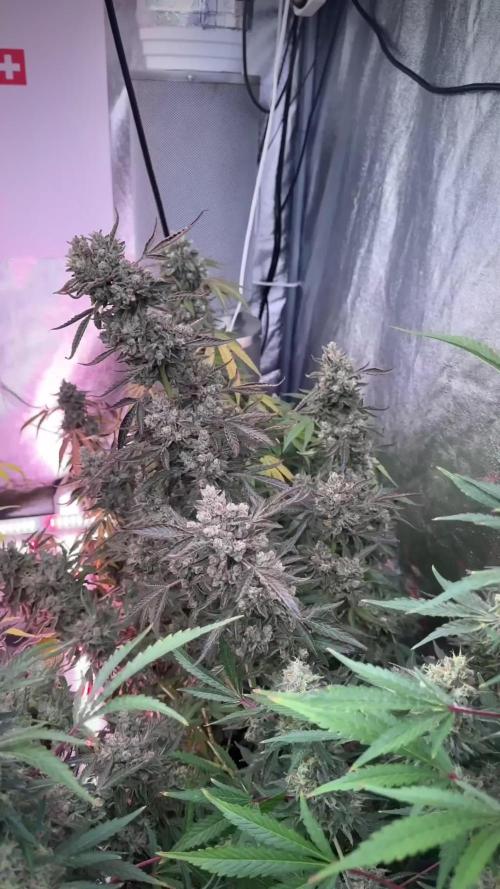
While one Lemon Cherry Gelato is already hanging and drying from last week’s harvest, her sister is still standing — and still stacking.
That alone says a lot about this run.
Same seed pack. Same room. Same schedule. Same treatment.
Yet one finished first, and the other decided she still had more to say.
That’s part of the beauty of running from seed, and part of what keeps these 12/12 from seed runs so interesting from start to finish. Same start, same environment, different expression. One leaned into the early finish. The other kept building.
And now here we are with the second Lemon Cherry Gelato still pushing hard into late flower, still swelling, still changing, and very clearly not in a hurry.
This run has been 12/12 from seed from day one. No veg reset, no transplant games, no long shaping phase — just straight into expression, structure, and flower. Fast, honest, and always a great reminder that a plant does not need extra time to show you what it’s made of.
And this one is showing plenty.
⸻
Week 13 | Still building, still swelling
This week made one thing very clear:
we are in the final stretch, but we are not finished yet.
The plant is deep into late flower now and changing fast.
Not just in size, but in presence.
Buds are denser.
Calyxes are swelling harder.
The room smells thicker.
The air feels heavier.
Colors are starting to shift.
Resin is louder every day.
Everything is becoming more concentrated now.
This is the stage where the plant stops pretending.
No more stretch. No more unnecessary movement. No more wasted energy.
Now it is all weight, density, oils, pressure, and finish.
And she is leaning into all of it.
⸻
Heavy enough to break herself
The most obvious change this week is weight.
Not visual weight.
Real weight.
Branches are bending hard. Some are splitting. Some are collapsing under their own mass. Support is no longer optional here — it is mandatory.
And honestly, that says everything.
This is not airy late flower bulk.
This is real density.
The kind that starts testing branch strength.
The kind that reminds you genetics matter.
The kind that turns “nice structure” into “please hold yourself together one more week.”
The stems on this plant are thick. The branching is strong. The trunk is solid.
And even with that, she is still pushing enough mass to test her own frame.
That tells the story better than I can.
⸻
Feeding less, finishing more
At this point, feeding is simple.
No more pushing. No more chasing numbers. No more trying to force anything extra out of her.
She has already done the work.
Now the goal is simple:
let her finish clean.
At this stage she is only getting water and enzymes (Pure Zym), keeping the root zone active, helping break down what is left, and allowing the plant to use what she already stored.
That’s it.
No heavy feeding. No late flower overcorrection. No panic bottles.
Just clean support, stable inputs, and enough patience not to ruin the last stretch by doing too much.
Late flower is often less about what you add, and more about what you stop interfering with.
⸻
Environment | Warm, stable, and still working
Room temperatures are still a little warmer than ideal, sitting around 26°C during lights on and around 18°C at night.
Would I prefer slightly cooler late flower temps?
Sure.
But the plants are telling their own story, and they are not showing stress worth chasing.
That matters more.
Leaves still look happy.
Uptake is still steady.
Flowers are still swelling.
Resin is still building.
Nothing is stalling. Nothing is fading early. Nothing is asking for emergency corrections.
So while the room is a touch warmer than perfect on paper, the plants are still performing exactly how they should.
And at this stage, healthy performance always matters more than textbook perfection.
⸻
Studio trip included (because of course)
And yes — despite the size, despite the weight, despite how awkward moving late flower plants becomes… she still went to the studio.
Not because it was practical.
Because she earned it.
And honestly, this one deserved proper light.
She is not the tallest plant in the room, but she is dense, broad, heavy, and full enough to make carrying her feel like moving a small tree made of resin.
Worth it.
⸻
What to expect next week
At this point, the answer is simple:
More weight.
More density.
More color.
More resin.
More pressure on branches.
And hopefully clearer signs of the finish line.
What not to expect is a dramatic change in direction.
She is not about to stretch.
She is not about to explode into new shape.
She is not about to surprise anyone with speed.
From here, it is all refinement.
The next week should be about tightening, ripening, swelling, and watching the plant decide when she is actually done.
Not when the calendar says so.
When she says so.
And that is the only timing that matters.
⸻
Final stretch
This one feels special.
Not because she is finished.
Because she is close enough now to make every day count.
The room is changing.
The plant is changing.
The air is changing.
And the finish is starting to feel real.
We are close now.
Not done.
But close enough to respect every extra day.
And as always — thank you to everyone still here.
To Zamnesia for the genetics.
To Plagron for the support.
To GrowDiaries for the platform.
To everyone following from day one.
To the old heads.
To the new ones.
To the quiet ones watching in the background.
To the growers.
To the skeptics.
To the supporters.
To the critics.
To the ones who stayed.
To the ones who just stopped by for a minute.
Love to all of you.
Growers love.
📡 DELETED @ 1K Please stay tuned.we never quit https://www.youtube.com/@TheDogDoctorOfficial NEW 🙏 Thank you for your patience and continued support.
FOR DISCOUNT CODES AND MORE JUST FOLLOW THE LINK https://website.beacons.ai/dogdoctorofficial
📲 Don’t forget to Subscribe and follow me on Instagram and YouTube @DogDoctorOfficial for exclusive content, real-time updates, and behind-the-scenes magic. We’ve got so much more coming, including transplanting and all the amazing techniques that go along with it. You won’t want to miss it.
GrowDiaries Journal: https://growdiaries.com/grower/dogdoctorofficial
Instagram: https://www.instagram.com/dogdoctorofficial/
YouTube: https://www.youtube.com/@dogdoctorofficial Deleted by Youtube - https://www.youtube.com/@TheDogDoctorOfficial NEW
Vimeo : https://vimeo.com/dogdoctorofficial Under construction stay tuned ⸻
Explore the Gear that Powers My Grow
If you’re curious about the tech I’m using, check out these links:
🔆 Lighting & Environmental Control
• Future of Grow — Advanced LED lighting technology
https://www.futureofgrow.com/
DISCOUNT CODE: DOG20
• Lumiflora — Under-canopy LED lighting
https://lumiflorade.com/
• TrollMaster — Environmental controllers and automation gear (past collaboration)
⸻
Genetics
• Zamnesia Seeds — Genetics used in this project
https://www.zamnesia.com/
⸻
🌱 Soil, Substrates, Boosters & Root Support
• Plagron — Substrates, bio mixes, and supportive products
https://plagron.com/en/
⸻
🎒 Storage, Curing & Preservation
• Grove Bags — Curing and storage solutions
https://grovebags.com/
⸻
📸 Photography Equipment & Tools
(Not sponsors, but part of my creative toolkit)
• Sony A6700
• Sony full-frame macro lens + few more
• Stacking photography workflow - learning
• iPhone (for behind-the-scenes shots)
We’ve got much more coming as we move through the grow cycles. Trust me, you won’t want to miss the next steps, let’s push the boundaries of indoor horticulture together!
As always, this is shared for educational purposes, aiming to spread understanding and appreciation for this plant. Let’s celebrate it responsibly and continue to learn and grow together.
With true love comes happiness. Always believe in yourself, and always do things expecting nothing and with an open heart. Be a giver, and the universe will give back in ways you could never imagine.
💚 Growers love to all 💚
📸 P.S. – The Eye Behind the Lens
All photos in this diary (for now — except for the ones showing the camera, which I took with an iPhone) are taken with a Sony A6700 paired with a Sony full-frame macro lens and a few more.
Photography is part of the story — it’s how we share the fine textures, the glow, and the quiet details that words can’t always capture.
I’ve also started experimenting with photo stacking — a technique where multiple images, each taken at a slightly different focus point, are layered together to create one perfectly sharp image from front to back.
It’s not digital enhancement or AI; it’s pure photography — a way to reveal the plant’s beauty in microscopic depth, from trichome to petal.
You’ll even see a few shots of "ghost me" capturing the shots — camera, lens, setup — because every grow deserves not just to be cultivated, but documented like art.
FOR DISCOUNT CODES AND MORE JUST FOLLOW THE LINK https://website.beacons.ai/dogdoctorofficial
NEW DISCORD - Official Server Invite Link : https://discord.gg/ksjAkA5T74
Processing
Likes
25
Share


@Fibro_Witch
Follow
I'm very happy with this weeks progress. They transitioned very well to the garden, which I'm chocking up to the row cover. They didn't need any water due to the thunderstorm we had last night, but I did make a ring around the base of each plant and gave them about 1-2 TBSP of the Coast of Maine Stonington Blend fertilizer. They also got their tomato cages.


Likes
65
Share

@Fibro_Witch
Follow
I'm a few days late on updating this diary as well as feeding my girls (well, just a couple days late on feeding) and the weather is not helping! It's 48F and drizzling out, which is prime conditions for mold production😒 but there's not much I can do about it at the moment.
So I did include a video this week to give a better look at the girls (And please ignore me saying Amy aka CBD Gorilla is a late September finisher.. It's actually mid-October, I can't keep anything straight) Jojo is still the runt of the litter, Amy is catching up to her big sisters and Bubba and Ice Cool are still the stars of the show. Nice colas plumping up and soon to be ready👏 I'm excited!


Likes
7
Share


@Northern_Otter
Follow
Defoliated both plants today for the second time and also cut off some lower branches in preparation for flipping to flower .The Northern lights have responded well to all training methods, topping LST, ScrOG, and defoliation.


Likes
7
Share


@UnitedStrainsGermany
Follow
Wir haben heute die zweite Behandlung gegen tripse wir haben tripse zum ersten Mal und es ist richtig winzig und eklig 😅 ich denke aber die waren 100% im lovingsoil weil die selben auf den Blättern sind. Mal sehen ......
