


Melonade frisch aus dem Vulkan!





Tent
DIY120X90
DIY120X90

Fan
Prima Klima
Prima Klima

Filt
Prima Klima

Soil
Floragard

Indoor
Room Type
Topping
weeks 3
Defoliation
weeks 4, 9
LST
weeks 5
20 liters
Pot Size
2 liters
Watering
Start at Harvest
G
Germination1y ago
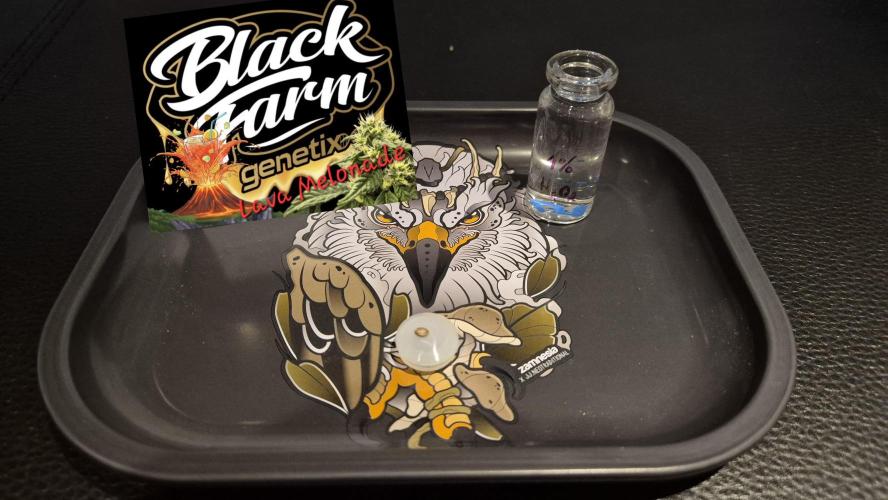
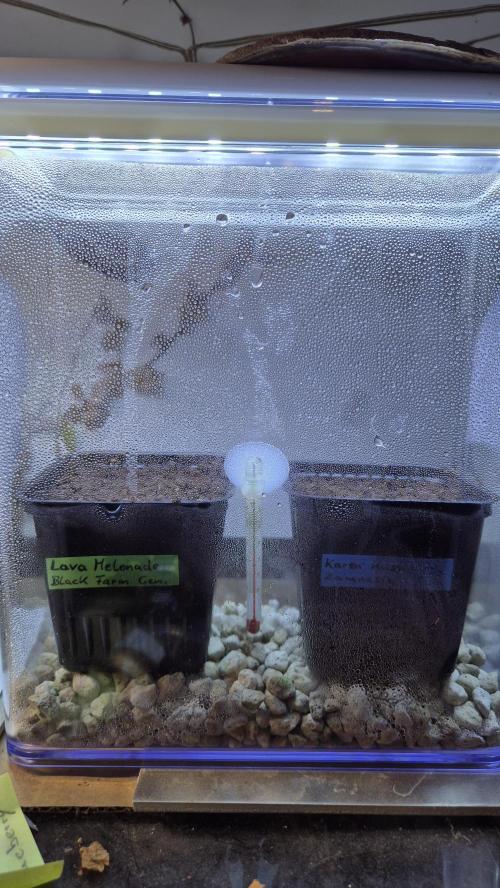
Borberad The Lava Melonade Mission!
After our previous adventures, this time we're tackling a hopefully delicious strain from a less frequently represented seed bank, about which there isn't much to read online yet: Lava Melonade from Blackfarm Genetiks. We wish you and of course us 😅 an explosion of colors and flavors!
With our usual meticulous photo documentation and occasional video insights, we will capture every millimeter of this tropical beauty. Witness how an unassuming seed develops into a plant that has the potential to enchant our senses with the fiery notes of lava and the sweetness of melons.
Profile: Blackfarm Genetiks Lava Melonade – The Tropical Eruption
* Genetics: The Lava Melonade is a fascinating creation from Blackfarm Genetiks, likely carrying a potent mix of fruity and earthy genes. Its name suggests a combination of intense, perhaps slightly spicy aromas ("Lava") and the refreshing sweetness of melons. One can assume a balanced hybrid genetics that combines both Sativa and Indica traits.
* Size: The Lava Melonade is expected to reach a medium to substantial size, allowing it to fully unfold its splendor. Expect heights that are easily manageable indoors, yet still provide room for impressive flower development.
* Color: The color palette of the Lava Melonade could become particularly spectacular during the flowering stage. In addition to rich greens, darker, almost reddish or purple accents in the leaves and flower clusters may be expected, reminiscent of glowing lava. The buds are expected to be covered in a dense layer of sparkling trichomes.
* Aroma & Terpenes: The name promises an olfactory sensation! Expect an intense, sweet-fruity scent with distinct melon notes, underlined by an exotic, perhaps slightly spicy or earthy component. The terpene profile is likely rich in Myrcene, Caryophyllene, and Limonene, contributing to this unique aroma.
* Special Features: The Lava Melonade is expected to impress with its extraordinary aromas and high resin production. Its hybrid nature could deliver a balanced effect that is both cerebrally stimulating and physically relaxing. We are curious to see how its "lava" side manifests in growth and effect.
Legal Notice
(The small but important addition)
"As always, the unassailable principle of Borberad applies to our Lava Melonade mission: This grow diary serves solely for the scientific documentation of a private and legal cultivation project in accordance with applicable laws. Any abusive or illegal use of the plants or their products is strictly prohibited."
Our roadmap for this mission is already set in stone; we've just optimized the germination a bit.
Week 0:
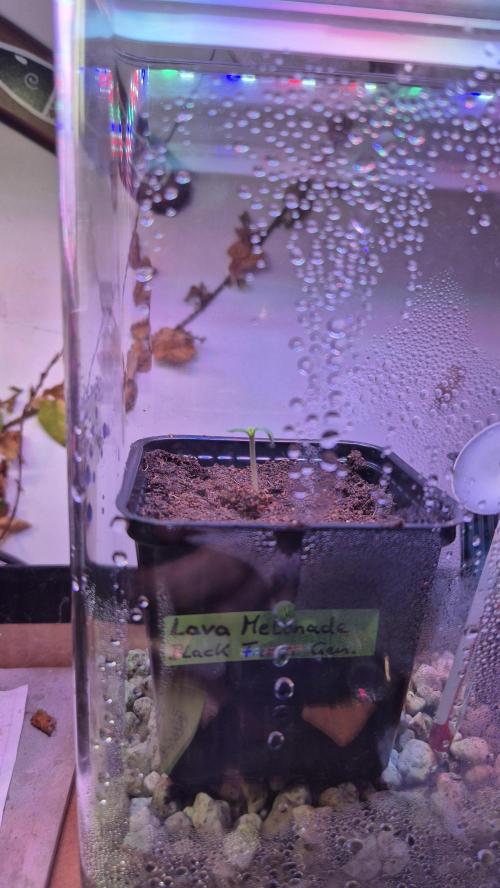
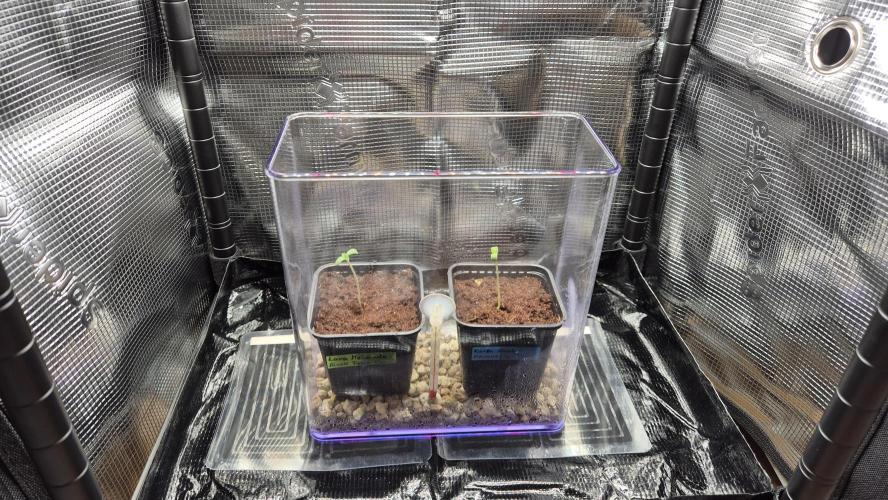
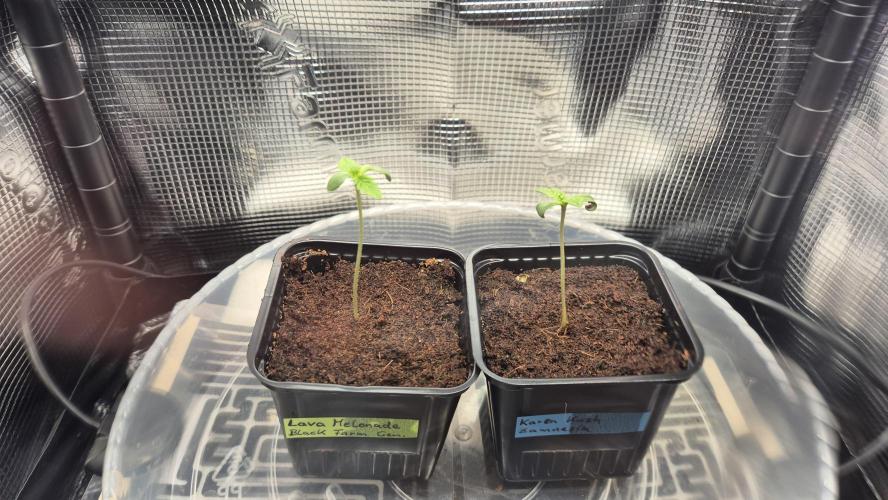
* Day 0.1: First, the valuable seed was soaked for about 20 hours in 1% H2O2 at 25°C in the dark – a kind of wellness treatment for future champions. After that, the seed was placed in our substrate, the coconut germination medium – a hole filled with about 100 ml of coconut in a 400 ml pot, surrounded by 300 ml of light mix.
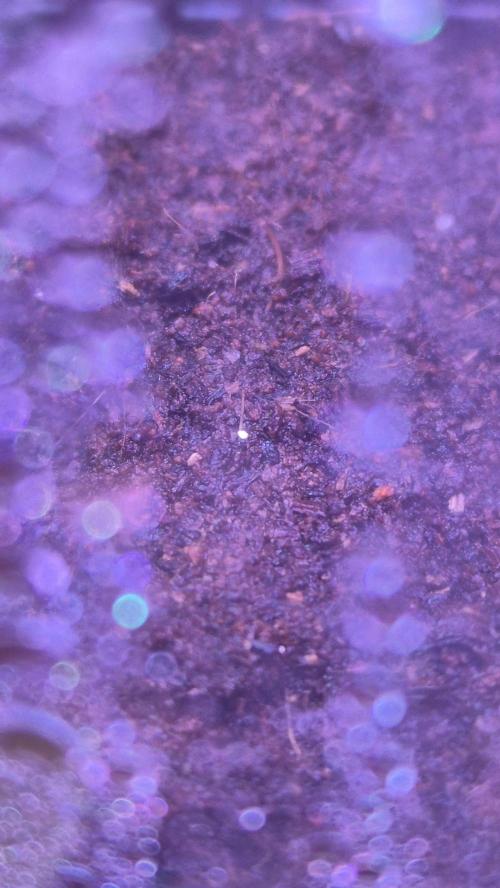
* Day 0.2: The first patience phase begins. We are waiting for the seed to break its shell.
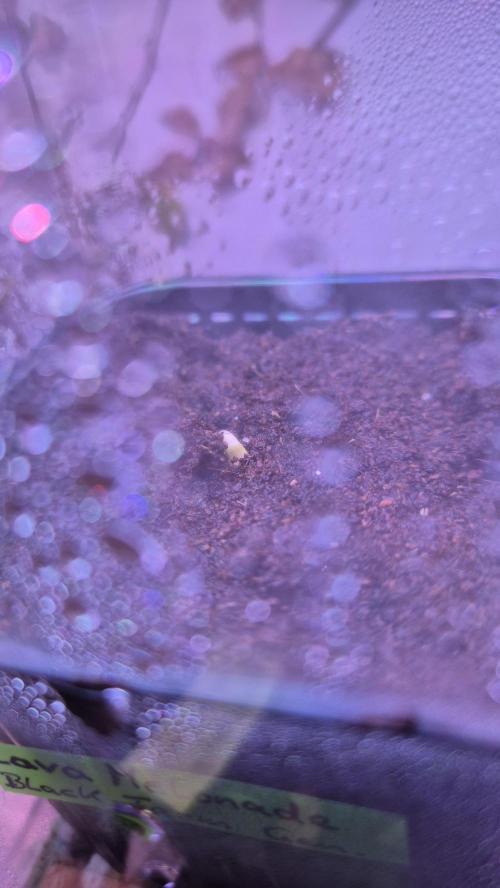
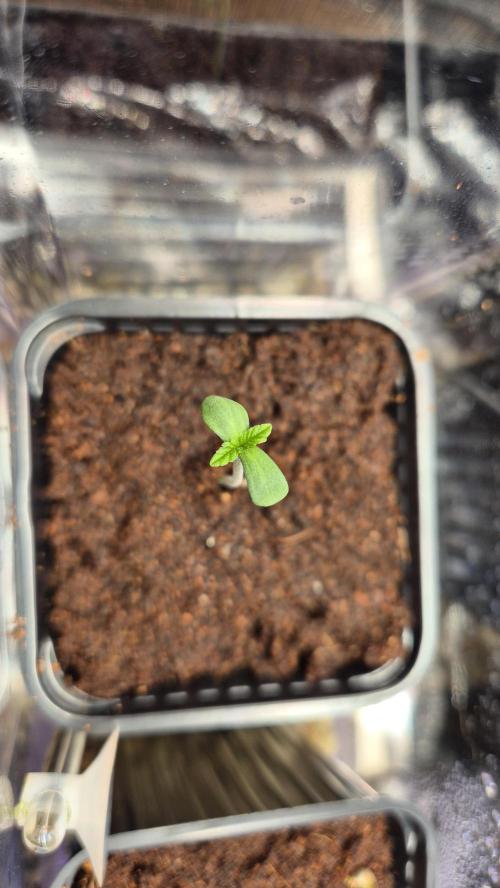
* Day 0.3/0.4: The first signs of life are visible. The cotyledon pair breaks through the substrate after we observed an initial bulge in the substrate surface. We then increased the DLI from about 12 to 16 to give the seedling enough light.
* Day 0.5: We opened the cover to lower the relative humidity to about 80% and increased the light intensity to 20 DLI.
* Day 0.6: Everything is under control. The plant shows vigorous growth.
* Day 0.7: The light dome was removed. The relative humidity is now dropping to 60–65%, which encourages the plant to develop a strong root system.
* Fertilization & Measurements: No fertilizer or water.
2 likes
comments
Share
Used method
Other
Germination Method
1
Week 1. Vegetation1y ago
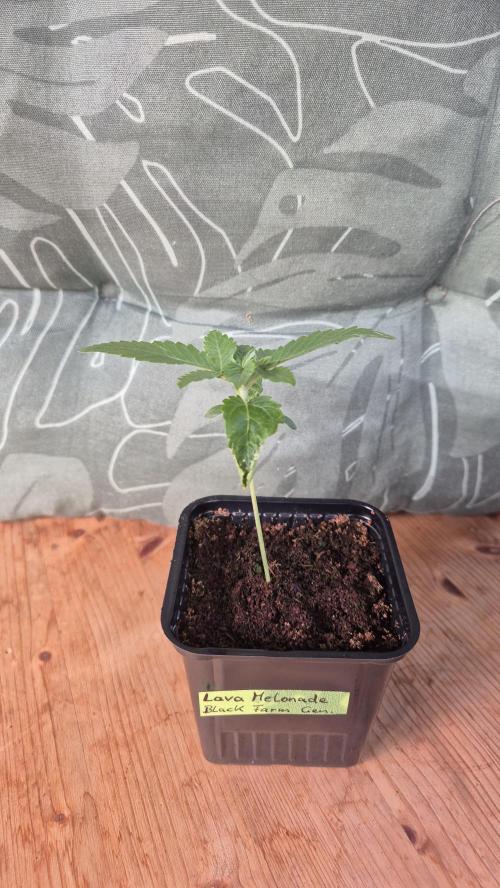
6 cm
Height
28 °C
Day Air Temp
65 %
Air Humidity
25 °C
Night Air Temp
0.4 liters
Pot Size
415 PPM
CO₂ Level
Nutrients 1

Root Complex
2.5 mll
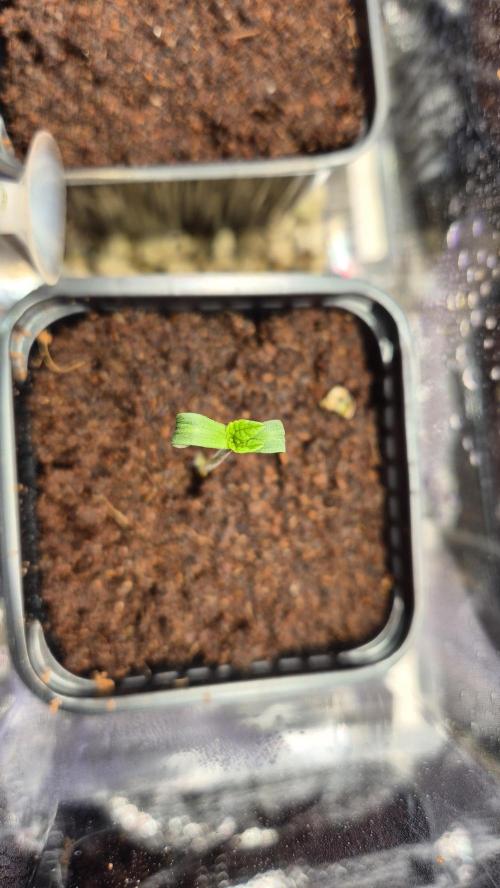
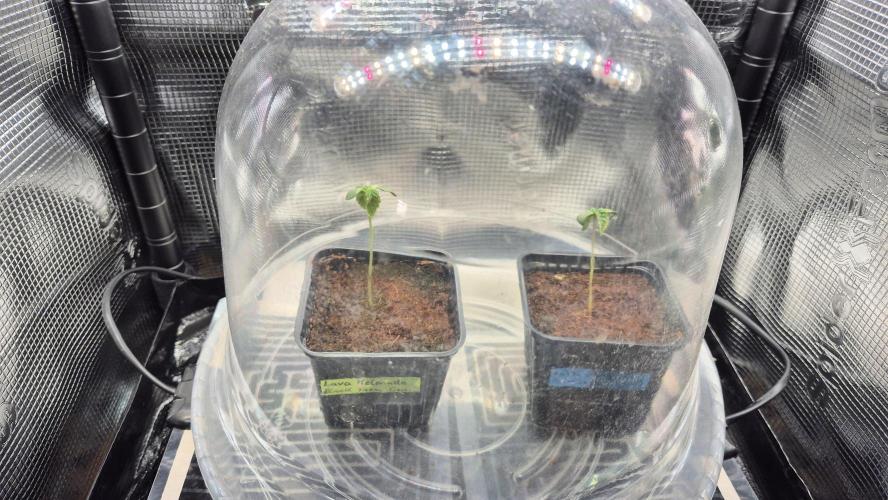
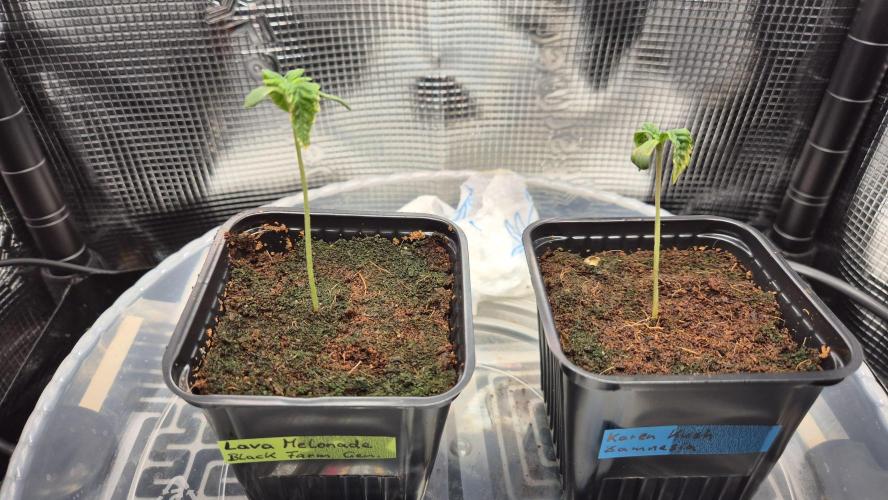
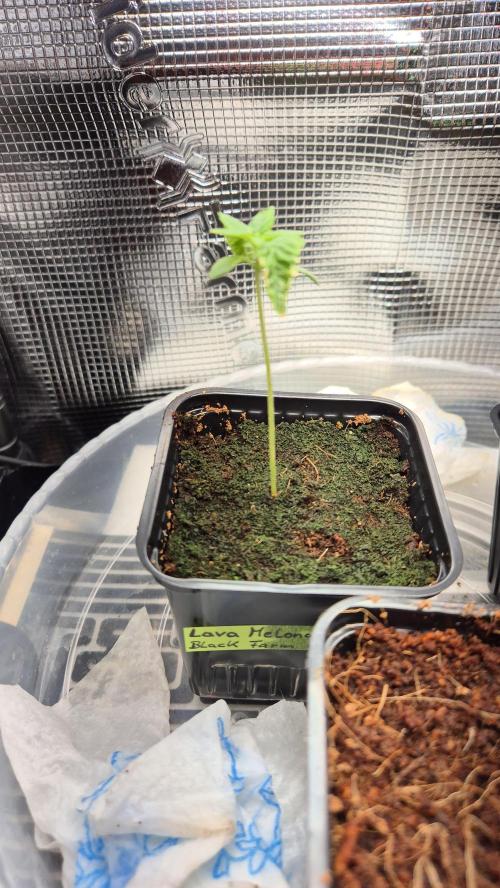
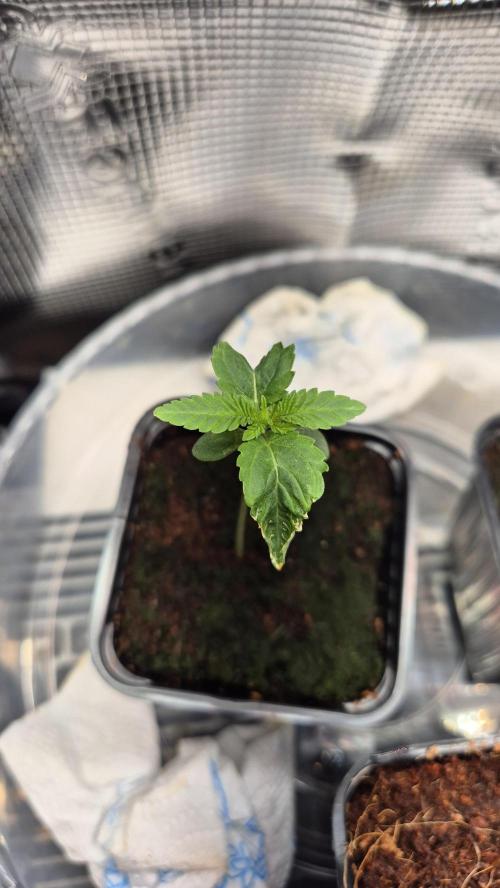
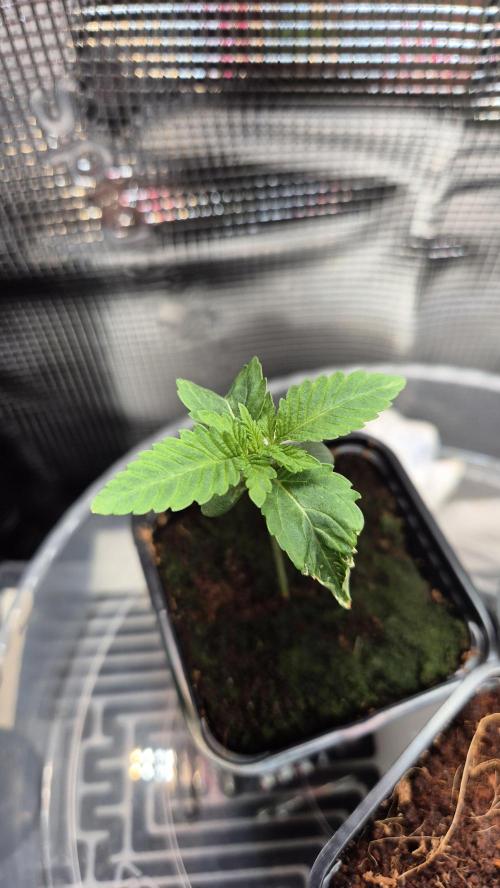
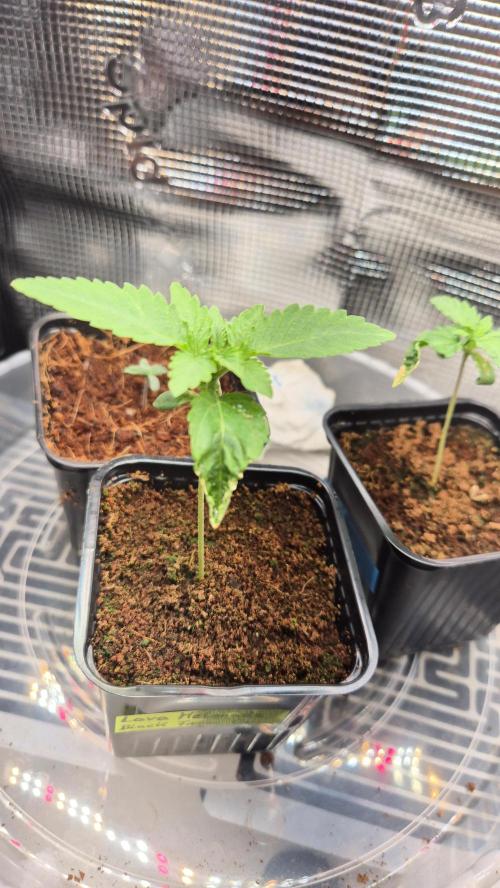
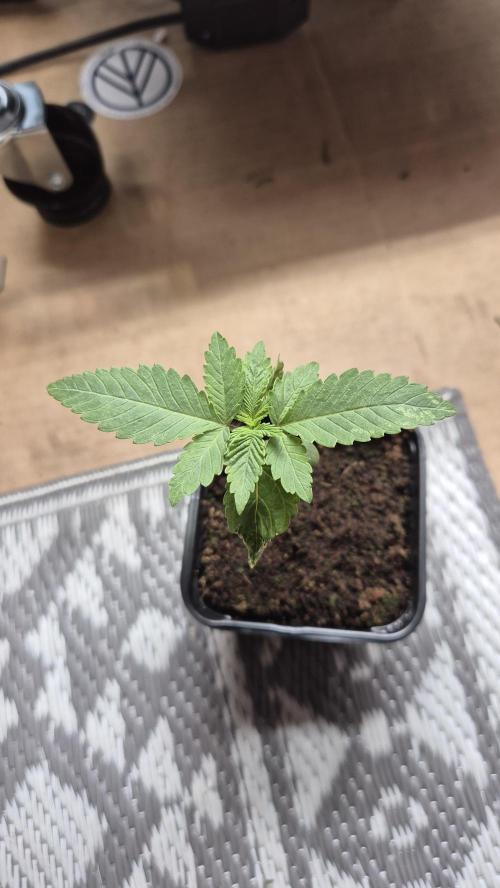
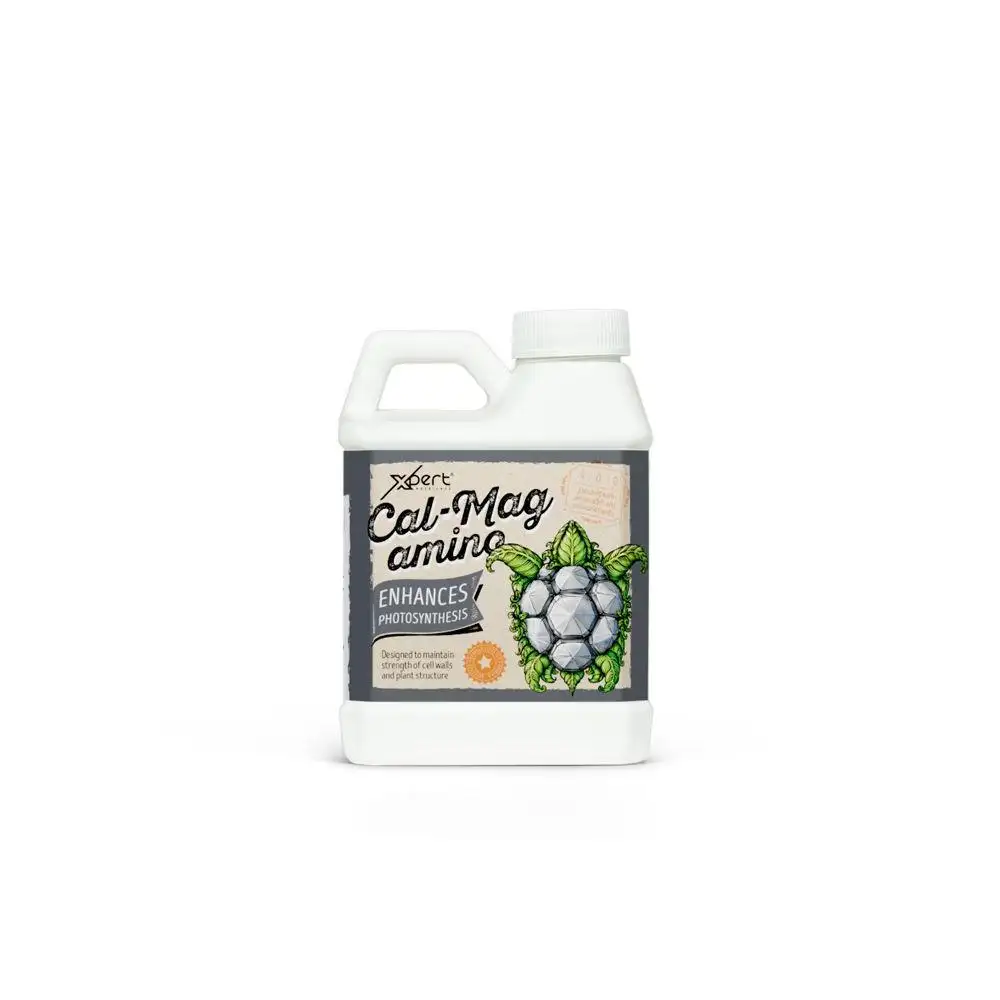
Borberad Lava has successfully completed her first week. Despite our care with climate control (28 °C and 60–65% relative humidity) and the gradual light exposure, the first leaves have suffered a bit, and she has stretched quite a bit. When transplanting, she'll be planted a bit deeper. Since the substrate is starting to dry out, I'm giving her water for the first time with 2ml/l Calmag and 5ml/l Hesi Root until the soil is sufficiently moist again.
* Plant condition: The plant is vibrant and has unfolded its cotyledons. The stem is strong and compact.
* Important events: Successful germination, start of watering with light additives
* Nutrients & measurements: Osmosis water 20 Micro Siemens buffered with Xpert Nutrients Calmag 2ml/L and 5ml/L Hesi Root
* Adjustments: To counteract the leaf damage, the plant was sprayed with Biobiss Leafcoat.
2 likes
comments
Share
2
Week 2. Vegetation1y ago
10 cm
Height
28 °C
Day Air Temp
65 %
Air Humidity
25 °C
Night Air Temp
0.4 liters
Pot Size
0.3 liters
Watering Volume
415 PPM
CO₂ Level
Nutrients 1
Root Complex
2.5 mll
Borberad The foundation is being laid
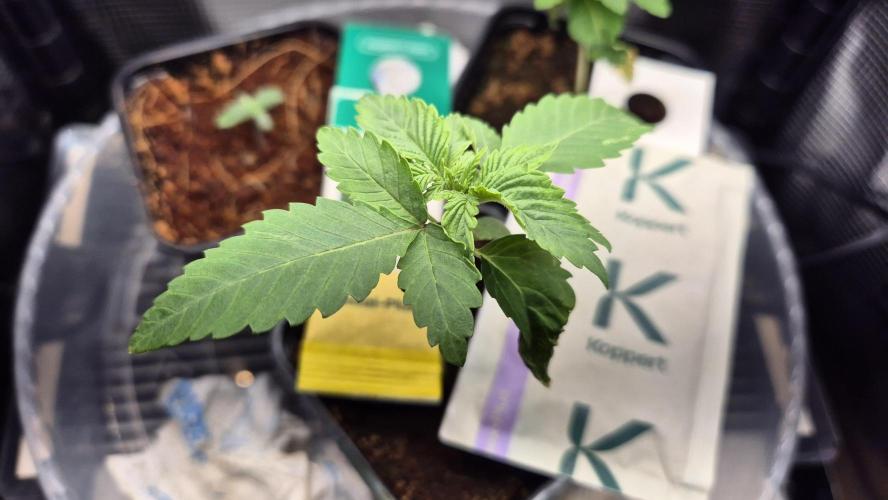
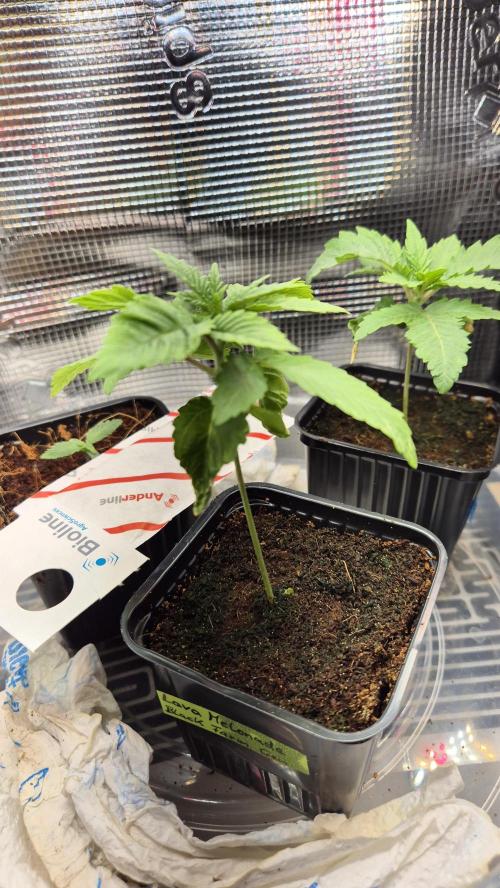
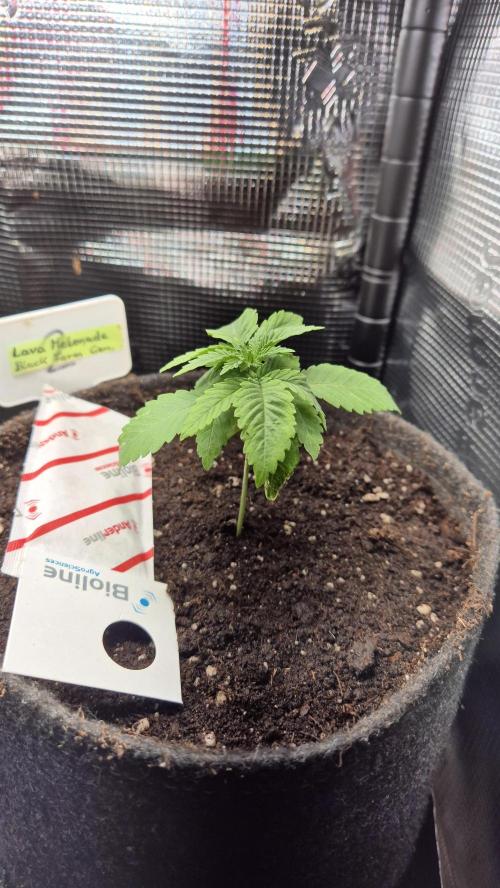
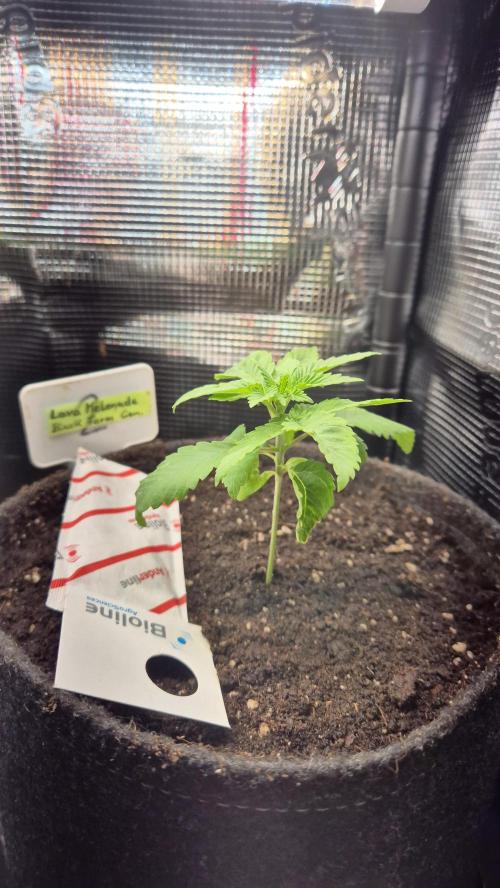
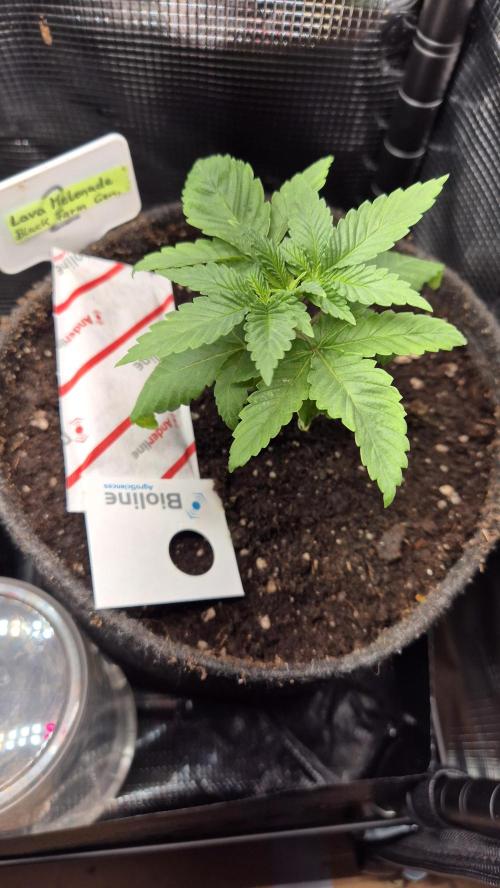
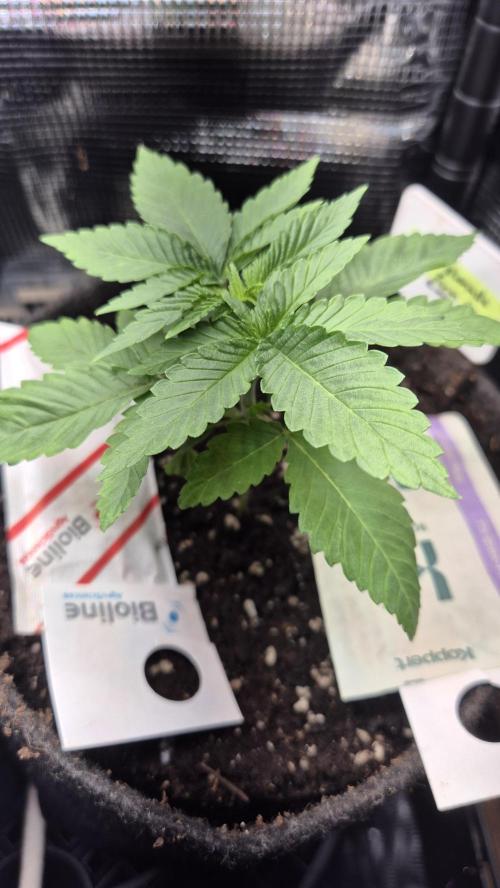
Lava is in the second week of veg.. The leaves have recovered and the new leaves are undamaged. The start of our standard nutrient supply. Osmosis water, enriched with 5 ml/l Hesi Root for strong root development, 2 ml/l Calmag for hardening, and 2.5 - 5 ml/l Hesi TNT for good growth. The DLI has been increased to 30. Repotting into a 3L fabric pot was also on the agenda.
* Plant condition: The first "true" leaves are fully developed.
* Important events: Start of nutrient feeding. Increase of DLI. Repotting into 3L on day 11
* Fertilization & measurements:
* Watering: pH about 6.0. EC about 1.4 mS.
* Drain: We measure sporadically to maintain the deviation of +/- 500 S
* Adjustments: Early rooting of the 400ml, hence repotting on day 11.
1 like
comments
Share
3
Week 3. Vegetation1y ago

10 cm
Height
28 °C
Day Air Temp
6.0
pH
65 %
Air Humidity
25 °C
Night Air Temp
0.4 liters
Pot Size
0.3 liters
Watering Volume
415 PPM
CO₂ Level
Nutrients 2
Root Complex
2.5 mll

TNT Complex
5 mll
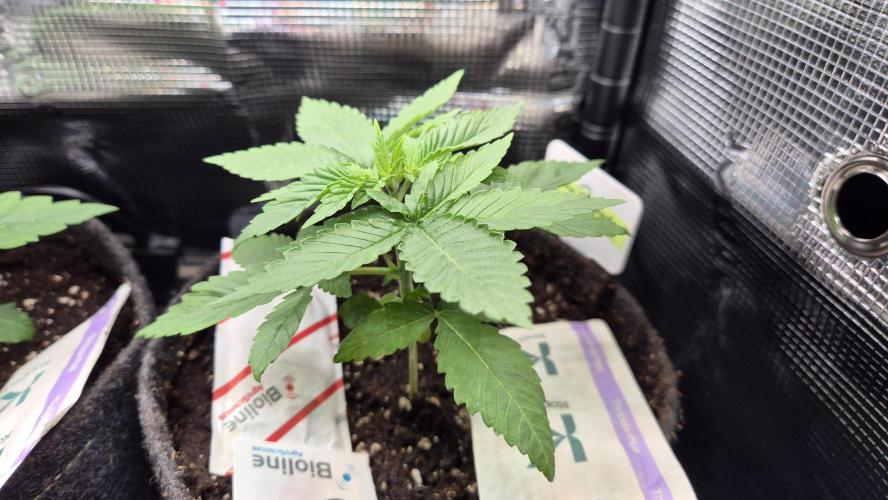
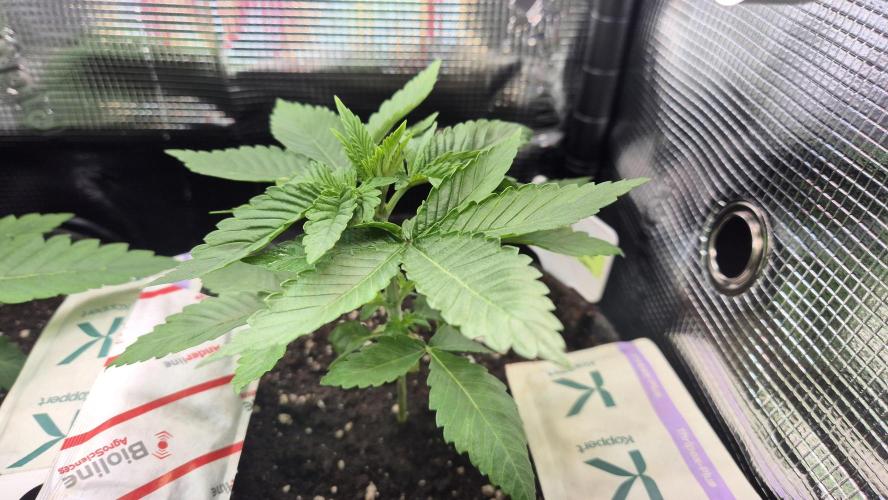
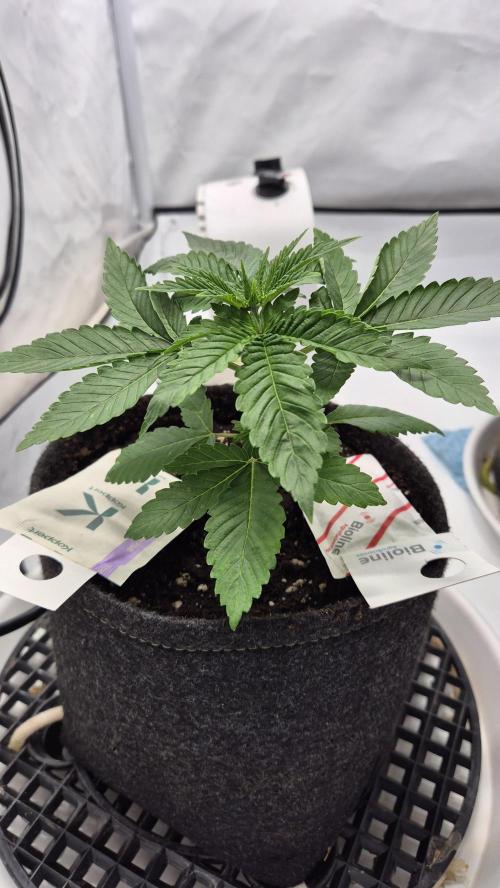
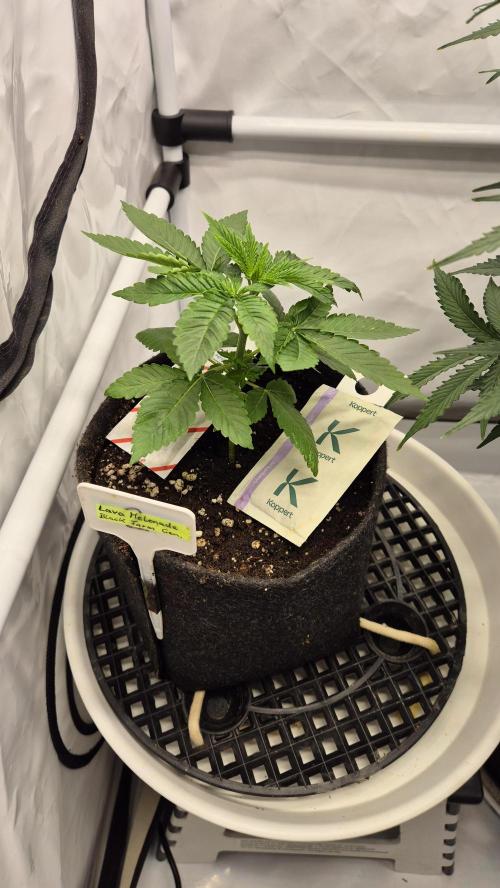
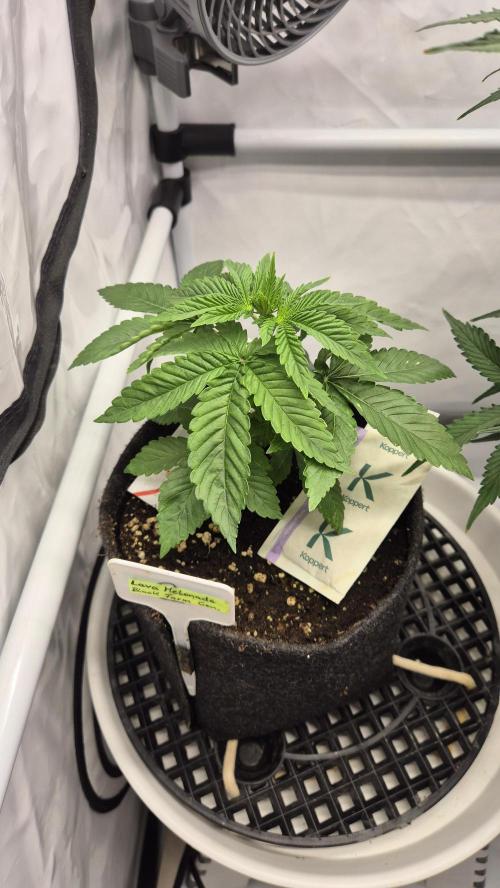
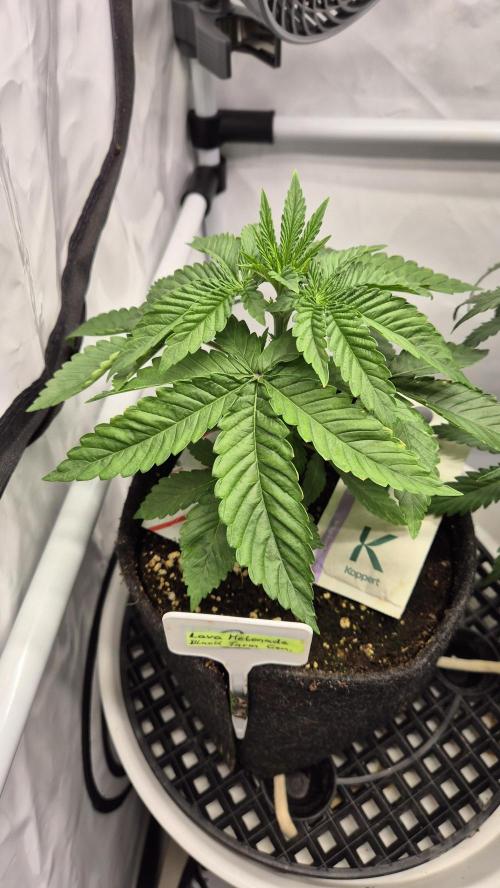
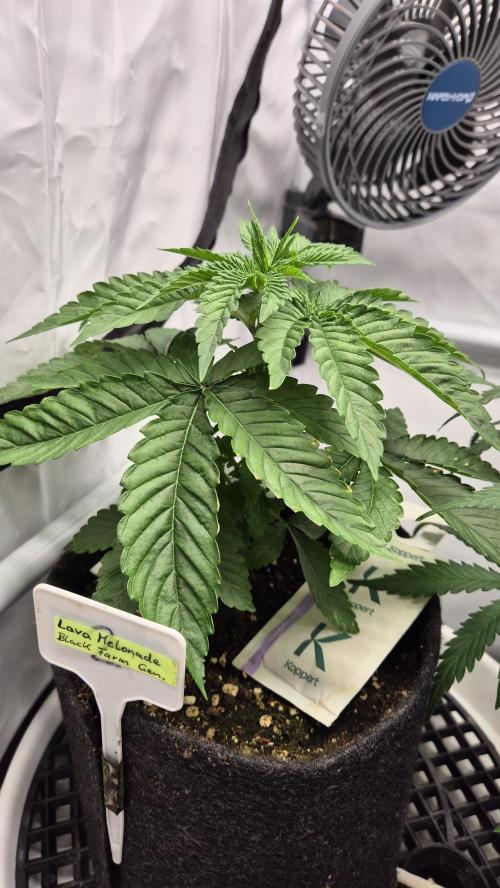
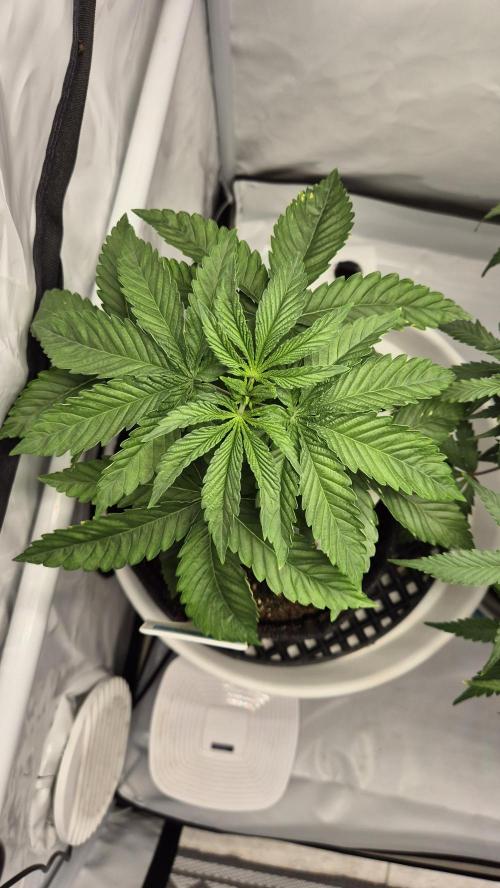
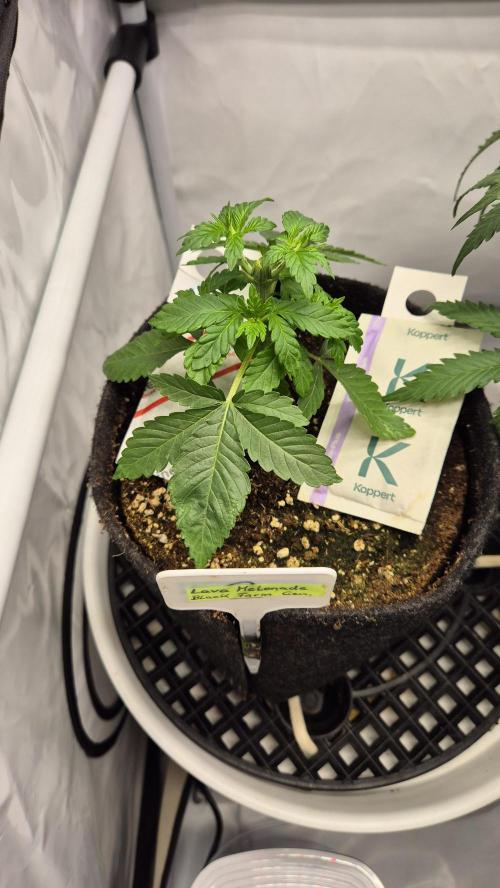
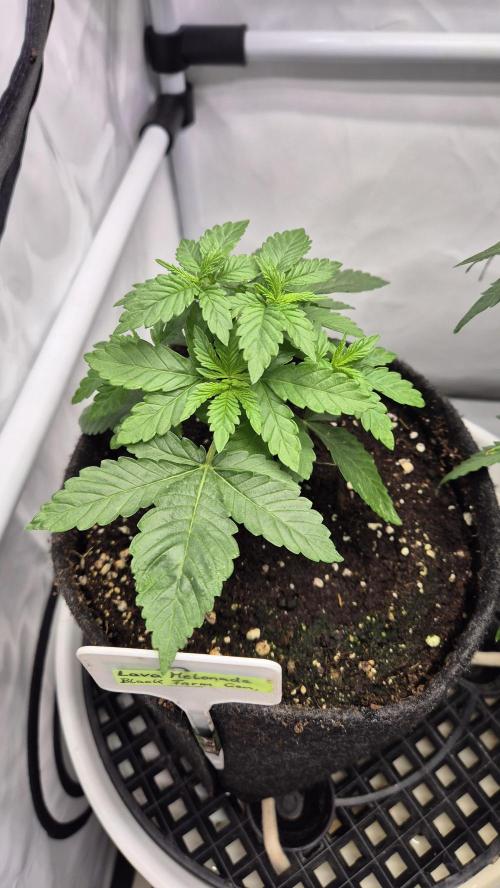
Borberad Vegetation Week 3: Transplanting Survived
Training Begins
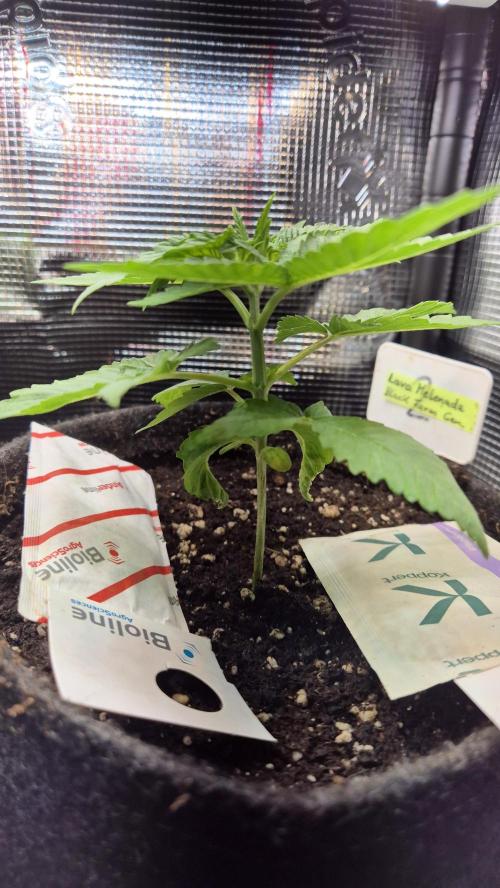
With the start of the third week, the little plant reaches an important development phase. After the plants have survived the transplant stress, they receive a topping, leaving 6 strong shoots for the upcoming training. The substrate in the 3L fabric pot is now watered daily with about 1 liter of nutrient-rich water. The feeding plan for this week includes 2.5-5 ml/l Hesi Root, 2 ml/l Calmag, and 2.5 ml/l Hesi TNT, with the TNT dose increased to 5 ml/l if necessary.
* Plant Condition: The plant is robust and shows strong growth.
* Important Events: Topping
* Feeding & Measurements:
* Watering: pH about 6.0. Conductivity 1.4 - 2 mS.
* Drain: We ensure that the pH does not drop below 5.5 and does not exceed 6.8.
* Adjustments: none
3 likes
comments
Share
Used techniques
Topping
Technique
4
Week 4. Vegetation1y ago
10 cm
Height
28 °C
Day Air Temp
6.0
pH
65 %
Air Humidity
25 °C
Night Air Temp
0.4 liters
Pot Size
0.3 liters
Watering Volume
415 PPM
CO₂ Level
Nutrients 2
Root Complex
2.5 mll
TNT Complex
5 mll
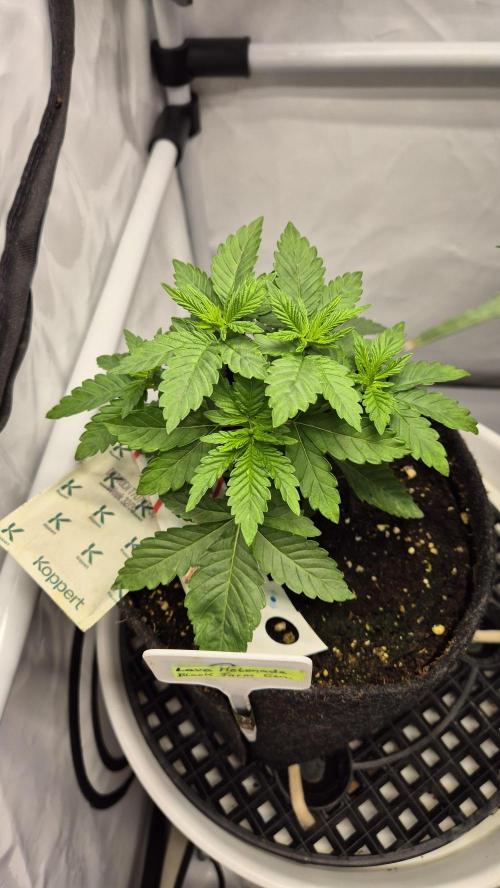
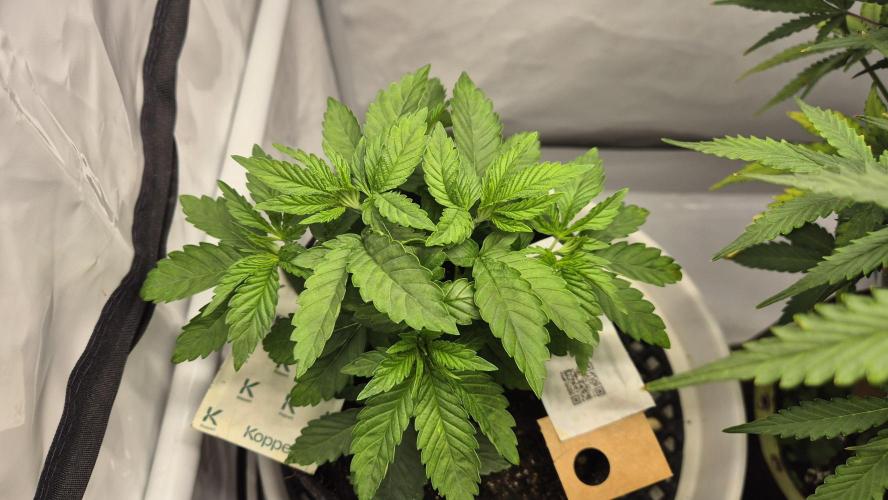
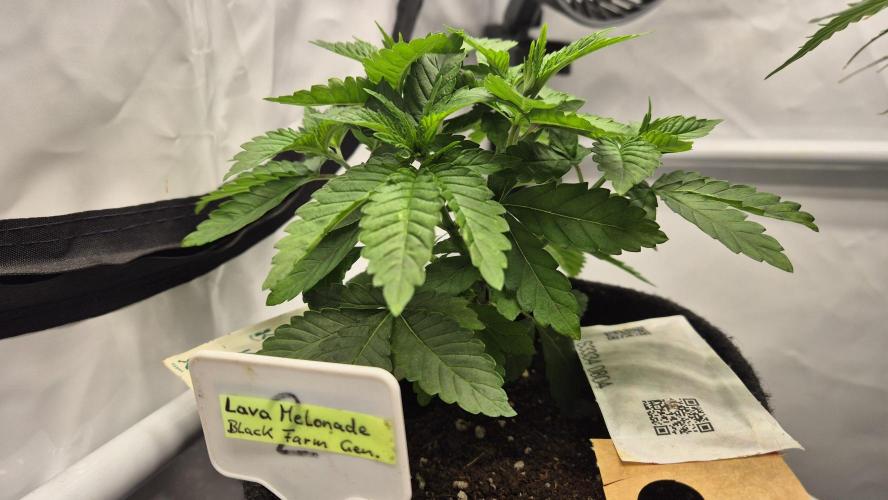
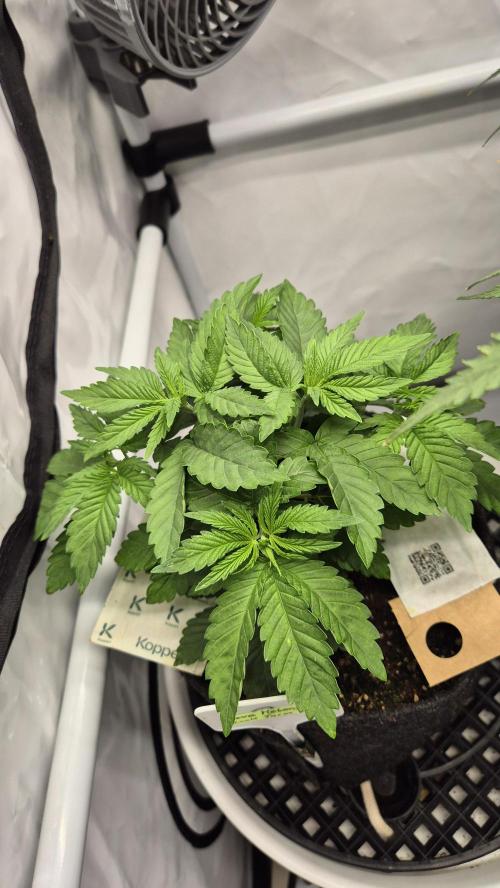
Borberad Week 5: Growth Phase
The plant can spread out in its pot this week and prepare for the next transplant.
The feeding schedule for this week includes 5 ml/l Hesi Root, 2 ml/l Calmag, and 5 ml/l Hesi TNT. The DLI has been increased to 45–50.
* Plant Condition: Strong, bushy growth. The leaves are a deep green and healthy.
* Important Events: Start of LST.
* Feeding & Measurements:
* Watering: pH around 6.0. EC around 2 mS.
* Drain: We ensure that the pH does not drop below 5.5 and does not exceed 6.8, and that the EC maintains the +/- 500 mS deviation.
* Adjustments: Nothing special so far.
4 likes
comments
Share
Used techniques
Defoliation
Technique
5
Week 5. Vegetation1y ago
10 cm
Height
20 hrs
Light Schedule
28 °C
Day Air Temp
6.3
pH
700 PPM
TDS
65 %
Air Humidity
25 °C
Night Air Temp
20 liters
Pot Size
2.5 liters
Watering Volume
415 PPM
CO₂ Level
Nutrients 2
Root Complex
2.5 mll
TNT Complex
5 mll
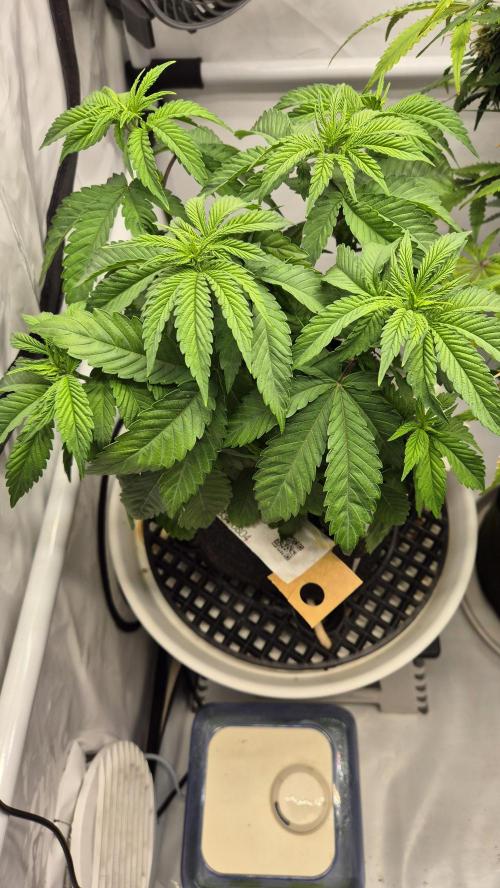
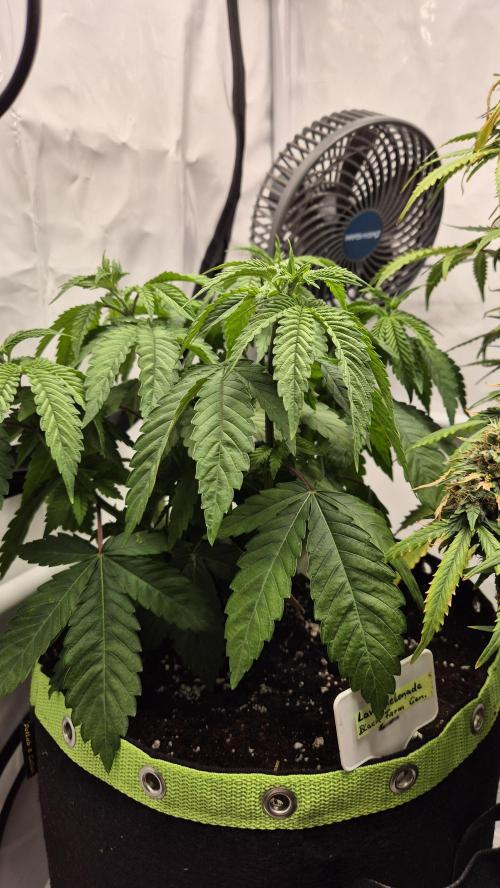
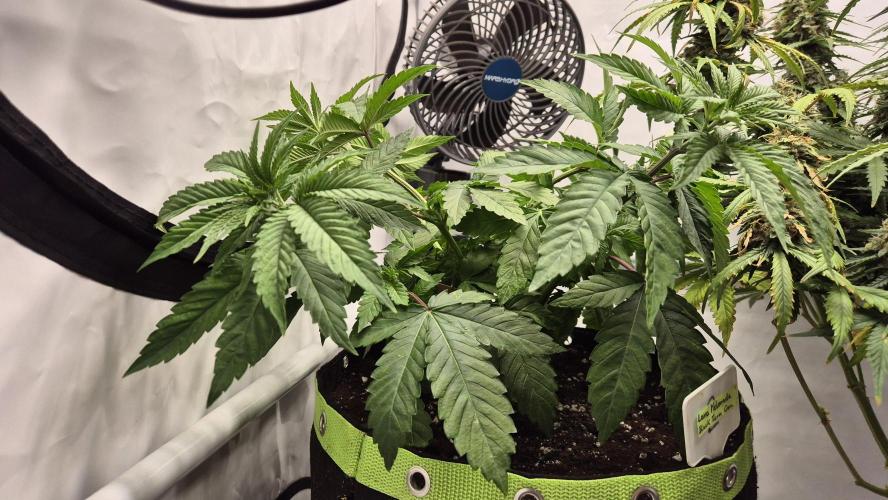
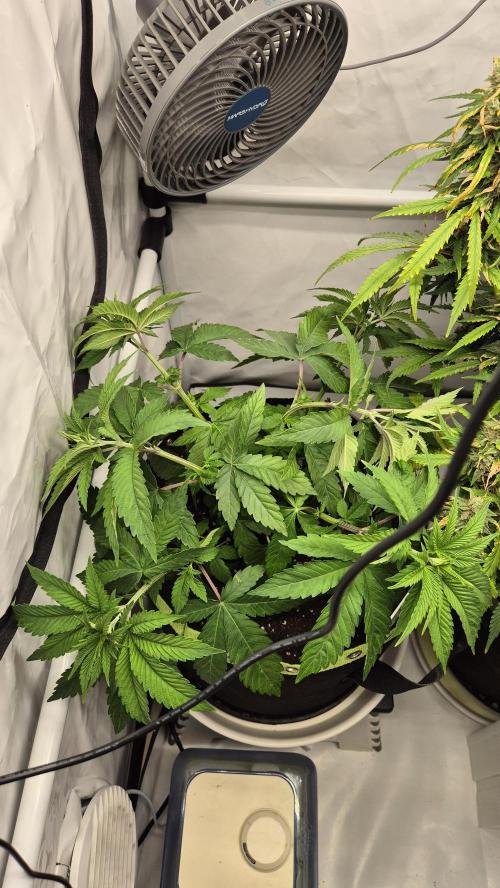
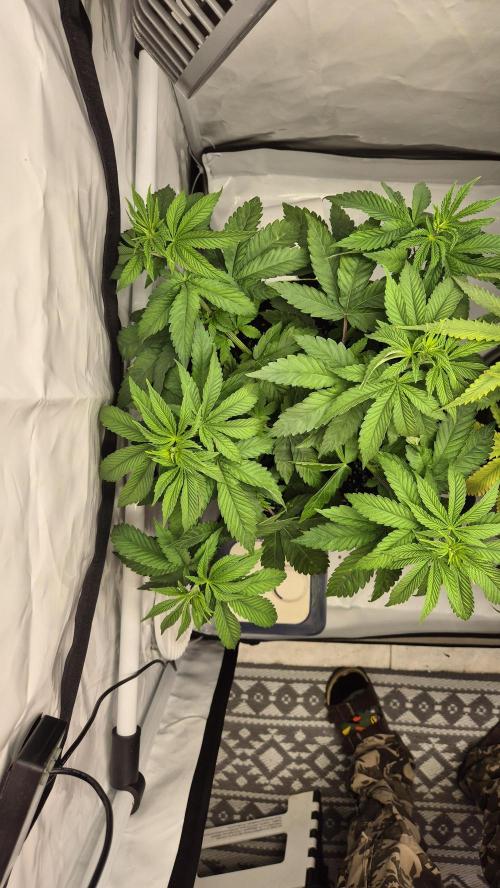
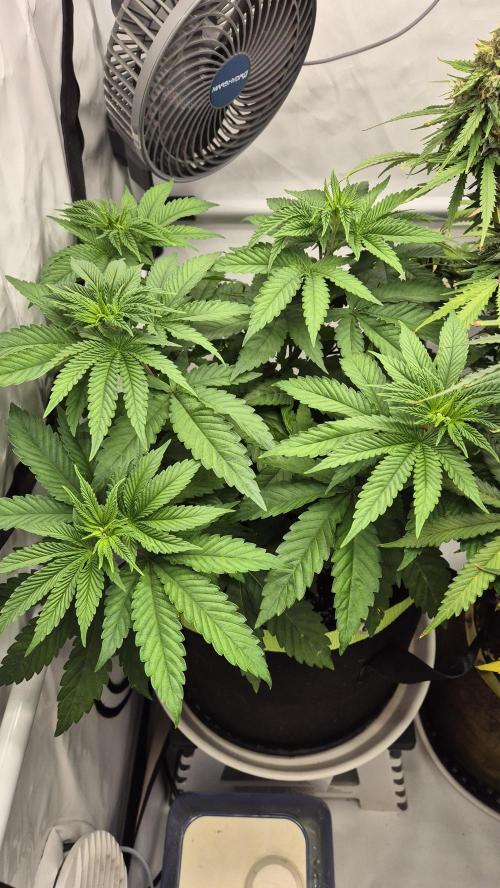
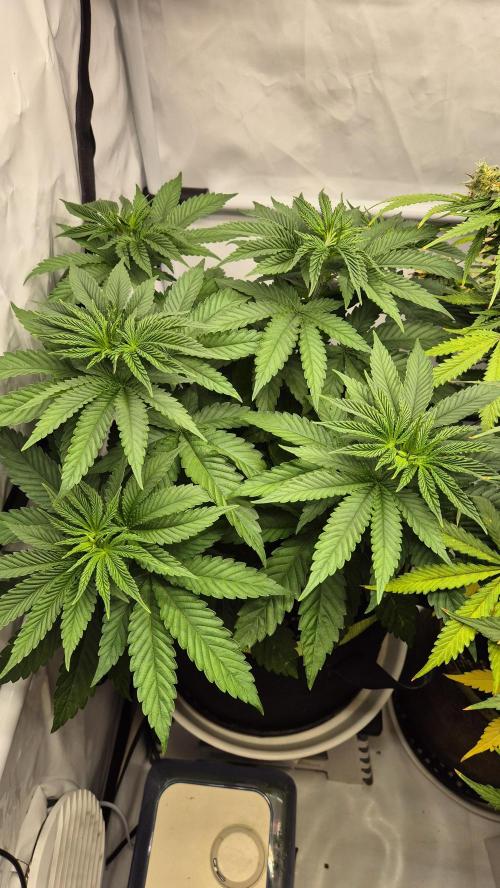
Borberad Week 5
Start of training
3 likes
2 comments
Share
Used techniques
LST
Technique
6
Week 6. Vegetation1y ago
10 cm
Height
20 hrs
Light Schedule
28 °C
Day Air Temp
6.3
pH
700 PPM
TDS
65 %
Air Humidity
25 °C
Night Air Temp
20 liters
Pot Size
2.5 liters
Watering Volume
415 PPM
CO₂ Level
Nutrients 2
Root Complex
2.5 mll
TNT Complex
5 mll
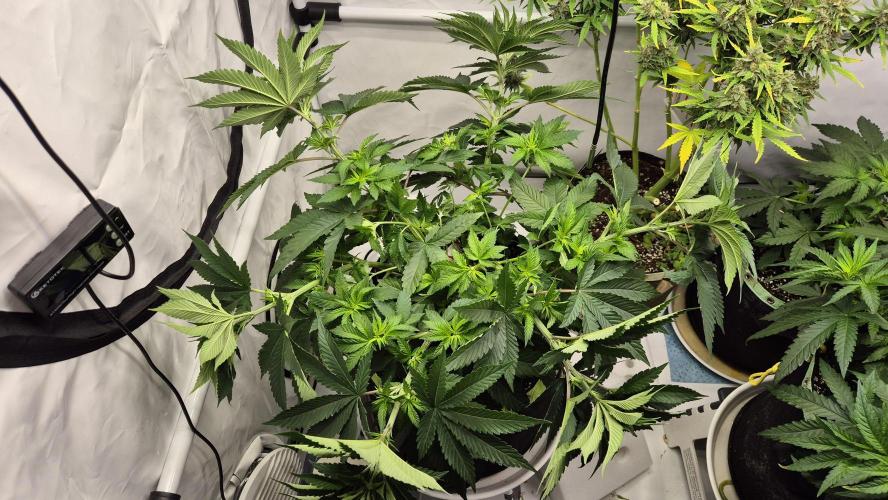
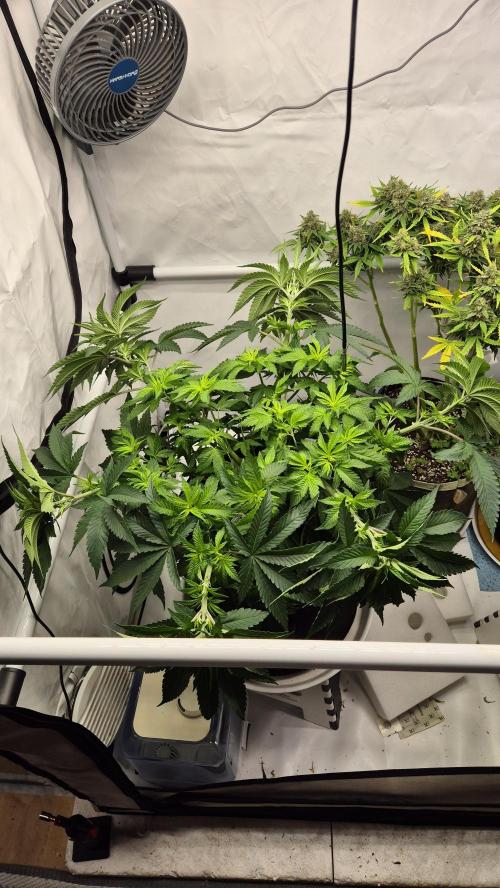
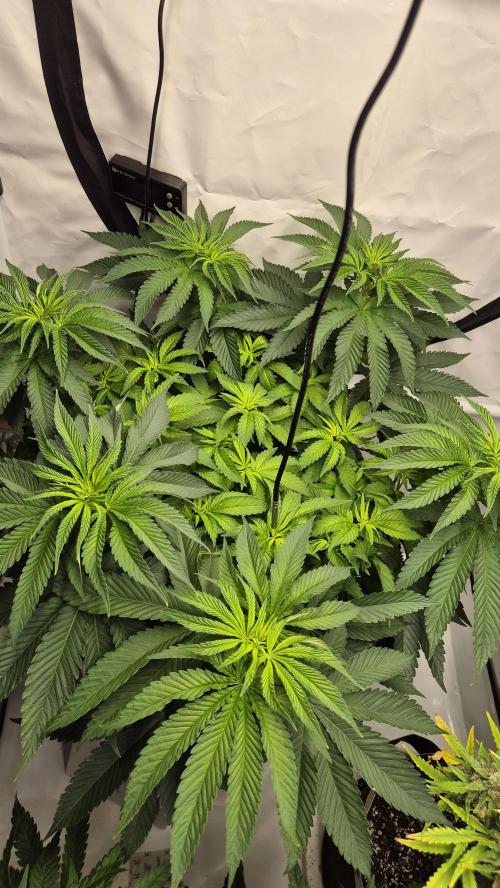
Borberad Week 7
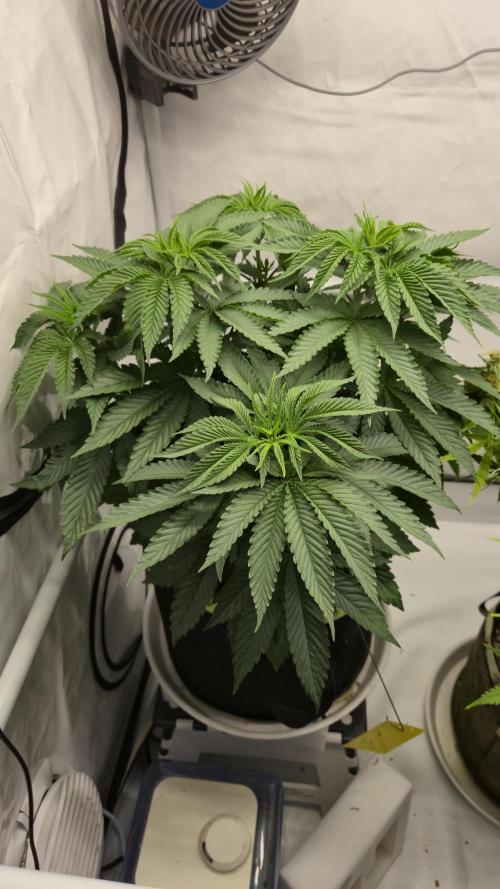
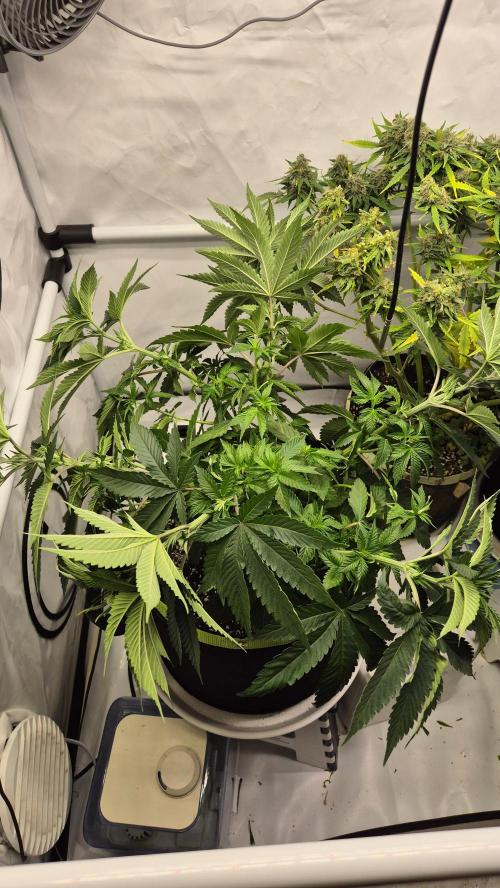
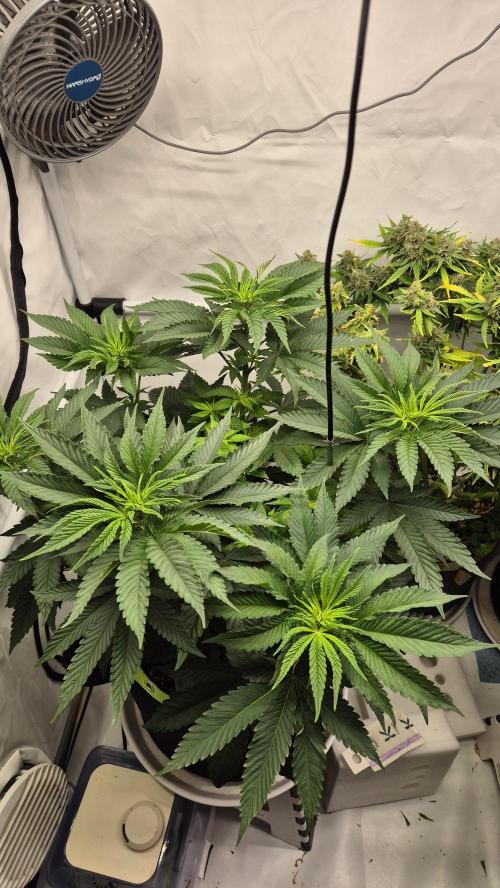
The Transition to Flowering
The big event is coming up! We're switching the light cycle to 12/12. To make the transition stress-free, we've reduced the DLI to 30. The feeding schedule changes to 5 ml/l Hesi Bloom, 2 ml/l Hesi Boost (once a week), 1 ml/l Plagron Greensensation (once a week), and 2 ml/l Calmag.
* Plant Condition: Start of the flowering stretch.
* Important Events: Change of light cycle. Reduction of DLI. LST to keep the plants at the same height.
* Feeding & Measurements:
* Watering: pH about 6.3. EC 1.4 to 2 mS.
* Drain: We ensure that the pH does not drop below 5.5 and does not exceed 6.8.
* Adjustments: Light cycle to 12/12.
3 likes
2 comments
Share
7
Week 7. Flowering1y ago

10 cm
Height
20 hrs
Light Schedule
28 °C
Day Air Temp
6.3
pH
700 PPM
TDS
65 %
Air Humidity
25 °C
Night Air Temp
20 liters
Pot Size
2.5 liters
Watering Volume
415 PPM
CO₂ Level
Nutrients 5

Bloom Complex
4 mll
pH-
0.5 mll

Boost
1 mll
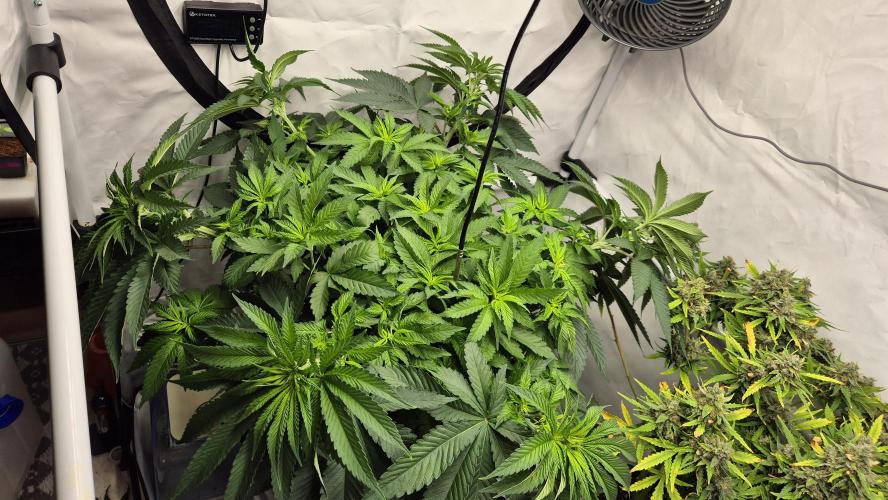
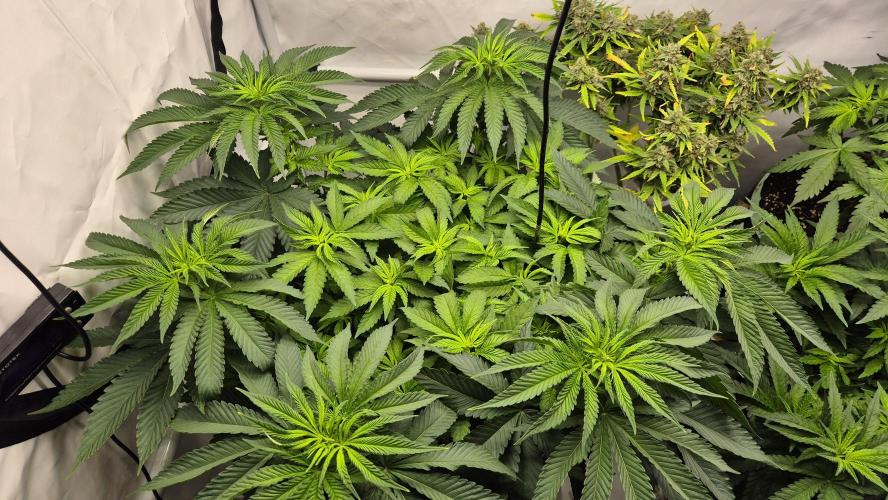
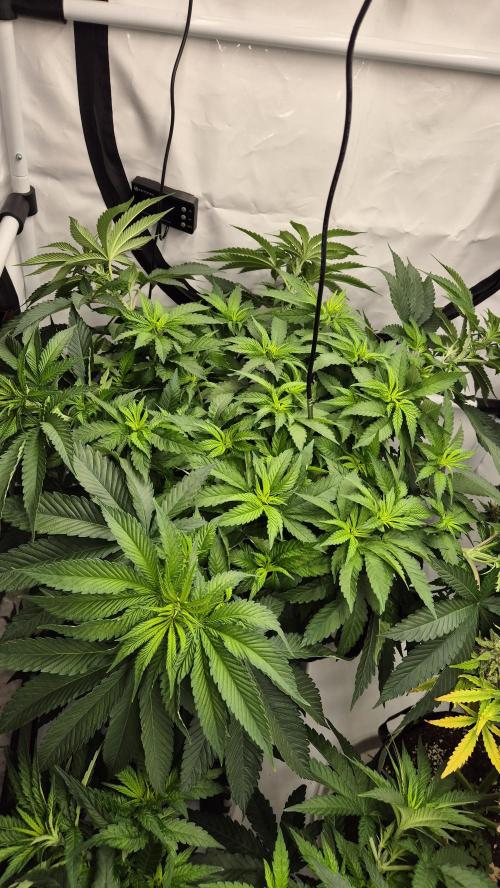
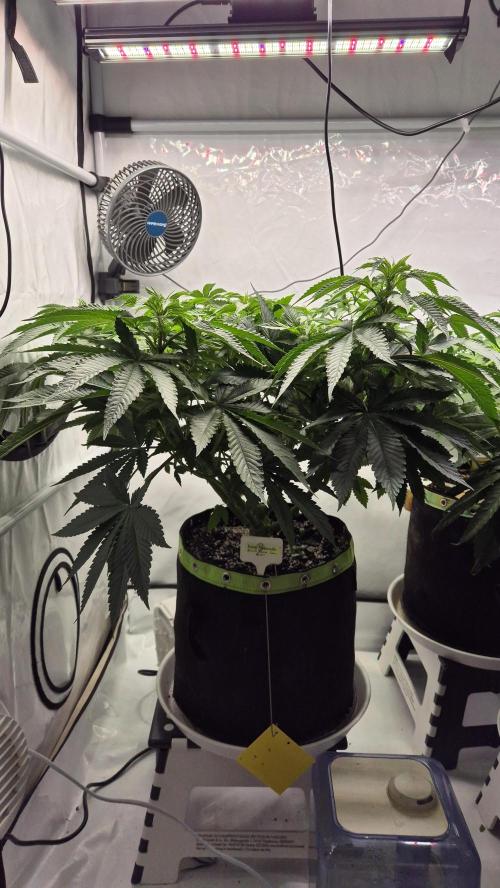
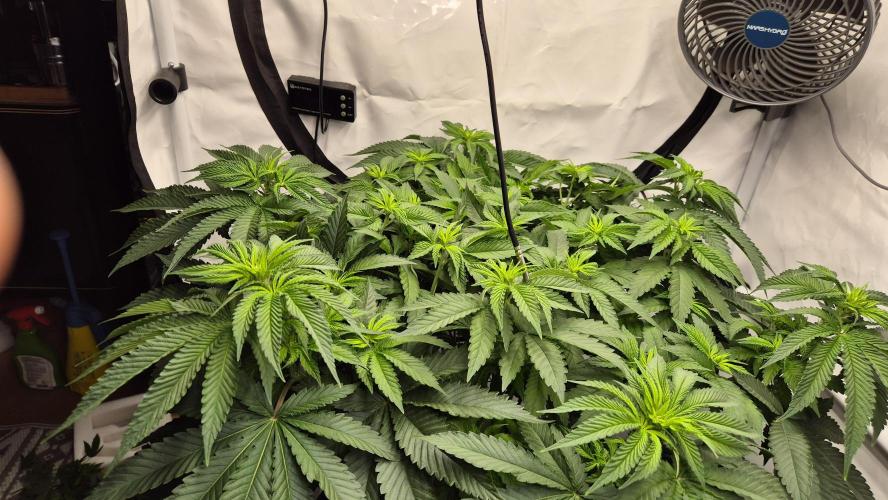
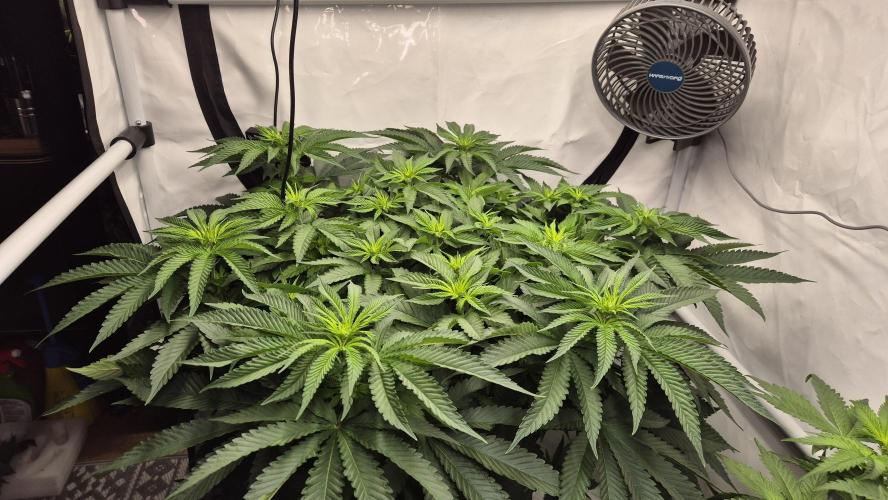
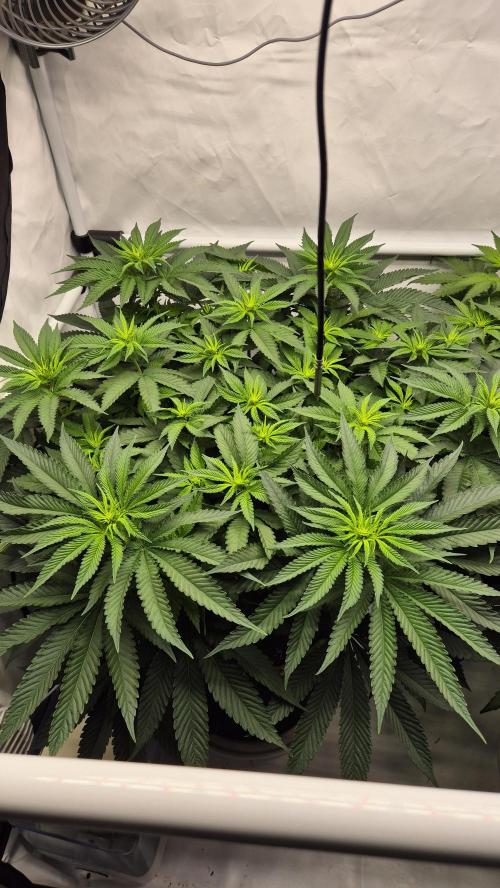
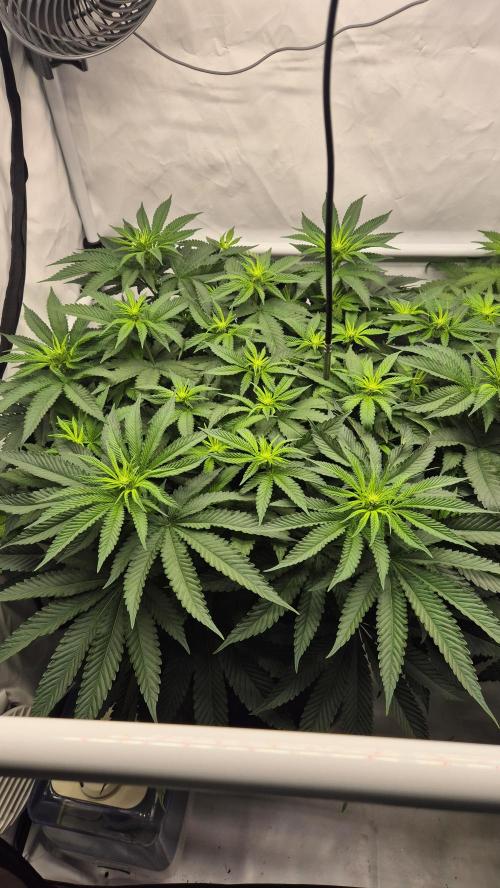
Borberad Flowering Week 1: The Transition to Flowering
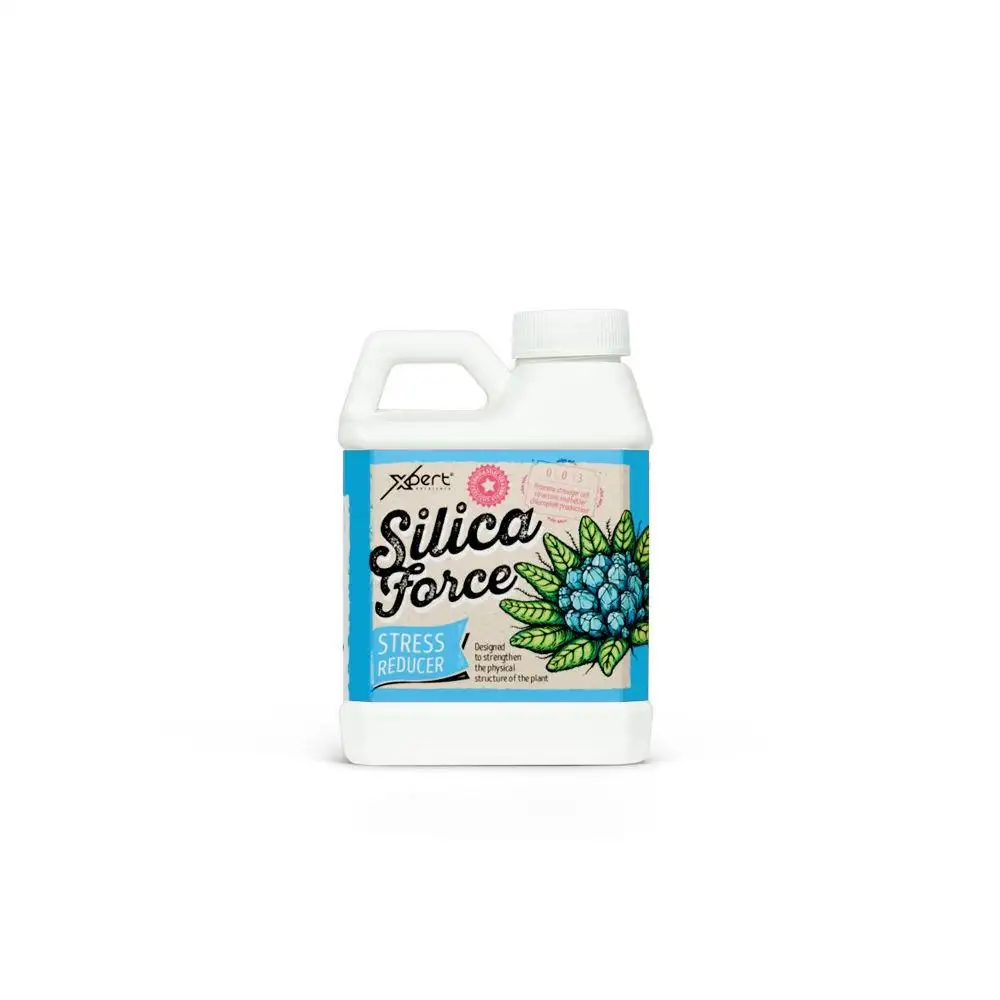
The big event is coming! The light cycle has been switched to 12/12. To make the transition stress-free, we've reduced the DLI to 30 and will raise it to 35 by the end of the week. The feeding schedule changes to 4 ml/l Hesi Bloom + 2 ml Calmag; 1 ml/l Hesi Boost (once a week), 1 ml Silicaforce + 0.5 ml Hesi pH- (once a week).
* Plant Condition: Start of the flowering stretch.
* Important Events: Change of the light cycle. Reduction of the DLI.
* Feeding & Measurements:
* Watering: pH about 6.3. EC 1.4 to 1.6 mS.
* Drain: We ensure that the pH does not drop below 5.5 and does not exceed 6.8.
Adjustments: Silicaforce has been added to the feeding schedule.
3 likes
comments
Share
8
Week 8. Flowering1y ago
45 cm
Height
12 hrs
Light Schedule
25 °C
Day Air Temp
6.3
pH
700 PPM
TDS
55 %
Air Humidity
25 °C
Night Air Temp
20 liters
Pot Size
2 liters
Watering Volume
415 PPM
CO₂ Level
Nutrients 5
Bloom Complex
4 mll
pH-
0.5 mll
Boost
1 mll
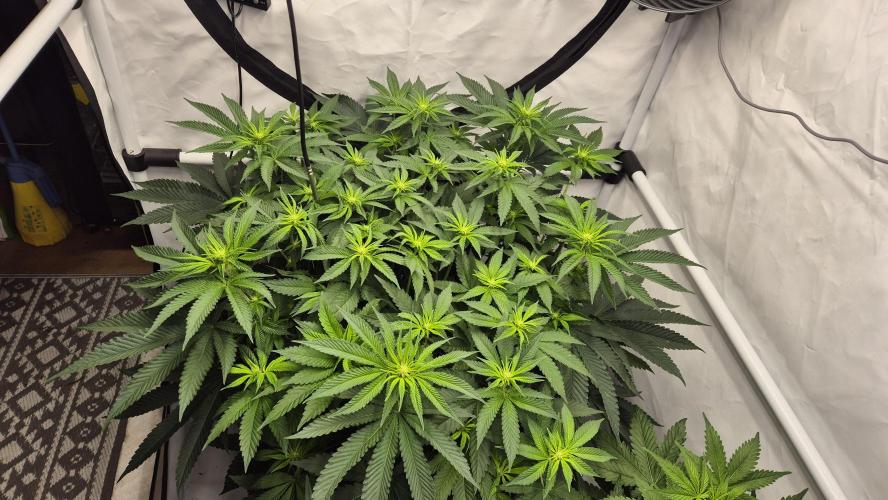
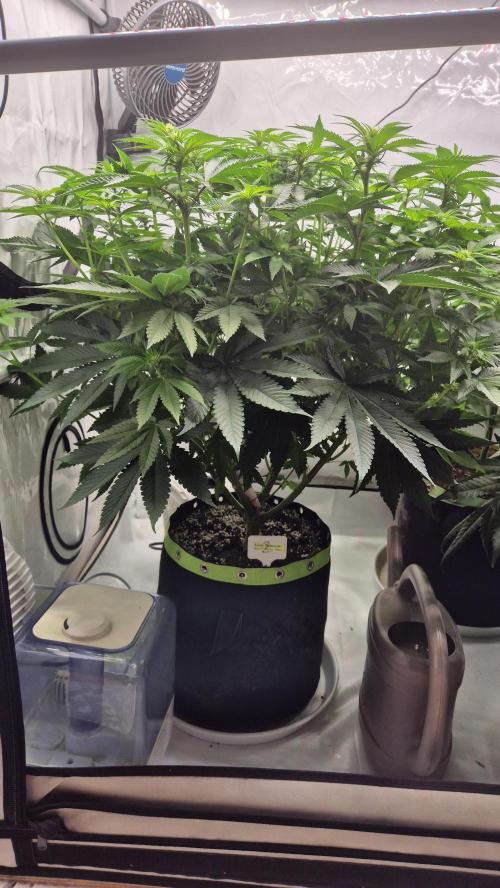
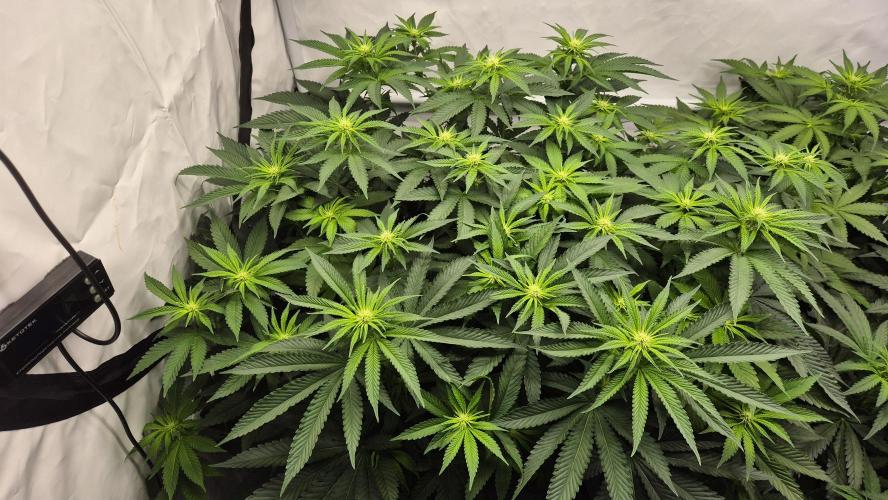
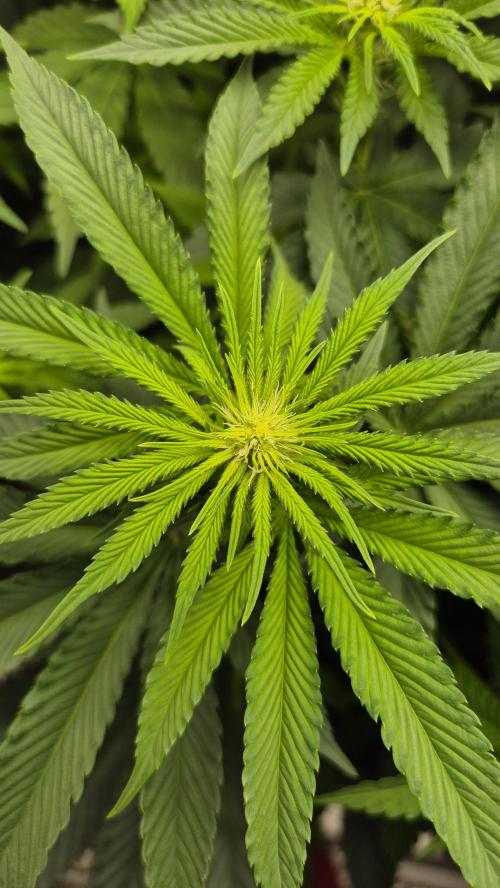
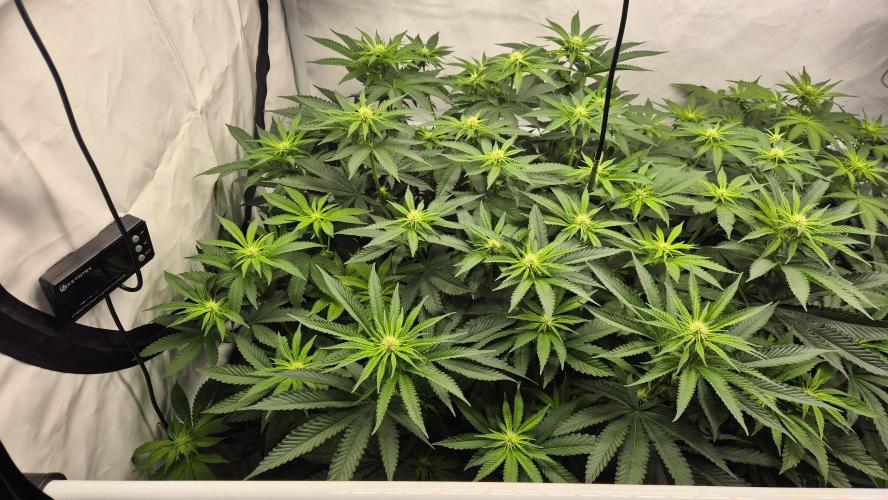
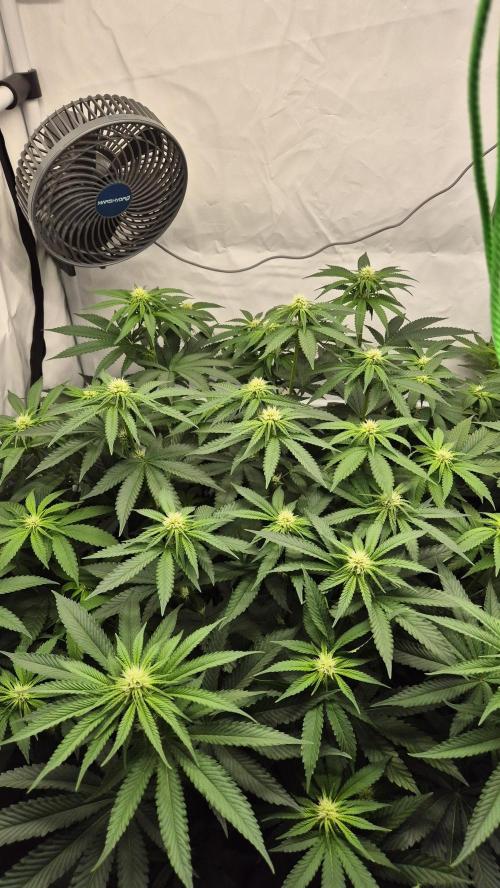
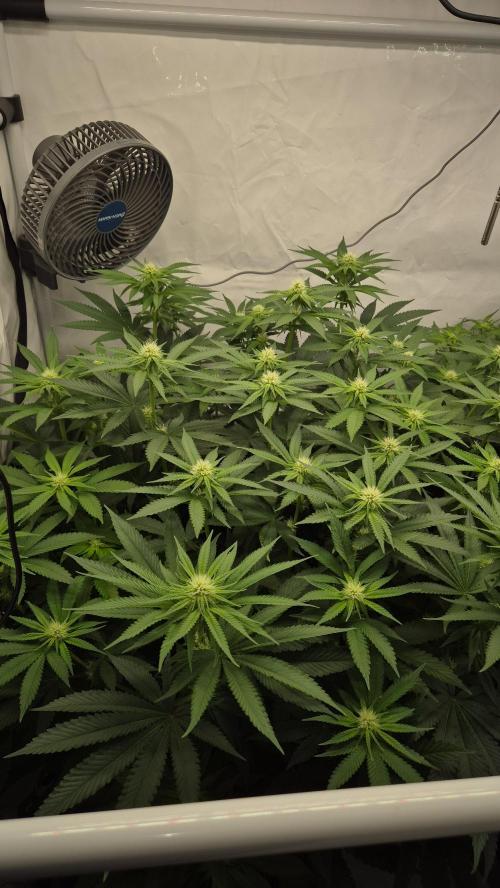
Borberad Flowering Week 2
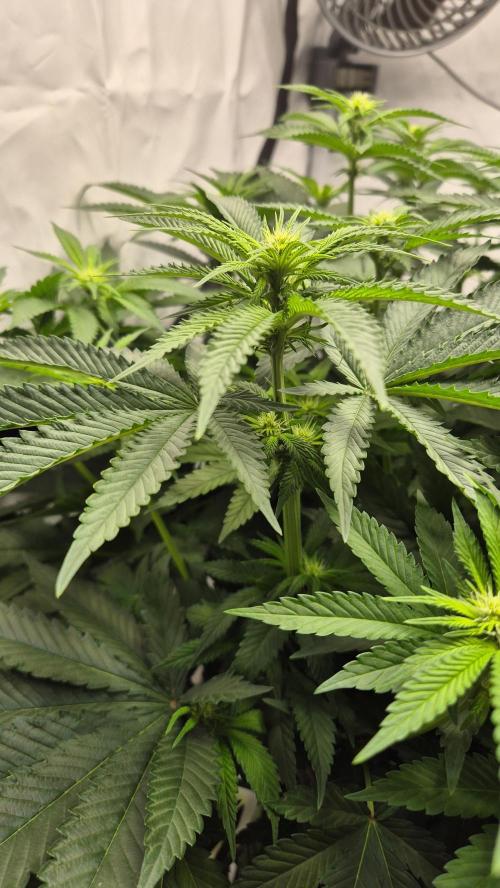
The flowering is taking off
The plant is stretching vigorously and developing beautiful light flower clusters. The DLI has been gradually increased to 40-45. The feeding schedule remains unchanged.
* Plant condition: Strong flowering stretch, first flower clusters visible.
* Important events: Increase of the DLI.
* Feeding & measurements:
* Watering: pH about 6.3. EC 1.4 to 2 mS.
* Drain: We ensure that the pH does not drop below 5.5 and does not exceed 6.8, and that the EC maintains a +/- 500 mS deviation.
* Adjustments: none
2 likes
comments
Share
9
Week 9. Flowering1y ago
45 cm
Height
12 hrs
Light Schedule
25 °C
Day Air Temp
6.3
pH
700 PPM
TDS
55 %
Air Humidity
25 °C
Night Air Temp
20 liters
Pot Size
2 liters
Watering Volume
40 cm
Lamp Distance
425 PPM
CO₂ Level
Nutrients 5
Bloom Complex
4 mll
pH-
0.5 mll
Boost
1 mll
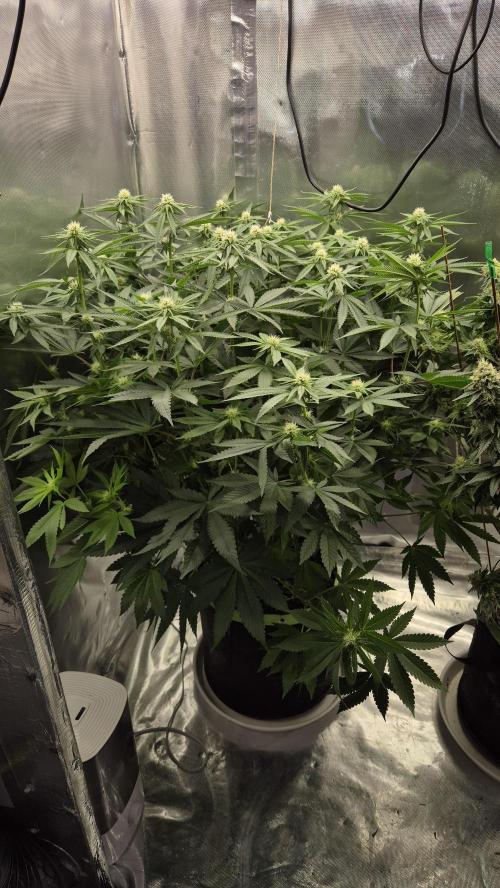
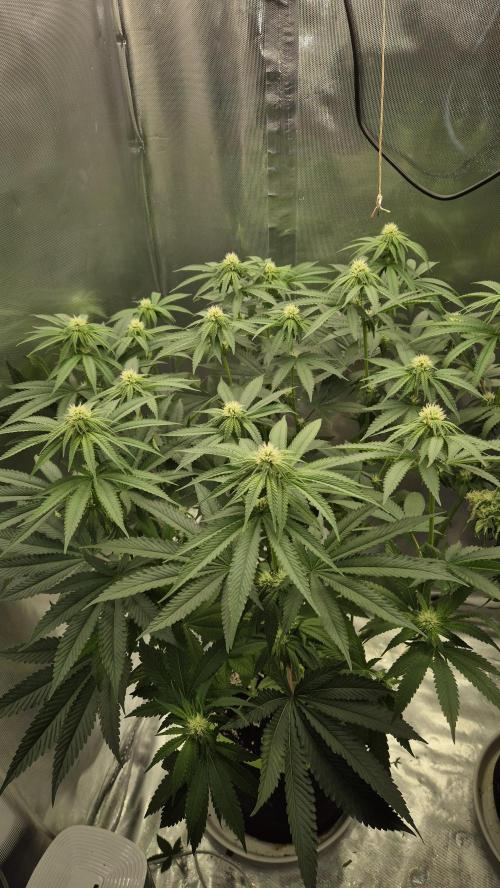
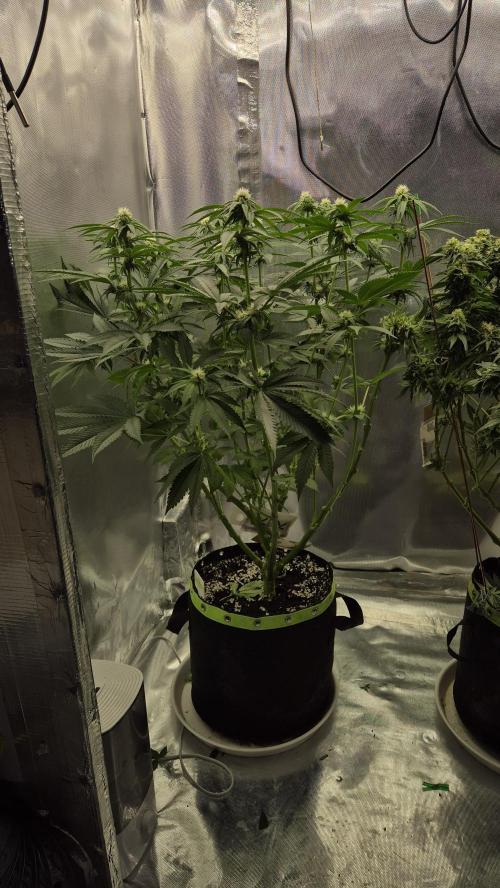
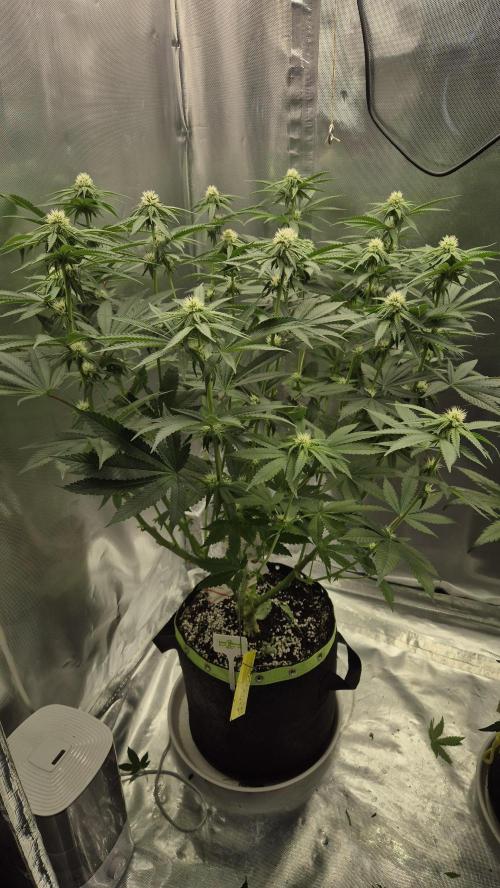
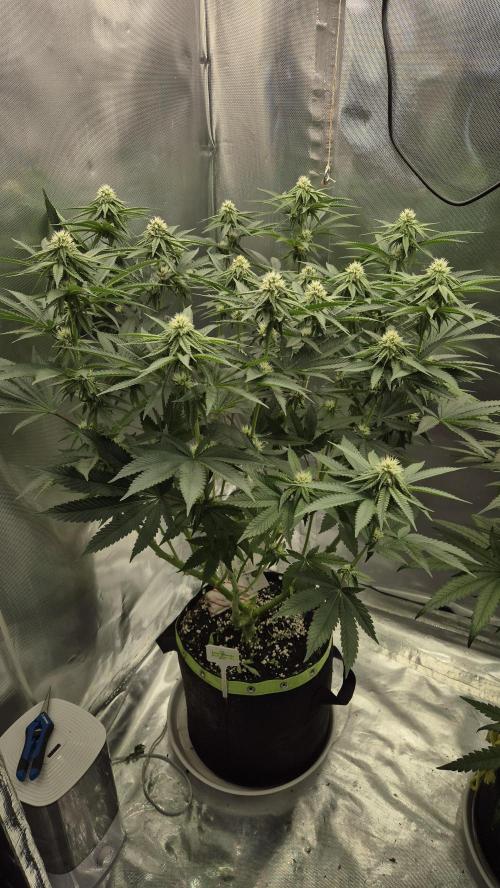
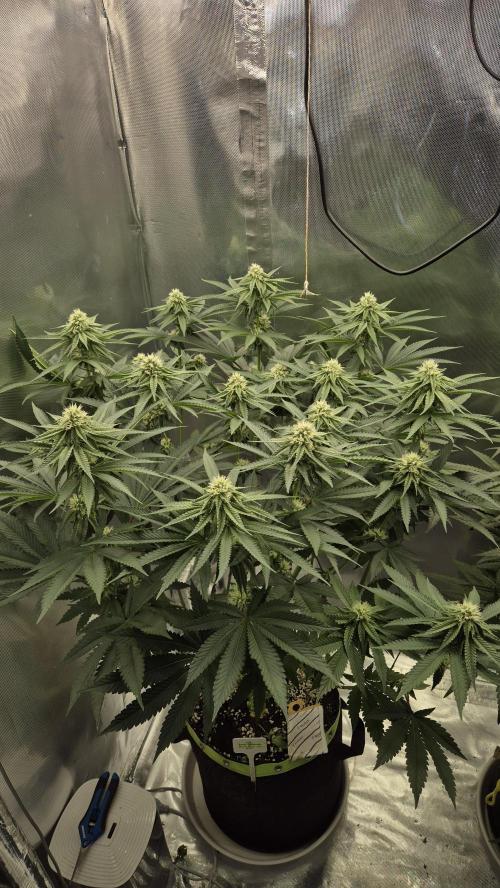
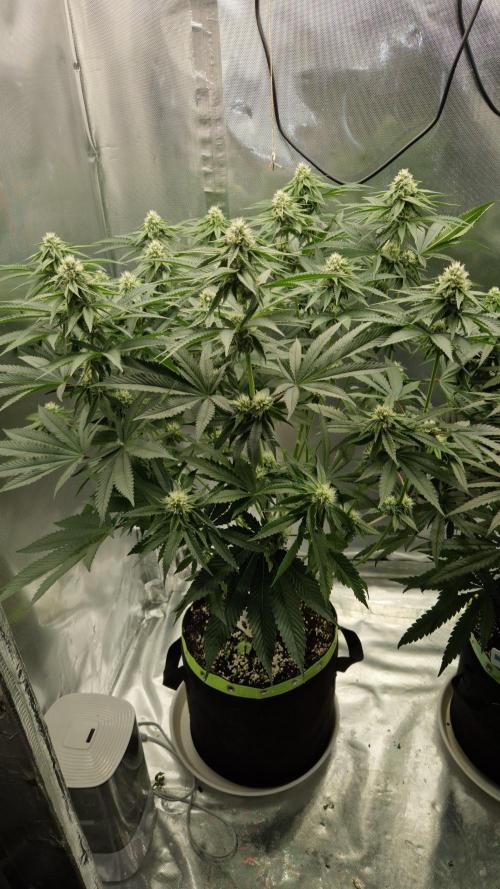
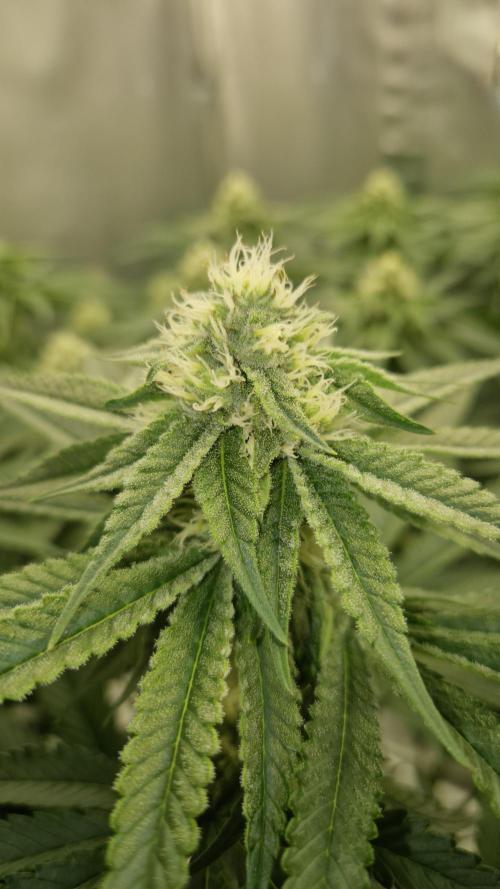
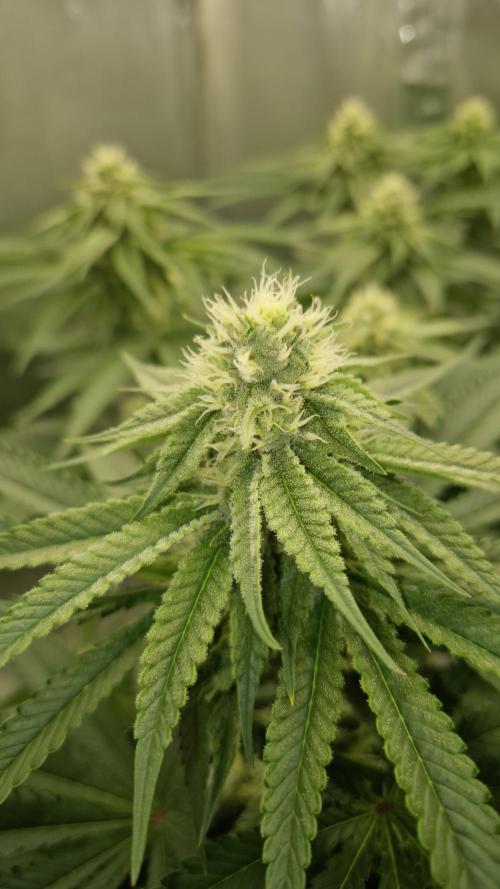
Borberad Flowering Week 3 Lollipopping
The flowering is in full swing! The plant was very bushy and had a lot of shoots, so the number of shoots was drastically reduced and the flower was properly pruned. The feeding schedule remains unchanged.
* Plant condition: Strong flowering stretch, beautiful flower clusters visible.
* Important events: Increase in DLI. Defoliation and lollipopping.
* Feeding & measurements:
* Watering: pH about 6.3. EC 1.4 to 2 mS.
* Drain: We ensure that the pH does not drop below 5.5 and does not exceed 6.8, and that the EC maintains the +/- 500 mS deviation.
* Adjustments: Lollipopping
2 likes
comments
Share
Used techniques
Defoliation
Technique
10
Week 10. Flowering1y ago
65 cm
Height
12 hrs
Light Schedule
25 °C
Day Air Temp
6.3
pH
700 PPM
TDS
55 %
Air Humidity
25 °C
Night Air Temp
20 liters
Pot Size
2 liters
Watering Volume
40 cm
Lamp Distance
425 PPM
CO₂ Level
Nutrients 5
Bloom Complex
4 mll
pH-
0.5 mll
Boost
1 mll
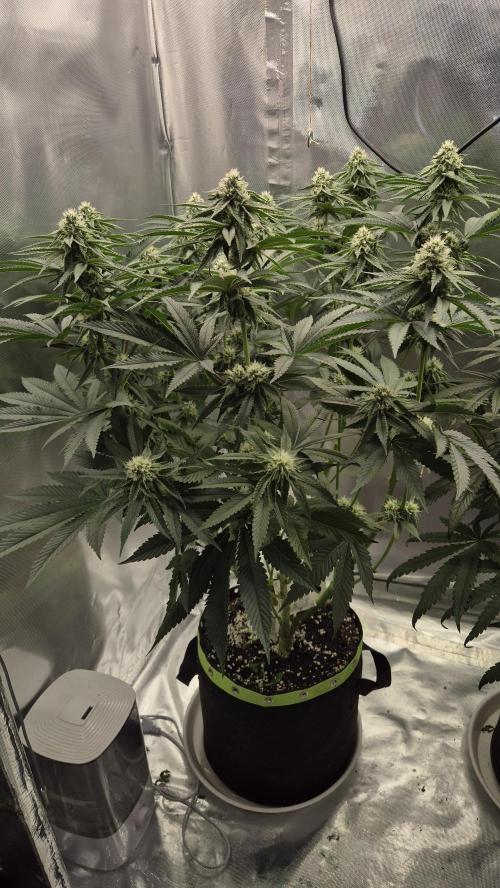
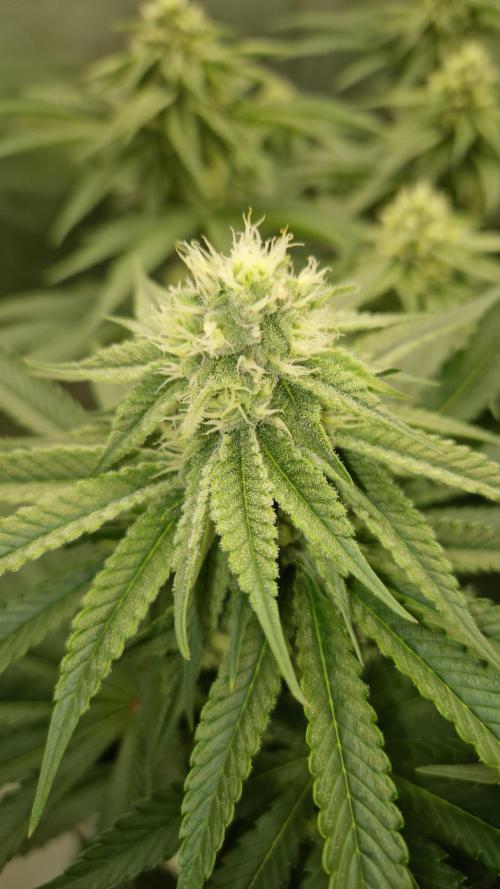
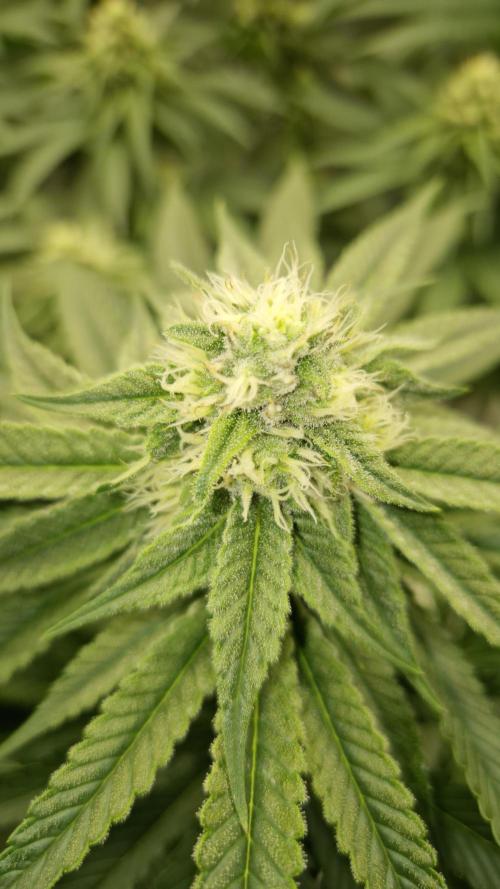
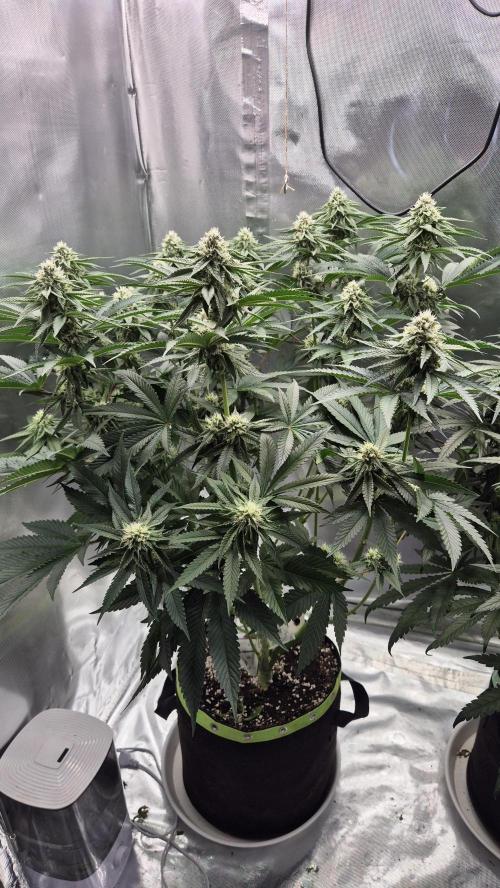
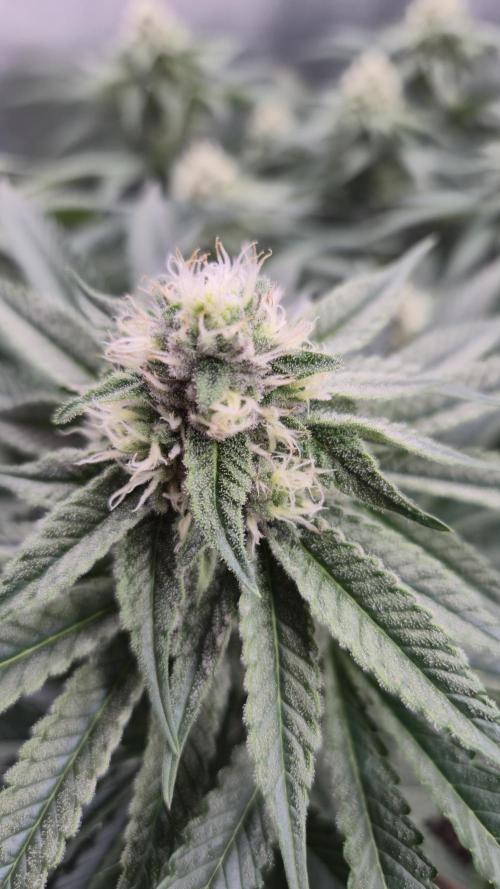
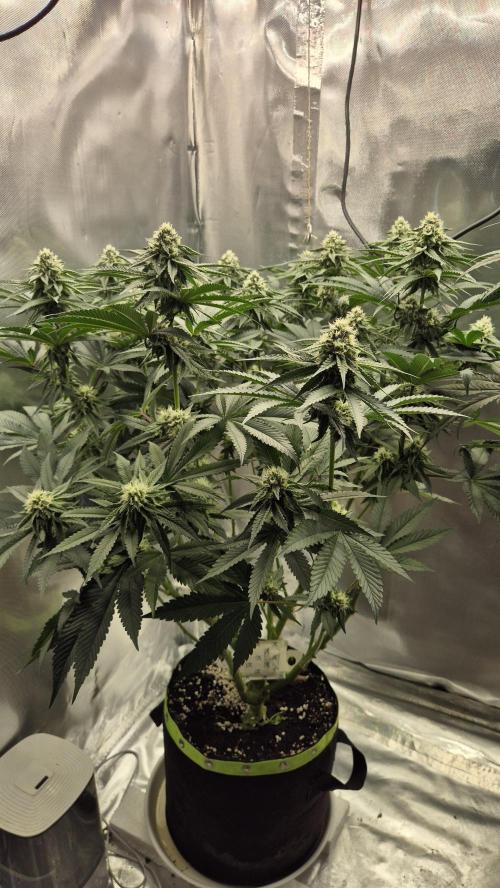
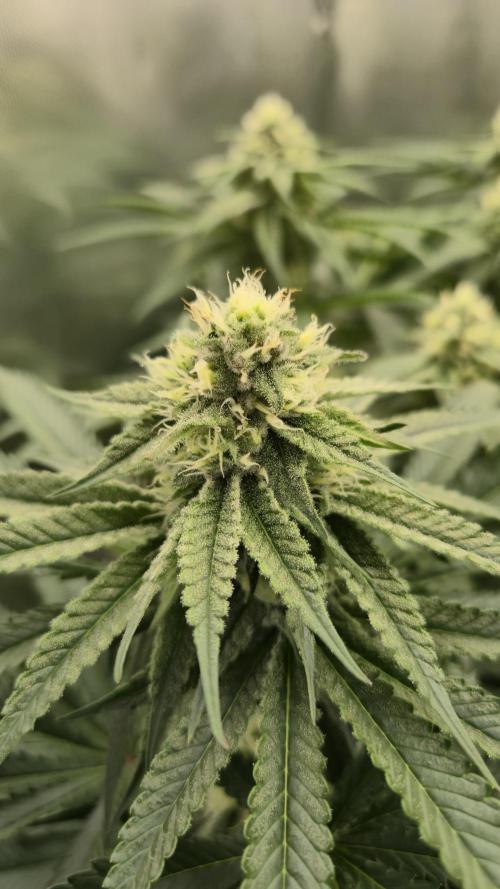
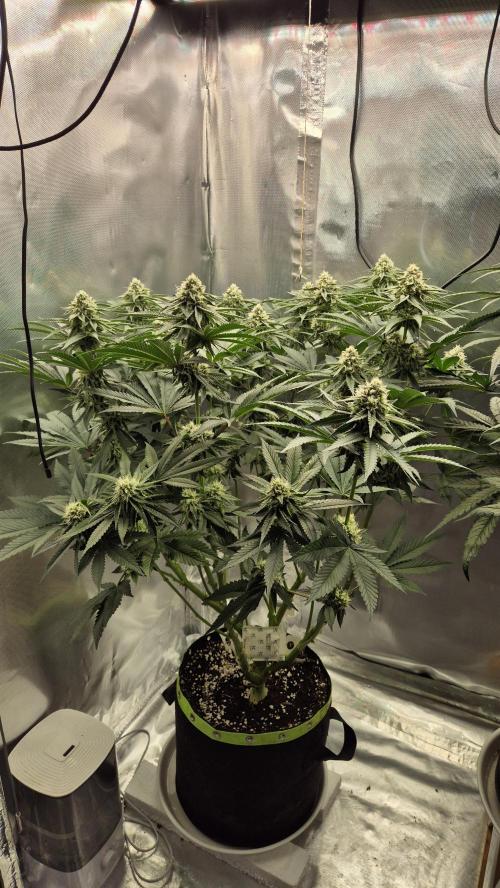
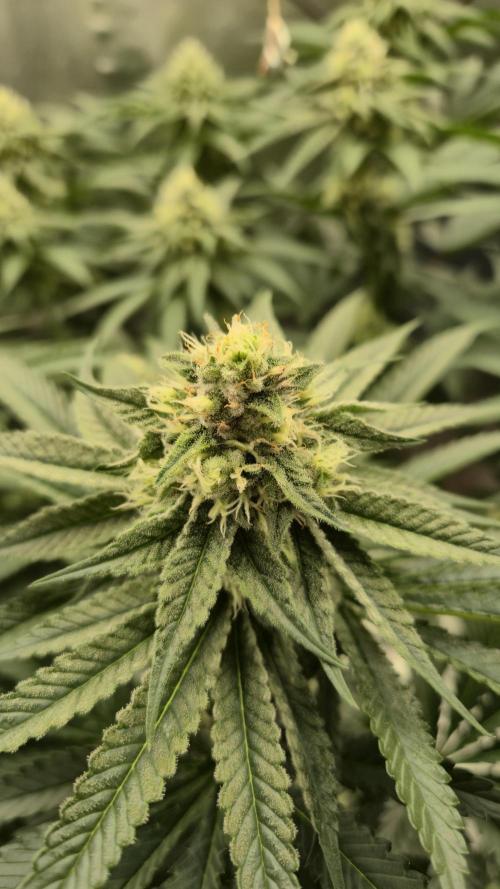
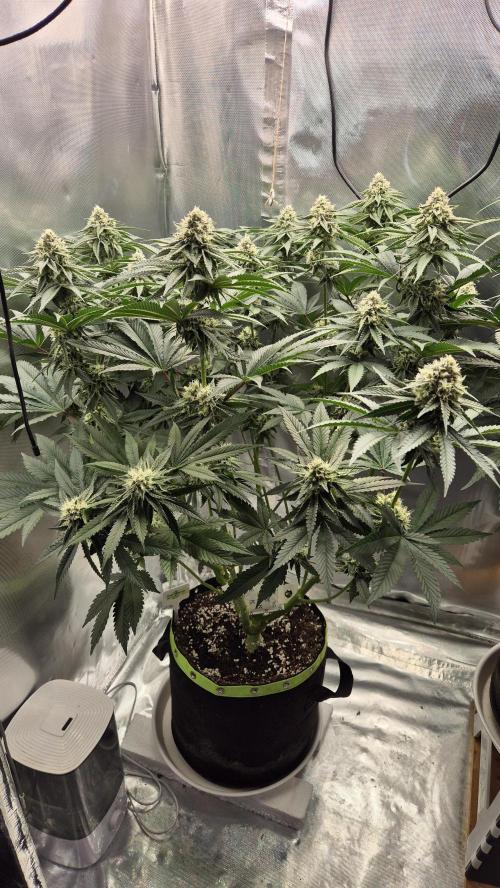
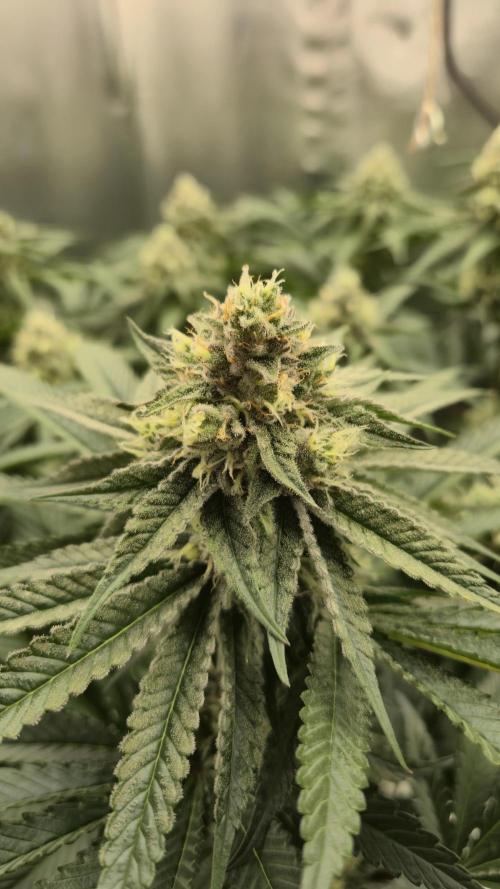
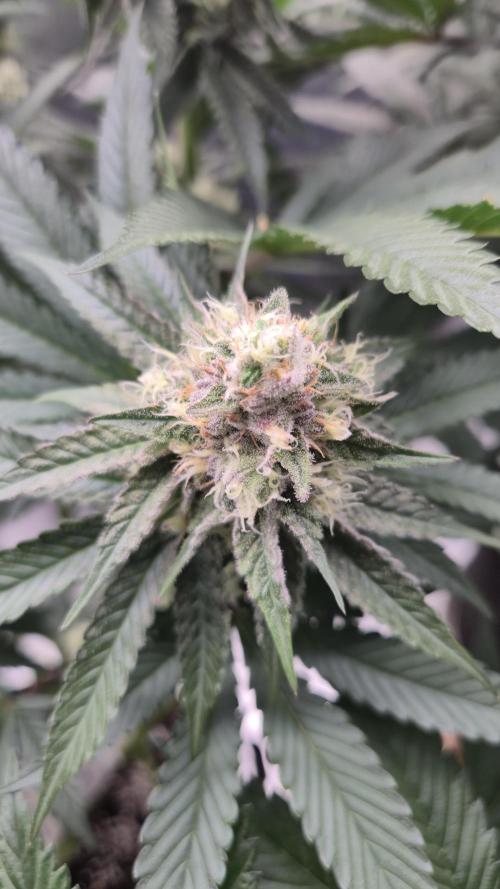
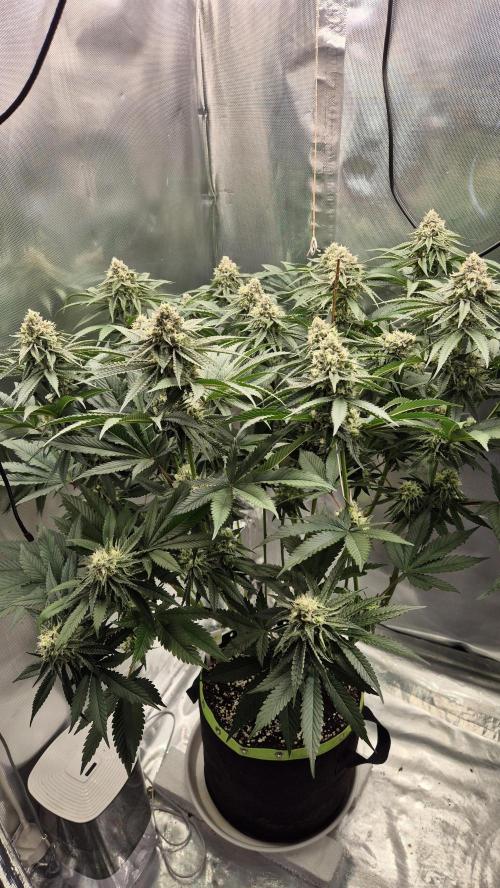
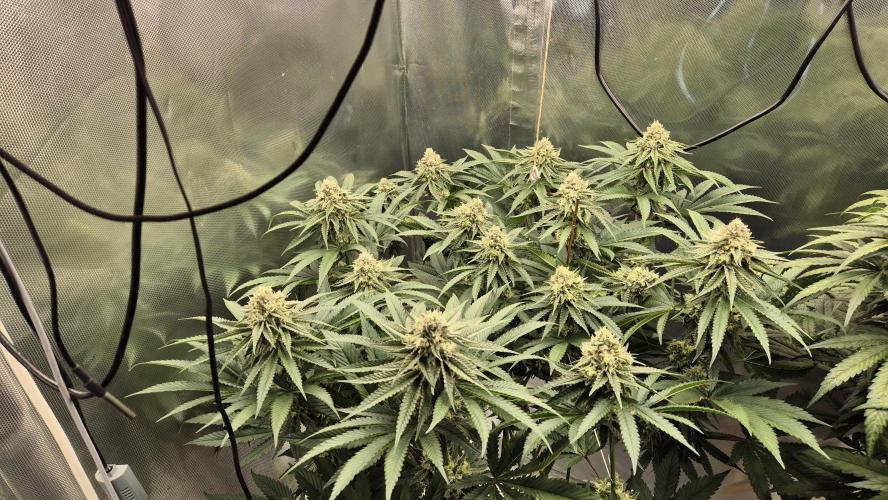
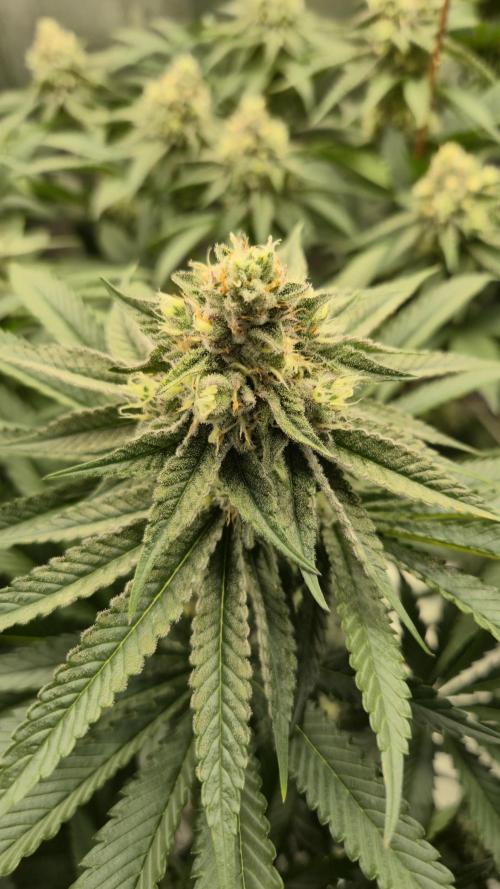
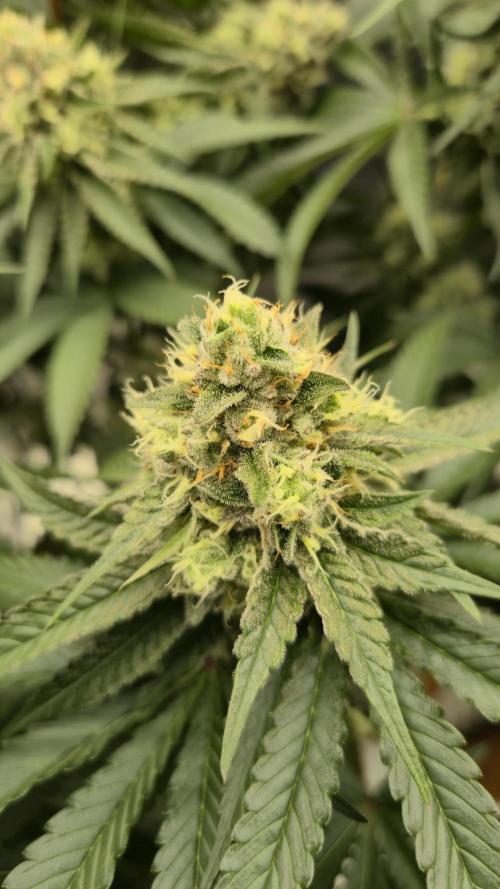
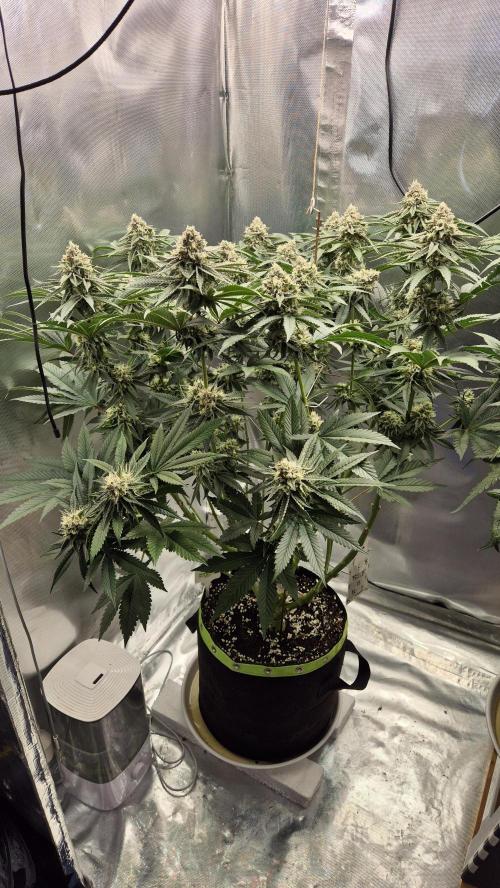
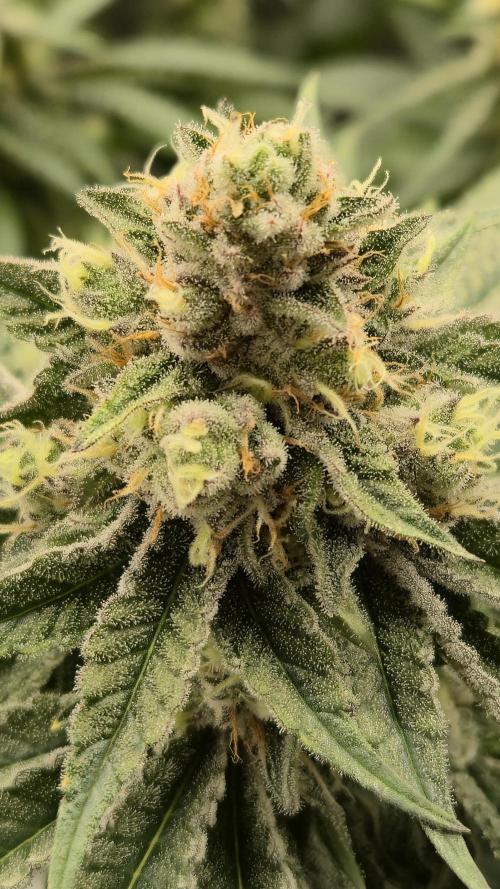
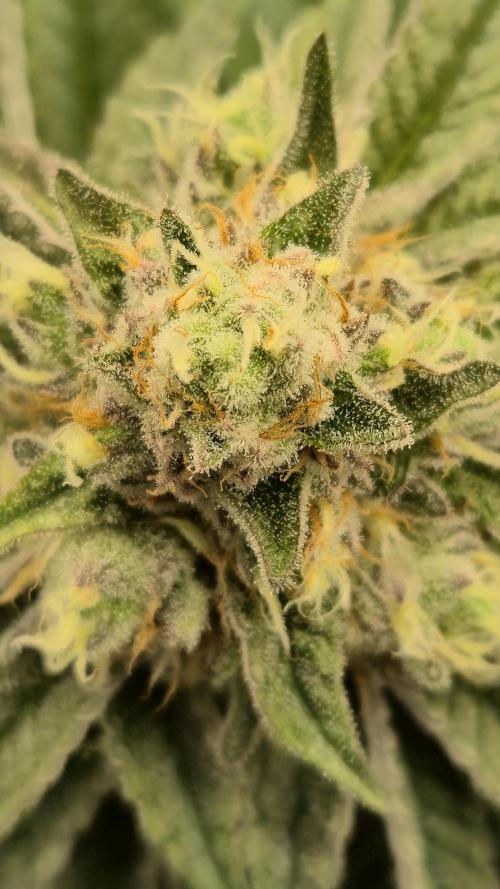
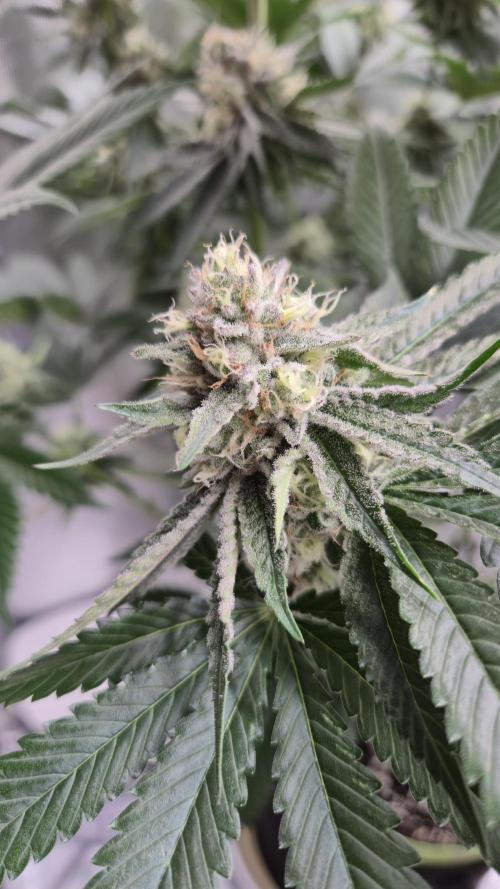
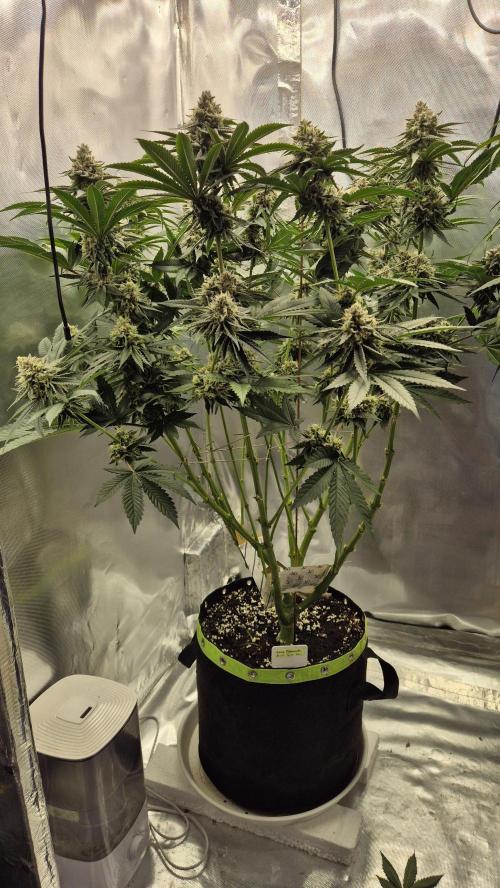
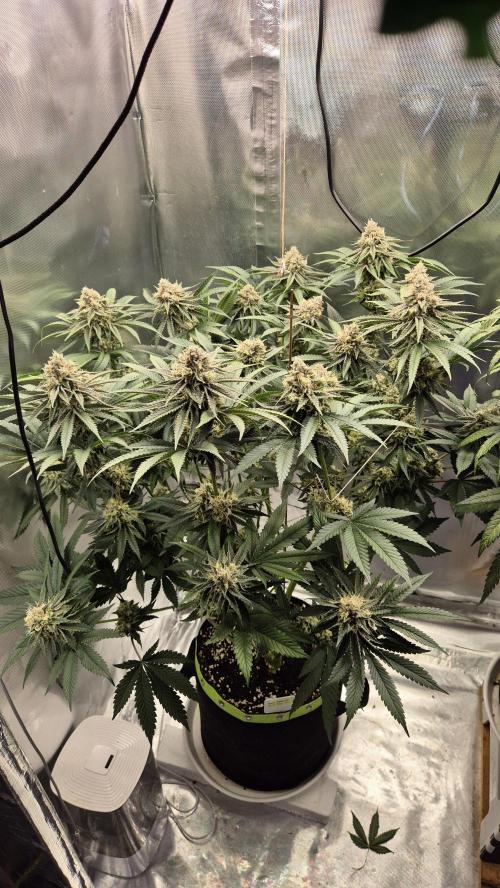
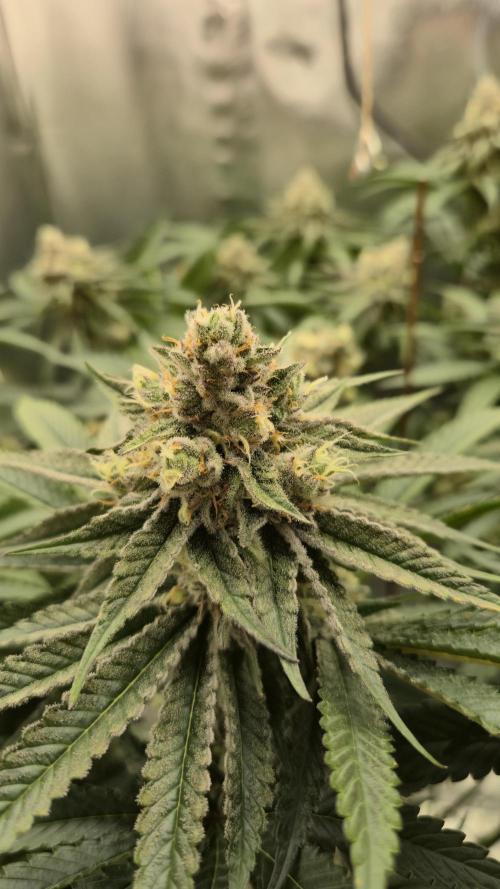
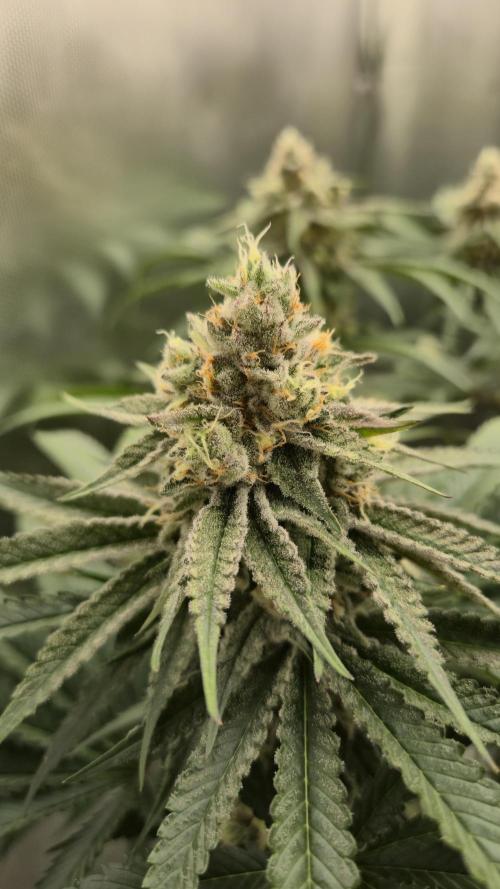
Borberad The little flower is going full throttle! The buds are getting thicker and already smell incredibly enticingly fruity. The scent is causing some disagreement again. Melon scents or rhubarb after all? 🤣 Overall, the plant has been generating excitement so far. The buds are already extremely well-developed for this stage, even though only half of the indicated flowering time has passed. Where this will lead remains to be seen. Either we won't see any leaves under the trichomes after the indicated 56 to 63 days.
4 likes
comments
Share
11
Week 11. Flowering1y ago
65 cm
Height
24 hrs
Light Schedule
25 °C
Day Air Temp
6.3
pH
700 PPM
TDS
55 %
Air Humidity
25 °C
Night Air Temp
20 liters
Pot Size
2 liters
Watering Volume
40 cm
Lamp Distance
425 PPM
CO₂ Level
Nutrients 5
Bloom Complex
4 mll
pH-
0.5 mll
Boost
1 mll
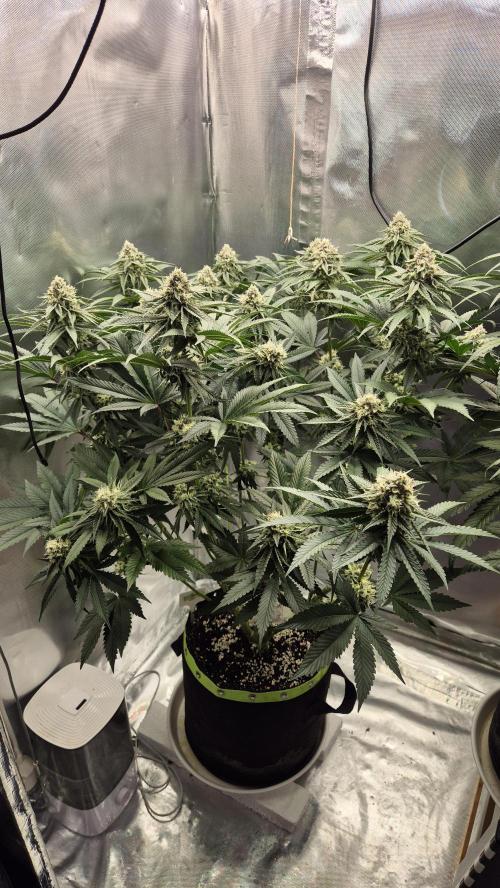
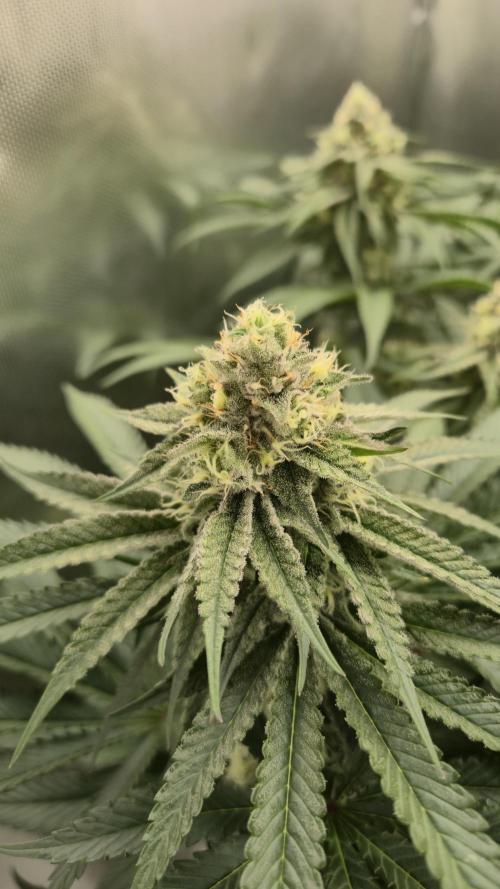
Borberad Week 11
2 likes
comments
Share
12
Week 12. Flowering1y ago
65 cm
Height
12 hrs
Light Schedule
25 °C
Day Air Temp
6.3
pH
700 PPM
TDS
55 %
Air Humidity
25 °C
Night Air Temp
20 liters
Pot Size
2 liters
Watering Volume
40 cm
Lamp Distance
425 PPM
CO₂ Level
Nutrients 5
Bloom Complex
4 mll
pH-
0.5 mll
Boost
1 mll
Borberad Week 12
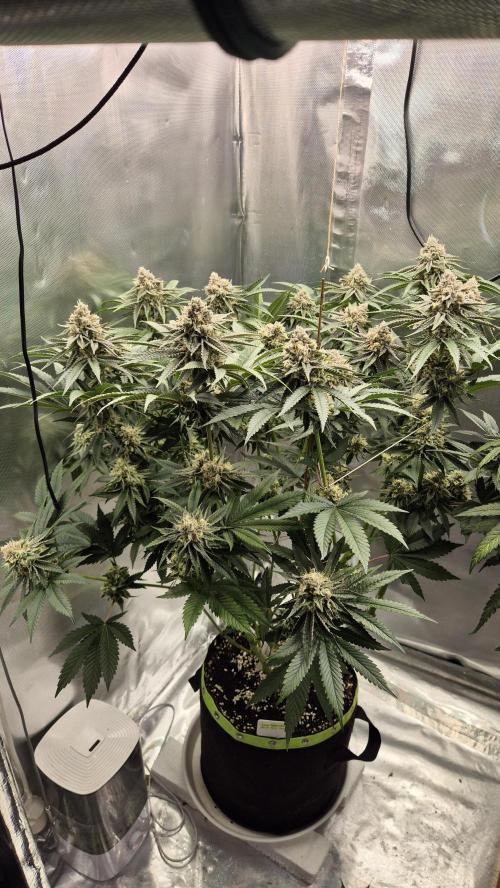
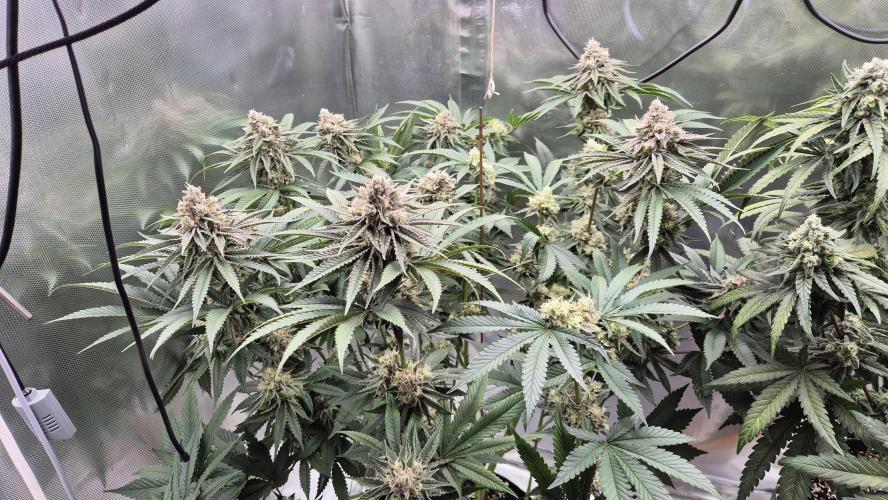
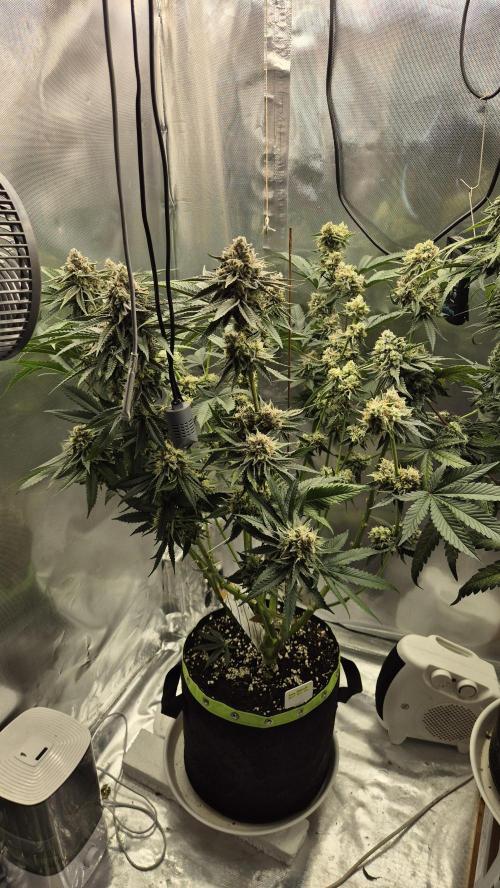
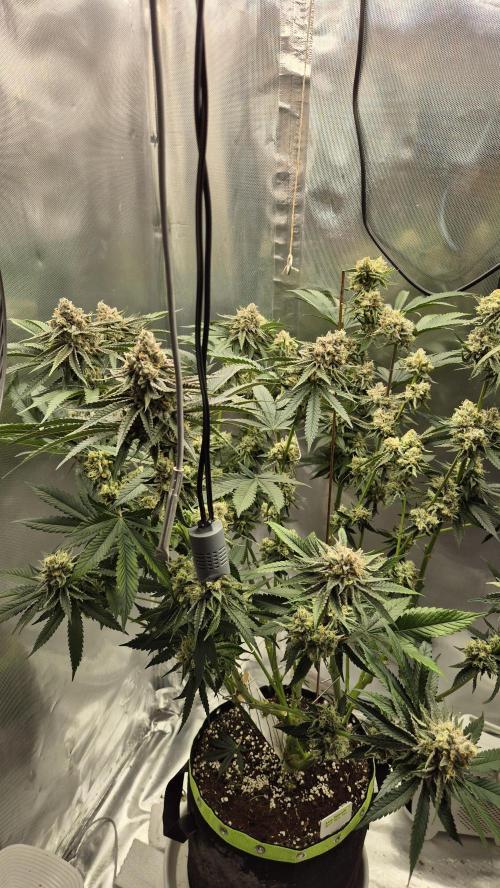
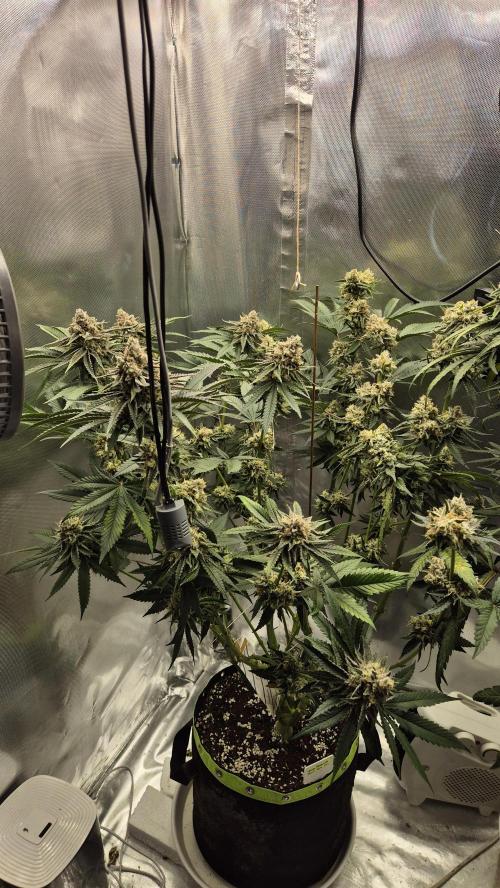
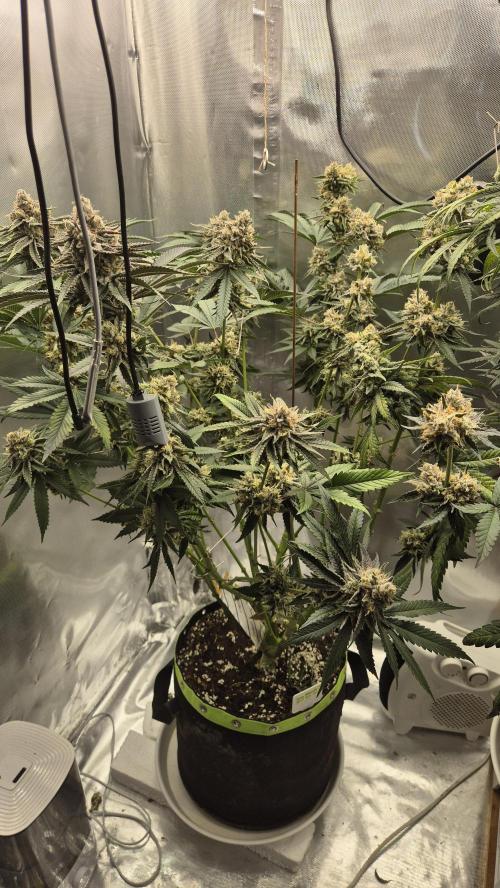
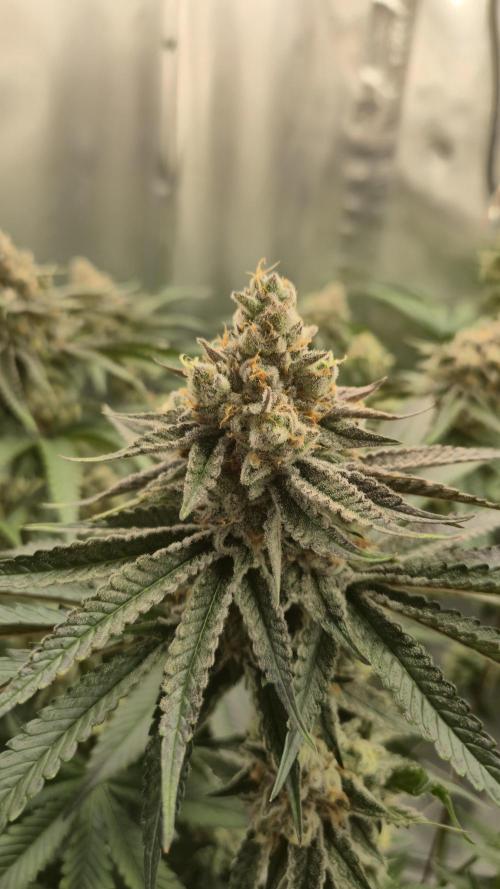
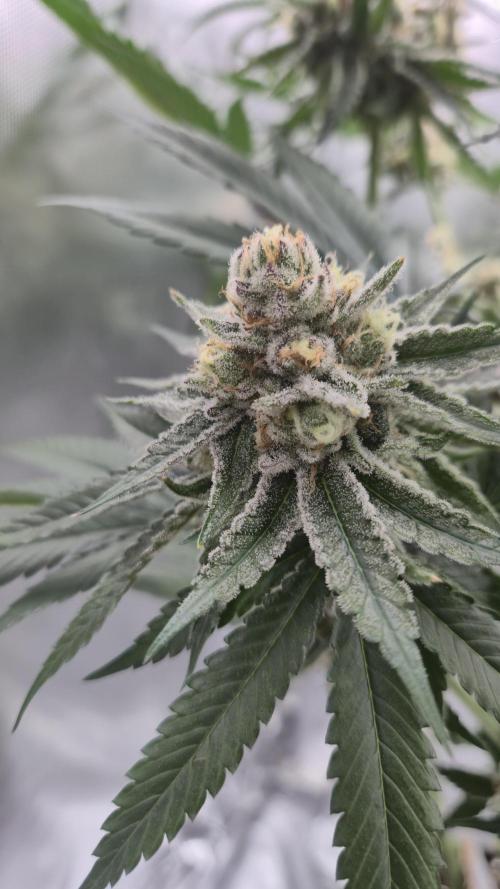
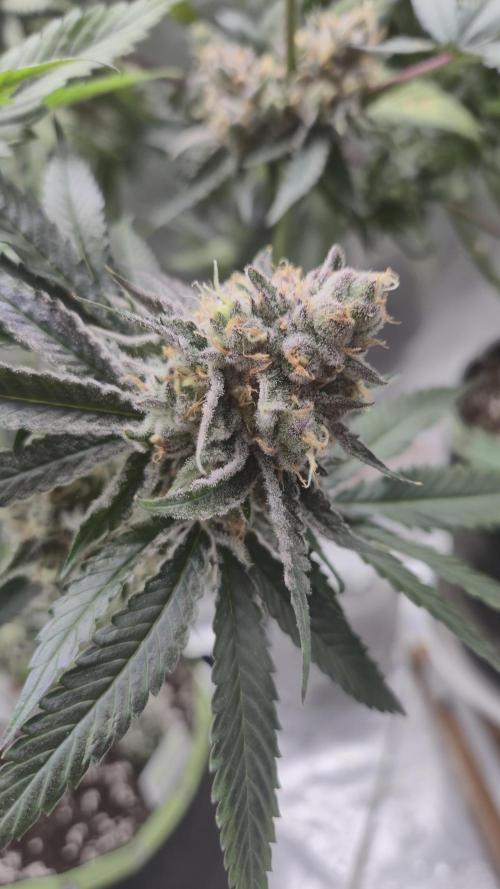
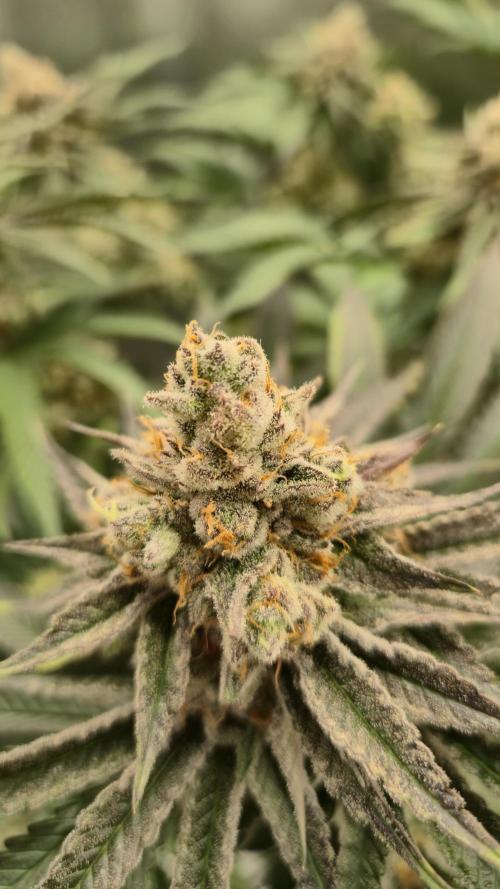
The week starts off less than pleasant. Mold in the buds! But they were really thick monsters. Still! So far, we have no explanation for it. Humidity under 60% even in the dark. Temperature day and night 25°C. Watering every two days. Only early headbud harvest remains. Fortunately, almost all trichomes are milky already. We're on the hunt for the wrong parameters.
Plan: More hygrometers in different spots in the tent. Maybe we chose the wrong measuring point to monitor humidity??? The other plant in the tent, on the other hand, seems completely mold-free. Could the plant be contaminated due to our sloppy work (contact with clothing/nose while smelling)?
Soon all noses will be removed before we get to the flowers. 👃🔪😜
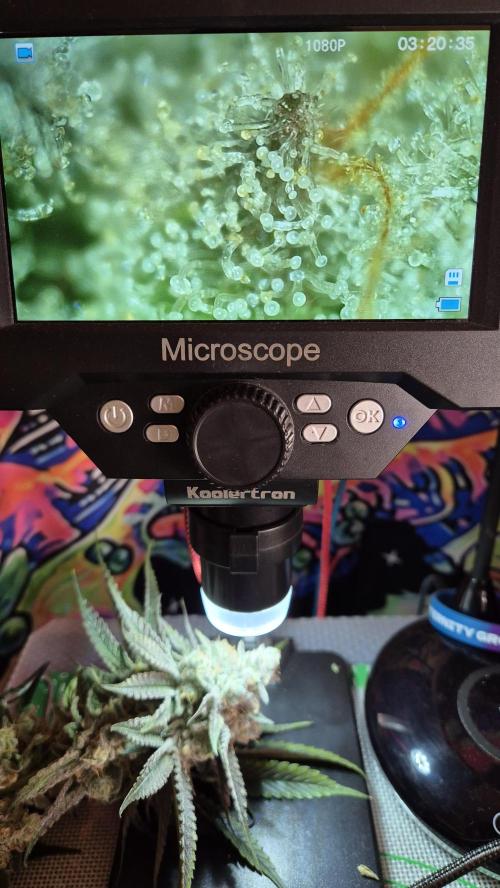
Upon closer inspection under the microscope, the plant seems to be almost finished, so we've decided on a partial harvest; the headbuds can come off. The rest can still ripen a bit. What surprises us a bit is the fact that the flower is listed as 56 - 63 days but seems to be almost fully matured already!?
4 likes
comments
Share
13
Week 13. Harvest1y ago
Happy Harvest Day!


10/10
Rated
Great plant with a mega scent and citrus notes. However, it's not entirely easy to care for. During flowering, the little flower stretches significantly, which requires quite a bit of attention. The dense, heavy buds are also quite susceptible to bud rot.
Show more
Original
Spent 86 days
Ger Veg Flo Har
410 g
Bud wet weight per plant
25 g
Bud dry weight per plant
1
Plants
1 m²
Grow Room size
Normal
Difficulty

Energetic, Hungry, Creative
Positive effects

Stress, Pain
Medical effects

Citrus, Flowery, Tropical
Taste
Height
Day air temperature
Air humidity
PPM
PH
CO2
Light schedule
Night air temperature
Pot size
Lamp distance
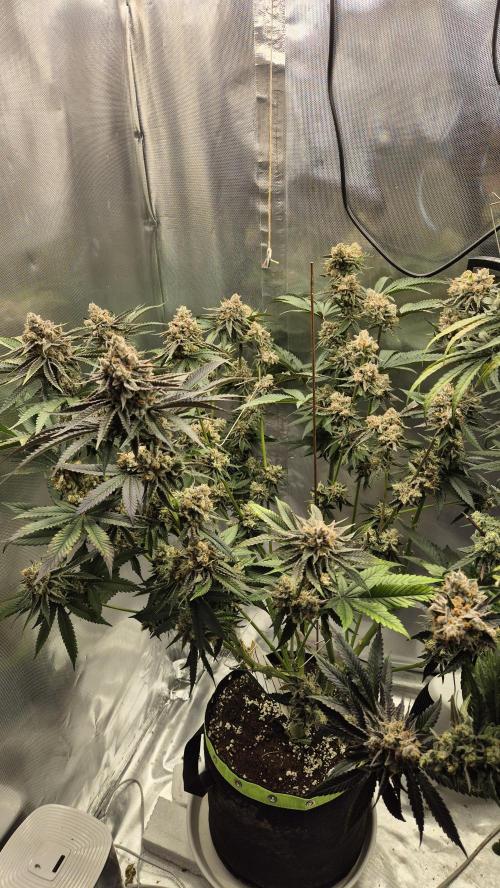
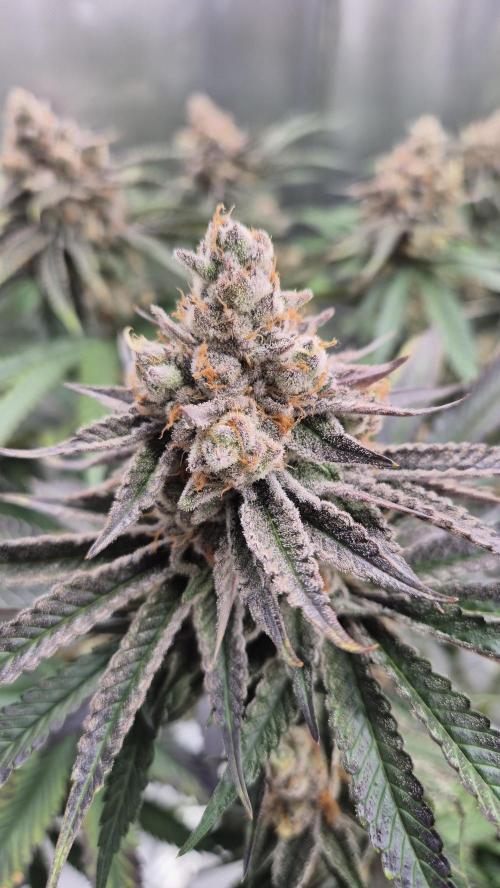
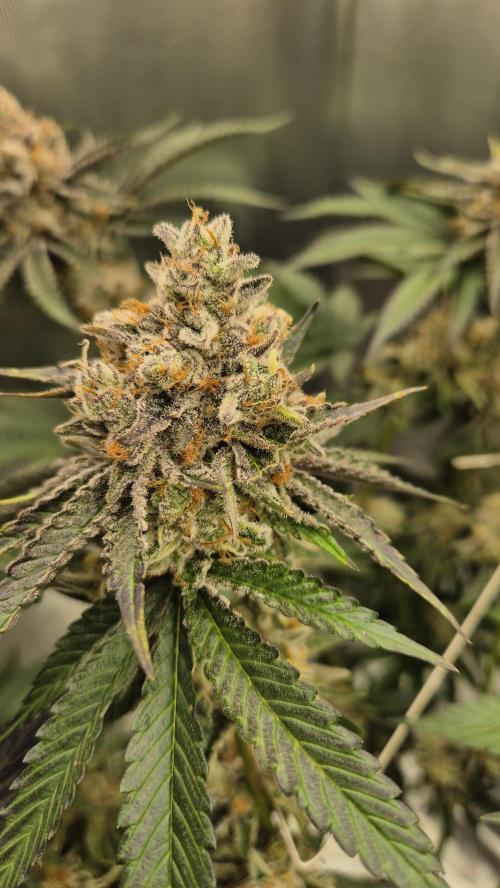
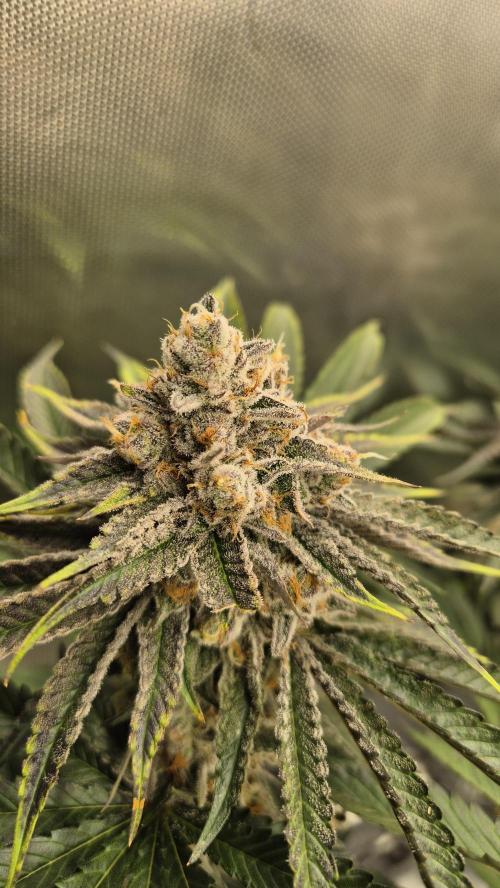
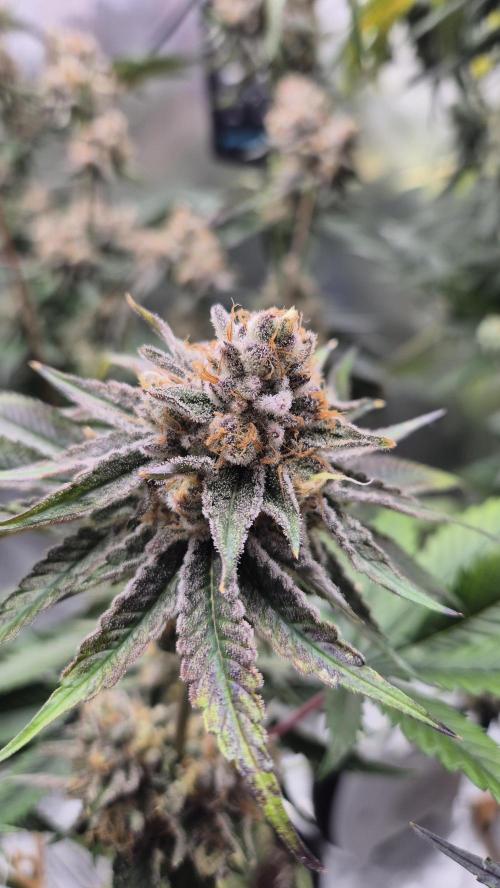
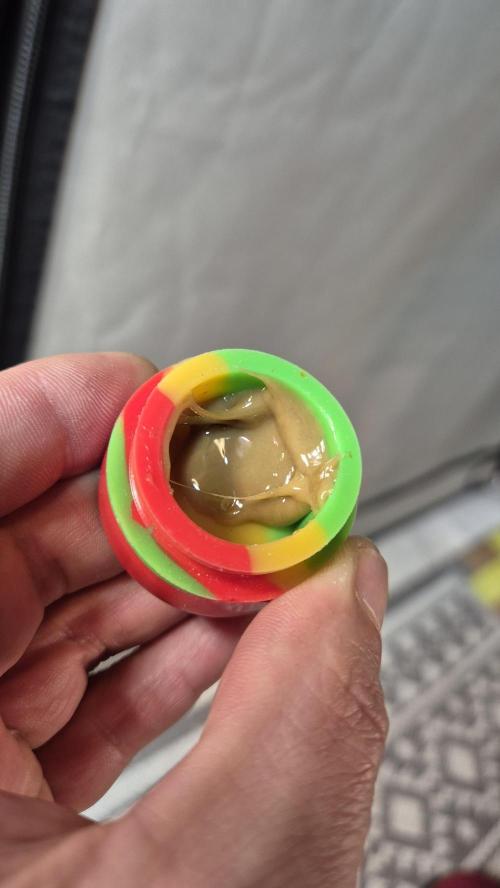
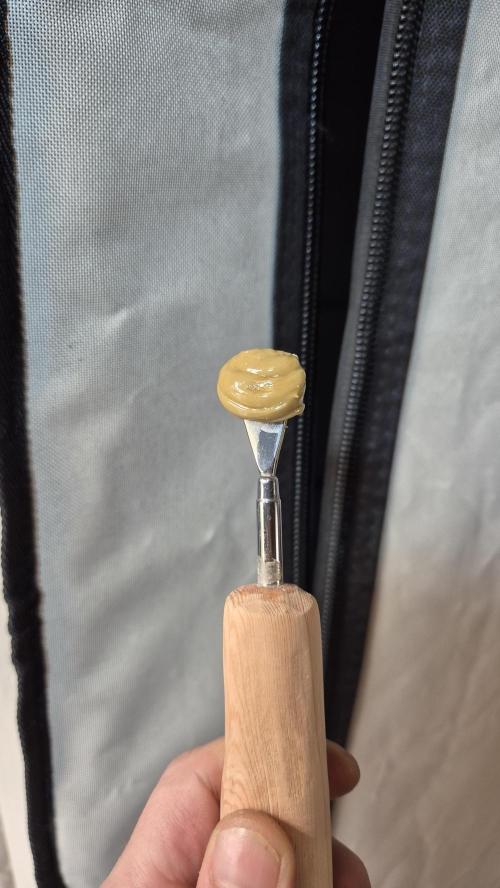
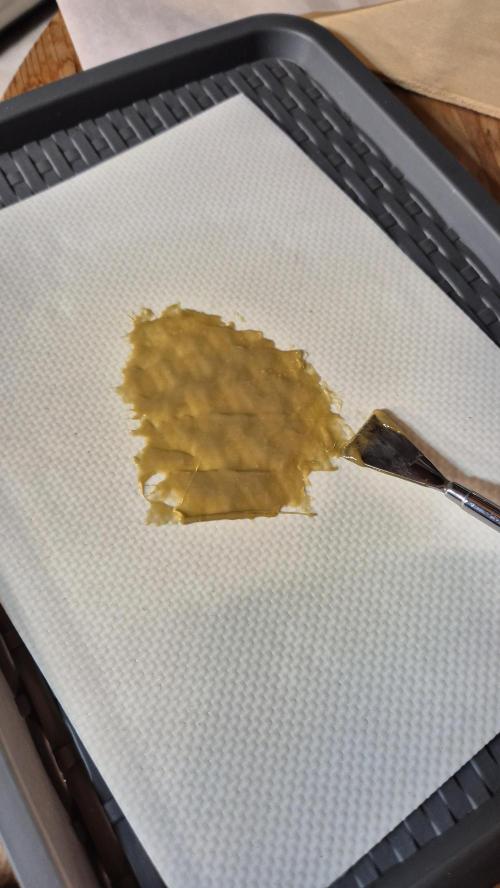
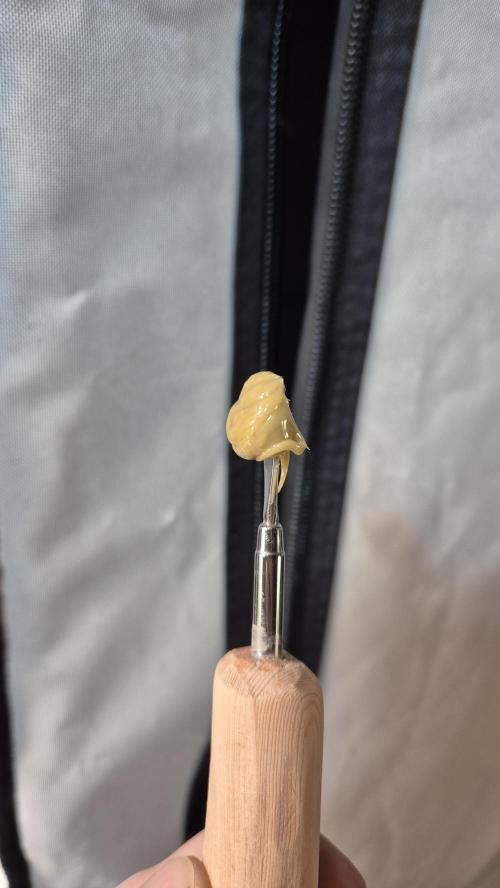
Borberad Mega scent in the last weeks interestingly finished 1.5 to 2 weeks before the indicated flowering duration, the little plant apparently got a fast strain. 😁
6 likes
4 comments
Share
Equipment Reviews




8 comments
Sort by
popularity
popularity
newest
oldest

UnorthadoxDude commentedweek 131y ago
One of the larger plants in this series... really thick stem. The buds look super frosty and delicious. Congrats! I hope to read the smoke report in a few weeks!
likes 2

Borberad commented1y ago
@UnorthadoxDude,
A great plant whose growth simply could not be slowed down. The taste is really fruity and the turn is refreshing at first if you don't overdo it. Smoke review is still coming.
likes

DrGruen commentedweek 131y ago
top result:😎
likes 2
Borberad commented1y ago
@DrGruen,
Thank you very much ✌️
likes

Canna-Community commentedweek 53mo ago
Super nice 💚😎🌱
like 1
Borberad commented3mo ago
@Canna-Community,
Thanks for stopping by! 💚
Flavor-wise, it's a top citrus bomb 🍊🍋💥
likes

GERGrowDesigns commentedweek 61y ago
Looks good 🌱 keep it up, great job ⭐
like 1
Borberad commented1y ago
@GERGrowDesigns,
Thank you very much, 💚
Fingers crossed that nothing goes wrong now. ✌️
likes

the end.
Enjoying this diary? Follow for more updates!

Prefer the old Diary view?
Go back to the old Diary view