The_Wanderer In the vast, often chaotic world of cannabis cultivation, where strain names are tossed around like marketing buzzwords and genetic purity is frequently lost to profiteering, Authentic Thin Mint has always stood apart as a true outlier.
Thin Mint earned its name not from hype, but from a genuinely rare terpene expression of eucalyptol (cineole), that delivers crisp, cooling mint aroma and taste that's almost mythical in modern cannabis. While thousands of strains chase earthy, fruity, or diesel profiles, true mintiness remains exceptionally uncommon, often appearing only in trace amounts even when present. This isn't just flavor and aroma though, it also brings a functional rarity.
What makes Thin Mint uniquely therapeutic lies in that eucalyptol-dominant profile, synergizing with balanced cannabinoids for effects that feel like a clean breath of winter air.
Mental Clarity & Mood Elevation-
A gentle uplift that clears mental fog, reduces anxiety, and enhances focus. Ideal for daytime relief without heavy sedation.
Stress & Pain Management.
Natural analgesic and anti-inflammatory properties soothe chronic discomfort, headaches, and muscle tension.
Respiratory Support-
The cooling menthol-like sensation acts as a bronchodilator, easing breathing and providing relief for sinus issues or respiratory strain.
Overall Wellness-
Antioxidant and calming effects promote relaxation, better sleep, and a renewed sense of calm amid daily chaos.
In a market flooded with disappointing fakes, this grow diary follows the journey of reviving a stable, authentic Thin Mint F1-hybrids, honoring its legacy as a refreshing, therapeutic escape. Potent and purposefully healing. Here I will be growing the real mint magic.
7 likes
1 comment
Share
Used method
Other
Germination Method
4
Week 4. Vegetation
1mo ago
1/3
16 hrs
Light Schedule
23 °C
Day Air Temp
6.0
pH
No Smell
Smell
55 %
Air Humidity
75.71 liters
Pot Size
Nutrients 4
Homebox Fish Emulsion
10 mll
Calcium Carbonate Dissolved in Vinegar
1 mll
Epsom Salt
1 mll
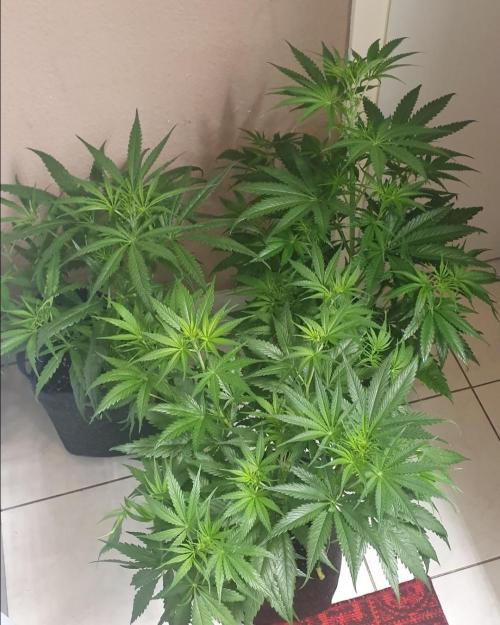
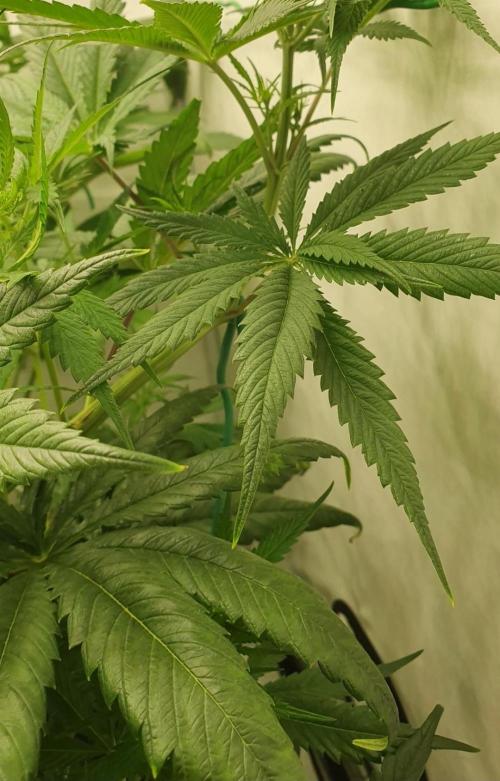
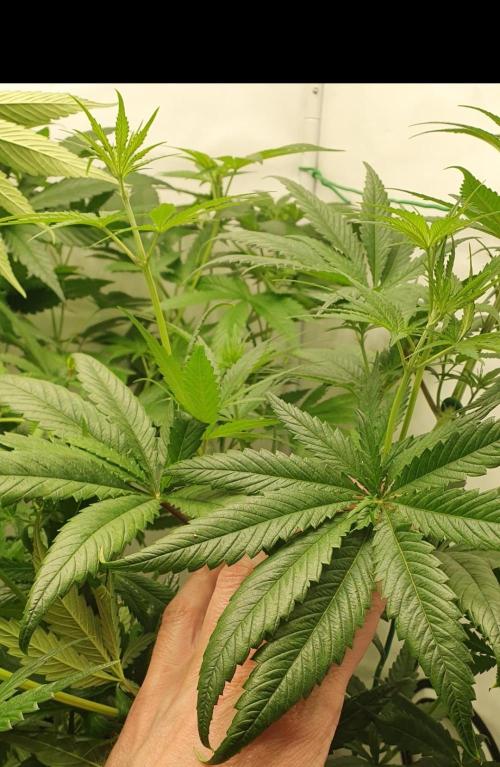
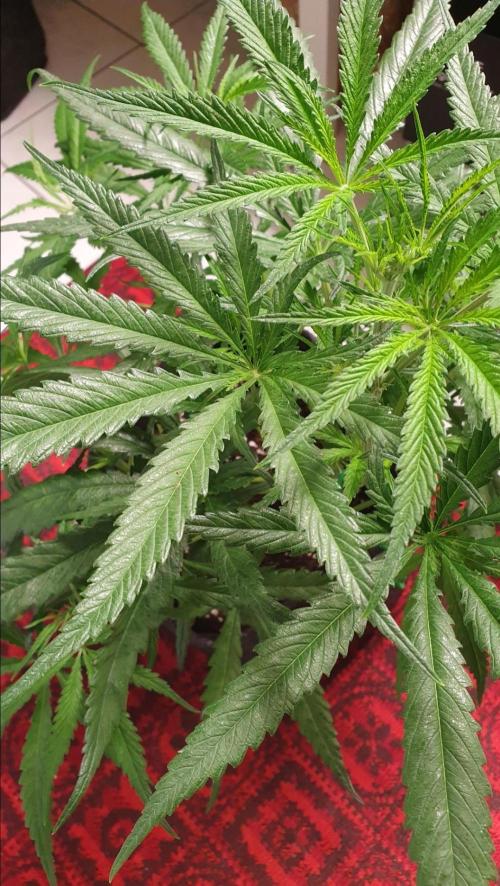
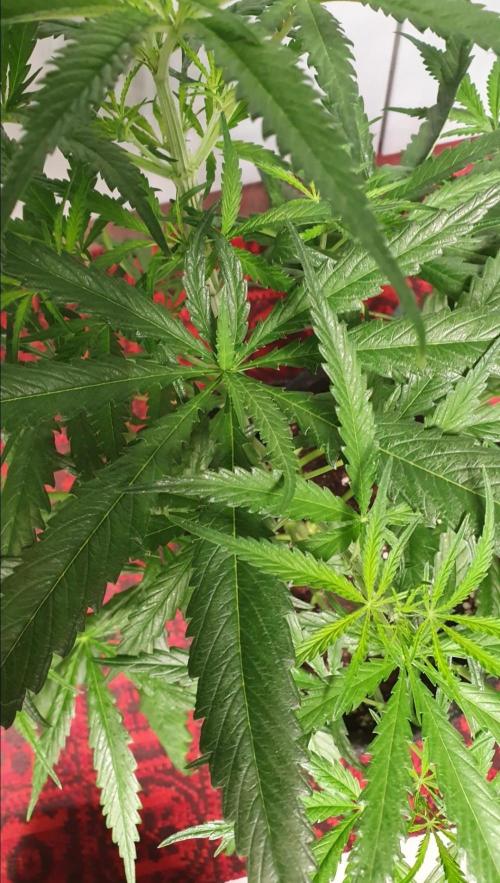
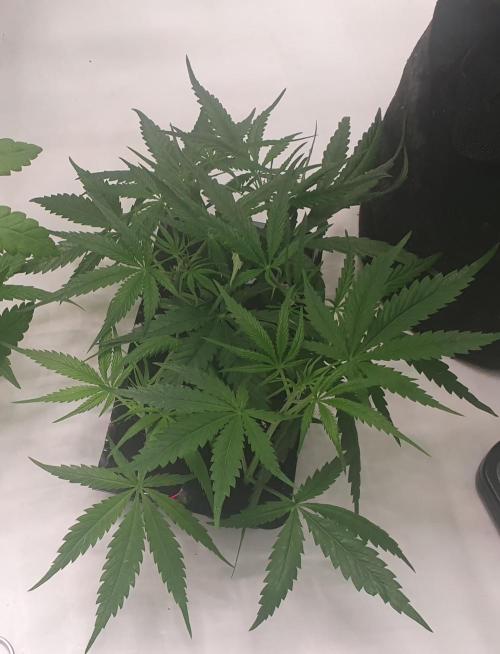
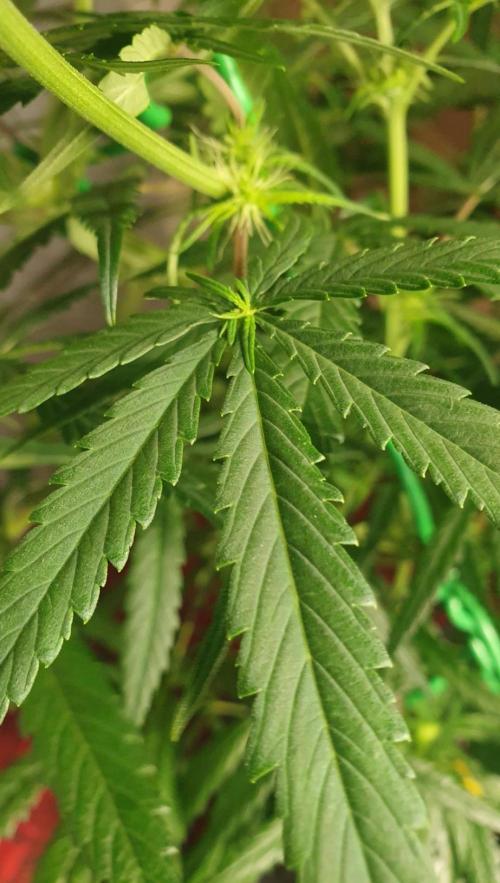
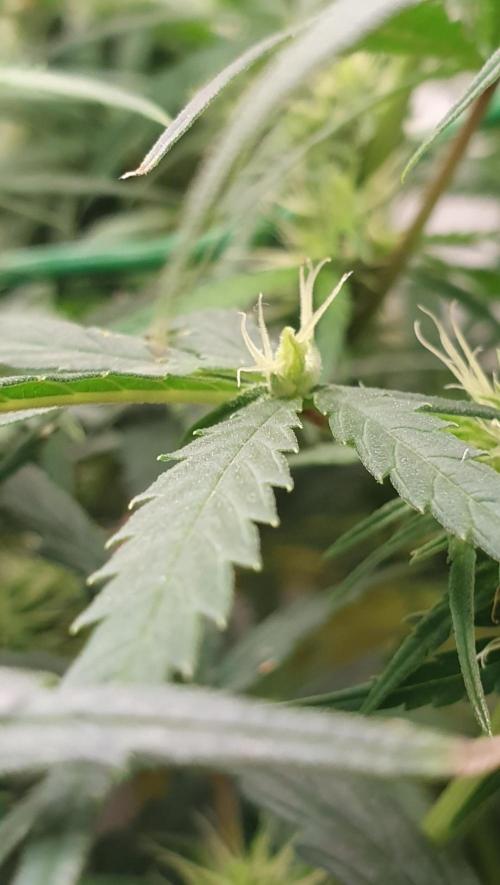
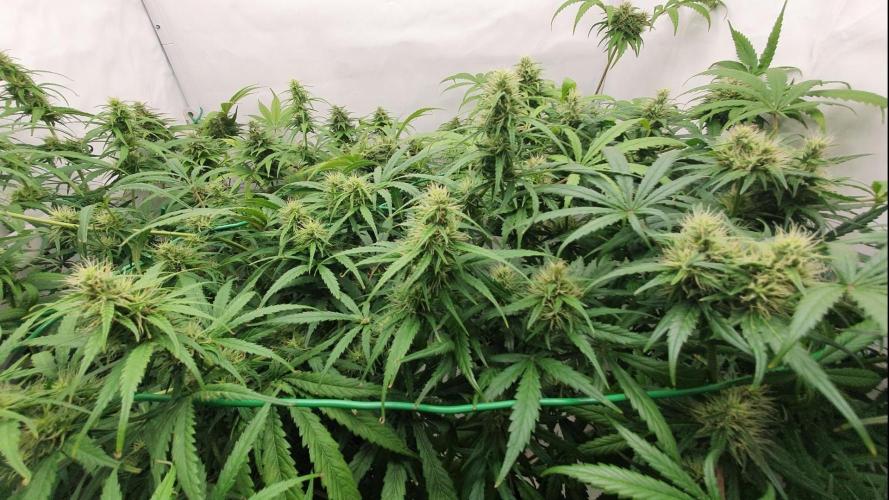
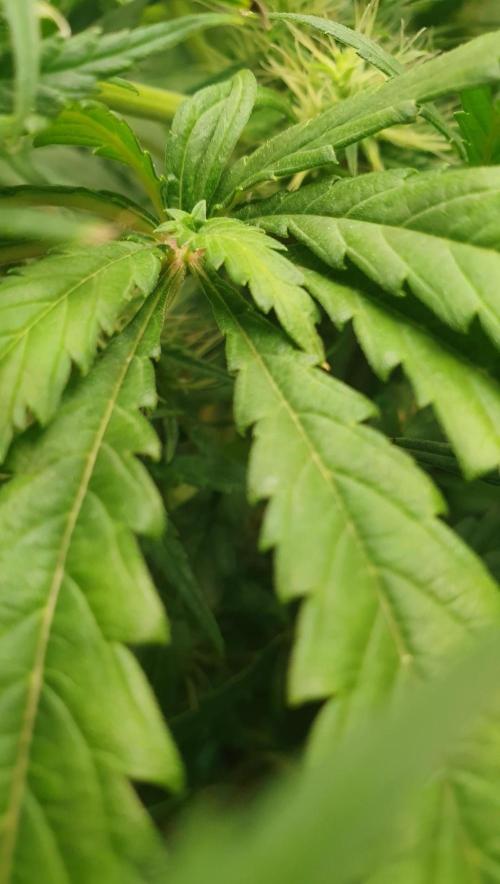
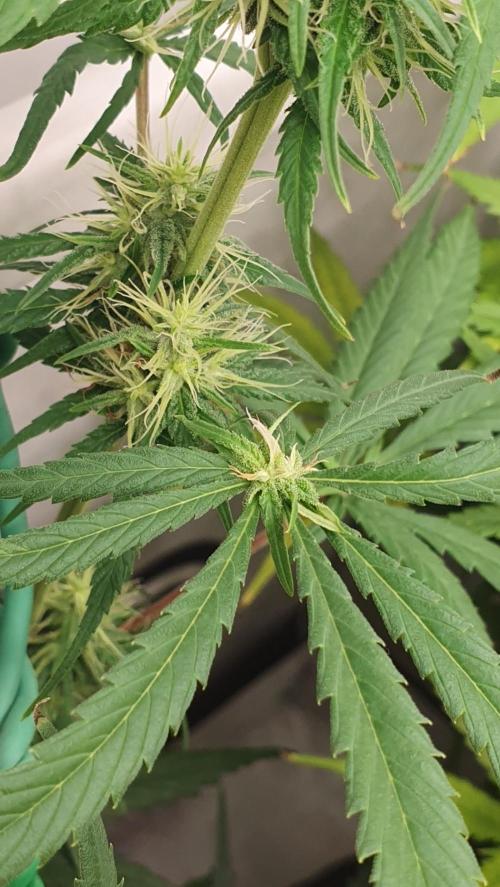
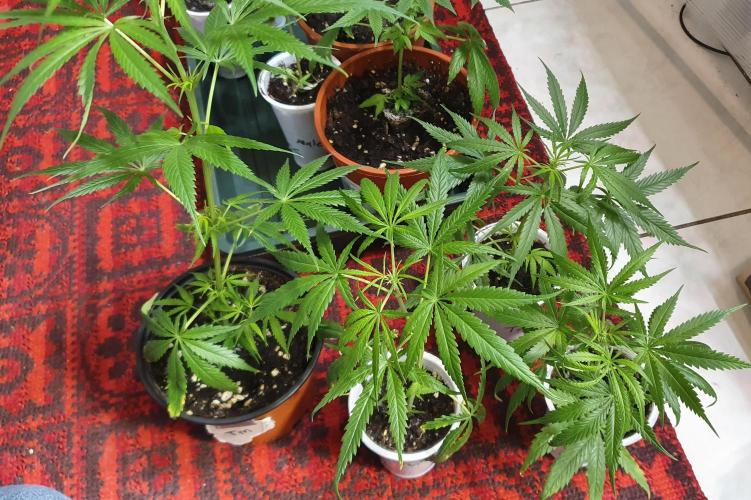
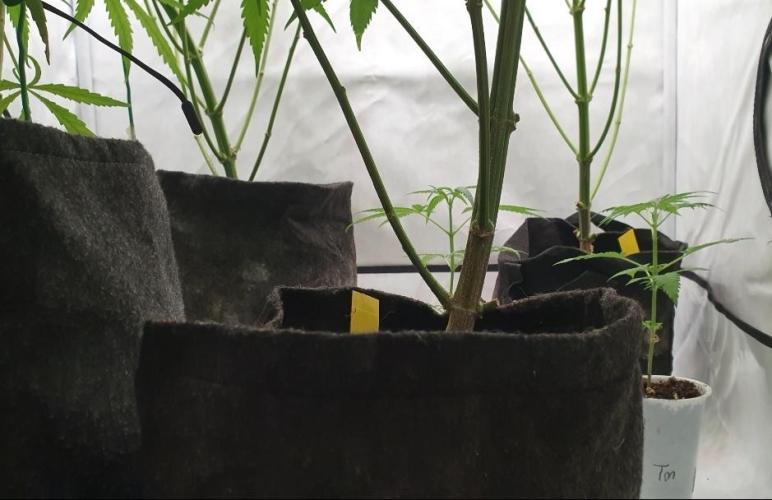
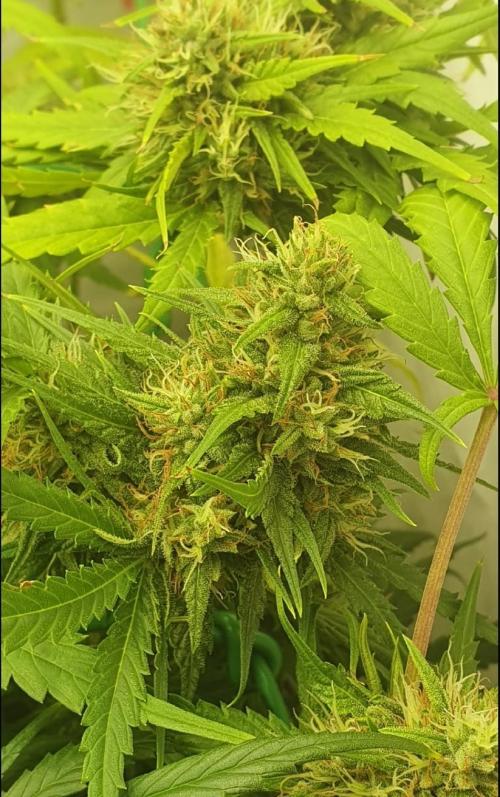
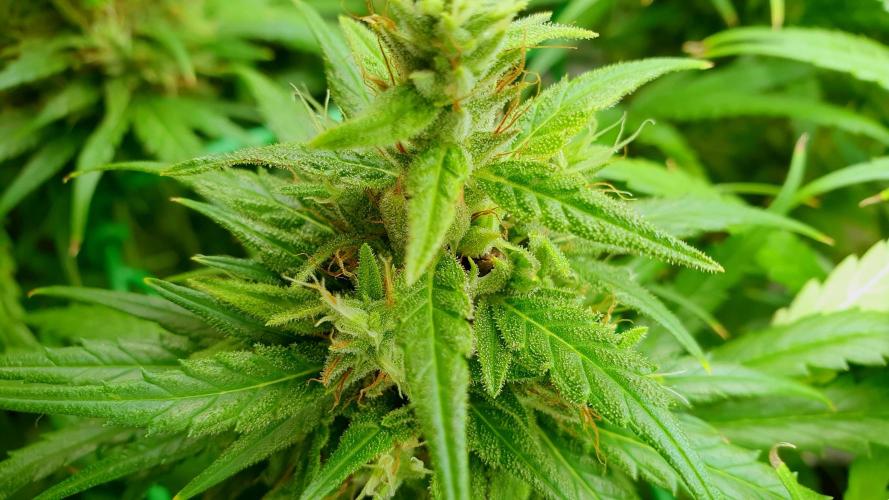
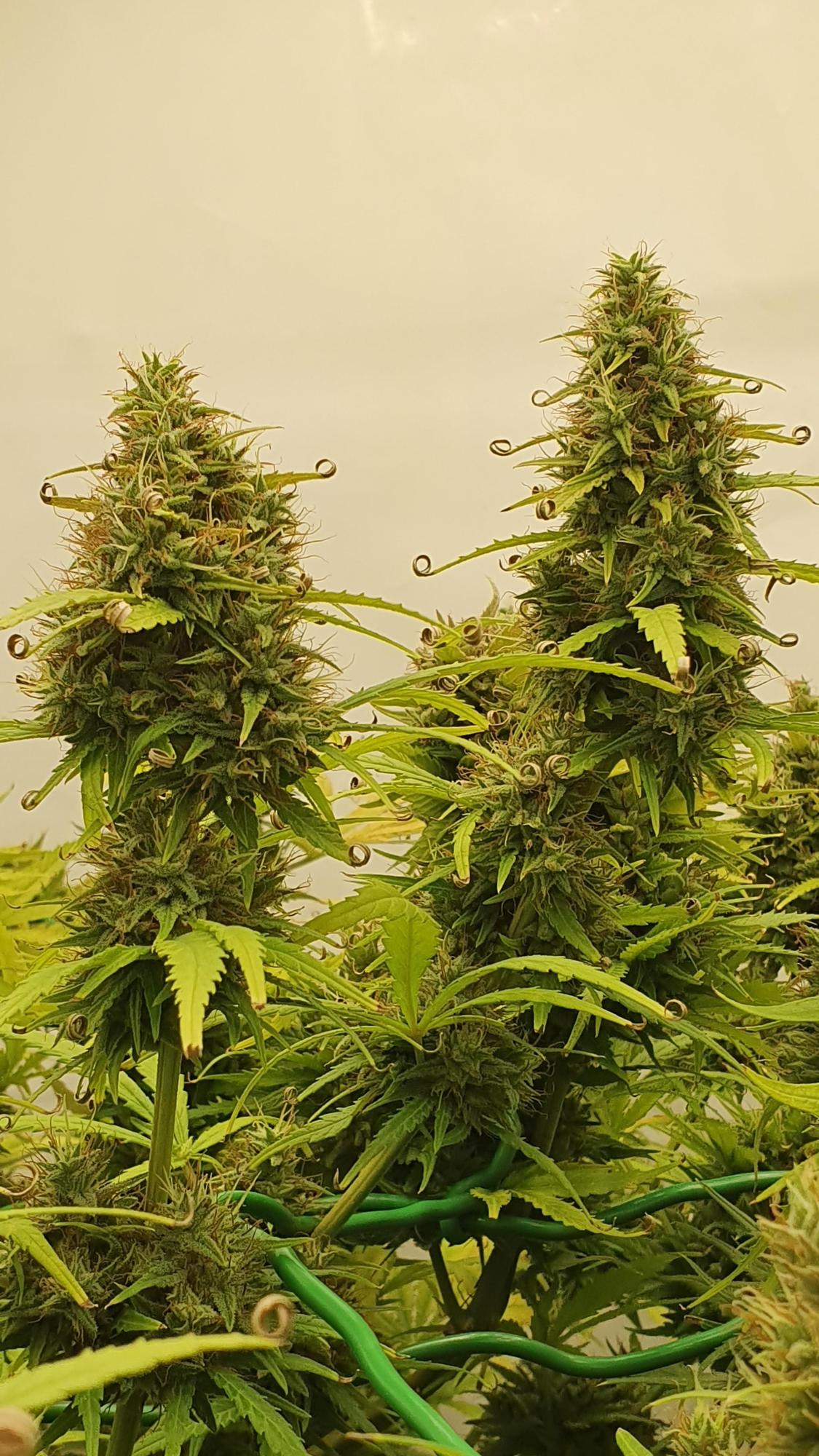
The_Wanderer 5 weeks after germination, the plants are showing their distinctive adult characteristics. Very short internodal spacing, vigorous side branching, and the form of the leaf is recognizable. I can tell these apart from other plants visually, but I mark them anyway in case I am no longer around they can still be identified by others. Being the first generation of a hybrid the plants are very similar to each other being a 50/50 mix of the parents, yet can be divided into 2 physical expressions. One has very narrow leaves and the other has a leaf that looks more like a hybrid leaf shape. These physical differences may coincide with nuanced effects and flavor.
6 likes
comments
Share
Used techniques
LST
Technique
5
Week 5. Vegetation
1mo ago
1/14
16 hrs
Light Schedule
23 °C
Day Air Temp
6.0
pH
No Smell
Smell
55 %
Air Humidity
75.71 liters
Pot Size
Nutrients 3
Homebox Fish Emulsion
10 mll
Calcium Carbonate Dissolved in Vinegar
1 mll
Epsom Salt
1 mll
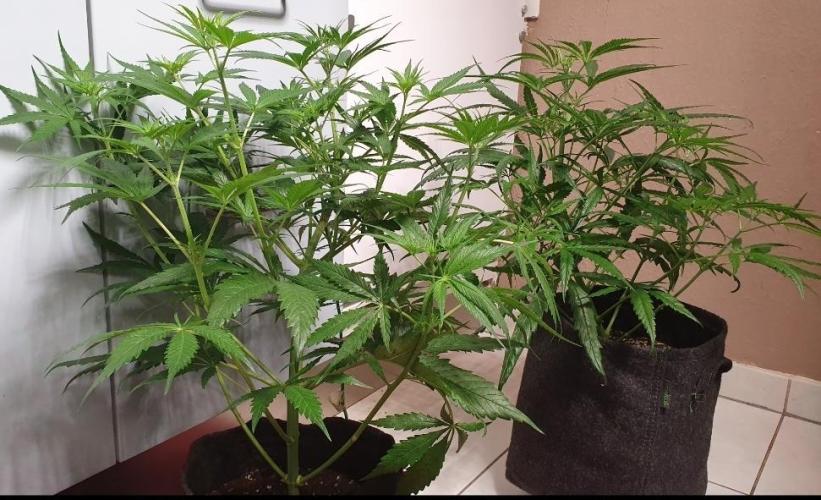
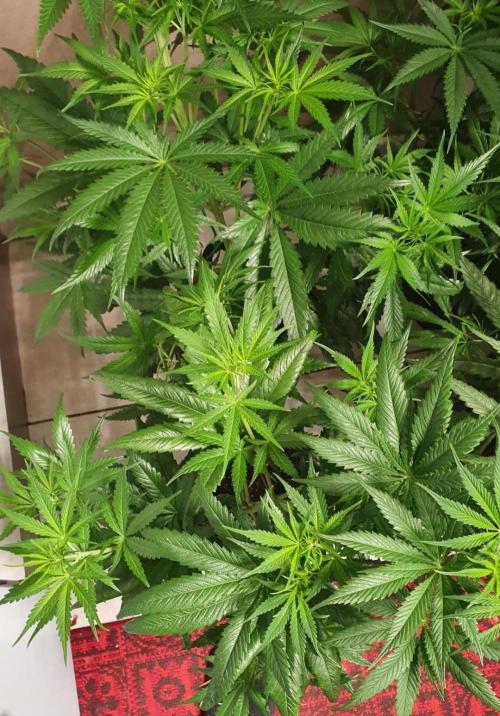
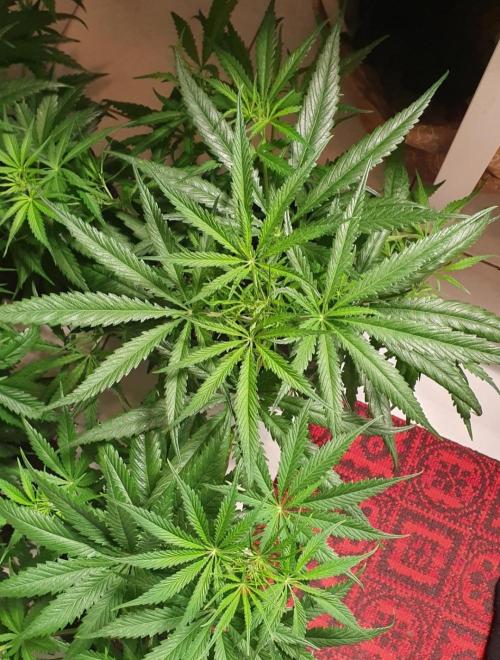
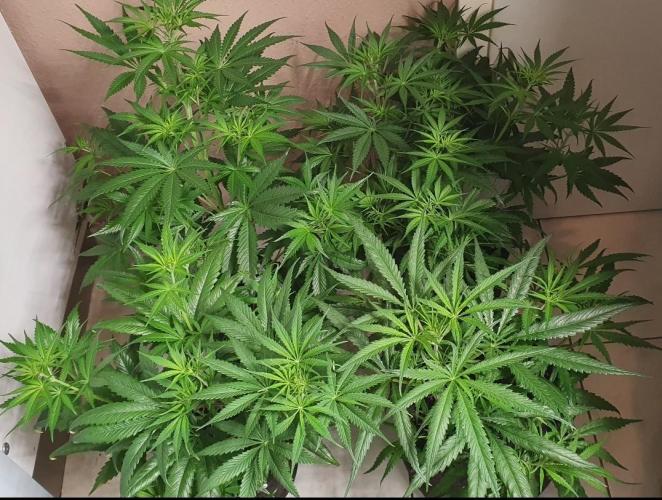
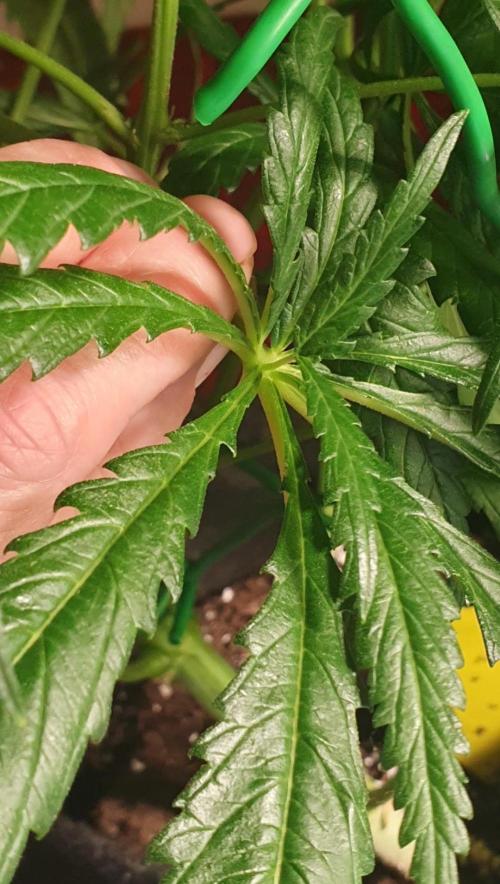
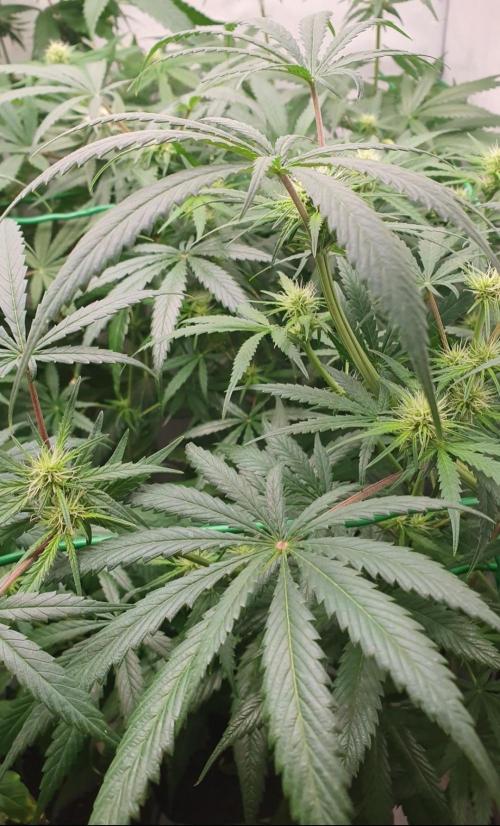
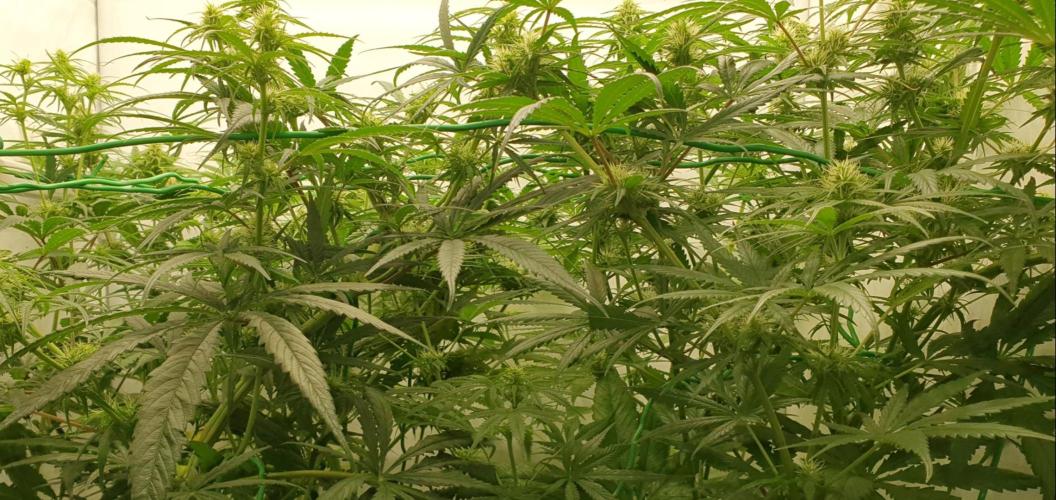
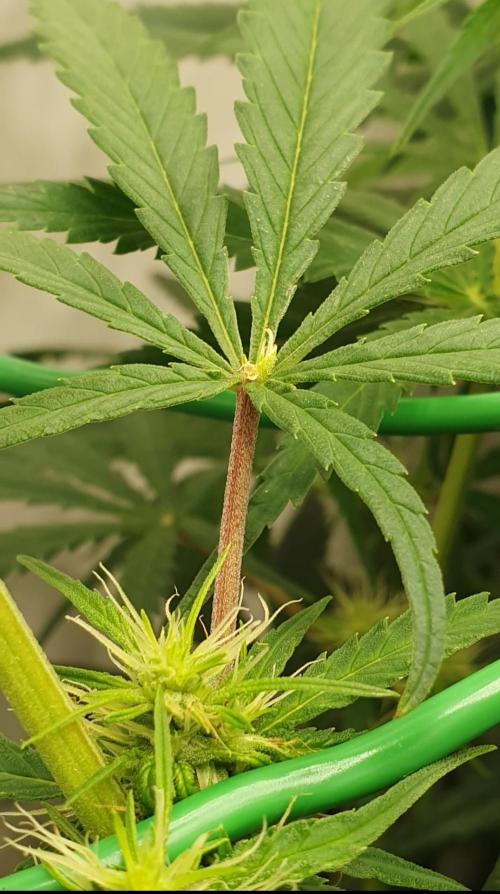
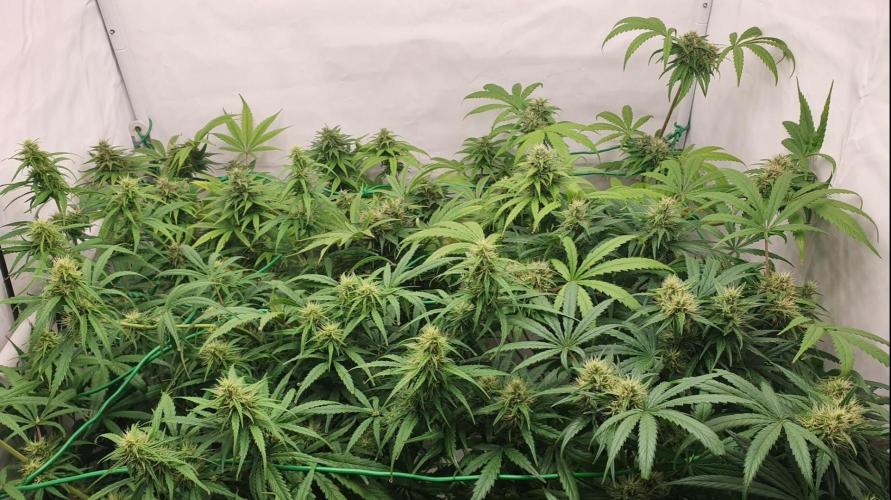
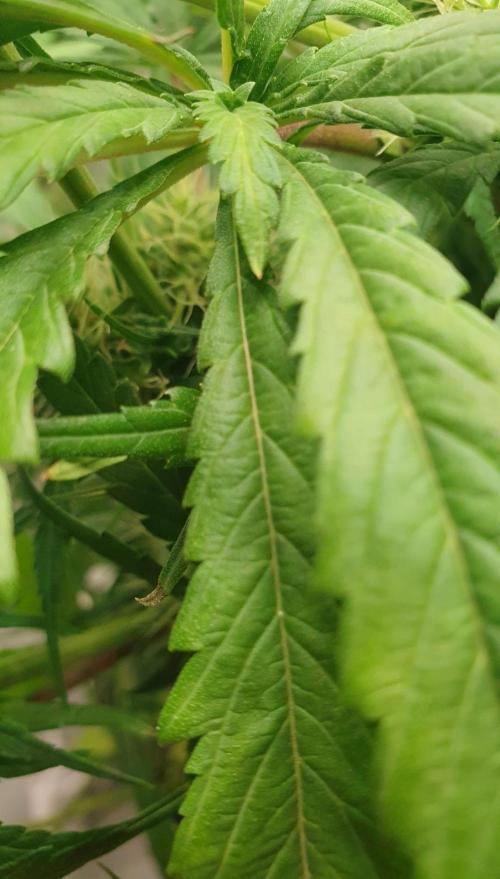
The_Wanderer Another week and training is still underway but is working fine, nice side branching and tight internodal spacing. It does fight hard against the training. Sometimes They break free of the gardening wire and I have to re-wrap it. Very vigorous and healthy plants, forgiving and tough.
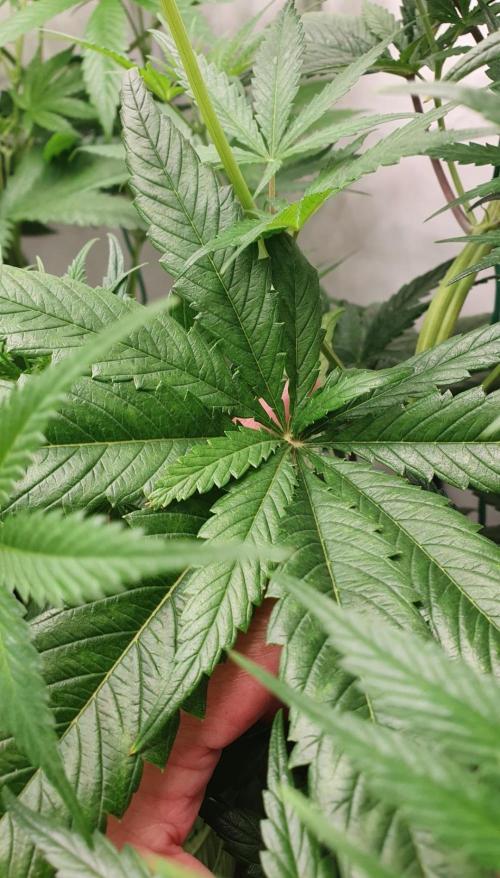
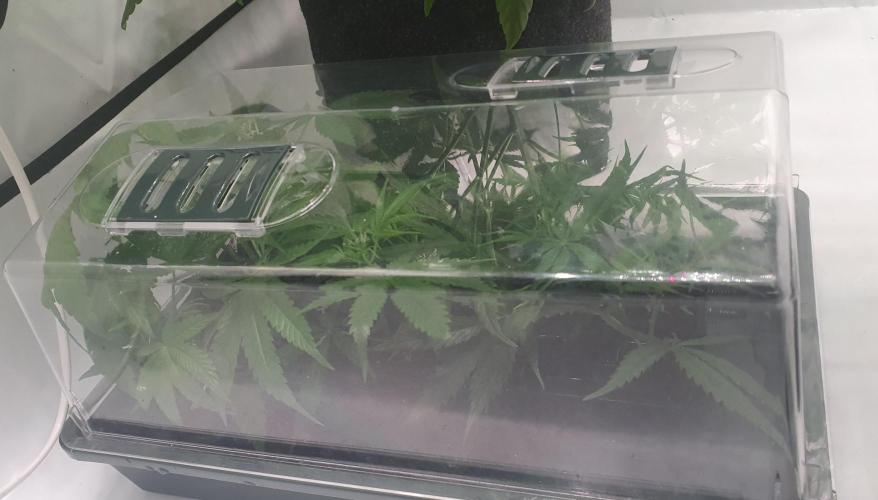
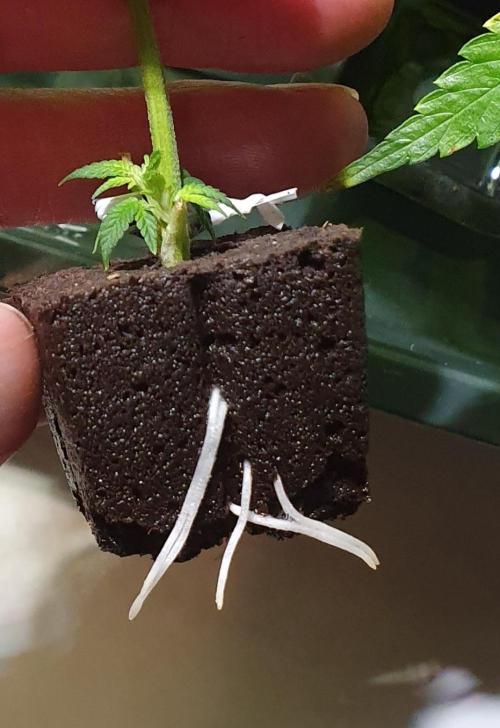
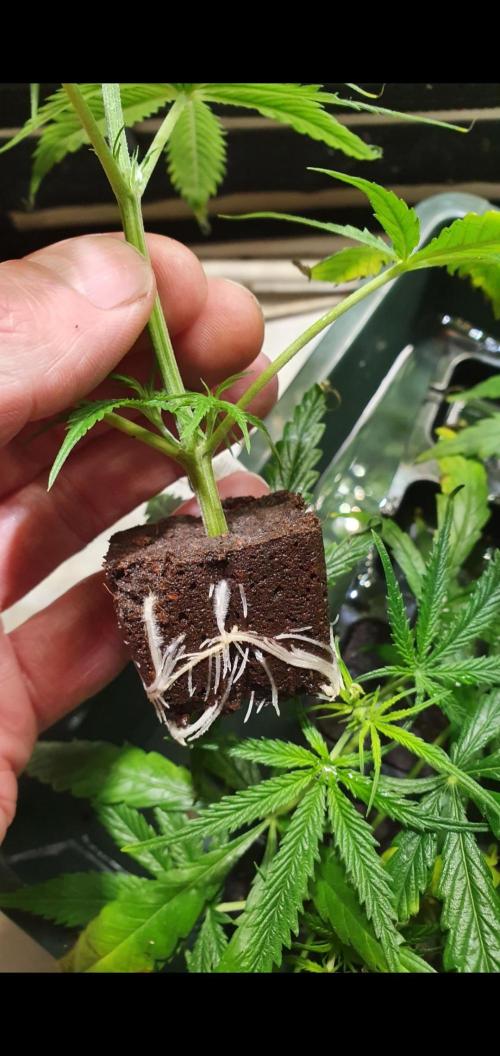
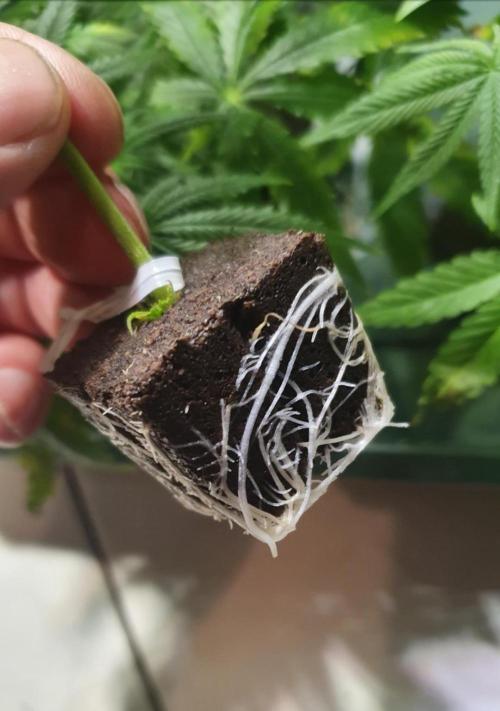
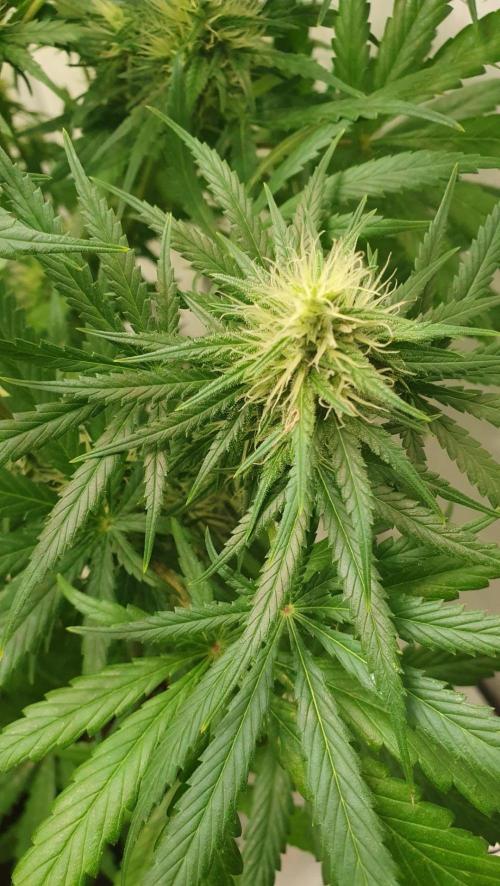
Typical adult leaves for Thin Mint. An interesting trait from one of the parents is carried over. It was here I did some light defoliation and took clones. I moistened some coco coir grow plugs and put the cutting inside. They joined some strangers for a nap under a humidity dome.
This is the end of vegetation. Time to flower.
7 likes
3 comments
Share
7
Week 7. Flowering
1mo ago
1/8
11 hrs
Light Schedule
23 °C
Day Air Temp
6.0
pH
No Smell
Smell
55 %
Air Humidity
75.71 liters
Pot Size
30 cm
Lamp Distance
Nutrients 4
Homebox Fish Emulsion
10 mll
Calcium Carbonate Dissolved in Vinegar
1 mll
Epsom Salt
1 mll
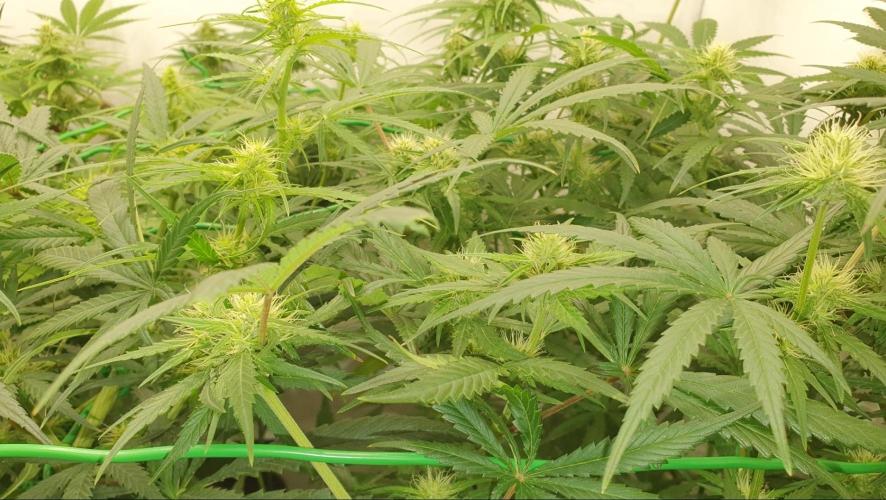
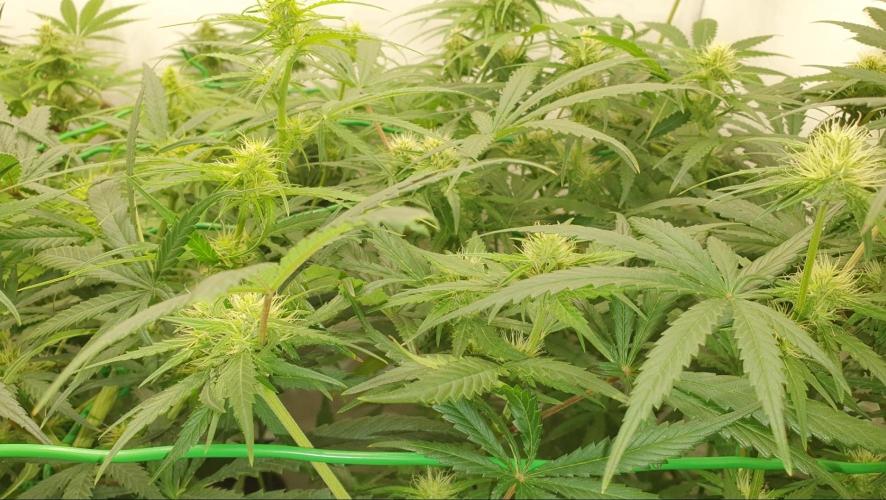
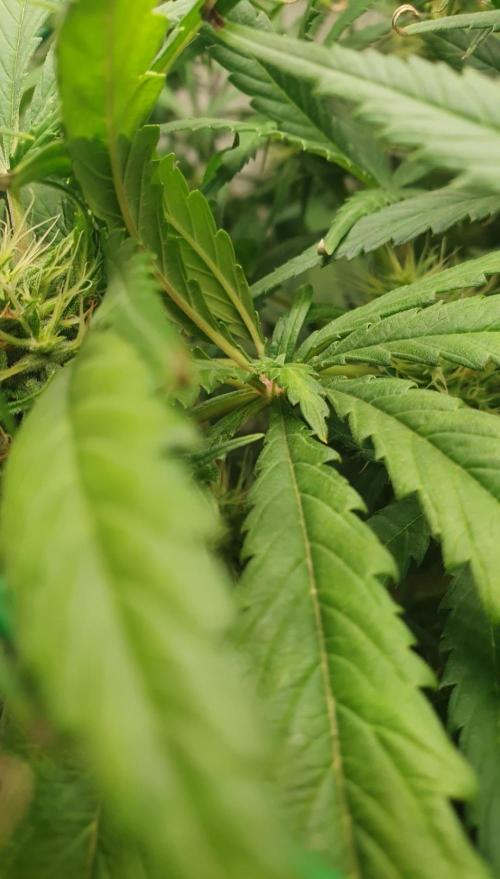
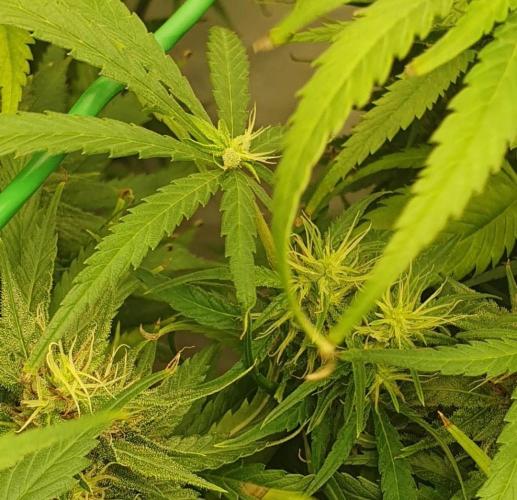
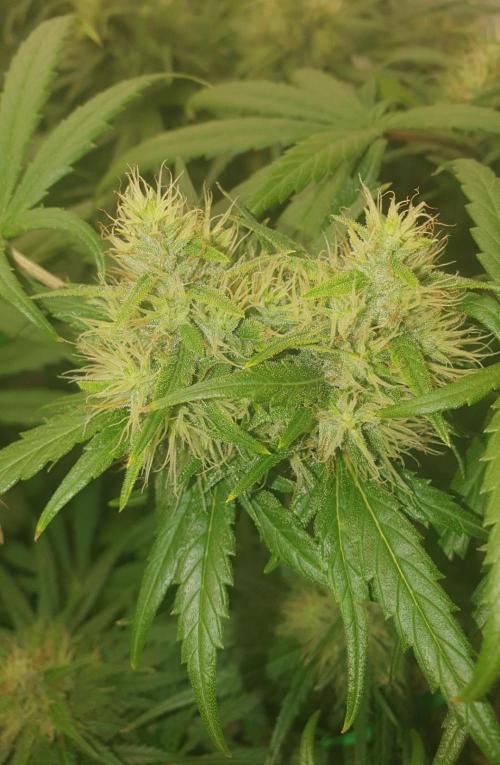
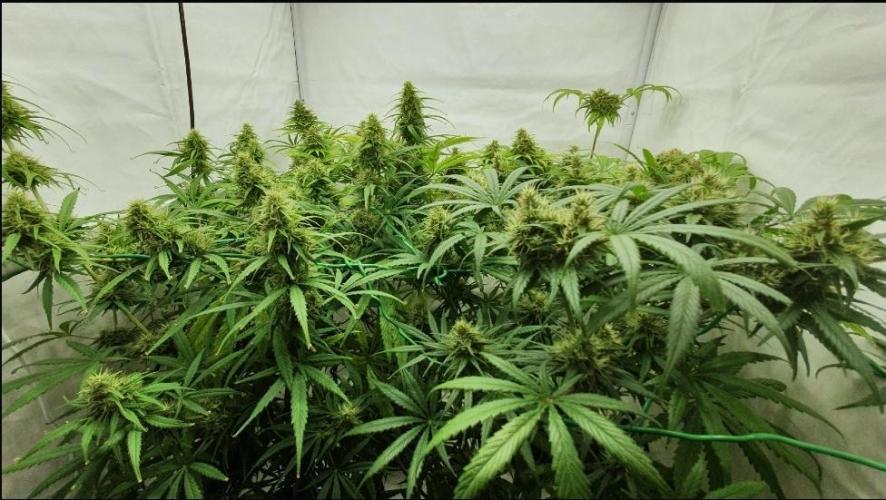
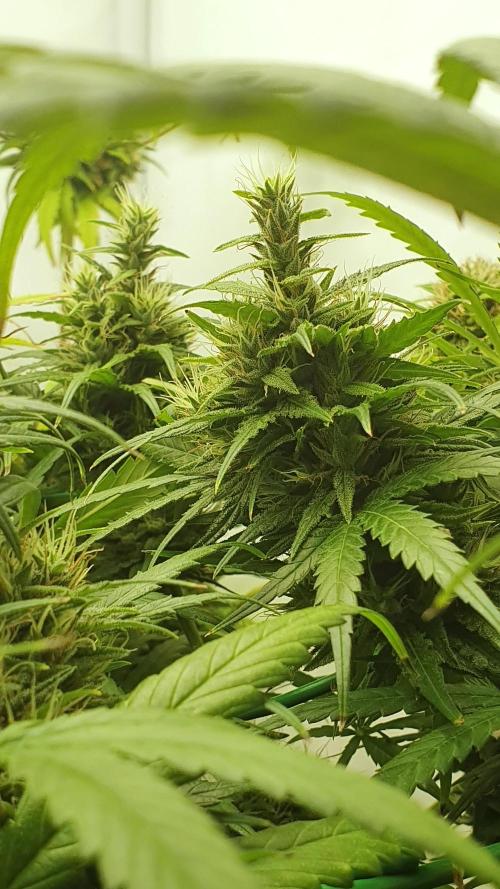
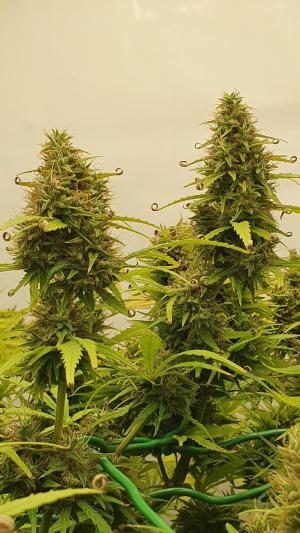
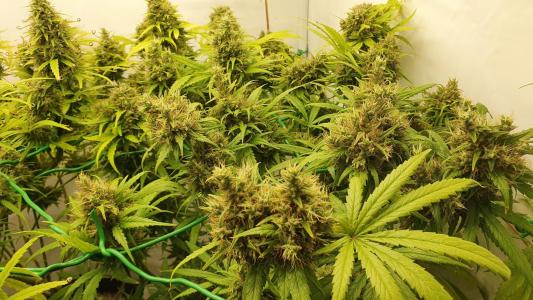
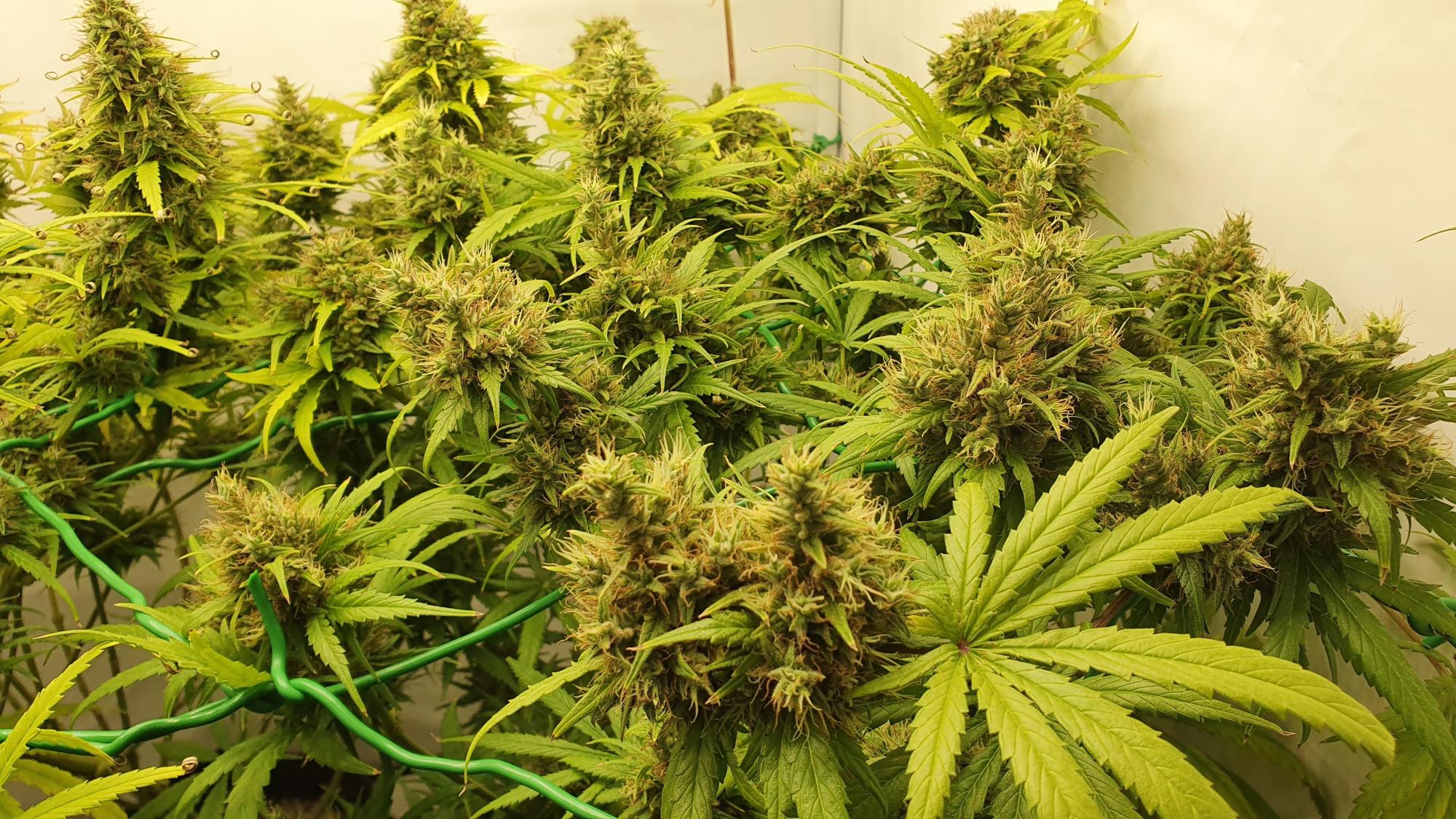
The_Wanderer All cuttings have rooted, some better than others. Bud sites are forming everywhere. Those close internodes with LST shoot off into a lot of bud sites. Its ganja fireworks in slow motion.
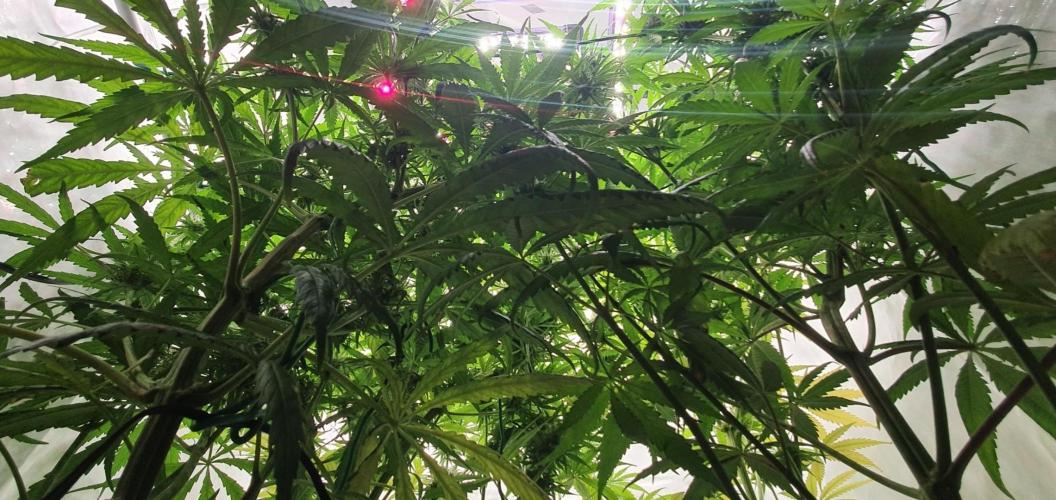
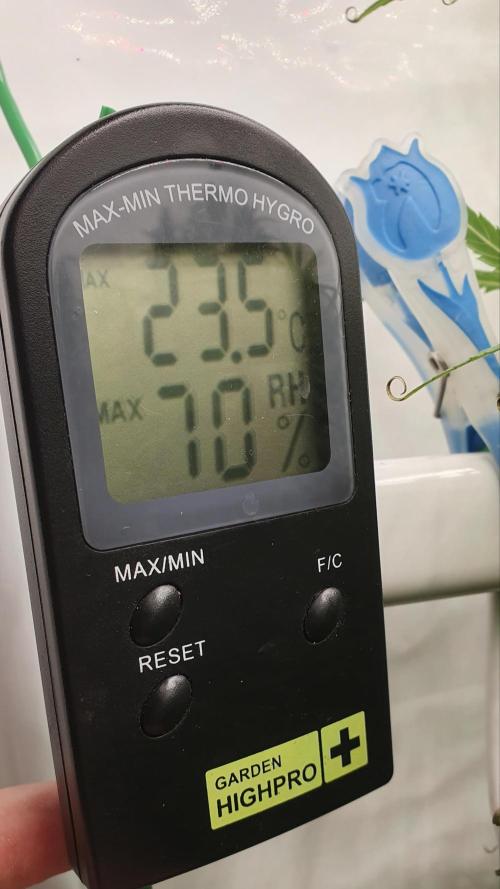
The_Wanderer Clones doing ok. Changed to 10-14. Relative humidity was too high, 70%, during scotoperiod so I am giving 25% less water and have removed some leaves to help. After 2 weeks I will do more because I don't want to stress them too much. This helped bring the humidity down to acceptable. During photoperiod the relative humidity is acceptable. I'm guessing 4 more weeks of flowering at least.
7 likes
comments
Share
Used techniques
LST
Technique
12
Week 12. Flowering
18d ago
1/5
8 hrs
Light Schedule
23 °C
Day Air Temp
6.0
pH
Weak
Smell
55 %
Air Humidity
19 °C
Night Air Temp
75.71 liters
Pot Size
30 cm
Lamp Distance
Nutrients 4
Homebox Fish Emulsion
10 mll
Calcium Carbonate Dissolved in Vinegar
1 mll
Epsom Salt
1 mll
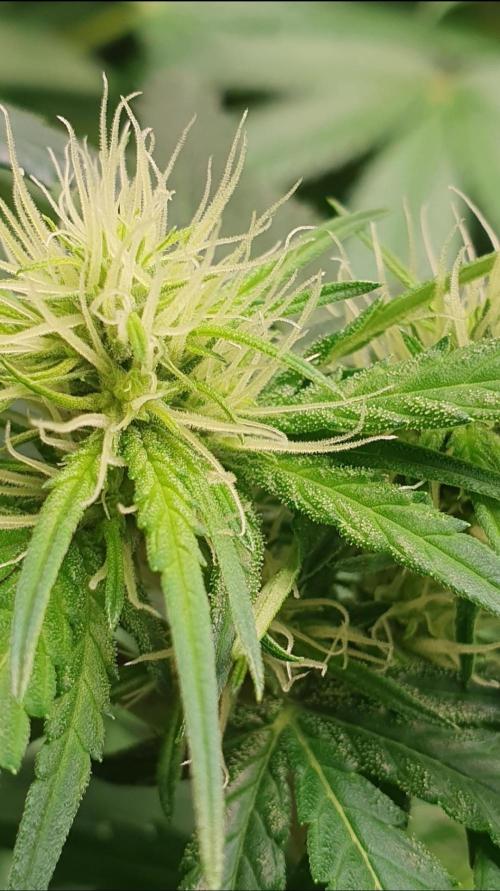
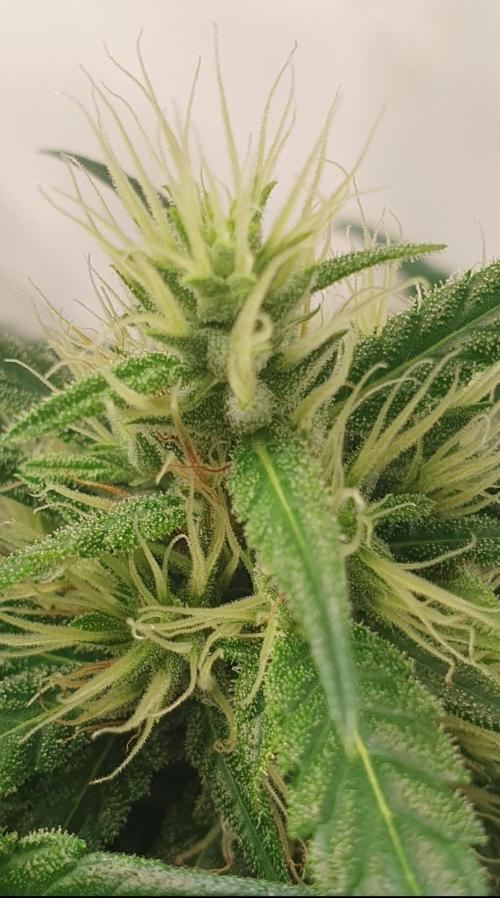
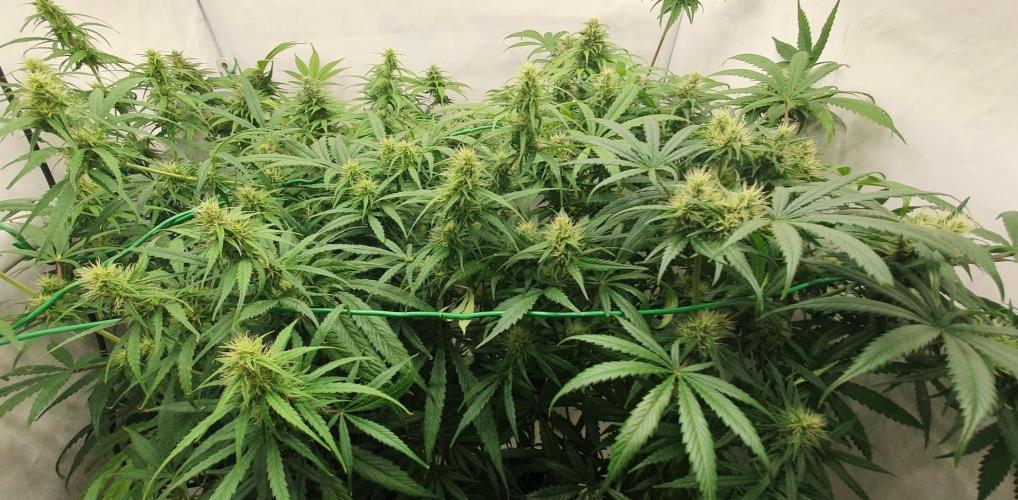
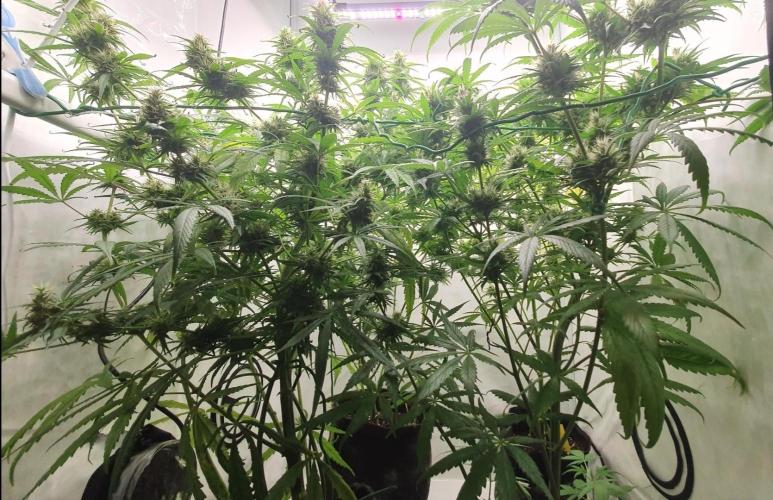
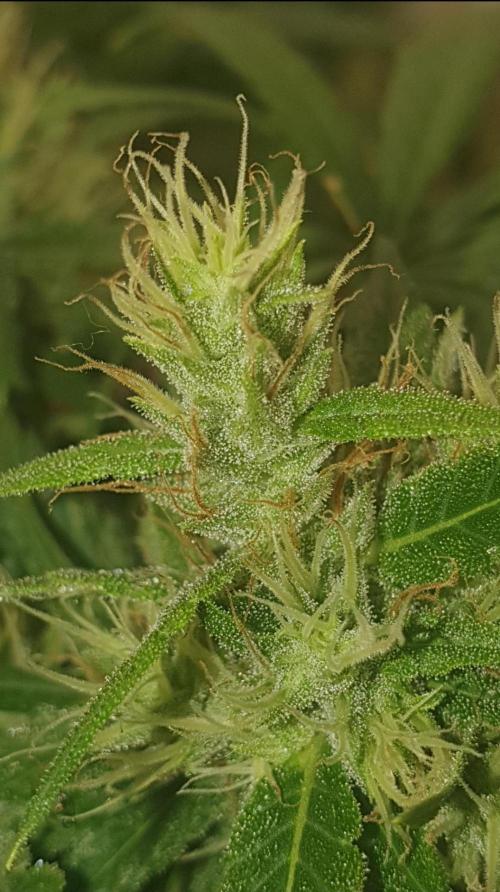
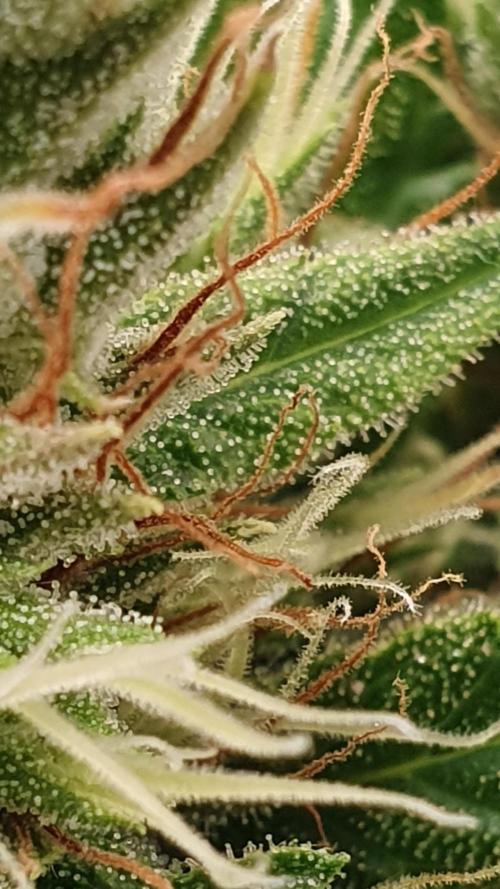
The_Wanderer Its only been 6 days, and I increased the scotoperiod by 1 hour to try to encourage her to finish faster, but she has some weeks to go.
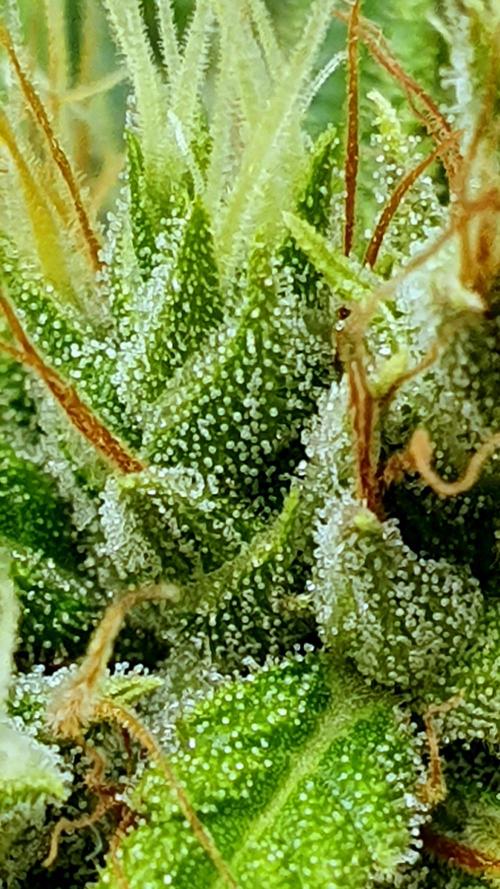
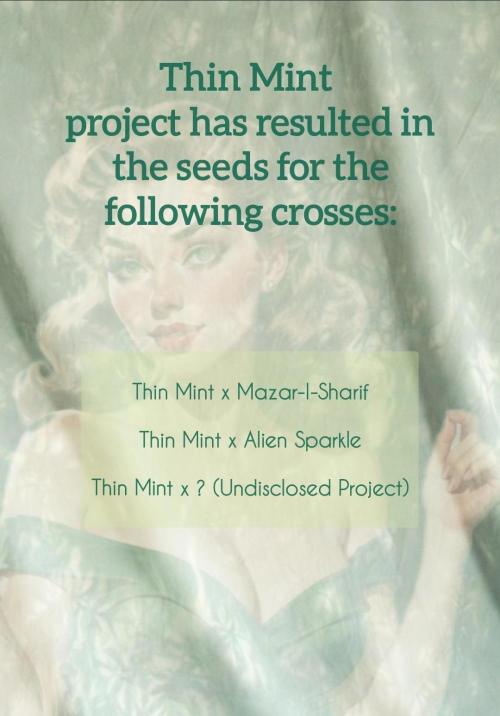
The places I pollinated are bursting with matured seeds. These will be the cross with Alien Sparkle, and the undisclosed male special project.
I am a little impatient and ready to start the next seeds. So Ive been considering that. Not so easy to decide what to plant next.
The_Wanderer This wasn't just another grow, it was a homage to an authentic and unique cultivar. In a world flooded with mislabeled copies and unstable phenos, this Thin Mint reminds us again why the original stands apart.
The clones are rooted strong for spring revival, seeds banked of some amazing crosses. As the the garden is dismantled for winter shutdown, I step back with quiet gratitude. Authentic Thin Mint endures!
Thanks to all who followed. Time for winter hibernation.
Until the light returns...
Sieht gut aus. Hattest du trotz der hohen RLF keinen Schimmel? Habe hier zum ersten Mal was vom Foxtailing gelesen. Hast du dir mal die Wurzeln von den betroffenen Pflanzen angeschaut?
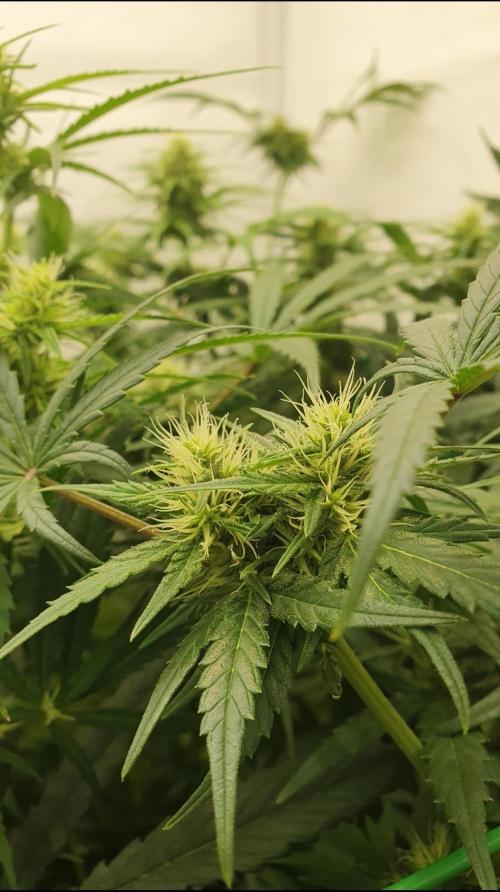
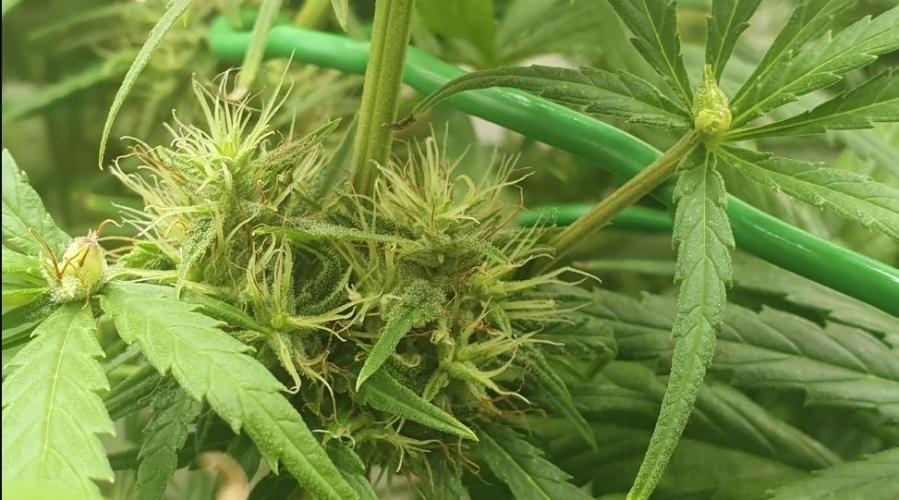
@Leckmilch, danke! Als ich mitten in der Blütephase gemerkt habe, dass die Luftfeuchtigkeit zu hoch war, habe ich von unten an den Pflanzen entblättert und einen Entfeuchter eingesetzt. Danach habe ich sie bei 55 Prozent relativer Luftfeuchtigkeit gehalten. Die Luftzirkulation und der Luftaustausch sind super, also war das nichts, worüber man sich Sorgen machen musste. Wenn die relative Luftfeuchtigkeit höher als 62 Prozent geblieben wäre, hätten Mehltau und Schimmel das perfekte Umfeld gehabt, um zu wachsen, besonders in großen dichten Blütenständen. Aber Thin Mint bildet kleine Buds an vielen verschiedenen Stellen mit Abständen dazwischen. Das ist auch eine eingebaute Verteidigung gegen Schimmel durch ihre Wuchsform. Das kommt von einem ihrer Elternteile. Die Pflanze, die das Foxtailing gemacht hat, war die gesündeste und stärkste, und da es kein Problem ist, habe ich es einfach als ihre Wachstumsgewohnheit akzeptiert. Eine andere Pflanze hat das auch gemacht, aber nicht so stark. Wenn ich sie länger hätte reifen lassen, hätten vielleicht alle am Ende der Blütephase das gemacht.
Moin, sieht doch gut aus und da geht auch noch was ;) Deine Genetic hat auf jeden Fall schmalere Blätter und Stempel, was sie vom Wuchs her gemeinsam haben, ist das "Foxtailing". Bin mal gespannt, wie dass in 2 Wochen aussieht =) LGn
@The_Wanderer, Ja aber keine Cannabisklone....^^
Mein Setup soll so einfach bleiben wie möglich, keine Lust 5 Zelte zu bewirtschaften und 80 mal am Tag alles kontrollieren zu müssen... vor allem nicht im Sommer....
Habe daran sehr viel Spaß aber erstens nur die Zeit im Winter dazu und am Ende müssen ein paar Samen, 1-3 malige Kontrollen/Gießen die Woche reichen.. Für mich ists ein Hobby und kein Job, zudem das Setup- und die Stromkosten kommen ja auch noch dazu ;)
@Softi, Deine scheint diesen dritten genetischen Anteil zu haben, der bei europäischen Versionen häufig vorkommt. Jemand hat GDP eingekreuzt. Das erklärt wahrscheinlich, warum deine mehr Farben zeigt und eine kompaktere, chunkigere Indica-Form hat. Ich verstehe jetzt, warum Schimmel dort ein größeres Thema sein könnte.
@Softi, Deine scheint den dritten genetischen Anteil zu haben, der bei europäischen Versionen häufig vorkommt. Jemand hat GDP eingekreuzt, was für Variation zwischen den Geschwisterpflanzen sorgt. Das ist wahrscheinlich der Grund, warum deine mehr Farben zeigt und die kompaktere, chunkigere Indica-Form hat. Sie hat einfach mehr Indica drin. Ich verstehe jetzt, warum Schimmel dort ein Thema sein könnte, wenn man sich die Blütenstände anschaut. Wäre es ein echter F1-Hybrid, wäre es eine 50/50-Mischung der Eltern (halb Sativa-ähnliche Form, halb Indica-ähnliche Form) und alle Geschwisterpflanzen wären sich extrem ähnlich. Aber bei einer Drei-Wege-Kreuzung zeigt sich Variation, und in weiteren Generationen würden die Pflanzen noch viel stärker voneinander abweichen.
Ach, nee. Not again. I am so tired of the same problems over and over. Again here with Thin Mint aka Girl Scout Cookies we have the clown show from the commercial market and tainted/mis information in order to make $$ off of trends and hype and the gullibility if uninformed consumers.
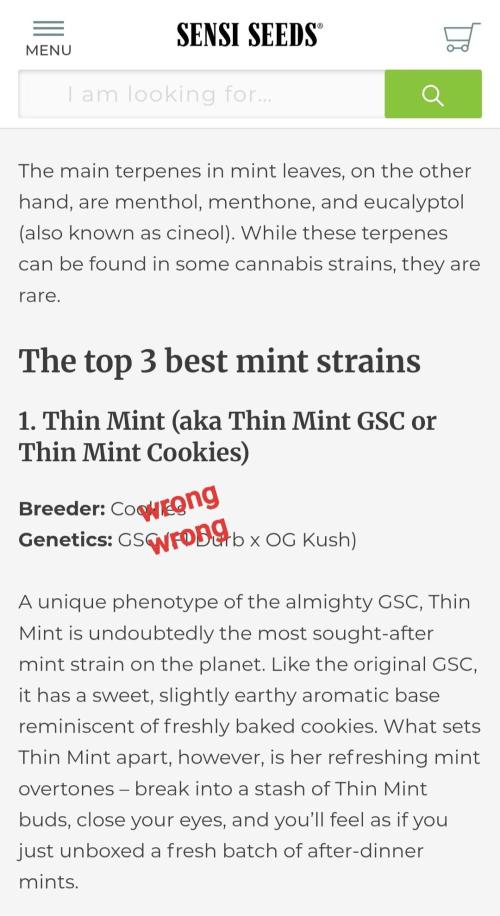
Some places have the basic information sort of right. Thin Mint is a cross between Durban Poison and a certain Kush. The kush with the lemon bred into it. The kush people know which one it is, it has its name. But these websites just say OG Kush. So lets move on. Look at the description of Girl Scout Cookies. Same plants are crossed. 2 different names, same cross. Some say this cross resulted in different varied phenotypes. Well, yeah if the parent plants being crossed by different people are different plants altogether being crossed. Not being genetically closely related to the parent plants someone else used will do that.
When the parent plants are the *real untainted authentic Durban Poison crossed with the right kush, you get Thin Mint/GSC f1-hybrid which can only be made by using the authentic stable parent lines. This results in a progeny that have the mint smell and taste, and the f1-hybrids are very similar to each other being a 50/50 mix of the stable parents.
Yet some "information" says there is several distinct variations of this cross that are noticeably different from each other with different tastes, effects, growth forms. Which sounds.. not right. They either used a hybrid for the cross or a fake in the cross to get a result like they describe. Or it could be just myth building to sell some random hybrid because they want the money because that name is in demand. Or both. A fake Durban Poison is highly likely as proven by the study available from Plos One ( https://journals.plos.org/plosone/article?id=10.1371/journal.pone.0267498 ) where products in the commercial market sold under the same name from different sources were NOT genetically closely related. Durban Poison scoring so bad it was below the "random shuffle" indicating possibly widespread intentional misrepresentation. I think only Tangie scores worse. That could be part of it.
Other places talk about Thin Mint, but for obvious reasons can't produce it... but offer "their version" of it. Sound familiar? It was in another diary of mine where some commercial supplier offered "their version" but not the real thing. My joke about it was, you take your kid to daycare and come to take you kid home later, but its not your kid, its some other kid. You ask for your child, but they say, "We don't have your child. But we have our version if your child, and thats good enough." Hehhh? I don't want someones version. Some rando.
I understand a lot of money was made off names, descriptions, alternate versions and even deception, and thats going to pollute information, minds, there has to be confusion and gullibility for it to work. And its resulted in this huge mess. I thought about doing a deep dive and talking to experts in the cannabis genetic field of study, reaching out to people that have done the genetic testing. Not just the breeders I am in touch with. I don't know if I have the energy to do that, but I might. It will take time. I'm considering it. Considering it just so for once you all can have real information with supporting evidence. Not just more claims and stories you are expected to believe in. Its exhausting work.
What I can say, is that the Thin Mint I am showing you all is the real thing. This is what started it all. Smells like mint, tastes like mint, looks like its half durban, half kush, and carries identifiable traits mostly from the durban parent.
Yes, its a rare terpene profile like the others I document here. Thats why its worth my (life)time, energy, and resources to grow it, use it in breeding, use it myself, and document it here.
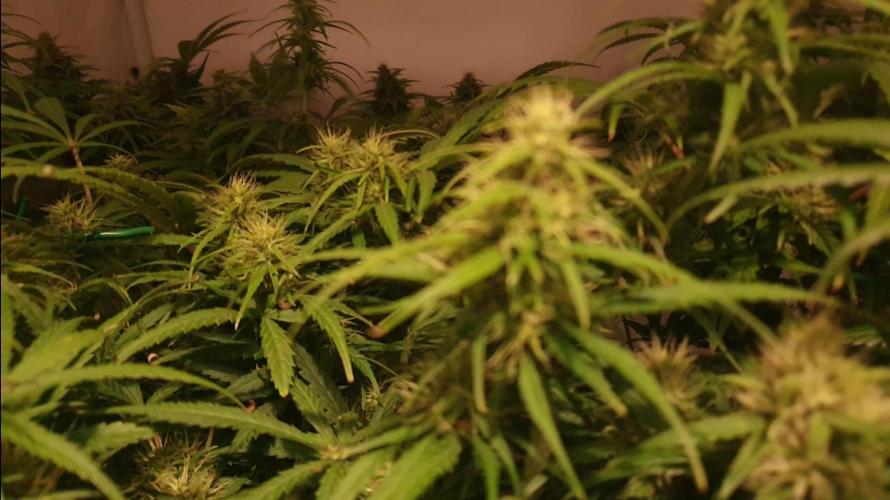
Thin Mint still keeps building, reflowering. These next 2 weeks seems like a long wait. Im ready to clean everything and shut down for the cold months.
They smell like mint through the flowering as Im working very close to them and touching them, but strangely, if I am just near them or open up the grow box it sometimes smells like bananas. Other times it smells like peanut butter.