


Blue Banana Cream


Blue Banana Cream
Mademen Genetics



Drip
drip
netafim

Soil
MJ LV Soil

Indoor
Room Type
ScrOG
weeks 4
12-12
weeks 5
Defoliation
weeks 7-8, 10
1 liters
Pot Size
Start at Harvest
1
Week 1. Vegetation9mo ago
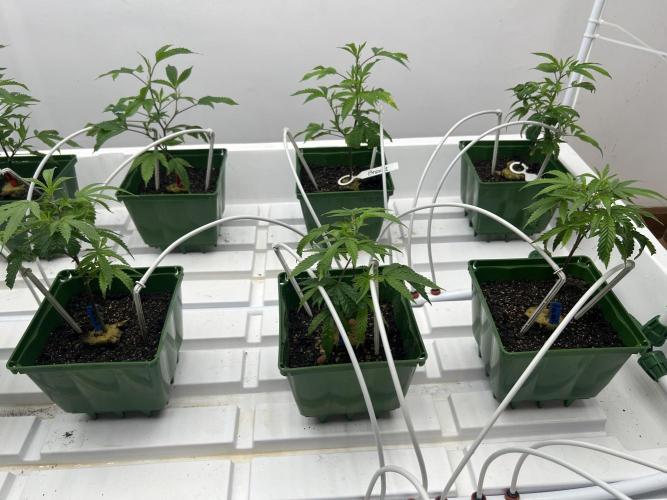
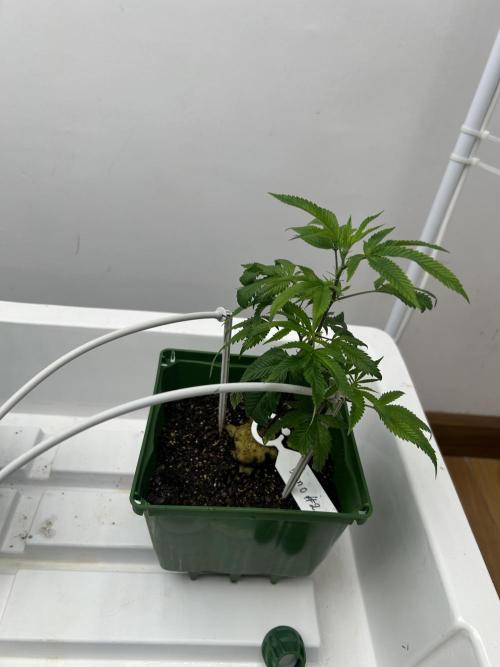
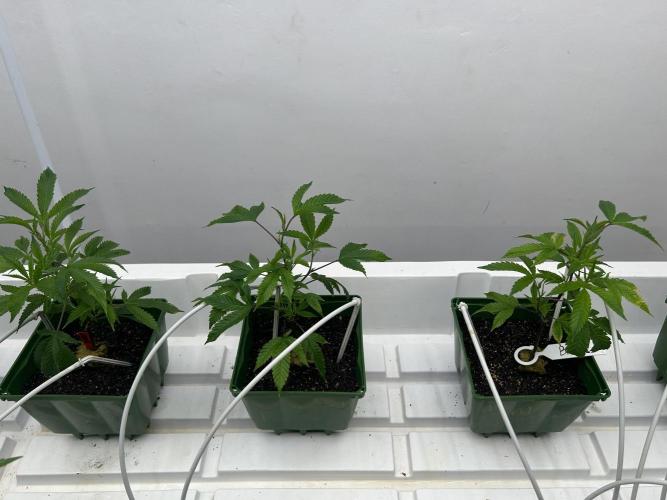
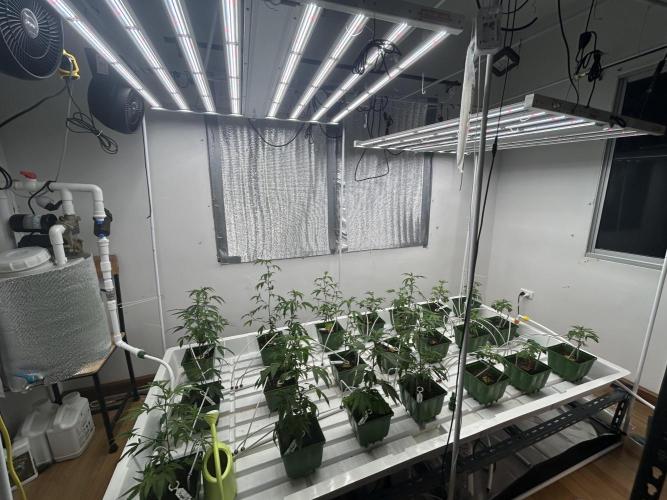
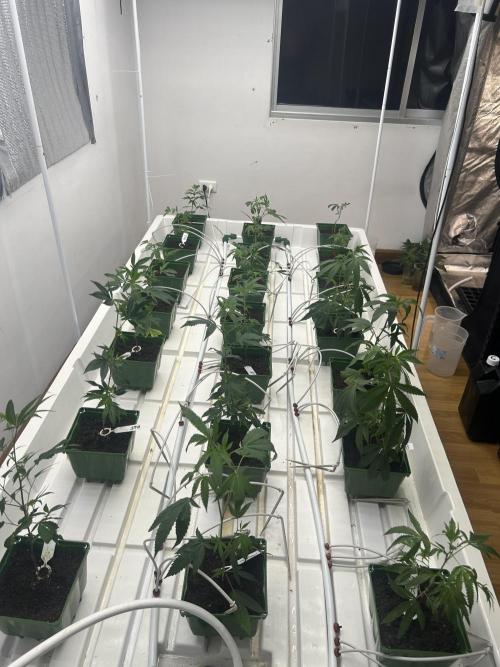

15 cm
Height
20 hrs
Light Schedule
27 °C
Day Air Temp
6.2
pH
No Smell
Smell
300 PPM
TDS
70 %
Air Humidity
25 °C
Solution Temp
25 °C
Substrate Temp
25 °C
Night Air Temp
1 liters
Pot Size
0.1 liters
Watering Volume
80 cm
Lamp Distance
1000 PPM
CO₂ Level
Nutrients 2

Roots Excelurator
0.5 mll

Mykos WP
0.13 mll
Solitude 3of #1 for wash and 1of#2 cause bigbud team said he liked it😂
But I already got some crossed of them with Fire og
Might pop them next time 👉
2 likes
comments
Share
2
Week 2. Vegetation9mo ago
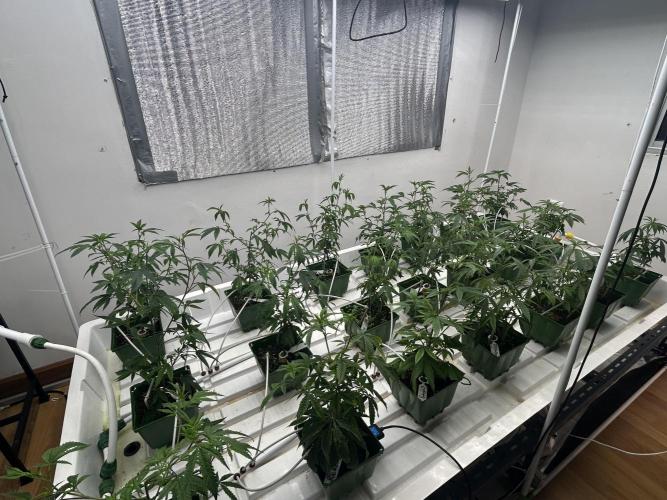
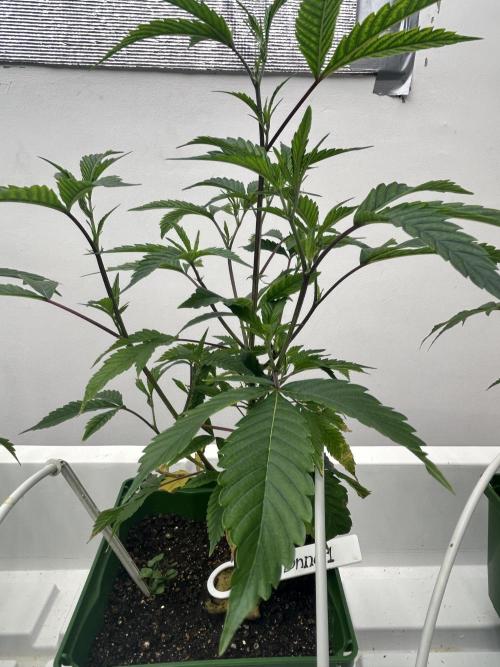
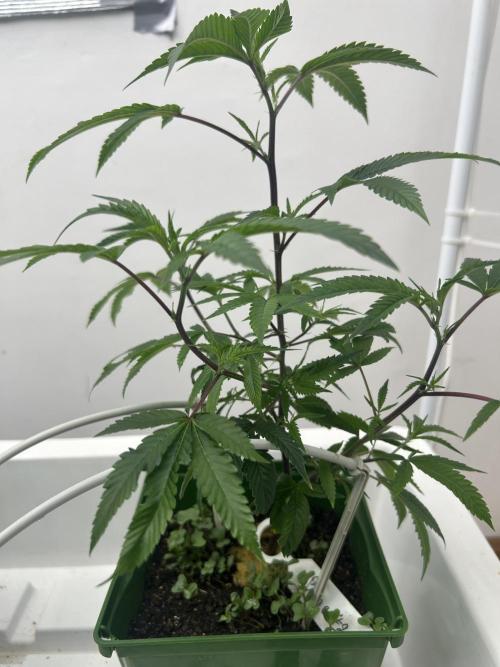
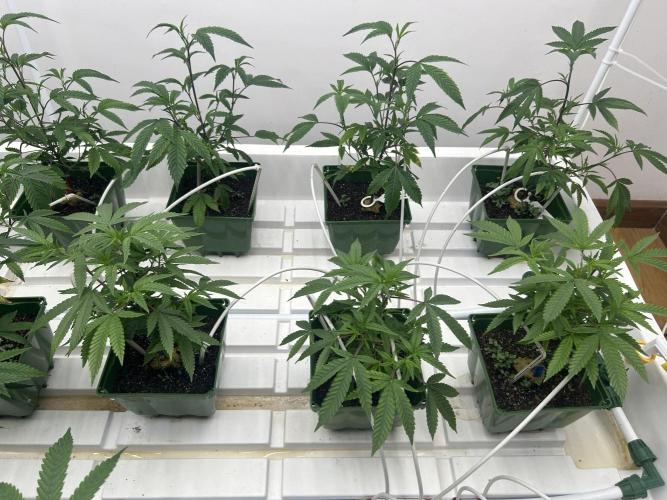
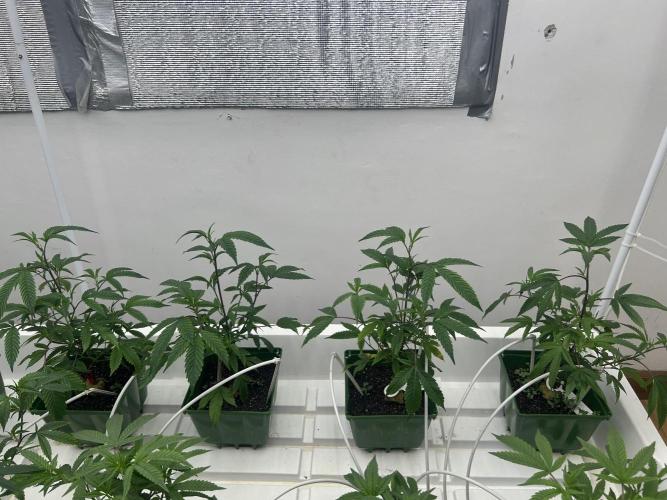
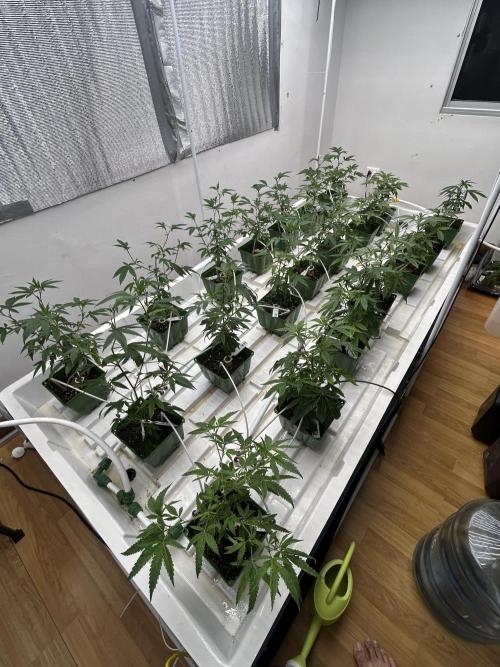
25 cm
Height
20 hrs
Light Schedule
27 °C
Day Air Temp
6.2
pH
No Smell
Smell
300 PPM
TDS
70 %
Air Humidity
25 °C
Solution Temp
25 °C
Substrate Temp
25 °C
Night Air Temp
1 liters
Pot Size
0.1 liters
Watering Volume
80 cm
Lamp Distance
1000 PPM
CO₂ Level
Nutrients 2
Roots Excelurator
0.5 mll
Mykos WP
0.13 mll
Solitude Feed10sec every 4hrs till light off
Water raise over time so its gonna got ph flunctation+some overdry cause plant look sick
RO+Calmag+Root exce
(Chat gpa told me organic stuff in root ex might cause ph flunctation)
1 like
comments
Share
3
Week 3. Vegetation9mo ago
25 cm
Height
18 hrs
Light Schedule
27 °C
Day Air Temp
6.2
pH
No Smell
Smell
300 PPM
TDS
70 %
Air Humidity
25 °C
Solution Temp
25 °C
Substrate Temp
25 °C
Night Air Temp
1 liters
Pot Size
0.1 liters
Watering Volume
80 cm
Lamp Distance
1000 PPM
CO₂ Level
Nutrients 2
Roots Excelurator
0.5 mll
Mykos WP
0.13 mll
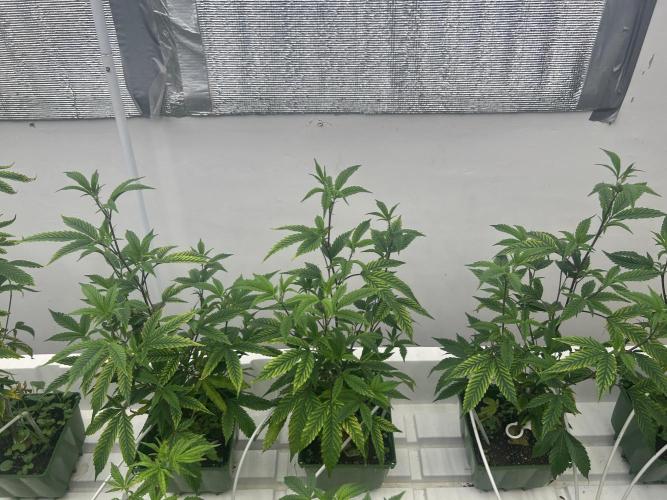
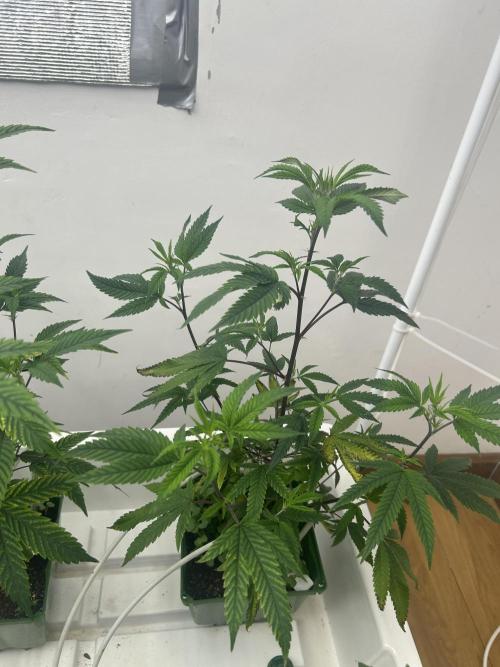
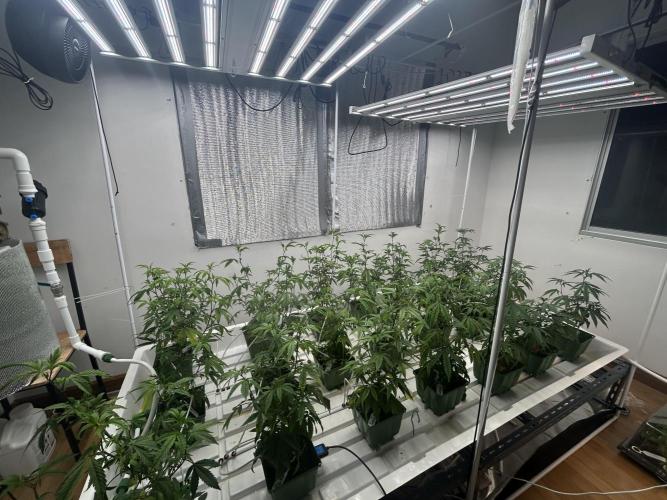
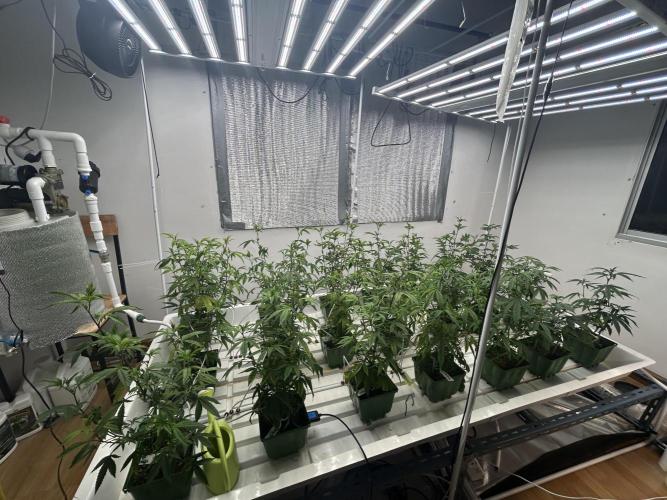
Solitude Look totally fine😀
Will send #1 to wash again
2 likes
comments
Share
4
Week 4. Vegetation8mo ago

25 cm
Height
18 hrs
Light Schedule
27 °C
Day Air Temp
6.2
pH
No Smell
Smell
300 PPM
TDS
70 %
Air Humidity
25 °C
Solution Temp
25 °C
Substrate Temp
25 °C
Night Air Temp
1 liters
Pot Size
0.1 liters
Watering Volume
80 cm
Lamp Distance
1000 PPM
CO₂ Level
Nutrients 2
Roots Excelurator
0.5 mll
Mykos WP
0.13 mll
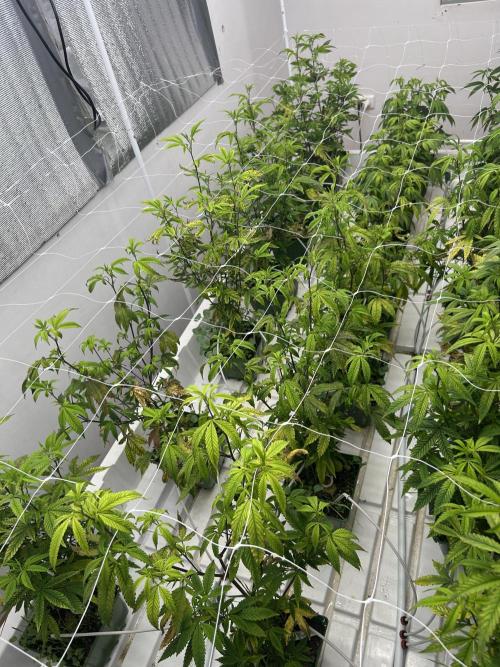
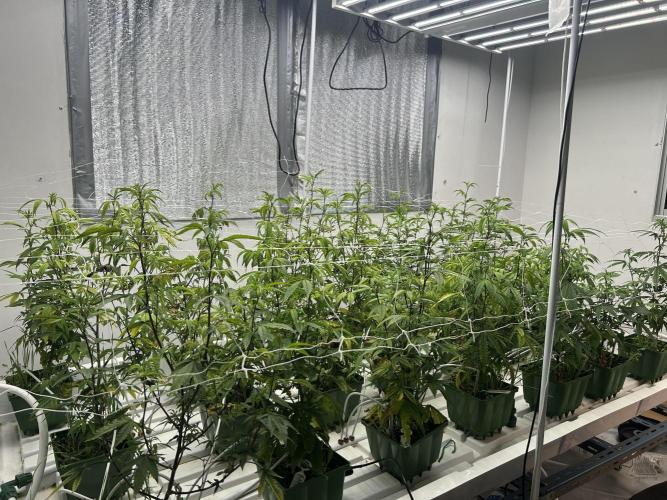
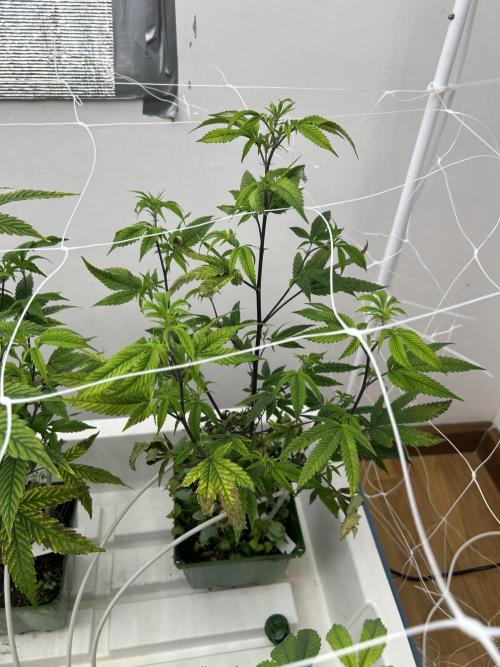
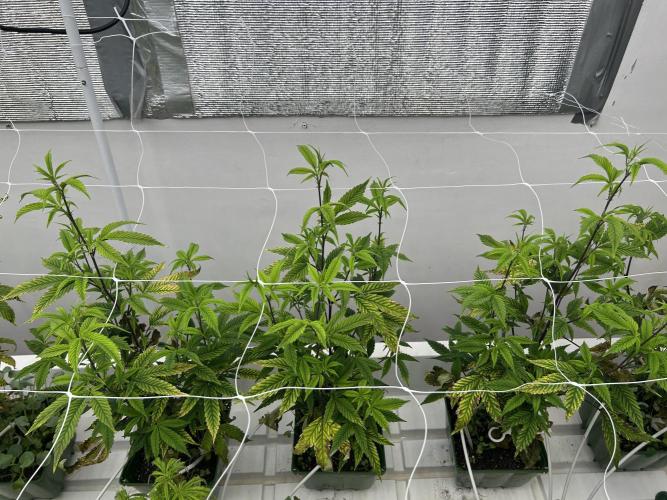
Solitude Add some compost
-underwatering issues
-too many humidity issues
-overwatering issues in tents - drip keeps leaking because it's lower than the water level cause tent to flood
-Root bound
-water ph flunctation (7+)
Thats why all plants look sick
I thought of changing to living soil gonnabl be easier , just feed plain water and wait but this is not what I think💀
Might change pot into bed next crop so it might get more space for plants
2 likes
comments
Share
Used techniques
ScrOG
Technique
5
Week 5. Flowering8mo ago
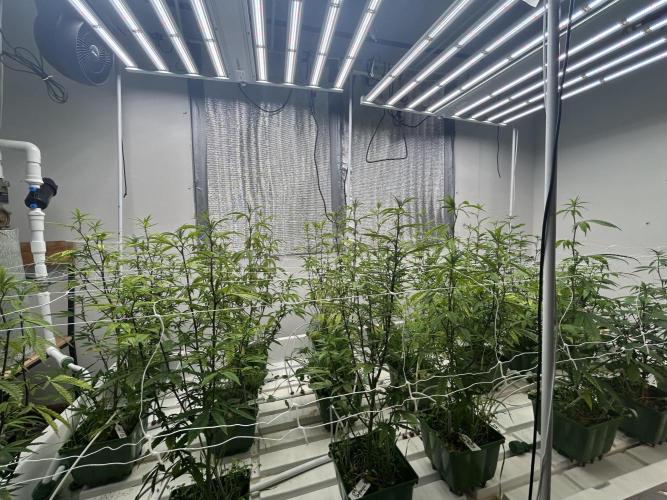
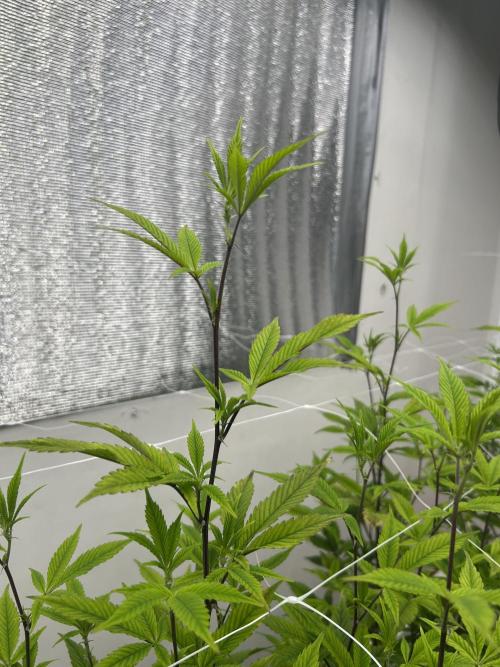
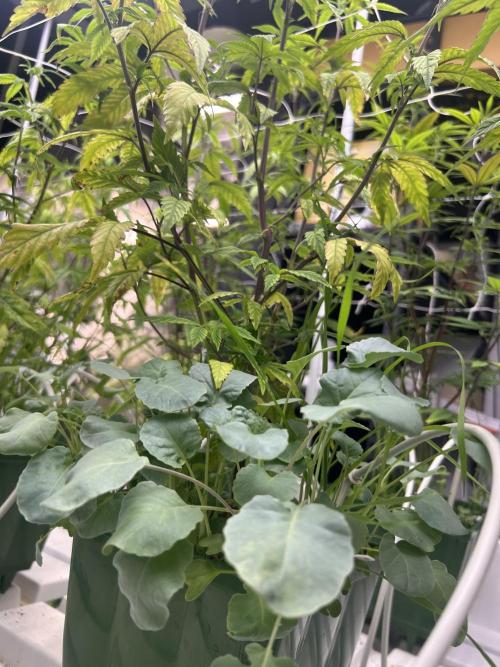
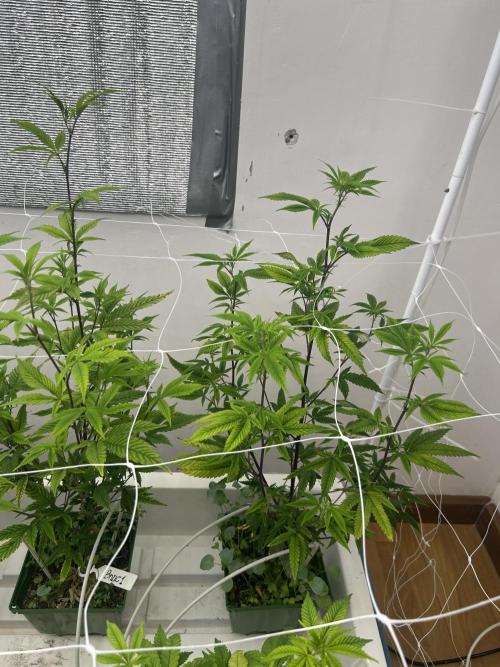
152.4 cm
Height
12 hrs
Light Schedule
26 °C
Day Air Temp
6.2
pH
No Smell
Smell
300 PPM
TDS
65 %
Air Humidity
25 °C
Solution Temp
25 °C
Substrate Temp
25 °C
Night Air Temp
1 liters
Pot Size
0.1 liters
Watering Volume
101.6 cm
Lamp Distance
1000 PPM
CO₂ Level
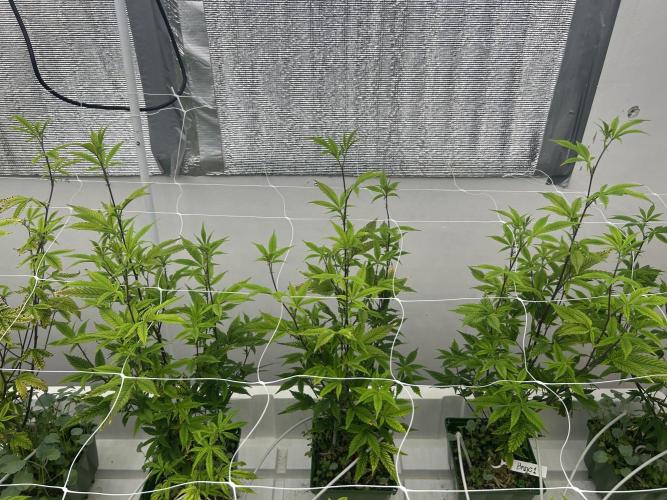
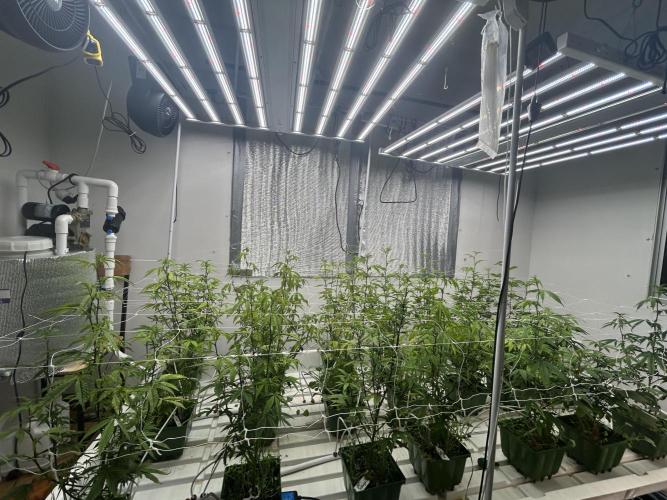
Solitude Flip 12/12 since 20/1/26
See a bit better from last week
I hope I can finish em flower
🙏
Feed RO-calmag 0.3ec
1 like
comments
Share
Used techniques
12-12
Technique
6
Week 6. Flowering8mo ago
75 cm
Height
12 hrs
Light Schedule
26 °C
Day Air Temp
6.2
pH
No Smell
Smell
300 PPM
TDS
65 %
Air Humidity
25 °C
Solution Temp
25 °C
Substrate Temp
25 °C
Night Air Temp
1 liters
Pot Size
0.1 liters
Watering Volume
101.6 cm
Lamp Distance
1000 PPM
CO₂ Level
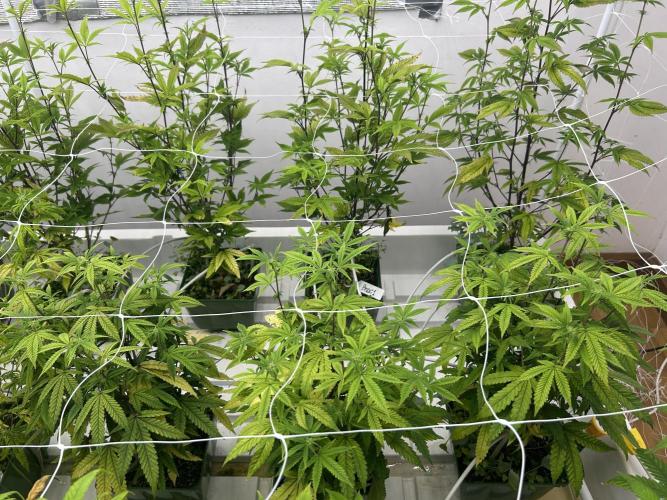
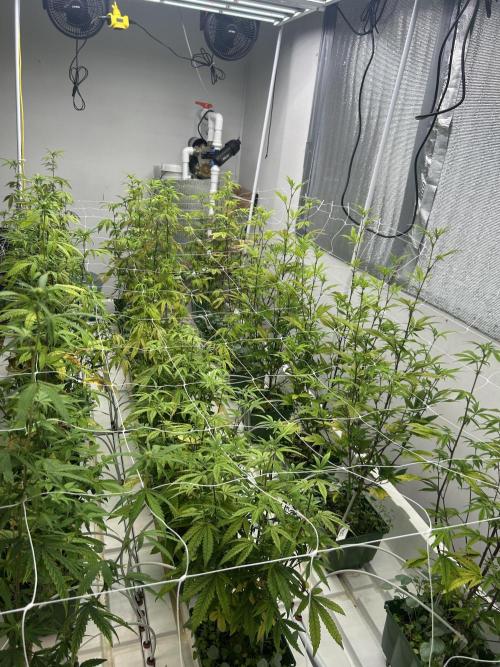
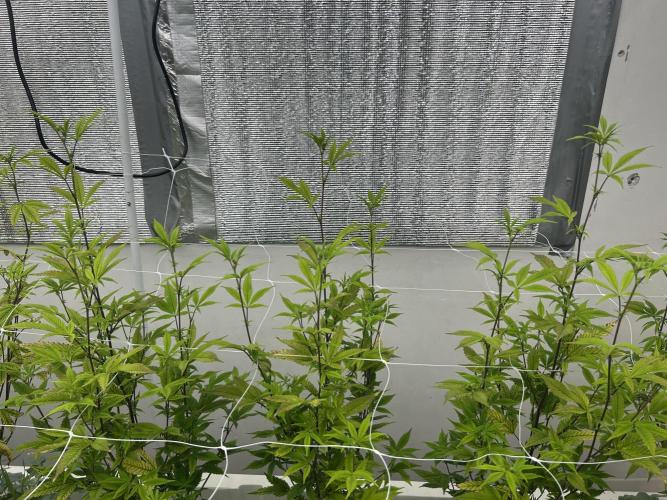
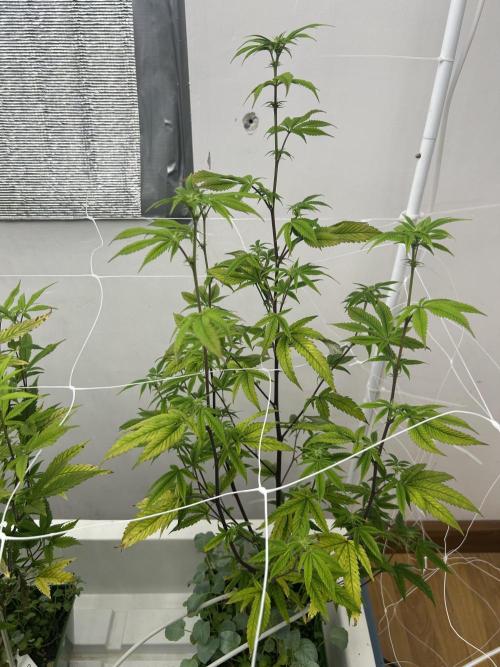
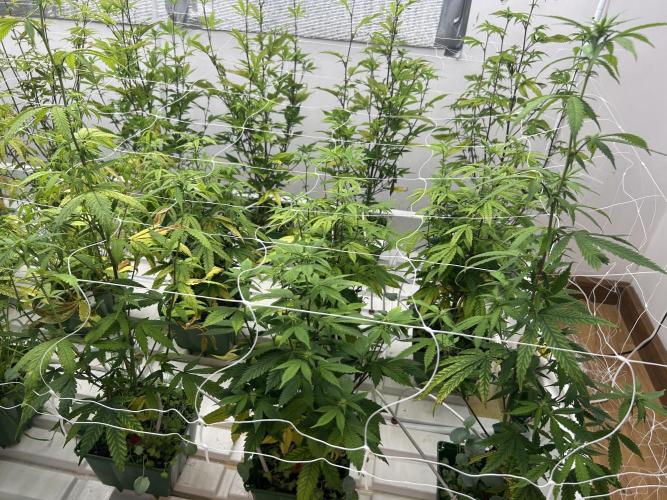
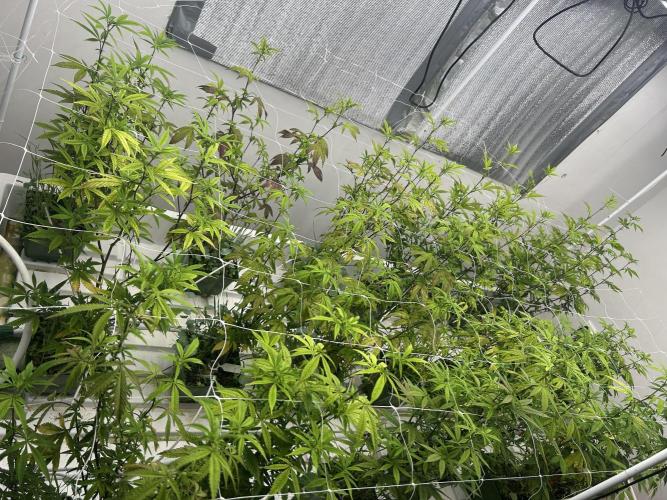
Solitude Plants have fully transitioned into early flowering. Stretch is slowing down and overall structure is now set. Bud sites are clearly visible along the branches, with fresh white pistils forming consistently at each node. Energy is shifting from vertical growth toward flower development.
Leaf color remains mostly healthy green, though some cultivars show slight lightening as nutrient demand increases. Internodal spacing is stable, and tops are beginning to stack evenly under the canopy. Aroma is still mild but starting to emerge when disturbed.
Roots appear active and water uptake is steady. Plants respond well to consistent irrigation and stable environmental conditions. No heavy training or defoliation is applied at this stage to avoid stress, allowing the plants to focus on flower initiation.
This week is focused on maintaining balance: stable light intensity, proper VPD, clean irrigation, and minimal interference to support strong bud formation going into Week 3.
2 likes
comments
Share
7
Week 7. Flowering8mo ago


75 cm
Height
12 hrs
Light Schedule
26 °C
Day Air Temp
6.2
pH
No Smell
Smell
300 PPM
TDS
65 %
Air Humidity
25 °C
Solution Temp
25 °C
Substrate Temp
25 °C
Night Air Temp
1 liters
Pot Size
0.1 liters
Watering Volume
101.6 cm
Lamp Distance
1000 PPM
CO₂ Level
Nutrients 1
Calimagic
0.5 mll
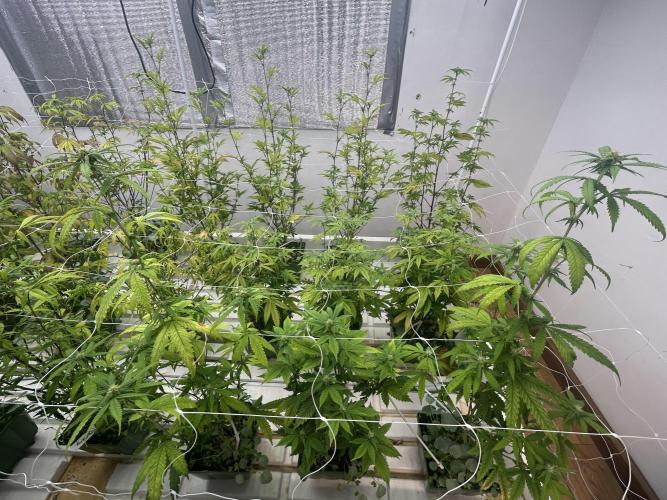
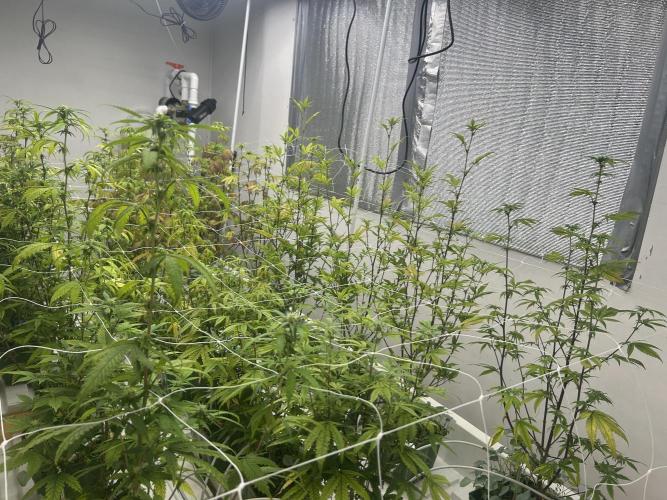
Solitude 🌸 Flowering Week 3 – Overall Overview
General Structure
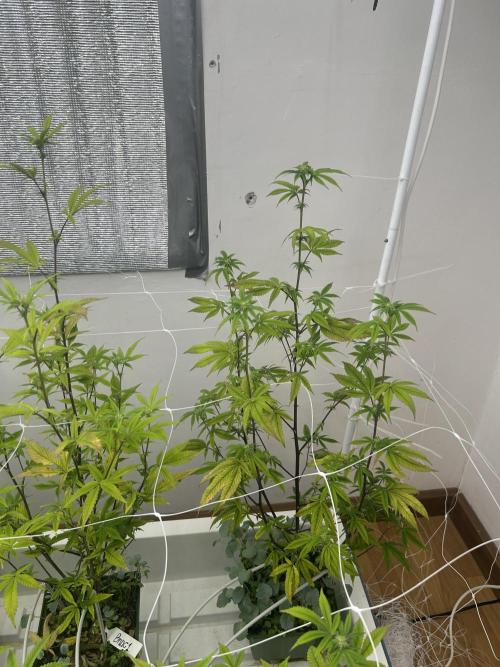
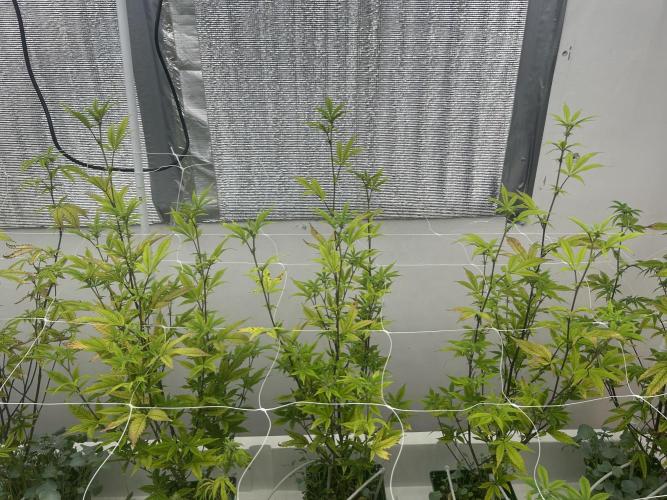
The plants are now fully established in early flowering. Stretching is slowing down but still visible on some taller phenotypes. Bud sites are clearly forming along the main branches and secondary nodes. The canopy is uneven, with some plants significantly taller and more stretched than others.
Plant Health
Noticeable yellowing on older fan leaves, especially mid-to-lower canopy.
Some plants appear lighter green overall, suggesting higher nutrient demand during transition.
A few individuals show drooping and weaker structure compared to the healthier, darker green plants in front.
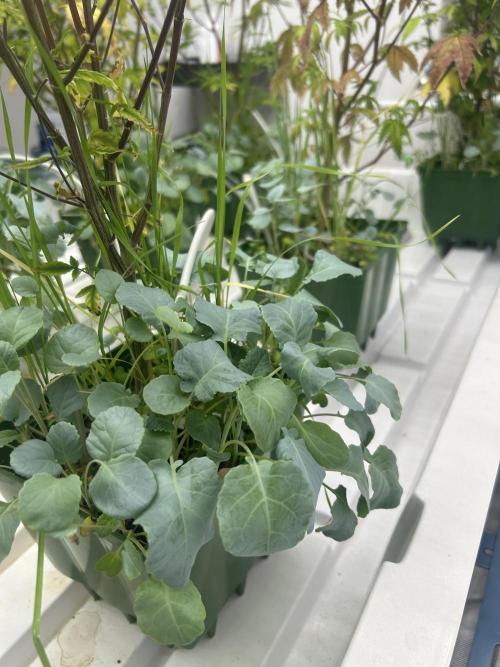
Lower interior growth is still relatively dense.
Bud Development
Early bud stacking has started.
Pistils are clearly visible across tops.
Flower clusters are forming but not yet bulking.
Structure suggests entry into mid-flower soon.
Environmental Adjustments
Temperature was reduced by approximately 1°C.
Old yellow leaves were selectively removed to improve airflow and light penetration.
Canopy airflow appears improved, though density remains moderate.
Current Focus
Monitor nutrient balance as plants transition into higher phosphorus and potassium demand.
Prevent excessive leaf loss too early.
Prepare for full mid-flower bulk phase in Week 4–5.
Maintain controlled humidity to avoid moisture buildup as buds stack
3 likes
comments
Share
Used techniques
Defoliation
Technique
8
Week 8. Flowering7mo ago

75 cm
Height
12 hrs
Light Schedule
26 °C
Day Air Temp
6.2
pH
No Smell
Smell
300 PPM
TDS
60 %
Air Humidity
25 °C
Solution Temp
25 °C
Substrate Temp
25 °C
Night Air Temp
1 liters
Pot Size
0.1 liters
Watering Volume
101.6 cm
Lamp Distance
1000 PPM
CO₂ Level
Nutrients 1
Calimagic
0.5 mll
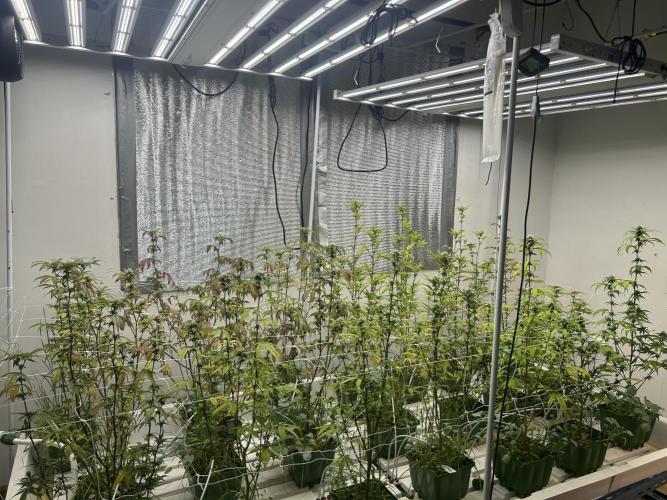
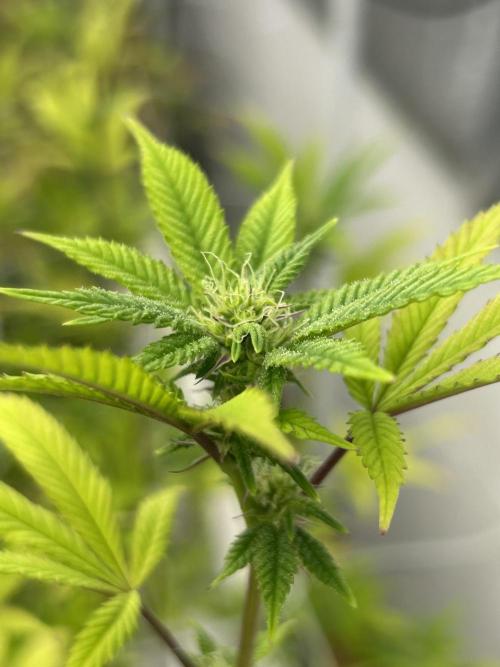
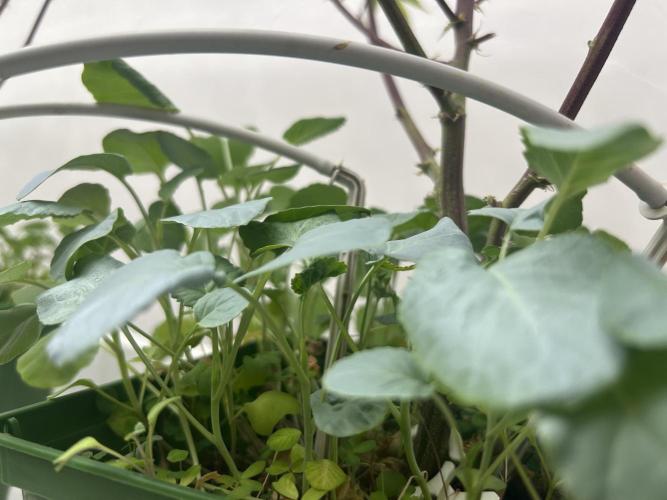
Solitude Overall Development
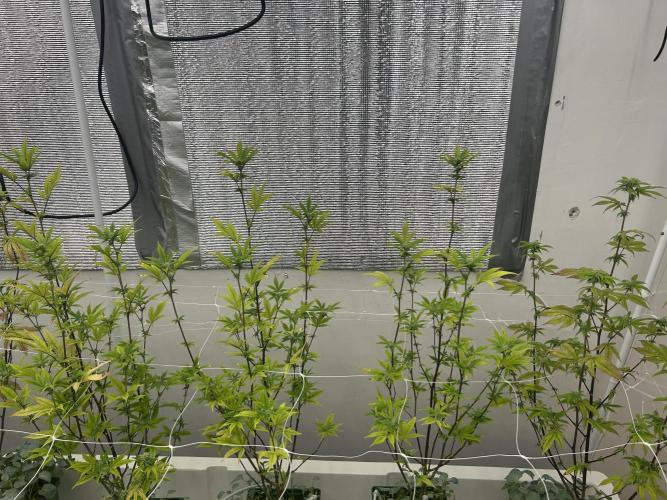
Week 4 marks the transition into mid-flower. Stretch has mostly stopped, and the plants are now directing energy into bud formation. The canopy remains uneven, with some taller, thinner phenotypes and others more compact and structured.
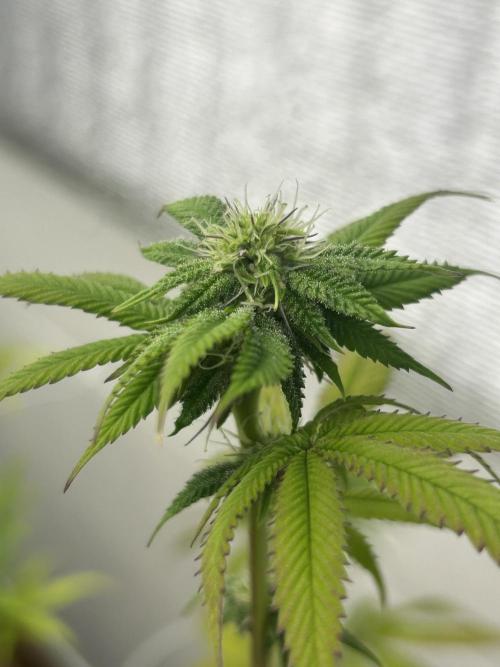
Bud sites are clearly established across all main branches. Flower stacking is progressing steadily, and early cluster formation is visible on the tops.
Plant Health & Observations
• Significant yellowing on older fan leaves, especially mid-to-lower canopy.
• Some plants appear pale green overall, indicating high nutrient demand during bulk transition.
• One or two phenotypes remain darker green and structurally stronger.
• Lower interior growth is lighter and less vigorous.
• Selective removal of old yellow leaves was continued to improve airflow and light penetration.
Despite visible leaf fade, bud development continues actively.
Bud Development
• Flower clusters are expanding and beginning to connect along the stems.
• Pistil production is strong and consistent.
• Buds are not yet dense but are clearly transitioning into the bulk phase.
• Resin production is beginning to increase.
This week represents the start of the main swelling period.
Environmental Adjustments
• Temperature reduced slightly (~1°C) to stabilize the flowering environment.
• Airflow maintained across canopy level.
• Canopy density moderately thinned to prevent moisture buildup.
• Light coverage remains strong across the upper layer.
Current Focus (Entering Week 5)
• Support nutrient demand during bulk phase.
• Prevent excessive early leaf loss.
• Maintain stable humidity to protect developing flowers.
• Monitor weaker phenotypes closely for further decline or nutrient imbalance.
Overall, the crop is entering the critical mid-flower stage. The next two weeks will determine final bud density and structure.
5 likes
comments
Share
Used techniques
Defoliation
Technique
10
Week 10. Flowering7mo ago

75 cm
Height
12 hrs
Light Schedule
25 °C
Day Air Temp
6.2
pH
No Smell
Smell
300 PPM
TDS
60 %
Air Humidity
25 °C
Solution Temp
25 °C
Substrate Temp
25 °C
Night Air Temp
1 liters
Pot Size
0.1 liters
Watering Volume
101.6 cm
Lamp Distance
1000 PPM
CO₂ Level
Nutrients 1
Calimagic
0.5 mll
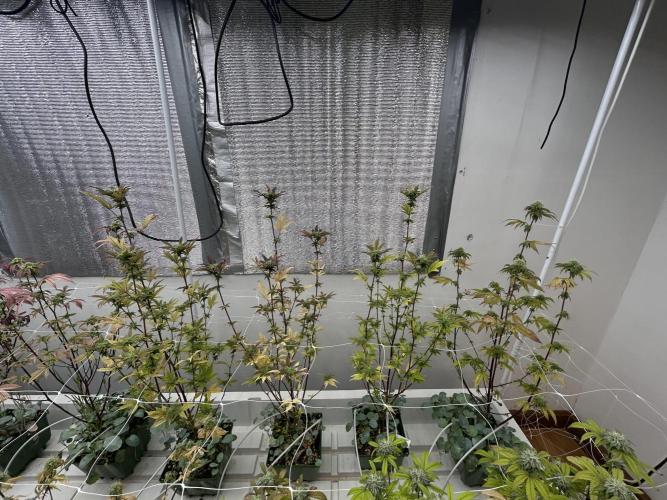
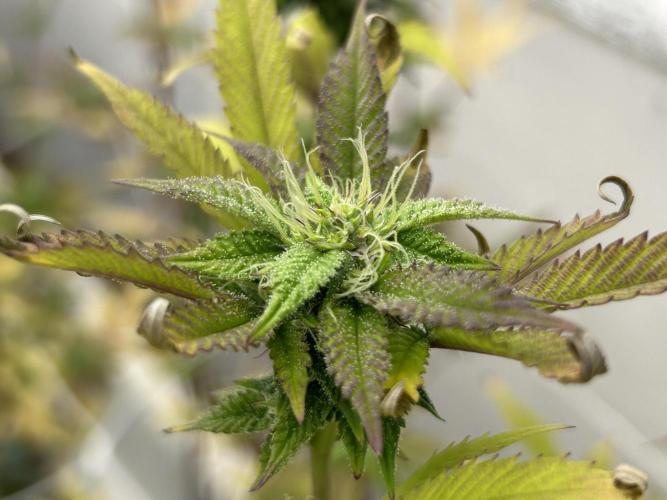
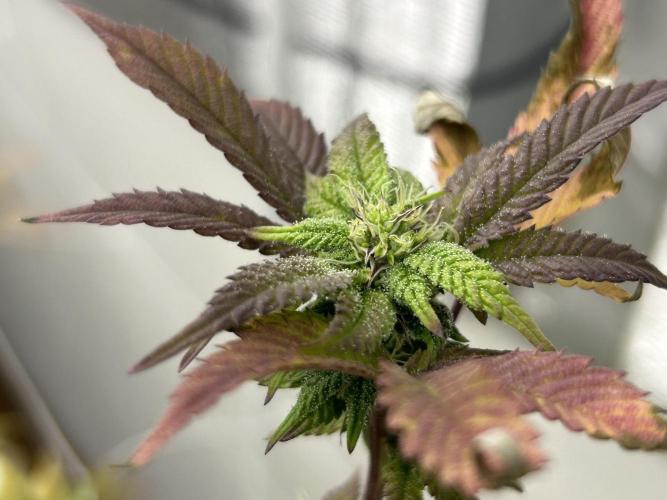
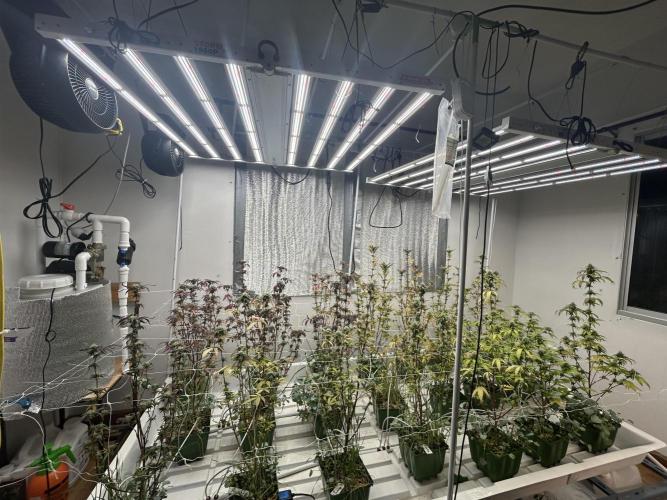
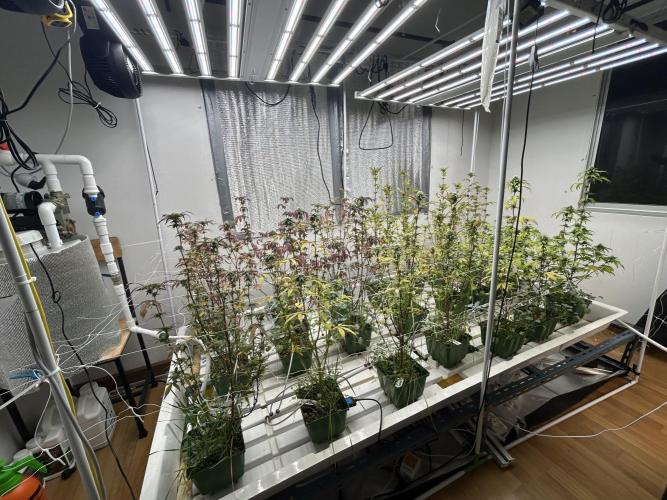
Solitude Flowering Week 6 – Progress Update
Overview
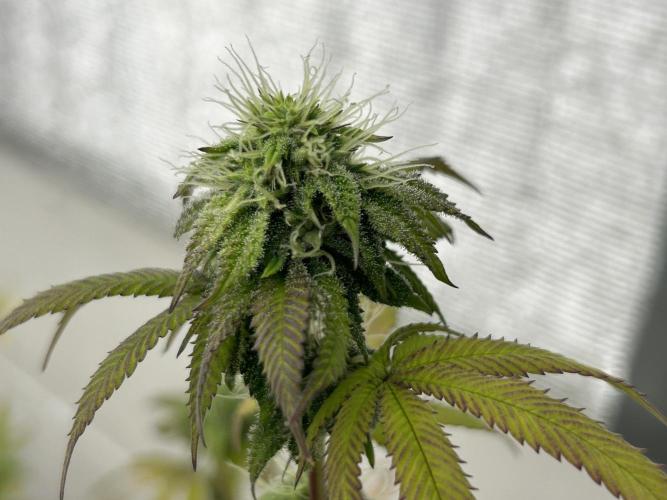
The garden has entered the heavy bulking phase. Flower stacking is complete, and plants are now focusing on calyx swelling and resin production. Significant phenotypic variation is visible across the canopy.
Key Observations
• Heavy Fade: Widespread yellowing (senescence) is accelerating. Some plants are pulling nutrients from fan leaves faster than expected.
• Environmental Stress: Persistent "tacoing" (upward leaf curl) on top leaves confirms the LED intensity or heat is at the absolute limit.
• Bud Progress: Trichome coverage is expanding onto sugar leaves. Pistils are starting to turn amber (approx. 10-20%) on more mature colas.
• Plant Health: A few phenotypes on the right show drooping/wilting, suggesting localized root zone or moisture stress.
Current Focus
• Nutrients: Shifting to high P-K / low Nitrogen to support density.
• Environment: Lowering RH to 40-45% to prevent mold in dense buds and cover crops.
• Management: Selective defoliation of dead yellow leaves to maintain airflow.
• Support: Reinforcing leaning branches as bud weight increases.
6 likes
comments
Share
Used techniques
Defoliation
Technique
11
Week 11. Flowering6mo ago
75 cm
Height
12 hrs
Light Schedule
24 °C
Day Air Temp
6.2
pH
No Smell
Smell
300 PPM
TDS
60 %
Air Humidity
25 °C
Solution Temp
25 °C
Substrate Temp
22 °C
Night Air Temp
1 liters
Pot Size
0.1 liters
Watering Volume
101.6 cm
Lamp Distance
1000 PPM
CO₂ Level
Nutrients 1
Calimagic
0.5 mll
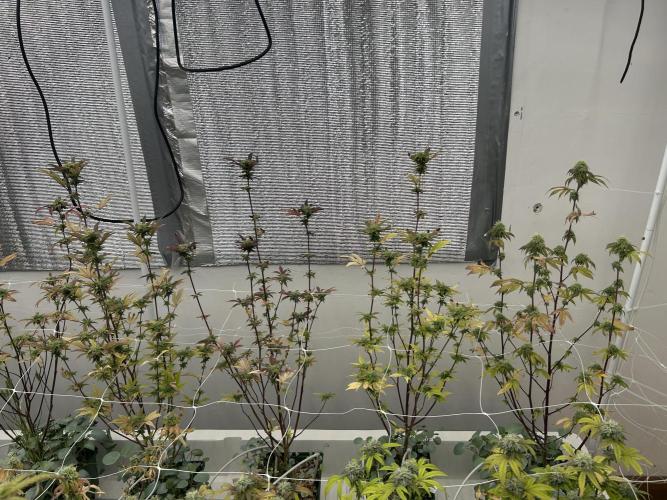
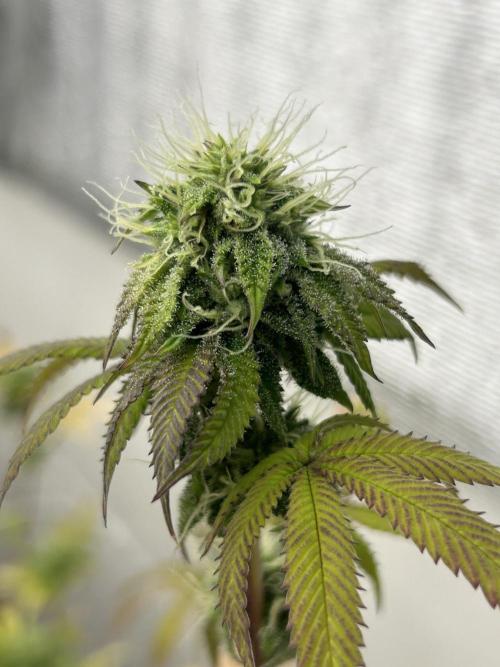
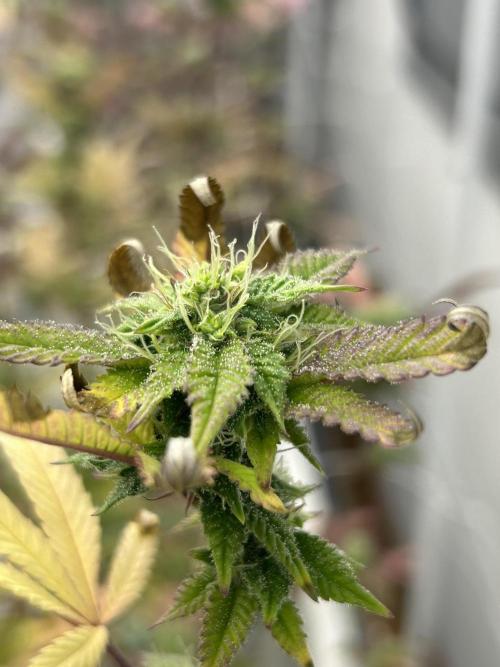
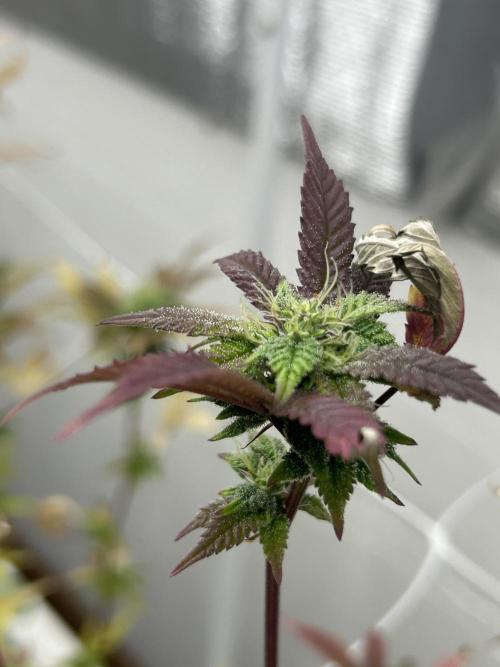
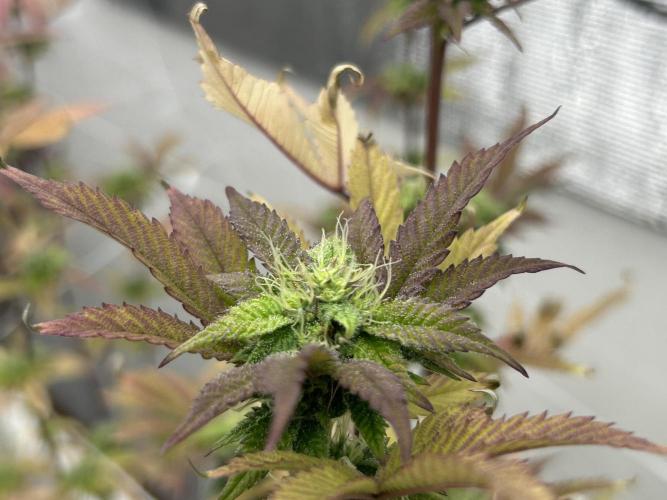
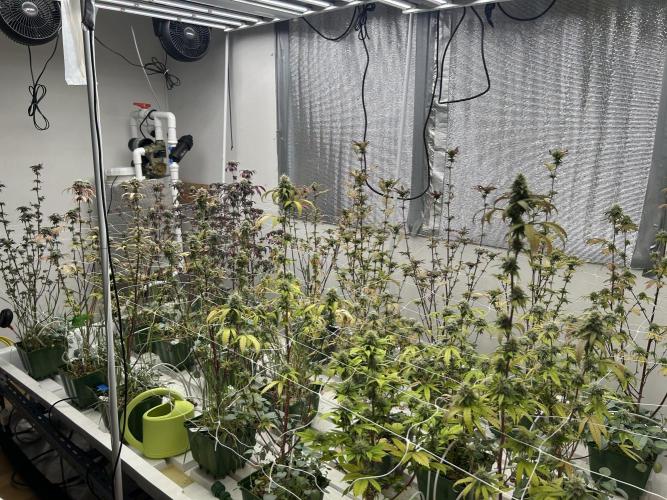
Solitude 🌸 Flowering Week 7 – Progress Update
• Overall Development: Plants are showing signs of severe environmental and physiological stress rather than natural ripening. The "Fade" is premature and driven by nutrient lockout and heat damage.
• Leaf Condition: Extreme tacoing and necrosis on the upper canopy confirm that the light/heat levels have compromised the plant's health.
• Abnormal Senescence: The yellowing is inconsistent and accompanied by burnt edges, indicating a pH or EC imbalance in the substrate.
• Right-side Decline: Certain phenotypes continue to wilt, likely due to localized root zone failure or excessive moisture from the dense cover crops.
4 likes
comments
Share
12
Week 12. Harvest3mo ago
Happy Harvest Day!

5/10
Rated
Final Crop Report: System Failure & Lessons Learned Project Status: Emergency Early Harvest | Final Outcome: Crop Failure (Low Yield/Stunted Buds) Executive Summary The crop was terminated during Week 7-8 of flowering due to a total systemic collapse. The plants suffered from severe dehydration and physiological stress, resulting in small, airy buds and significant loss of biomass. The "Fade" observed was not natural ripening but rather premature senescence caused by environmental and root-zone failure. 1. Chronological Failure Analysis • Weeks 4-5 (Early Signs): First indicators of Heat and Light Stress appeared. Leaves began "tacoing" (curling upwards) as a defense mechanism against high LED intensity and surface temperatures. • Week 6 (The Decline): Visible Nutrient Lockout occurred. While resin was being produced, the fan leaves turned pale yellow and developed necrotic (burnt) edges. Specific phenotypes on the right began to droop permanently, indicating root-zone dysfunction. • Week 7 (Systemic Collapse): The plants entered a state of Severe Dehydration. Despite moisture in the soil, the plants could no longer transport water to the canopy. Buds stopped swelling and became "stunted." • Final Action: An emergency harvest was conducted to salvage what little resin remained before the plants completely dried out on the stalk. 2. Root Cause Breakdown • Environmental Overload: Light intensity was likely too high for the plants to manage without higher CO2 or lower temperatures. This led to chronic transpiration stress. • Root Zone Lockout: In the "Living Soil" system, pH imbalances or excessive salt buildup likely caused a lockout, preventing the uptake of water and essential nutrients (P-K) during the critical bulking phase. • The Masking Effect: The dense cover crops may have made it difficult to accurately monitor soil moisture and oxygen levels, potentially contributing to root suffocation.
Show more
Translate
Spent 71 days
Ger Veg Flo Har
10 g
Bud wet weight per plant
1
Plants
3 m²
Grow Room size
Normal
Difficulty
Height
Day air temperature
Air humidity
PPM
PH
CO2
Light schedule
Solution temperature
Night air temperature
Substrate temperature
Pot size
Lamp distance

Solitude ggez
2 likes
comments
Share
Equipment Reviews






the end.
Enjoying this diary? Follow for more updates!

Prefer the old Diary view?
Go back to the old Diary view