


Outdoor Tests





VEG
4 Bulbs 13w 6500k Fluorescent/52W
DIY

Tent
Shade clothe
DIY


Soil
Compost

Mix
Seabird guano

Greenhouse
Room Type
LST
weeks 3-7
Defoliation
weeks 6
12-12
weeks 7
11 liters
Pot Size
1 liters
Watering
Start at 7 Week
2
Week 2. Vegetation6mo ago
8 cm
Height
16 hrs
Light Schedule
28 °C
Day Air Temp
6.2
pH
No Smell
Smell
22 °C
Solution Temp
20 °C
Substrate Temp
15 °C
Night Air Temp
11.02 liters
Pot Size
0.98 liters
Watering Volume
7 cm
Lamp Distance
Nutrients 6
Fish protein 90% Amino, 5% Humic acid
2 mll
Seaweed xtrct Alginic 40%, Organic matter 50%
2 mll
Fulvic Acid
3 mll
Arturok_320 I’d like to start by saying that this is my second time growing. I occasionally grow other types of plants—ornamental, indoor, some flowers, clovers, and a few shrubs. About a year ago, I started studying all of this, reading and watching a lot of material. First, I studied the rhizosphere and beneficial bacteria for composting. I made my own homemade compost using some KNF (Korean Natural Farming) inputs and certain bacteria sourced from China, such as Bacillus subtilis and Bacillus megaterium. I also used yeast and forest soil lightly fermented with LAB (Lactic Acid Bacteria), which I made myself, along with molasses, eggshells, coffee grounds, and vegetable scraps.
I chose Plagron Light Mix because I wanted to maintain the highest level of control possible. During the first week, I kept the plant under a bottle at night so it wouldn't suffer from the lack of ambient humidity, which was at 0%, accompanied by a cold towel to drop the temperature. After the first week, it was placed under a shade cloth at 28°C without ventilation. I’ve applied some nighttime foliar sprays with Ecklonia maxima, aloe vera, or seaweed extract (NPK 2-7-18); the potassium at this stage helps keep the stomata open throughout the night. I also mounded soil around the stem (aporque) and gave it a touch of Ecklonia maxima to signal the plant to rapidly develop roots in the newly buried section of the stem.
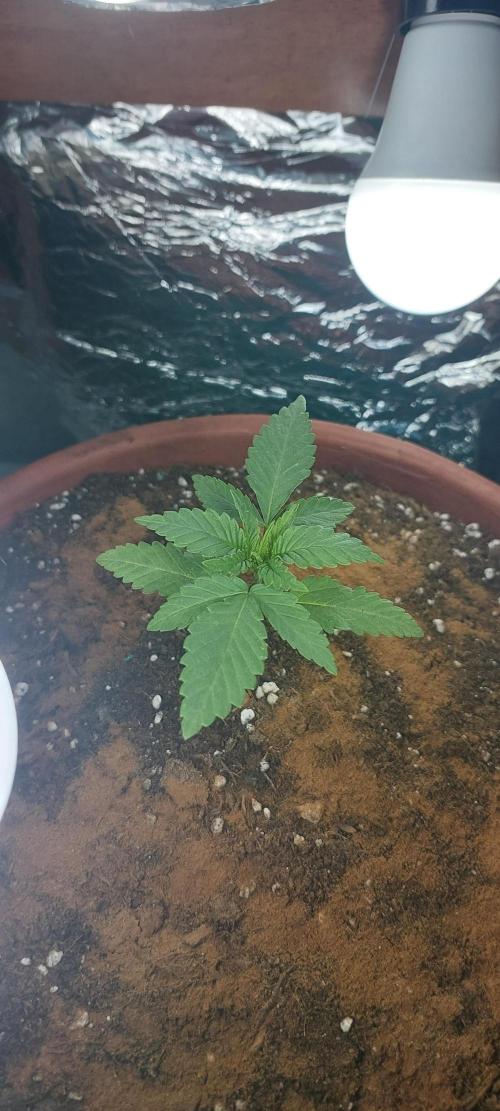
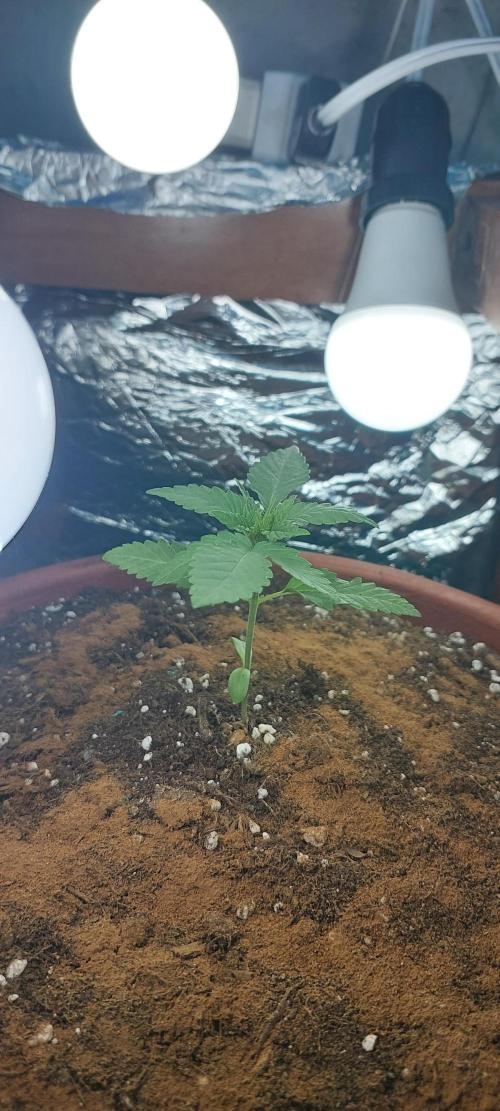
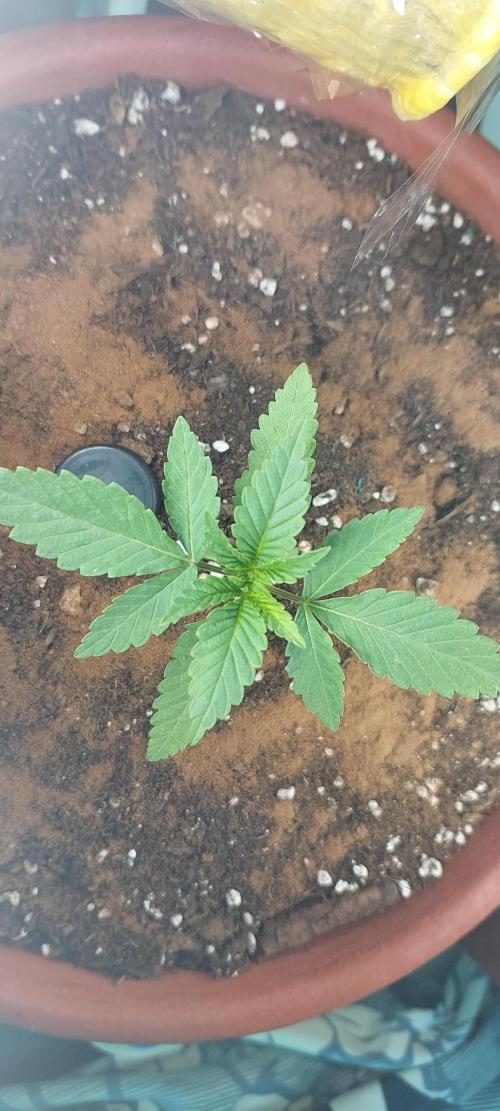
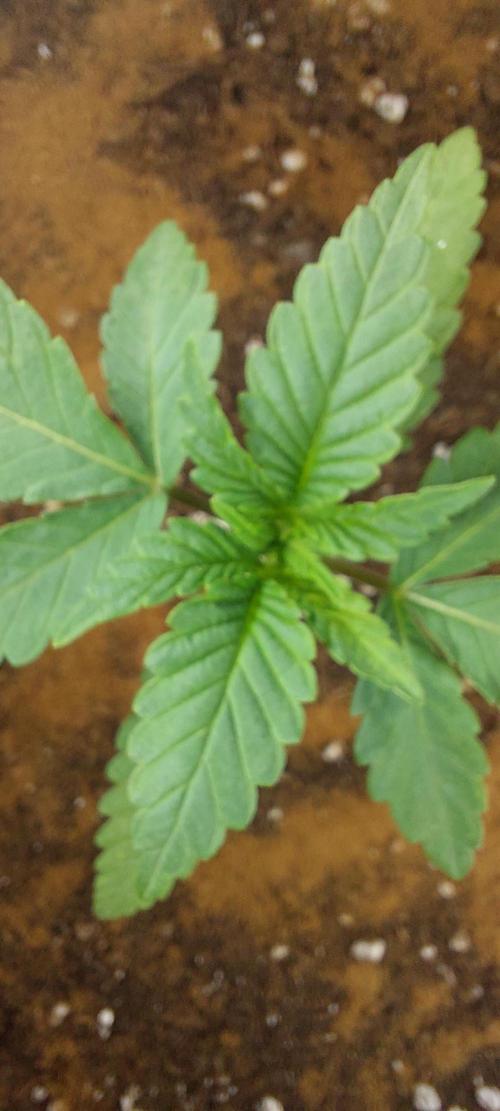
Watered the pot with 200 ml for the first four days, gradually increasing until reaching the 500 ml I gave it today. Currently, the plant is 8 cm tall and appears to show 4 nodes, though I'm not entirely sure how to identify them correctly. I will likely begin LST (Low Stress Training) tomorrow.
I´m combining natural sunlight with supplemental bulb lighting. I use four 13W 6500K bulbs from 7:00 AM until approximately 12:00 PM, providing 40k lux. From then until 6:00 PM, the plant receives natural sunlight under a shade cloth at 60k lux. Finally, I continue with the same bulb setup until 1:00 AM
I have been using mycorrhizae regularly since day one, and Trichoderma since day seven. When I performed the mounding (aporque), I applied Trichoderma directly to the stem to protect it from pathogens and fungi.
I call this "test" coz I'm going to use some things like brassinolide, I use it before on another plants, this is like fuel, I have an special amino acid powder (Aspartic acid, Cystine, alanine, glutamic acid, glycine, Histidine, Isoleucine, Leucine, lysine, methionine, Phenylalanine, proline, serine, Threonine, tyrosine, Valine, arginine, Tryptophan. Total amino acids 25-30%, sulfur 15-18%, copper 0.6%, iron 3.8%, zinc 2.5%, manganese 1.1%, boron 1.1%, magnesium 1.6%, molybdenum cobalt selenium 0.03%. pH value (1% aqueous solution): 5-5.
Put on bulb light since 3 days, next week i hope better results
2 likes
comments
Share
3
Week 3. Vegetation6mo ago
10 cm
Height
16 hrs
Light Schedule
28 °C
Day Air Temp
6.2
pH
No Smell
Smell
22 °C
Solution Temp
20 °C
Substrate Temp
15 °C
Night Air Temp
11.02 liters
Pot Size
0.98 liters
Watering Volume
7 cm
Lamp Distance
Nutrients 9
Fish protein 90% Amino, 5% Humic acid
2 mll
Seaweed xtrct Alginic 40%, Organic matter 50%
2 mll
Fulvic Acid
3 mll
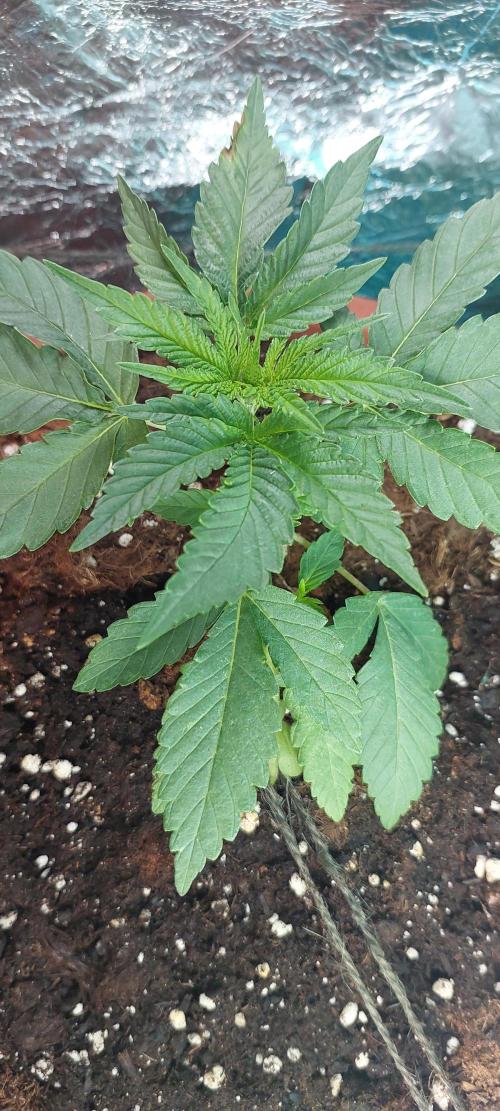
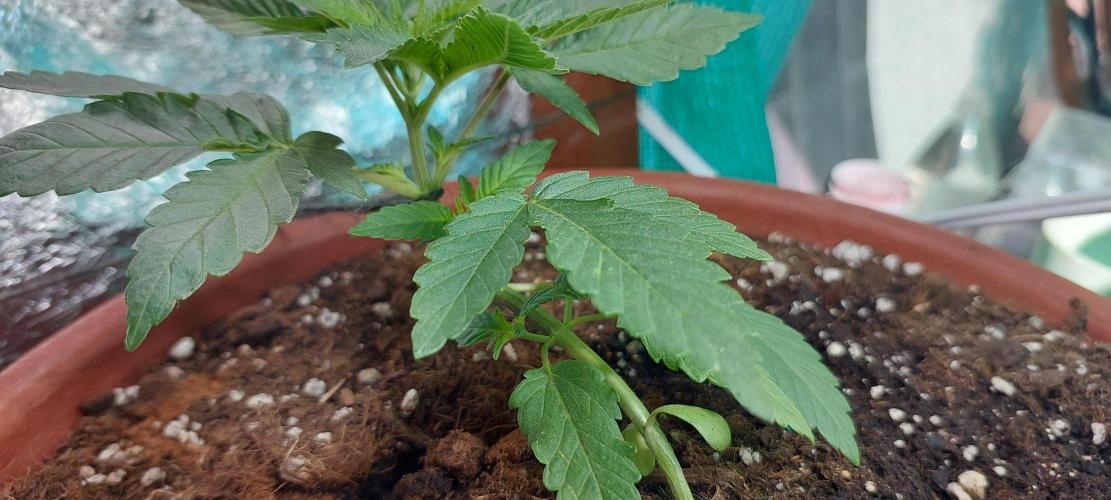
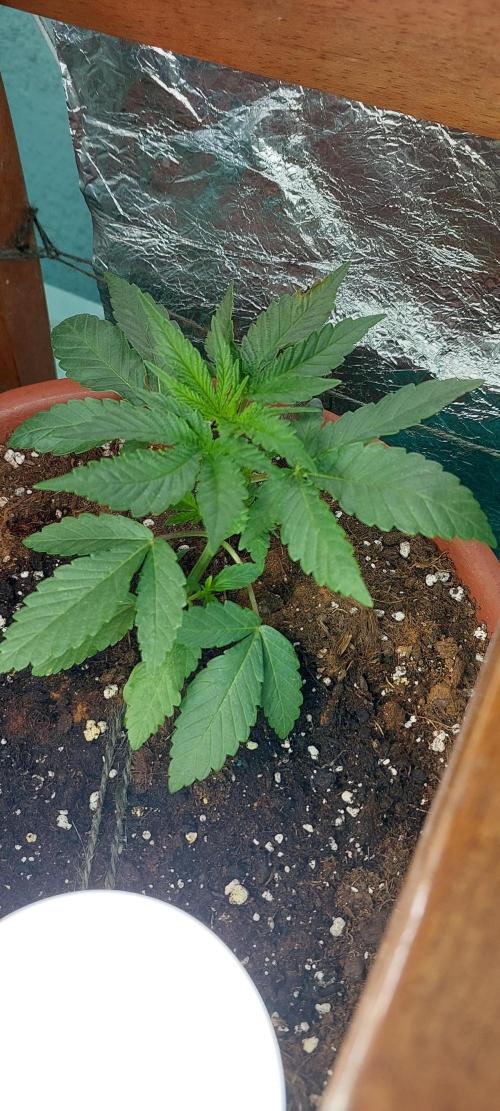
Arturok_320 On day 15, I started the LST. During the night of the following day, I watered with 500 ml of dechlorinated water, 2 ml of brassinoid, 1 g of fish protein, 0.3 ml of seaweed extract, and 2 ml of sugar fulvic, with the pH adjusted to 6.2.
Four days later, a foliar feeding was carried out with 1 ml of brassinoid and 1 ml of sugar fulvic. During the following days, only the LST ties were adjusted, until the watering on the morning of day 21 (today): 1 liter of water with 5 g of aloe vera, 0.3 g of fish protein, 0.050 g of Bloom Monster (by mistake), and 0.3 ml of seaweed extract.
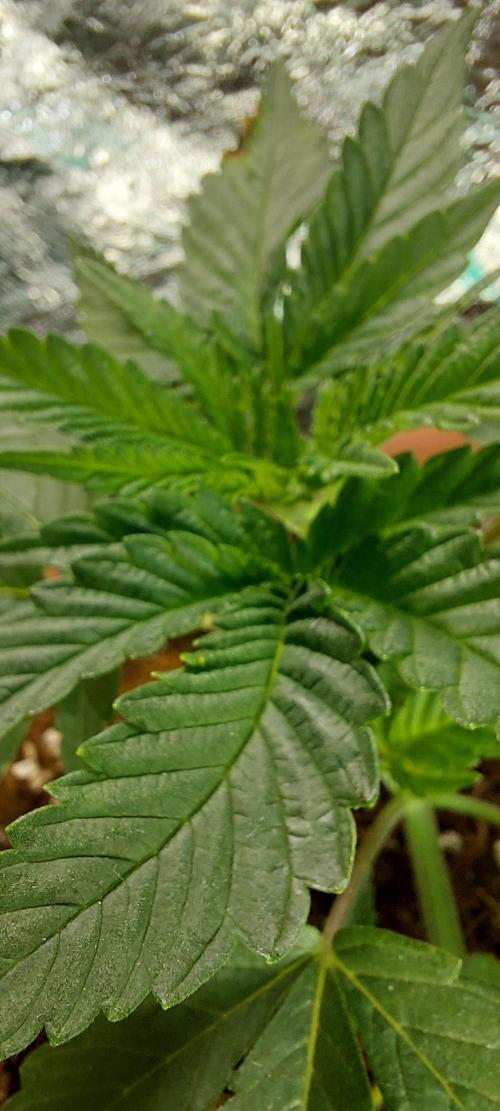
A slight burn was observed on one leaf; it seems to be on a good path.
2 likes
4 comments
Share
Used techniques
LST
Technique
4
Week 4. Vegetation6mo ago
14 cm
Height
20 hrs
Light Schedule
28 °C
Day Air Temp
6.2
pH
No Smell
Smell
22 °C
Solution Temp
20 °C
Substrate Temp
17 °C
Night Air Temp
11 liters
Pot Size
1 liters
Watering Volume
7 cm
Lamp Distance
Nutrients 11
Fish protein 90% Amino, 5% Humic acid
2 mll
Seaweed xtrct Alginic 40%, Organic matter 50%
2 mll
Fulvic Acid
3 mll
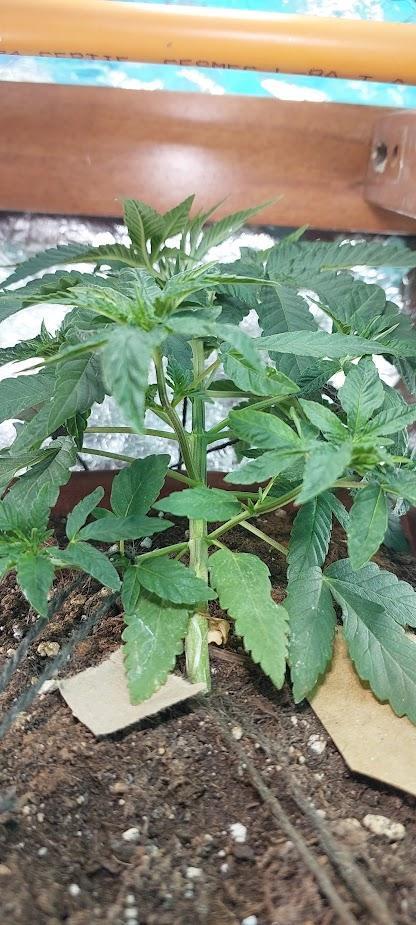
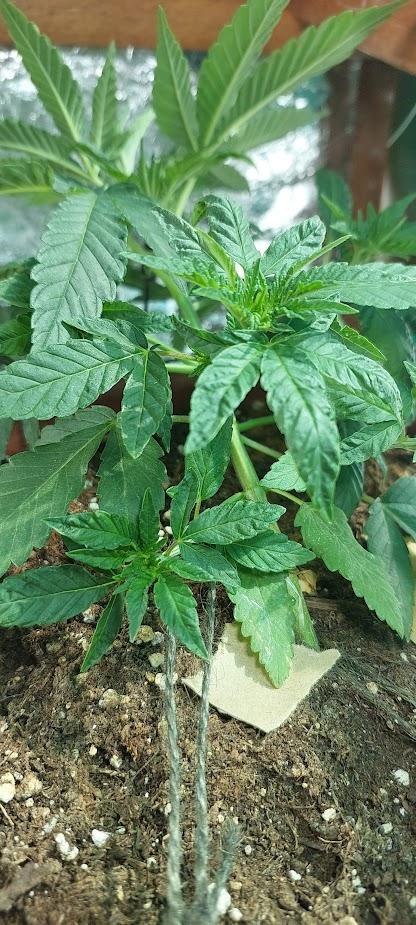
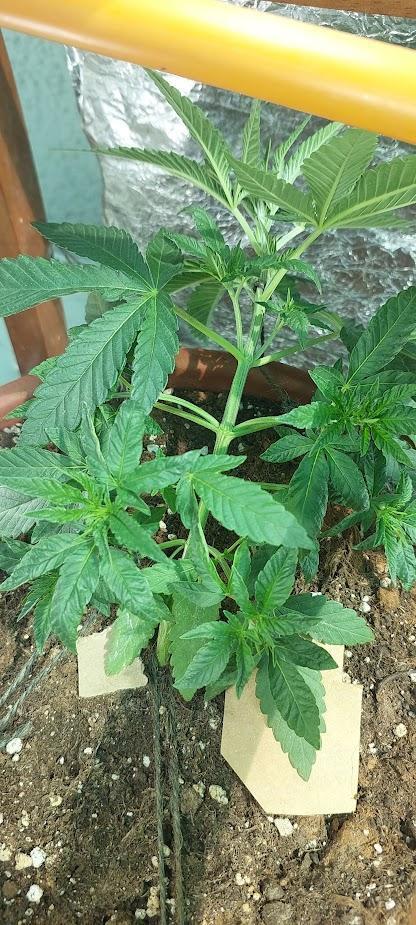
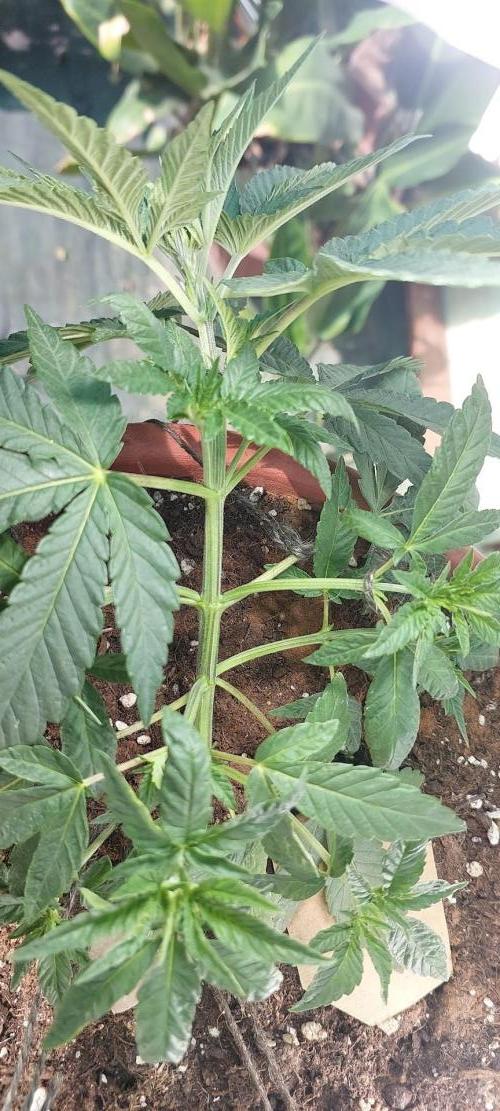
Arturok_320 This week, including today, I've been tucking away the larger leaves to make sure the light reaches the lower ones, and I've repositioned the lights to get more of a 360° coverage. I'm sticking to a similar routine as last week—no two waterings or foliar sprays are exactly the same—but since the humidity is basically at 0%, I've been misting them one day with plain water at pH 6.2, another day with Ecklonia maxima, and another day with Aloe vera, 10ml per 100ml of water, like a constant cycle.
I've added cinnamon and Diatomaceous earth on top of the growing medium since I found some unwanted insects on the back of the leaves, and I also cleaned the pot with potassium soap, along with a foliar spray of potassium soap and fulvic acids—100ml water with 2ml soap and 0.5ml fulvics. The next day, everything looked perfect with no signs of stress from the attack.
As you can see, the plant has put out a ton of side branches. It hasn't grown much in height—it's sitting at about 14 cm, considering the full height, not all of what the stem has bent—but several other branches have really taken off. My only worry is that it'll grow so many branches that none of them will get big enough for a solid harvest.
I've used the plant steroid twice to avoid toxicity, just as light foliar sprays as well. I had that happen to an ornamental plant before, and it got so deformed it was painful to look at, so now I'm definitely sticking to the "less is more" rule.
Temperatures around here have been hitting 34°C and staying there for hours, so I've had to put the plant under another shade cloth. It's getting less sunlight, but at least it's not cooking in the direct heat. The bulbs don't put out much heat anyway, and there's a natural breeze—usually just a light one, but it's there.
I'm hoping that next month it will take off in vertical growth, but I'm not sure when to stop adjusting the ties.
Deepseek made this translate :P
likes
comments
Share
Used techniques
LST
Technique
5
Week 5. Flowering6mo ago
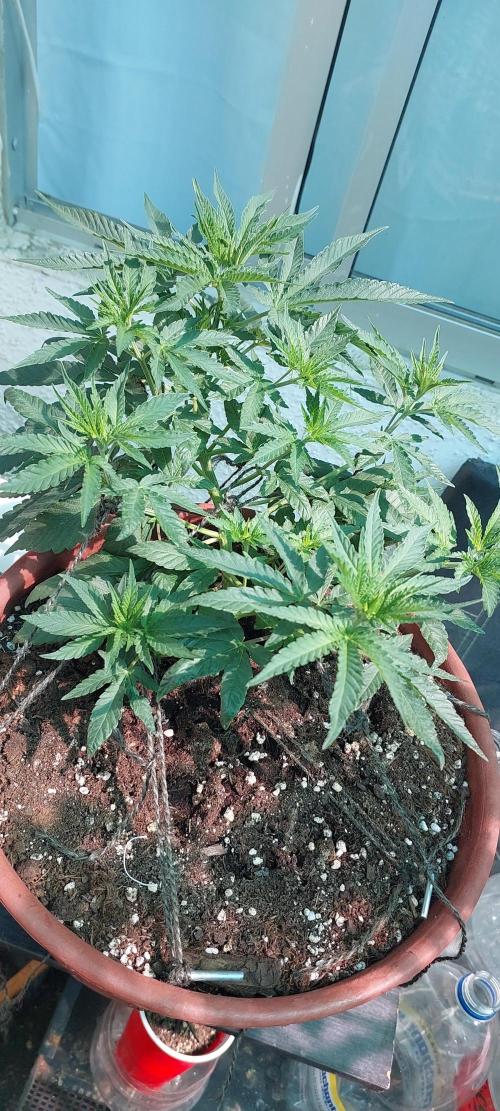
19 cm
Height
24 hrs
Light Schedule
28 °C
Day Air Temp
6.2
pH
No Smell
Smell
22 °C
Solution Temp
20 °C
Substrate Temp
17 °C
Night Air Temp
11 liters
Pot Size
1 liters
Watering Volume
10 cm
Lamp Distance
Nutrients 11
Fish protein 90% Amino, 5% Humic acid
4 mll
Seaweed xtrct Alginic 40%, Organic matter 50%
2 mll
Fulvic Acid
12 mll
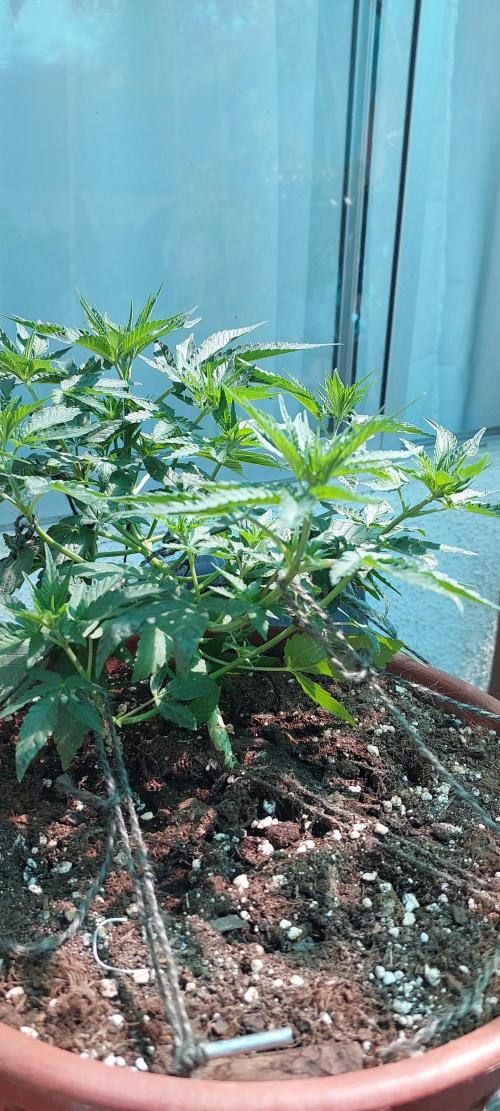
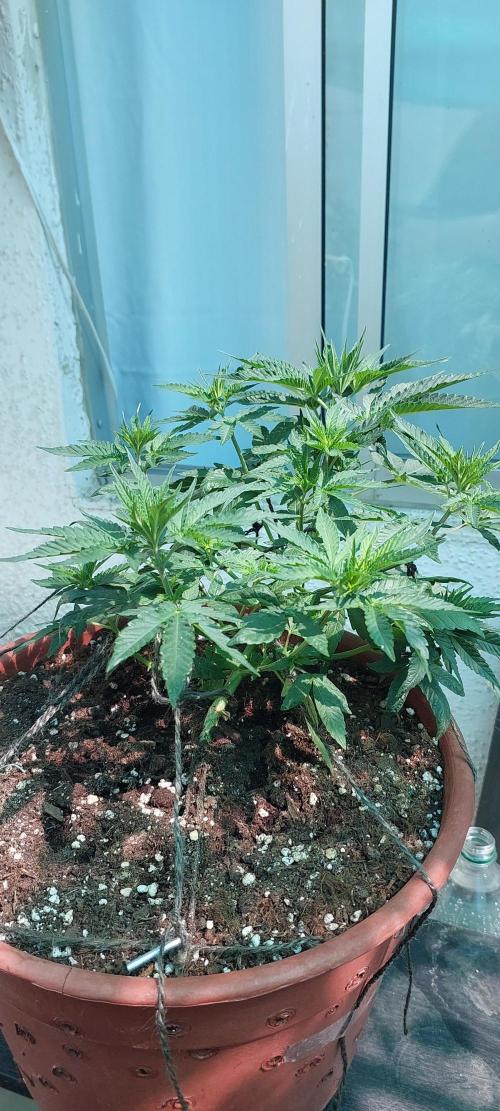
Arturok_320 -Added this one day before the week-I should start by saying I'm super happy—I'm starting to think the plant might be entering the flowering stage, even though there's no clear sign yet except for some new leaves with that really light neon green. If it's not flowering yet, honestly, that's fine by me—more time to grow. But what's really got me excited is the potential number of branches I'm seeing. She's growing fast, so I'm guessing this might be what they call the "stretching" phase. I'm hoping the branches thicken up a bit; maybe I'll increase the barrier light intensity a little to give 'em a boost. I also ordered some triacontanol to help with flowering, but not sure if it'll arrive in time—still, it's a super precise product. I've cut back on the Bio Grow since some leaves showed signs of over-fertilizing, and I've upped the fish protein, CalMag, and Sugar Fulvic. I've been doing foliar sprays with water and aloe vera (about 100ml water to 20ml aloe), plus some Ecklonia maxima on the new growth, and plain water too. Always pH at 6.0, temp around 22°C. Trying to help her cope with 0% humidity and ambient temps hitting 34°C. Stoped LST coz' I want to make bigger the around 6-8 branches.
1 like
comments
Share
Used techniques
LST
Technique
6
Week 6. Flowering5mo ago
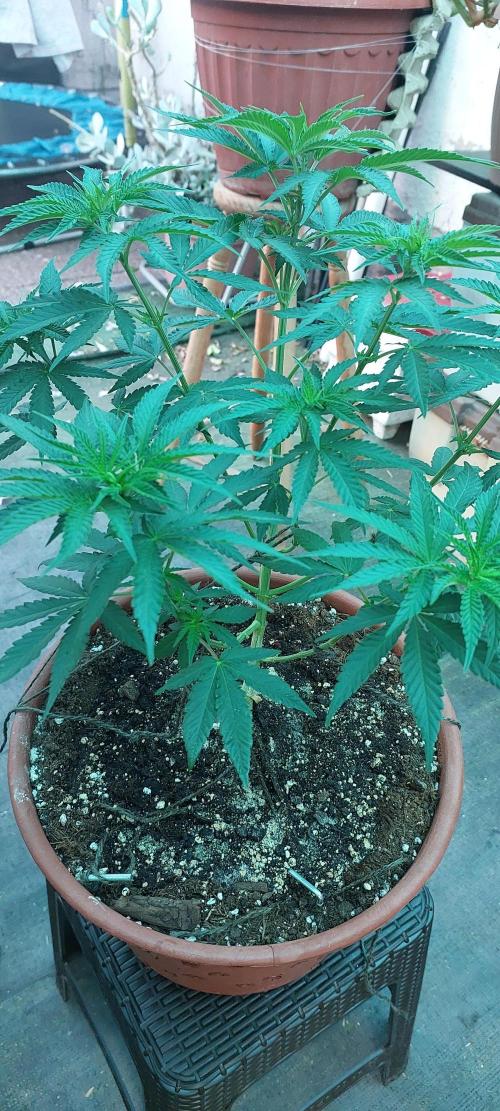
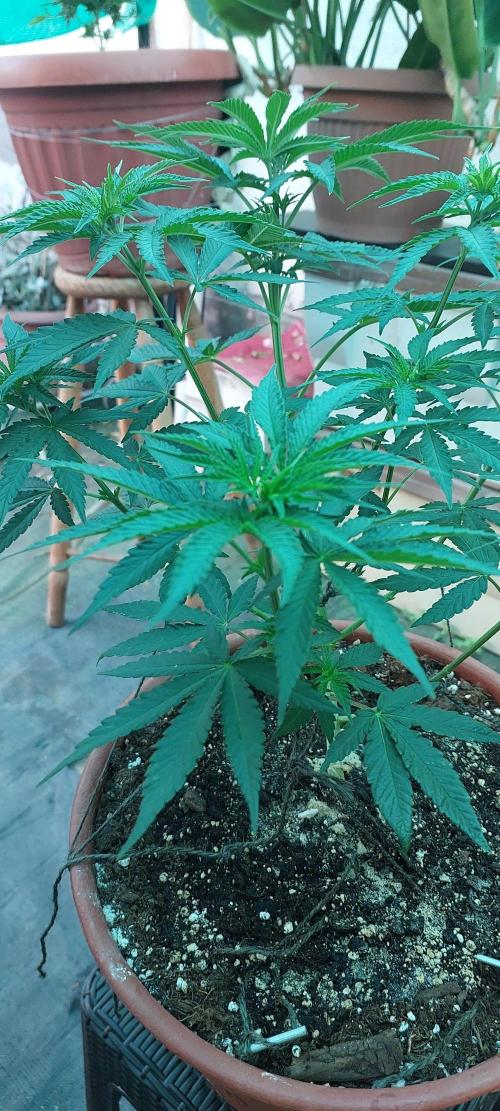
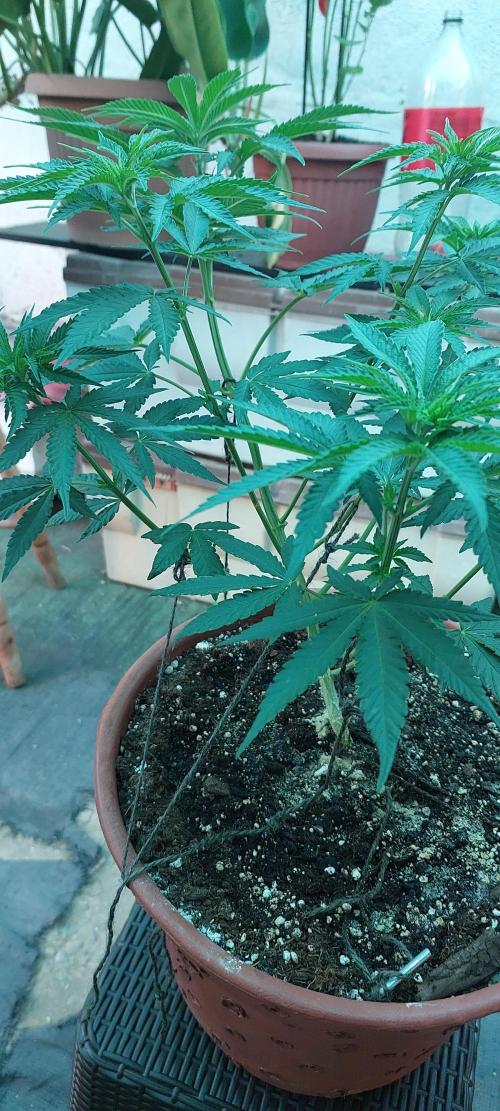
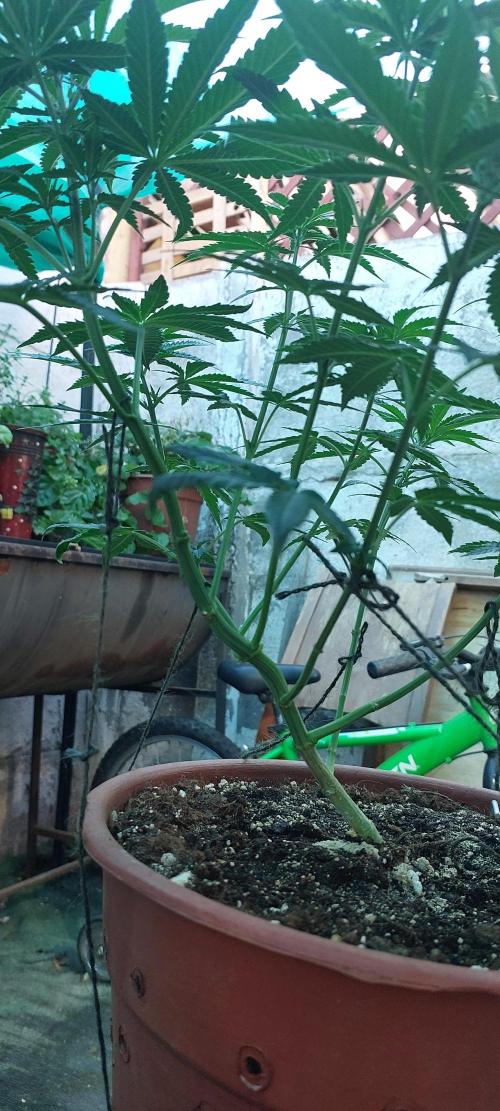
34 cm
Height
20 hrs
Light Schedule
28 °C
Day Air Temp
6.2
pH
Weak
Smell
22 °C
Solution Temp
20 °C
Substrate Temp
17 °C
Night Air Temp
11 liters
Pot Size
1 liters
Watering Volume
10 cm
Lamp Distance
Nutrients 8
Fish protein 90% Amino, 5% Humic acid
2 mll
Fulvic Acid
8 mll
Ecklonia Maxima liquid ready to go
250 mll
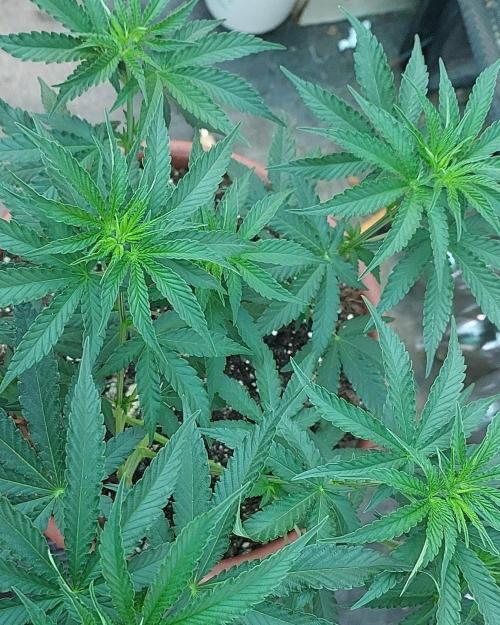
Arturok_320 This week's been intense 💪. Right after dropping the week 5 report, I did the heaviest foliar spray yet—used 25ml of brasinolide's mother solution mixed with water, plus 30ml of aloe and 6ml of sugar fulvic 🌿. Then, two days later, it was watering day: just calmag with some microbes, sugar fulvic, and aloe vera in 3L of water.
The last watering was also pretty heavy—deep soak, loaded with micro-life to flush out salts. Did some defoliation and chopped off a few branches that weren't gonna make it ✂️. Also hit them with a foliar spray of aloe and LAB to help the plants chill after the stress 🌱✨.
4 likes
1 comment
Share
Used techniques
LST
Technique
Defoliation
Technique
7
Week 7. Flowering5mo ago
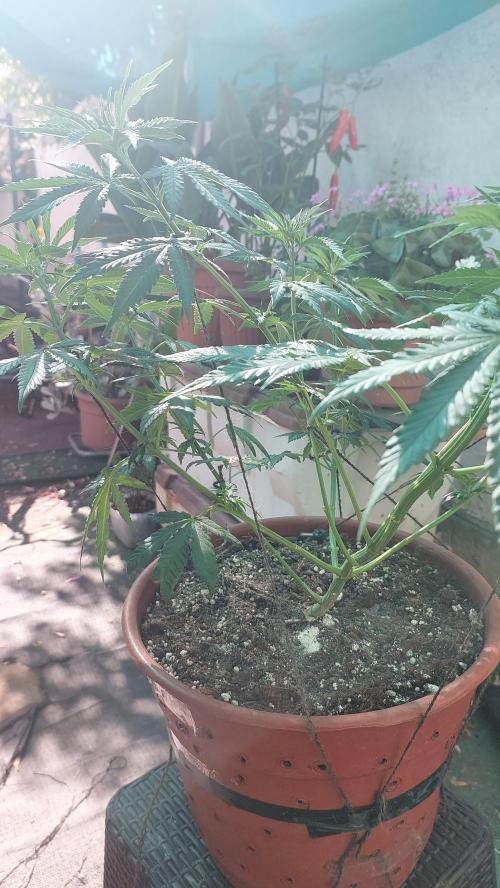
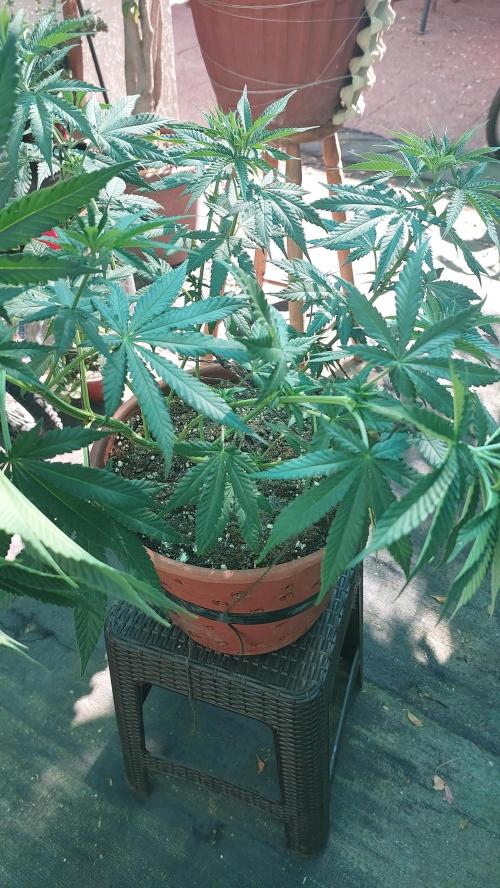
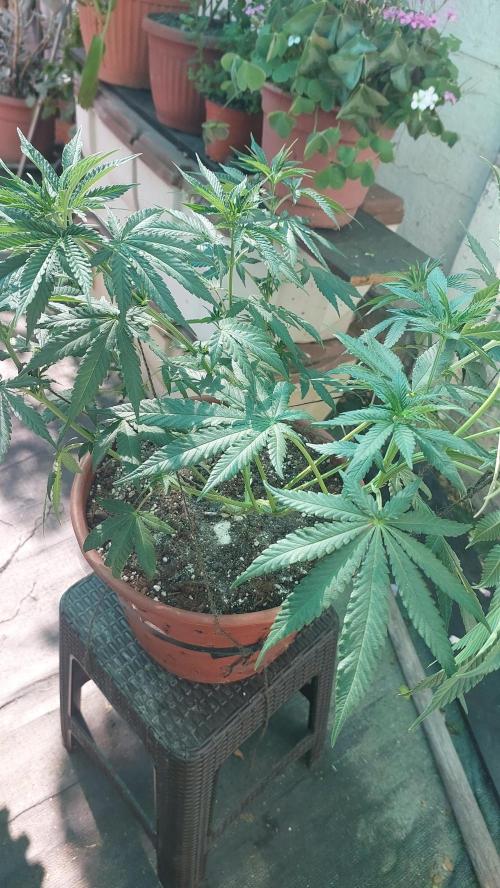
47 cm
Height
12 hrs
Light Schedule
28 °C
Day Air Temp
6.3
pH
Weak
Smell
22 °C
Solution Temp
20 °C
Substrate Temp
17 °C
Night Air Temp
11 liters
Pot Size
10 cm
Lamp Distance
Nutrients 8
Fish protein 90% Amino, 5% Humic acid
2 mll
Fulvic Acid
8 mll
Ecklonia Maxima liquid ready to go
250 mll
Arturok_320 Hey! This week (okay, the whole last month tbh) hasn't been great 😕 I'm sick and need surgery, dealing with a lot of constant pain which makes everything super hard. I'm 34 and this has really crushed my spirits, so sorry for the delay in updates! 💔
Wanted to drop by and share some pics from Wednesday plus a video so you can see how things are coming along 📸 But uh... I think the seed might not be autoflowering after all, pretty sure it's photoperiod 😅 Switched to 12/12 lighting to force flowering and test my theory. Still no signs of flowers - what I thought were buds turning out to be just new leaves lol
It's actually grown a ton, which should make me happy even though time's kinda catching up with me, I have a son and I can't play with him, it's a little sad. I hope u like the progress and the failure
1 like
1 comment
Share
Used techniques
12-12
Technique
LST
Technique
Enjoying this diary? Follow for more updates!
Prefer the old Diary view?
Go back to the old Diary view