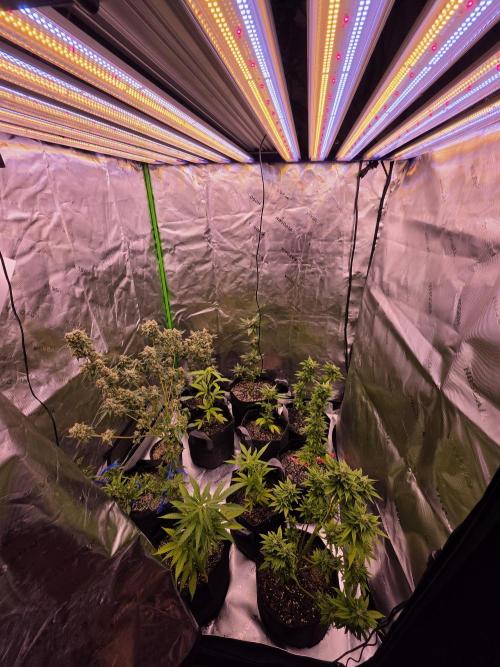
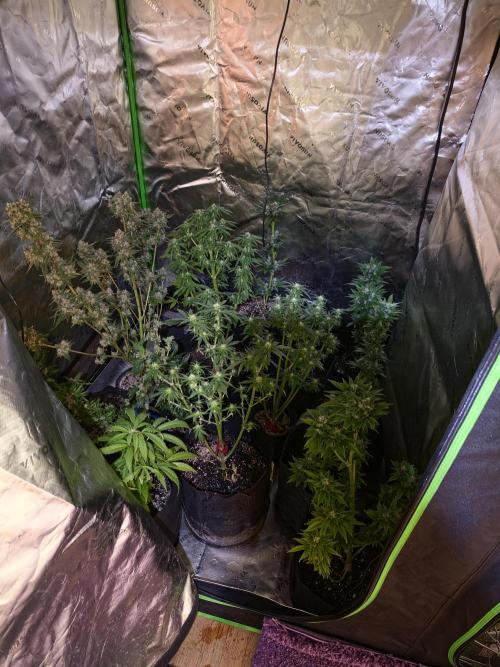
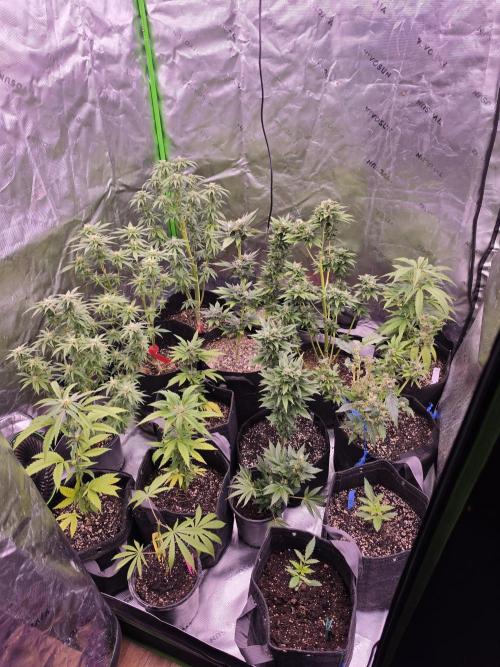
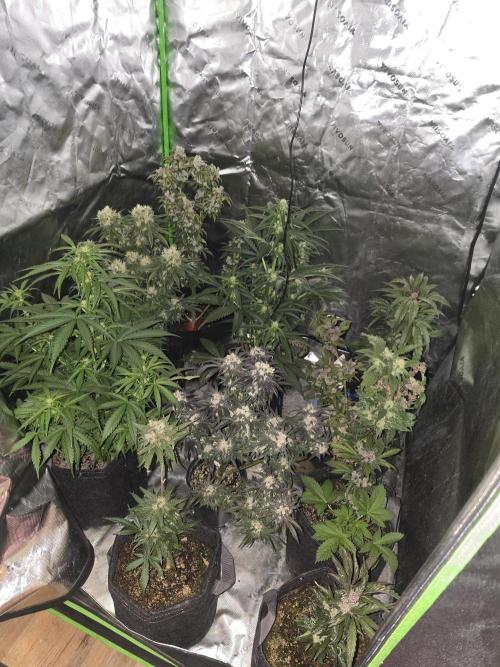
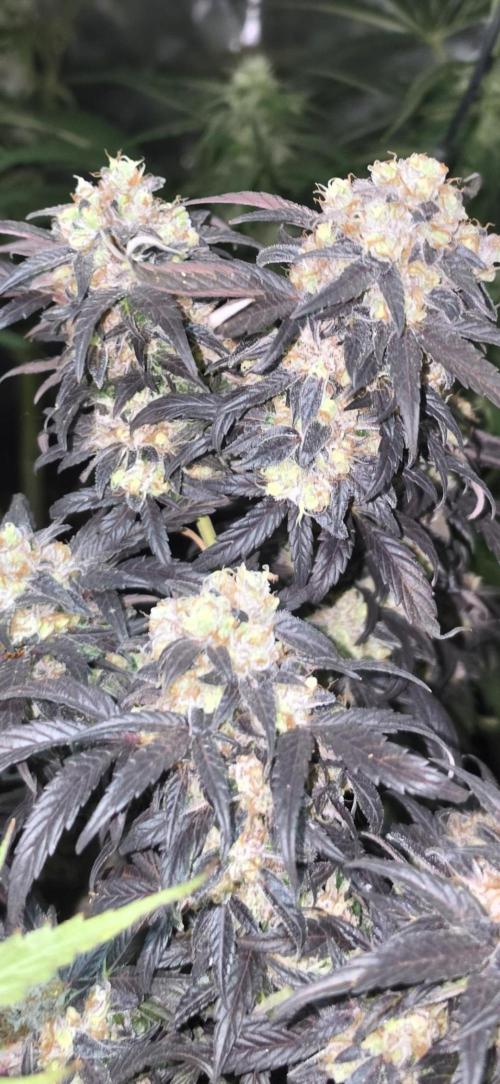
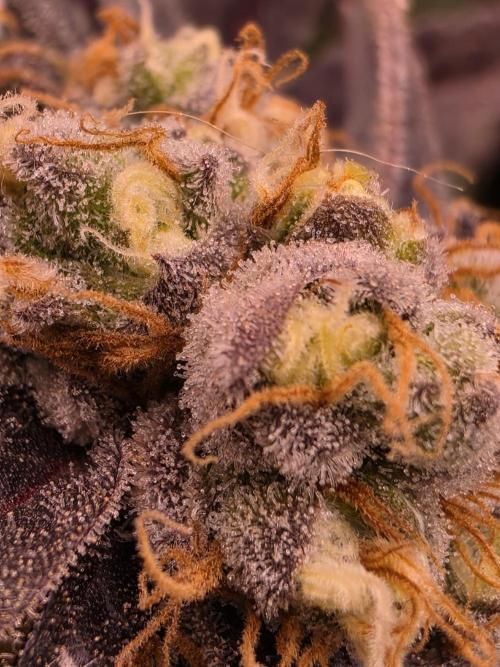
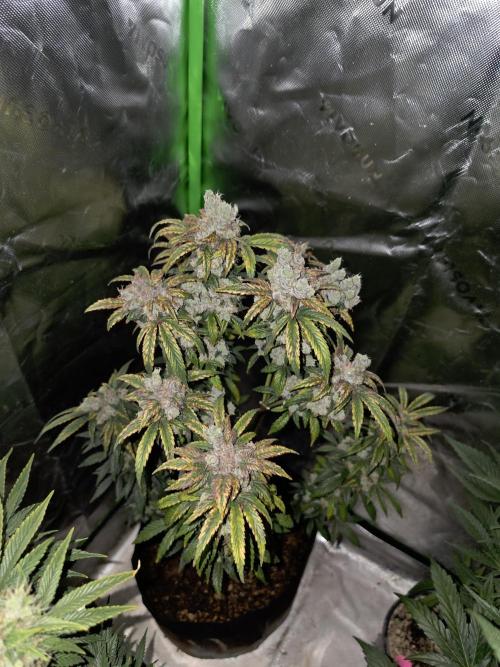
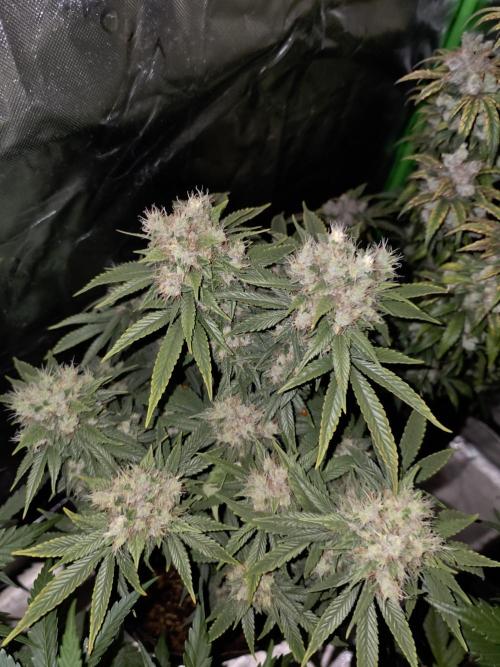
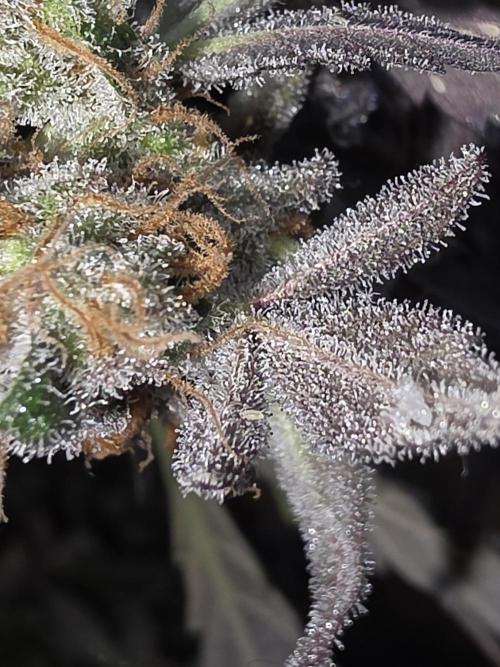
Count-Dooku 3/19Brought clones in from outside, they're already a few weeks into flower.
Most of these were in solo cups outside, in a tote to hold more water. Some had small pots. Up potted them all with soil from previous grow, in new pots. Very frugal.
Days here are 12/12 till March 26 or so this year, I got em just in time.
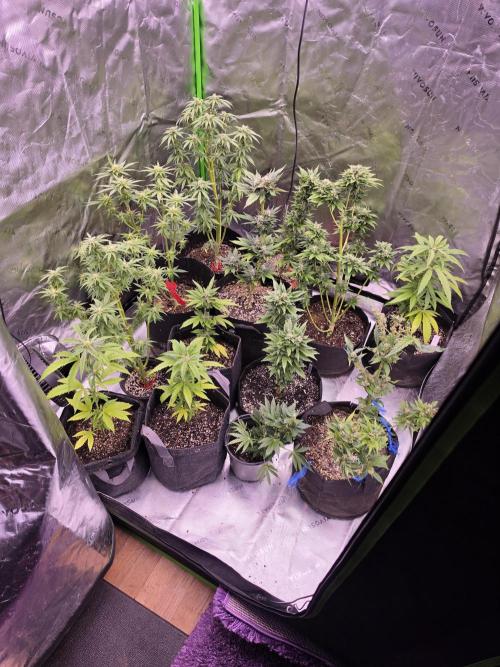
3/22 gskz, pm, bbmks1 added to the flower tent
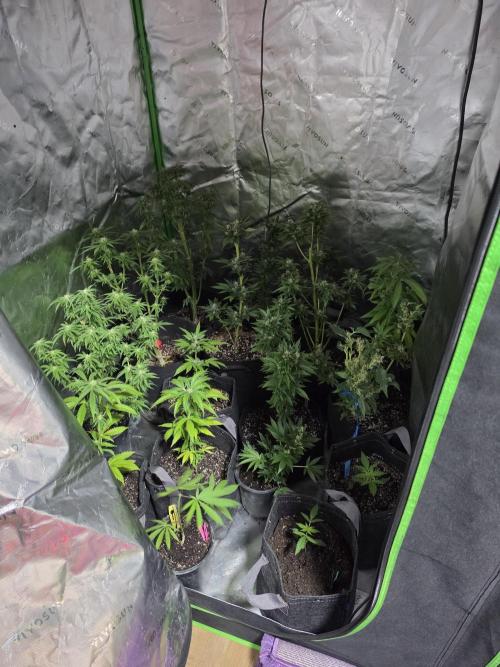
Count-Dooku 3/29 I pulled two gg and one bbmk clone out of the tent, I think I'm going to see if they can finish up a bit more outside then I'll chop them. I'm hoping since they're so far into flower they won't reveg for a week or more, so I should be able to get a little bit more maturity in the buds before I chop. Theoretically.
Most handled the schedule change well, the ones I gave 24 hrs darkness. Some I think I threw right into the tent and they had a bit of a bad reveg.
Count-Dooku Few more weeks
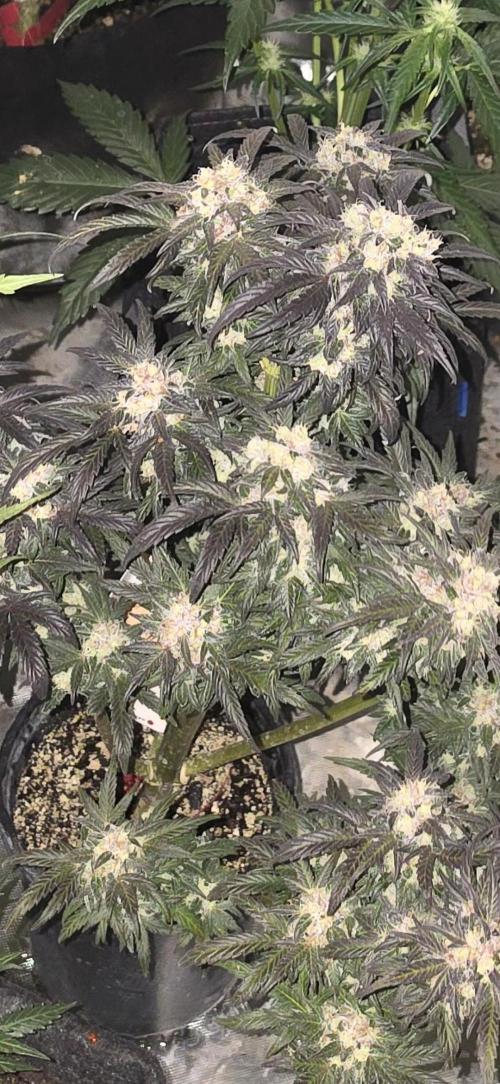
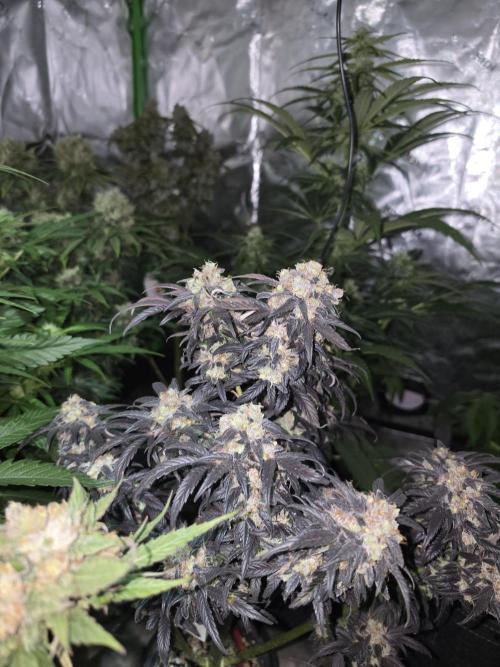
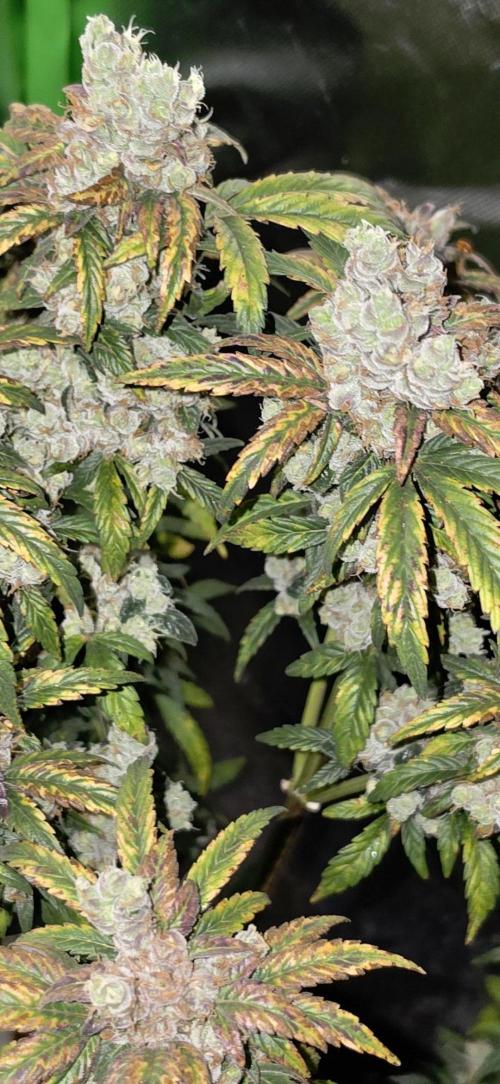
Seeing signs of fade in two chocs
1 like
comments
Share
8
Week 8. Flowering
6mo ago
1/7
12 hrs
Light Schedule
Count-Dooku They're getting juicy mm mm.
Ran into a few issues with the root zone, but corrected things and we have continued forward.
Chocolopes are looking insane.
Count-Dooku Was up late last night trimming three small plants up to go into the box.
Super fox tail structure, I fked with the light schedule a few times during flower by bringing them inside and taking them back outside to finish. So I think that's why they have that structure.
Ended up being more bud than I thought tho so I'm not upset, trimming was just a pita.
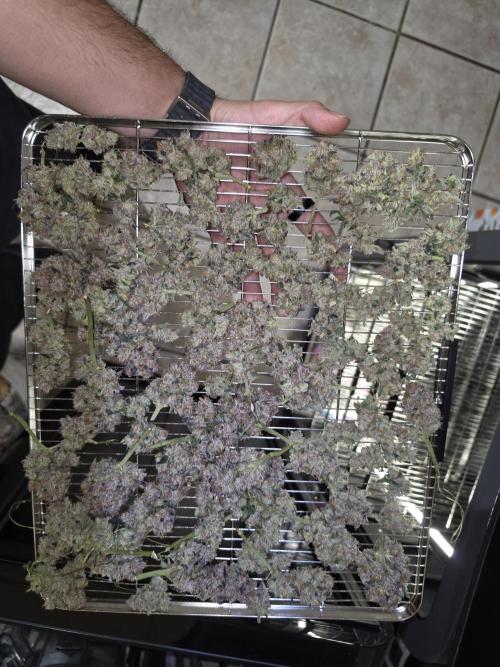
Count-Dooku Almost all the Nam wah clones pulled now
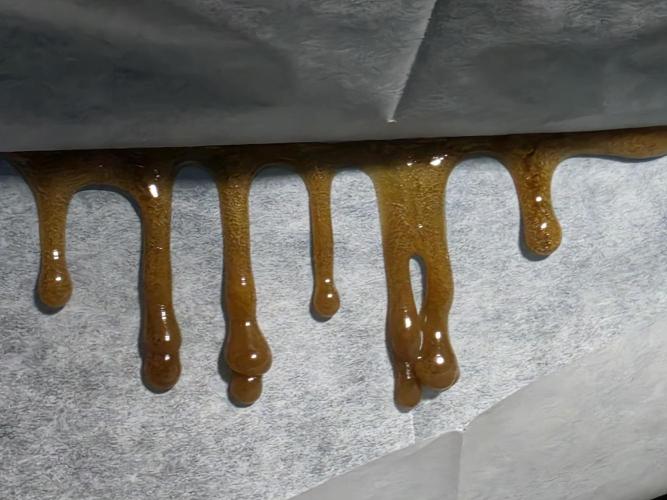
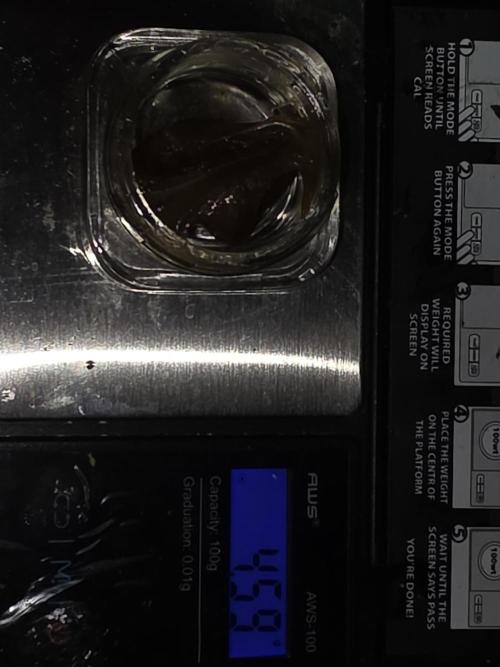
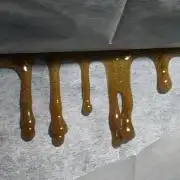
Ran the trim for bubble and pressed it, I gotta stop leaving stuff in the freezer I suspect it kills the terps.
well controlled the balance and assimilation of nutrients in that grow, I invite you to check out my profile to see the work I’m doing with my plant nutrition protocols and let’s share some info among colleagues. Cheers and keep up that excellent level with the watering and diet of your plants!
@Mexicanasseeds, Salutations from the north my southern Amigo, I will check out your diaries, do you write detailed notes regarding feeding? I used to, but I admit I have gotten lazy and maybe overly confident; in that I think I can tell what the plants like/need by eye, and the context of the grow. (What week, age of plants, size of plants, color, turgor, and rate of growth.)
But truly I do not know the EC of my runoff, or measure the EC of my feeds lately. I know what EC I arrive at with a given doseage in grams so I only measure the grams of feed now.
As for feeding I am using jacks 3-2-1 salts, but I will switch to masterblend when I run out. Masterblend is much cheaper per lb. I am also using advanced nutrients ph perfect once in a while, not because I have had issues with PH but it affords me a certain peace of mind. I like the idea that I am PH controlling my soil once in a while, so I never am chasing PH issues, but rather seeing everything as a potential nutrient deficiency instead.
Of course I also use Silica at the recommended doseage almost every watering.
What are you using to feed? Recently I gave my plants a boost of MPK 0-52-34 Only 5 grams to 3 gallons of water. I think they really liked it, and it was very simple to dissolve in my 3 gal feeding jug.
@Count-Dooku, What a great exchange is shaping up. I think it's excellent that you already have that clinical eye for reading plants; in the end, context and turgor say more than any meter if you know what to observe.
Regarding what you asked me about my feeding, I'll tell you that here at Mexicanas Seeds we took a different path. Instead of relying on commercial brands (which here in Mexico can sometimes be super expensive or hard to find), we decided to dive into stoichiometry and formulate our own precision author nutrition.
Basically, we design our solutions from scratch using pure mineral salts. It's much more economical and allows us surgical control over each element. We base our chart on the latest research in advanced plant physiology (closely following the work of Saloner and Bernstein in Israel), but with a very particular focus: we're not just looking for biomass, we're looking for secondary metabolites (resin and terpenes).
Let me explain how I have the arsenal organized (I manage it in separate containers to avoid precipitations and adjust according to the stage):
Containers A, B, C, D, and E: Contain the base macros and micros, iron chelates, and sulfates. I balance them week by week. For example, in week 6 we aim for the Potassium Peak (almost 190 ppm) for maximum density, but we drastically lower Nitrogen to avoid interfering with maturation.
Container E: Is my source of potassium silicate. I use it almost the entire cycle, not just as structural reinforcement, but as a buffer to control acidity when we apply antioxidants.
The "House Secret: Cross Elicitation
What is really blowing our minds is the use of signaling molecules. We apply elicitation protocols with molecules like chitosan and salicylic acid.
The idea is subtle but powerful: we trick the plant into thinking it's under attack. This triggers its immune system and, as a natural defense mechanism, the plant reacts by saturating itself with resin and terpenes. It's like taking the plant to the metabolic gym to maximize its genetic potential.
For the finish (week 8), instead of just water, we use ascorbic acid (250 ppm) as an antioxidant and polysaccharides to feed the microbiota and clean the substrate, preparing the plant for perfect senescence at 63 days.
Check out the diaries when you can! There you'll see how this formula performed with some of our varieties. If you're interested in learning more about how to create your own solutions with basic salts and stop paying the "tax" of brands, we're here to share knowledge.
Good smokes from the south!