


Fruity Durban | Living Soil Test








Mix
Living soil

Indoor
Room Type
Topping
weeks 4
LST
weeks 4-6
ScrOG
weeks 4-6
12-12
weeks 6
Defoliation
weeks 6, 8
Lollipopping
weeks 8
113 liters
Pot Size
1 liters
Watering
Start at Harvest
G
Germination6mo ago


ElNass Hello everyone 🌱
I’m writing this while walking by the sea, reflecting on the next run.
I’m currently smoking some White Russian from my last grow, and I have to say… it really surprised me.
I’ve always had a simple philosophy: life is short, so I try to grow as many different strains as possible instead of repeating the same ones.
But this time, Serious Seeds really got me. White Russian, Bubblegum, AK-47… these are not just strains, they have a very strong identity.
In particular, I found a White Russian phenotype that I would definitely keep and grow again. I regret not cloning it.
That experience made me appreciate even more the work behind these genetics.
Each strain expresses something unique, both in structure and effects, and that’s something I’m starting to understand more deeply.
⸻
About this run
I honestly didn’t expect this opportunity.
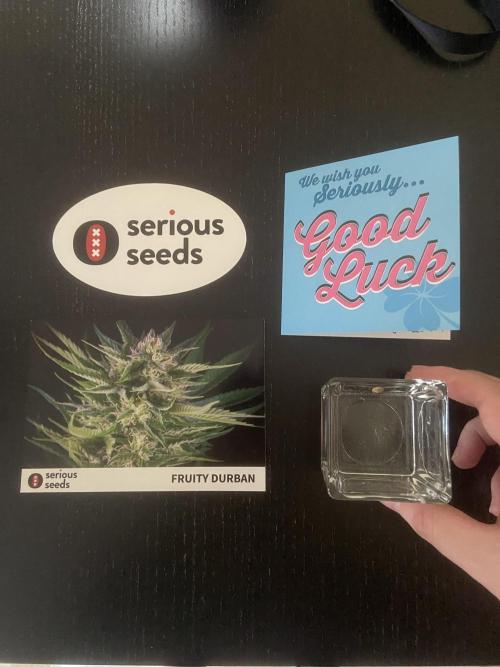
I reached out to Serious Seeds without big expectations, and they gave me the chance to test one of their new strains:
👉 Fruity Durban (Serious Mimosa × Durban)
This is currently a test strain, so I’ll be growing it almost completely blind.
I deliberately avoided researching too much about it. I want to observe it for what it is, without external influence.
⸻
Constraints & approach
Due to where I live, I can only run one plant, which means I won’t be able to explore different phenotypes or evaluate stability.
So this will be a more focused test, centered on a single expression.
At the same time, this run will be more challenging than usual:
• I’ll likely be harvesting in mid-summer
• high temperatures could impact terpene preservation and plant stress
⸻
Living soil system
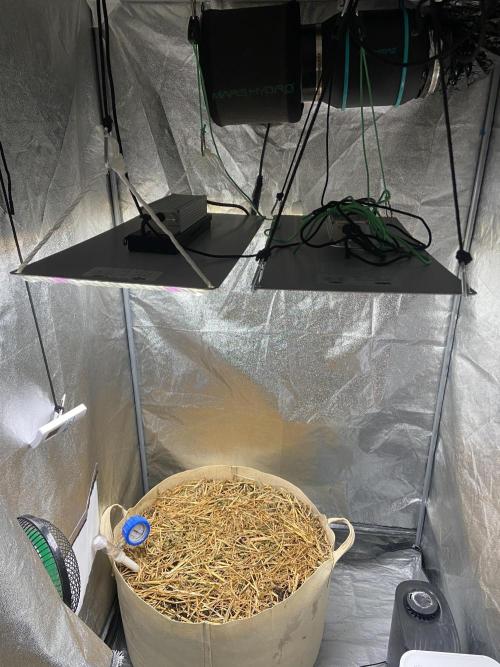
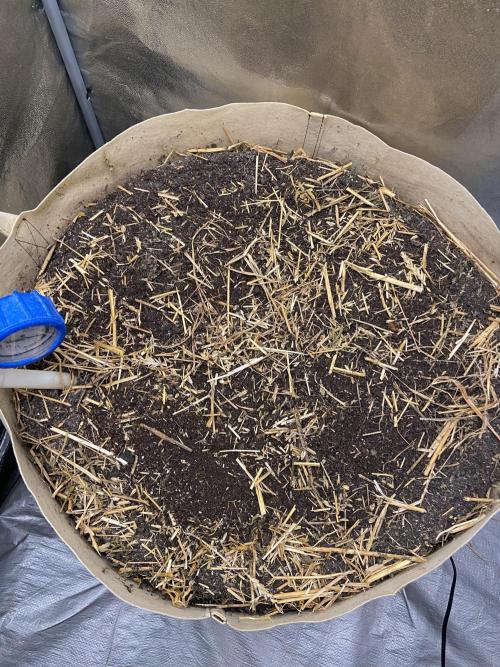
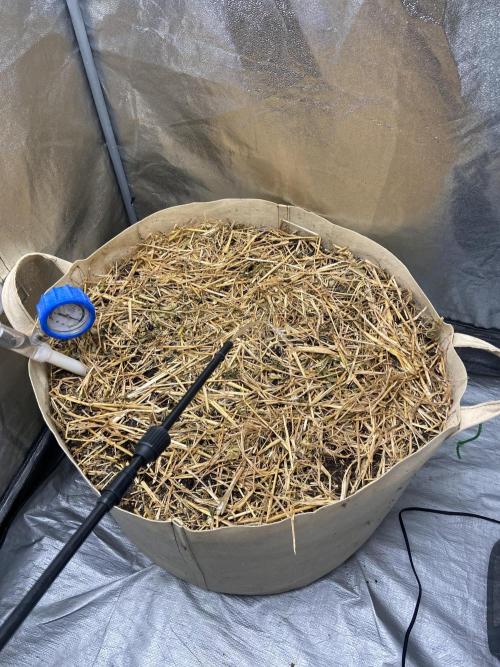
I grow in a living soil system (113L pot), which I like to think of as a bioreactor.
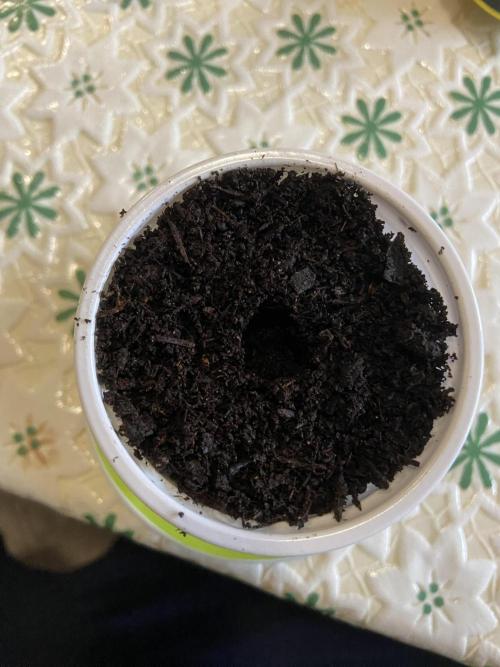
Before starting, I reactivated the soil by:
• adding fresh worm castings
• light top dress amendments
• reintroducing clover as cover crop
The goal is to rebuild microbial activity before transplanting.
⸻
Philosophy for this run
Unlike my previous grow, where yield was very high, this time I want to focus on:
👉 terpene expression and overall quality
For this reason, I’m considering a very light-touch approach:
• minimal training
• possibly a single topping (to avoid excessive main cola density)
• otherwise letting the plant express itself naturally
I don’t want to interfere too much. I want to observe.
⸻
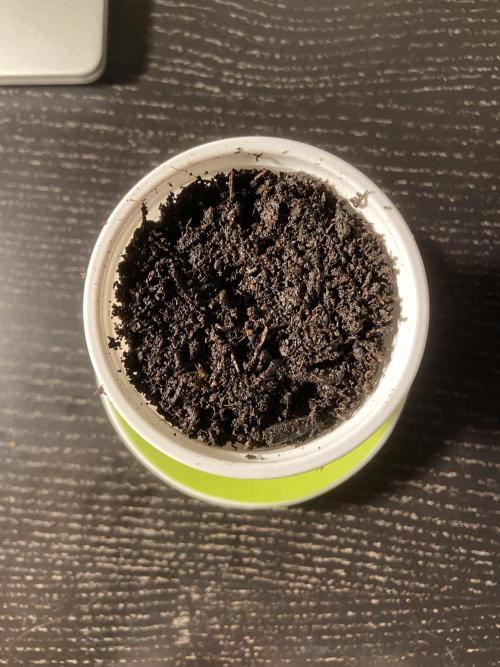
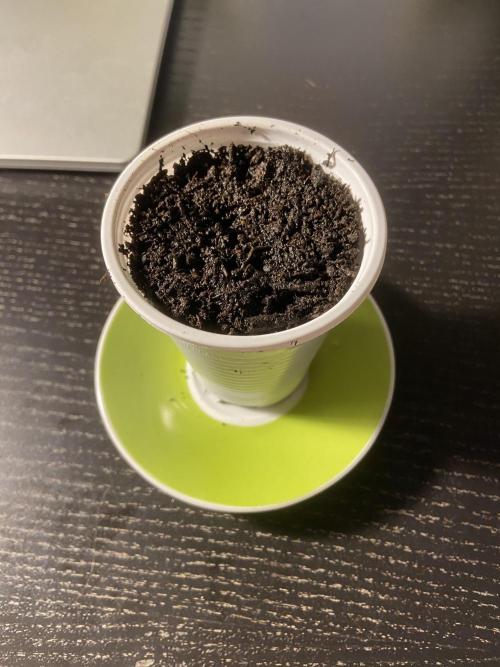
Germination
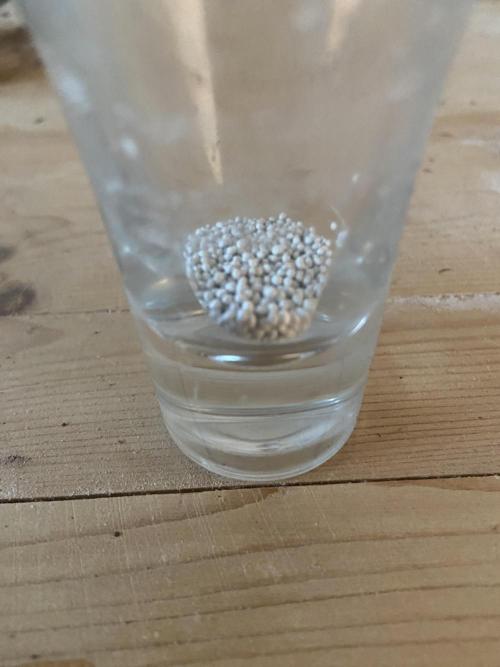
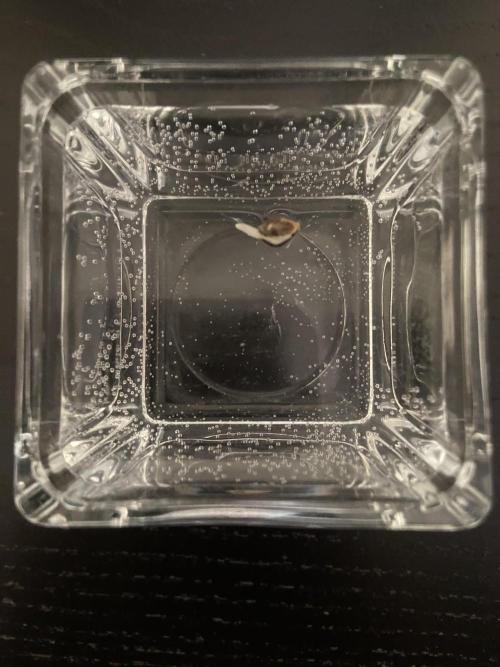
I started by placing the seed directly in a glass of water.
I decided not to use H₂O₂ this time, in my experience it can help, but it’s not essential.
Now we wait.
⸻
I’m really curious to see how this strain will behave in this environment, especially in these conditions.
This will be a journey focused on observation, learning, and quality over quantity.
Let’s see what comes out of it 🌱
69 likes
18 comments
Share
Used method
Glass Of Water
Germination Method
1
Week 1. Vegetation6mo ago

7 cm
Height
18 hrs
Light Schedule
20 °C
Day Air Temp
No Smell
Smell
75 %
Air Humidity
20 °C
Solution Temp
20 °C
Substrate Temp
17 °C
Night Air Temp
113 liters
Pot Size
1 liters
Watering Volume
30 cm
Lamp Distance
ElNass Hello everyone 🌱
I’m writing this while walking by the sea, as usual, with some White Russian keeping me company… reflecting on what happened during this first week of the run.
I have to start this diary with a small “defeat”.
I promised myself I would go completely blind on this grow, but as a true spoiler addict (yes, I always spoil movies and series before watching them 😅), when the strain dropped on 20/04 I got completely flooded with information about Fruity Durban on Instagram… and I couldn’t resist.
From what I’ve seen, it’s described as a sativa-dominant strain with a flowering time of around 35 days.
Honestly, I’m a bit skeptical about that.
A sativa-dominant plant usually takes much longer, and while I understand that the Mimosa parent could speed things up, I can’t help but wonder:
Does this extreme flowering speed come at the cost of terpene and flavonoid complexity?
As chemistry teaches us: nothing is created, nothing is destroyed, everything is transformed.
Even if the biochemical processes behind trichome and terpene production can be relatively fast, I struggle to believe that such a short flowering time can fully develop a rich and complex profile.
So yes, I’m a bit concerned.
I’m afraid that speed might have been prioritized over flavor… especially for a sativa-dominant strain.
That said, if I’m wrong, then this could be something truly special.
A fast-flowering sativa with strong terpene expression would be a huge step forward, especially from a production standpoint.
⸻
Now let’s get into what actually happened during this first week.
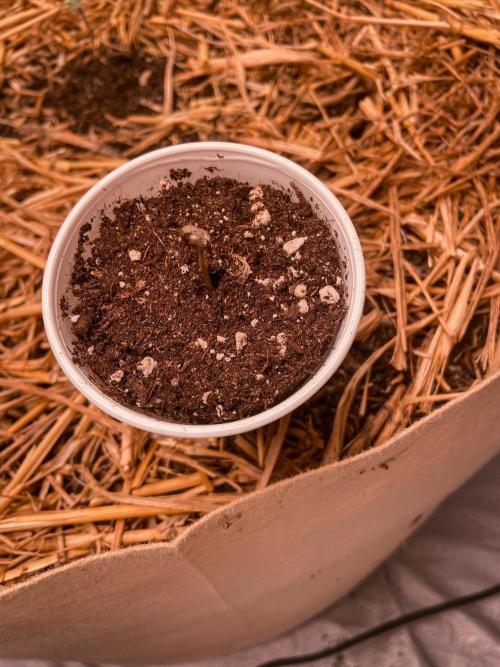
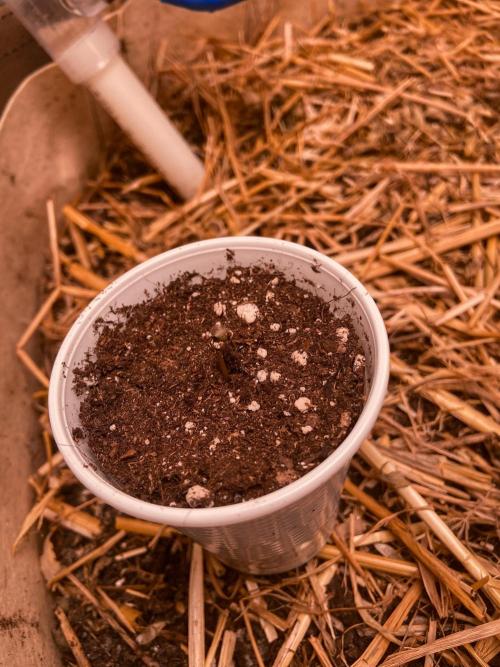
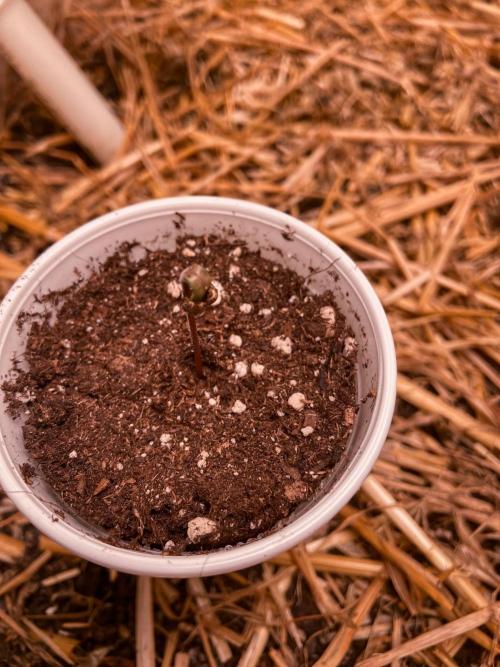
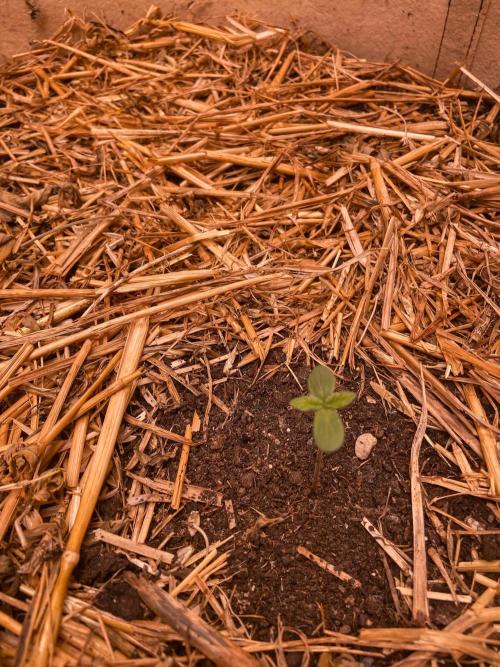
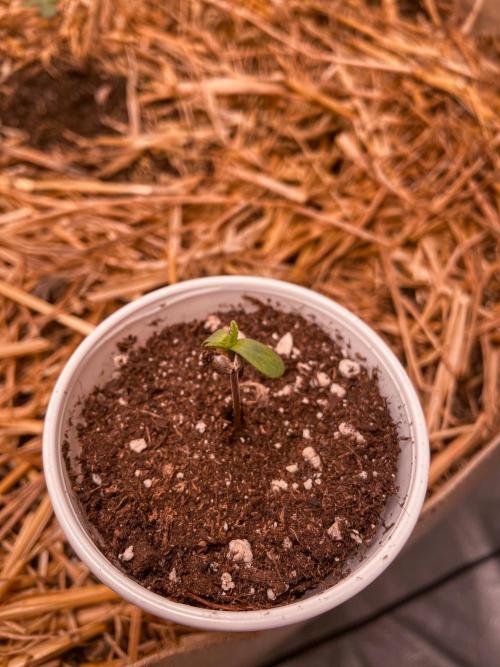
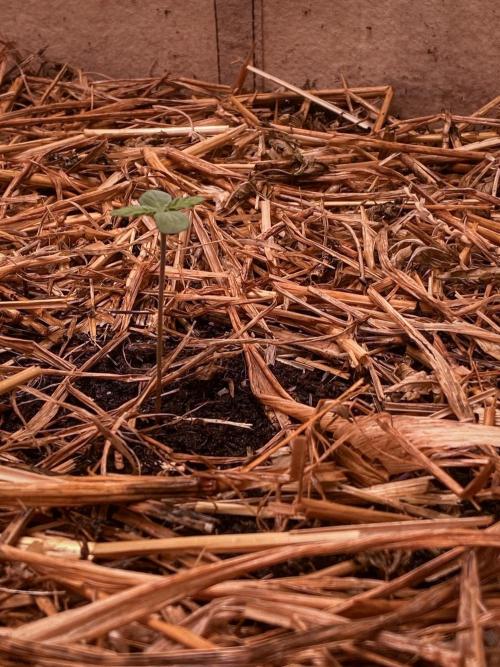
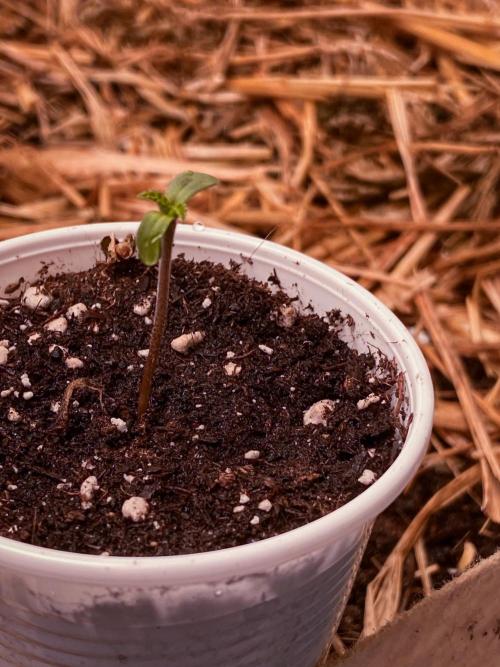
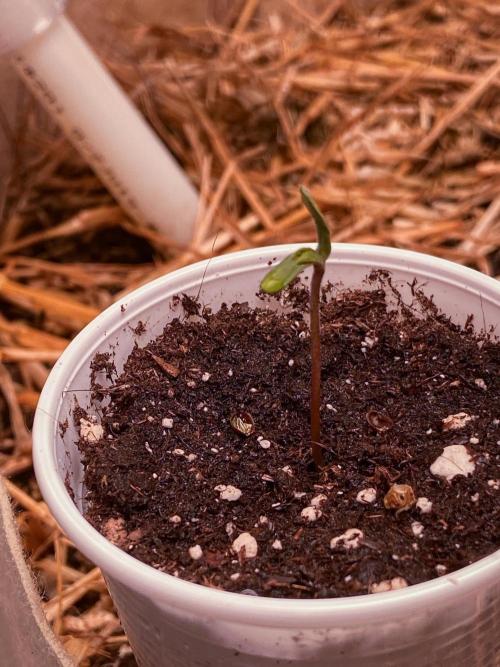
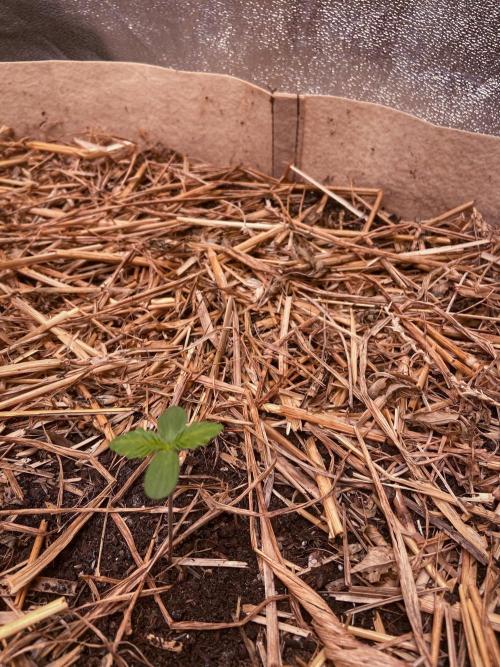
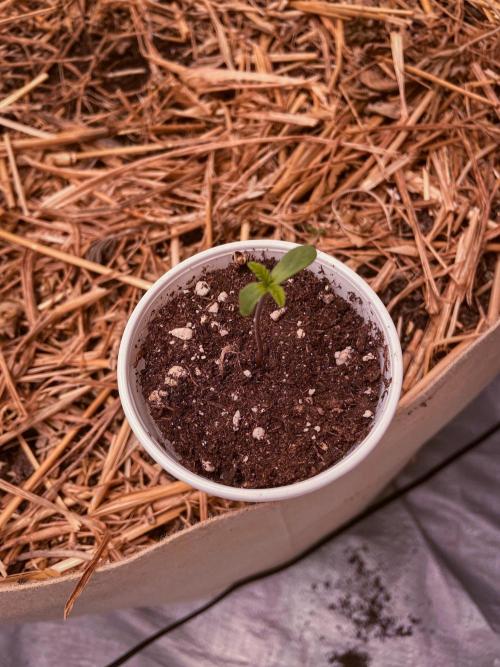
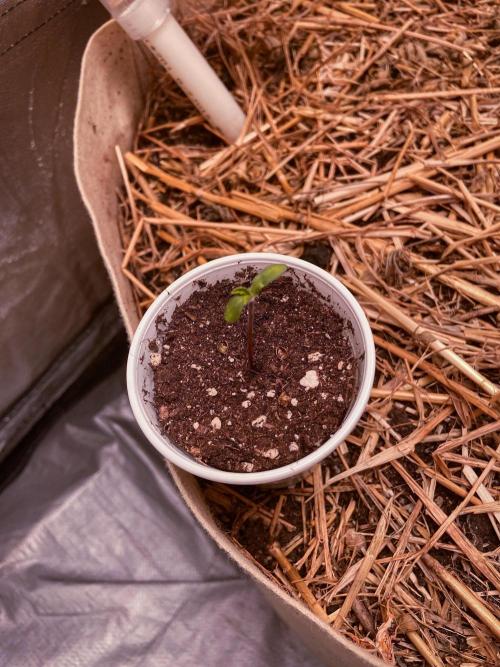
I started with a small germination test using three different substrates.
Each seed had a taproot of about 1 cm before planting.
• First substrate: a very poor-quality soil with high pH (~8.1)→ no surprise, nothing came out.
• Second substrate: LightMix mixed with worm castings (85/15)
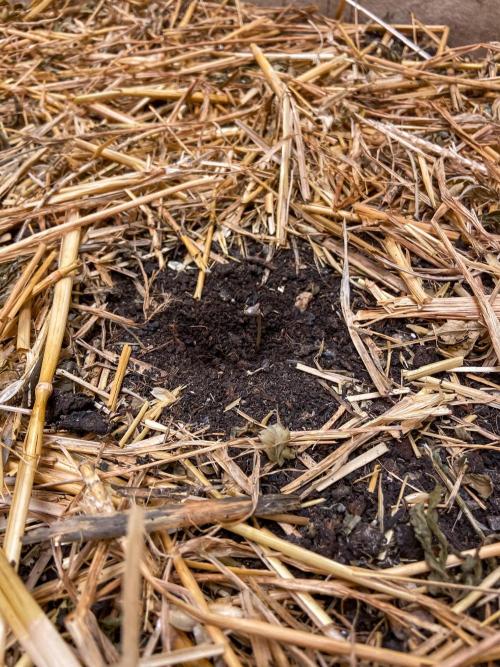
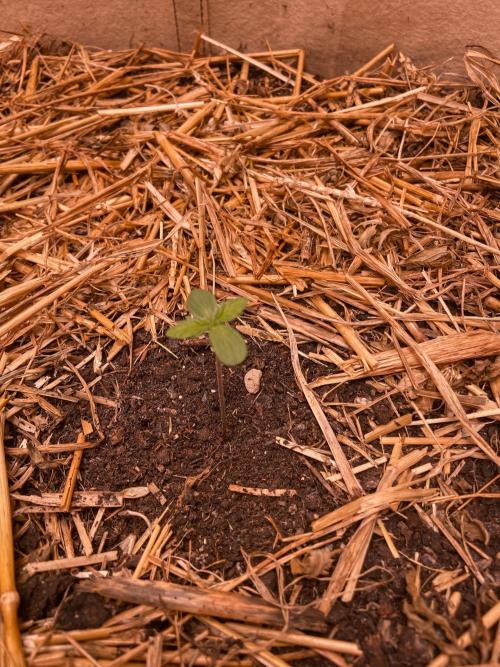
• Third substrate: my living soil setup
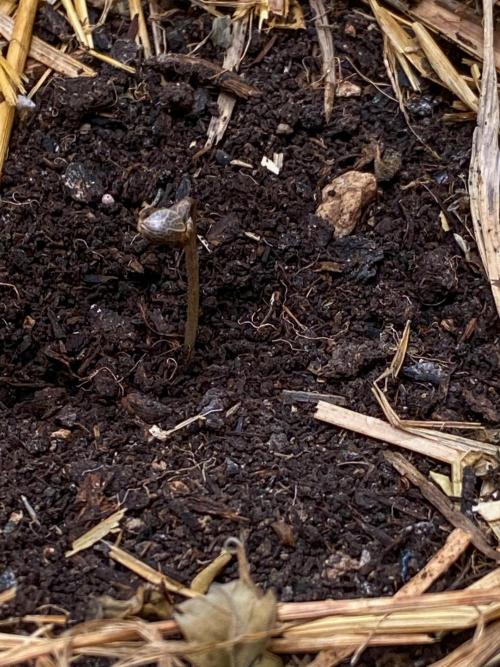
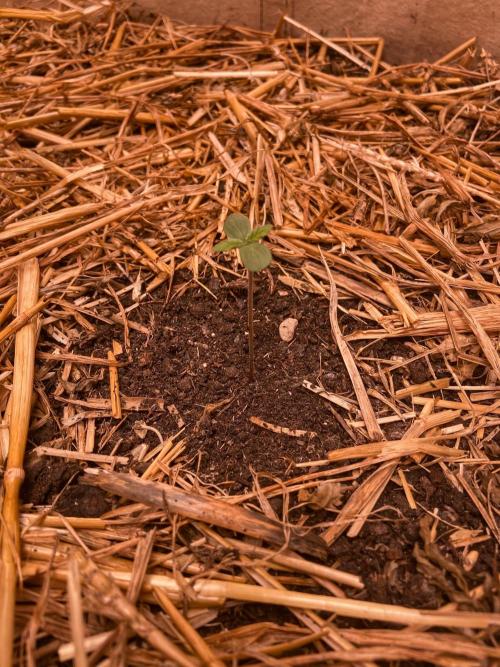
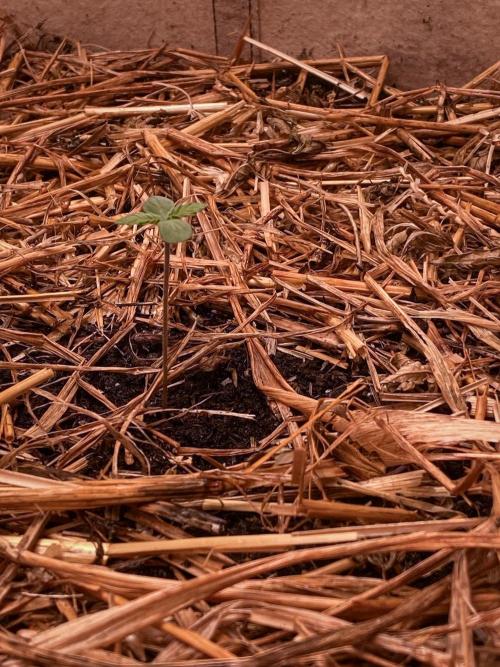
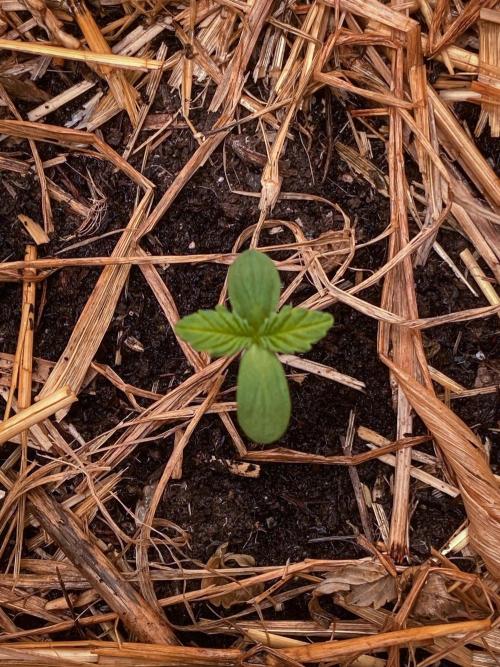
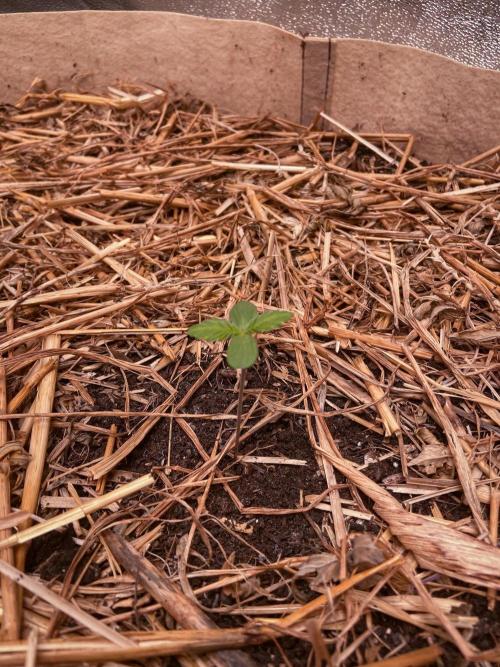
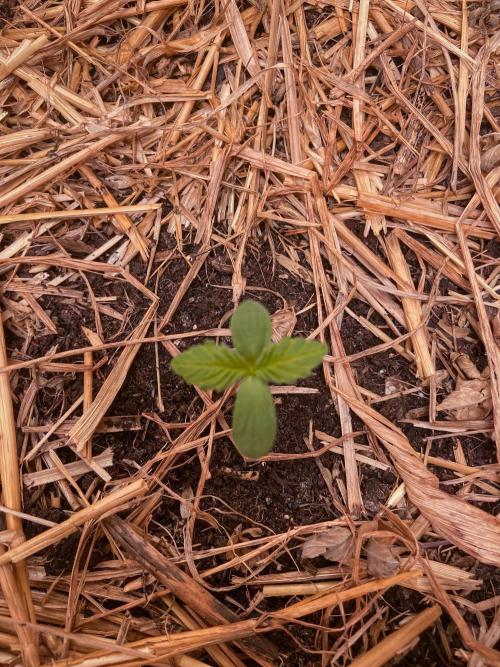
The first seedling to emerge was the one in the living soil.
After about three days, the one in the LightMix followed.
I assume this is due to several factors that make living soil more stable and efficient at this stage:
Better moisture retention, microbial life, mycorrhizae, and overall biological activity.
Interestingly, all seedlings (2 in LightMix and 1 in living soil) came out with the seed shell still attached (“helmet head”), preventing the cotyledons from opening.
Nothing serious, just required a bit of patience and a delicate touch to remove.
⸻
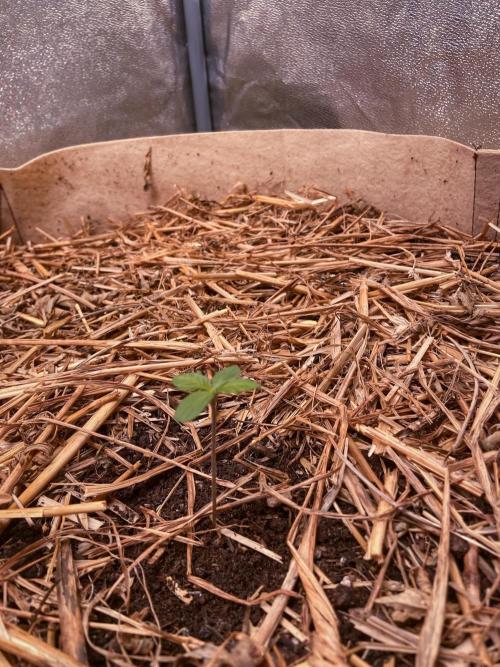
One issue appeared early on with the seedling in the living soil.
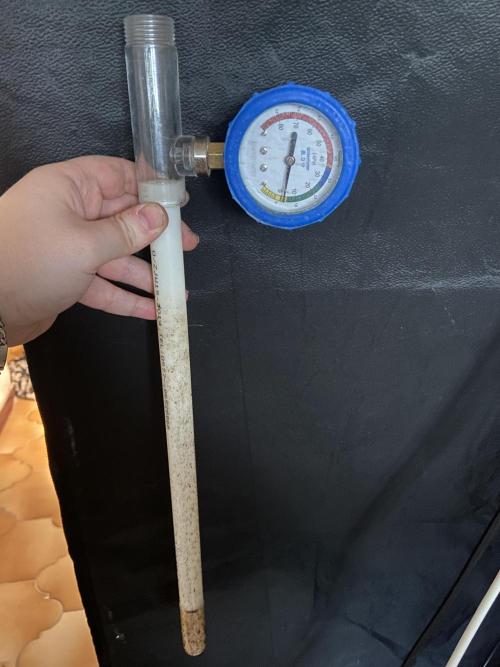
Thanks to another grower, I discovered that it’s possible to estimate PPFD using a smartphone app, so I decided to stop going “by feeling” and actually measure things this time.
At first, I set the PPFD to around 105, which turned out to be too low.
This caused an unwanted stretch right from the start, with the seedling elongating by about 4 cm in a very short time.
I corrected it by increasing the PPFD to around 260, and after a few days I also introduced a light airflow to help strengthen the stem.
⸻
Another limitation of my setup is that I don’t have an automatic controller for VPD, so I have to adjust temperature and humidity manually… once per day (yes, I know 😅).
Overall, I’ve noticed that all seedlings seem to be growing a bit slowly for the first week.
I’m not too worried yet, but it’s something I’ll keep an eye on.
⸻
On a more positive note, I’ve started collecting all the relevant data in an Excel file.
The goal is to create a full report at the end of the run using LaTeX, analyzing everything in a more structured and “scientific” way.
Let’s see if I can stay consistent with it… daily life might have something to say about that 😂
⸻
That’s all for this first week.
I’ll keep you updated if anything interesting comes up.
Thanks for following along 🌱
55 likes
5 comments
Share
2
Week 2. Vegetation6mo ago

9 cm
Height
18 hrs
Light Schedule
24 °C
Day Air Temp
No Smell
Smell
65 %
Air Humidity
24 °C
Solution Temp
24 °C
Substrate Temp
18 °C
Night Air Temp
113 liters
Pot Size
1 liters
Watering Volume
30 cm
Lamp Distance
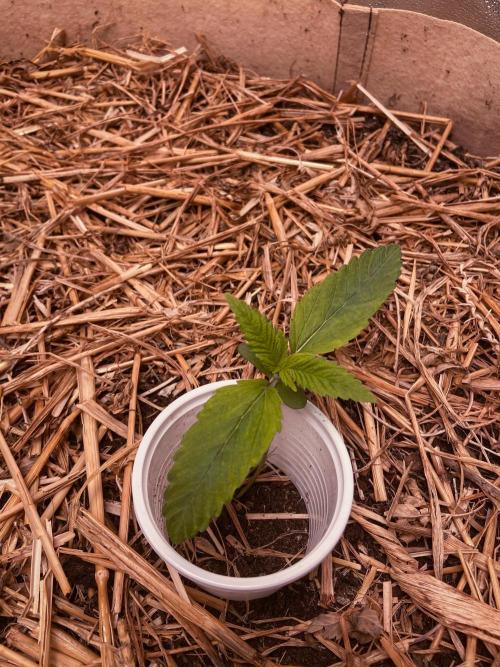
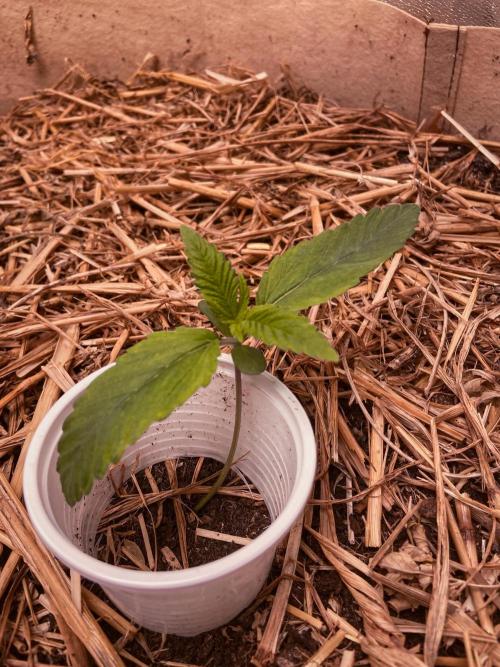
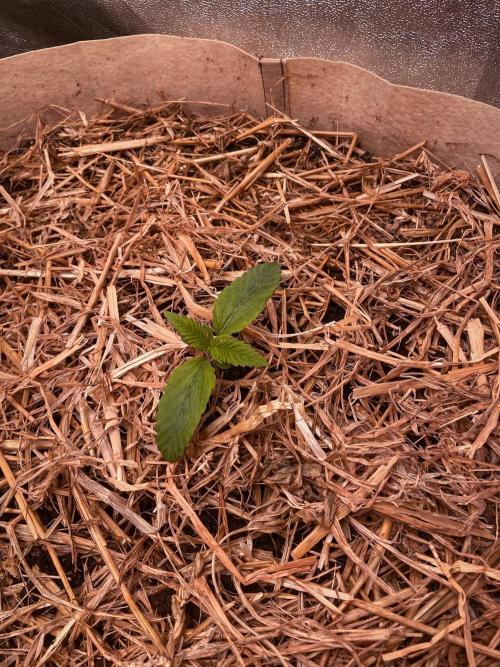
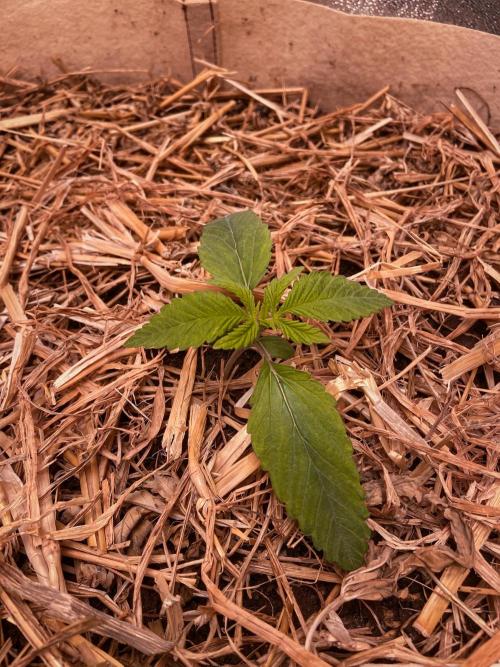
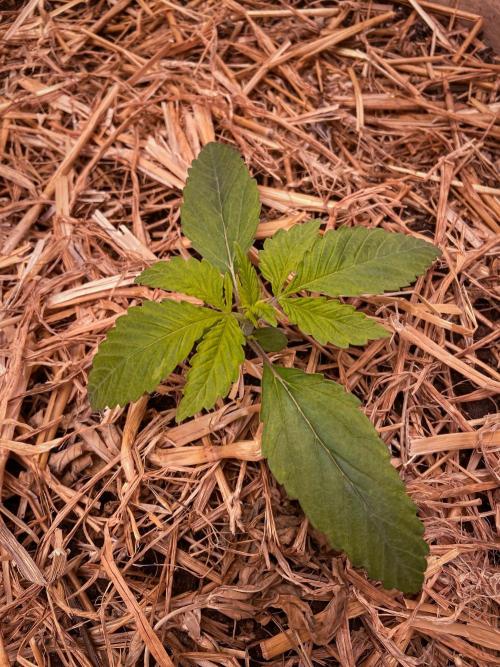
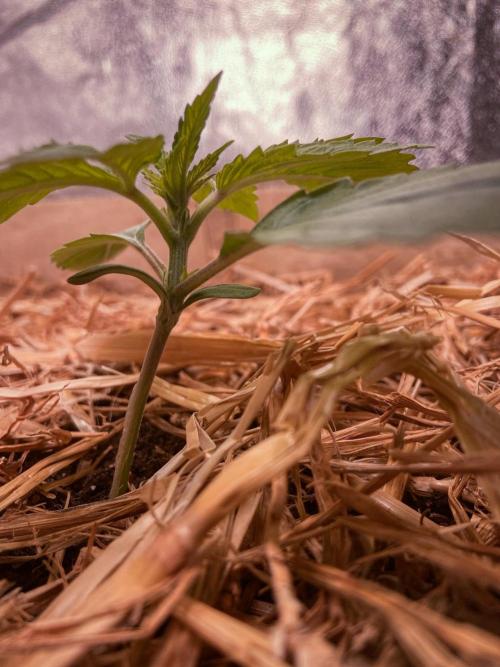
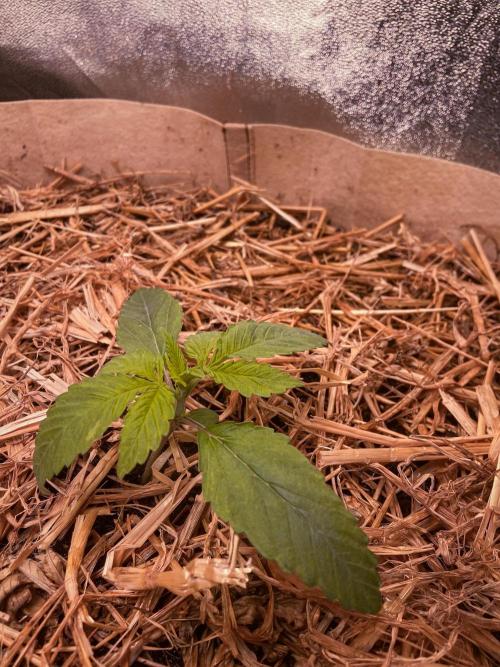
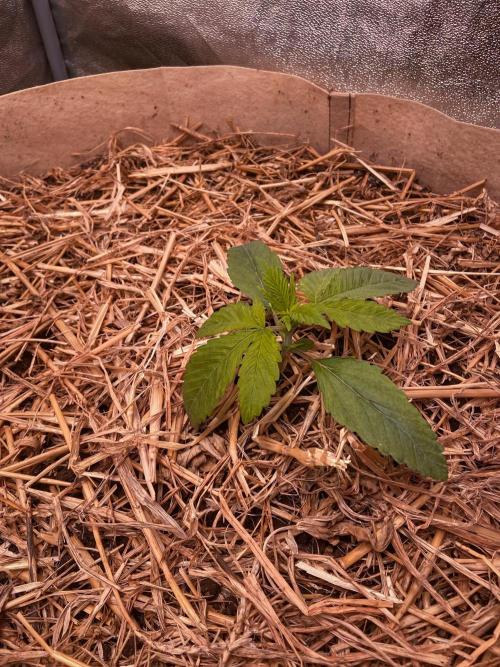
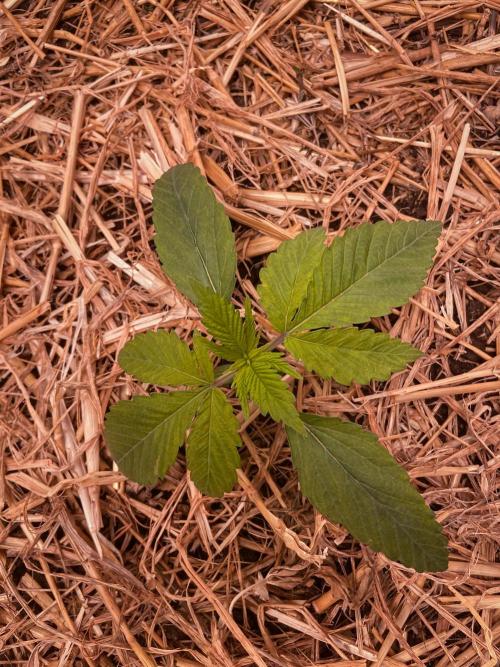
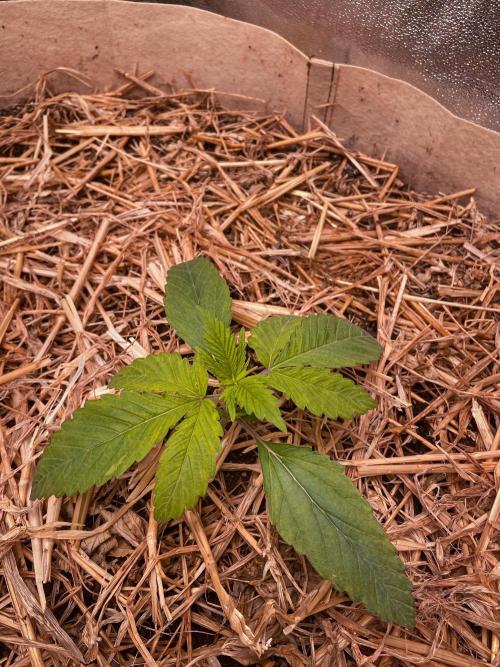
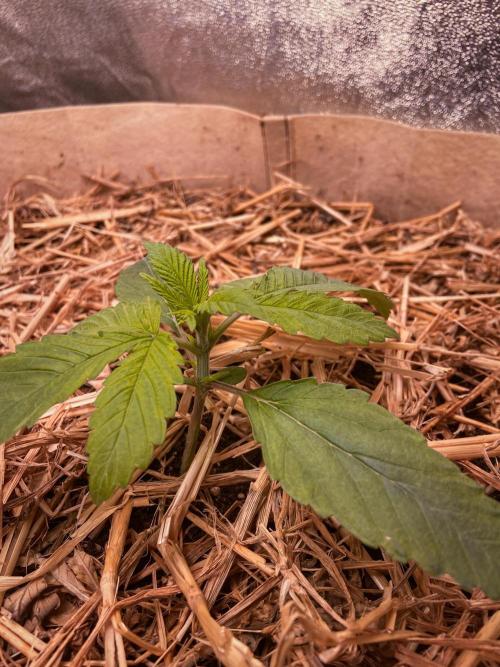
ElNass 🌱 Week 2 Vegetative – Fruity Durban (Serious Seeds)
📅 Period: 29/04 → 05/05
Week 2 is done, and this one was all about establishment and understanding the soil balance.
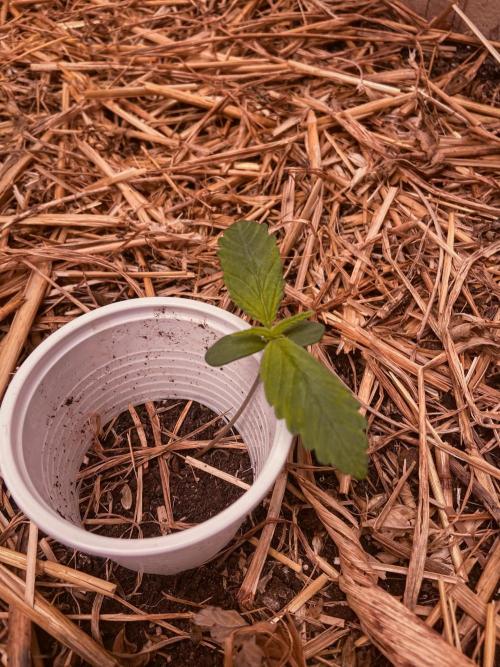
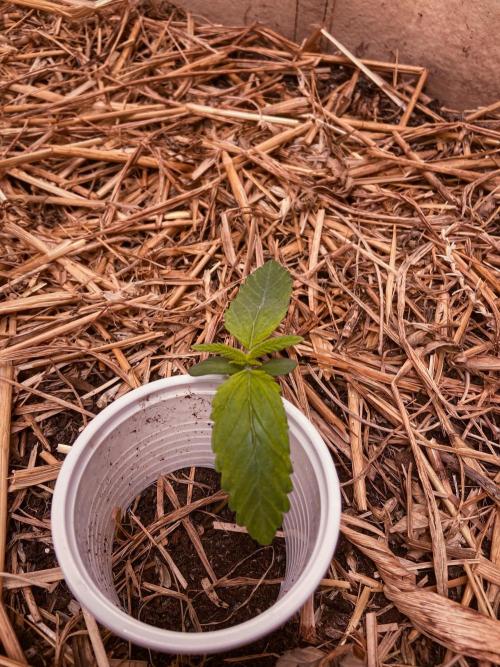
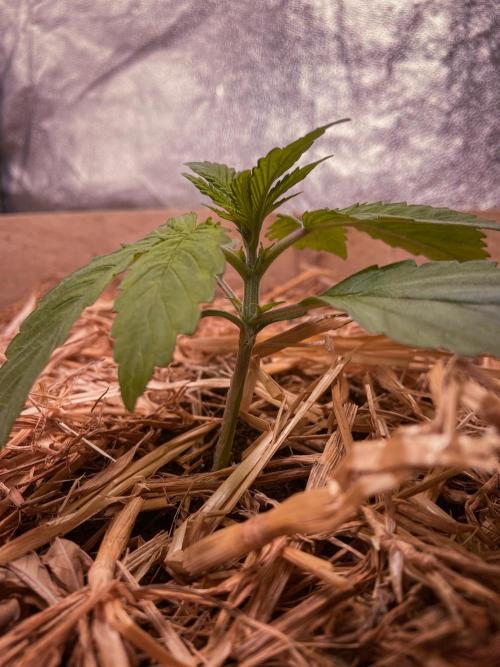
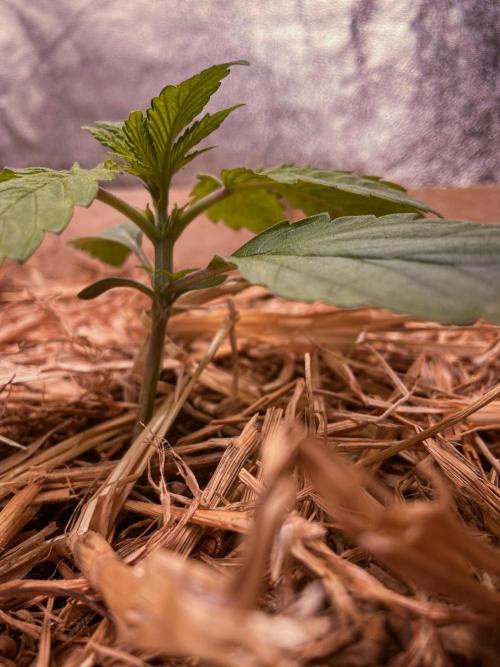
After the initial transplant into the 113L living soil pot, the plant started adapting to the new environment. Growth has been steady but not explosive, which is something I expected considering the size of the container and the biology needing time to fully activate.
⸻
🌿 Plant Selection
During this week I also made a final decision:
👉 I decided to keep Plant #1, the one growing in the living soil.
Compared to the other two plants in light mix, this one showed:
* better structure
* stronger stem development
* more consistent and stable growth
The difference was clear enough to focus everything on this phenotype.
⸻
🌿 Plant Development
During this week:
* The plant developed new nodes consistently
* Internodal spacing stayed nice and tight
* Stem noticeably thickened, showing good structural response
* New growth is active and healthy, even if not super aggressive
Overall structure is compact, which is exactly what I’m aiming for going into a possible SCROG setup.
⸻
🎨 Leaf Color & Observations
One thing I noticed:
* Leaves are slightly lighter green than expected
Nothing alarming, but it suggests:
👉 the soil is still ramping up biologically rather than being at full nutrient availability
This is very typical in living soil, especially early after transplant.
⸻
💧 Irrigation Management
This week taught me something important:
I found myself watering too frequently at first, because the surface dries fast due to the mulch layer.
But:
👉 underneath, moisture was still present
So I adjusted:
* Letting the soil dry more between waterings
* Moving towards deeper, less frequent irrigation
Goal now is to:
✔️ increase oxygen in the root zone
✔️ stimulate stronger root exploration
⸻
🌱 Soil & Biology
To support the system:
* Added a light layer of humus
* Keeping mulch active to maintain moisture balance
The idea is to let the soil build momentum naturally, without forcing inputs too early.
⸻
🌡️ Environment
* PPFD around 300–350
* VPD kept stable around 0.8–0.9
No major stress signals observed:
👉 no stretching
👉 no leaf burn
👉 no drooping issues
Environment is dialed in.
⸻
✂️ Training Plans
No topping yet.
I’m letting the plant:
👉 build strength
👉 reach at least the 5th node
Still deciding based on structure and community feedback:
SCROG vs Natural growth
⸻
🧠 Final Thoughts
This wasn’t a “fast” week, but a foundation week.
In living soil:
👉 early patience = later explosion
Right now the plant is:
* stable
* healthy
* building roots more than foliage
And that’s exactly what I want at this stage.
⸻
🔜 Next Week Goals
* Improve irrigation rhythm
* Boost soil activity slightly (enzymes/tea)
* Push for more vigorous vegetative growth
* Decide training strategy (SCROG?)
⸻
Strain: Fruity Durban (Serious Seeds)
Medium: Living Soil – 113L pot
Style: Organic / No-till approach
70 likes
18 comments
Share
3
Week 3. Vegetation5mo ago



21 cm
Height
18 hrs
Light Schedule
24 °C
Day Air Temp
No Smell
Smell
65 %
Air Humidity
24 °C
Solution Temp
24 °C
Substrate Temp
18 °C
Night Air Temp
113 liters
Pot Size
1 liters
Watering Volume
30 cm
Lamp Distance
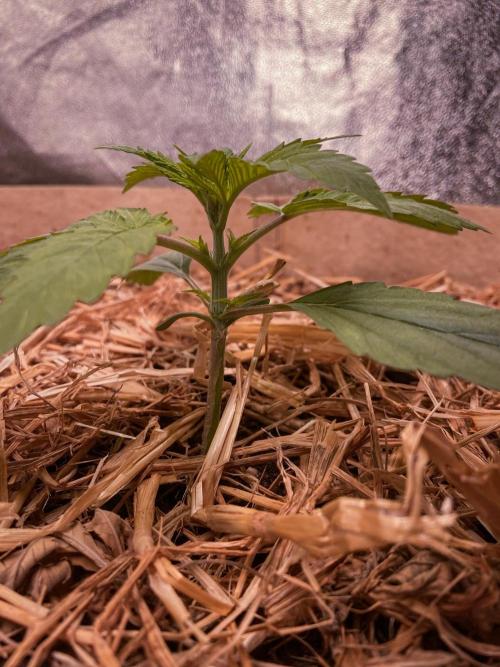
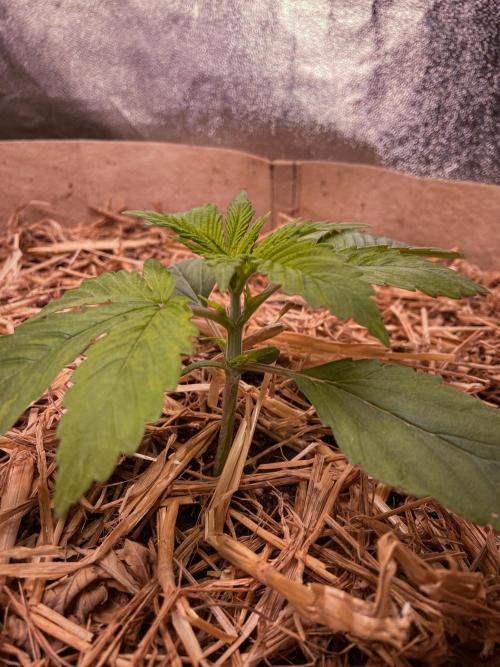
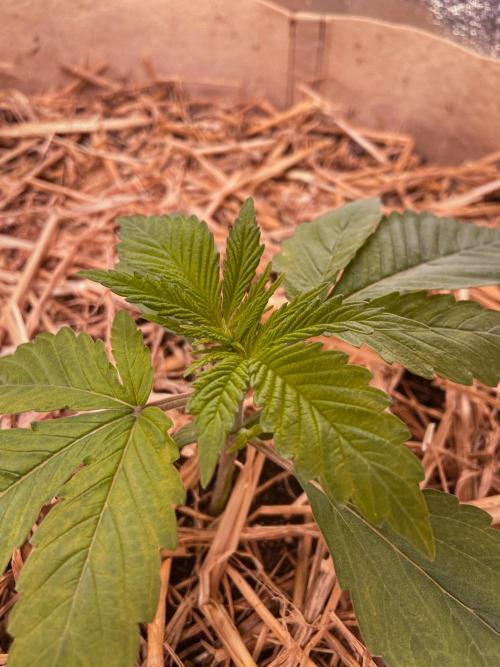
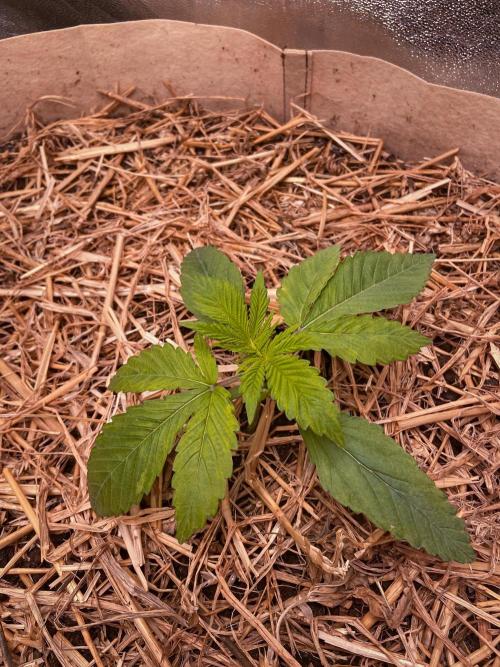
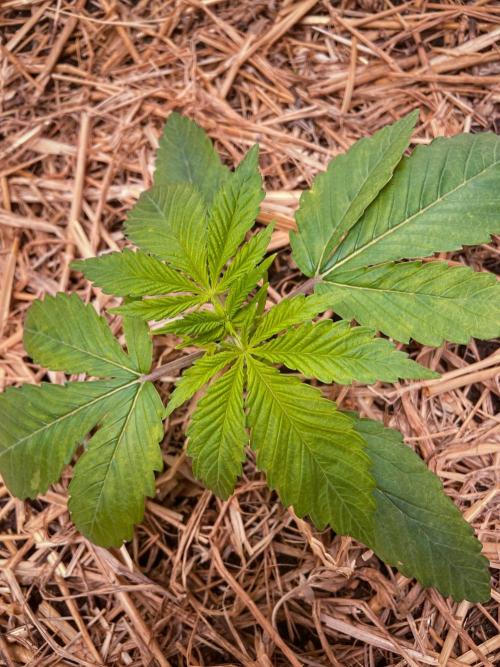
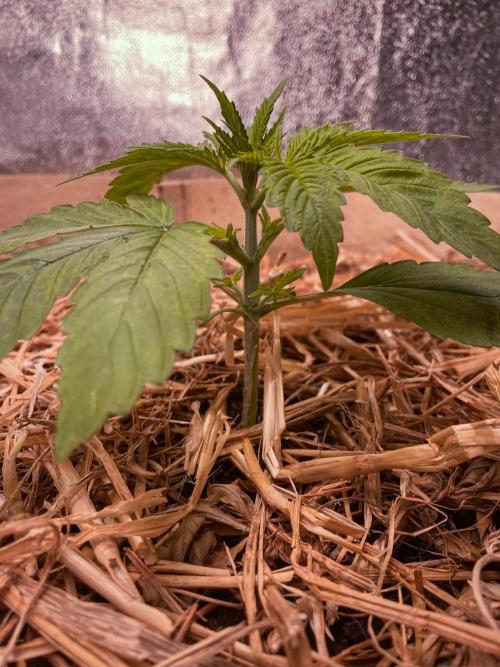
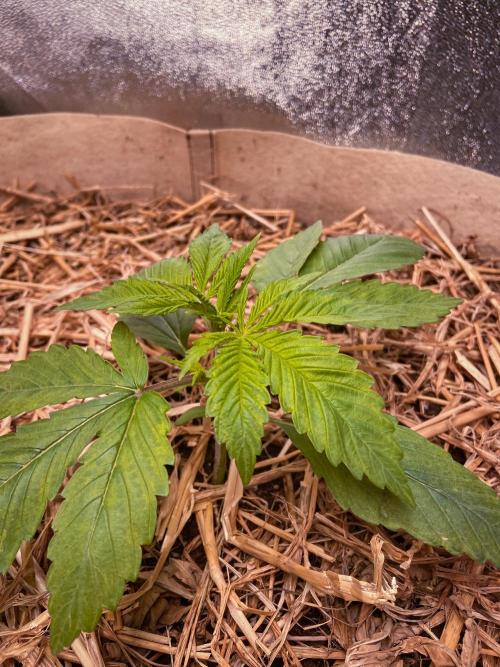
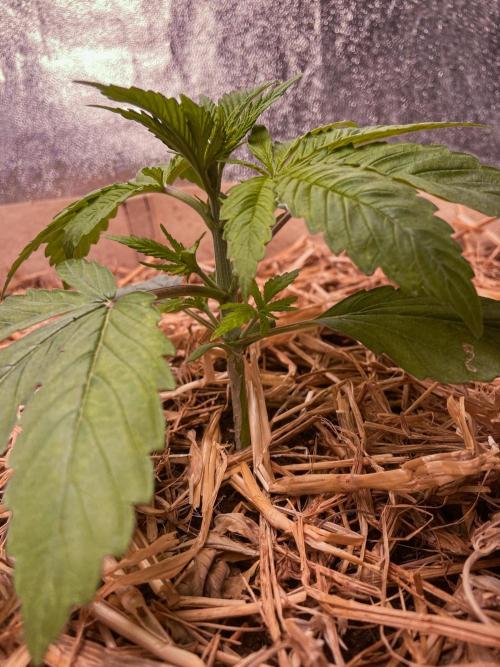
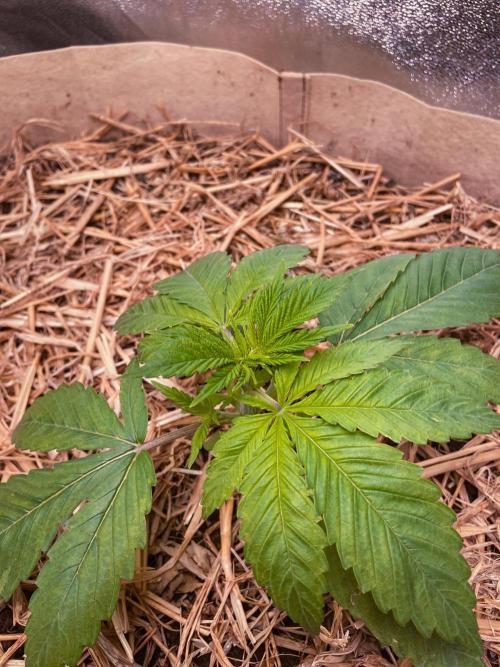
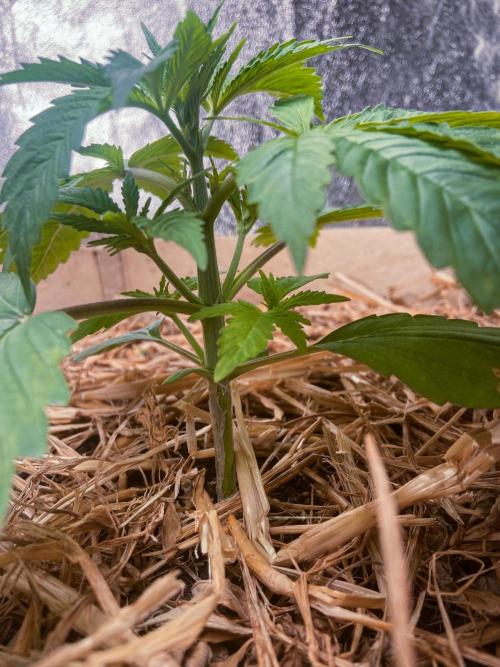
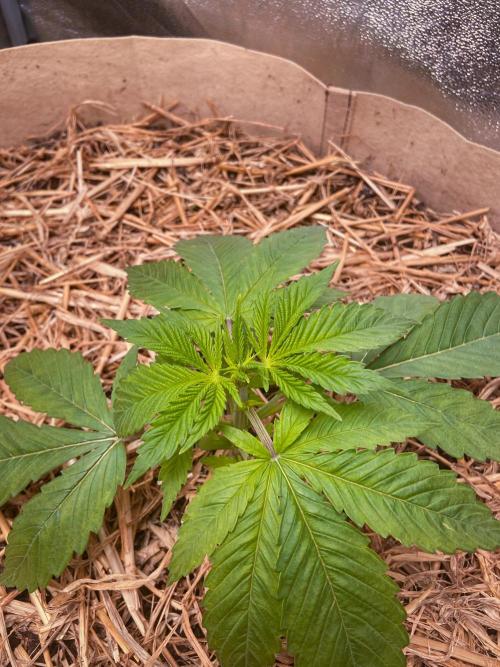
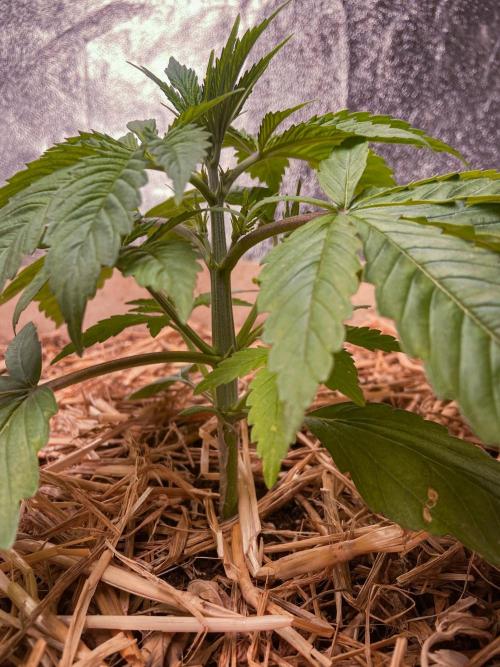
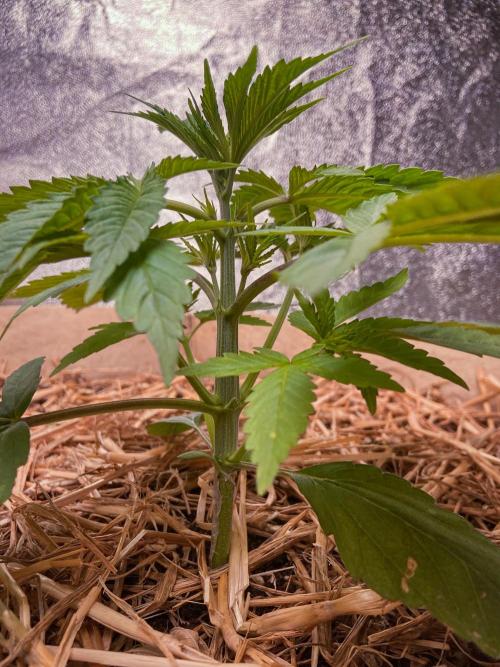
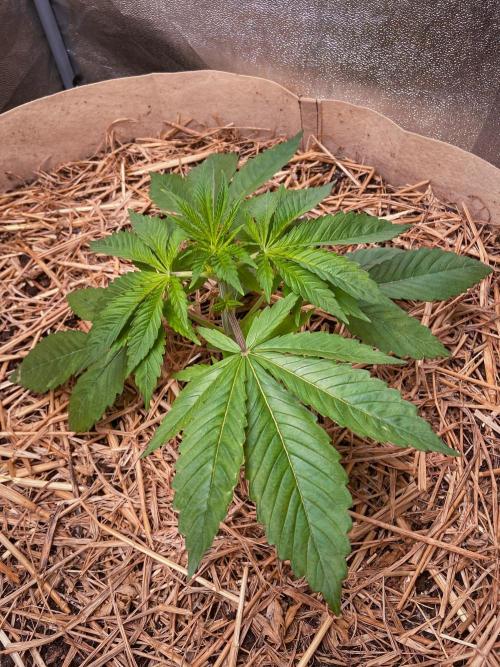
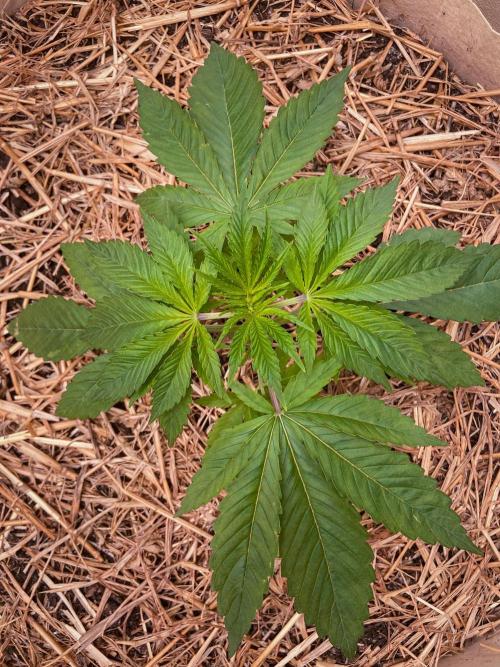
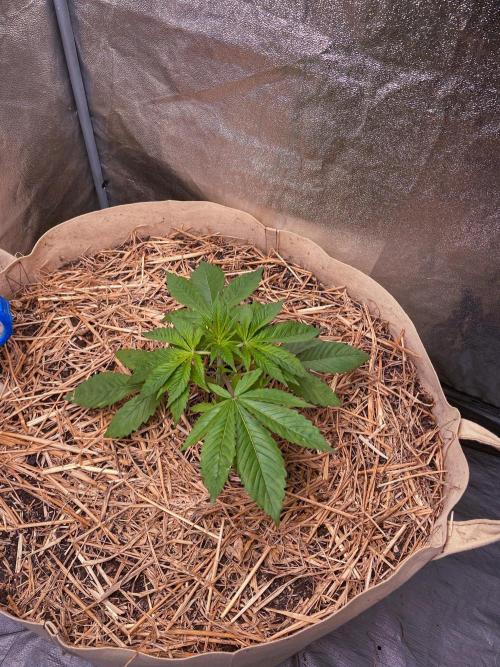
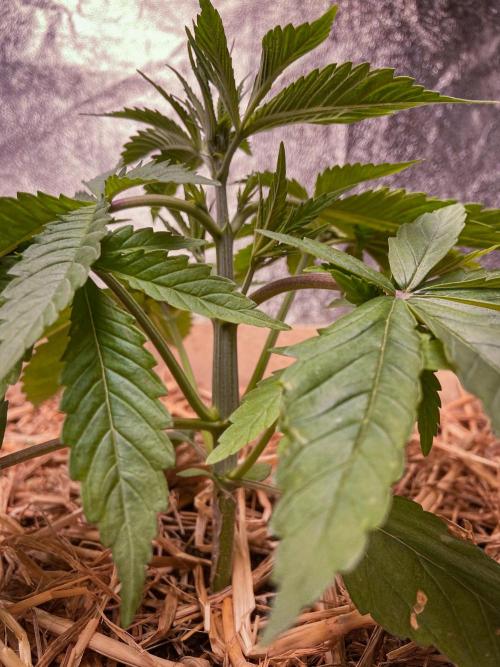
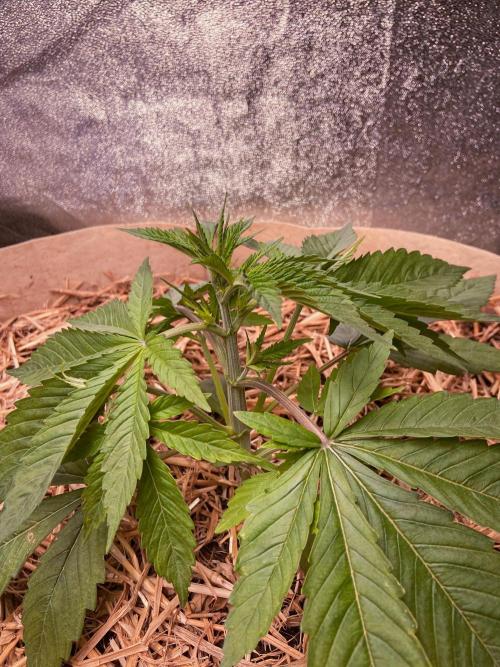
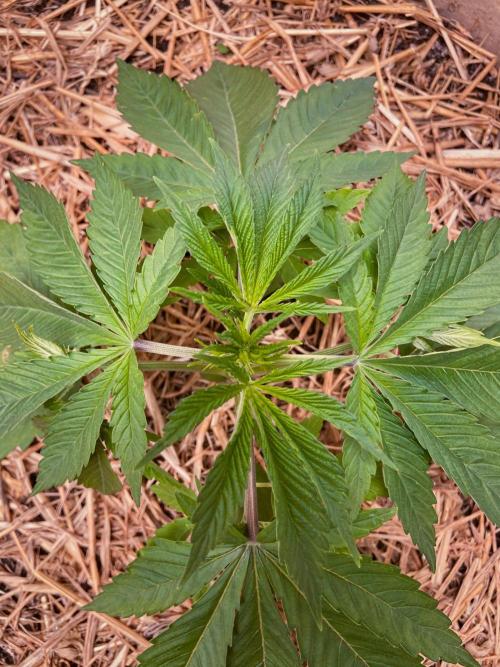
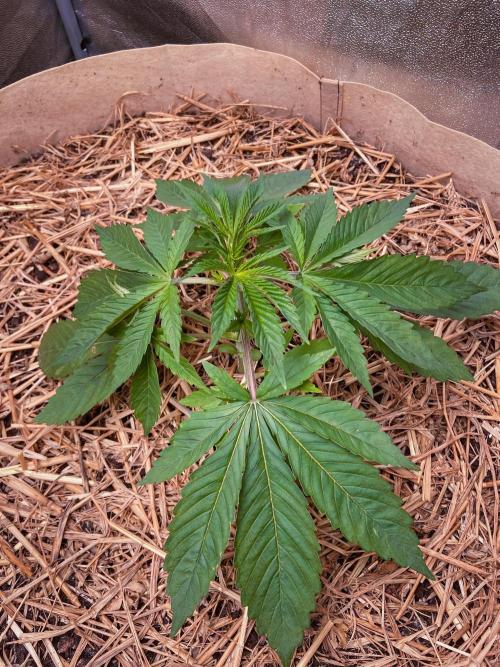
ElNass Week 3 — Days 15–21 🌱
This week the living soil finally started to “wake up”.
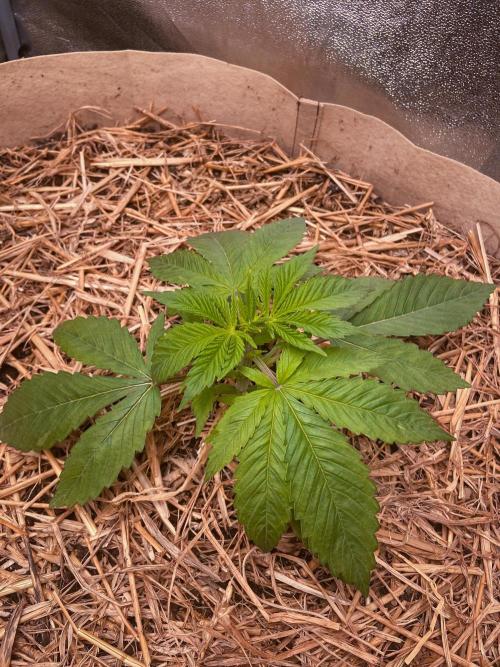
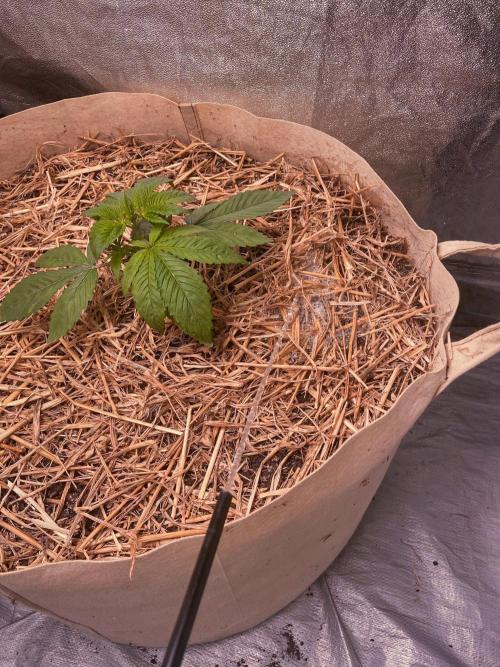
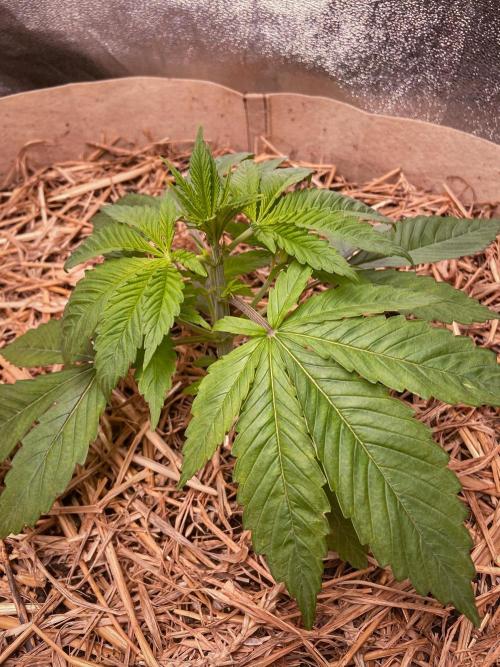
Growth noticeably accelerated compared to the previous days and the plant transitioned from seedling behavior into true vegetative development.
The root zone seems to be colonizing the container properly now, and that reflected in the overall vigor of the plant almost day by day.
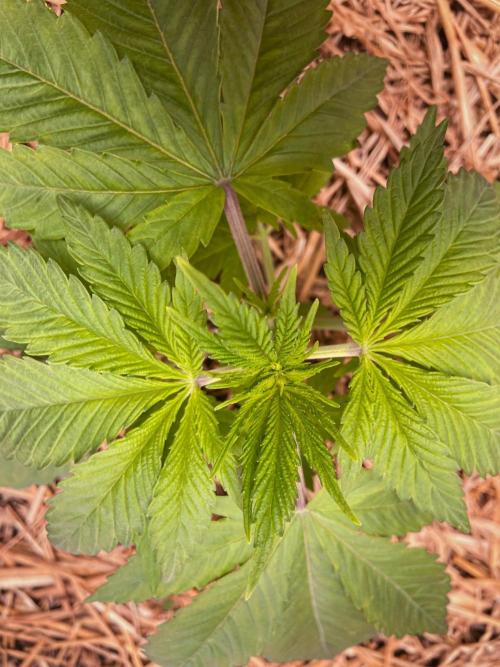
Side branches started pushing harder, internodal spacing remained tight, and the main stem thickened considerably throughout the week.
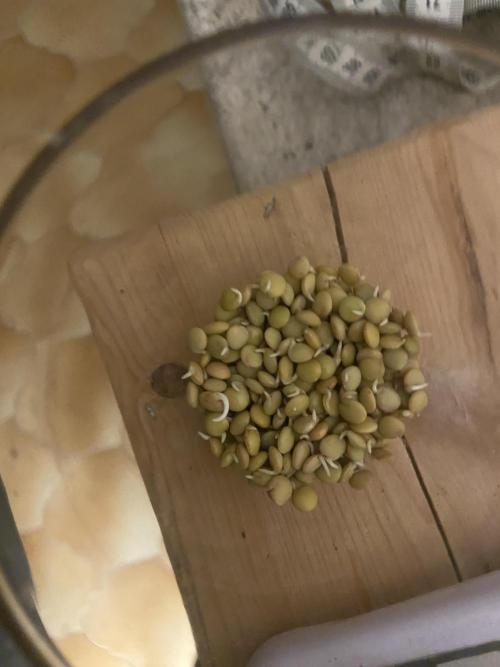
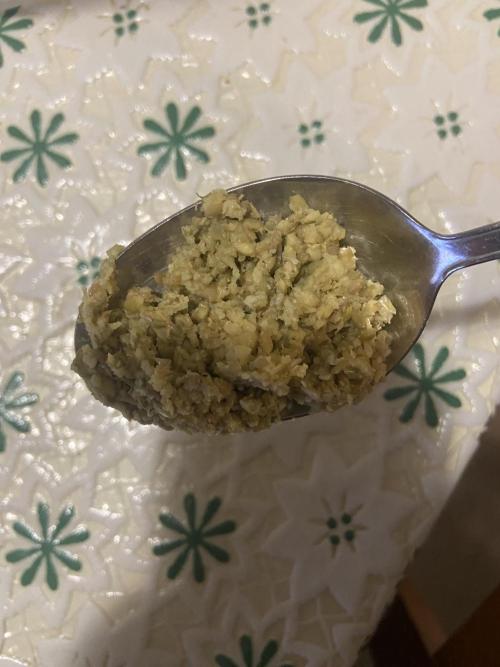
One of the most interesting moments came around day 18, when I watered with a sprouted lentil tea to introduce natural enzymes and support microbial activity in the soil food web.
The goal wasn’t explosive growth, but rather encouraging biological activity and helping the plant continue building momentum naturally.
Another very important milestone happened this week:
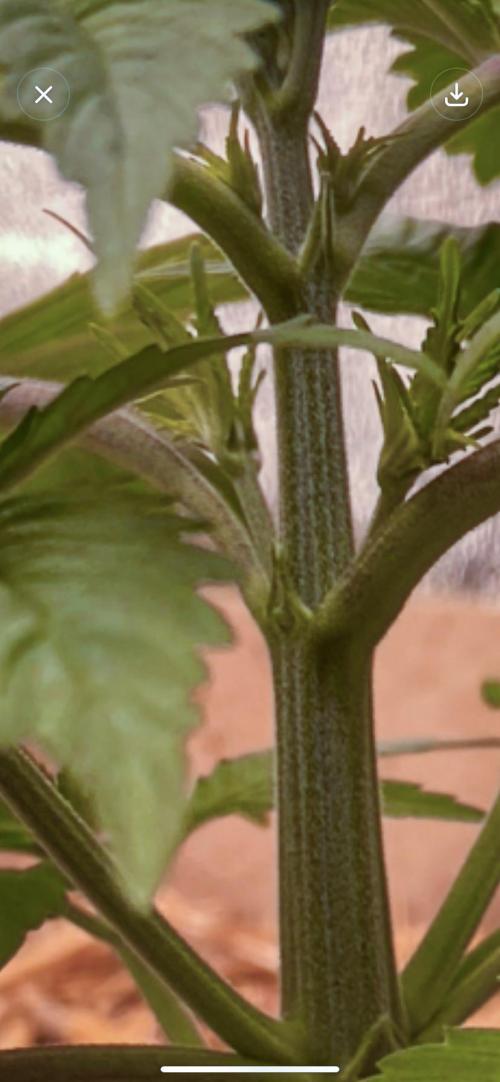
the plant started showing sex during only the third week of vegetative growth.
For me this is always one of those subtle but exciting moments in a run.
Seeing early preflowers while the plant is still young usually tells a lot about vigor, maturity, and how comfortably the plant is settling into its environment.
It feels like the moment where the plant stops being “just a seedling” and begins expressing its real genetic identity.
After that, growth remained very balanced:
* broader leaves
* stronger lateral branching
* healthier posture during lights on
* noticeably thicker petioles and stem structure.
The mulch layer is also performing really well.
Moisture retention has been stable and the soil biology seems increasingly active beneath the surface.
By day 20–21 the plant started revealing its future architecture much more clearly.
Several future tops are already visible and the branching pattern looks very promising for future training.
Coloration stayed healthy overall:
deep green mature leaves combined with vibrant lime-green new growth, which is something I always enjoy seeing in living soil during active establishment.
A few older leaves show tiny cosmetic marks but nothing concerning.
New growth is clean, vigorous, and developing quickly.
In the final pictures of the week the leaves may appear slightly droopy, but those shots were taken just a few minutes before lights off, so the plant was already entering its nighttime resting posture.
For now I’m still avoiding unnecessary stress and simply observing how the plant communicates through posture, rhythm, and structure.
This stage is probably one of my favorites in organic growing.
Nothing looks dramatic yet, but underground the entire ecosystem is beginning to establish itself and that quiet transition always feels special.
“Living soil speaks slowly.” 🌱
70 likes
9 comments
Share
4
Week 4. Vegetation5mo ago

22 cm
Height
18 hrs
Light Schedule
27 °C
Day Air Temp
No Smell
Smell
65 %
Air Humidity
24 °C
Solution Temp
24 °C
Substrate Temp
21 °C
Night Air Temp
113 liters
Pot Size
1 liters
Watering Volume
30 cm
Lamp Distance
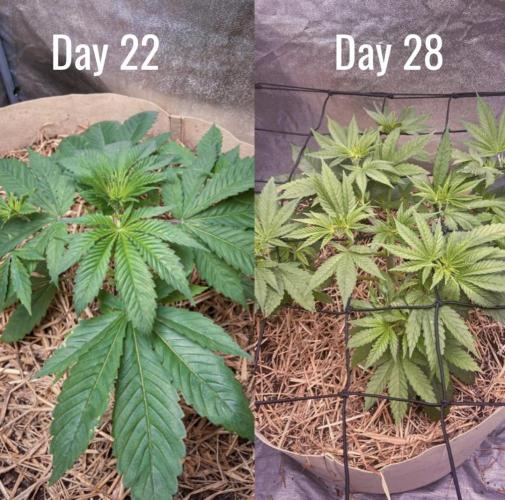
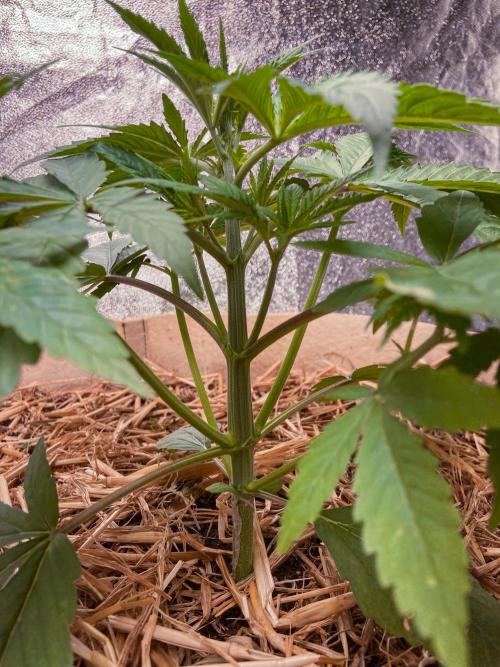
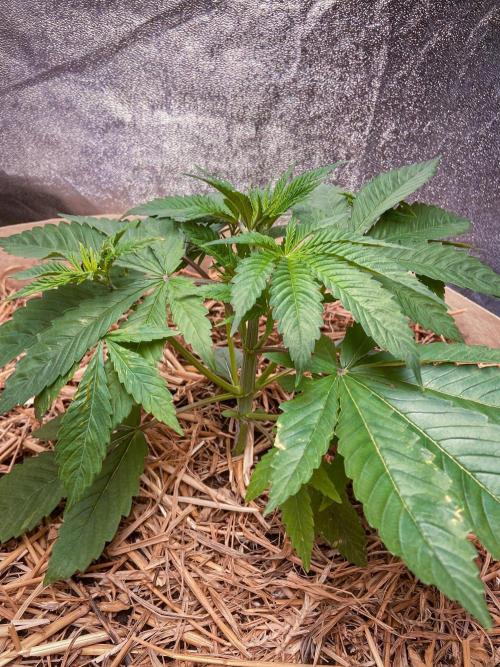
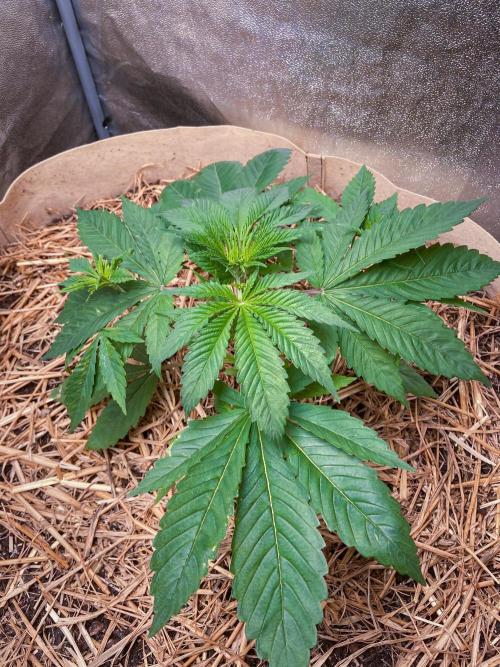
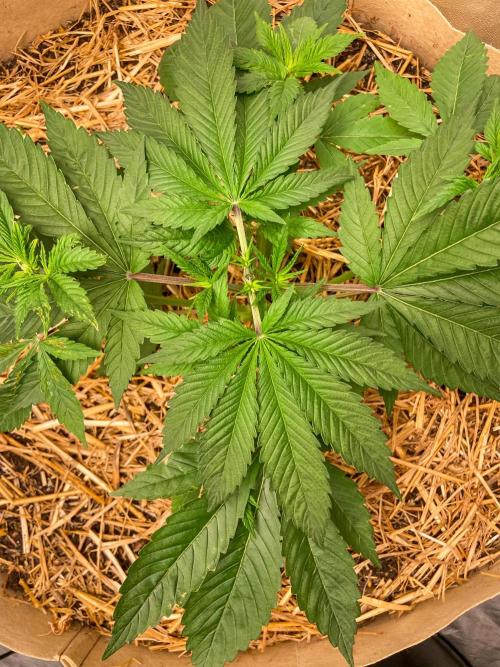
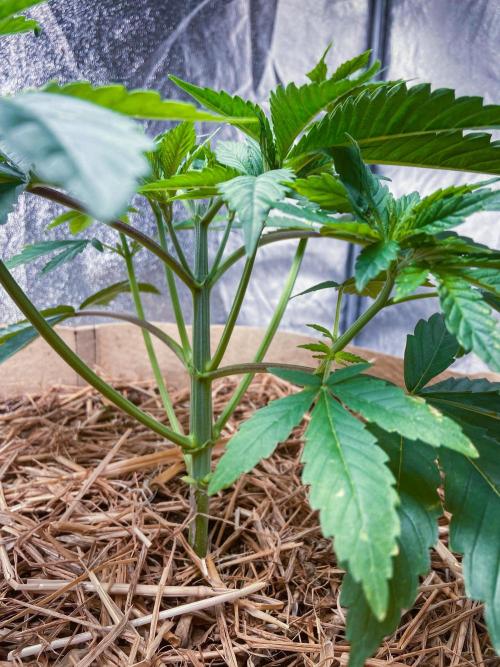
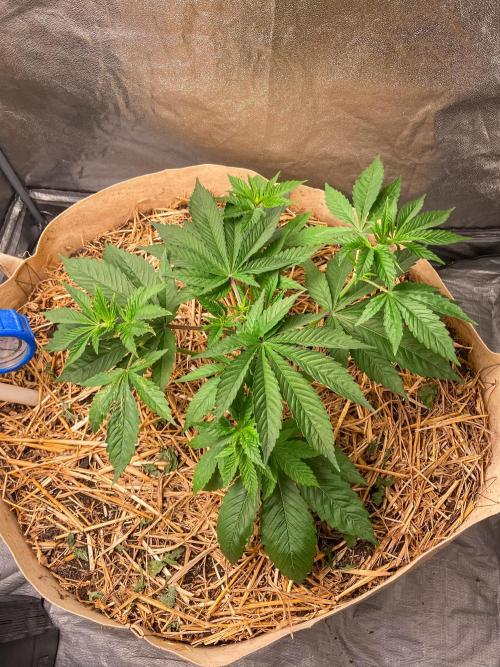
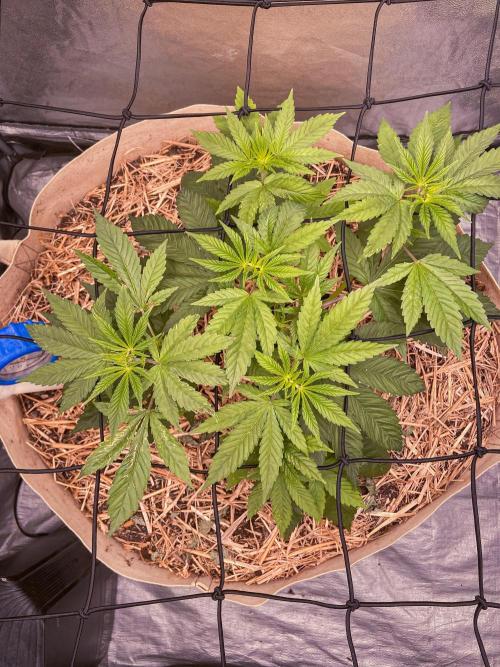
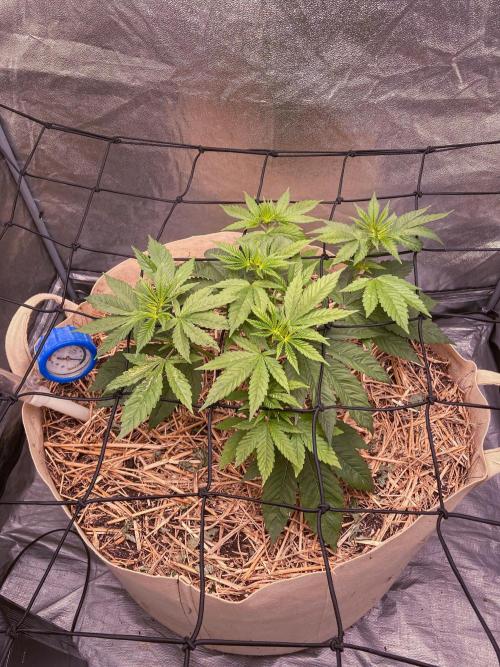
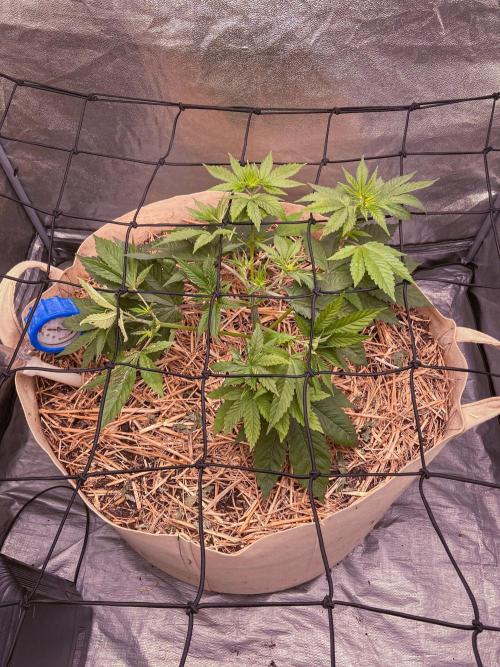
ElNass Week 4 — Days 22–28 🌱
This week was probably the most “living soil” week so far.
Not because everything went perfectly, but because the plant started forcing me to actually read her instead of just feeding and watering blindly.
The goal this week was simple:
build structure, start the SCROG properly, and keep the biology active inside the 113L bed.
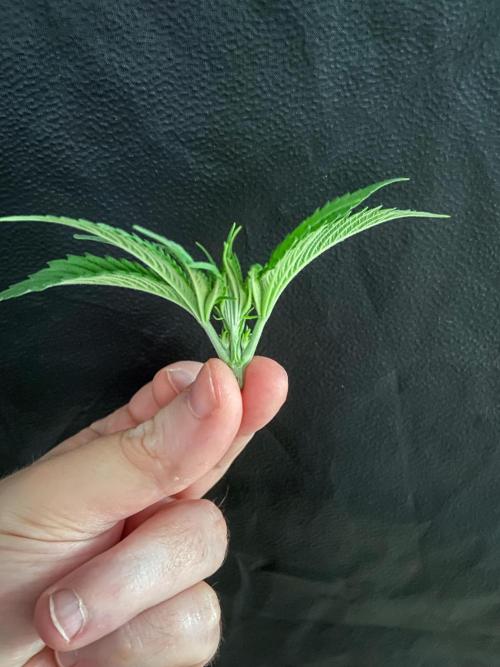
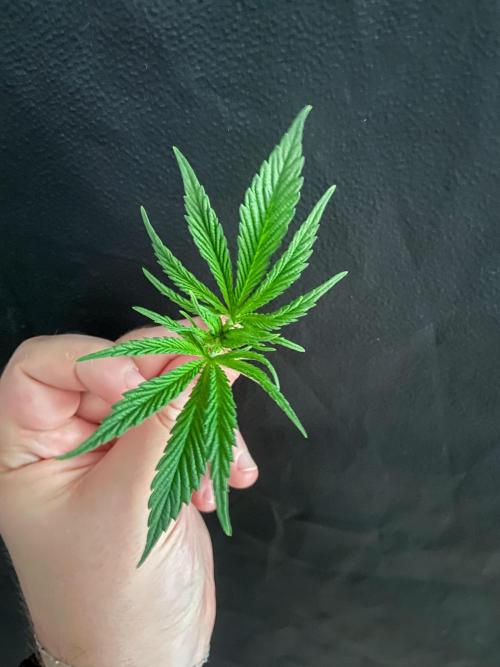
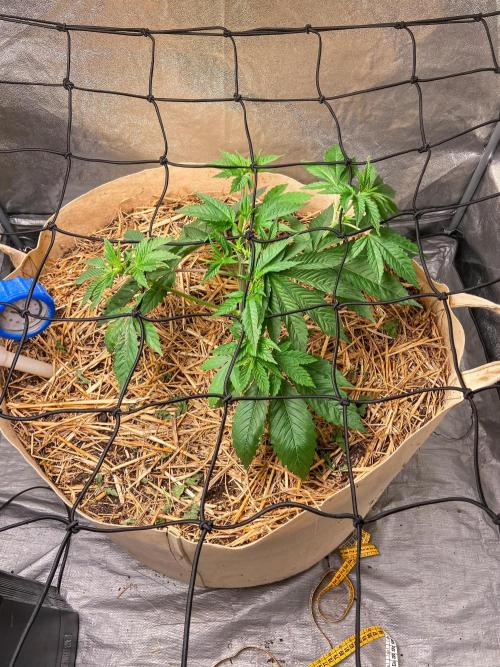
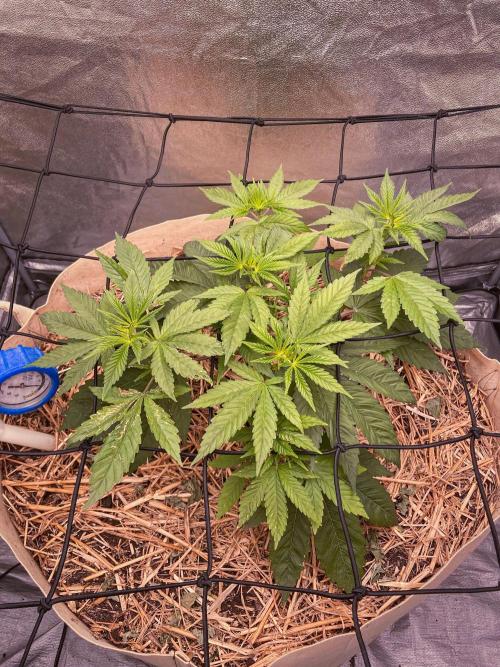
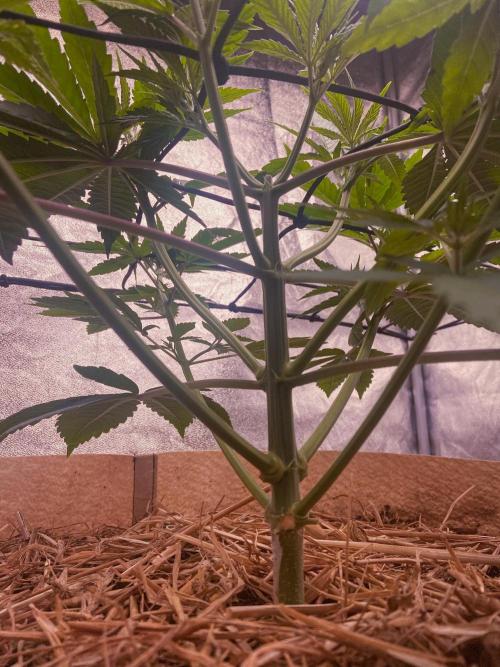
Day 23 — Topping ✂️
I decided to top her to create a wider and more controllable structure for the net.
The plant responded surprisingly well: vigorous growth, tight internodes, and thick branching already showing just a couple days later.
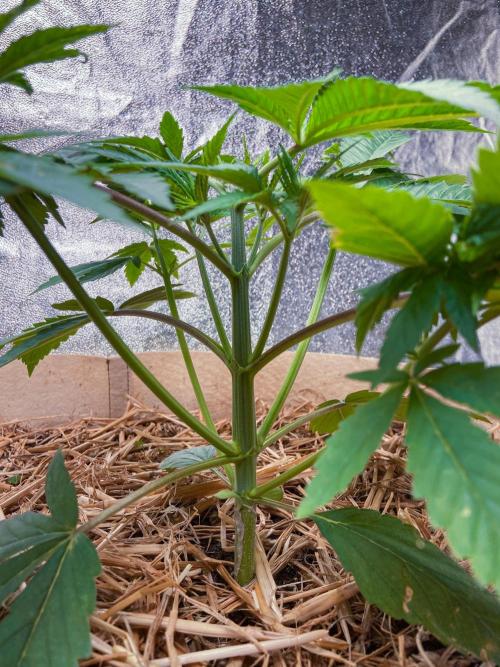
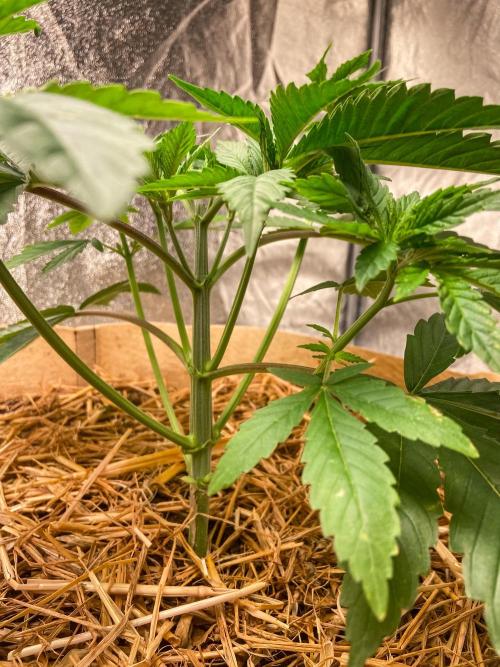
One thing I’m really liking about this run is how sturdy the structure is becoming.
The stem is already thick for day 28 and the side branches are growing symmetrically, which makes training much easier.
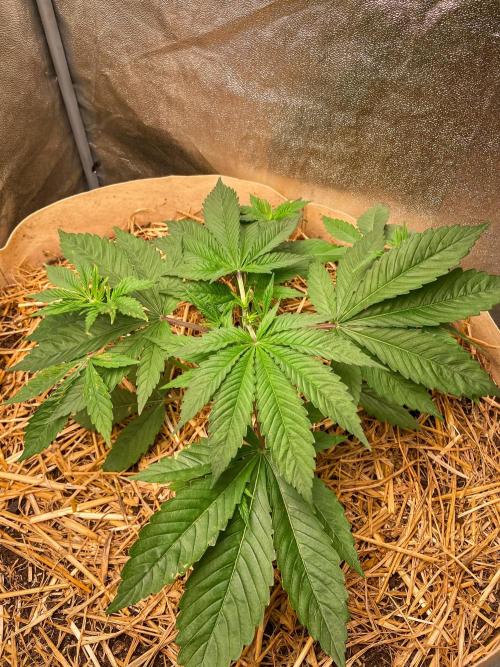
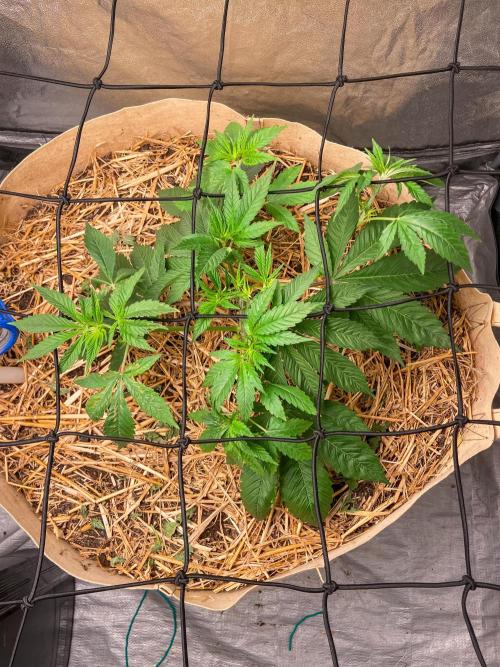
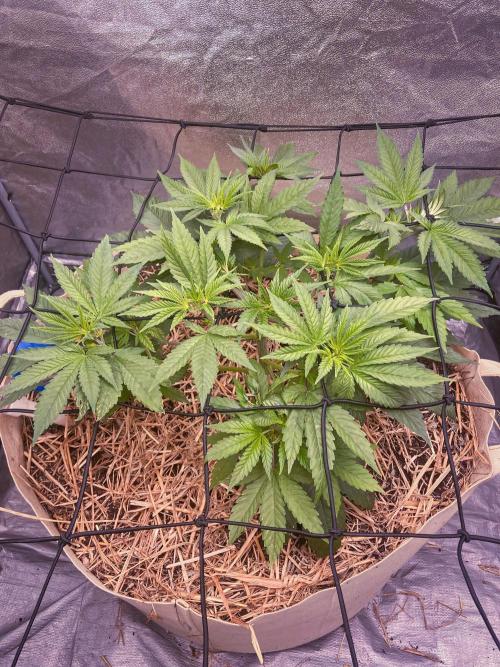
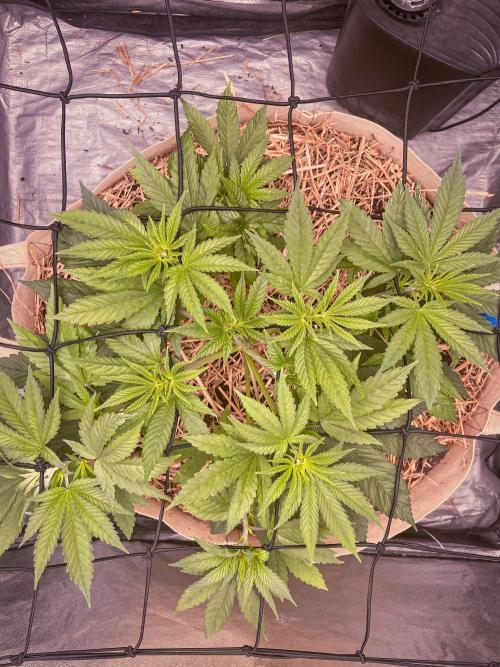
Day 24 — SCROG begins 🕸️
Installed the net and started spreading the branches horizontally to open the canopy and expose future tops evenly.
At first it always feels wrong bending a plant this much 😂
but after a few hours she already started praying back toward the light.
The idea with this run isn’t to rush vertical growth, but to slowly fill the space while maintaining airflow and keeping an even canopy before flip.
Wind burn paranoia arc 😂💨
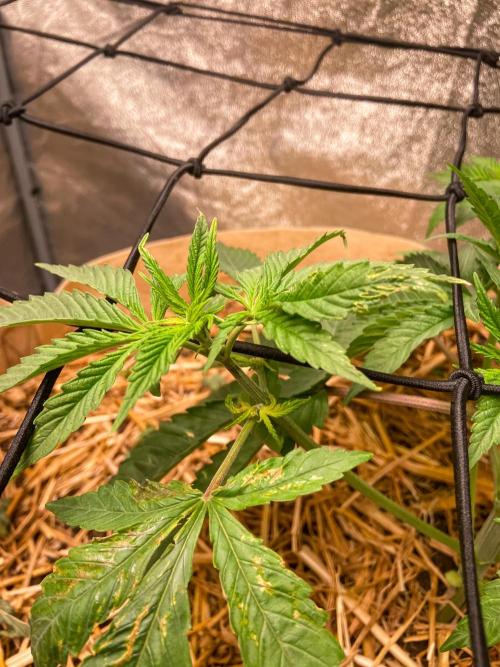
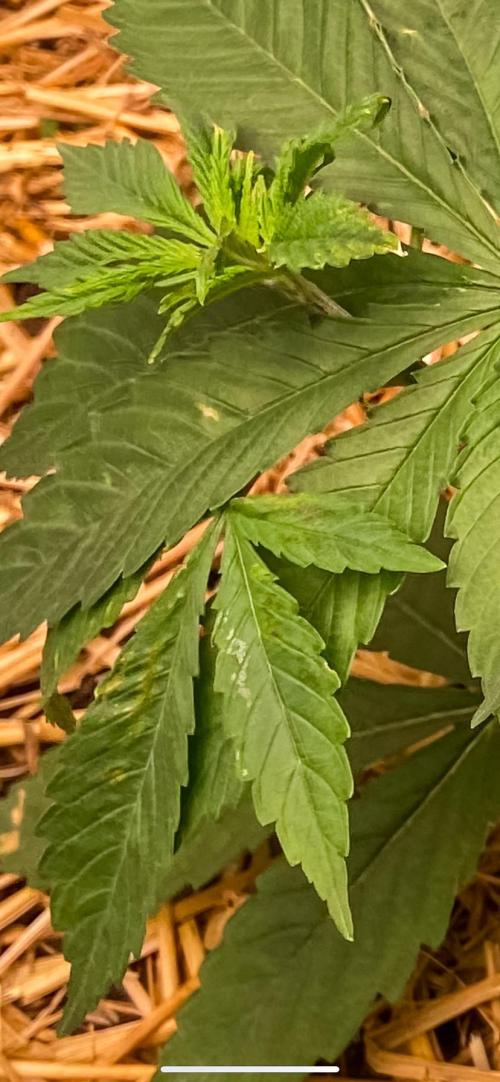
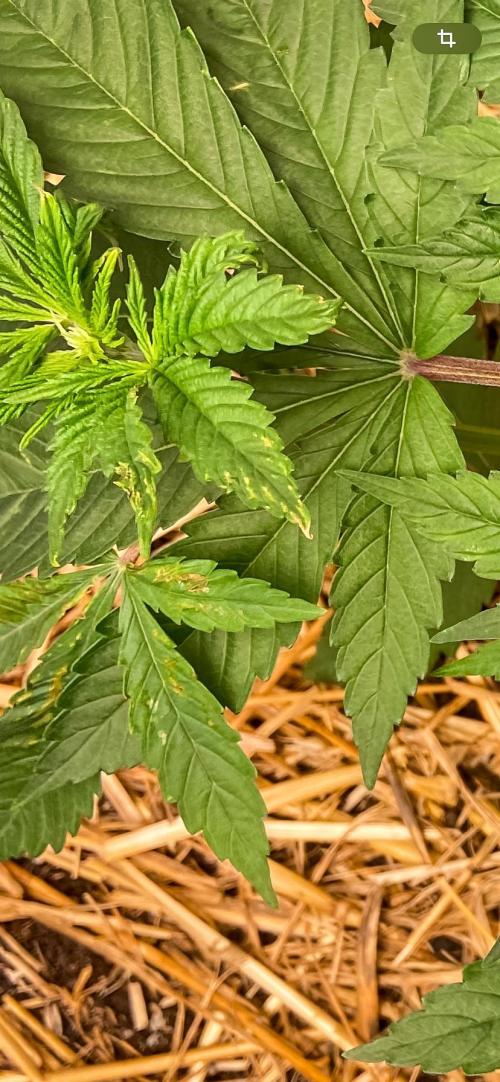
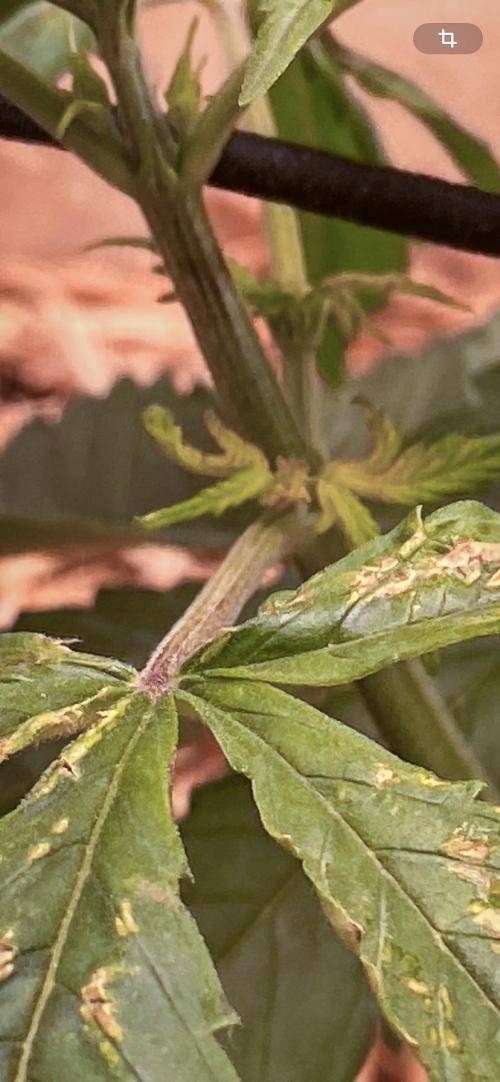
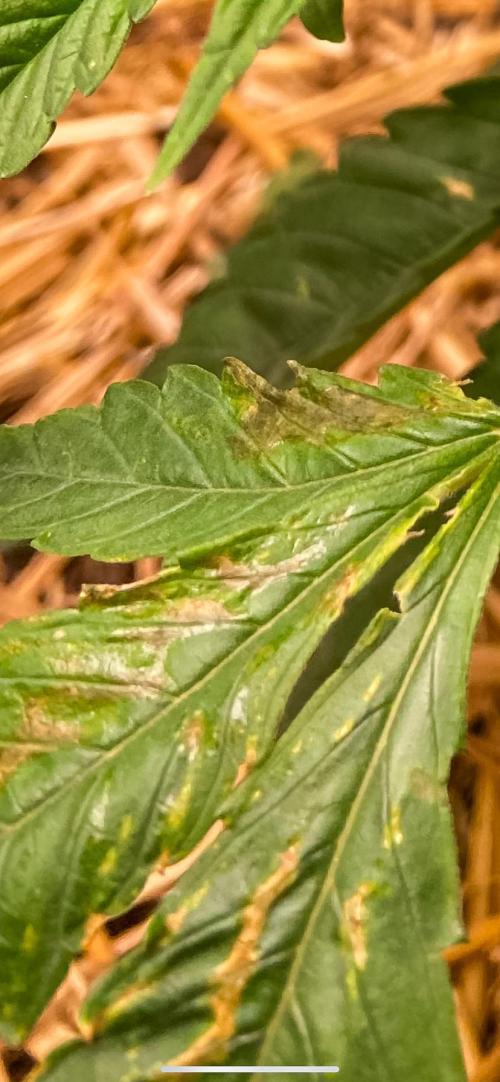
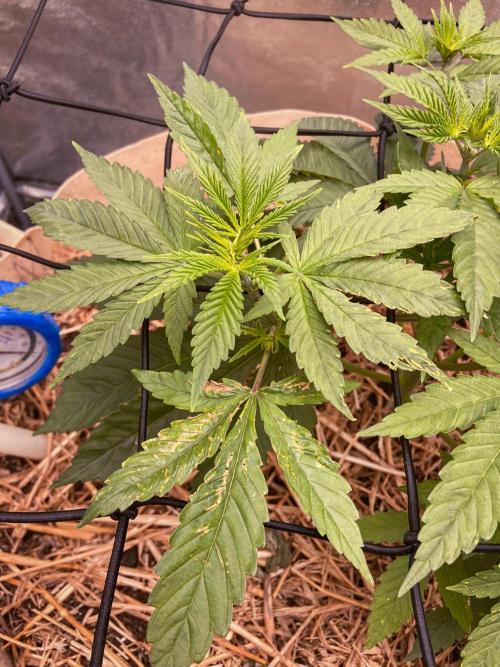
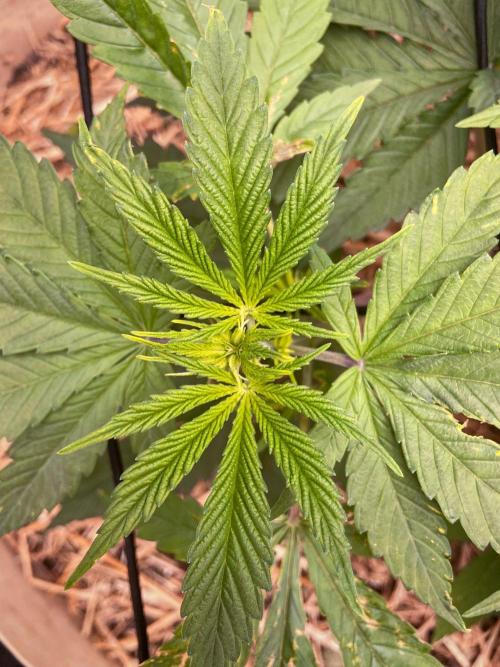
Around mid-week I started noticing strange damage on a few leaves:
* irregular yellowing,
* edge damage,
* weird marks that honestly made me paranoid about pests.
I checked undersides constantly because I was terrified of thrips or mites, but the more I monitored the plant, the more the pattern pointed toward environmental stress rather than insects.
Why?
* Damage stayed highly localized.
* Mostly older leaves directly exposed to constant airflow.
* New growth remained vigorous, symmetrical, and healthy.
* No real spreading pattern typical of pests.
* No visible colonies, eggs, or active feeding underneath leaves.
After talking with a few experienced growers and comparing symptoms, the conclusion became much more likely to be wind burn / excessive direct airflow rather than an infestation.
So I switched the fan from fixed airflow to oscillating and reduced direct blasting on the canopy.
Thankfully the issue seems stabilized now 🙏
Honestly this was a good reminder that sometimes over-monitoring makes you more paranoid than the plant itself 😂
Day 27 — Humus under the mulch ?
Since this is a living soil run, I wanted to focus less on “feeding the plant” and more on feeding the soil food web.
So on day 27 I added worm castings/humus directly under the straw mulch layer and watered afterward to help reactivate microbial life in the top zone.
No complicated tea this time, just simple biology.
The cool thing is that by the next day the plant already looked happier:
* better leaf posture,
* stronger turgor,
* healthier overall color,
* vigorous new growth continuing.
That’s one of the things I love about larger living soil containers:
when the biology is working, even simple inputs can have a noticeable effect.
End of Week 4 thoughts 🌿
This week wasn’t about explosive growth or flashy flowers.
It was about understanding the plant better.
Learning the difference between:
* actual deficiencies vs environmental stress,
* reacting vs overreacting,
* feeding nutrients vs supporting biology.
And honestly, that’s the part of growing I enjoy the most. 💚
63 likes
22 comments
Share
Used techniques
LST
Technique
ScrOG
Technique
Topping
Technique
5
Week 5. Vegetation5mo ago


22 cm
Height
18 hrs
Light Schedule
27 °C
Day Air Temp
No Smell
Smell
60 %
Air Humidity
24 °C
Solution Temp
24 °C
Substrate Temp
21 °C
Night Air Temp
113 liters
Pot Size
1 liters
Watering Volume
30 cm
Lamp Distance
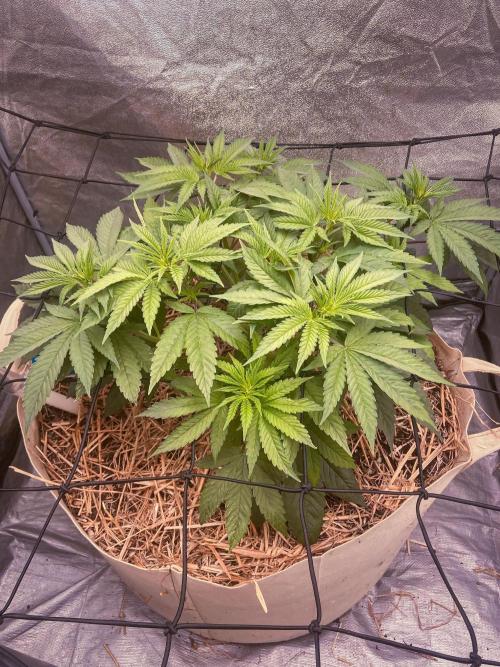
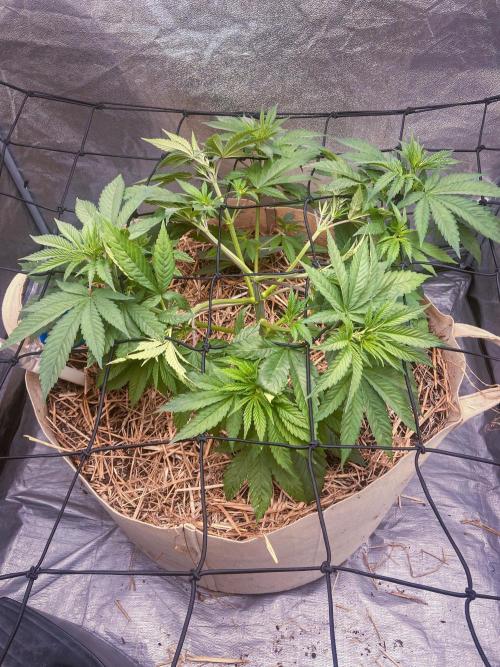
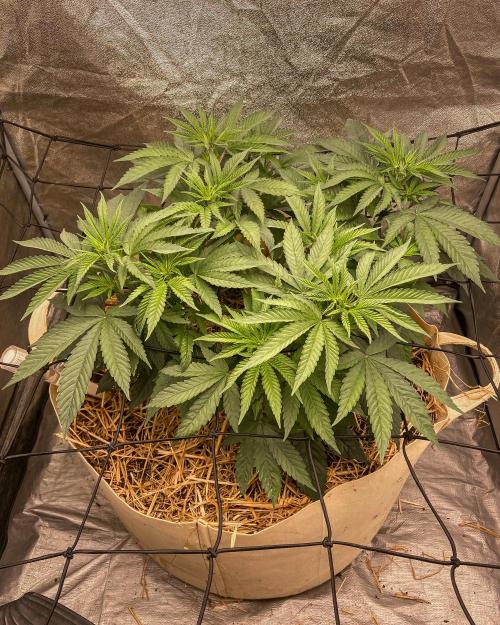
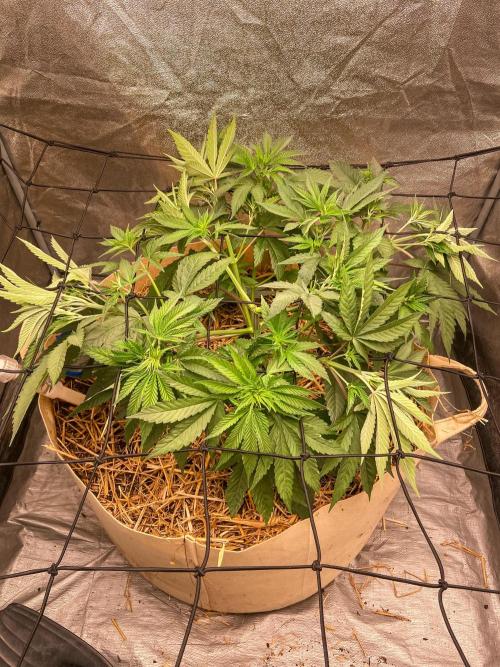
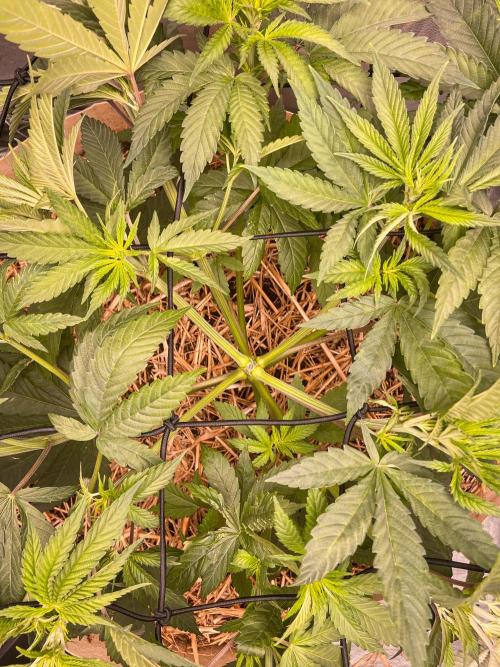
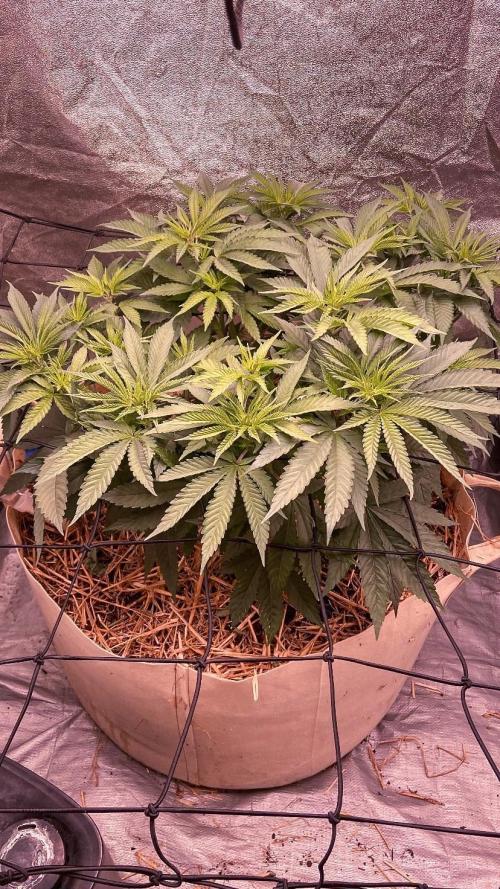
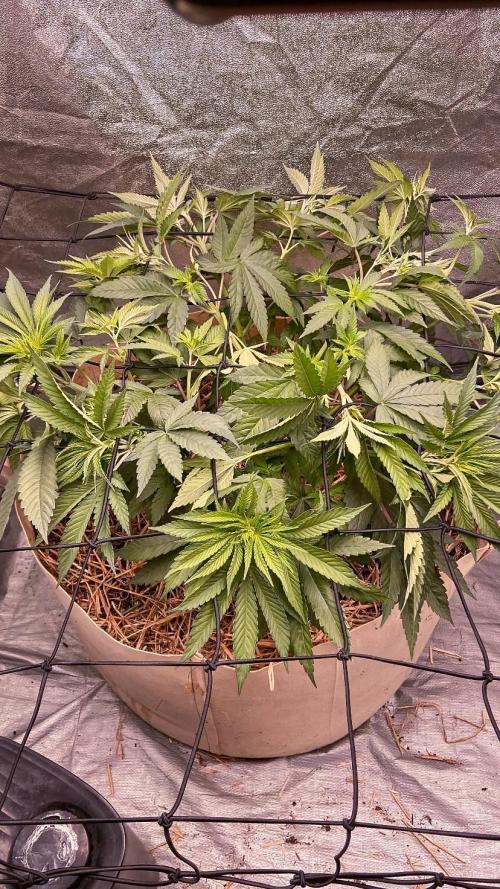
ElNass Week 5 – End of Veg / Flip to 12-12 🌱🔥
This week was shorter than usual (day 29–33) because I decided to switch to 12/12 at the end of it after seeing how aggressively the canopy was developing.
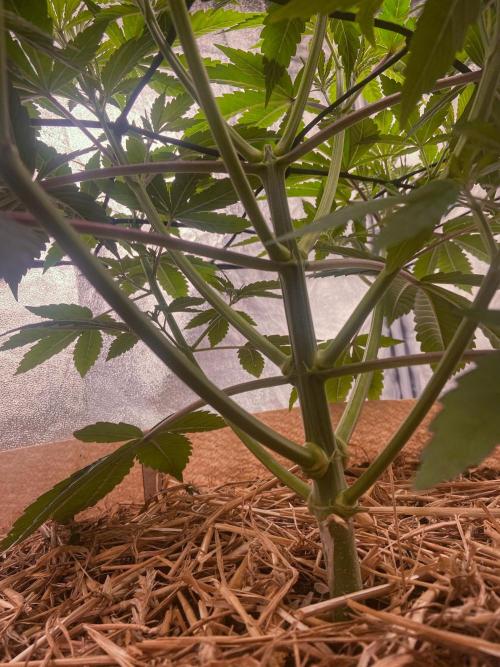
The Fruity Durban by Serious Seeds responded incredibly well to the topping and SCROG work from the previous week. Over these last few days the lateral branches exploded with growth and the canopy became noticeably fuller and more symmetrical every day.
Main focus this week:
* continuous SCROG training and top redistribution
* opening the center for better airflow/light penetration
* maintaining an even canopy without heavy defoliation
* monitoring the suspected “wind burn” issue daily
After multiple inspections I’m now almost fully convinced the issue was environmental stress rather than pests, since the damage stayed localized while the new growth remained vigorous and symmetrical.
I also noticed a pretty significant increase in water consumption this week. She suddenly started drinking much more aggressively, which feels like another sign the 113L living soil bed is really coming alive now after adding fresh worm castings under the straw mulch earlier in veg.
I don’t think this will end up being a “true” SCROG though. Normally I’d wait until ~70% of the net is filled before flipping so the stretch can occupy the remaining space, but with this run I honestly think the yield would become excessive for my situation 😂
So once I reached a structure I was reasonably happy with, I decided it was time to flip her into flower.
Environmental conditions stayed relatively stable overall:
* ~26.9–27.6°C
* 51–60% RH
* VPD roughly between 1.42–1.81
* PPFD around ~630
Really excited to see how she behaves during stretch now 🌱🔥
58 likes
5 comments
Share
Used techniques
LST
Technique
ScrOG
Technique
6
Week 6. Flowering5mo ago


57 cm
Height
12 hrs
Light Schedule
30 °C
Day Air Temp
No Smell
Smell
65 %
Air Humidity
24 °C
Solution Temp
24 °C
Substrate Temp
24 °C
Night Air Temp
113 liters
Pot Size
1 liters
Watering Volume
30 cm
Lamp Distance
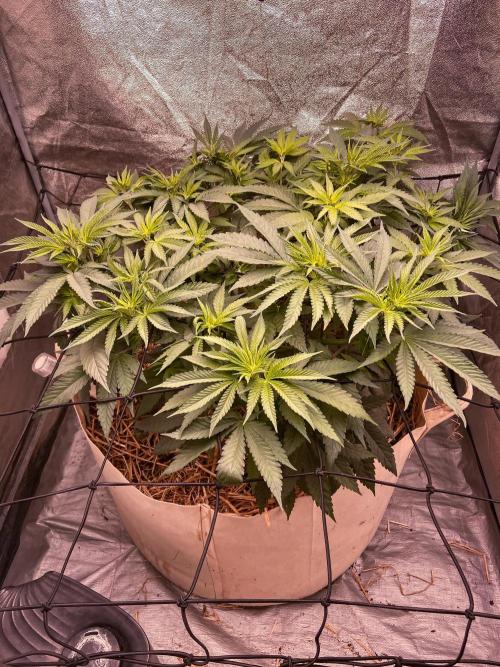
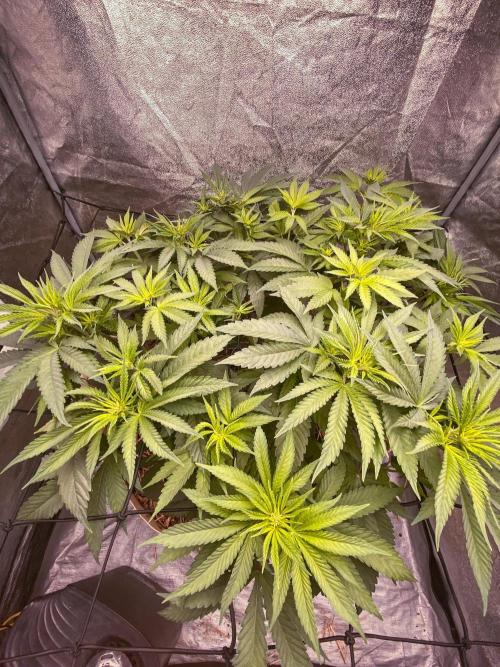
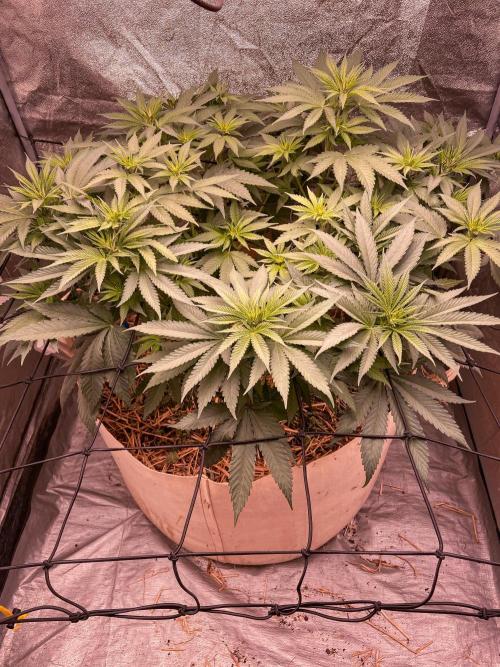
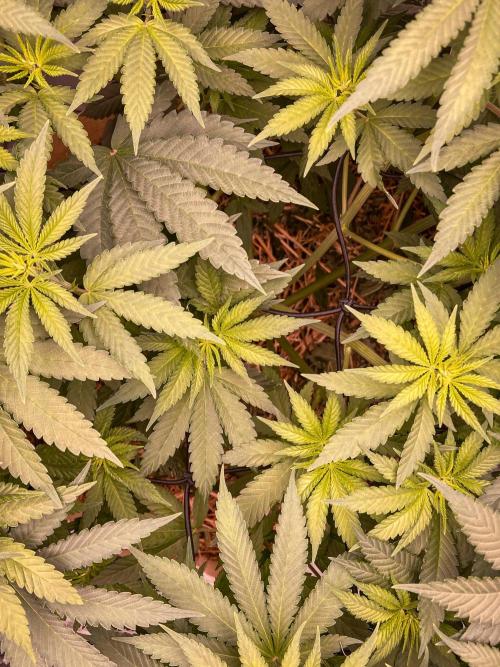
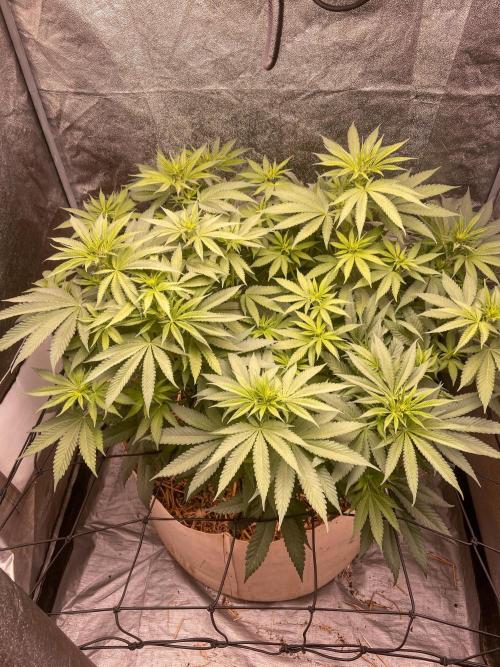
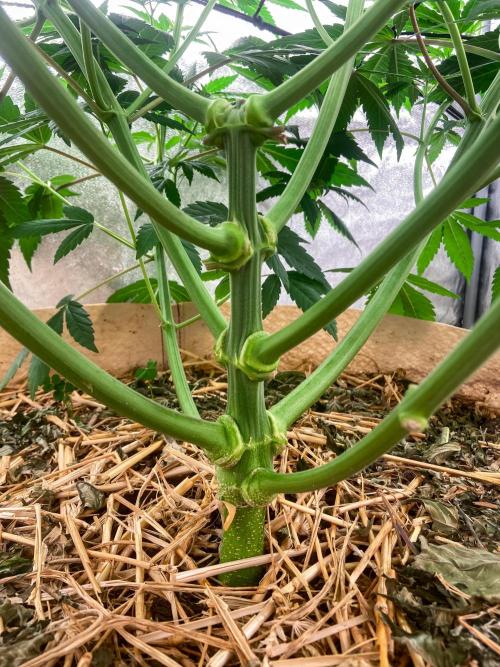
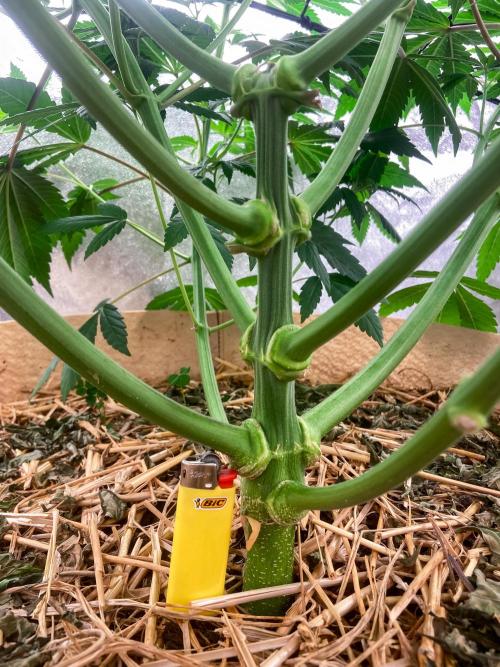
ElNass Week 1 Flower (Days 1–7)
The first week of flowering has been completed and the transition to 12/12 has progressed without major issues.
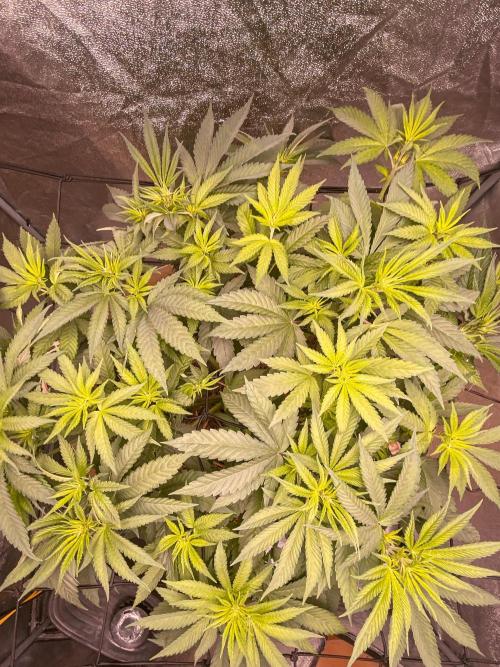
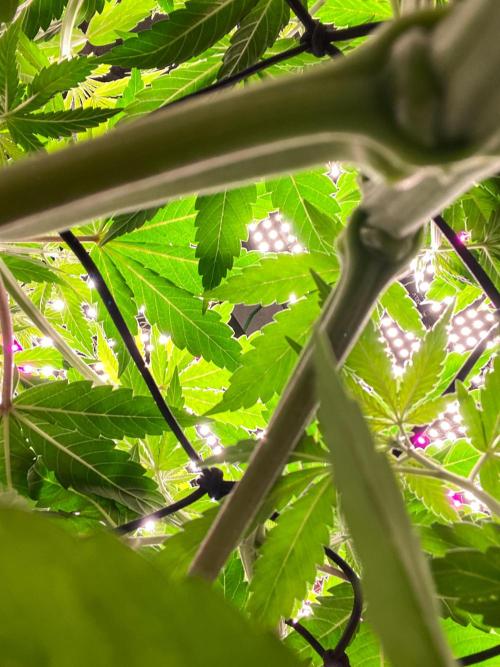
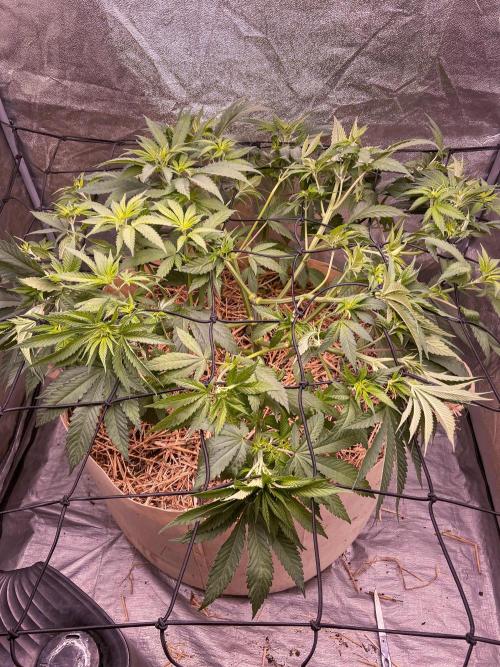
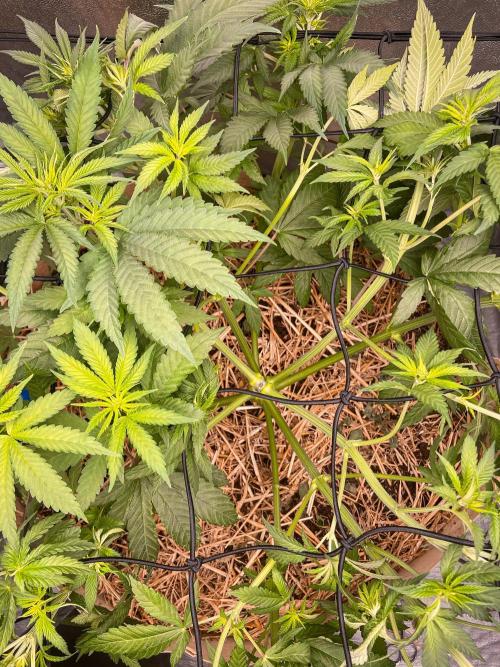
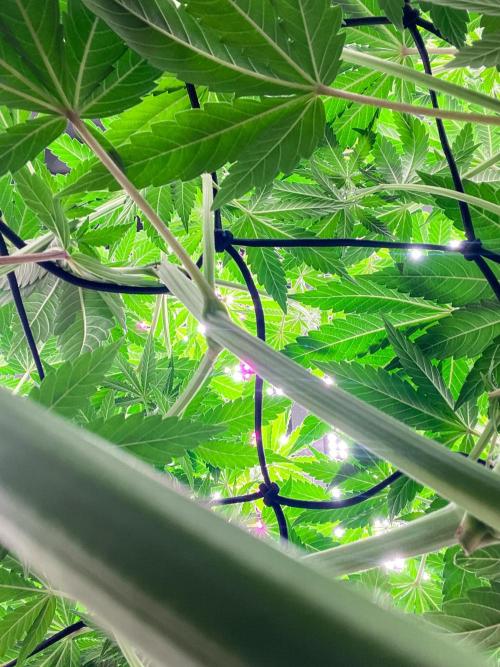
Following the photoperiod change, the main objective was to maintain canopy uniformity while allowing the plant to begin its natural stretch. During the first days of flower, several adjustments were made to the SCROG structure in order to improve light distribution and maintain adequate spacing between future flowering sites.
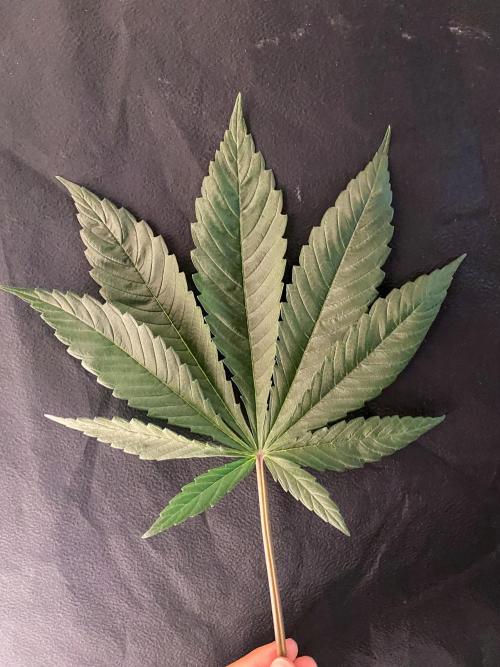
A moderate defoliation was also performed to:
* improve airflow through the center of the canopy;
* increase light penetration to secondary growth sites;
* reduce leaf congestion before the onset of rapid stretch.
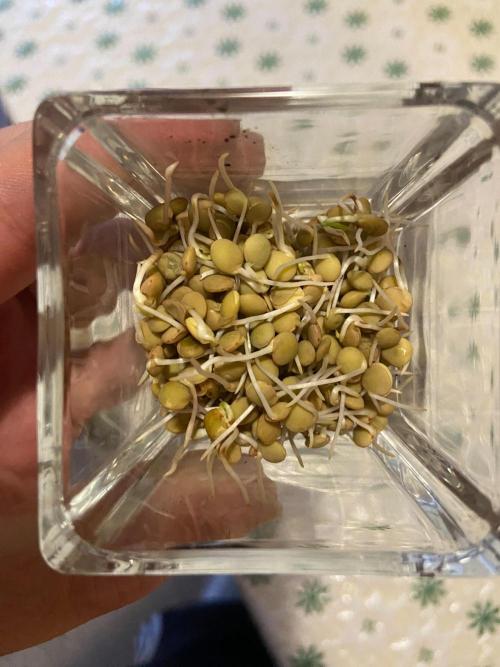
To support the transition into flowering and stimulate biological activity within the living soil system, an enzyme tea prepared from germinated lentils was applied on Day 2 of flower. Germinated lentils are naturally rich in enzymes and growth-promoting compounds, making them a useful input during periods of rapid development such as the onset of stretch.
The canopy responded positively to both training and defoliation, showing no visible signs of growth stagnation or excessive stress. New growth remained vigorous throughout the week and branch elongation accelerated significantly compared to late vegetative growth.
One of the most notable observations was the substantial increase in water consumption. This increase appears to be associated with both the onset of the flowering stretch and the elevated temperatures experienced during the week. As transpiration increased, irrigation frequency required closer monitoring to prevent excessive substrate drying.
Environmental conditions remained relatively stable overall, although temperatures reached 30°C for the first time this season. Since no supplemental CO₂ is being used, environmental management will likely become increasingly important throughout the coming weeks.
As canopy height increased during stretch, PPFD values on the highest tops reached approximately 1600 μmol·m⁻²·s⁻¹. To reduce the risk of unnecessary light stress, fixture intensity was adjusted and canopy PPFD was returned to approximately 980–1100 μmol·m⁻²·s⁻¹.
Week 1 Observations
* Rapid initiation of flowering stretch.
* Significant increase in transpiration and water demand.
* Strong recovery following training and defoliation.
* Healthy leaf coloration and morphology.
* Continued thickening of primary and secondary stems.
* No significant signs of nutrient deficiency, toxicity, or environmental stress.
Overall, Fruity Durban continues to display exceptional vigor. The living soil system appears highly active and the plant is transitioning into flowering with a well-developed structure, strong branching, and a robust root-supported growth rate.
The next phase will focus on stretch management, canopy maintenance, and environmental control as flowering development accelerates.
53 likes
9 comments
Share
Used techniques
12-12
Technique
ScrOG
Technique
Defoliation
Technique
LST
Technique
7
Week 7. Flowering4mo ago










95 cm
Height
12 hrs
Light Schedule
30 °C
Day Air Temp
No Smell
Smell
65 %
Air Humidity
24 °C
Solution Temp
24 °C
Substrate Temp
24 °C
Night Air Temp
113 liters
Pot Size
1 liters
Watering Volume
30 cm
Lamp Distance
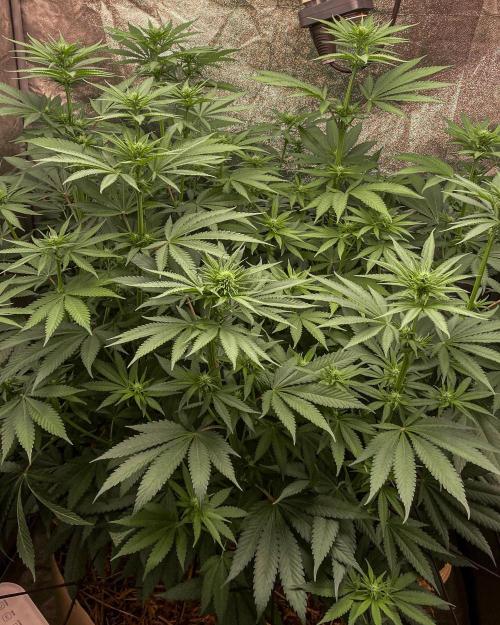
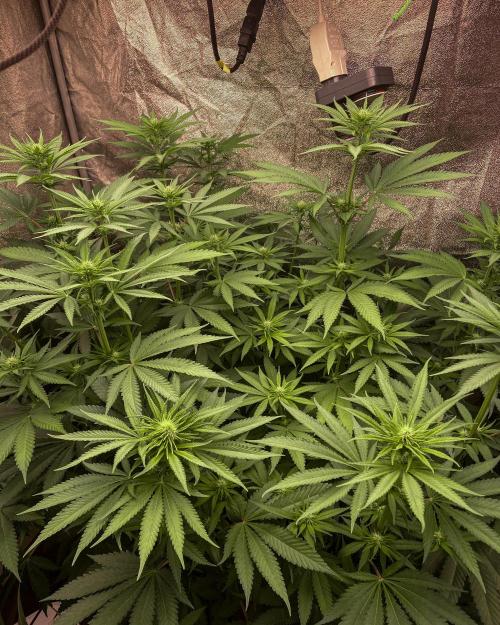
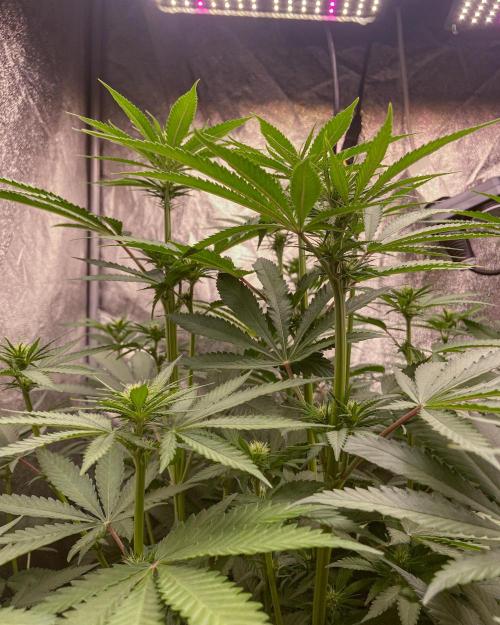
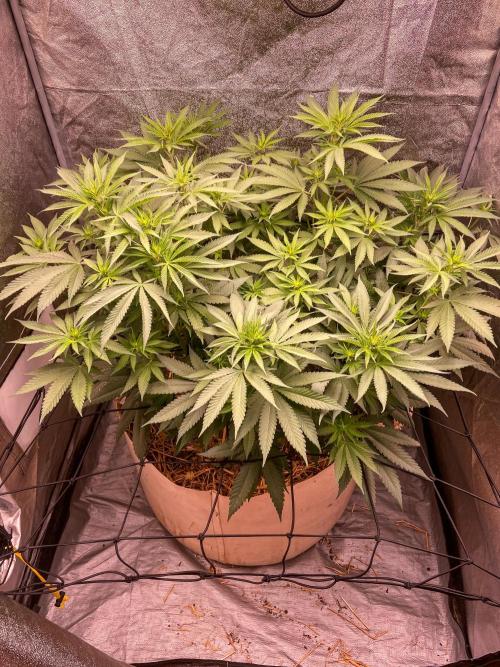
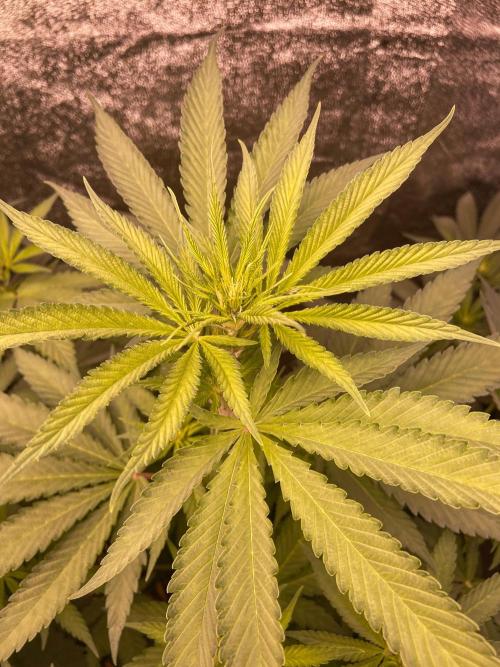
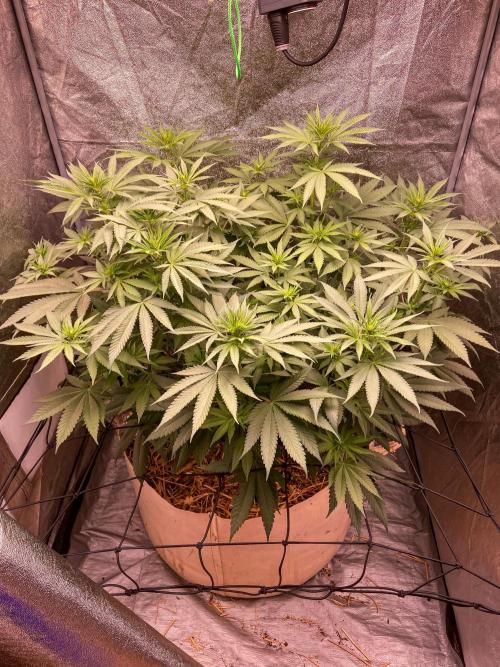
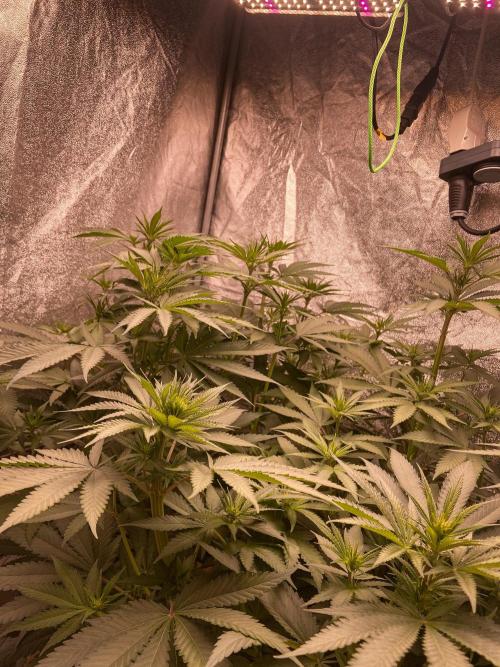
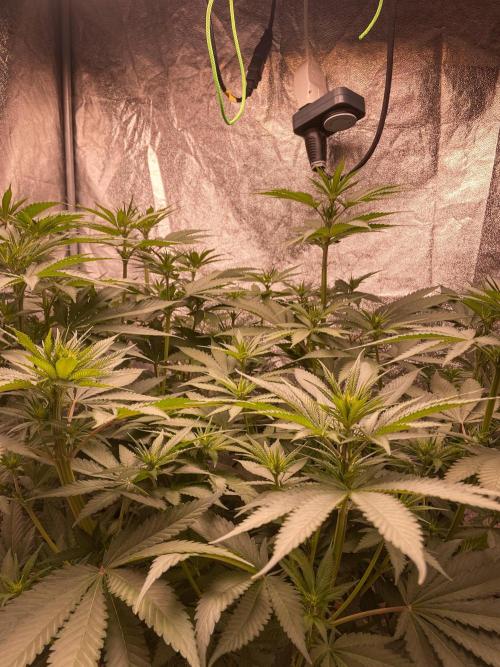
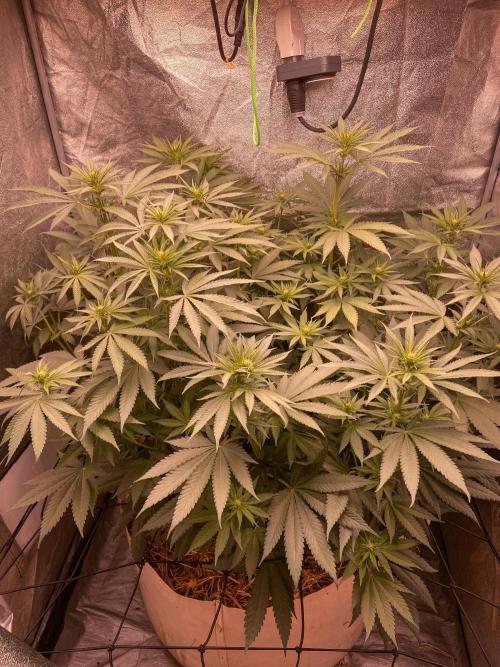
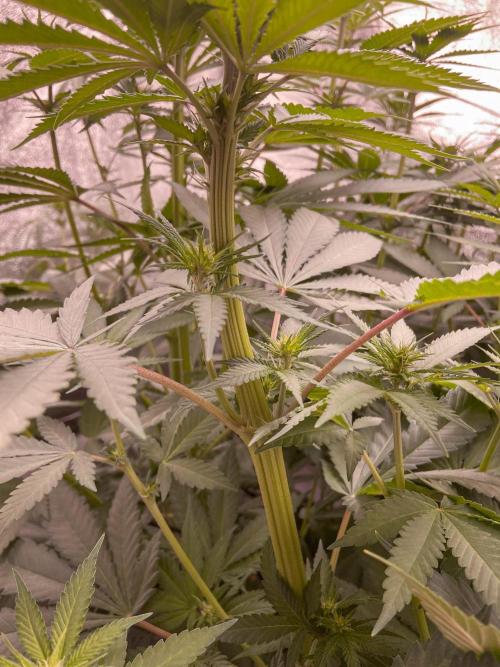
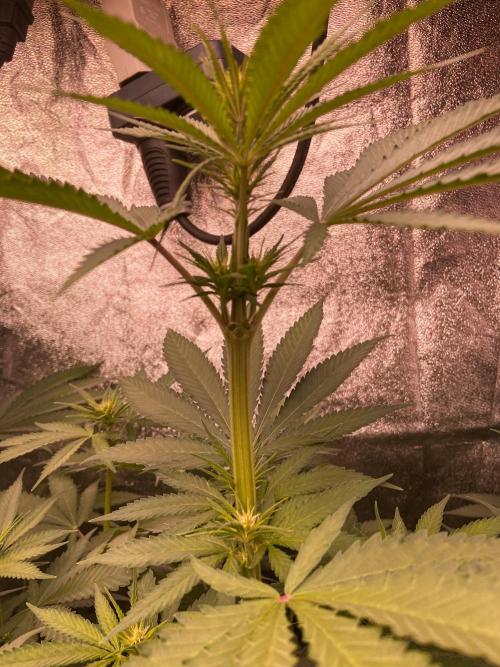
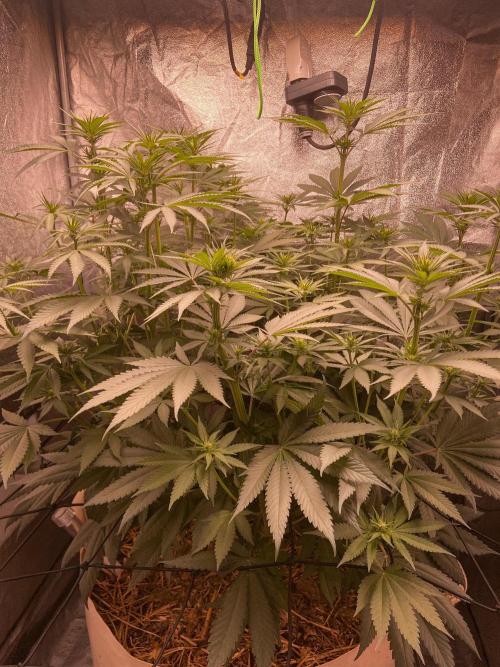
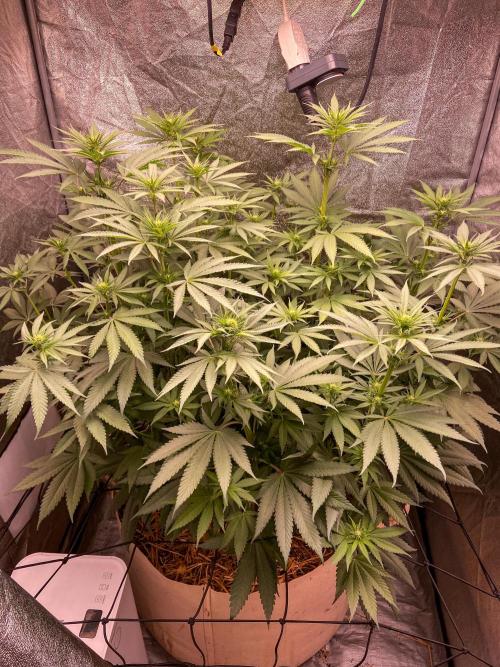
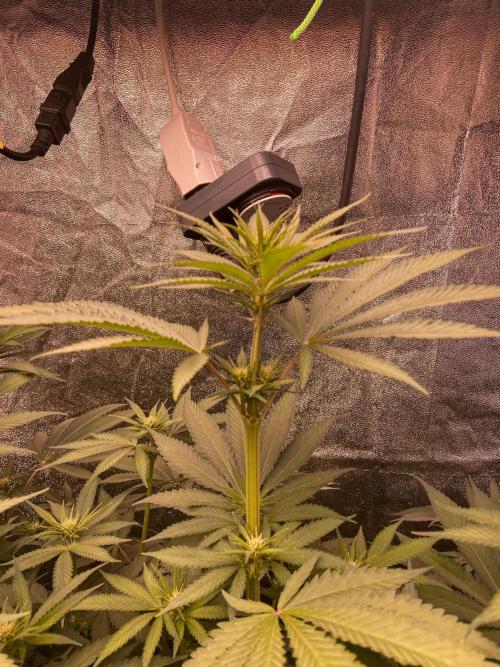
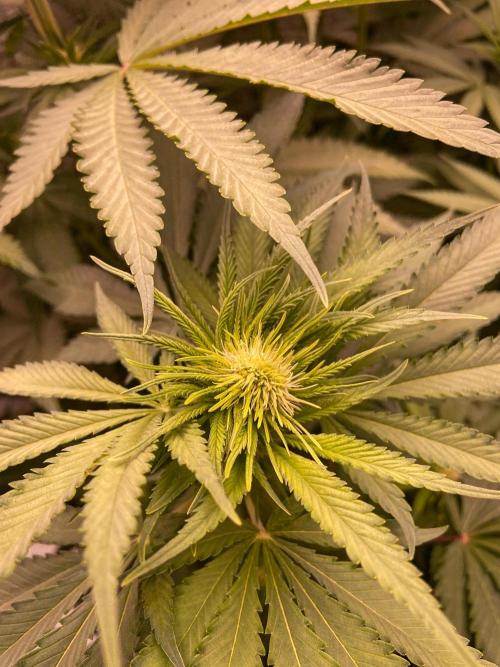
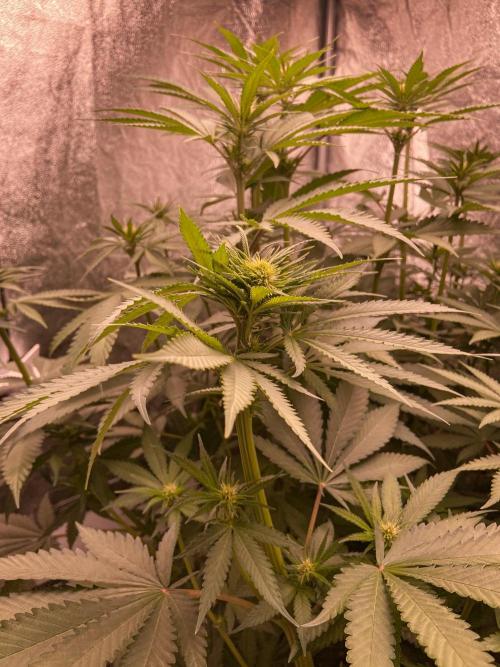
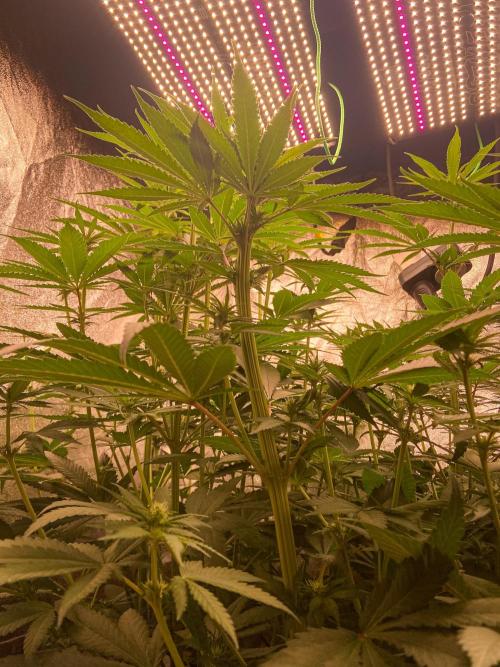
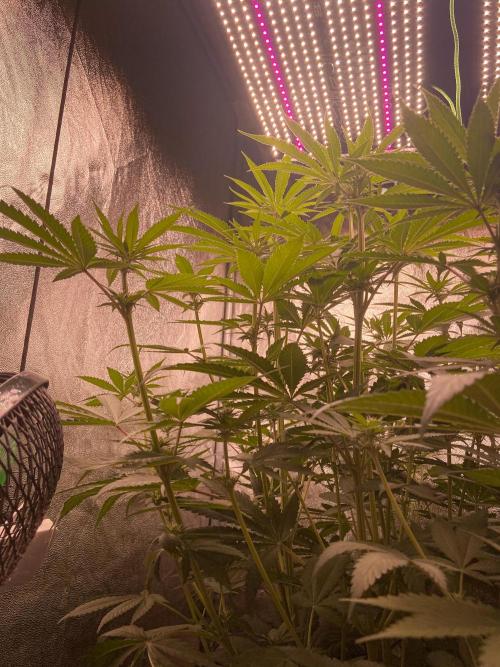
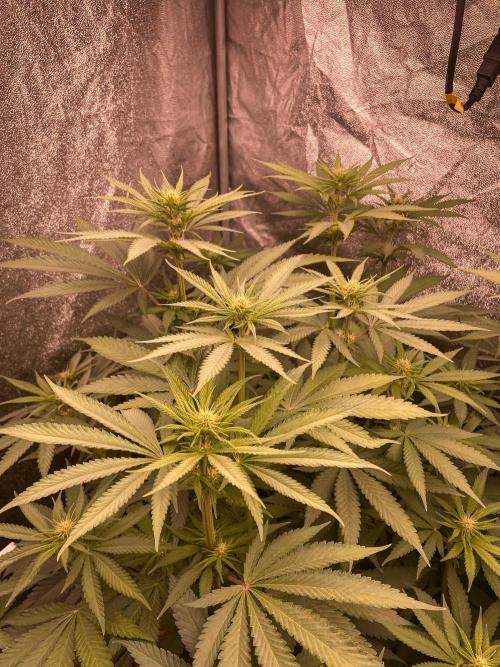
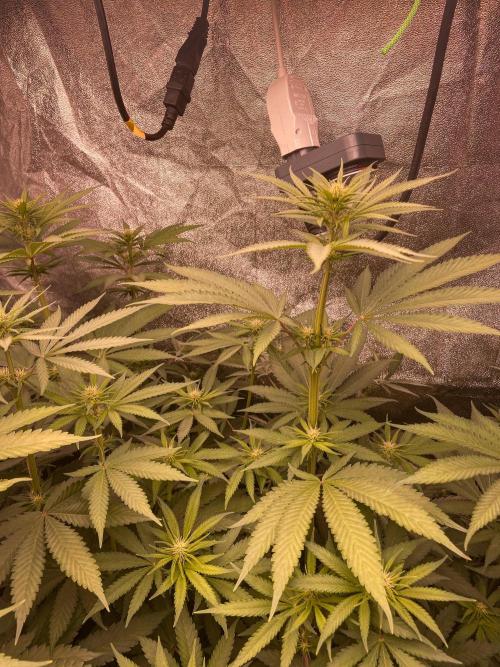
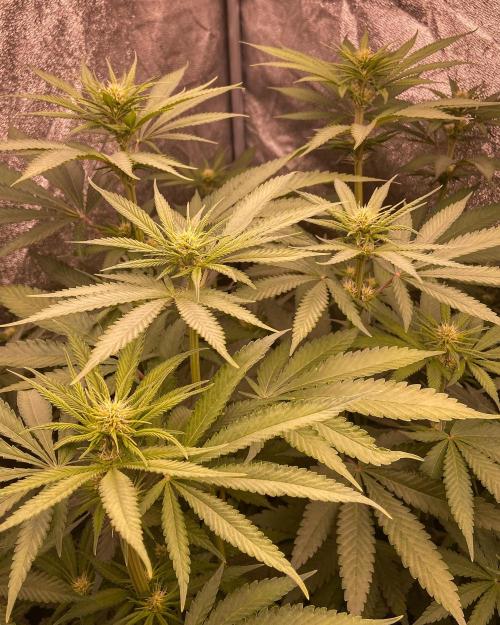
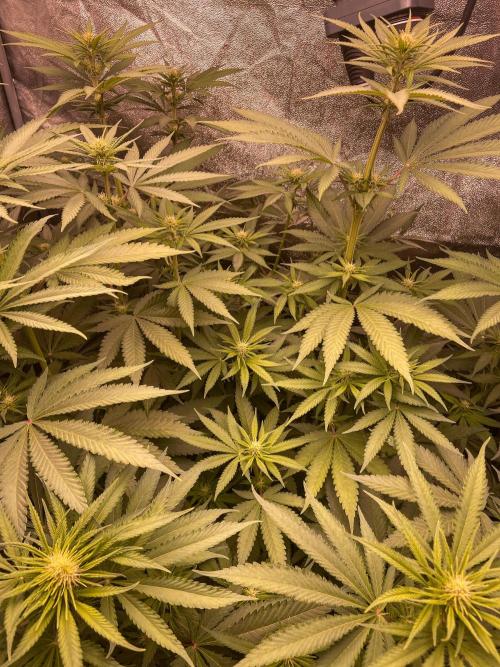
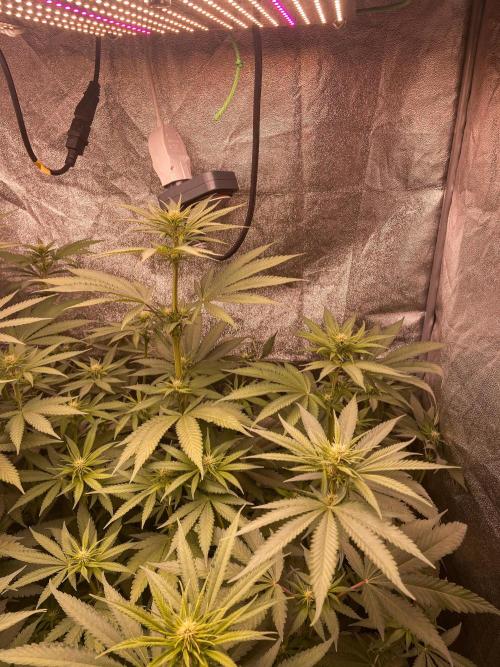
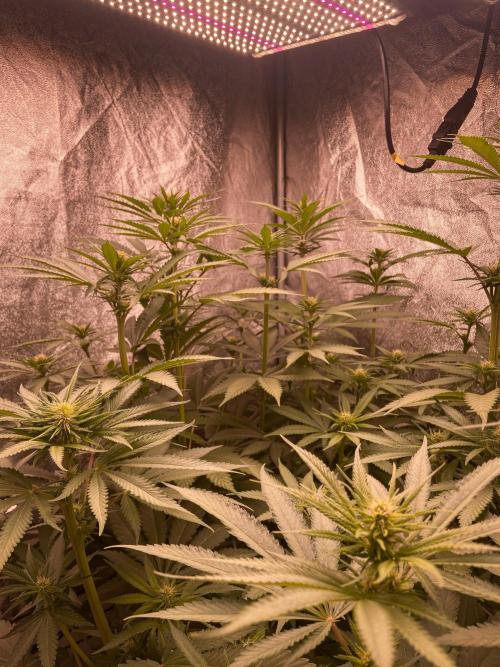
ElNass 🌱 Fruity Durban by Serious Seeds | Day 14 Flower
System: 113L Living Soil (No-Till)
Week 2 observations:
• Stretch accelerated dramatically during the second week of flower.
• Plant height increased from 63 cm to 95 cm in just 7 days (+32 cm). Early training was probably the only reason the canopy remained relatively even.
• Water demand increased significantly. A total of 23.5 L of RO water was applied this week (4×5 L + 1×3.5 L), and the soil is drying noticeably faster than it did during the transition phase.
• Environmental conditions were far from stable. Without a climate controller, temperatures fluctuated between 24.4°C and 30.8°C, while relative humidity ranged from 62% to 84%.
• As a result, VPD moved between 0.50 and 1.69 kPa throughout the week.
• PPFD was adjusted several times during stretch, ranging from 850 to 1200 µmol·m⁻²·s⁻¹ depending on plant response and environmental conditions.
• Despite the fluctuations, growth remained vigorous, stems continued thickening and flower sites are now established across the entire canopy.
Current focus:
Managing the final stage of stretch, maintaining canopy uniformity and letting the soil biology do the work before bulk flower production begins.
Living Soil isn’t about feeding the plant. It’s about building an ecosystem capable of feeding itself.
35 likes
10 comments
Share
8
Week 8. Flowering4mo ago

109 cm
Height
12 hrs
Light Schedule
25 °C
Day Air Temp
No Smell
Smell
65 %
Air Humidity
24 °C
Solution Temp
24 °C
Substrate Temp
24 °C
Night Air Temp
113 liters
Pot Size
1 liters
Watering Volume
30 cm
Lamp Distance
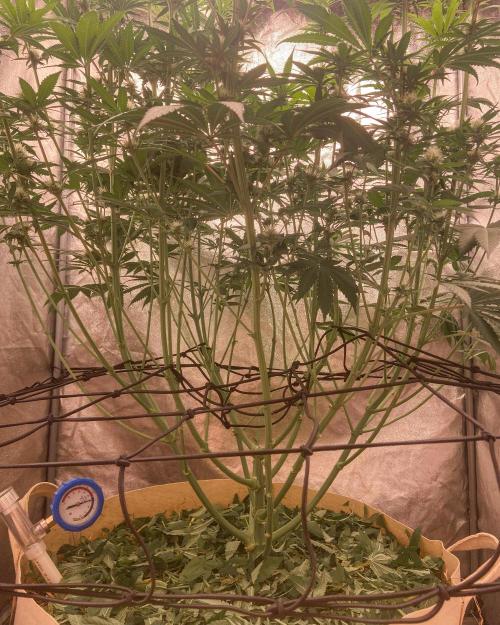
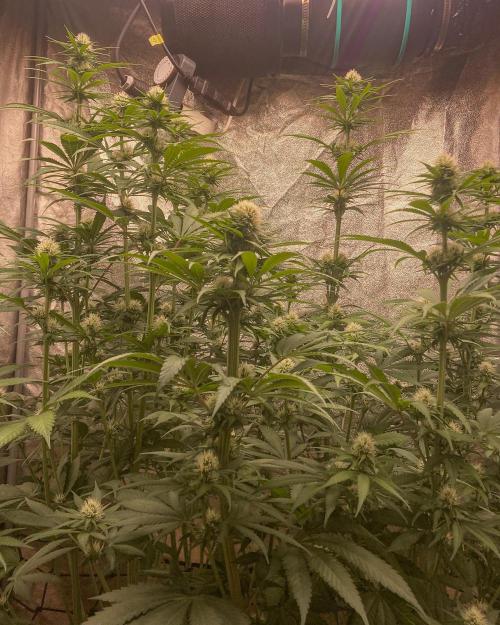
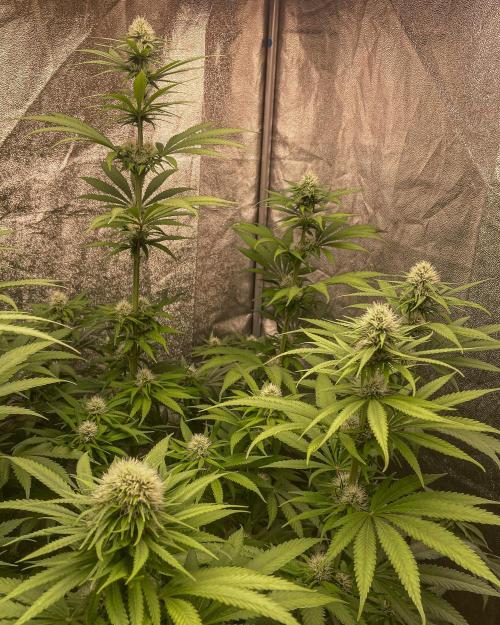
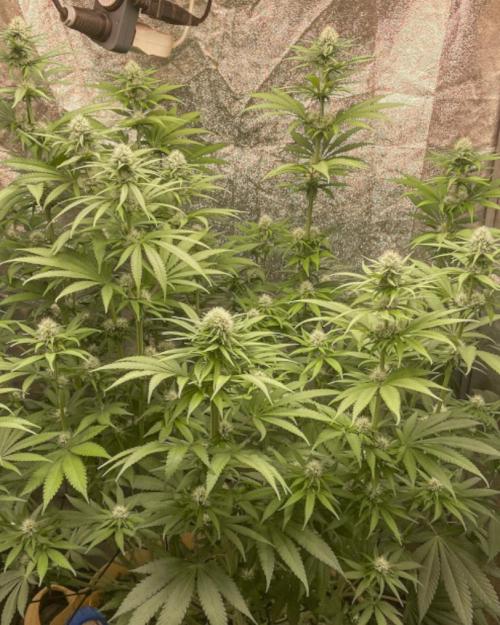
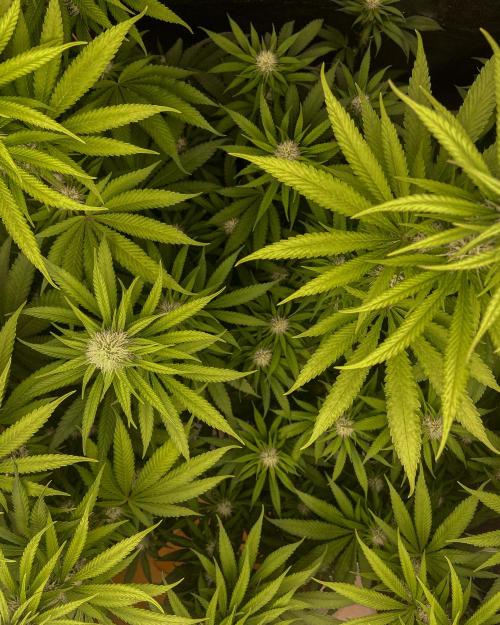
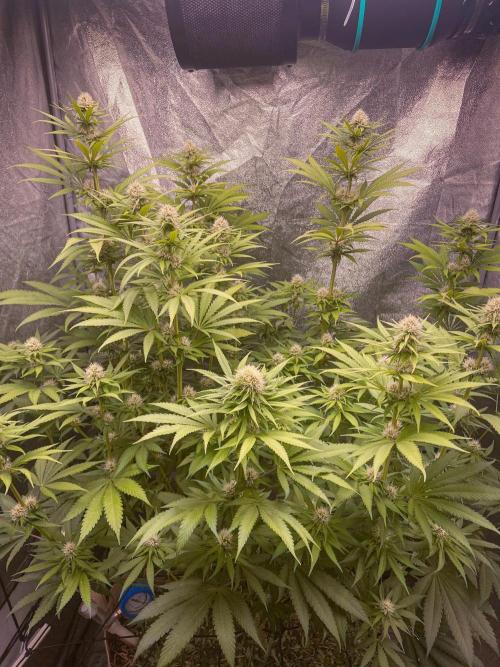
ElNass Fruity Durban | Week 3 Flower 🌸
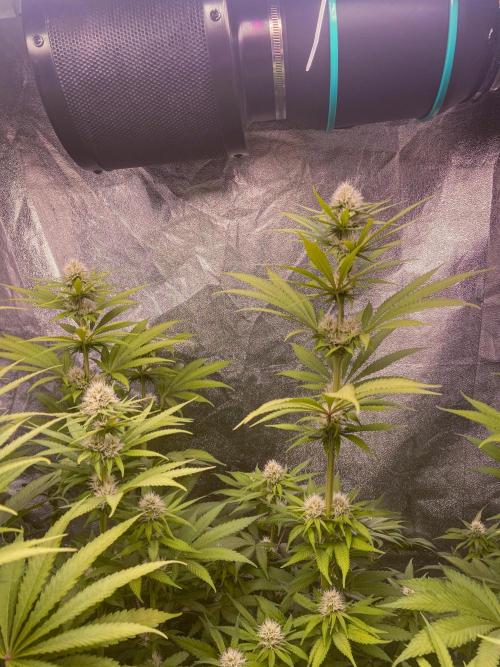
The third week of flowering is officially over, and the stretch is finally coming to an end.
This week the plant grew from 99 cm to 109 cm, gaining only 10 cm in 7 days, which is a clear sign that energy is now shifting from vertical growth into flower production.
The canopy remains open and well-structured thanks to the training performed during vegetative growth. Looking back at the early weeks, it’s amazing to see how much the architecture of the plant has developed.
Environment 📊
Throughout the week I maintained:
• Temperature: 24.7-26.3°C
• Relative Humidity: 64-78%
• VPD: 0.72-1.20 kPa
• PPFD: 1000 µmol/m²/s, reduced to 900 µmol/m²/s towards the end of the week
The environment remained stable and the plant responded very well.
Watering 💧
Water consumption increased significantly.
I supplied:
• Day 15 → 6.5 L
• Days 16-20 → 5 L daily
The 113 L living soil continues to perform well and microbial activity appears strong.
Plant Development 🌱
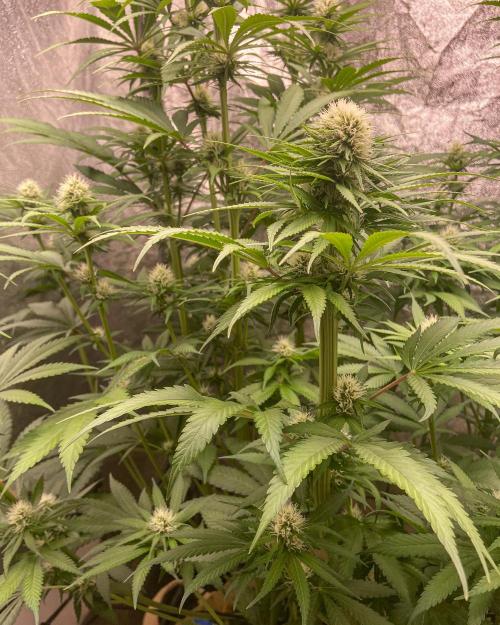
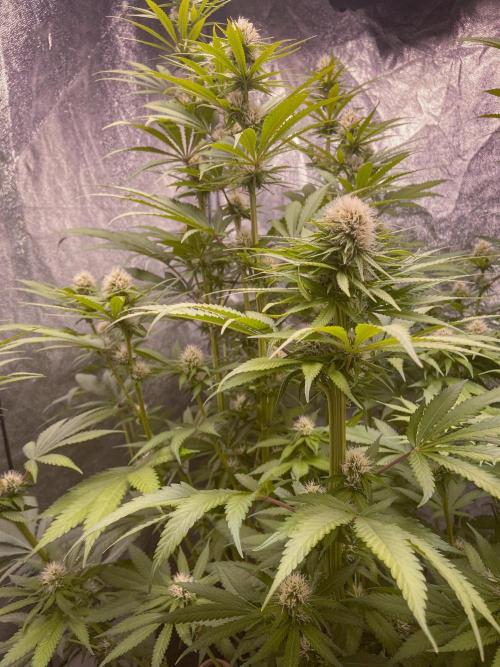
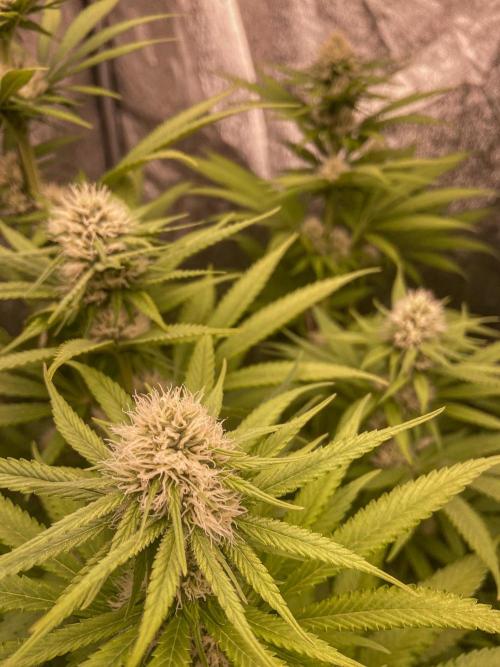
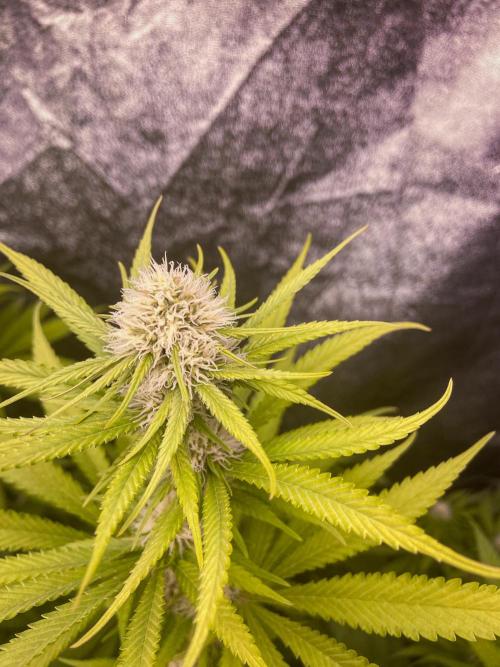
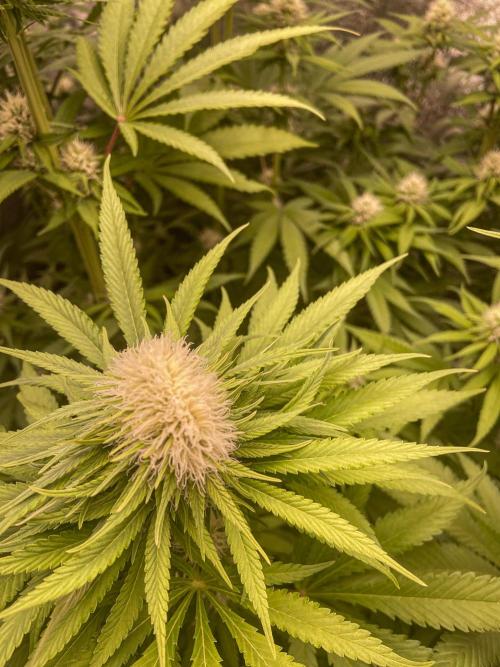
The most noticeable change this week was flower formation.
Bud sites are now stacking across the entire canopy and several tops are already showing impressive development for day 21.
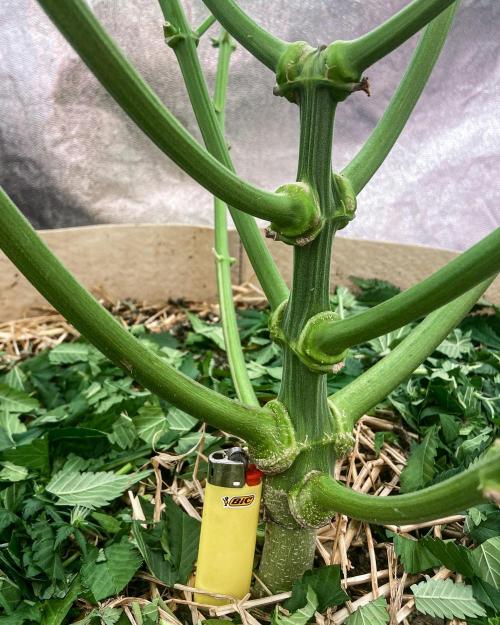
On day 20, I performed a significant defoliation and lollipopping session to improve airflow, light penetration, and focus the plant’s energy on the most productive flowering sites.
The lower growth that would never receive enough light was removed, while the upper canopy was selectively thinned to create a cleaner and more efficient structure for the bulking phase.
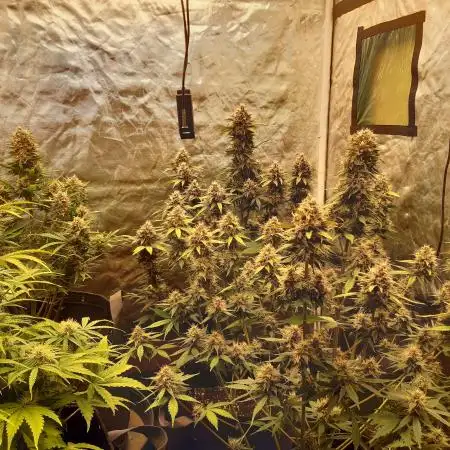
The plant handled the work extremely well and showed no signs of stress afterward. Looking at the before and after photos, the difference is remarkable. The structure built during vegetative growth is now clearly visible, with a strong framework capable of supporting the upcoming flower development.
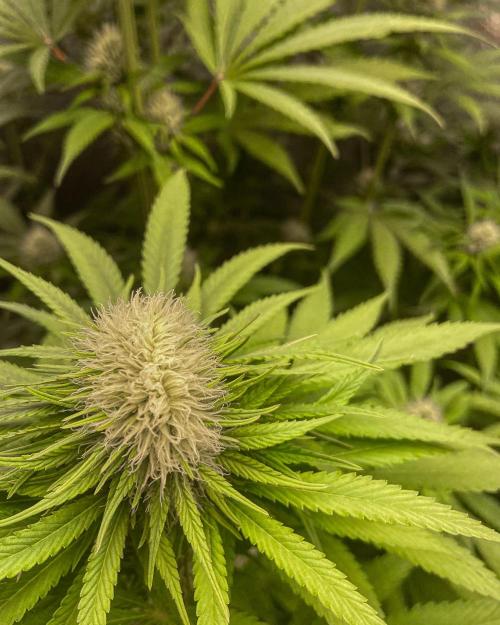
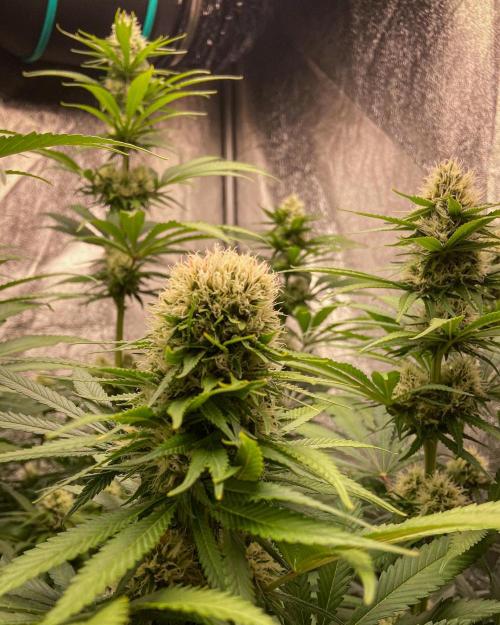
One particular cola caught my attention because of its unusual appearance. It is producing a massive amount of white pistils and seems slightly ahead of the others. At first I wondered if it could be a mutation or a fused meristem, but after closer inspection it appears more likely to be a particularly vigorous expression of the Fruity Durban genetics.
I’ll keep monitoring it over the next couple of weeks.
Nutrition ?
The plant has become noticeably lighter green compared to previous weeks.
I don’t see any signs of toxicity, burnt tips, or severe deficiencies, but she is clearly consuming nutrients at a much higher rate now that flowering is underway.
For this reason I’m considering a light maintenance top dress in the coming days to support the upcoming bulking phase.
Final Thoughts ✍️
Week 3 marks the transition from stretch to flower production.
The structure built during vegetative growth is finally paying off, the canopy is full of bud sites, and the plant looks healthy overall.
The day 20 defoliation and lollipopping session opened the canopy considerably, improving airflow and ensuring that light reaches the most productive flower sites.
Now the real fun begins.
The stretch is almost over, flowers are forming across the entire canopy, and Fruity Durban is starting to reveal her true potential.
Let’s see what she can do during the bulking phase. 🔥🌿
37 likes
12 comments
Share
Used techniques
Defoliation
Technique
Lollipopping
Technique
9
Week 9. Flowering4mo ago

112 cm
Height
12 hrs
Light Schedule
27 °C
Day Air Temp
No Smell
Smell
65 %
Air Humidity
24 °C
Solution Temp
24 °C
Substrate Temp
24 °C
Night Air Temp
113 liters
Pot Size
1 liters
Watering Volume
30 cm
Lamp Distance
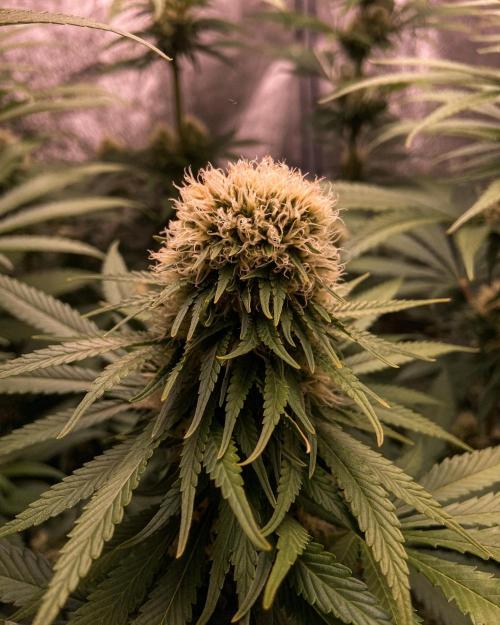
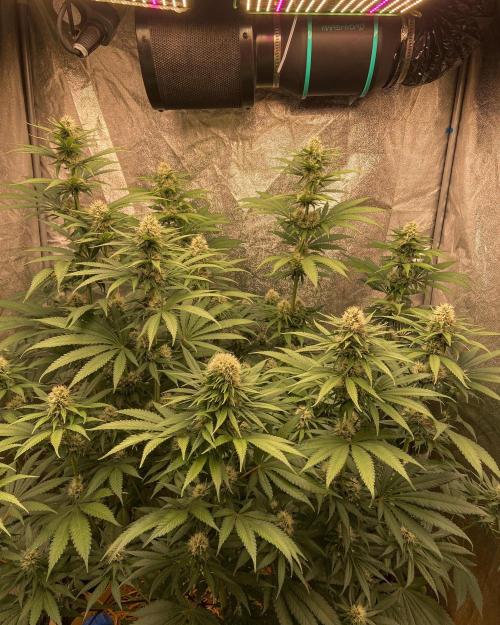
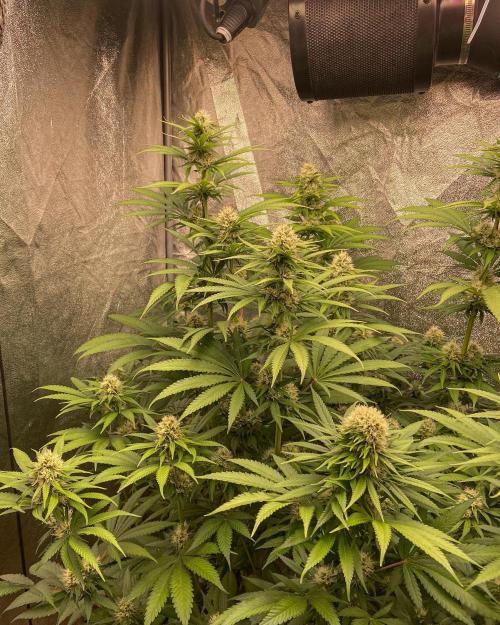
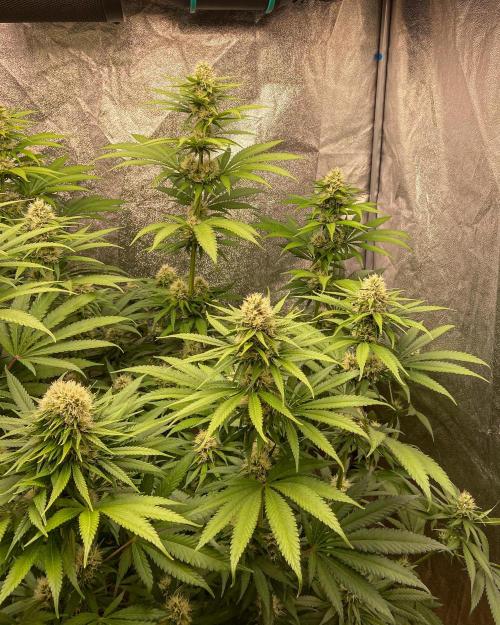
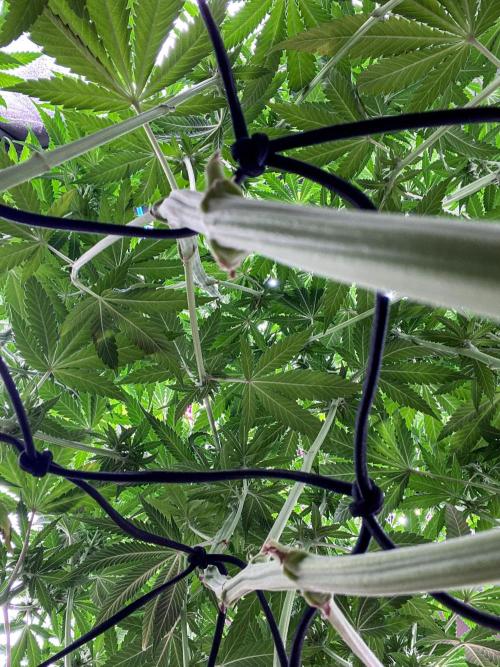
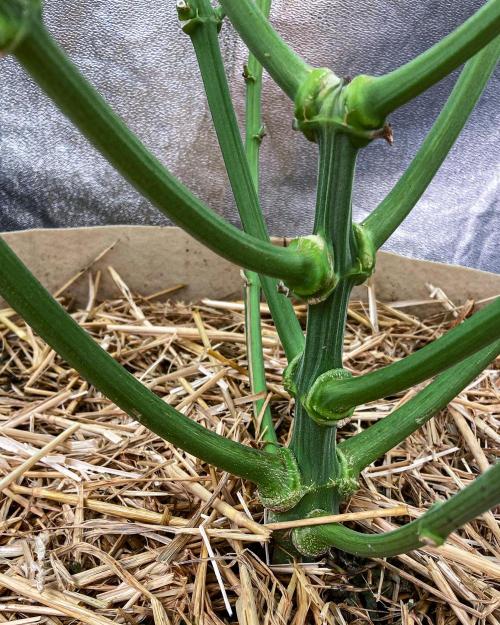
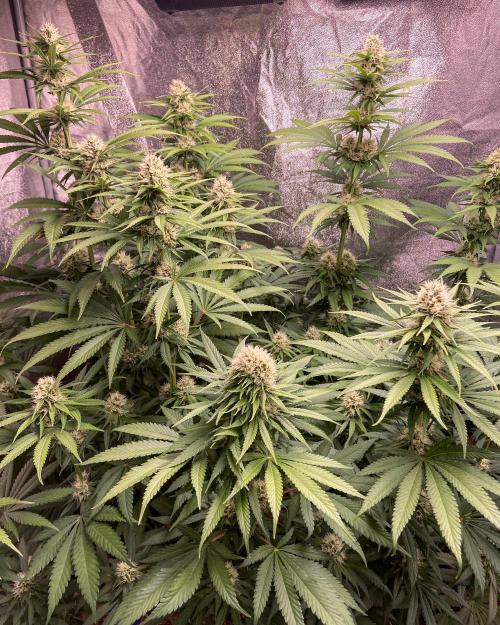
ElNass Fruity Durban | Flowering Week 4 🌸
Week 4 is in the books and this lady is finally starting to show her true potential.
The stretch seems to be slowing down and the flowers are beginning to stack nicely along the branches. Bud sites are everywhere and the structure built during veg is now paying off, allowing good light penetration throughout the canopy.
During this week I noticed the plant was looking a bit hungry. The leaves became noticeably lighter, so instead of preparing an enzyme tea, I decided to give her a fresh top dress to replenish the soil food web and provide some extra nutrition for the upcoming bulking phase.
One unexpected issue appeared during the week: my timer started malfunctioning. Every day it would randomly stop at 16:00, which obviously isn’t something you want during flowering. After troubleshooting the problem for a few days, I finally replaced it with a new unit and everything is now running smoothly again.
Despite that inconvenience, the Fruity Durban didn’t seem to miss a beat. Growth remained vigorous, flowers continued developing, and the first hints of frost are starting to appear on the sugar leaves.
The living soil bed is performing exactly as intended. The thick mulch layer is keeping moisture levels stable, the worms remain active, and the soil ecosystem seems healthy and resilient.
Looking ahead, the next couple of weeks should be the most exciting part of the cycle. Stretch is nearly over and now it’s time to focus on flower development, resin production, and hopefully the first real terpene expression.
Thanks for following along and see you next week! 💚
31 likes
6 comments
Share
10
Week 10. Flowering4mo ago

112 cm
Height
12 hrs
Light Schedule
28 °C
Day Air Temp
No Smell
Smell
65 %
Air Humidity
24 °C
Solution Temp
24 °C
Substrate Temp
24 °C
Night Air Temp
113 liters
Pot Size
1 liters
Watering Volume
30 cm
Lamp Distance
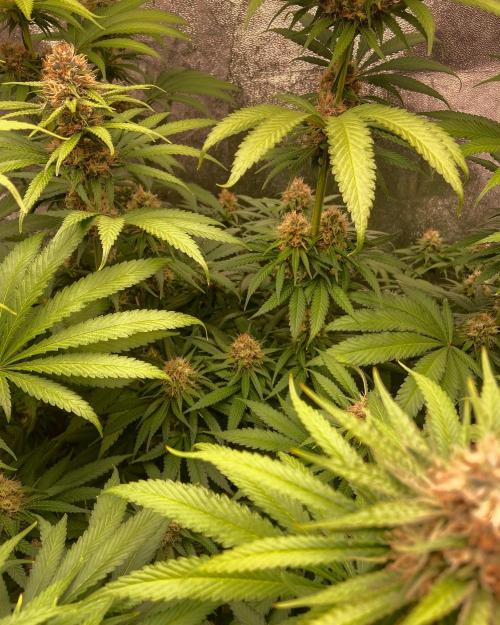
ElNass Week 5 Flowering – Fruity Durban by Serious Seeds
While I’m writing this GrowDiaries update, I’m sitting at my university waiting for my Material and Corrosion Engineering exam. I was originally supposed to take it at 10:00 AM, but my professor postponed it to 1:00 PM. Now I’m basically stuck here for hours with nothing to do… so I thought, why not use the time to write this week’s update? 😅
Back to the grow…
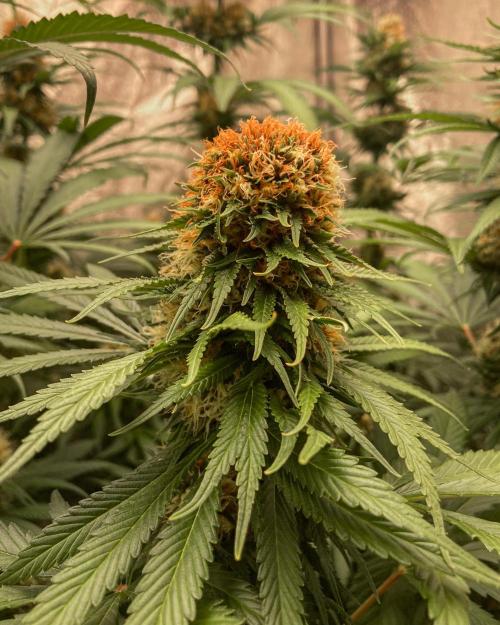
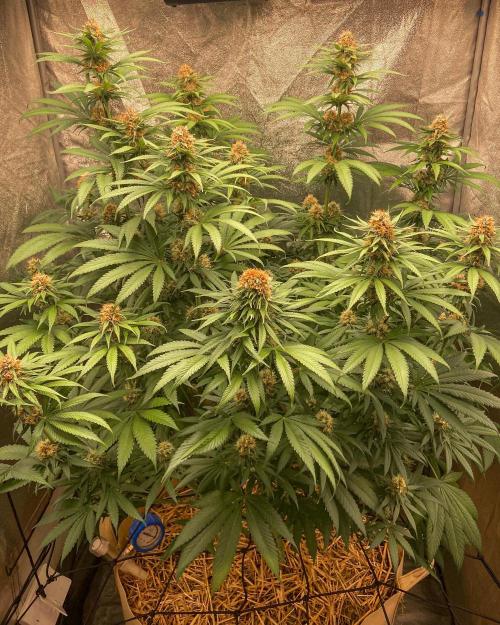
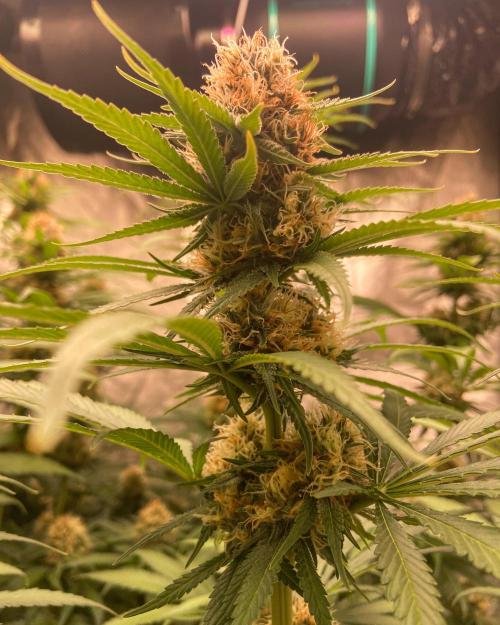
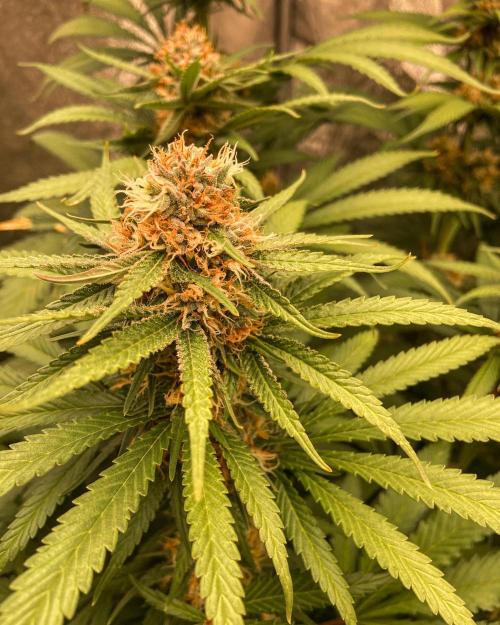
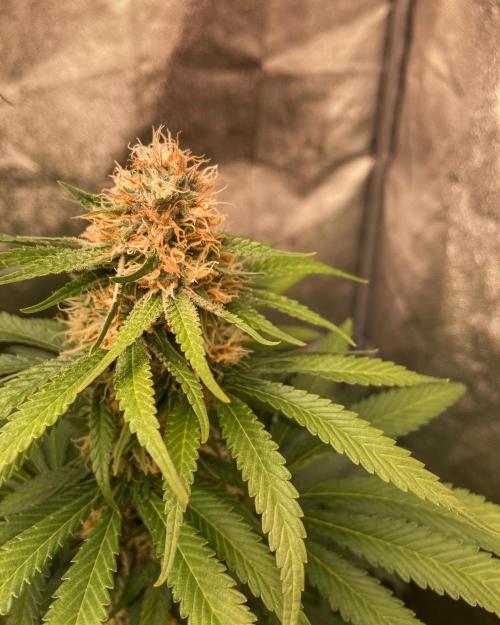
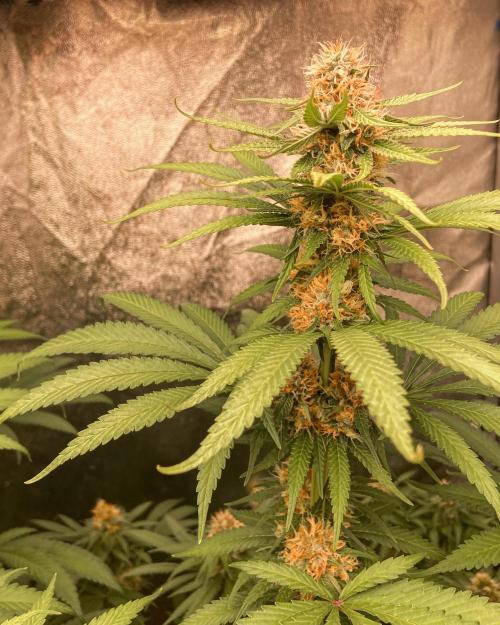
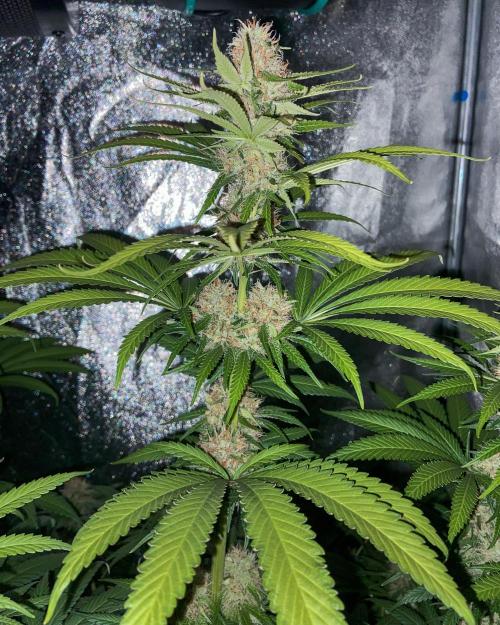
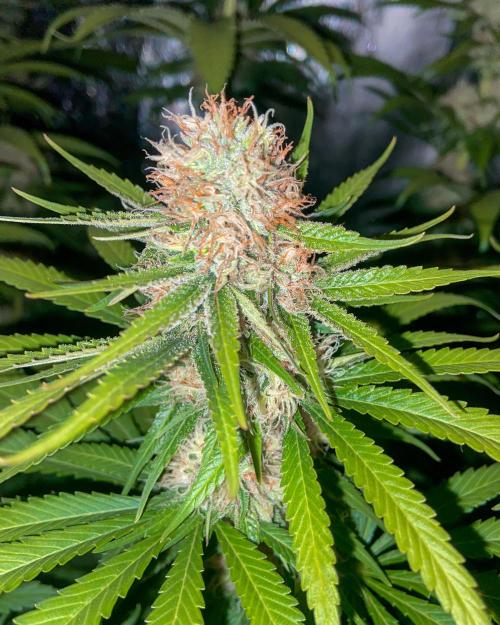
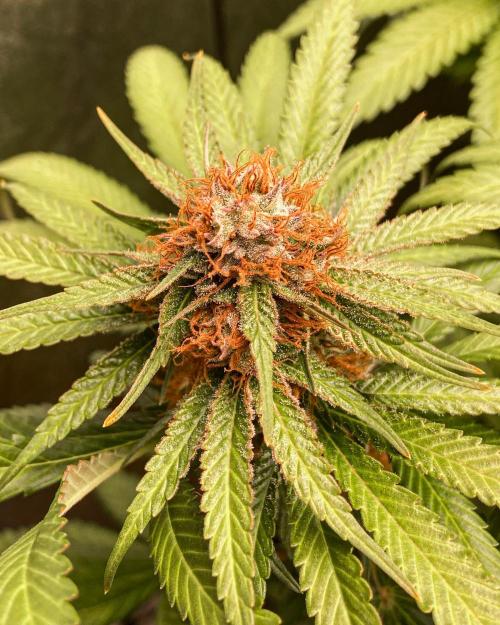
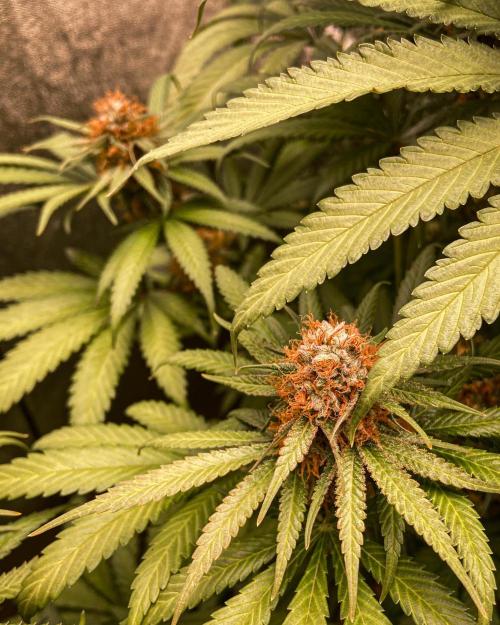
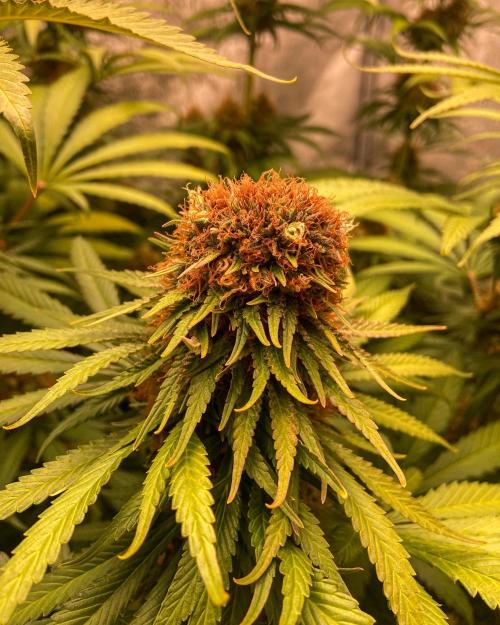
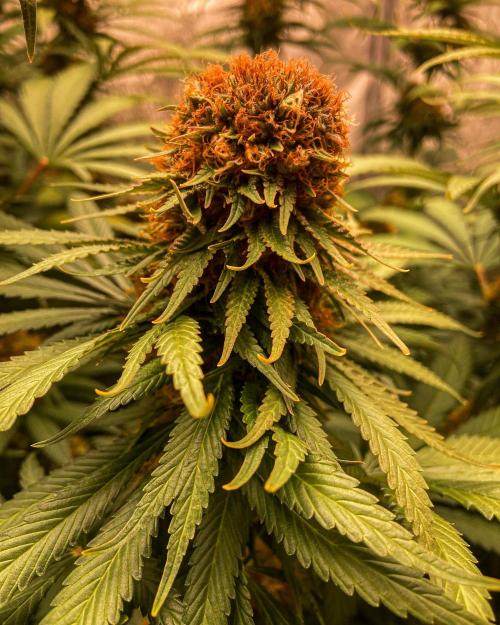
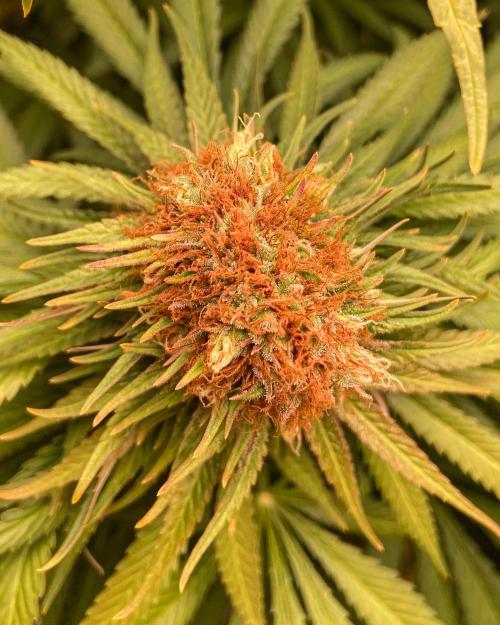
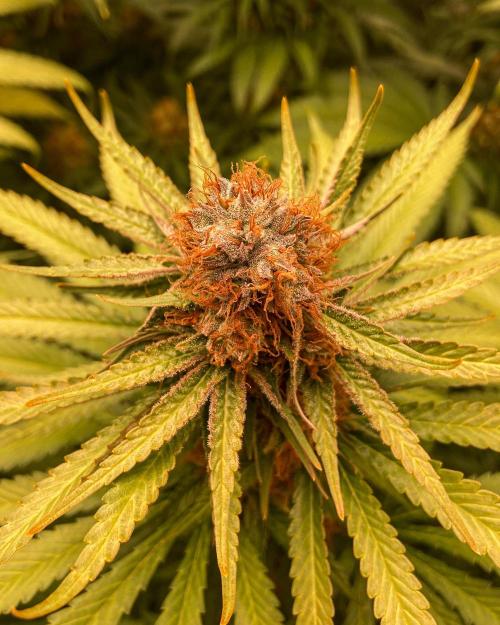
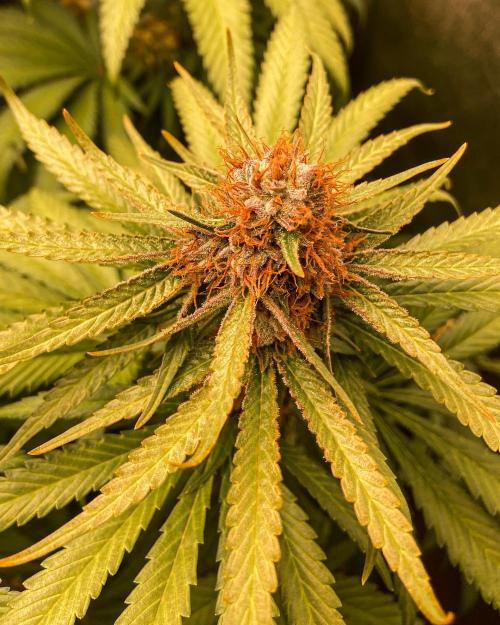
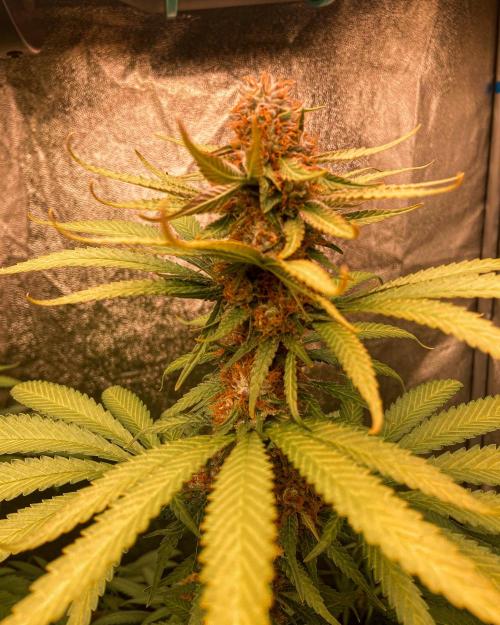
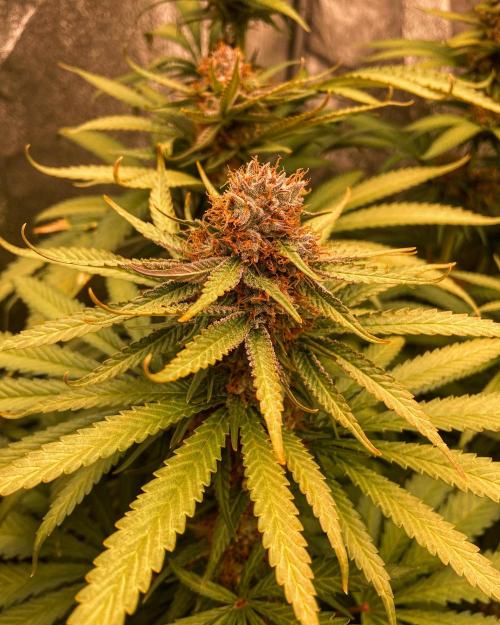
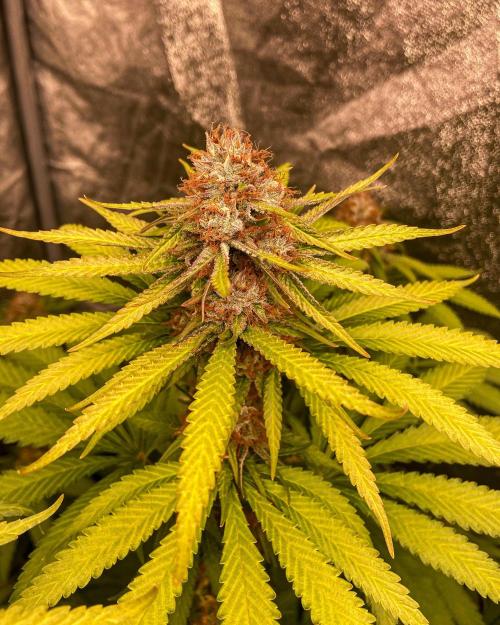
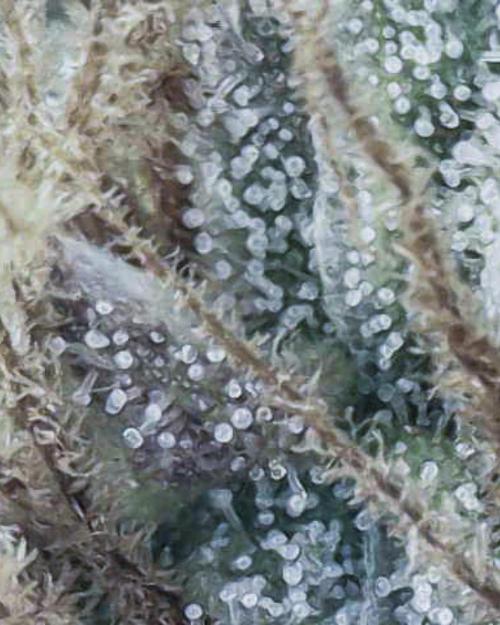
Week 5 has brought some very satisfying changes. Bud development has accelerated noticeably, the flowers are stacking nicely, and trichome production keeps increasing every single day. The pistils are gradually turning from white to a vibrant orange, giving the flowers a beautiful contrast.
The living soil continues to do exactly what I expected. After the recent top dress I’m not looking for instant results, I’m simply letting the soil food web mineralize the amendments naturally. That’s one of the reasons I enjoy living soil so much: patience is rewarded.
The biggest surprise this week has been the aroma. By gently rubbing the sugar leaves between my fingers, I get a scent that instantly reminds me of an orange popsicle. Sweet, citrusy and incredibly refreshing, with a candy-like character that makes me even more excited for the final cure.
Some of the older fan leaves continue to fade, which isn’t unexpected at this stage. The new growth still looks healthy, bud sites continue to swell, and overall I’m very pleased with how Fruity Durban is progressing.
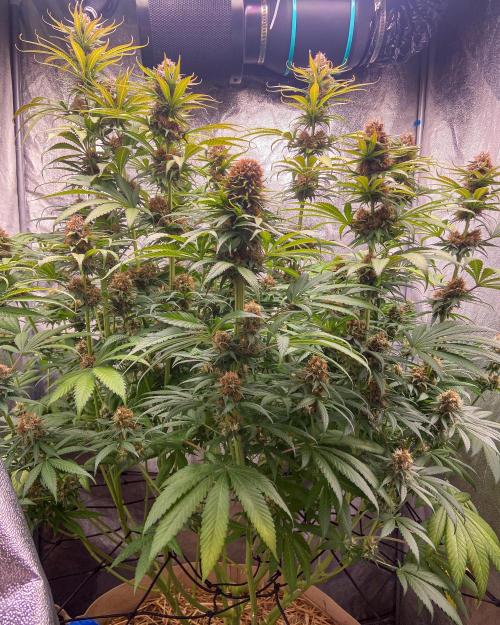
The plant structure is exactly what I was hoping for: nice internodal spacing, plenty of flower sites and good light penetration throughout the canopy. Every day the flowers become a little frostier and a little denser.
Now it’s just a matter of letting nature do its work. The coming weeks should be the most exciting as the calyxes continue swelling and the terpene profile develops even further.
Hopefully, by the time this update is online, I’ll have passed my exam too! 🤞🌱
35 likes
9 comments
Share
11
Week 11. Flowering4mo ago



112 cm
Height
12 hrs
Light Schedule
28 °C
Day Air Temp
No Smell
Smell
65 %
Air Humidity
24 °C
Solution Temp
24 °C
Substrate Temp
24 °C
Night Air Temp
113 liters
Pot Size
1 liters
Watering Volume
30 cm
Lamp Distance
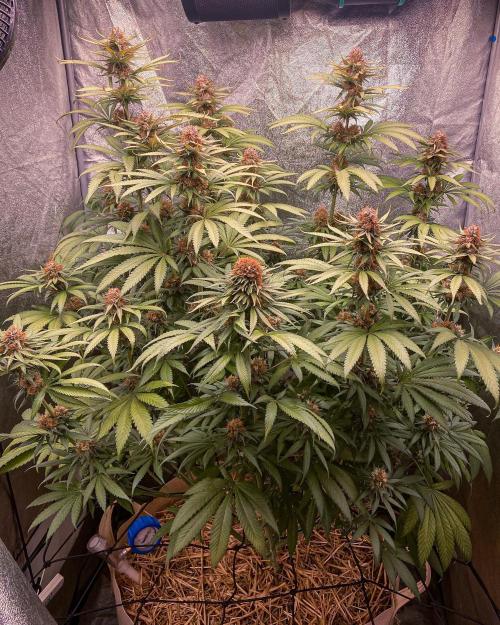
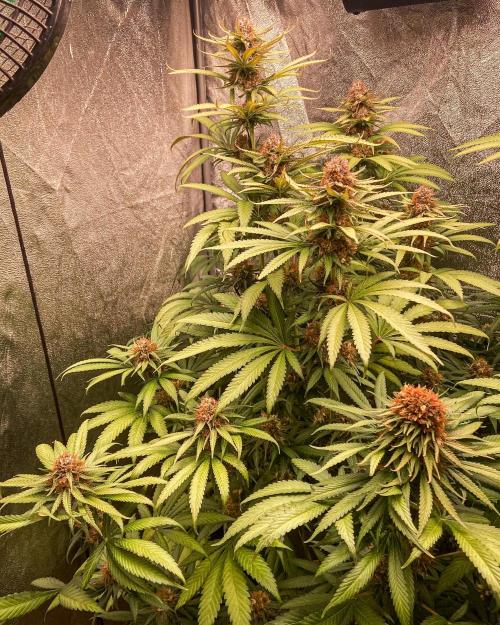
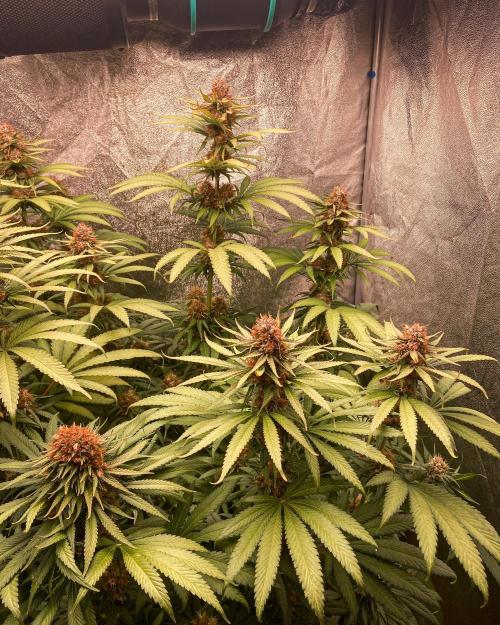
ElNass Week 6 – The Final Stretch 💚
Well… here we are.
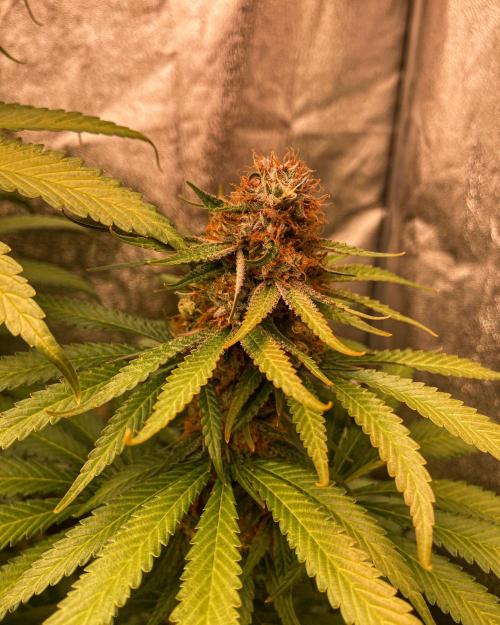
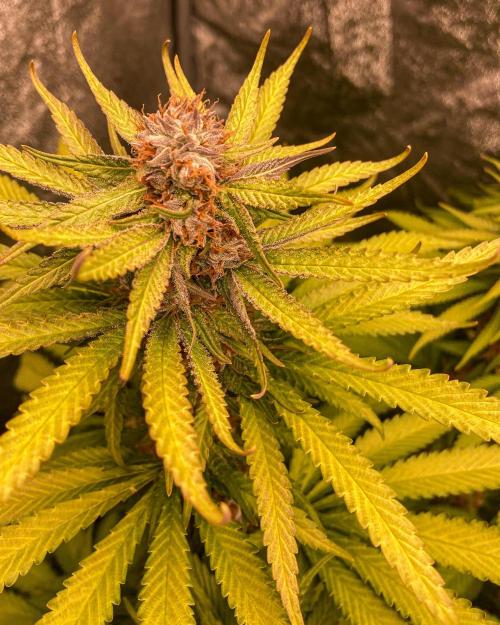
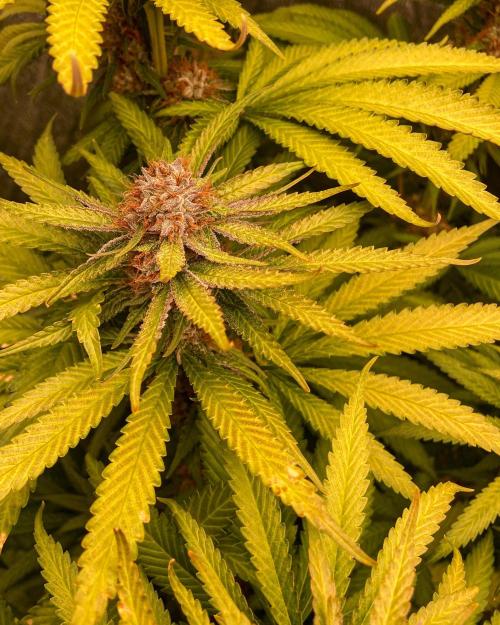
Fruity Durban has officially entered what should be the final stage of flowering. The fade has become much more pronounced, with the fan leaves naturally yellowing as the plant redirects its remaining energy toward flower maturation.
At this point there isn’t much left to do besides maintaining a stable environment, checking the trichomes daily and letting the plant finish at its own pace.
Growing Experience
Looking back at this run, I can honestly say it has been one of the most interesting cultivations I’ve done.
The first thing that stood out was the incredible vigor. From the very beginning, Fruity Durban showed explosive vegetative growth, recovered extremely well from topping and LST, and developed a very strong branch structure.
The stretch was equally impressive. Even after topping and training, she continued stretching aggressively during the first weeks of flowering, eventually reaching the maximum height available in my tent. I even had to remove the light hangers and attach the fixtures directly to the tent roof to gain a few extra centimeters.
The plant definitely has a very strong growth instinct.
Living Soil Performance
This was the third consecutive run in the same 113 L living soil container.
My original plan was to use very little top dressing, but the plant’s vigorous growth significantly increased its nutritional demand.
Around the end of week three, I eventually decided to apply a light top dress consisting of worm castings, kelp meal and bat guano.
Considering the age of the soil and the intentionally minimal inputs, I think the plant still performed very well.
Environment
Running a summer grow is never my favorite option.
Temperatures have often been close to 29°C, forcing me to keep humidity slightly higher than usual to maintain an acceptable VPD.
These conditions certainly weren’t ideal, especially during late flowering, but overall the plant handled them reasonably well.
Flowers & Trichomes
This is the stage where the flowers really start showing their personality.
Resin production has been very satisfying, especially on the sugar leaves, while the pistils have developed a beautiful deep orange color.
I’ve also started checking the trichomes regularly. Most of them now appear cloudy, with only a few amber heads beginning to show, so harvest shouldn’t be too far away.
Aroma
The aroma is becoming more defined, although I still don’t think it’s expressing its full potential.
Right now I’m mainly getting sweet citrus notes that remind me of an orange popsicle mixed with orange soda.
I’m really curious to see how this profile evolves during drying and curing, since terpene development can change dramatically after harvest.
Current Thoughts
At this stage I have mixed feelings, but in a positive sense.
Fruity Durban has shown exceptional vigor, impressive stretching and a very interesting structure throughout the entire grow.
Those characteristics naturally created high expectations for the final stage of flowering.
I’m looking forward to seeing how everything comes together after harvest because drying, curing, flavor and effects are all essential parts of evaluating a cultivar.
For that reason, I don’t think it’s fair to draw final conclusions yet.
The smoke report will ultimately determine how I feel about the complete experience.
For now, I’m simply happy to have had the opportunity to grow and document this brand-new cultivar from seed to harvest.
A big thank you to Serious Seeds for trusting me with this project and allowing me to test Fruity Durban. It’s been a pleasure documenting every stage of this journey, and I can’t wait to share the final results after drying, curing and the smoke test.
See you at harvest! 🌱✂️💚💚💚
37 likes
5 comments
Share
12
Week 12. Harvest3mo ago
Happy Harvest Day!


9/10
Rated
Fruity Durban — Final Review
Genetics: Mimosa × Durban
After completing this run and spending enough time with the finished flowers, Fruity Durban turned out to be a much more interesting cultivar than my first impressions at harvest suggested.
This is actually one of those rare cases where my opinion changed quite significantly after the grow was over.
Toward the end of flowering, I was left with a slight sense of disappointment. The extraordinary vigor shown throughout vegetative growth and stretch had made me expect a much heavier final production. That never fully materialized.
But once the flowers were dried, cured and properly tested, I started looking at Fruity Durban from a completely different perspective.
Because this cultivar clearly isn’t just about yield. Its value comes from the combination of speed, vigor, flavor, effect and overall practicality — and when all of those factors are considered together, Fruity Durban starts to make a lot of sense.
Growth & Flowering
One of the most striking characteristics of Fruity Durban is undoubtedly its vigor.
During vegetative growth the plant was extremely energetic, and that became even more apparent during the stretch. It has the kind of growth that immediately creates expectations: when you see a plant developing with that much energy, you naturally start imagining that the same vigor will eventually translate into massive flower development.
And this is probably where my only real criticism begins.
The final calyx swelling didn’t fully match what I had expected from the plant’s behavior earlier in the cycle. The flowers developed properly, but I was expecting considerably more stacking and swelling considering how aggressively the plant had grown beforehand.
That said, in hindsight, it was also completely predictable.
Fruity Durban finished flowering in approximately 35 days in my run.
That’s an exceptionally short flowering window, particularly for a cultivar producing such a clearly sativa-type experience. A plant finishing this quickly simply doesn’t have the additional two or three weeks that many other cultivars use to continue stacking flowers and swelling their calyxes.
Personally, I would have preferred a slightly different compromise.
I would happily trade a few additional weeks of flowering for substantially greater final production. From my perspective, if Fruity Durban had maintained its vigor while being allowed another couple of weeks to really build weight, the final result could have been remarkable.
But that would also fundamentally change one of the characteristics that defines this cultivar.
Its speed is part of its identity.
Aroma & Flavor
Once I actually started evaluating the finished flowers, this was the first aspect that made me reconsider some of my initial disappointment.
The flavor profile is unusual and surprisingly difficult to reduce to a single recognizable note.
The first clear element is citrus: bright, fresh and immediately noticeable, something that fits naturally with the Mimosa side of the cross.
Behind that citrus character, however, things become much more interesting.
There is a distinct combination of incense and warm spices that gives the profile an almost exotic, Eastern character.
I wouldn’t describe “Eastern” as a literal flavor. It’s more of an association created by the combination of incense, spice and citrus. The overall profile somehow evokes that kind of atmosphere rather than simply reminding me of one particular fruit, food or aroma.
On the finish, I can also detect a subtle creamy undertone.
It’s definitely not the dominant component, but it rounds off the sharper citrus and spicy elements and leaves a softer sensation on the exhale.
If I had to reduce the progression to something simple, I would describe it as:
Citrus → incense → warm spices → subtle creamy finish.
What I particularly enjoy about this profile is that it creates an impression rather than simply a flavor.
Some cultivars immediately make you think of lemon, berries, fuel, candy or another clearly identifiable reference. Fruity Durban is different. The combination itself is what gives the flower its identity.
Effect
This is where Fruity Durban ultimately won me over.
The effect has a very recognizable sativa character, but it doesn’t develop into the chaotic, excessively stimulating or mentally exhausting experience that some sativa-leaning cultivars can produce.
Instead, I find it remarkably clear, reflective and introspective.
And the type of introspection is particularly interesting.
I’ve experienced cultivars such as Bubblegum and White Russian that can push mental activity toward much broader and more abstract territory. Thoughts can quickly move toward existence, the universe, life as a whole and concepts completely detached from whatever I was doing five minutes earlier.
Fruity Durban seems to direct that mental energy somewhere else.
It turns it inward.
Rather than making the mind escape everyday reality, it encourages you to examine it.
Thoughts naturally move toward your own life: what you’re doing, what you actually enjoy, how you’re spending your time, your relationships, your decisions, your ambitions and what you genuinely want for yourself.
That’s a subtle distinction, but an important one.
I would describe the introspection produced by Fruity Durban as personal rather than existential.
There is definitely mental depth, sometimes considerably more than I initially expected, but without necessarily feeling disconnected from reality. If anything, it can make you look at that reality from a slightly different perspective.
And despite all of this introspection, the experience remains surprisingly manageable.
An All-Day Sativa
That’s another reason why I don’t necessarily see Fruity Durban as something I would save exclusively for special occasions.
Quite the opposite.
To me, this makes much more sense as an all-day strain.
It’s the kind of effect I can imagine accompanying normal personal activities: listening to music, watching a good series or film, reading, working on something I’m interested in, spending time alone or simply thinking.
There’s enough stimulation to make the experience interesting and enough introspection to give it genuine character, but it doesn’t necessarily overwhelm everything else.
That’s a very valuable quality.
Sometimes an extraordinary effect is great precisely because it’s intense and unusual, but that doesn’t automatically make it something you want to experience every day.
Fruity Durban occupies a different space.
It’s interesting enough to remember, but functional enough to return to regularly.
Yield & The Main Trade-Off
If I had to identify one genuine weakness, it would therefore be yield relative to the extraordinary vigor displayed earlier in the cycle.
This was probably the biggest source of frustration for me during the final stages of the grow.
After seeing the plant explode through vegetative growth and stretch, I genuinely expected that energy to translate into much more substantial flower production.
When that didn’t happen, I reached harvest with a slightly bitter taste in my mouth.
At that point, my judgment was probably premature.
Because if I evaluate Fruity Durban purely as a plant and ask myself:
“How much flower did all that vigor ultimately produce?”
then yes, I would have wanted more.
But that’s only one way of evaluating a cultivar.
Once I started judging the finished product and combining that with the cultivation experience, the equation changed considerably.
The extremely short flowering period has value.
The vigor has value.
The distinctive flavor has value.
The quality and usability of the effect have value.
And suddenly the lower-than-expected yield becomes easier to understand as a trade-off rather than an outright flaw.
Putting the Cultivar Into Context
I think Fruity Durban makes the most sense when you consider what purpose a cultivar like this can serve.
If maximum yield per plant were my only objective, this probably wouldn’t be my first choice. Personally, I would still prefer to give the plant another couple of weeks if that meant significantly increasing production.
But imagine Fruity Durban in a different context.
If I were selecting a cultivar intended for a club, for example, the equation would become much more interesting.
A plant capable of finishing extremely quickly while still producing distinctive flowers with an unusual terpene profile and a genuinely enjoyable sativa effect has obvious practical advantages. Shorter flowering cycles can be extremely valuable when consistency and turnaround matter.
Likewise, from the consumer side, its effect makes perfect sense as an everyday option rather than something reserved for an occasional heavy experience.
And this is where I think the cultivar finds its real identity.
It doesn’t need to be the biggest producer in the room.
It has a very specific purpose, and it fulfills that purpose surprisingly well.
From Disappointment to Appreciation
This is probably the most important part of my experience with Fruity Durban.
At the end of cultivation, I wasn’t completely convinced.
I had watched an incredibly vigorous plant develop through veg and stretch, and naturally expected that vigor to culminate in a much larger harvest. When the calyxes didn’t swell as dramatically as I had imagined, I felt that the plant hadn’t fully capitalized on its potential.
Then I tried the finished flowers.
The flavor immediately gave the cultivar more personality than I had expected.
The effect gave it even more.
And once I combined those qualities with the 35-day flowering time, strong vigor and overall ease and practicality of the cultivation cycle, my original judgment changed substantially.
What initially looked like unrealized potential started looking more like a deliberate set of compromises.
Would I personally sacrifice some of that speed for greater yield?
Absolutely.
Give me a couple of extra weeks and significantly more flower, and personally I would probably prefer that version.
But I can also recognize that doing so might remove one of the main reasons Fruity Durban exists in the first place.
There is something genuinely impressive about achieving this kind of finished product in such a short flowering window.
Final Thoughts
Fruity Durban is an interesting cultivar precisely because it forced me to reconsider how I was evaluating it.
If I had written this review immediately at harvest, it would probably have been considerably more critical.
After drying, curing and properly experiencing the finished product, my opinion changed.
The combination of bright citrus, incense and warm spices, followed by a subtle creamy finish, gives the flowers an unusual exotic personality.
The effect is even more distinctive: clear, sativa-driven, introspective and reflective, but without necessarily becoming overwhelming or detached from everyday life.
Its main compromise is production. Considering the extraordinary vigor displayed during vegetative growth and stretch, I would have liked to see significantly greater calyx swelling and final weight.
But the same characteristic responsible for that limitation is also one of Fruity Durban’s greatest strengths:
it finishes incredibly fast.
And when I evaluate the cultivar as a complete package rather than simply looking at grams at harvest, that trade-off becomes much easier to accept.
For someone looking exclusively for maximum production, there are probably better choices.
For someone looking for a very fast cultivar with vigorous growth, a distinctive terpene profile, a genuinely interesting sativa effect and excellent potential as an everyday smoke, Fruity Durban has a very clear reason to exist.
And if I imagine it as a cultivar intended for regular consumption or for a club environment, where fast turnaround and a recognizable finished product can both be valuable, the combination becomes even more compelling.
Ultimately, Fruity Durban went from being a plant that left me slightly disappointed at harvest to one that I appreciated considerably more once I understood the finished product.
And for that reason, I think it represents a valid and distinctive addition to the Serious Seeds catalog.
In one sentence
Fruity Durban is an exceptionally fast-flowering, vigorous sativa with bright citrus, incense and warm spices over a subtle creamy finish, delivering a clear and deeply introspective yet surprisingly functional high, trading some of the yield I would personally prefer for speed, character and genuine everyday usability.
Show more
Translate
Spent 79 days
Ger Veg Flo Har
188 g
Bud dry weight per plant
1
Plants
1 m²
Grow Room size
Easy
Difficulty

Uplifted, Happy, Energetic
Positive effects

Depression
Medical effects

Citrus, Herbs, Pungent
Taste
Height
Day air temperature
Air humidity
Light schedule
Solution temperature
Night air temperature
Substrate temperature
Pot size
Lamp distance
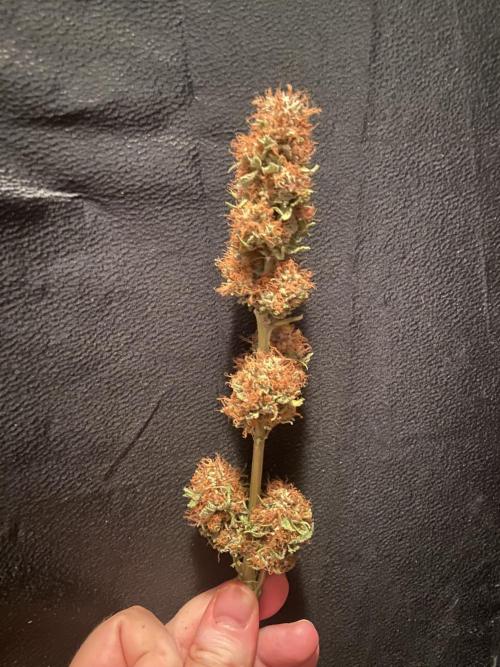
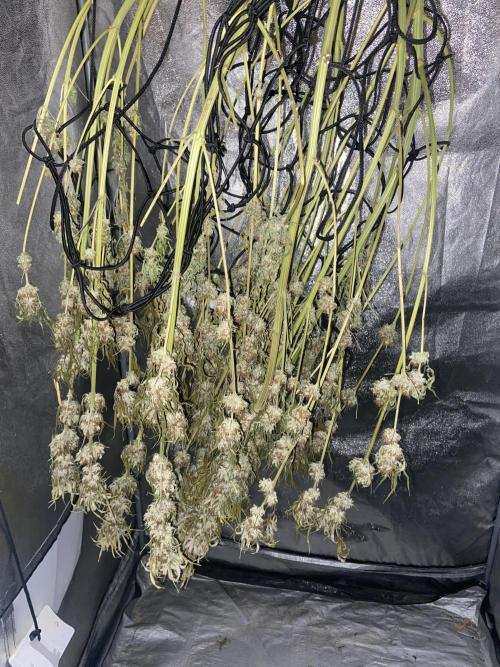
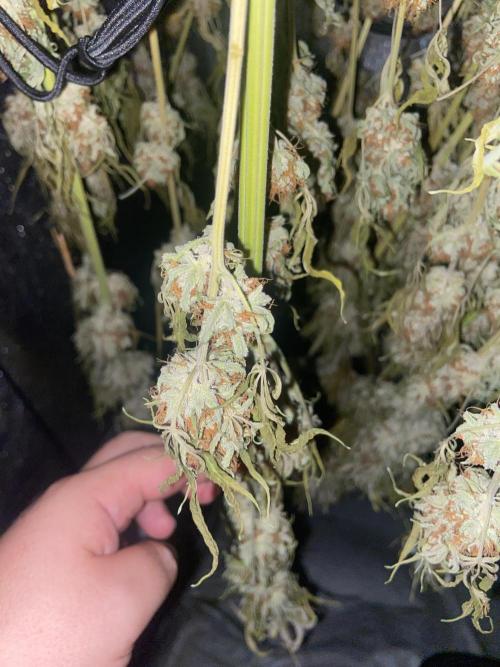
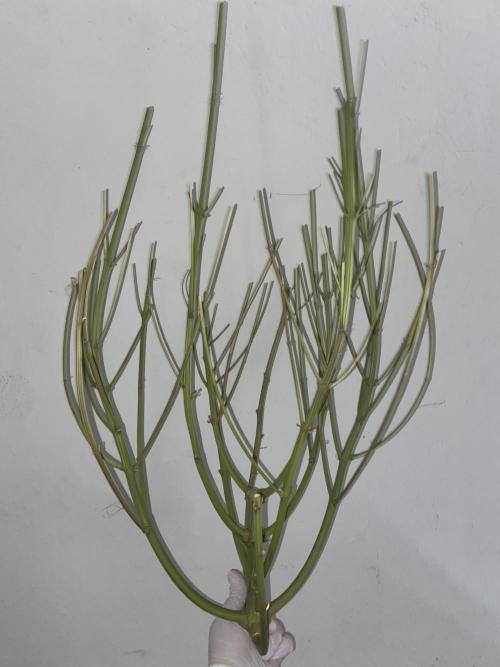

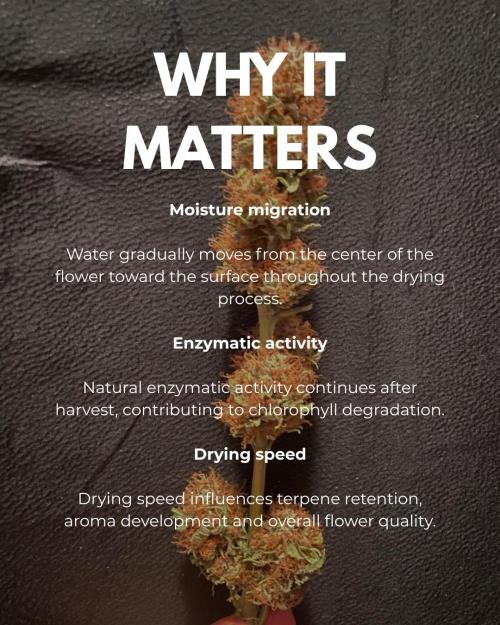
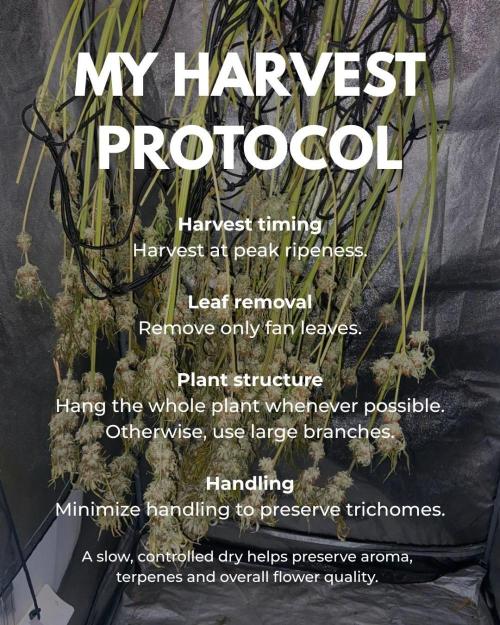
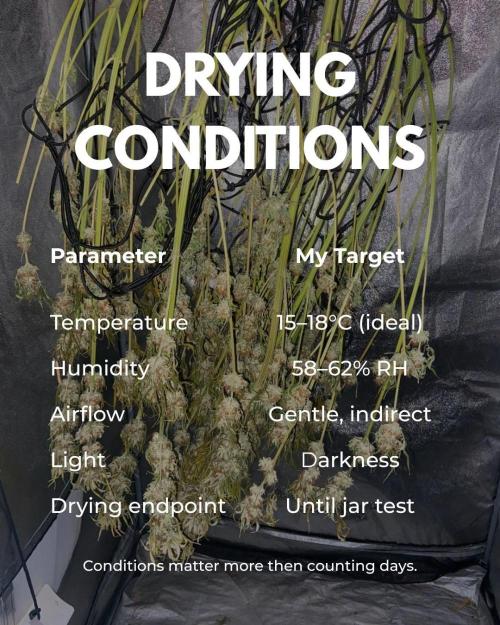
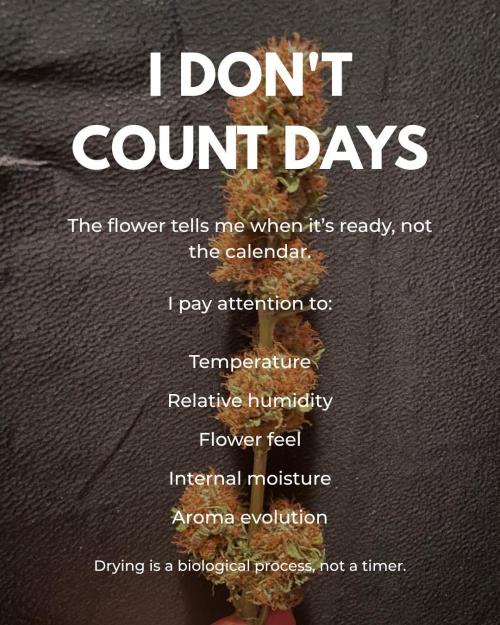




ElNass 🌱 Harvest & Cure Begins
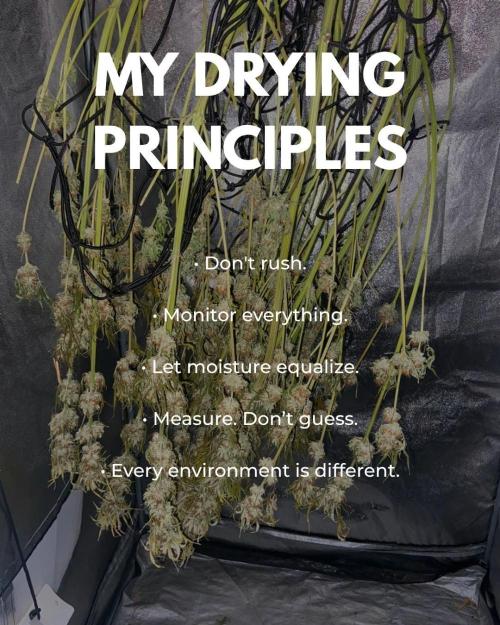
Harvest is complete, and today marks the beginning of the curing process.
This run taught me a lot about Fruity Durban. From the very beginning, it showed exceptional vigor and recovered incredibly well from topping and training. Its strong sativa-like growth and rapid flowering make it a very interesting cultivar.
Looking back, I think I initially evaluated this cultivar from the perspective of a home grower running a single large Living Soil plant. After discussing it with Simon, I realized that Fruity Durban’s greatest strengths probably lie elsewhere. Its speed, vigor and growth habit make it particularly well suited for commercial SOG cultivation, where fast turnover and plant uniformity are major advantages. Seen from that perspective, I understand much better why this cultivar deserves its place in the Serious Seeds catalogue.
The drying phase has now been completed, and the flowers have entered curing.
My first impressions are already very promising:
🌸 Pink pepper
🍊 Fresh citrus
🌿 Herbal notes reminiscent of sage
The effect is already clear, uplifting and energizing, making it a great daytime smoke.
I’m very curious to see how the aroma and flavor will evolve over the coming weeks, as curing often reveals the true character of a cultivar.
A huge thank you to Serious Seeds for giving me the opportunity to test and document this variety from seed to cure. 💚
42 likes
12 comments
Share
Equipment Reviews









140 comments
Sort by
popularity
popularity
newest
oldest
Grimgrows commentedweek 06mo ago
Good luck with the new grow
likes 5

ElNass commented6mo ago
@Grimgrows, Thx man!! 🙏
likes 2

squalino commentedweek 26mo ago
good continuation
likes 4
ElNass commented6mo ago
@squalino, Squalino you are always on point!!! 😂😂🙏
likes 5
squalino commented6mo ago
@ElNass, for you evritime ☺️
likes 4
ElNass commented6mo ago
@squalino, 😂😂🙏💚💚💚
likes 3

Hawii_ReLoaded commentedweek 16mo ago
Good luck with your new project 🍀✌️ looking forward to the next updates
likes 4
ElNass commented6mo ago
@Hawii_ReLoaded, Thanks a lot bro 🙏 really appreciate it! I’ll keep you updated, this run is going to be something special 👀🔥
likes 4
Hawii_ReLoaded commented6mo ago
@ElNass, yeah this genetic really sounds like something unique 😁✌️
likes 3

viejo commentedweek 94mo ago
Love the photo of that big bud covered in pistils :) gg
likes 4
ElNass commented4mo ago
@viejo, 🙏💚💚💚
likes 2

Kushycat commentedweek 74mo ago
The Stretch is hyper Real! Beautiful 🐱🐉🌞🐱
likes 4
ElNass commented4mo ago
@Kushycat, Thanks so much, bro!! 💚🙏
I topped her, trained her, and even put her under a SCROG, but apparently that still wasn’t enough 😂💀
At this point, all I can do is pray she doesn’t grow into the lights while I’m away on vacation. The stretch has been absolutely insane, way more aggressive than I expected 🌱📈
Let’s hope she finally starts slowing down soon 🤣🤞
likes 4
Mrfarmer commentedweek 06mo ago
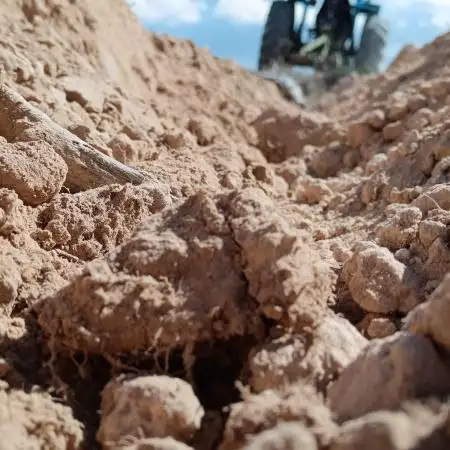
Good luck Growmie, living soil is the way, if you can get you hands on aged cooked manure, it will create happy environment for bacteria and free mycorrhiza most of the time + the benefits of slow release of npk and minerals, happy grow 💪🏽👨🌾
likes 4
ElNass commented6mo ago
@Mrfarmer, Thanks a lot man 🙏 really appreciate the insight!
Yeah I totally agree, living soil really shines with that kind of input.
I’ve been using worm castings and organic amendments, but I’d love to try some properly aged manure in the future 👀🌱
likes 3
Pete_vs_Nature commentedweek 84mo ago
Big girl! Congrats.
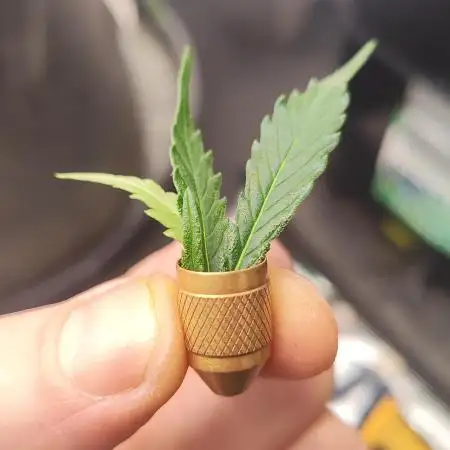
I also noticed the bleaching but wasn't sure after reading your comment on it. In my past, this has been looming P-deficiency the way it's creeping in gradually. If the petioles are purple she desperately wants more PK - good sign from my POV :)
likes 3
ElNass commented4mo ago
@Pete_vs_Nature Well, during week three I went on vacation, and it was already hard enough to find someone just to water the plants. The real problem was that they kept stretching while I was away, and there was nobody available to adjust the lights for me. When I got back, the tallest tops were only about 4 cm away from the lamps.
So you’re definitely right: during the stretch they consumed a lot of nitrogen, and you can now see the first signs of a deficiency in some of the leaves, which was pretty understandable given how aggressively they were growing.
Since this is the third run in the same pot, I originally wanted to see how far I could go without adding any top dress at all. My plan was to finish the cycle, run a soil analysis, and then decide exactly what amendments to add back. However, after noticing these minor deficiencies and seeing how quickly the buds are bulking up for the end of week three, I decided to do a small preventive top dress.
Nothing too heavy. I added about 3 liters of worm castings, 1 tablespoon of kelp meal to replenish some nitrogen and micronutrients, and 1 tablespoon of bat guano to give them a bit of extra phosphorus and support flower development.
Hopefully that’ll be enough, but honestly I have a feeling it might not be! 😂🌱💚
likes 3
Pete_vs_Nature commented4mo ago
@ElNass, Interesting insights. The soil analysis - nutrient adjustment loop you have going sounds like a dream. Are you gonna share the results?
The plant looks really stunning, the sheer pistil density also suggest to me that you may be right on your last remark 😛
likes 2
ElNass commented4mo ago
@Pete_vs_Nature, Absolutely!
I’ll definitely share the soil analysis results once I have them. I’m really curious myself to see what’s left in the soil after three full runs and compare that with what I observed from the plant.
And thanks, brother! 💚 The pistil production has been pretty crazy so far. Hopefully that’s a good sign and she’ll keep stacking hard over the next few weeks 🔥
likes 2
squalino commentedweek 84mo ago
super big buds, she promises big colas ❤️☺️
likes 3
ElNass commented4mo ago
@squalino, Thank you, my friend! 💚🌱 Fingers crossed she keeps stacking like this until harvest 🤞🔥
likes 3
squalino commented4mo ago
@ElNass, I wish that for you too 😍😍
likes 2
ElNass commented4mo ago
@squalino, 💚
likes 3
squalino commentedweek 55mo ago
beautiful, great job ❤️
likes 3
ElNass commented5mo ago
@squalino Thank you so much, big white shark!! 🙏💚💚💚
likes 3
squalino commented5mo ago
@ElNass, thank you so much my friend
likes 2

DrGruen commentedweek 06mo ago
good journey 😎
likes 3
ElNass commented6mo ago
@DrGruen Thanks mate 😎 excited for this run, let’s see how she performs!
likes 3
DrGruen commented6mo ago
@ElNass, fingers crossed mate 😎
likes 3
squalino commentedweek 94mo ago
to tell the truth, it's a beauty. great job.❤️❤️
likes 3
ElNass commented4mo ago
@squalino Thank you so much, big white shark!! ❤️
likes 3
Kushycat commentedweek 94mo ago
Very impressive! The structure looks so perfect, and the green is such a perfect green. Do you know what I mean? Of course you do—you probably look at it every day. I’m really excited—the flowers look spectacular. I don’t think I’ve ever seen so many pistils before. You’ll definitely need some supports because they’ll get very heavy 😸🌞🍀
likes 3
ElNass commented4mo ago
@Kushycat, 🙏💚💚💚
likes 2

Hempanadas commentedweek 84mo ago
Such a solid structure!
likes 3
ElNass commented4mo ago
@Hempanadas, Thank you! 💚🙏 I’ve spent a lot of time training her, so I’m really happy to hear that!
likes 3

birdmountain commentedweek 45mo ago
I'm curious to see how she bends overall in the SCROG. My Durban Poison ladies have always been allowed to grow without any interventions so far.
likes 3
ElNass commented5mo ago
@birdmountain, Yeah, at first I wanted to leave her completely untouched too, just to see how the plant would naturally behave without any external intervention. But then I got bored and wanted to play around with her a bit ahaha. In the end, that’s the fun part about photoperiods — you can train them however you want.
I don’t think this will end up being a true SCROG though. Usually before flipping to flower I fill around 70% of the net and then switch, so the stretch during the first weeks fills the remaining space. But I can’t really do that with this one because the yield would end up being way too much and honestly I wouldn’t even know where to put it all 😂😂😂
So I think in a little while, once she has a shape I’m at least somewhat happy with, I’ll switch the lights and send her into flower.
likes 2

MrBulldops commentedweek 26mo ago
Looking strong
likes 3
ElNass commented5mo ago
@MrBulldops, Thx a lot bro!! 🙏💚💚
Trying my best to make this living soil run something special 🌱🔥
likes 2
MrBulldops commentedweek 26mo ago
Looking strong
likes 3
ElNass commented6mo ago
@MrBulldops Appreciate it! Curious to see how she’ll develop in this 113L living soil setup 👀🔥
likes 4
birdmountain commentedweek 06mo ago
Wishing you many good experiences with this strain!
likes 3
ElNass commented6mo ago
@birdmountain, Thank you! Hoping for some crazy terps from this one!!🙏
likes 2

Turgor72 commentedweek 26mo ago
I appreciate the detail, good luck
likes 3
ElNass commented6mo ago
@Turgor72 Really appreciate it! Trying to give this Fruity Durban a proper living soil journey from seed to harvest 🌱🔥
likes 2

MrWeeedWorld commentedweek 26mo ago
Happy Grow 🤗✌️✌️✌️
likes 3
ElNass commented6mo ago
@MrWeeedWorld, Thx man!! 🙏💚💚💚
likes 3

MrMaabra commentedweek 06mo ago
Sounds amazing - good luck and I'm watching you!
likes 3
ElNass commented6mo ago
@MrMaabra, Thanks a lot 🙏 really appreciate it! I’m going in almost blind with this one, so let’s see what comes out of it 👀
likes 2

the end.
Enjoying this diary? Follow for more updates!

Prefer the old Diary view?
Go back to the old Diary view