


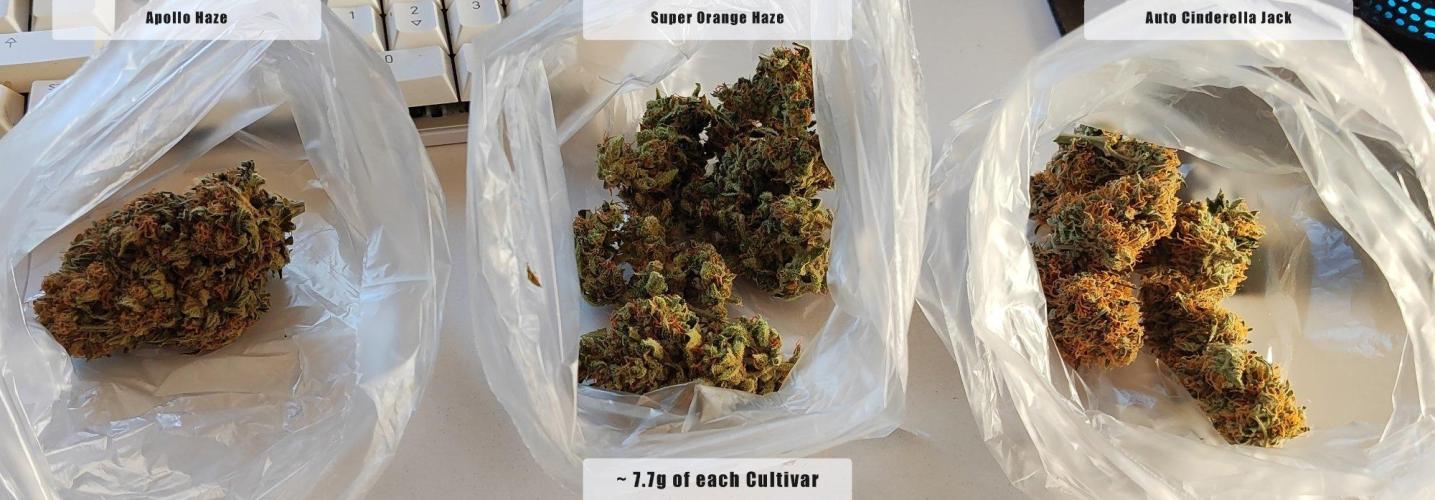
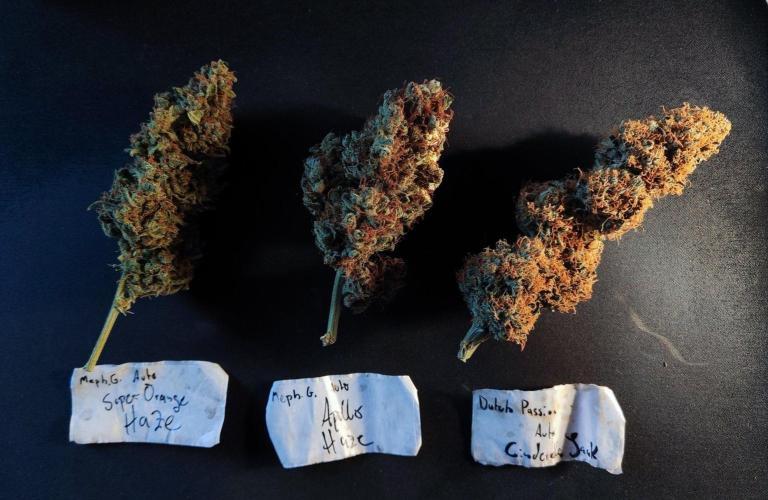
Apollo, Super Orange Haze, Cinderella J.


Apollo Haze (x Mango Smile) Auto
Mephisto Genetics





Filt
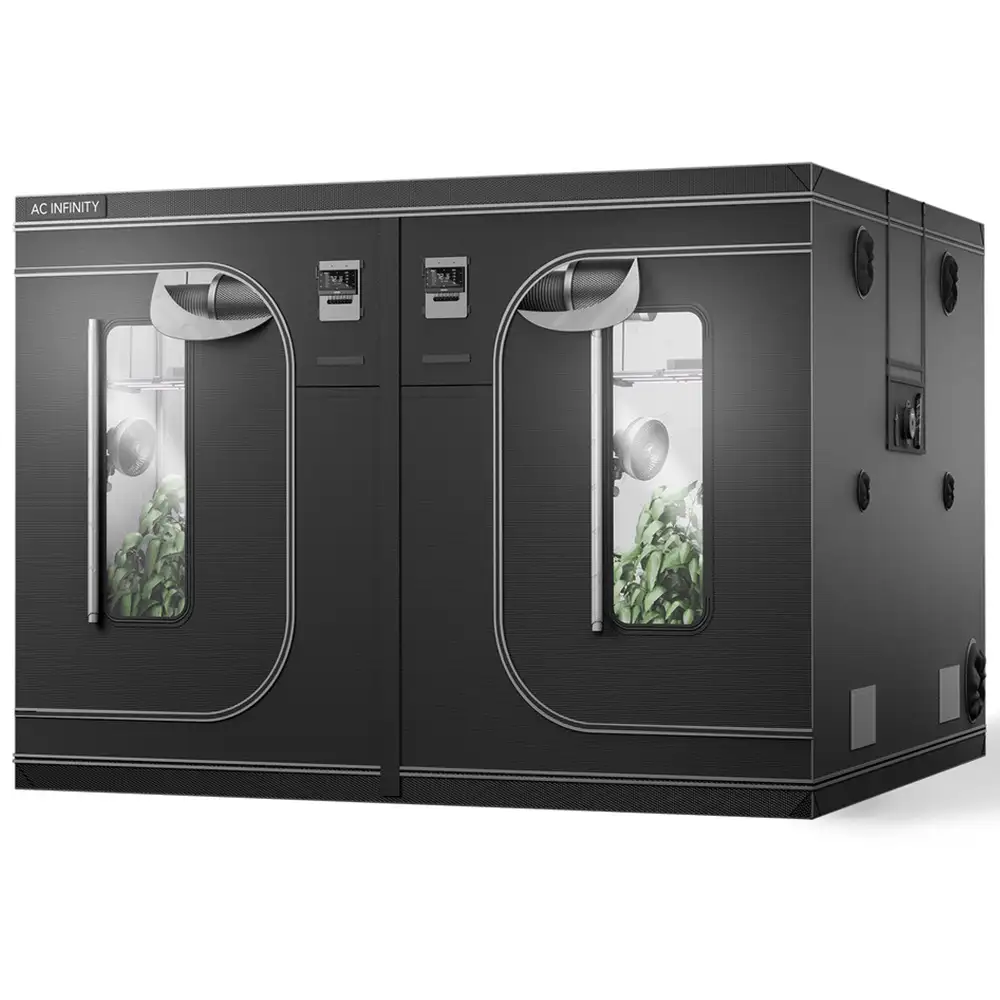
AC Infinity
Air Filter

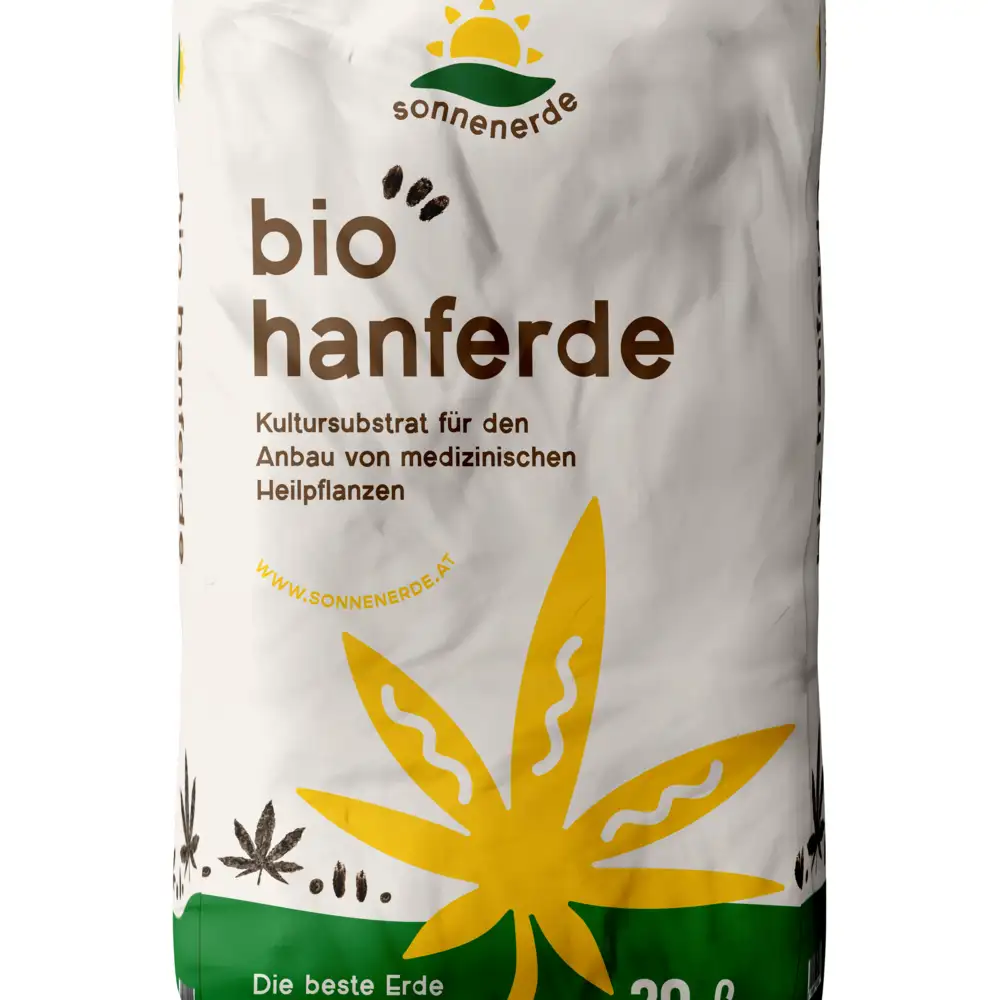
Coco Coir

Other
Worm Castings

Indoor
Room Type
Encouragement
weeks 10
ScrOG
weeks 5-8, 10-12
Super-Cropping
weeks 5-6
LST
weeks 5-6
Lollipopping
weeks 5, 8
Stress-Reversal
weeks 7
Super Late Lollipopping (SLL)
weeks 7
Defoliation
weeks 7-8
40 liters
Pot Size
Start at Harvest
G
Germination5mo ago
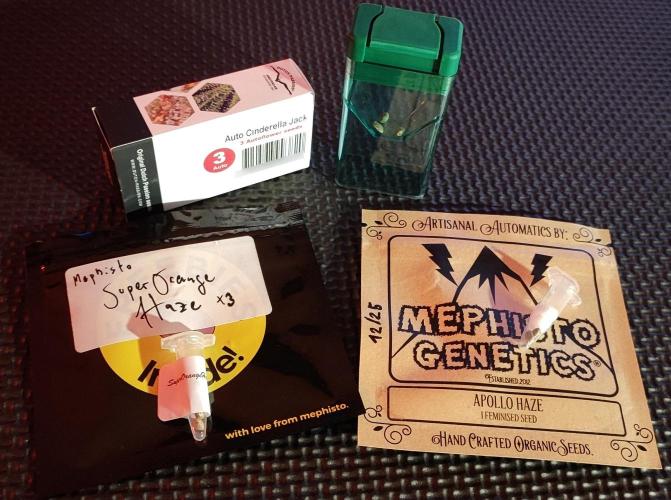
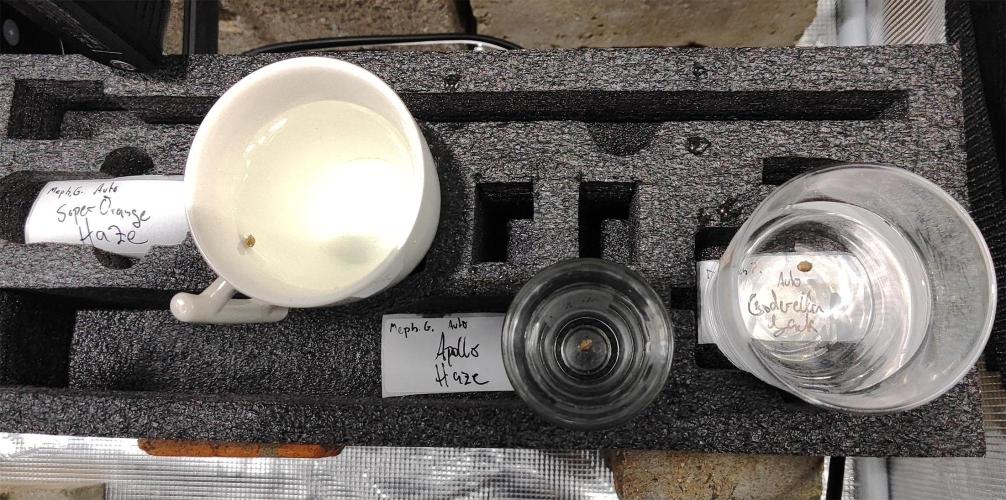
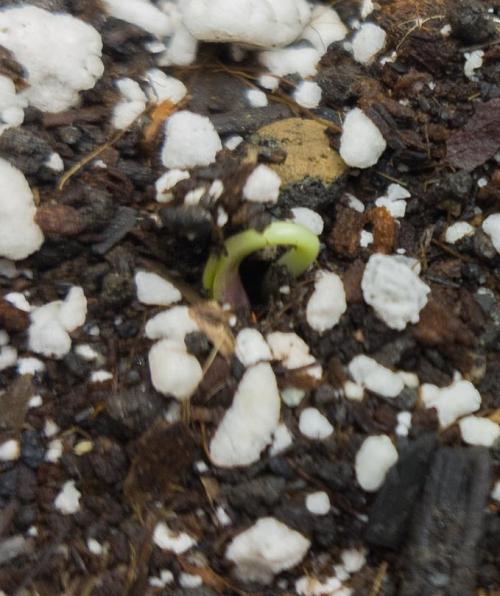
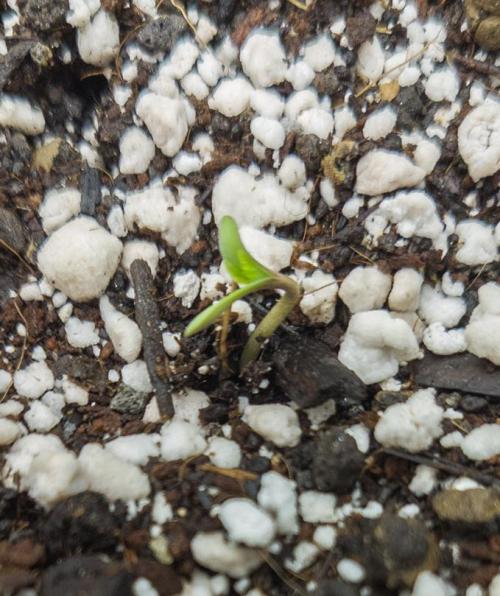
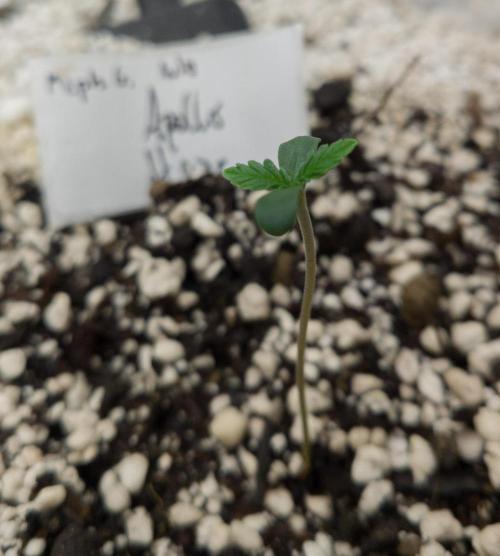
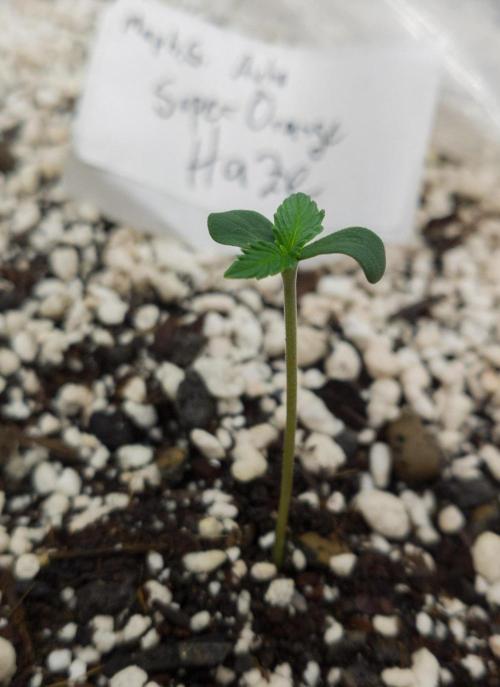
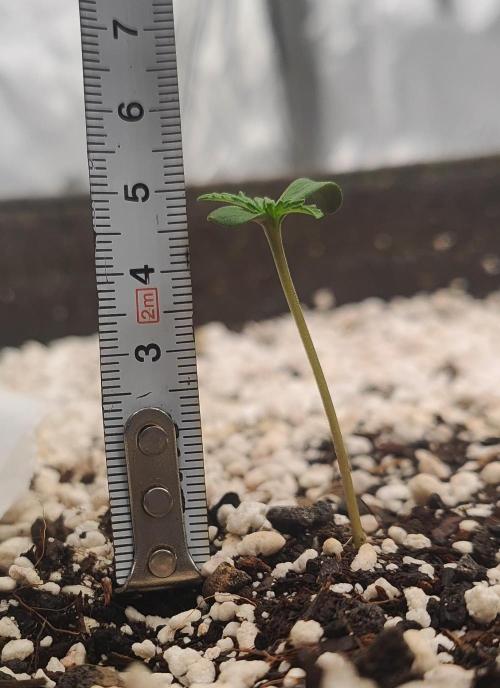
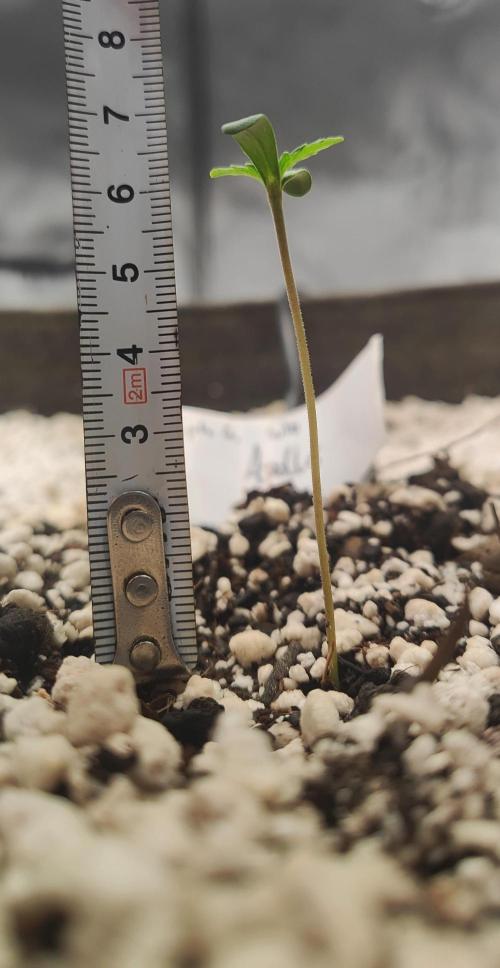
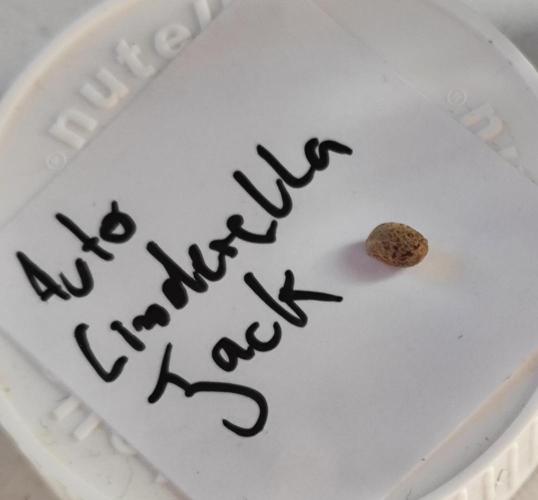
Pete_vs_Nature Ahoi and welcome to my second journal on growdiaries!
I'm Pete, I grow cannabis at home and am keenly interested in finding the best ways to produce rich, diverse and recognizable profiles of 'secondary metabolites' (basically Terps) in indoor cannabis cultivation.
This is run#5 for my protocol development for Autoflowers, where I will be having a look at:
* Dutch Passion's 'Auto Cinderella Jack' (ACJ) - a strain with history that I feel I have to grow at least once (high pinene, with some luck limonene)
* Mephisto's 'Super Orange Haze' Auto (SOH) - hopefully high in limonene with an otherwise fairly large terpene array (bit scared of linalool)
* Mephisto's 'Apollo Haze' Auto (AH) - for that rich & optimistic haze bouquet with peaks limonene, terpinolene, warm woods, spices, you name it
As I am a monoterpene chaser right now, preserving delicate terpenes like limonene will be challenging and any advanced plant stress stacking will likely compromise it quickly; in favor of those heavier, hardier sesqueterpenes.
I ran a low temperature finish to preserve monoterpenes on Mephisto's 'Alien vs Triangle' during an earlier run, and while the preservation was amazing, it raised concerning questions about yield loss.
Drying & Curing during summer without excellent drying equipment will likely provide a flat 40% monoterpene loss already, so my mission is to stack up and preserve what I can before that loss occurs.
During run#4, I finally encountered my first close-to-landrace sativa monster with Mephisto's 'Old School Mange Haze'. It was one hell of a learning experience, as I realized such sativas have much more of a stress ramp / memory with their definitive ethylene stress "stacking". Identifying the biggest stress events, by tracing back through daily logs and video material, revealed key-insights into what protocols I failed at, and more importantly, *how*.
For the first time the stars mostly aligned for my complex nutrient regime, but lighting / DLI, training exposure windows, tent space and root zone temperatures revealed large margins for improvement.
Extending their grow-space to accommodate for larger plants was a real challenge, and don't be fooled: what you see here is near total financial commitment (for reasons I am still exploring myself). Growing my way is very expensive, so with 3 cultivars, the pressure is high and constant observations are key to understand how the plants perceive their environment at any given state.
Wish me luck & have fun exploring these strains with me under hopefully pretty darn good conditions.
4 likes
1 comment
Share
Used method
Glass Of Water
Germination Method
2
Week 2. Vegetation5mo ago
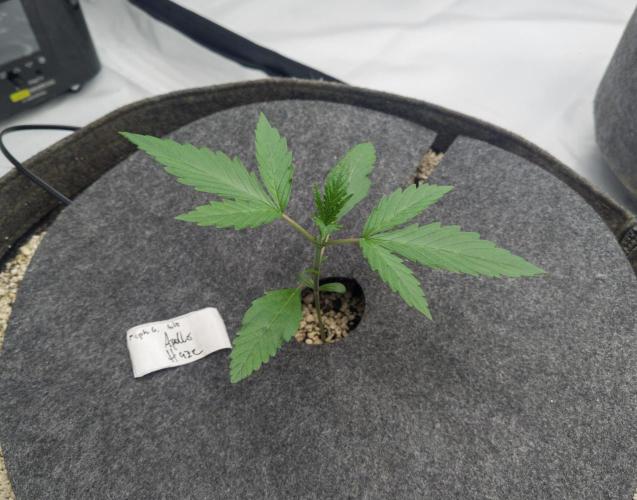
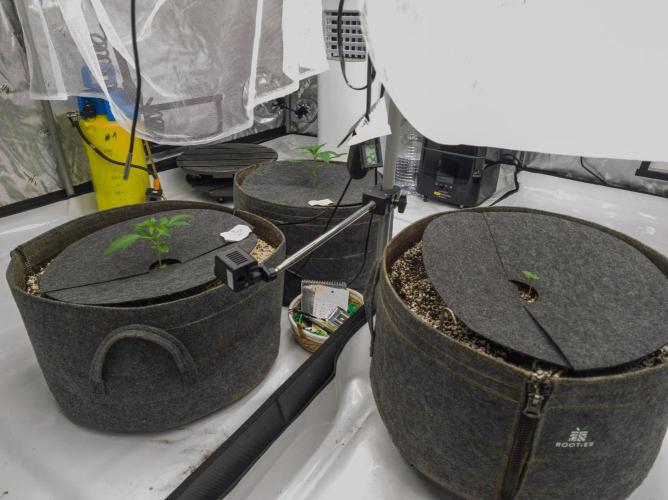
11 cm
Height
22 hrs
Light Schedule
27 °C
Day Air Temp
6.0
pH
Weak
Smell
55 %
Air Humidity
24 °C
Substrate Temp
24 °C
Night Air Temp
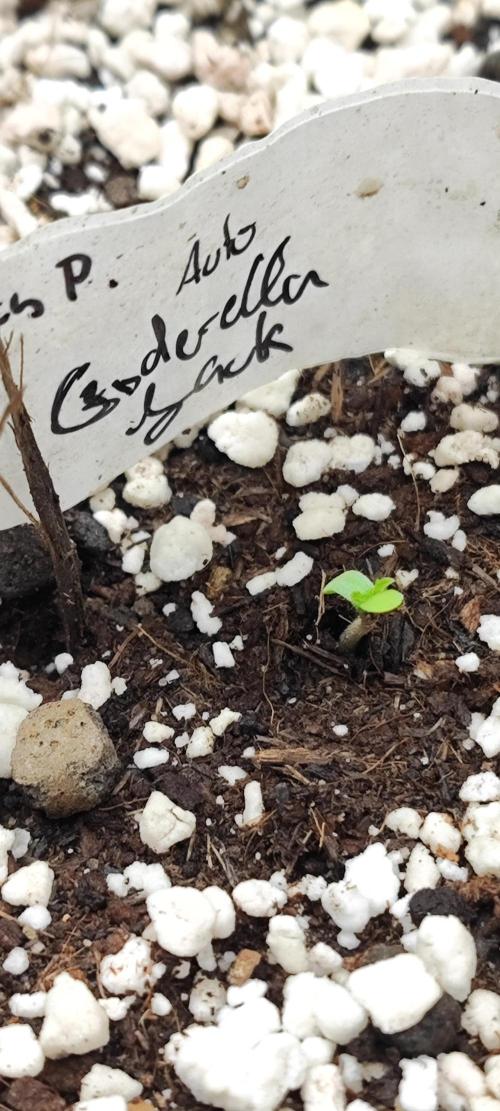
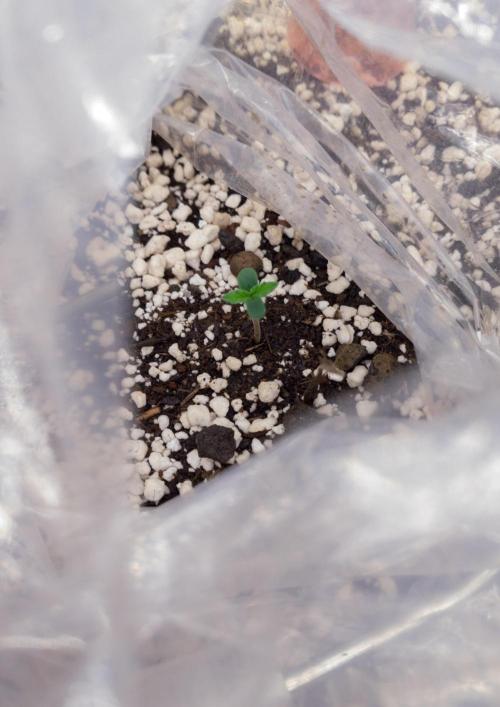
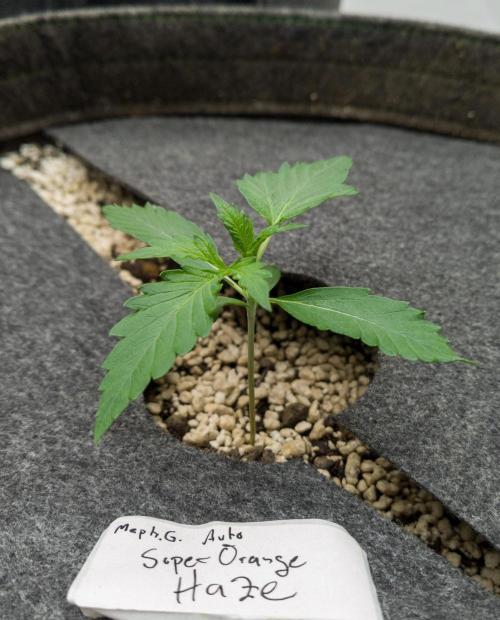
Pete_vs_Nature Week 2, instead of smoothly sailing before the more intense training weeks, provided another good opportunity to zero in on a couple of issues.
I had never experienced this before, but as soon as environment, lighting etc. can be ruled out for troubleshooting - everything else presents itself much more clearly. When one plant is drooping in the morning but the bottom leaves are praying a little too hard, it's one thing to notice and contemplate. It's another thing to see a completely different plant do exactly the same thing a couple feet to the left. Now, suddenly, it's back on me and what I do.
Something was off. ACJ#1 (culled) already started out like a bad memory from run#3, where my new medium composition gave me headaches about how highly I should dose my nutrient curves. Back in the day, Ca availablity & ratio to Mg, K were identified and fixed. But this time, just with one seedling again, I got bright white leaf-tips on their first set that decayed off quickly. Also, I got some early grey, round spots appearing, with the occasional brown spot reminiscent of Ca problems with Orange & Apollo.
The only thing I was sure about and didn't revisit was the pH input required for keeping my new medium happy & root friendly. Turns out - especially now that I had obtained terrible quality living soil for this run, that my plants were receiving +0.5pH at all times. Problem solved, lesson learned, anger and pride swallowed - and now we were finally on track.
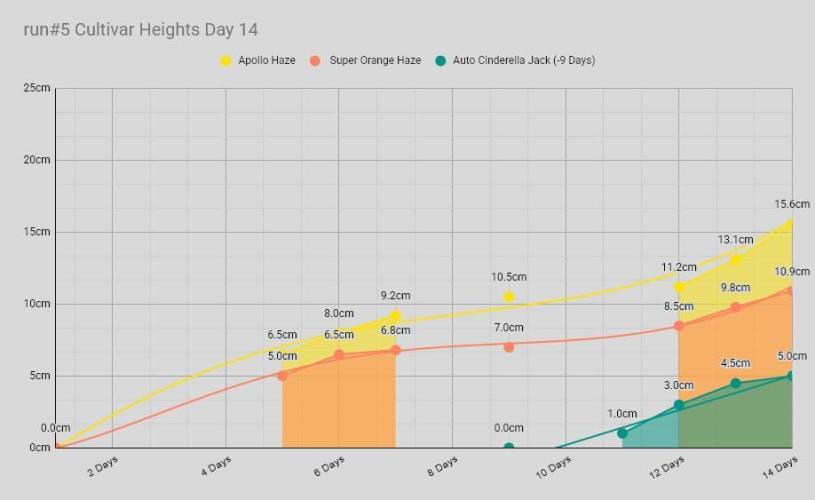
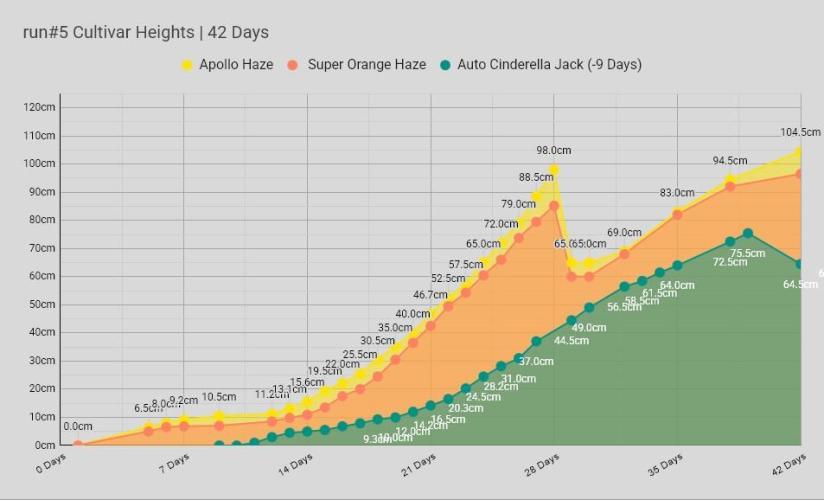
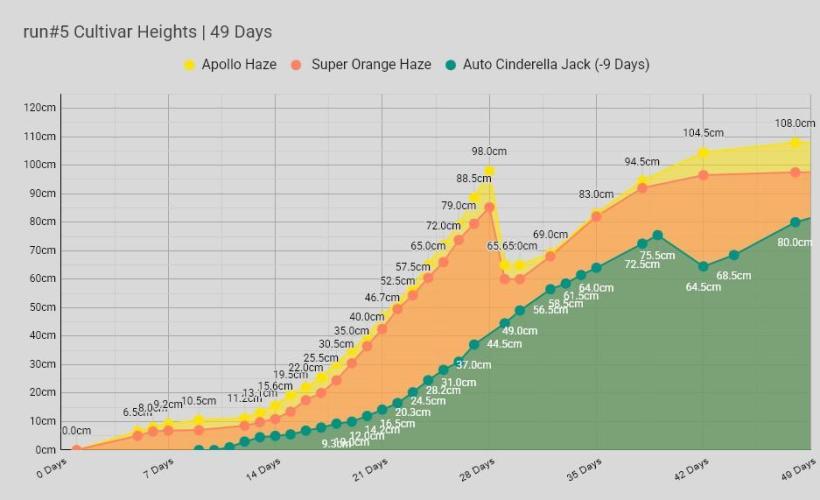
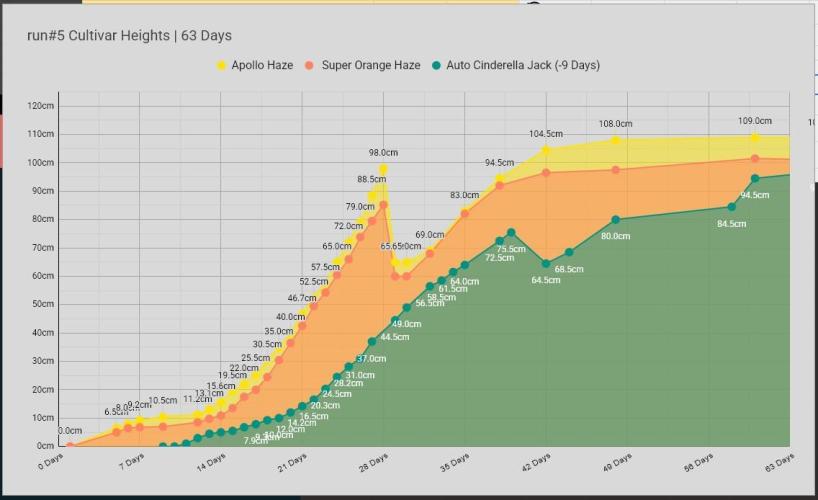
With all stretching protocols in place, this clearly explained why their initial, powerful start got interrupted and why they started behaving more like average plants in merely decent conditions. Fixing the pH issue (wait.. let me swallow some more pride) put them straight back on track and up they went, trying to find the best spot in the sun.
It's not the greatest feeling to start out an entire grow cycle like this (20% impaired seedling dev will affect harvest with Autos), but finding / fixing the problem and seeing plants respond quickly definitely is.
Some other things of note:
- slowly introducing Nights into the equation, plants getting acquainted with dark periods / metabolism shift
- watering still tricky with medium, cultivars can show over- and underwatering signs at the same time: low moisture retention top 3rd of medium
- root zone temps on the high side for oxygen availablity, but better than run#4 16°C nightly drops
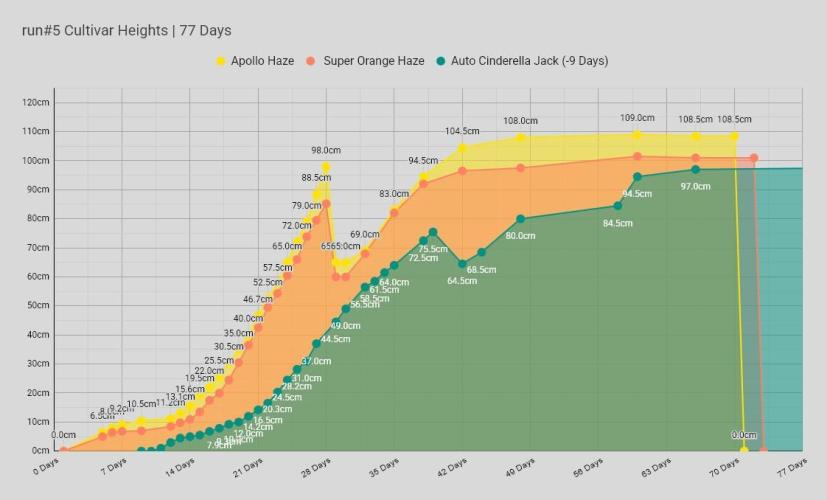
- introduced "Cloud" for younger ACJ (-9 Days) to arrive at proper PPFD with same light
- ACJ has special slot for nutrient composition analysis: receives dosages 9 days ahead of her age. (Guess who started burning first in week 3? Correct. Orange.)
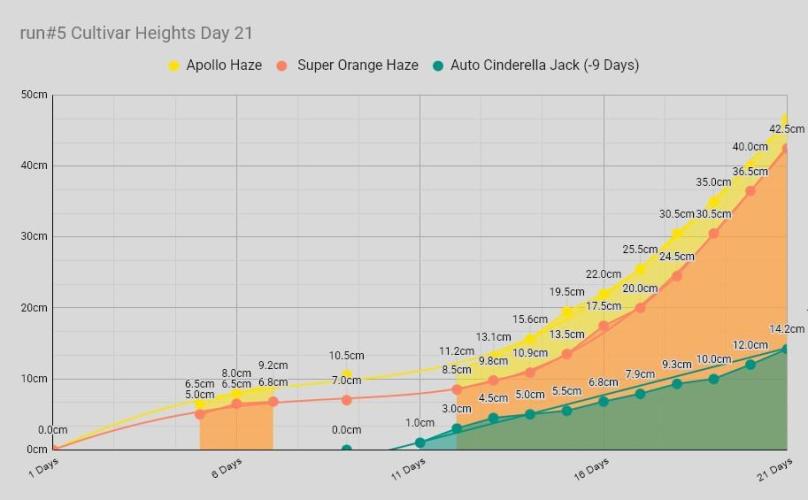
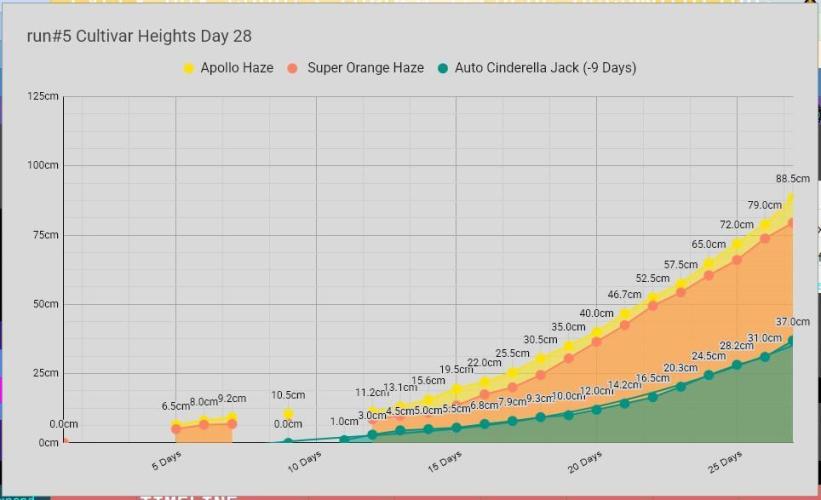
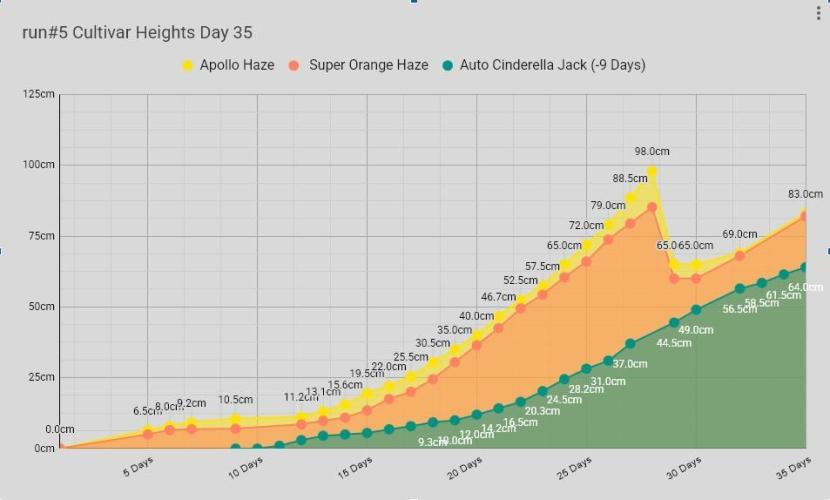
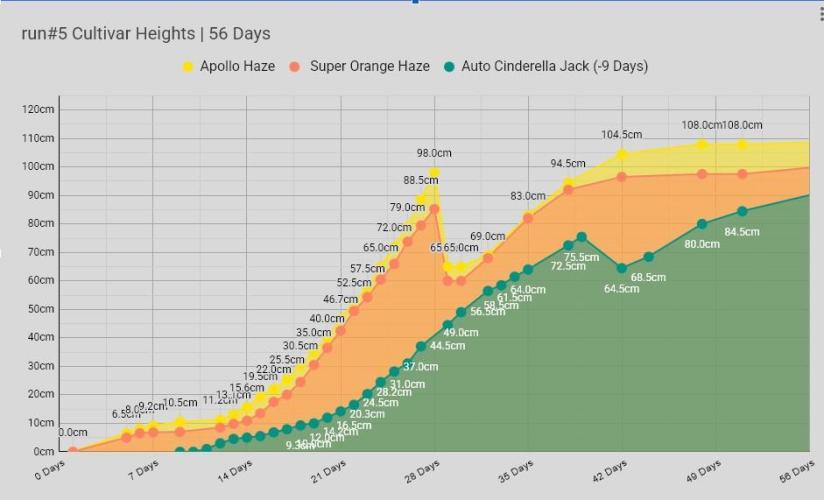
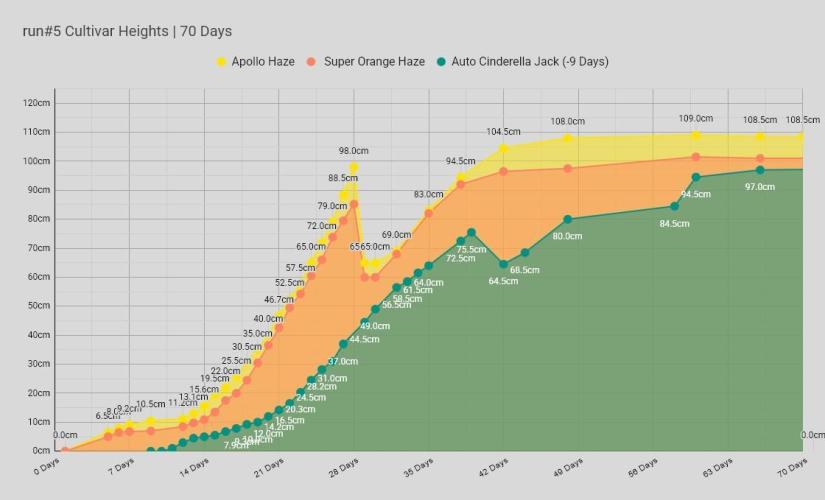
I attached a height chart so you can see that stunt going on and how they recovered.
Until next week!
Let me know if you see something worrying I am missing 👊
3 likes
comments
Share
3
Week 3. Vegetation5mo ago
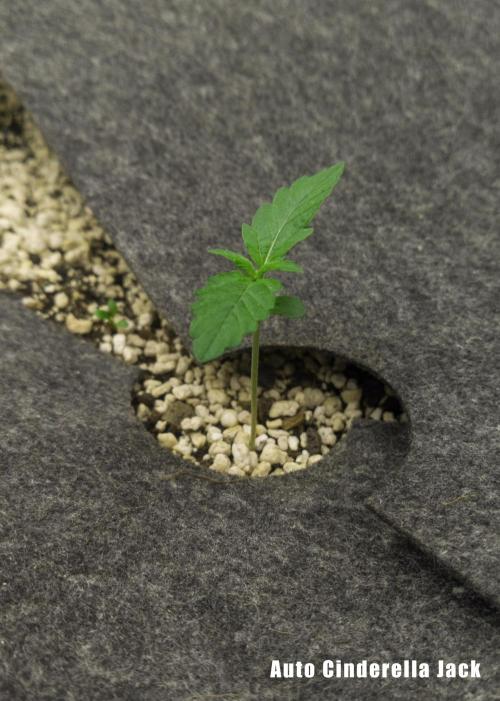
36 cm
Height
21 hrs
Light Schedule
27 °C
Day Air Temp
6.1
pH
Strong
Smell
53 %
Air Humidity
19 °C
Solution Temp
22 °C
Substrate Temp
24 °C
Night Air Temp
40 liters
Pot Size
65 cm
Lamp Distance
500 PPM
CO₂ Level
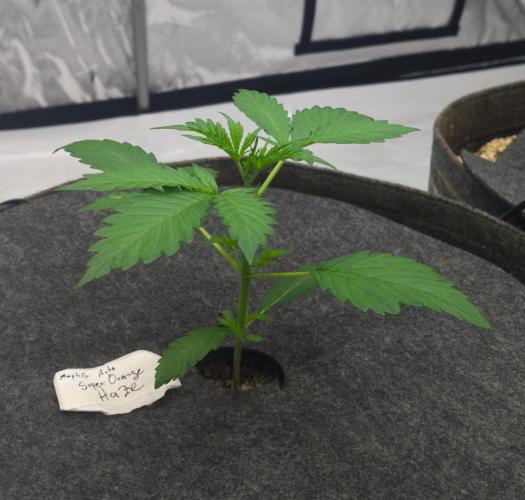
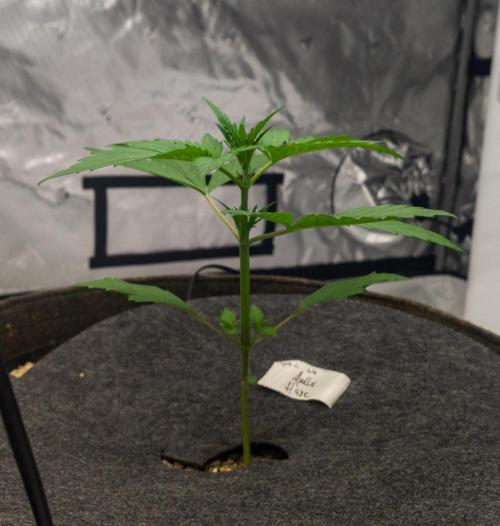
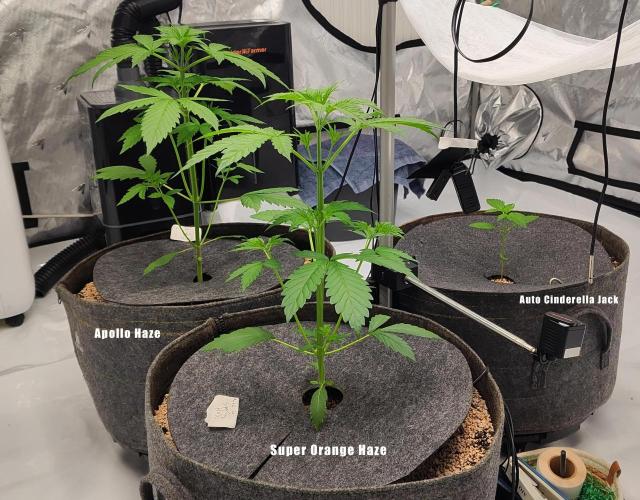
Pete_vs_Nature Week 3 is in the books, and boy did that pH discovery help.
(I missed to re-calculate pH for my medium mix, assumed a whopping 0.5 pH higher for 2 weeks straight and noticed some early grey round spots appearing with rare brown pigmentation as well, so Ca-Mg was likely inaccessible - and it was.)
The plants took about 2 days to rejuvenate, until they were so happy with the changes they shot up straight into the air. The stunt was real, and I am so glad I started tracking their heights daily now. This is hands down the best way to check how the plant is doing? They were doing so well in fact, that I started to get worried that I flipped too many of my available leavers to encourage stretching.
"But hey, I always wanted to see what those huge 1.50m plants were all about.." - goes my train of thinking usually, before I realize that 2m vertical space is not enough for a big plant container, a light hanging down, distance to that light, oh, and a huge plant.
So consequently the scrog-plan is back in the books, I am trying to look at ways to span nets in this big new space that used to be my bedroom, trying to get clever, but ultimately just realizing how I am locking myself out of the tent no matter how :)
With height constraints back on the table I also am going to super-crop, as this has been, hands down, the least stressful way for the plants to accept harsh training decisions. The idea is that one HST event (ideally slightly before pistil formation) stresses the plant less in total, than constant, repeated daily training events, constantly changing plant orientation and also, apical dominance spread. I might be wrong about this, let's talk during week 4-5!
Everything else has been, dare I say it, fairly straight forward. Looking good now!
6 likes
6 comments
Share
4
Week 4. Vegetation4mo ago
78 cm
Height
21 hrs
Light Schedule
27 °C
Day Air Temp
6.1
pH
Strong
Smell
51 %
Air Humidity
19 °C
Solution Temp
22 °C
Substrate Temp
24 °C
Night Air Temp
40 liters
Pot Size
40 cm
Lamp Distance
500 PPM
CO₂ Level
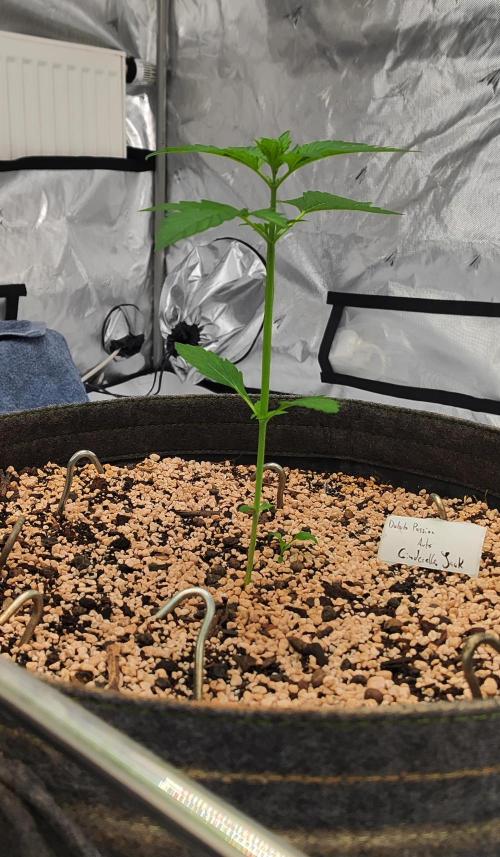
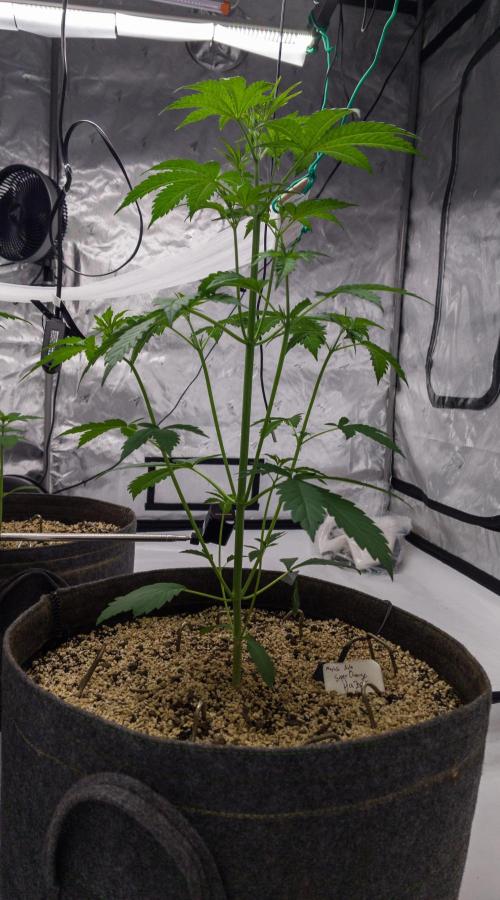
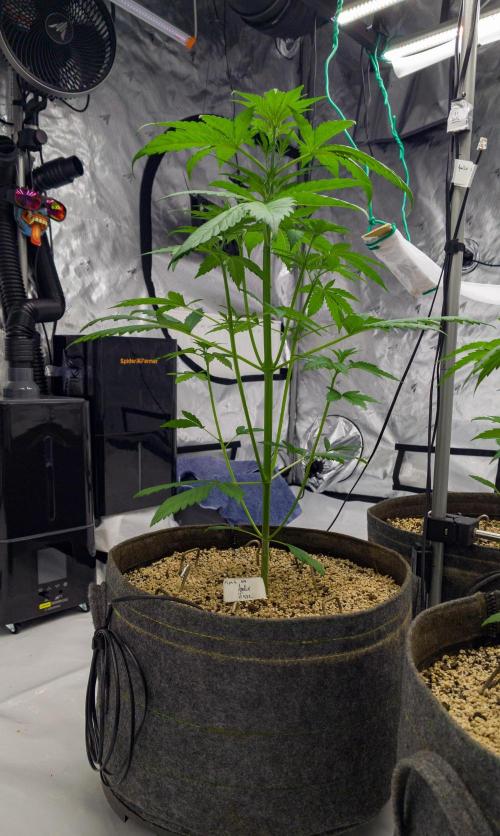
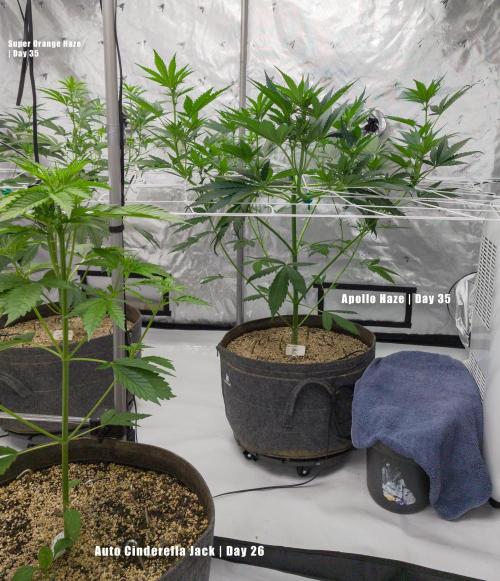
Pete_vs_Nature Week 4 started pretty great, the plants were finally exploding in ways I did not see coming. They also grew up nicely into the high lights that used to be at ~65cm, so PPFD adjustment was not necessary for the big girls as they grew into the range by themselves,
ACJ (9 days younger) had her "cloud" to slightly shield her from the sun.
Nutrients:
Work on the plants was fairly limited. I did notice some early burn on Orange (not surprising), accompanied by a lot of deep green, slightly wrinkled leave borders. So this was my nitrogen curve shooting up way too early, expecting vigorous branching and foliage creation for 10 week Hybrid averages, when this strain can take it easy for up to 13 weeks.
I wonder whether the N-toxicity caused the burned tips for Orange as well, but I am convincing myself this can't be the only factor.
Guess what we can learn from this? I'll tell ya: Cinderella Jack with 9 days younger is receiving that same ramp 9 days -ahead- and is showing absolutely no signs of excess N or burn. When I read: "N-tox" and "nutrient burn", I should read: "Sativa / Landrace" and "likes lighter feed" amongst other things.
Train decisions:
Once again, I did try to employ leaf tucking in order to expose shoots and perhaps prevent super-cropping entirely. But I just cannot find a way to do it as long as everything is stretching out nicely.
The internodal stretching on well fed and tended for Autos on Haze / Sativa genes with protocols supporting stretch, leaves me with leaves that are way too high up to tuck down without breaking them. The shadowing fan-leaves are always 2 nodes up and provide just some shade for those young nodes to stretch.
Those nodes seem to have two modes to me: stretch out high and shoot up -in between- their shadowing fan leave petioles and stem (those will be big); or bend outwards and kinda stop stretching, as they are "thankful" as low priority shoots.
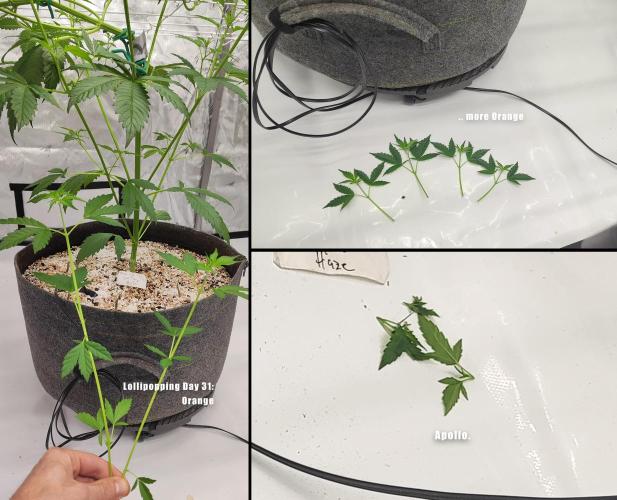
Nothing else to add, trucking on, the scrog-net is looming over their heads. I am loving their heights but I have a confession to make: First day week 5? Those beautiful plants will receive their single HST "training" session and will be VERY upset for a day or two (during which I will also lollipop cleanly).
5 likes
comments
Share
5
Week 5. Flowering4mo ago
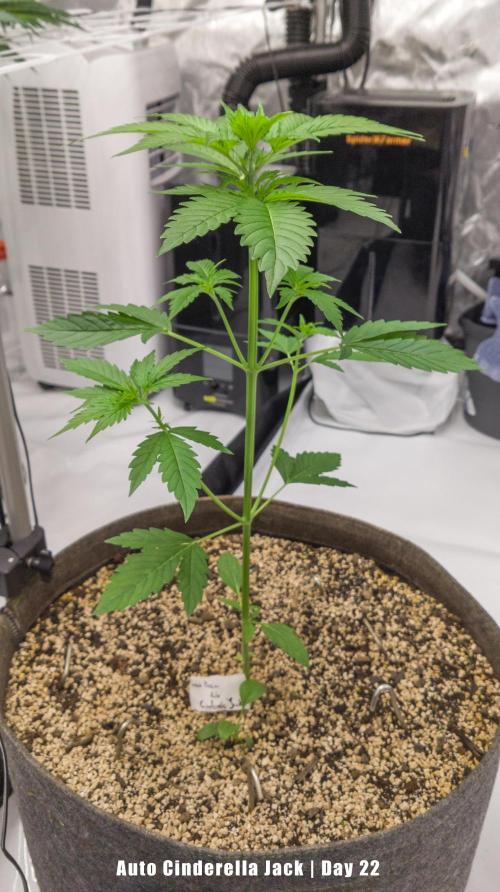
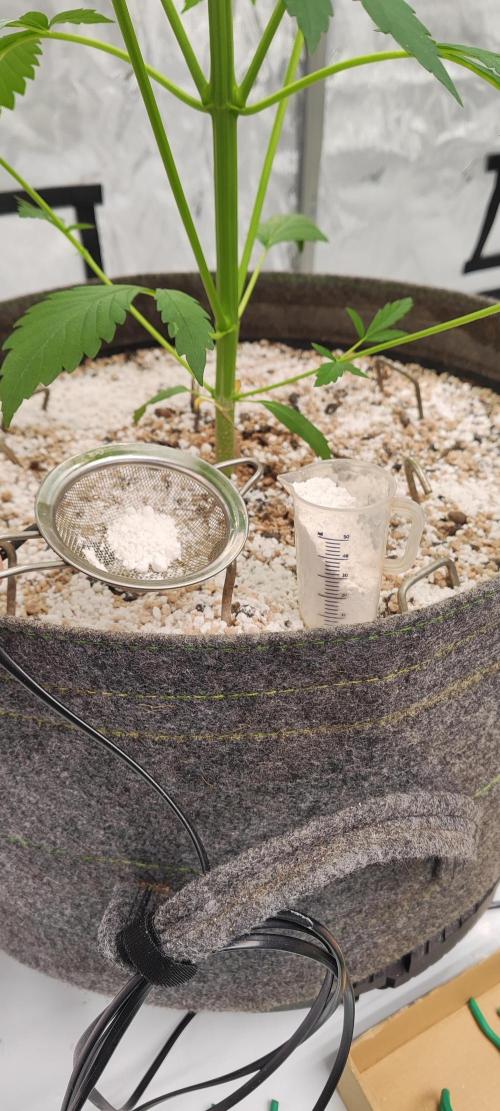
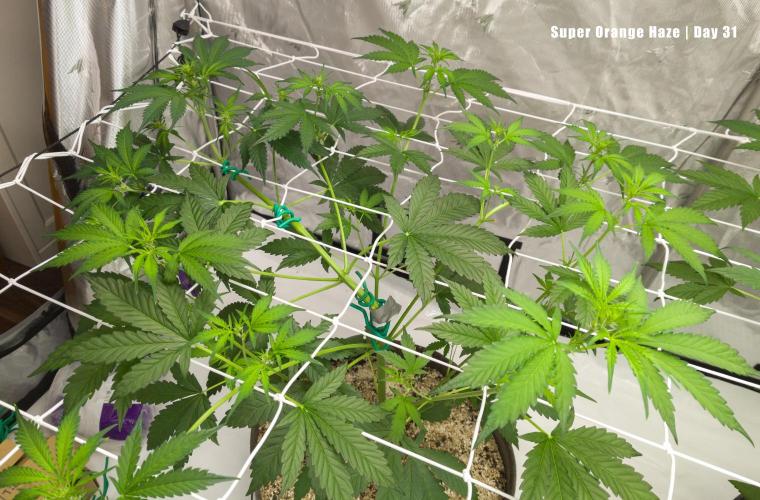
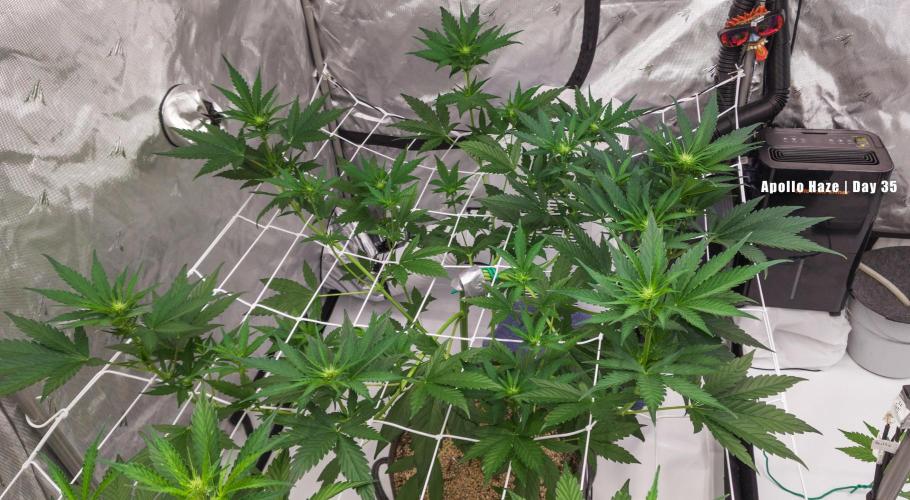
82 cm
Height
19 hrs
Light Schedule
26 °C
Day Air Temp
6.1
pH
Strong
Smell
50 %
Air Humidity
20 °C
Solution Temp
22 °C
Substrate Temp
23 °C
Night Air Temp
40 liters
Pot Size
65 cm
Lamp Distance
400 PPM
CO₂ Level
Pete_vs_Nature |
It is always awkward for me to approach training time. On my 5th grow, late super-cropping is my the weapon of choice for the second time, to try to zero in on several goals:
- largely increase uniformity in flower maturity
- keep 'total' stress impact / ethylene stacking minimal, or else (nanners, run#4 Mango)
- allow for more balanced VPD zones with reduced banding | this just amplifies your protocol efficiency, making the numbers from the sensors more meaningful for automation
So much for the stuff on paper.
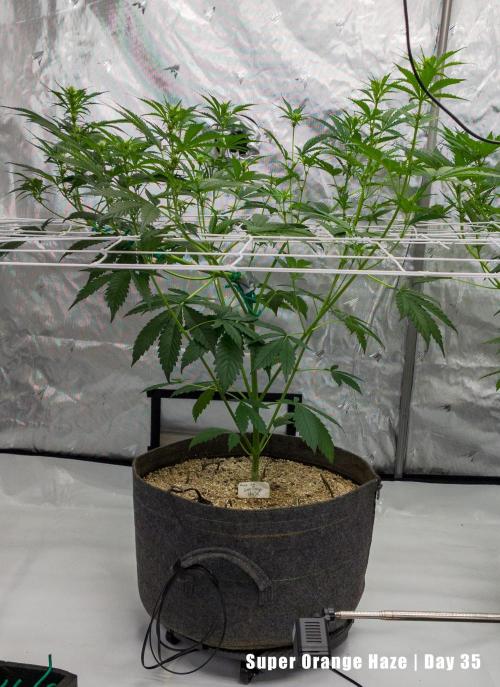
I did delay for a few days with the stressful HST event (for my nerves, mind you), as there are so many things to keep in mind. I decided to pick the middle of node 4-5 of the main stem as my single break point. For the first time, the colas were too woody to massage out, as I had feared. For both Apollo and Orange, the sections slightly splintered and were not able to support the weight of the large growth above without hanging supports. I also used garden wire again to prevent sharp bents, , then taped over them to reduce exposure.
Both plants healed up vigorously and within 2-3 days, the troubles were mostly forgotten. They got sorted into the scrog and after gaining some more height, I moved colas out- or inward depending on flexibility. The result is never quite stunning to me, as symmetry is off the table but it does work.
The new space for the plants comes with a new learning curve. I am no longer managing climate *around* a tent or in a hybrid lung room coupling formation (that kept me guessing wether I was still on earth, trying to grow 3 plants). Instead I got a clean, nice isolated chamber that is asking me very troubling questions about my understanding of climate dynamics, energy conservation and general sanity; as my mind tries to place entropy at the core of the issue.
Unfortunately no controller (AC-I 69 Pro or SF GGS) really offers the granularity needed (0.1 - 0.5°C differentials instead of 1°C, dumb dead-zone management without any advanced controlling schemes) and I almost want to just transfer everything into a custom system, working on better rules.
This means AC activity in the tent is now a very meaningful climate event that will crush my VPD every 4 minutes, unless I figure out how to balance the system. This is possible with delayed "day times" for certain devices, preventing harsh swings on activation, deliberate sensor-miscalibration where suddenly -0.1°C is possible, creative functions (have fan blow more wind on low VPD) or just opening a door flap at the right time.
I'm rambling myself into week 6, so hard cut - I'll see you over there! 💨
|
4 likes
comments
Share
Used techniques
ScrOG
Technique
Super-Cropping
Technique
LST
Technique
Lollipopping
Technique
6
Week 6. Flowering4mo ago
95 cm
Height
19 hrs
Light Schedule
26 °C
Day Air Temp
6.1
pH
Strong
Smell
49 %
Air Humidity
19 °C
Solution Temp
21 °C
Substrate Temp
23 °C
Night Air Temp
40 liters
Pot Size
55 cm
Lamp Distance
400 PPM
CO₂ Level
Pete_vs_Nature |
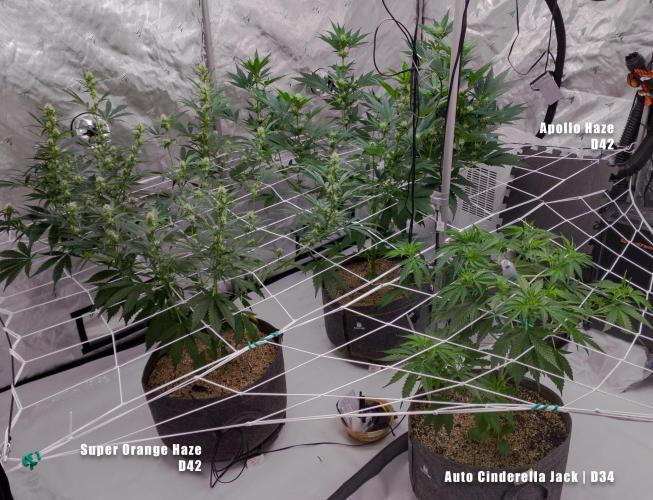
Week 6 is finished and we are looking pretty good on Super Orange and Apollo Haze.
Terps:
-------
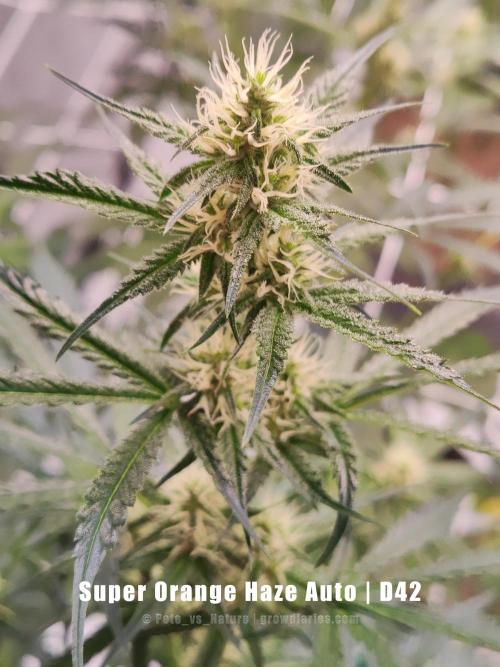
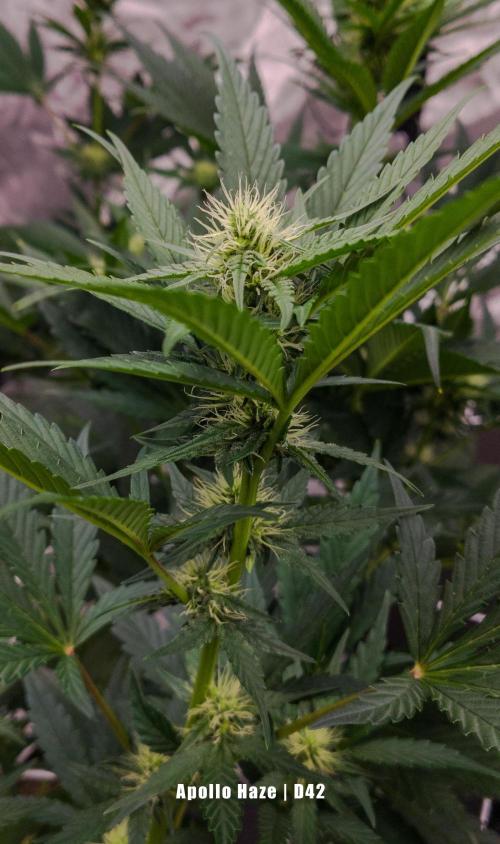
Orange has started to fairly loudly emit her incredible, warm, mandarine-candy (no sours, bitters) fumes. The terpinolene is playing tricks on me, never fully grasping the exact fruit or likeness in the profile. A warm, sweet & thick mandarine-syrup mixed into your local humidifier would likely emanate a similar scent. Apollo is trying to dominate the tent, but Orange has taken over with surpisingly intense trichome expression.
The fact that the tent smells of her mostly means these terpenes are evaporating at present temperatures. I can either keep the temps stable (my week 6 choice), accept that many sensitive terps escape as they are built, but focus on a relaxed environment for the cultivars; or, I could just drop the temps right now and target high limonene / monoterpene retention (one of the secret sauce Haze effect ingredients).
Cool distinctions we can make these days, huh?
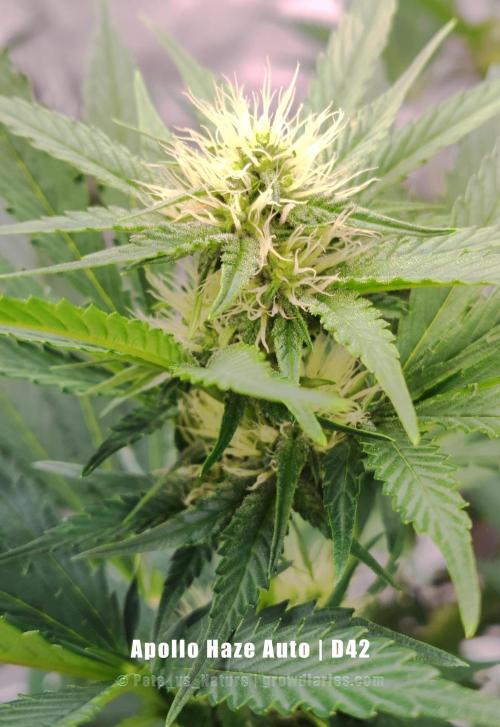
Apollo still retains a fairly 'rude' veg spice smell. It is detailed, balanced and tuned around an umami like sellerie, and most definitley not fruity. I was already afraid I would suffer another pheno or genetic expression as with 505 Headbanger (no fruit smell besides some citrus, heavy eucalyptus and mint notes, sweet after cure, some pine here and there)
I did however happen to crush some trichomes on accident and to my surprise I got a heavy citrus-palette that is almost pure lemon juice. Think of all the citrus fruits you know mixed in a lemon juice cocktail, take a whiff and feel your nostrils burn!
She is able to conserve the citrus contents well apparently, so I am hoping for more suprises as she ages and shifts focus and am happy with her state.
Auto Cinderella Jack
------
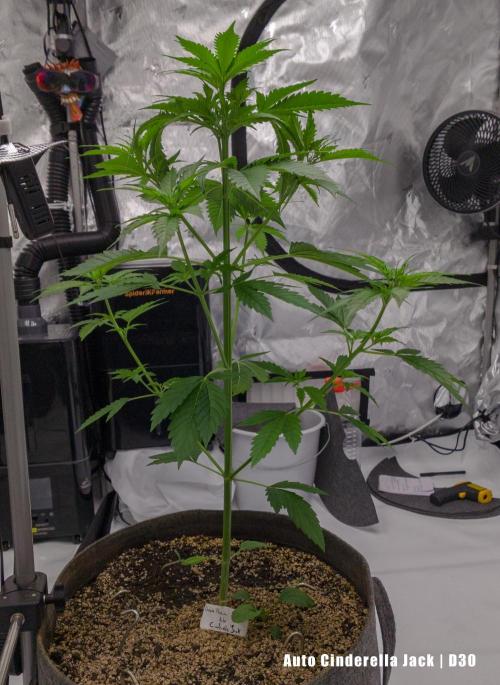
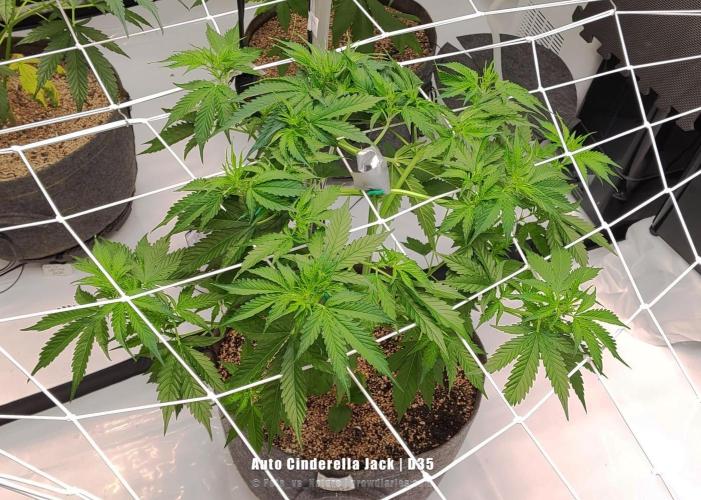
ACJ still is a bit quieter and usually smells like fresh leaves.
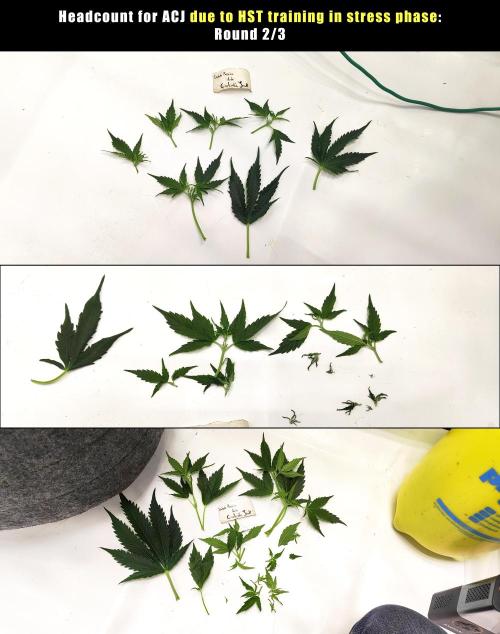
She unfortunately endured many invisible stress factors, like over-watering or wind & climate events (see those curled up, dry leaf tips?). Those interfered with the HST super-cropping / scrogging timing. As a result, instead of starting her flowering stretch, she turtled up. Every big leaves acts as a cup for growth underneath, she went from relaxed expansion to safety via density.
In no way will she not flower happily at some point, but her situational difference decided over success of the training technique employed.
Note: This cultivar often has a bushier pheno, but I have seen her do great and she would stretch nicely when -everything- was correct.
Nanners:
-----
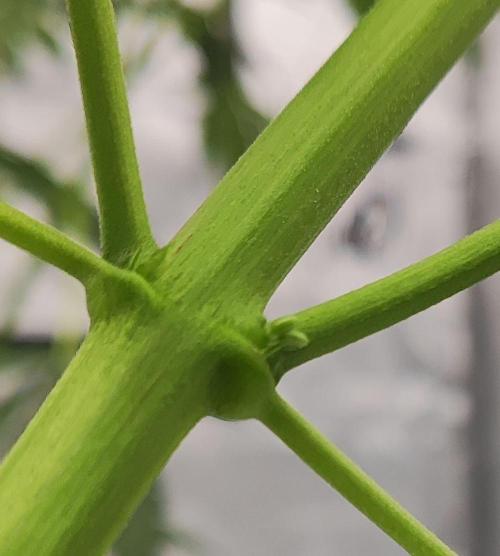
The shocker this week was the discovery of undisputed nanner structures on BOTH SOH and AH. They developed exclusively on lower node branches, where you would usually see isolated bracts / calyxes covered with trichomes and 2 pistils or so.
I removed what I could, but mentally, this now puts me in an awkward position. Now, the fun is out. Stress management is everything, forget about maximum plant performance.
I wonder why this is. So far, I grew 9 42FB cultivars with zero nanners; and up to this point 5 Mephisto cultivars, out of which 3 produced nanners. But that is not enough data: All Mephisto cultivars displaying nanners have been leaning sharply into the landrace-sativa type. Only one cultivar was assumedly stress-pressured into hermaphroditism (OSHM / Mango, consistent light burn).
Perhaps the plants felt their environment was a bit lacking in population density and sensing other females around, 2 cultivars started shedding pollen from their lower structures, leaving most flower-sites ready for actual outside pollination. Or, this is just wishful thinking.
We'll see in week 7!
3 likes
comments
Share
Used techniques
Super-Cropping
Technique
LST
Technique
ScrOG
Technique
7
Week 7. Flowering4mo ago
100 cm
Height
19 hrs
Light Schedule
26 °C
Day Air Temp
6.1
pH
Strong
Smell
56 %
Air Humidity
20 °C
Solution Temp
22 °C
Substrate Temp
24 °C
Night Air Temp
40 liters
Pot Size
50 cm
Lamp Distance
380 PPM
CO₂ Level
Pete_vs_Nature |
Week 7 is in the books, and boy, looking back through them, the story is not all sparkles for run#5.
Climate & Uptake
- - - - - - - - -
Summer is hitting my flat relentlessly during week 7, when proper climate management becomes key to preserve precious monoterpenes. My self-taught "knowledge" about climate management needs daily challenging. It is not so much the heat, but the humidity that comes along with every rain period is knocking my leaf-transpiration based VPD off the charts.
As a result, the VPD is too low, the plants drink less, leaves are hanging down because watering becomes a gamble
"Growing plants" in my now enlarged sativa space again became all about managing devices and orientations, challenging air flow preconceptions with implications for temperature, and figuring out how not to pester the plants into stress phases. As a result - I see a chain of bad events in the making that could spiral into disaster.
Cultivars:
- - - - - -
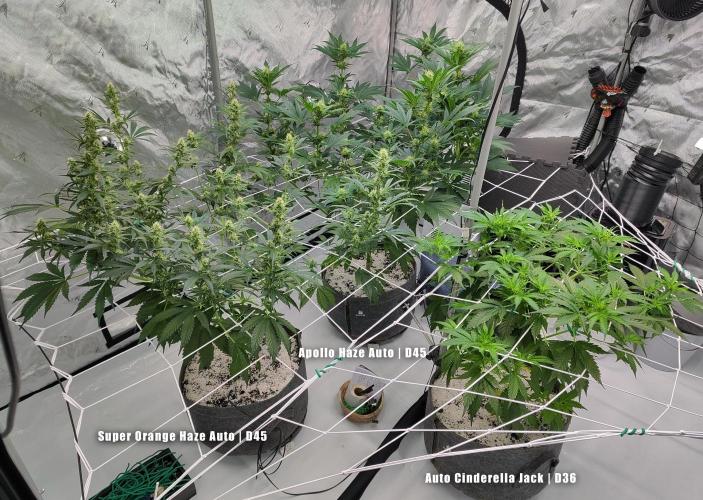
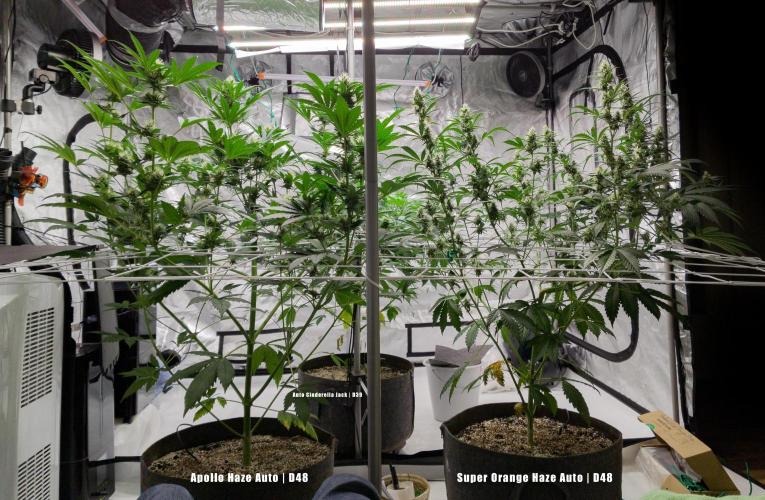
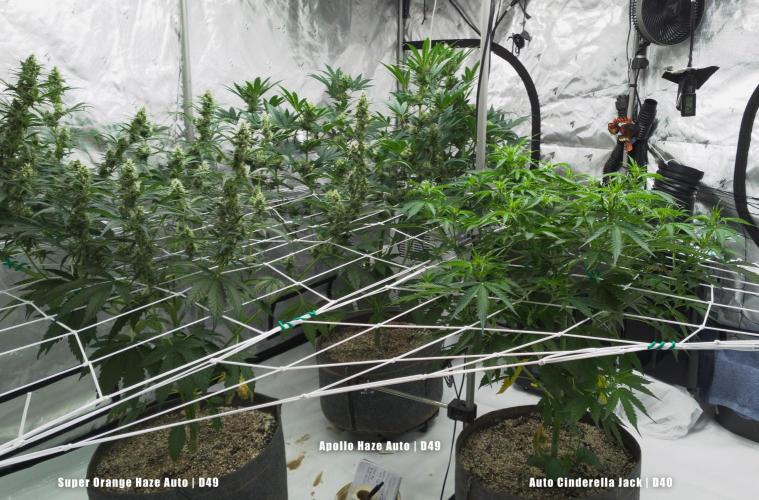
* Super Orange Haze Auto
She looks relaxed and a little underchallenged, but at the same time, displays quite the pace. Her trichome production started the earliest, meaning she found plenty of resources to build a complex defense system. At my temperatures, her smell still dominates the tent with a sweet tropical sweat reminiscent of mandarines. She receives less light than AH on average, which is visible on her deeply dark and green foliage around her physiological central cola. Her structure is set and done. No defoliation, just tucking some leaves every day to avoid moisture pockets. I think I am starting to name those subconsciously, they have my phone number.
* Auto Cinderella Jack
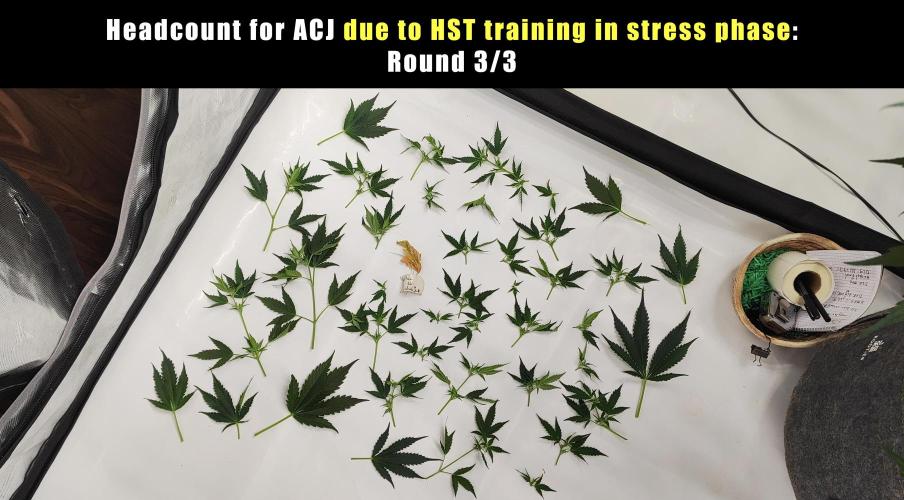
Our youngest plant in the tent is being loud and clear on how she liked the super-crop event, when she already had too many problems on her daily schedule. Unlike Orange and Apollo, she turtled up - and then exploded laterally. This is a disaster for me as a grower, as she shows strong vigor in the wrong direction. Every branch is compact and utilizes silicate to the fullest strength, her response to Cytokinin is unbelievable. With every leaf I tuck or remove, with every larger flower formation to lollipop - I see how much energy was already wasted and even worse, that I will have to lollipop and defoliate deep into the critical flowering phase.
Her vigor is starting to show in plasticity, but trichome production is the real feedback: No trichomes? No reserves for defence, even with full nutritional support. Canopy PPFD (too high, no stretching), Watering (only cultivar without $oil $ensor), low VPD phases, LST that is now just constant HST - this is why we cannot have nice things.
Her flower sites have -no- smell to me, but surprisingly, the foliage does. Every defoliated leaf smells like a bright green tropical fruit, soft, shy and pleasant. I was expecting a typical hybrid 'stink' with hopefully high limonene, but I think I am smelling terpinolene, which is really surprising.
* Apollo Haze Auto
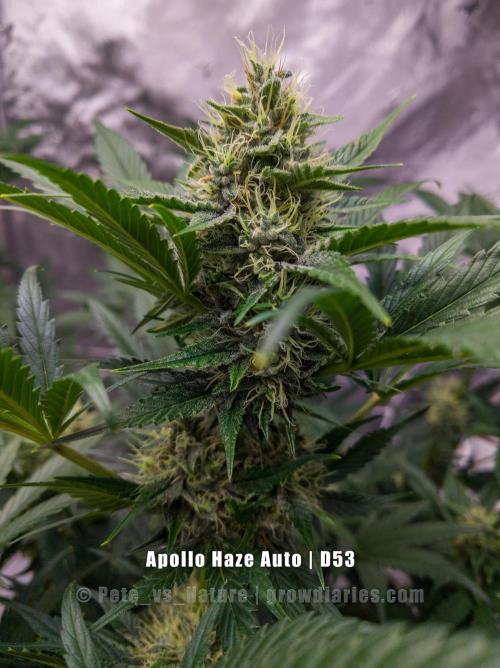
Apollo has launched and is building massive flower bases. She is the largest plant I have had the pleasure to grow, and my earlier scouting for dense colas did return with the seed I got. Surpisingly, high limone contents provide the proper kind of "sour" - a deep tunnel into the lemony citrus domain ending in a stream of concentrated and tangy citrus bitters. She only smells like this on soft trichome rupture, when otherwise there is a slightly unpleasant and loud musk that I simply cannot place. If you have grown cannabis before - it is the smell in sativa hybrids that already tells you there will be a slight debilitating quality to your flower product.
I am not detecting high levels of caryophyllene, terpinolene or ocimene, so a limonene foward sativa hybrid is likely what we will be getting here.
Her leaves are always praying too much and have a lot of pressure, which puzzles me right now. Her petioles tell me she needs more P to support her goals.
Hermaphroditism | Nanners:
- - - - - - - - - - - - - - - - - -
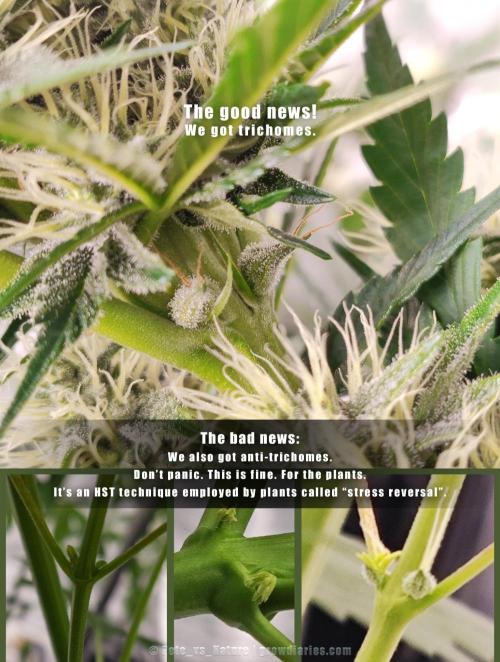
I have a challenging, but very rewarding run#5 project going. Early hermaphrodite tendencies, a first for me, meant some pollen has been spread at around week 7 (see pics), and I am gambling against my financial capacity to ever grow cannabis again, that these specific nanners did in fact not pollinate my entire tent.
I see clarity in insanity: "these nanners" clearly tried to pollinate already existing female plants in "hopes" to build a denser environment; right? How else could a plant start to produce early nanners only on lower growth, get the pollen ready, shed only underneath itself, have another cultivar do exactly the same thing right next to her -- and then both transition into flower like nothing happened?
I know I am pulling this out of my bud, but hey - it's just me here, so narrative is sometimes all we can muster when no rationale is available. It calms -me- down to do the rest of my job properly. And should I be correct, there is a pat on the back in it for me as well.
- - - - - - - - - - - - - - - - - -
Stick around for week 8, things are not getting boring 😎
5 likes
3 comments
Share
Used techniques
ScrOG
Technique
Defoliation
Technique
Super Late Lollipopping (SLL)
Technique
Stress-Reversal
Technique
8
Week 8. Flowering3mo ago
101 cm
Height
18 hrs
Light Schedule
26 °C
Day Air Temp
6.1
pH
Strong
Smell
56 %
Air Humidity
18 °C
Solution Temp
21 °C
Substrate Temp
23 °C
Night Air Temp
40 liters
Pot Size
50 cm
Lamp Distance
380 PPM
CO₂ Level
Pete_vs_Nature |
Week 8 is in the books, as is week 9 and 10 to be honest - but I don't have to be, so just week 8. Yap.
Climate management is now the main focus |
Humidity has been out of control as I flip my AC from cooling to drying mode. Which, as you may know, like I do now, just causes a maximally cold jet stream and your dry air goes *poof* outside the building.
So no help there. Ye old SF Dehumidifier is looking at this tent and sweating out what it can, which is not a lot.
The result is a VPD that is way too low for my plants to uptake more nutrients with, and this for almost a week straight.
Cultivars -- are doing just fine to be honest
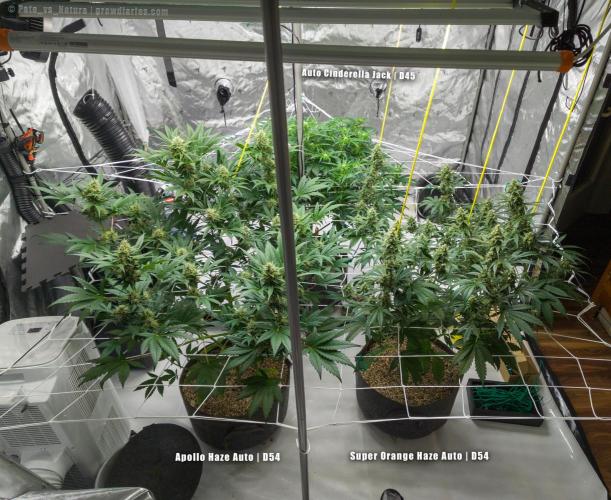
* Auto Cinderella Jack has been recovering from my super-late pruning interventions, so I gave it a last round. She grew out what feels like another smaller Autoflower as she realized what is possible with her new structure. I can't trim another bag of larfy buds for 16 hours straight, so I had to make a choice. The nutrient uptake being impaired by VPD alone (her DLI is a bit too high here as well) means no big buds as the clock is ticking.
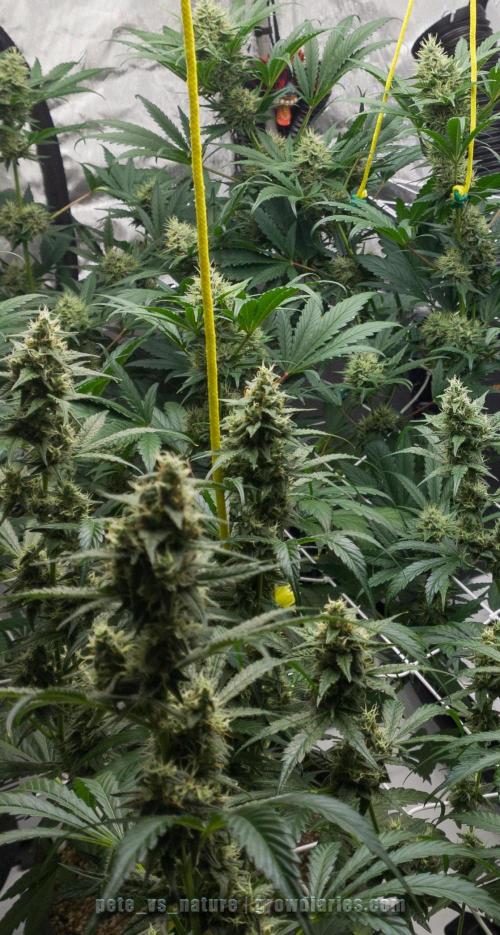
* Apollo Haze Auto is just trucking along. I am watching in awe on how big these bud bases are getting. She seems a little advanced for her age,. Stem rub is pure lemon bliss, buds otherwise reek a bit of a healthy musk I would not buy off the shelves for. I am not worried - her trichomes burst out with lemon and sours / bitters when ruptured.
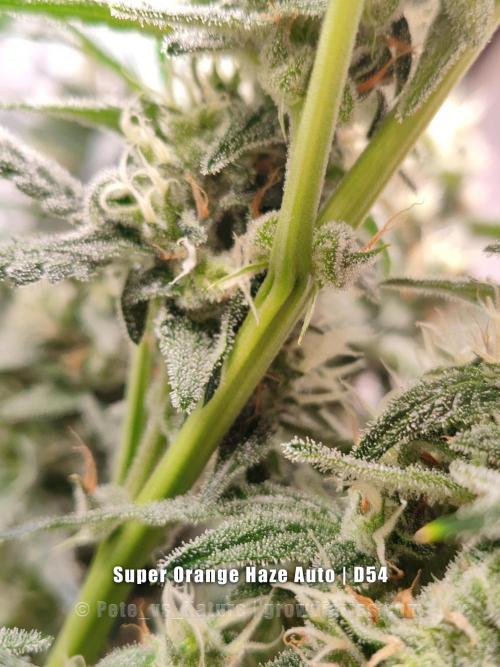
* Super Orange Haze Auto continues to dominate the tent with a sweet and subtle mandarine aura. Her rested state smell is starting to get a bit funky however, sesqueterpenes are accumulating as a dense protective layer. I do not hower fancy a tiny cheesy tingle in that mix :)
Also looking pretty advanced for 8 weeks, I am starting to wonder what caused the racing. It likely is the same cause that spawned nanners (they seem to have stopped spawning).
I attached vids, pics, stats. Hope you find something you enjoy.
Happy growing everyone.
- Pete
2 likes
comments
Share
Used techniques
Defoliation
Technique
ScrOG
Technique
Lollipopping
Technique
9
Week 9. Flowering3mo ago
101 cm
Height
18 hrs
Light Schedule
27 °C
Day Air Temp
6.1
pH
Strong
Smell
56 %
Air Humidity
18 °C
Solution Temp
22 °C
Substrate Temp
23 °C
Night Air Temp
40 liters
Pot Size
40 cm
Lamp Distance
380 PPM
CO₂ Level
Pete_vs_Nature |
FOR THE HASTY READER:
PATHÉ DISPATCH — THE TERPENE FRONT, WEEK NINE
[crackle of newsreel film, brass fanfare]
GOOD EVENING, AMERICA. The heat came at dawn.
DATELINE: THE GROW TENT.
For nine long weeks our correspondent has held the line against the elements — and this week, the elements brought FRIENDS.
Rain. Humidity. A wall of air registering THIRTY-EIGHT DEGREES CELSIUS, greeting our man at his own bedroom door like an unpaid landlord.
But here, citizens, the CRUELEST TWIST of the campaign: the Inline Fan — our man's own light-cooling apparatus, his LOYAL SOLDIER — has TURNED. No longer does it expel the hostile hot air. NO. It now expels the cool, dry air we manufactured at great cost, and welcomes the enemy IN.
Betrayed by his own ventilation, our correspondent reports the device "showed him the door with a straight face."
A DARK DAY for climate control.
[ominous timpani]
THE HOME FRONT.
Windows: TAPED. Bedroom: DARKENED. Two air-conditioning units labor ROUND THE CLOCK while our man — and we quote — becomes "a guest in his own noisy bedroom."
At dawn he rises to haul TRAYS OF WATER through LAYERS OF SHIELDING, that he might reach the door.
His reward? He gets to close a tent.
AMERICA SALUTES HIM.
[bugle]
NEWS FROM THE CULTIVAR REGIMENTS.
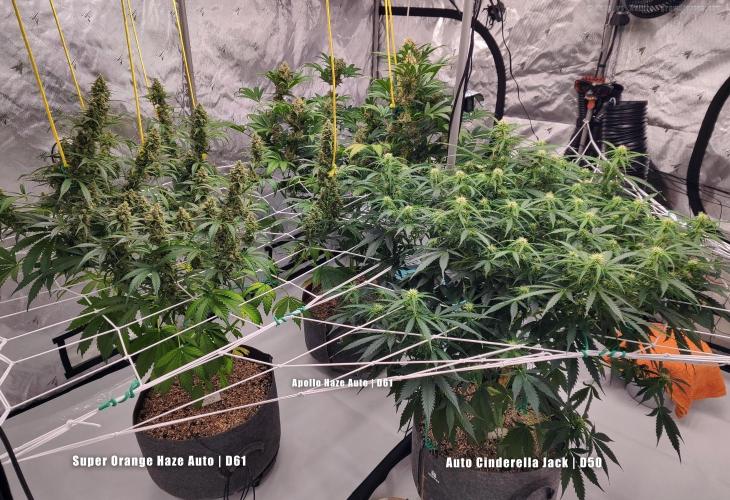
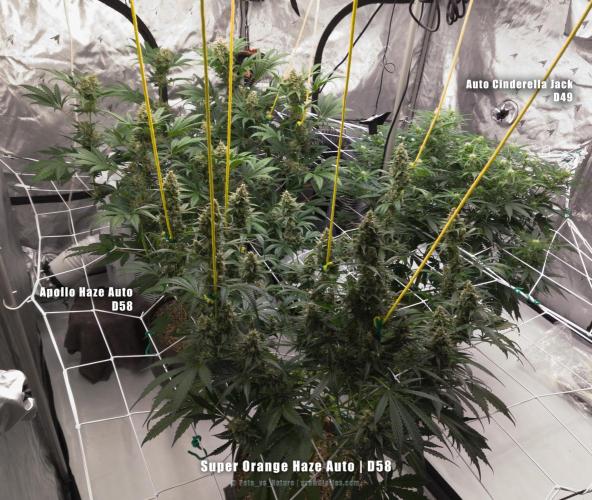
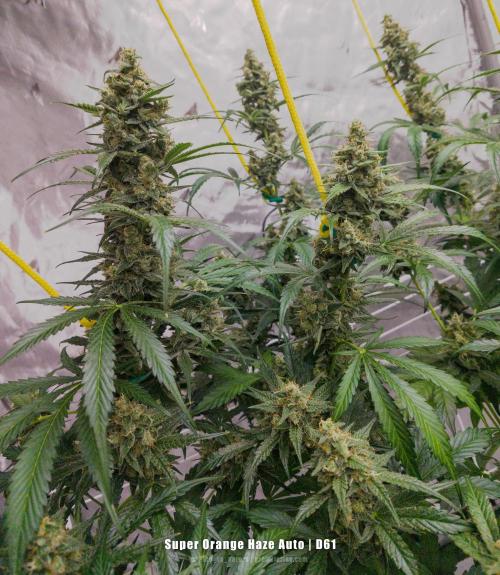
Privates Super Orange Haze and Apollo Haze — model soldiers — have gone into full senescence IN PERFECT FORMATION, racing to the finish. Orange has surrendered her mandarine perfume for a SPICY HAZE. Apollo holds the line, citrus erupting ONLY under trichome fire.
But WHAT OF CINDERELLA JACK?
[record scratch]
This correspondent is, and we quote, "OUT OF WORDS."
Ordered to flower, Private Jack has instead gone AWOL from her OWN CLOCK — six days behind schedule, FIFTEEN behind her comrades — demanding endless grooming like a general who has forgotten there's a war on.
[stern voiceover]
AND ON THE SUPPLY LINES:
TREACHERY OF THE HIGHEST ORDER. Our nutrient products, citizens, arrive bearing GIFTS. Carbs, yes — but SMUGGLED IN alongside are unwanted magnesium loads, rogue kelp hormones, GOOD INTENTIONS NOBODY ASKED FOR. A product called Recharge, we're told, DESERTS ITS POST the moment the mission changes — one hour a trusted ally, the next a LIABILITY behind our own lines. The war within the war.
[triumphant swell]
YET THERE IS HOPE.
In a SECRET LABORATORY, our correspondent unveils a PROTOTYPE — a blue-light contraption of his OWN DESIGN — deployed not to WIN, but so the plants "behave as if NOTHING CHANGED." A weapon so subtle its greatest triumph is that no one notices it fired at all.
MEN OF SCIENCE, take note.
Will Run Six bring PEACE? Our man's verdict, in two words:
"FAT CHANCE."
[fanfare, film flickers out]
THIS HAS BEEN A DISPATCH FROM THE TERPENE FRONT. GOODNIGHT.
------------------------------------------What this was based on:
*** Week 9 is -over-, hurray! ***
Intense outside heat & humidity shaped what plant growing is all about - understanding your climate devices and THEIR individual climate needs.
My Inline Fan on custom VPD control no longer sucks out hot air, it actually removes the cool + dry air I produce, and exchanges it against hot & humid terror-air. In the midst of the heat crisis, my light-cooling solution is showing me the door with a straight face.
Needless to say, this spiraled into heavy manual labor sessions; oh and questioning reality, when climate behavior is mapped out on 2.5D charts with twirling vortices in the middle. I needed a less accurate, pragmatic approach, because I wasn't doing rocket science. I was doing no science, trying to understand science.
Back to the board I went, for a moment had AI develop a climate simulation room in which I could chain all my devices together and see the mess unfold in isometric perspective. This was good, but warranted a lot more work - so I didn't have time for the prime solution. Cracked windows had to be taped shut with exhaust channels and blackened out. Airflow is now registering 2 hot-air-exhausts for the lung room and new: diverse options for sourcing fresh air (cracked bathroom window - low temp, high humidity; kitchen air - gains too much heat as it travels; house air - cool but invites pathogen risks).
Two AC units now have to work around the clock and I am merely a guest in my darkened, cool & super noisy bed room. When I wake up, I move large trays of dehumidifier-water, try to escape several layers of shielding material to get out of the door. Here, a wall of about 38°C greeted me when I had still hosed the exhaust of AC#2 into the living room. My prize? I get to close the tent doors of the grow space and sleep in darkness. Even the tent slits spray interesting patterns onto the wall, sometimes you can make out moving foliage.
*** Oh wait, the PLANTS! ***
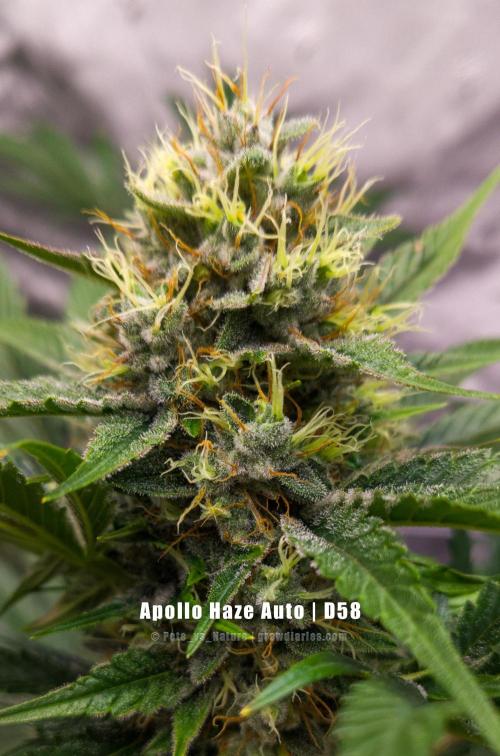
Super Orange Haze & Apollo Haze went early into full senescence mode, again in synchronicity, and are clearly racing to finish. Their internal clock has been running fairly fast and now articulates clearly into pistil browning, final bud swelling and aromatic changes. While SOH has lost her mandarine aura in favor for that caryophyllene haze spice, Apollo remains stable and keeps her funky but clean aura loud, while citrus only erupts on trichome damage.
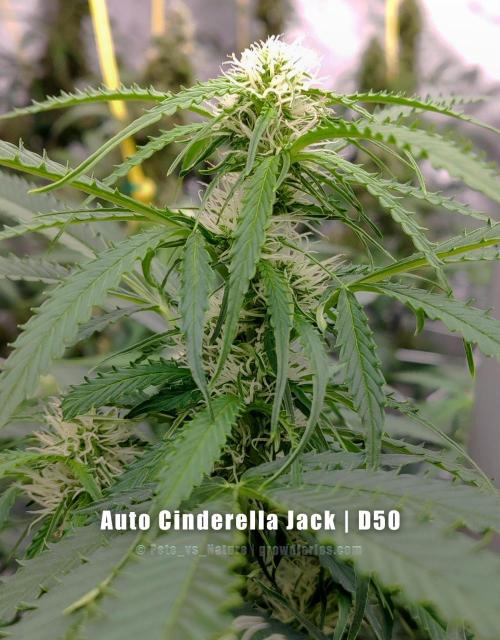
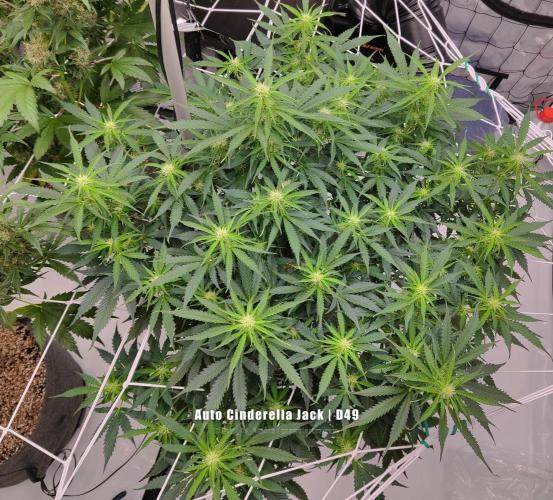
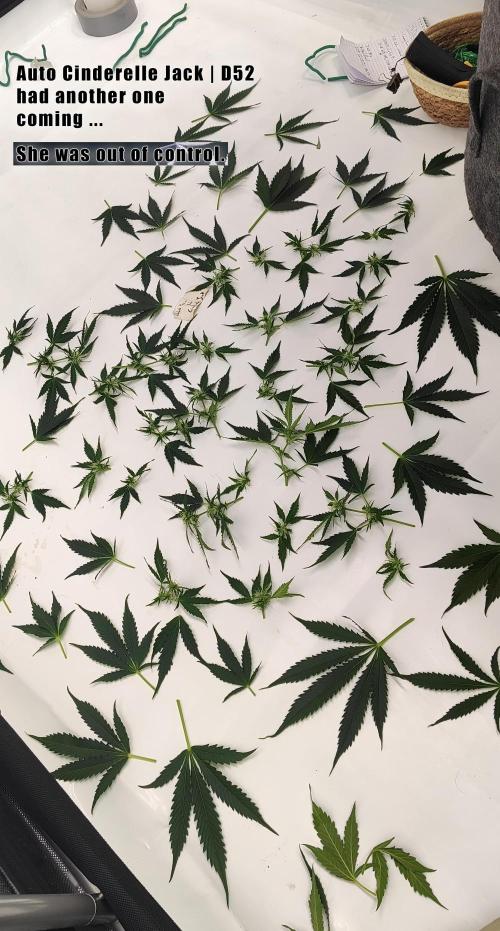
Cinderella Jack, well, I am frankly out of words. Either the strain was built for side-branching (it was built for high THC contents on a cool lineage) or this + cytokinin application have reached critical mass. I am out of words for how much lollipopping and defoliation is needed at her 9 days younger age, late after she started flowering.
Her extended veg was not just a happy accident - the HST timing right around pistil formation is supposed to allow for another couple of days of veg in Autos. And that's time she took - she feels like 6 days behind on her clock (good) but now totals ~15 days behind on other cultivars (really bad).
*** Nutrients ***
While this run already provided useful physiological markers for individual components of my custom nutrient line (NPK, Ca, Mg, the easy to spot stuff), this week brought Carb Timing back on the table. I run a conservative addition of products containing carbs in diverse forms, but as is often the case with different products, they also follow other functions. A product like Recharge is a great example. You do get molasses for carbs, but you use it for trichodermal funghi, bacteria and if you need to, humic acids. It also contains kelp powder which is a nuissance even with low hormone contents when you want that stuff out of your protocols.
Applying more direct carb delivery products helps tremendously, but now these carry more "good intentions", like additional Mg loads that can screw with your Ca|Mg ratio, or more likely even more kelp hormones you didn't want. Also, when you don't want those carbs delivered, something like Recharge now disqualifies and your innoculation solution is in tension with other goals.
I am seeing stars align, and if not, I take a good ol'il break and come back with a better question to answer. My nutrient line is getting cheaper, the products have much clearer missions to tackle, and most importantly - I can react to individual problems, like Apollo's increased P demand, without kicking out cobalt and 50% of my K for no apparent reason.
*** Lighting ***
So Far Red is being disabled at positions I see fit for SOH and Apollo. Sativa and Indica genetics react differently based on shade avoidance preferences. A comfty surrounding shade can make Hybrids thrive, when Sativas react with stress and vegetative vigor, when ripening and finishing should be their comfortable state.
Main Light has been tuned down mainly for Apollo, showing actual light stress patterns. (Careful - you have to increase full spectrum should you drop Far Red, to arrive at ~ same plant DLI)
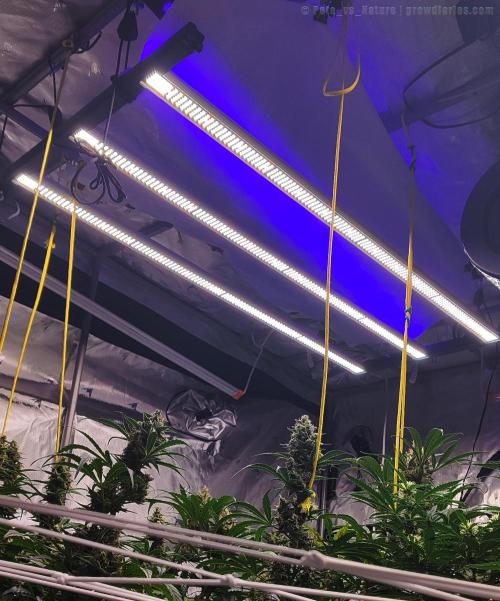
New to the party: My prototype for manipulating several UV/Blue emitter bandwiths into a specific blue wavelength I want at canopy level, for added terpene synthesis without causing shifts in the actual types of terpenes involved. I am seeing studies in Nature being vague and likely off target here, so I am fairly certain there is one-up potential with just implementing this prototype version at the correct timings.
I am running this on a ramped curve for late flower right now, within safe calculated intensities and time frames. I am not looking to max out radiation for the bestest terpz yet, rather, apply it and hope the plants behave as if -nothing- changed.
I do believe to see increased trichome density and / or filling, but I can't see what the run would have been like without blue being a factor now, either. So pushing limits comes later, watching out for subtle clues comes first.
Ideally, run#6 resolves most cultivar stress vectors and I can ramp this up, until I see mild but isolated evidence of light stress. Dialing back 20% here should give me a flat protocol application guideline for future Autoflower runs without thinking twice about it.
(Fat chance.)
- Pete 😓
7 likes
comments
Share
10
Week 10. Flowering2mo ago
101 cm
Height
18 hrs
Light Schedule
25 °C
Day Air Temp
6.1
pH
Strong
Smell
46 %
Air Humidity
18 °C
Solution Temp
22 °C
Substrate Temp
23 °C
Night Air Temp
40 liters
Pot Size
40 cm
Lamp Distance
380 PPM
CO₂ Level
Pete_vs_Nature Dear readers,
I am frankly out of time. I keep my notes, and quite honestly, I loved how the AI-crafted Journal made me giggle. I feed my actual logs into it, and the details it picks out are quite humiliating - in a good sense - for everyone to learn from (less focus on me, see?).
Plants have been aging well, except for Auto Cinderella Jack. She ... does her own thing now. I just watch.
Apollo - CHOPPED at the last day - will prepare proper harvest entry after drying & sampling. Footage shows oh so many things I am proud of. Check her out.
Let me know should you want any further information. I'm happy to chatter, hit me.
The rest of my week as "roughly" per my notes:
-----
**PATHÉ DISPATCH — THE TERPENE FRONT, WEEK TEN**
*[newsreel crackle, brass fanfare]*
GOOD EVENING, AMERICA. The first soldier has fallen — and the war is NOT over.
DATELINE: THE DRYING CHAMBER. Private Apollo Haze — FIRST TO FALL — has been chopped and laid into the racks, with Orange Haze still holding the line, days from her own last stand. But the enemy heat, citizens, chose the hour of a SINGLE harvest for its final offensive. Fourteen-thousand-BTU reinforcements? SOLD OUT. The profiteers of the rear echelon have raised their prices FIFTY PERCENT. Our correspondent, undaunted, drafts a SEVEN-thousand-BTU unit into double duty and empties his own bedroom of furniture to billet a SINGLE DRYING SOLDIER. He sleeps, we are told, "where the furniture used to be."
*[ominous timpani roll]*
BUT NOW — THE TWIST THIS PROGRAM WAS BORN TO BROADCAST.
For WEEKS our man waged war against the temperature with TWO air-conditioners, and for WEEKS the line would not hold. WHY? our correspondent cried into the noisy dark. WHY will they not COOL?
*[record scratch]*
Because, citizens — there was a TRAITOR BEHIND THE TENT.
A RADIATOR. Set to '2.' Left running since the cold nights of EARLY VEG. FORGOTTEN. And the cruelest geometry of this entire campaign: Air Conditioner Number One had been blowing its finest cold jet DIRECTLY INTO THAT CORNER — feeding the thermostat just enough warmth to keep the SECRET HEATER cycling ON. Our correspondent was, this whole time, PAYING TO HEAT AND COOL THE SAME SQUARE METER.
A closed loop of PURE ENTROPY, hiding in plain sight, three feet behind the front line...
*[stern voiceover]*
MEN OF SCIENCE will note the lesson, hard-won: before you accuse the sky, CHECK BEHIND THE FURNITURE.
Will the buds dry true? Will Run Six begin without a mole in the ranks? Our man's verdict on his own household infrastructure, we regret to report, is UNPRINTABLE.
*[fanfare, film flickers out]*
THIS HAS BEEN A DISPATCH FROM THE TERPENE FRONT. CHECK YOUR RADIATORS. GOODNIGHT.
7 likes
comments
Share
Used techniques
ScrOG
Technique
Encouragement
Technique
11
Week 11. Flowering2mo ago
97 cm
Height
18 hrs
Light Schedule
25 °C
Day Air Temp
6.1
pH
Strong
Smell
46 %
Air Humidity
18 °C
Solution Temp
21 °C
Substrate Temp
23 °C
Night Air Temp
40 liters
Pot Size
50 cm
Lamp Distance
350 PPM
CO₂ Level
Pete_vs_Nature .
**PATHÉ DISPATCH — THE TERPENE FRONT, WEEK ELEVEN**
*[newsreel crackle, brass fanfare]*
GOOD EVENING, AMERICA. Two soldiers have fallen. And this week, citizens, we must report a TRAITOR of a DIFFERENT sort.
DATELINE: THE CHOP. Privates Apollo and Orange Haze — felled two days apart, HONORABLY, at the height of their aromatic powers. Apollo, whom the seed merchants PROMISED would smell of mango and tropical cocktail, delivered NEITHER — but detonated a LIMONENE payload so pure our correspondent nearly saluted. The marketing department, we note, remains AT LARGE. Orange traded her mandarine perfume for a warm, roasted, spicy haze — the smell, our man insists, "you only meet twice before you know it for life."
*[ominous timpani]*
BUT NOW — THE TWIST. And this one, AMERICA, comes from INSIDE THE MAN.
The operation was timed at TWENTY MINUTES. A clean extraction. In and out. The chamber PRE-COOLED, the plan IMMACULATE.
*[record scratch]*
It took him ONE HOUR.
And WHY, citizens? Trimming, yes. Securing the colas, certainly. But also — and this program has obtained the notes — our correspondent LINGERED. He stood among his fallen troops and, we quote, "briefly inhaled all the terps he knew he was losing this instant." He STOPPED TO SMELL THE CASUALTIES. And every minute he lingered in mourning, his own body — warm, sentimental, BREATHING — raised the temperature of the very chamber built to preserve them.
HE WAS THE HEAT SOURCE. The man wept over the volatiles, and the weeping cooked them. There is no radiator to blame this week. There is no fan. There is only a grower who loved his plants SO MUCH he stood there warming the room with his GRIEF.
*[stern voiceover]*
"Nobody has to know," our correspondent reportedly told himself.
*This program knows.*
*[timpani, softer now]*
AND SO THE TENT STANDS NEARLY EMPTY. One soldier remains — Private Cinderella Jack, transferred beneath the blue light in a NET-MANEUVER of such delicacy she never felt the ground move. She is now, in our man's own words, "the landlord." He reports the space feels "clinical." He reports that time "stands still." He reports — and AMERICA's heart goes out — that he is thinking of getting a PET.
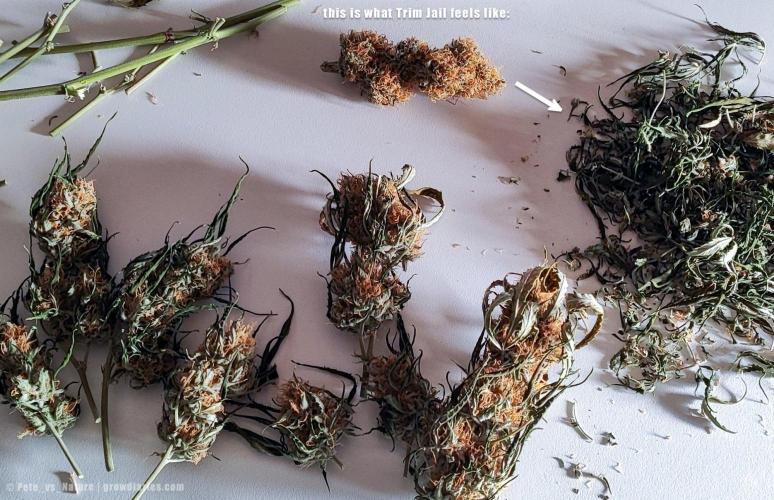
Hold the line, soldier. Trim jail is temporary. The buds are drying true.
*[fanfare, film flickers out]*
THIS HAS BEEN A DISPATCH FROM THE TERPENE FRONT. STOP SMELLING THE CASUALTIES. GOODNIGHT.
---
Detailed Notes:
Harvesting 2 Cultivars
---
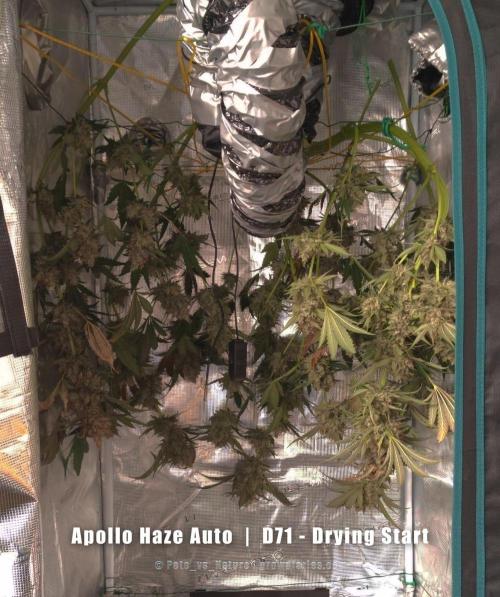
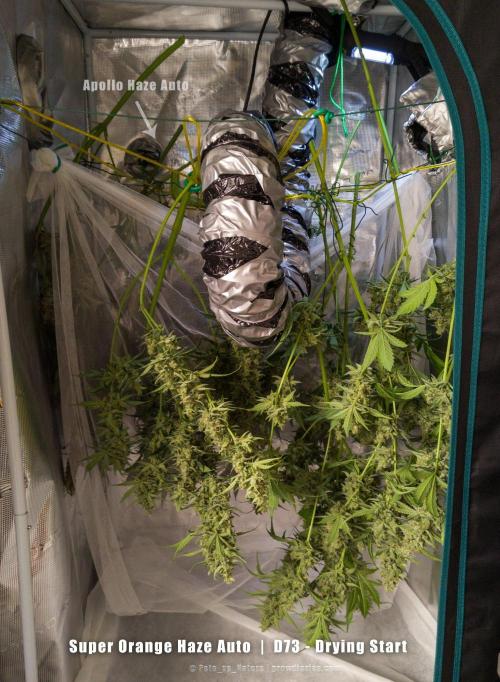
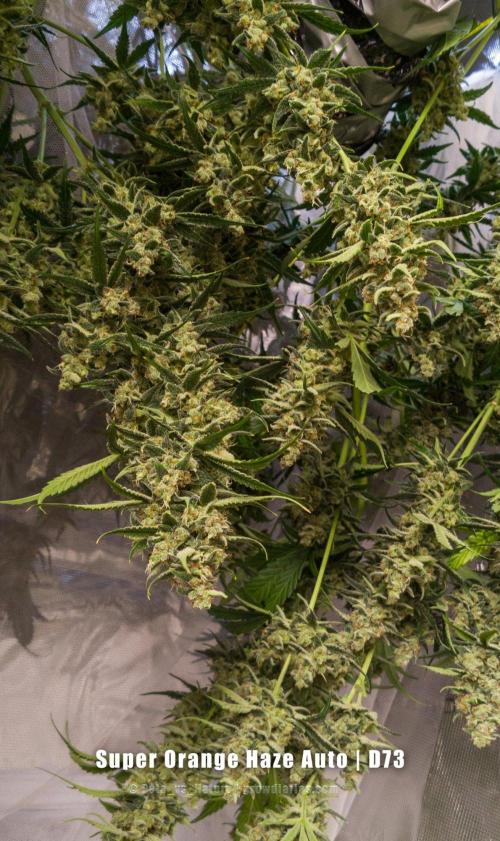
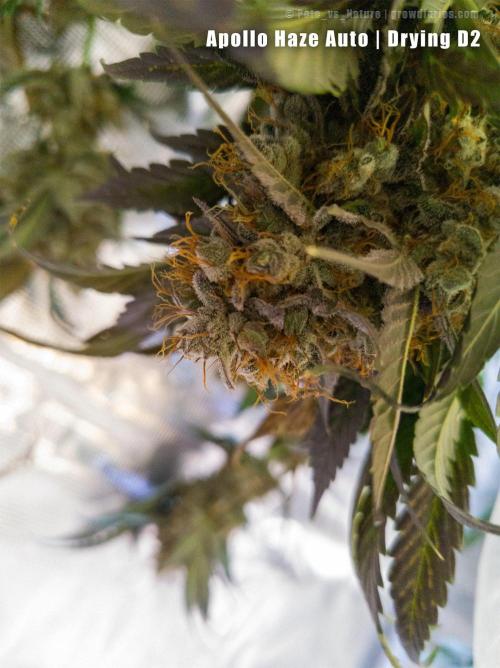
Day 71 marked chop day #1 for Mephisto Genetics: Apollo Haze (x Mango Smile) Auto. Super Orange Haze Auto followed 2 days later.
For Apollo, there is no mango to be found, the tropical cocktail is also amiss. Once again I am a bit plastered by Mephisto's terp descriptions - secretly still thinking they might potrait what they favorite pheno smells like.
Aha! - you may think to yourself - Pete's got no terperinos! To the contrary: Mephisto's Apollo Haze delivered a hardcore limonene monoterpene explosion on trichome rupture, that retained very well into age. Her bud structure & density possibly acted as evaporation shielding against higher temps here, under which limonene usually get's lost.
Super Orange Haze Auto aged fast & well, at the same racey pace as Apollo. Her mandarine aura had vanished a week ago (this is peaking my interests as I would love to retain that). Caryophyllene, with a thick spicy tingly and warm wooden / almost roasted note, has been taking over. It is that typical haze smell you have to encounter only twice until you know.
Harvesting Process
---
I had to remove their colas individually from underneath the scrog, as not to damage the flower sites. A scrog net, while costing money, is cheap to replace compared to bud site damage, where it feels like I groomed many trichomes individually. The scrog would have collapsed, causing Orange to tip over, should I have cut her out instead.
Instead of 20 minutes as planned, I took well over an hour to trim tons of excess foliage, tackle transfer & securing, take last photos and just briefly inhaling all the terps I knew I was loosing this instant. The chamber was pre-cooled, but an hour of me in and near the tent alone caused a huge swing.
This bothered me a lot in hindsight, so I went a little crazy on fathoming the entire thermal chain from live plant to closed drying chamber. For Auto Cinderella Jack, the entire grow tent needed to approach drying temps before even starting to snip anything.
Auto Cinderella Jack
---
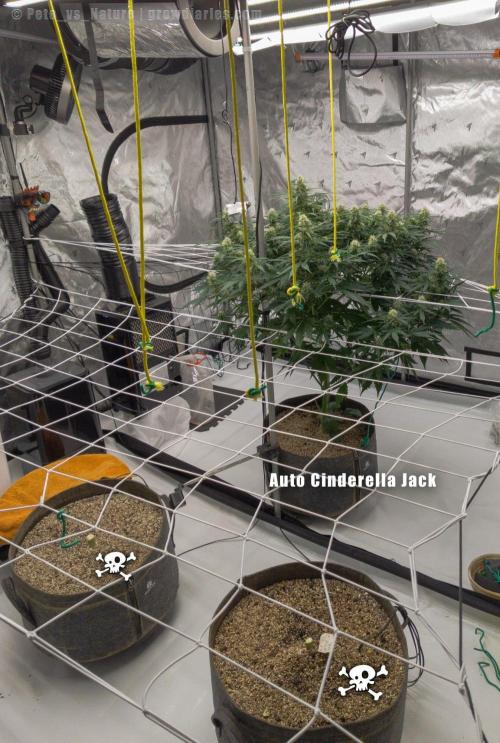
Now the sole owner of the space, ACJ was getting a lot more light ballast with two other strains failing to absorb radiation. Moving her underneath the blue metabolite factory light was a priority for her last days, but removing the scrog was simply gonna cause too much damage. Instead, I removed the scrog from the tent poles, left ACJ to hold the net for a bit, moved her, then re-applied the hooks on the opposing poles. This turned out to be a neat little maneuver - ACJ kept trucking on.
run#5 is coming to an end. The space feels clinical now and not like a home to 3 happy plants. Mentally, this can be fairly draining, as cultivars are becoming beloved guests in the household. No plants, no product, risks of botrytis ruining everything - the prospect of trim jail under special hot summer circumstances is daunting. This is the empty stretch, that little dead phase, where time just stands still. I think I should get a pet.
See you next week, when we have another look at the state of Cinderella Jack, the landlord.
7 likes
comments
Share
Used techniques
ScrOG
Technique
11
Week 11. Harvest24d ago
Happy Harvest Day!


7/10
Rated
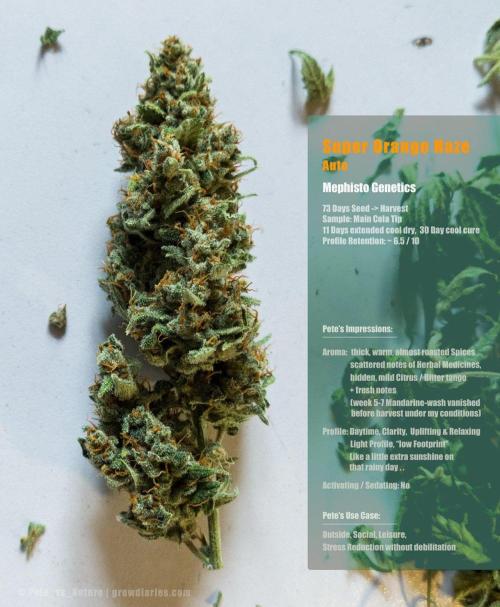
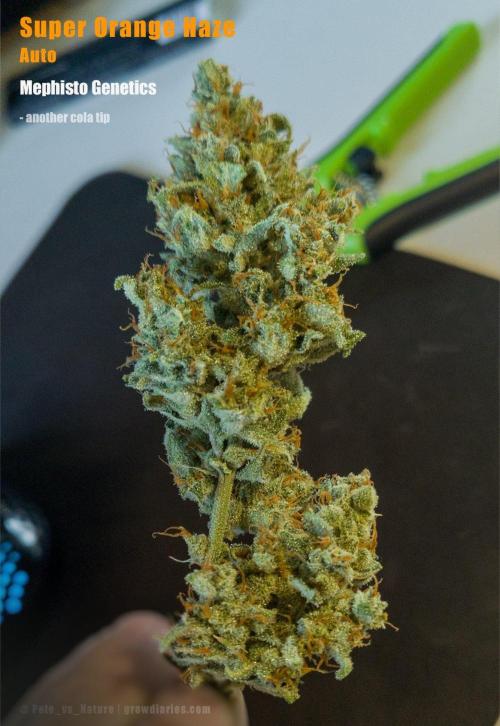
Super Orange Haze Auto started out keenly interested in reaching the sun. During early flower, her loud, syrupy mandarine-perfume dominated the grow space. She responded well to training, which ultimately just widened an already open structure. Her Haze lineage comes with bud sites that are not exactly known for their density, but impressively they have swollen quite a bit during ripening. During this phase, she seemed to trade that terpinolene-modulated mandarine-perfume for a typical Haze spice, high in caryophyllene.
So to let the cat out of the bag - I really wanted that fruit profile, damnit. And I couldn't preserve it, those last terpenes left the building en route via the inline fan during week 9.
Like with Old School Mango Haze during run#4, it felt the terpinolene dance was harder to preserve than limonene, which Apollo Haze retained surprisingly well. I am hearing of oxidation patterns and measures to challenge those, but this cultivar could receive no such luxuries under my conditions. During the early ripening phase, most of the fruit-bearing notes had vanished.
The resulting high (under drying conditions I'd rank 6.5/10) lands cleanly in the sativa daytime zone. It is somewhat mild, supports during activities and tasks, yet always provides a warm cushion zone which I can fall back into, to take a deep breath. It is less of a complete joy ride experience and more of a precision tool towards mood improvement.
I do prefer fairly strong, multi-faceted daytime strains during private time, so Super Orange Haze leaves me with an option when activity and clarity are more important than immersion, and when that extra layer of comfort is sought.
As a cultivar, she is fun to watch grow and express. Her "character" is quite outstanding and those early flowering weeks are truly rewarding. If you wanna have a shot at retaining that mandarine expression, I would heartily recommend growing her just for that.
----
Like Apollo Haze and previously Old School Mango Haze, SOH developed nanners towards Week 7 under my supervision. She fully recovered and the resulting product came out clean. It is presently unclear to me how I trigger them so easily with Haze strains.
Show more
Translate
Spent 81 days
Ger Veg Flo Har
2000 g
Bud wet weight per plant
182 g
Bud dry weight per plant
1
Plants
2.4 m²
Grow Room size

Relaxed, Uplifted, Talkative
Positive effects

Stress, Depression
Medical effects

Herbs, Woody, Tropical
Taste
Height
Day air temperature
Air humidity
PH
CO2
Light schedule
Solution temperature
Night air temperature
Substrate temperature
Pot size
Lamp distance

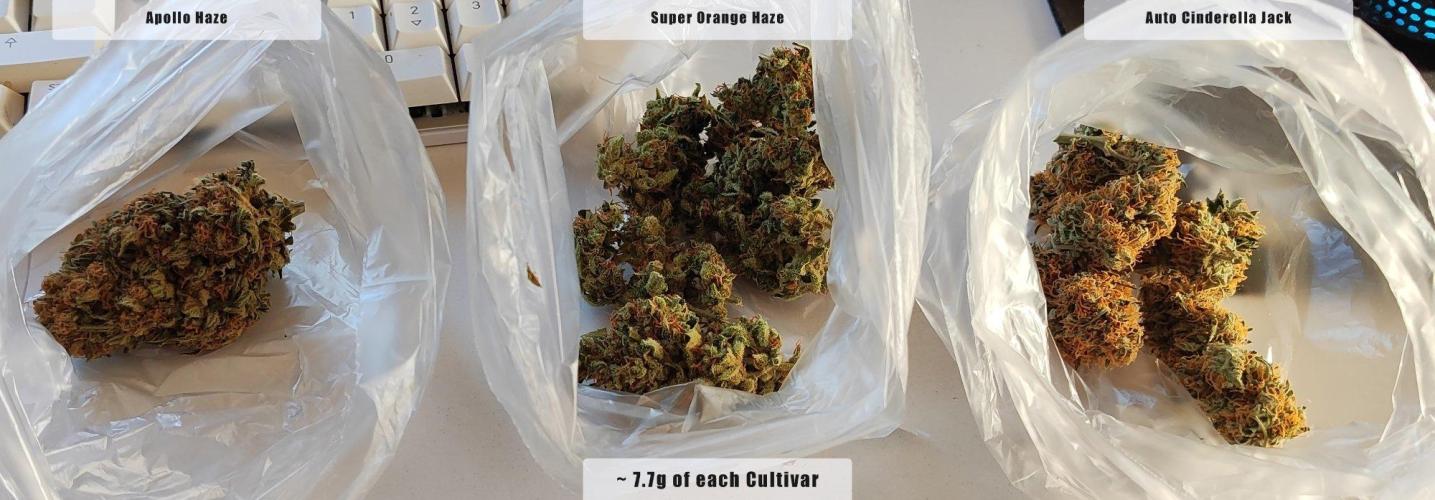
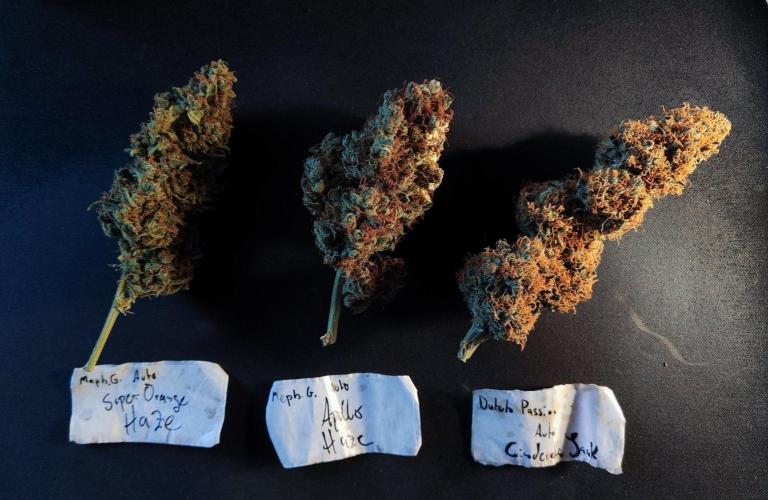
Pete_vs_Nature That's it for Super Orange Haze - stay tuned for the last result: Auto Cinderella Jack. She's gone a little nuts 😜
Here is the strain report with a little formatting:
-----------------------------------------------------
Super Orange Haze Auto started out keenly interested in reaching the sun. During early flower, her loud, syrupy mandarine-perfume dominated the grow space. She responded well to training, which ultimately just widened an already open structure. Her Haze lineage comes with bud sites that are not exactly known for their density, but impressively they have swollen quite a bit during ripening. During this phase, she seemed to trade that terpinolene-modulated mandarine-perfume for a typical Haze spice, high in caryophyllene.
So to let the cat out of the bag - I really wanted that fruit profile, damnit. And I couldn't preserve it, those last terpenes left the building en route via the inline fan during week 9.
Like with Old School Mango Haze during run#4, it felt the terpinolene dance was harder to preserve than limonene, which Apollo Haze retained surprisingly well. I am hearing of oxidation patterns and measures to challenge those, but this cultivar could receive no such luxuries under my conditions. During the early ripening phase, most of the fruit-bearing notes had vanished.
The resulting high (under drying conditions I'd rank 6.5/10) lands cleanly in the sativa daytime zone. It is somewhat mild, supports during activities and tasks, yet always provides a warm cushion zone which I can fall back into, to take a deep breath. It is less of a complete joy ride experience and more of a precision tool towards mood improvement.
I do prefer fairly strong, multi-faceted daytime strains during private time, so Super Orange Haze leaves me with an option when activity and clarity are more important than immersion, and when that extra layer of comfort is sought.
As a cultivar, she is fun to watch grow and express. Her "character" is quite outstanding and those early flowering weeks are truly rewarding. If you wanna have a shot at retaining that mandarine expression, I would heartily recommend growing her just for that.
----
Like Apollo Haze and previously Old School Mango Haze, SOH developed nanners towards Week 7 under my supervision. She fully recovered and the resulting product came out clean. It is presently unclear to me how I trigger them so easily with Haze strains.
9 likes
comments
Share
Equipment Reviews




11
Week 11. Harvest23d ago
Happy Harvest Day!

9/10
Rated
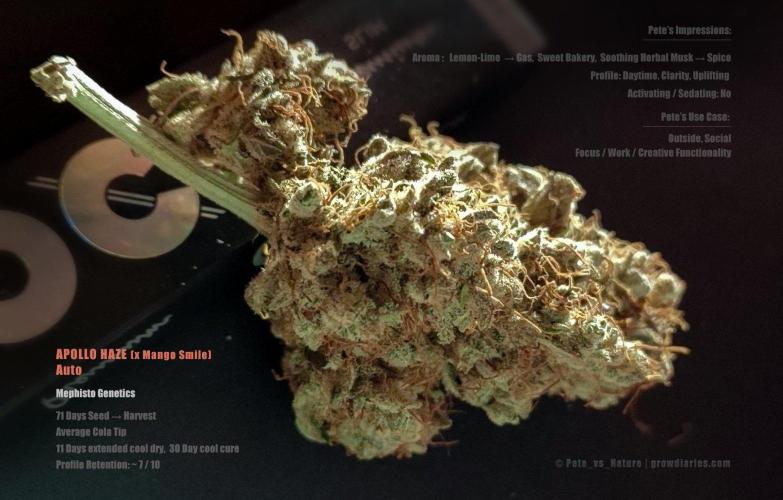
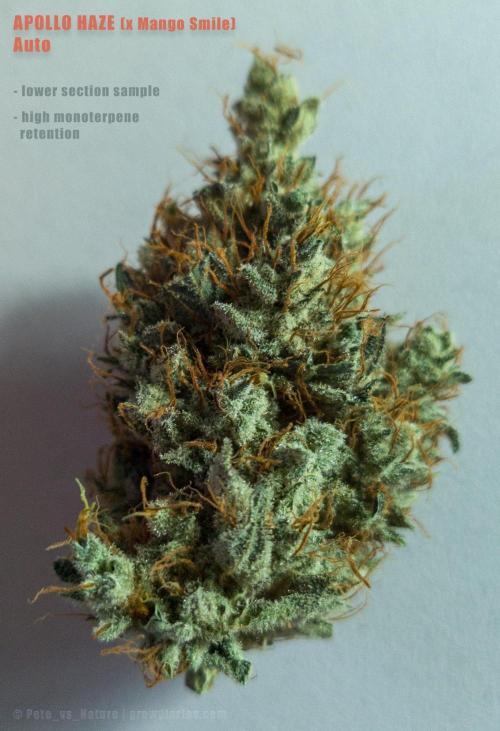
Apollo Haze represented herself as a vigorous, stable cultivar with an extra apetite for nutrients. The resulting product I obtained places her in the daytime-clarity spectrum with a light but omnipresent, functional high.
I could not find any issues with this strain that would have been outside of my responsibility, (except for one).
This pheno liked to transition from tall to wide, rushed through flowering and honestly, provided for buds with intense display potential. Thick, heavy buds, large bract size and dense trichome coverage (filled with relevant terps, not just sunscreen) and intense smell of lemon/lime from early flower to final conservation.
The only downside I see is that I have gotten three limited nanner-responses from Haze strains by Mephisto. All of them provoked, but also controlled without spoiling any product; and also - three in a row, when I never had issues with nanners before.
Haze strains do carry increased genetic potential to react this way, so I am relaxed - but interested in cross-checking with other strains.
That's it - I am very happy with the cultivar. There are stronger, more intense options available should you prefer that in your daytime-arsenal, I place Apollo in between Sativa-Hybrids and light Haze strains - smack middle. Shopping just for smell and appeal? She IS YOUR GIRL.
Show more
Translate
Spent 81 days
Ger Veg Flo Har
3500 g
Bud wet weight per plant
241 g
Bud dry weight per plant
1
Plants
2.4 m²
Grow Room size
Normal
Difficulty

Uplifted, Creative, Happy
Positive effects
Stress, Anxiety, Depression
Medical effects

Citrus, Sweet, Herbs
Taste
Height
Day air temperature
Air humidity
PH
CO2
Light schedule
Solution temperature
Night air temperature
Substrate temperature
Pot size
Lamp distance

Pete_vs_Nature Sorry for the repost readers - growdiaries finally listed Apollo Haze Auto and I had to re-post to attach correctly.
**************
That's it - I am very happy with the cultivar. There are stronger, more intense options available should you prefer that in your daytime-arsenal, I place Apollo in between Sativa-Hybrids and light Haze strains - smack middle. Shopping just for smell and appeal? She IS YOUR GIRL.
------
That's it for Apollo - 71 days old. Let me know if you have any questions. The other cultivars will follow.
Have a good one!
- Pete (vs Nature)
---------
I am open to grow well defined, sponsored strains. Run#5 outlines the environment, mistakes are owned and documented.
I run 2-3 strains per cycle and fully focus on them exclusively. I am used to several hours uptime on protocol refinement, implementation and cultivar care. No days off within a cycle.
My tools and knowledge acquisition are presently focused on - strain selection nutrition micro-climate lighting. I hold these protocols against metabolite composition and retention in final storage.
I am fairly open to ways this could pan out, so hit me :)
***************
7 likes
comments
Share
Equipment Reviews
12
Week 12. Flowering1mo ago

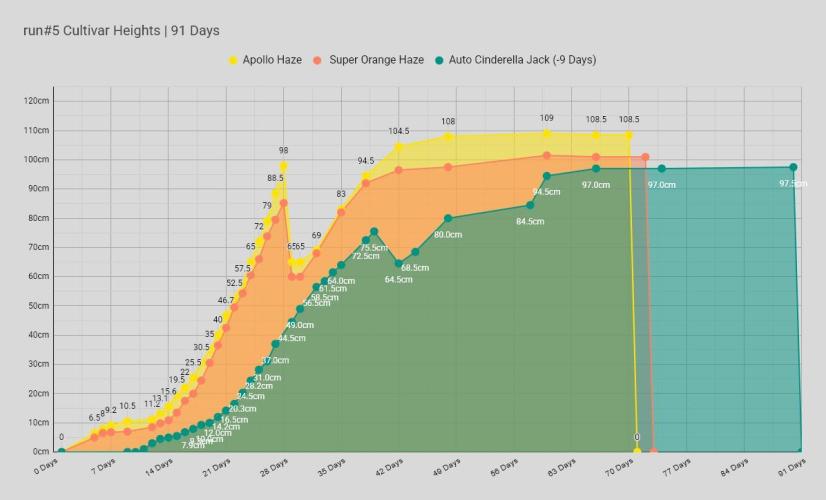
97 cm
Height
18 hrs
Light Schedule
24 °C
Day Air Temp
6.1
pH
Strong
Smell
46 %
Air Humidity
18 °C
Solution Temp
20 °C
Substrate Temp
20 °C
Night Air Temp
40 liters
Pot Size
50 cm
Lamp Distance
350 PPM
CO₂ Level
Pete_vs_Nature Hi folks! Last week report for this cycle. My daily grow logs churned through keenly instructed AI first - my ramblings later. Let's go!
---
PATHÉ DISPATCH — THE TERPENE FRONT, WEEK TWELVE
[newsreel crackle, brass fanfare]
GOOD EVENING, AMERICA. The last soldier has fallen. The tent stands EMPTY. The campaign — is CONCLUDED.
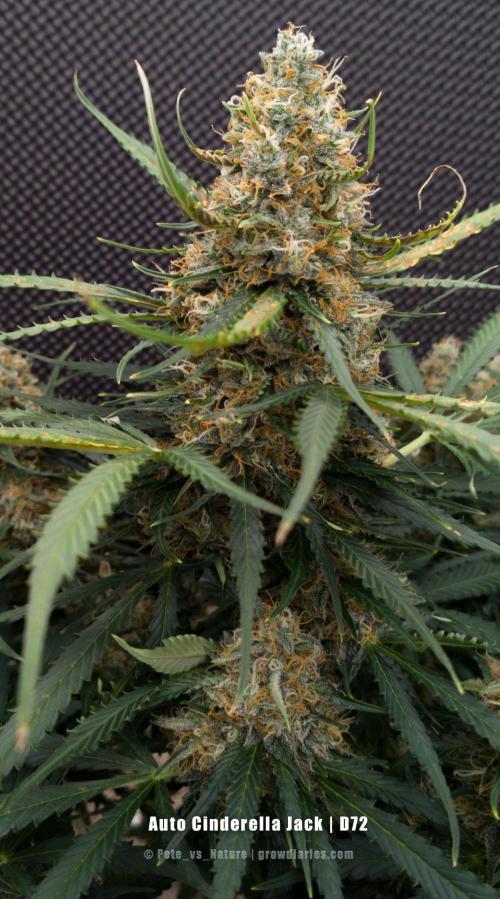
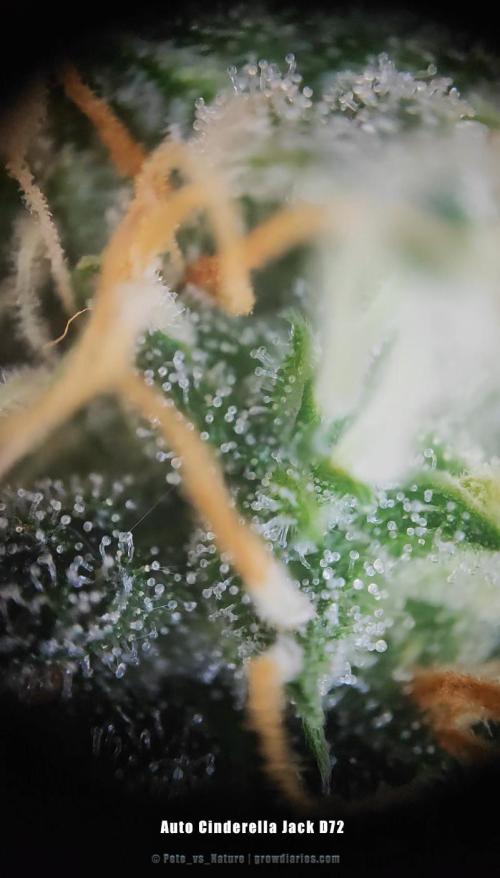
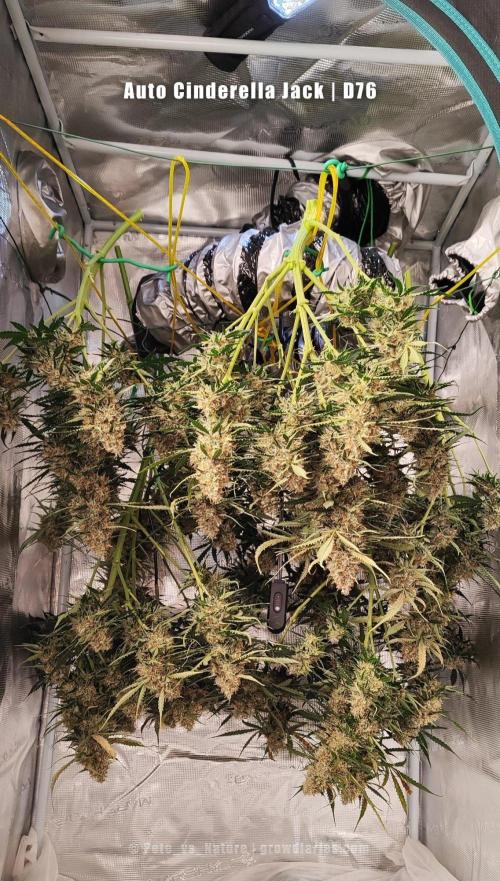
DATELINE: THE FINISH LINE. Private Cinderella Jack, the LANDLORD, sole survivor of a long and unglamorous war, went down at PEAK TRICHOME STRENGTH — drinking three and a half liters a day to the end, browning her pistils with dignity, and smelling, our correspondent reports, of PINE FOREST with a sour citrus spin and a sweetness underneath he suspects of myrcene. She was, we are told, INTRIGUING. High praise from a man who once accused an entire plant of smelling like celery.
[bugle, distant]
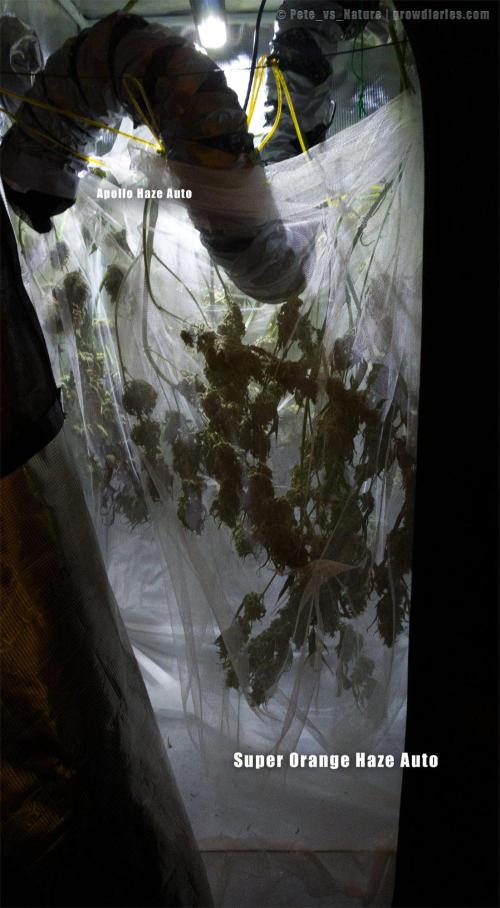
DATELINE: THE JARS. This program has learned that A PRISONER TALKED. Four outbreaks of botrytis in five campaigns — a record our correspondent now catalogues like a war crimes tribunal, each with a NAMED CULPRIT: an air conditioner blowing on wet material. A dense cola in low VPD. A tent not cleaned into the corners. A scrog net gone slack and one forgotten soldier in the slump. And this run: 8.46 grams condemned to the bin.
So the suspects were SEALED IN GLASS. Thirty percent fill. One hygrometer each. And under interrogation the infected bud CONFESSED — fifty-eight percent, where sixty-four was expected. The clean sample held at sixty-four and CLIMBED. Apollo was trimmed and conserved on the sworn testimony of a bud in a jar.
[ominous timpani]
DATELINE: THE FEED BENCH. Consider the PRECISION of this man. He doses silicon by the residue clinging inside a NEEDLE — six hundredths of a gram, swept into a few milliliters of water, two-thirds administered, the remainder discarded. Four liters of solution. A dose you could not see if we put it on camera.
[record scratch]
AND NOW — THE TWIST THIS CAMPAIGN HAS BEEN BUILDING TOWARD SINCE MARCH.
On the FINAL MORNING of the FINAL WEEK, that same man FORGOT TO EMPTY AN ENTIRE WATER TANK.
The dehumidifier tank overflowed. A POOL spread across half his floor. Humidity climbed. VPD sank toward 1.1.
AND HERE, AMERICA, IS THE CRUELEST GRACE THIS PROGRAM HAS EVER BROADCAST: the night before, our correspondent had lain awake THEORIZING about how to soften the transfer from harvest to drying chamber — by RAISING THE HUMIDITY at precisely that hour.
His equipment failure IMPLEMENTED HIS OWN UNBUILT PROTOCOL. The tank he forgot performed the procedure he had not yet installed. The flood was the FEATURE.
[stern voiceover]
MEN OF SCIENCE will note the harder lesson, filed the same day. Our man had stopped taking leaf temperature readings — because he was ALWAYS RIGHT. Minus three, every time, reliable as a church bell. Warm leaves in the morning? Thirst, surely. Filed. Dismissed.
But you do not measure to be TOLD you are right, citizens. You measure to be told WHEN YOU ARE WRONG. And in this house the readings COMMAND THE MACHINES — so a wrong number does not sit quietly in a spreadsheet. IT GOES TO WORK.
[gentle brass]
We close on one final act of timing. On DAY EIGHTY-SIX of a NINETY-ONE-DAY RUN, the FAR-RED END-OF-DAY SIGNAL was at last moved — to the END OF THE DAY.
"Bit late," our correspondent concedes. "Whoopzy."
The chamber is cool. The colas are down. The floor has been mopped. And somewhere in a drawer, the controller configuration snapshots remain UNTAKEN — a loose end this program will be watching.
[fanfare, film flickers out]
THIS HAS BEEN THE FINAL DISPATCH FROM THE TERPENE FRONT. THREE FIELD REPORTS TO FOLLOW. RUN SIX AWAITS. EMPTY YOUR TANKS. GOODNIGHT.
-----------------------
This has been a fun run and concludes my fifth cannabis grow cycle.
Sure, the hours involved are off the charts in a home grow / lab setting, when optimizing existing protocols meets the introduction of new ones, and automation is financially unfeasible even on some basic levels. Empiric testing at home is too slow to win these battles, it is learning, deduction and formulation of thresholds that allows a home grower to partake in the finest results. So willingness to learn and troubleshoot are the only tools we have when money can't solve it:
Two simultaneous nanner-events were managed during this run, pollen had been shed - no successful pollination occurred, nanner-production could be stopped and all product survived completely intact. | This event during ~ Week 7 was the single most stressful pivot, as the entire grow cycle hinged on the result. Total loss was now the first thought to wake up to every day, really killing the mood.
Botrytis was identified correctly before the suspect entered the drying tent - to the point that I could experiment fairly safely by drying a botrytis-cola right next to all the clean product - and typing that sentence into a public blog afterwards. Later, a protocol was devised to distinguish infected material via % RH changes in secluded containers, before product got mixed in long-term storage. This was pretty awesome to learn about and definitely sharpened my perceptions. I could actually test a suspect cola and discard it, without opening up the bud at all (which I obviously did later as well).
Drying at 16°C target under 30°C outside conditions was a huge success - and a MASSIVE pain to devise. A drying chamber whose product would need to cool a parallel grow tent was the answer - two linked AC's and "heavy decoration" of windows were absolutely necessary - and the measures turned out adequate.
So, besides the workload, am I happy with this run? You bet! - facing total damnation twice 'n all. After growing for 1.5 years, I can finally rest on some of my protocols. That reduces stress, uncertainty, and buys me time for fun things to try. So, besides managing my downfall, I got to introduce my Terpene-Blue-Ray, a fairly simple prototype to encourage just the right kind of terpene accumulation. And above all - a bigger grow space to experience - no longer are my plants crammed into a tiny chamber that is surrounded by a machine park. I get to "work" in there as if I had rented an office for my project.
---
Oh yeah, the plants!
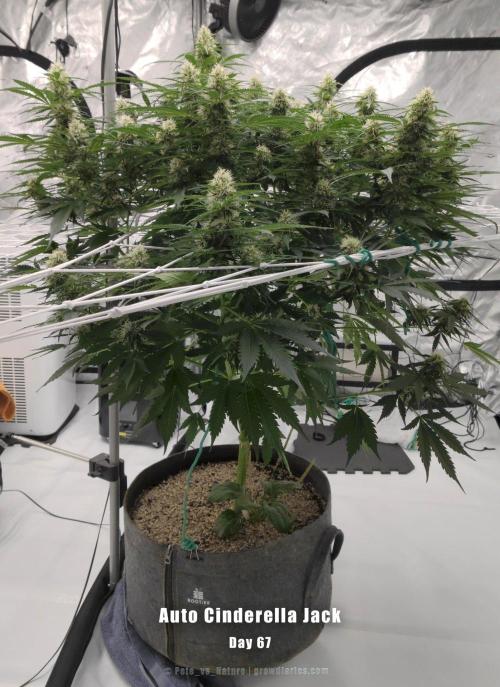
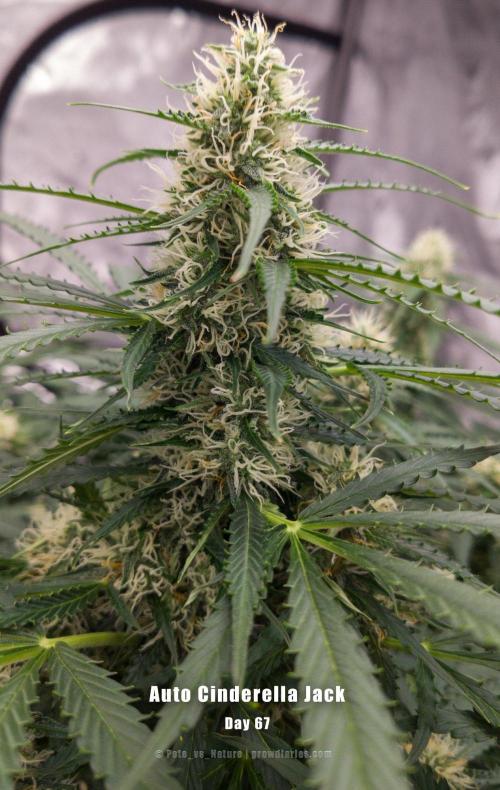
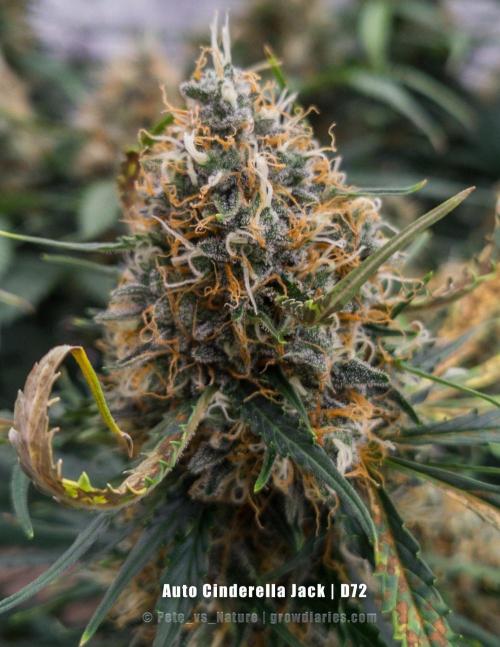
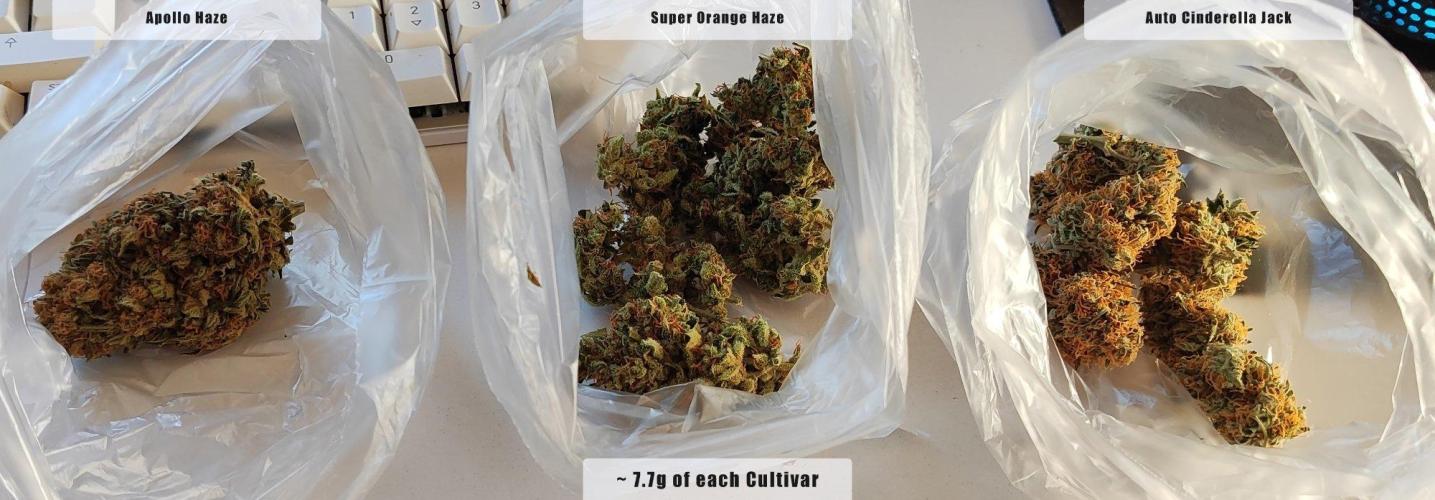
Dutch Passion's Auto Cinderella Jack, a cross of Jack Herer, is something of a sativa dream coming true to see unfold before your eyes. Big history, high in pinene (memory retention during daytime use) and a chance of a good spike of limonene (that neck cushion and sun-glasses feeling even under pressure) made her an ideal chase target for me.
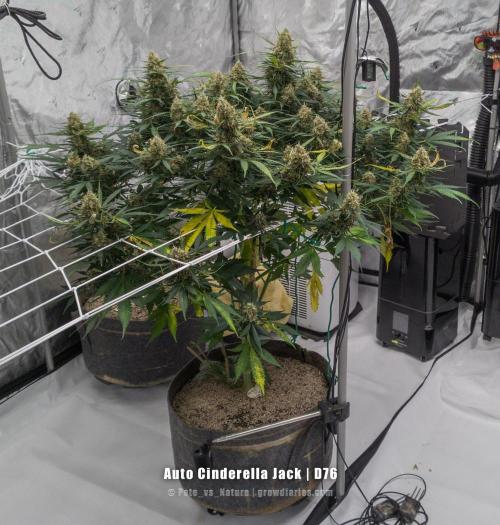
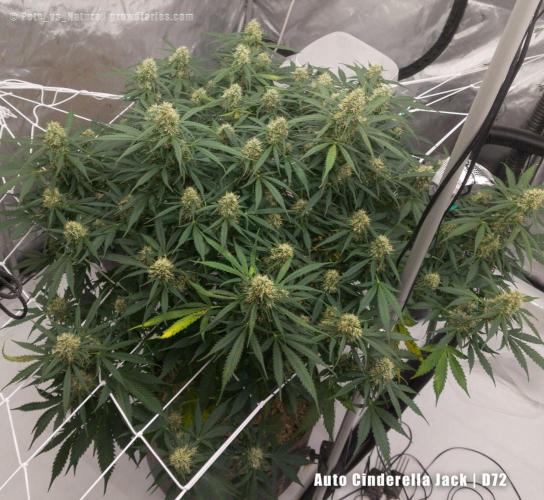
With her running -9 days behind the other cultivars, she took nutrient dosages intended for much older plants with a straight face, when they started to burn. She received higher light intensity and just had to "deal with it". She absolutely hated my HST-train-once intervention and completely changed her strategy as a result. She was the only plant without a soil sensor, water levels were "good guesses", so she also got waterlogged fairly hard during veg.
Her response? Vigor, fury, lateral branching, flower sites all over. She could not be stopped, and I had to remove what felt like 2 smaller Autoflowers in bud sites from her. She is a record holder for me, more details in the strain reports.
Thanks for your interest, I hope you could take something home from these journals.
See you in run#6! - during which I have just massaged a 2 week old sad plant into praying for the first time.
8 likes
comments
Share
Used techniques
ScrOG
Technique
13
Week 13. Harvest18d ago
Happy Harvest Day!


10/10
Rated
When I finish picking cultivars for a run, usually after a brief moment of happyness, an afterthought comes to haunt me. A name that has been gnawing at me, after picking seeds for run#1 even. "Psst. If you want try a good sativa, try Jack Herer!" - it echoed through the seemingly well informed parts of the internet.
So for me, a little dream came true and I got to grow the Auto Cinderella Jack version of that heritage.
I scouted it for more than just the name and apparent focus on THC %. High alpha & beta pinene, hallmarks of a true daytime strain for memory retention, stood out immediately.
The listed potential for high limonene contents (mood improvement) got my other eyebrow lifted as well.
Myrcene & humulene ratios were weighted to check for a couch-lock disqualifier and did not look concerning, although myrcene scratched at the ceiling quite a bit.
I even went so far and had a look at Dutch Passion's Magnum strain and had a metabolite composition projected, to somehow approximate what I could be facing when it comes to the stuff I don't want in my strain - like linalool.
What I ended up witnessing: A downright furious cultivar, a uniquely faceted metabolite cocktail in the making, and a resulting product that I can sanely place as a #1 daytime strain option.
I get to judge cultivars solely by my own specific requirements and can comfortably say, that when I look for help with: drive / motivation, increased comfort, improved focus, maintained clarity - all while letting me jump back into action when I need to - this strain just works.
The only caveat is the fairly high THC content in combination with the strong and effective entourage-foundation. It is too pleasant and easy to achieve exactly the opposite of what the profile carried so well - a THC "bounce" followed by circulatory issues for me, even at higher tolerances. To me, the ramp is tricky - the moment things spiral out of control for 10 minutes is very close to the moment where there are seemingly no issues at all. This is why I felt I had to include a word of caution about it in the shorter image-version of the strain.
Auto Cinderella Jack did not come into an easy grow cycle:
- She received nutrients intended for plants 9 days older at all stages, including seedling. When older plants started to burn or get N-heavy leaves, ACJ didn't even twitch
- lighting was 9 days ahead, as well as VPD and temp curves
- only cultivar without soil sensor for water content: hypoxia for days during veg - flower
- single HST super-crop event during this high stress phase caused visible collapse and re-orientation - partially resumed in veg mode as response, with poor initial trichome formation likely due to conflicting priorities
During that period, I feel like ACJ was trying to outsmart me. She was deliberately developing endless amounts of re-growing, tiny flowering sites, threatening me with hours of manual trimming labor. For a guy like me, that looks at lollipopping like it was an admission of guilt, cutting about 2 young Auto's worth of bud-sites from her felt fairly wrong. Clearly, this plant's strategy now was to try and outlive me.
ACJ delivered an unexpectedly massive amount of dry weight, after I wrongly read her bud structure as a tiny bit light for her numerous fresh pistils.
Grow this if you like strong daytime strains, I really like her.
- Pete_vs_Nature
Show more
Translate
Spent 81 days
Ger Veg Flo Har
3500 g
Bud wet weight per plant
318 g
Bud dry weight per plant
1
Plants
2.4 m²
Grow Room size
Easy
Difficulty

Energetic, Talkative, Creative
Positive effects
Stress, Anxiety, Depression
Medical effects

Fruity, Pine, Herbs
Taste
Height
Day air temperature
Air humidity
PH
CO2
Light schedule
Solution temperature
Night air temperature
Substrate temperature
Pot size
Lamp distance
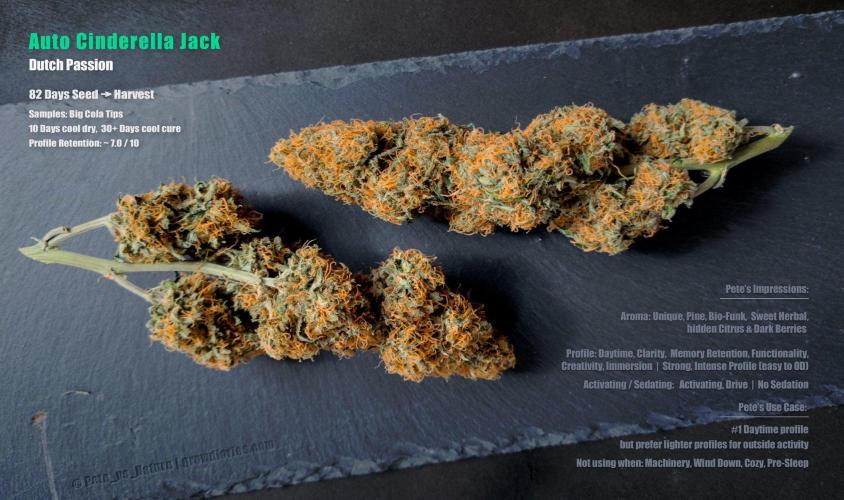
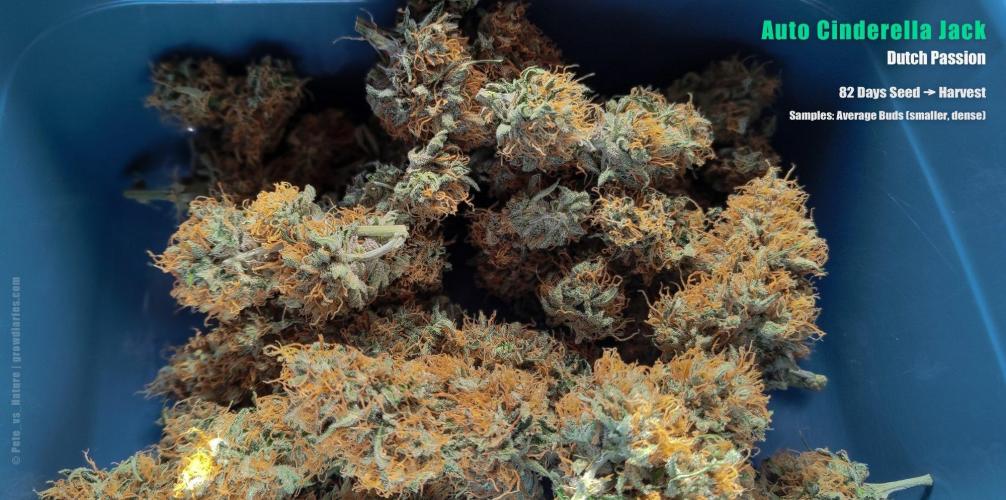
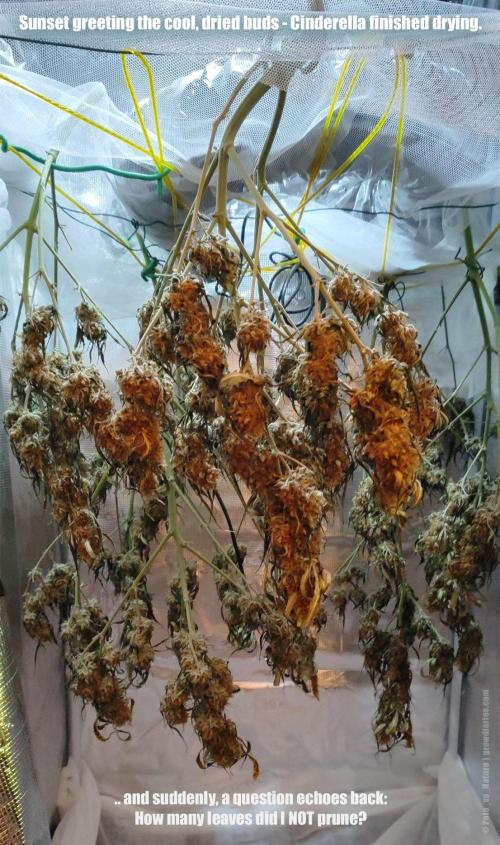
Pete_vs_Nature That's it for run#5. Thanks for visiting, hope you could take something home. - Pete
-----
---------
I am open to grow well defined, sponsored strains. Run#5 outlines the environment, mistakes are owned and documented.
I run 2-3 strains per cycle and fully focus on them exclusively. I am used to several hours uptime on protocol refinement, implementation and cultivar care. No days off within a cycle.
My tools and knowledge acquisition are presently focused on - strain selection nutrition micro-climate lighting. I hold these protocols against metabolite composition and retention in final storage.
I am fairly open to ways this could pan out, so hit me :)
6 likes
1 comment
Share
Equipment Reviews
11 comments
Sort by
popularity
popularity
newest
oldest

Resin_Cartel commentedweek 35mo ago
damn man, seeing that growth of your orange haze (and then looking into the effects of it has me going. i'll buy this seed in the next go! following the proces. peace
like 1
Resin_Cartel commented5mo ago
@Pete_vs_Nature and super nice process man, i love the diagram ♥️
like 1
Pete_vs_Nature commented5mo ago
@Resin_Cartel, Whoopsy, I had you mixed up with another dairy I am following, growing that Durban Poison Auto.
Are you looking to give growing another go?
likes
Resin_Cartel commented5mo ago
@Pete_vs_Nature it is me that you follow with the Durban poison - i think 😅 but for sure - but only photos from now on
like 1
Show More (2)
squalino commentedweek 05mo ago
good luck
like 1
Pete_vs_Nature commented4mo ago
@squalino, You made my day 1 month ago
like 1
squalino commentedweek 74mo ago
very nice evolution. they are healthy and happy, it's clear that you take care of them. keep it up ❤️
like 1

AlishaAJackson commentedweek 1318d ago
Start now generating extra home based cash by doing very easy and simple job from home.. Last month i have earned 753 from this job in my part time. This job is just awesome and its earning are greater than 9 to 5 office job.... Here is I started_______ cash54.Com
likes

the end.
Enjoying this diary? Follow for more updates!

Prefer the old Diary view?
Go back to the old Diary view