


Henni Qolada Keeper Hunt LS Run #1


Henni Qolada
N.Y.CEEDS

VEG
FOG 400W Light Emitting Diodes/400W
FOG
FLO
FOG 400W Light Emitting Diodes/400W
FOG


Fan
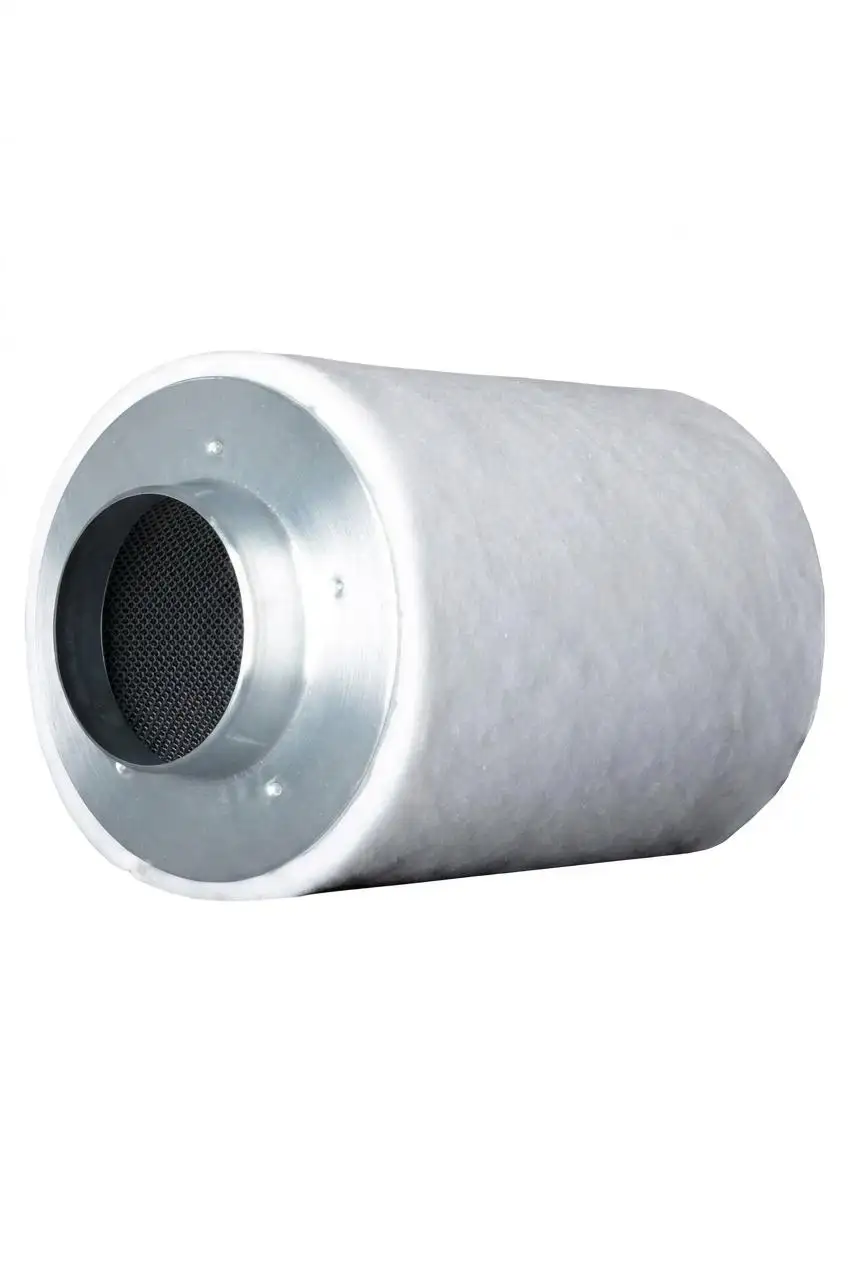
PK200L
Prima Klima


Contr
GSE Digital Controller
GSE Digital Controller

Zero Mix Soil
Guano Diffusion

Indoor
Room Type
Transplantation
weeks 1, 5
Topping
weeks 3-4
SoG
weeks 5-7
12-12
weeks 6
LST
weeks 6-7
12 liters
Pot Size
1 liters
Watering
Start at Harvest
1
Week 1. Vegetation5mo ago
5 cm
Height
18 hrs
Light Schedule
27 °C
Day Air Temp
6.5
pH
No Smell
Smell
80 %
Air Humidity
21 °C
Solution Temp
21 °C
Substrate Temp
22 °C
Night Air Temp
2 liters
Pot Size
0.2 liters
Watering Volume
30 cm
Lamp Distance
Nutrients 1
dry organic amendment
1 mll
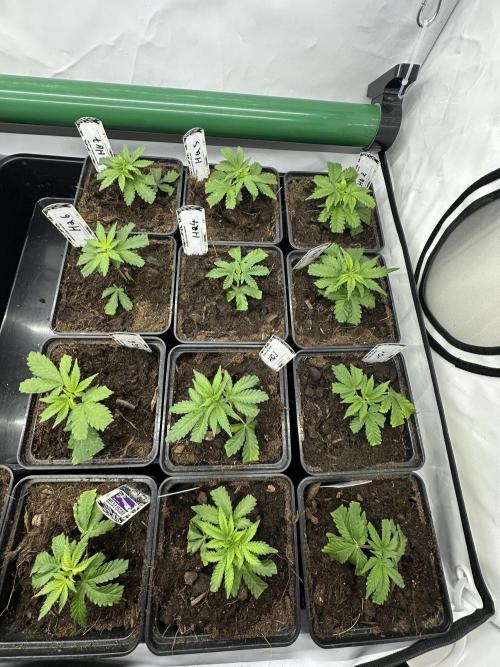
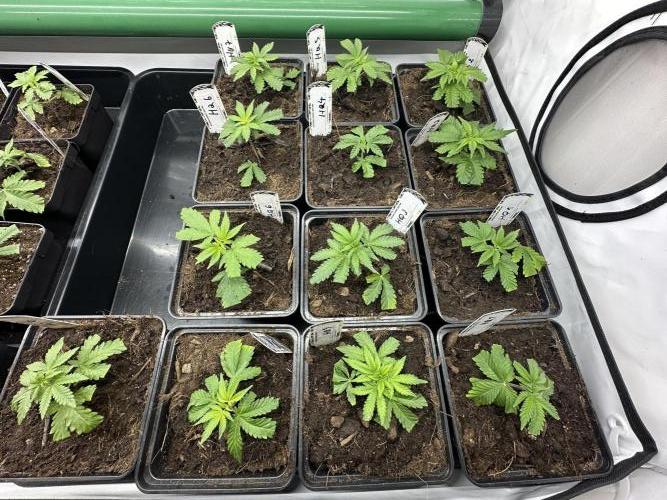
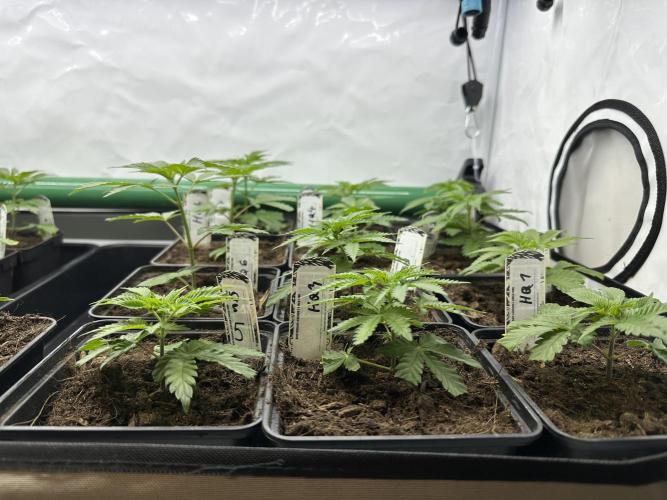
Daz_Method First week after repotting into the 2L pots, using a 100% organic soil mix I made myself with dry organic amendments only — no bottled organic products. This run is a seed test to hunt for a true keeper, but I follow my own process: I don’t flip seeds straight away. I pop the seeds, veg them for a few weeks in ~3L pots, train them to match my style, and do an early pre-selection (anything that doesn’t respond well gets culled). Then I clone everything and run the actual hunt from clones, which speeds up the work and makes comparisons much cleaner.
Quick note: this may not be an ultra “clean” run, because it’s a testing run. I’m looking for the plants that truly stand out, so I’m running a solid baseline recipe (base mix + basic top-dress schedule) rather than dialing each plant in perfectly. Some may get a bit hungry, and some may not show a textbook senescence — that’s normal here. The goal is to take detailed notes, correct course next session, refine the recipe, and confirm whether the best candidates truly perform as keepers.
For this keeper hunt, I’m starting from seeds I brought back from New York during one of my trips. Funny story: I went to New York hoping to find quality seeds, but after looking around, it turned out there were basically no physical shops selling seeds there — only online sites. I kept pushing and eventually got connected to NYCeeeds. According to several people I met there, he does solid work and has a serious reputation. So I reached out and picked up a few seed packs from him.
A few months later, it was time to pop one of those packs: HenHenny Qolada (Zkittlez x (Apple Fritter x (Mimosa x Cookies & Cream) #6 x Spritzer) . I germinated all 7 seeds from the pack, all 7 came up, and after my first pre-selection step, all 7 looked solid enough to stay in the run — none were culled. All 7 were cloned, and they’ll now be pushed into the actual keeper hunt.
See you in a few weeks for the final result. The photos here are from Day 1 right after transplanting into the 2L pots.
1 like
comments
Share
Used techniques
Transplantation
Technique
2
Week 2. Vegetation5mo ago
9 cm
Height
18 hrs
Light Schedule
27 °C
Day Air Temp
6.5
pH
No Smell
Smell
80 %
Air Humidity
21 °C
Solution Temp
21 °C
Substrate Temp
22 °C
Night Air Temp
2 liters
Pot Size
0.2 liters
Watering Volume
30 cm
Lamp Distance
Nutrients 1
dry organic amendment
1 mll
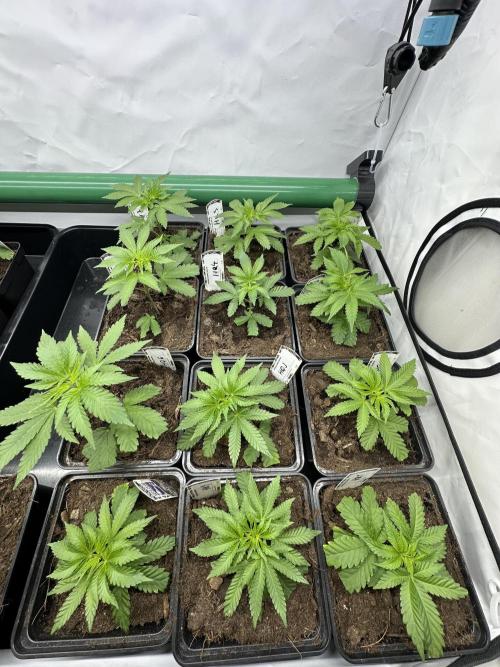
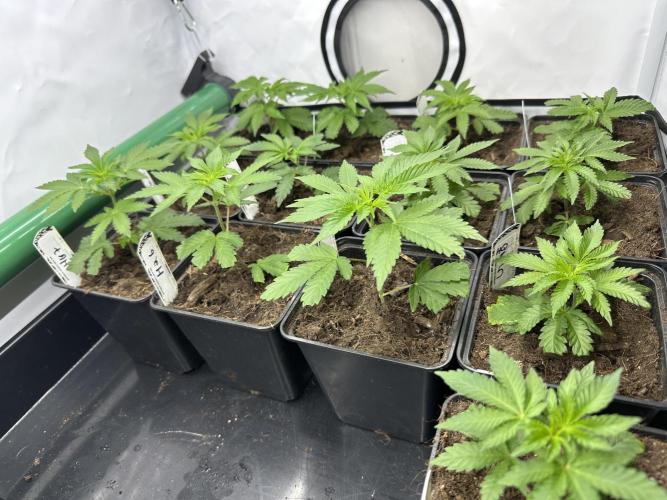
Daz_Method Start of Week 2 of VEG
likes
comments
Share
3
Week 3. Vegetation5mo ago
9 cm
Height
18 hrs
Light Schedule
27 °C
Day Air Temp
6.5
pH
No Smell
Smell
80 %
Air Humidity
21 °C
Solution Temp
21 °C
Substrate Temp
22 °C
Night Air Temp
2 liters
Pot Size
0.2 liters
Watering Volume
30 cm
Lamp Distance
Nutrients 1
dry organic amendment
1 mll
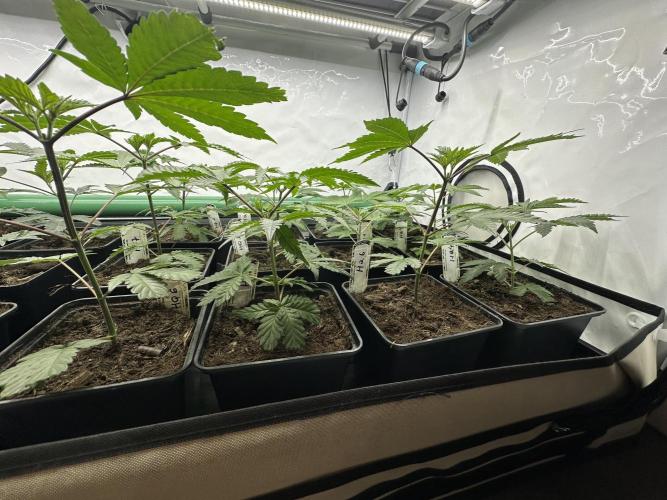
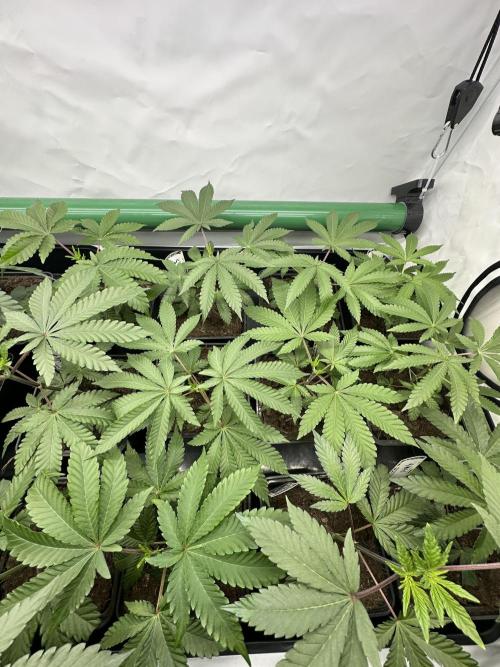
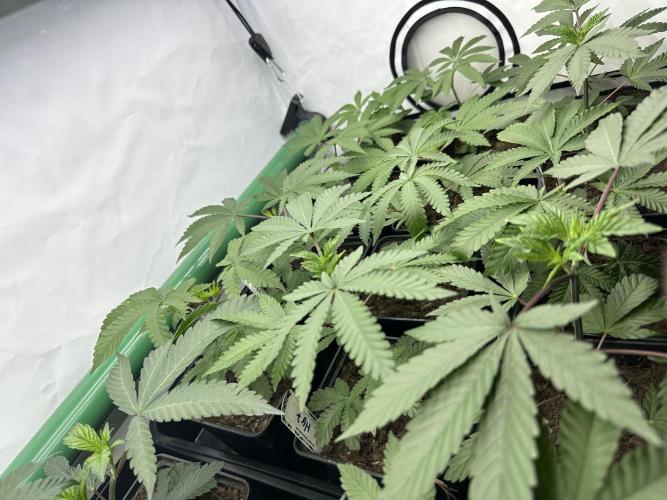
Daz_Method Start of Week 3 of veg: a first topping was done around Day 10 of veg, along with a light compost tea watering to kick-start microbial life in the pot. Everything looks good so far , the plants are healthy, in good shape, and the leaves are already showing a lot of fingers, which looks promising for the rest of the run.
1 like
comments
Share
Used techniques
Topping
Technique
4
Week 4. Vegetation4mo ago
15 cm
Height
18 hrs
Light Schedule
27 °C
Day Air Temp
6.5
pH
No Smell
Smell
80 %
Air Humidity
21 °C
Solution Temp
21 °C
Substrate Temp
22 °C
Night Air Temp
2 liters
Pot Size
0.2 liters
Watering Volume
30 cm
Lamp Distance
Nutrients 1
dry organic amendment
1 mll
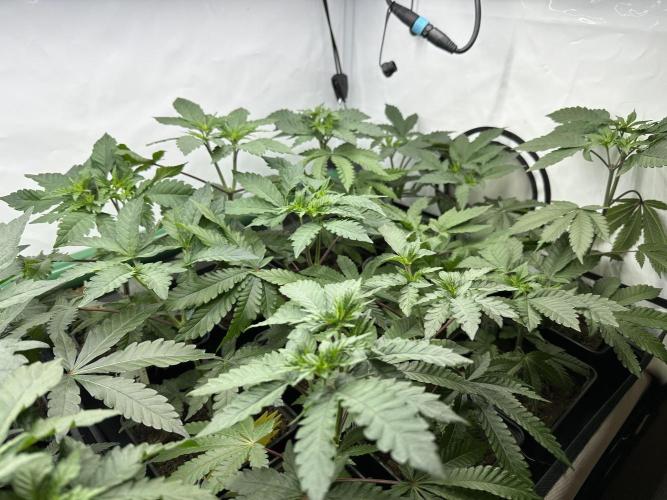
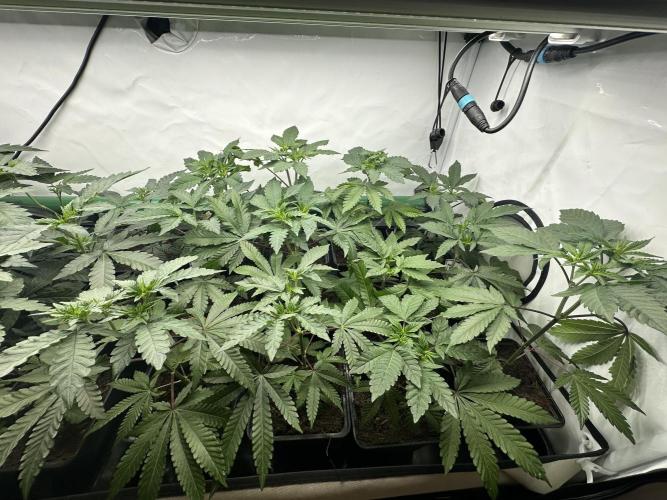
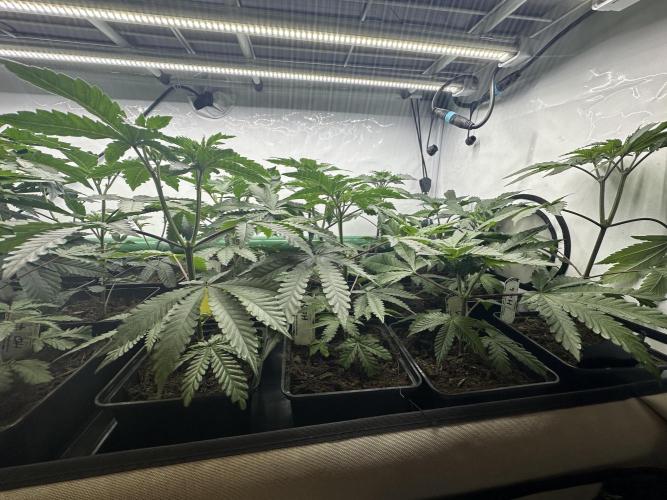
Daz_Method Week 3 of veg: everything is going well. Double topping was done mid-week (last week before the final transplant into 12L pots).
1 like
comments
Share
Used techniques
Topping
Technique
5
Week 5. Vegetation4mo ago
20 cm
Height
18 hrs
Light Schedule
27 °C
Day Air Temp
6.5
pH
No Smell
Smell
70 %
Air Humidity
21 °C
Solution Temp
21 °C
Substrate Temp
22 °C
Night Air Temp
12 liters
Pot Size
1 liters
Watering Volume
50 cm
Lamp Distance
Nutrients 1
dry organic amendment
1 mll
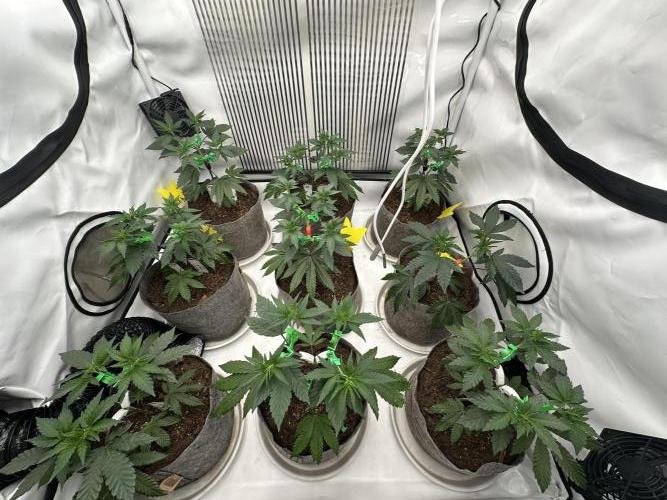
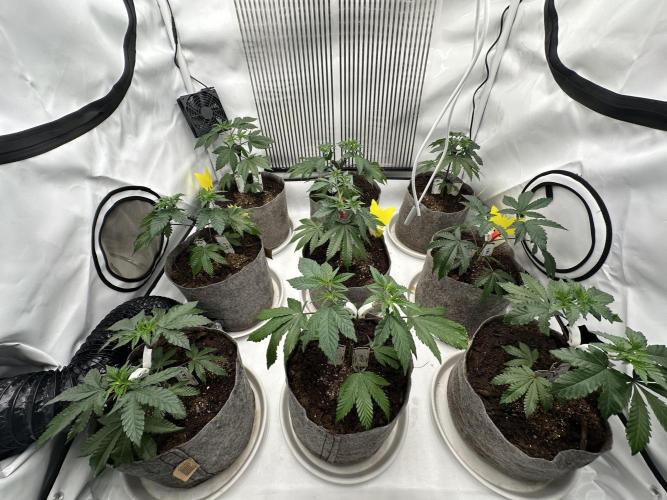
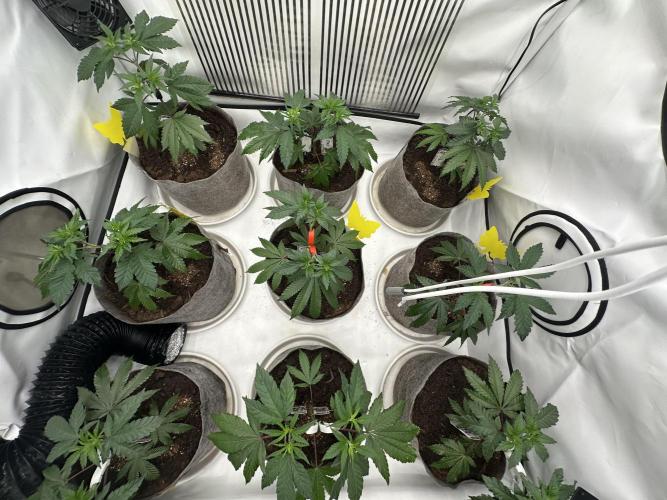
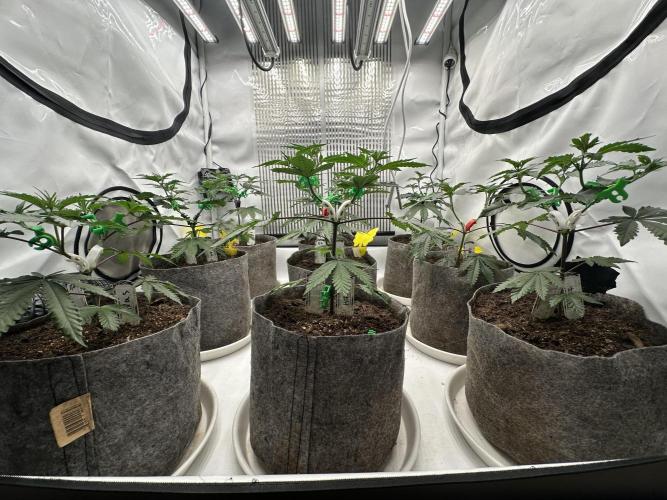
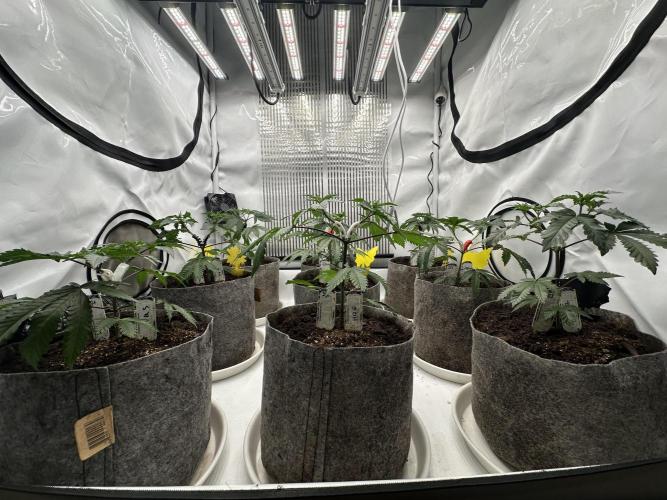
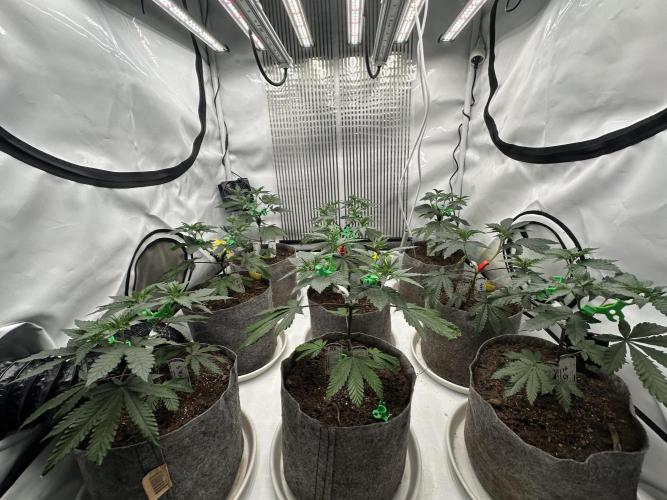
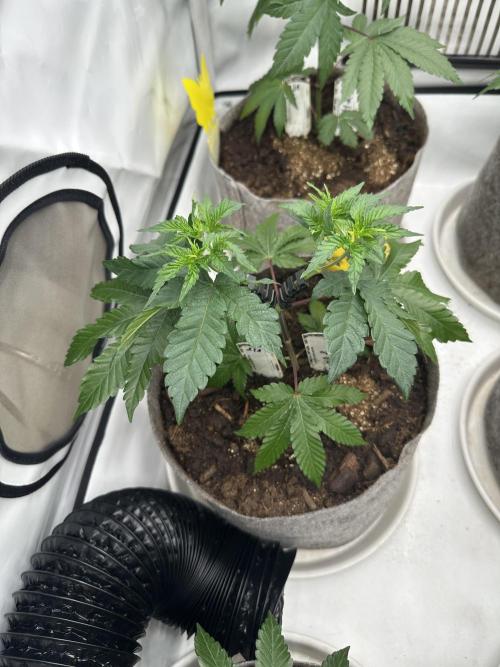
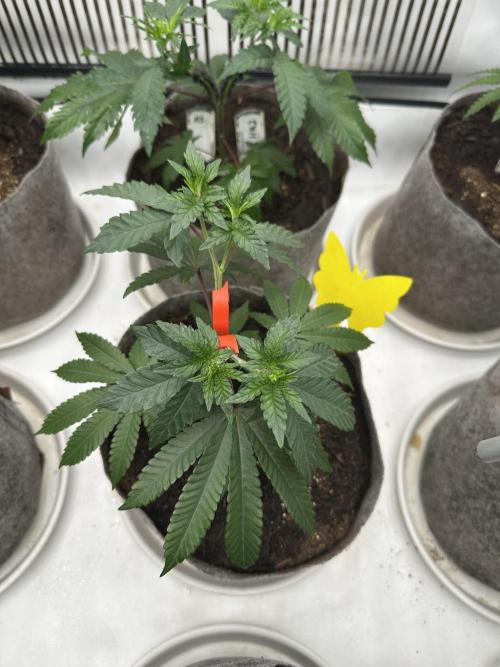
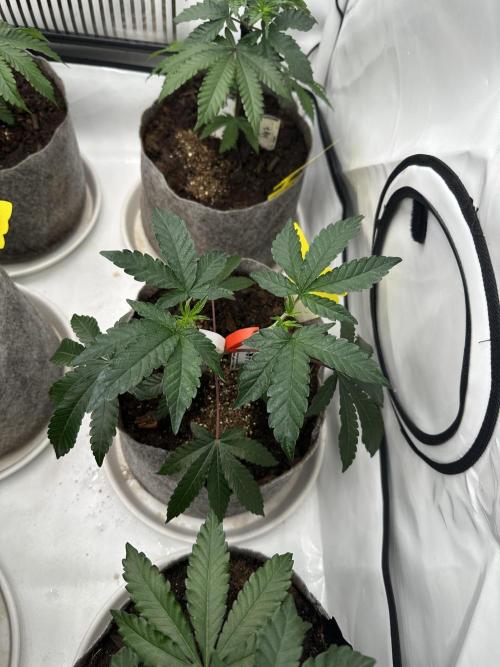
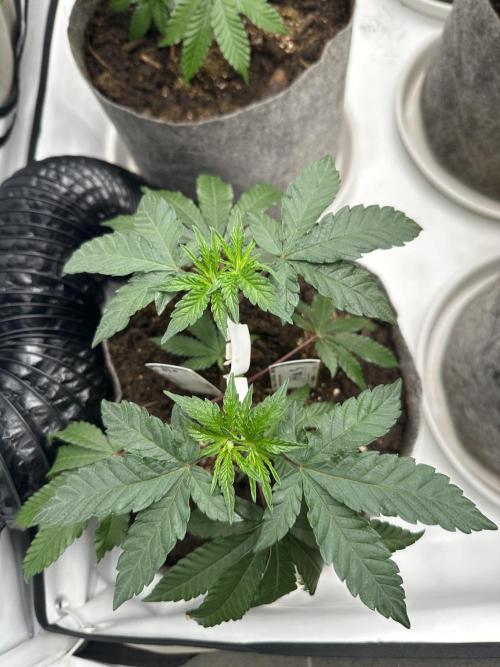
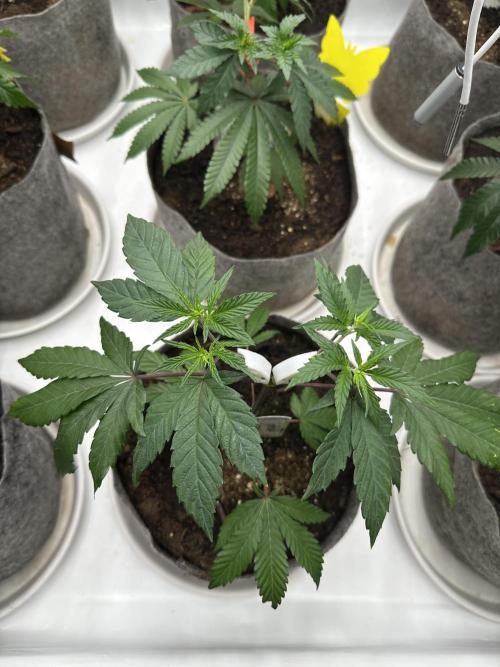
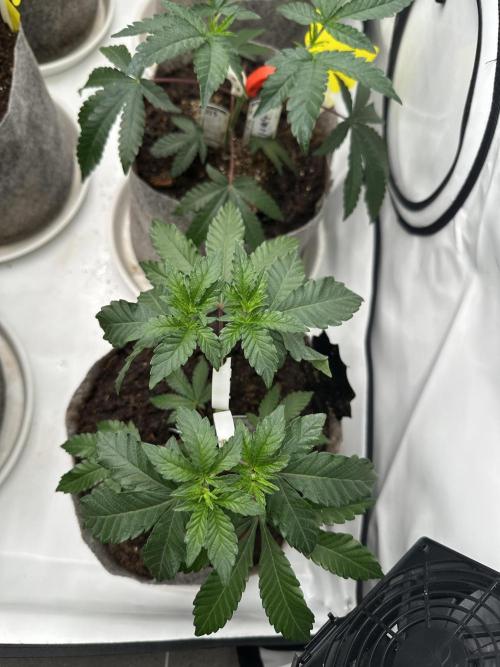
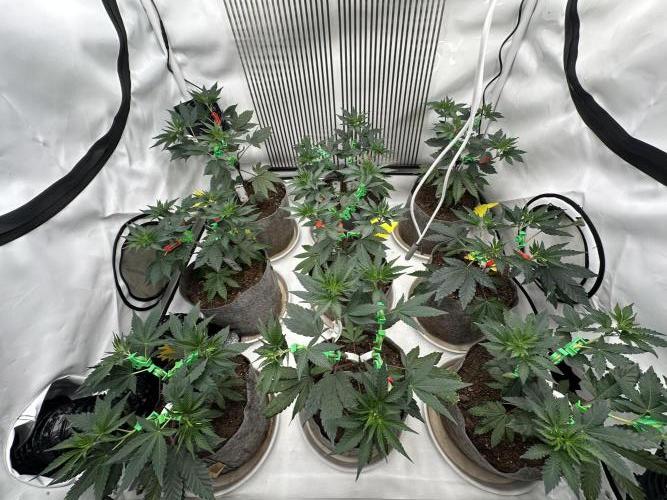
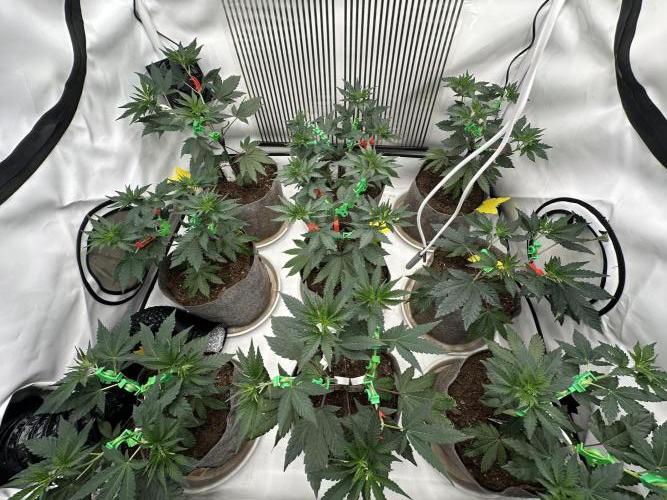
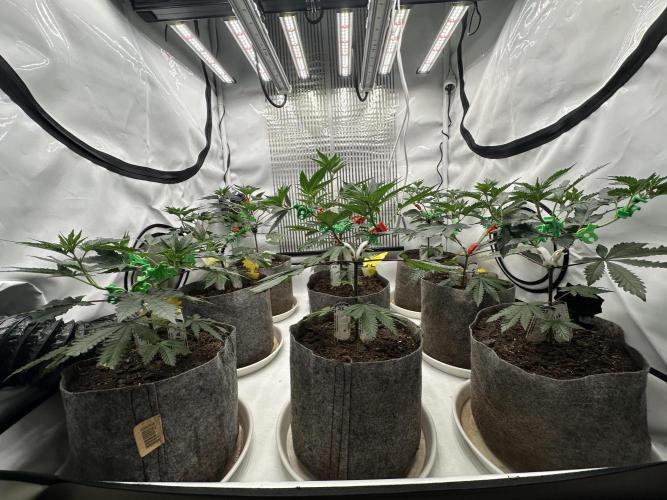
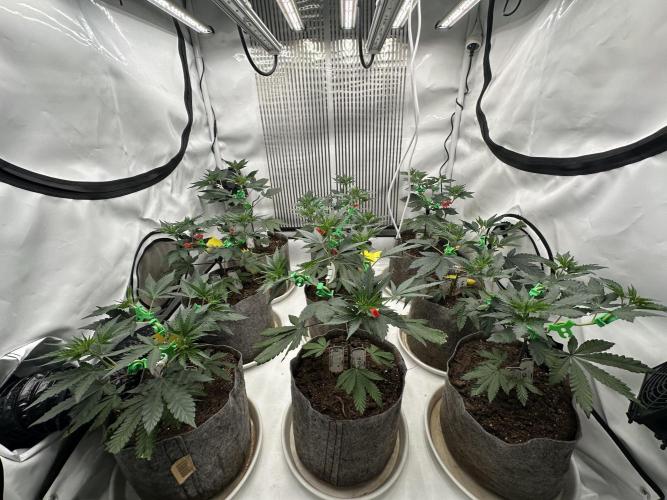
Daz_Method Week 5 of veg: repotted into the final 12L pots using a 100% organic soil mix I made myself with dry organic amendments only — no bottled organic products. Watered with compost tea, and bent/trained the plants to shape the canopy for a SOG setup.
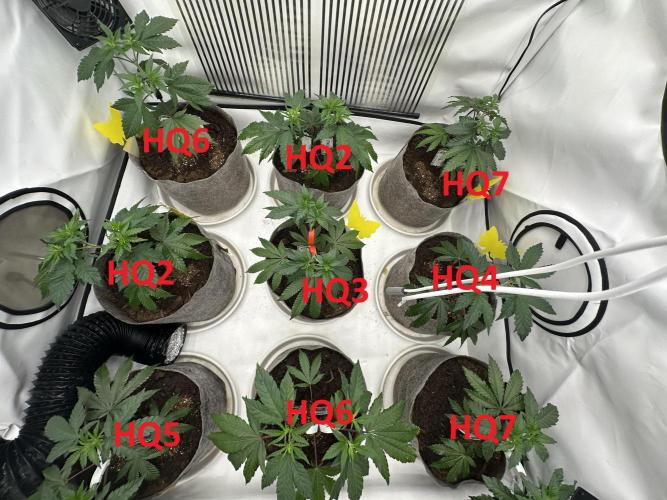
For this keeper hunt (if we find one), we have 6 different Henni Qolada candidates: HQ2, HQ3, HQ4, HQ5, HQ6, and HQ7. There were originally 7, but HQ1 was removed from the selection because it stayed very small after the double topping, so we ruled it out right away.
Since I had 9 spots in this session but only 6 different plants, HQ6, HQ2, and HQ7 were doubled. Those three stood out a bit more in terms of vigor, which is why they got the extra spots. For the rest, structure and internodal spacing seem pretty close across the different individuals so far, with no major differences at this stage.
1 like
comments
Share
Used techniques
Transplantation
Technique
SoG
Technique
6
Week 6. Flowering4mo ago
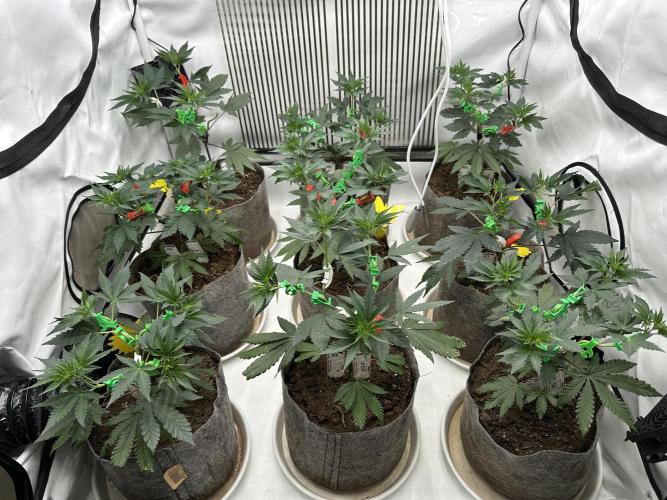
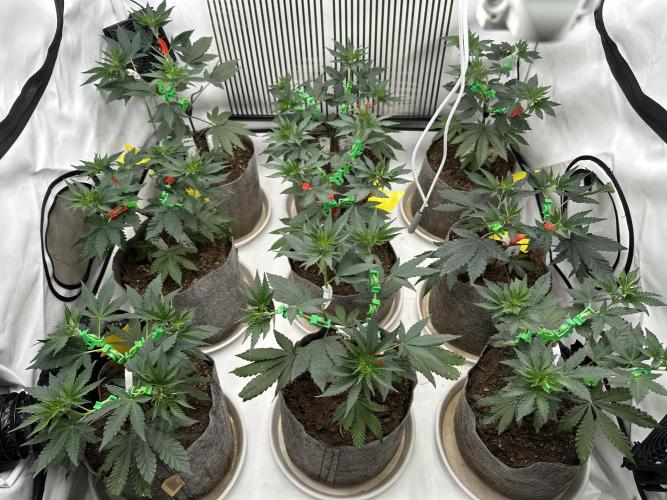
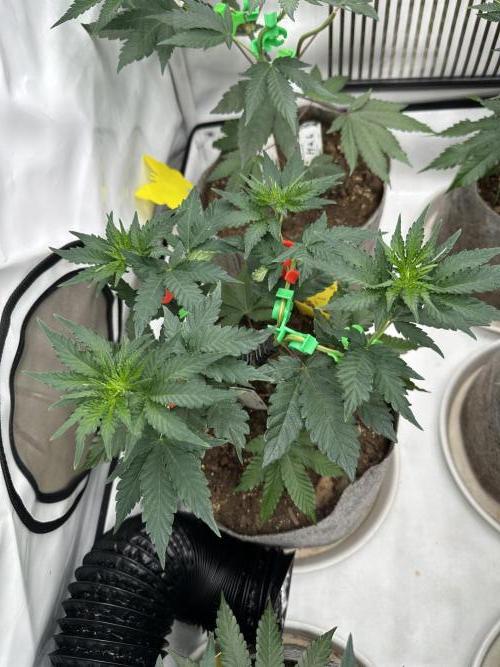
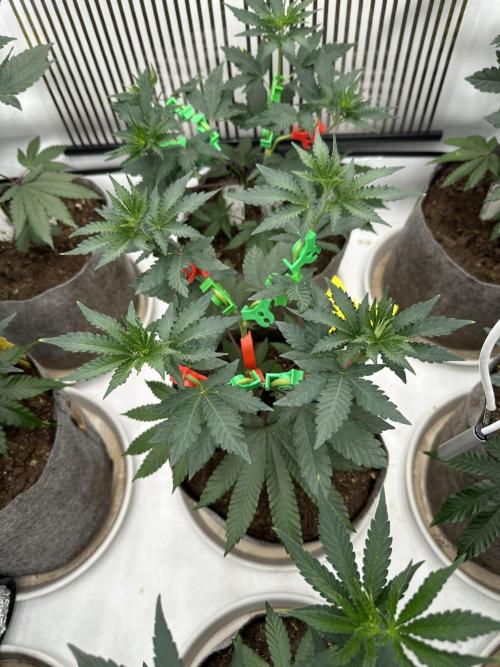
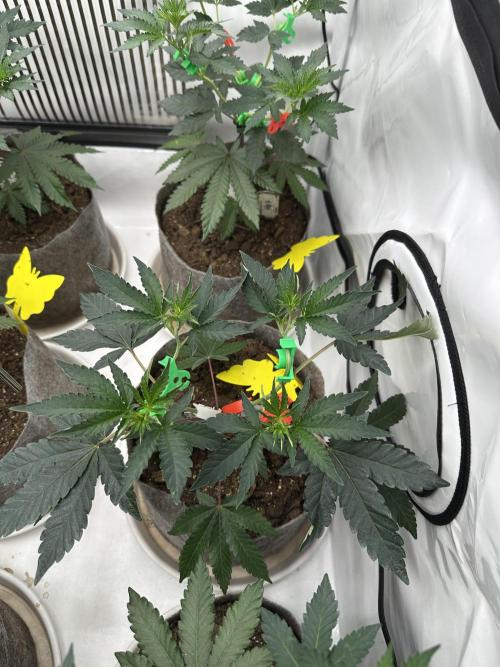
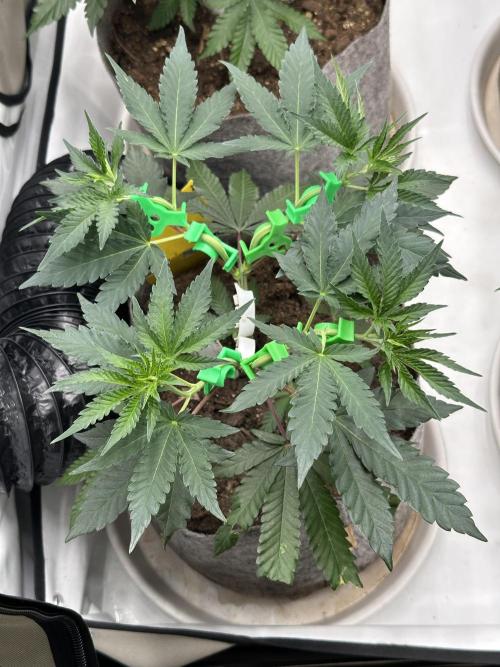
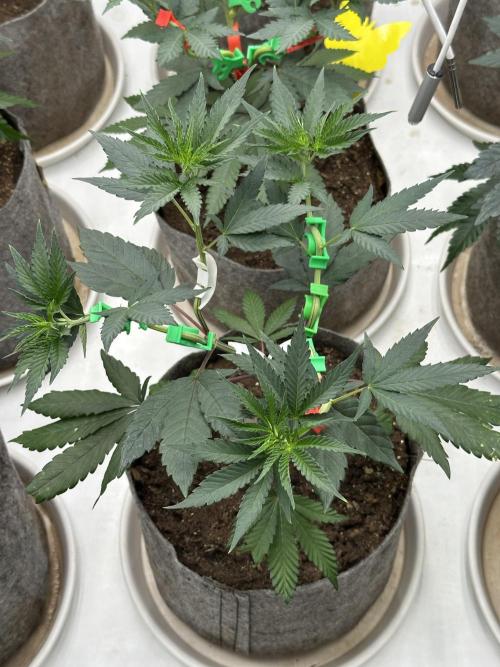
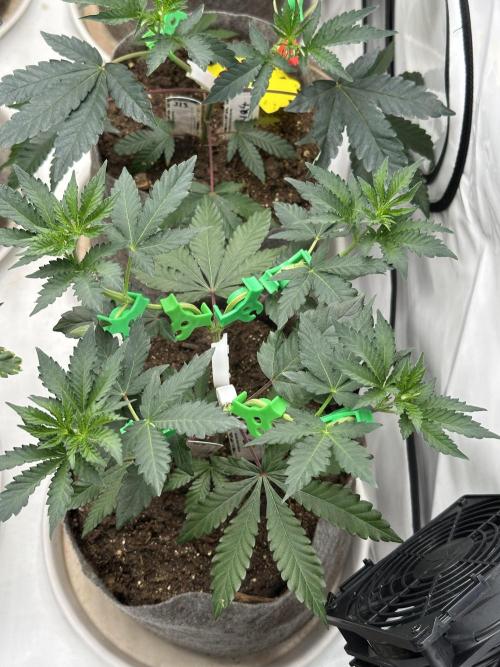
24 cm
Height
12 hrs
Light Schedule
27 °C
Day Air Temp
6.7
pH
No Smell
Smell
65 %
Air Humidity
21 °C
Solution Temp
21 °C
Substrate Temp
22 °C
Night Air Temp
12 liters
Pot Size
1 liters
Watering Volume
50 cm
Lamp Distance
Nutrients 1
dry organic amendment
1 mll
Daz_Method Week 1 of flower: just flipped them today. A second veg compost tea watering was applied, along with some light LST using plant benders to open up the canopy and shape a better SOG structure. Noted that HQ6 and HQ7 currently seem more vigorous than the rest, while HQ4 looks slower and a bit behind compared to the others. Let’s see how the next days unfold.
1 like
comments
Share
Used techniques
SoG
Technique
LST
Technique
12-12
Technique
7
Week 7. Flowering4mo ago
38 cm
Height
12 hrs
Light Schedule
27 °C
Day Air Temp
6.7
pH
Weak
Smell
62 %
Air Humidity
21 °C
Solution Temp
21 °C
Substrate Temp
22 °C
Night Air Temp
12 liters
Pot Size
1 liters
Watering Volume
50 cm
Lamp Distance
Nutrients 1
dry organic amendment
1 mll
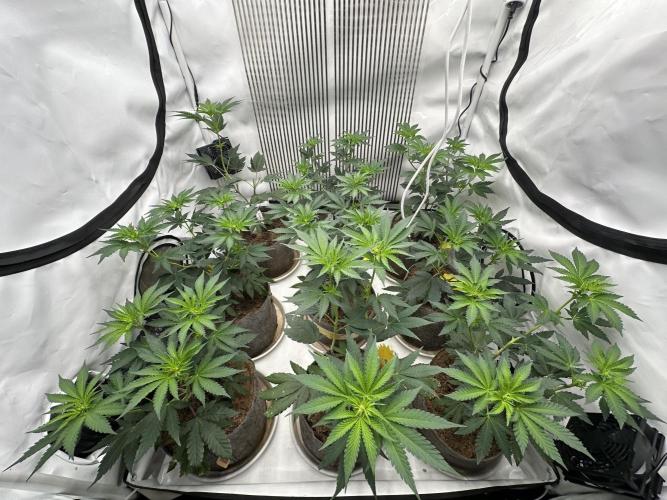
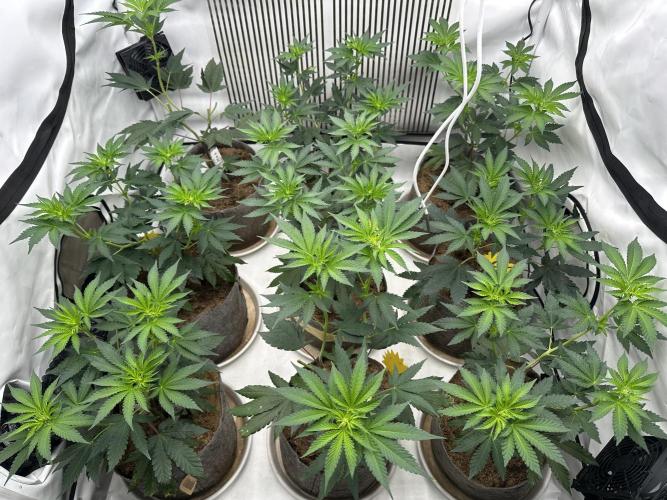
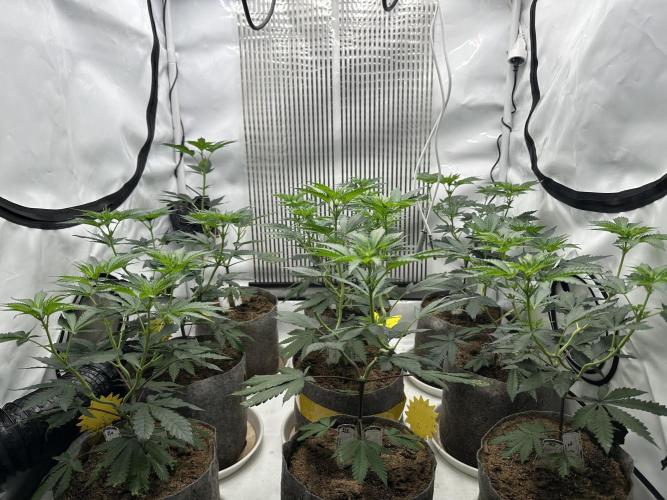
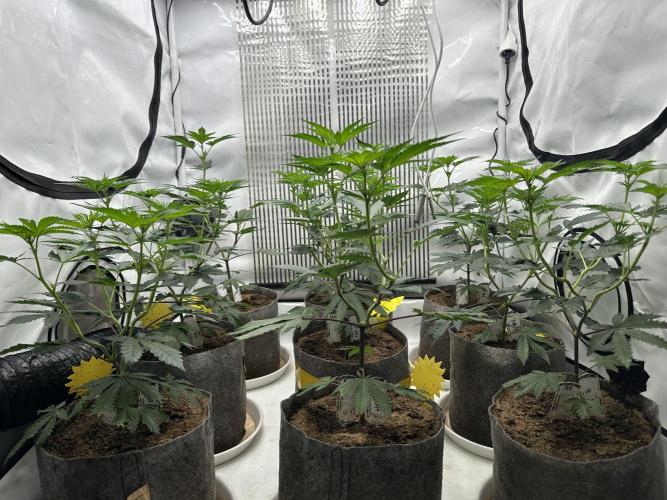
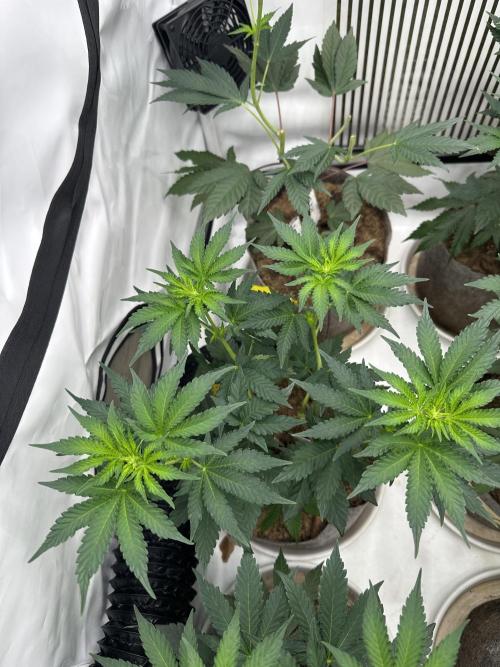
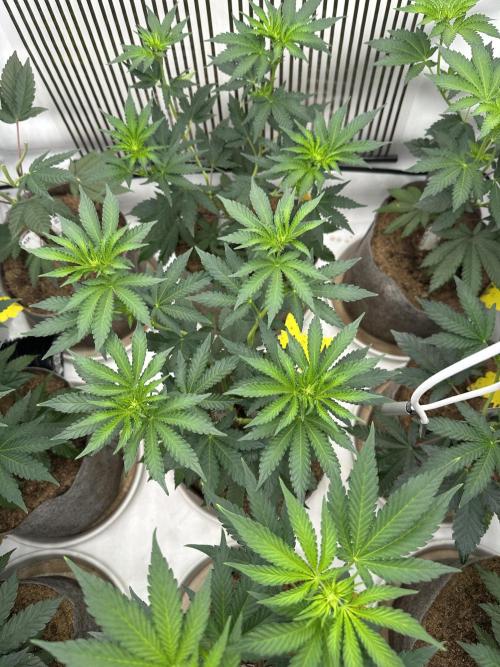
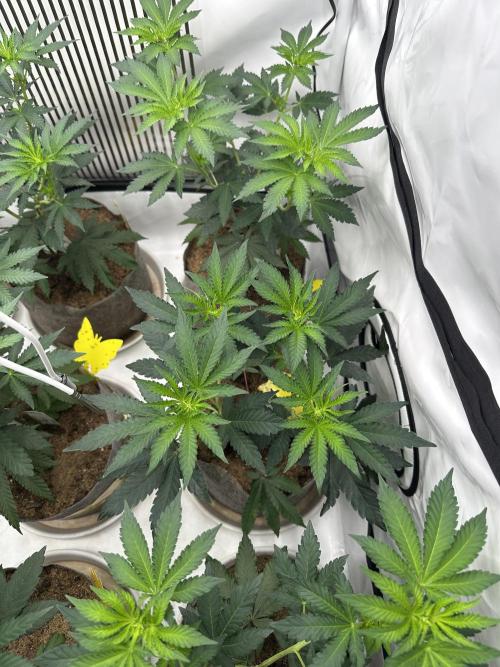
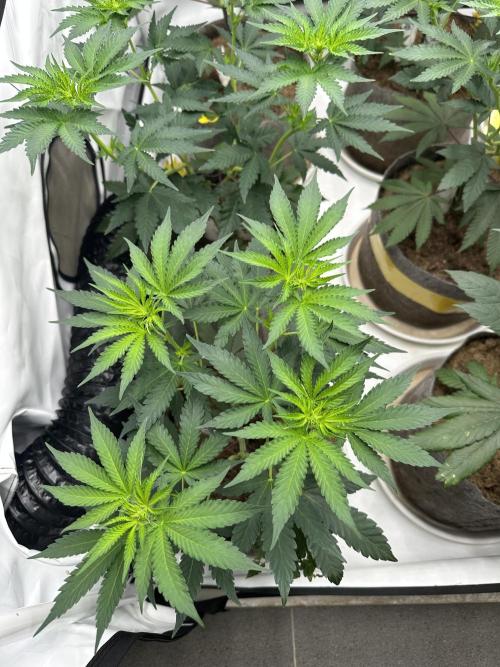
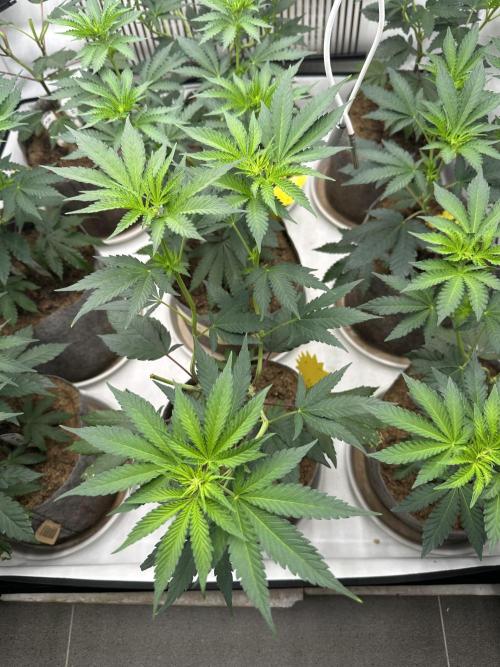
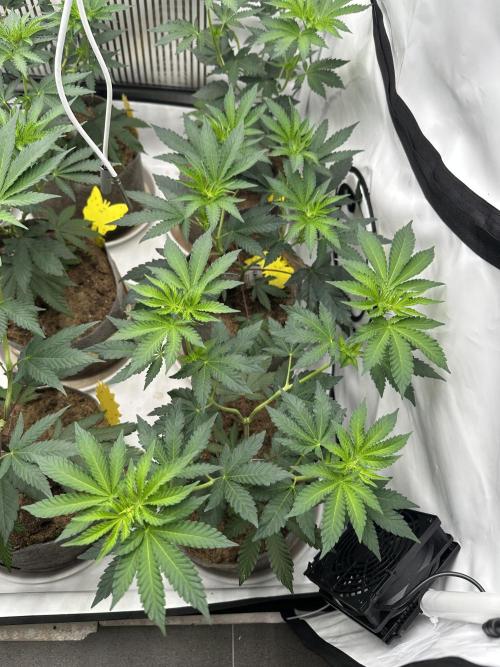
Daz_Method Week 2 of flower: everything is going well and the stretch is accelerating. A top-dress was applied to support the increased demand during this phase, and I’m still gradually raising light intensity. The first flowers are starting to show, and they seem fairly quick.
At this stage, HQ6 is clearly pulling ahead in terms of stretch, while HQ4 is trailing behind. The others are staying fairly close overall, with no major differences for now.
One important note: HQ6 stretched so fast and hardened its stems so quickly that the plant benders became a problem. The combination of strong vigor, fast growth, and the 180° angle created too much pressure on the branches — basically, it was either the branch or the bender, and the bender was stronger. As a result, 3 branches snapped on the back HQ6, and 1 branch snapped on the front one. Luckily, this pheno was doubled in the session, so it’s not a disaster. Still, lesson learned: next time I can’t use 180° benders on this one, and I definitely can’t leave them in place for more than 2–3 days or I’ll risk more breakage. Honestly, it surprised me — it’s the first time this has happened to me.
On the positive side, the smell is already starting to show real potential. As soon as the plants are touched or moved, the aroma is clearly there, which looks very promising for the rest of the run.
1 like
comments
Share
Used techniques
LST
Technique
SoG
Technique
8
Week 8. Flowering4mo ago
45 cm
Height
12 hrs
Light Schedule
27 °C
Day Air Temp
6.7
pH
Weak
Smell
60 %
Air Humidity
21 °C
Solution Temp
21 °C
Substrate Temp
22 °C
Night Air Temp
12 liters
Pot Size
1 liters
Watering Volume
40 cm
Lamp Distance
Nutrients 1
dry organic amendment
1 mll
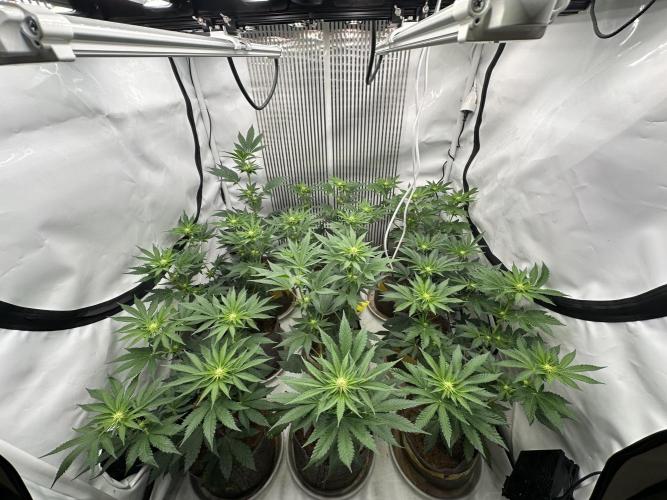
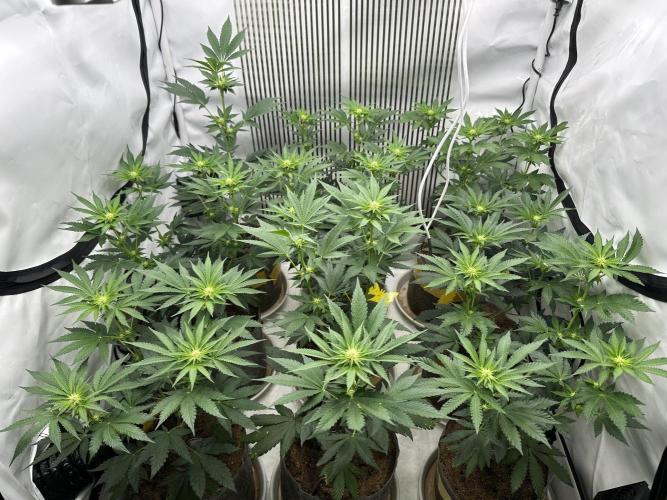
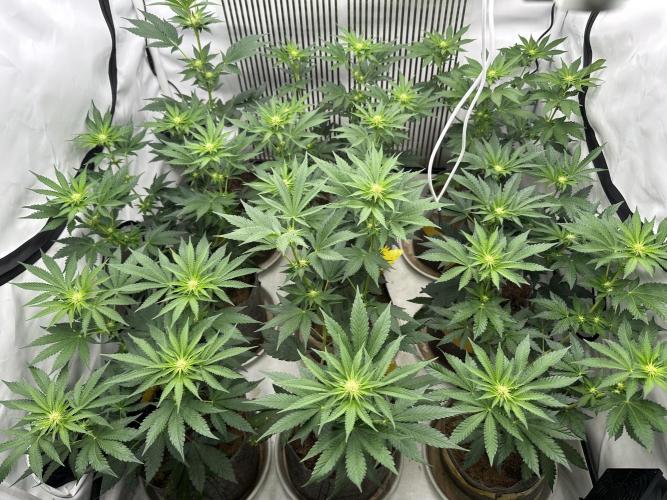
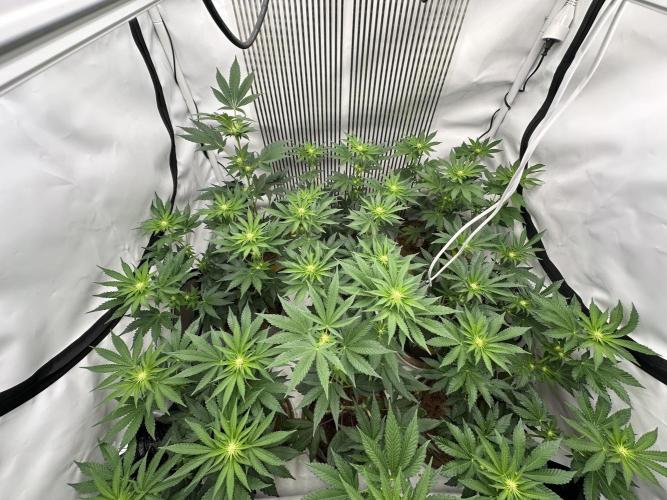
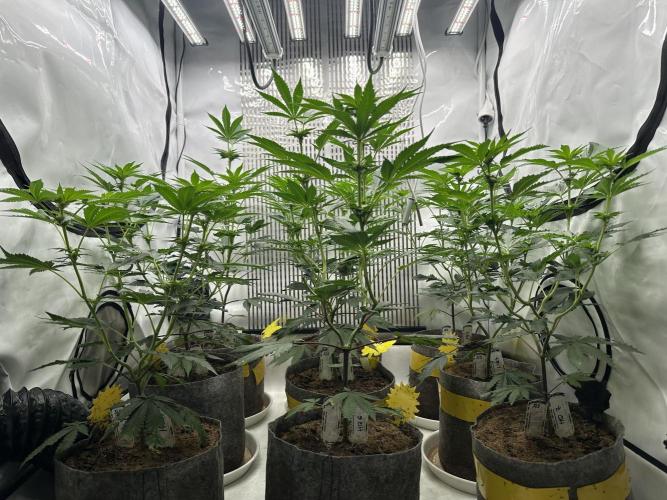
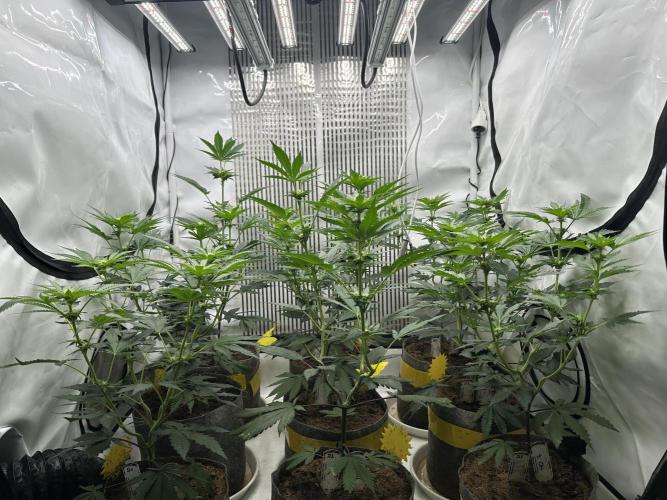
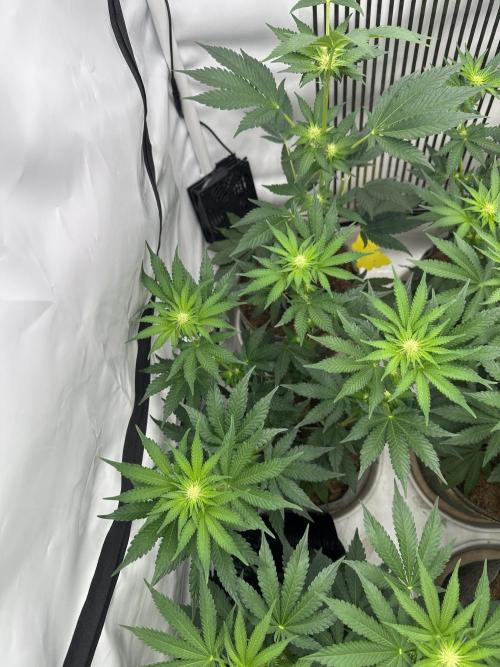
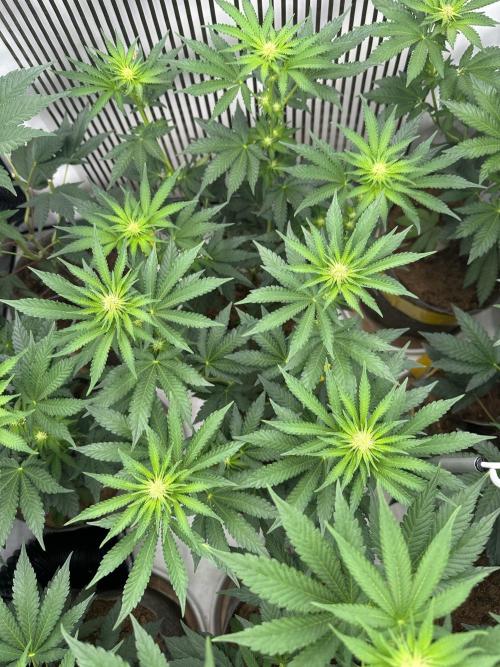
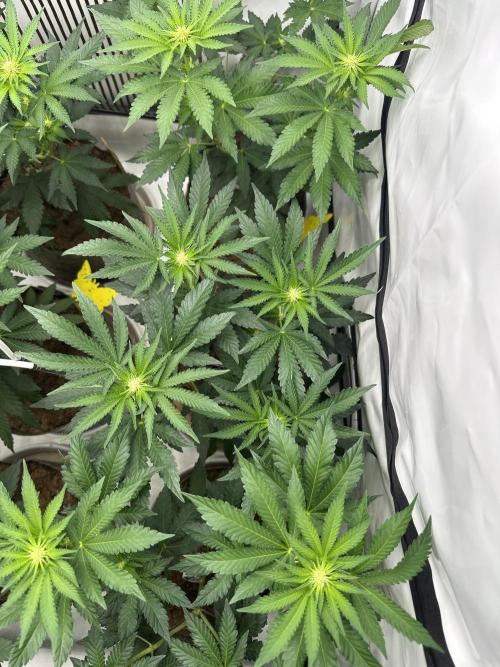
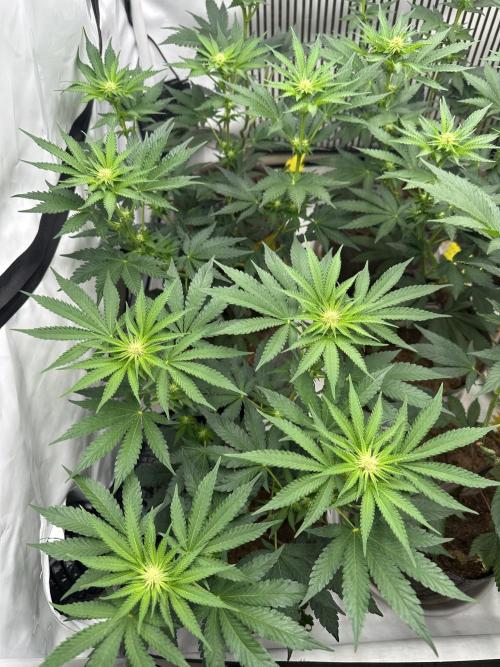
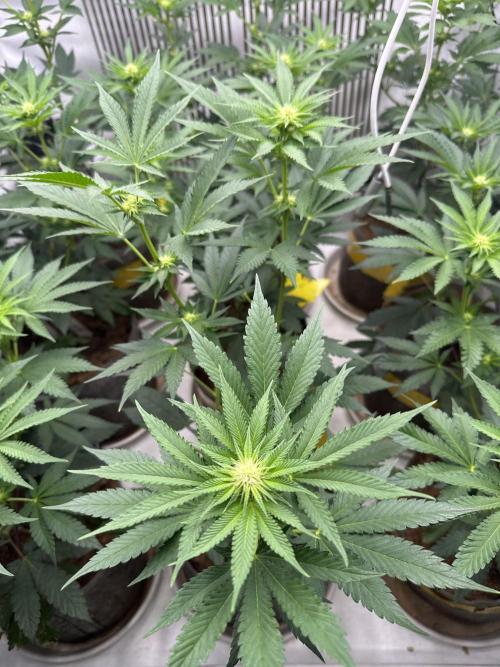
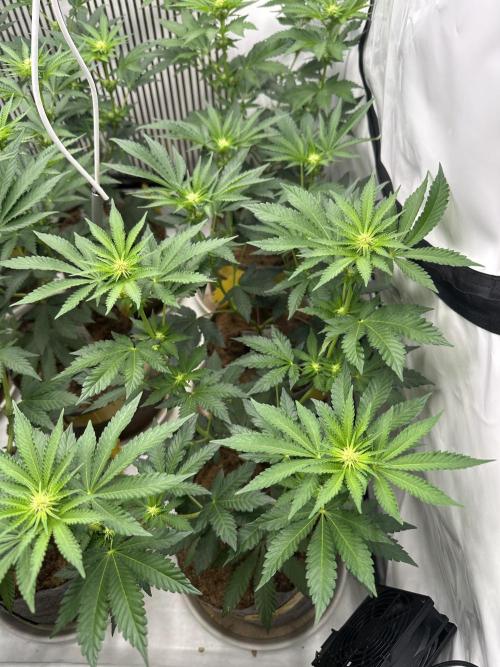
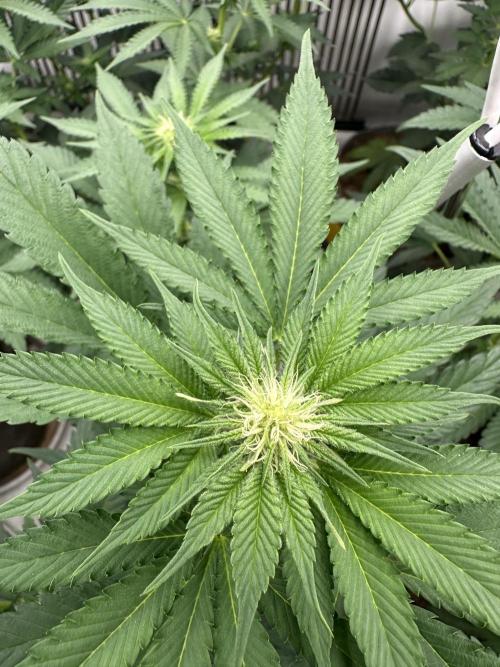
Daz_Method Start of Week 3 of flower: the flowers are already well established, and we’re moving into the end of the stretch — bulking should begin soon. I haven’t done any defoliation yet, since the leaves are not really blocking the secondary sites and the canopy is still fairly open overall, with the space not fully filled yet. At the moment I feel the balance is good, with neither too much nor too little leaf mass. That’s also normal because the fill is not fully optimized with 12L pots in a 1x1m space. I also haven’t cleaned any lower shoots this week, since I already did that before the flip and right now nothing looks too low. I did add a light top-dress though, because I feel the leaves are still not quite green enough to enter the bulking phase comfortably. Light is currently at 75%; by the end of the week it should be at 100% and around 25 cm from the canopy. Next week, at Flower Day 21 when the stretch is fully over, I’ll take individual plant pictures and start recording internodal spacing and other useful measurements. I may do a light defoliation next week once the stretch is fully over.
likes
comments
Share
9
Week 9. Flowering4mo ago
50 cm
Height
12 hrs
Light Schedule
27 °C
Day Air Temp
6.7
pH
Normal
Smell
60 %
Air Humidity
21 °C
Solution Temp
21 °C
Substrate Temp
22 °C
Night Air Temp
12 liters
Pot Size
1 liters
Watering Volume
40 cm
Lamp Distance
Nutrients 1
dry organic amendment
1 mll
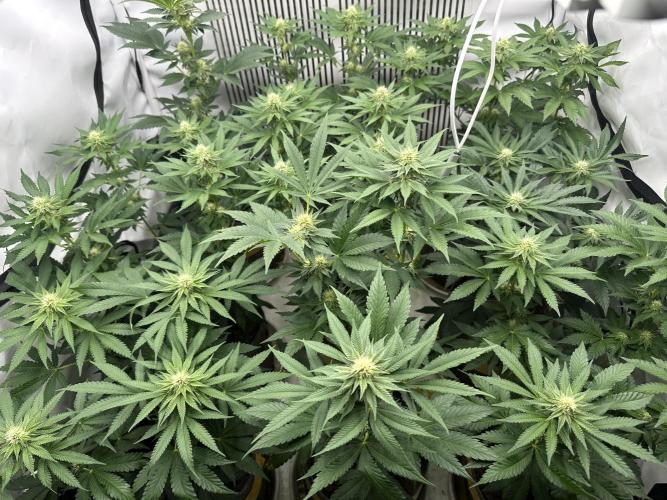
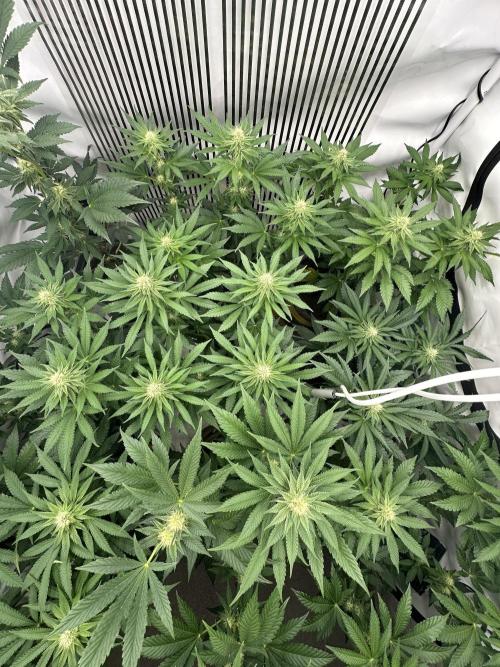
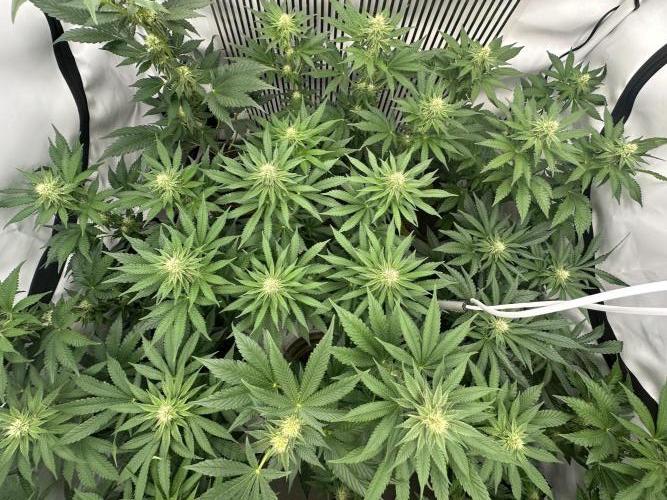
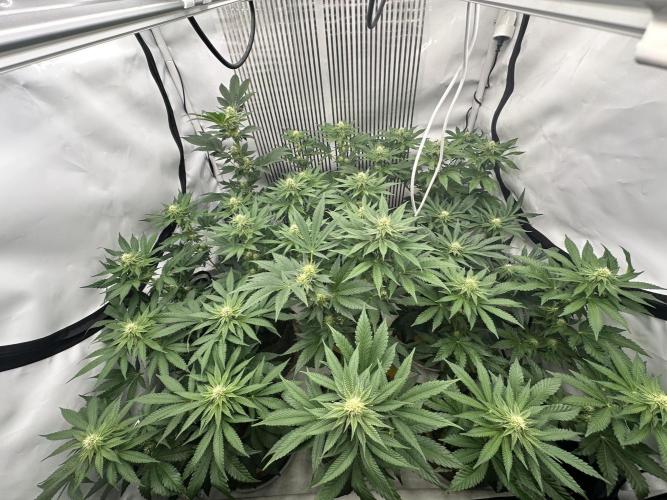
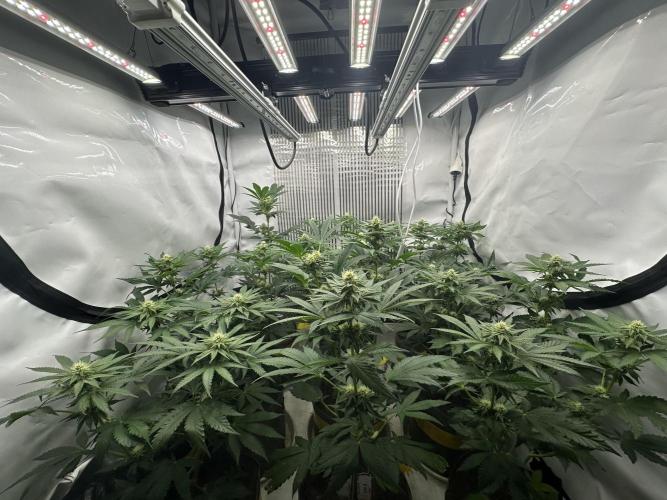
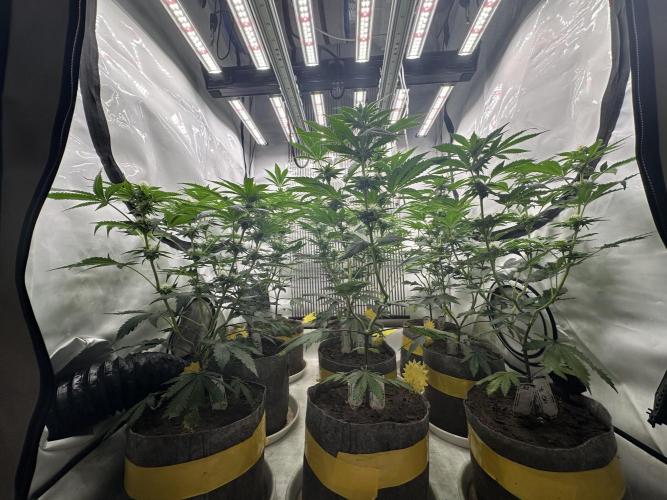
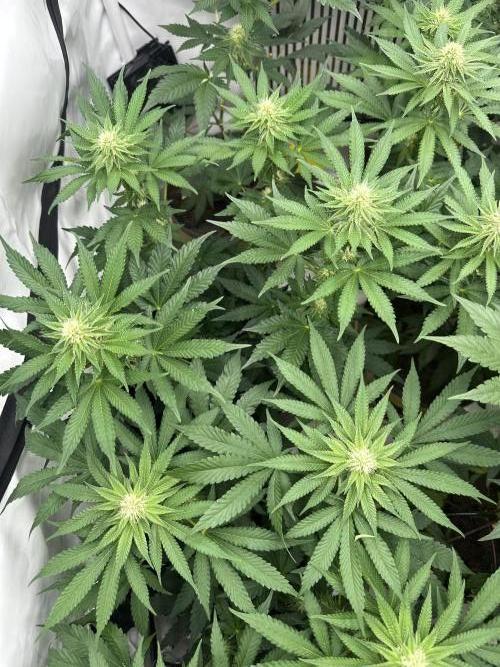
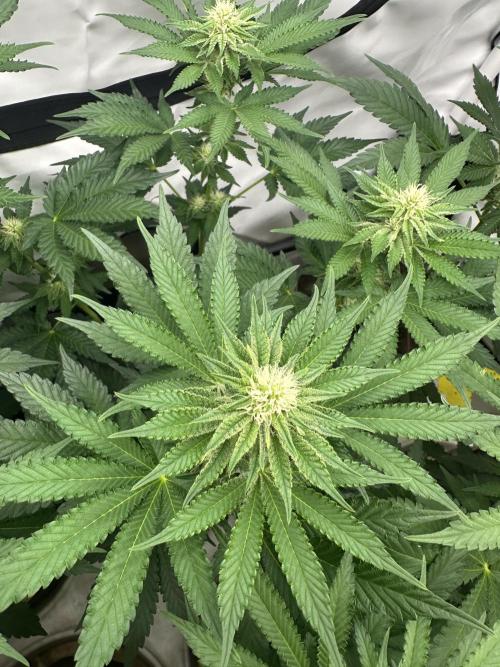
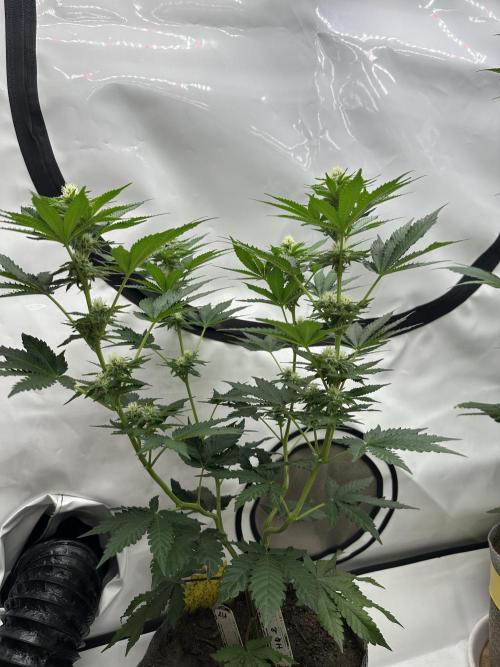
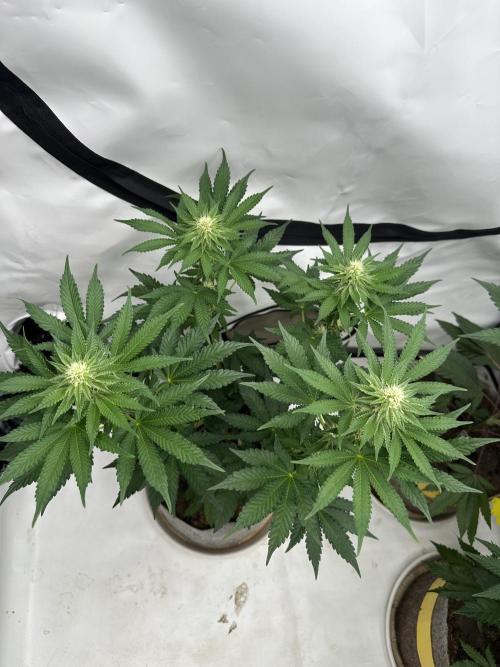
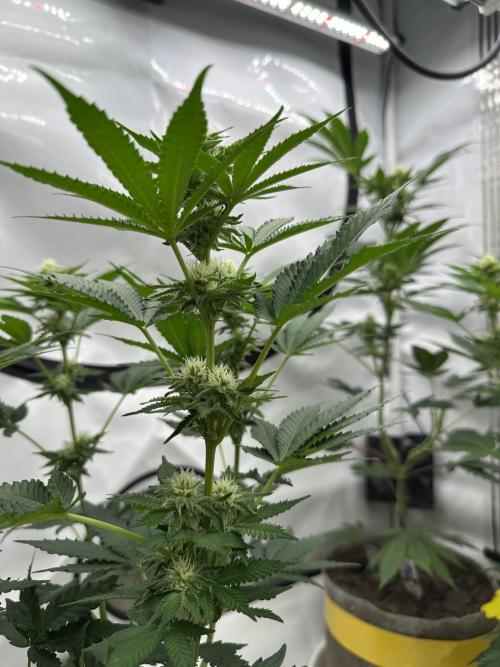
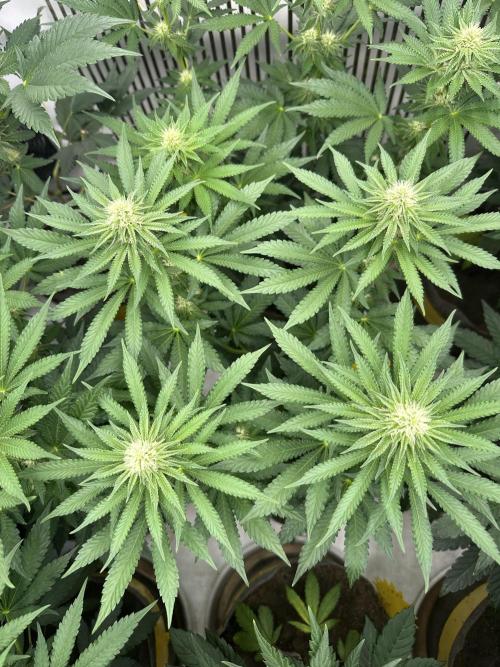
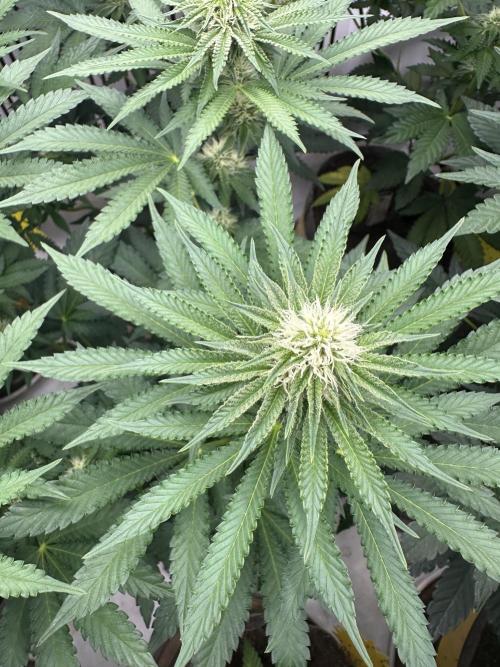
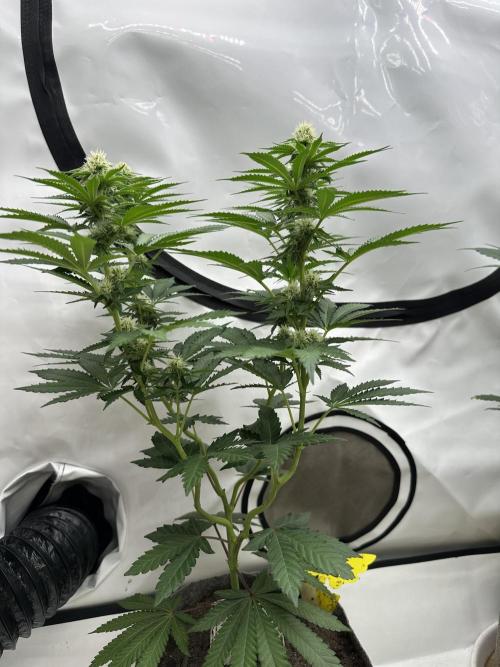
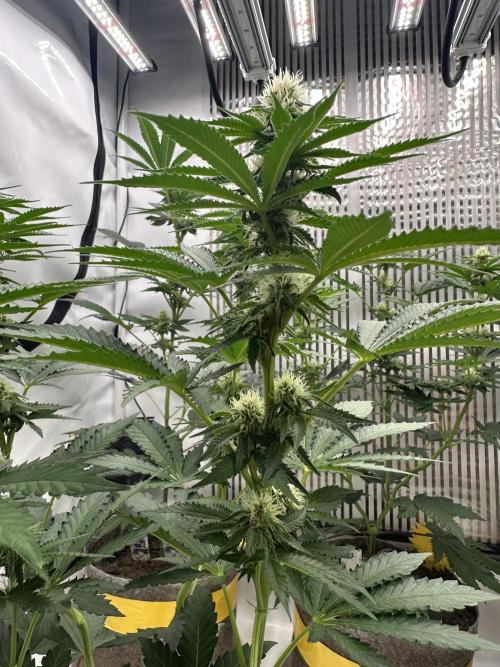
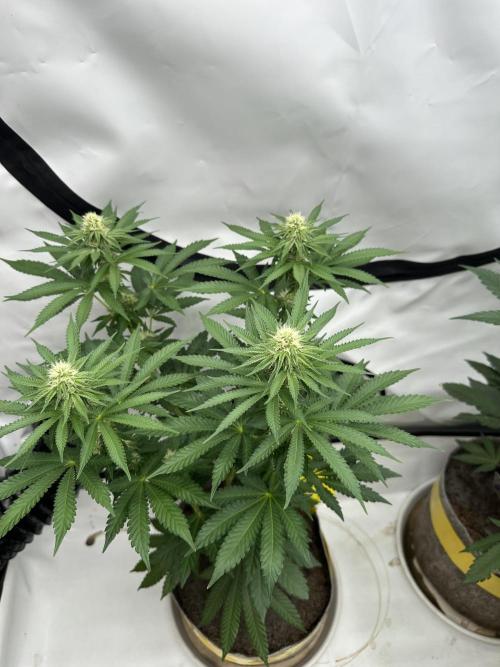
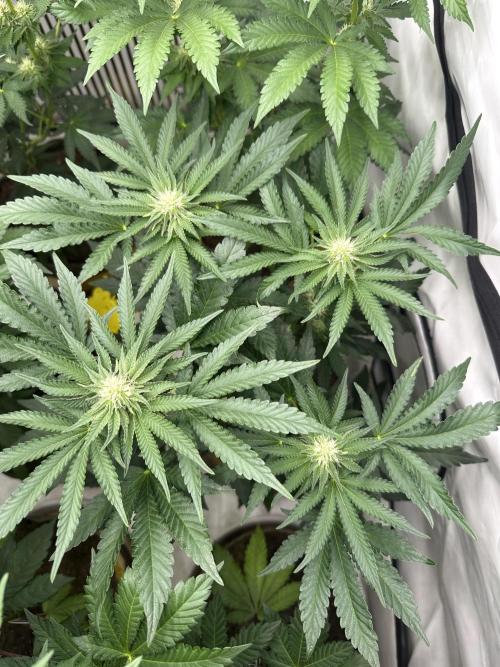
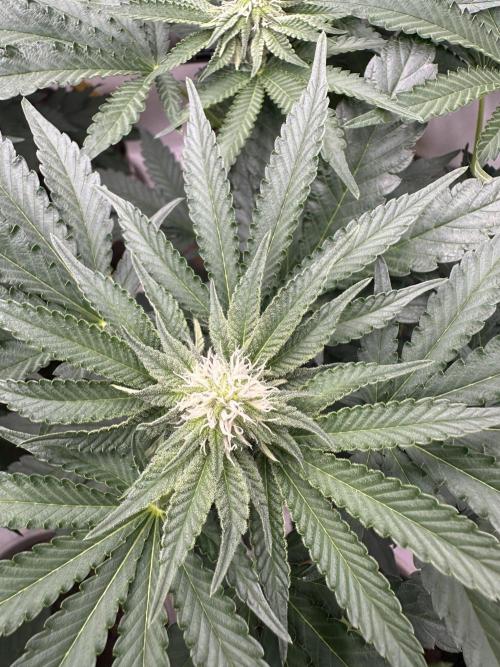
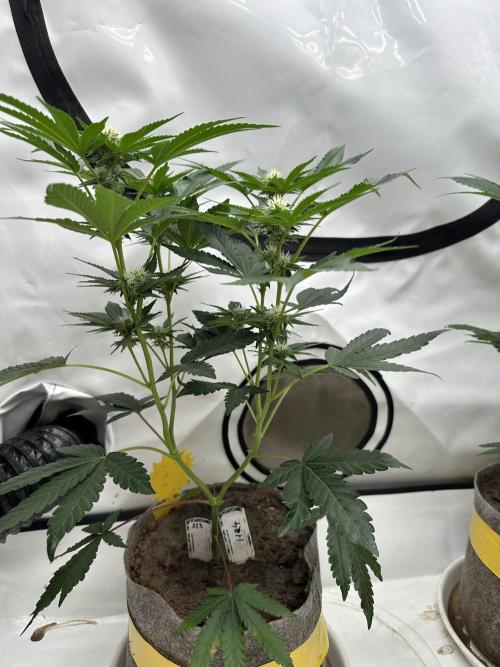
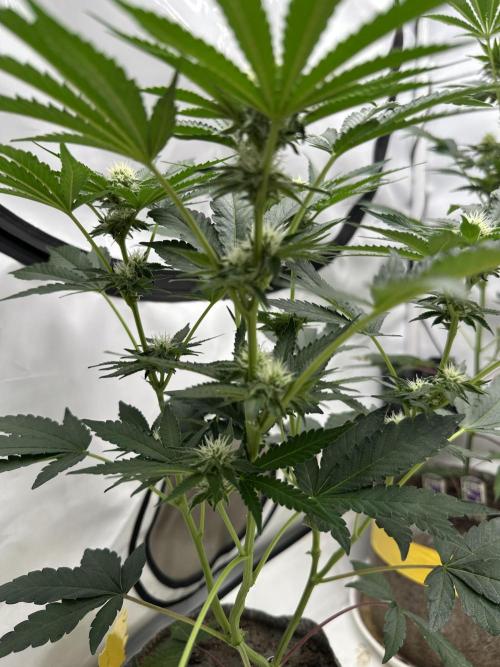
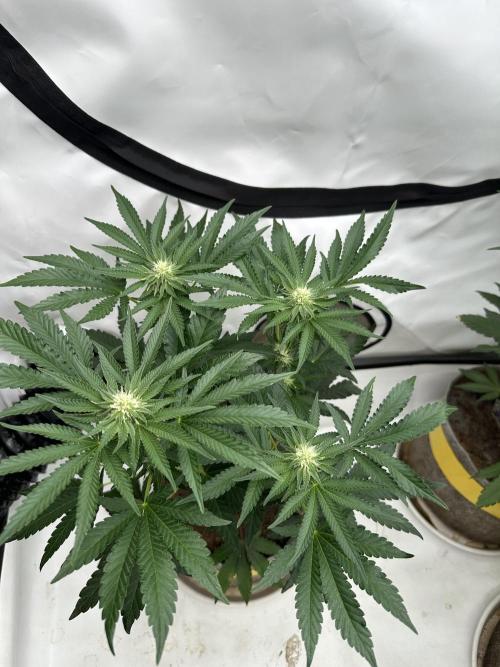
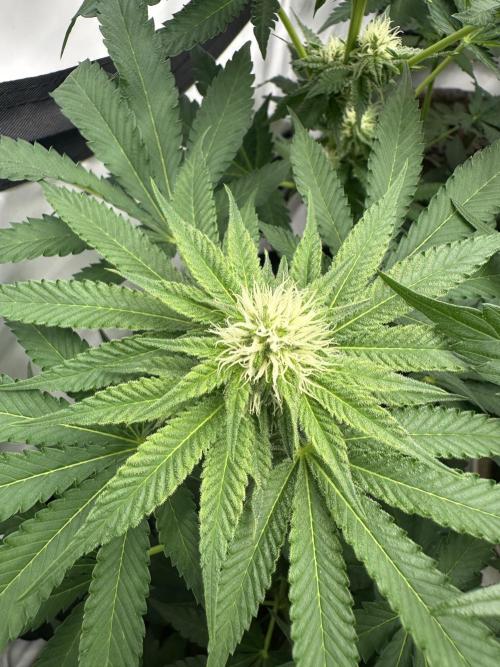
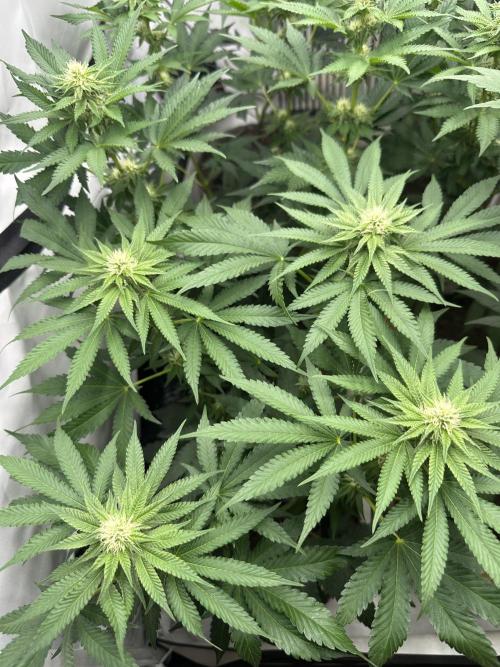
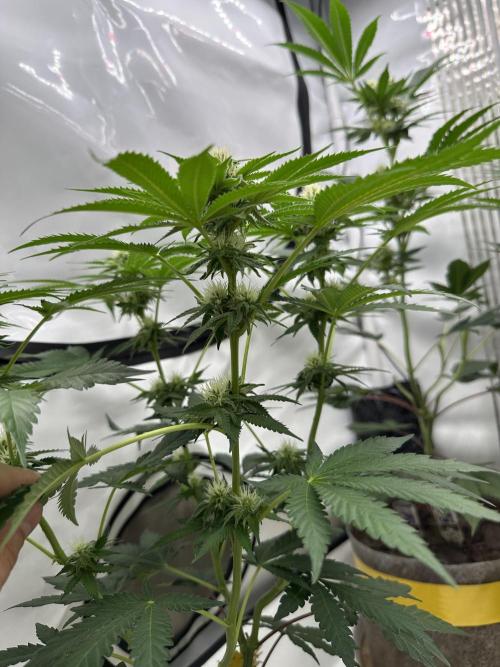
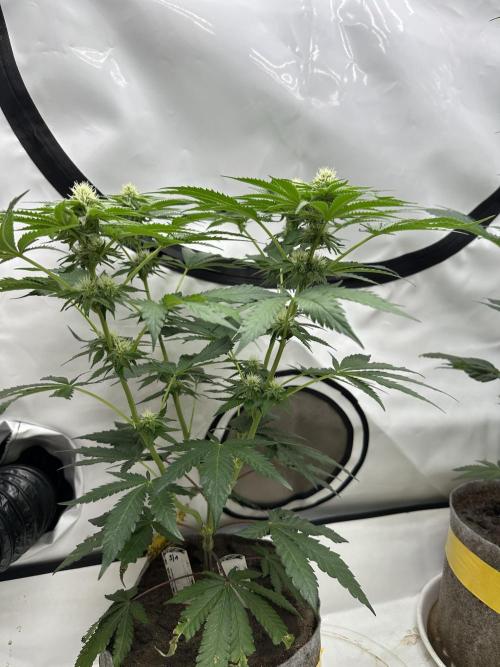
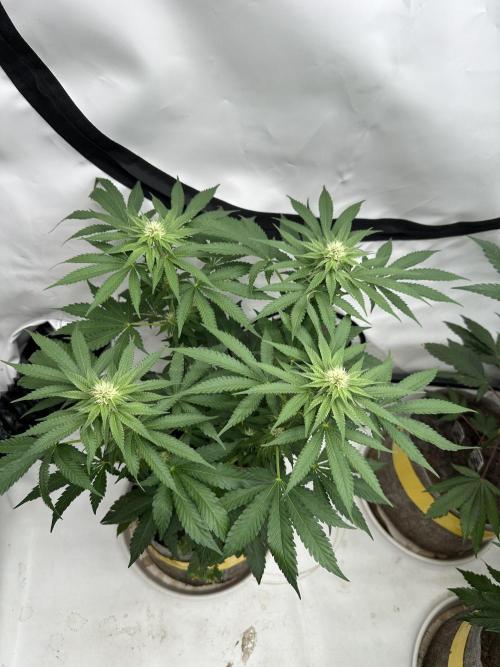
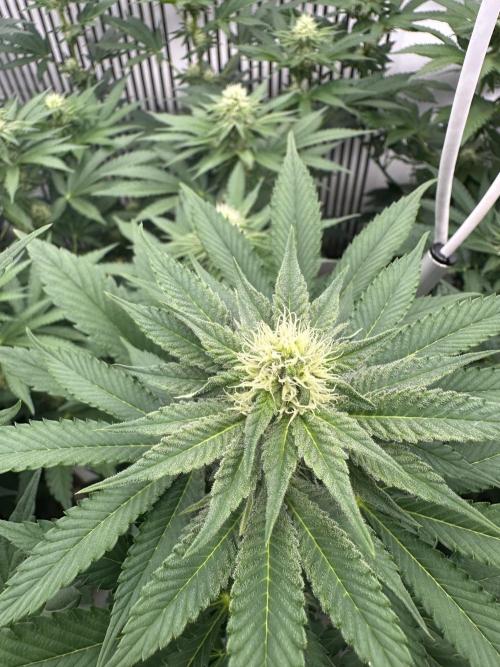
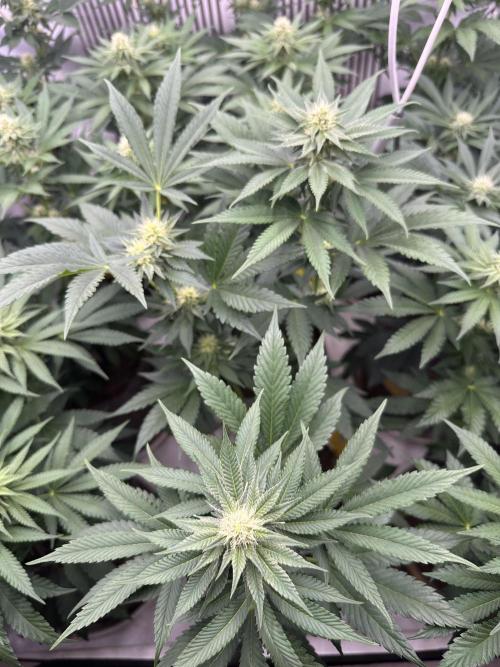
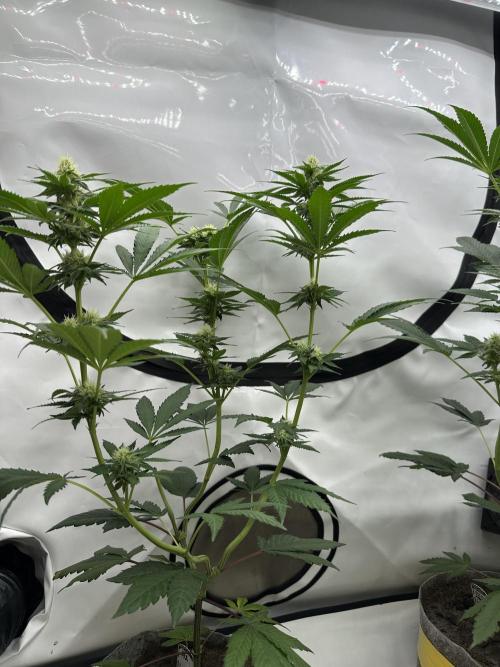
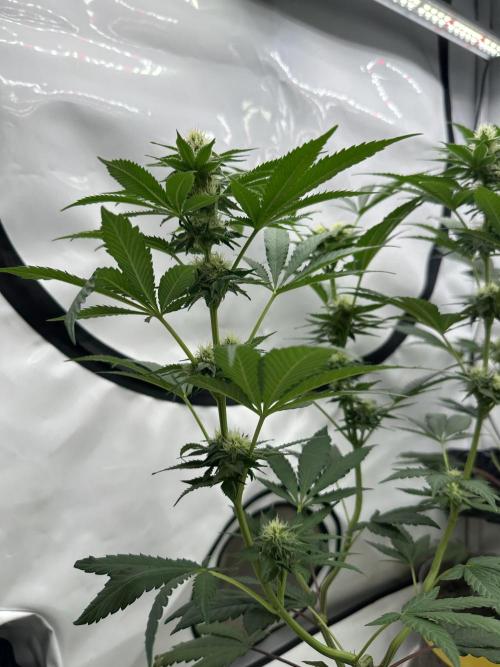
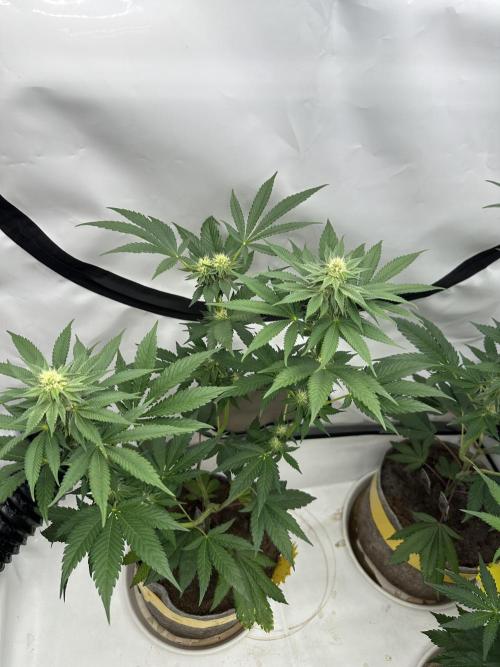
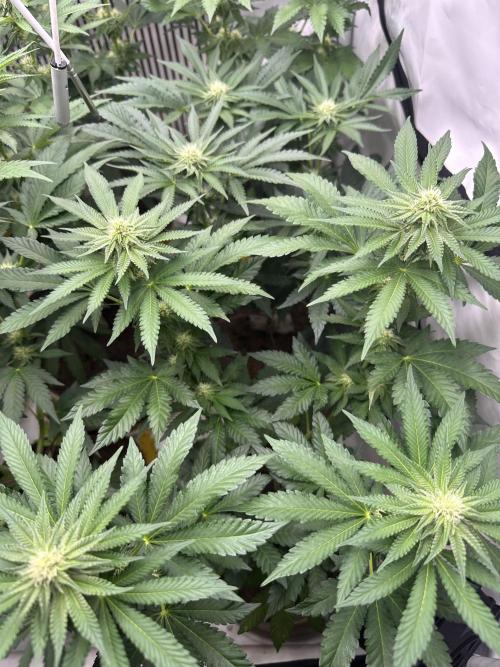
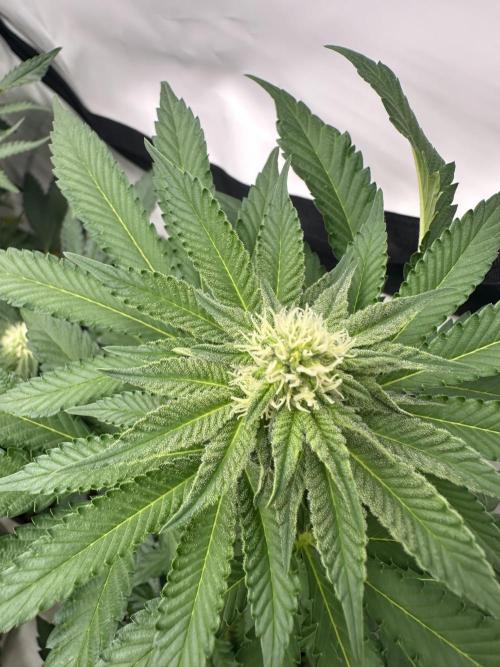
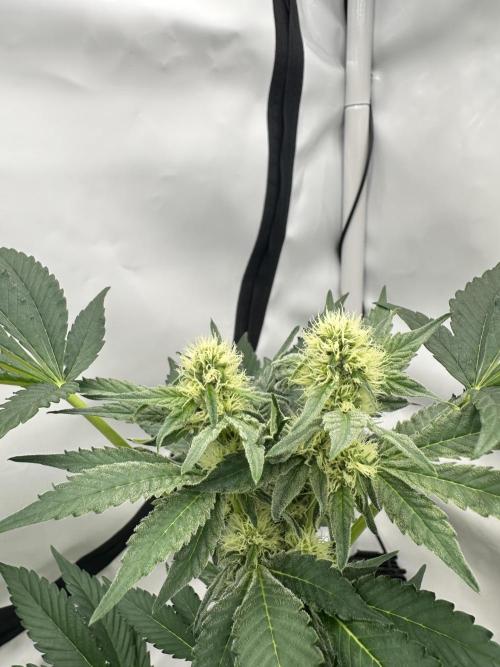
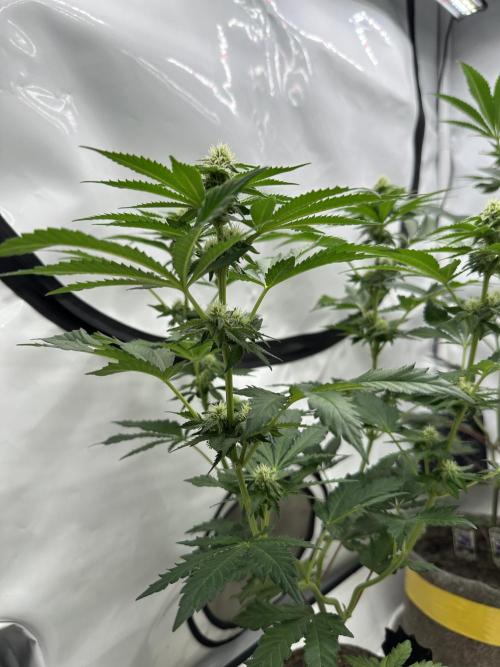
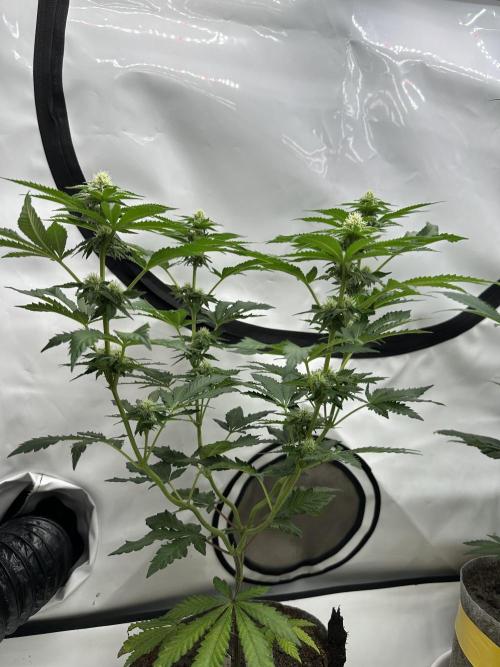
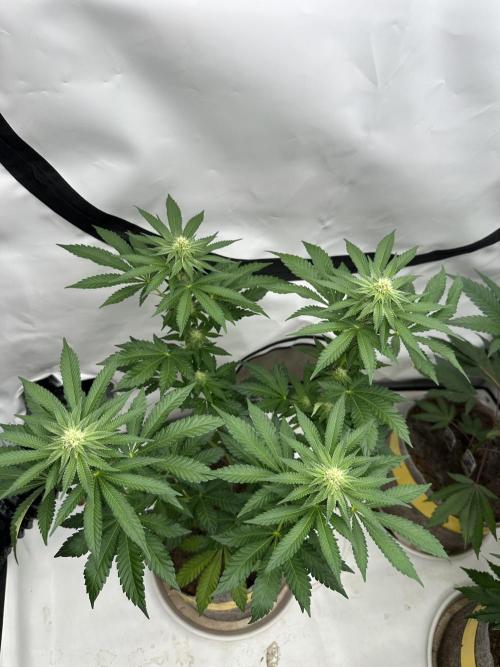
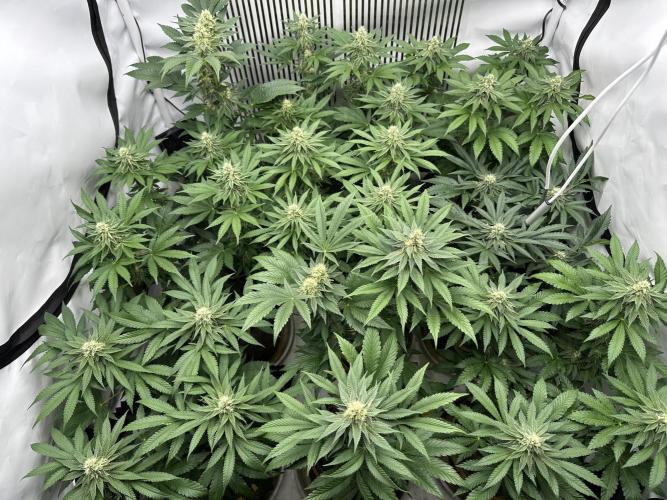
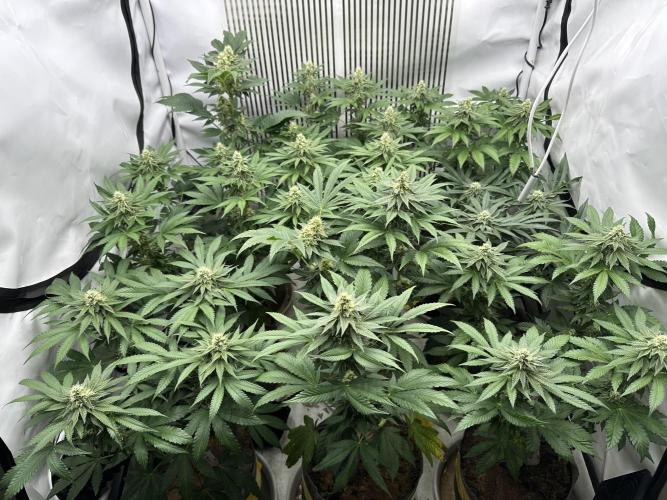
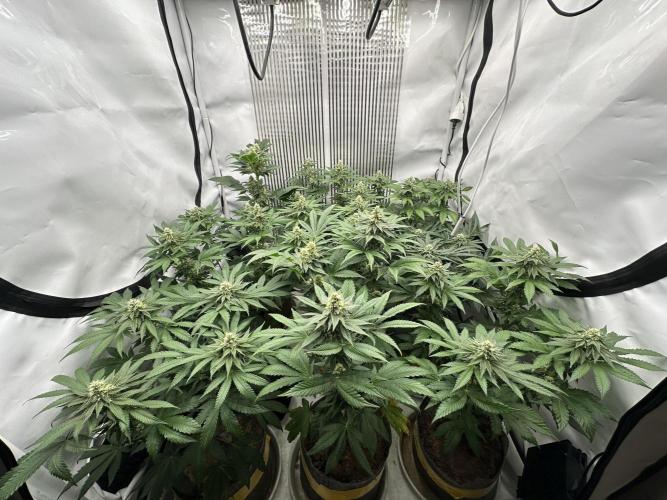
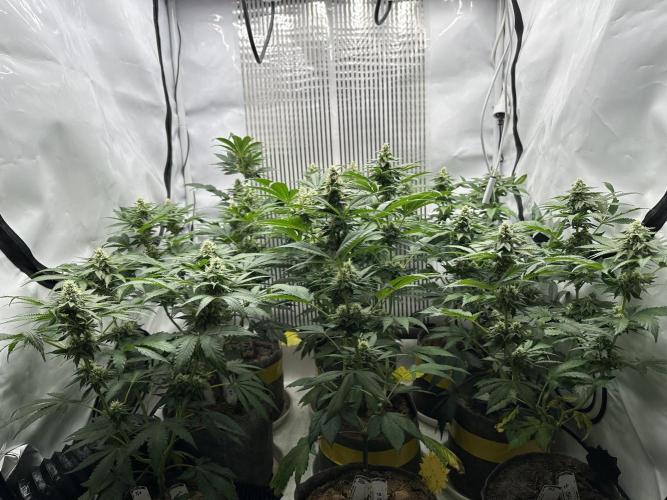
Daz_Method Start of Week 4 of flower: the stretch is definitely over now. Trichome production has already started nicely, and the smell is becoming much more noticeable too. A light defoliation was done, along with removing the last unnecessary lower shoots. A wood ash top-dress was added to support bulking with extra PK, and the light is now running at 100% intensity.
Now that the stretch is finished, internodal spacing can be read more clearly:
HQ2: 3–6 cm
HQ3: 3–4.5 cm
HQ4: 3–4 cm
HQ5: 2–5 cm
HQ6: 3–6 cm
HQ7: 3–5 cm
Overall, internodal spacing stays in a fairly workable range across the group. HQ6 and HQ7 stretched a bit more than the others, while HQ4 and HQ5 stayed slightly shorter and tighter. The rest are fairly close. Structurally, they are nice plants overall, and the run still looks promising from that point of view.
That said, I always check carefully for hermaphrodite bananas between Week 2 and Week 3 of flower, around the end of stretch, and unfortunately I found some. HQ7 had 7 bananas, HQ2 had 3, HQ6 had 5, and HQ3 was by far the worst — it was full of bananas to the point that I stopped counting. HQ3 was immediately removed as a keeper candidate, and the mother plant was destroyed right away. Only HQ4 showed no bananas at all.
So at this stage, I’m a bit disappointed on that specific point. I’m already seriously questioning HQ6 and HQ7 as keeper candidates too, because throwing 5–7 bananas is still too much for something I would consider stable enough to keep long term.
That said, when I look at the run as a whole, the plants are otherwise fairly consistent in structure and overall behavior, so I don’t want to jump to conclusions too fast. It may simply be that I got unlucky with this pack, or that this line is a bit more sensitive to my style of work — especially double topping and the way I push plants during veg and stretch. We’ll see how the rest of the run unfolds, but for now this is clearly the main red flag in the selection.
1 like
comments
Share
10
Week 10. Flowering4mo ago
50 cm
Height
12 hrs
Light Schedule
27 °C
Day Air Temp
6.7
pH
Normal
Smell
60 %
Air Humidity
21 °C
Solution Temp
21 °C
Substrate Temp
22 °C
Night Air Temp
12 liters
Pot Size
1 liters
Watering Volume
30 cm
Lamp Distance
Nutrients 1
dry organic amendment
1 mll
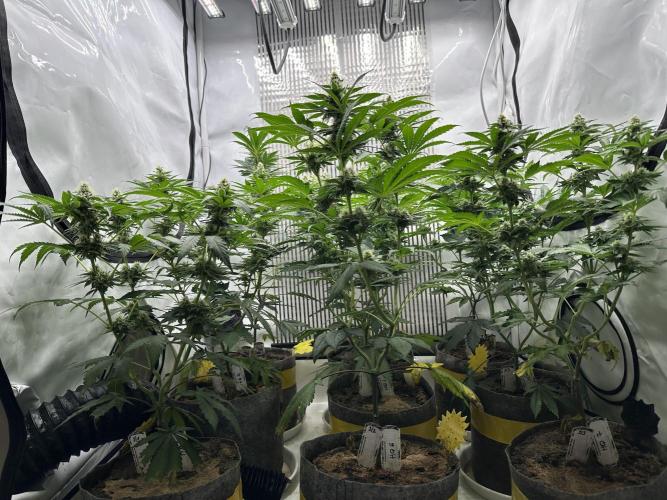
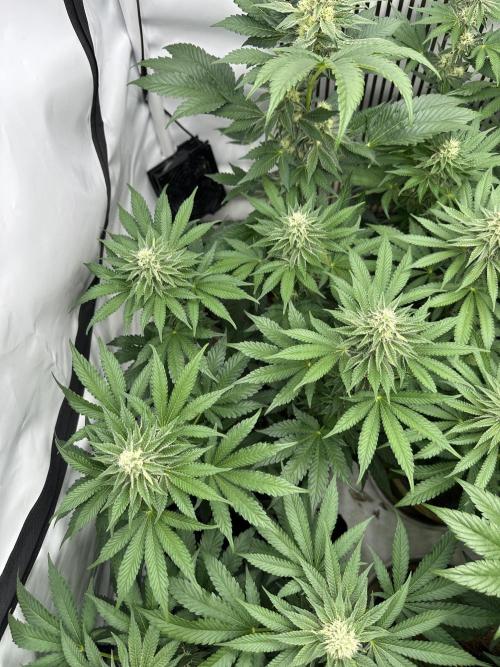
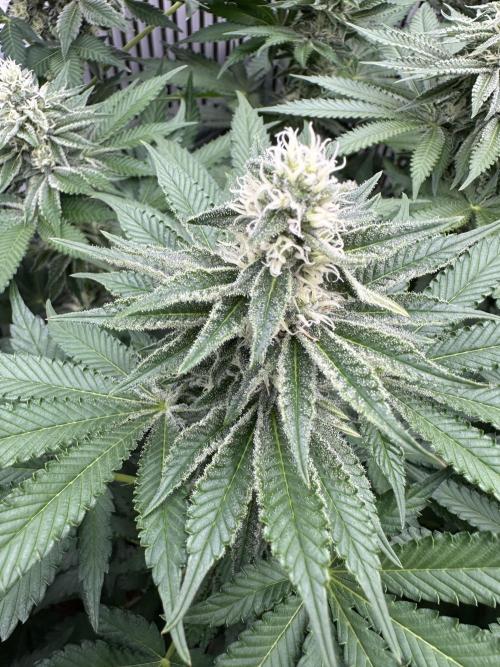
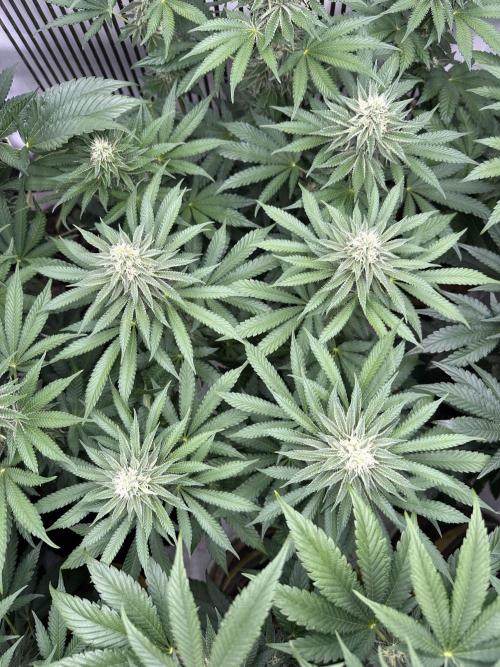
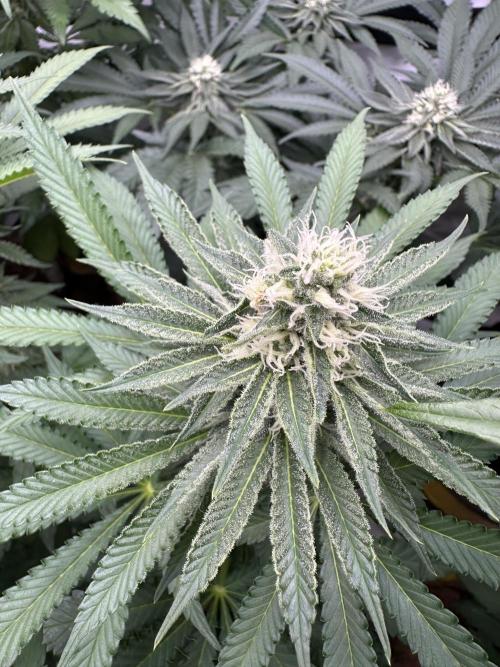
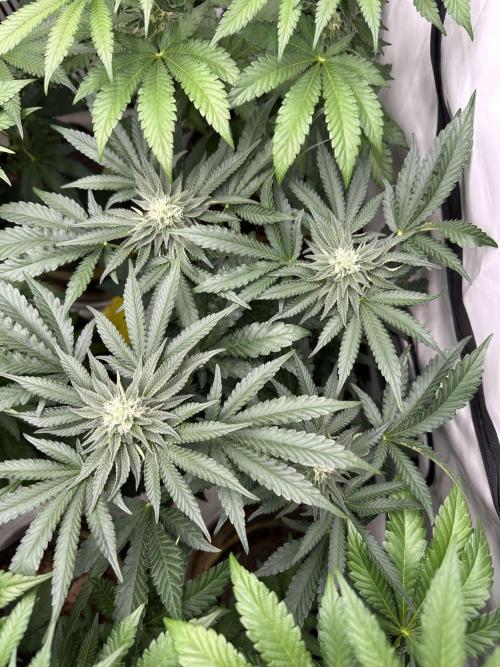
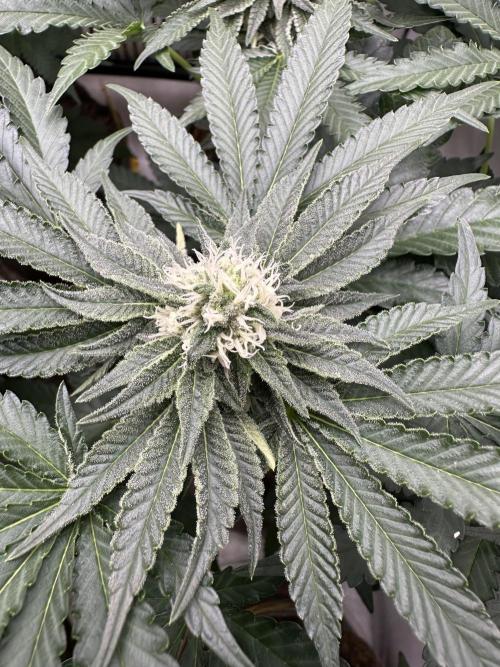
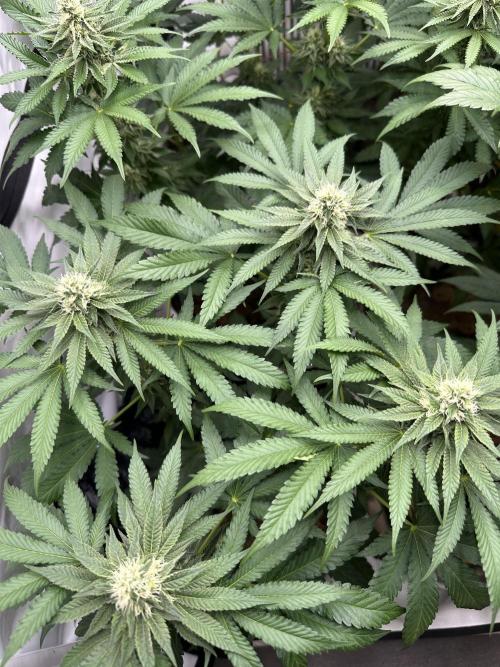
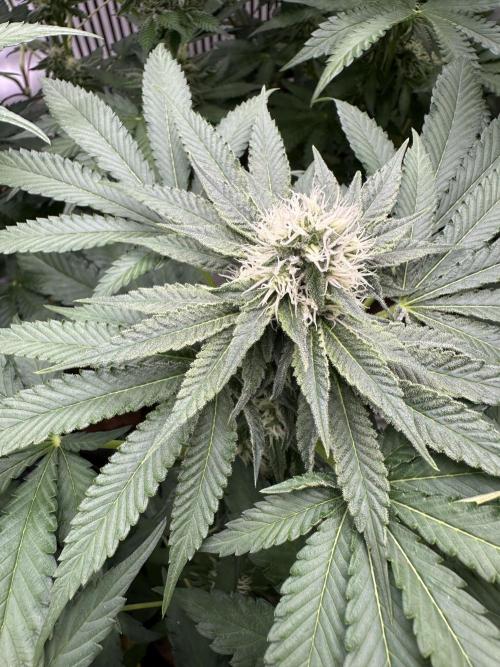
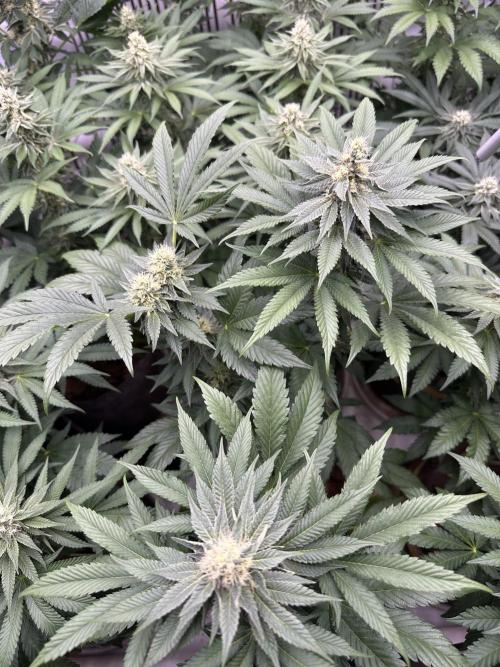
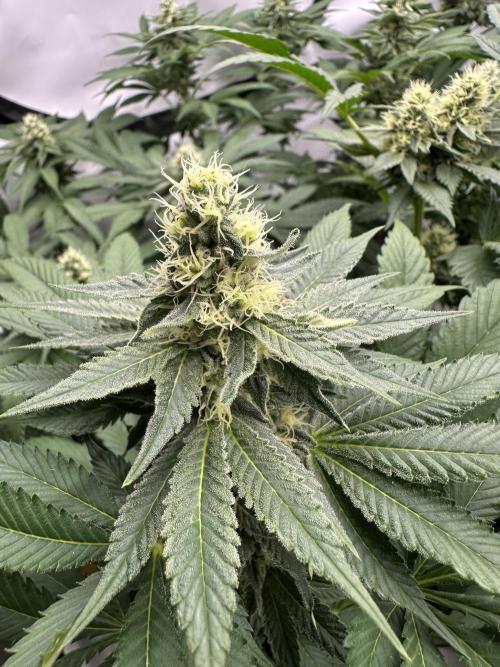
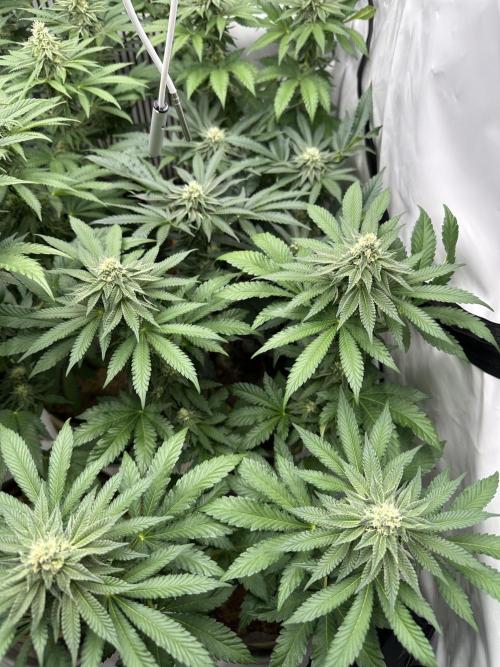
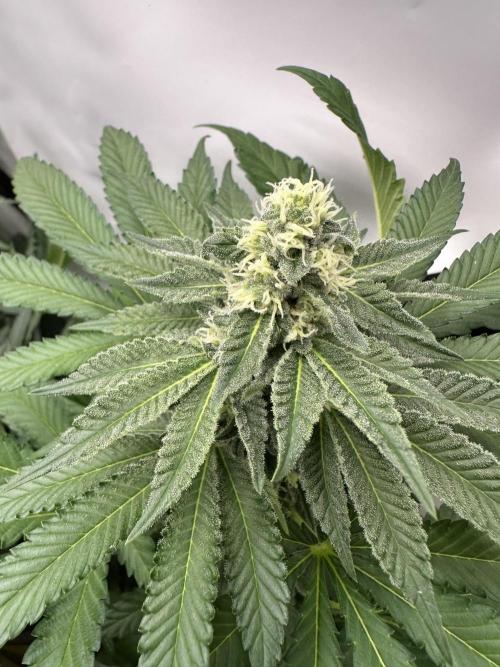
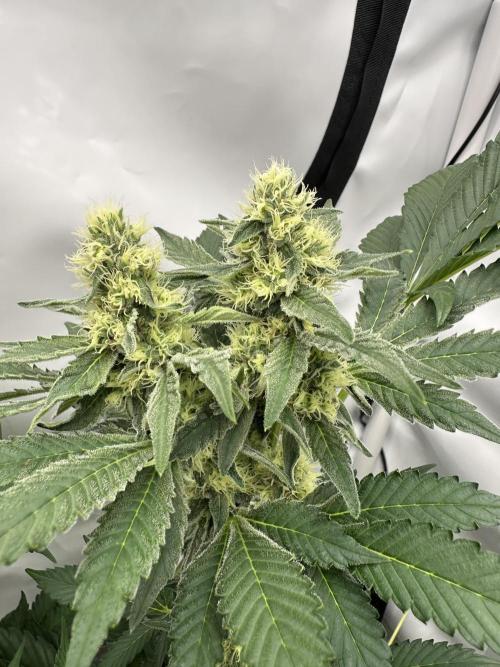
Daz_Method Start of Week 5 of flower: bulking is now well underway. I’ve started to notice some yellowing on the oldest lower leaves on certain plants, so they are beginning to recycle a bit early. Overall leaf color is not especially dark either, although part of that may simply come from the genetics behind this line. In any case, for future runs I’ll probably need to push nitrogen slightly higher to see if that improves things. For now, it’s just something to watch closely — the main question is whether they will cruise comfortably to Week 9 or start fading too hard too early. So far they’re still holding well and not collapsing at all, so it’s fine for the moment. Just something to monitor for the rest of this run, and for future sessions if I end up finding something worth keeping.
1 like
comments
Share
11
Week 11. Flowering3mo ago
55 cm
Height
12 hrs
Light Schedule
27 °C
Day Air Temp
6.7
pH
Normal
Smell
60 %
Air Humidity
21 °C
Solution Temp
21 °C
Substrate Temp
22 °C
Night Air Temp
12 liters
Pot Size
1 liters
Watering Volume
30 cm
Lamp Distance
Nutrients 1
dry organic amendment
1 mll
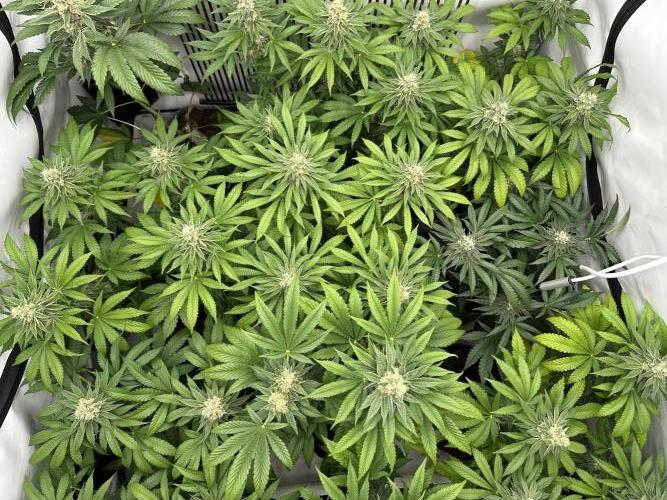
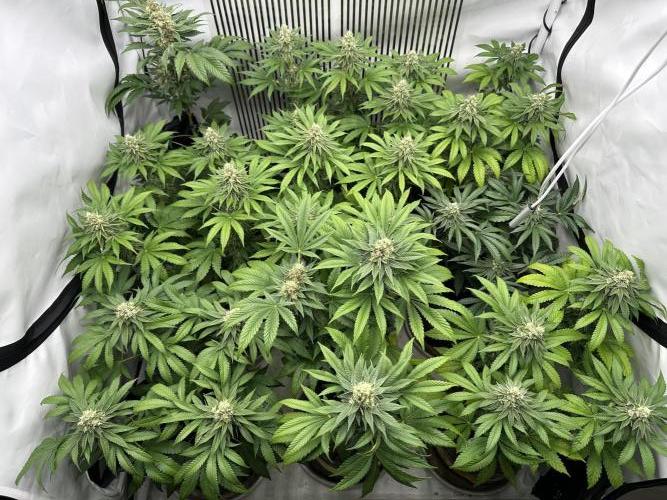
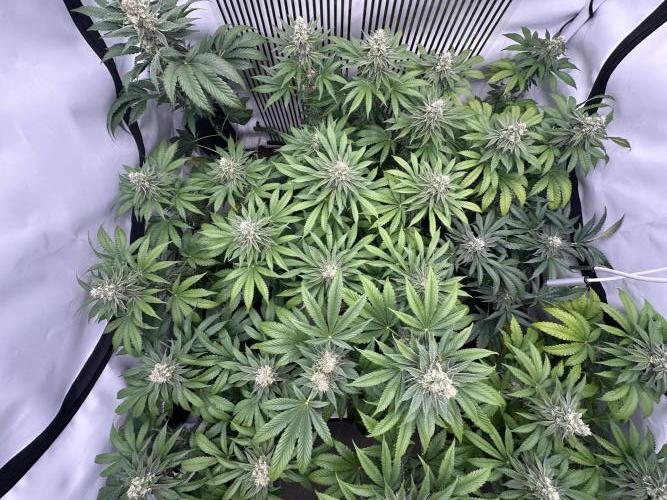
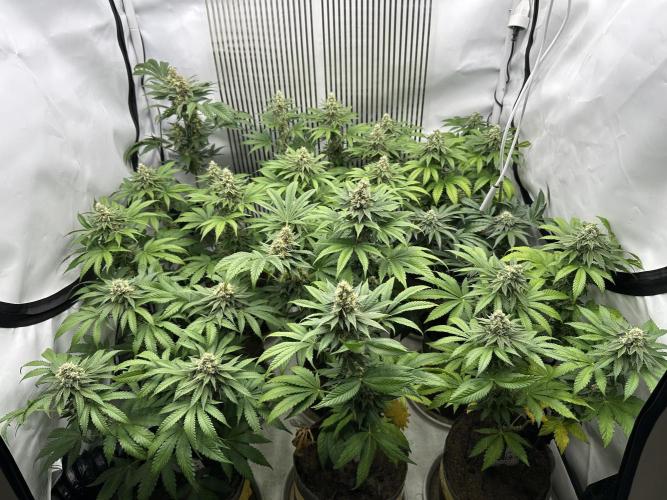
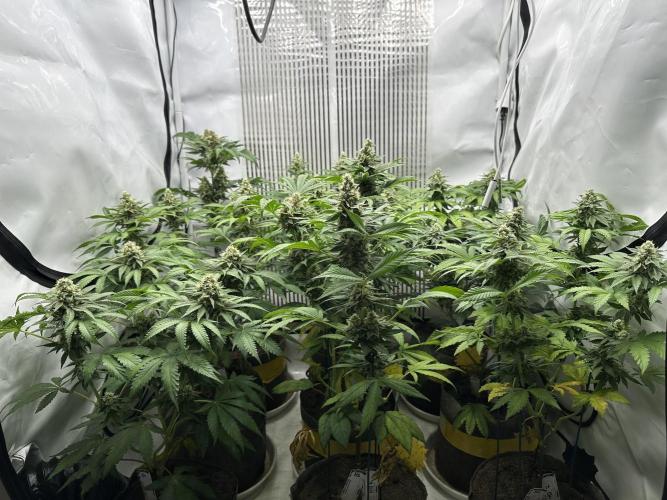
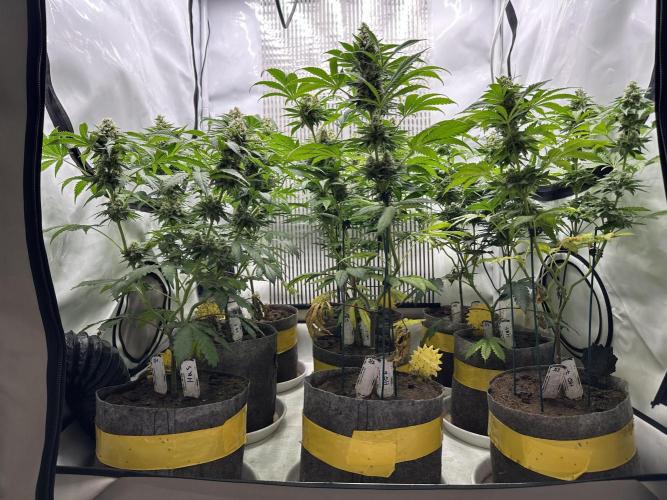
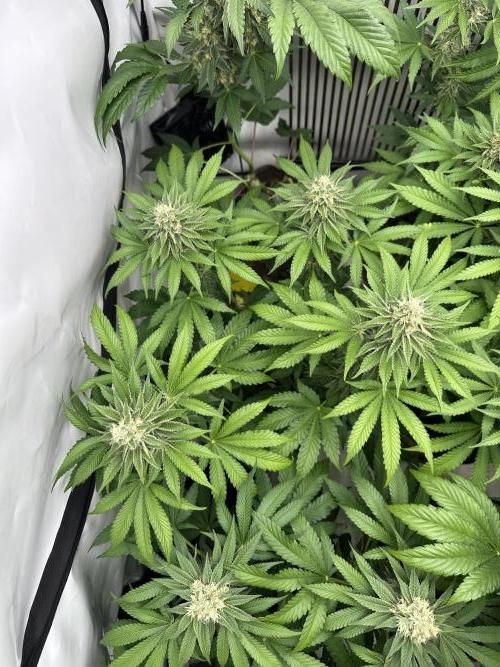
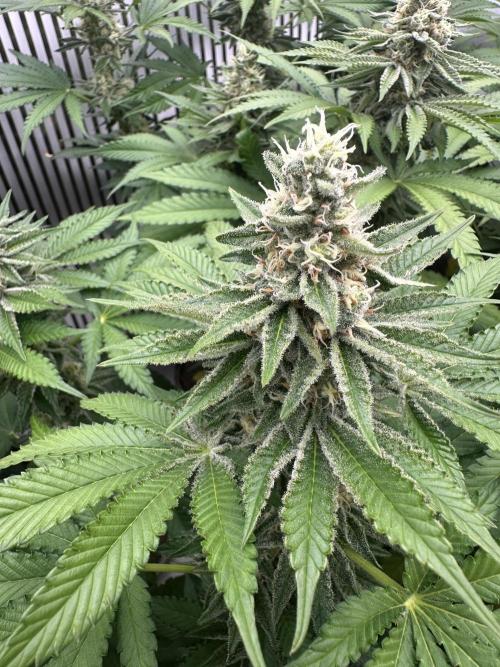
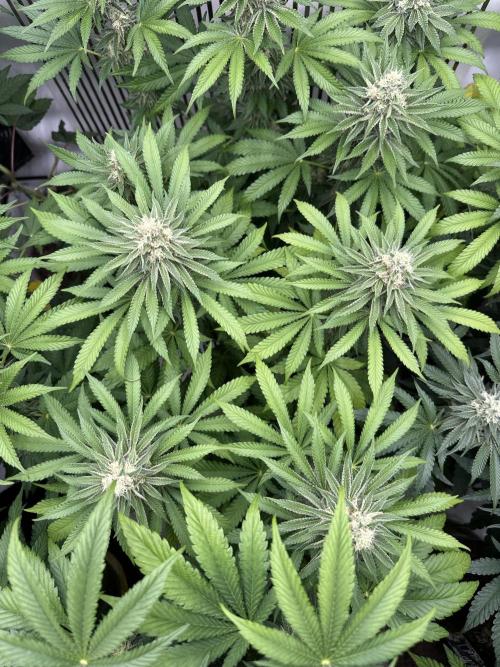
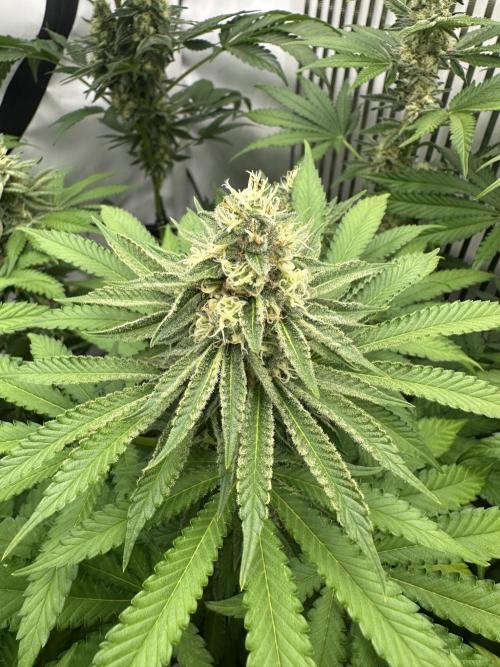
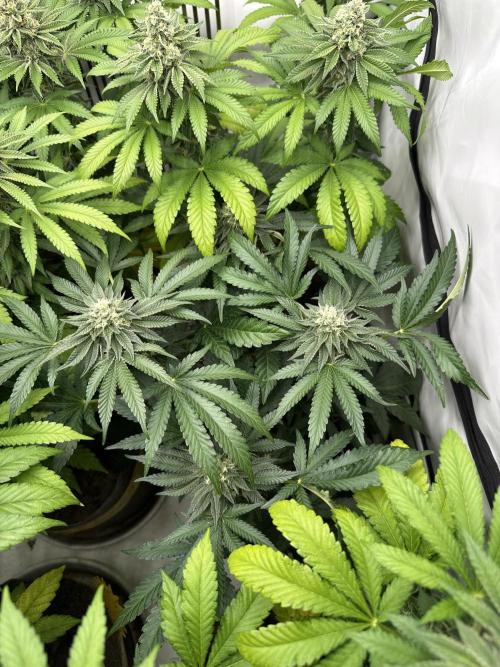
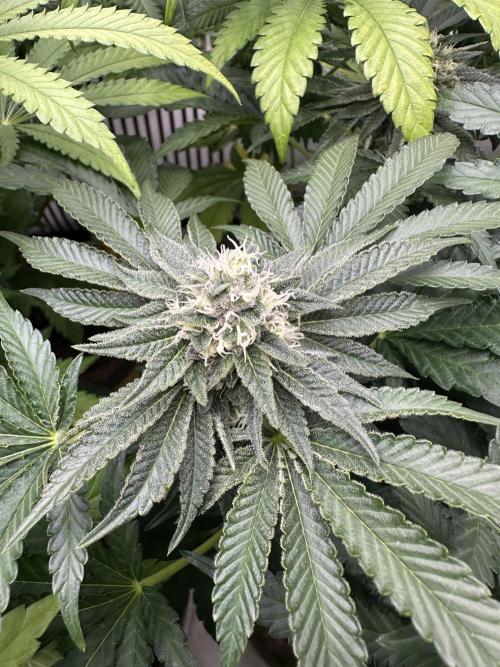
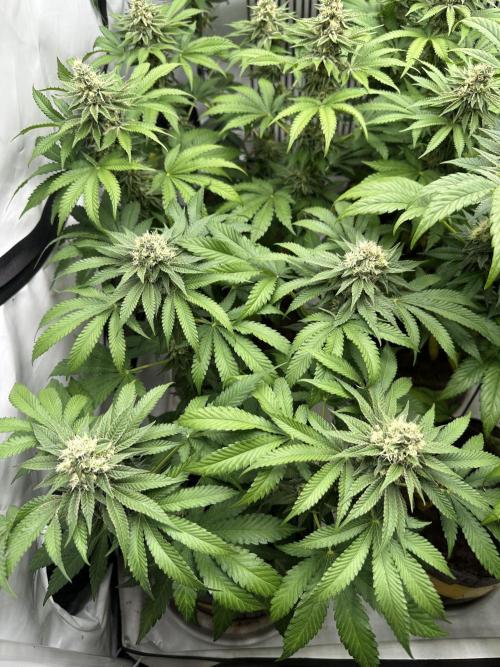
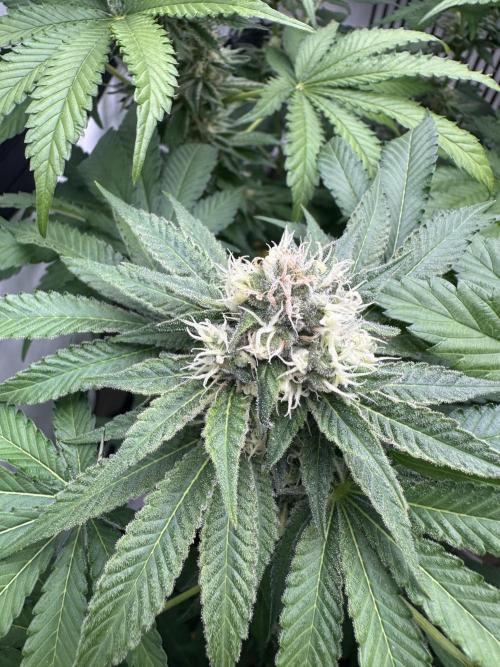
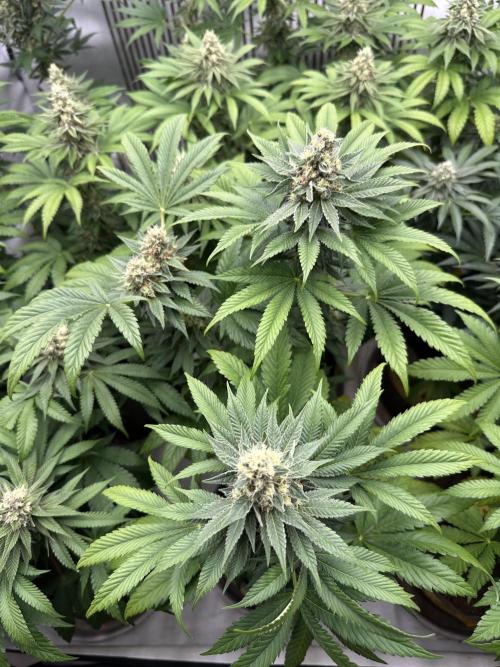
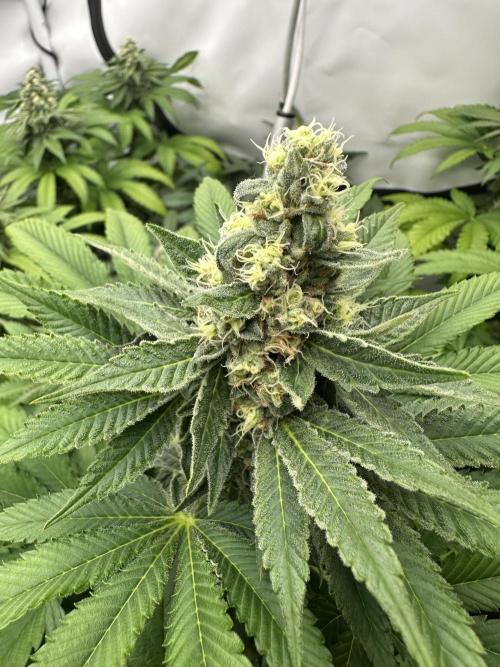
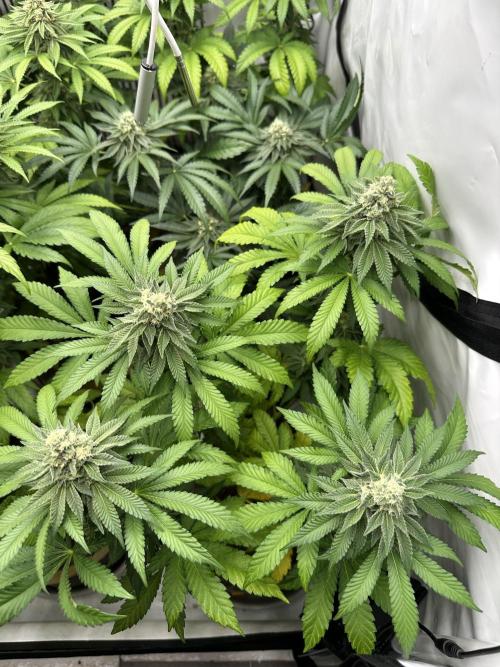
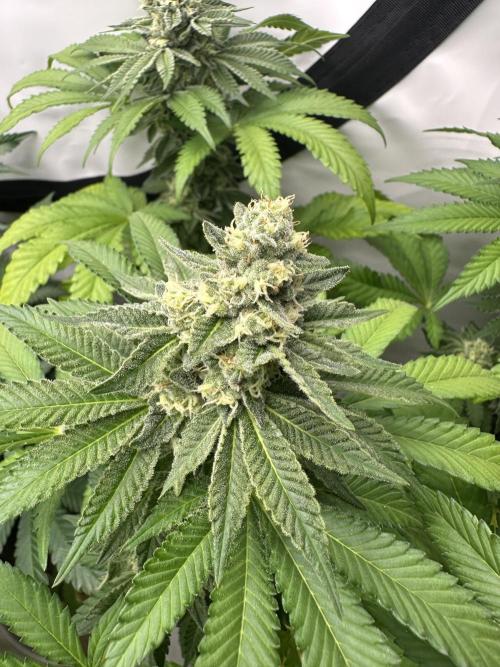
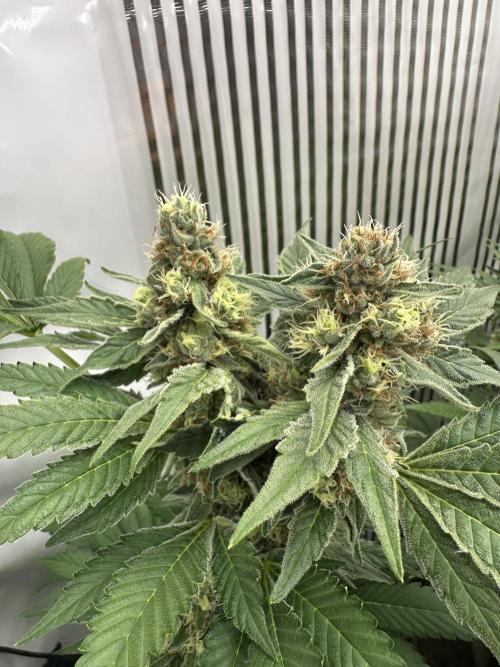
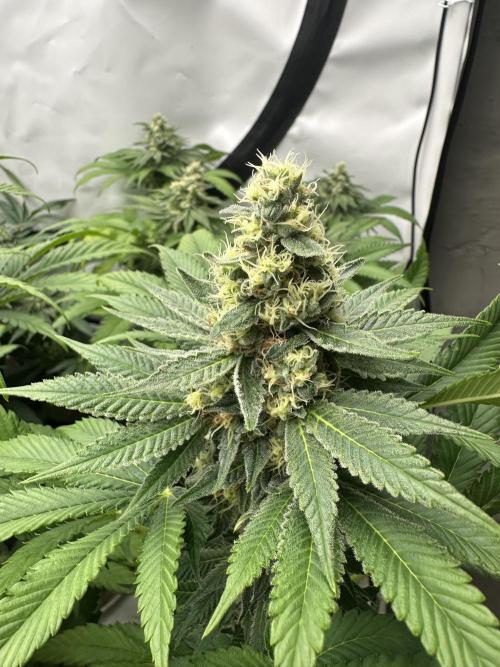
Daz_Method Start of Week 6 of flower: not much has changed this week. The bulk phase is clearly underway now, and I had to add a few stakes on HQ6 and HQ7 to help support them. Overall, the run is still moving in the right direction, with roughly three to four weeks left to go.
Some phenos are clearly starting to fade now, which is fine in this context. Since this is still a keeper hunt, I’m not trying to correct every small weakness I mainly want to see how each plant performs on my standard baseline setup and which ones can hold themselves properly until the end. For now they’re still holding, so it’s just something I’m watching closely for the rest of the run.
1 like
comments
Share
12
Week 12. Flowering3mo ago
55 cm
Height
12 hrs
Light Schedule
27 °C
Day Air Temp
6.7
pH
Normal
Smell
60 %
Air Humidity
21 °C
Solution Temp
21 °C
Substrate Temp
22 °C
Night Air Temp
12 liters
Pot Size
1 liters
Watering Volume
30 cm
Lamp Distance
Nutrients 1
dry organic amendment
1 mll
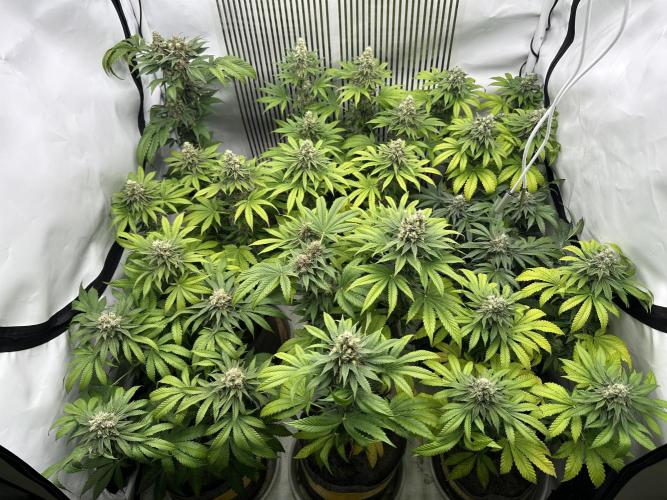
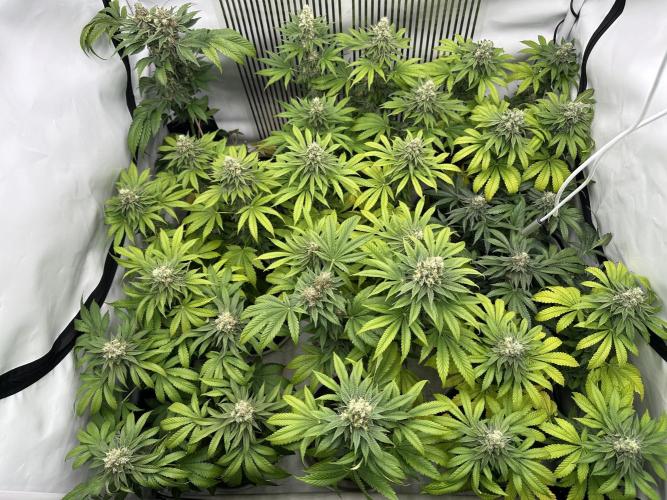
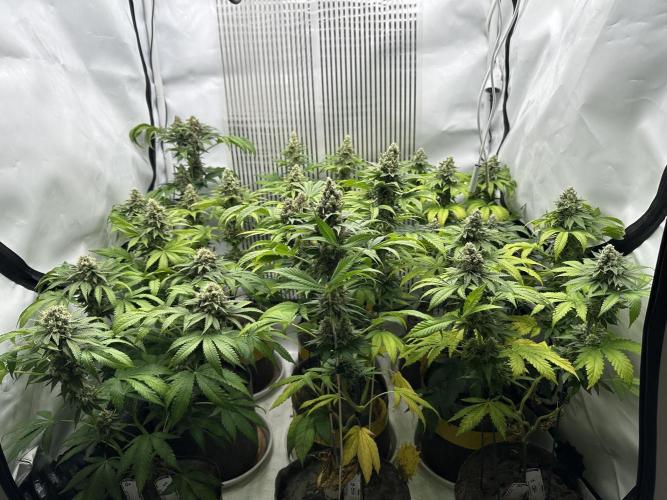
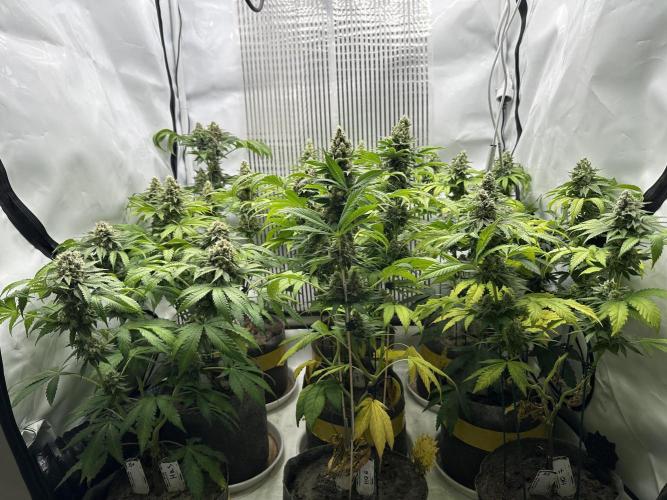
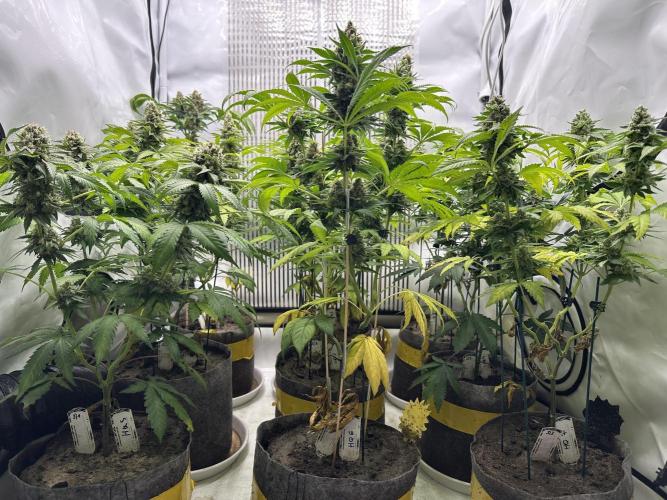
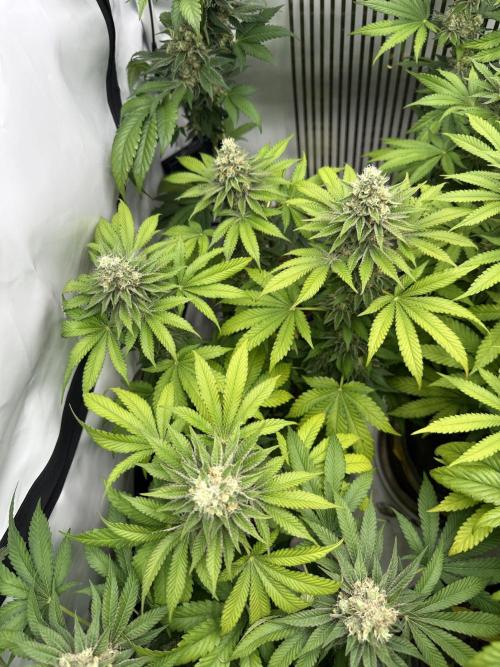
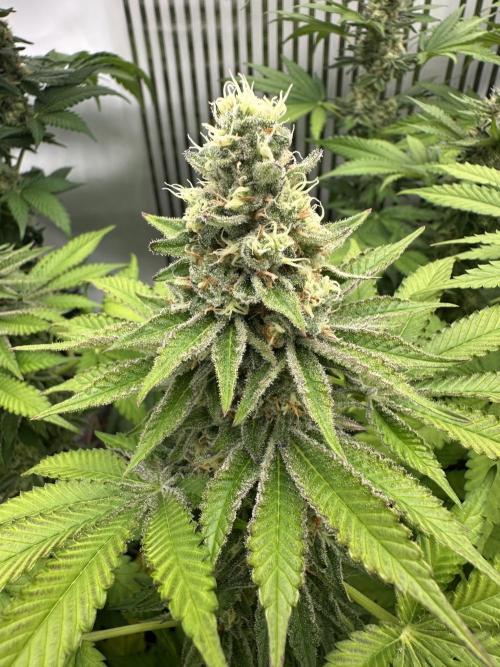
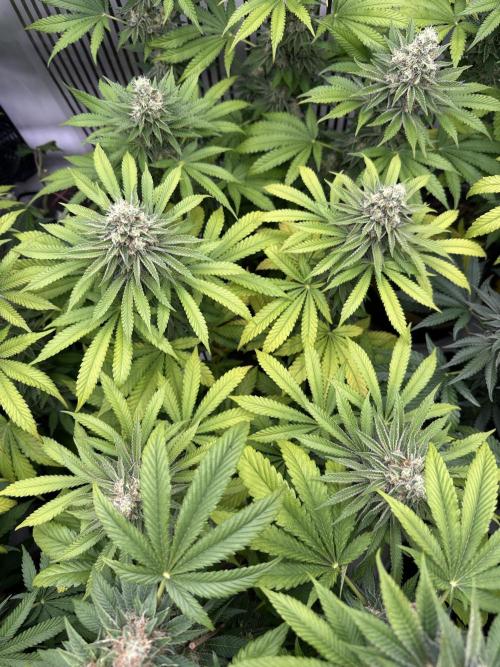
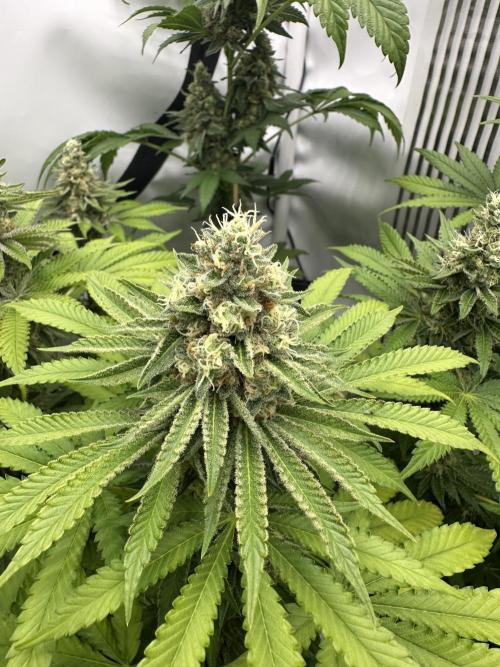
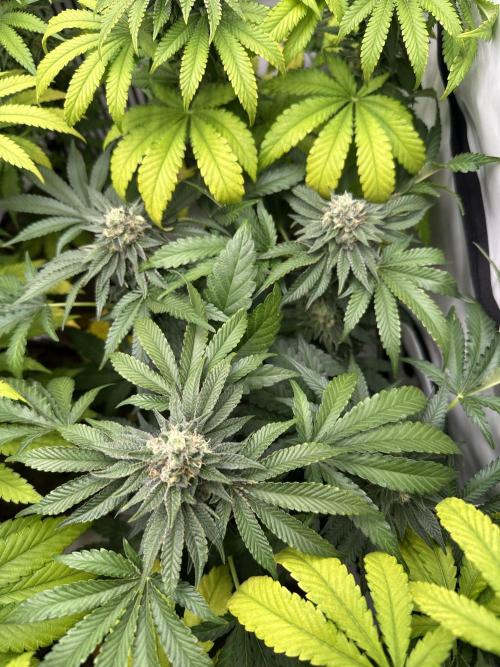
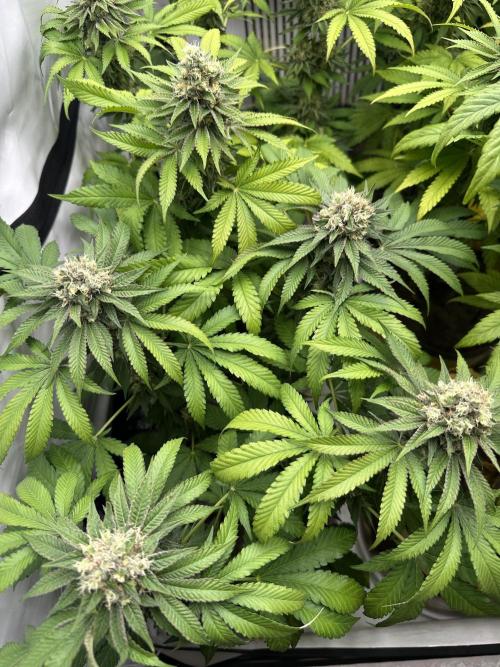
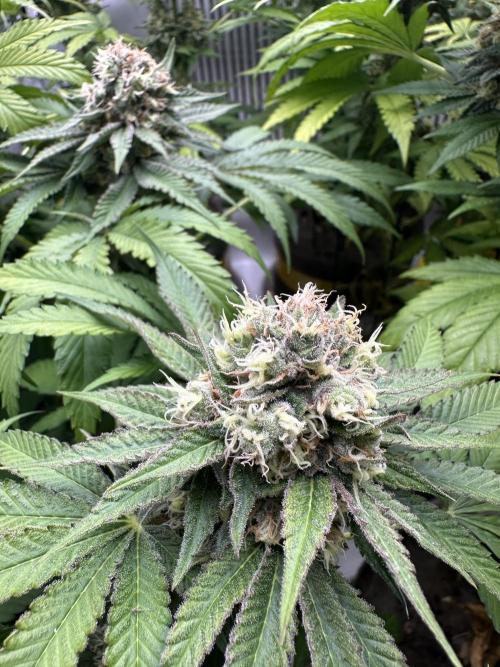
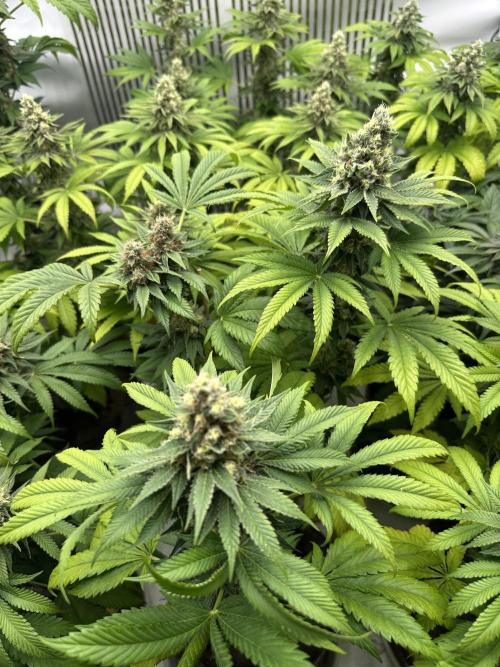
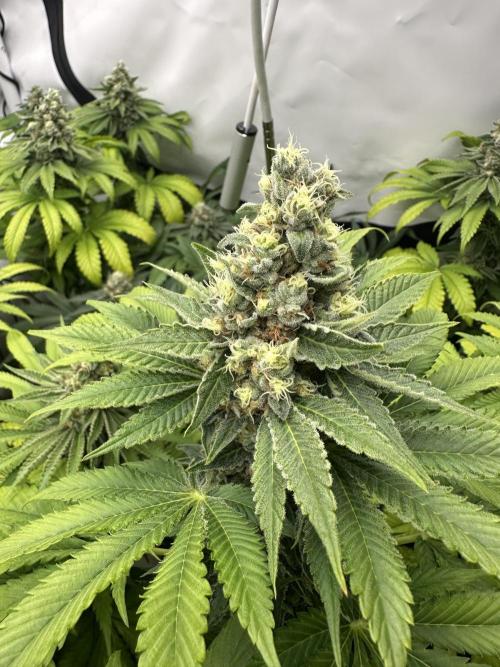
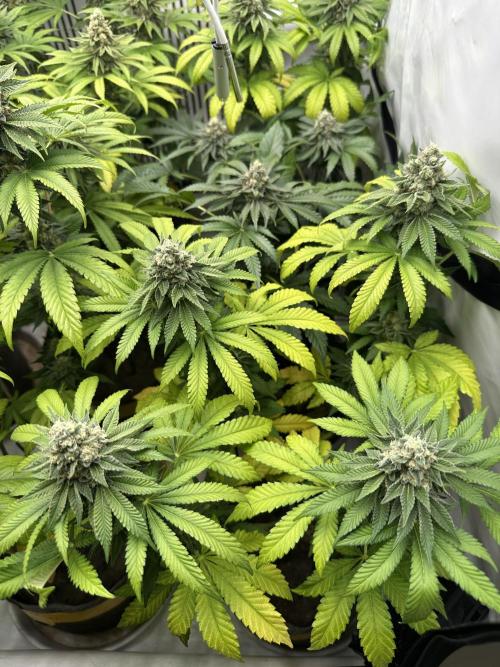
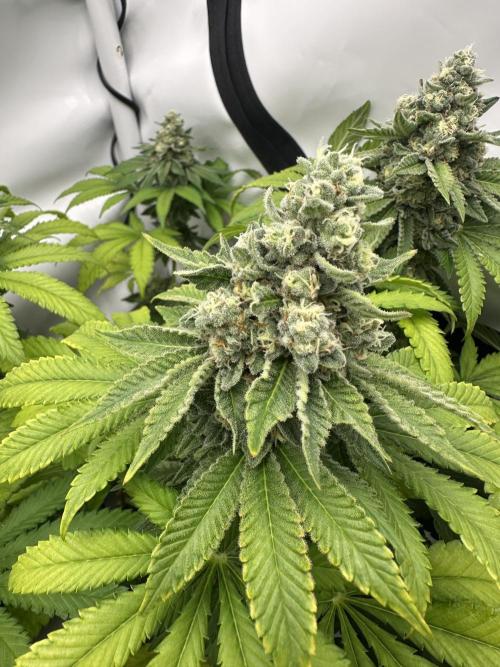
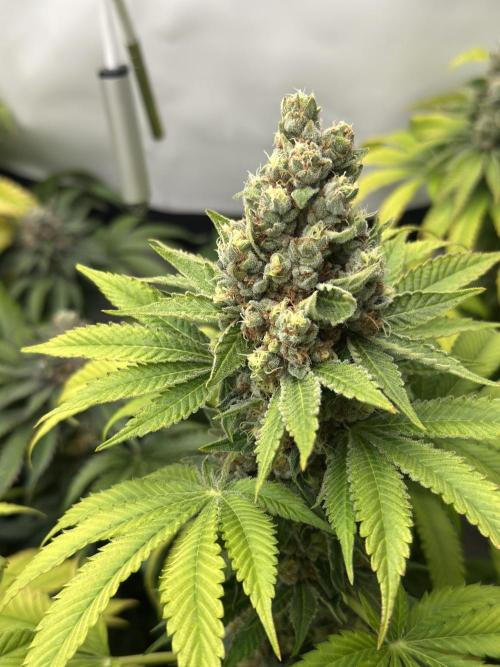
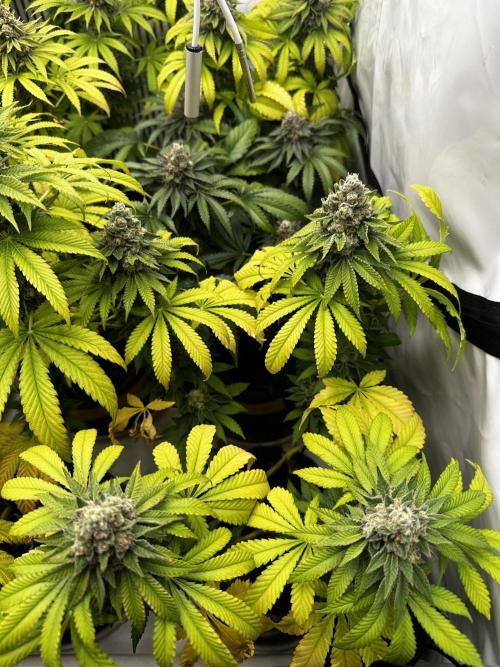
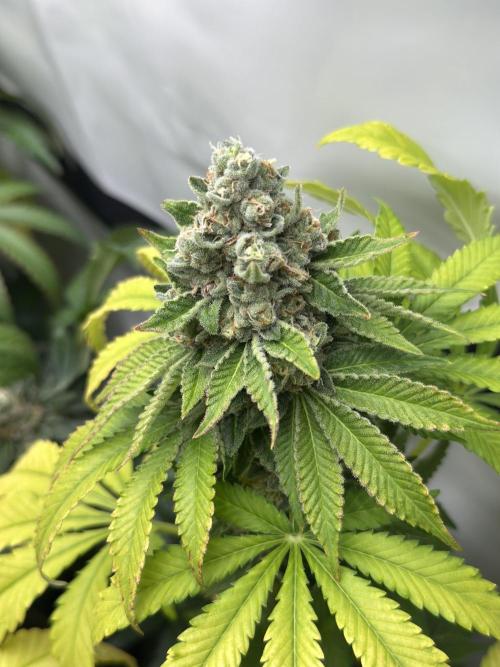
Daz_Method Start of Week 7 of flower: senescence is progressing day by day, and a few brown pistils are starting to appear here and there. There are still around 3 weeks left to go, but the bulk phase is really stepping up now, especially on HQ6 and HQ7 — the buds are swelling noticeably every day. I’m really looking forward to seeing the final result in a few weeks.
HQ4 is clearly smaller and slower than the rest. You can already see it in the overall behavior: it is still very green, and I don’t think it will show a proper senescence by the end. Because of that lack of vigor and overall drive, HQ4 will most likely be removed from the selection.
At this stage, HQ6 and HQ7 are the strongest candidates in my opinion: good vigor, good resin production, good smell, and especially very strong bulking. That said, as mentioned in previous weeks, both of them still threw quite a few hermaphrodite bananas around the end of stretch (around 5–7 each), which remains a real concern.
HQ2 and HQ5 also look interesting, although not as impressive as HQ6 and HQ7 in terms of overall presence. On the positive side, they showed almost no bananas, and HQ2 is currently the frostiest of the group.
So now it’s a matter of letting them finish properly. See you again in about 3 weeks for the harvest result, and then after curing for the final selection to decide which ones deserve a second run and which ones are out.
1 like
comments
Share
13
Week 13. Flowering3mo ago
55 cm
Height
12 hrs
Light Schedule
27 °C
Day Air Temp
6.7
pH
Normal
Smell
60 %
Air Humidity
21 °C
Solution Temp
21 °C
Substrate Temp
22 °C
Night Air Temp
12 liters
Pot Size
1 liters
Watering Volume
30 cm
Lamp Distance
Nutrients 1
dry organic amendment
1 mll
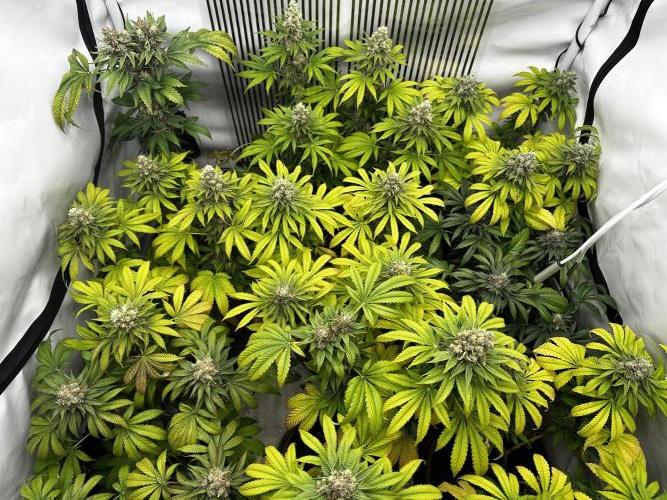
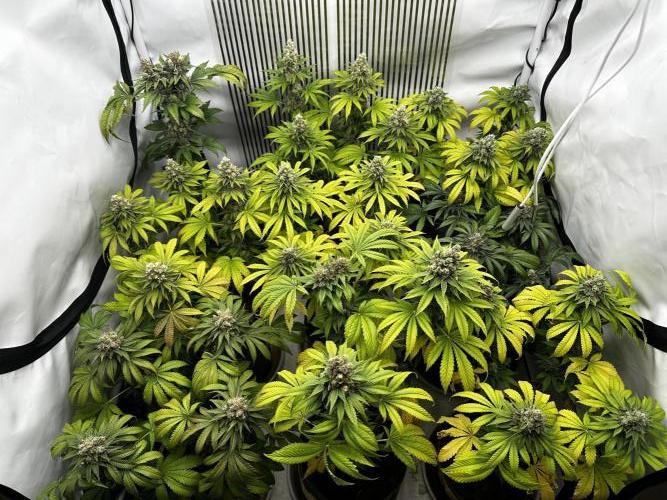
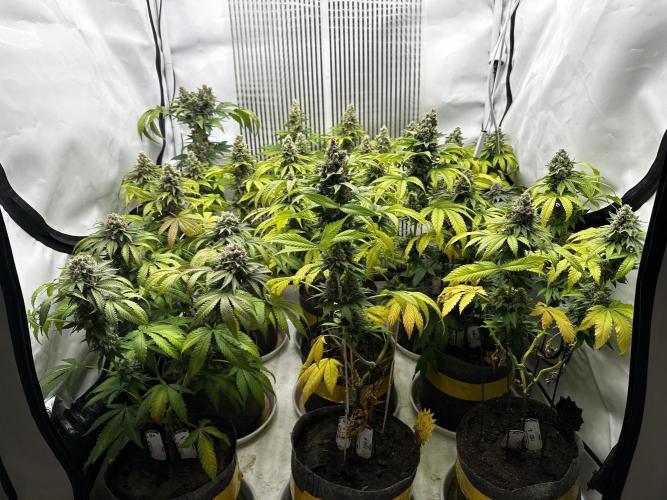
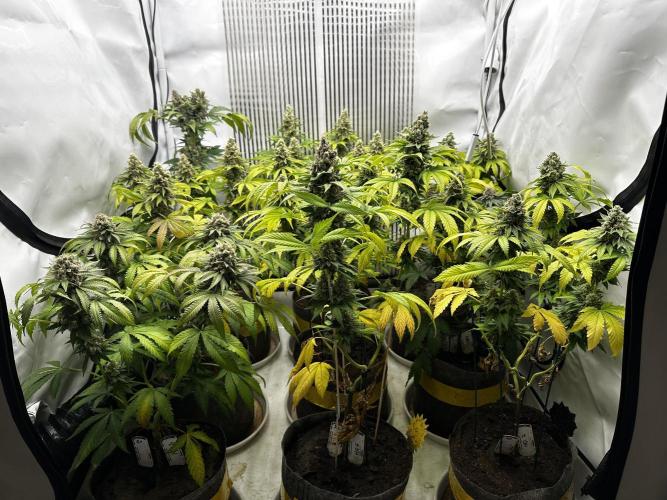
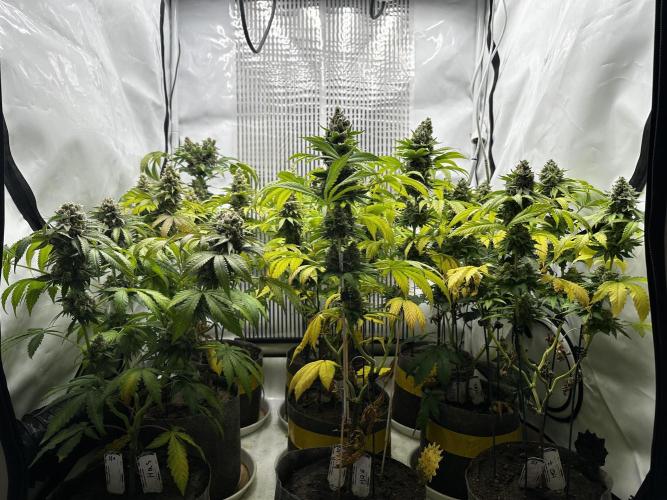
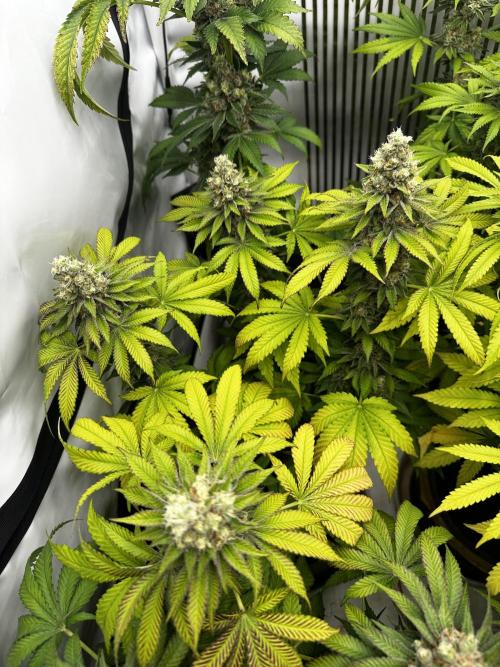
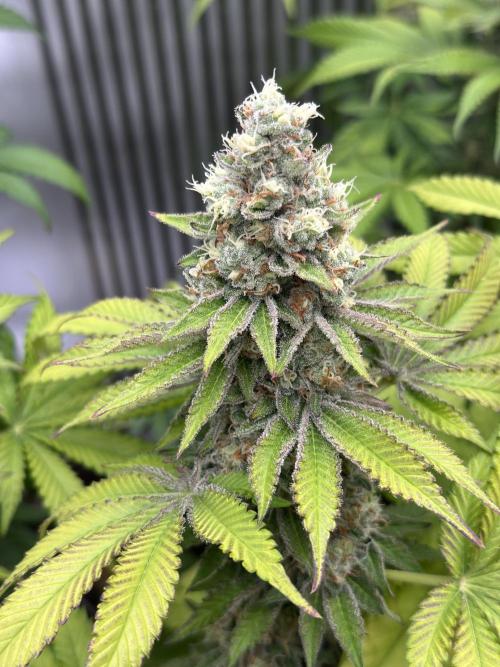
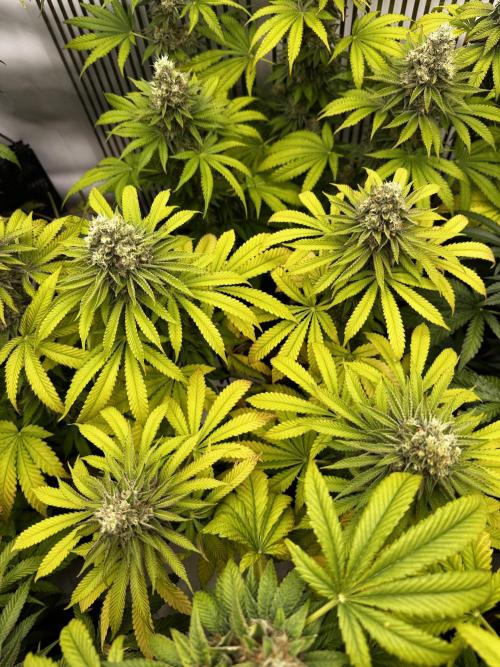
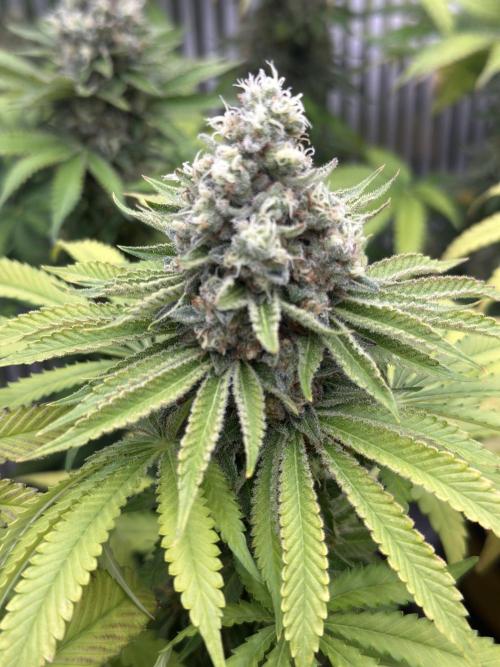
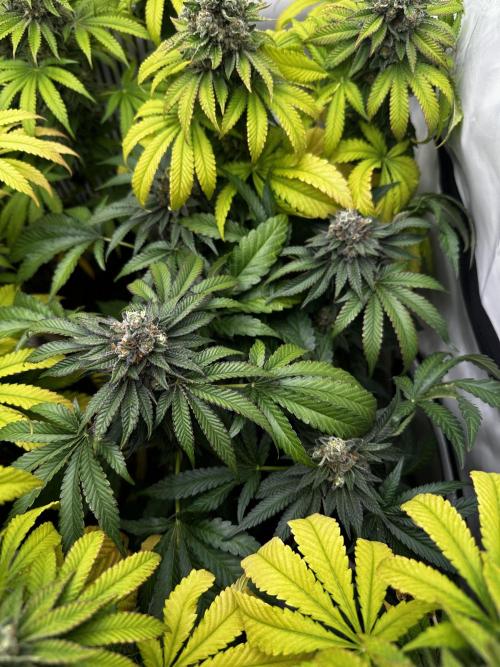
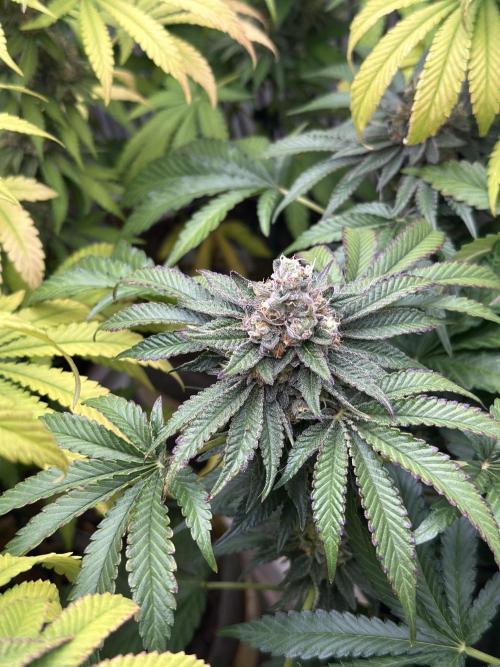
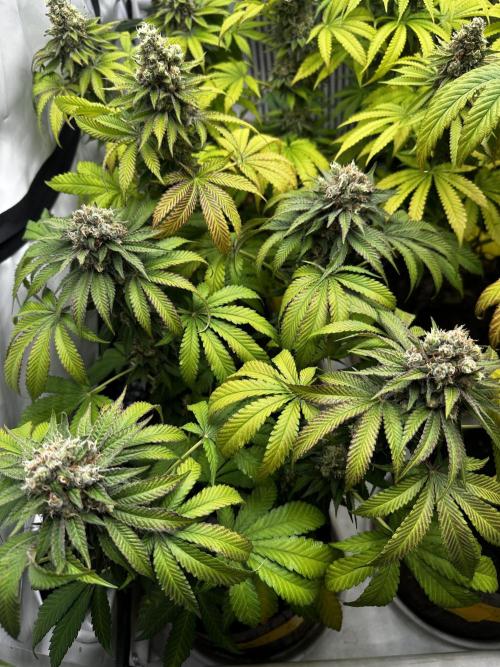
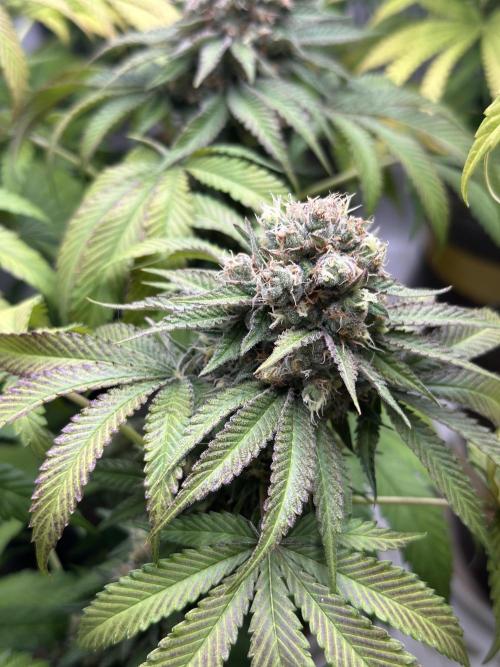
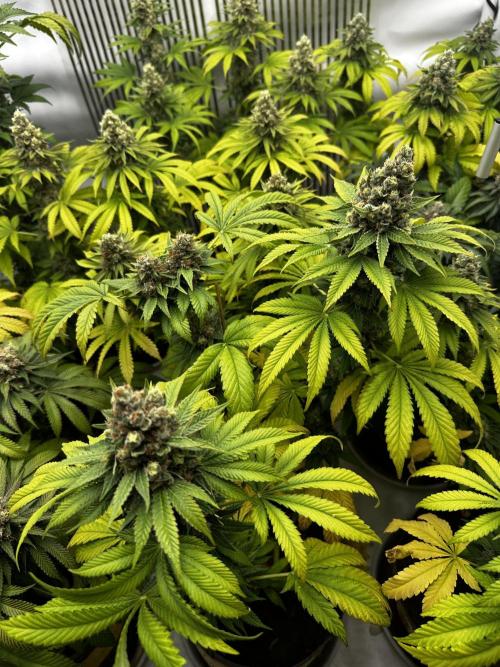
Daz_Method Start of Week 8 of flower: around two weeks left before harvest. I’m switching to water-only irrigation now and letting them finish naturally.
HQ4 has officially been removed from the keeper hunt. It stayed clearly behind the others throughout the run and remained the smallest plant of the group, so there was no reason to keep it in the selection. HQ4 is officially out.
2 likes
comments
Share
14
Week 14. Flowering3mo ago
55 cm
Height
12 hrs
Light Schedule
27 °C
Day Air Temp
6.7
pH
Normal
Smell
60 %
Air Humidity
21 °C
Solution Temp
21 °C
Substrate Temp
22 °C
Night Air Temp
12 liters
Pot Size
1 liters
Watering Volume
30 cm
Lamp Distance
Nutrients 1
dry organic amendment
1 mll
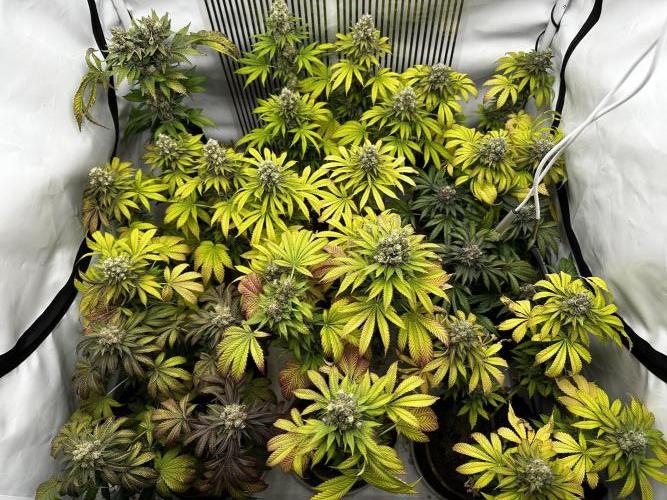
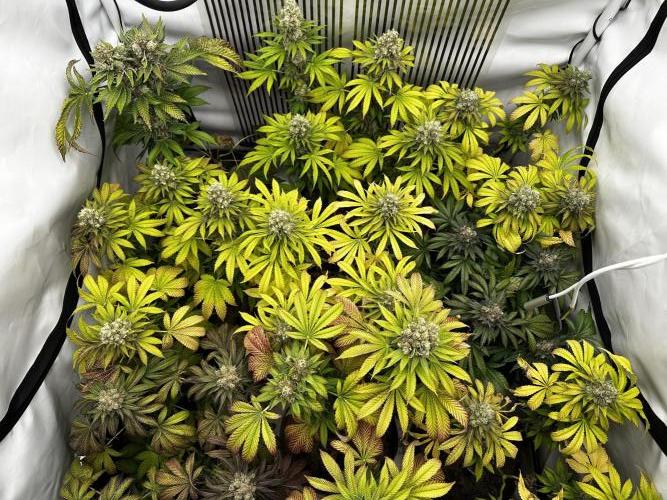
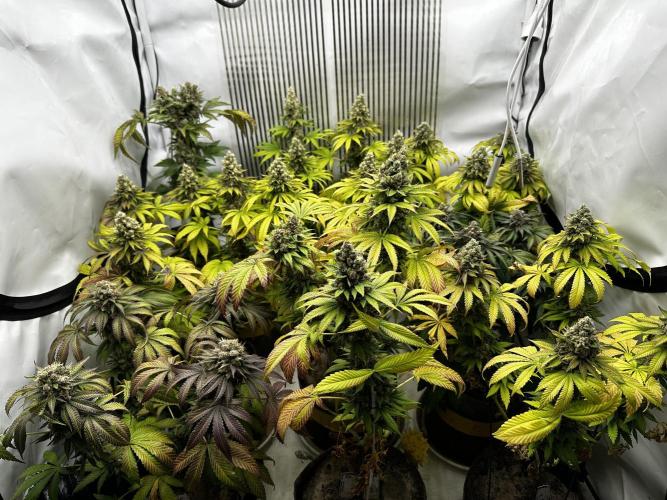
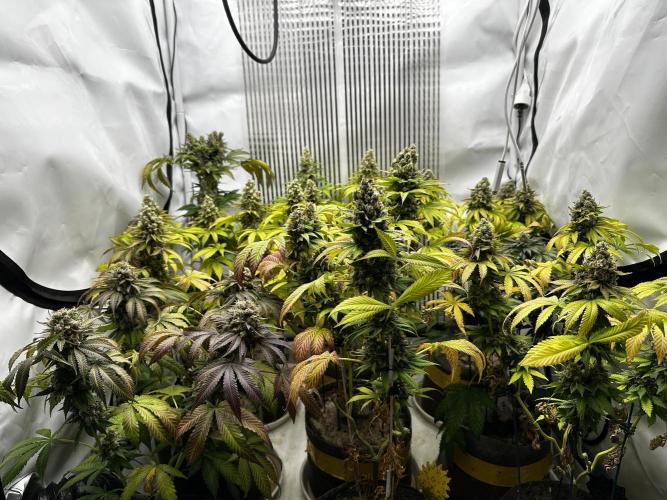
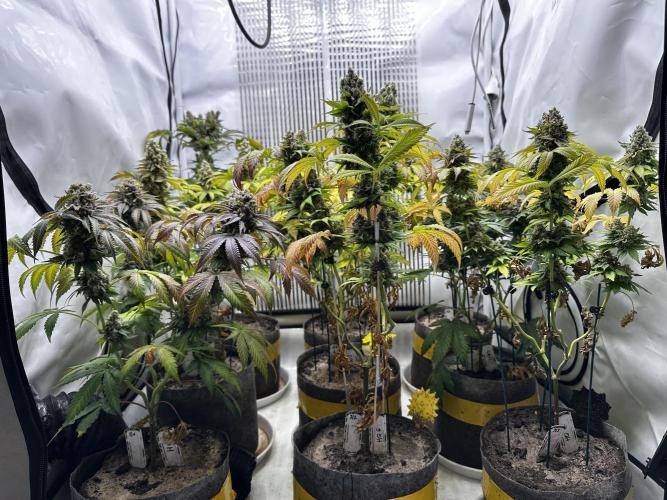
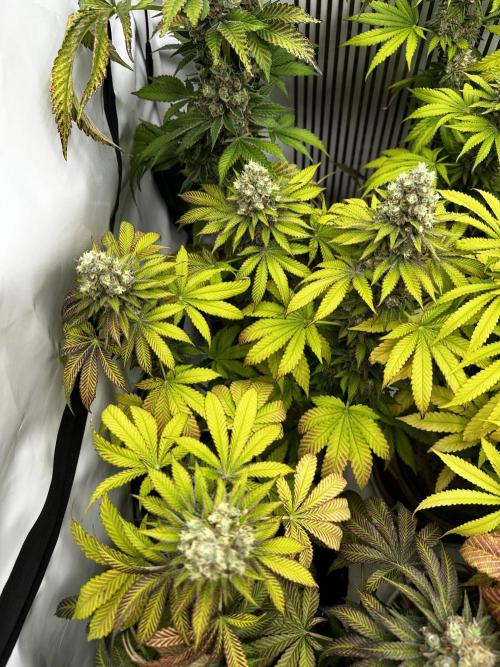
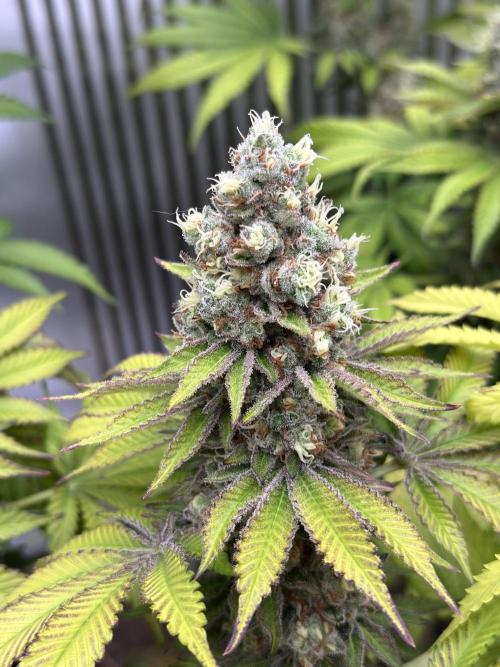
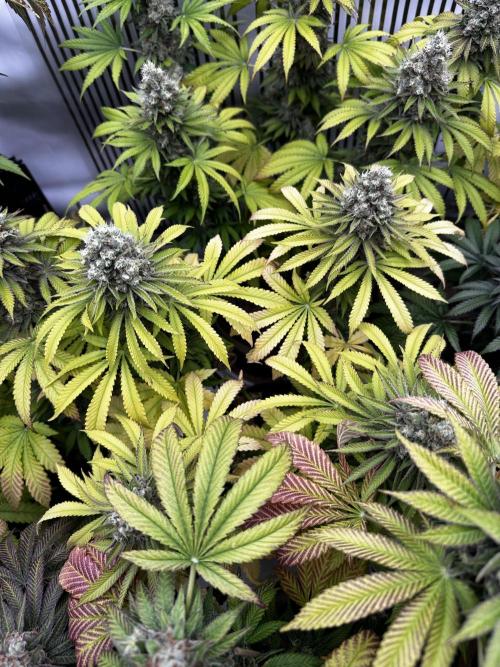
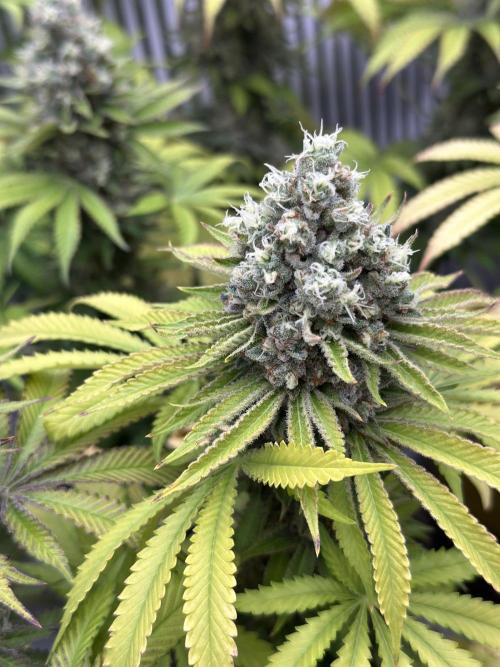
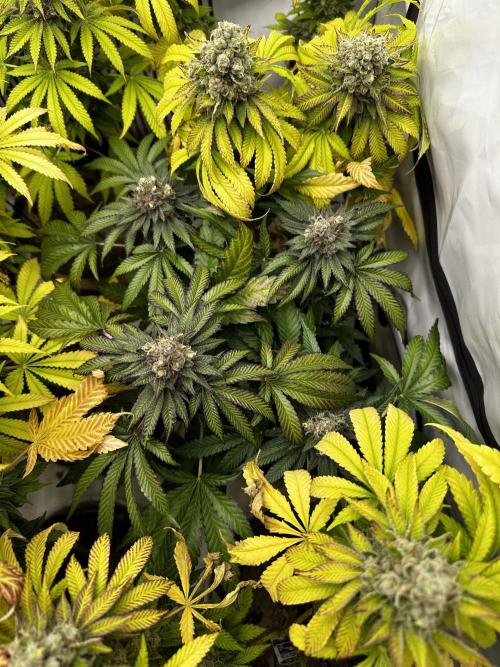
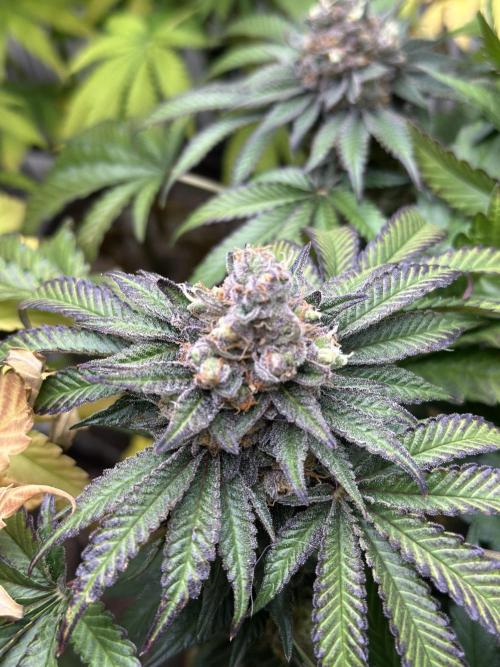
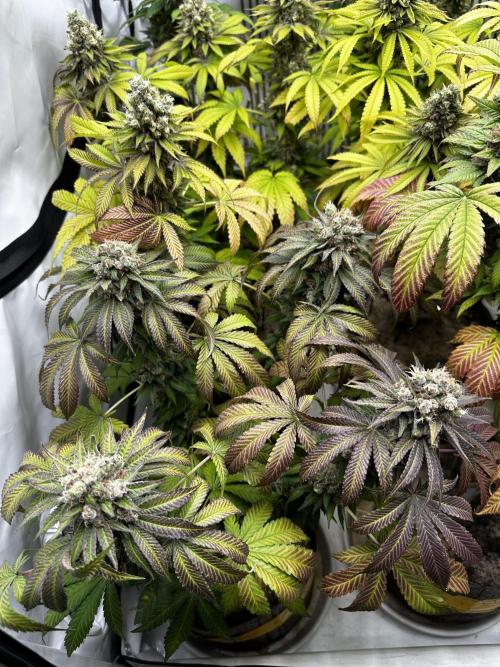
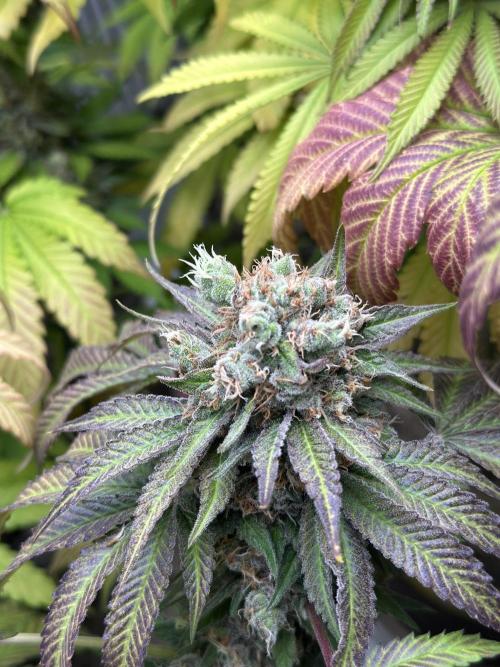
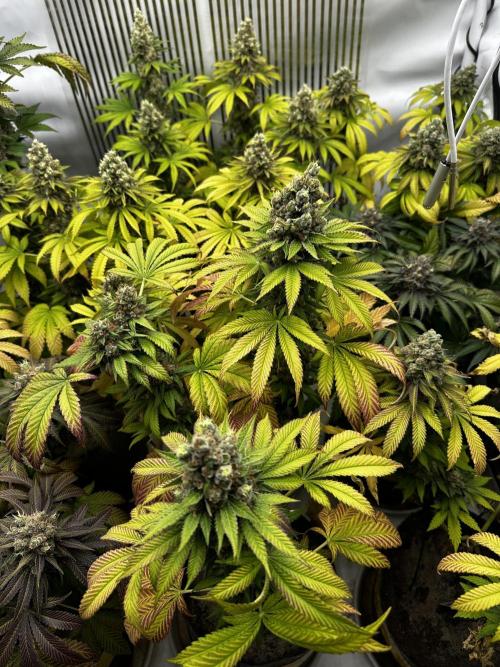
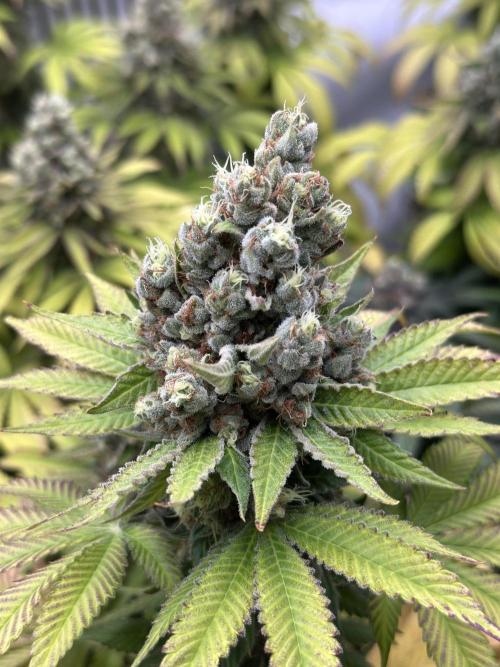
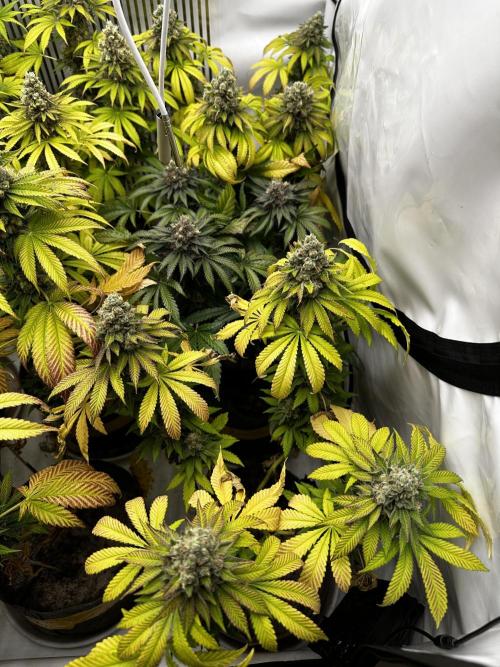
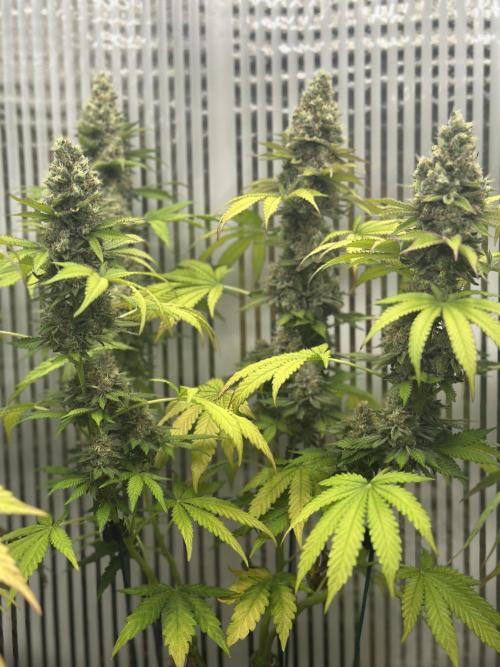
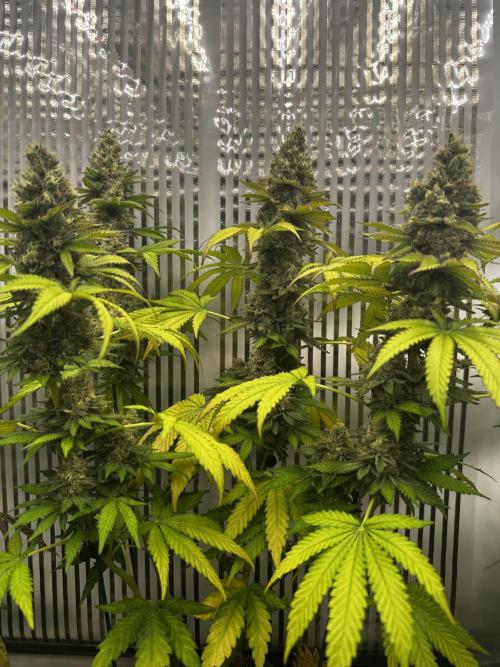
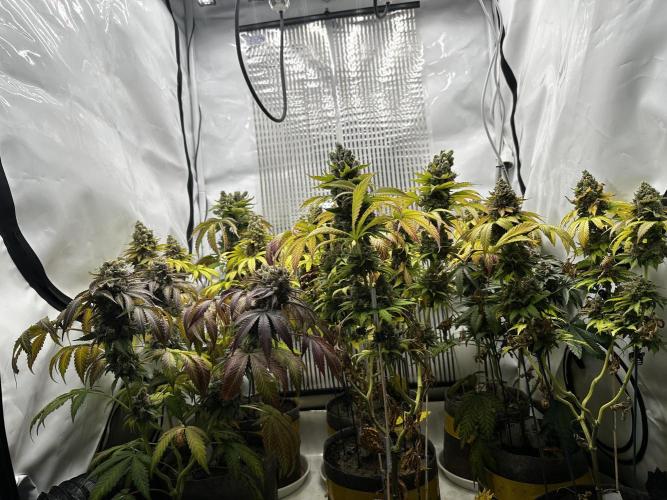
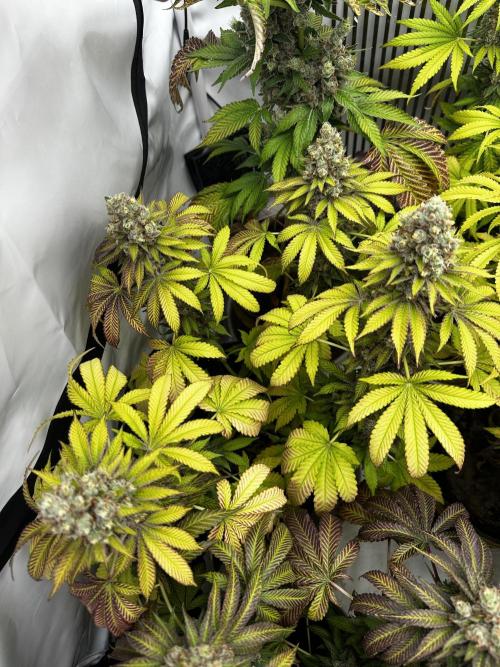
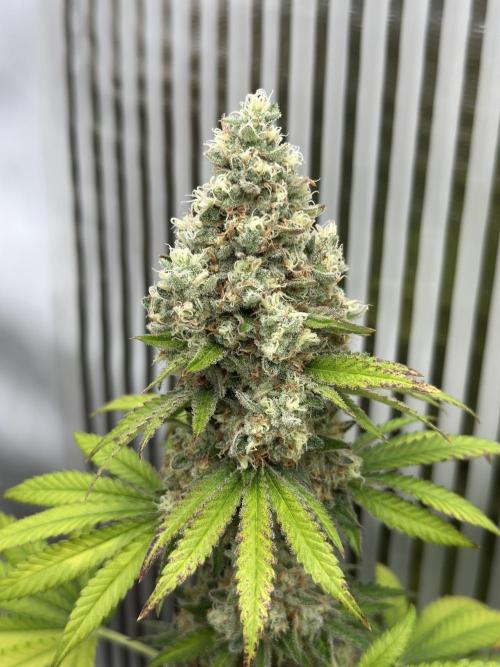
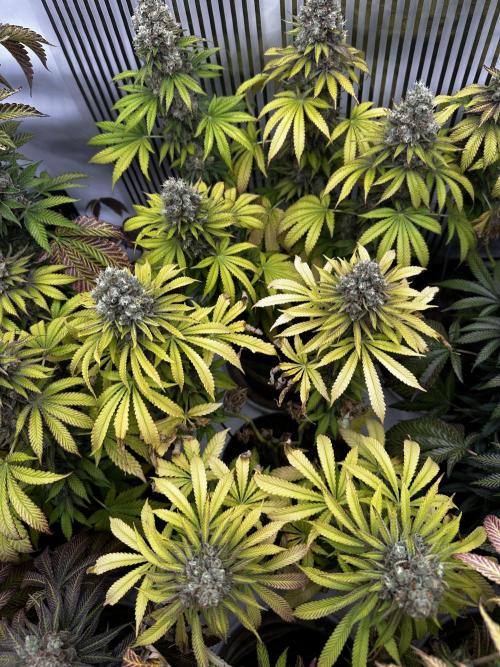
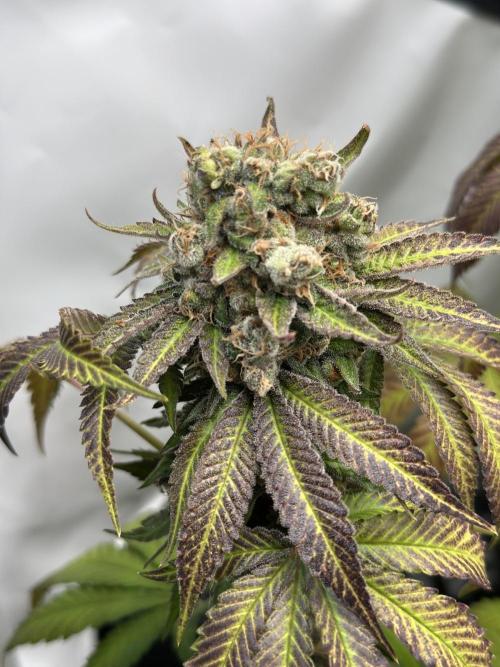
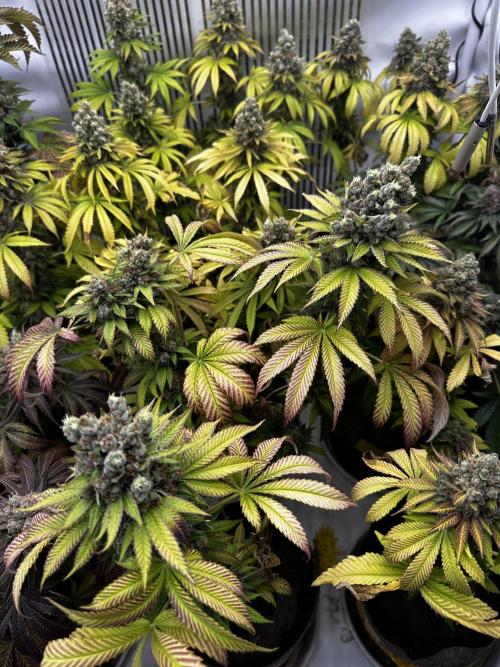
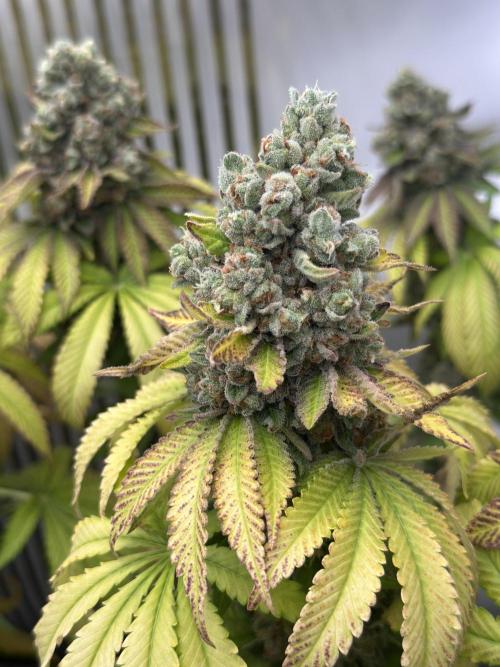
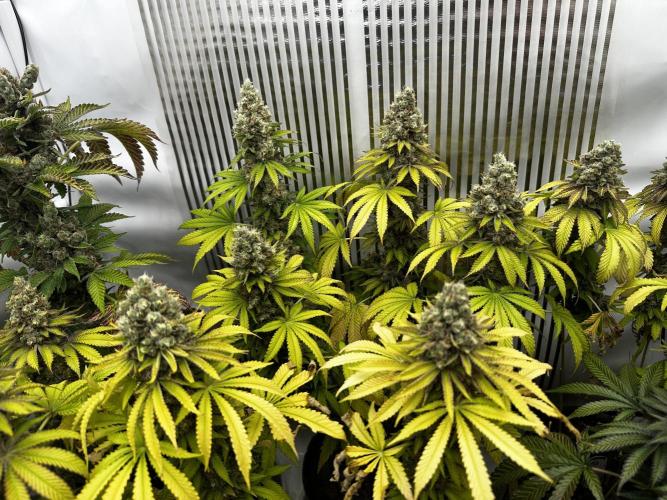
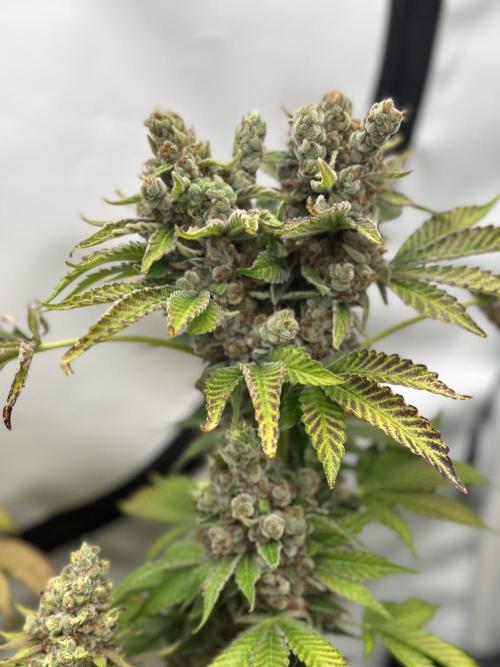
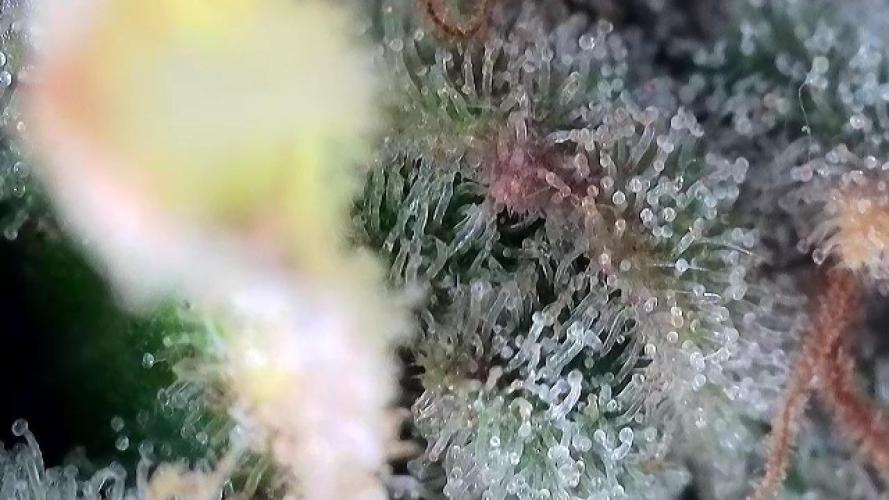
Daz_Method Start of Week 9 of flower: the end is clearly approaching. On several plants, the pistils already look finished and have mostly turned brown, but after checking the trichomes under the microscope, there are still a few clear ones and almost no amber yet. I’ll give them another 5–7 days to mature before chopping.
As for the keeper hunt, it currently looks like we may have three promising candidates: HQ2, HQ6, and HQ7. However, HQ6 and HQ7 both produced a noticeable number of hermaphrodite bananas, so their stability will need to be reassessed carefully during a second run before any final decision is made.
At this stage, HQ2 appears to be the frostiest candidate, with the heaviest trichome coverage, while HQ6 shows the strongest bud stacking and overall floral build. HQ7 remains interesting as well, but the hermaphroditic expression is still a serious concern.
The final decision will come after drying and curing, once I can properly compare yield, aroma, flavor, smoke quality, and effect.
1 like
comments
Share
15
Week 15. Flowering2mo ago
55 cm
Height
12 hrs
Light Schedule
27 °C
Day Air Temp
6.7
pH
Normal
Smell
60 %
Air Humidity
21 °C
Solution Temp
21 °C
Substrate Temp
22 °C
Night Air Temp
12 liters
Pot Size
1 liters
Watering Volume
30 cm
Lamp Distance
Nutrients 1
dry organic amendment
1 mll
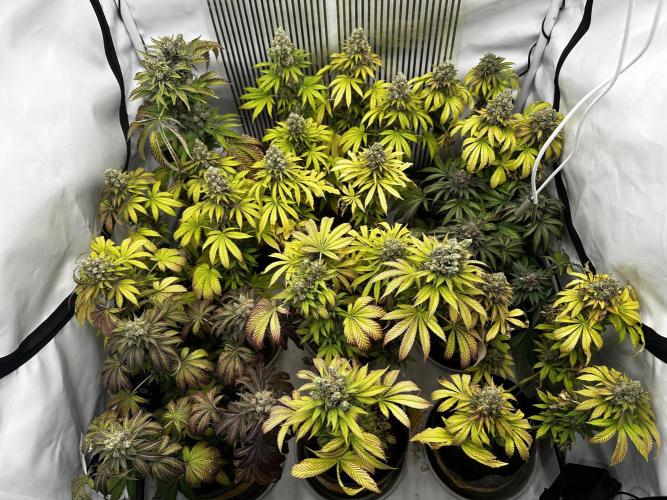
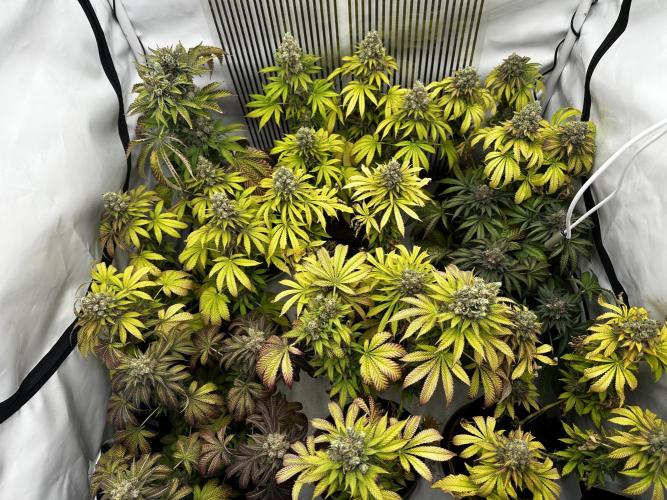
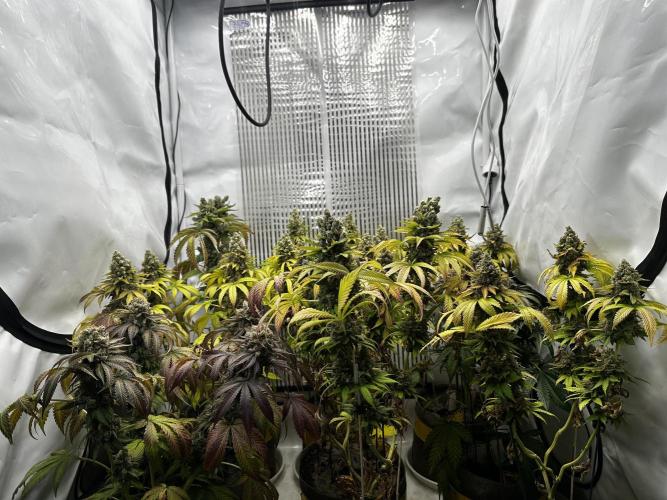
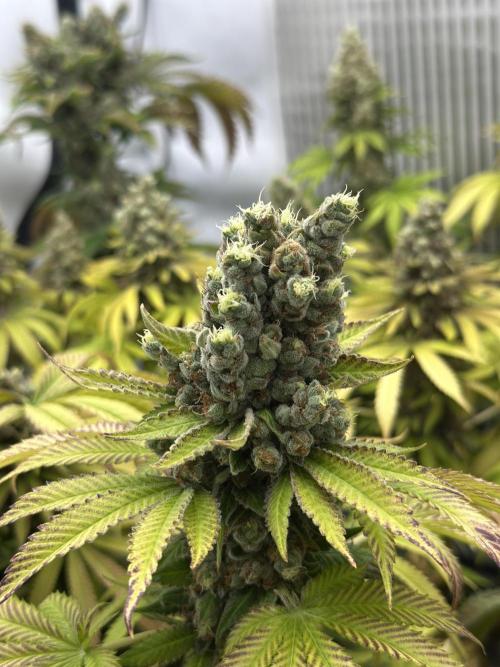
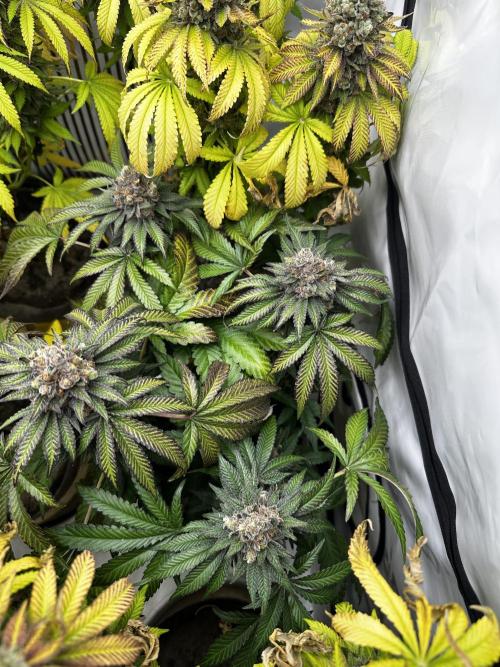
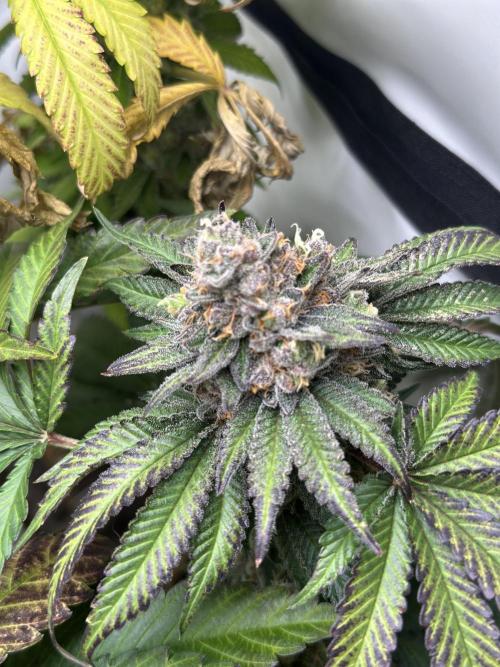
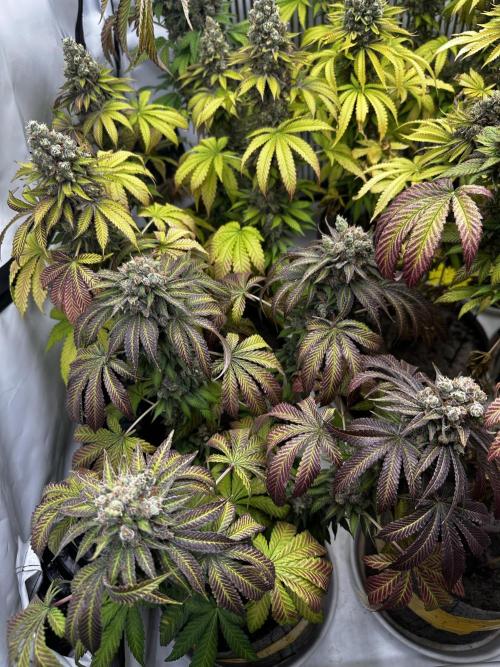
Daz_Method Start of Week 10 of flower: they’re finishing nicely. After checking the trichomes, there are still a few clear ones and almost no amber yet, so I’m giving them a few more days to mature. I expect they’ll be ready to chop within the next 2–4 days, then they’ll be hung in my drying box for a slow, controlled dry.
1 like
comments
Share
16
Week 16. Harvest10d ago
Happy Harvest Day!

8/10
Rated
Overall, I think there is definitely something interesting behind this strain, but I’m not sure I was lucky enough to find the right phenotype in this run.
The plants were generally solid, with decent vigor, average yields and a clearly indica-leaning effect across the phenos I tested. The high is probably one of the most consistent traits: heavy eyes, strong body relaxation and very little mental stimulation. Definitely more of a relaxing, end-of-the-day type of smoke.
There were some interesting differences between phenos, especially in resin production, bud density and aroma. A few sweet, spicy, gassy and marzipan-like notes showed up, but unfortunately most of that complexity didn’t fully translate into the smoke. Flavor and overall bag appeal were fairly average, and none of the phenos really gave me that “wow” factor I’m looking for in a keeper.
Pheno #7 came the closest and was probably the best-balanced plant of the group, but even that one fell a little short of being something truly special.
So, not a bad strain at all. I can see why there could be something worth hunting in this genetic line, but based on my run, I probably just didn’t hit the standout phenotype.
Show more
Translate
Spent 106 days
Ger Veg Flo Har
40 g
Bud wet weight per plant
1
Plants
Normal
Difficulty
Height
Day air temperature
Air humidity
PH
Light schedule
Solution temperature
Night air temperature
Substrate temperature
Pot size
Lamp distance




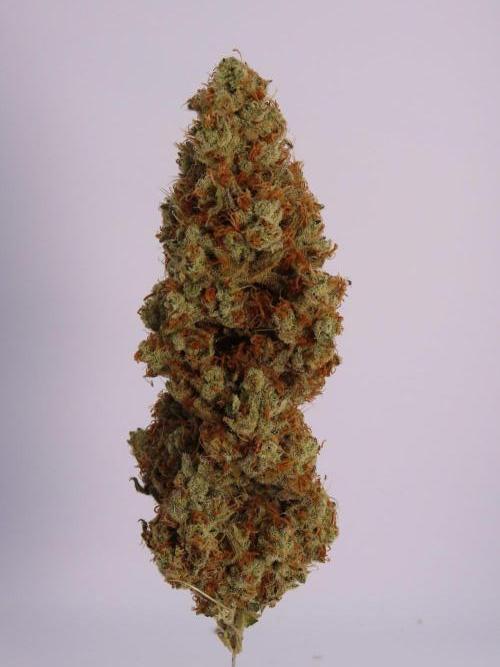
Daz_Method ### Pheno #2 — Harvest Review
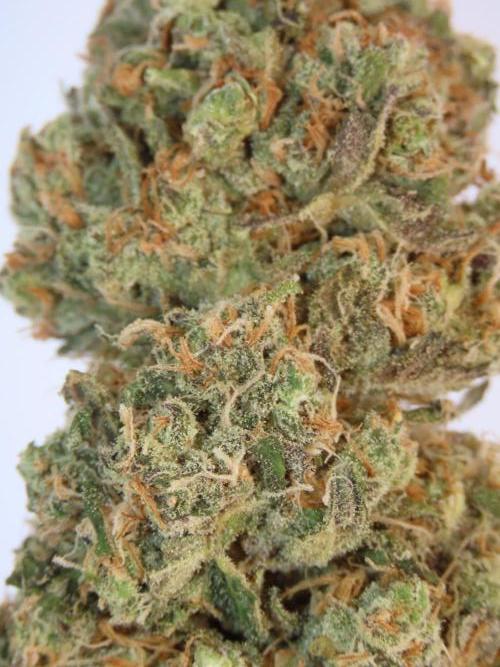
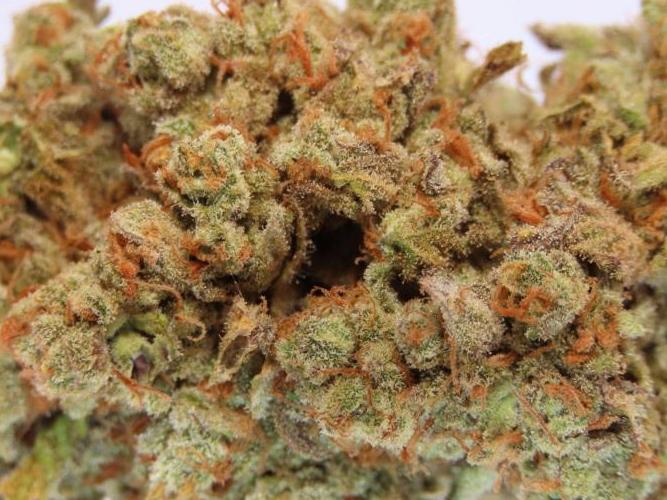
Pheno #2 was by far the most resinous of the group, with very good trichome coverage. Unfortunately, the terpene profile did not really follow. The smell is very light and mostly comes across as green/plant-like, without any distinctive aroma standing out. The same applies to the smoke, which is fairly generic and lacks a strong flavor.
The effect is heavily indica-leaning and mostly physical. There is very little mental stimulation — instead, it gives heavy eyes and a noticeable body relaxation.
Bud structure is decent and the overall yield was average/correct. The resin production is definitely the strongest point of this pheno, but the lack of terpenes and flavor makes it less interesting overall.
---
### Pheno #5 — Harvest Review
Pheno #5 was the smallest of the selected plants, but it produced the most compact and dense buds of the group. The terpene profile is sweet and fairly simple, with a subtle marzipan-like note in the background. It is pleasant, although not particularly loud or complex.
The effect is strongly indica-leaning, with heavy eyes and a relaxing body high rather than a stimulating or very psychoactive head effect.
Yield was average/decent despite the smaller plant size. Overall, the compact flower structure is probably its strongest trait, but the terpene profile and flavor are not distinctive enough to make it exceptional.
---
### Pheno #6 — Harvest Review
Pheno #6 was the most vigorous plant of the group. It has a sweet aroma with another note in the background that I still can't clearly identify. Unfortunately, the bud structure is one of its weaker points, as the flowers remained somewhat fluffy and lacked density.
Yield was average/decent overall. The mother was not kept because it started flowering after only three weeks in a 3-liter pot, so I decided to remove it from the selection.
Good vigor and an interesting sweetness, but between the fluffy flower structure and the issue with the mother plant, there was not enough here for me to keep this pheno.
---
### Pheno #7 — Harvest Review
Pheno #7 has the most complex and interesting nose of the group. It starts sweet, with some spicy and slightly gassy notes coming through in the background. Bud density is good — not extremely dense, but definitely not fluffy either.
The yield was average/decent. The effect is strongly indica-leaning and mainly physical, with heavy eyes and a deep, relaxing body effect without much mental stimulation.
Out of the group, this is probably the pheno that combines the most positive traits and is therefore the strongest candidate to keep. That said, the flavor in the smoke is still more generic than the aroma would suggest, and some of the complexity found on the nose does not fully translate to the taste.
Overall, none of the phenos are bad, but the bag appeal and flavor are not exceptional. #7 is the most complete of the group and the one that stands out the most overall.
1 like
comments
Share
Equipment Reviews



the end.
Enjoying this diary? Follow for more updates!

Prefer the old Diary view?
Go back to the old Diary view