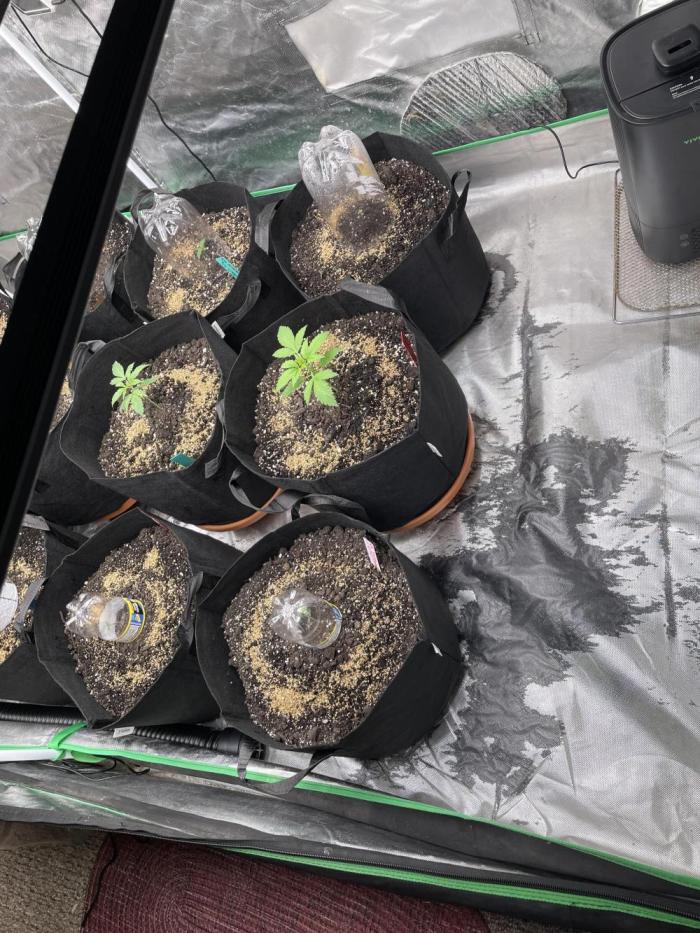
Girl Scout cookies extreme 1st live soil

2
9
1d ago
VIVOSUN luma light High-Intensity Discharge/750W
Custom Soil
Custom

Indoor
Room Type
G
Germination
1d ago
Tater420 I’ve got a few going but it’s week 0-2 in here the three big gals are week 2 and the rest are week 1 they are autos so I’m gonna probably remove a few that get stunted. Just added predatory mites today to help control pest!
likes
2 comments
Share
Used method
Directly In Substrate
Germination Method
Grow Questions

Tater420
Tater420started grow question 1d ago
Long story short I had a thrips scare on my seedlings and decided to add some predatory mites to help out just wanted to know if anyone else has used them and how to keep them happy and healthy.
Open
1 like
Answer

Grow4ever
Grow4everanswered grow question 1d ago
In my opinion you use the predatory mites to early. At this also early plant stage i would use neem oil and spray it on and under the leafs when light is out. Also you could use mineral top layer, i use quartz sand to break the life cycle of the thrips. I usally use predatory mites in a later stages of plant growth.
likes
Complain
eldruida_lamota
eldruida_lamotaanswered grow question 1d ago
If you have thrips, they will be happy, but for next time my advice would be to use neem oil and potassium soap, and with yellow and blue strips you can control any pest from the start. Cheers and happy growing!
likes
Complain

Green_Claws
Green_Clawsanswered grow question 2d ago
living soil for autos sounds like a game of catch up if using slow release feed. preditors will hang around while food is still there
likes
Complain

Login

2 comments
Sort by
popularity
popularity
newest
oldest
Altitonans_Fulmen
The true beauty of schimitus is that it is a long-term solution: 100% prevention once setup. Scimitus mites have existed for a couple of years in my soil now. Predatory, and they will eat thrips, most soft-bodied bugs, etc and eggs. Don't let the soil dry out, and make sure there is always some form of decaying organic matter, as they feed on that when no meaty prey is available. Do that, and they will maintain a population, but in order to reuse the soil over and over, first you need to learn how to pump out the excess CO2 that accumulates, or it will become a carbon sink over time, slowly becoming toxic to life. Also not recommended if you are using high salinity cheemical fertilizers, as it will disturb the mites excessively. If you want to reuse and keep them alive indefinitely, you need to introduce red wriggler earthworms (Eisenia fetida). They tunnel constantly, creating natural macro-channels that vent the Co2) and bring oxygen deep into the soil matrix. and/or create a way to barometrically pump the soil as you grow and reuse your soil indefinitely; you can mechanically simulate this natural barometric cycle with a little know-how. Personally, stay away from nematodes- far, far too easy to get the wrong ones and almost impossible to get rid of, and parasitic varieties are devastating as they are nearly impossible to eradicate once established in a rhizosphere. To completely avoid that risk, scimitus mites, unlike nematodes, are highly visible to the naked eye, strictly predatory, and cannot harm plant roots. All the benefits, no risks.
Altitonans_Fulmen
Comment by Altitonans_Fulmen photo #1Comment by Altitonans_Fulmen photo #2
Enjoying this diary? Follow for more updates!
Prefer the old Diary view?
Go back to the old Diary view