


[STS] Strawberry Pie Auto #3



Indoor
Room Type
3.5 liters
Watering
Start at 9 Week
G
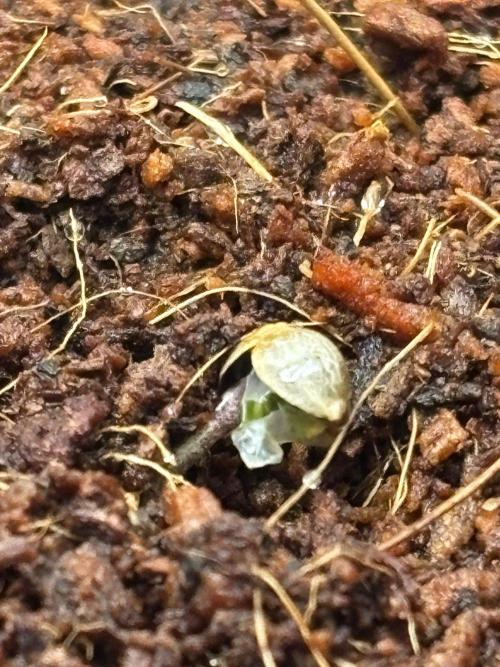
Germination1d ago

zip420 Good
likes
comments
Share
Used method
Glass Of Water
Germination Method


3
Week 3. Vegetation1d ago


18 hrs
Light Schedule
25 °C
Day Air Temp
6.5
pH
150 PPM
TDS
56 %
Air Humidity
21 °C
Solution Temp
22 °C
Night Air Temp
407 PPM
CO₂ Level
zip420 Good
PPFD 200 µmol/m²/s
Pistils have appeared—the earliest I’ve ever seen. It’s so early that I’m a bit concerned.
Applied the first round of STS spray (at 22:00, when the lights go off).
I took care to avoid spraying the side where the plant label is inserted.
STS spray: A mixture of 100 ml of water and 0.2 ml of Hi-Flora Conc (a dilution ratio of approximately 1:500).
1 like
comments
Share
4
Week 4. Flowering21h ago

18 hrs
Light Schedule
27 °C
Day Air Temp
6.5
pH
600 PPM
TDS
53 %
Air Humidity
22 °C
Night Air Temp
407 PPM
CO₂ Level
zip420 Good
PPFD 440 µmol/m²/s
1 like
comments
Share
5
Week 5. Flowering21h ago



18 hrs
Light Schedule
26 °C
Day Air Temp
6.5
pH
600 PPM
TDS
59 %
Air Humidity
20 °C
Solution Temp
0 °C
Substrate Temp
23 °C
Night Air Temp
407 PPM
CO₂ Level
zip420 Good
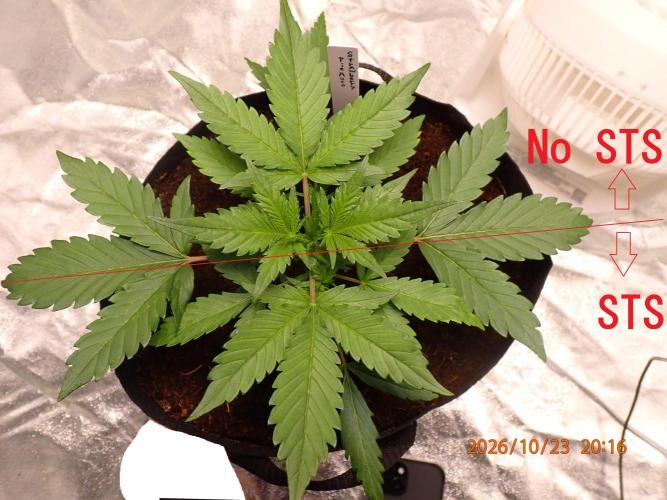
Day #30
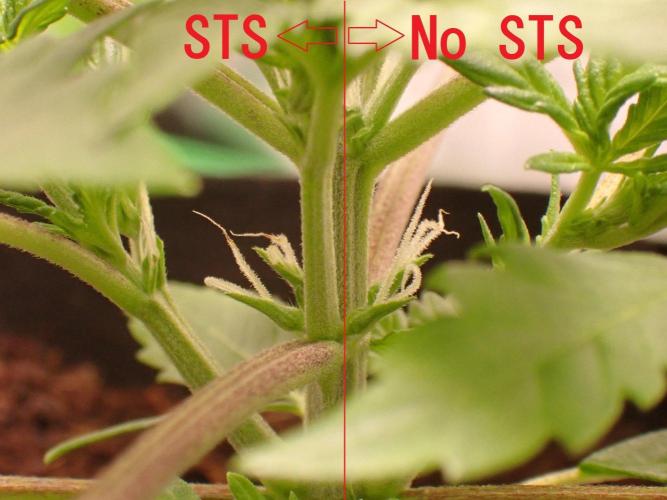
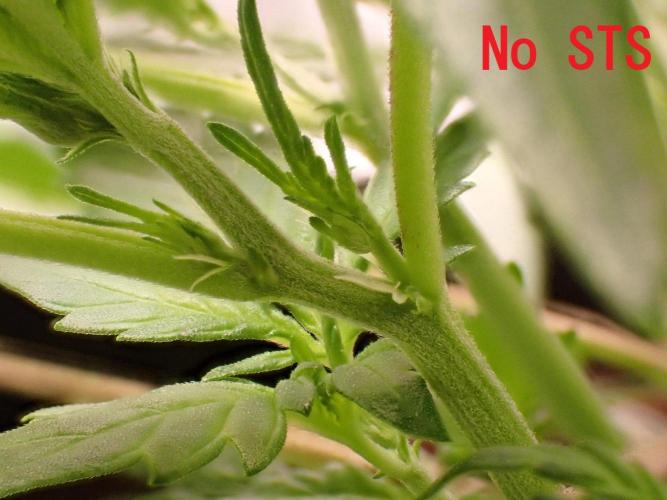
Applied the STS spray at 22:00, coinciding with the lights-out time.
Sprayed from the same direction as 5 days ago.
Mixture: 100 ml of water and 0.2 ml of Hi-Flora Conc.
2 likes
comments
Share
6
Week 6. Flowering21h ago




18 hrs
Light Schedule
25 °C
Day Air Temp
6.5
pH
650 PPM
TDS
60 %
Air Humidity
19 °C
Night Air Temp
zip420 Good
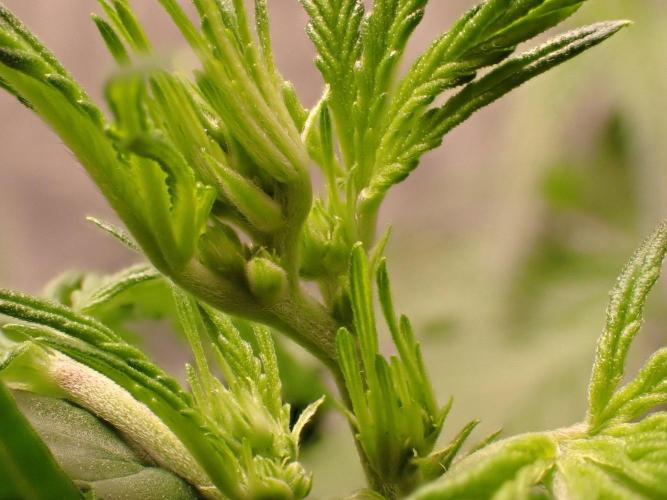
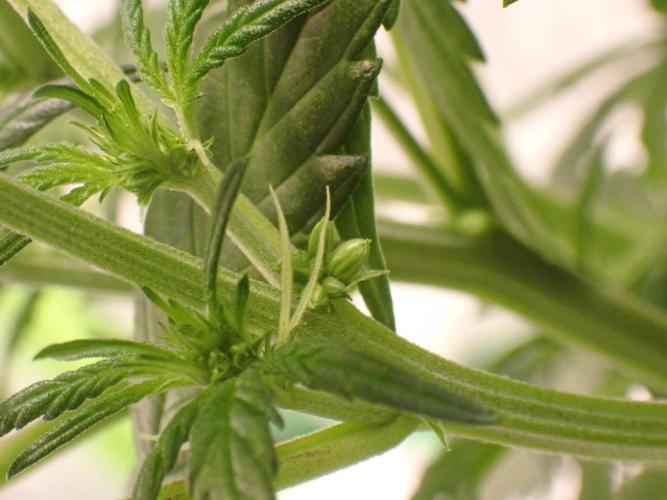
It feels as though the effects of the STS have become clearly visible.
I’ve come to realize that the spray’s effect might be more potent and far-reaching than I had anticipated. It seems that even areas that were only lightly exposed are now clearly beginning to show signs of masculinization.
1 like
comments
Share
7
Week 7. Flowering21h ago



18 hrs
Light Schedule
25 °C
Day Air Temp
6.5
pH
700 PPM
TDS
65 %
Air Humidity
22 °C
Solution Temp
18 °C
Night Air Temp
zip420 Good
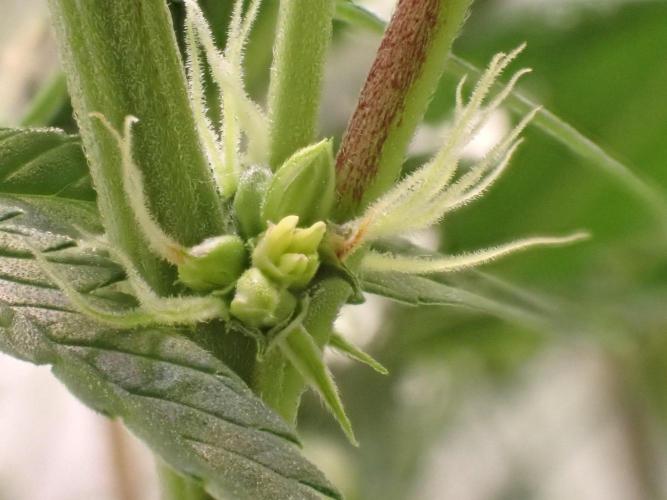
Day#47: The first pod has opened up beautifully, much like an umbrella.
Day#49
It wasn't clear to the naked eye, but looking at the magnified photo, I think I can just about make out a pistil that looks like it might have been pollinated.
1 like
comments
Share
8
Week 8. Flowering21h ago




18 hrs
Light Schedule
24 °C
Day Air Temp
6.5
pH
850 PPM
TDS
21 °C
Solution Temp
21 °C
Night Air Temp
4 liters
Watering Volume
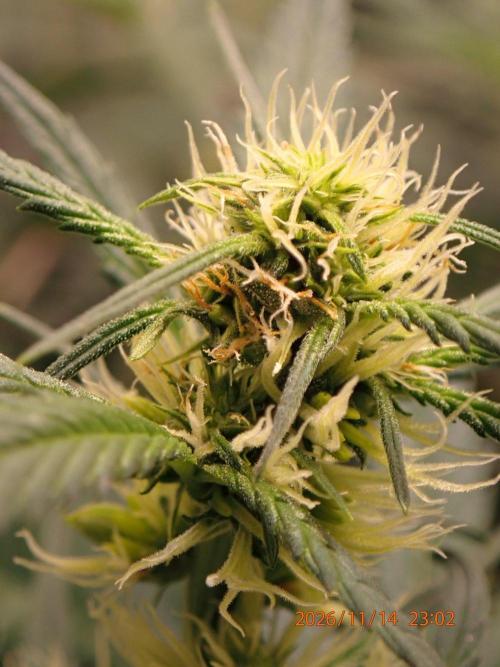
zip420 I’ve discovered something rather interesting.
Pods that fall off due to vibration—when dissected—often seem to lack well-developed seeds; they look just like the failures I’ve encountered in the past. Pods that grow on side branches tend to be like this, and many contain only tiny, rice-grain-like structures.
In contrast, pods located closer to the center of the stem—those that are robust, or those with a well-developed calyx that leaves the pistil and "banana" (ovary) exposed—are frequently packed with seeds and feel quite substantial.
I counted the exposed, seed-like objects and managed to identify about ten of them.
Each one is significantly swollen.
1 like
comments
Share
9
Week 9. Flowering21h ago


18 hrs
Light Schedule
25 °C
Day Air Temp
6.5
pH
900 PPM
TDS
55 %
Air Humidity
21 °C
Night Air Temp
3.5 liters
Watering Volume
zip420 When pollen is applied directly to buds where the pistils have reached full maturity—characterized by a distinct creamy color, a fluffy appearance, significant length, and visible elongation of the calyxes—it appears to result in successful pollination.
Given that there is constant air circulation—facilitated by a circulator running 24 hours a day—yet areas not manually dusted with pollen (such as those in the shade) show almost no signs of pollination, it seems highly unlikely that pollination occurs simply through pollen drifting in the air.
My observations suggest the following:
- Pistils must reach a certain stage of development before they become receptive to pollination; applying pollen before this point is ineffective.
- Pollen released into the air—for instance, when a pollen sac bursts—is insufficient for pollination; a substantial, concentrated exposure to pollen is required.
- Direct application (such as brushing pollen onto the pistils or splitting a pollen sac open with one's fingers directly over the top of a bud) is much more effective. In these cases, the calyxes show clear signs of swelling—a definitive indicator of successful pollination, rather than mere physical damage from contact.
It now seems likely that I will be able to harvest around 100 S1 seeds.
1 like
comments
Share
Enjoying this diary? Follow for more updates!
Prefer the old Diary view?
Go back to the old Diary view