



JVKdopegrowstarted grow question 10mo ago
Can Coco/perlite mix be reused after a compact root ball is carefully removed? No pest issues. Prior plant was very healthy with no nutrient issues. Picture taken 2 weeks prior to harvest.
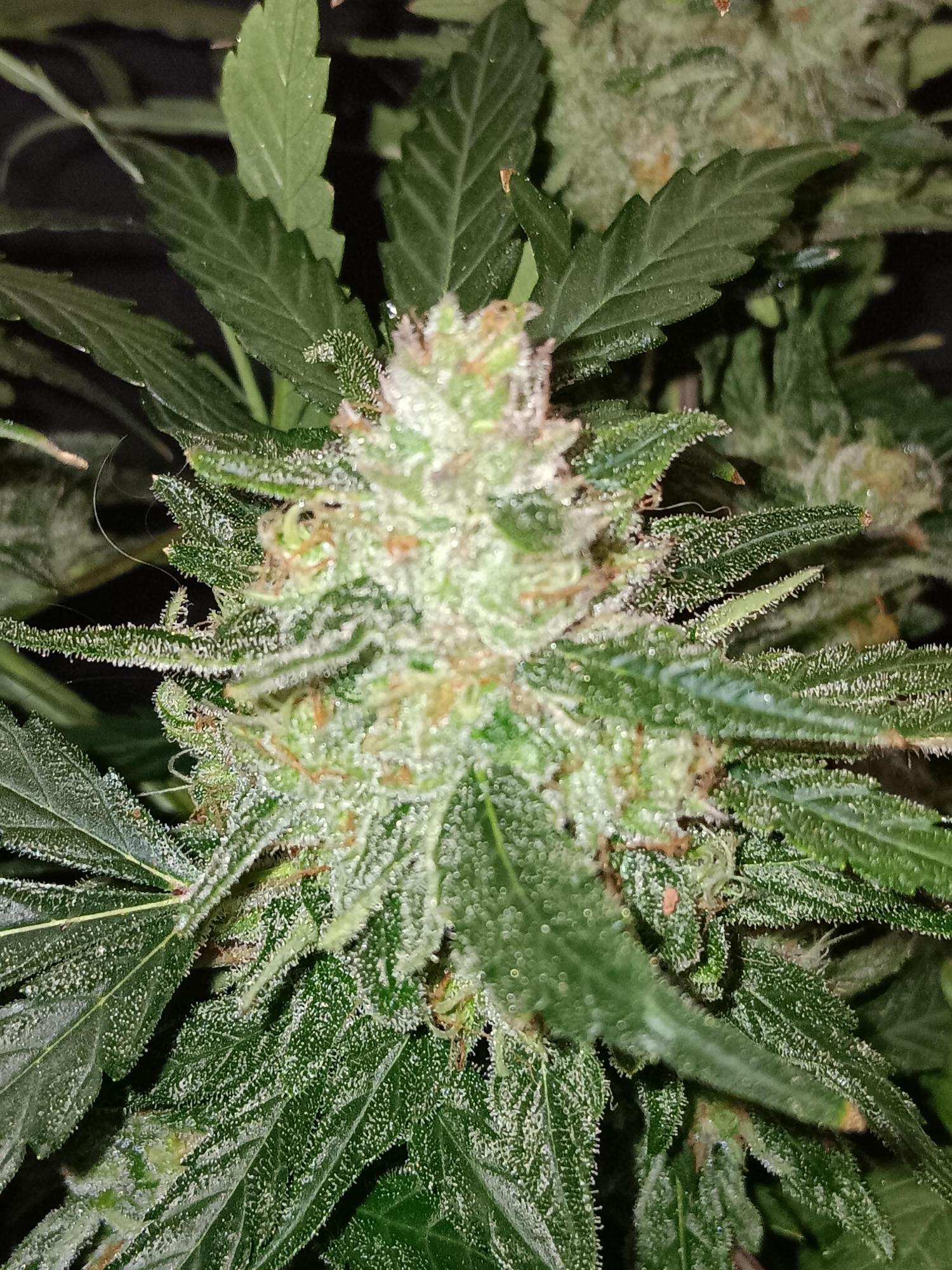
Solved
likes

Selkotanswered grow question 10mo ago
hey 👋
The answers below are very complete; but if your question is ‘can I reuse the substrate without additional cost,’ the answer is yes,
provided you have a feeding routine at every watering starting from the seedling stage.
A good thorough rinse of the coco/perlite with lukewarm water allows for an easy reset, and when you reuse it, just remember to water with a root stimulant like Voodoo as soon as the first pair of leaves appears.

Yan420answered grow question 10mo ago
Hey, of course you can, up to 3 times with Coco coir any more and you are asking for trouble, I do it all the time 👇
growdiaries.com/diaries/218201-auto-god-s-glue-grow-journal-by-yan402/week/1459827
Have a good one bro ✌️ ♥️
2 likes
Complain

Ultravioletanswered grow question 10mo ago
This was an answer to a different question but relevant to yours also. Yes you can reuse any medium but it cannot act as a carbon sink forever co2 buildup will eventually take over. Like anything else once there is too much of any one thing and things fall out of balance then it all goes pear shaped.
The soil can if you are usingg the same soil, co2 accumulates and gets trapped over time, eventually levels get so high it will start to get "toxic" so to speak for microorganisms. Tents themselves don't generally go bad. Negative pressure replicates barometic pumping. Where it pushes oxygen into the soul and co2 and nitrogen out. In-between grows I have extreme negative pressure, drying lit soul till its bone dry then repeat the process giving it time to oxidize the carbon dioxide and nitrogen back into the atmosphere. a medium that acts as a carbon sink can become toxic to life due to high carbon dioxide levels or related chemical changes, especially without adequate gas exchange (which "barometric pumping" facilitates). The primary mechanisms are asphyxiation (due to reduced oxygen) and acidification. More carbon = more moisture retention, which also leads to eventual hypoxia or anoxia.
Nothing good will ever happen in a environment short of oxygen. It is the catalyzer, the oxidizer? The "fire".
Soon as a medium goes from aerobic fermentation (oxygenated) to anerobic fermentation (no oxygen). The foul odors are a common characteristic of anaerobic processes. Stanking!
Gluck.
1 like
Complain