


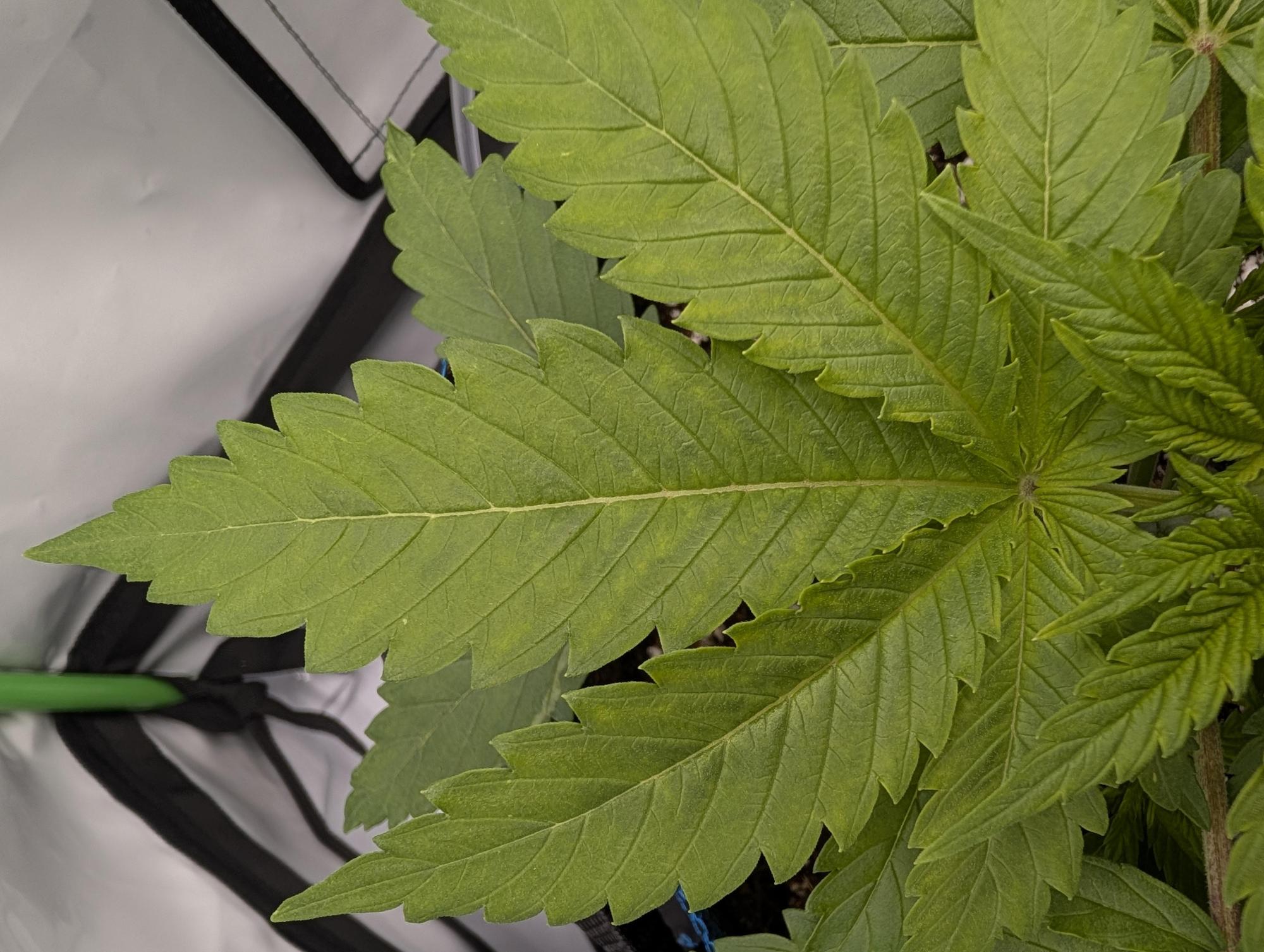
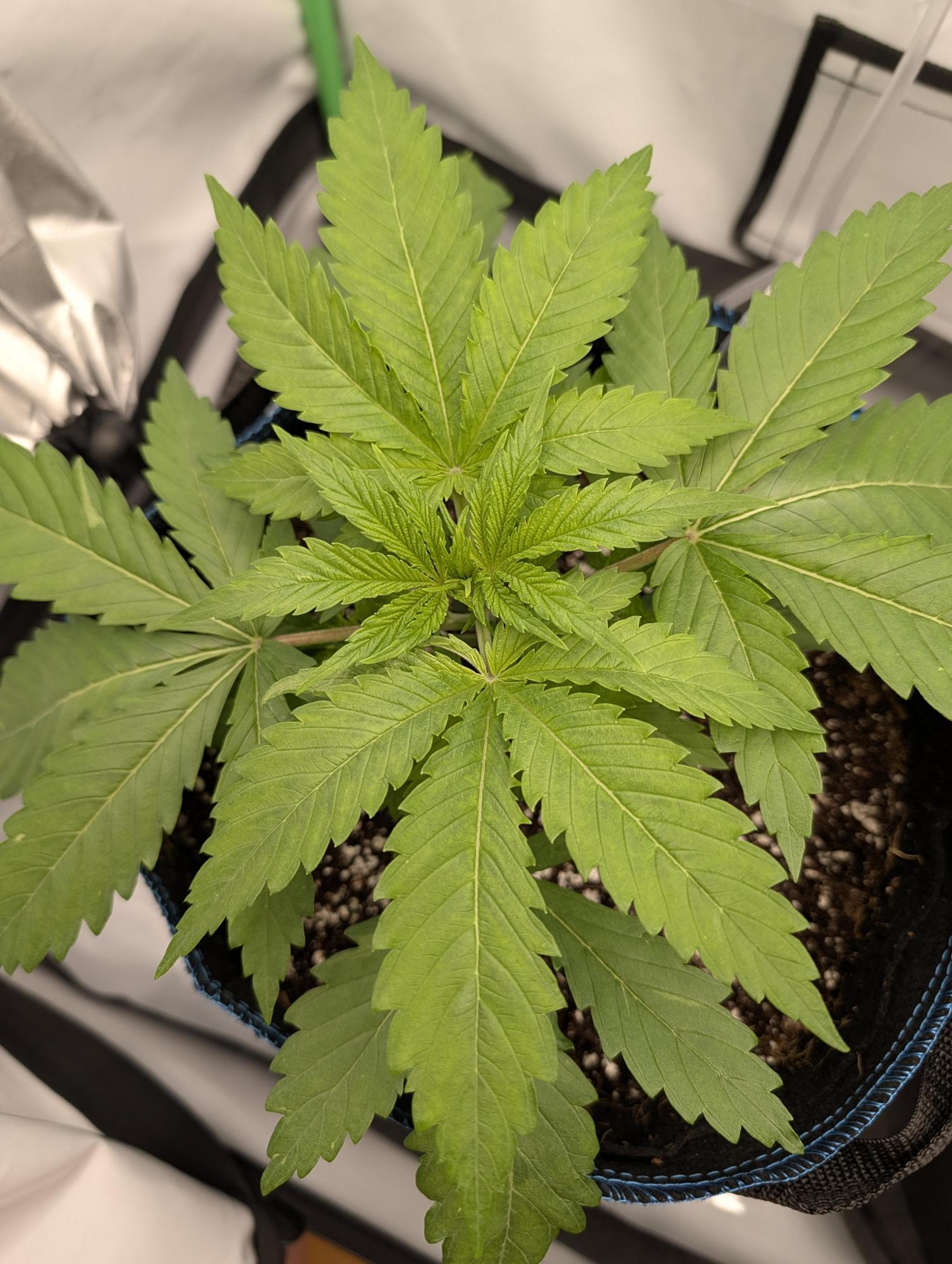
Is this early calmag deficiency?


HinduGodanswered grow question 10mo ago
YOU CAN GET DAT FROM PH FLUCTUATIONS IN DA MEDIUM!! TEST DA RUNOFF SEE WHAT DA PH IS!!! NEXT FEEDING HAVE A 20% RUNOFF AND TAKE 2 READINGS!!! 1ST READING THE INITIAL RUNOFF DAT WILL TELL YOU DA ROOT ZONE PH. THEN TEST DA LAST PART OF DA RUNOFF DAT WILL TELL YOU WHERE IT IS AFTER DA FEEDING!!! MAKE SURE BOTH SAMPLES ARE CLEAN!!! WITH DA 2 SAMPLES YOU CAN ALSO TEST YOUR EC WHERE IT WAS AND WHERE IT IS AFTER DA FEEDING!!! DIS WILL BE VERY VERY GOOD!! DIS IS JUST MY OPINION!!! HAVE A VERY VERY GOOD DAY!!!

Organomananswered grow question 10mo ago
Not calcium deficiency, that generally presents as spots/blotches.
This looks more like the early stage of a magnesium deficiency, which is quite common in LED light grows.
likes
Complain
00110001001001111Oanswered grow question 10mo ago
The pigmentation is consistent, so i'm going to say this is an illusion of the grow lights... when you take photos under a grow light, your plants look paler than they actually are.
I guess there is some slight interveinal chlorosis... more than one thin can cause that. Mg-deficiency takes 4-6 weeks to see symptoms. Is the plant even that old, yet?
is this soil? is it soilless? there's a dearth of information that makes this more difficult to answer than it should be.
in soilless could simply compare some various ppms of nutrients and it'd likely stick out like a sore thumb. In soil, it's a matter of familiarity with the product and how you've fertilized so far -- by systematic about what you try and eventually you hammer out what is needed at various stages in a consistent way -- assuming consistent soil products are used.
I don't think it's ph lockout or nute lockout, because that typically impacts specif nutrients before others, and this is not a Ca issue. The plant isn't overly lush or showing signs of over-fertilization, so nute lockout is unlikely too.. these things cause a smorgaspborg of symtpoms that are a bit confusing compared to normal contexts more often than not.
Since it's minor and slow-moving, i'd let it progress a bit before reacting. Be more confident in the diagnosis, unless you have some morsel of information that is not provided here that helps you be more certain. if you do get some spots of damage coinciding with interveinal chlorosis, Mg-defiency will be the most likely.
do note: Ca issues and Mg issues are two different things. There is no such thing as a "calmag problem" They can coincidentally coincide but they are 2 unique nutrients.
As far as interactions and how the impact each other (not important for this particular question but good to reference in future for more complicated problems), google image search for "mulder's chart." That will show you the antagonistic and stimulative relationships between the various nutrient elements. What is likely to block out other stuff or what requires some proportional (not inferring 1:1) coinciding increases etc..
likes
Complain

Antifameanswered grow question 10mo ago
Yellowing of the leaves usually indicates this, yes. But first, the inner part between the leaf veins(the venules) becomes lighter.
However, it's difficult to tell from the pictures. The lighting can make a big difference. But at first glance it's nothing to be worried about.
You have to judge for yourself whether the leaves are lighter and yellower than before. Normally, the yellowing starts on the lower leaves and spreads upwards.
Try adding Calmag and see how they develope.
Hope that helps! 😘
1 like
Complain