


PK booster….. yay or nay?

jimb0started grow question 6mo ago
Hey guys, gotta give it this community is great and sorry if I ask stupid questions I’ve done a lot of research and read books but nothing like people with experience!
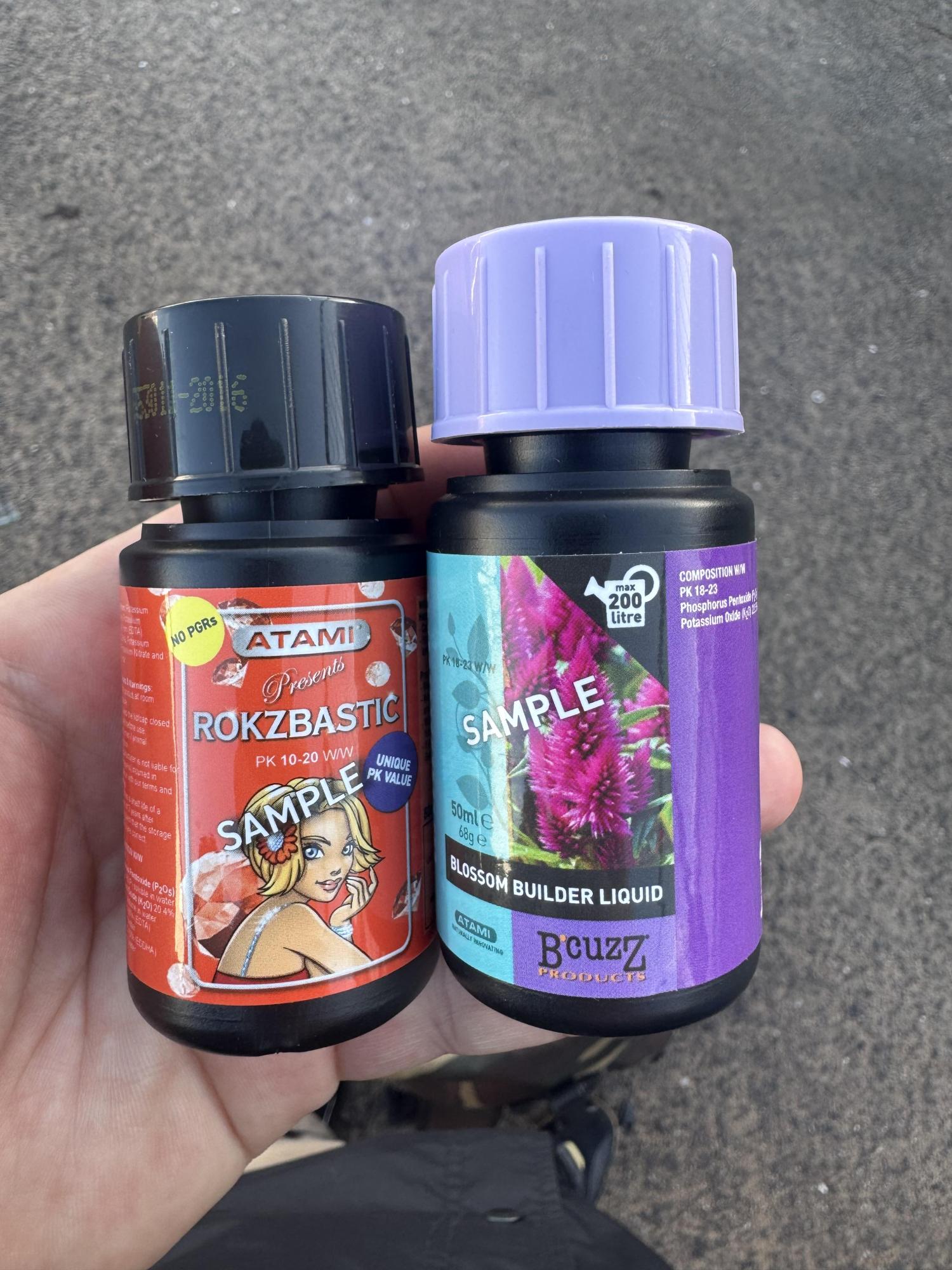
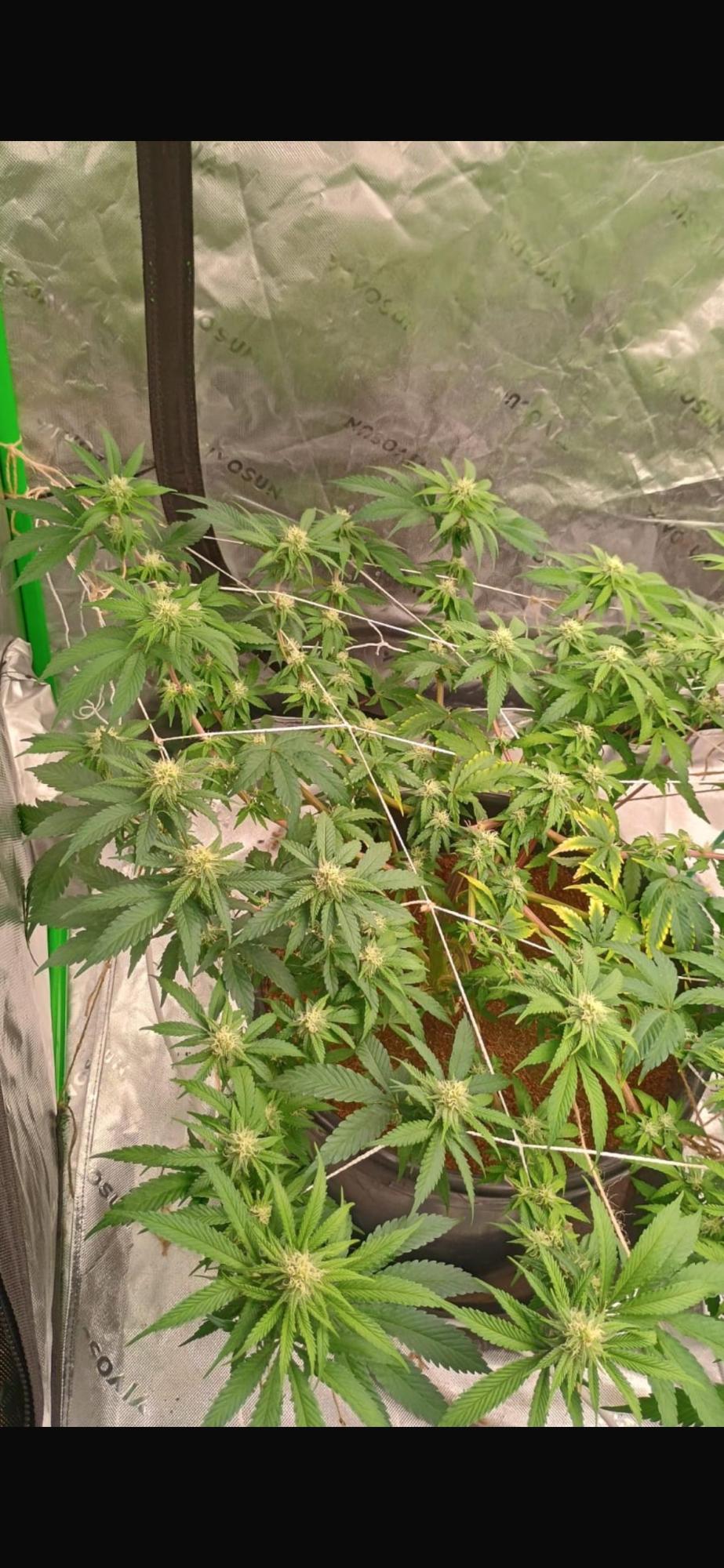
I have these PK boosters but seen mixed things about them! What’s your guys opinions? I’m on week 4 blue zushi
Open
likes
Answer

Ultravioletanswered grow question 6mo ago
Bud hardeners are legitimate nutrient supplements that work primarily by providing high concentrations of phosphorus (P) and potassium (K), along with other micronutrients, to support the plant during the critical late flowering stage. They are not a magic solution, as overall bud density is heavily influenced by genetics and environmental conditions, but they can enhance results when used correctly.
A plant's genetic makeup is the primary determinant of whether its buds will be naturally airy or dense. No nutrient product can turn an airy-genetics strain into a rock-hard nug producer on its own. Proper environmental factors like light intensity, humidity, and airflow are also critical. High-quality bud hardeners provide necessary nutrients that might be depleted in the growing medium during the demanding flowering phase. Using them as part of a balanced feeding schedule can genuinely improve bud density and yield. Some products that claim to be "bud hardeners" may actually contain harmful plant growth regulators (PGRs) that can produce dense, heavy buds but can be dangerous for consumption. Legitimate products focus on a safe nutrient/mineral-based approach. The market has many products with vague claims and no scientific evidence, often charging high prices for basic ingredients. It is important to choose reputable brands and understand the NPK ratios and ingredients (e.g., specific forms of P and K, amino acids).
likes
Complain

Organomananswered grow question 6mo ago
I believe in them, but I would not use either of these products at any more than half strength.........I do not like anything with double digit percentages....i.e. 18/23.
Unfortunately, for best results, you should have started these 2 weeks ago, but it is still not too late.
Stop using them when the buds are about three quarters grown, boosters have little effect in late bloom.
likes
Complain

Yan420answered grow question 6mo ago
Yes and no. PK boosters work, but most are overpriced marketing, you’re basically paying a lot for very simple phosphorus and potassium salts.
A cheap and effective option is MKP (0-52-34 / KH₂PO₄). It gives both P and K in one product, so you can easily keep a balanced 1:1 PK ratio by dosing lightly.
Start low, watch EC, and don’t overdo it — at week 4 the plant needs some PK, not a hammer.
Have a good one bro ✌️♥️
1 like
Complain

00110001001001111Oanswered grow question 6mo ago
This idea of 'boosters' is a merkating/advertising ploy.
It all depends on how much P and K you already provide. Whimsically dousing it with "more" isn't wise. Going over a certain threshold - which can vary a bit by genetics but not as much as most think - will do nothing but eventually cause a toxicity. It's not foie gras. You cannot force-feed a plant for bigger buds.
Uptake of nutrients is an active process. It grabs what it needs. So, the best strategy is maintaining a healthy ratio of nutrients around the roots that gives the plant easy, unfettered access to each.
e.g. if already maintaining ~180ppm of K around roots, probably don't need more K. -- *** this is relative to a soilless/hydro formula and the formula isn't exactly what the resting concentration will be around the roots, but if religious about 10% runoff, it's a stable level, nonetheless... soil has more moving parts involved, but still has to meet same needs over time. Easier to talk about a soilless formula for the dynamic playing out.
There are reputable scientific studies that tested upper limits of K and P. They are only initial studies, so they are not comprehensive. Ratio of nutes impacts availability... more ratios need to be tested to know what the 'best ratio' is and that may impact ideal amount of K or P or any of the others relative to current beliefs.
in general, probably don't need more than 180-200ppm K or 40-60ppm P -- this is for soilless/hydro context and assumes some sort of orthodox ratio of nutrients used that isn't impeding P or K, directly or indirectly. In soil, you have some K that is unavailable until it is broken down... what it breaks down into will be best if it's providing roughly the same levels as what this formula with 10% runoff would provide day to day. You have to rely more on observing the plant to dial it in. There are more possible causes as to why it might not reach that level, too. Soil is more complicated in this regard, but once you find that balance is not a problem in future -- minor tweaks may be necessary as local variables change and for genetic diversity, but nothing like the initial learning curve.
Mulder's Chart can inform about relatiosnhips.. what impedes what and what requires more if you add this or that, etc...
Any product that says grand things or vague things is likely just bullshitting. Horticultural products lean into manipulating ego and desperation, lol. Nothing will cause 50% more roots or 30% more yield compared to competent growing methods. compared to some dumpster fire, sure, but that's not an apples to apples comparison. Maintain a healthy plant. Go ahead and test higher levels of this or that while you maintain everything else, but observe the plant... if it starts to have problems over the next few weeks, good chance it is the 'boosters'.
Other factors impact it too... if you feed heavily druing vege phase, you won't need to feed as heavily later on. Fertilization needs is a produce of everything you've done since day 1. If your methods allow the plant to store up more P or K, you won't need as much of a boost in flower as somoene's methods that does not allow such a thing.
I feed at a pretty conservative level - 650ppm. By flower i'm down to 500ppm and dropped N 30% or so. This year i had to drop even further for 17 days before i saw in hints of the plant cannibalizing its leaves. I was feeding at 100-300ppm, total, for 17 days from flower day 25-42. Had i used PK booster, i would have caused my plants to experience major toxicity symptoms for K for sure... P seems to have more room for error on the high side in my experience. e.g. feed at 40-60, but it can handle upwards of 100ppm for a long time - this excess does not result in more yield or vege growth, though. You can't just mimic someone else unless you do the exact same from start to finish, and even then may need to deviate. Always let the plant dictate and you'll be fine. if a toxicity shows, you gave too much, no matter what common belief of growers says to do.
1 like
Complain

Green_Clawsanswered grow question 6mo ago
No such thing as a stupid question, I havnt used these actual 1s but pk boosters are for winners.
2 likes
Complain