The Grow Awards 2026 🏆 
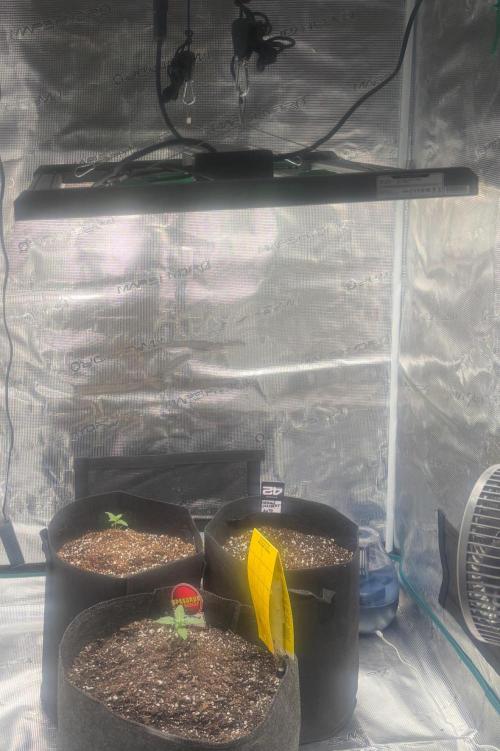





FC-3000 EVO/ 3X3 set up
thehamisbadstarted grow question 3h ago
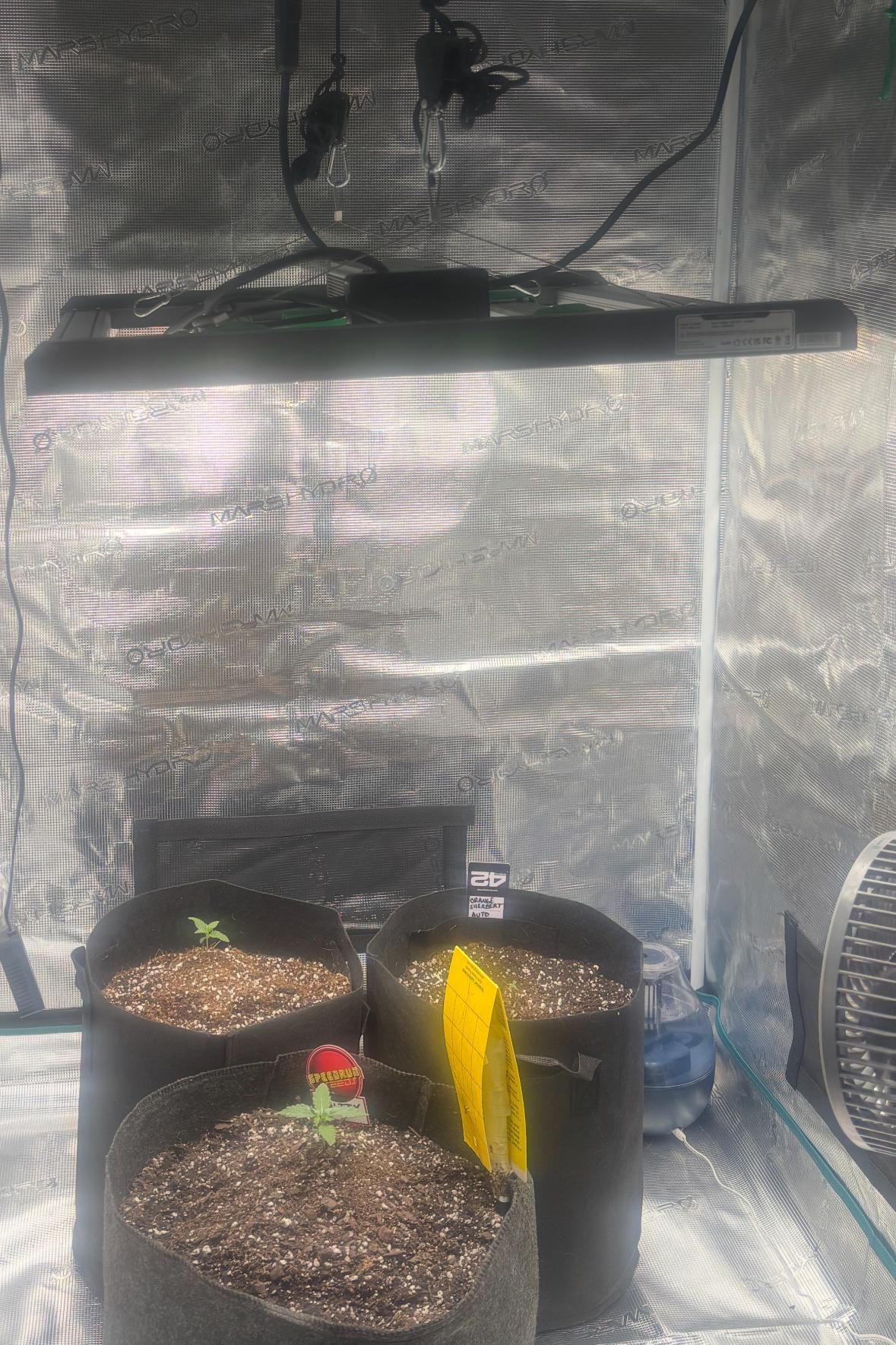
Anyone ever use the FC-3000 EVO led grow light by nars hydro? Just got one with my 3x3 I don’t have a par meter so what was your light hanging heights and dimmer settings through specific stages of growth? Trying to get the lighting dialed in to prevent stunting or burning
Open
likes
Answer
Bandit600answered grow question 36m ago
0011 hat alles gesagt bzw geschrieben was richtig ist.
likes
Complain
00110001001001111Oanswered grow question 1h ago
you don't need a par meter. Everything you can do with that, you can do with a 10 dollar lux meter or a free app that measures lux or converts lux to "PAR" (PPF/PPE is a single point measurement). No phone is capable of measuring umol/s of photons without some additional device connected to it, which i bet exists but would still cost 500 USD or more.
Regardless of which tool you use, you need to adjust for local variables. There is no one-size-fits-all intesnity of light for any particular life stage. Some people can give more because their climate and ambient co2 levels allow it. Local variables dictate just how much light you can give per day. How the plant is growing tells you if you have found the right intensity of light.
Hanging distance should be more about good coverage end-to-end (geometry and the dynamic of light spreading out according to inverse square law). Minimize difference from center to edge/corner as best you can without being too wasteful with watts -- technically, a higher hanging distance will continue to reduce this deviation, but it also will start to cost a lot more watts to maintain overall DLI. So, with a FC series of lights, which i also use, i'd stick to 18" or so. Right now, my FC4800 is about 19-20" above some 15 day old plants.
At that distance you have a pretty even coverage end to end and don't sacrifice overall DLI. A lux meter is fine for this, too. The proportional difference of Klux from onen point to another is 1:1 realted to PPF/PPE measurement. So, if klux is 50% of central reading, then PPF will be 50% of central reading, too -- without the 500 dollar cost of a quantum meter.
See how the exact PPF you give is irrelevant? For one, you cannot mindlessly target a single level of intensity because every garden will be a little different, so you will need something differen tthan the next person.. it may not be a huge difference, but still needs to be accounted for.
I base everything on 12 hour needs, because that's the context with greatest requirement out of the light...
you need 2/3rds of anything suggested for 18 hour needs (vege or autoflowers) ** it costs roughly the same watts to provide the same DLI over 12 vs 18h, fwiw. you don't save money with autos in this regard.
first lets get area in m^2
9 / 10.764 = .84 m^2
Use umol/s PAR output of light to caclulate max PPFD of light in this 3x3 area.
855 umol/s PAR / .84m^2 = just over 1000 PPFD -- these exact numbers are irrelevant. ballpark information only. Your PPFD is techinically smaller than this as some photons are absorbed or completely miss the tops of leaves. Even so, ~35-40 DLI based on the total output of this light is the general ballpark you want to shoot for then adjust based on what you see.
This is too much for a 3x3, so do not use 100% with 12 hour operation. You only need 800-900 PPFD before you tax a plant in ambient co2 conditions and basic climate control. Less if either of those factors are not as optimal for photosynthesis (reference material you can look up). So, you want to be 80-90% when operating this light for 12 hours/day in flower.
Being slightly overpowered is a good thing. As this light dims slowly over time, you can increase the power a bit over the years and maintain exact same DLI as you did day 1 when you figured out how much to give for your local variables. After 50,000 hours these diodes will be 90% of what they were day 1, and you'll need that extra 10% you weren't using before (it's a jump of +11.1% from 90% to 100%)..
You will do this automatically over time, if adjusting based on node spacing. Maintain same healthy node spacing and you are always giving as much DLI as you reasonably can.
Everyone needs to do some basic trial and error with the new growth node spacing as your guide. Too tight = needs less. Too stretched = needs more.
As far as vege vs flower needs, if you figure one out, you know what the other is without any more trial and error, as long as you maintain same hanging distance and same general climate variables. Any deviations will require some small amount of adjustment for those additional changes, though.
Since we see vege first, you'd start at 2/3rds of that power... 54-60% is your starting power at 18" hanging distance. Observe new growth node spacing and fine-tune the power so that the plant grows with healthy node spacing.
Whatever you find works well... when you go from 18hours to 12 hours, simply multiply the power by 1.5 (150%). I use 16 hour vege, so my ratios are 3/4 and 4/3. I use 133% of the power over 12 hours compared to 16 hours.... same DLI results.
Seedlings takes a little more trial and error.. You can also learn to use the light at much lower amperage and get it super close to the plants to save electricty. this takes a lot more trial and error by comparison to the above, but you can get there. otherwise maintain 18" and run at some low power initially until you see some stretch in the seedlings, and start to amp up in response... take notes of power levels and how old the seedlings are.
i find if i don't give damn near full dli (relative to my local variables) within 48 hours of sprouting, they stretch like crazy. But again, it's a matter of how the plant is growing, not some pre-ordained level of light. do what the plant asks for... suggestions are a good starting point, but if you local variables allow for more or less, you need to adhere to that context and not try to force the issue. there's no circumventing a deterministic universe through will.
plants adapt to their environment. Outside in many regions of earth you will get more than 35-40 DLI and a marijuana plant will still thrive. It is not using more than 35-40 dli. It simply adapts to use less light per surface area so it doesn't damage itself. If you try to force feed a plant light, it will adapt to more light, eventually, but that doesn't mean it is making use of it. CO2 is you rlimiting factor. IF it does not have access to enough CO2 any light above that threshold is wasted.. whether the plant shows damage or not.
in the short term before any significant adaptation as you go through your trial and error, it does significantly and overtly impact growth of the plant. You can trust what you see in growth pattern to guide your light hanging distance and power.
The tougher stuff to figure out is when you aren't using the light at 'full' DLI ... young plants may need less... but again, node spacing is your guide. take notes. do better next time. within a grow or 2 you'll have a very consistent procedure and never have to worry much about it again... may need some seasonal adjustments if you only loosely control your climate.
likes
Complain