


Vegan Phosphor boost but how


RasendeRollo92answered grow question 8mo ago
Hey 👋,
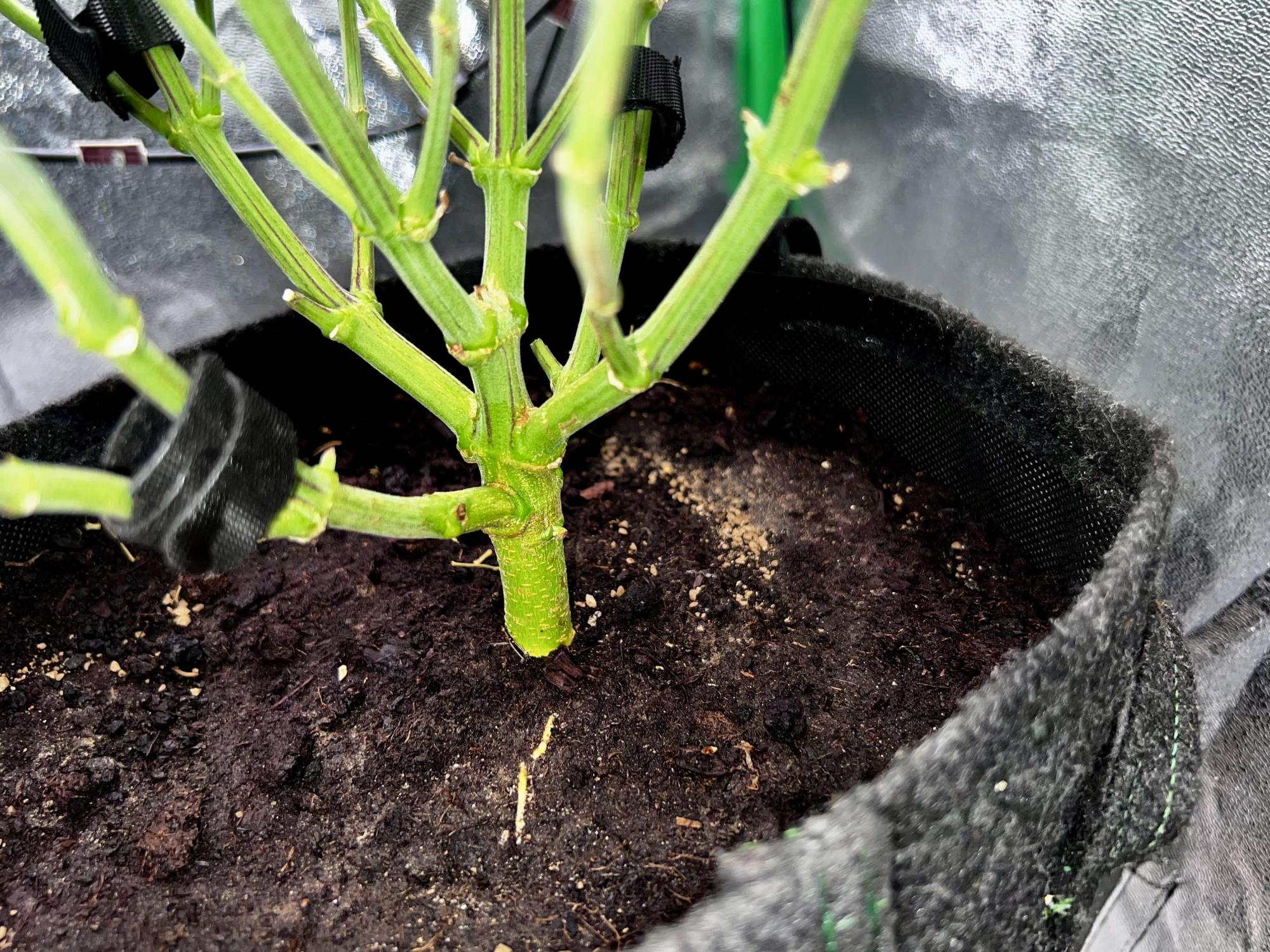
I also used those Kind of power fertilizers in the past. Me Personally did the Same as you did, I just additionally Rubbed it into the Upper Layer of Soil. It will Disolve slowly the upcoming weeks.
Hope this helps. Enjoy & good luck 👊🤞🏽👍

Green_Clawsanswered grow question 8mo ago
First off, kudos to you for sticking to a vegan phosphorus source. Many growers don't realize that standard phosphorus often comes from bone meal or animal byproducts, so choosing a plant-based alternative shows you’re committed to a clean, ethical grow. Plus, the fact that you’re monitoring the dissolution rate means you’ve got the "eye of the gardener"—most people just pour and walk away without noticing their plants aren't actually eating.
🧐 The Problem: Why It’s Not Dissolving...
The issue with "Vegan Phosphor" additives (usually derived from soft rock phosphate or plant-based proteins) is that they are often hydrophobic or require microbial activation to break down. If it’s sitting on top of the soil like sand, your plants are essentially staring at a meal they can't reach.
Potential Culprits:
Surface Tension: The powder is too fine or has a waxy coating that repels water.
Lack of Incorporation: Simply "spilling" it on top creates a dry crust.
Low Microbial Activity: Vegan sources often need soil bacteria to "digest" them before they become water-soluble.
🛠️ The Fix: Professional Application
To get that phosphorus moving into the root zone where it belongs, stop "spilling" and start integrating. Here is how the pros handle stubborn organic additives:
The "Scratch & Water" Method: Don't just pour. Lightly rake the additive into the top 1–2 inches of your soil with a hand fork. This increases the surface area contact with the moist growing medium.
The Slurry Solution: Instead of dry-spreading, mix your dose into a small gallon of lukewarm water first. Whisk it vigorously to create a "slurry" and pour that mixture over the soil. This breaks the initial surface tension.
Use a Wetting Agent: Add a drop of organic yucca extract or even a tiny drop of biodegradable dish soap to your watering can. This acts as a surfactant, allowing the water to penetrate the additive rather than bead off it.
🛡️ How to Avoid This in the Future
Top-Dress Early: Phosphorus is a slow-moving element. Apply it a week before you think the plant needs that "boost" to give the soil biology time to work.
Mulch Over It: After applying, cover the area with a thin layer of compost or mulch. Keeping the additive dark and moist is the only way to ensure it breaks down. 💧.
Good luck
1 like
Complain

Trichomaanswered grow question 8mo ago
I’m familiar with the amendment in general and the brand’s product. The reason it doesn’t fully dissolve is simply because the particles aren’t fine enough to break down completely in the substrate. I don’t see this as an issue, though larger chunks will dissolve more slowly and act as a timed release.
I recommend mixing it first with a small amount of soil, breaking up or even grinding it the material as much as possible, and blending everything thoroughly before applying it as a top dress.
If you plan to reuse the soil, it shouldn’t be a problem either. The nutrient balance may not be perfectly dialed in, but that’s difficult to achieve without soil testing anyway. I don’t expect any issues even after multiple runs.
Last but not least, small tip there are better sources of phosphorus. Raw forms like this can sometimes carry unwanted elements, including heavy metals.
1 like
Complain

Ultravioletanswered grow question 8mo ago
Boosters are useful but grossly oversold.
At some point during flower the plant will demand extremely high ratios of P and K.
Regardless of what or how you feed the salinity of any medium can only hold so much fertilizer salts.
Roughly EC of 1.8ms/cm for soil.
So imagine for the sake of simplicity you have space for 1800 salt ions.
Fertilizer companies cannot sell N P or K in elemental form. They sell "ratios"
98% of nutrient uptake comes from water solution. When you feed synthetic you need to water every time with a balanced and full complete collection of the optimal ratio of salts thay best suited the precise stage of growth.
No point having 800 nitrogen salt ions 7 weeks into flower...... that's going to skew the balanced ratio.
A plant needs a little bit of everything, boosters are sold are a magic. "Boost" when in reality its just a high ratio of P and K for example in a "bloom booster" It is well-established in plant biology that the availability and abundance of nutrients directly shape plant phytohormone balance, which in turn dictates growth, architectural development, and genetic responses. Plants use these hormones as intermediates to translate external nutrient signals into developmental actions.
Ratio,ratio,ratio
Use it, just know its pretty much snake oil. You want a pk boost, add more p and k to your feed when required.
2 likes
Complain