


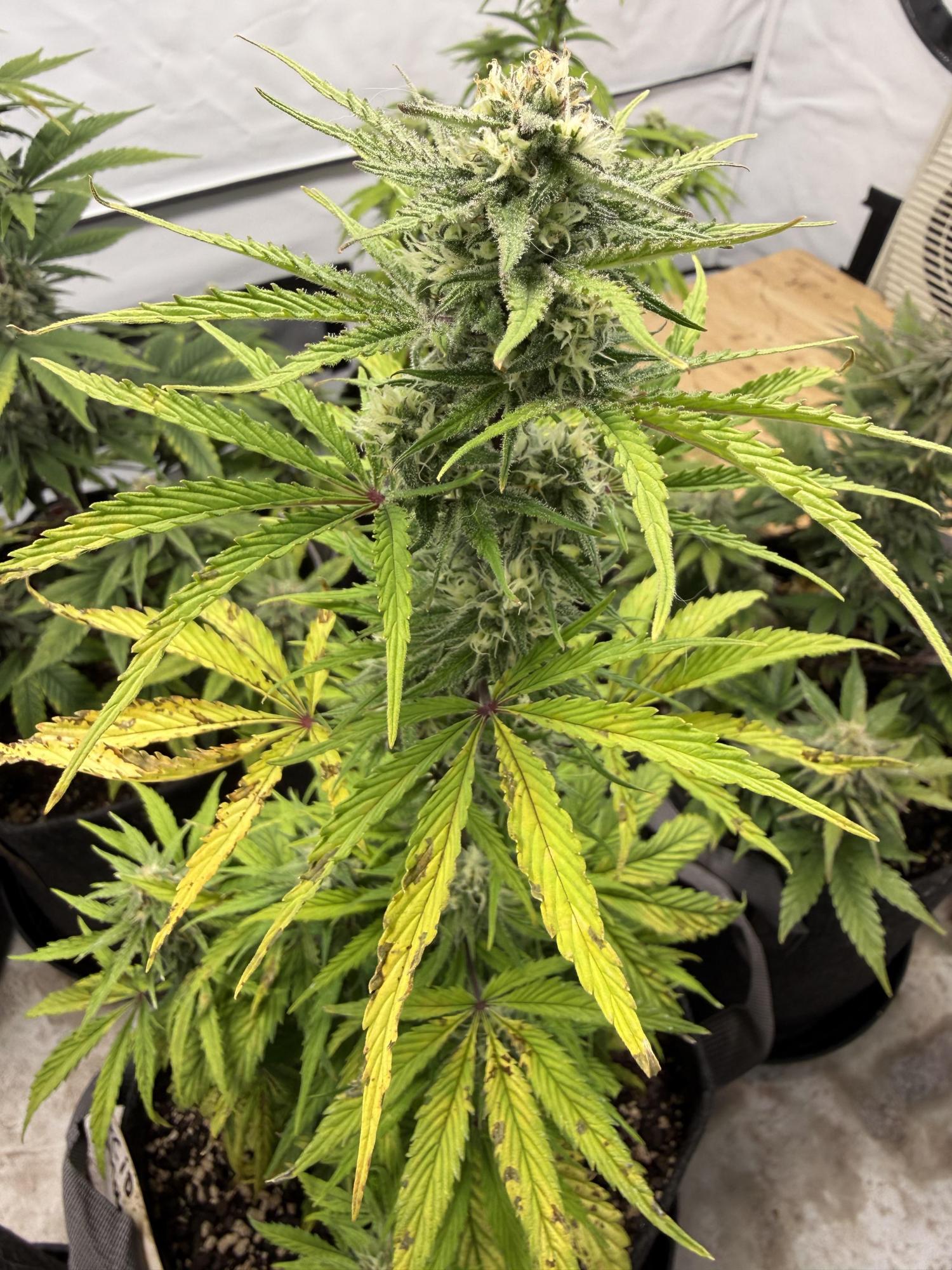
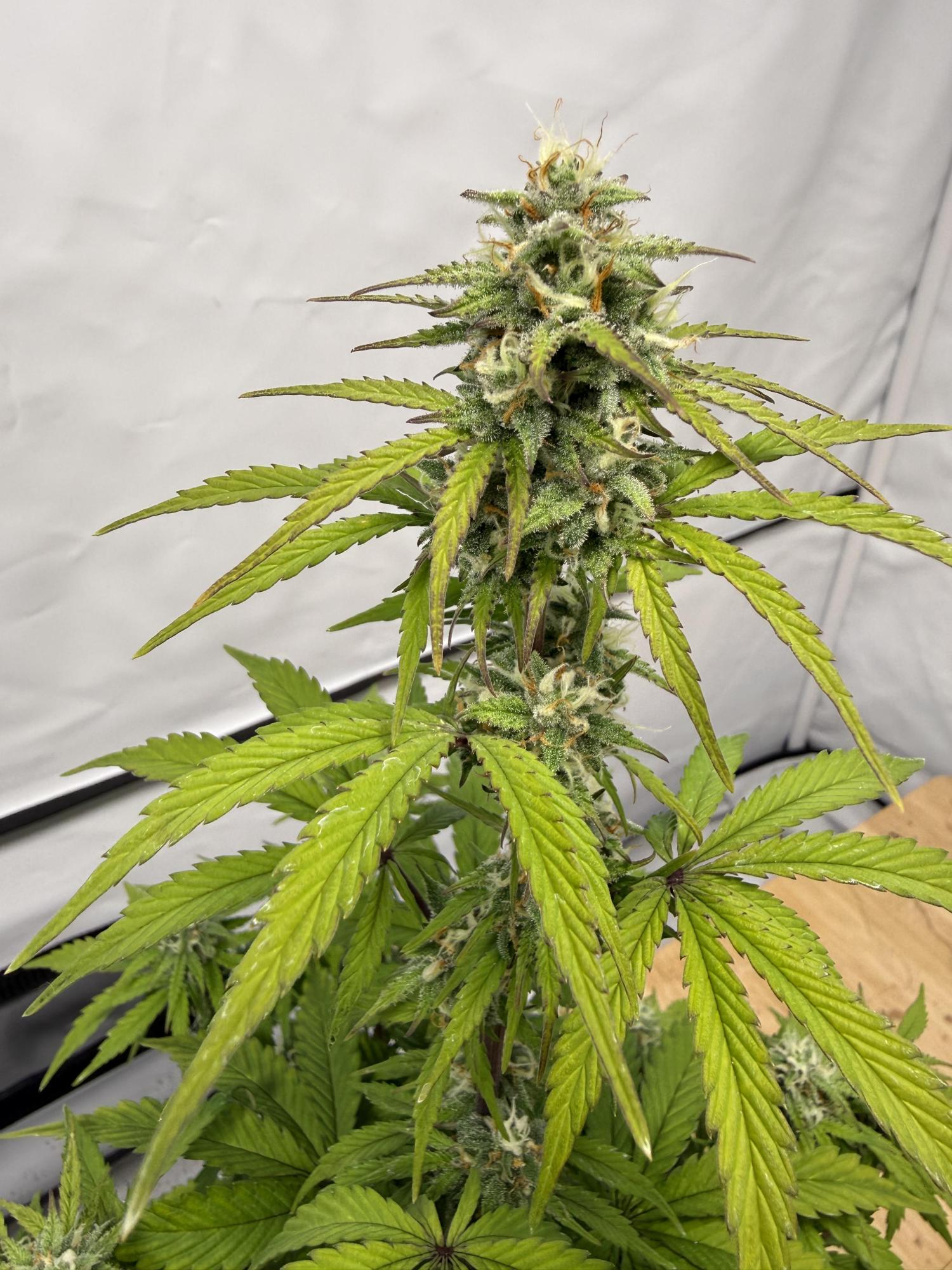
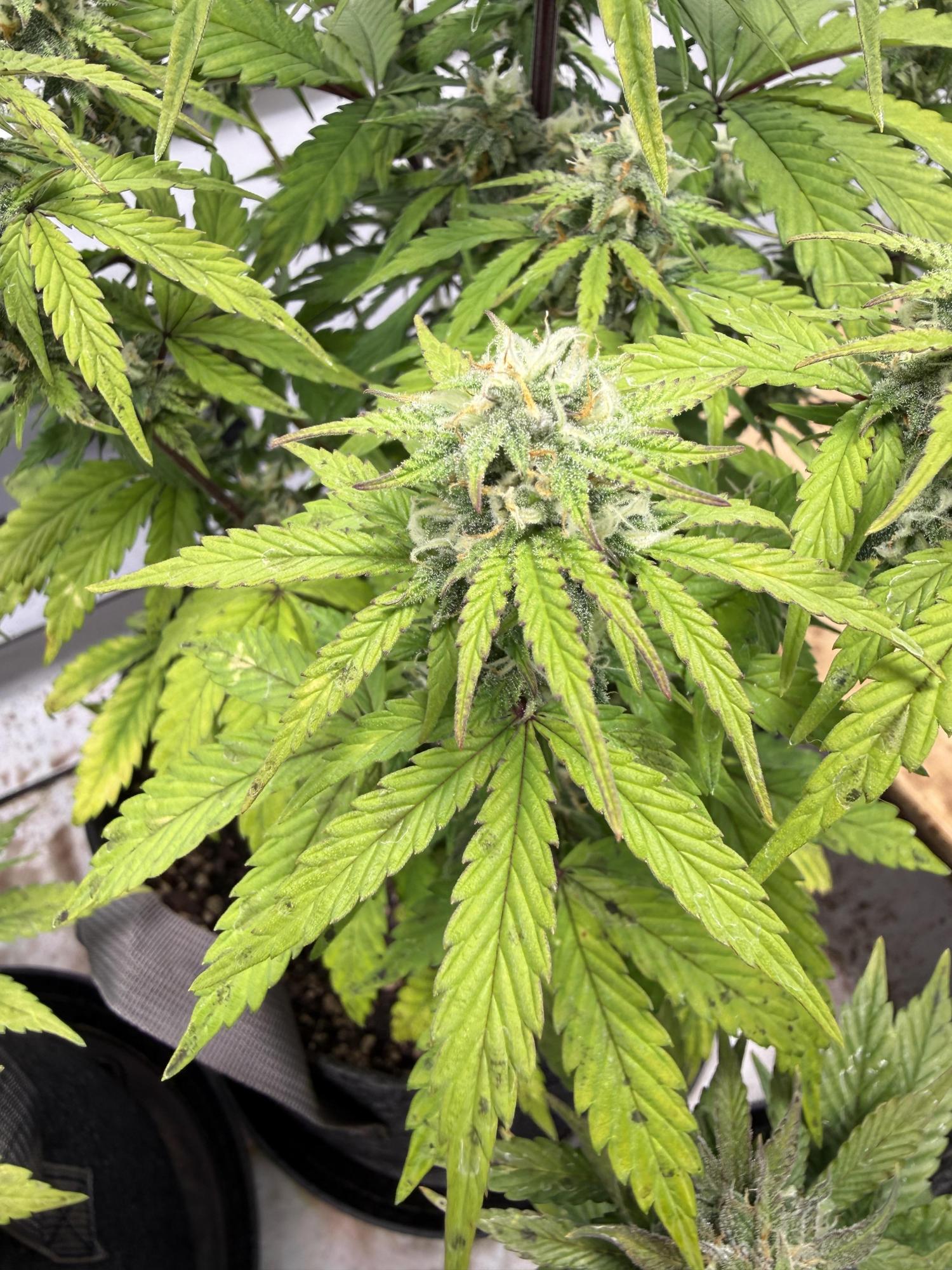
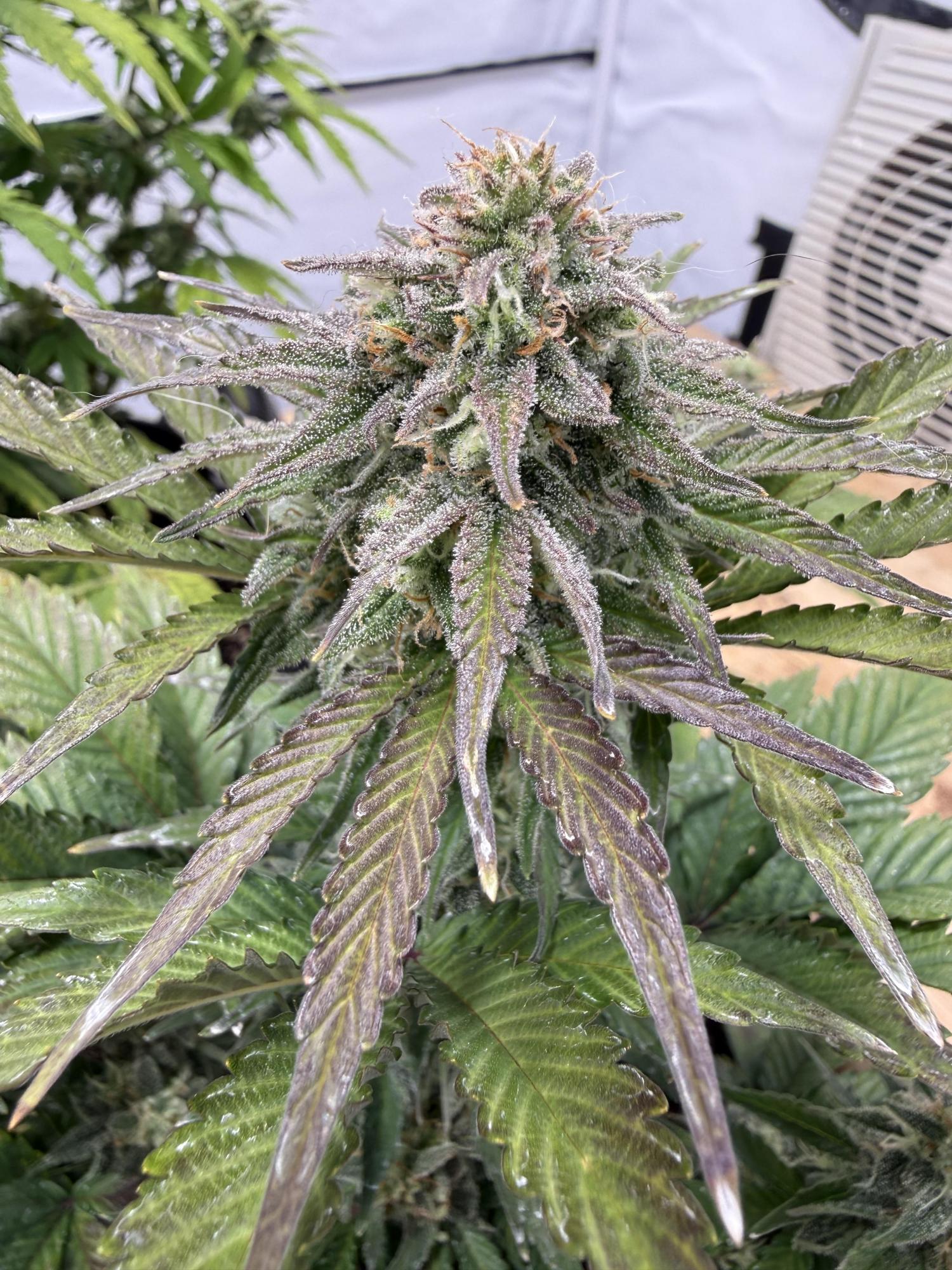
1st grow, Will these be ok? 4 different strains and seems to be different levels of deficiency.

Goosefarmerstarted grow question 7mo ago
Only Been using recharge. All Fox farms coco loco soil. This week started giving FF liquid 1/4 tsp/gallon cal mag, 1/4tsp big bloom.
Solved
1 like

00110001001001111Oanswered grow question 7mo ago
Honestly, for FF trio and first time, they look about normal. That's an incomplete set of nutrients, imo. the instructions don't help much either. Lots of trial and error to get the right dosage and healthier plants deep into flower. I think they OD potassium, if i recall. I used ff trio my first 1.5 grows. I was not a fan.
The plant yellowing bottom-up probably needs a bit more N than what you have been providing. I'd adjust fertilizer to include more while maintaining other levels. This assumes it's not nute-locout or pH lockout. Based on general lushness, i'd assume it's not from 'too much' of something impeding it.
The purple or red colors are a result of genetics and/or cooler temps at or below 68F (most likely at night)... colder = more color. I'd try to consistently go no lower than 68F at night. You'll still get some color but avoid the more severe impacts on biological processses from cold temperatures. Wouldn't spend an arm and a leg to accomplish it, but .. fairly important nonetheless.
Can't see rate of progressin in pics, but as long as it isn't deteriorating too fast, it'll be fine. If the plant starts cannibalizing leaves at a faster rate, need to feed the plant regardless of what bro science says. The reality in front of you should always be more important than anecdote. A fading canopy means it's not getting sufficient nutrients from medium. That's fine as long as it is slow enough. you could argue that late in flower it's a safer side to be on as long as the canopy is strong enough to provide until the ends... a dead canopy doesn't provide stored nutrients, obviously. Nutrients are building blocks for everything -- not just stem elongation and leaf growth but also maintaence processes and flower ripening, tch building, terpene building etc.... If it's sucking down the leaves, that proof of concept the plant is still using the nutrients you provide in normal and useful ways.
Just make sure that canopy stays at least mostly healthy until the end... rate of change dictates degree of reaction... faster rate of symptoms progressing = greater adjustment to fertilizer provided.

GrowBro1981answered grow question 7mo ago
Get the GrowDoctor Beta App, write me for more information 😊👍
1 like
Complain