


Is this White Powdery Mildew? (Early stages I think)

Kali_flauerstarted grow question 7mo ago
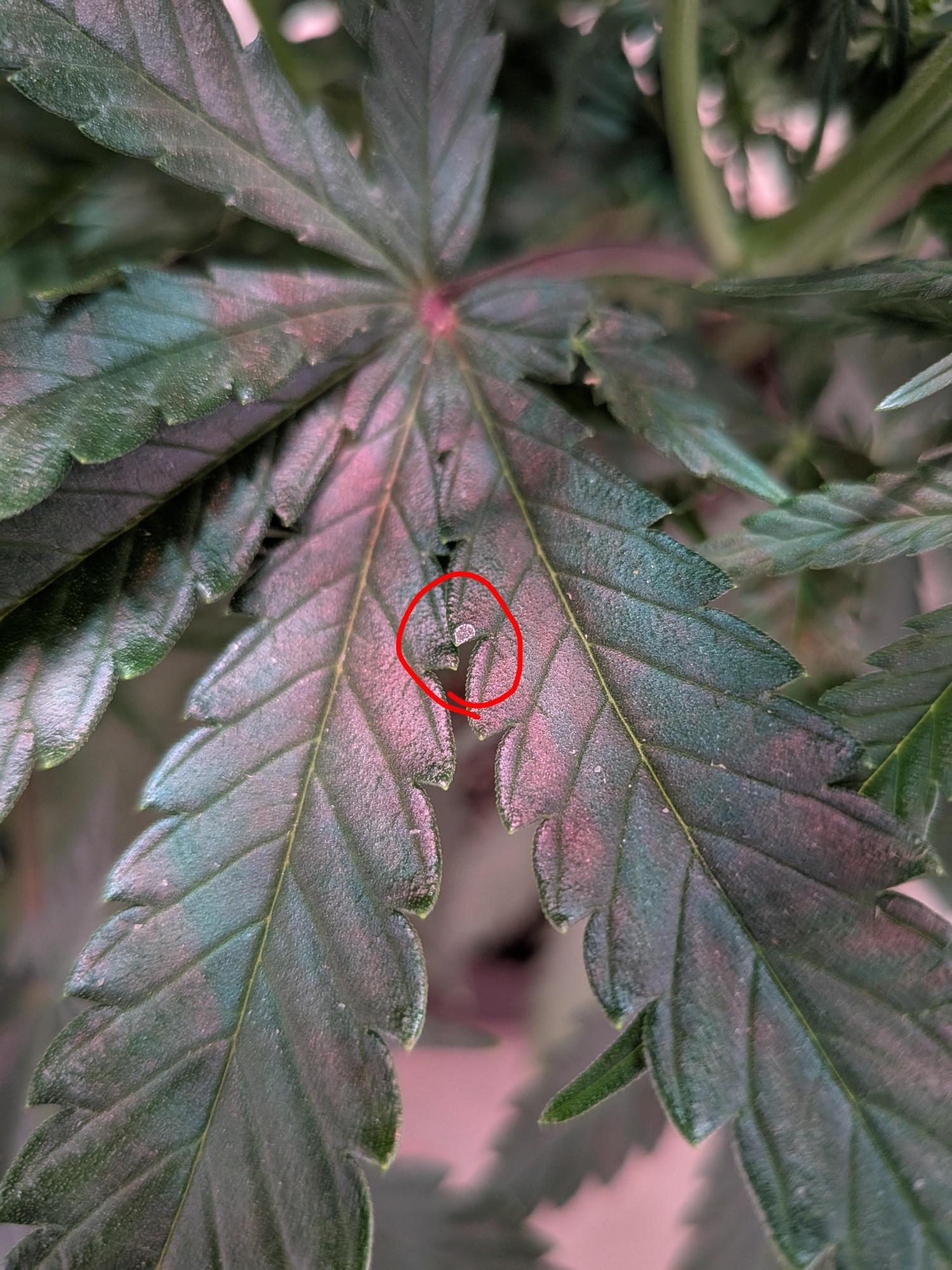
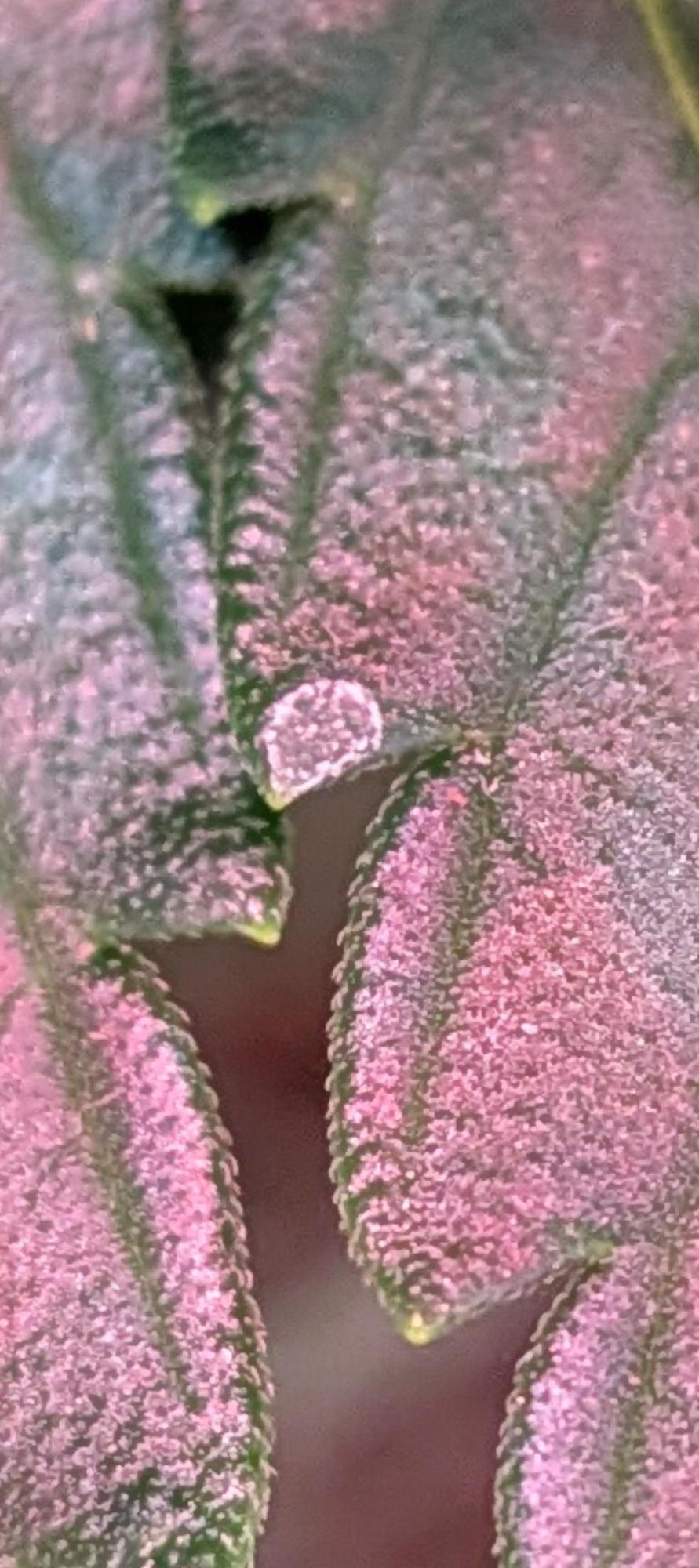
Is this the early stages of white powdery mildew? I am occasionally finding it on the mid-lower canopy on a plant. Her vegetation is pretty dense, and the RH has been 60% in the room. I can't bring it lower, but tomorrow it's dropping to 25%. Should I treat or keep scraping?
Open
likes
Answer

HandsomeTerpzanswered grow question 7mo ago
That doesn’t really look like classic powdery mildew to me.
Powdery mildew usually shows up as more irregular, dusty white patches that spread across the leaf surface.
What I’m seeing there looks more like residue or possibly early mineral/salt deposits, especially since it’s localized.
Also under certain lighting, trichomes or reflections can look misleading in photos.
I’d recommend:
keep removing affected spots/leaves like you’re doing
improve airflow in the mid-lower canopy
if RH is dropping soon, that will already help a lot
If it starts spreading or forming that classic powdery film, then I’d treat it. For now, I’d monitor closely rather than going aggressive.
Good Luck! and let the Flowers Shine!🙏
likes
Complain

DrGruenanswered grow question 7mo ago
Hi Growmie.....
don't worry.... those are dried water droplets......
Good luck
likes
Complain

Caertneranswered grow question 7mo ago
Looks like dried up droplet of water. Rest of plant looks very healthy, keep up the goos work.
1 like
Complain

Goriloteanswered grow question 7mo ago
I would remove that leaf and that's it, it looks like dry water or something like that.
1 like
Complain

Green_Clawsanswered grow question 7mo ago
It does look like a dried up drip. Like Binary said check for fuzz under the scope..
likes
Complain

oldskoolkoolanswered grow question 7mo ago
Looks like water splashes to me.Next time you feed put a few drops next to it to compare.
1 like
Complain

00110001001001111Oanswered grow question 7mo ago
no, looks like some drip that dried up. The picture is a bit blurry. If you use your trichome scope, you'd easily be able to know if it's dried up solutes or a fuzzy colony of WPM. Use an image search to familiarize yourself with what wpm looks like close up. it's distinct.
Low rh helps spread of midlew. high rh helps propagation. avoid extreme rh and keep it in a range that results in healthy plants. That's your best option for that.
60% with good ariflow will not result in WPM. If anywhere near optimal temperatures for photosynthesis, ~60% rh is about where it needs to be, anyway. Refer to any VPD chart.
The biggest concern is when lights turn off and temperatures tend to drop precipitously. Refer to a dewpoint table to understand where your danger zone is... if it approaches dew point and you get condensation everyday after lights go out, that is how you end up with WPM. By the time you can see a colony, it's already spreading in the room.
when temps drop quickly, RH will spike. that's the "relative" part of "relative humidity." A wireless temp/rh probe that tracks it without interrupting the dark cycle is well worth the 10 dollar cost. You won't know for sure if you avoid ituntil the plants are fully grown.. that's when they are pumping out the most moisture.
2 likes
Complain