


WC for pro mix BX

geo098765started grow question 6mo ago
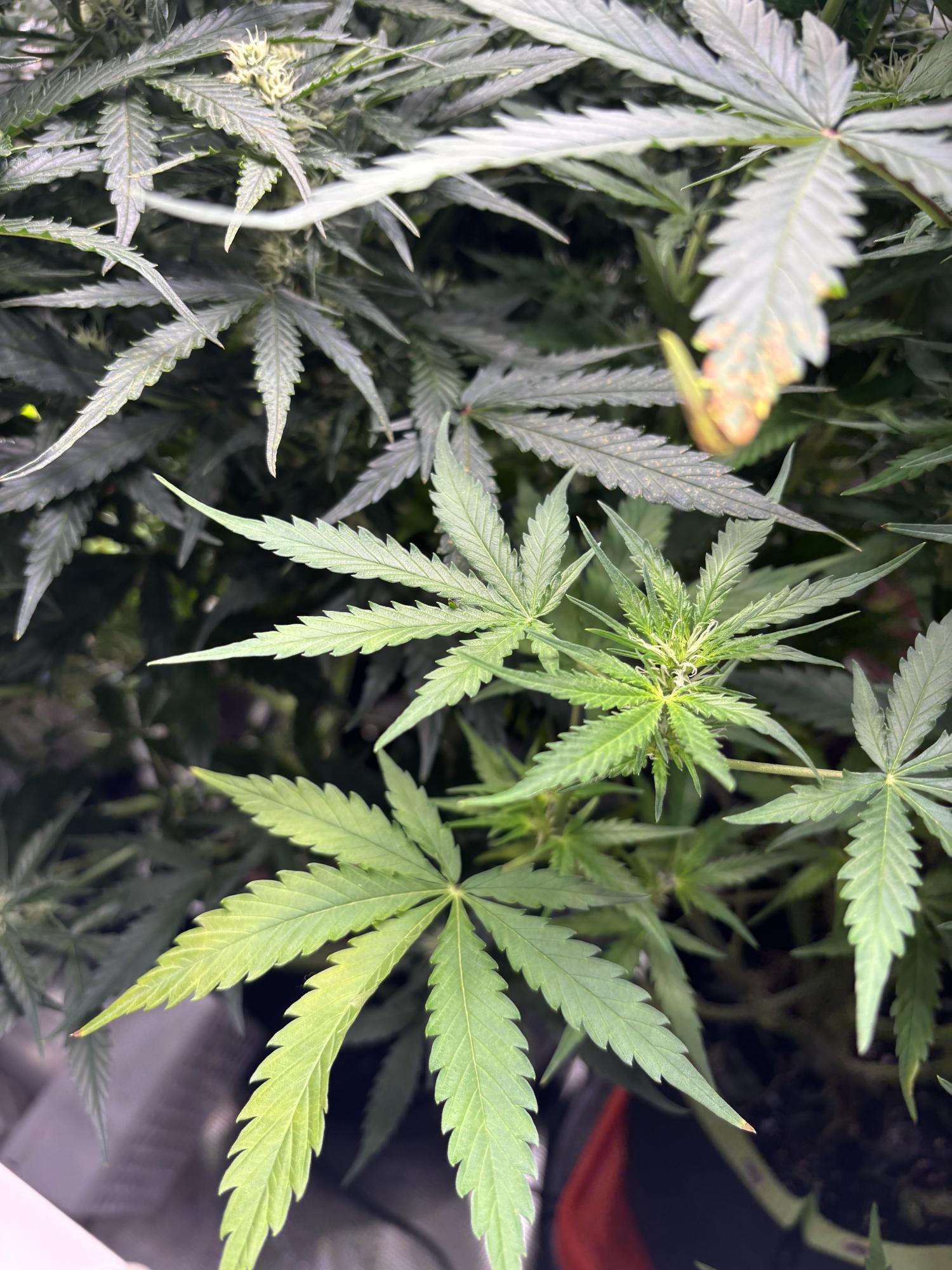
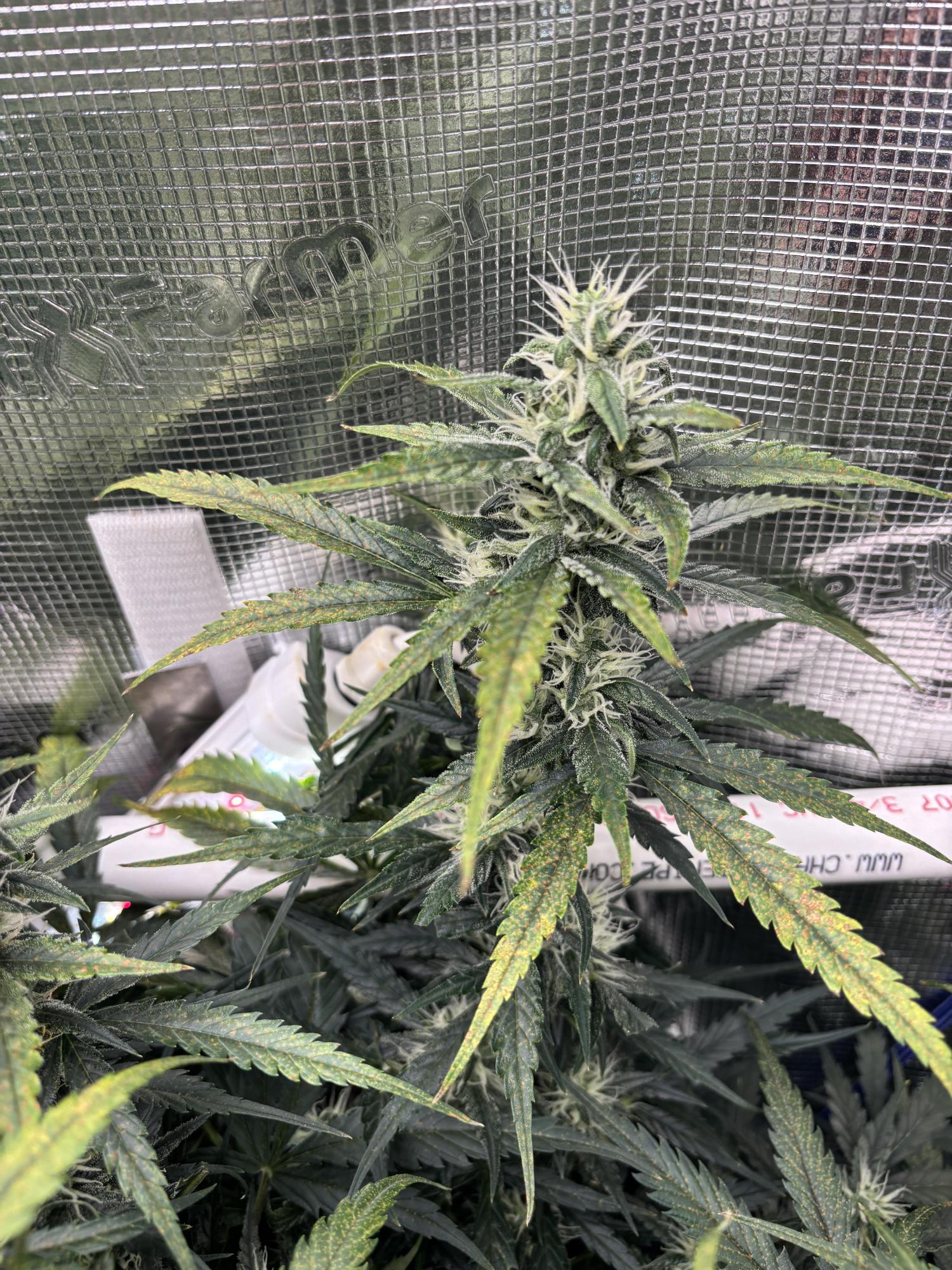
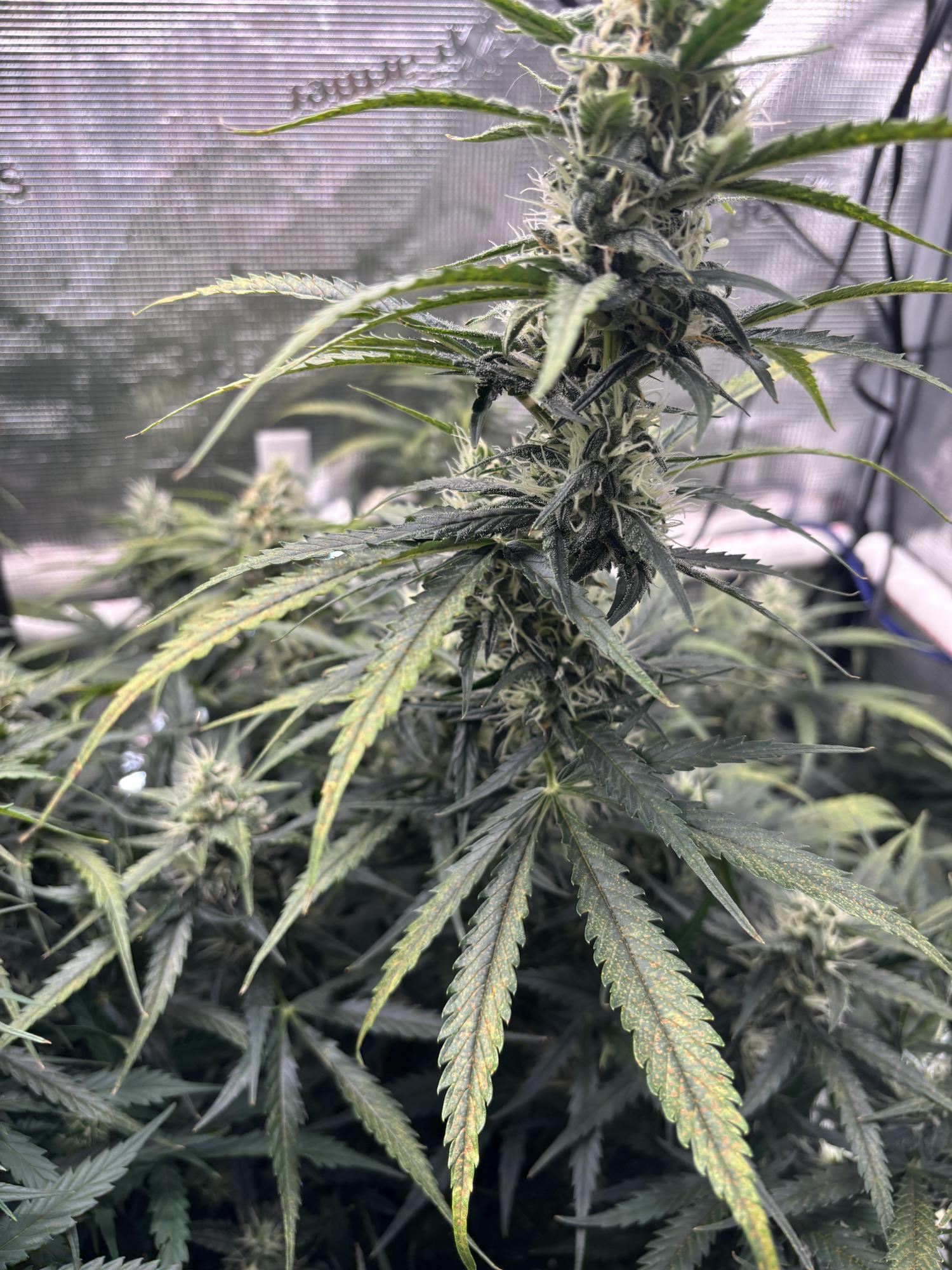
I’m running pro mix BX in ionic nutrients, my nutrient mix is 2.2 EC and that’s obviously too much because my plants all of a sudden took a turn for the worse, can somebody help me what WC should I have with this set up, and I know I have to lower my nutrient EC
Solved
likes
squalinoanswered grow question 6mo ago
salur. An EC of 2.2 is indeed way too high for Pro-Mix BX, which is not a neutral substrate (it contains peat and lime). The accumulation of salts (unused nutrients) has caused a nutrient lockout and visible burns on your leaves.
Solution: Flushing and water change
To correct this immediately, you need to perform a flush to remove the accumulated salts in the substrate:
Flushing volume: Use a volume of water (pH adjusted between 5.8 and 6.2) equal to about 2 to 3 times the capacity of your pot. (Example: if you have a 10L pot, pour 20L to 30L of water).
Flushing EC: Do not use pure water at 0.0. Prepare a very light solution with your Ionic nutrients at an EC of 0.5 or 0.6. This avoids too violent an osmotic shock for the roots.
Run-off target: Measure the EC of the water coming out of the pot. Continue flushing until the run-off EC is close to 1.2 - 1.4.
New nutrition strategy
Once the substrate is "cleaned," don't go back up to 2.2. For your flowering phase in this substrate:
Aim for a target EC of 1.4 to 1.6 maximum.
Make sure to always have 10 to 20% drainage (run-off) with each watering to prevent the EC from spiking in the pot. Have a good day!

Organomananswered grow question 6mo ago
Give plain water in normal amounts and at normal intervals for the next 10 days.
After this, start feeding at half the strength you were using previously, observe and adjust as necessary.
Plant will get worse before getting better, but waiting so long before asking for help means there is little chance for full recovery before harvest maturity.
The best you can hope for is to slow it from getting even more damaged.
Damage like this progresses over weeks, it does not magically appear overnight..............waiting and hoping without changing anything has lead to this outcome.
likes
Complain

Green_Clawsanswered grow question 6mo ago
Best thing to do is test what the plant can take. start low and work up in increments if she's happy and your happy with how's she's growing and showing no signs of over doing it than leave her be or push her to the next increment. You basically need to work out is she's constantly hungry and loves it or is shy with feed and doesn't need a lot.. That's Propably advice for your next grow tbh
likes
Complain
00110001001001111Oanswered grow question 6mo ago
overall is definitely high, but that doesn't mean everything is high. Symptoms are not discrete and when dealing with at least one potential toxicity it can make things look wonky for diagnosis.
Dial back, but if that chlorosis continues, something might be low, too.
individual concentrations and ratios are just as important as overall concentration. Promix BX has a very light charge to start, so it's a soilless context where you need to provide 100% of everything in a proper balance. There's more than on eway to skin that cat, but i'll type out a balance that has worked well for 7 years and rarely meets a plant that doesn't grow healthy deep into flower... which is all you have control over, anyway. the rest is just genetics playing out.
Also, EC is important for it's own reasons, but is a very poor measurement when converted to concentration. There are 3-4 different conversion factors that have nothign to do with anything important and 100% about the brand of equipment you bought... could give you a 40% different value for PPM when converted... that should explain enough. It's much better to understand concentrations provided by calculating ppm from gauranteed analysis labels. "Hydrobuddy" is an open source, free app that you can use for various platforms.
Vege - mature plants
PPM
N 120-130
P 40-60
K 180-200
Ca 100+
Mg 75-80
S 100ish
This is a fairly low and very safe starting point. From this you can easily observe and make minor tweaks to balance out with your environmental factors - light, co2, temp, rh. Even with this lower concentration i have to dial back a bit about 30-40 days into a grow. I drop to 90-100ppm N but keep the other things roughly the same. Then in flower N drops even more.
Flower remains a very similar ratio except for N is a smaller portion of the total than before. You'll probably be fine with 500-600 ppm - calculated not converted with some whimsical factor from EC. The nutes you use for soilless/hydro can be trusted. "gauranteed analysis" is a gauranteed minimum but when you deal with ingredients like ammonium nitrate, calcium nitrate, MKP, epsom etc.. it's not messy like soil fertilizers. The numbers can be trusted and expect them to be accurate. Molecular formulas dictate proportions of various elements and that cannot deviate or else it would not be magnesium sulfate hydroheptate or whatever it is, lol. Calculating ppms from such ingredients is very precise.
you could skip ppm calculation and calclulate weighted average percent of mass from the labels based on overal dose, too. This would be exactly the same thing, but look a bit different. I think ppms are more intuitive to work with, but the proportions would be the same, therefore the same information gleaned.
Trakcing this stuff over time will help you tweak that formula to consistently avoid 95-99% of problems.
proper irrigation habits for soilless is incredibly important. Some people are incredulous and those are the ones that fuck up.
1) fully saturate with a minimum 10% runoff. Always fertilize (barring a need to dilute rootzone due to a previous feeding mistake)
2) wait for appropriate dryback and repeat.
The amount of time between can be a greay area, butif you trigger an irrigation at the same loss of weight or same depth of drying up top, it will require a very similar volume each time. Do not choose a volume to give. You give what it takes to accomplish the task properly. Everything is observe and react as opposed to whimsical top-down choices. Don't think. See and react. That takes the guesswork out of it. Don't try to do unique things in regard to irrigating... these are well-established general practices for soilless growing regardless of species.
likes
Complain

HinduGodanswered grow question 6mo ago
WOW LOOK AT DAT!!! NO DIARY NO IDEA ABOUT DA ENVIRONMENT AND OTHER FACTORS!!! I CAN NOT GIVE ANY ADVICE TO YOU OTHER THAN YOUR PLANTS LOOK UNHEALTHY!!! PLEASE HAVE A DETAILED DIARY!!! SO PEOPLE CAN GIVE YOU DA PROPER ADVICE IF NECESSARY DAT WOULD BE VERY VERY GOOD!!!
4 likes
Complain