


Setup

Newbytryingstarted grow question 6mo ago
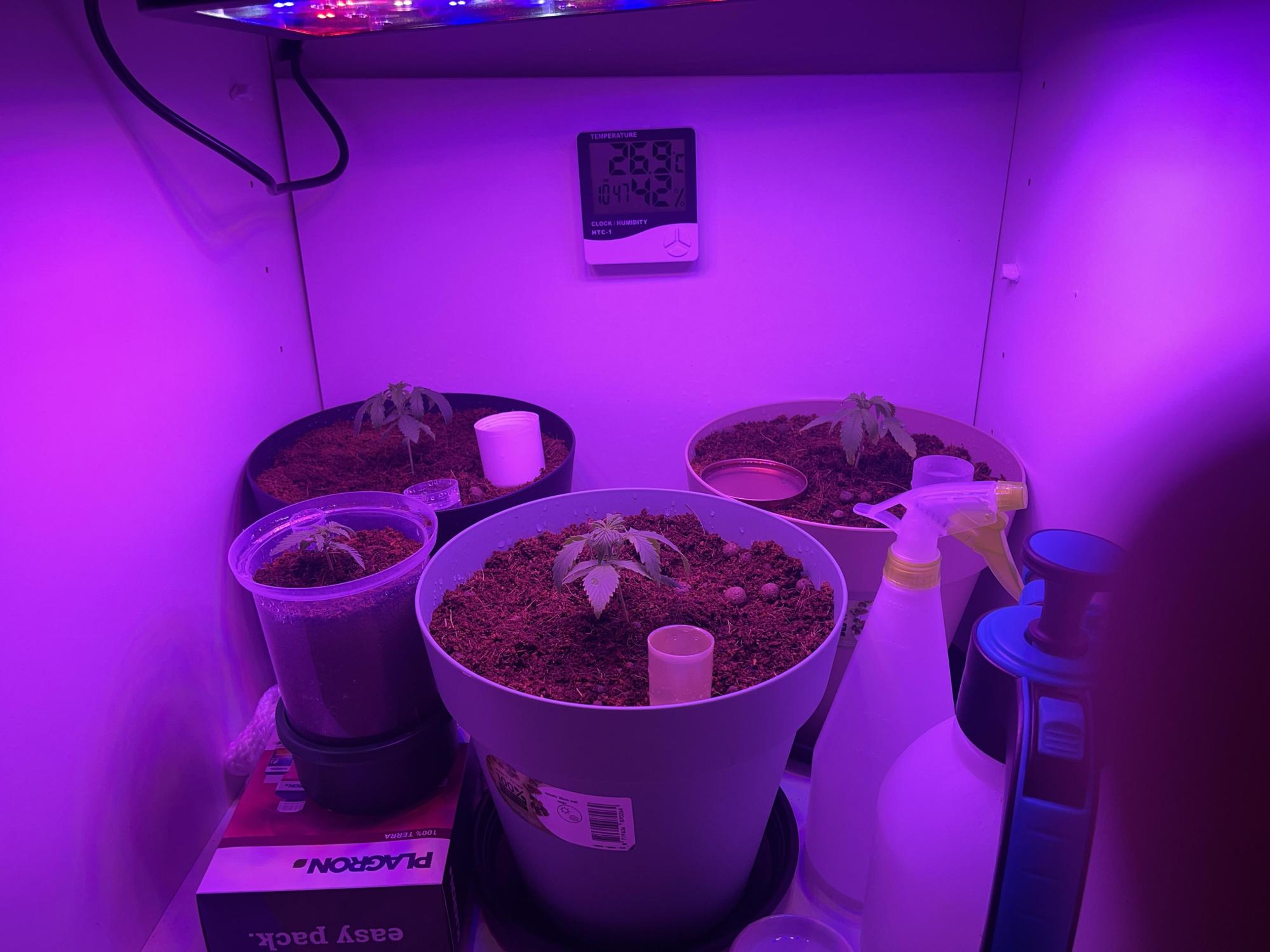
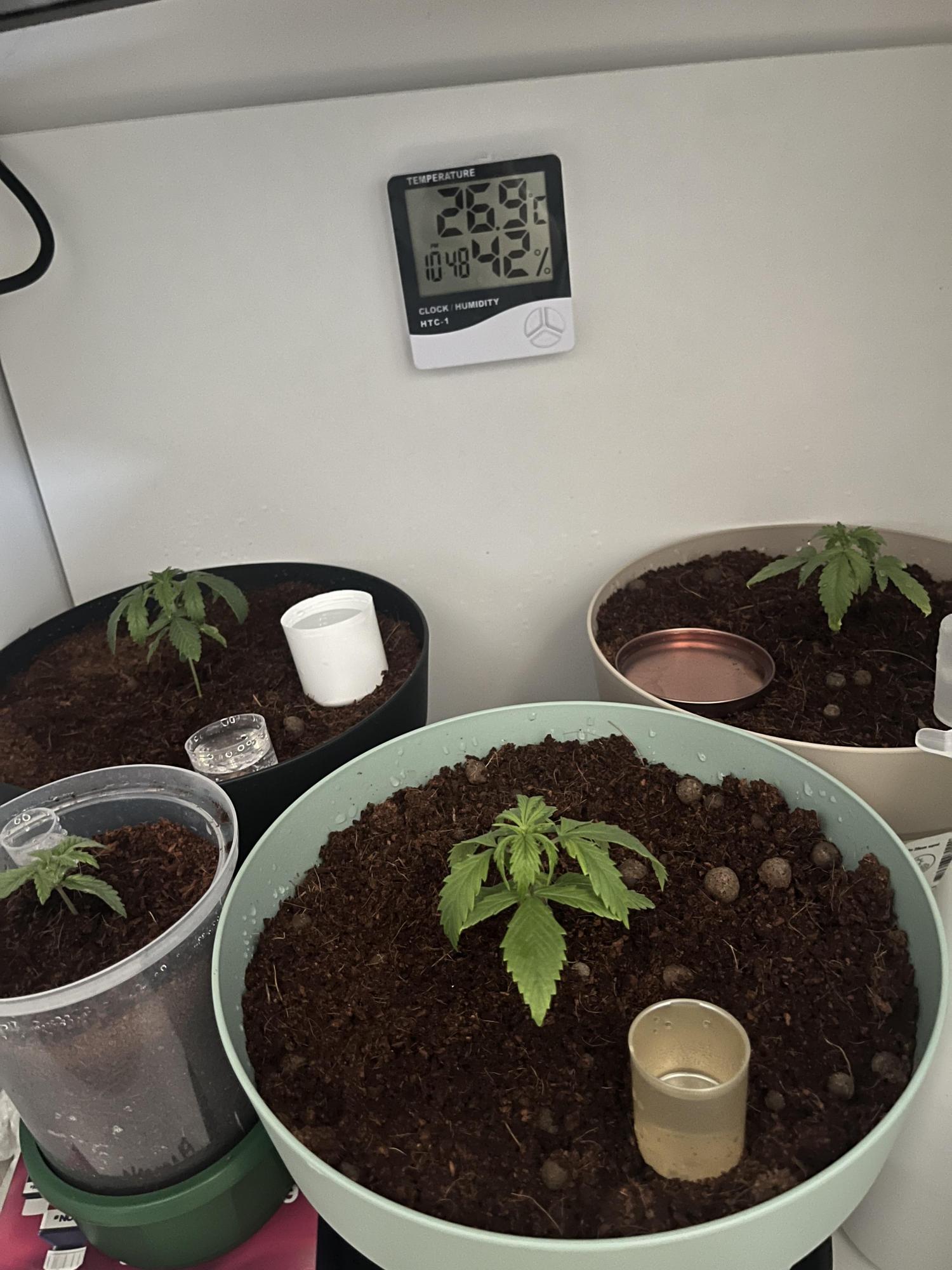
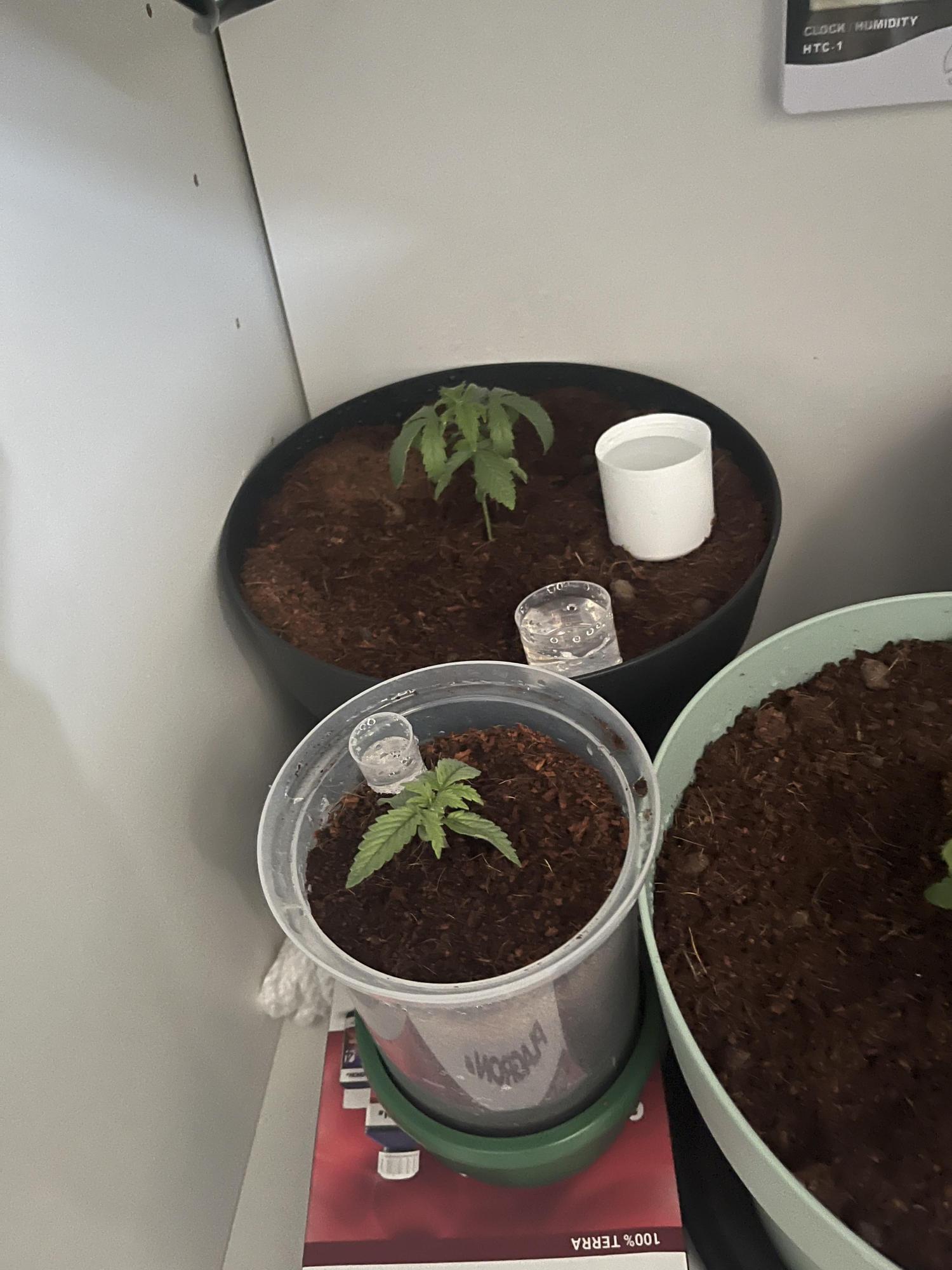
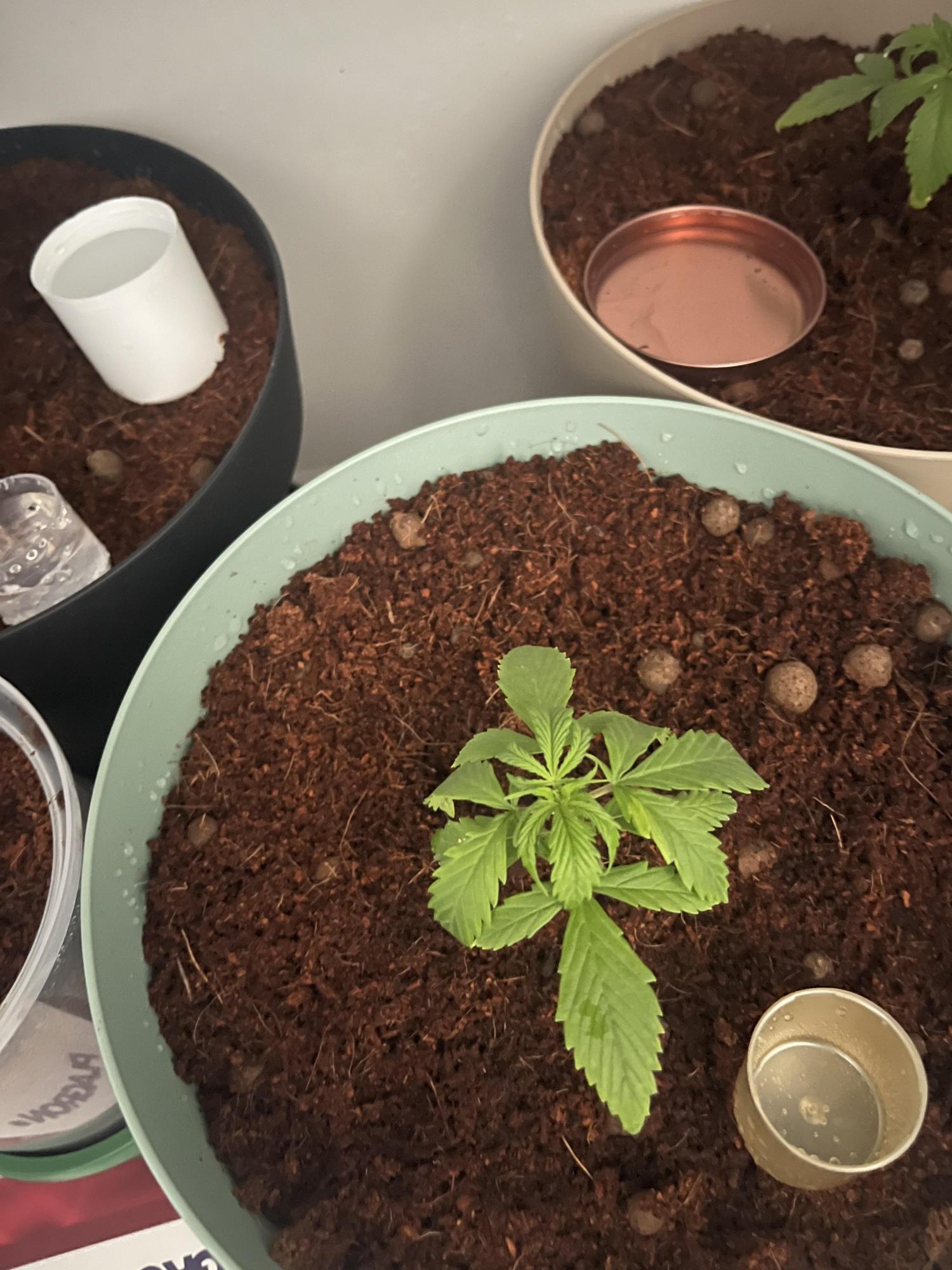
Does my setup and plants look okay? I once posted a question i had three very strechy plants and i did everything to your recommendations. They are around three weeks and i dont even know if theyre autos. Any way to find out?
Open
likes
Answer


00110001001001111Oanswered grow question 6mo ago
Autos will show sex much earlier than a photoperiod, in most cases. So, if you see preflowers at nodes in the first 2-4 weeks of life, it's probably an autoflower. Seems like an odd context not to know. Autoflowers take a particular breeding process, so if that's a random seed, it's most likely a photoperiod.
possibly some issues with irrigation, or a bit too much light -- can use a little common sense to eliminate one or the other. possibly both, who knows. Time will tell.
If node spacing is healthy, it's not the light causing a slightly droopy plant. Probably irrigation practices due to having small plants in large pots. Even with autoflowers, despite common belief in the peanut gallery, should be potted up over time. I've never seen a plant get shocked from gently placing it into a larger pot and gently covering with more medium. Not the end of the world. Just make sure when you water a smaller area around the plant, get that moisture deep. You want roots growing downward toward greater moisture not upward due to superficial watering. Water an area about as wide as the canopy. Get it wet all the way down to the bottom with some runoff.
for soilless, runoff is really important to maintaining levels of nutrition in medium. When you hhave a large pot / tiny plant and doing weird irrigation, runoff isn't carrying out its function as effectively as it should. It should be impossible to get buildup over time with runoff, but in this context there's zones of medium ebbing and flowing with moisture and depositing solutes that will just go back into solution later as the moisture comes back, which can lead to some imbalance of nutrients in those boundaries. Short-term is not much of a problem, but long-term is. Once you get to full irrigations of entire pot, give a little extra runoff for an irrigation or two. Nothing crazy. mybe 20% runoff instead of 10%.
check out dr photon's corner of cocoforcannabis.com. Their other guides and articles are good too. Soilless growing is the "easy button." Adhere to certain best practices, and the rest is simply adjusting your formula to provide a consistent diet relative to stage of life.
irrigation:
1) fertigate every time with a minimum 10% runoff. Runoff is essential, don't scoff at it :P
2) wait for appropriate dryback, then repeat.
It's simple. Don't make it complicated..The volume of water required will be consistent if you wait for a similar dryback (loss of weight). With coco, a safe wet-dry cycle is waiting for the top layer to start to change color. Feeling the weight is probably a better way to do it, imo.
In the future, you want a coco:perlite 2:1 ratio... there are other options than perlite, but don't use big chunky stuff that makes roots work harder and doesn't distribute as well. coarse vermiculite and #2 perlite are better options for gas:water mixture in rootzone. Small potatoes but worth doing right since it takes no added effort.. If you ever use a heavier medium like sphagnum peat moss, the ratio is 1:1 because it holds more water per volume. In the end, bot have a similar gas:water mix, which is the goal.
I'd also suggest tracking ppm of each nutritional element you provide over time. It helps diagnose. It helps to have that info to adjust what you do next time to avoid any bumps in the road. A good formula can work well on 90-95% of plants, and even the oddballs can be mostly fine.
mimic jack's 3 part hydro setup (Part A, caclium nitrate and epsom salt). Brand is almost entirely irrelvant when it comes to 'hydro' fertilizer. You can trust the gauranteed analysis labels. Potential ingredient pool is significantly reduced - only 100% soluble / 100% plant-ready ingredients. buy dry fertilizer in bulk once you settle on something... it becomes one of your smallest expenses.
you can have good outcomes day 1 ... soilless is that easy.
likes
Complain

Organic_Ganswered grow question 6mo ago
1. like Dude said below @John_Kramer
2. don‘t listent to 98% of These people here, expecially those using AI generated answears as if they have nothing to do in life than asking a KI for everybody else…
3. plants looking sad, looks like a bit to much water, if they Are Autos you F but if photoperiodic you can bounce back…
Still they Are weak for 3 weeks of growth
4 likes
Complain

John_Krameranswered grow question 6mo ago
My first and main recommendation is DO NOT listen to people on this site or at least try to get different suggestions from different ppl
these 2 below claims that ur plants is in a good condition but it's NOT
u'd put em into coco and now em starving, so my 2nd recommendation is start to feed em with 300-400ppm every watering and don't let em drought, keep the surface moist
1 like
Complain
squalinoanswered grow question 6mo ago
Hi
Here is the analysis for this plant at 3 weeks:
1. Health Status and Setup
Vigor: The plant has an excellent green color, very uniform. The stretching problem from the beginning has been perfectly corrected: the stem is now strong enough to support the foliage and the nodes are tight.
The environment: The setup seems clean and well managed. The distance from the lamp is now optimal to prevent the plant from seeking light.
2. Auto or Photo: How to differentiate them?
At 3 weeks, this is the pivotal moment. Here's how this person will know:
The Sign of Autos: If it's an automatic, it will start to show pre-flowers (small white filaments called pistils) at the intersections of the branches within 7 to 10 days, even if the light is left on 18 or 20 hours per day.
The sign of the Photos:
If at the end of week 5 the plant continues to produce only leaves and becomes very bushy without any white hairs, it is a photoperiod. It will remain in a vegetative state until the light cycle is manually changed to 12/12.
3. Immediate advice
No stress: He must continue with his current light cycle (probably 18/6 or 20/4).
Training (LST): This is the ideal time for it to start gently bending the main stem to favor the side branches, whether it is a car or a photo.
I hope this will help you. I wish you a good day and very good crops
1 like
Complain

PlantFriendHHanswered grow question 6mo ago
Hey, I’d say your girls look healthy overall, just a bit over-loved on the watering side. I’d let the pots dry out more and only water a small circle around the plant instead of soaking the whole pot each time. Also get a gentle fan in there so they get some airflow and stronger stems. Your humidity is a bit low for this stage, so maybe add a bowl of water or lightly mist the space to bring it up. I’d ease off those constant watering cups too, they might be keeping things too wet. Give them a few days with these tweaks and they should feel much better. Good luck 👍
1 like
Complain