


Hunger necrosis?

durac187started grow question 6mo ago
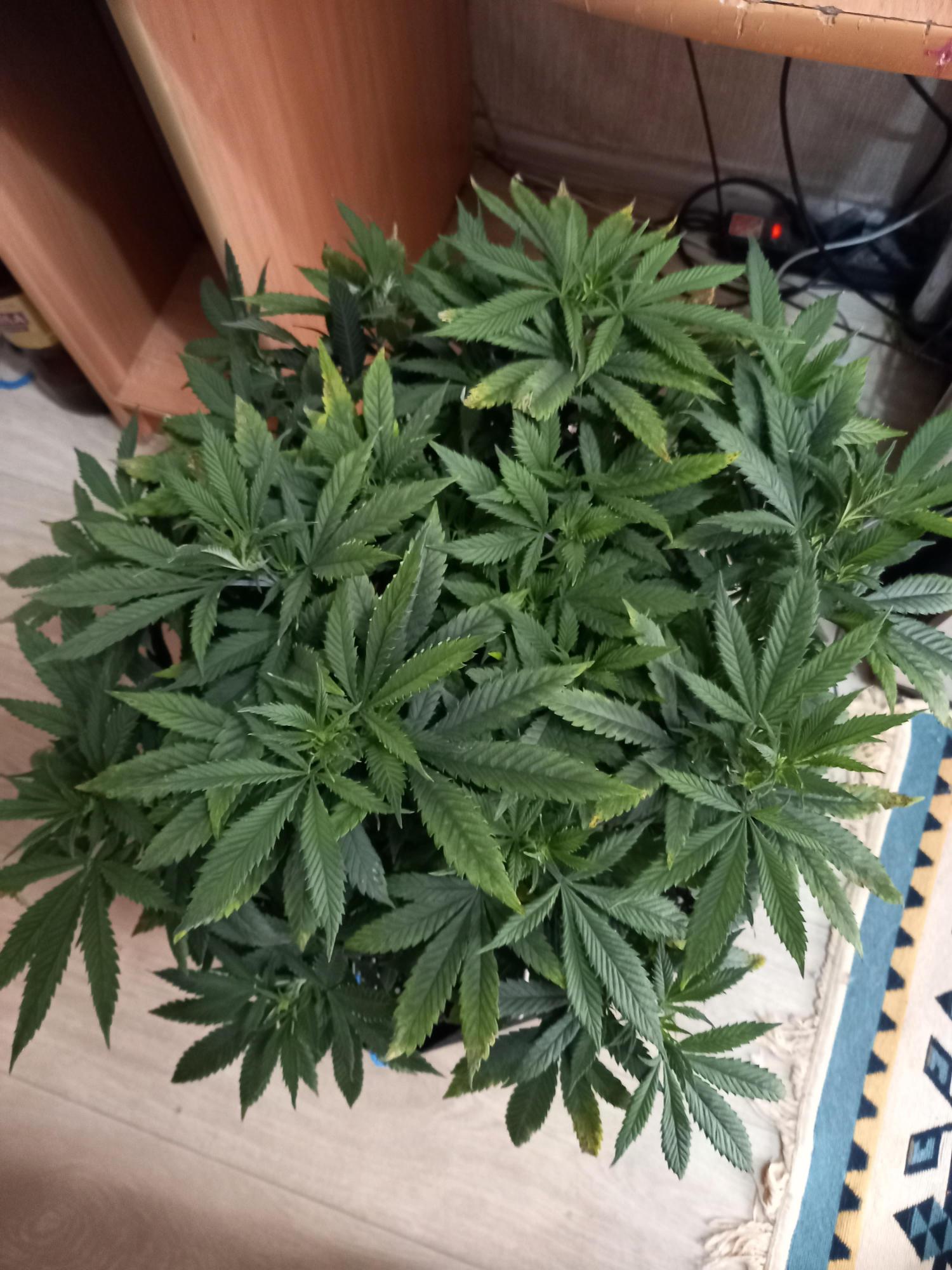
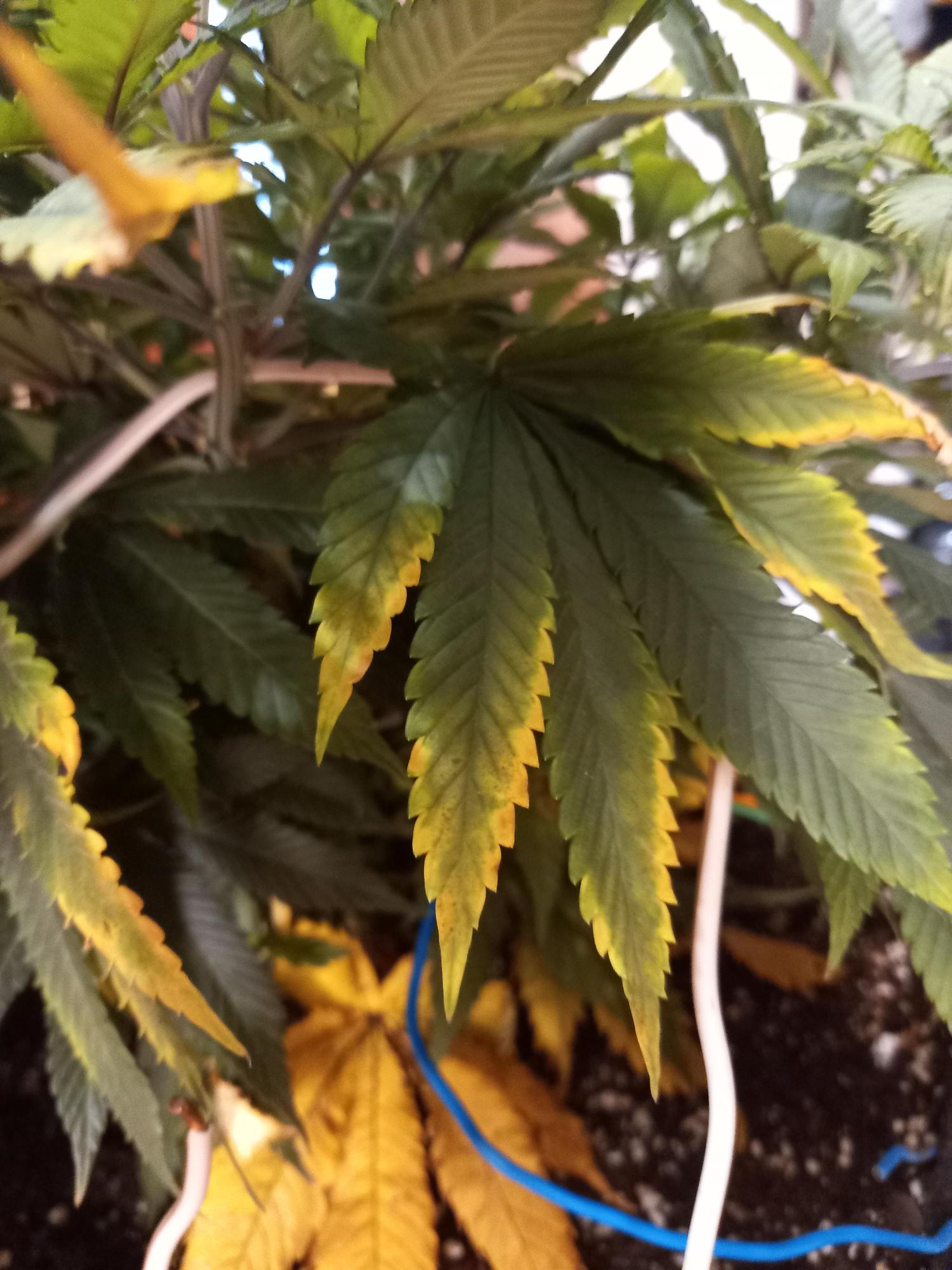
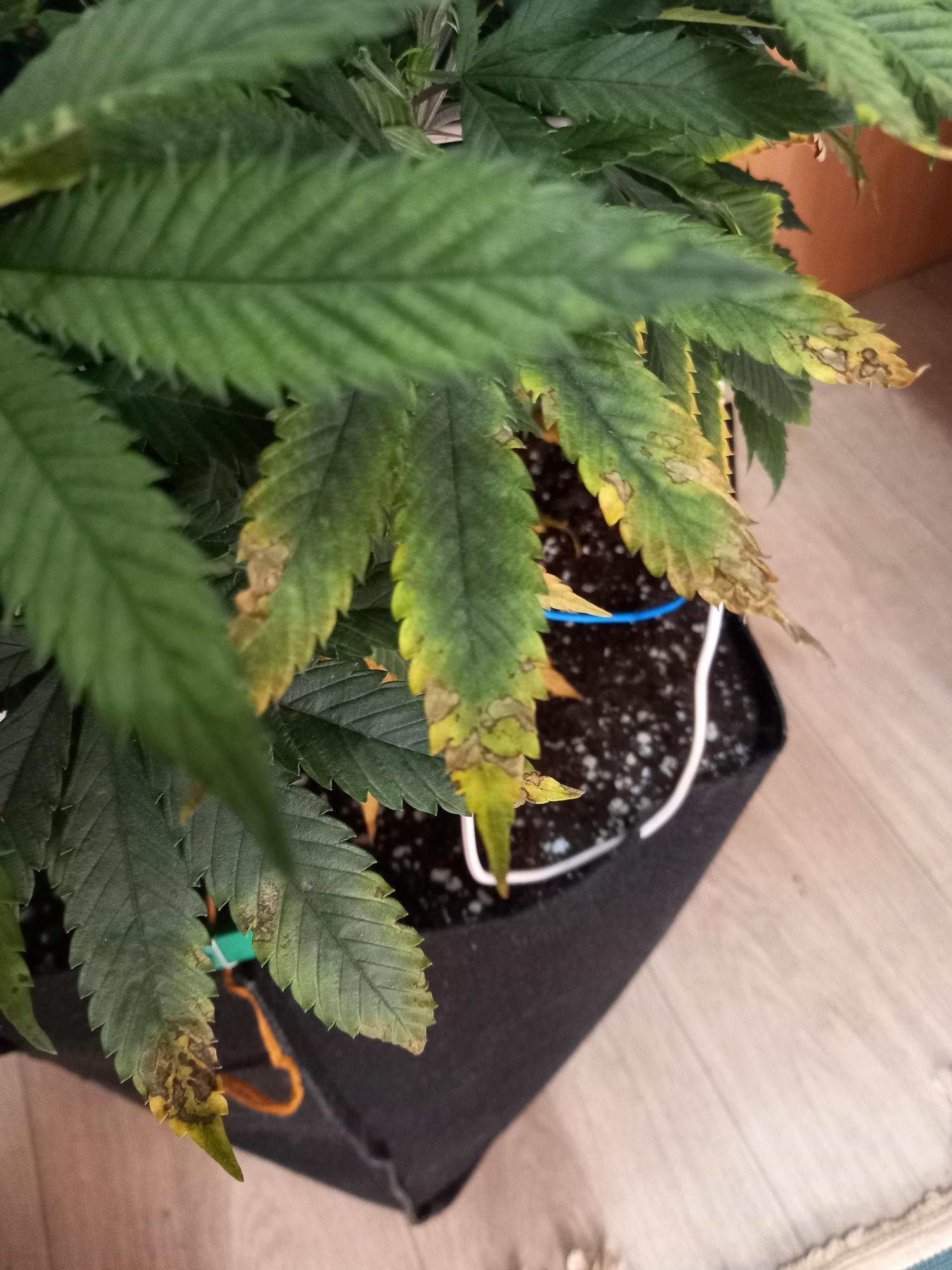
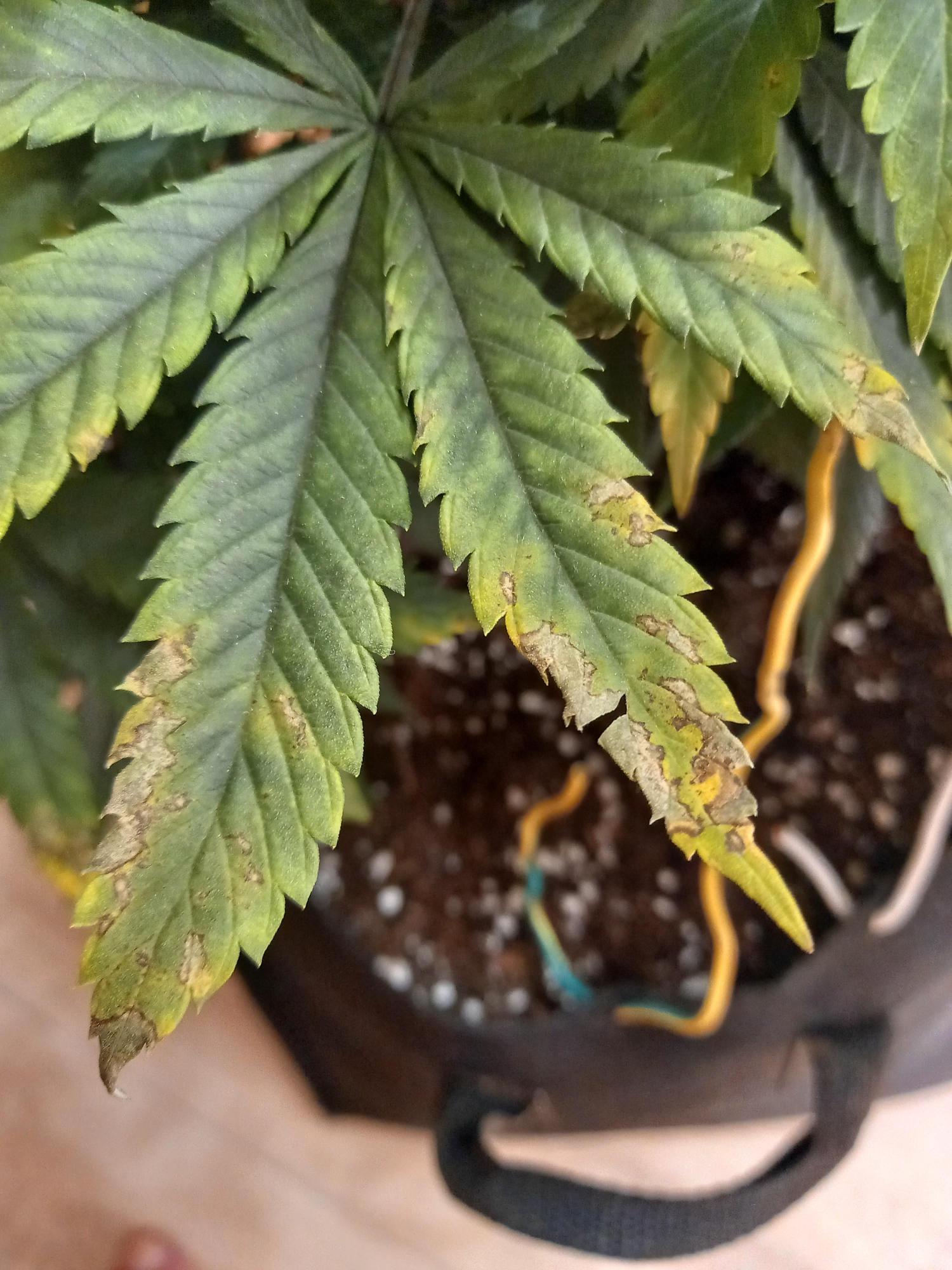
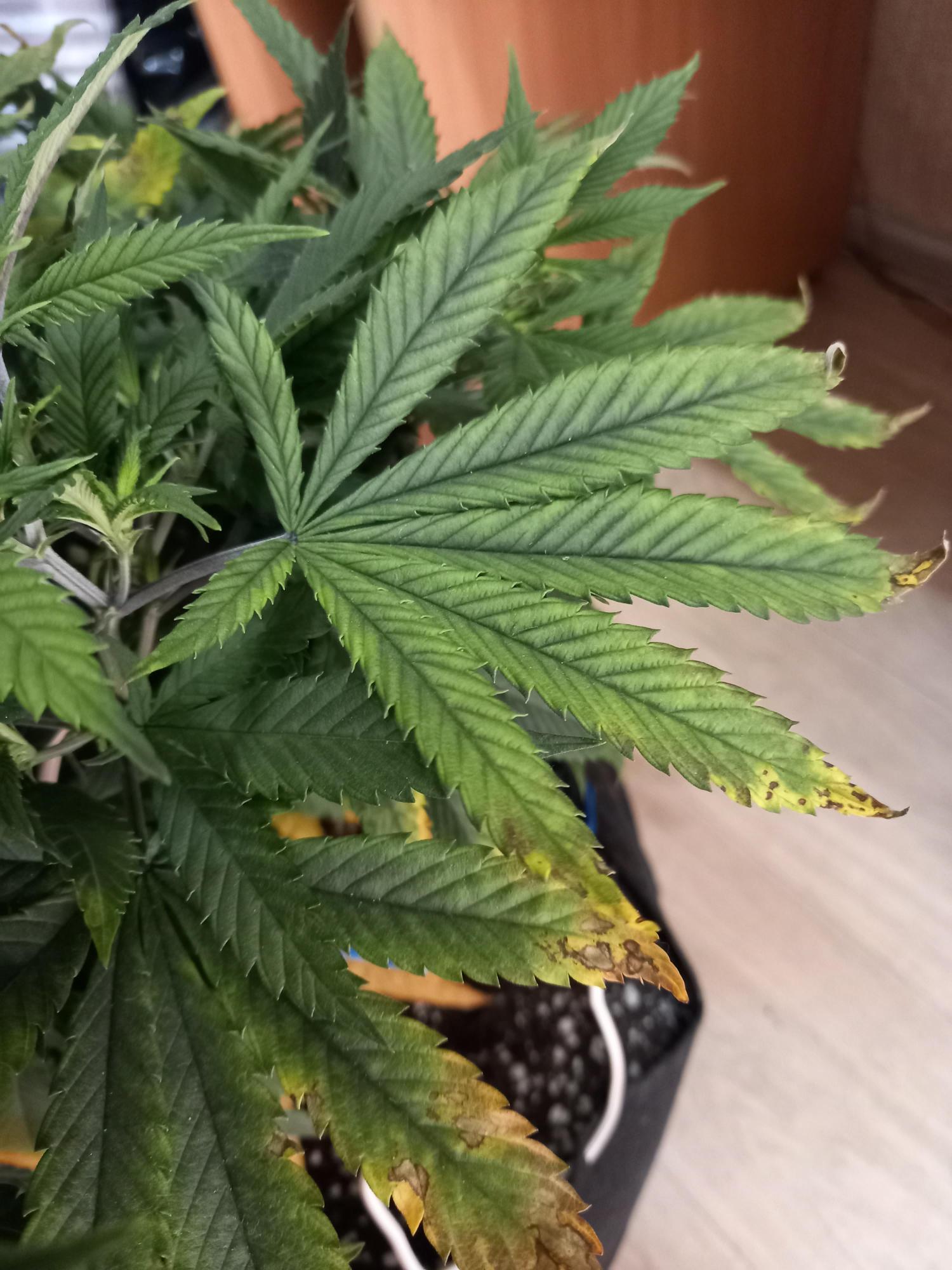
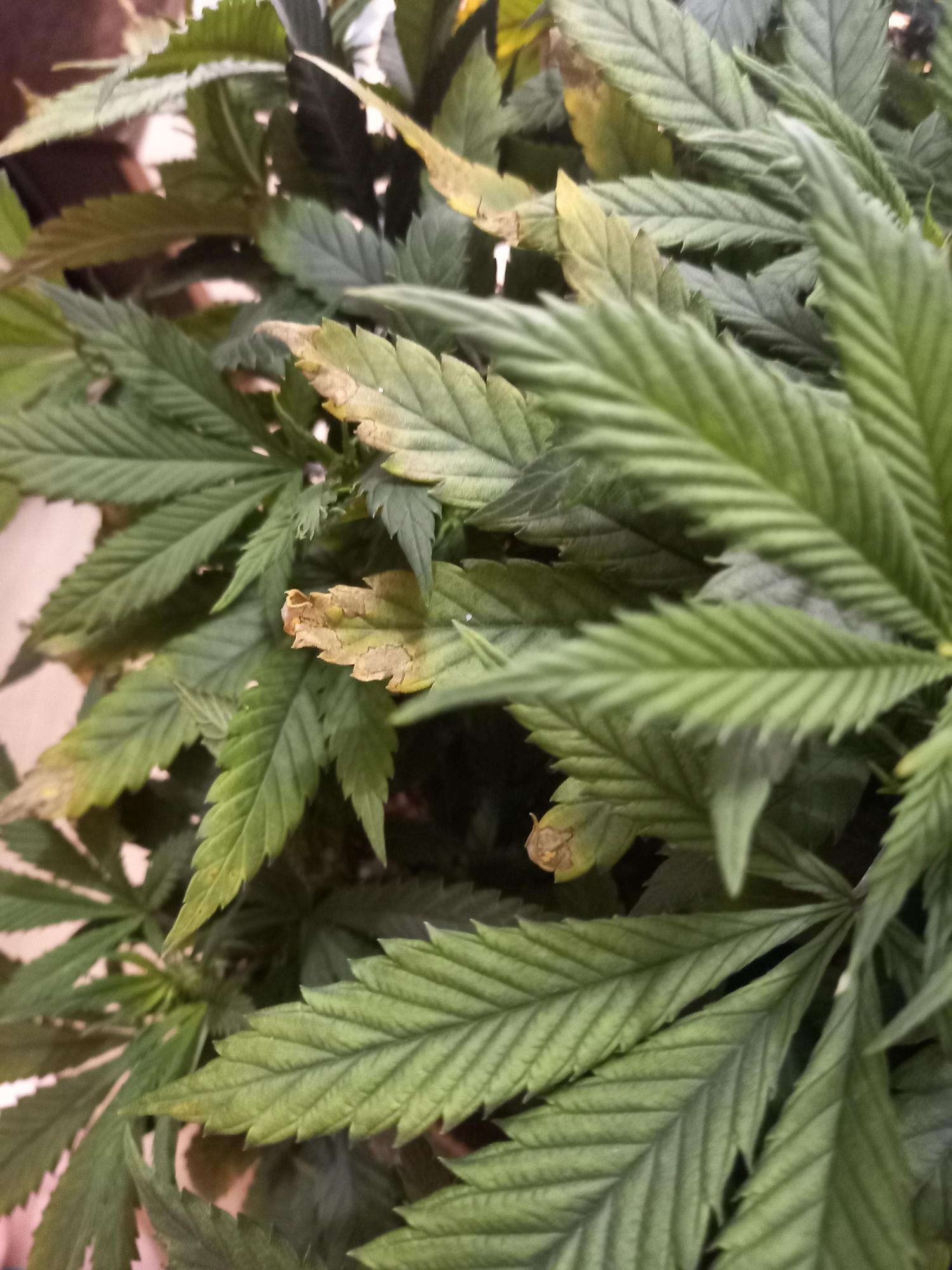
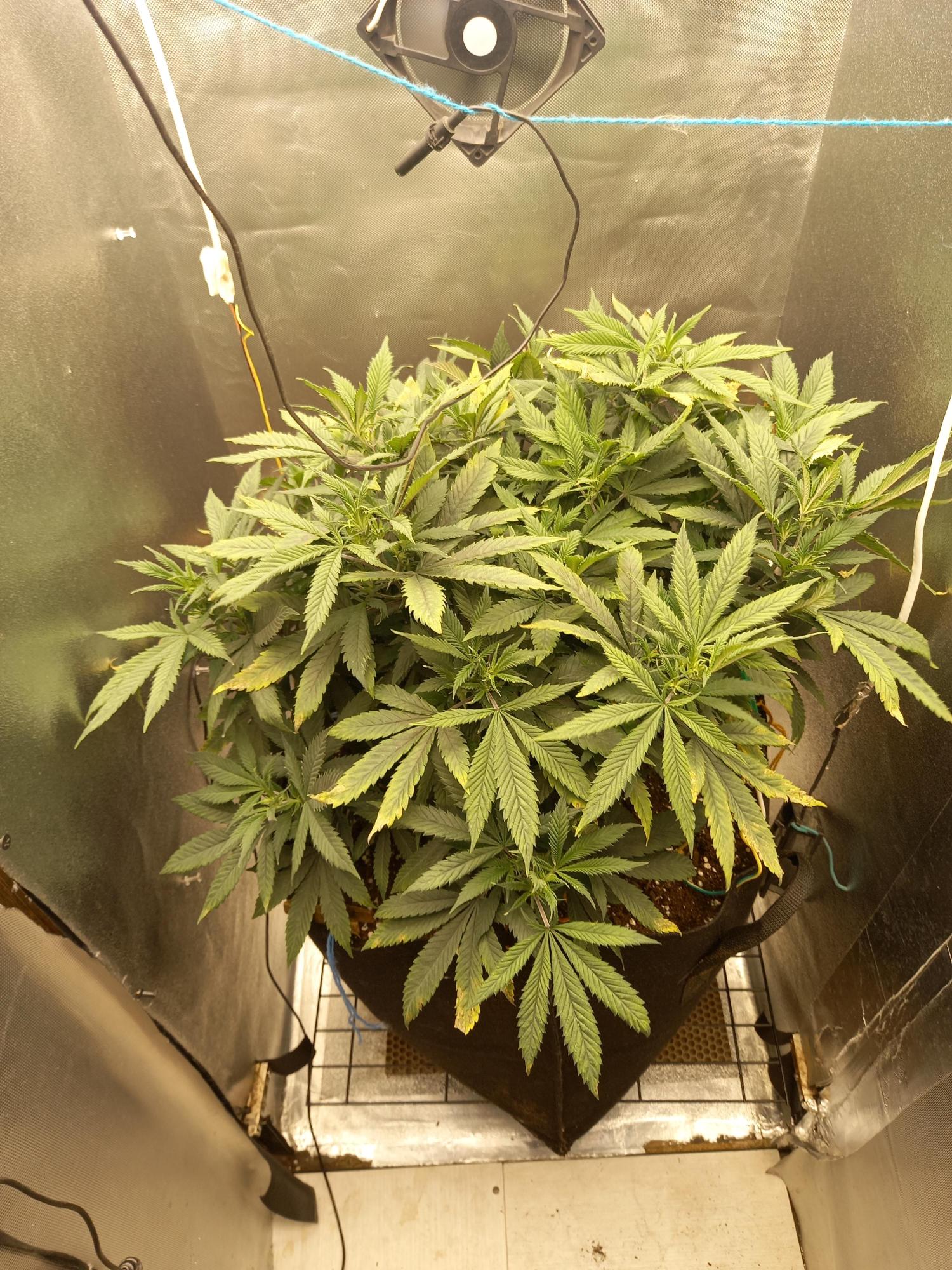
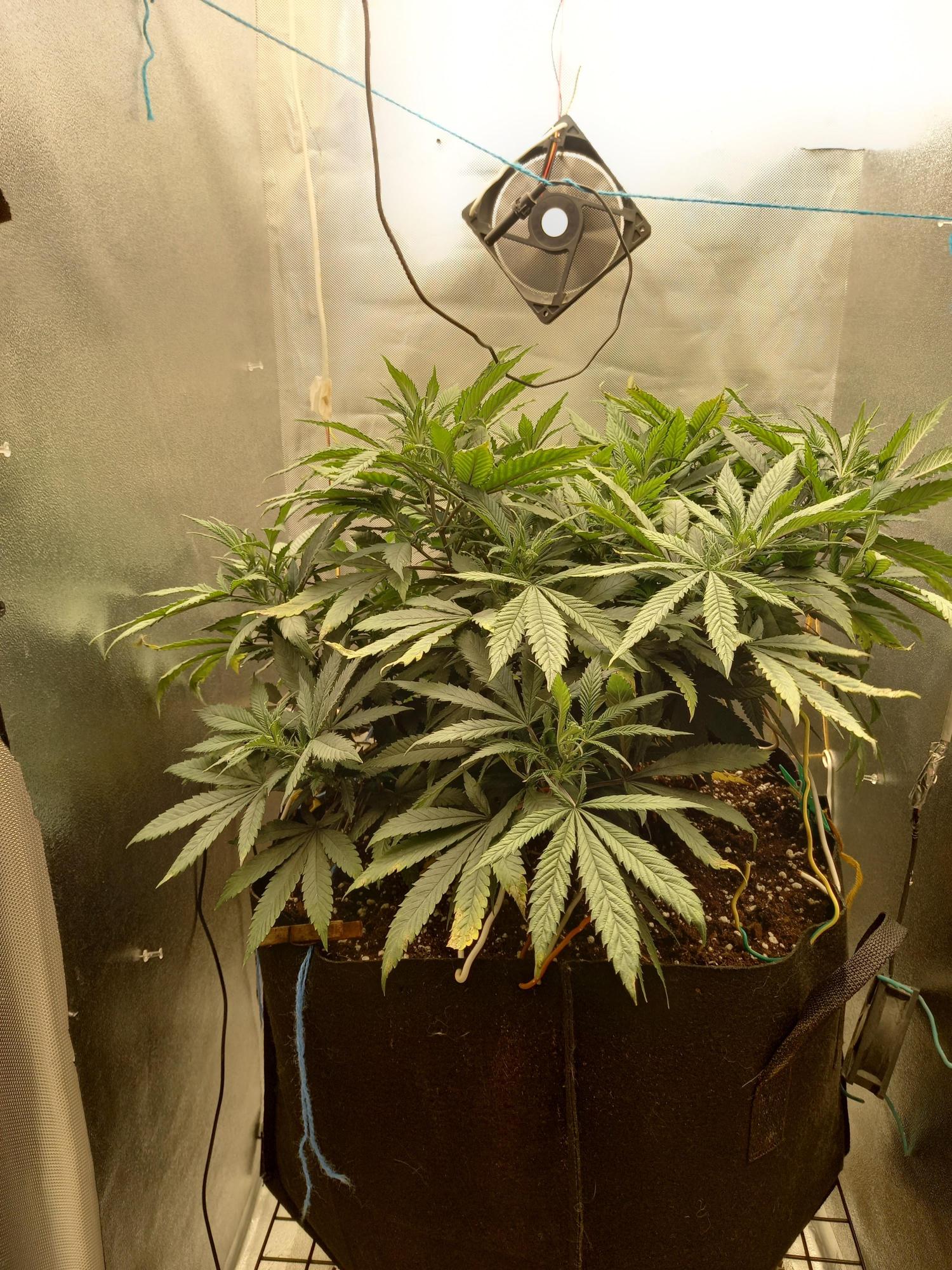
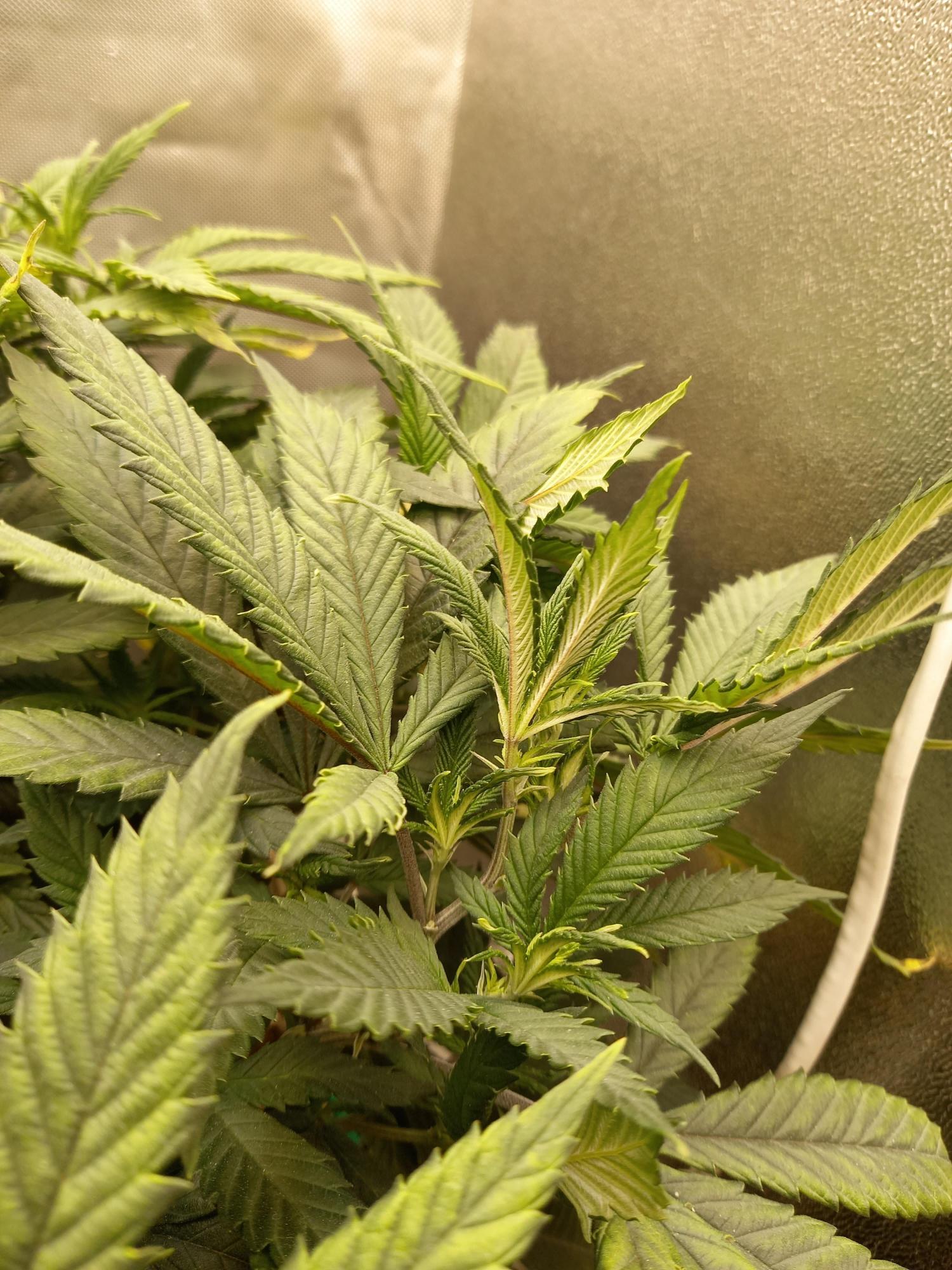
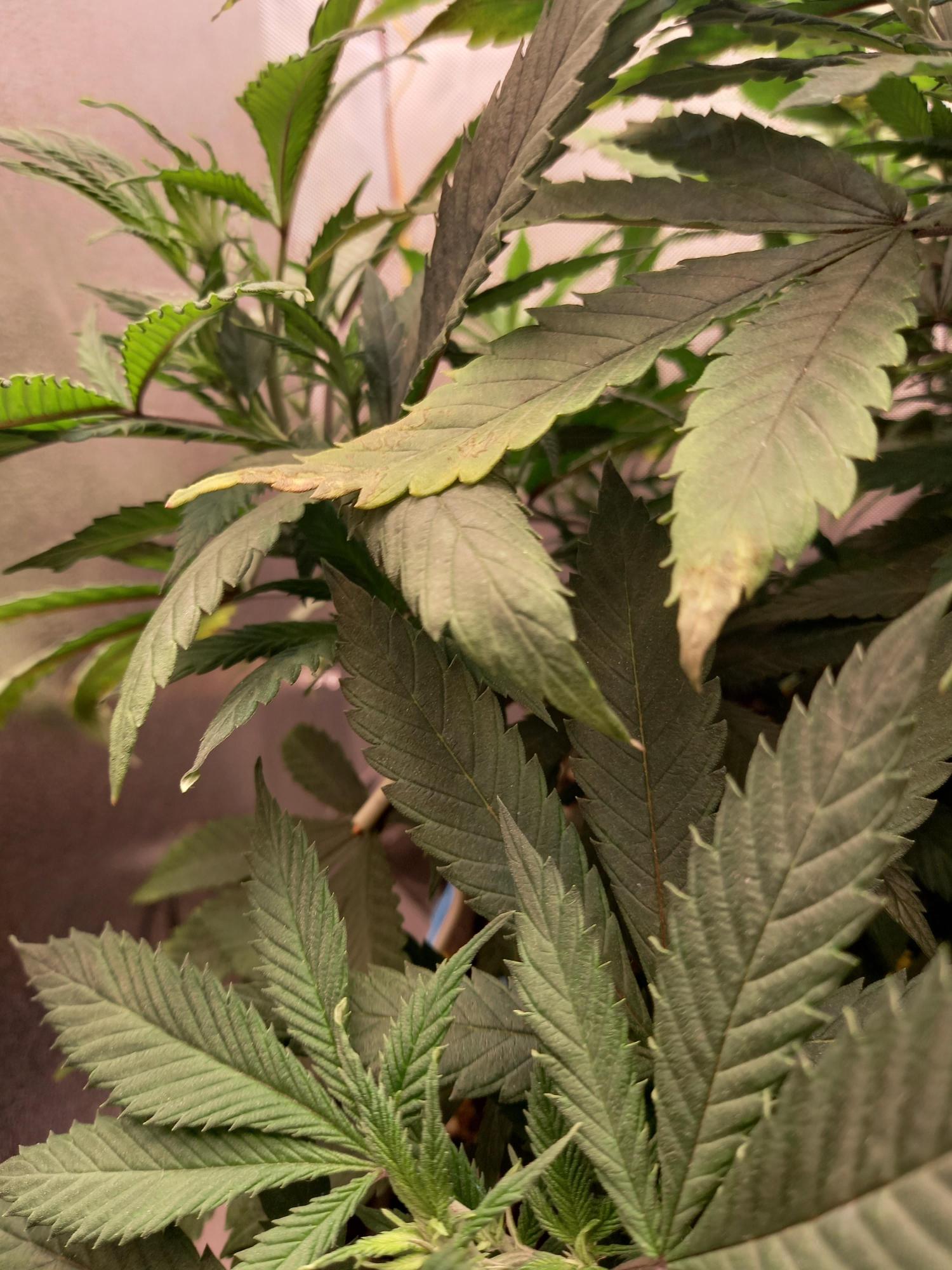
Please tell me how to be in my situation, how to put the plant in order. the last time I fed Palagron alga grow, I diluted it to 7 liters. the input is up to 400 ppm. 30-40 milliliters leaked out of 7 liters. the output is 300 ppm. question: can I remove the empty leaves and thos
Open
3 likes
Answer

cangrowzanswered grow question 6mo ago
Hey durac187!
Your PPM numbers (400 in, 300 out) definitely confirm your hunch: your plant is hungry. She's actually eating more than you're giving her, which is why she's pulling mobile nutrients from the older leaves to support the new growth. That's why the bottom leaves are yellowing and dying off.
To get her back in order, you should gradually increase your nutrient strength. 400 PPM is a bit low for a plant that size in the vegetative stage; try bumping it up to around 600-700 PPM for the next feeding and see how she reacts.
Regarding your question about the leaves: Yes, you can remove the leaves that are more than 50% yellow or crispy. They aren't doing much for the plant anymore. Just don't go overboard and strip the whole plant only take the ones that are clearly "empty" and dead.
Once you up the feed and get those dead leaves out of the way, you'll have better airflow and the new growth should stay nice and green.
Happy Growing, Growmie!
1 like
Complain

Zion309answered grow question 6mo ago
What you did is actually the right approach. The key idea is to first restore stability and let healthy new growth come in before removing anything.
During recovery, even damaged-looking leaves still play a role in keeping enough energy production going. That helps the plant push through the stress phase.
Once the plant is clearly back in healthy growth and everything is running stable again, removing the remaining weak or unhealthy leaves makes sense. At that point, they are no longer contributing much and can even become a drain on efficiency.
So the important sequence is: first recovery, then cleanup — not the other way around. That’s exactly what you followed, and it’s one of the most reliable ways to bring a stressed plant back into balance.
1 like
Complain

Mexicanasseedsanswered grow question 6mo ago
What you're seeing on your plant isn't exactly necrosis from hunger, but rather an issue with light efficiency and energy management.
You have an extremely dense canopy. The problem is that when the leaves overlap so much, the ones underneath stop producing energy and start consuming it just to stay alive; they become parasites of the plant. That energy and nutrient expenditure should be going to your new buds.
Here's what you need to do to get it in order:
Selective defoliation (Leaf pruning): Don't be afraid, in this case, it's more than necessary. Remove the larger leaves that are blocking light to the lower buds. You have so much green area that the plant won't even feel the lack of those leaves; on the contrary, you'll be taking a weight off its shoulders.
Direct light to the buds: As soon as the light hits those little branches that are currently in the shade, you'll notice they grow with much more vigor. The plant will stop wasting energy on maintaining overlapping leaves and will send it to the growth points.
Air circulation: With so many leaves together, the air doesn't flow, and the plant can't transpire well. By pruning, the air will flow better, and that speeds up the metabolism.
About your numbers (PPM): Having 400 in and 300 out ppm means the plant is indeed eating, but it's slow. As soon as you do the pruning and the light activates more points of the plant, you'll see it start to eat more because its metabolism will "wake up."
In summary: Yes, you can (and should) remove those leaves that aren't photosynthesizing optimally. You'll see that instead of stressing out, the plant will thank you by growing stronger.
1 like
Complain

00110001001001111Oanswered grow question 6mo ago
P deficiency - the blue hue in the leaf of pic #4 and 5 along with dark spots
pic #2 looks like K-deficiency.
Possibly something locking both out... based on "400ppm input" mor likely just needing more, i guess... overall concentration is a bit lacking in resolution.
1 like
Complain


Green_Clawsanswered grow question 6mo ago
Squalino you should have your points removed for AI intigration, have you noticed that all your answers agree with a promlem telling the grower they are doing a good job and then justify it with other nonsense.. STOP spreading this poison
5 likes
Complain

Nocone_Purpleanswered grow question 6mo ago
Yes, you can remove the fully yellow/dead leaves, but the main issue looks like potassium deficiency or slight lockout, so focus on proper feeding and pH first, not just defoliation
1 like
Complain

John_Krameranswered grow question 6mo ago
Bhahaha 🤣👇
Rly 🤥🙈🙉🙊
I feed my parsley with 600 ppm and u,r giving 400 to this...
3 likes
Complain
squalinoanswered grow question 6mo ago
hello my friend
I'm happy It's great that you kept your watering at 7 liters with 400 ppm. Your readings (400 ppm input / 300 ppm output) are excellent: this proves that the plant is consuming its nutrients well and that there is no accumulation of toxic salts in the pot.
Here's how to "get your plant back in order" and my answer for defoliation:
1. Can I remove empty or damaged sheets?
Yes, but with precision. * Yellow/dead leaves: You can without hesitation remove the lower leaves which are completely yellow or dry. They are no longer used for photosynthesis and block air circulation.
Strategic defoliation: Your plant is very dense in the center. You should remove some large fan leaves that hide the bud sites inside the structure. This will allow the light to penetrate deeper.
Golden rule: Do not remove more than 10 to 15% of the total foliage at one time to avoid stressing the plant.
2. Analysis of “Crisping” (Top leaves)
Some upper leaves still show tips that are curling and turning brown.
Since your PPMs are perfect (400 in / 300 out), it's not fertilizer burn.
It is most likely environmental stress (heat or too strong light intensity in this specific location). Make sure your fan circulates the air well between the lamp and the top of the plant.
3. Root condition and hydration
The fact that you only have 30-40 ml of drainage for 7 liters poured shows that the plant drinks a lot.
Advice: Stick to this volume of 7 liters. If the plant continues to drink so quickly, you might even need to water a little more often, but keep that dosage to 400 ppm. She seems stabilized and vigorous now.
My recommendation to “put it back in order”:
Cleaning: Remove the most damaged leaves and those that touch the ground.
Aeration: Remove a few leaves in the center to “open” the plant to the light.
Stability: Don't change anything in your nutrient soup for now (400 ppm is your "sweet spot").
In summary: Your plant is no longer in danger, it is just very greedy and a little tight in its foliage. A little cleaning will do it a lot of good to begin the rest of the flowering.. have nice day
2 likes
Complain