


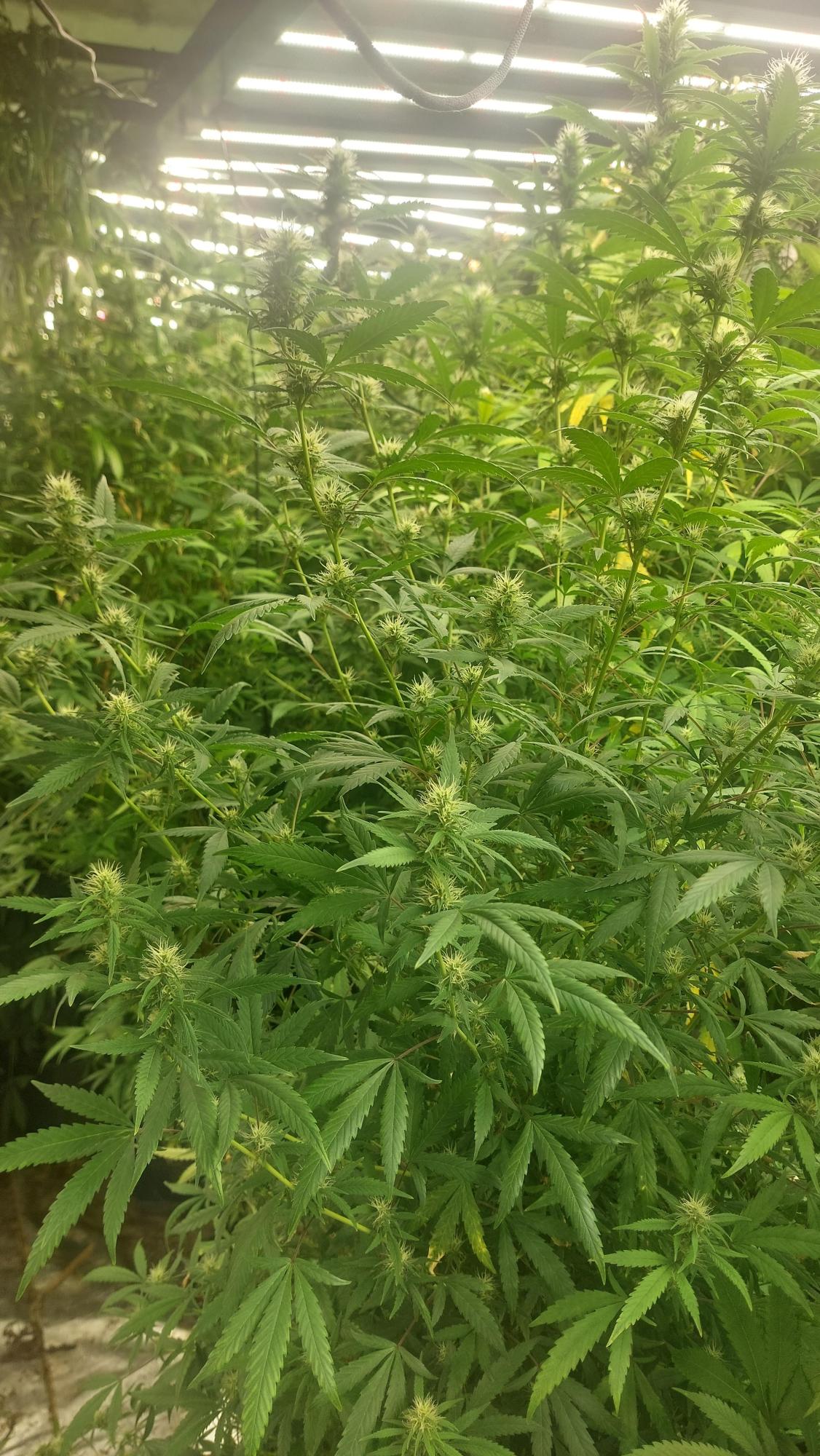
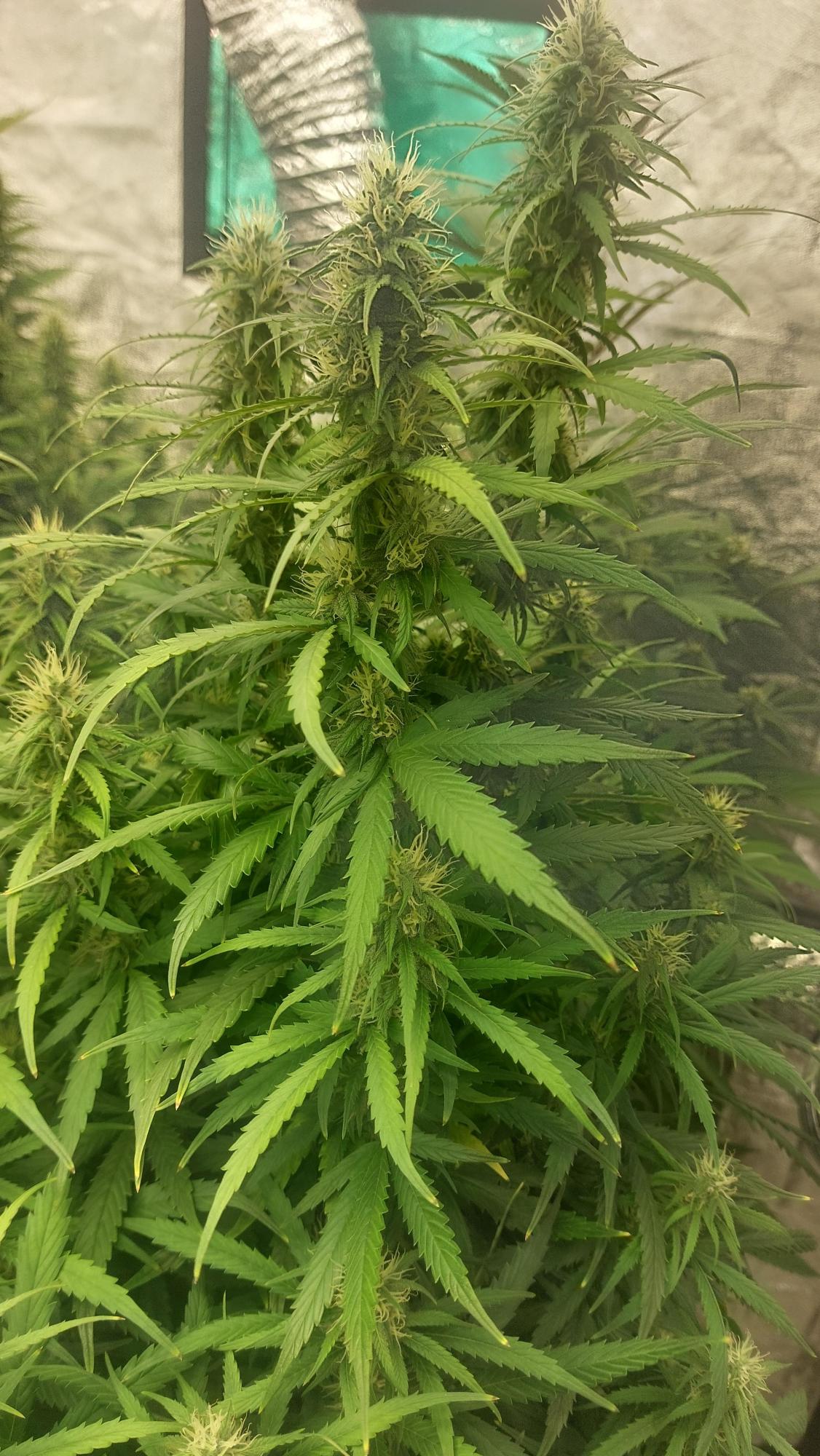
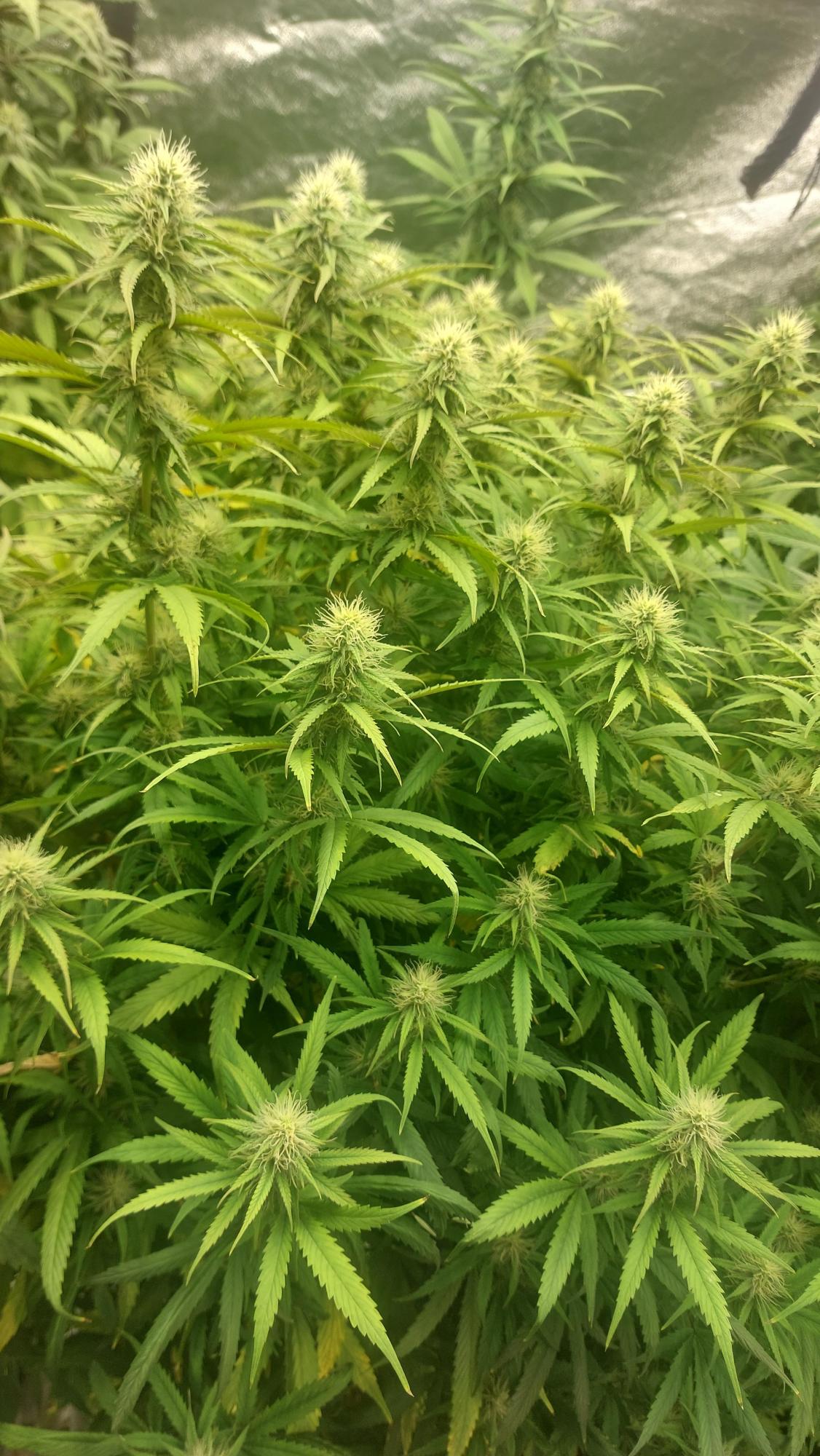
Lighting and first flip help please. Some big some small it's absolutely chaos in this tent. Some touching roof some barely budding. I have too many p

Shazzabeestarted grow question 5mo ago
Flip 4wks ago. Some buds coming along beautifully n others r tiny/behind
1890 PPF output, 2.7–2.8 mol/J
Current 70% (720w)
Should it be a higher % now? I hav lux meter but thts all I can check strength at canopy
First ever flip
Pictures included for pointers pls
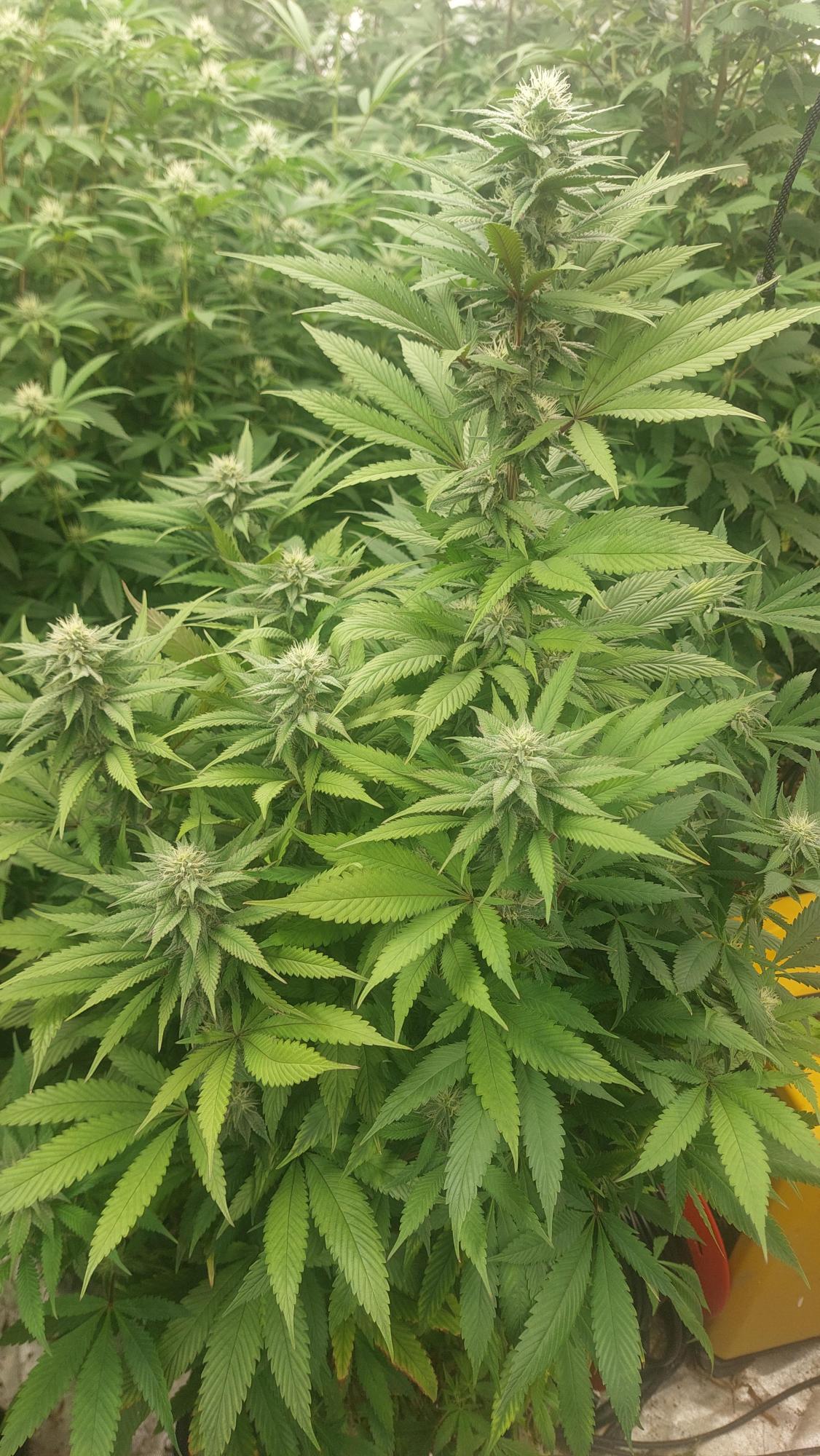
Open
1 like
Answer
JiveBear916answered grow question 4mo ago
At this moment, your doing fine, don't overthink it. The lower buds will always get less light and they're will always be a smaller size then the ones on top.
What I may suggest for future grows is doing some #SHWAZZEEING (HEAVY DEFOLIATION) that way you get more light penetration and the lower buds can fatten up more. As for the intensity busy look up DLI, which is the along if light your pants can actually upside a day, with that you can set the proper ppfd according too the light schedule. It's your first run your stuff freaking great so far.
Outside of that, great job, remember, we always get better with every completed grow.
likes
Complain

Philhsyanswered grow question 4mo ago
Normal uneven canopy not a big issue
Light already strong
Increase slowly to 75–85% if no stress
Focus on canopy
Light defoliation and better light spread
Lower buds will stay smaller 👍 Nice buds coming along !
likes
Complain
00110001001001111Oanswered grow question 5mo ago
So your light produces 1890 total? and at 70% currently... that's ~1300 PPF at 70%. If the light is 720 watts and 2.7 umol/J, then the total output should be 1944. so, they either mistyped or are lying on their spec sheet. 1890 / 720 = 2.6 umol/J efficacy. Small difference. Still upper-middle efficacy. 2.8-2.9 are the higher-end. Only the higher cct hit thos 3.1 numbers and hopefully your CCT is closer to 3000-3500K.
Assuming normal hanging distance for LED, how much space is it focused on? in meters-squared.
1300 / area in meters squared = PPFD. PPF / m^2 = PPFD .. now, some is absorbed by walls and some misses the plant, so this is a slightly exaggerated number, for what it is worth, but relative to normal hanging distances, ~40 dli is a good target.. if it's techinically ~35dli at the canopy, so be it, but even though the calculation is obvioulsy precise, the application is looser. Local variables impact the dli you can provide, so there's no single target to shoot for unless you can account for all that stuff locally.
Reference PPFD with hours of operation on a DLI table or caclulate it yourself.... is it drasticlly higher or lower than 40 dli? Based on total output at diode (~1300), this generally works out well to shoot for something near 40 dli.. .you may still have to fine-tune this based on growth that you see.. node spacing of new growth is the guide.
over 12 hours and a target of 900ppfd, you'd want ~85 umol/s per sq ft (if you prefer imperial) Just dividing 900 / 10.764 -- think 900 ppfd over 12 results in nearly a 39 DLI .. you can see the exact ppfd is not necesary for this first step.
600 ppfd is a good target for 18h. Also, ~39DLI.
if the light is properly sized for the area, it's 67% over 18h in vege and 100% over 12 h in flower... all other factors the same, it's inversely proportional to hours of operation. 2/3rds the hours is 3/2 the power to maintain same DLI (assumes same light or same exact efficacy lights)
temp, rh and ambient atmospheric co2 all equate to a max DLI before damage is caused or light inhibition behaviours kick in. So, "max" is variable. You will always have to adjust for your local variables. What someone else does or this math above is only a good ballpark to start in.
anyway, work this stuff out in vege phase when you can assess node spacing, and unlike above, a calculation about what you learn based on growth over 18h will translate very precisely to 12 hour flower operation. Compared to 18h, need 150% more power... hopefully vege is not greater than 67% or the light is too small for the area, if growing photoperiods.
this will also help answer your question about the slight coloration of the pistil tips ... hopefully the light is not related. hopefully, it's wind and not pollen, too.
1 like
Complain

cangrowzanswered grow question 5mo ago
Hey Shazzabee, for your first flip you’re honestly in a pretty solid spot. The canopy looks healthy and active, and what you’re seeing with some buds lagging behind is totally normal, especially in a dense canopy like that where some tops just get better light than others. The bigger issue here isn’t really that you need way more power, it’s more about how evenly that light is distributed across the canopy.
At week 4 you can push the light a bit more, but you don’t want to just crank it blindly. Running 70% on a 720w fixture is already decent, so instead of jumping straight to 100%, I’d slowly increase it to around 80–85% and watch how the plants respond over a couple of days. If you don’t see any signs of stress like leaf tacoing, bleaching, or burnt tips, you could edge a bit higher. The fact you’re using a lux meter is fine as a rough guide, just try to keep your canopy consistent rather than chasing a perfect number.
What I’m really noticing is that your canopy is quite packed, so some of those lower or inner bud sites are simply not getting enough light, which is why they’re staying small. A bit of selective defoliation or opening up the plant structure would help more than just increasing intensity, because light can actually reach those weaker sites.
So yeah, slight increase in power is fine, but the real improvement will come from better light penetration and airflow rather than just more intensity. You’re on the right track for a first run, just fine tune it from here and those tops will start stacking harder over the next couple of weeks, happy growing growmie 🌱
likes
Complain

Watts_Growing_Onanswered grow question 5mo ago
Week 4 flower — you can push the light a bit more 👍
Try ~80–100% if no signs of stress. Smaller buds are likely just shaded.
A bit of defoliation/lollipopping will help light penetration too.
likes
Complain