



JibbyJackstarted grow question 4mo ago
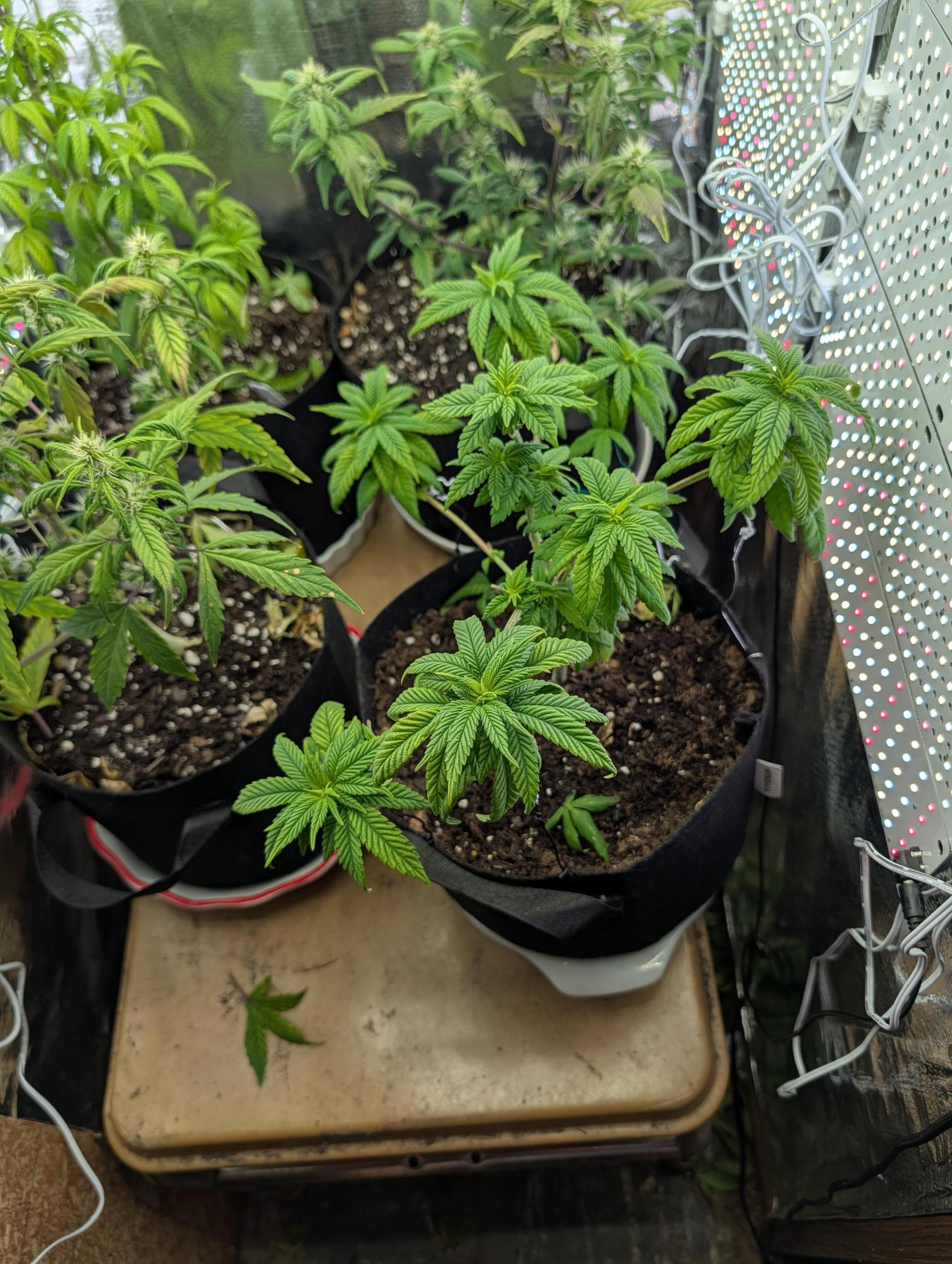
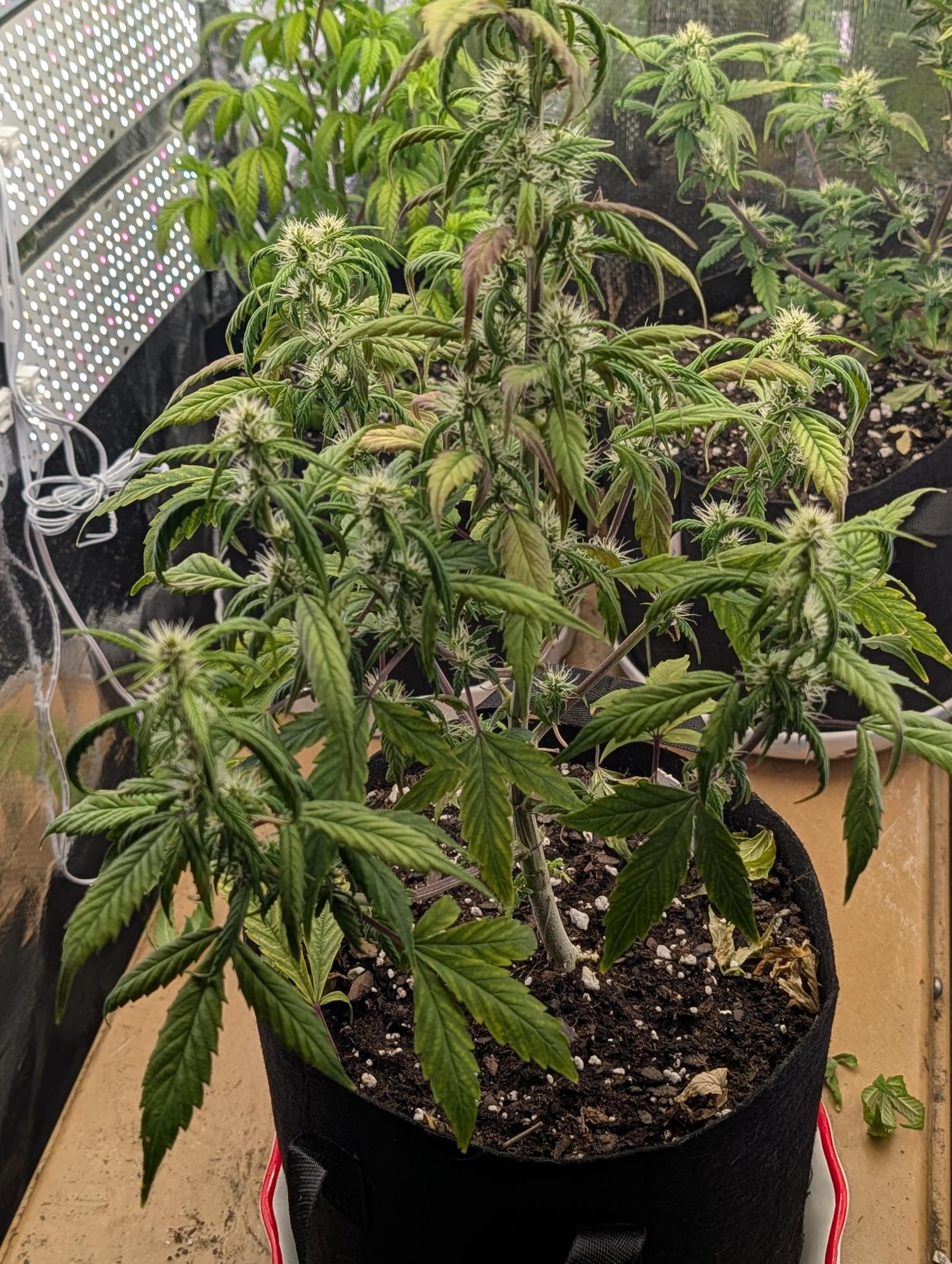
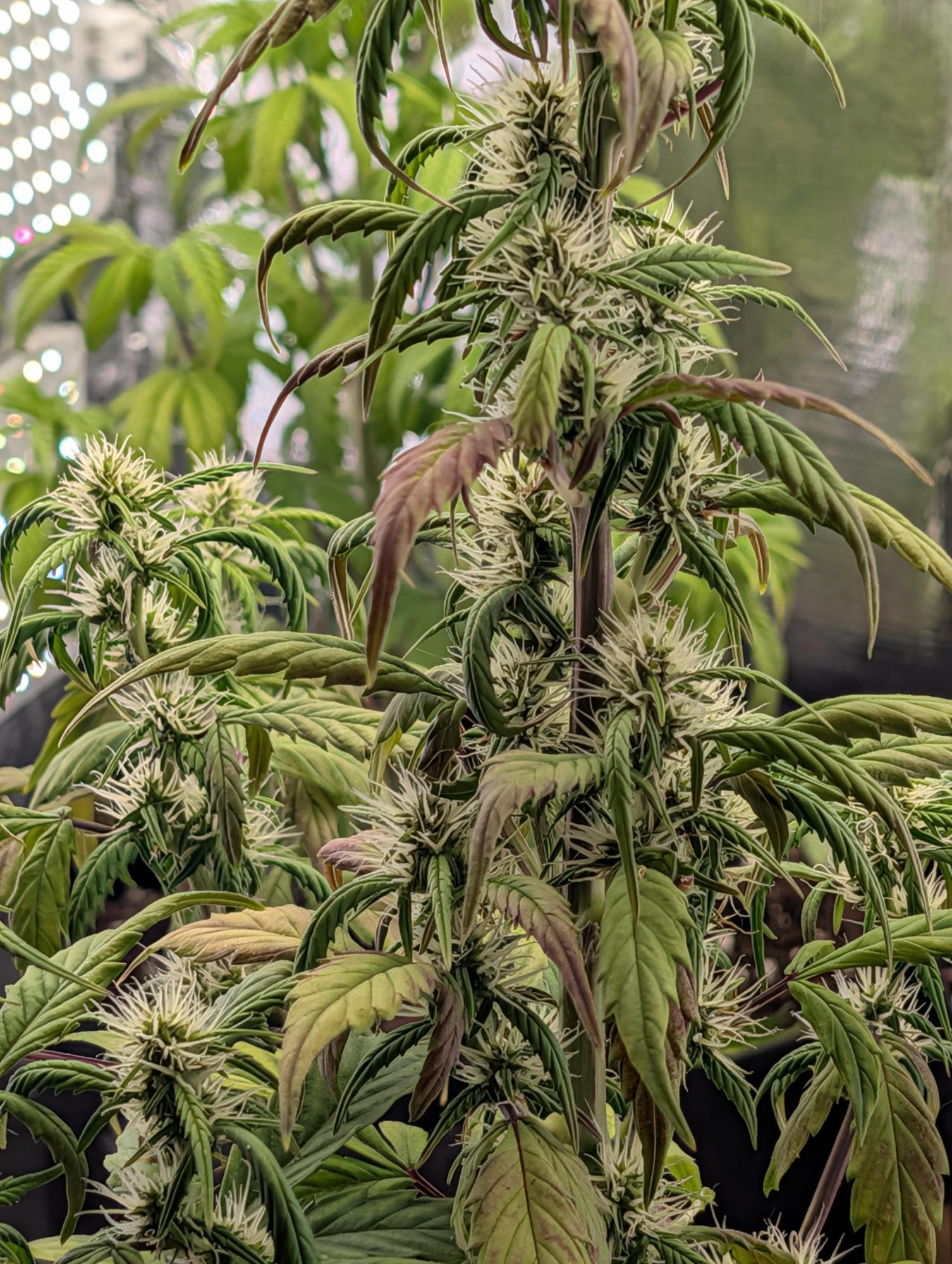
I raised the light up 4 inches, it doesn't make sense because the other 2 plants look to be thriving in the same environment, however the strains are different. I will monitor the plant and make necessary adjustments.
Solved
likes

Nocone_Purpleanswered grow question 4mo ago
Different strains respond totally differently to the same light intensity. Some are bred to love high light and pack tight, others want to stretch and chill. You raising the light 4 inches is exactly the right call you’re not guessing, you’re reacting to what each plant needs. The fact that the other two are thriving tells you they’re fine where they are. So your stretchy one is just hungry for more space or less intensity, and 4 inches might be the sweet spot. Keep monitoring for a few days and see if it starts tightening up the growth.
Strain differences are real, You’re already thinking about it the right way adjust per plant, not per room. That’s how you dial things in properly.
Just watch for any light stress signs on that one (bleached leaves, tips burning), and if it looks happy in a week, you’re golden. If it keeps stretching, you can always move it a bit closer again. You’ve got the tool, just use your eyes.

00110001001001111Oanswered grow question 4mo ago
Too much light... possibly other causes. Fix light first, then re-assess any progressing symptoms. May find a lot of the leaf symptoms abate or reverse if not too damaged. the 'crispy' spots don't heal but chlorosis can reverse.
Front-right plant in first picture -- see how there are several sets of leaves at the top that are all very tightly packed together (vertically) - that's from too much light over an extended period of time. So, the interveinal chlorosis on that plant is very possibly from too much light too.
Looks like the back-right plant also is exhibiting those same growth patterns to a slightly lesser degree and from what i can see the left 2 plants are not, but show other potential sings of too much light andpossibly some root zone related problems. Reacting to what we can observe is messy and indiscrete.. in most cases more than one potential cause is possible. Usually one option is more obvious than another, but does take a little consideration at times.
The droop could be from too much light.. it might be from bad watering habits or other reasons too... this stuff is messy and takes a little deductive reasoning and maybe a bit of trial and error to figure things out. Just don't try to do too many things at one time or you don't learn what the cause was - for future reference.
The curling in is in addition to the droop. climate, rootzone and and light inhibition (again) are potential causes.
More than one coinciding thing pointing toward too much light. Think i said that in early questions? but i don't recall clearly. I'd suggest unplugging those side lights. The plants are spread out and canopy isn't too deep, so they aren't a huge benefit anyway. You can work out how low to set the power in future grows if you want to use them, but for these plants, it may take 7-14 days to snap out of the light inhibition mode. The longer they've been given too much, the longer it'll take for them to recover.
side notes:
That soil should have more drainage/aeration amendments, but that alone will not derail a grow.. just a thing to consider in future. Soils should be roughyl 50% perlite or similar. coco coir based medium should be 33% -- the difference is the volume of water soil holds by comparison, about 50% more than coco coir. sphagnum peat moss is typically the base of potting soils, not coco coir. Any mix of the two, use a weighted average percentage. If you adhere to these ratios, you'll almost never have a problem with watering unless doing something really odd. This lack of drainage could be contributing to the curling in of the leaves and droopy leaves.. has to do with lack of o2 around roots, but if that is the cause, should perk up a few hours after an irrigation.
Proper irrigation procedure
1) fully staurate, never partially water (10% runoff waste water, if "soilless")
2) wait for top 1" to dry (sooner for coco coir) and repeat.
You shouldn't make any whimisical choice in this regard in a top-down way. It's all a reaction to what you observe. This keeps you honest and impossible to fuck up. Loss of weight is just as good to get familiar with as allowing top 1" to dry, in fact i'ts a more precise way to do it. Same loss of weight = similar volume of water needed each time. You learn the volume of water after the fact... if you use the same products each grow, same soil constitution, it'll also stay similar grow to grow, so it's a one-time learning curve under those circumstances. Change the variables, and it might change how much water you need. Also, apply common sense.. if it ever wilts, that's obviously allowing it to dryback too much.
partial watering leads to superficial roots -- they turn upward instead of downward because that's where the greater moisture levels are when you partially water. Also, partially watering can leave recurring drypockets inside the medium, which over time continually deposites solutes that can then go back into solution and mess up the balance of nutrients around the roots. Partial watering = bad.. always. It may not be noticeable for several weeks, but almost gauranteed to cause a visible problem in the leaves, eventually.
I run roughly the same formula all the time (relative to stage of life) for nearly 7 years now. Rarely have problems and regularly run 4-7 different strains off the same reservoir and probably nearing or surpassing 100 different strains grown, overall. Not a huge sample size, but clearly these plants are not overly unique in this regard. There can be an odd plant at times that may show some faint symptoms that never progress, but the differences from strain to strain is much smaller than most perceive. While you may have to tailor fertilization to an individual plant compared to othres, it's more a sign of a less-than-idea formula being used than these plants being incredibly unique. Evolution doesn't typically work like that for soemthing as important as nutrition needs.
So, be careful of using that as an excuse rather than adapting better methods to recurring problems. It's a potted plant, so just about every problem seen is self-inflicted in one way or another. inconsistent results are almost always due to our own choices. be systematic, and those problems will go the way of the dodo bird before long. Again, consistency of results is the barometer.
Some plants are definitely more robust to esoteric feeding than others, which is why some flourish and others don't in less than ideal circumstances, but that doesn't mean they are actually making use of extra nutes or different ratios. Plants taking in nutes is an 'active' process, meaning it sends out carrier molecules to grab specific things. When a commercial farm fertilizes, they don't fertilize in a ratio used inside the plant... The more effective method is to fertilize in ratios that keeps all the nutritional elements readily available to the plant and 'enough' of each is present... sounds similar but is distinctly different. You'll probably need a different ratio in flower than vege, but the gist remains the same. Should not require and mad scientists day-to-day reformulation. Soil is a bit harder to learn, but in the end the goal is the same level of plant-available nutrients persisting around the roots. Learning to supplement as amendments get exhausted is necessary... use the same products and it should be fairly consistent process once you work it out. (go soilless, lol.. hit the easy button!)
There's a lot of myths in this hobby. Stick to basic gardening concepts (lots of myths in gardening in general, lol). Anything over-complicated is likely masturbatorial in nature. No matter what suggestions you start with, the plant is the ultimate indicator if it was a good suggestion or not. Don't try to force a square peg through a round hole because of dogma, and you'll be fine in the long-run.
Dialing in the lgiht, proper soil constitution, and proper watering habits will help reduce fog of war. Take notes until you hammer it out. It helps. There's 3-4months or more between doing some of this stuff, so it's easy to forget intended adjustments.
likes
Complain

John_Krameranswered grow question 4mo ago
Man are u that old or super stupid ?
Why u still listenening to nonsense ?
UR Problem is HUNGER and underwatering.... FFS use ur brain
1 like
Complain