


Organic pk booster

Fruitgrowerstarted grow question 4mo ago
Hey guys,
I'm looking for a decent PK booster that's organic or should I say non-synthetic.
Currently using bio bizz top max but not overly impressed with it's results.
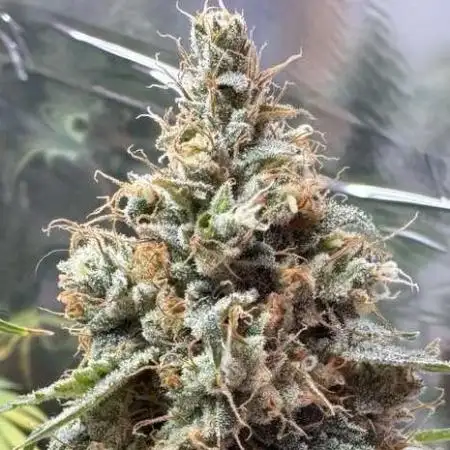
Any other tips for harder, bigger buds
Open
likes
Answer

00110001001001111Oanswered grow question 4mo ago
DLI and a good climate is all you can really do for better buds.. genetics will dictate potential. There's no turning a low yielder or a fluffy trait into dense, large nugs. Maintain health and stay out of its way... What we are responsible for is more about not hindering the plant as opposed to greatly changing impacting its potential. We have 'some' effect on such things but they are small compared to the limitations of the genetics at hand. Work with clones with your desired traits, if you want a nearly gauranteed outcome.
e.g. if i had been raised with a healthier diet, i might be 1/2" taller? LOL, but i'd still be on the shorter side nonetheless.. There is no circumventing the limitations of genetics. Maximize that "1/2" " but don't kill yourself doing it. The return should justify the investment, eh? Each to their own on where that line is drawn.
The idea that you need to 'boost' p and k at a specific point in flower phase is a hypothesis that has yet to hold up to scrutiny. You can't prove a negative, but if no benefit is correlated in a measurable way, it's accurate to label boosting P/K regardless of individual context as 'bro science' with very high confidence. Too simple... not how it works in such a blind way. Could be great for specific contexts, but not all.
It's wise to experiement with different levels of any and all nutritional elements, but don't justify any resulting toxicities as beneficial. If the plant can't use it, only bad things happens as it needlessly piles up in the plant or the rootzone. Over-fertilization is a good way to pollute your local aquifer for completely useless and stupid reasons, too.
Any product that provides the concentration you want to test out will work. The various options are made from a small pool of potential ingredients. Which product is best for you will be mostly be about your existing balance of nutrition provided and not negatively impacting it. Just don't cause lockout or otherwise hinder availability of other nutes, and it's probably a good fit. Whether it improves outcomes is a matter of trial and error.. good luck distinguishing a real effect from normal volatility while growing a handful of plants with variable environments and genetics over time, lol. Beyond incredibly obvious effects, this is much more difficult to do than most realize. It is impossible to discern and be confident about any small effect.
So, there's no one-size-fits all answer to this. It depends on the ratios of what you already provided throughout the grow. How stocked up are the leaves? How will it impact plant-available
nutrient balance around the roots to ensure nothing gets locked out or fucks up the pH? You cannot circumvent the metabolic rate that the environment you provide and the genetics at hand allow. You cannot force-feed a plant beyond that. That's not how it works.
Easier to define for a soilless/hydro context... you won't need to give more than ~190ppm K or ~40-50 P around roots in most cases of relatively orthodox fertilization methods. Soil is still similar, but more trial and error due to fertilzier depending on microbes and slow-release amendments in the soil. Still adds up to something similar in the end if you compare similar good results. Will 1 of 20 plants need a bit more? Possibly.... Even though this stuff isn't written in stone, it's accurate. A good formula is works on 90-95% of plants, and most problems seen in that 5-10% are so small they are irrelevant.
----- The rest is just for "funsies" for anyone reading...
Maintaining critical levels of nutrients is a much more effective way to fertilize. A better way to perceive things than unresolved anecdote. It's less about how it is used in the plant and more about sufficient levels and not impeding each nutritional element around the roots. A distinct difference from popular thought that should lead to far better decisions about fertilization.Also, if you just let the plant's health dictate these choices, you'll get to the same consistently healthy results.
What is also certain, given existing knowledge, is that providing more than necessary just sends significantly more P/K down the drain polluting local aquifers needlessly. This is a real and measurable problem, unlike the promises of wildly boosting P/K in flower phase with zero consideration to the context at hand of each garden. This bro science is contributing to destroying our environment...
Also, not sure why chirality was brought up here. None of the molecules involved that enter the plant are chiral.
Chirality has nothing to do with organic or not. Chiralty only refers to a molecule without a plane of symmetry, similar to your left and right hand, which are the translated latin words used for the "Ri-" and "Si-" configurations of chiral molecules - pronounced "ree" and "see." ("righteous and sinister" is rght- and left-handed). Bwaha, lots of prejudice back in the day against left-handed people... These molecules are also referred to as entantiomeres. Sometimes, but not always, it makes a significant difference in behaviour of that molecule. This would be covered in the first semester of organic chemitry.
This can impact the behaviour of a molecule, but since most of what enters the plant is not chiral in regard to nutrients, it's hard to assume that is relevant here. Have to consider disassociated ions, since it's dissolved in water, too, not the orginal molecule when not dissolved.
Potassium that can enter the plant is not chiral as it is in elemental form (K+). Neither is it "organic.". Elements are not organic by definition.
Phosphorous most commonly availble is H₂PO₄⁻ and HPO₄²⁻. Both of which are also not chiral.
How a molecule, any molecule, was formed or what it was sourced from is irrelevant to how that molecule will behave. e.g. HPO₄²⁻ is always HPO₄²⁻ and acts like HPO₄²⁻ is expected to act relative to any specific context. Doesn't matter if it came from bat shit or something else. The configuration and structure of the atoms that make up the molecule is what causes expected and predictable behaviour.
Admittedly, these facts do not 100% preclude the possiblity of some side effect / benefit of one ingredient over another. It does rule out a lot or otherwise cast aspersions upon many bad hypotheses and false promises of various products, though.
in the end, if it is a measurable correlation and statistically significant, i'll believe it even if it contradicts anything i stated above. I don't have any personal preference on this stuff. I just want proof before I believe unsubstantiated claims made mostly by a group of people that never learned a thing about chemistry or biology.
likes
Complain

HINDUDOGanswered grow question 4mo ago
WOOF! WOOF! ARF! WOOF-WUF WUF-WUF! RARRF RARRF RARRF!
likes
Complain

Organomananswered grow question 4mo ago
Try products made by B.A.C., .............. they actually work, and work well.
I have used them for years and am very happy with the results.
Fulvic acid, humic acid and amino acids will boost your plants ability to thrive and a thriving plant can express its genetic potential properly.
Genetics determine everything...........if the plant you are growing has a genetic program for compact buds, nothing you feed the plant can change that.
likes
Complain

Altitonans_Fulmenanswered grow question 4mo ago
From a strictly elemental and chemical standpoint, a plant absorbs nutrients as simple inorganic ions regardless of whether those ions came from a synthetic bottle or a compost tea. However, reducing the argument to "a salt is salt" completely ignores the biological and physical delivery mechanisms that drastically alter the growing environment and have massive differences between the two growing methods.
The core idea behind a PK booster is to deliver a massive, concentrated surge of P&K exactly when buds are swelling in conjunction with a N starvation. Because these are short, targeted windows, the nutrients must be highly bioavailable so the plant can process them immediately. As soon as you go "organic," that's out the window. Much slower release, uncontrolled, very difficult to "spike". to cause the ratio that will initiate a response.
High-volume PK spikes rely strictly on the immediate uptake capabilities of mineral fertilizers. Making it far less efficient in organic nutrient deliveries
When you use organic nutrients, it changes the dynamic with which the plant delivers and trades its nutrients; organic is always releasing new nutrients into the immediate EC. This prevents a lot of autophagic responses from occurring due to a constant stream of new nutrients into the immediate medium's EC. This prevents nutrient starvation.
PK boost is essentially just N starvation, triggering an autophagic response. Concentrated ratio of P&K while tapering off the Nitrogen base. To the plant, the sudden drop in Nitrogen registers as a severe environmental stressor—essentially, the beginning of starvation protocols. She aggressively strips nutrients and proteins from older leaves and vegetative structures and shuttles them directly to the developing flowers and fruit. Ta daaa. Call it a PK booster and sell it. Nothing to do with the P and K itself, it's the ratio immediately available in the medium triggering a nutrient recycling mechanism within the plant itself; all the "booster" sells is the trigger to the signal.
Very difficult to initiate a response when organic nutes are doing their thing. It takes 4x5x more water to leach or wash ammonia out than it does nitrates. This alone will prevent autophagy from having its normal impact. Bottle companies credit phosphorus and potassium for the sudden explosion in bud swelling. The P and K are simply there to support the heavy structural demands of the flower after the nitrogen drop forces the plant into its final reproductive panic.
Peace.
likes
Complain

ATLien415answered grow question 4mo ago
before being able to buy organic certified fertilizer you should have to take basic chemistry, and be forced to admit that salts are salts. this alone would fix about 99% of the knowledge base problems in this hobby. lmao
the words you are looking for is off-handed chirality versions of salts, are not what you want. sometimes confused with chelation, this is not the same. there are all organic paths for chelated naturally forming salts. these are the same paths that make living soil indoors in a resedential settings a bad idea lol
much like halting the superfluous words and going to DLI when discussing lights, we dont care about buzzwords and bio-hurr-durr labels....we care about the chemistry, which is standardized labelling
likes
Complain
RemoveYourChainsanswered grow question 4mo ago
you can use synthetic fertilizers in living soil.
Most "bio" nutrients are scams.
likes
Complain
